Course Outline
Coursework requirements
Expectations
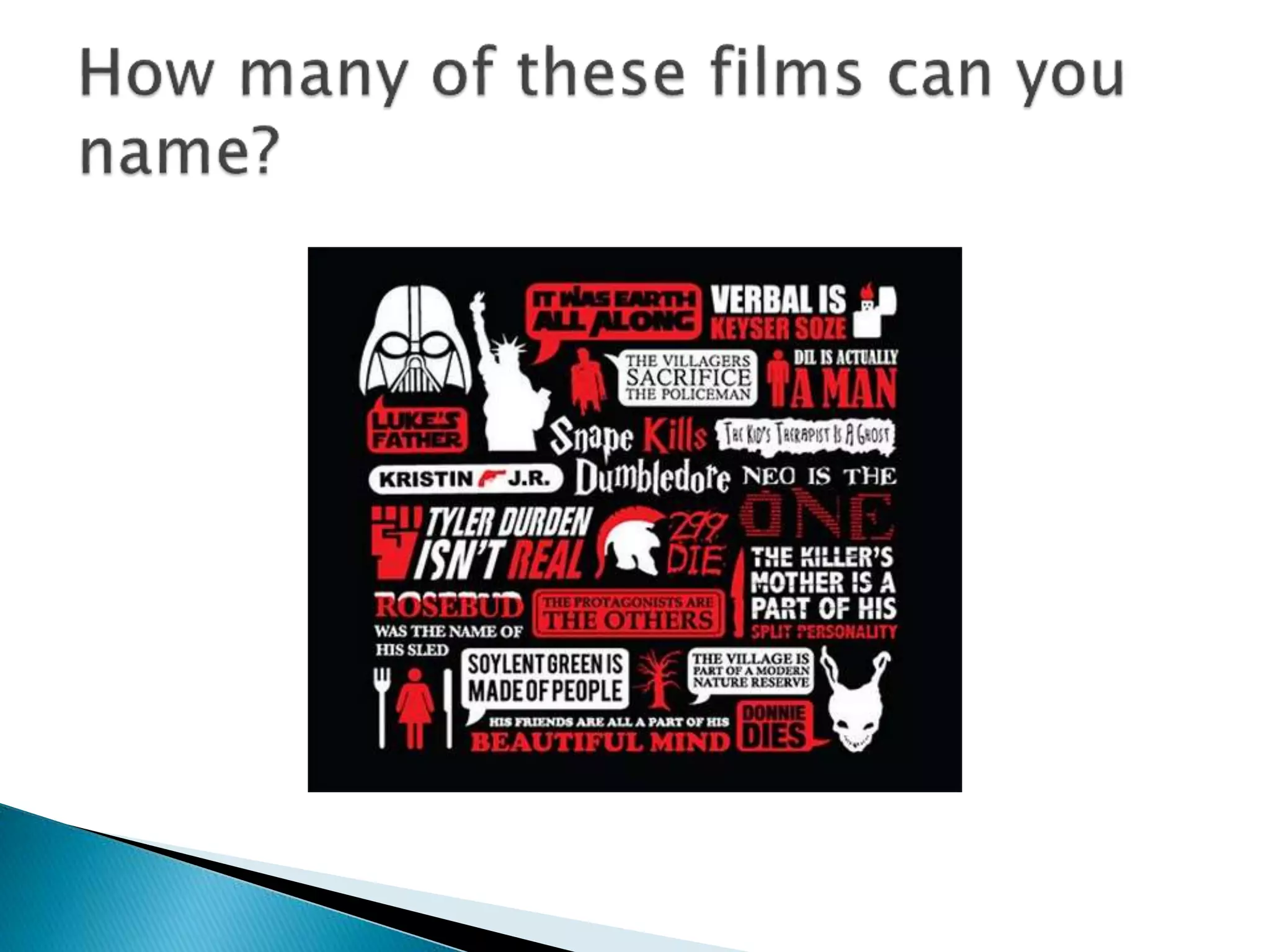
Star Wars Planet of the Apes
Usual Suspects
The Wicker Man The Crying Game
Dallas Harry Potter 6 Sixth Sense
Fight Club 300 Matrix
Citizen Kane The Others Psycho
Soylent Green The Village
Beautiful Mind Donnie Darko
 Examination Body –OCR
 AS Code is H140
◦ G321: Foundation Portfolio in Media (Coursework
50%)
◦ G322: Key Media Concepts -TV Drama and
Institutions and Audiences (2 hour Exam 50%)
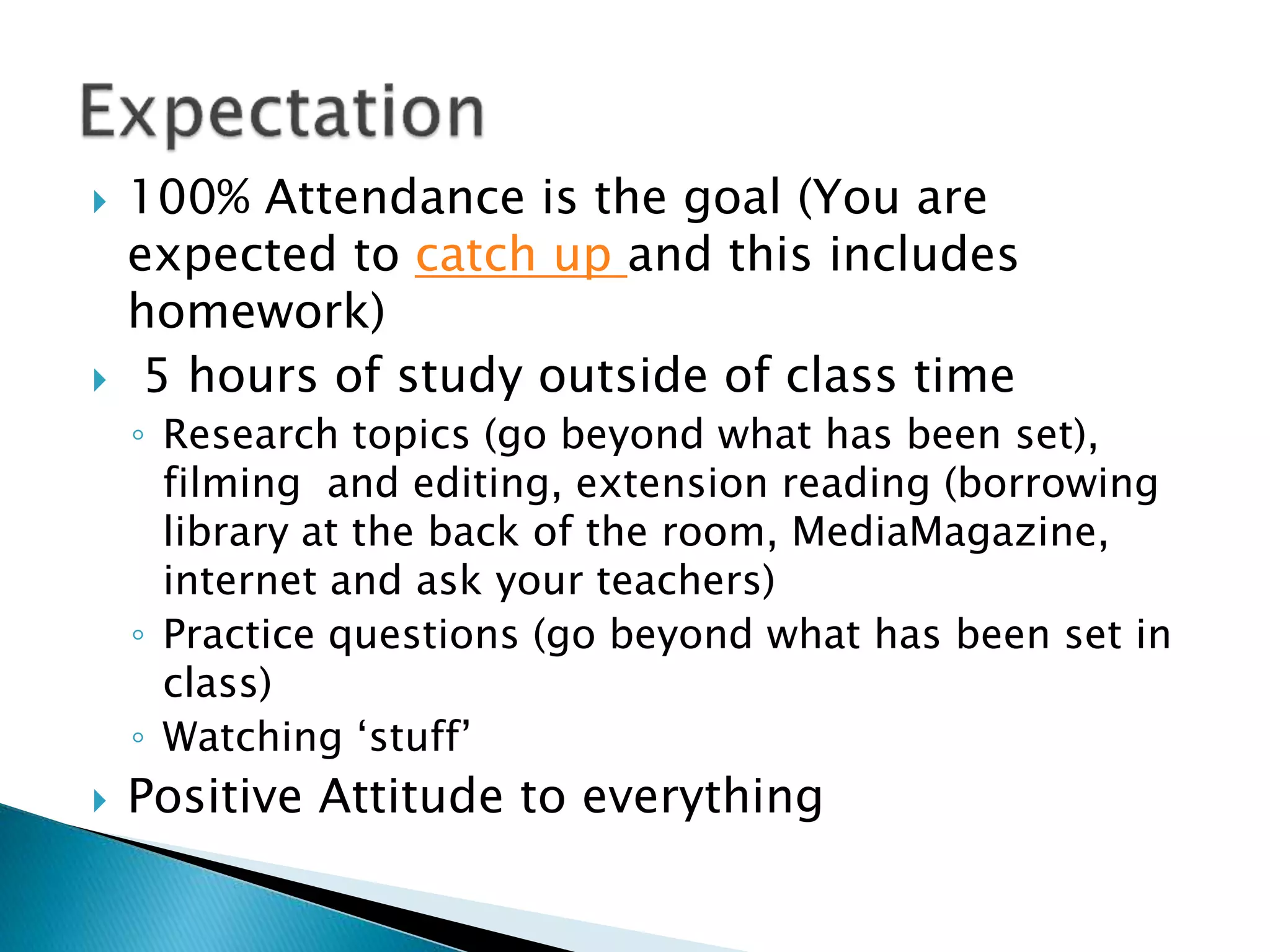
 100% Attendance is the goal (You are
expected to catch up and this includes
homework)
 5 hours of study outside of class time
◦ Research topics (go beyond what has been set),
filming and editing, extension reading (borrowing
library at the back of the room, MediaMagazine,
internet and ask your teachers)
◦ Practice questions (go beyond what has been set in
class)
◦ Watching ‘stuff’
 Positive Attitude to everything
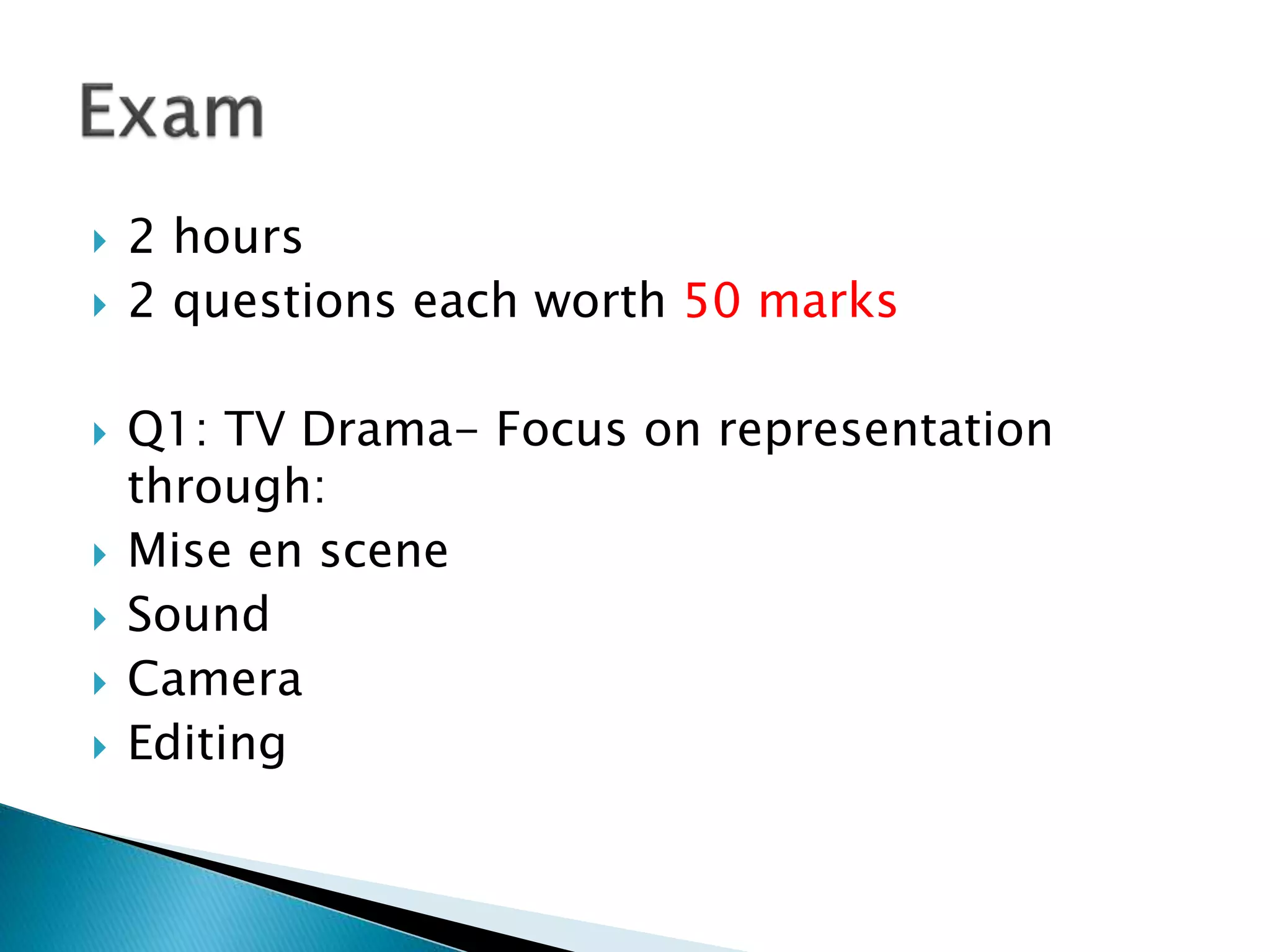
 2 hours
 2 questions each worth 50 marks
 Q1: TV Drama- Focus on representation
through:
 Mise en scene
 Sound
 Camera
 Editing
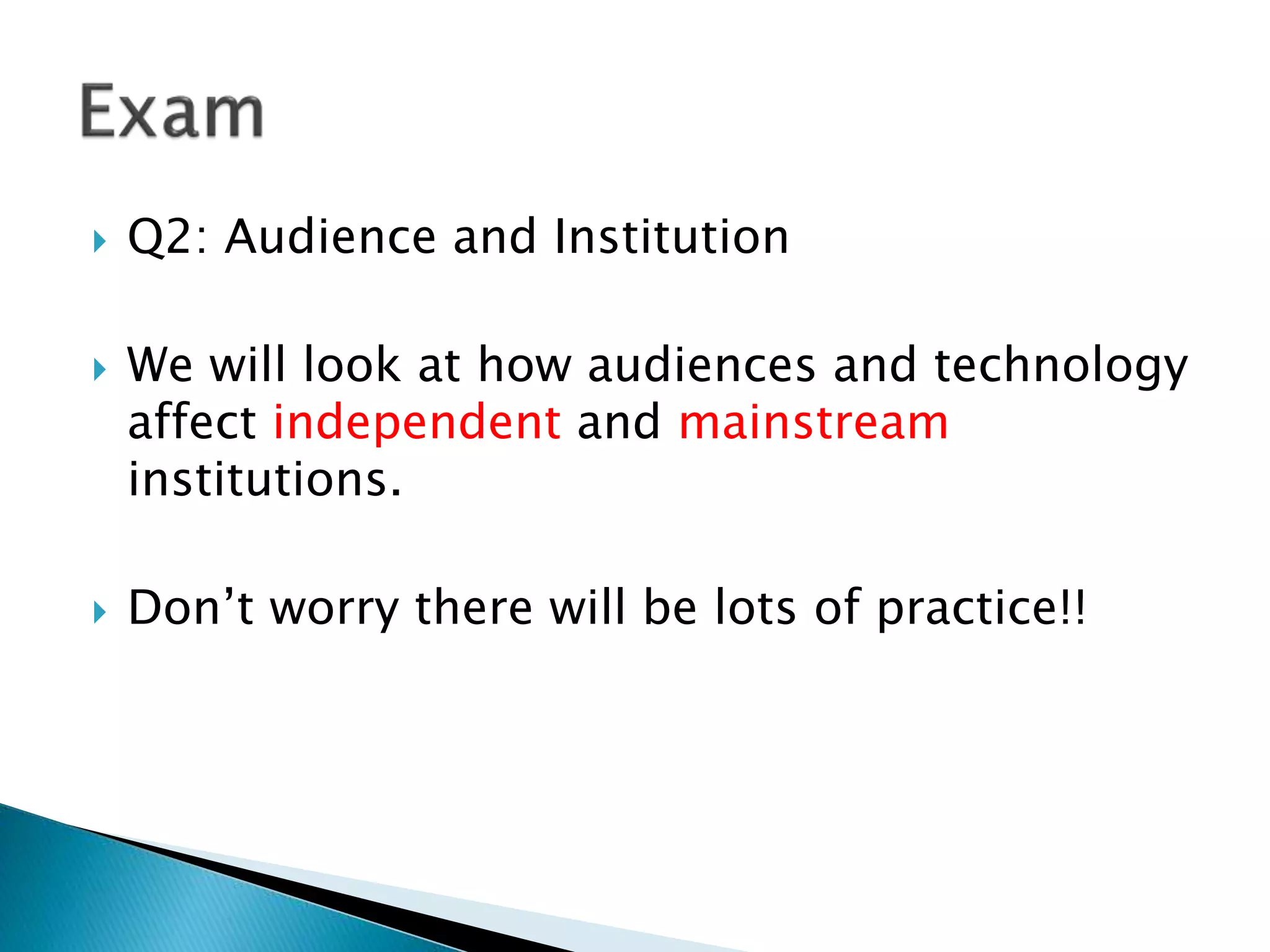
 Q2: Audience and Institution
 We will look at how audiences and technology
affect independent and mainstream
institutions.
 Don’t worry there will be lots of practice!!
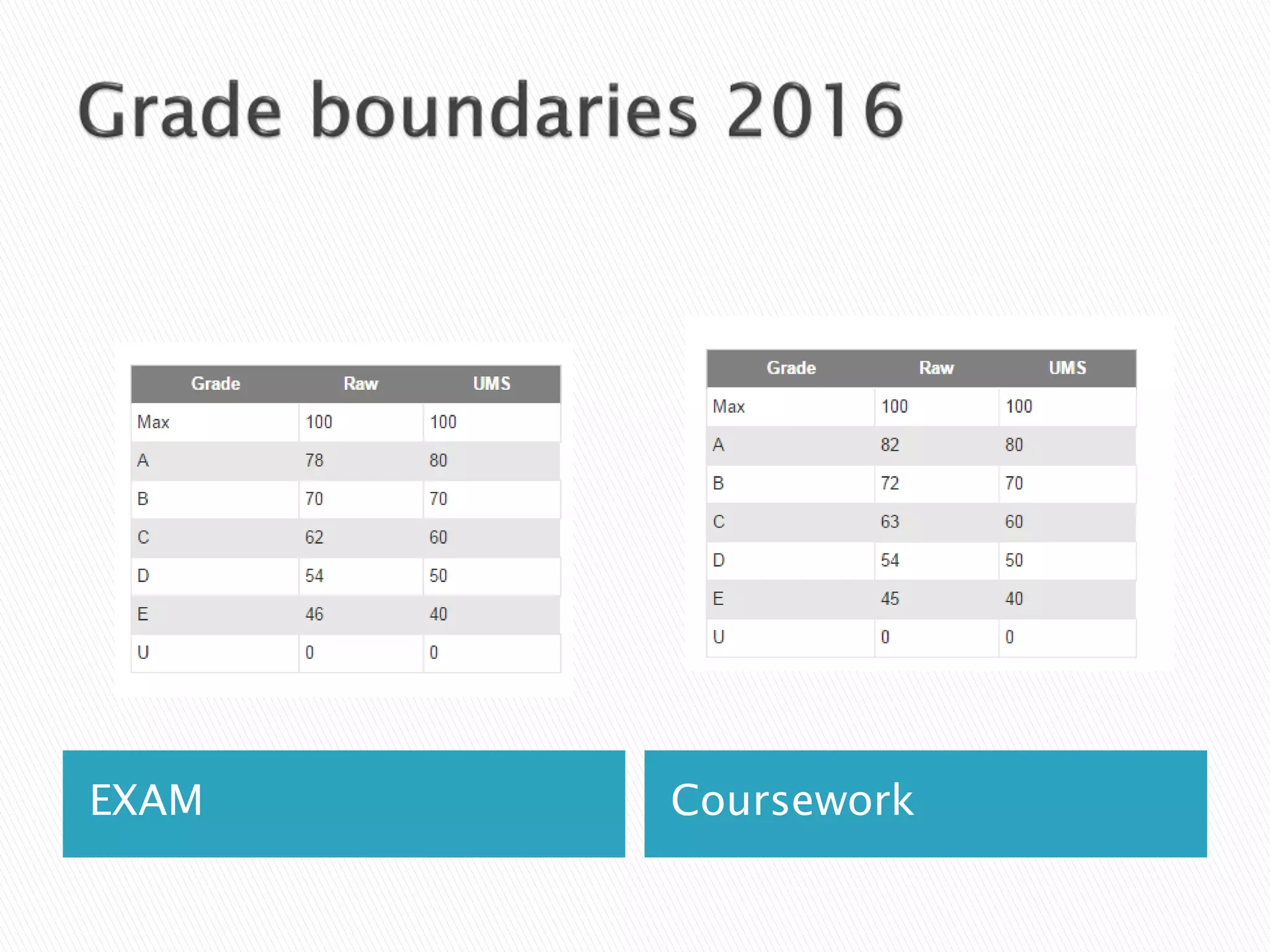
EXAM Coursework
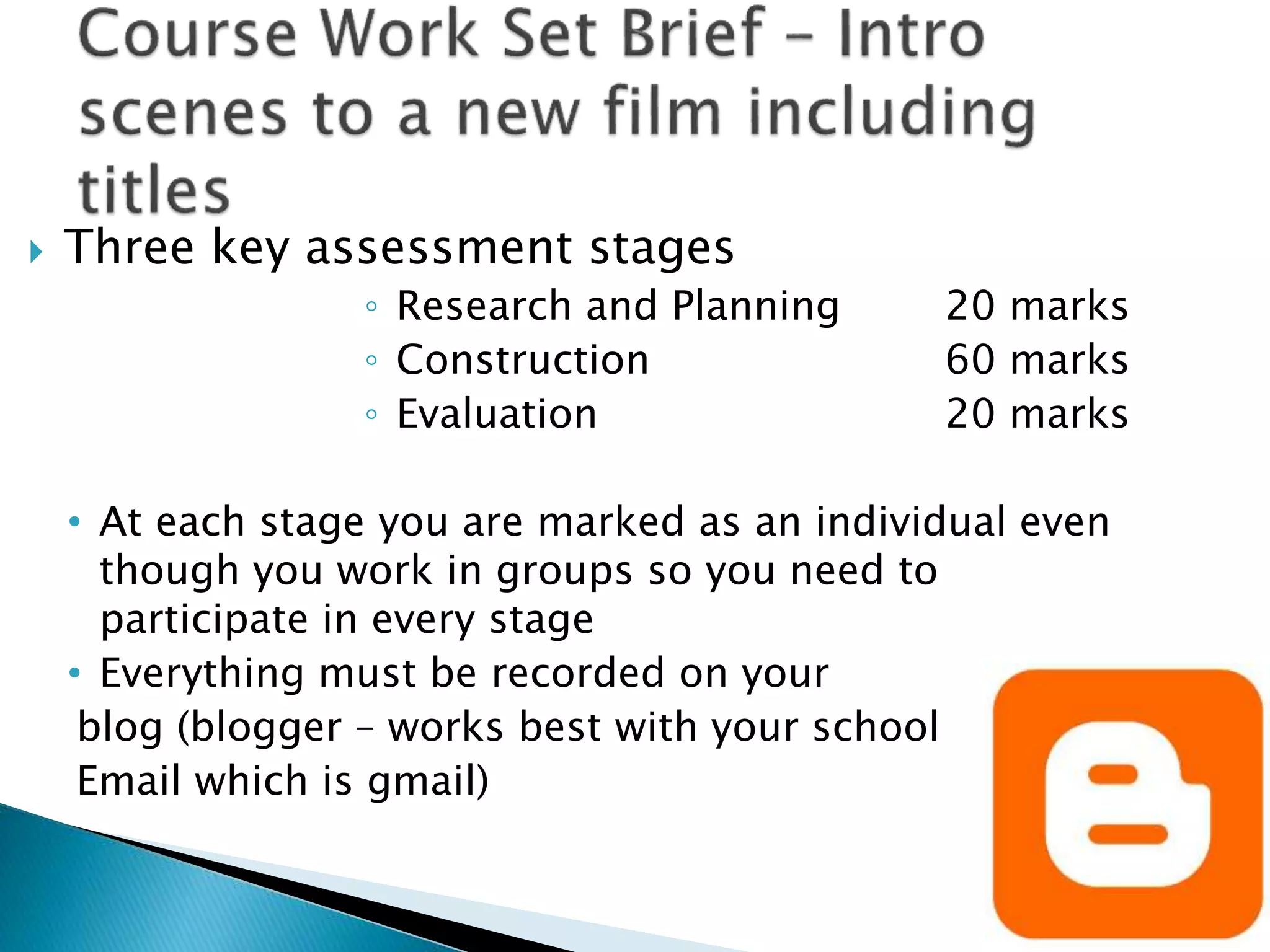
 Three key assessment stages
◦ Research and Planning 20 marks
◦ Construction 60 marks
◦ Evaluation 20 marks
• At each stage you are marked as an individual even
though you work in groups so you need to
participate in every stage
• Everything must be recorded on your
blog (blogger – works best with your school
Email which is gmail)
 Involves everything from finding out about
the Thriller genre through to creating the
storyboard and shot lists.
 Involves some class work but a lot of group
and individual work
 Will start by looking at the genre and then
brainstorm your initial ideas
 Preliminary exercise – chance to learn and
practice key skills (match on action, shot
reverse shot and 180 degree rule)
 Marks given for the following:
◦ Research in to similar products (other films and
student work)
◦ Research into the potential target audience (both at
the start and throughout the project)
◦ Organisation of Actors, Locations, Costumes and
Props
◦ Shotlists, layouts, drafting, scripting and/or
storyboarding
◦ Level of care in presentation – including use of
technology!!!!
◦ Time management
 Everything from the initial filming through to
editing and adding sound and/or special
effects.
 You will need to get approval for your
footage.
 Produce a draft edit for marking.
 Keep your blog updated with progress
reports
 Gather audience feedback
 Solely group work but there will be regular
meetings with your teacher to discuss
progress
 Marks are awarded for:
◦ holding a shot steady, where appropriate;
◦ framing a shot, including and excluding elements
as appropriate;
◦ using a variety of shot distances as appropriate;
◦ shooting material appropriate to the task set;
◦ selecting mise-en-scène including colour, figure,
lighting, objects and setting;
◦ editing so that meaning is apparent to the viewer;
◦ using varied shot transitions and other effects
selectively and appropriately for the task set;
◦ using sound with images and editing appropriately
for the task set;
◦ using titles appropriately.
1. In what ways does your media product use,
develop or challenge forms and conventions of
real media products?
2. How does your media product represent
particular social groups?
3. What kind of media institution might distribute
your media product and why?
4. Who would be the audience for your media
product?
5. How did you attract/address your audience?
6. What have you learnt about technologies from
the process of constructing this product?
7. Looking back at your preliminary task, what do
you feel you have learnt in the progression from
it to the full product?
 While you will work in groups you will get an
individual mark for all three stages.
 ‘Tagging’ on the blog will be important
(research, planning, audience
research/feedback, filming, editing,
evaluation)
 ‘Teacher evidence’ is a big factor in the
construction and evaluation phases. You
need to be fully involved at all stages of your
mark will reflect a lack of involvement
 What films did you watch?
◦ Get into small groups. Discuss what thriller films
you have seen recently. Look at the list provided to
remind yourself of other films
◦ What things do thriller have in common? Think
about narrative (events) and characters, the mood,
effects on the audience, use of technical elements
like camera, sound, mise en scene, editing etc)
 Genre Recipe
◦ Make a list of ten key ‘ingredient’ that would make
up a film (include measurements!).
◦ Write baking style instructions as to how you would
combine the ingredients to make the perfect film
◦ Illustrate with pictures….
 If we could only watch one film this year what
should it be?
◦ Pick any film that you love and explain why it is a
film that everyone should watch
◦ Try to give strong reasons (think about the
narrative, characters, actors performance, impact it
had on you, the way it used film techniques –
sound, camera, mise en scene, editing etc)
◦ 300 – 500 words
◦ Due in 15th Sept

Intro to as media 2016 17

  • 1.
  • 3.
    Star Wars Planetof the Apes Usual Suspects The Wicker Man The Crying Game Dallas Harry Potter 6 Sixth Sense Fight Club 300 Matrix Citizen Kane The Others Psycho Soylent Green The Village Beautiful Mind Donnie Darko
  • 4.
     Examination Body–OCR  AS Code is H140 ◦ G321: Foundation Portfolio in Media (Coursework 50%) ◦ G322: Key Media Concepts -TV Drama and Institutions and Audiences (2 hour Exam 50%)
  • 5.
     100% Attendanceis the goal (You are expected to catch up and this includes homework)  5 hours of study outside of class time ◦ Research topics (go beyond what has been set), filming and editing, extension reading (borrowing library at the back of the room, MediaMagazine, internet and ask your teachers) ◦ Practice questions (go beyond what has been set in class) ◦ Watching ‘stuff’  Positive Attitude to everything
  • 6.
     2 hours 2 questions each worth 50 marks  Q1: TV Drama- Focus on representation through:  Mise en scene  Sound  Camera  Editing
  • 7.
     Q2: Audienceand Institution  We will look at how audiences and technology affect independent and mainstream institutions.  Don’t worry there will be lots of practice!!
  • 8.
  • 9.
     Three keyassessment stages ◦ Research and Planning 20 marks ◦ Construction 60 marks ◦ Evaluation 20 marks • At each stage you are marked as an individual even though you work in groups so you need to participate in every stage • Everything must be recorded on your blog (blogger – works best with your school Email which is gmail)
  • 10.
     Involves everythingfrom finding out about the Thriller genre through to creating the storyboard and shot lists.  Involves some class work but a lot of group and individual work  Will start by looking at the genre and then brainstorm your initial ideas  Preliminary exercise – chance to learn and practice key skills (match on action, shot reverse shot and 180 degree rule)
  • 11.
     Marks givenfor the following: ◦ Research in to similar products (other films and student work) ◦ Research into the potential target audience (both at the start and throughout the project) ◦ Organisation of Actors, Locations, Costumes and Props ◦ Shotlists, layouts, drafting, scripting and/or storyboarding ◦ Level of care in presentation – including use of technology!!!! ◦ Time management
  • 12.
     Everything fromthe initial filming through to editing and adding sound and/or special effects.  You will need to get approval for your footage.  Produce a draft edit for marking.  Keep your blog updated with progress reports  Gather audience feedback  Solely group work but there will be regular meetings with your teacher to discuss progress
  • 13.
     Marks areawarded for: ◦ holding a shot steady, where appropriate; ◦ framing a shot, including and excluding elements as appropriate; ◦ using a variety of shot distances as appropriate; ◦ shooting material appropriate to the task set; ◦ selecting mise-en-scène including colour, figure, lighting, objects and setting; ◦ editing so that meaning is apparent to the viewer; ◦ using varied shot transitions and other effects selectively and appropriately for the task set; ◦ using sound with images and editing appropriately for the task set; ◦ using titles appropriately.
  • 14.
    1. In whatways does your media product use, develop or challenge forms and conventions of real media products? 2. How does your media product represent particular social groups? 3. What kind of media institution might distribute your media product and why? 4. Who would be the audience for your media product? 5. How did you attract/address your audience? 6. What have you learnt about technologies from the process of constructing this product? 7. Looking back at your preliminary task, what do you feel you have learnt in the progression from it to the full product?
  • 15.
     While youwill work in groups you will get an individual mark for all three stages.  ‘Tagging’ on the blog will be important (research, planning, audience research/feedback, filming, editing, evaluation)  ‘Teacher evidence’ is a big factor in the construction and evaluation phases. You need to be fully involved at all stages of your mark will reflect a lack of involvement
  • 16.
     What filmsdid you watch? ◦ Get into small groups. Discuss what thriller films you have seen recently. Look at the list provided to remind yourself of other films ◦ What things do thriller have in common? Think about narrative (events) and characters, the mood, effects on the audience, use of technical elements like camera, sound, mise en scene, editing etc)
  • 17.
     Genre Recipe ◦Make a list of ten key ‘ingredient’ that would make up a film (include measurements!). ◦ Write baking style instructions as to how you would combine the ingredients to make the perfect film ◦ Illustrate with pictures….
  • 18.
     If wecould only watch one film this year what should it be? ◦ Pick any film that you love and explain why it is a film that everyone should watch ◦ Try to give strong reasons (think about the narrative, characters, actors performance, impact it had on you, the way it used film techniques – sound, camera, mise en scene, editing etc) ◦ 300 – 500 words ◦ Due in 15th Sept

Editor's Notes

  • #11 Give out handout and go through key points – kids to add comments/highlight stuff
  • #12 Discuss how we can ‘prove’ all of this