Downloaded 20 times

![6編の研究成果
9
[1] Okumura Y, Tachimori H, Matsumoto T, Nishi D: Exposure to psychotropic medications prior to overdose: A case-control study. Psychopharmacology 232 (16): 3101-3109, 2015.
[2] Okumura Y, Shimizu S, Matsumoto T: Prevalence, prescribed quantities, and trajectory of multiple prescriber episodes for benzodiazepines: A 2-year cohort study. Drug and
Alcohol Dependence 158: 118-125, 2016.
[3] 引地和歌子, 奥村泰之, 松本俊彦, 谷藤隆信, 鈴木秀人, 竹島正, 福永龍繁: 過量服薬による致死性の高い精神科治療薬の同定: 東京都監察医務院事例と処方データを用いた症例対照
研究. 精神神経学雑誌 118: 3-13, 2016.
[4] Ichikura K, Okumura Y (corresponding author), Takeuchi T: Associations of adverse clinical course and ingested substances among patients with deliberate drug-poisoning: a
cohort study from an intensive care unit in Japan. PLOS ONE 11(8): e0161996, 2016.
[5] Okumura Y, Sakata N, Takahashi K, Nishi D, Tachimori H: Epidemiology of overdose episodes from the period prior to hospitalization for drug poisoning until discharge in Japan:
an exploratory descriptive study using a nationwide claims database. Journal of Epidemiology. in press.
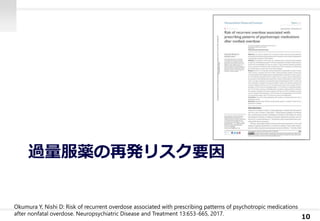
[6] Okumura Y, Nishi D: Risk of recurrent overdose associated with prescribing patterns of psychotropic medications after nonfatal overdose. Neuropsychiatric Disease and
Treatment 13:653-665, 2017.](https://image.slidesharecdn.com/suicideokumura-171001061856/85/slide-9-320.jpg)
![自殺未遂者ガイドライン,
専門家による全例アセスメントを推奨
11
People attending hospital after an episode of
self-harm should all receive a biopsychosocial
assessment, done in accordance with the NICE
guideline, by a clinician with adequate skill
and experience.
All people who have self-harmed should be offered an
assessment of needs, which should be comprehensive
and include evaluation of the social, psychological and
motivational factors specific to the act of self-harm,
current suicidal intent and hopelessness, as well as a
full mental health and social needs assessment.
[1] National Institute for Health and Clinical Excellence: Self-harm: the Short-term Physical and Psychological Management
and Secondary Prevention of Self-harm in Primary and Secondary Care. 2004.
[2] Royal College of Psychiatrists: Self-harm, Suicide and Risk: Helping People who Self-harm. 2010.](https://image.slidesharecdn.com/suicideokumura-171001061856/85/slide-11-320.jpg)
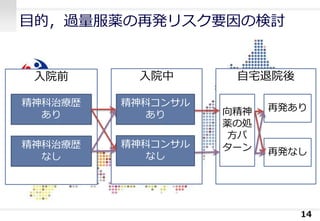
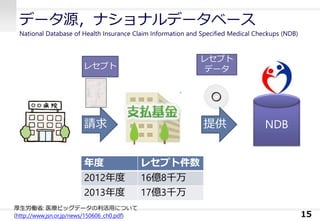
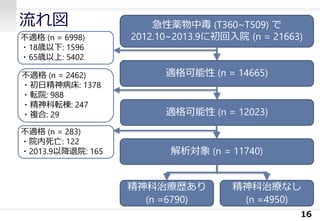
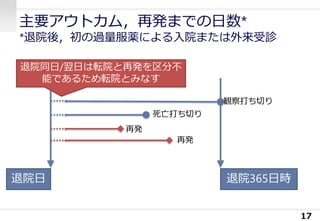
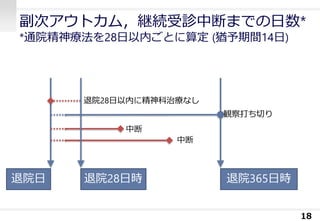
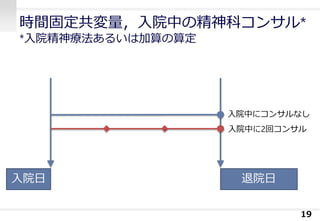
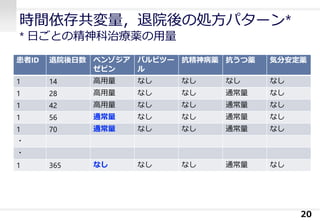
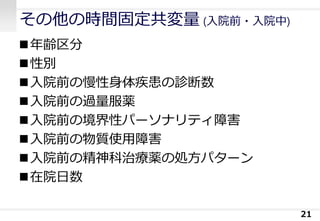
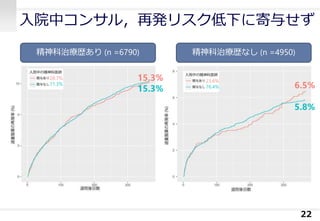
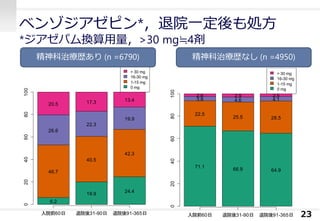
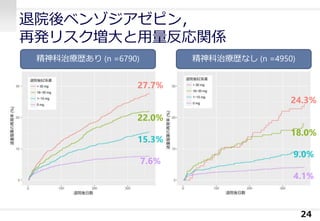
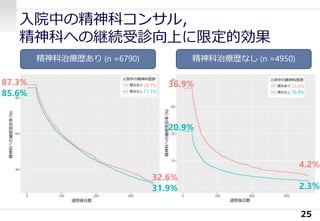
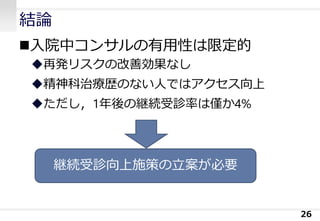
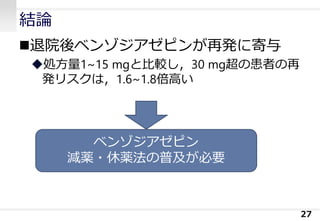

Okumura Y, Nishi D: Risk of recurrent overdose associated with prescribing patterns of psychotropic medications after nonfatal overdose. Neuropsychiatric Disease and Treatment 13: 653-665, 2017. https://doi.org/10.2147/NDT.S128278


