OER Degrees Panel:
Impact at U.S. Community
Colleges
Richard Sebastian, Achieving the Dream
Quill West, Pierce College, WA
James Glapa-Grossklag, College of the Canyons, CA
Preston Davis, Northern Virginia Community College, VA
Una Daly, Open Education Consortium
Unless otherwise indicated, this presentation is licensed CC-BY 4.0
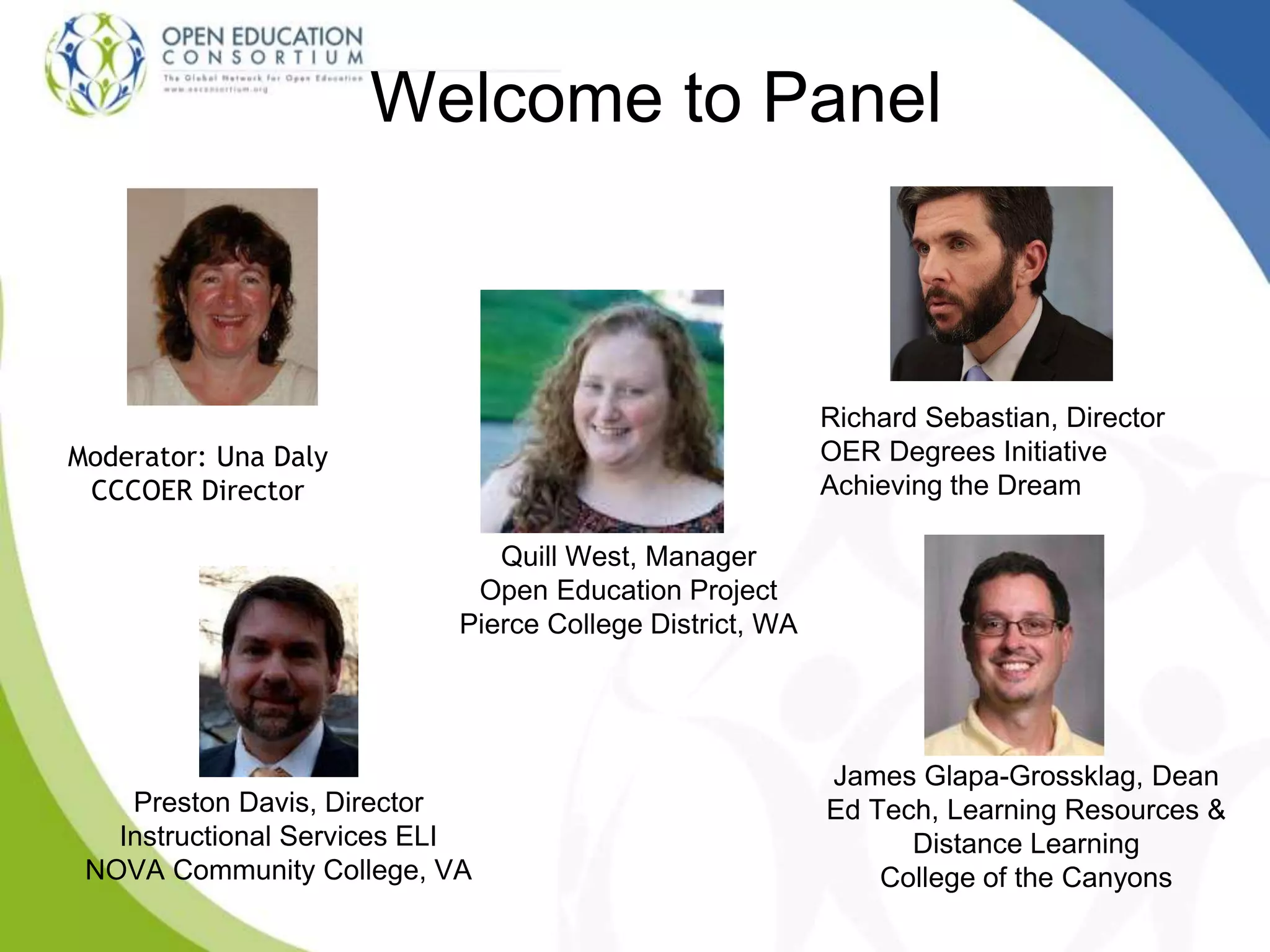
Welcome to Panel
Moderator: Una Daly
CCCOER Director
James Glapa-Grossklag, Dean
Ed Tech, Learning Resources &
Distance Learning
College of the Canyons
Quill West, Manager
Open Education Project
Pierce College District, WA
Preston Davis, Director
Instructional Services ELI
NOVA Community College, VA
Richard Sebastian, Director
OER Degrees Initiative
Achieving the Dream
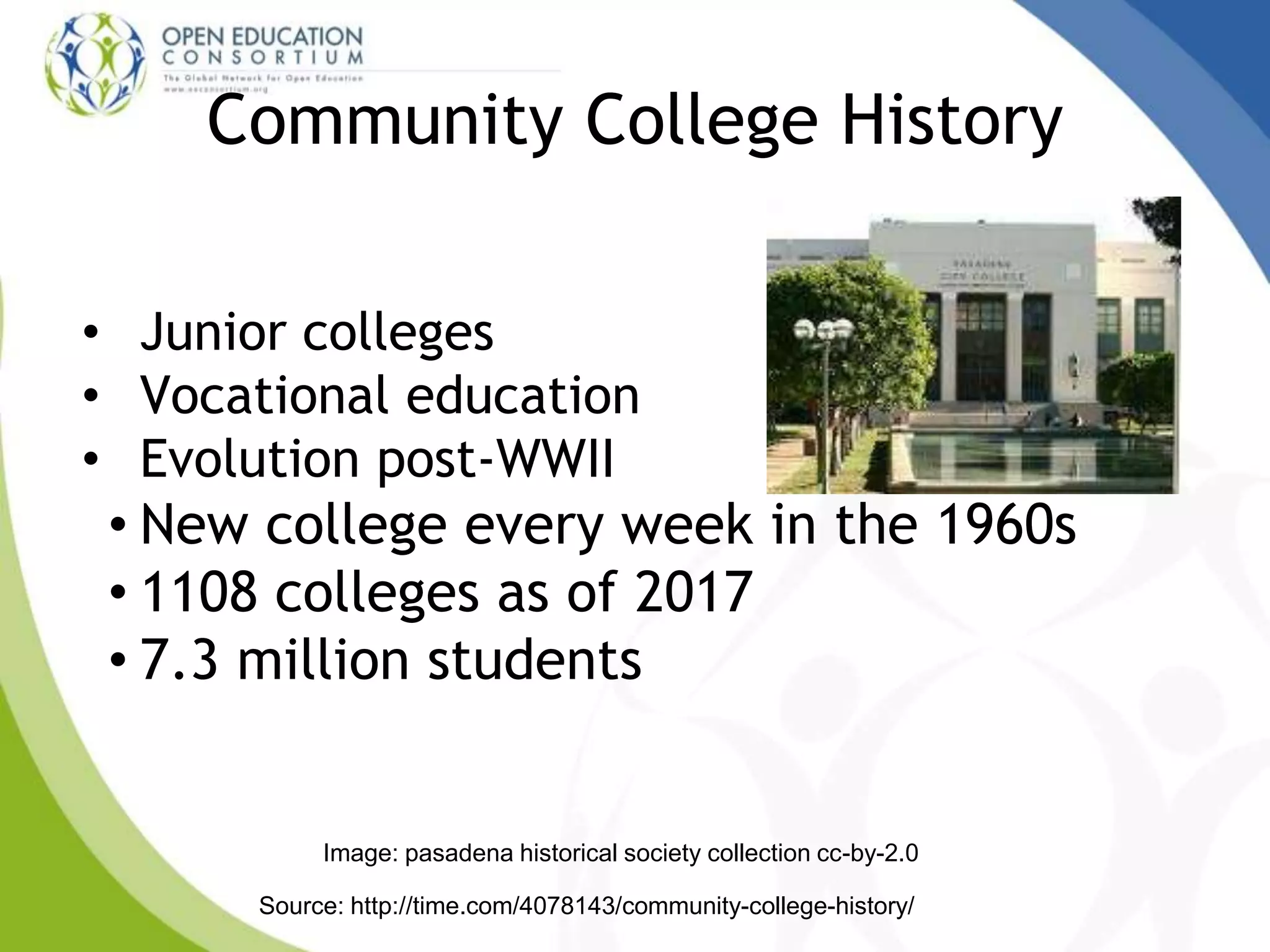
Community College History
• Junior colleges
• Vocational education
• Evolution post-WWII
• New college every week in the 1960s
• 1108 colleges as of 2017
• 7.3 million students
Image: pasadena historical society collection cc-by-2.0
Source: http://time.com/4078143/community-college-history/
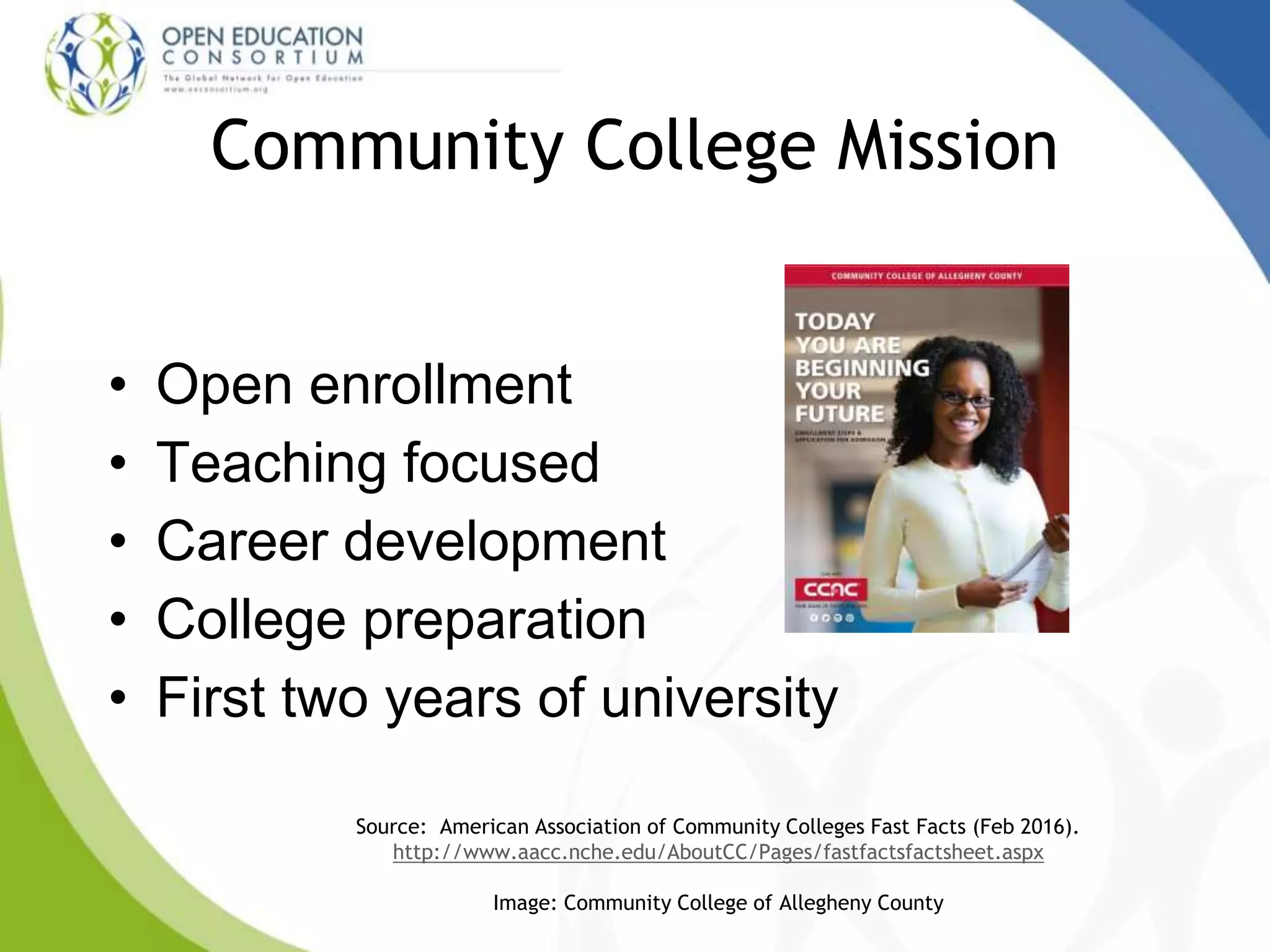
Community College Mission
• Open enrollment
• Teaching focused
• Career development
• College preparation
• First two years of university
Source: American Association of Community Colleges Fast Facts (Feb 2016).
http://www.aacc.nche.edu/AboutCC/Pages/fastfactsfactsheet.aspx
Image: Community College of Allegheny County
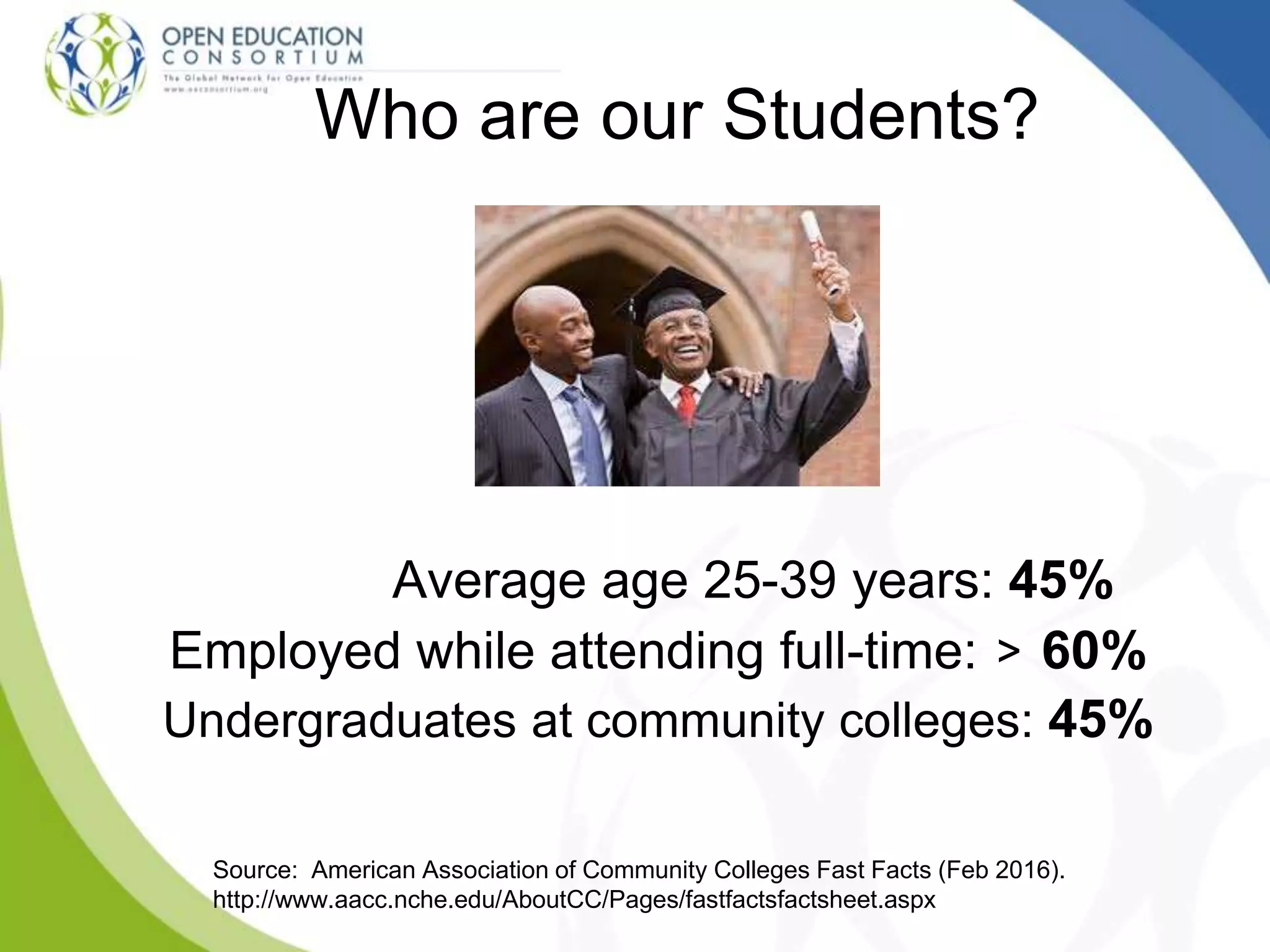
Average age 25-39 years: 45%
Employed while attending full-time: > 60%
Undergraduates at community colleges: 45%
Source: American Association of Community Colleges Fast Facts (Feb 2016).
http://www.aacc.nche.edu/AboutCC/Pages/fastfactsfactsheet.aspx
Who are our Students?
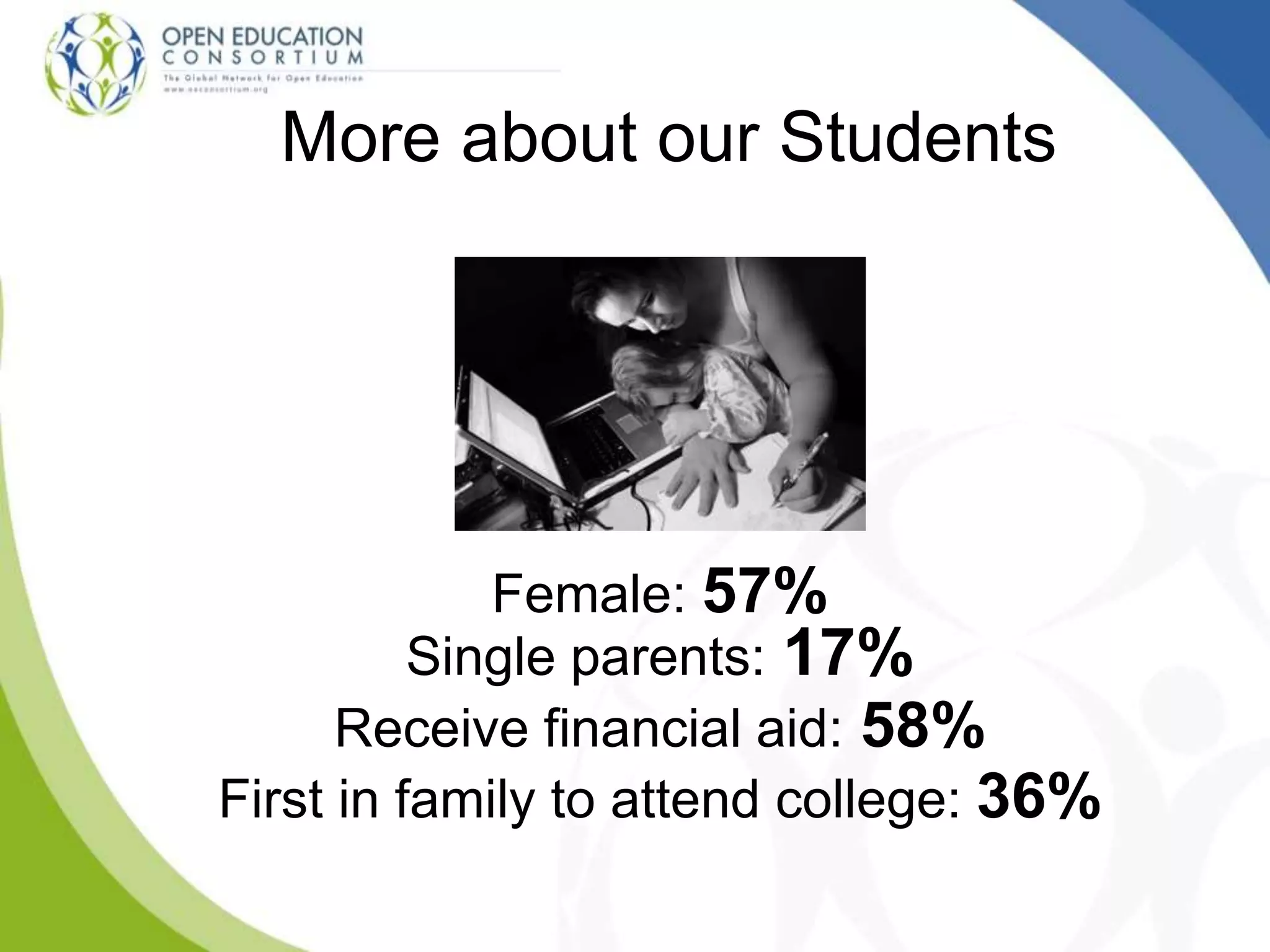
Female: 57%
Single parents: 17%
Receive financial aid: 58%
First in family to attend college: 36%
More about our Students
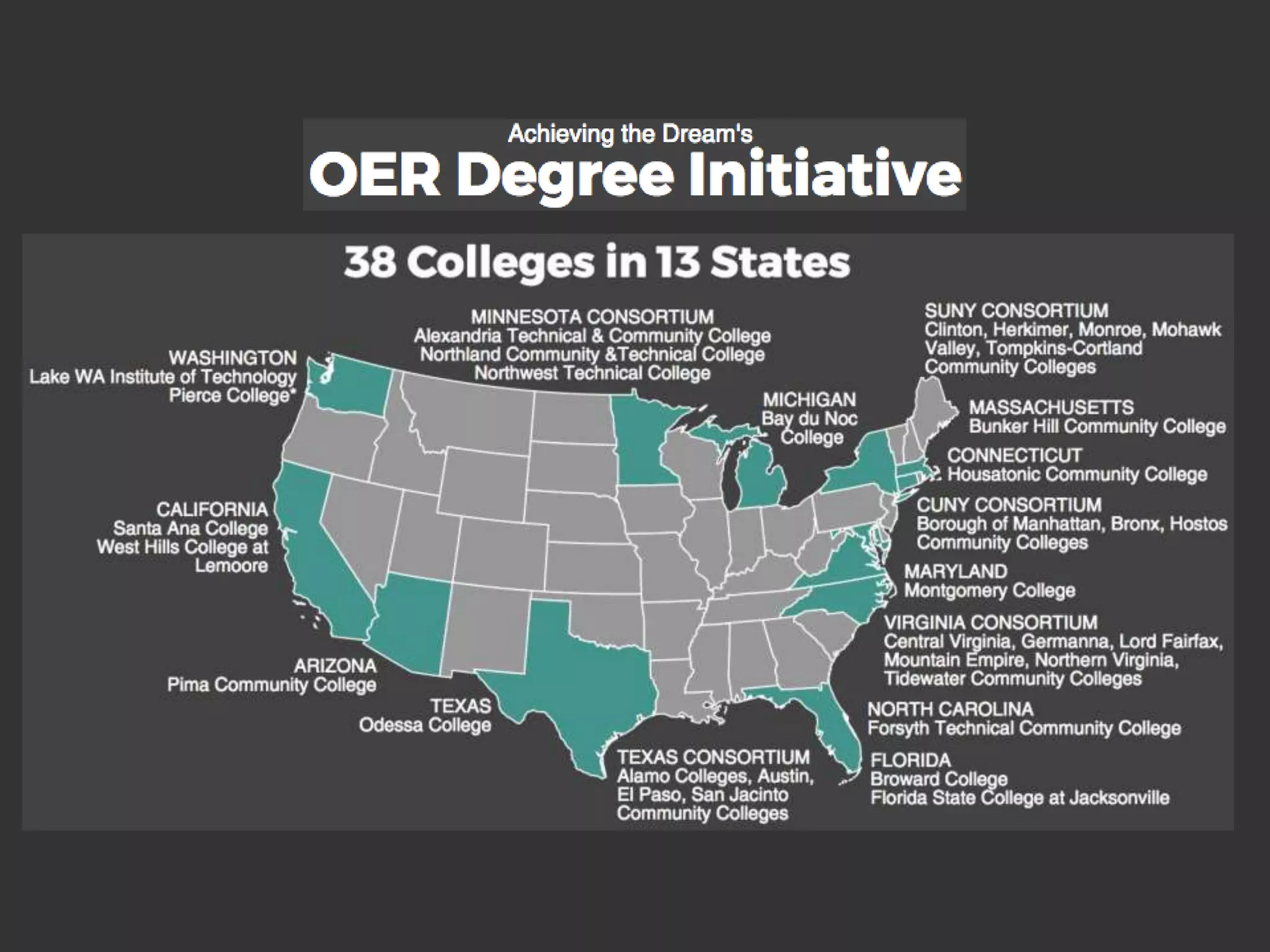
OER Degree Goals
Complete pathway of courses converted to
use OER instead of traditional textbooks
• Access & equity
• Degree completion
• Faculty choices
• Enhance pedagogy
• Grow open course repositories
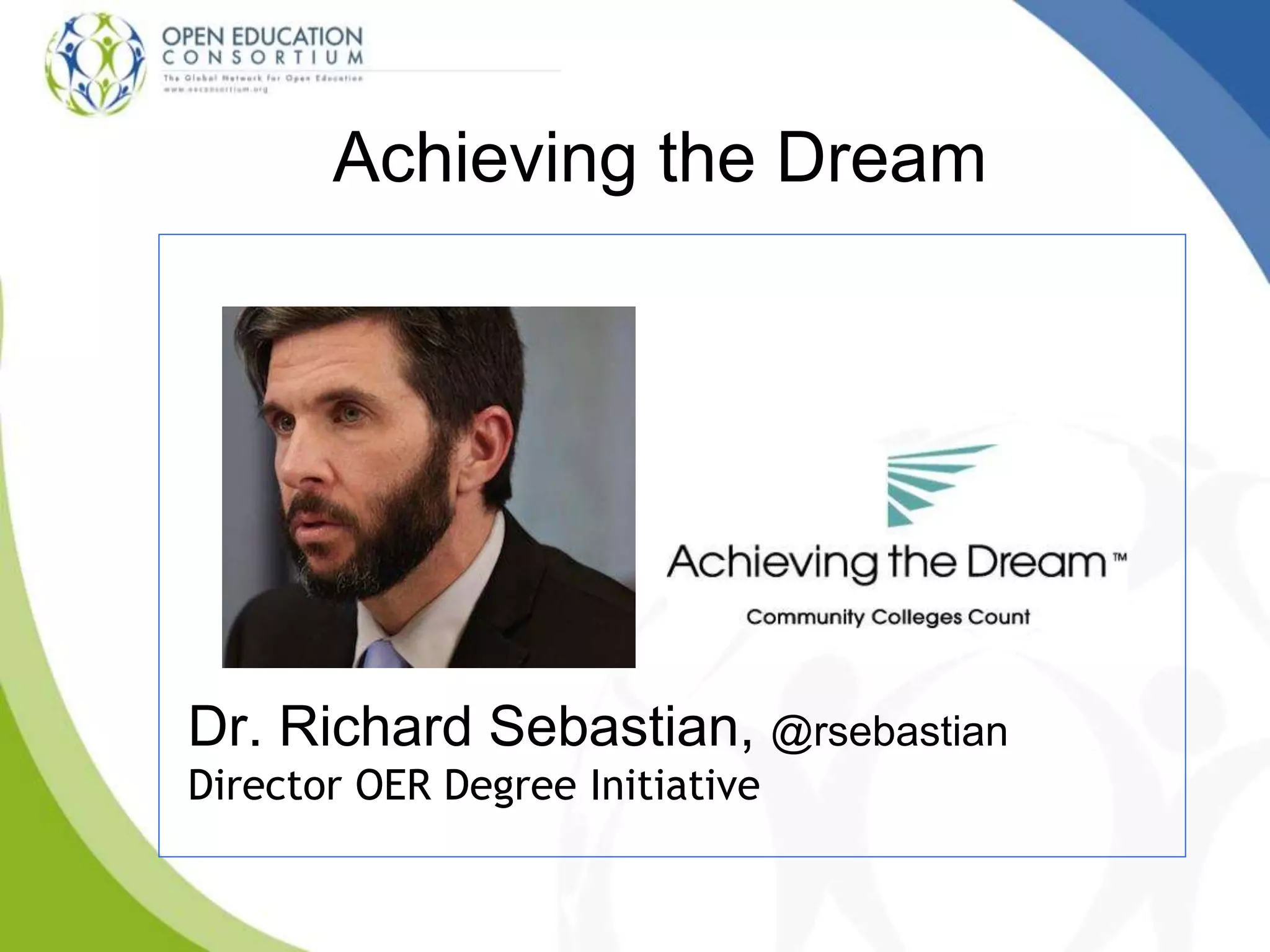
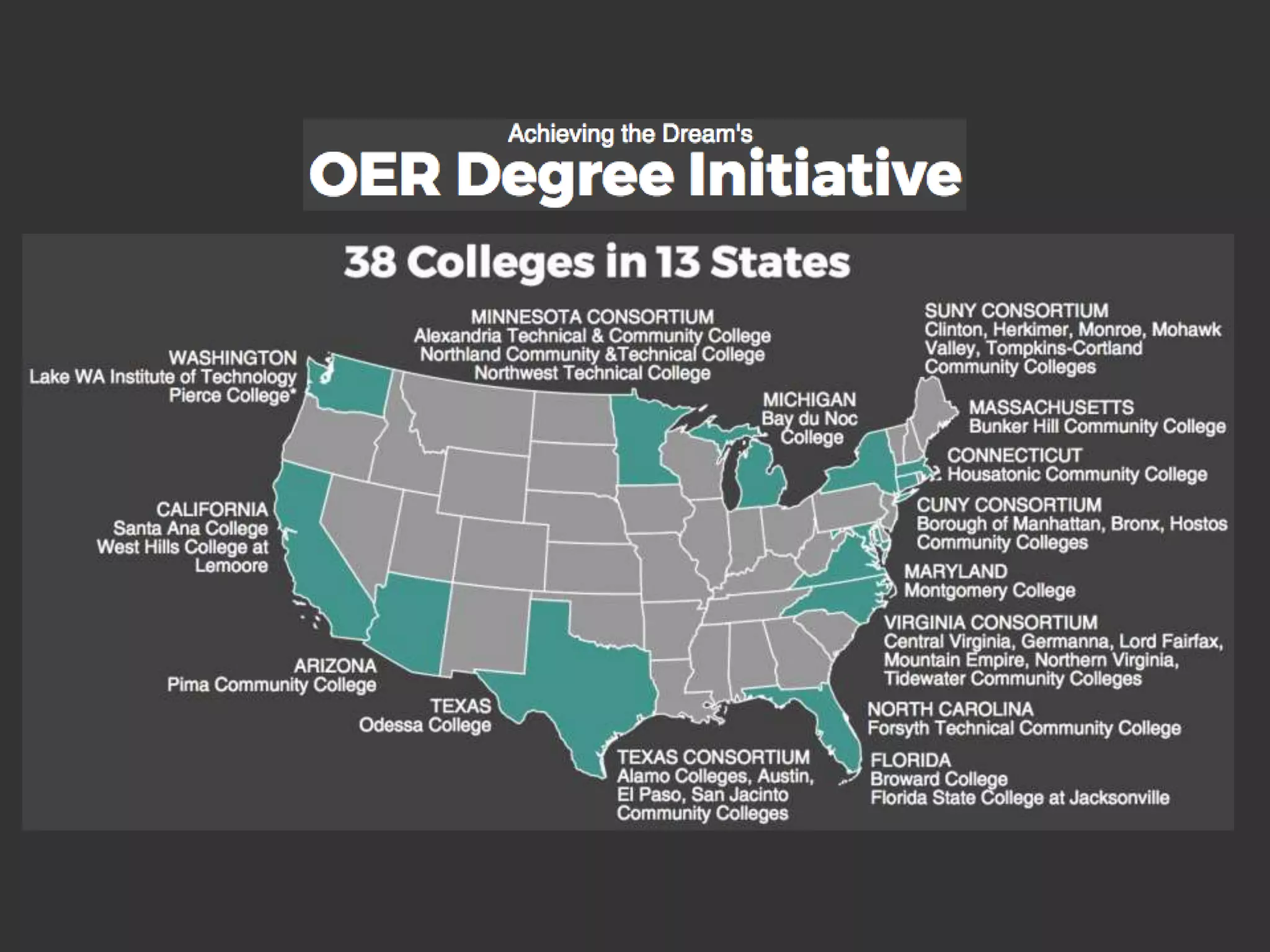
Achieving the Dream
Dr. Richard Sebastian, @rsebastian
Director OER Degree Initiative
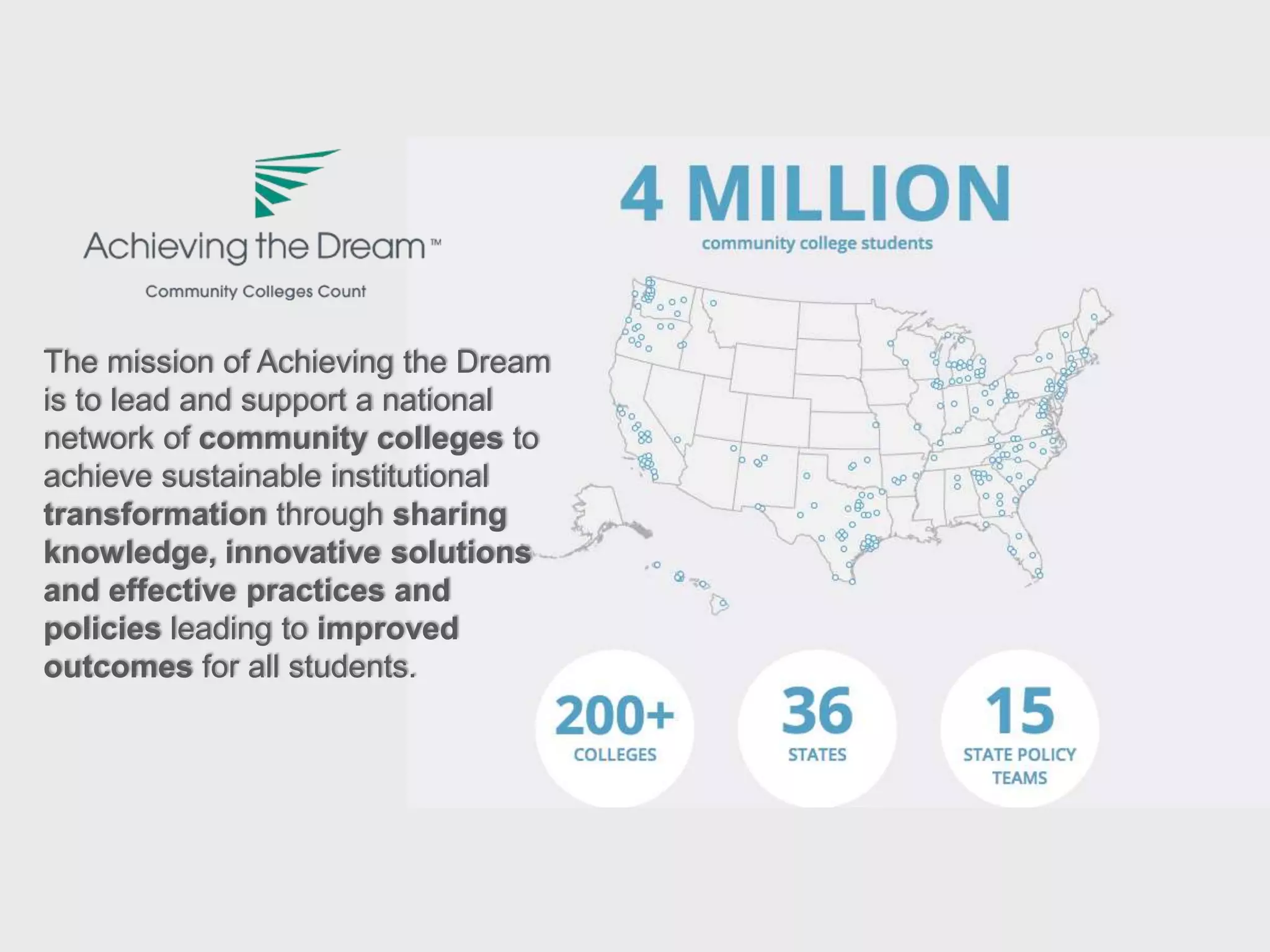
The mission of Achieving the Dream
is to lead and support a national
network of community colleges to
achieve sustainable institutional
transformation through sharing
knowledge, innovative solutions
and effective practices and
policies leading to improved
outcomes for all students.
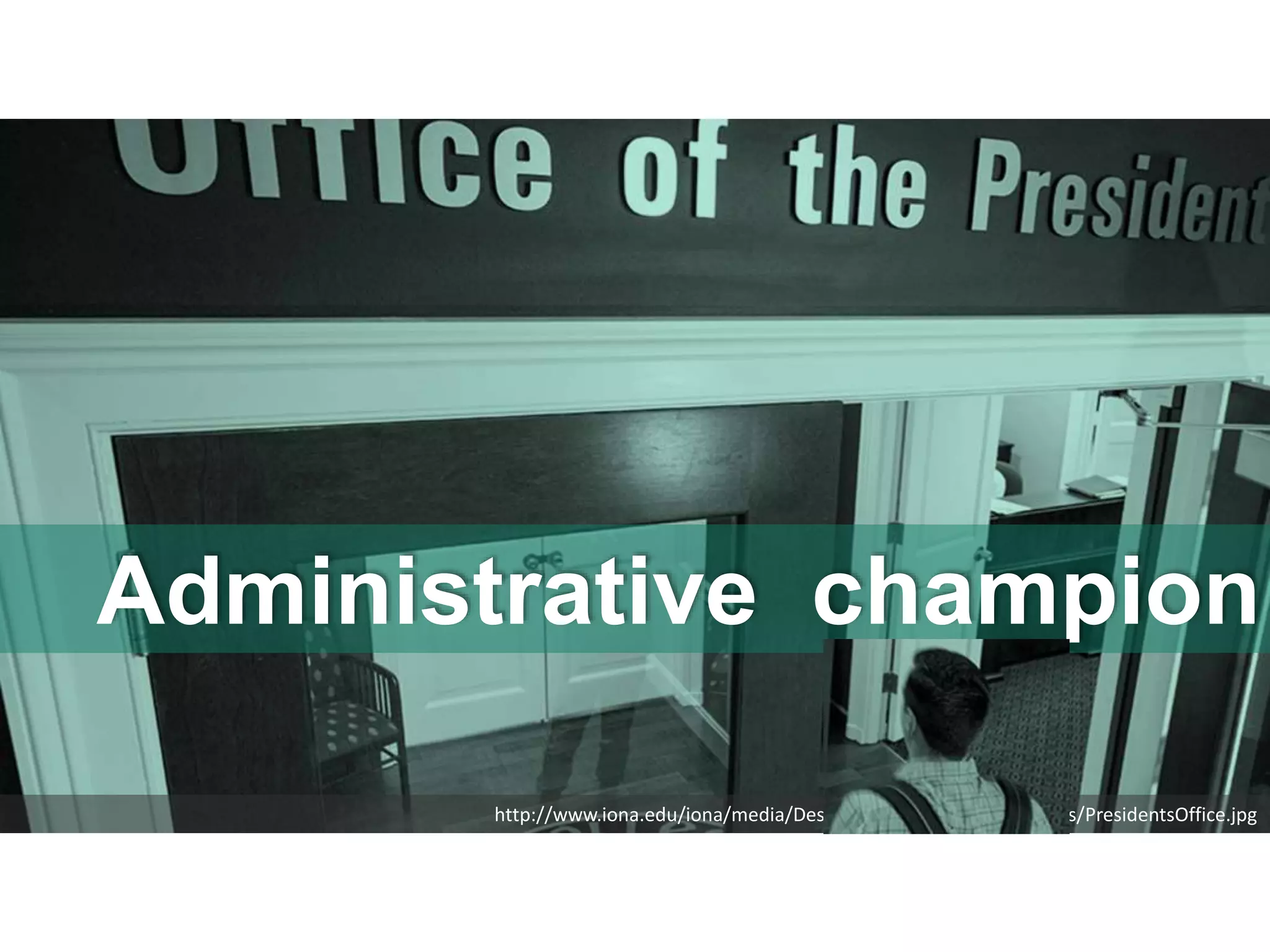
Administrative champion
http://www.iona.edu/iona/media/Design/1092x572_Page_Headers/PresidentsOffice.jpg
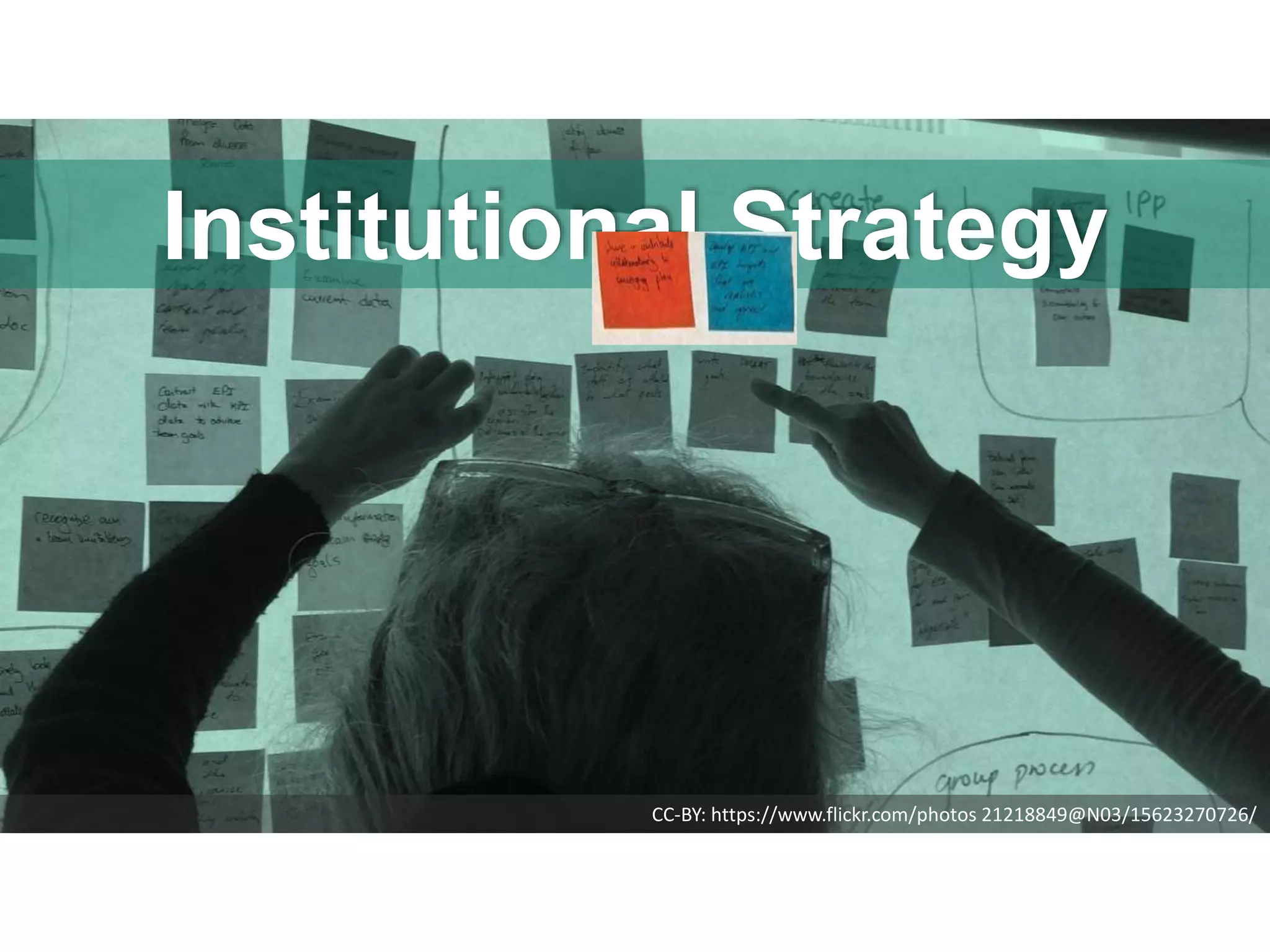
CC-BY: https://www.flickr.com/photos 21218849@N03/15623270726/
Institutional Strategy
Faculty Ownership
CC-0: https://www.pexels.com/photo/behind-of-woman-gesturing-6385/
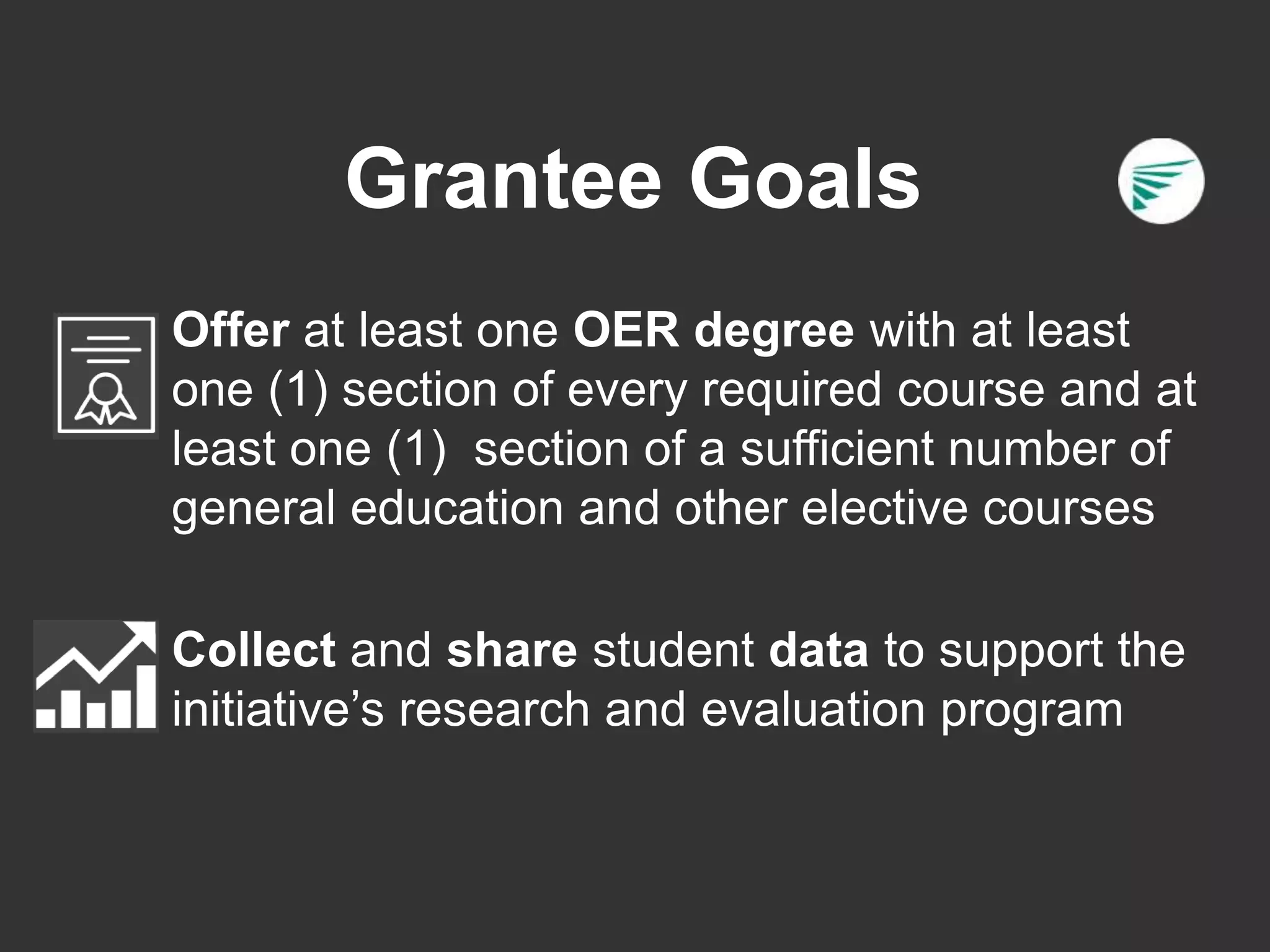
Offer at least one OER degree with at least
one (1) section of every required course and at
least one (1) section of a sufficient number of
general education and other elective courses
Collect and share student data to support the
initiative’s research and evaluation program
Grantee Goals
Share all educational materials developed
through this project with the public
Ensure access by and support for low
income students and students of color in
their OER degree programs
Grantee Goals
Research & evaluation
Educational outcomes of OER Degrees
Economic outcomes of OER Degrees
Implementation of OER Degrees
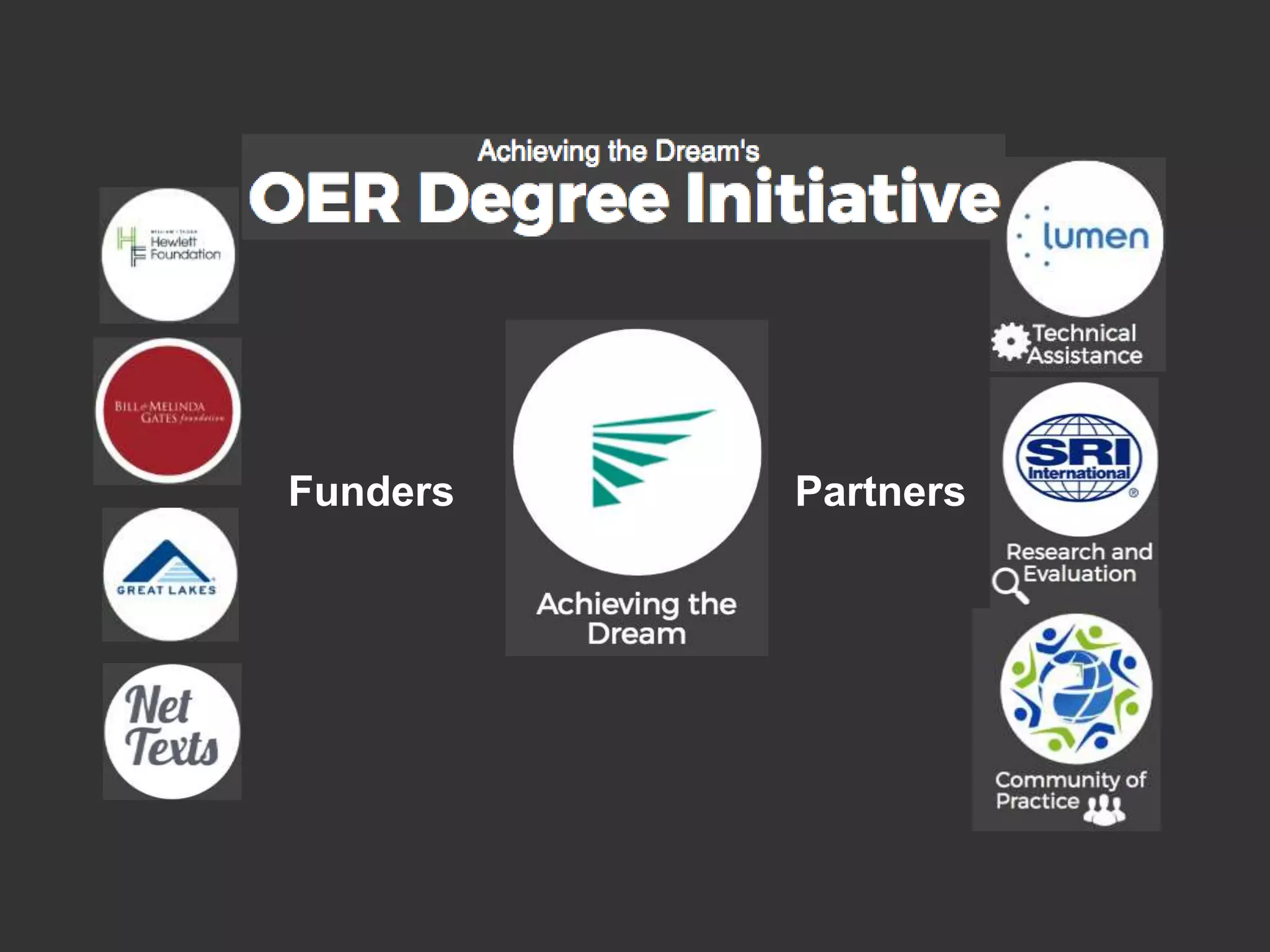
Funders Partners
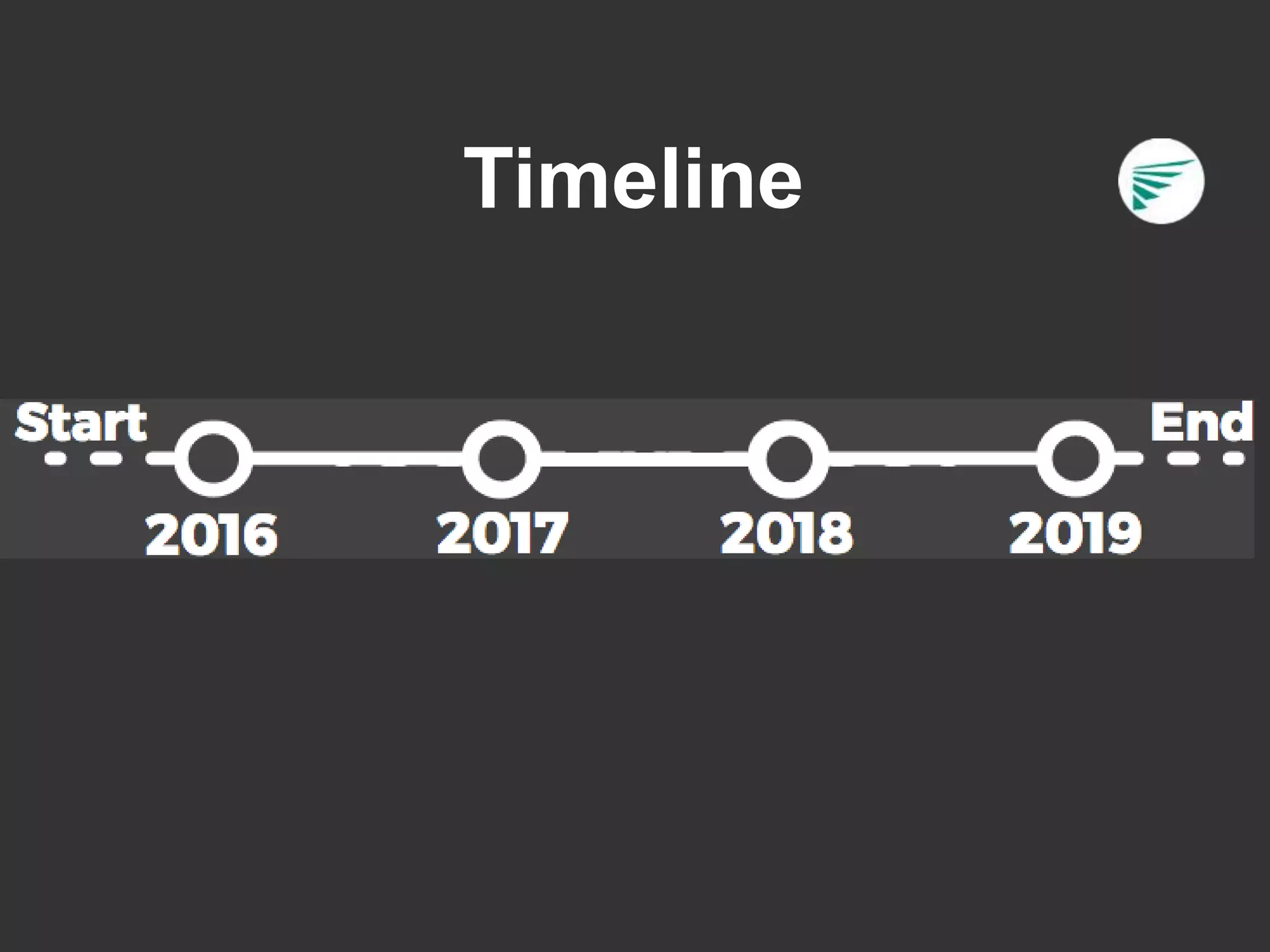
Timeline
Pierce Open Pathways
President, Community College Consortium for
Open Educational Resources (CCCOER)
Quill West, @quill_west
Open Education Project Manager
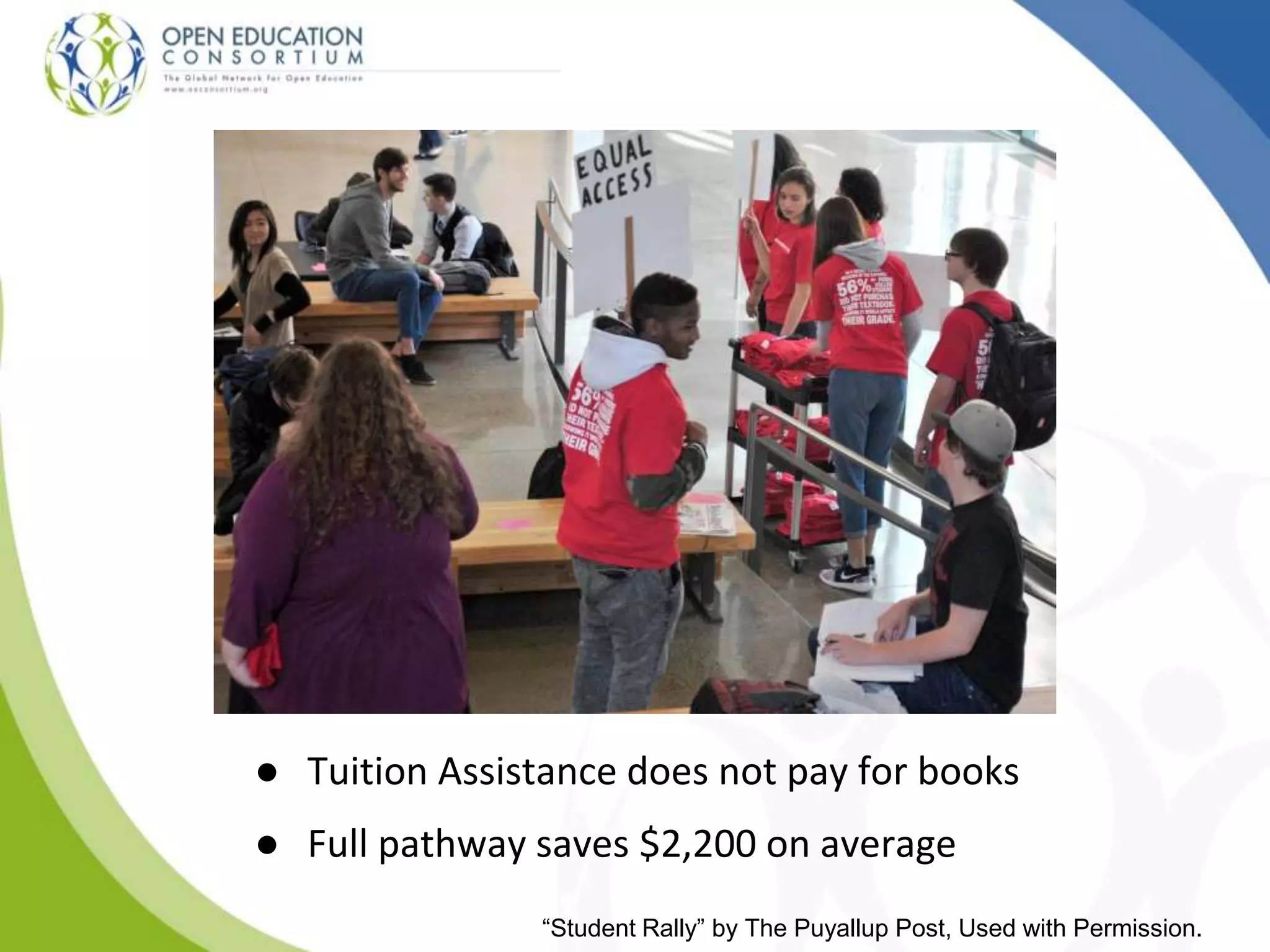
● Tuition Assistance does not pay for books
● Full pathway saves $2,200 on average
“Student Rally” by The Puyallup Post, Used with Permission.
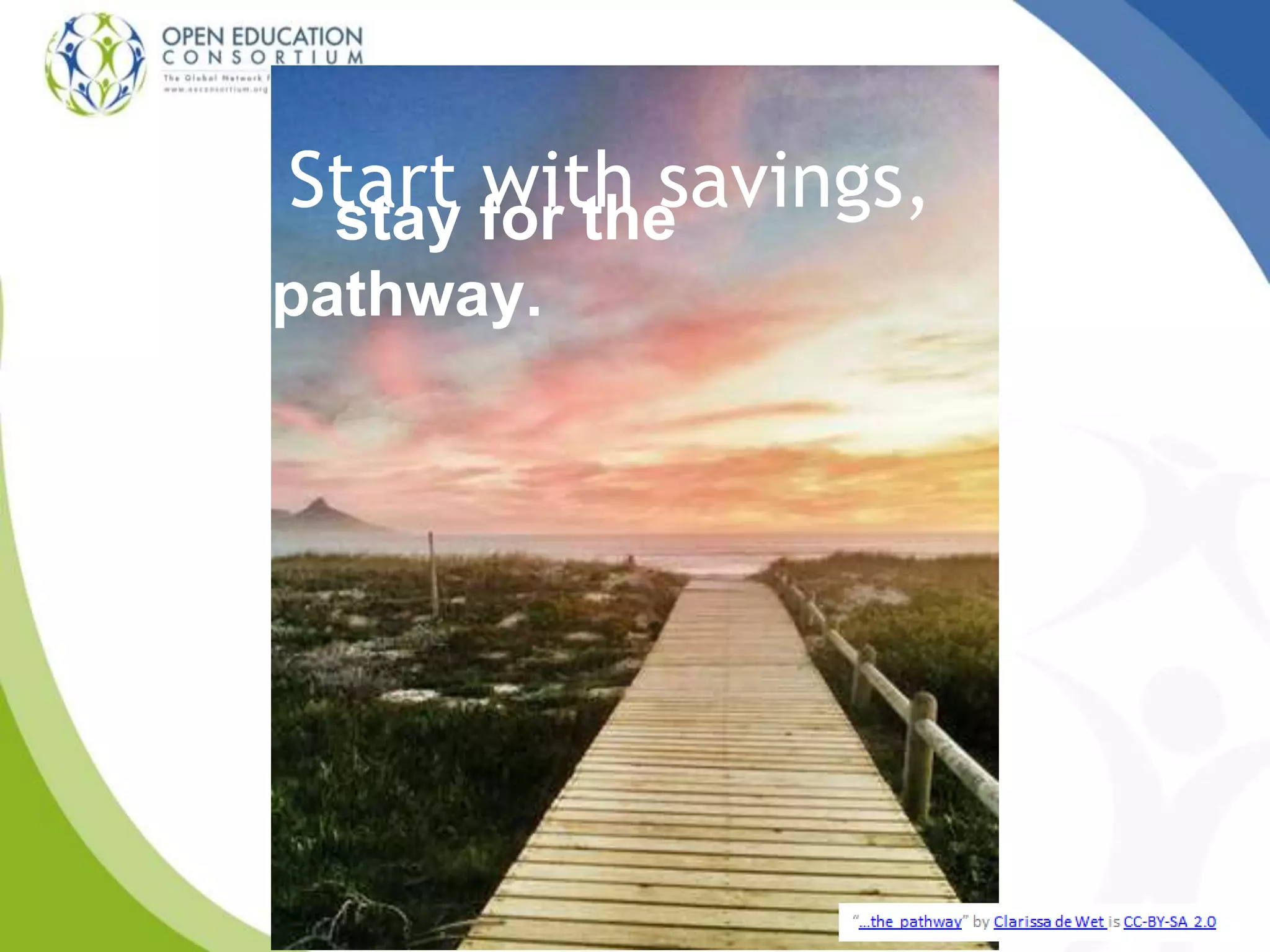
Start with savings,
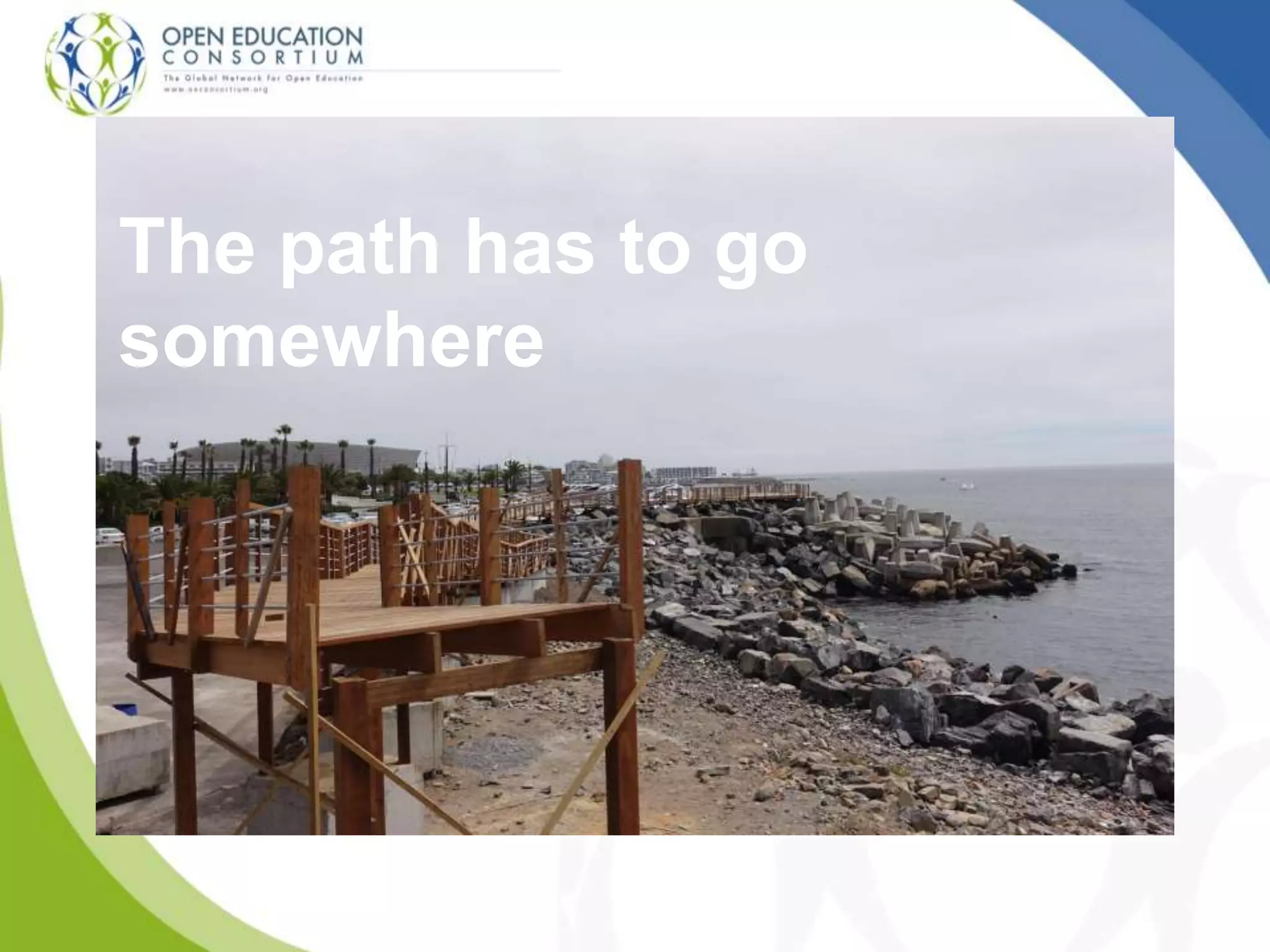
The path has to go
somewhere
OER Associate Degrees
Dr. Preston Davis, @lazyphilospher
Director of Instruction, Extended Learning Institute
VP, CCCOER Partnerships
Creating a Shared Vision
• Established goal of degree without textbook costs
• Selected popular online degree programs
• Partnered with innovative faculty
• Built a team (faculty, IDs, librarians, IT)
• Leveraged internal capacities and technologies
• Relied on OER community support
• Followed best practices of other OER leaders
• Shared OER courses with other institutions
• Used success to foster grassroots culture shift
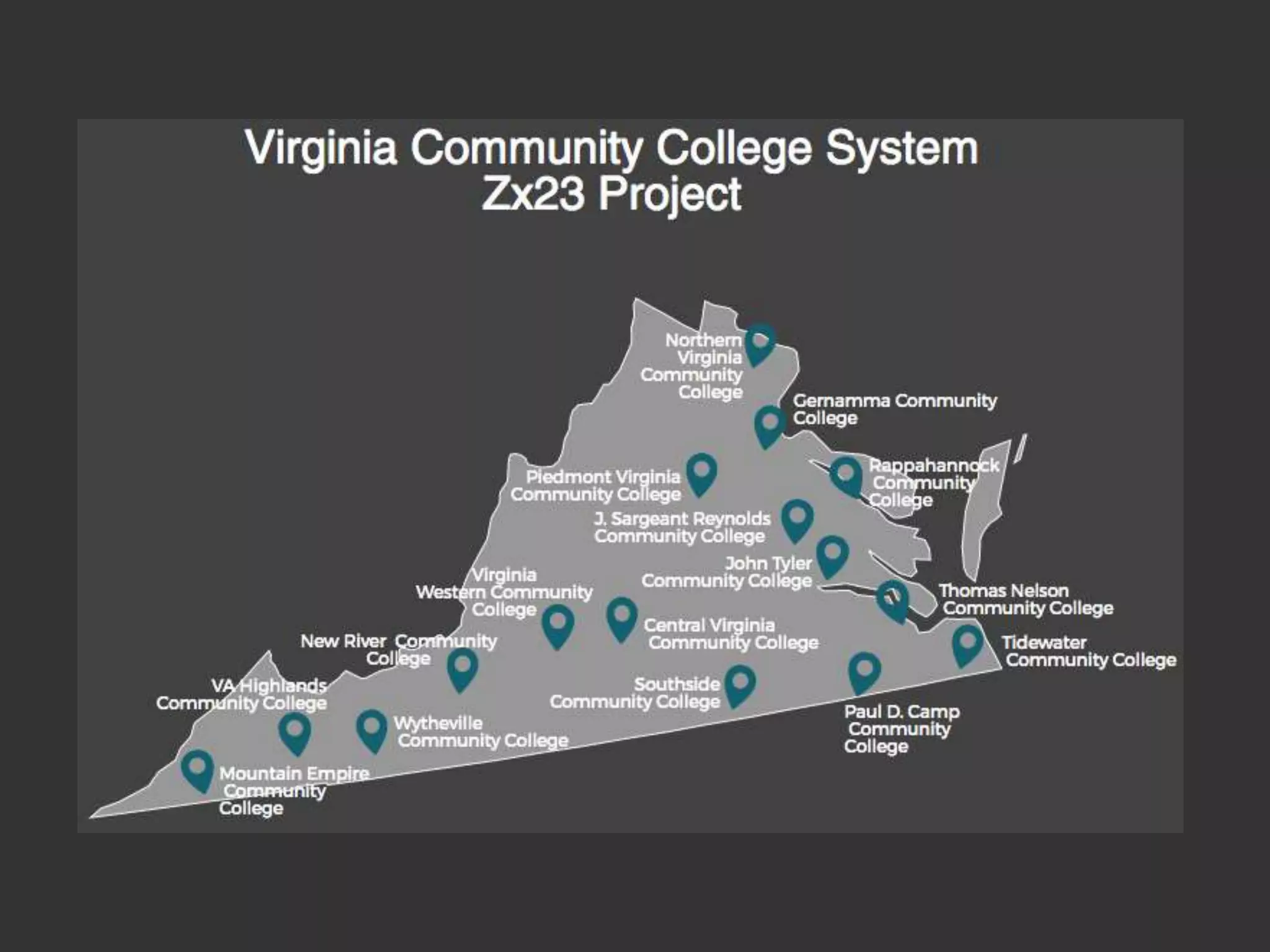
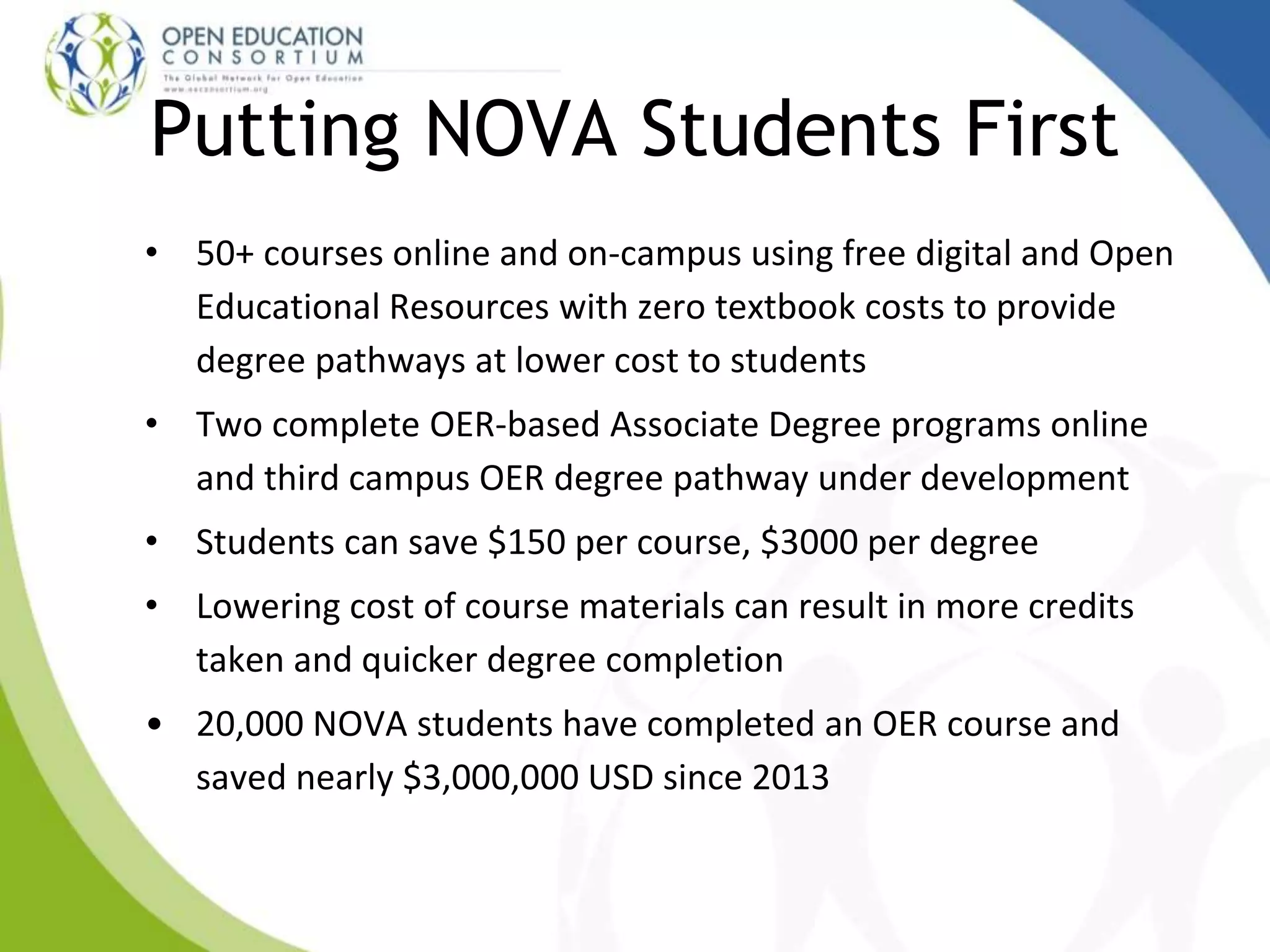
Putting NOVA Students First
• 50+ courses online and on-campus using free digital and Open
Educational Resources with zero textbook costs to provide
degree pathways at lower cost to students
• Two complete OER-based Associate Degree programs online
and third campus OER degree pathway under development
• Students can save $150 per course, $3000 per degree
• Lowering cost of course materials can result in more credits
taken and quicker degree completion
• 20,000 NOVA students have completed an OER course and
saved nearly $3,000,000 USD since 2013
We are the Future of Education
Z-Degrees in California
James Glapa-Grossklag @jglapagrossklag
Dean, Educational Technology, Learning Resources,
and Distance Learning
President, OEC Board of Directors
Leadership & Vision
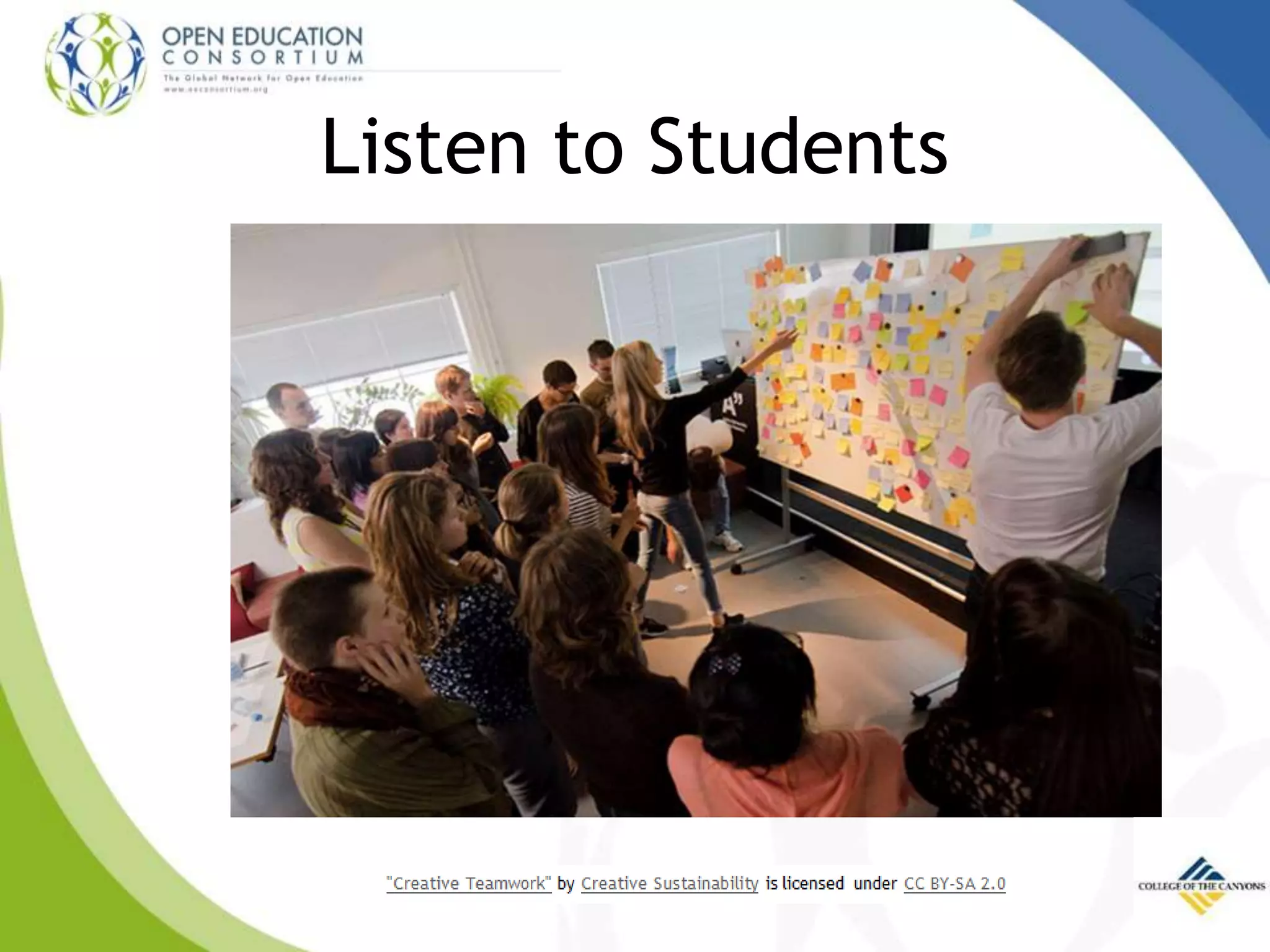
Listen to Students
Contact Info:
Una Daly : unatdaly@oeconsortium.org
Richard Sebastian: rsebastian@achievingthedream.org
James Glapa-Grossklag: James.Glapa-Grossklag@canyons.edu
Quill West: CWest@pierce.ctc.edu
Preston Davis : wdavis@nvcc.edu
Questions for our Panelists

OER-based Degree Pathways: Emerging Trends and Lessons Learned at U.S. Community Colleges

  • 1.
    OER Degrees Panel: Impactat U.S. Community Colleges Richard Sebastian, Achieving the Dream Quill West, Pierce College, WA James Glapa-Grossklag, College of the Canyons, CA Preston Davis, Northern Virginia Community College, VA Una Daly, Open Education Consortium Unless otherwise indicated, this presentation is licensed CC-BY 4.0
  • 2.
    Welcome to Panel Moderator:Una Daly CCCOER Director James Glapa-Grossklag, Dean Ed Tech, Learning Resources & Distance Learning College of the Canyons Quill West, Manager Open Education Project Pierce College District, WA Preston Davis, Director Instructional Services ELI NOVA Community College, VA Richard Sebastian, Director OER Degrees Initiative Achieving the Dream
  • 3.
    Community College History •Junior colleges • Vocational education • Evolution post-WWII • New college every week in the 1960s • 1108 colleges as of 2017 • 7.3 million students Image: pasadena historical society collection cc-by-2.0 Source: http://time.com/4078143/community-college-history/
  • 4.
    Community College Mission •Open enrollment • Teaching focused • Career development • College preparation • First two years of university Source: American Association of Community Colleges Fast Facts (Feb 2016). http://www.aacc.nche.edu/AboutCC/Pages/fastfactsfactsheet.aspx Image: Community College of Allegheny County
  • 5.
    Average age 25-39years: 45% Employed while attending full-time: > 60% Undergraduates at community colleges: 45% Source: American Association of Community Colleges Fast Facts (Feb 2016). http://www.aacc.nche.edu/AboutCC/Pages/fastfactsfactsheet.aspx Who are our Students?
  • 6.
    Female: 57% Single parents:17% Receive financial aid: 58% First in family to attend college: 36% More about our Students
  • 7.
    OER Degree Goals Completepathway of courses converted to use OER instead of traditional textbooks • Access & equity • Degree completion • Faculty choices • Enhance pedagogy • Grow open course repositories
  • 8.
    Achieving the Dream Dr.Richard Sebastian, @rsebastian Director OER Degree Initiative
  • 10.
    The mission ofAchieving the Dream is to lead and support a national network of community colleges to achieve sustainable institutional transformation through sharing knowledge, innovative solutions and effective practices and policies leading to improved outcomes for all students.
  • 12.
  • 13.
  • 14.
  • 16.
    Offer at leastone OER degree with at least one (1) section of every required course and at least one (1) section of a sufficient number of general education and other elective courses Collect and share student data to support the initiative’s research and evaluation program Grantee Goals
  • 17.
    Share all educationalmaterials developed through this project with the public Ensure access by and support for low income students and students of color in their OER degree programs Grantee Goals
  • 18.
    Research & evaluation Educationaloutcomes of OER Degrees Economic outcomes of OER Degrees Implementation of OER Degrees
  • 19.
  • 20.
  • 21.
    Pierce Open Pathways President,Community College Consortium for Open Educational Resources (CCCOER) Quill West, @quill_west Open Education Project Manager
  • 22.
    ● Tuition Assistancedoes not pay for books ● Full pathway saves $2,200 on average “Student Rally” by The Puyallup Post, Used with Permission.
  • 23.
  • 24.
    The path hasto go somewhere
  • 25.
    OER Associate Degrees Dr.Preston Davis, @lazyphilospher Director of Instruction, Extended Learning Institute VP, CCCOER Partnerships
  • 26.
    Creating a SharedVision • Established goal of degree without textbook costs • Selected popular online degree programs • Partnered with innovative faculty • Built a team (faculty, IDs, librarians, IT) • Leveraged internal capacities and technologies • Relied on OER community support • Followed best practices of other OER leaders • Shared OER courses with other institutions • Used success to foster grassroots culture shift
  • 27.
    Putting NOVA StudentsFirst • 50+ courses online and on-campus using free digital and Open Educational Resources with zero textbook costs to provide degree pathways at lower cost to students • Two complete OER-based Associate Degree programs online and third campus OER degree pathway under development • Students can save $150 per course, $3000 per degree • Lowering cost of course materials can result in more credits taken and quicker degree completion • 20,000 NOVA students have completed an OER course and saved nearly $3,000,000 USD since 2013
  • 28.
    We are theFuture of Education
  • 29.
    Z-Degrees in California JamesGlapa-Grossklag @jglapagrossklag Dean, Educational Technology, Learning Resources, and Distance Learning President, OEC Board of Directors
  • 30.
  • 31.
  • 35.
    Contact Info: Una Daly: unatdaly@oeconsortium.org Richard Sebastian: rsebastian@achievingthedream.org James Glapa-Grossklag: James.Glapa-Grossklag@canyons.edu Quill West: CWest@pierce.ctc.edu Preston Davis : wdavis@nvcc.edu Questions for our Panelists