INTERVENTIONS
PROPOSAL
Nikki Louise Shearer
PROJECT TITLE
How a phonics based program can improves the
decoding skills of a Year 6 student with reading
difficulties.
STATEMENT OF ISSUE
 Noah (pseudonym) has difficulties reading which have
affected all learning areas in school
 The classroom teacher has identified a weakness with
identifying and sounding out words
 This intervention will aim to use a phonics-based program
to improve Noah’s reading skills
LITERATURE REVIEW
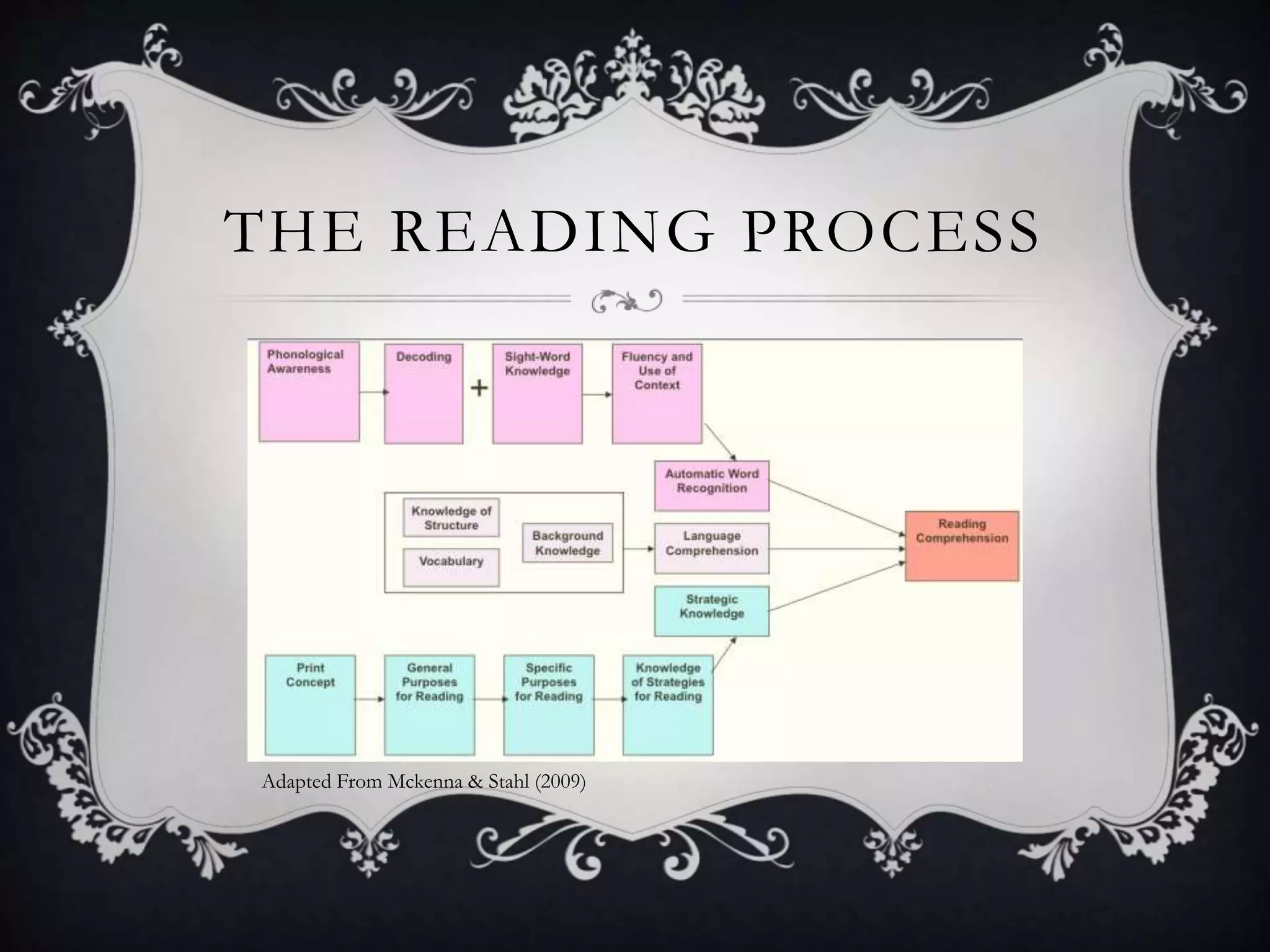
The Reading Process
• Ultimate purpose of reading is comprehension
• Observing readers is the most effective way to assess
reading skills (Strang, 1942)
THE READING PROCESS
Adapted From Mckenna & Stahl (2009)
LITERATURE REVIEW
Decoding
• Decoding is the process of translating written words
into speech (Stothard and Hulme, 1995)
• Reading aloud by sounding out words
LITERATURE REVIEW
Phonics and Decoding
• Decoding becomes an automatic function (Ehri, 2005)
• When decoding is missing reading is slow, disjointed
and often does not make sence
RESEARCH QUESTION
How will the implementation of a phonics-based
program improve the decoding skills of a Year 6
student with reading difficulties?
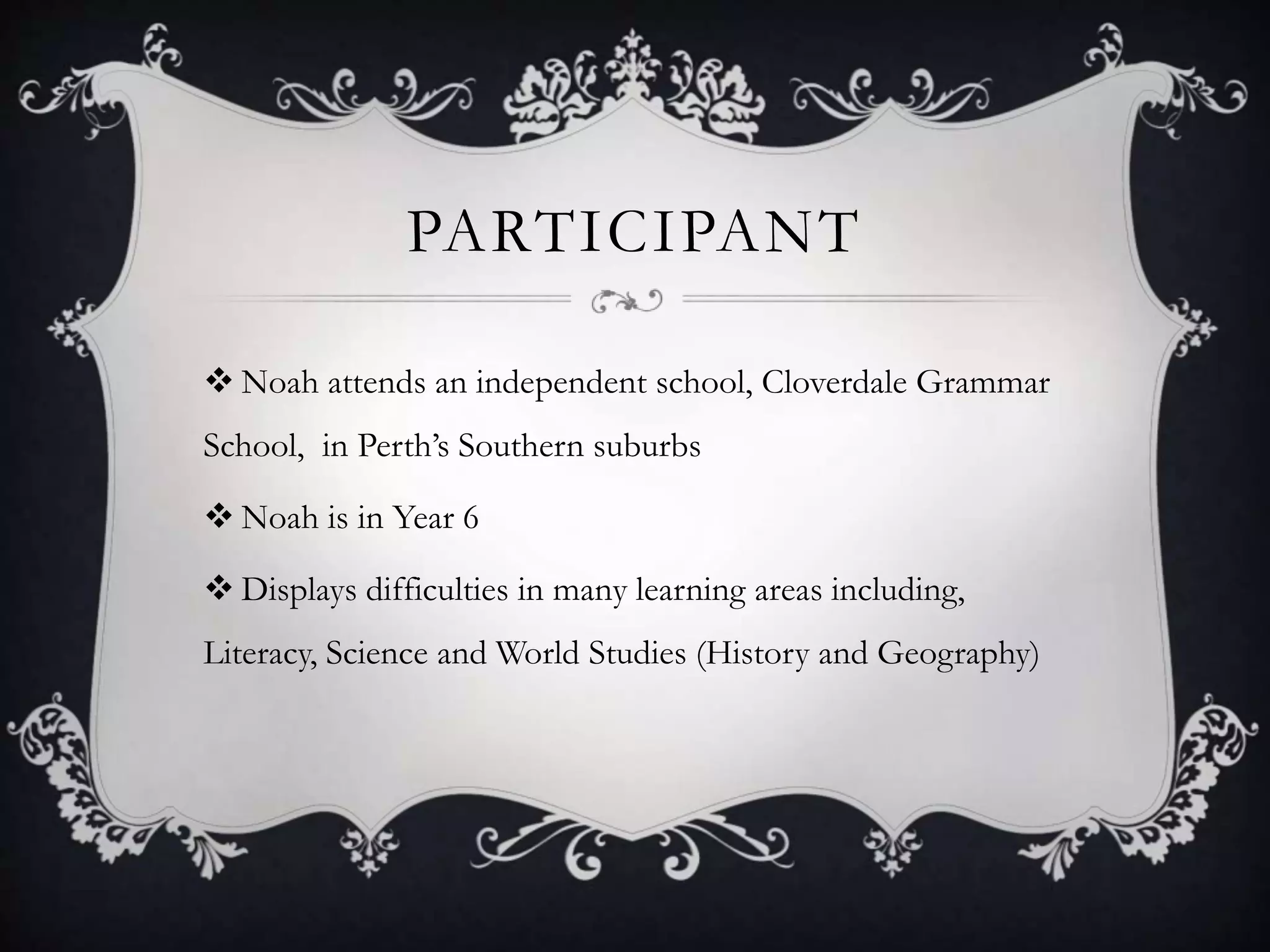
PARTICIPANT
 Noah attends an independent school, Cloverdale Grammar
School, in Perth’s Southern suburbs
 Noah is in Year 6
 Displays difficulties in many learning areas including,
Literacy, Science and World Studies (History and Geography)
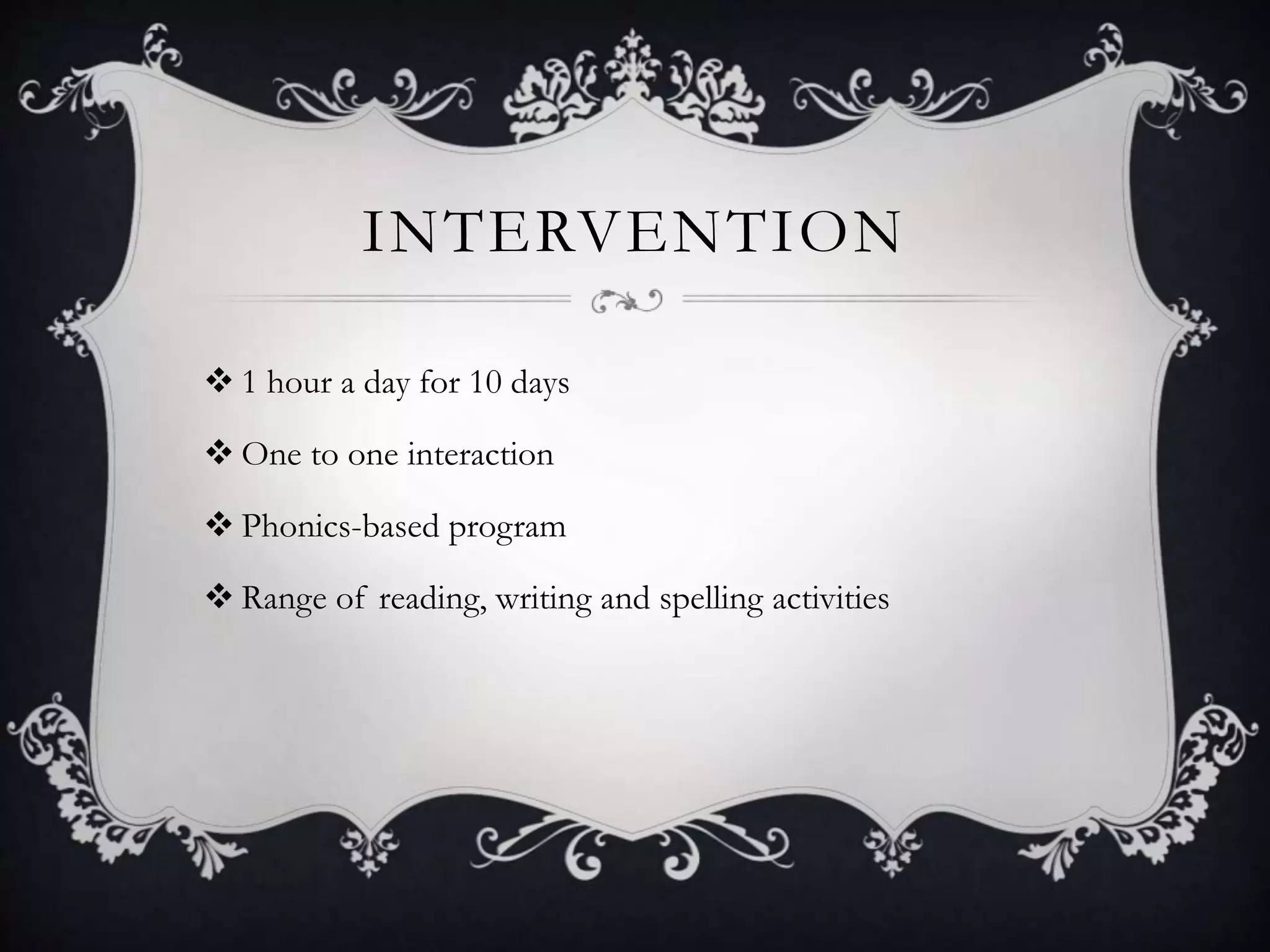
INTERVENTION
 1 hour a day for 10 days
 One to one interaction
 Phonics-based program
 Range of reading, writing and spelling activities
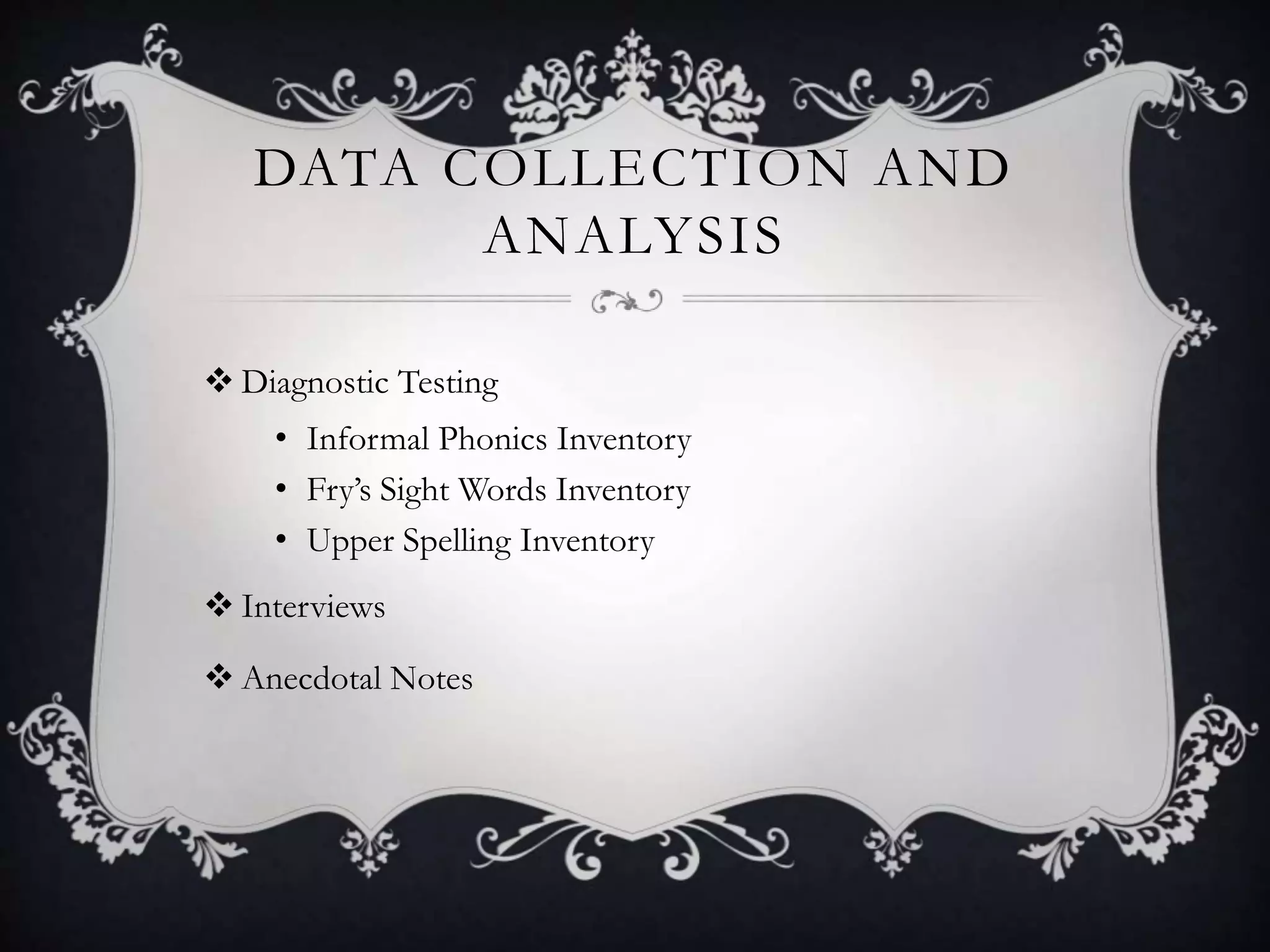
DATA COLLECTION AND
ANALYSIS
 Diagnostic Testing
• Informal Phonics Inventory
• Fry’s Sight Words Inventory
• Upper Spelling Inventory
 Interviews
 Anecdotal Notes
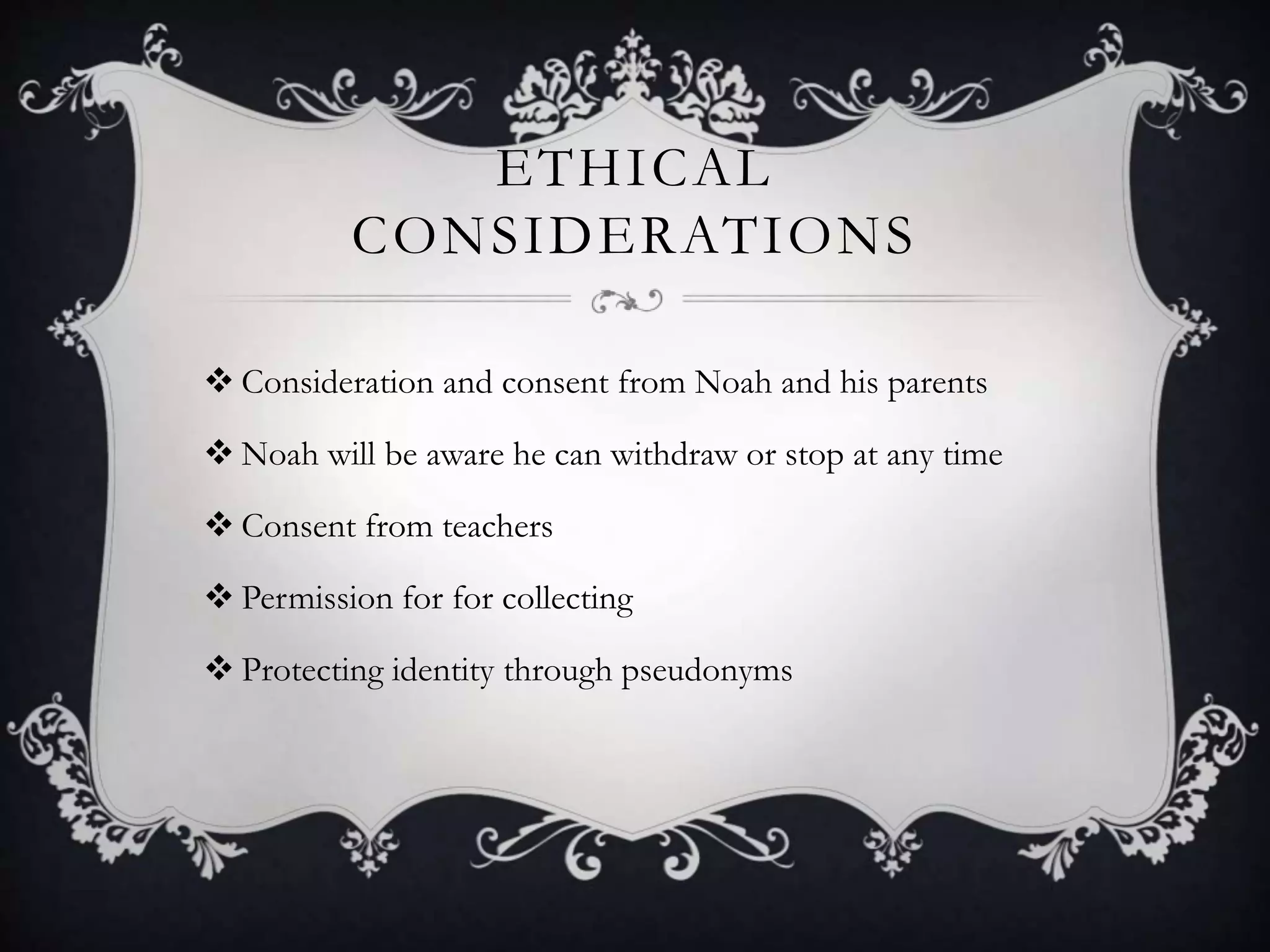
ETHICAL
CONSIDERATIONS
 Consideration and consent from Noah and his parents
 Noah will be aware he can withdraw or stop at any time
 Consent from teachers
 Permission for for collecting
 Protecting identity through pseudonyms
THE END
Thank You For Listening!

Intervention proposal

  • 1.
  • 2.
    PROJECT TITLE How aphonics based program can improves the decoding skills of a Year 6 student with reading difficulties.
  • 3.
    STATEMENT OF ISSUE Noah (pseudonym) has difficulties reading which have affected all learning areas in school  The classroom teacher has identified a weakness with identifying and sounding out words  This intervention will aim to use a phonics-based program to improve Noah’s reading skills
  • 4.
    LITERATURE REVIEW The ReadingProcess • Ultimate purpose of reading is comprehension • Observing readers is the most effective way to assess reading skills (Strang, 1942)
  • 5.
    THE READING PROCESS AdaptedFrom Mckenna & Stahl (2009)
  • 6.
    LITERATURE REVIEW Decoding • Decodingis the process of translating written words into speech (Stothard and Hulme, 1995) • Reading aloud by sounding out words
  • 7.
    LITERATURE REVIEW Phonics andDecoding • Decoding becomes an automatic function (Ehri, 2005) • When decoding is missing reading is slow, disjointed and often does not make sence
  • 8.
    RESEARCH QUESTION How willthe implementation of a phonics-based program improve the decoding skills of a Year 6 student with reading difficulties?
  • 9.
    PARTICIPANT  Noah attendsan independent school, Cloverdale Grammar School, in Perth’s Southern suburbs  Noah is in Year 6  Displays difficulties in many learning areas including, Literacy, Science and World Studies (History and Geography)
  • 10.
    INTERVENTION  1 houra day for 10 days  One to one interaction  Phonics-based program  Range of reading, writing and spelling activities
  • 11.
    DATA COLLECTION AND ANALYSIS Diagnostic Testing • Informal Phonics Inventory • Fry’s Sight Words Inventory • Upper Spelling Inventory  Interviews  Anecdotal Notes
  • 12.
    ETHICAL CONSIDERATIONS  Consideration andconsent from Noah and his parents  Noah will be aware he can withdraw or stop at any time  Consent from teachers  Permission for for collecting  Protecting identity through pseudonyms
  • 13.
    THE END Thank YouFor Listening!