Mechanical
Ventilation
Workshop
J. Christopher Farmer
“Play by the Rules”
Basic Principles:
Establish Harm-Free Goals
1. SaO2 85-90% with certain exceptions
2. Follow pH not PaCO2
3. VT: ARDS versus other lung conditions
4. Paw: ARDS versus other lung conditions
5. Avoid drugs that may prolong weaning
(sedatives, neuromuscular blockers)
Better is the enemy of good…
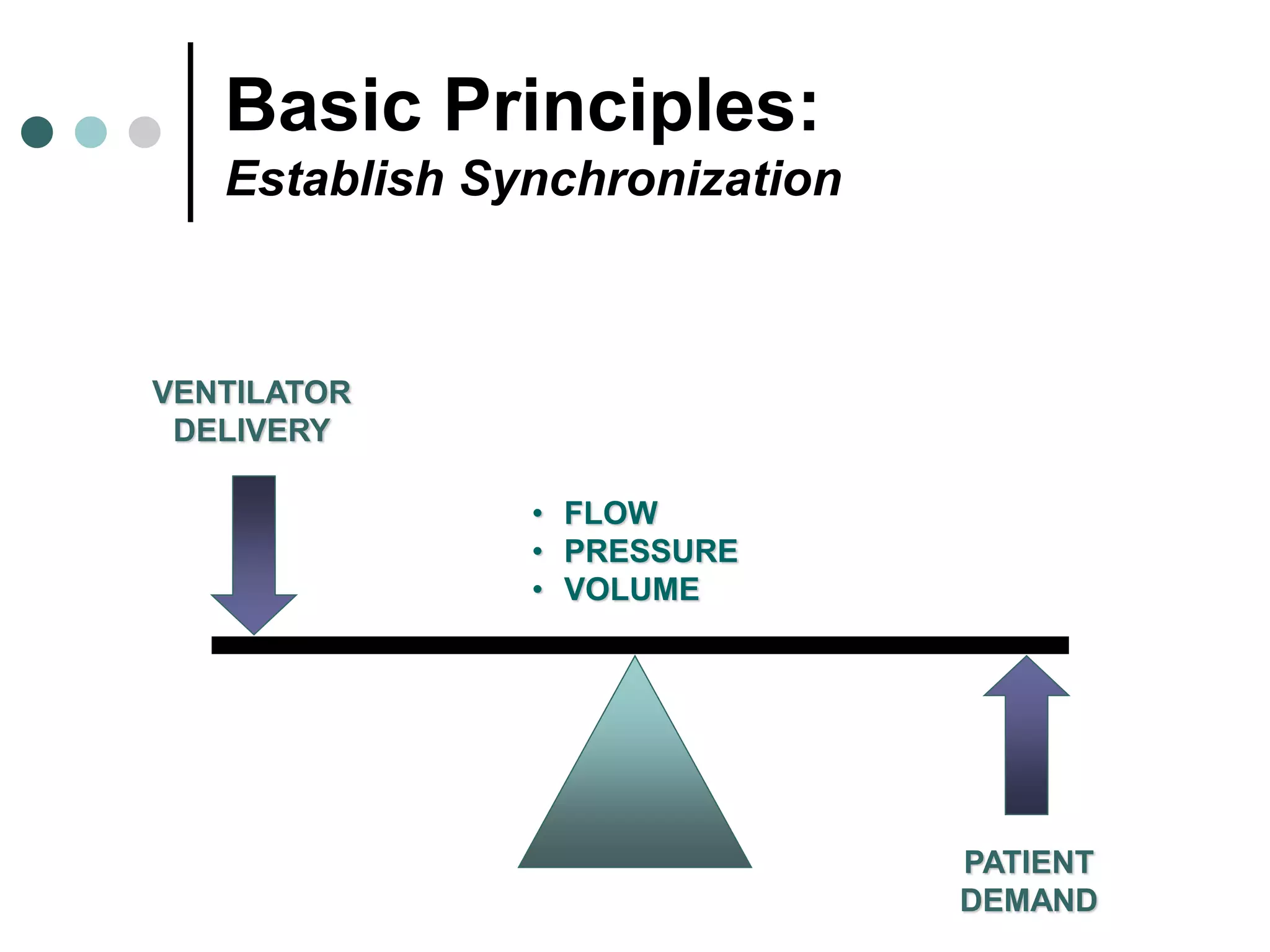
Basic Principles:
Establish Synchronization
PATIENT
DEMAND
VENTILATOR
DELIVERY
• FLOW
• PRESSURE
• VOLUME
Basic Principles:
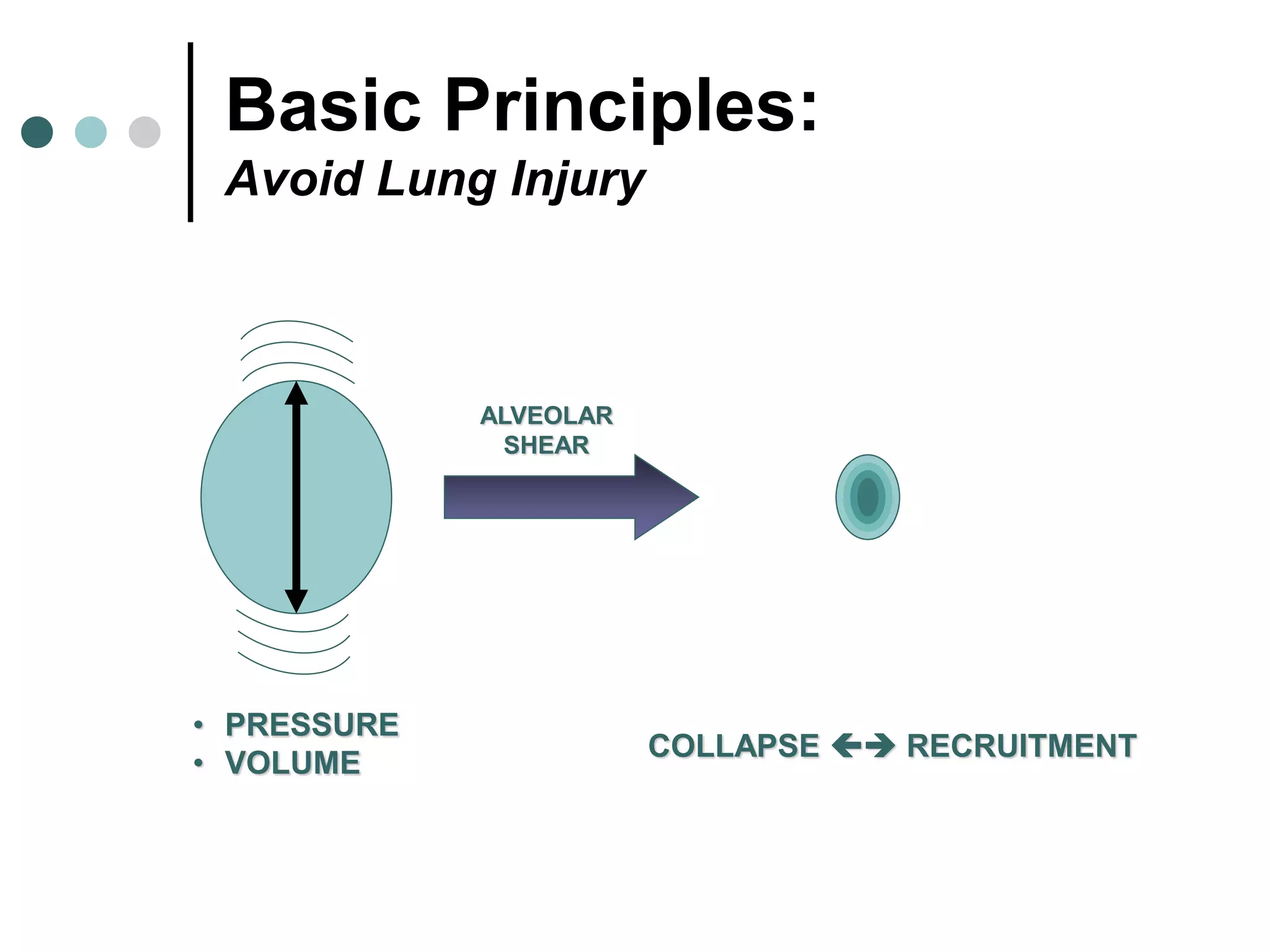
Avoid Lung Injury
• PRESSURE
• VOLUME
COLLAPSE  RECRUITMENT
ALVEOLAR
SHEAR
Basic Principles:
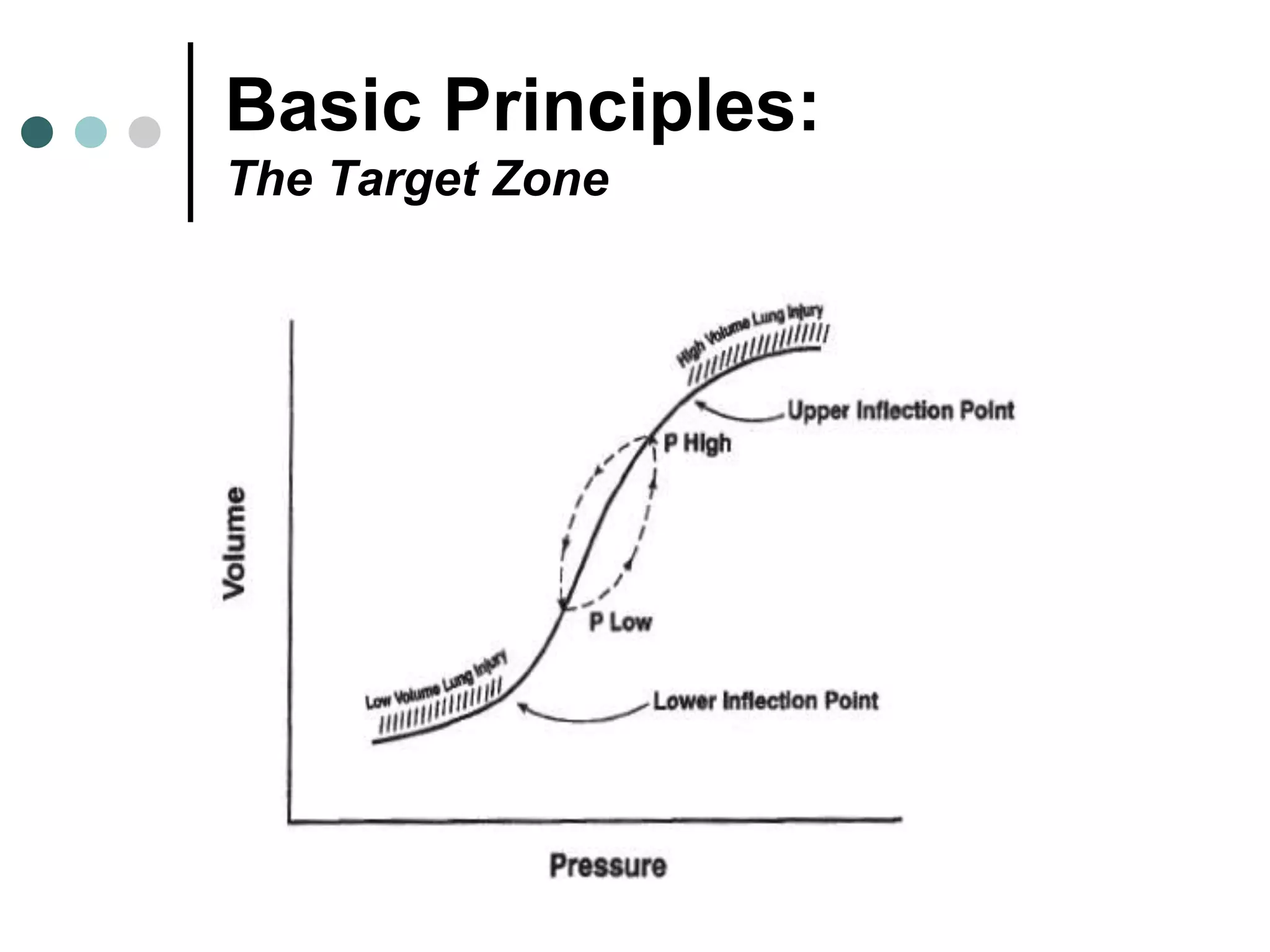
The Target Zone
Basic Principles:
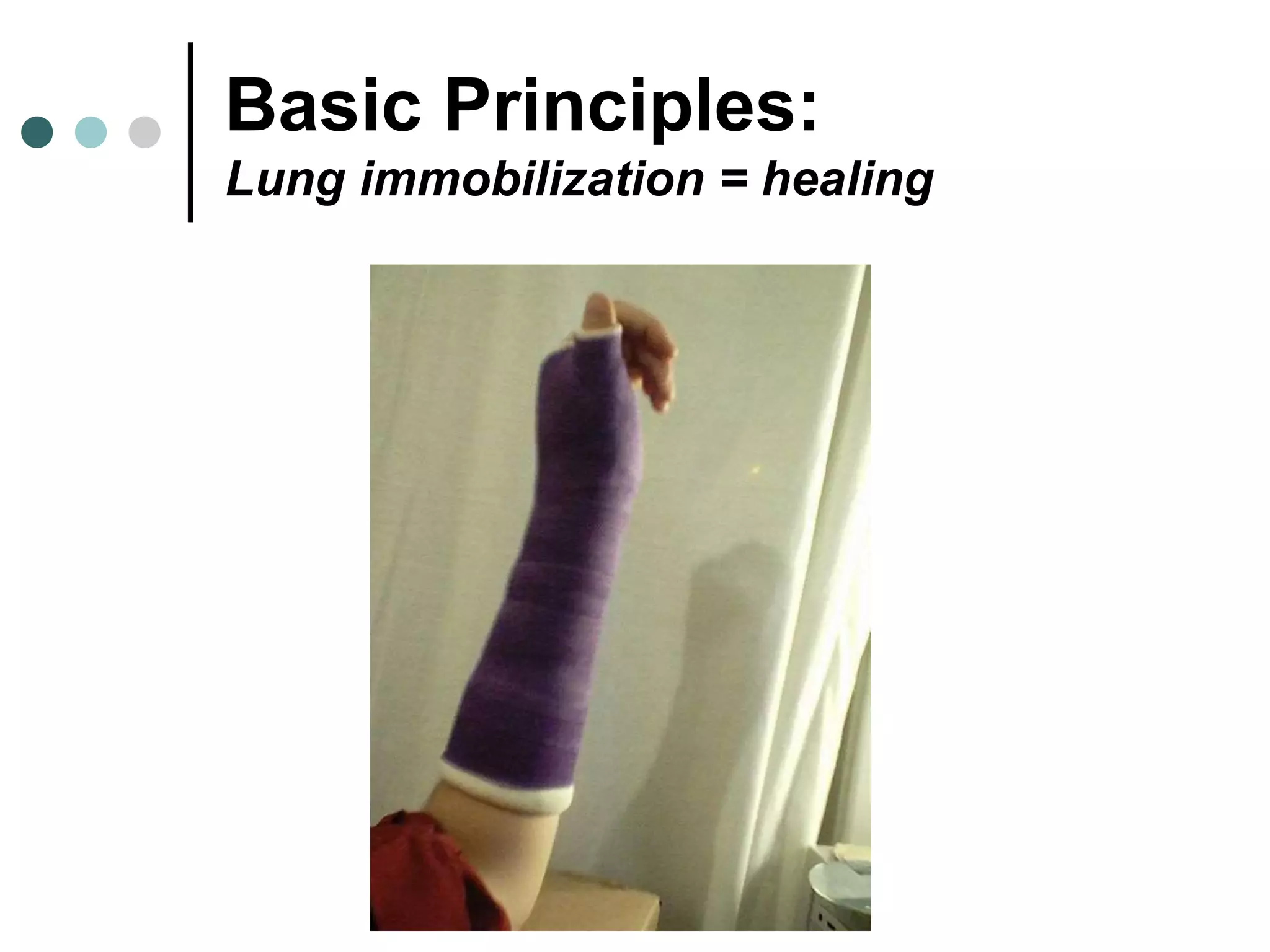
Lung immobilization = healing
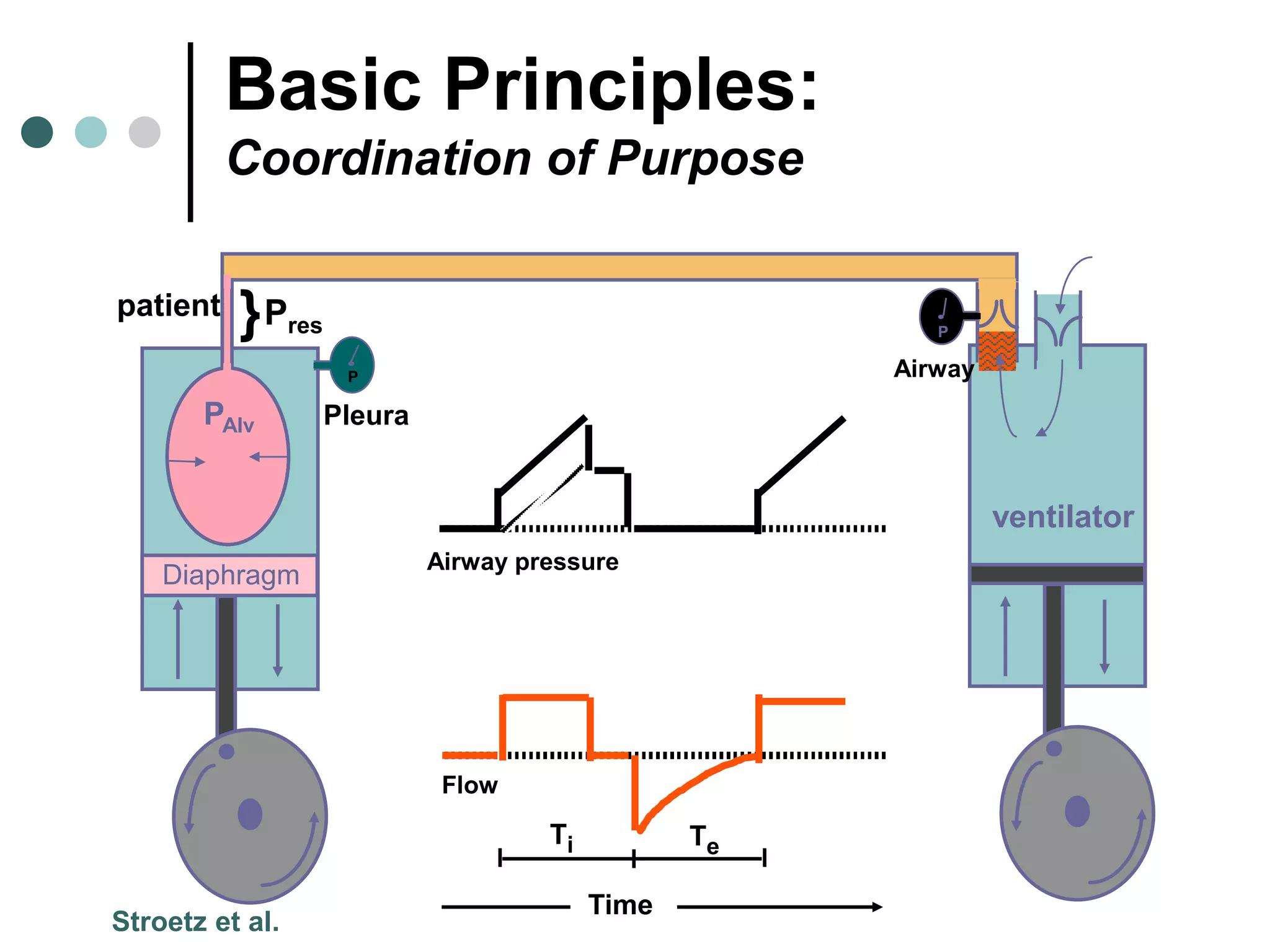
patient
Diaphragm
}Pres
PAlv
P
Pleura
ventilator
P
Airway
Airway pressure
Flow
Time
Ti Te
Stroetz et al.
Basic Principles:
Coordination of Purpose
Basic Principles:
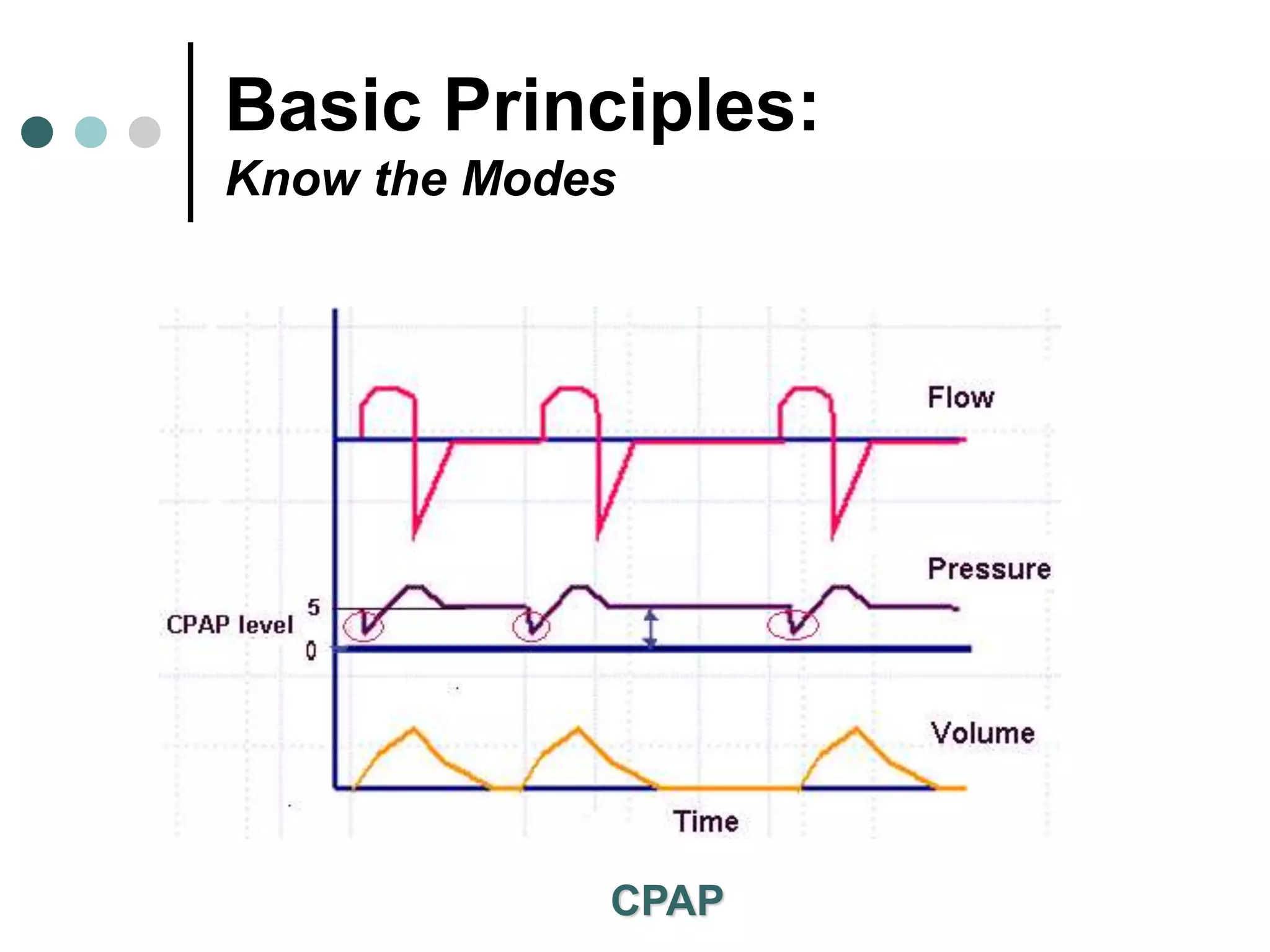
Know the Modes
CPAP
Basic Principles:
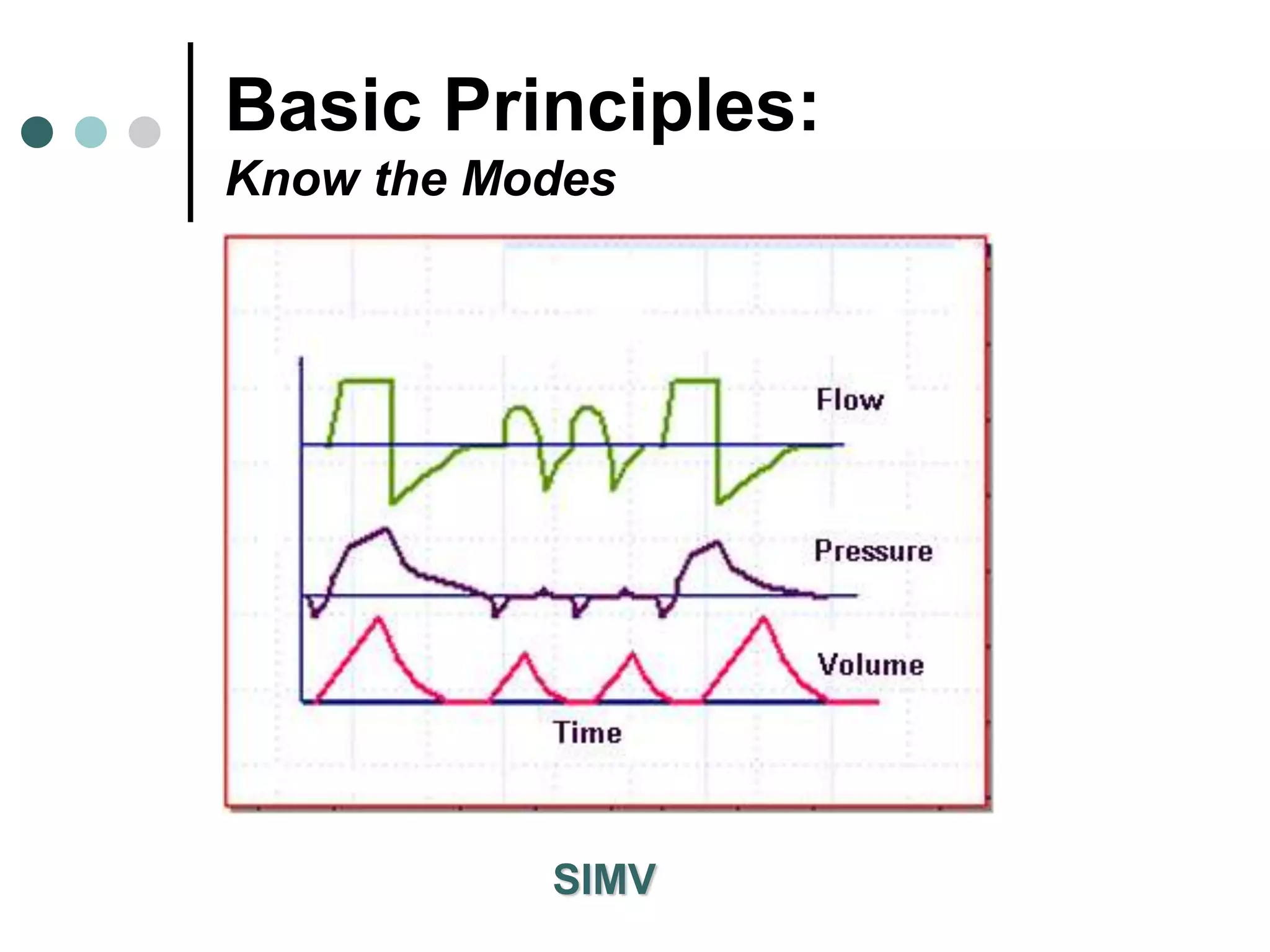
Know the Modes
SIMV
Basic Principles:
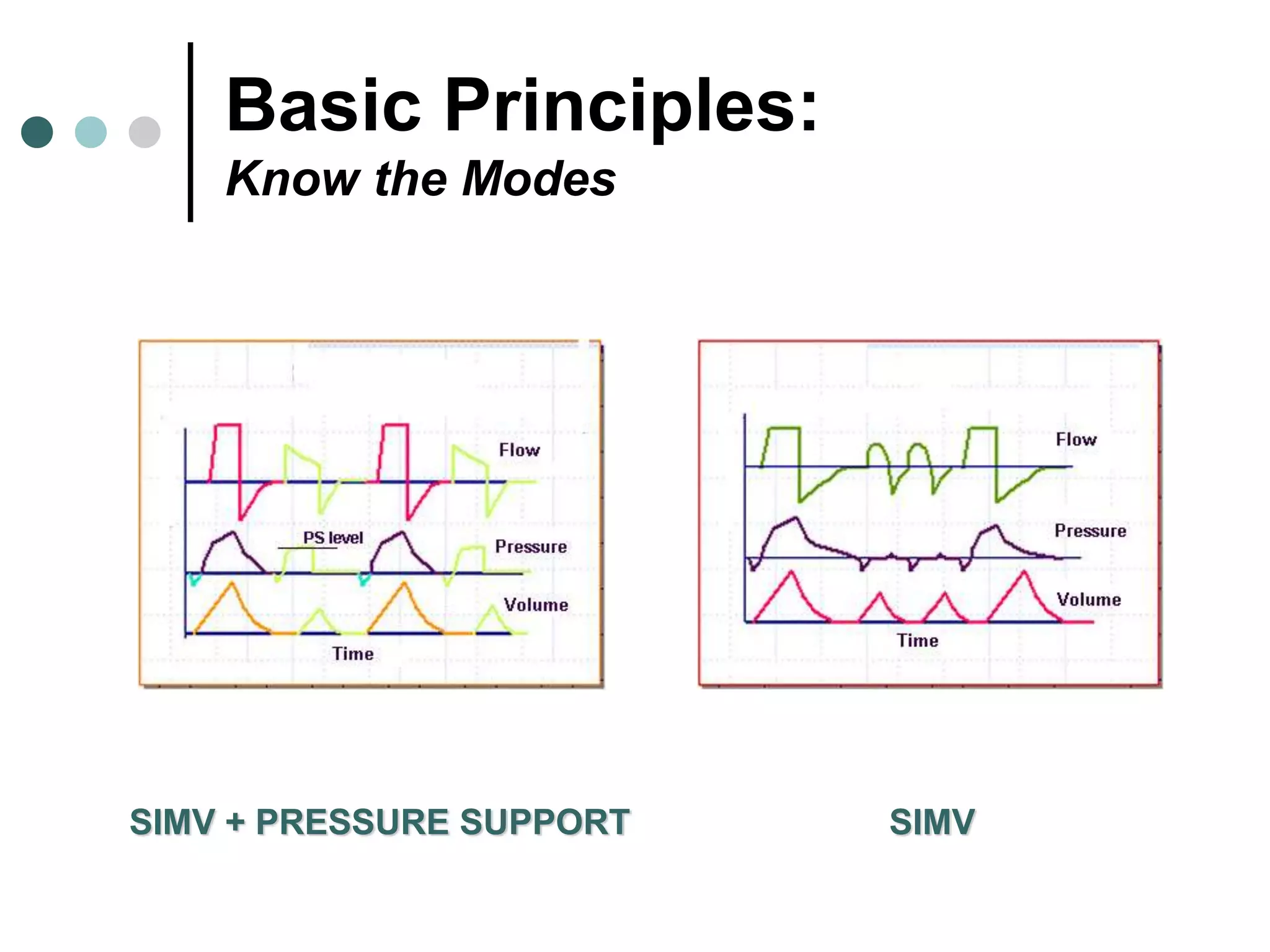
Know the Modes
SIMV + PRESSURE SUPPORT SIMV
Basic Principles:
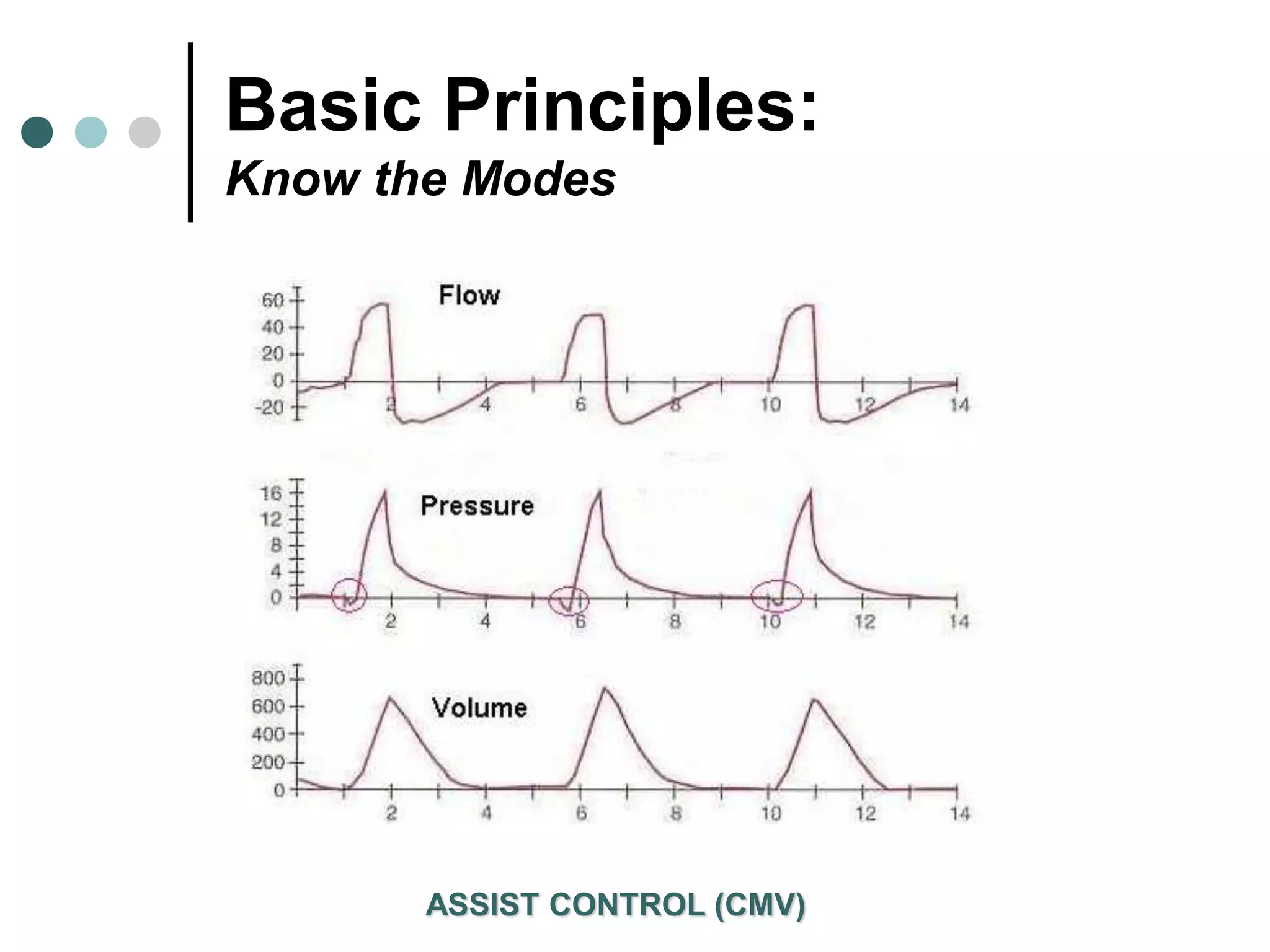
Know the Modes
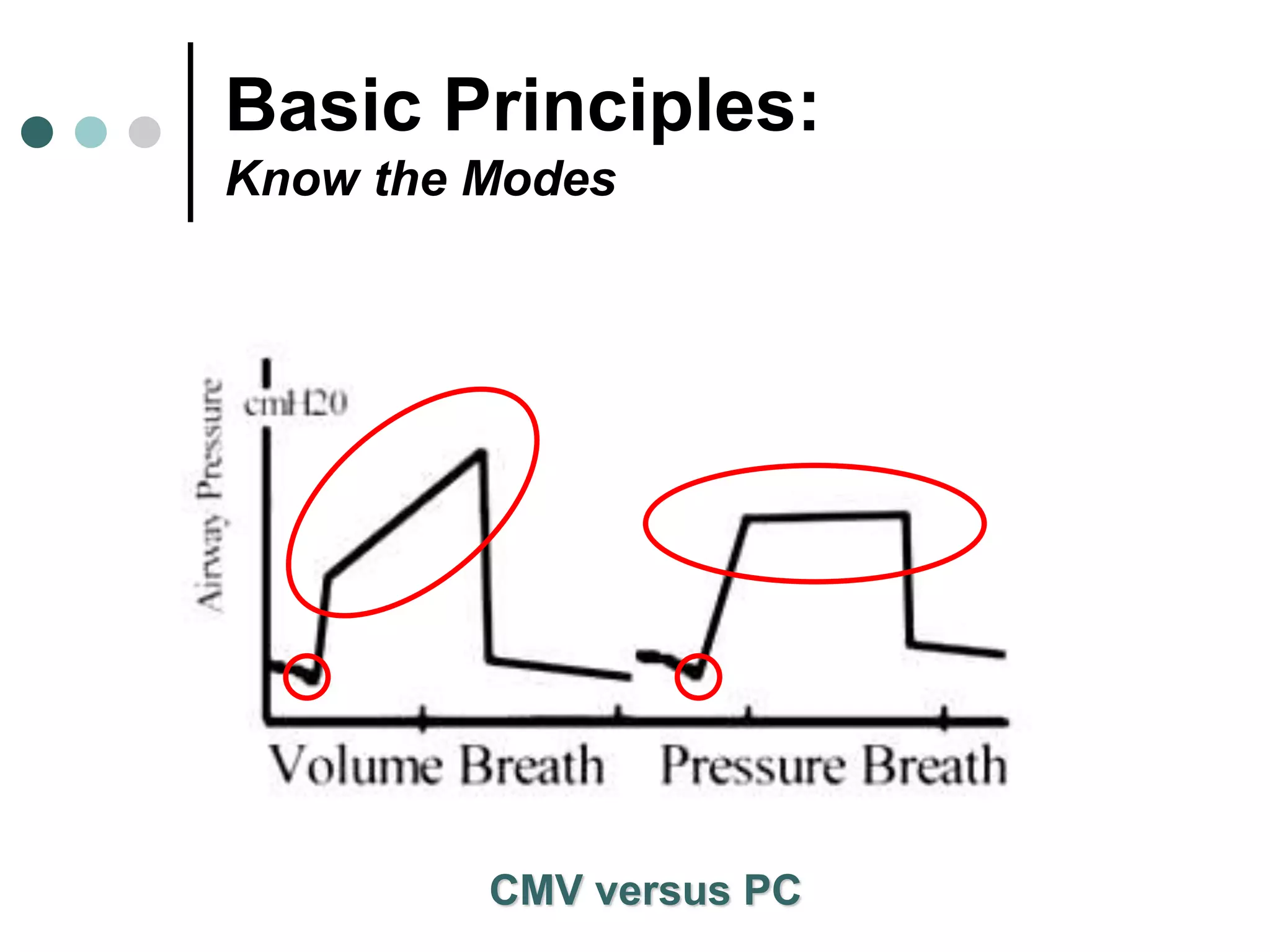
ASSIST CONTROL (CMV)
Basic Principles:
Know the Modes
CMV versus PC
Basic Principles:
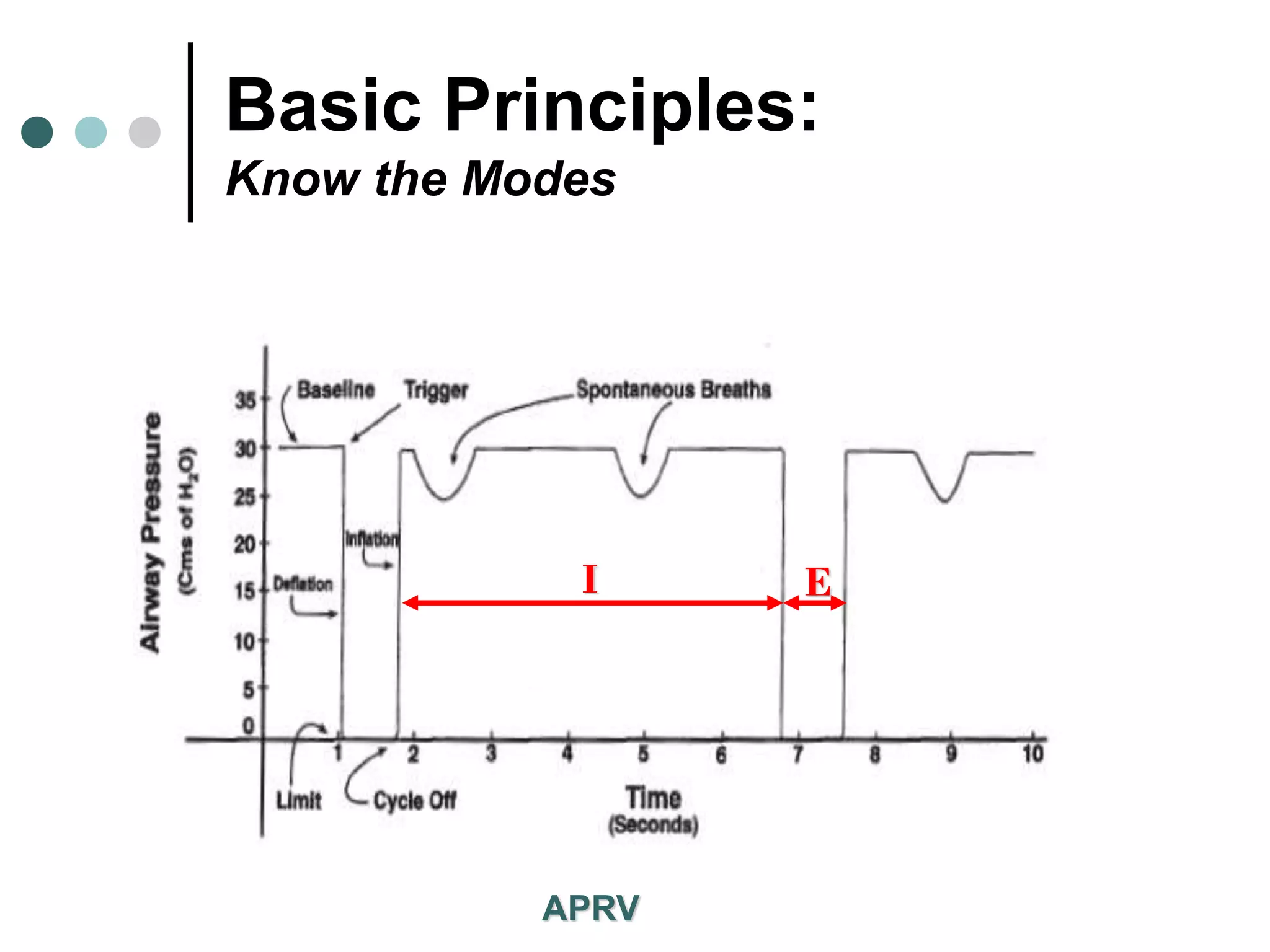
Know the Modes
APRV
I E
Basic Principles:
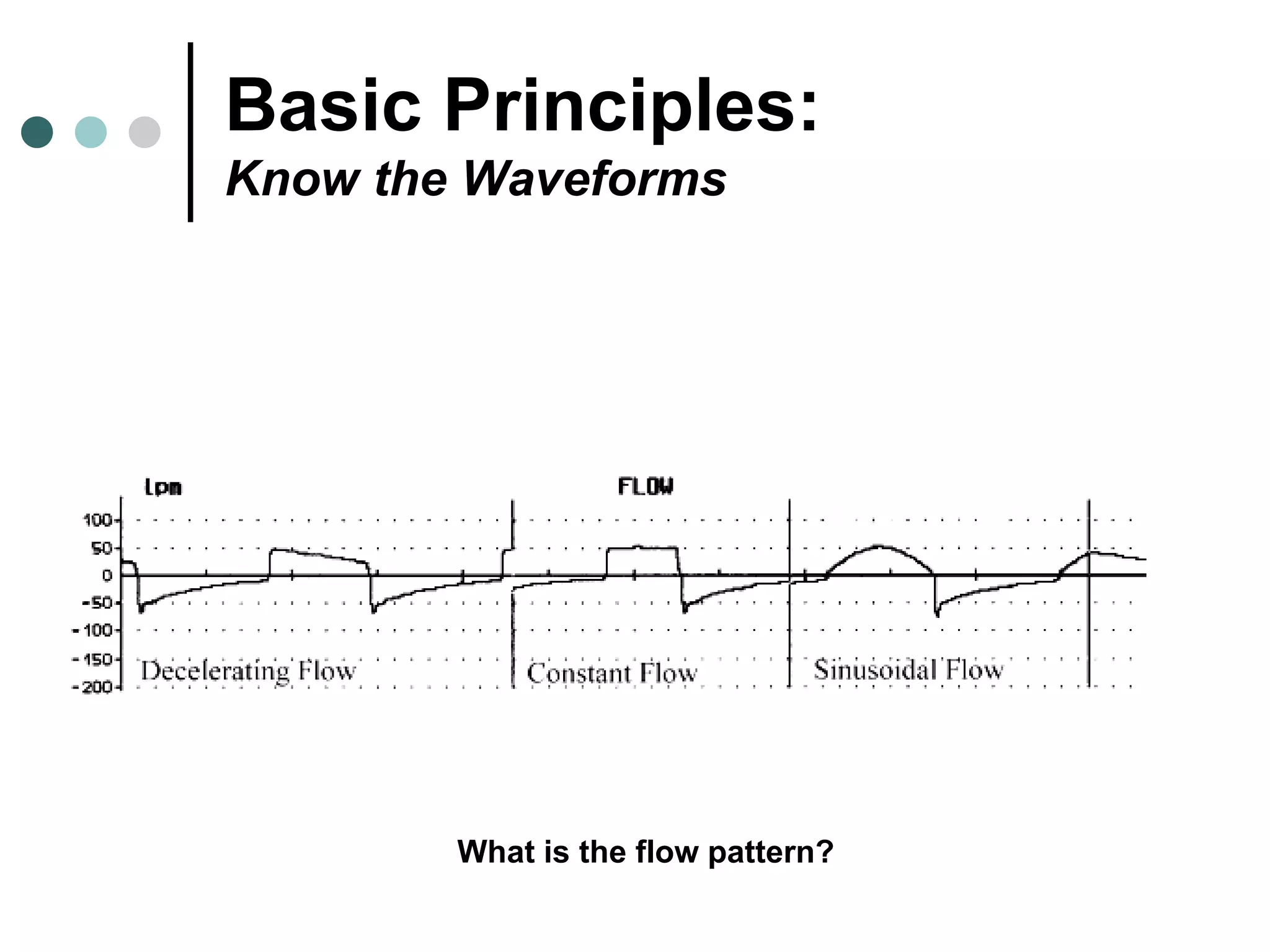
Know the Waveforms
Basic Principles:
Know the Waveforms
What is the flow pattern?
Basic Principles:
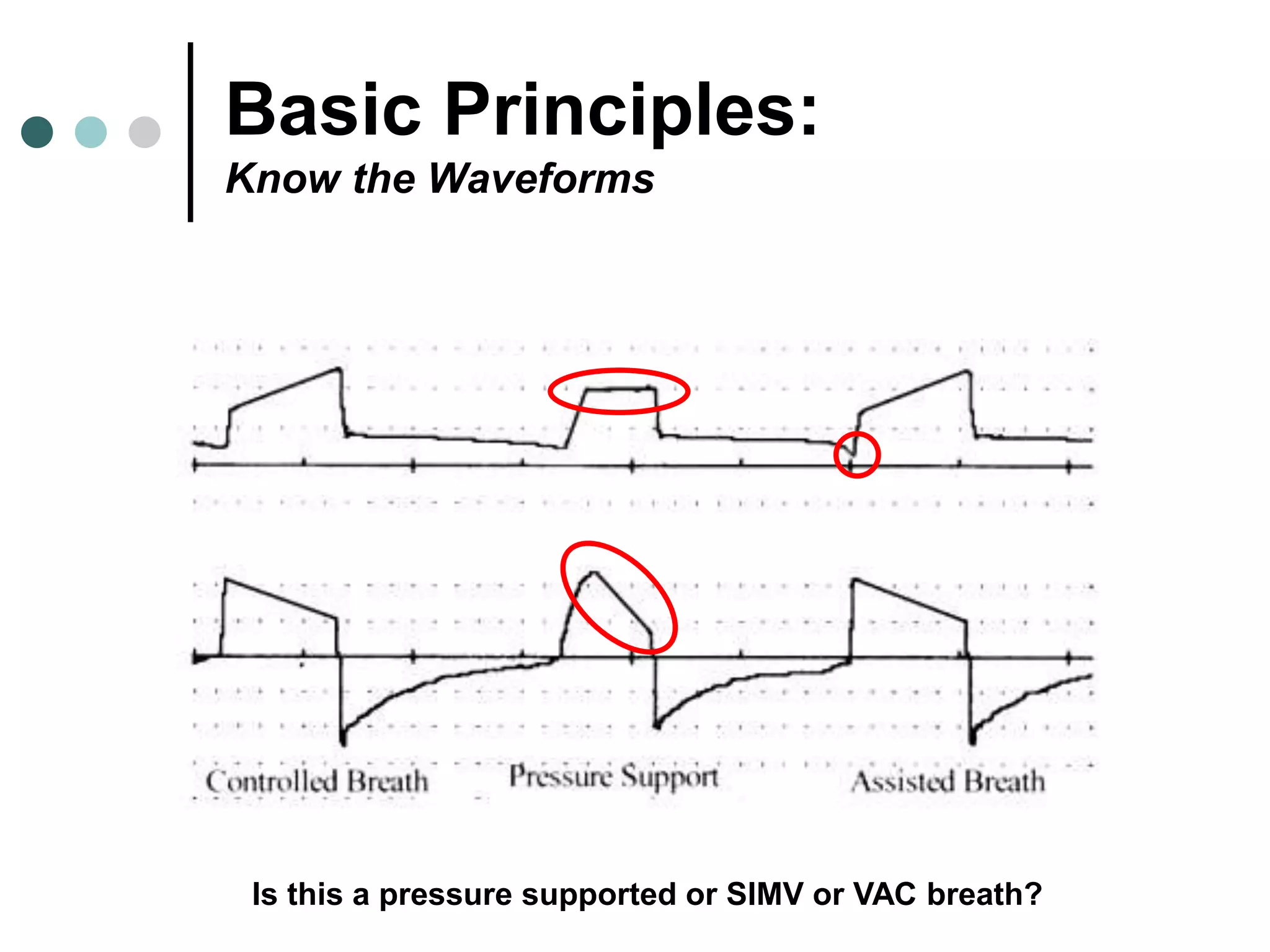
Know the Waveforms
Is this a pressure supported or SIMV or VAC breath?
Basic Principles:
Know the Waveforms
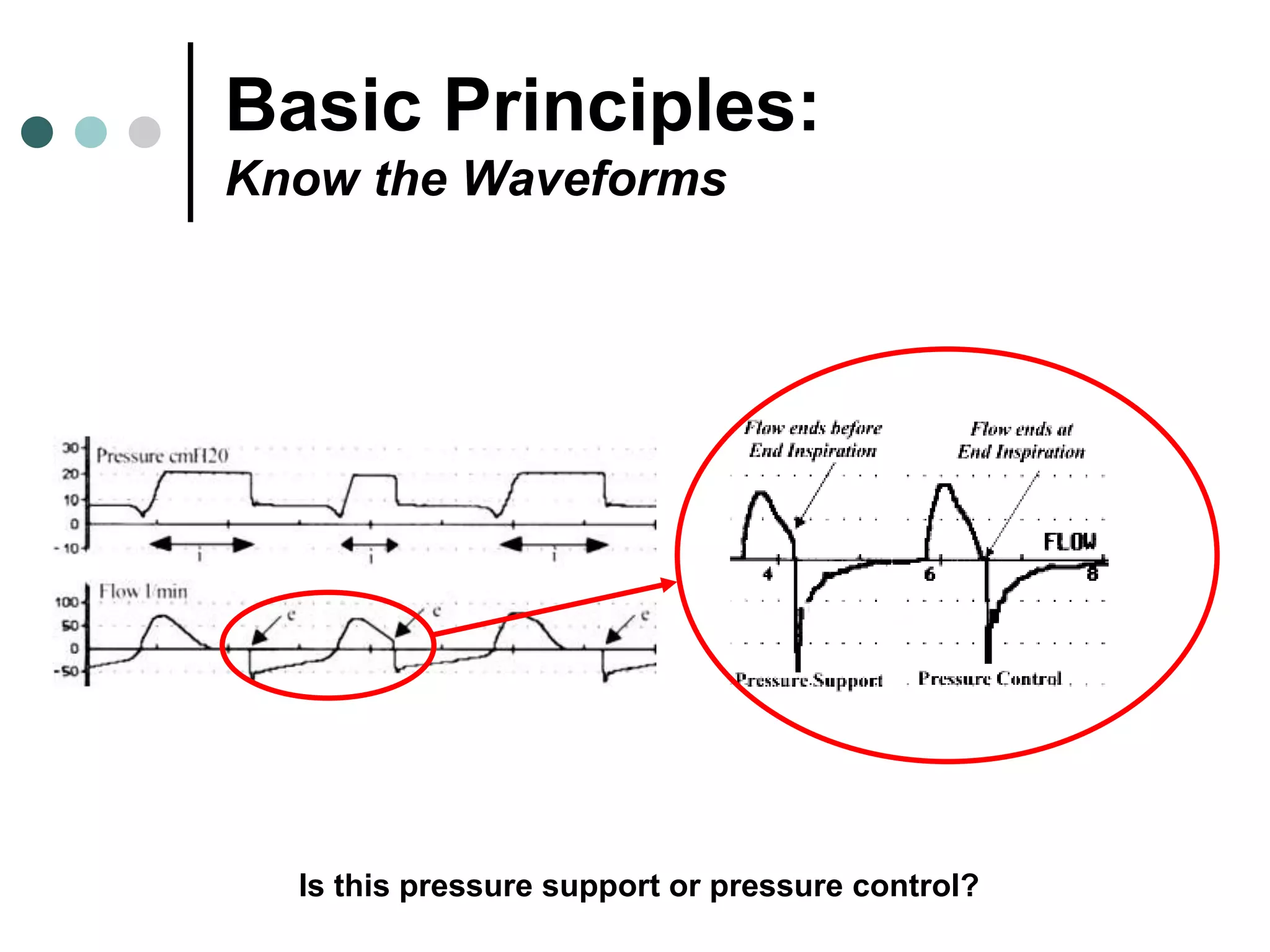
Is this pressure support or pressure control?
Basic Principles:
Know the Waveforms
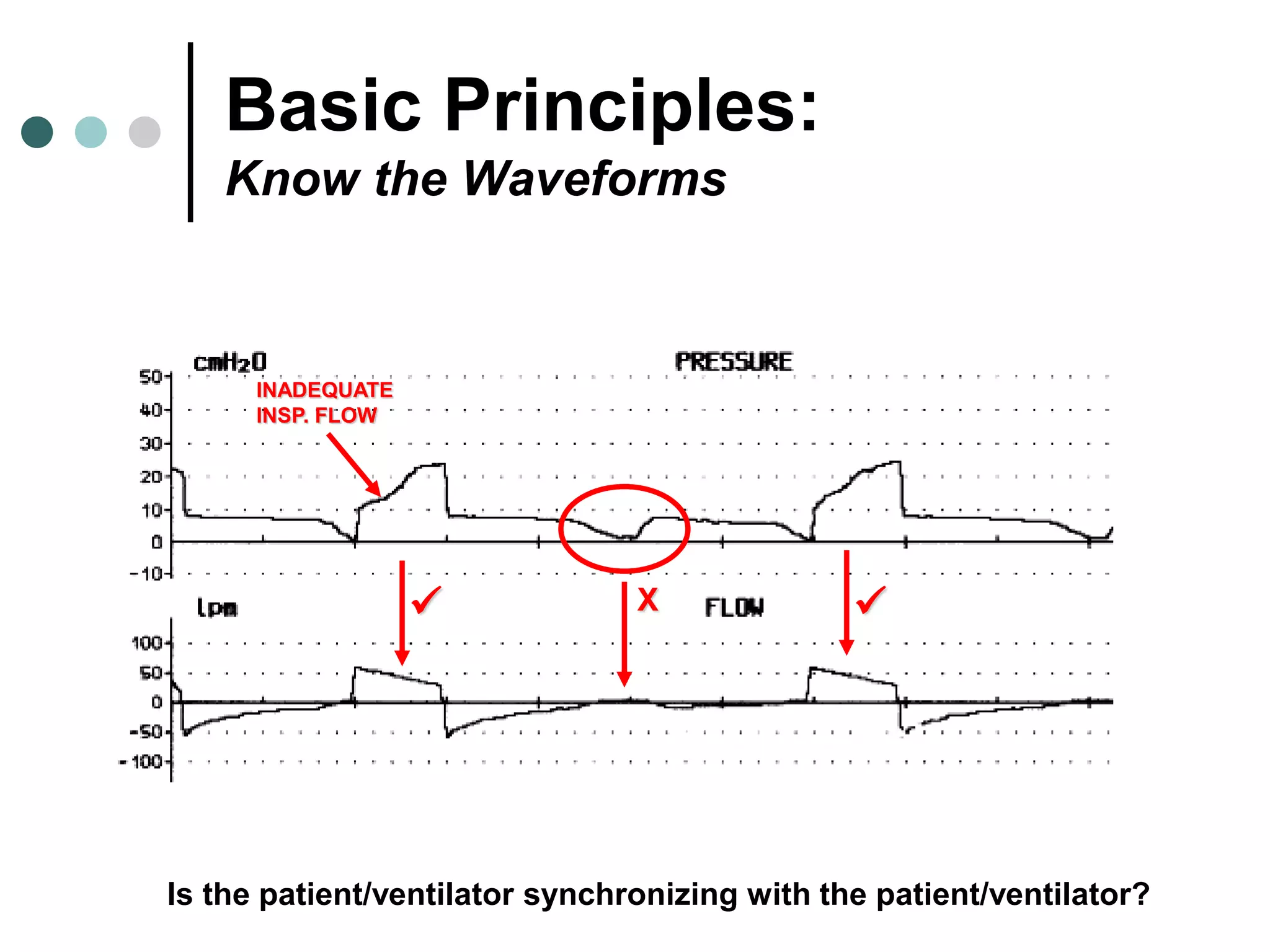
X
INADEQUATE
INSP. FLOW
Is the patient/ventilator synchronizing with the patient/ventilator?
Basic Principles:
Know the Waveforms
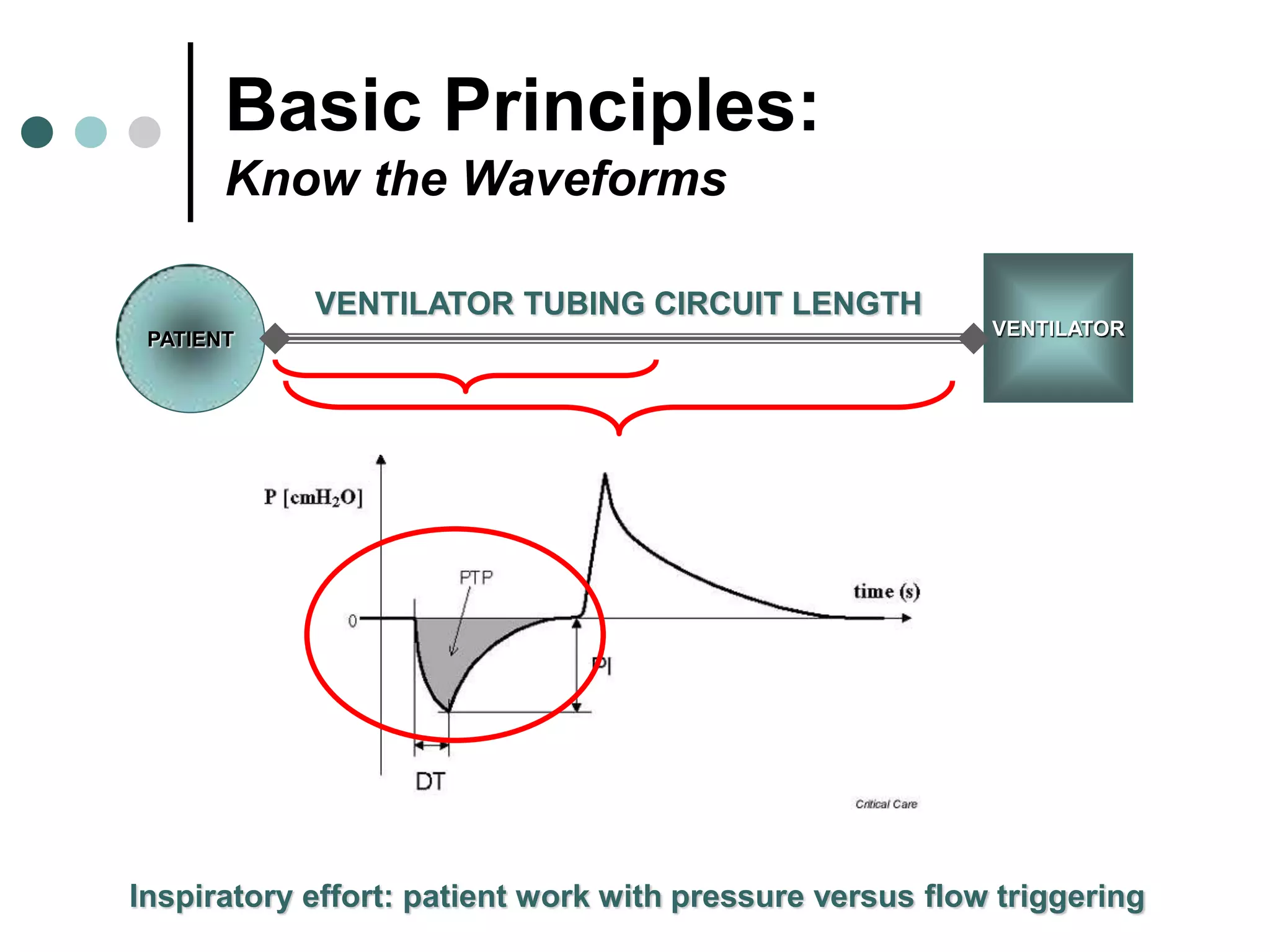
Inspiratory effort: patient work with pressure versus flow triggering
VENTILATOR
PATIENT
VENTILATOR TUBING CIRCUIT LENGTH
“Diagnosing the problem”
Disorders of flow
 Flow starvation
 Excess flow
 Outflow obstruction
 Inflow obstruction
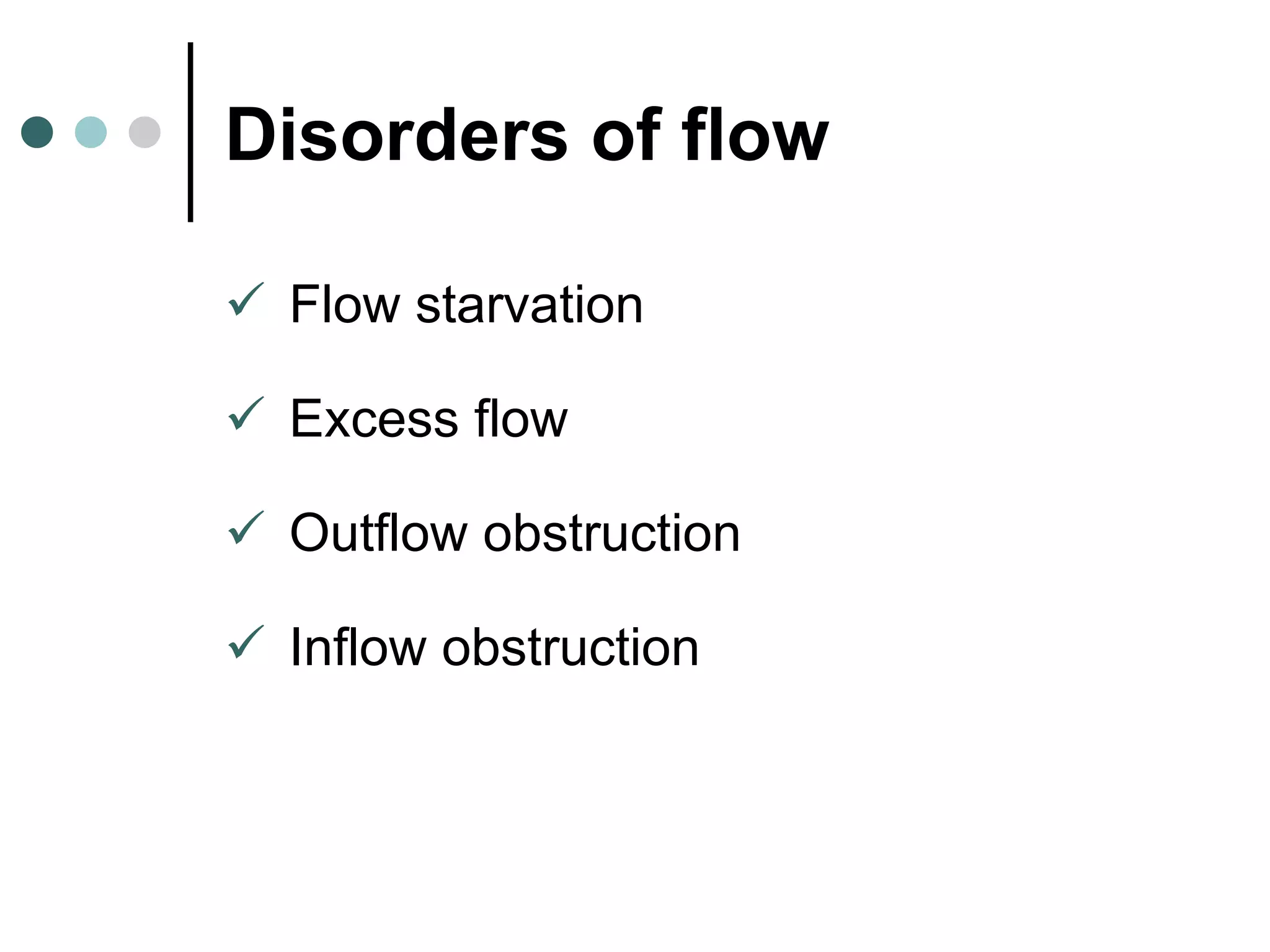
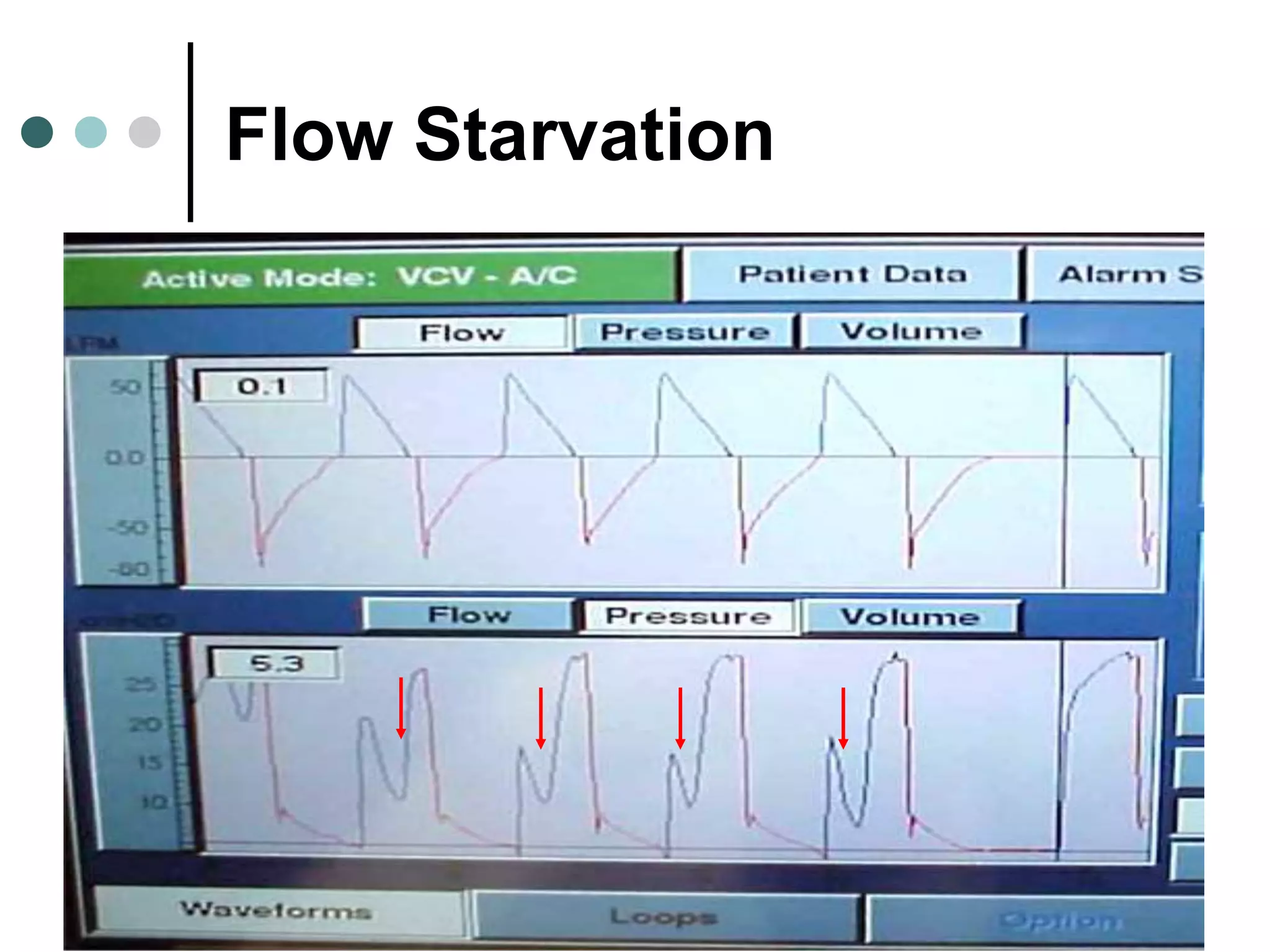
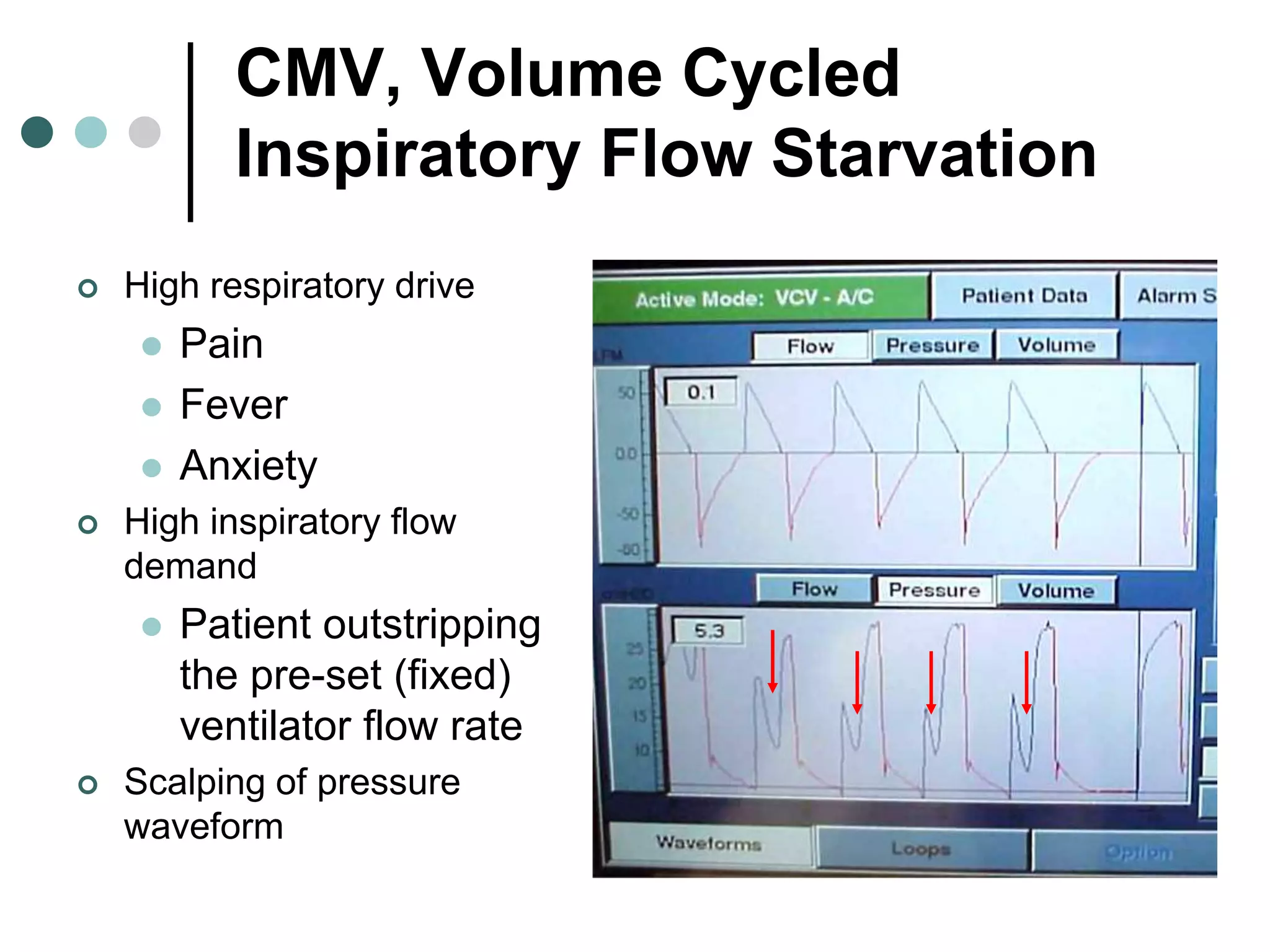
Flow Starvation
CMV, Volume Cycled
Inspiratory Flow Starvation
 High respiratory drive
 Pain
 Fever
 Anxiety
 High inspiratory flow
demand
 Patient outstripping
the pre-set (fixed)
ventilator flow rate
 Scalping of pressure
waveform
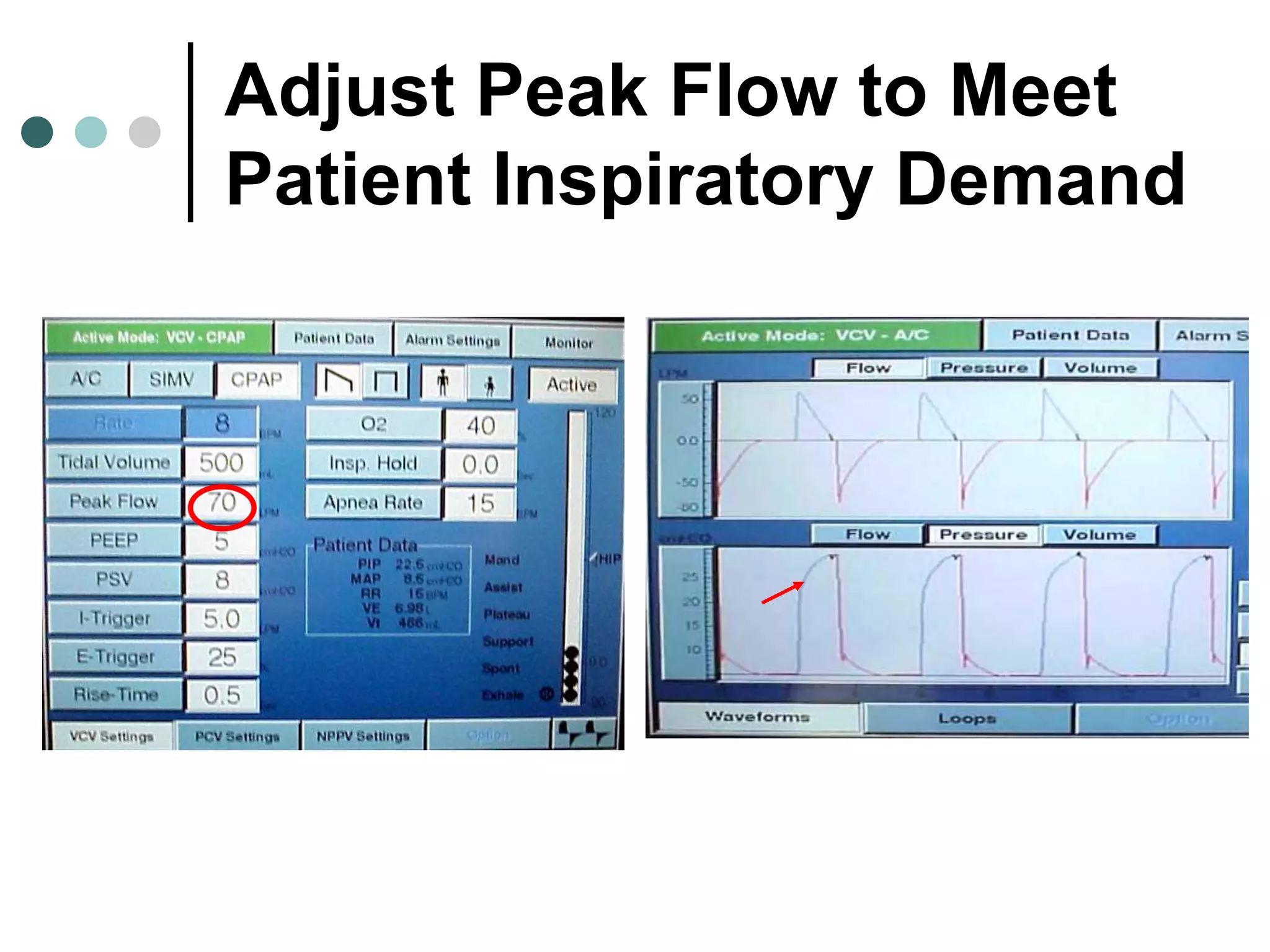
Adjust Peak Flow to Meet
Patient Inspiratory Demand
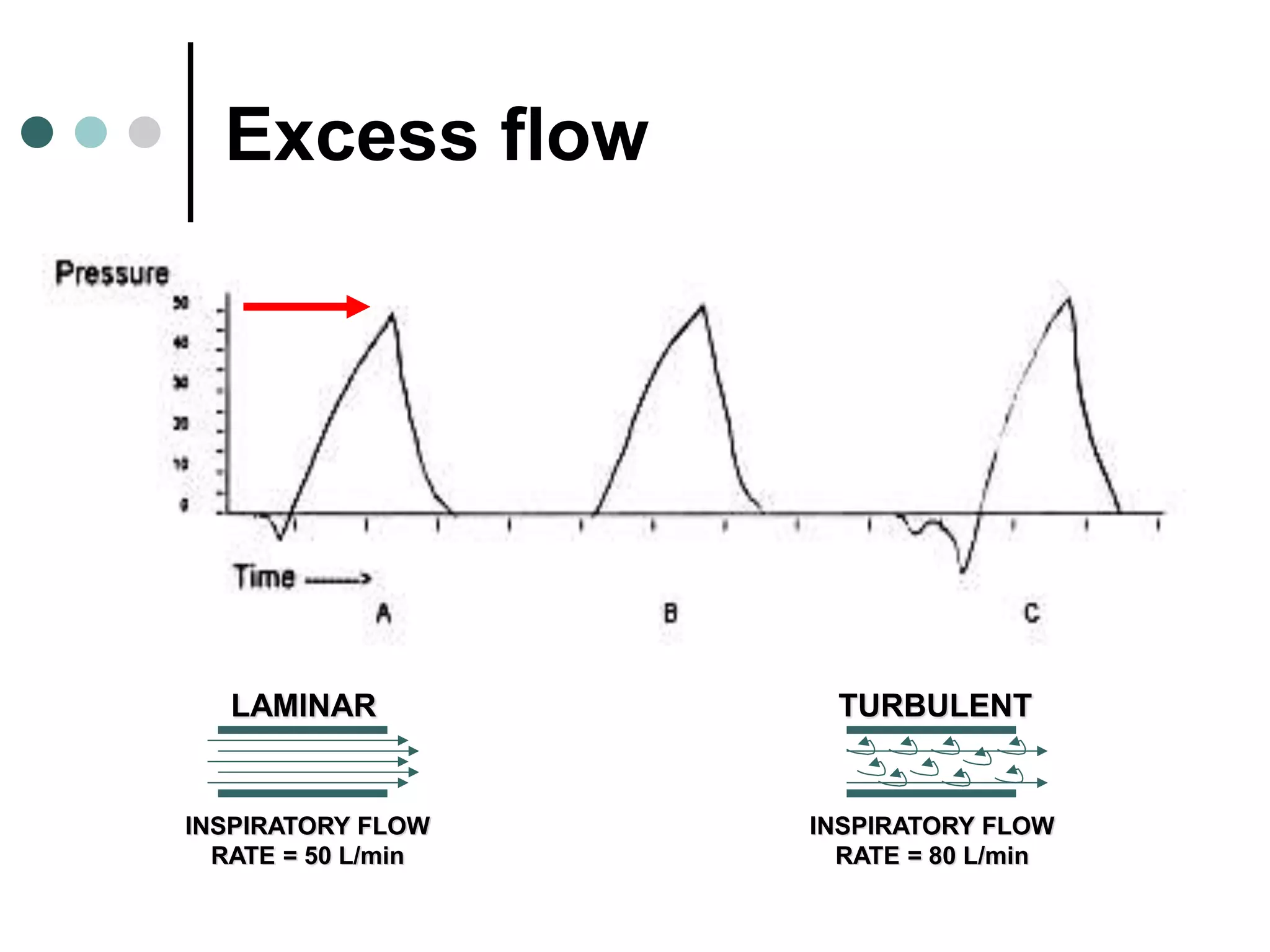
Excess flow
INSPIRATORY FLOW
RATE = 50 L/min
LAMINAR
INSPIRATORY FLOW
RATE = 80 L/min
TURBULENT
Excess Flow
 Inspiratory flow rate exceeds patient
demand (flow rate)
 Rapid rise pressure tracing with
“pressure overshoot”
 More is not better!
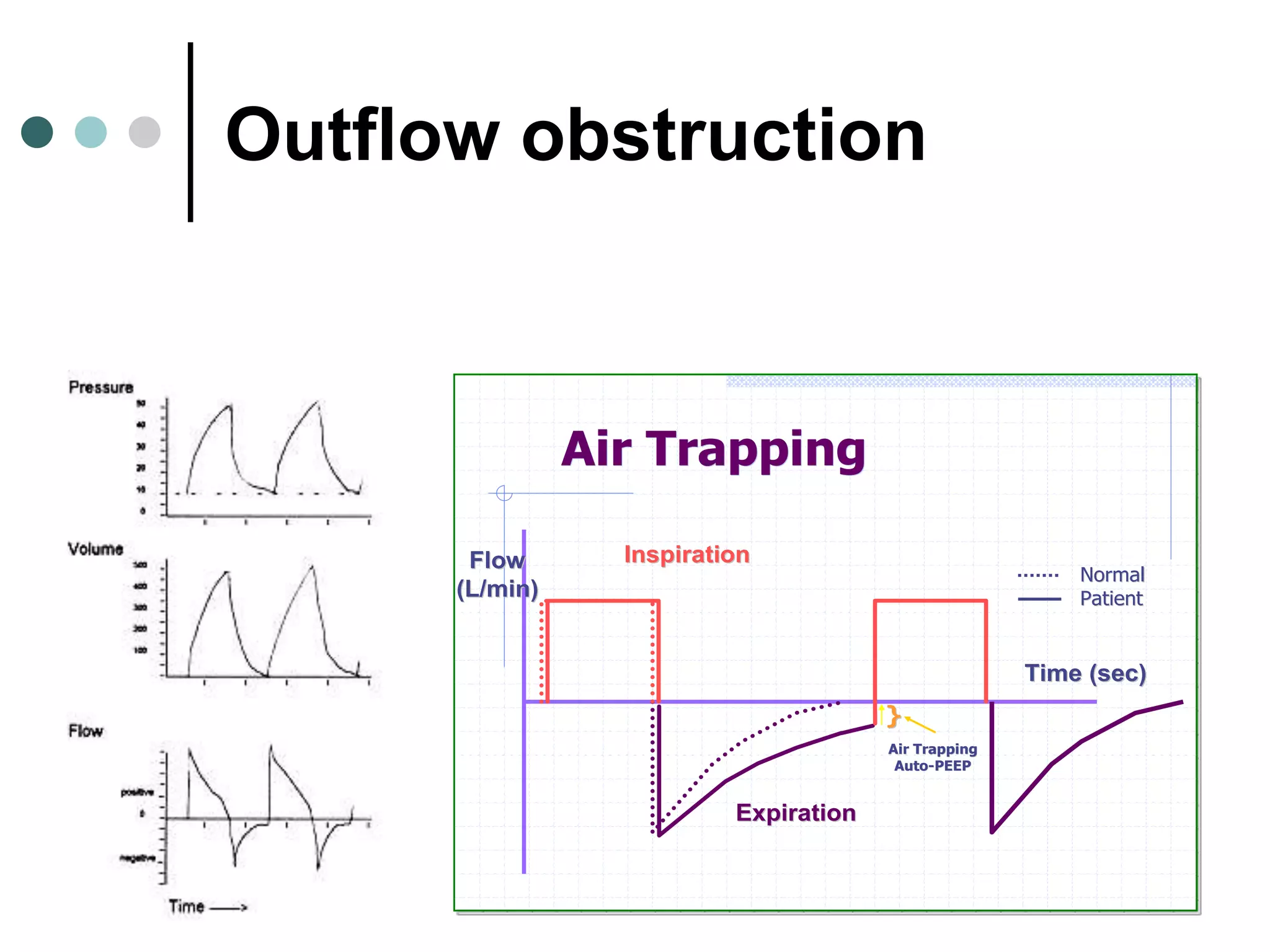
Air TrappingAir Trapping
InspirationInspiration
ExpirationExpiration
NormalNormal
PatientPatient
Time (sec)Time (sec)
Air TrappingAir Trapping
AutoAuto--PEEPPEEP
}}
FlowFlow
(L/min)(L/min)
Outflow obstruction
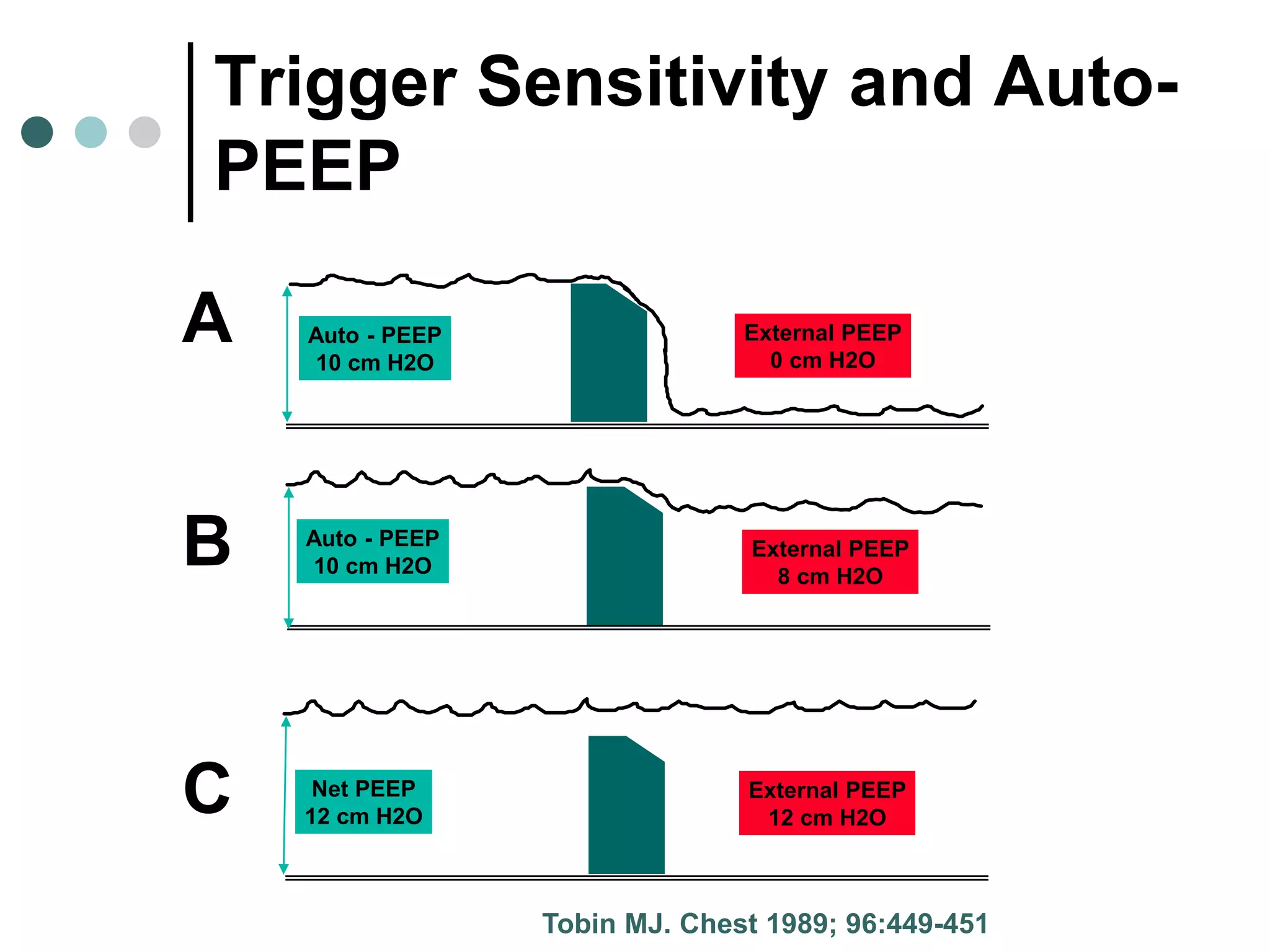
A Auto - PEEP
10 cm H2O
External PEEP
0 cm H2O
B Auto - PEEP
10 cm H2O
External PEEP
8 cm H2O
C Net PEEP
12 cm H2O
External PEEP
12 cm H2O
Tobin MJ. Chest 1989; 96:449-451
Trigger Sensitivity and Auto-
PEEP
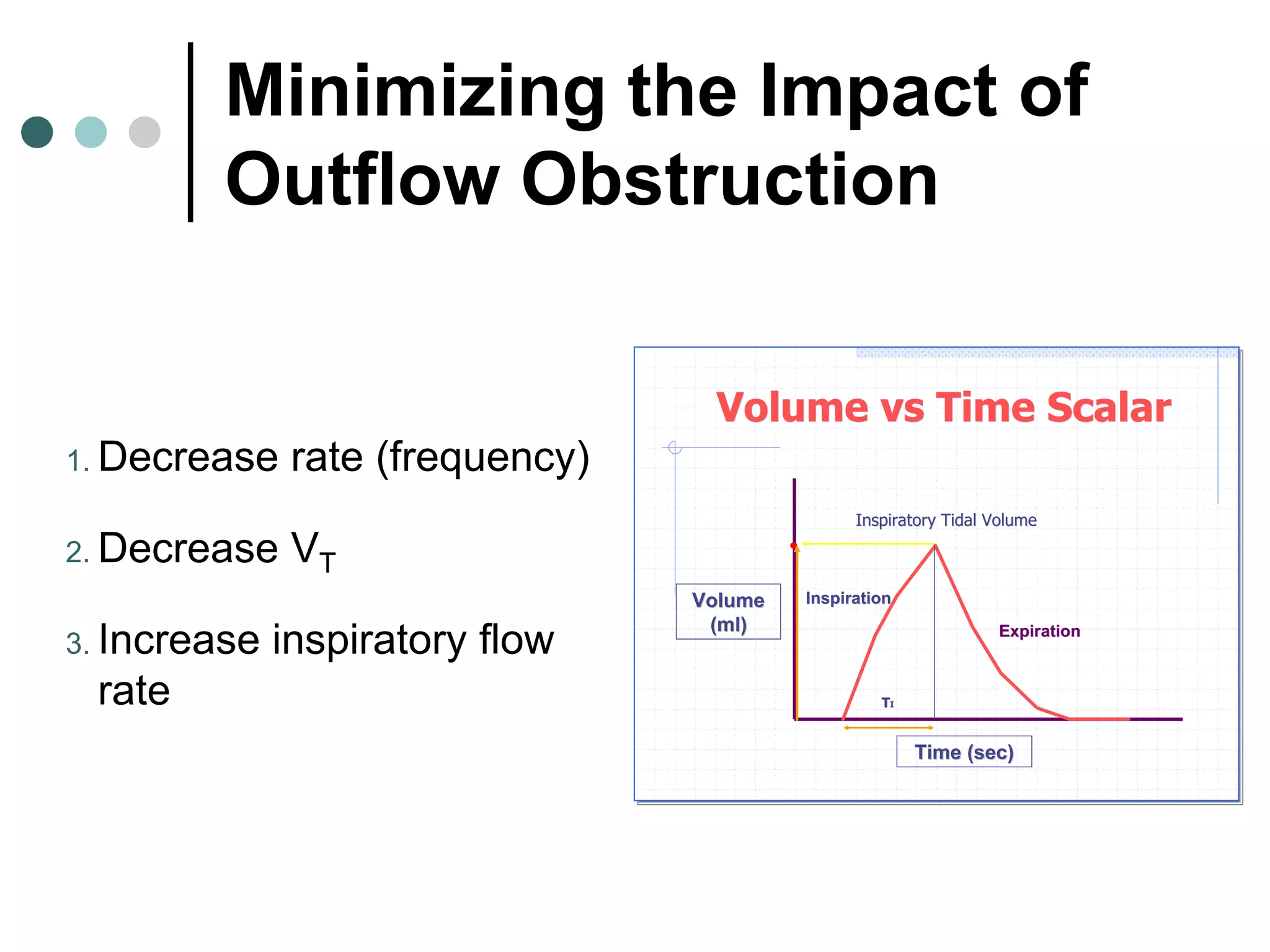
Minimizing the Impact of
Outflow Obstruction
1. Decrease rate (frequency)
2. Decrease VT
3. Increase inspiratory flow
rate
Volume vs Time ScalarVolume vs Time Scalar
InspirationInspiration
ExpirationExpiration
Time (sec)Time (sec)
VolumeVolume
(ml)(ml)
Inspiratory Tidal VolumeInspiratory Tidal Volume
TTII
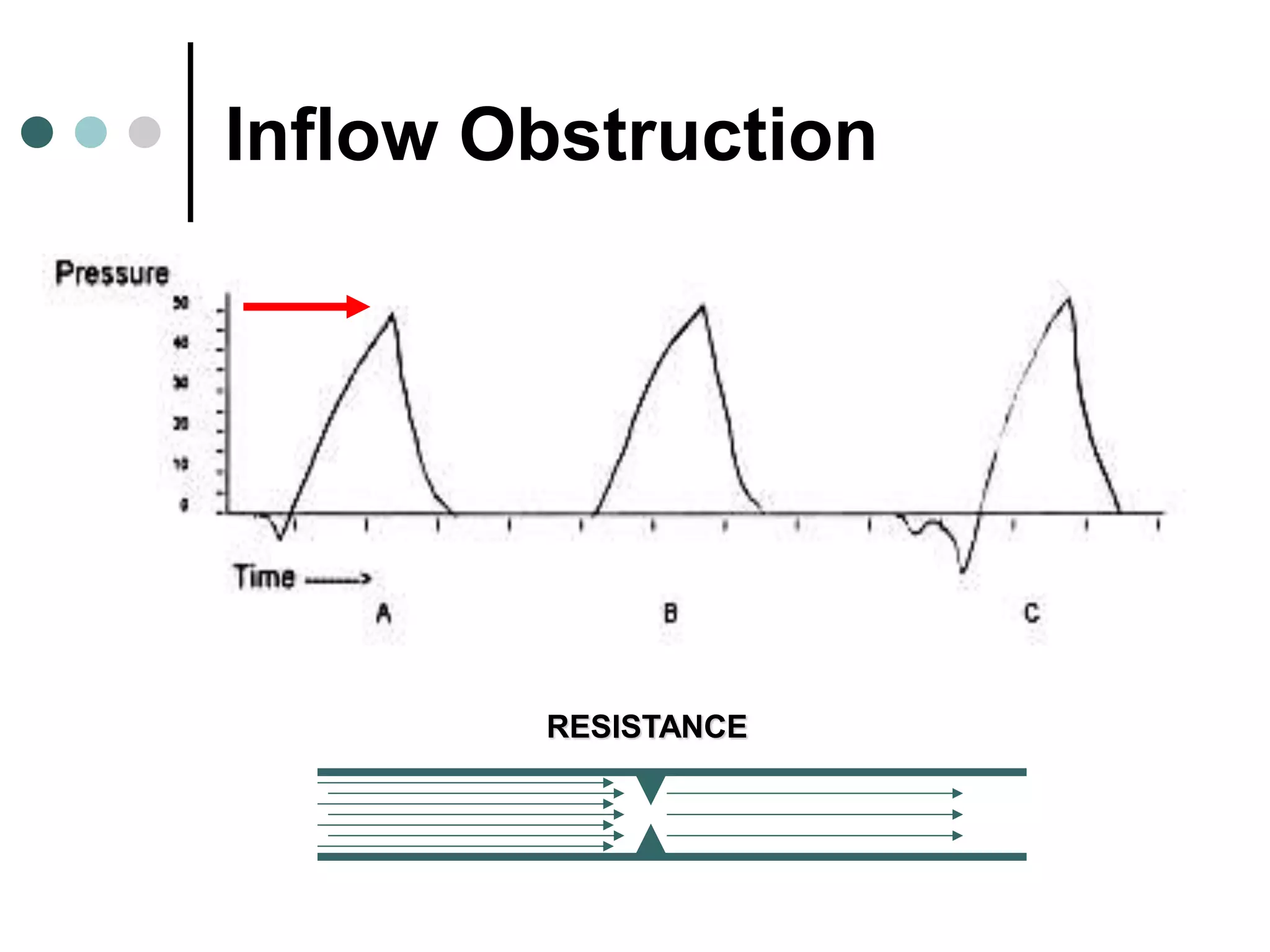
Inflow Obstruction
RESISTANCE
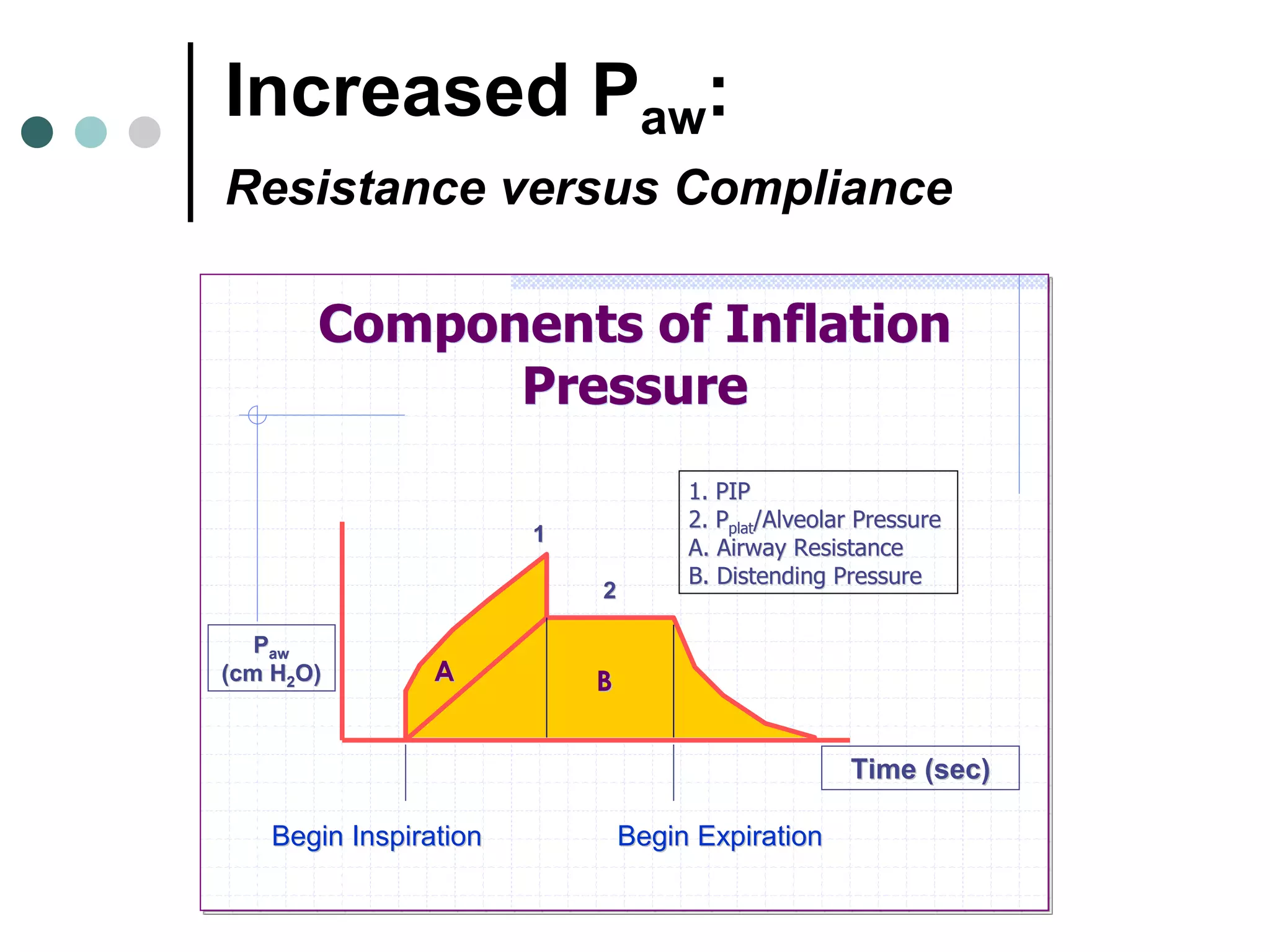
Increased Paw:
Resistance versus Compliance
Components of Inflation
Pressure
Components of Inflation
Pressure
Begin InspirationBegin Inspiration Begin ExpirationBegin Expiration
11
22
BBAA
1. PIP1. PIP
2.2. PPplatplat/Alveolar Pressure/Alveolar Pressure
A. Airway ResistanceA. Airway Resistance
B. Distending PressureB. Distending Pressure
Time (sec)Time (sec)
PPawaw
(cm H(cm H22O)O)
Identifying the Cause of
Inflow Obstruction
“Kink” in the ET tube
Secretions or mucous plugging
Bronchospasm
Disorders of Pressure
Reduced lung compliance
Excess tidal volume (VT)
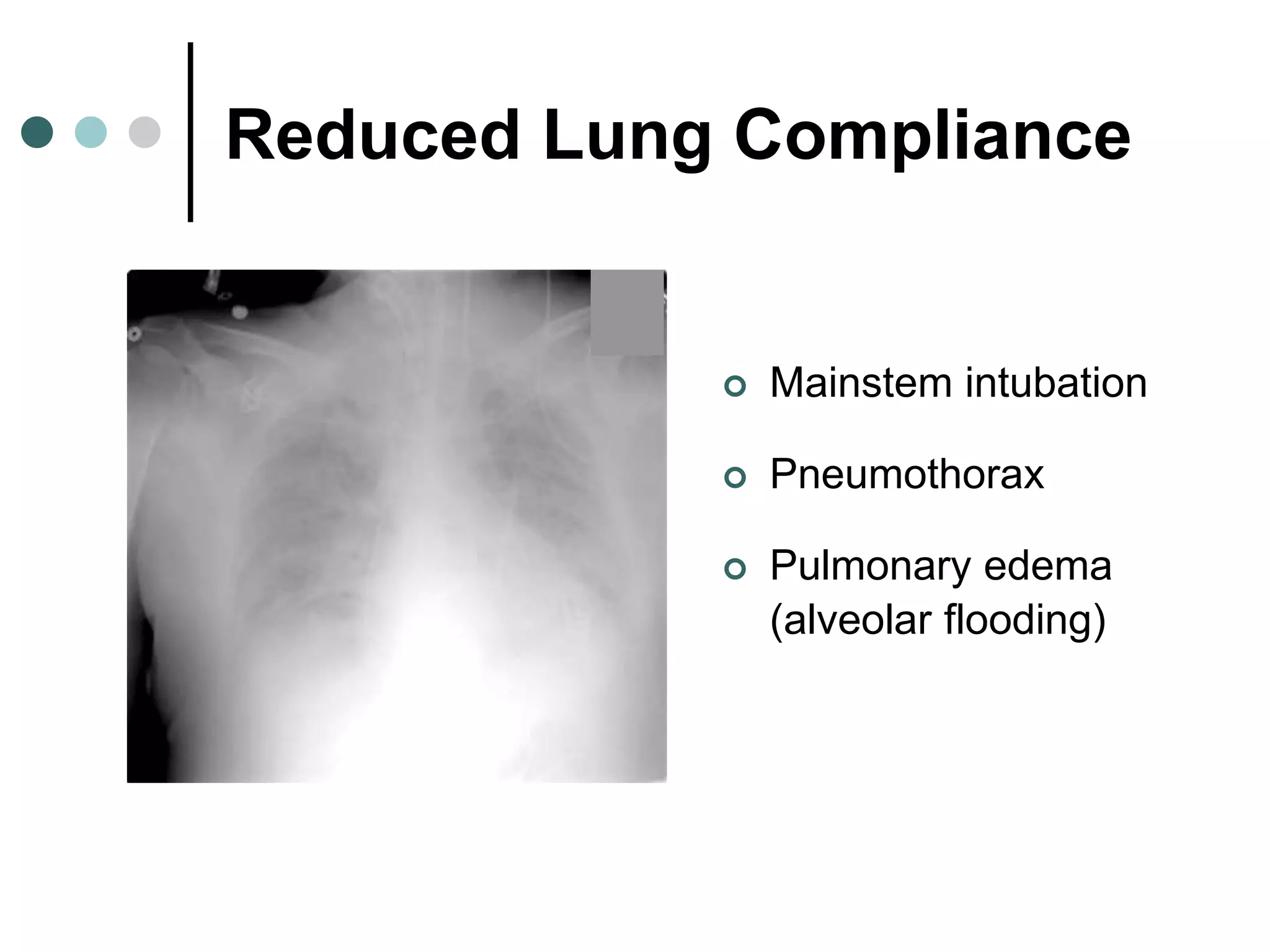
Reduced Lung Compliance
 Mainstem intubation
 Pneumothorax
 Pulmonary edema
(alveolar flooding)
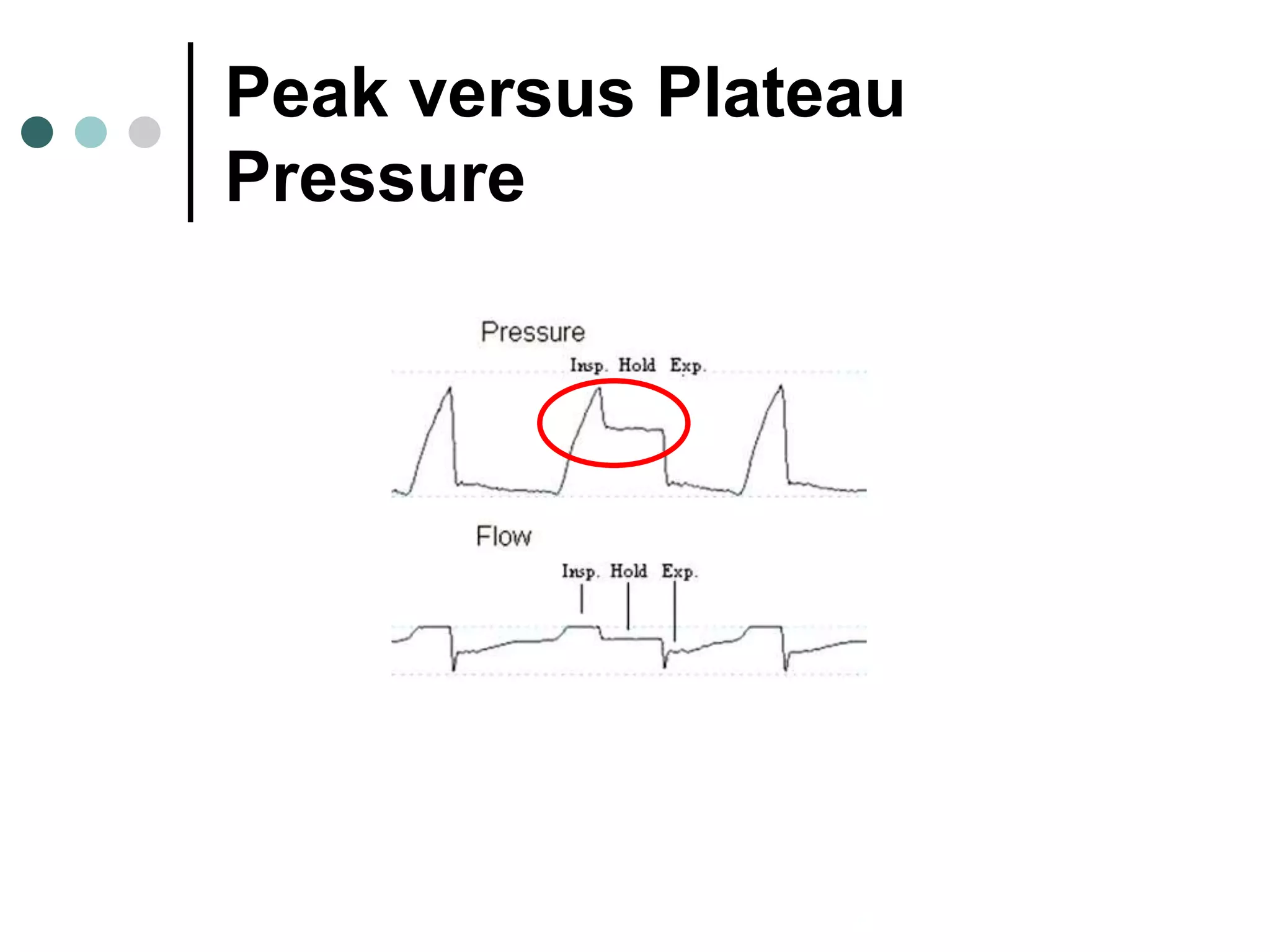
Peak versus Plateau
Pressure
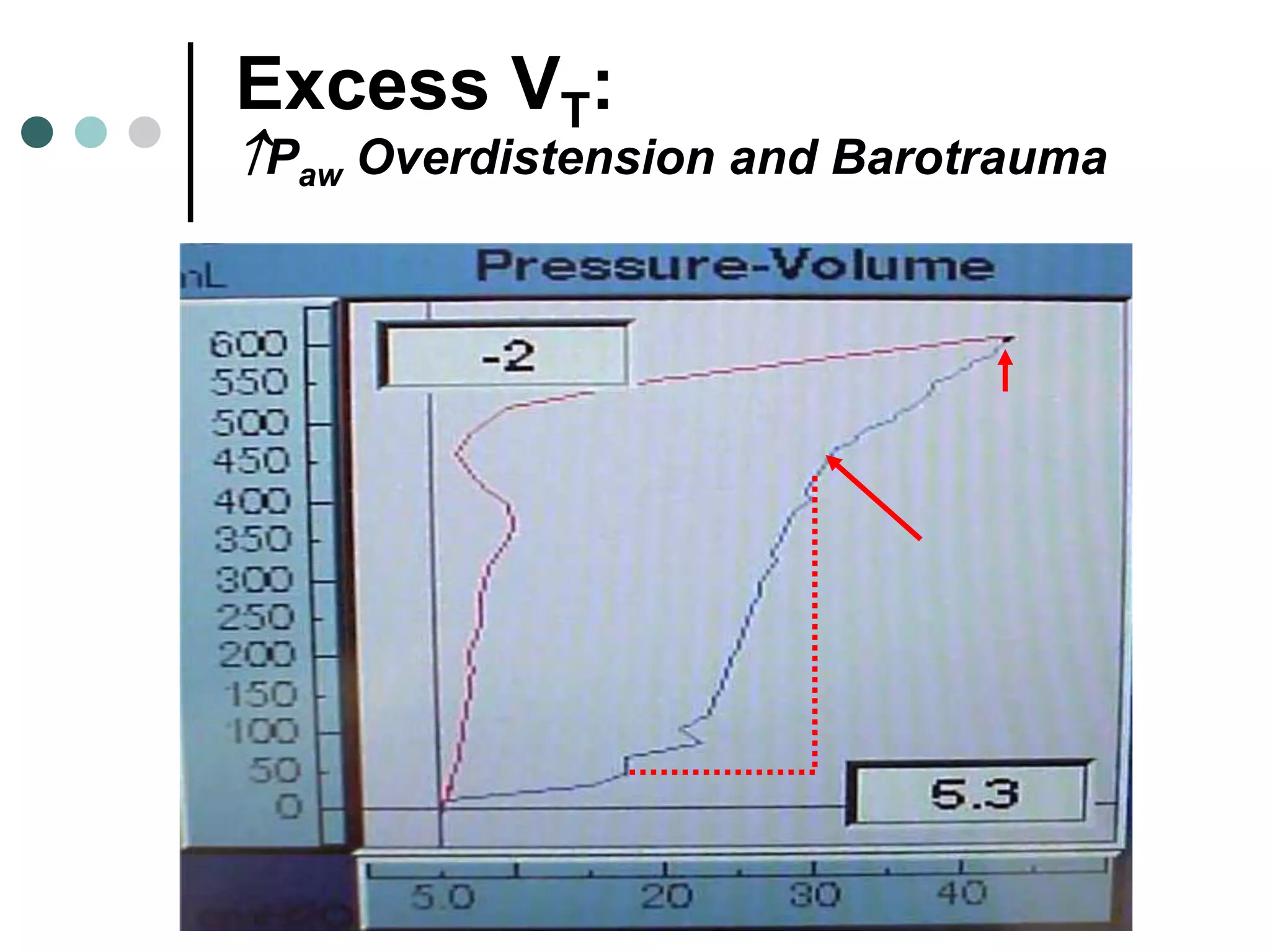
Excess VT:
Paw Overdistension and Barotrauma
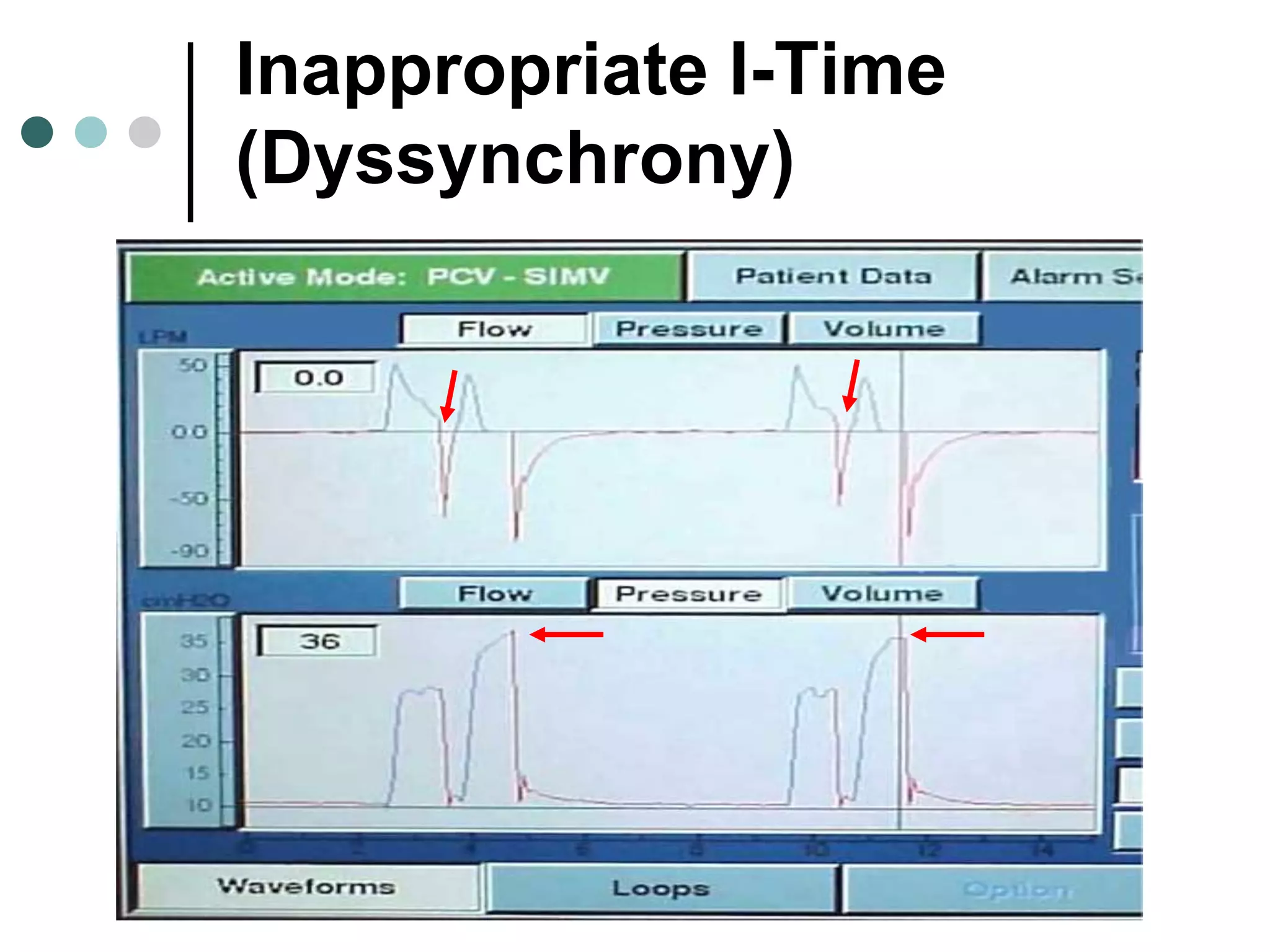
Inappropriate I-Time
(Dyssynchrony)
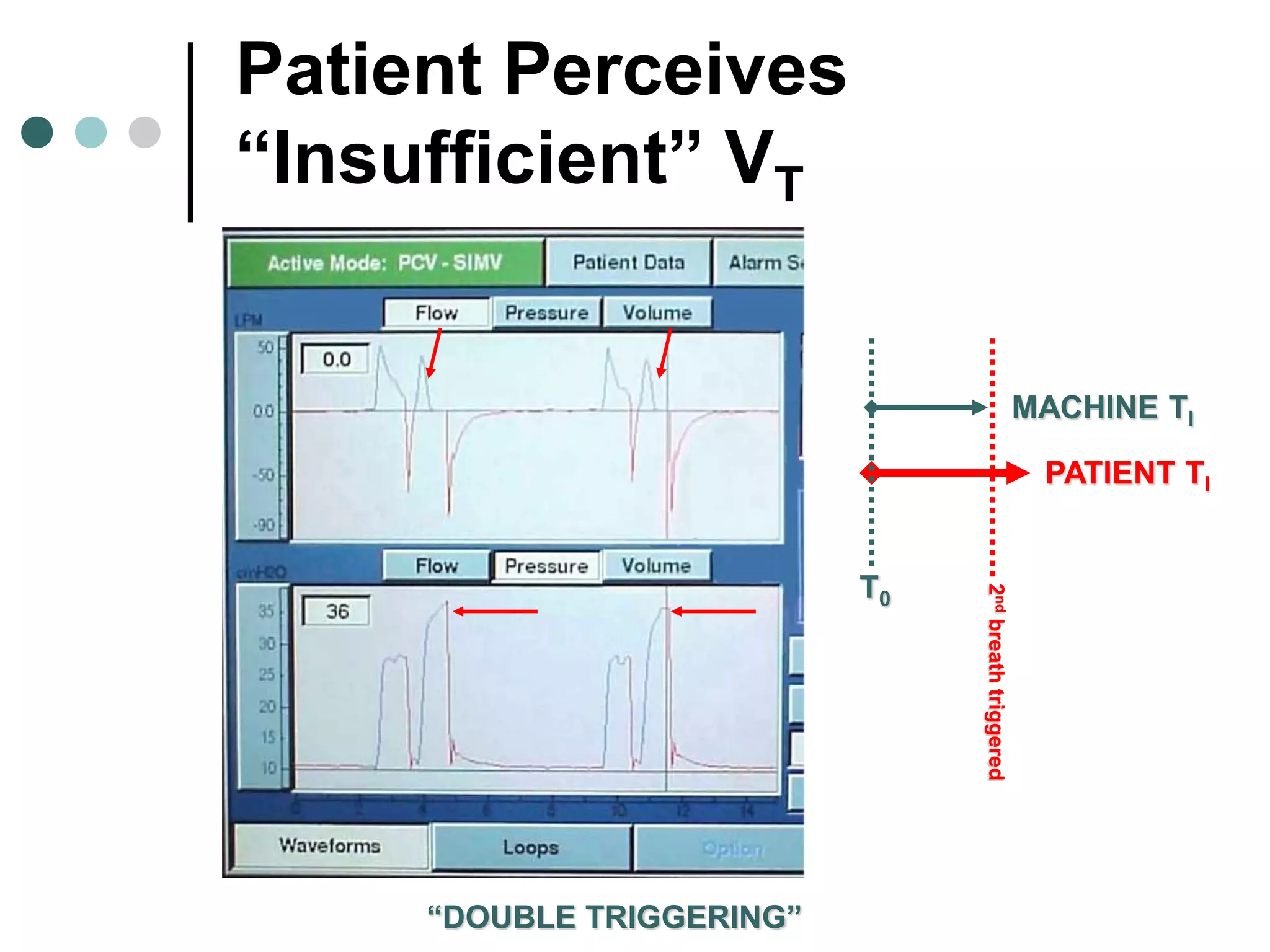
Patient Perceives
“Insufficient” VT
“DOUBLE TRIGGERING”
MACHINE TI
PATIENT TI
T0
2ndbreathtriggered
Conclusions
1. Know the waveforms!
2. Synchronize the machine to the patient
3. “Seek” the cause of the problem by
analysis techniques shown here today
4. Use sedation only after you have
accomplished 1-3 (or in ARDS patients
with  VT

5 farmer -mechanical_ventilation_workshop