

The document outlines the principles of reflective teaching, emphasizing the importance of self-observation and evaluation in the classroom through methods like teaching diaries, lesson recordings, and peer observations. It discusses Kolb's learning cycle and the cyclical nature of reflection, encouraging educators to ask critical questions about their practice. Additionally, it provides references for further reading on effective reflective teaching strategies.
Introduction of Amin Neghavati and focus on the basics of language teaching.
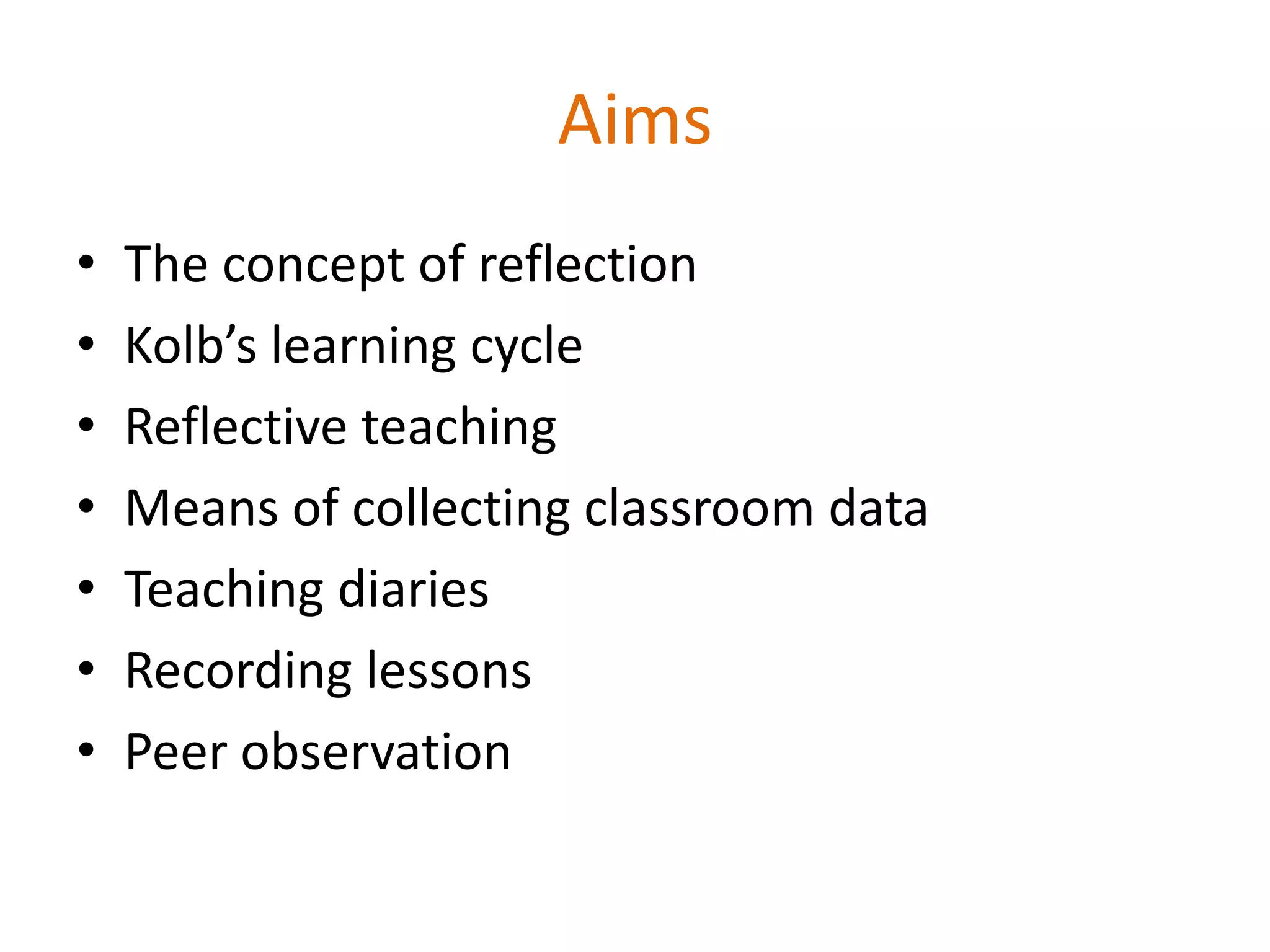
Discusses the aims of the presentation including reflection, Kolb’s learning cycle, and various data collection methods.
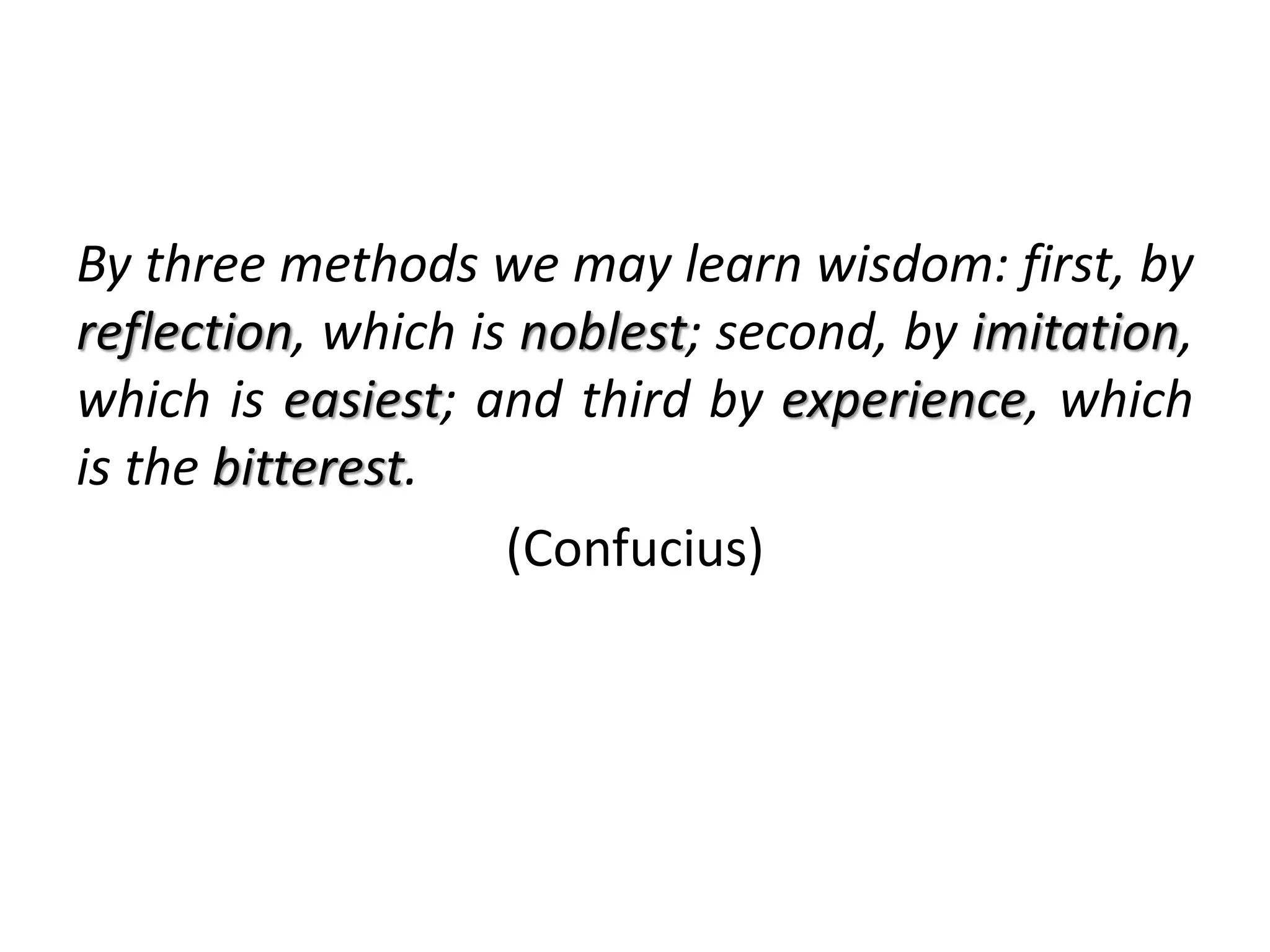
Cites Confucius on learning wisdom through reflection, imitation, and experience.
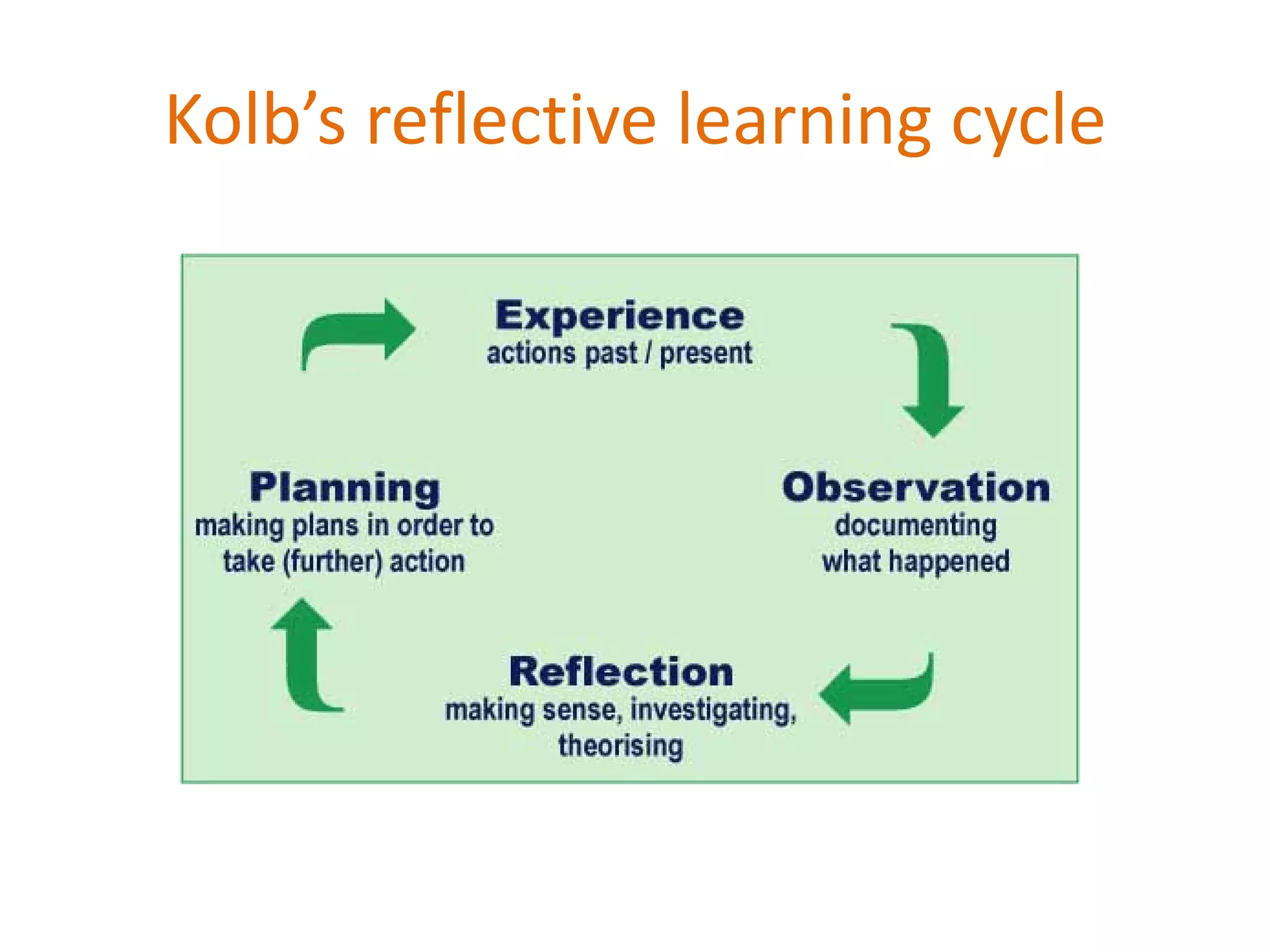
Introduces Kolb’s reflective learning cycle as a framework for understanding learning through experience.
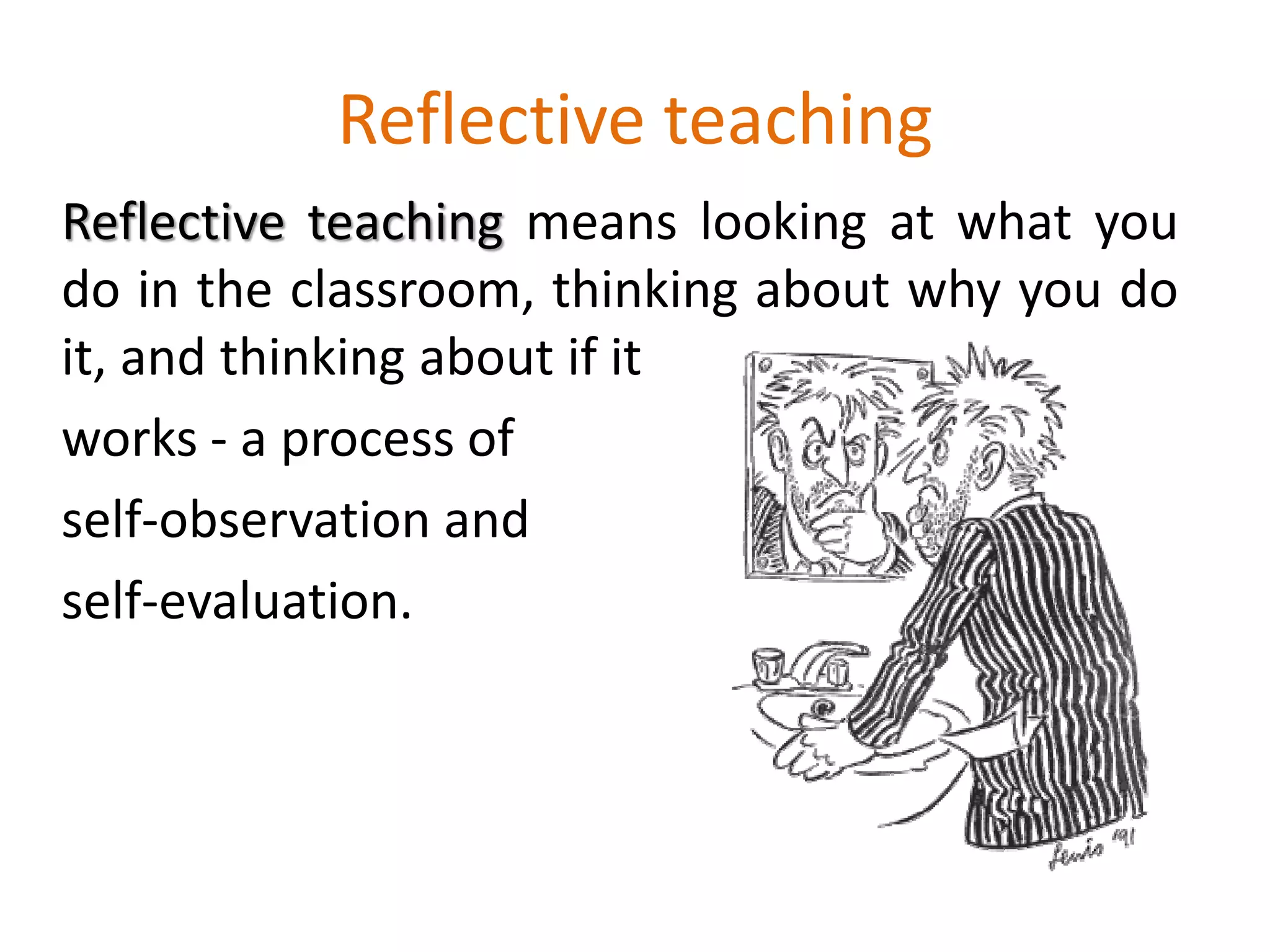
Explains reflective teaching as self-observation and self-evaluation; emphasizes the timing for reflection.
Encourages starting reflective teaching by asking 'what and why' questions.
Highlights methods for gathering classroom data such as teaching diaries, lesson recordings, student feedback, and peer observation.
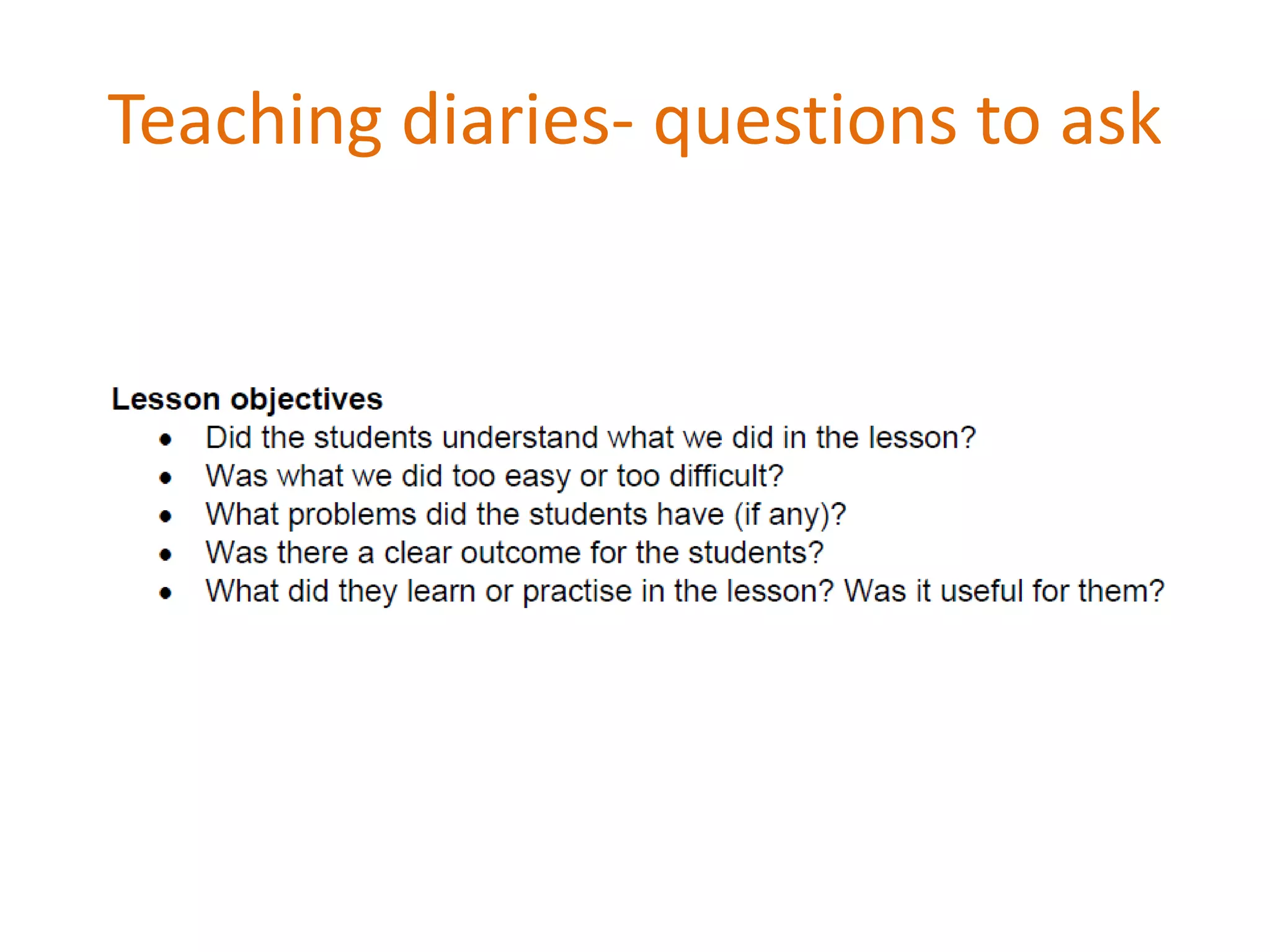
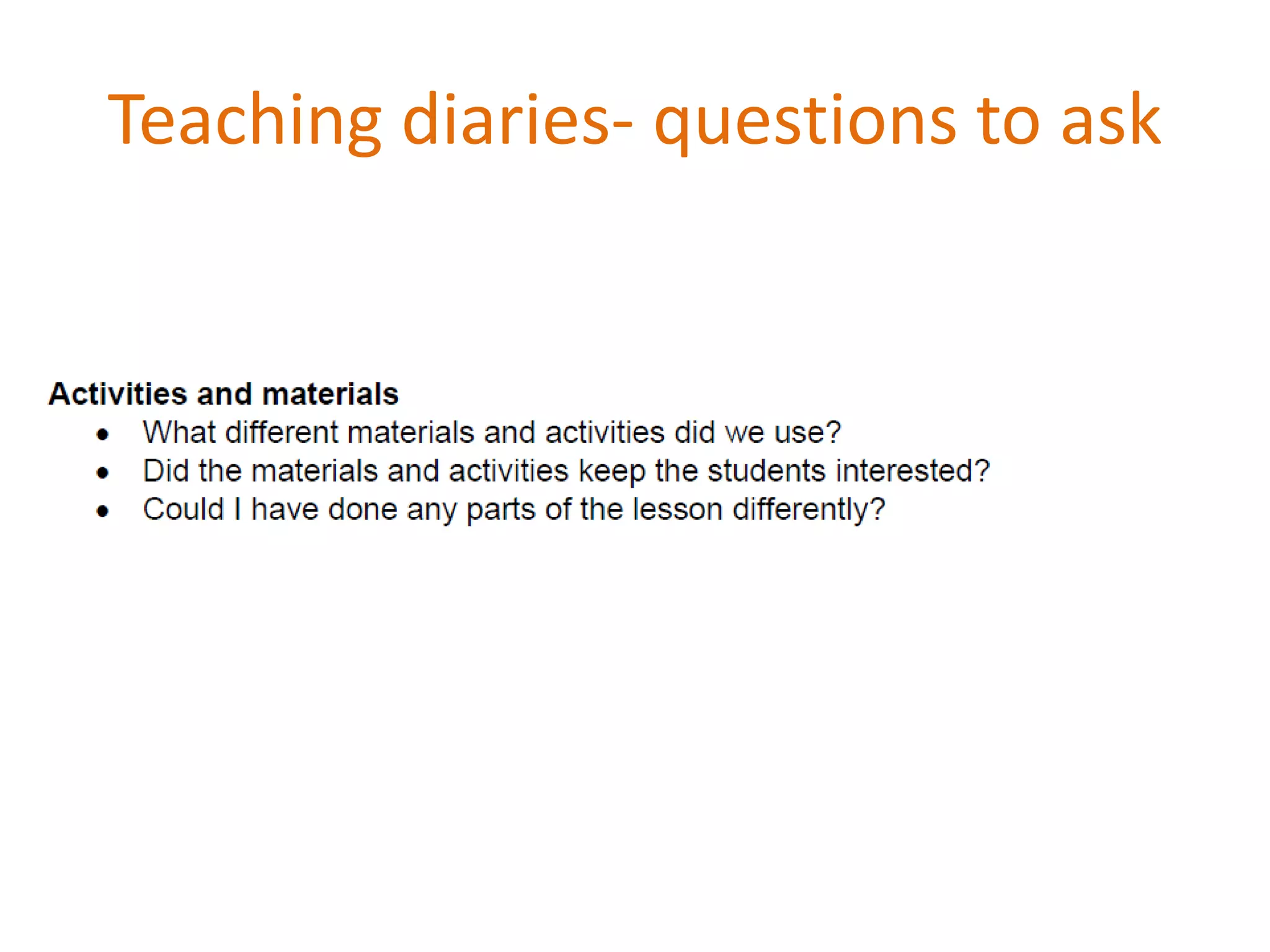
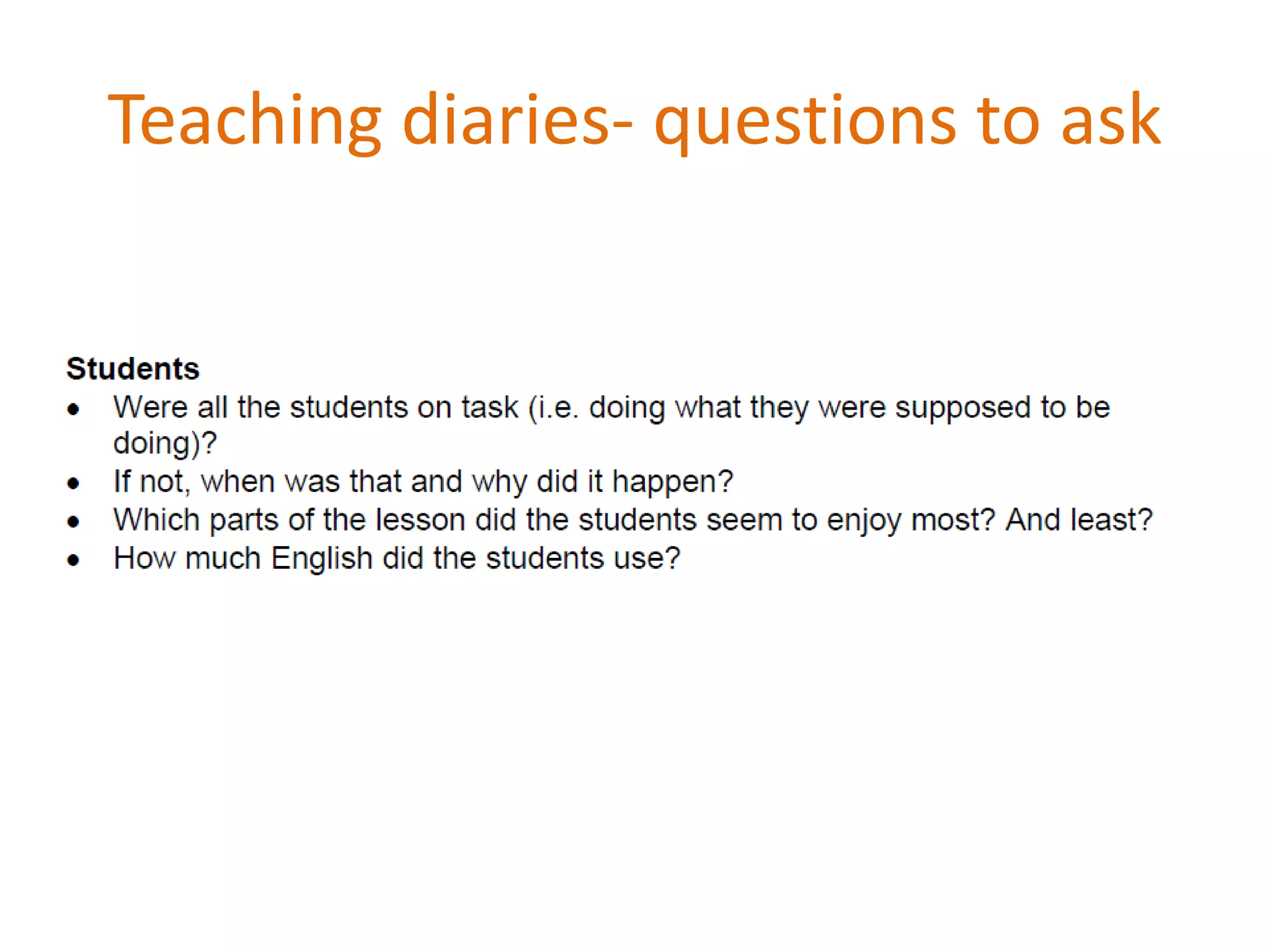
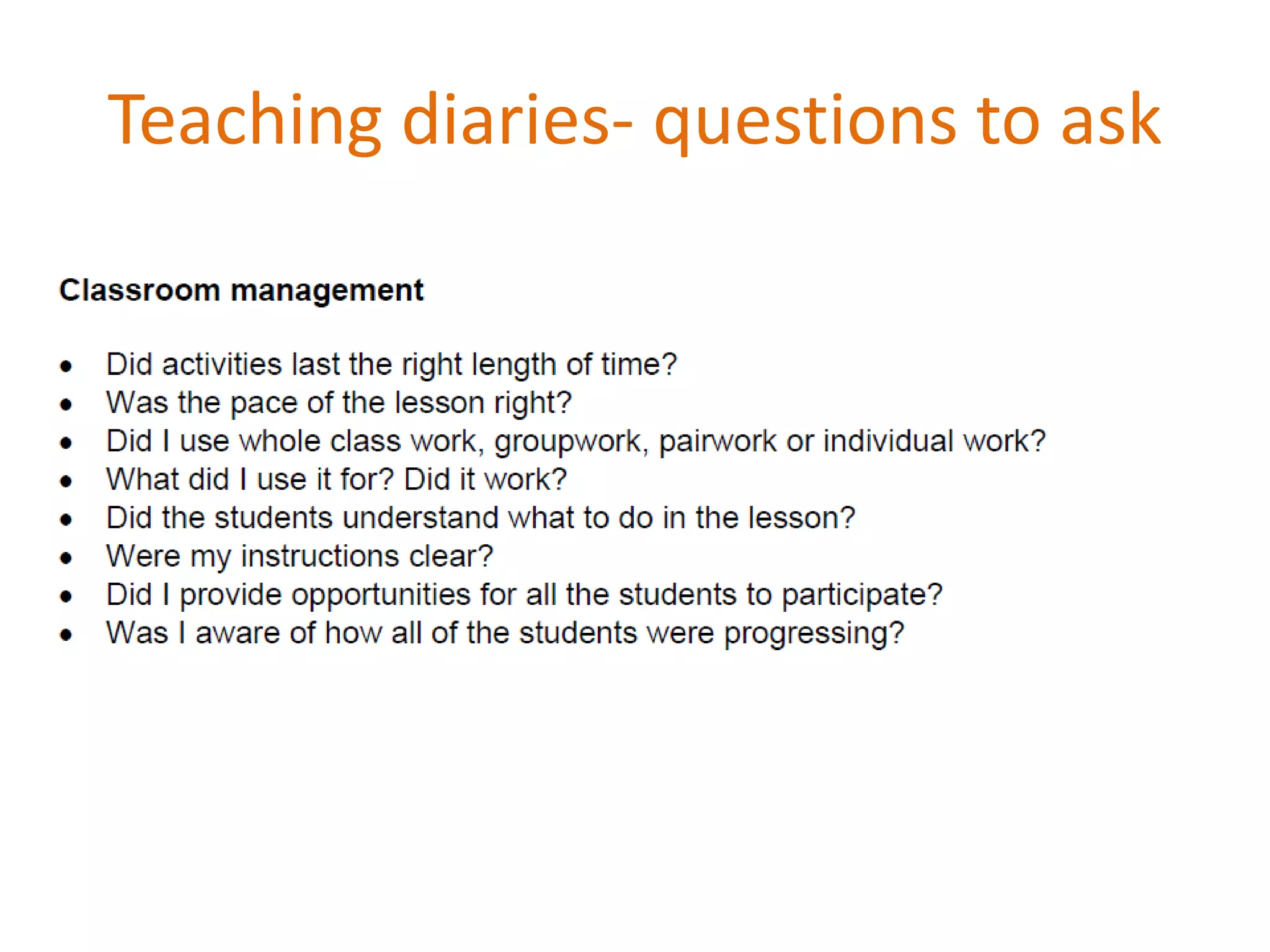
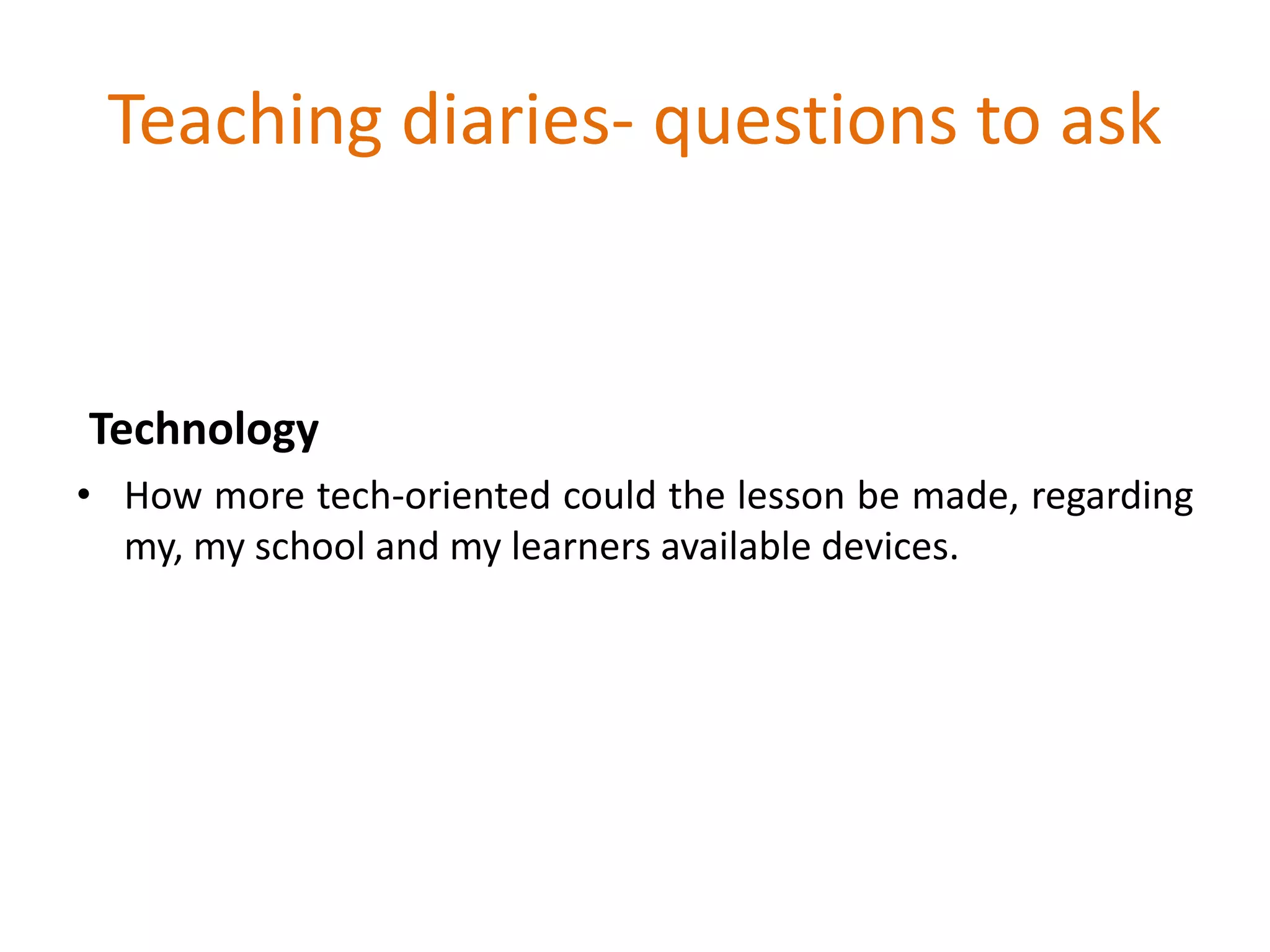
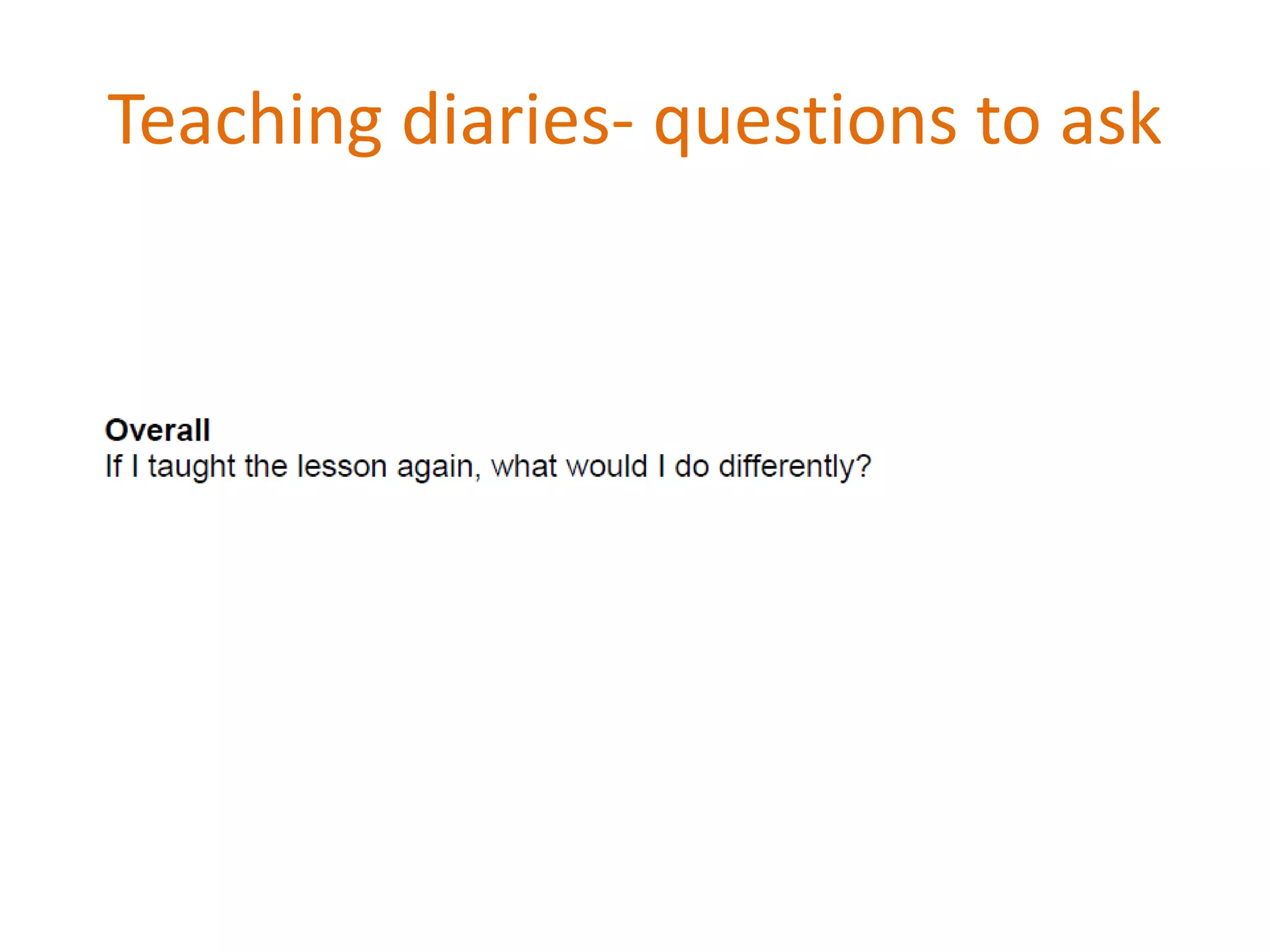
Discusses the importance of teaching diaries and prompts for self-reflection regarding teaching practices and technology.
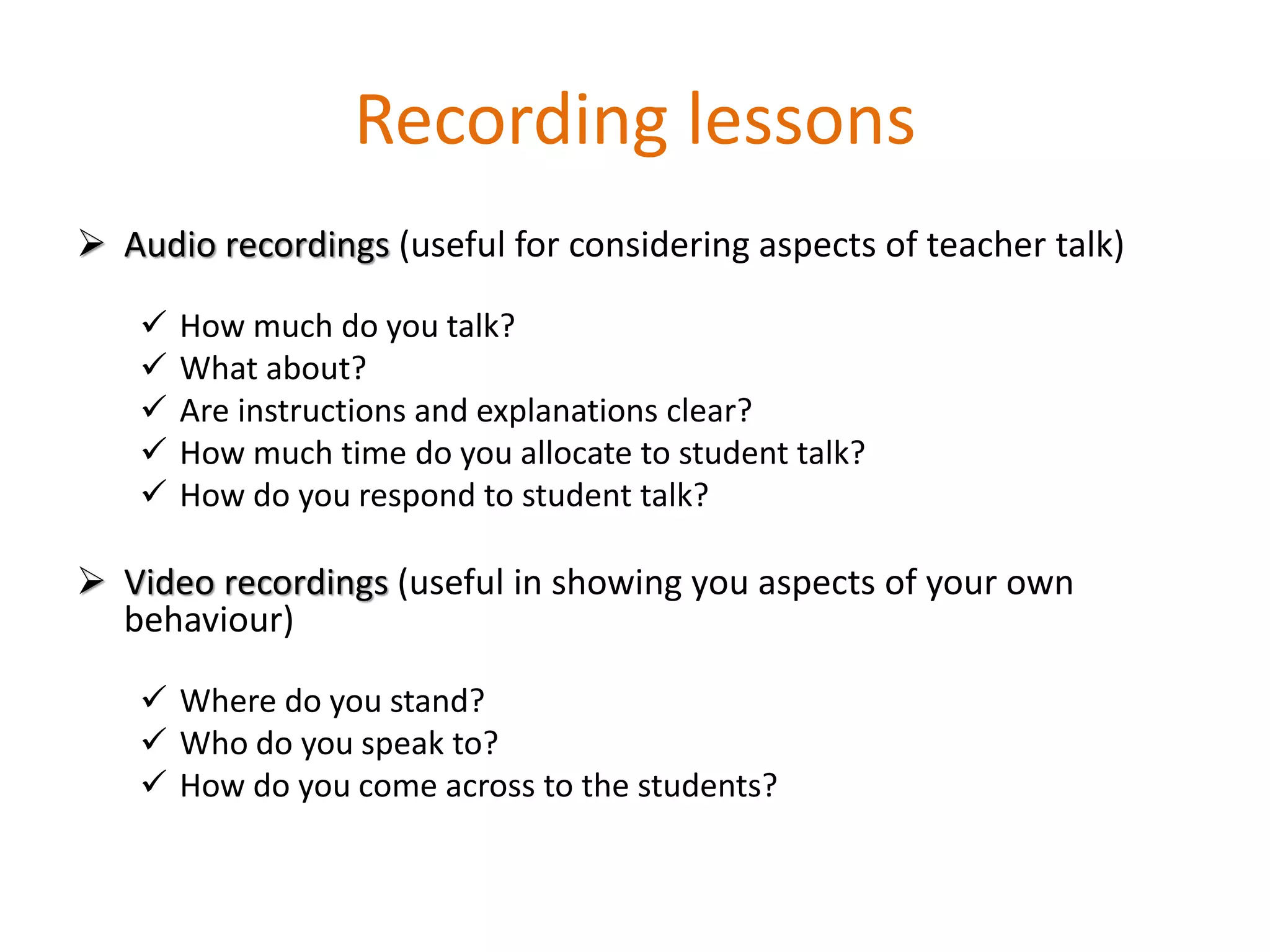
Details benefits of audio and video recordings for enhancing teaching effectiveness and understanding teacher-student dynamics.
Describes the peer observation process as observing and being observed with structured sessions.
Describes reflection as a cyclical process which is crucial for ongoing development.
Quotes Heraclitus on the inevitability of change, highlighting adaptability in teaching.
Discusses the aims of the presentation including reflection, Kolb’s learning cycle, and various data collection methods.
Provides references for further exploration of reflective teaching methodologies.


