Trophic Levels,
Energy transfer
and Pyramids
Vocabulary
 Trophic Levels – is the position an
organism occupies in a food chain. It
refers to food or feeding.
 Apex predator – top level predators with
few or no predators of their own.
 Detritavore – feeds on dead organisms,
helps with decomposition
 Review Vocab – carnivore, omnivore,
herbivore, scavenger, decomposer
Food Chain
Food Chains
The energy flow from one trophic level to the
other is know as a food chain
Producers are at the first TROPHIC LEVEL
Primary Consumers are the SECOND TROPHIC
LEVEL
Secondary consumers are at the THIRD
TROPHIC LEVEL
Tertiary consumers are at the FOURTH
TROPHIC LEVEL
In some ecosystems you can go out to
Quaternary consumers
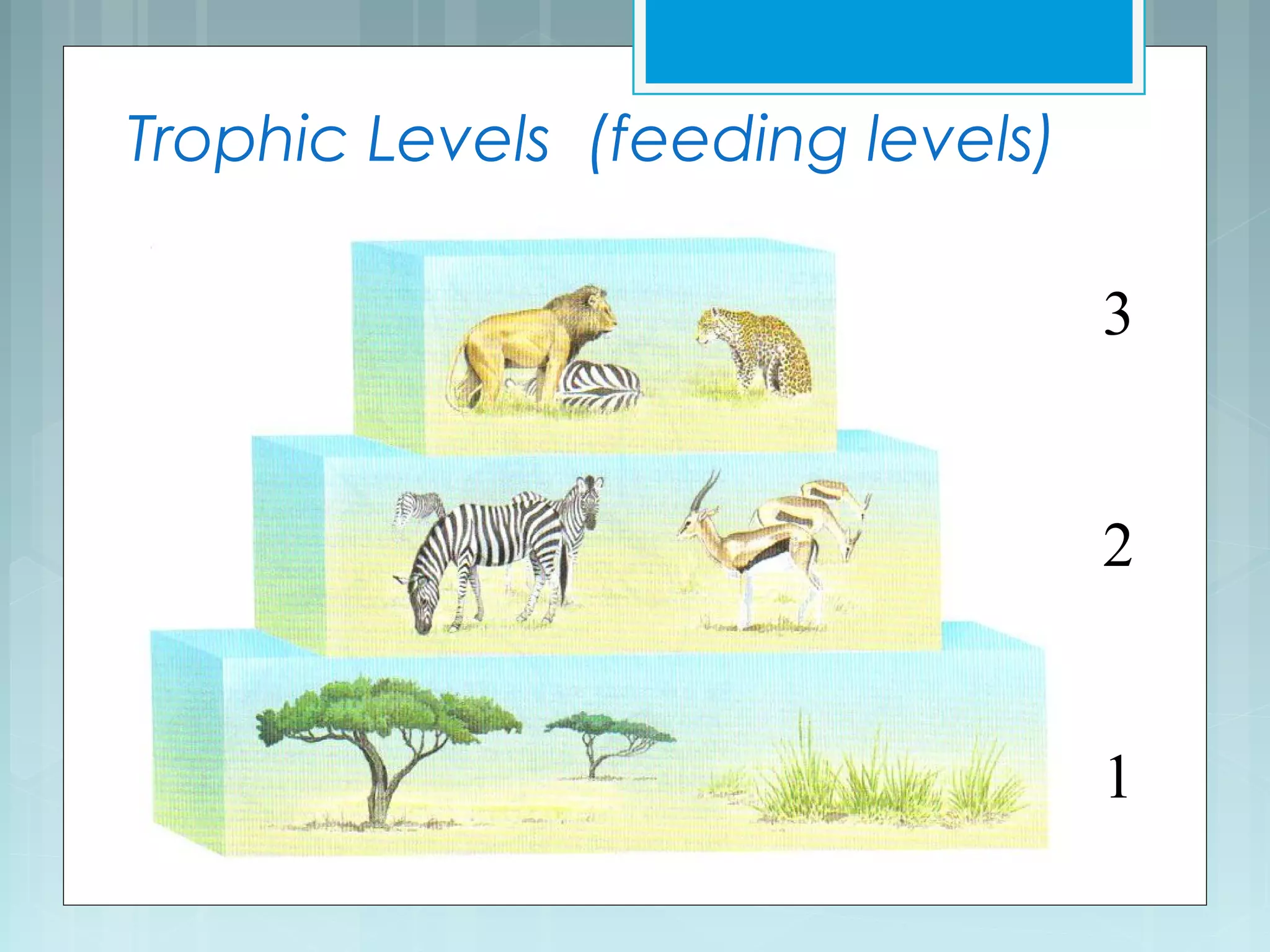
Trophic Levels (feeding levels)
3
2
1
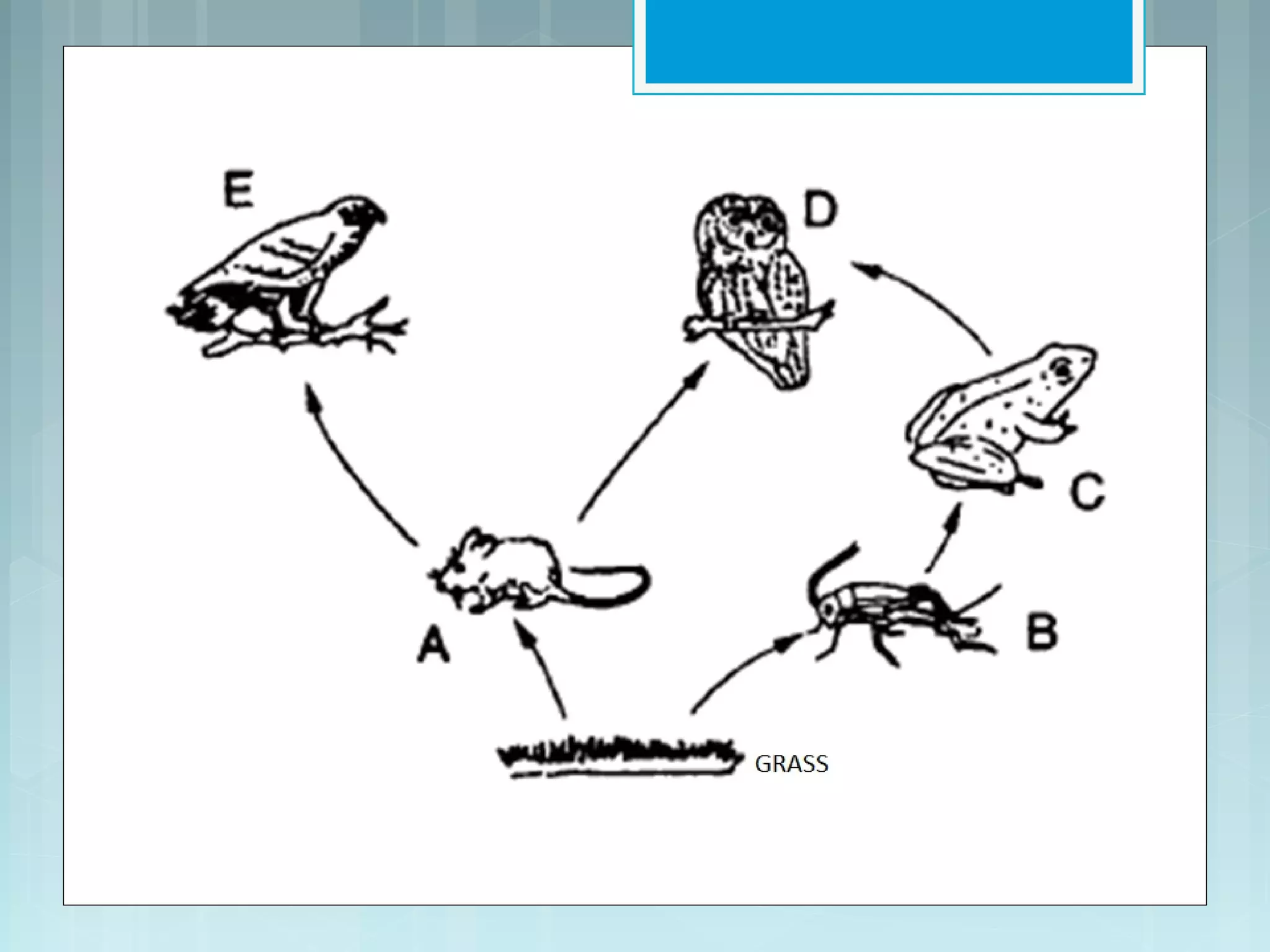
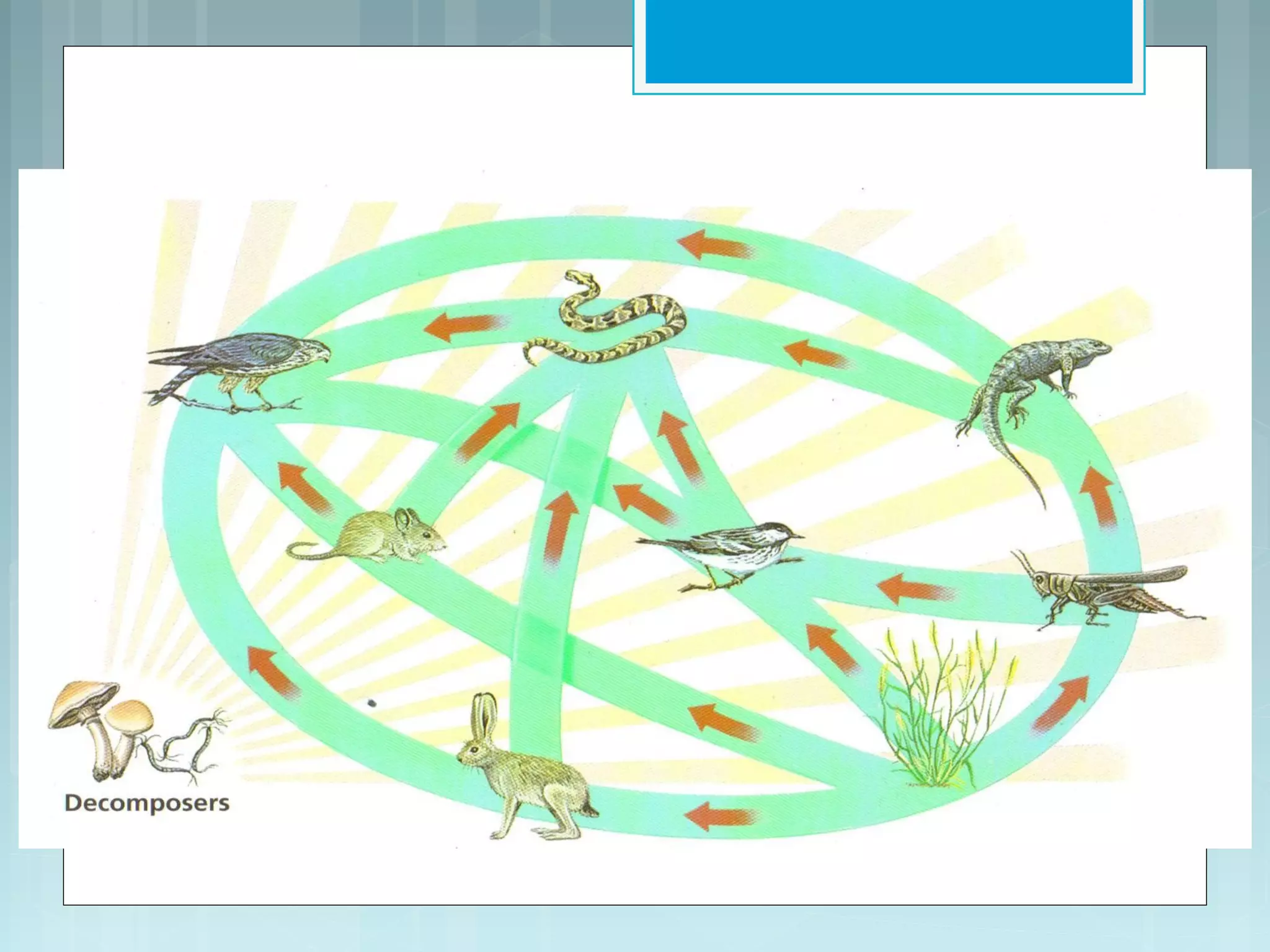
Food Web
Most organisms eat more than JUST
one organism
When more organisms are involved
it is know as a FOOD WEB
Food webs are more complex and
involve lots of organisms
Food webs
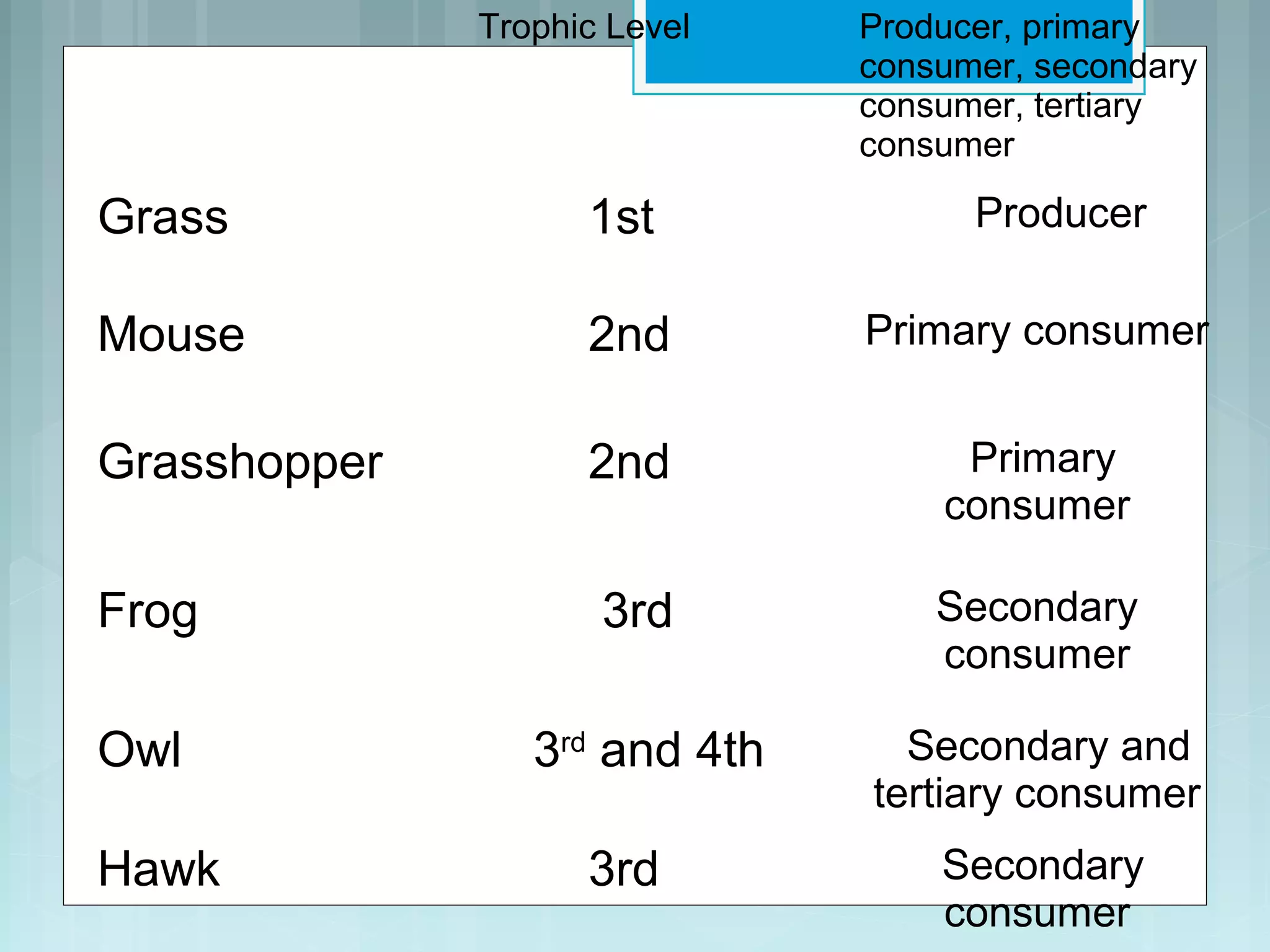
Trophic Level Producer, primary
consumer, secondary
consumer, tertiary
consumer
Grass 1st Producer
Mouse 2nd Primary consumer
Grasshopper 2nd Primary
consumer
Frog 3rd Secondary
consumer
Owl 3rd
and 4th Secondary and
tertiary consumer
Hawk 3rd Secondary
consumer
Terrestrial Food Web
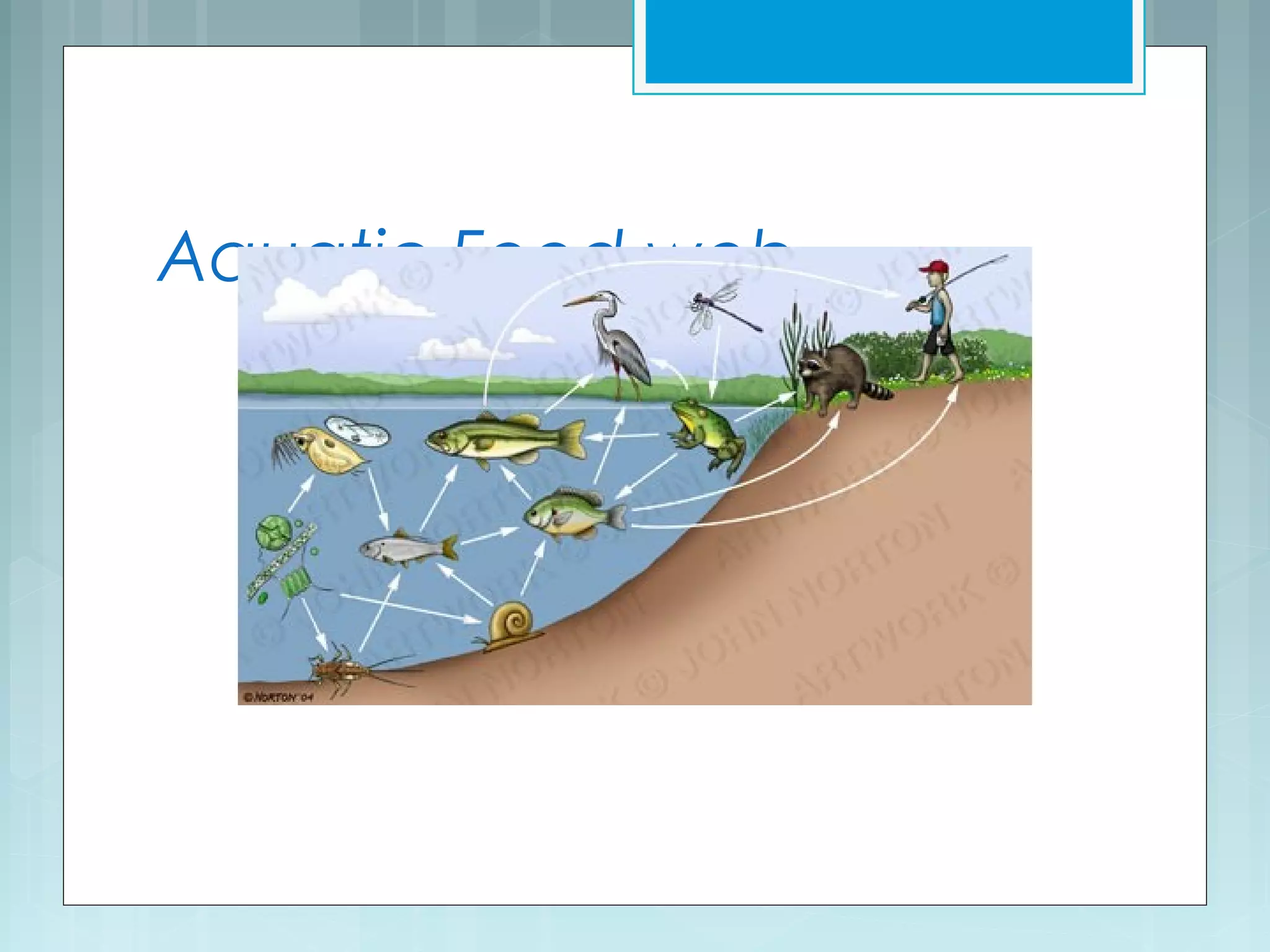
Aquatic Food web
Transfer Between
Ecosystems
 If an organism that lives in a terrestrial
ecosystem consumes an organism in an
aquatic (or aquatic to terrestrial) energy is
transferred between the two.
 Ex. Bear eats a fish (energy from aquatic
to terrestrial) or fish eats a caterpillar
(energy from terrestrial to aquatic)
Transfer of Energy
When a lion eats a zebra, it does
not get all of the energy from the
zebra.
Energy lost is usually in form of heat
Energy lost from chain “link” to “link”
is significant!
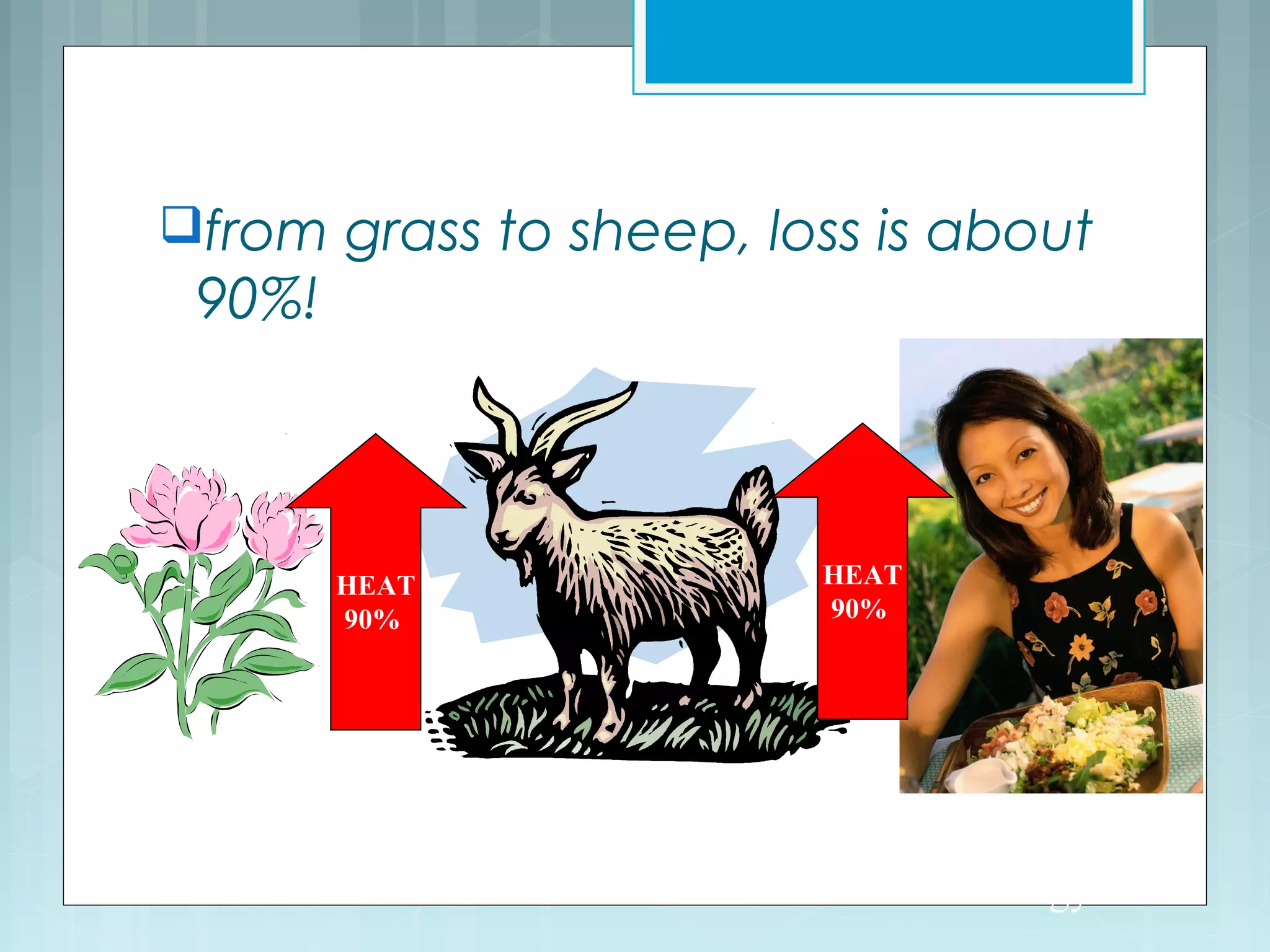
from grass to sheep, loss is about
90%!
10% Original
Energy! 1% Original
Energy!
100% Energy
Available
HEAT
90%
HEAT
90%
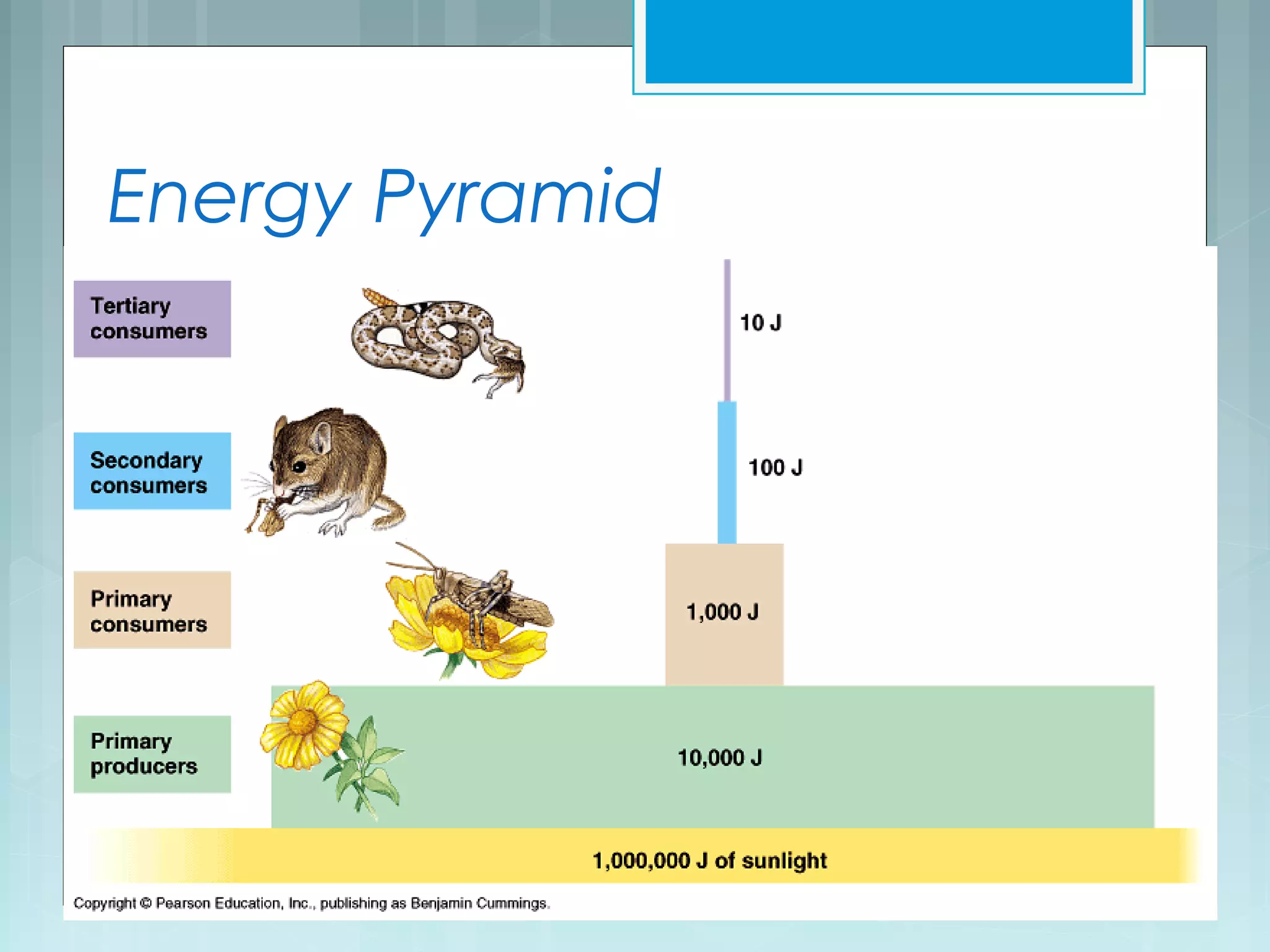
Energy lost from one trophic level
(energy level) to the next level can be
represented by a pyramid
PRODUCERS
1° CONSUMERS
2° CONSUMERS
3°
CONSUMERS
4⁰°
CONSUMERS
♦ Each level above only gets 10% of the
energy from below
− Ex: 10,000 J of producers (plants) only give 10% of
energy to primary consumers
> 1,000 J to primary consumers (snails,
minnows, dragonflies)
> 100 J to secondary consumers (small fish)
> 10 J to tertiary consumers (big fish)
> 1 J to quaternary consumers (fish hawk)
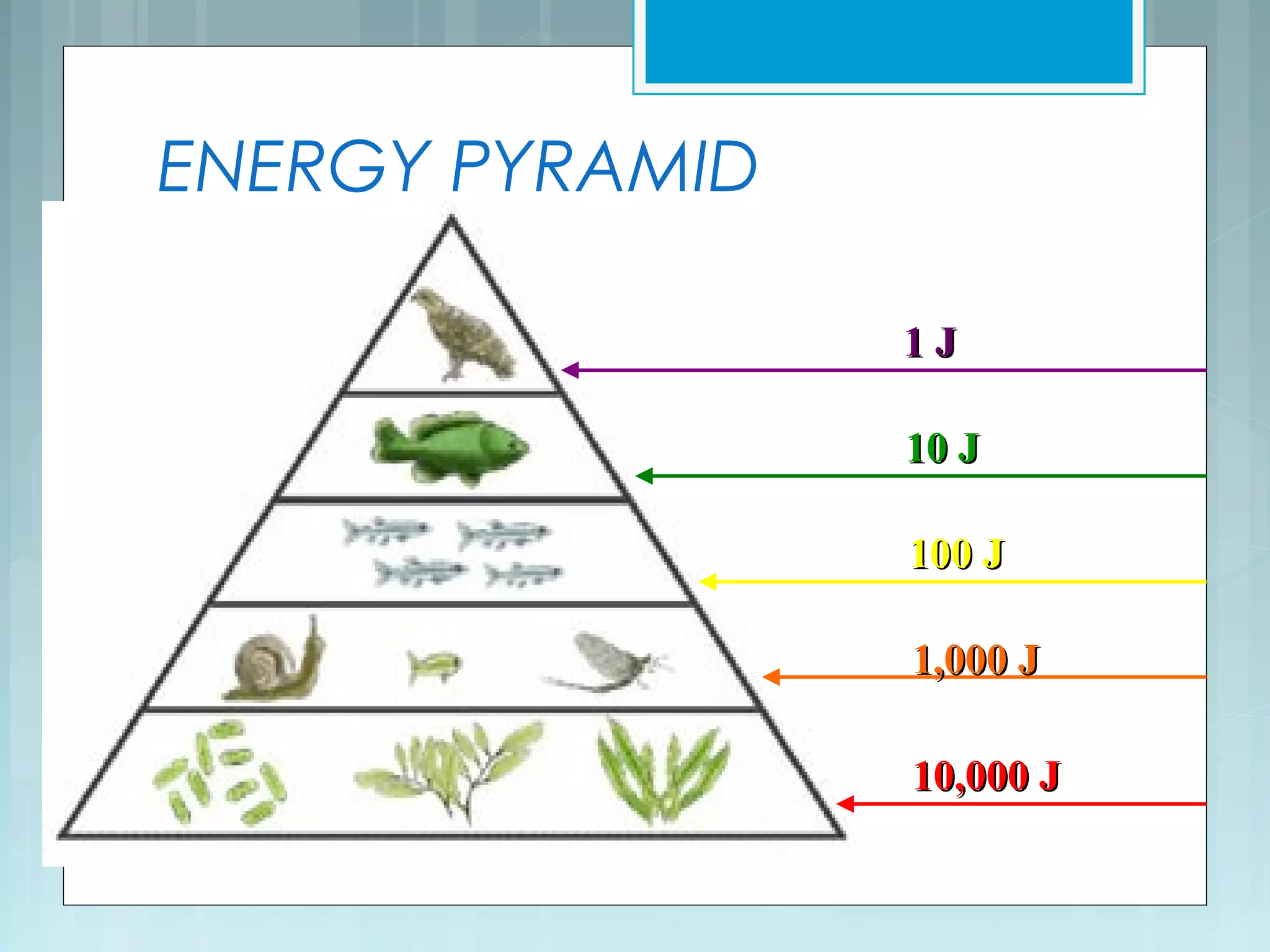
ENERGY PYRAMID
10,000 J10,000 J
1,000 J1,000 J
100 J100 J
10 J10 J
1 J1 J
Energy Pyramid
Three hundred trout are needed to
support one man for a year. The trout, in
turn, must consume 90,000 frogs, that
must consume 27 million grasshoppers
that live off of 1,000 tons of grass.
-- G. Tyler Miller, Jr., American Chemist
(1971)
Usually no more than 5 trophic
levels since 6th level would have
very little energy to keep it alive
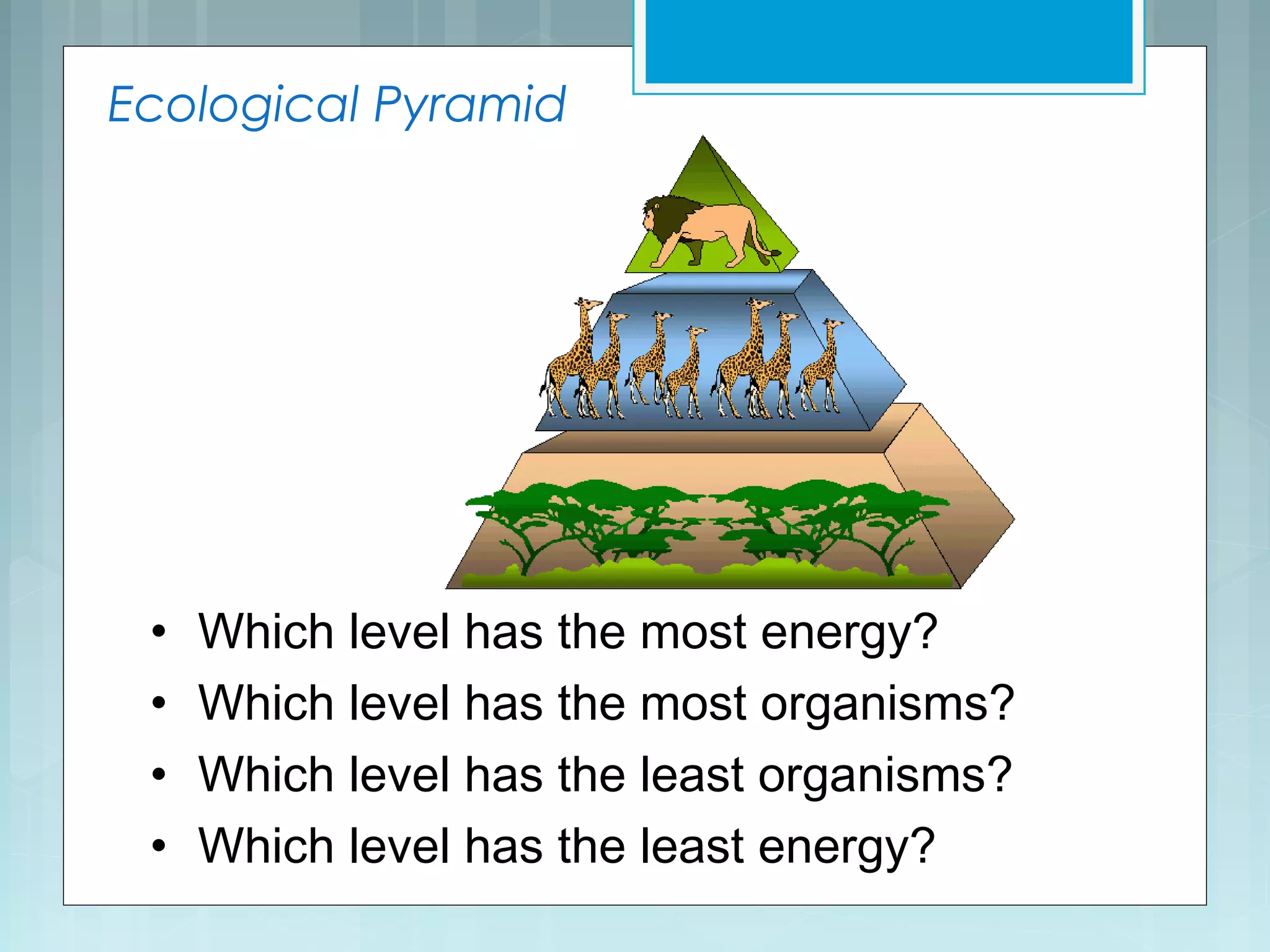
Ecological Pyramid
• Which level has the most energy?
• Which level has the most organisms?
• Which level has the least organisms?
• Which level has the least energy?
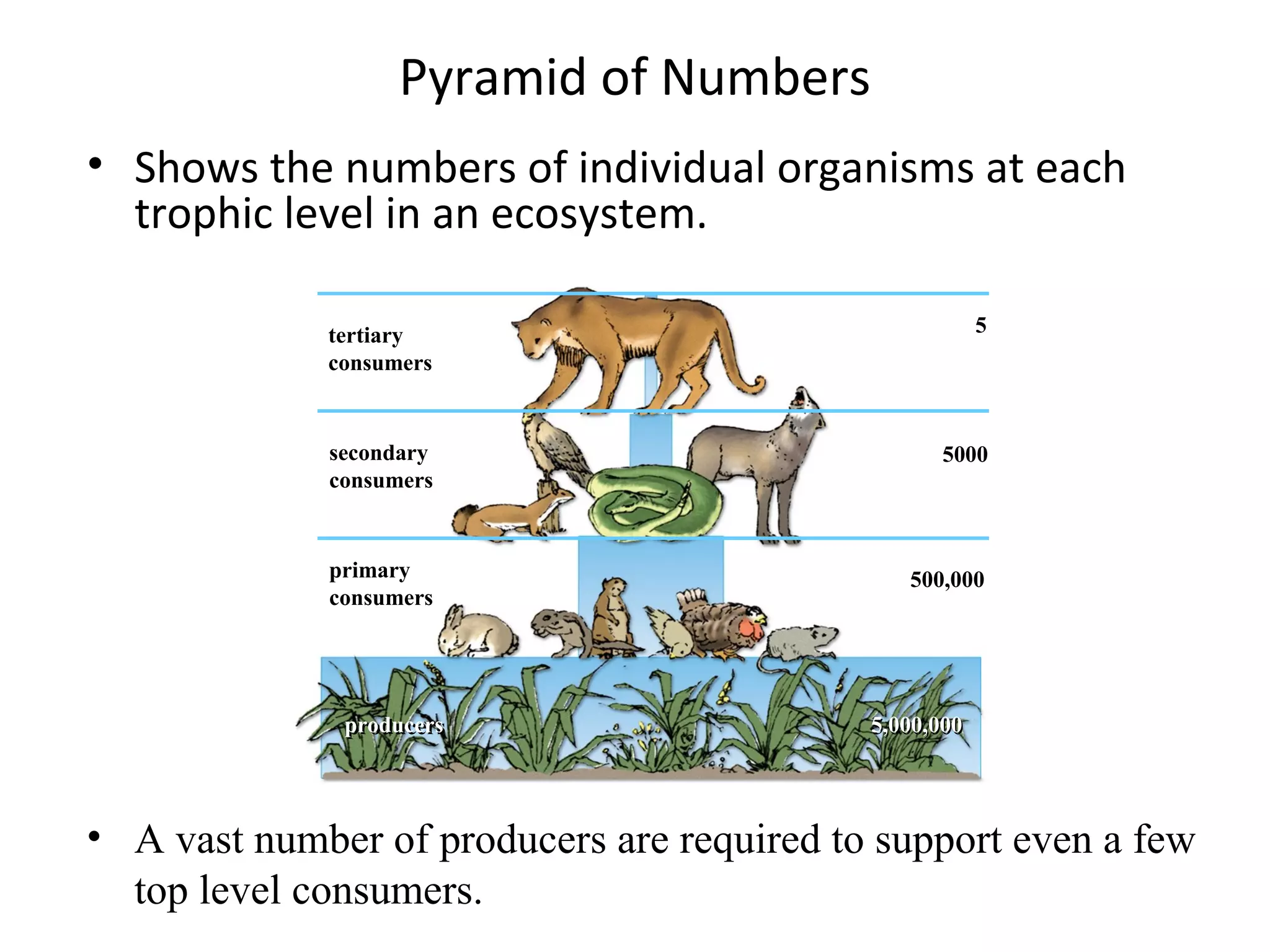
Pyramid of Numbers
• Shows the numbers of individual organisms at each
trophic level in an ecosystem.
tertiary
consumers
secondary
consumers
primary
consumers
producers
5
5000
500,000
5,000,0005,000,000producers
• A vast number of producers are required to support even a few
top level consumers.
Biomass pyramid
• Biomass is a measure of the total dry mass of
organisms in a given area.
tertiary
consumers
secondary
consumers
primary
consumers
producers
75 g/m2
150g/m2
675g/m2
2000g/m2producers 2000g/m2

Food webs and trophic levels

  • 1.
  • 2.
    Vocabulary  Trophic Levels– is the position an organism occupies in a food chain. It refers to food or feeding.  Apex predator – top level predators with few or no predators of their own.  Detritavore – feeds on dead organisms, helps with decomposition  Review Vocab – carnivore, omnivore, herbivore, scavenger, decomposer
  • 3.
  • 4.
    Food Chains The energyflow from one trophic level to the other is know as a food chain Producers are at the first TROPHIC LEVEL Primary Consumers are the SECOND TROPHIC LEVEL Secondary consumers are at the THIRD TROPHIC LEVEL Tertiary consumers are at the FOURTH TROPHIC LEVEL In some ecosystems you can go out to Quaternary consumers
  • 5.
  • 6.
    Food Web Most organismseat more than JUST one organism When more organisms are involved it is know as a FOOD WEB Food webs are more complex and involve lots of organisms
  • 7.
  • 8.
    Trophic Level Producer,primary consumer, secondary consumer, tertiary consumer Grass 1st Producer Mouse 2nd Primary consumer Grasshopper 2nd Primary consumer Frog 3rd Secondary consumer Owl 3rd and 4th Secondary and tertiary consumer Hawk 3rd Secondary consumer
  • 9.
  • 10.
  • 11.
    Transfer Between Ecosystems  Ifan organism that lives in a terrestrial ecosystem consumes an organism in an aquatic (or aquatic to terrestrial) energy is transferred between the two.  Ex. Bear eats a fish (energy from aquatic to terrestrial) or fish eats a caterpillar (energy from terrestrial to aquatic)
  • 12.
    Transfer of Energy Whena lion eats a zebra, it does not get all of the energy from the zebra. Energy lost is usually in form of heat Energy lost from chain “link” to “link” is significant!
  • 13.
    from grass tosheep, loss is about 90%! 10% Original Energy! 1% Original Energy! 100% Energy Available HEAT 90% HEAT 90%
  • 14.
    Energy lost fromone trophic level (energy level) to the next level can be represented by a pyramid PRODUCERS 1° CONSUMERS 2° CONSUMERS 3° CONSUMERS 4⁰° CONSUMERS
  • 15.
    ♦ Each levelabove only gets 10% of the energy from below − Ex: 10,000 J of producers (plants) only give 10% of energy to primary consumers > 1,000 J to primary consumers (snails, minnows, dragonflies) > 100 J to secondary consumers (small fish) > 10 J to tertiary consumers (big fish) > 1 J to quaternary consumers (fish hawk)
  • 16.
    ENERGY PYRAMID 10,000 J10,000J 1,000 J1,000 J 100 J100 J 10 J10 J 1 J1 J
  • 17.
  • 18.
    Three hundred troutare needed to support one man for a year. The trout, in turn, must consume 90,000 frogs, that must consume 27 million grasshoppers that live off of 1,000 tons of grass. -- G. Tyler Miller, Jr., American Chemist (1971)
  • 19.
    Usually no morethan 5 trophic levels since 6th level would have very little energy to keep it alive
  • 20.
    Ecological Pyramid • Whichlevel has the most energy? • Which level has the most organisms? • Which level has the least organisms? • Which level has the least energy?
  • 21.
    Pyramid of Numbers •Shows the numbers of individual organisms at each trophic level in an ecosystem. tertiary consumers secondary consumers primary consumers producers 5 5000 500,000 5,000,0005,000,000producers • A vast number of producers are required to support even a few top level consumers.
  • 22.
    Biomass pyramid • Biomassis a measure of the total dry mass of organisms in a given area. tertiary consumers secondary consumers primary consumers producers 75 g/m2 150g/m2 675g/m2 2000g/m2producers 2000g/m2