Downloaded 14 times
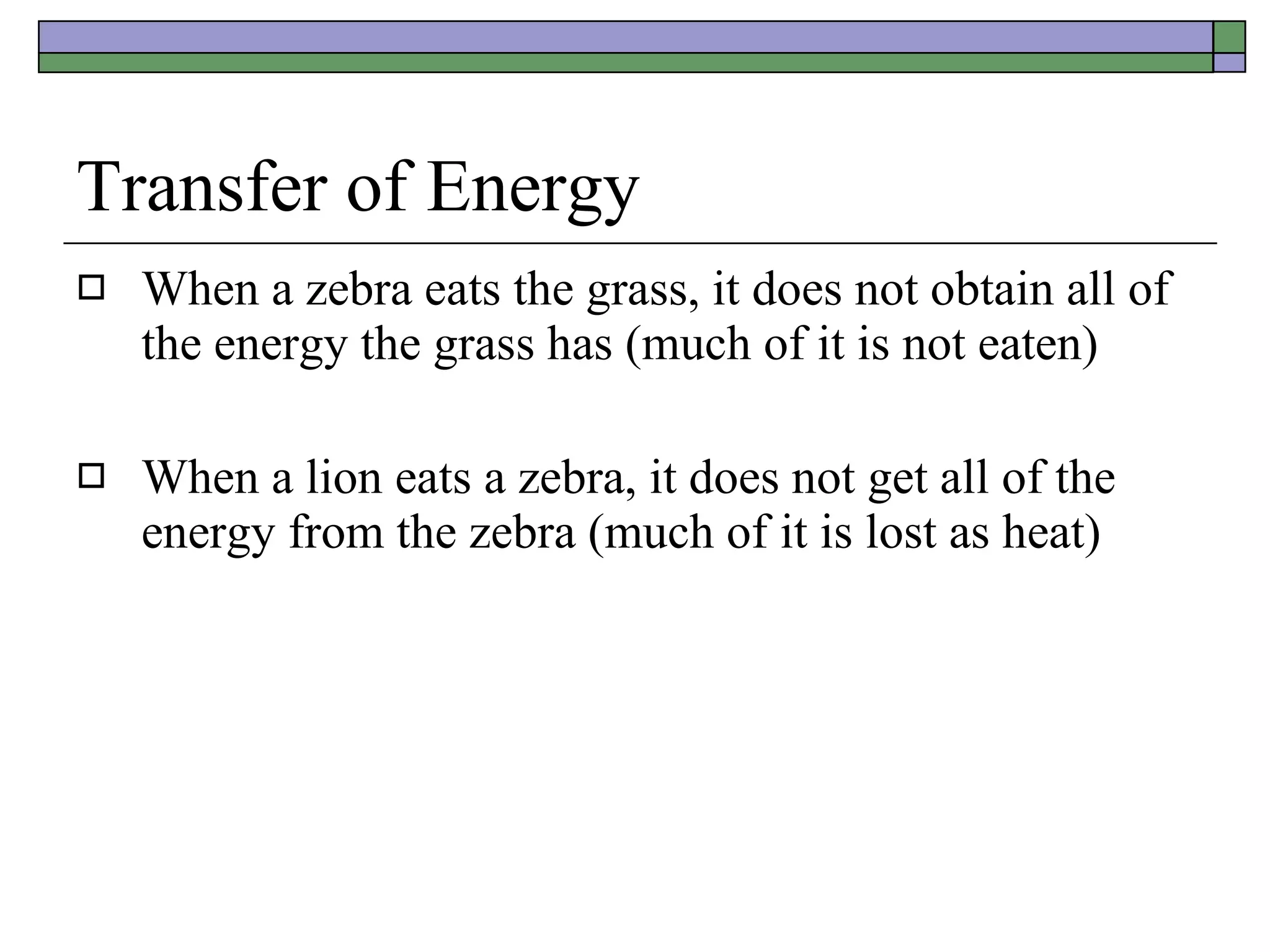
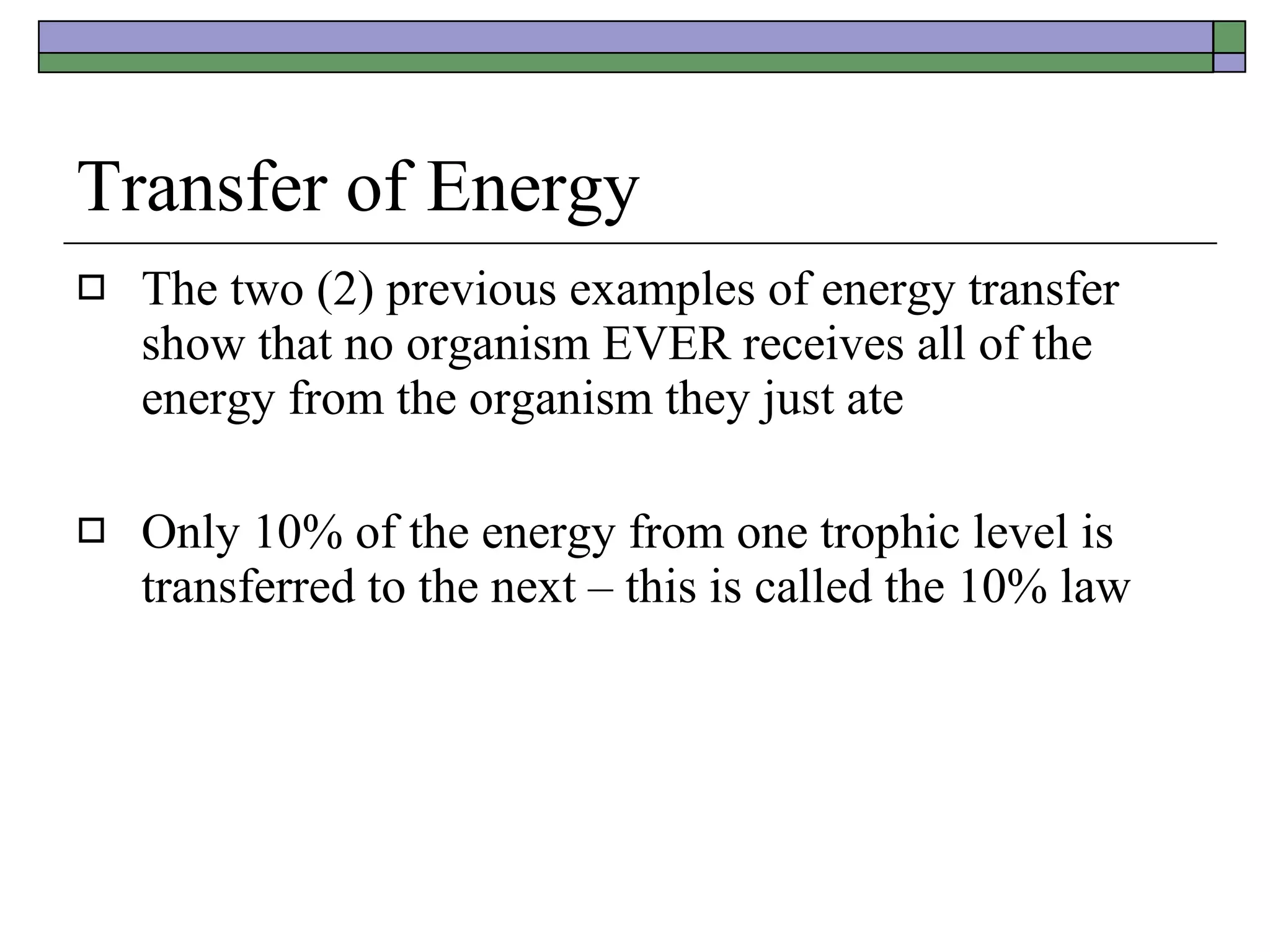
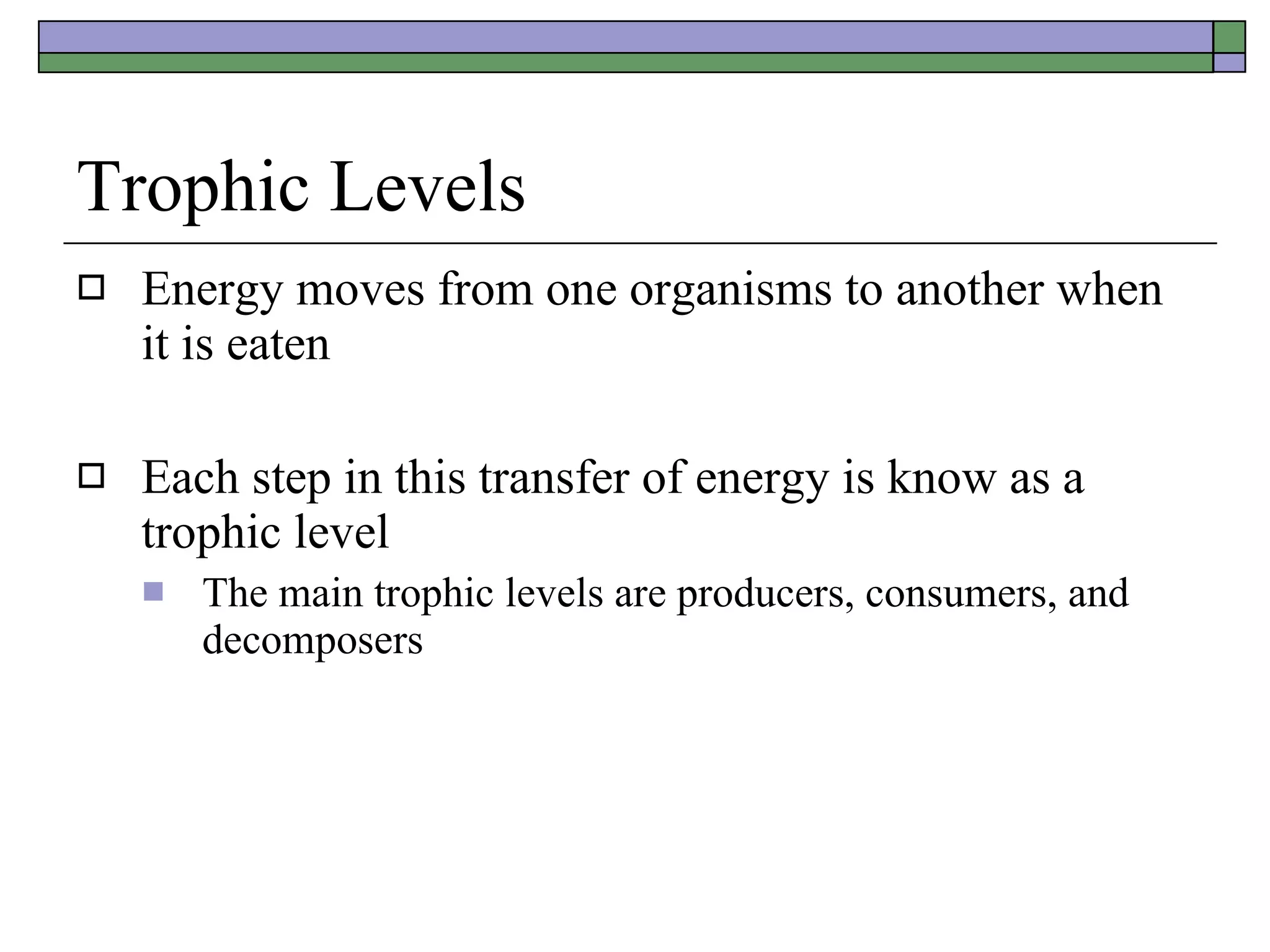
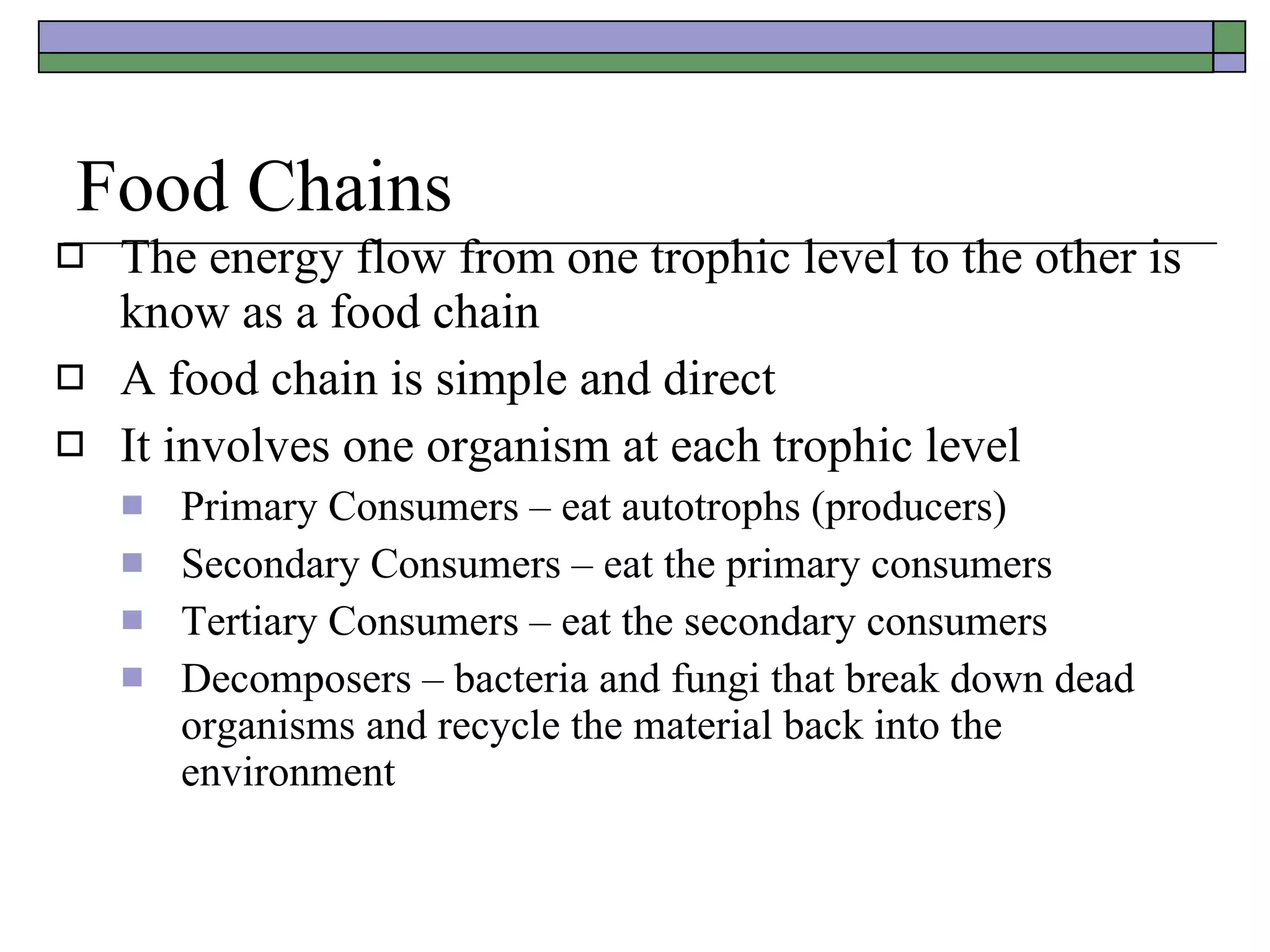
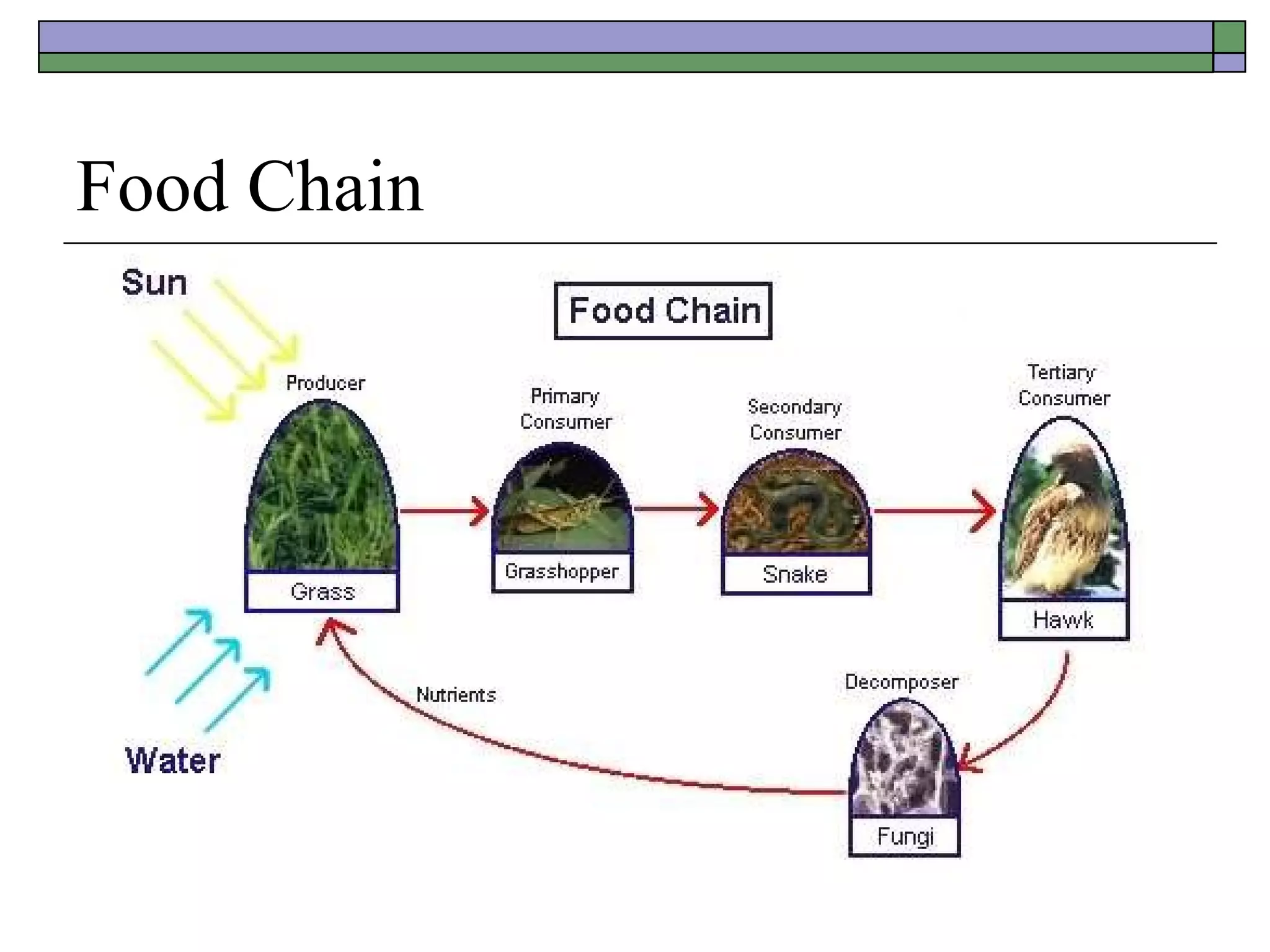
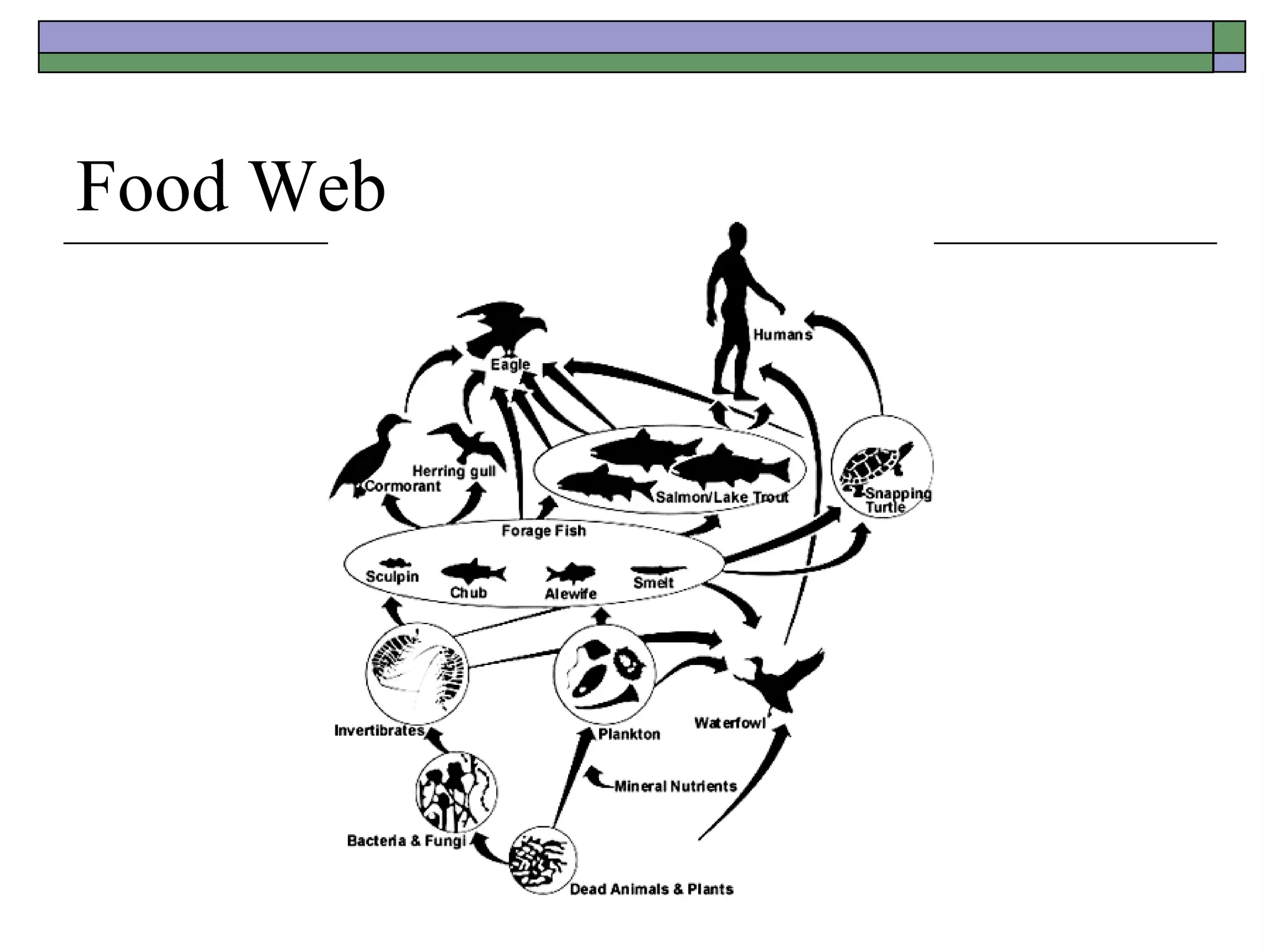
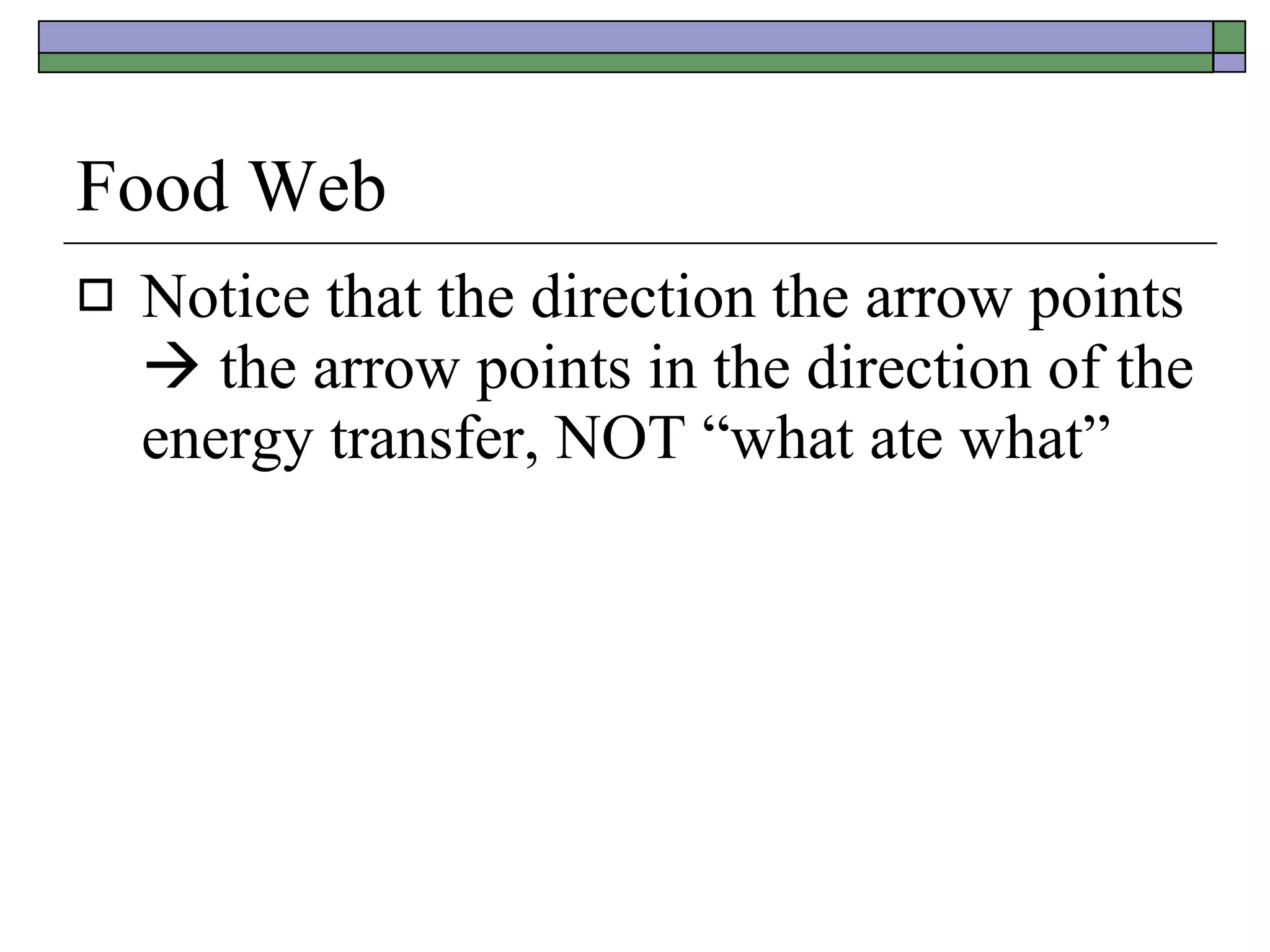
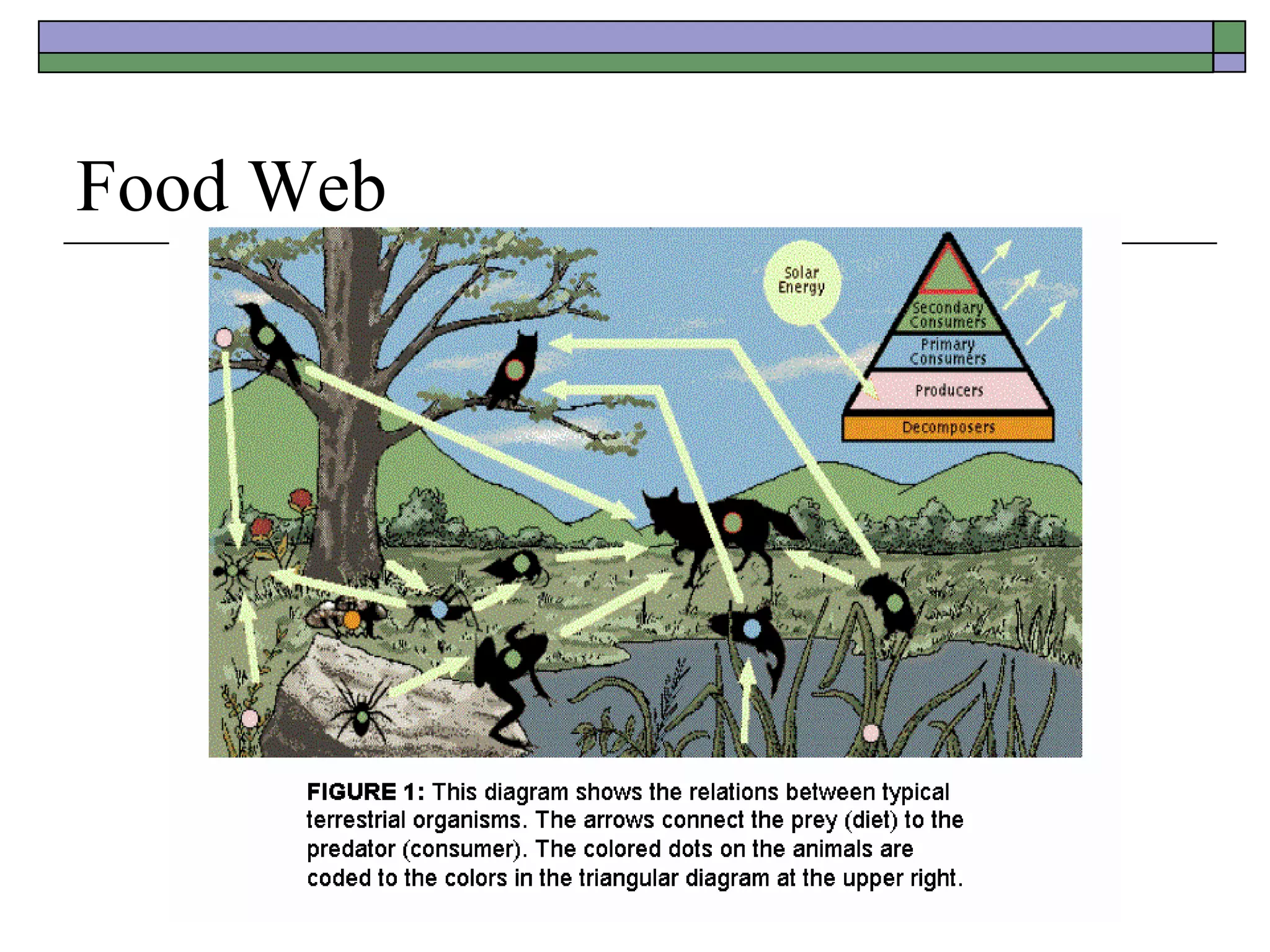
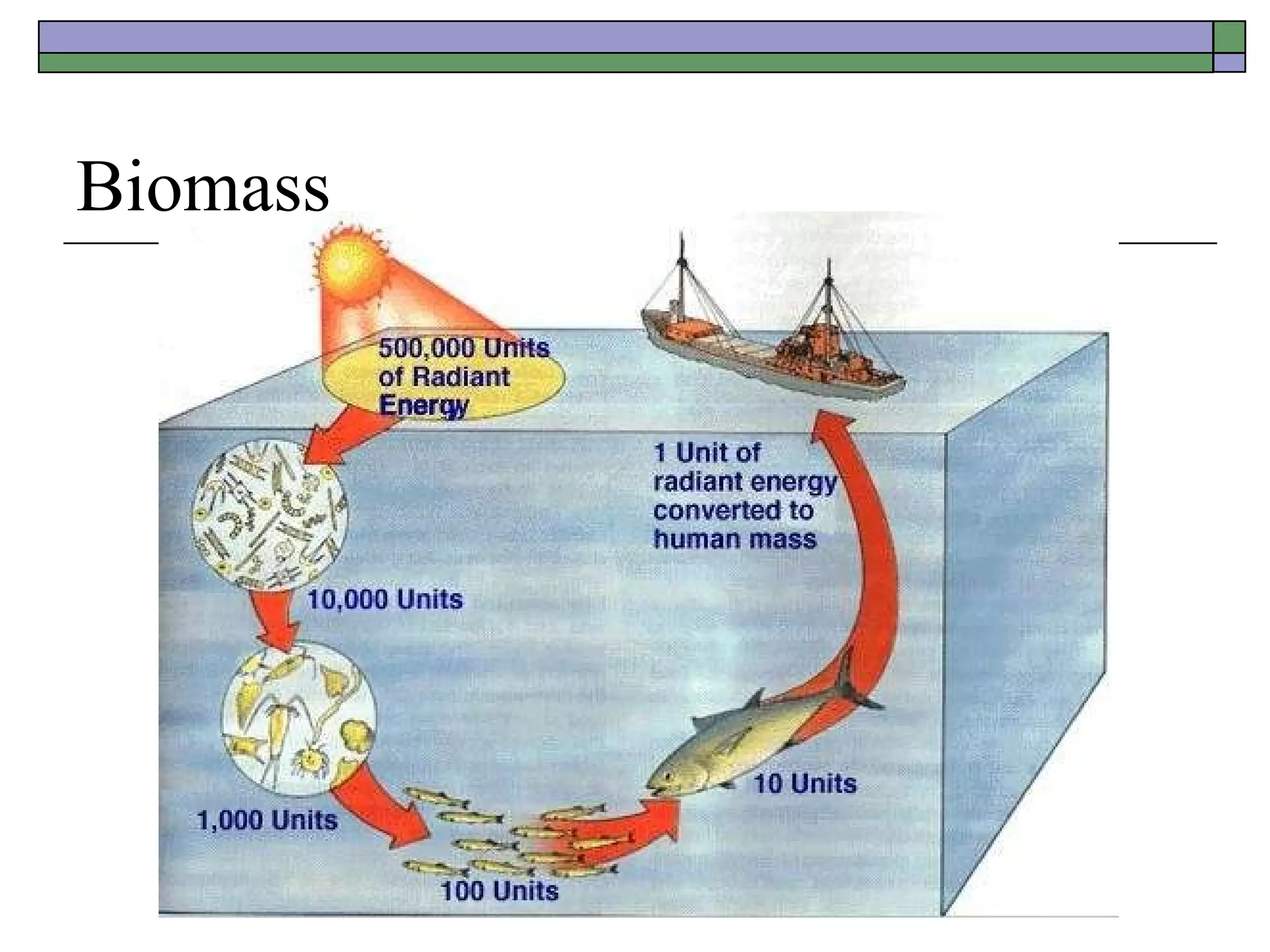
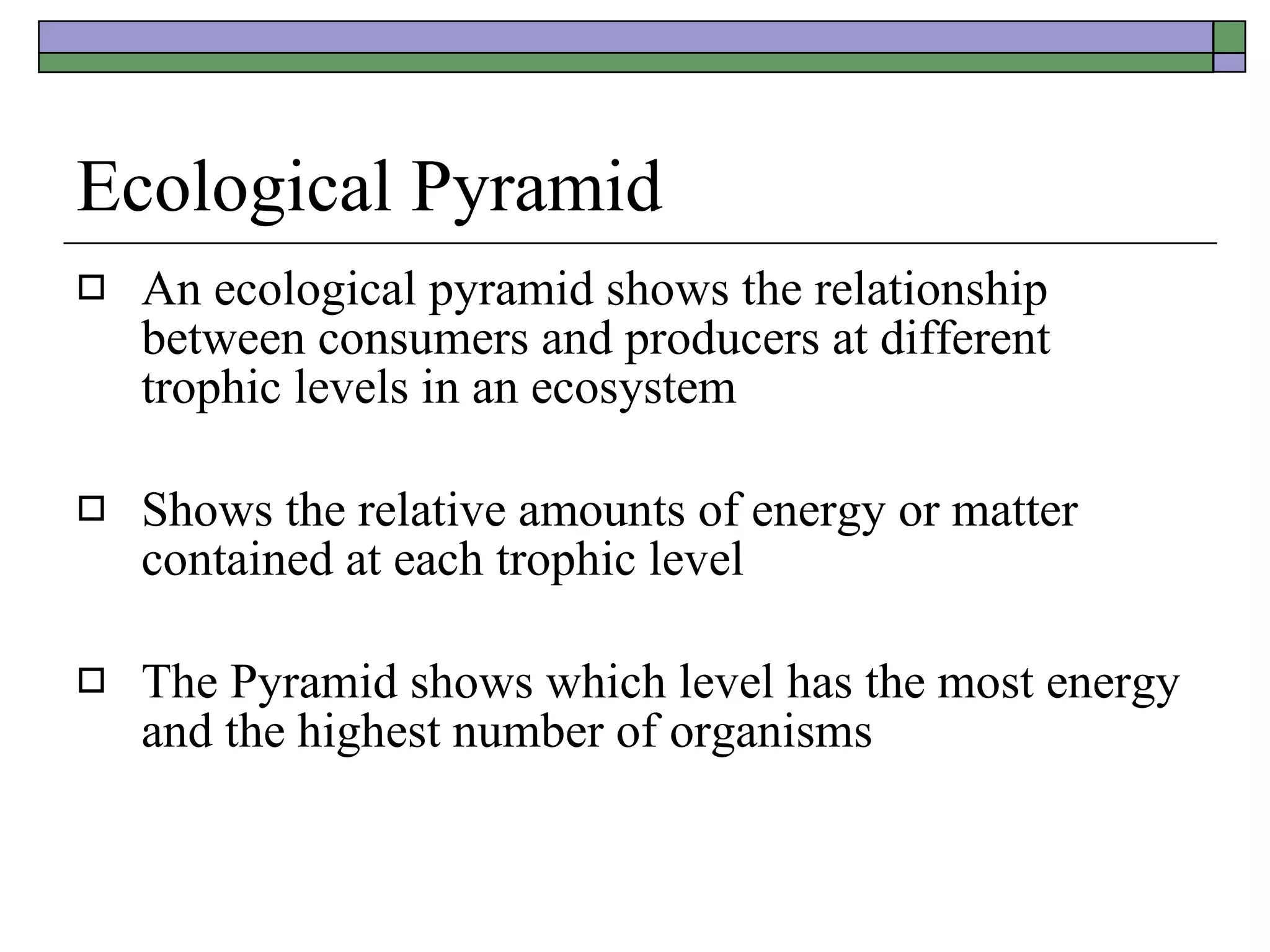
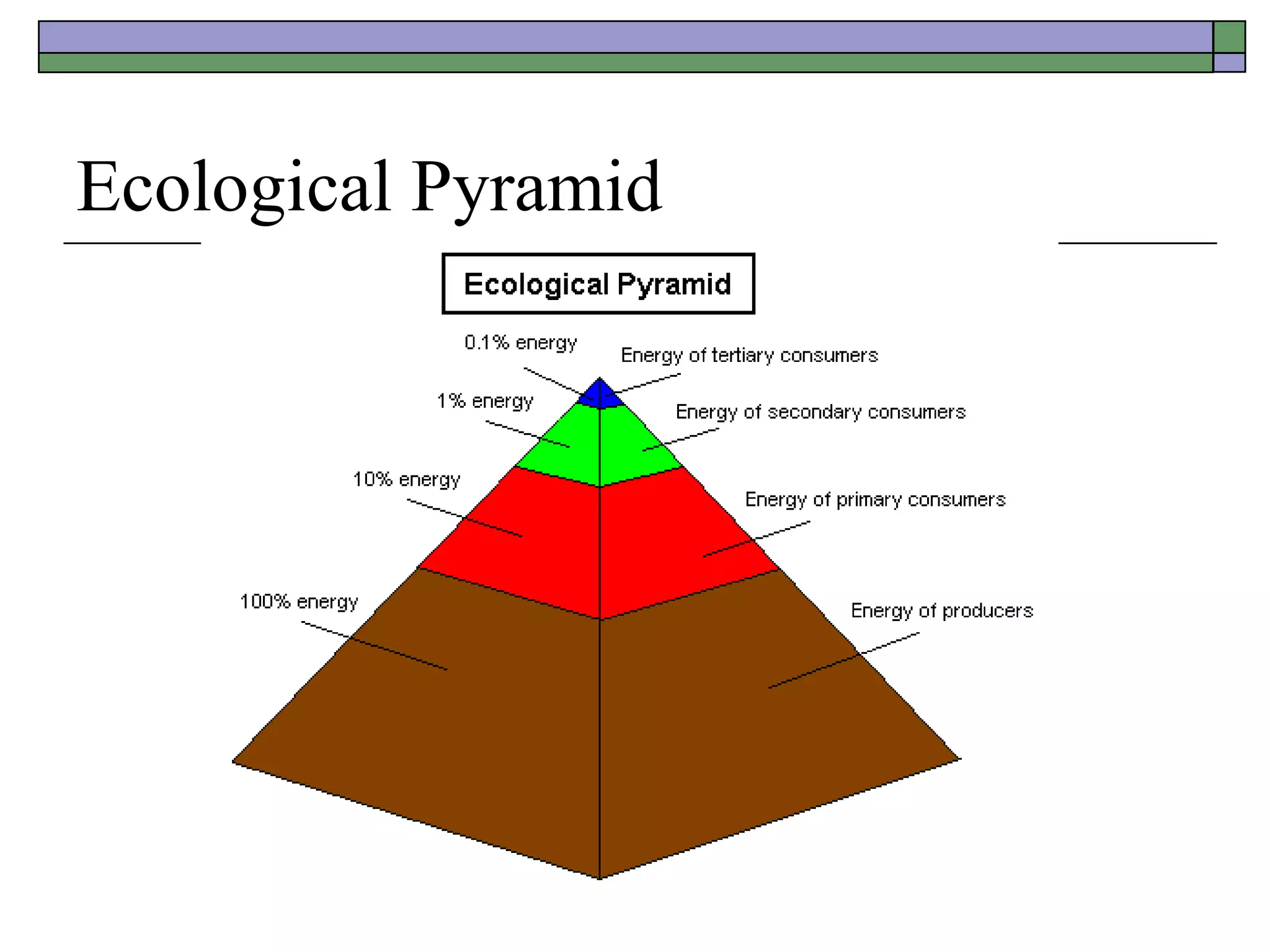
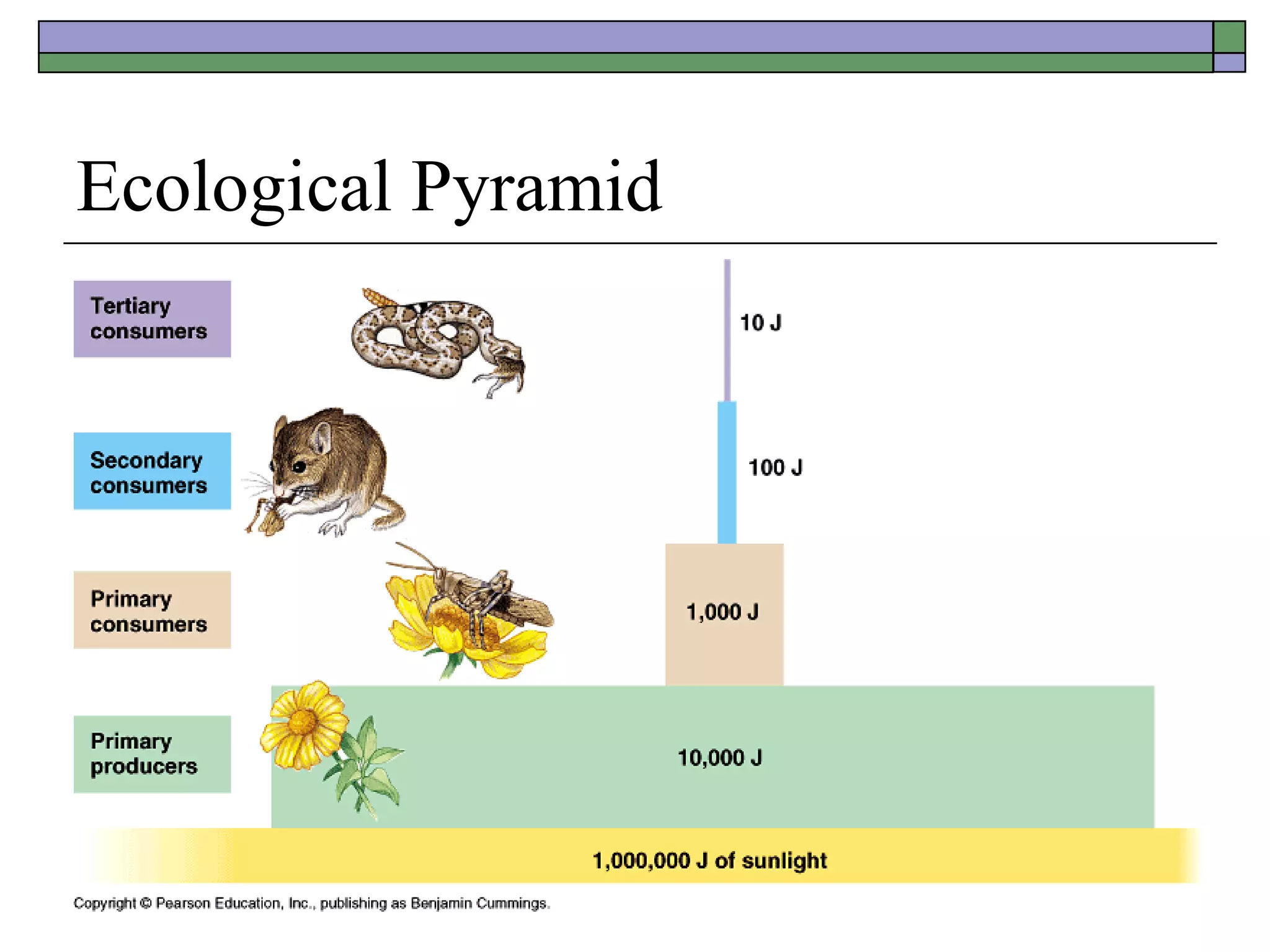
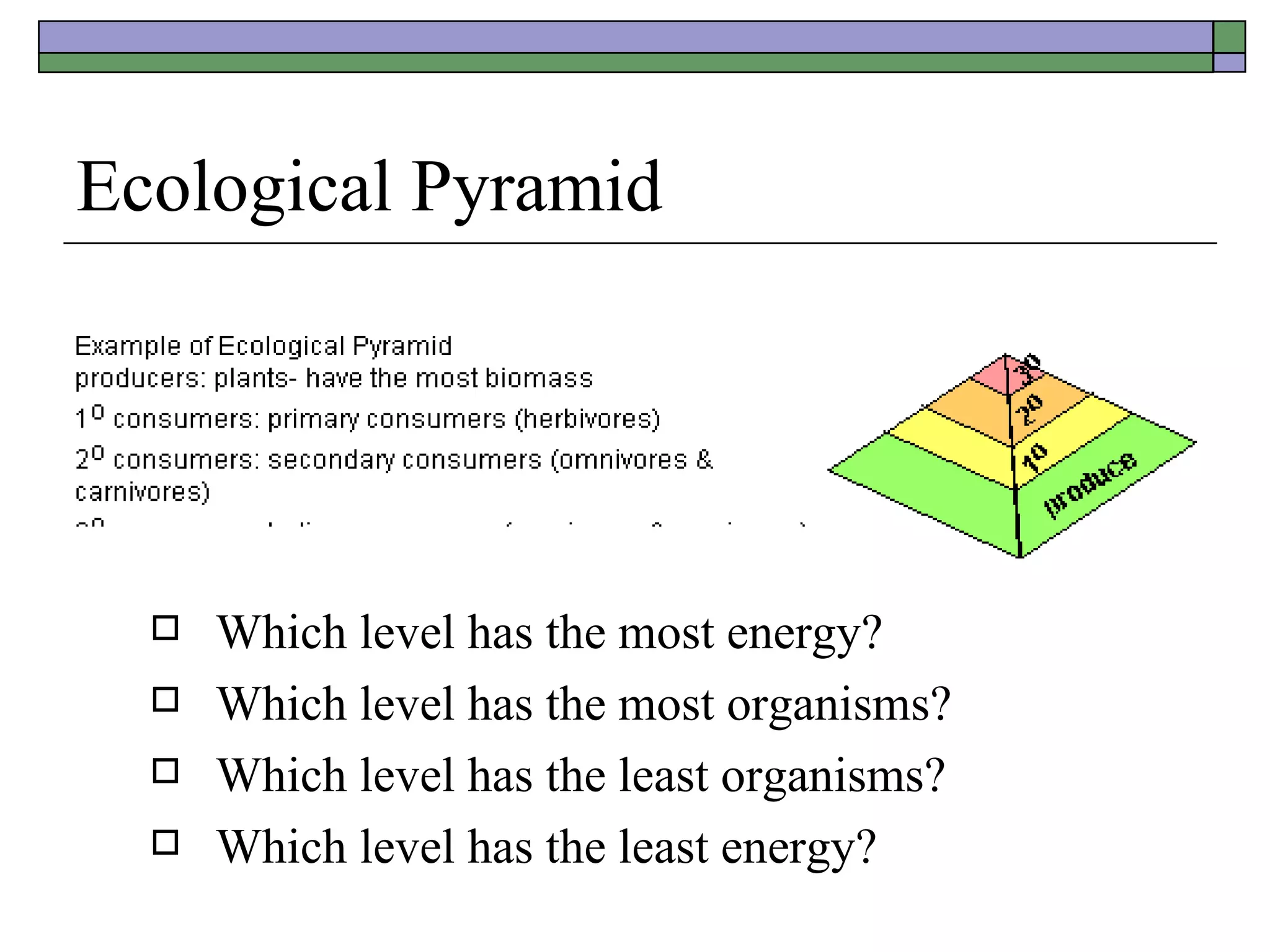

When organisms consume other organisms, only a fraction of the energy is transferred between trophic levels. A zebra obtains less than 100% of the grass's energy, and a lion obtains less than 100% of the zebra's energy. On average, only about 10% of the energy at one trophic level passes to the next level. Energy moves through an ecosystem in food chains from producers to primary, secondary, and tertiary consumers, and then to decomposers. Food webs are more complex than food chains, involving multiple predator-prey relationships. Ecological pyramids illustrate the decrease in biomass and numbers of organisms at higher trophic levels in a ecosystem.


![Light sources and interactions 3.3 3.4[2]](https://cdn.slidesharecdn.com/ss_thumbnails/lightsourcesandinteractions3-3-3-42-120306084647-phpapp02-thumbnail.jpg?width=640&height=640&fit=bounds)


![Electromagnetic%20 spectrum[1]](https://cdn.slidesharecdn.com/ss_thumbnails/electromagnetic20spectrum1-120228041945-phpapp01-thumbnail.jpg?width=640&height=640&fit=bounds)
![Waves and sound_study_guide[1]](https://cdn.slidesharecdn.com/ss_thumbnails/wavesandsoundstudyguide1-120223181758-phpapp02-thumbnail.jpg?width=640&height=640&fit=bounds)


