Semester IV Session 2
Syllabus Role of PR ‘ Publics’ in PR Organisation structure and PR PR role of managers Indian perspective Communication and PR PR and corporate image Social responsibility of business and PR PR and employee returns Cooperation with media Consumer an investor relations Ethics Moksh Juneja
Public relations and Communications PR and Communication Corporate communications Organisation structure Moksh Juneja
Moksh Juneja
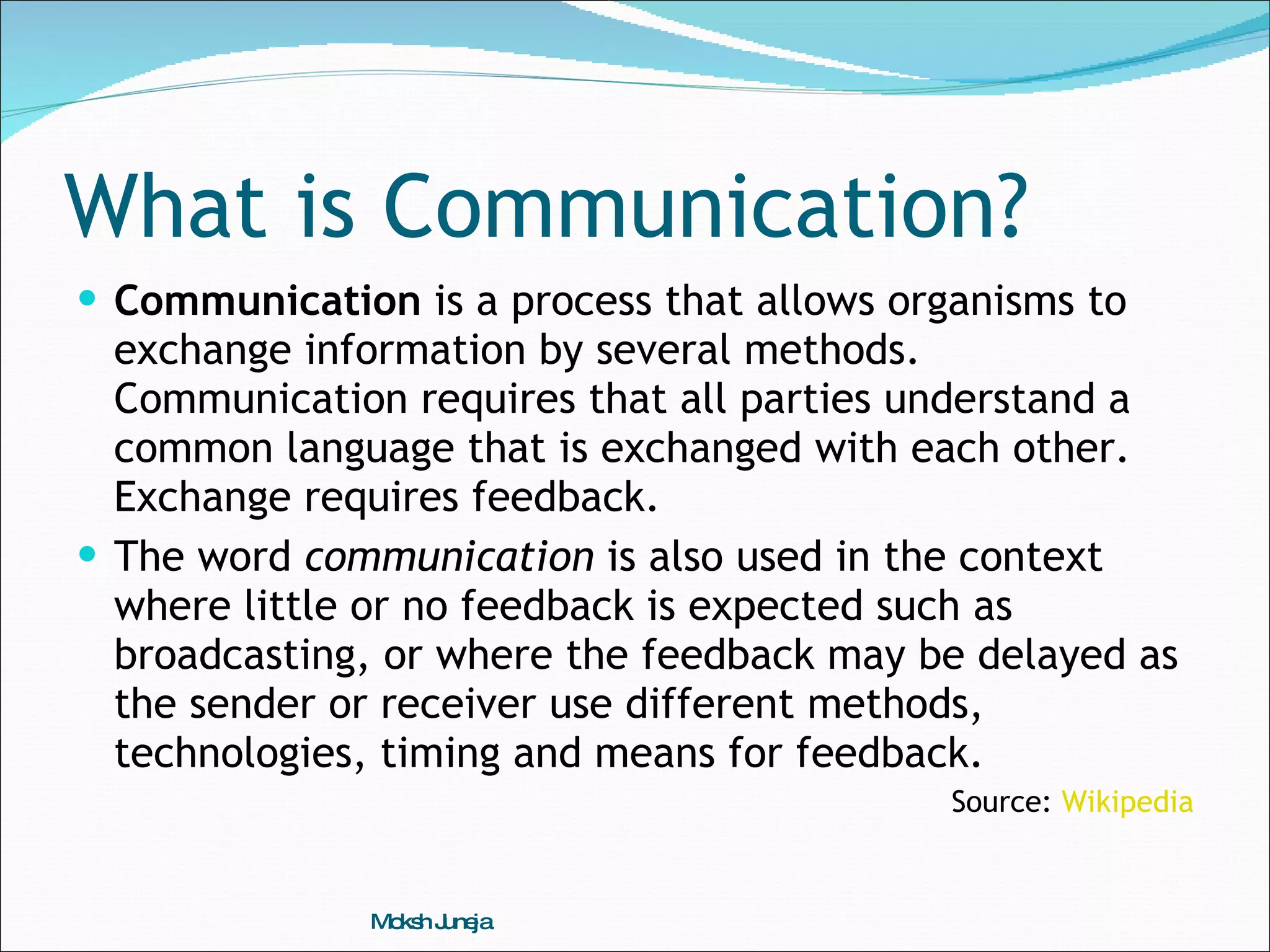
What is Communication? Communication  is a process that allows organisms to exchange information by several methods. Communication requires that all parties understand a common language that is exchanged with each other. Exchange requires feedback.  The word  communication  is also used in the context where little or no feedback is expected such as broadcasting, or where the feedback may be delayed as the sender or receiver use different methods, technologies, timing and means for feedback. Source:  Wikipedia Moksh Juneja
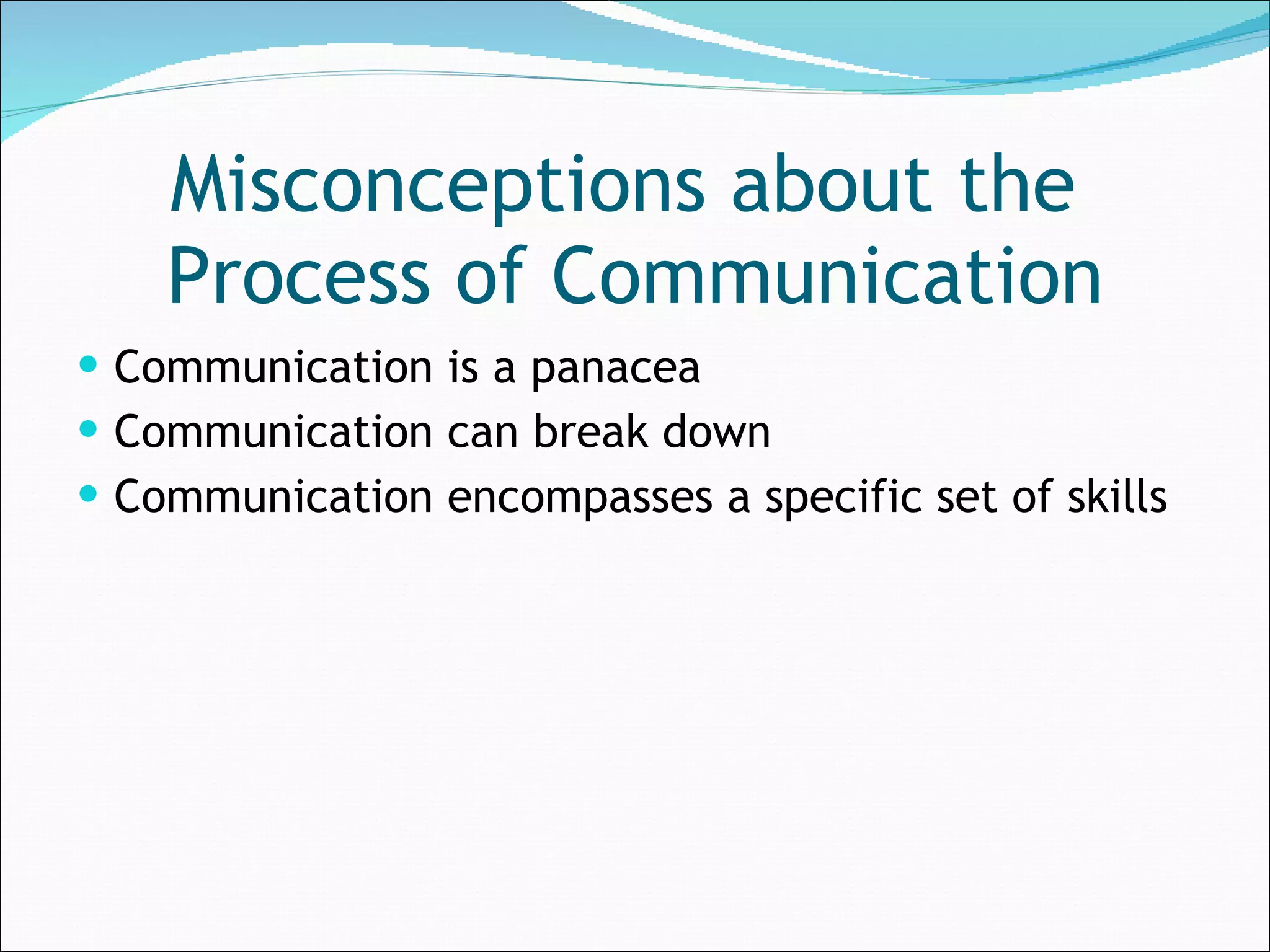
Misconceptions about the  Process of Communication Communication is a panacea Communication can break down Communication encompasses a specific set of skills
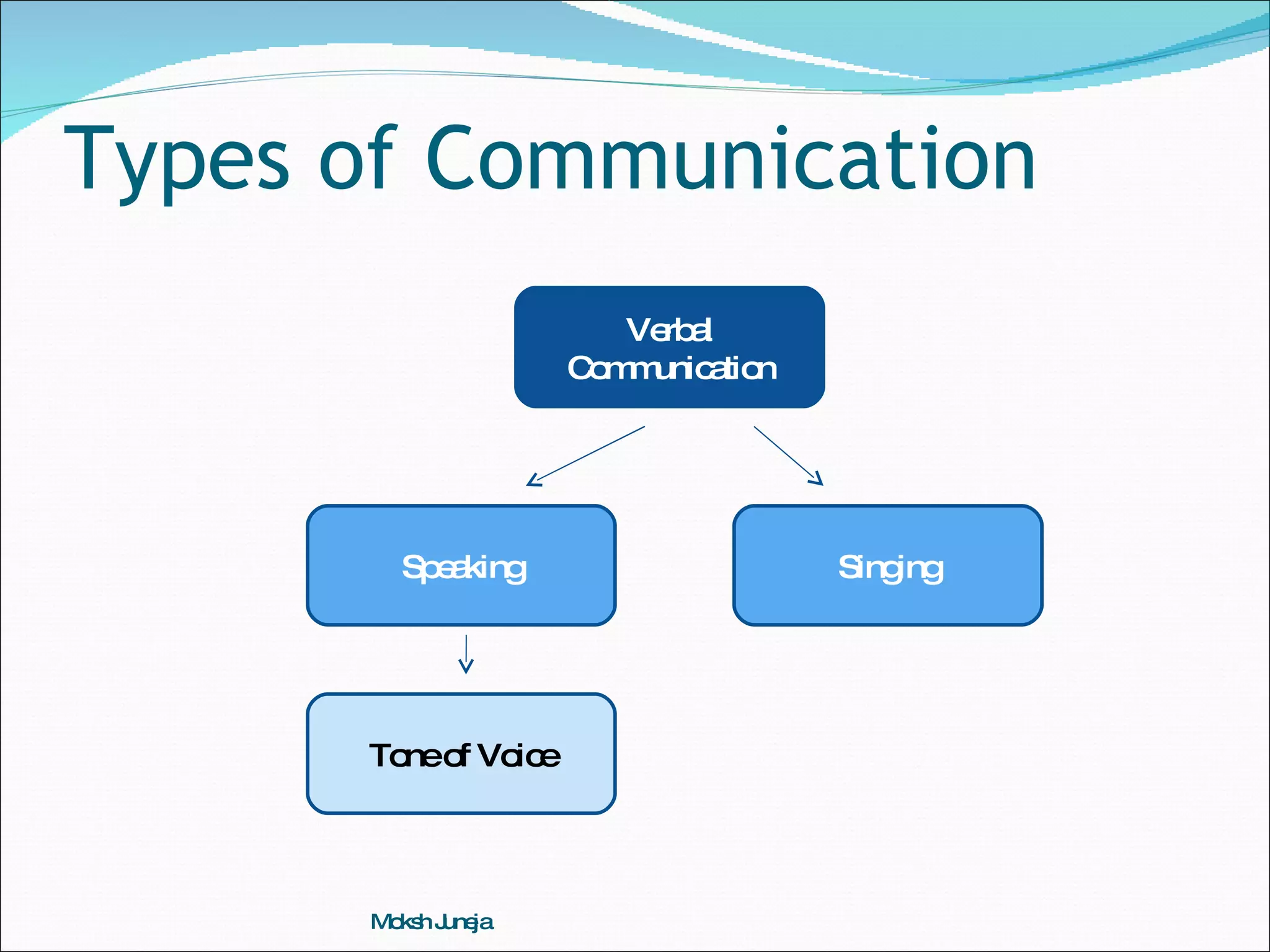
Types of Communication Moksh Juneja Verbal Communication Speaking Singing Tone of Voice
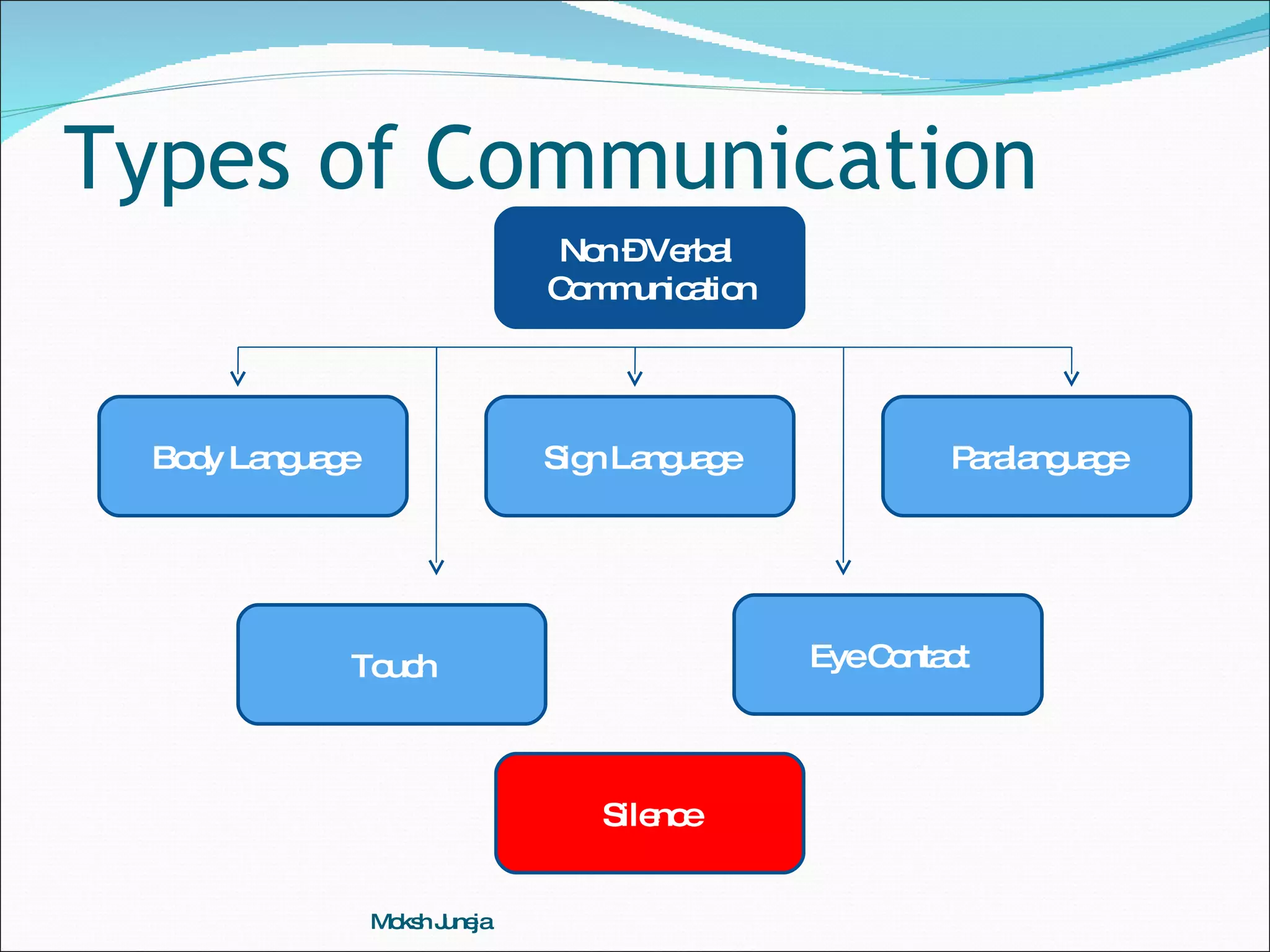
Types of Communication Moksh Juneja Non – Verbal  Communication Body Language Sign Language Paralanguage Touch Eye Contact Writing Silence
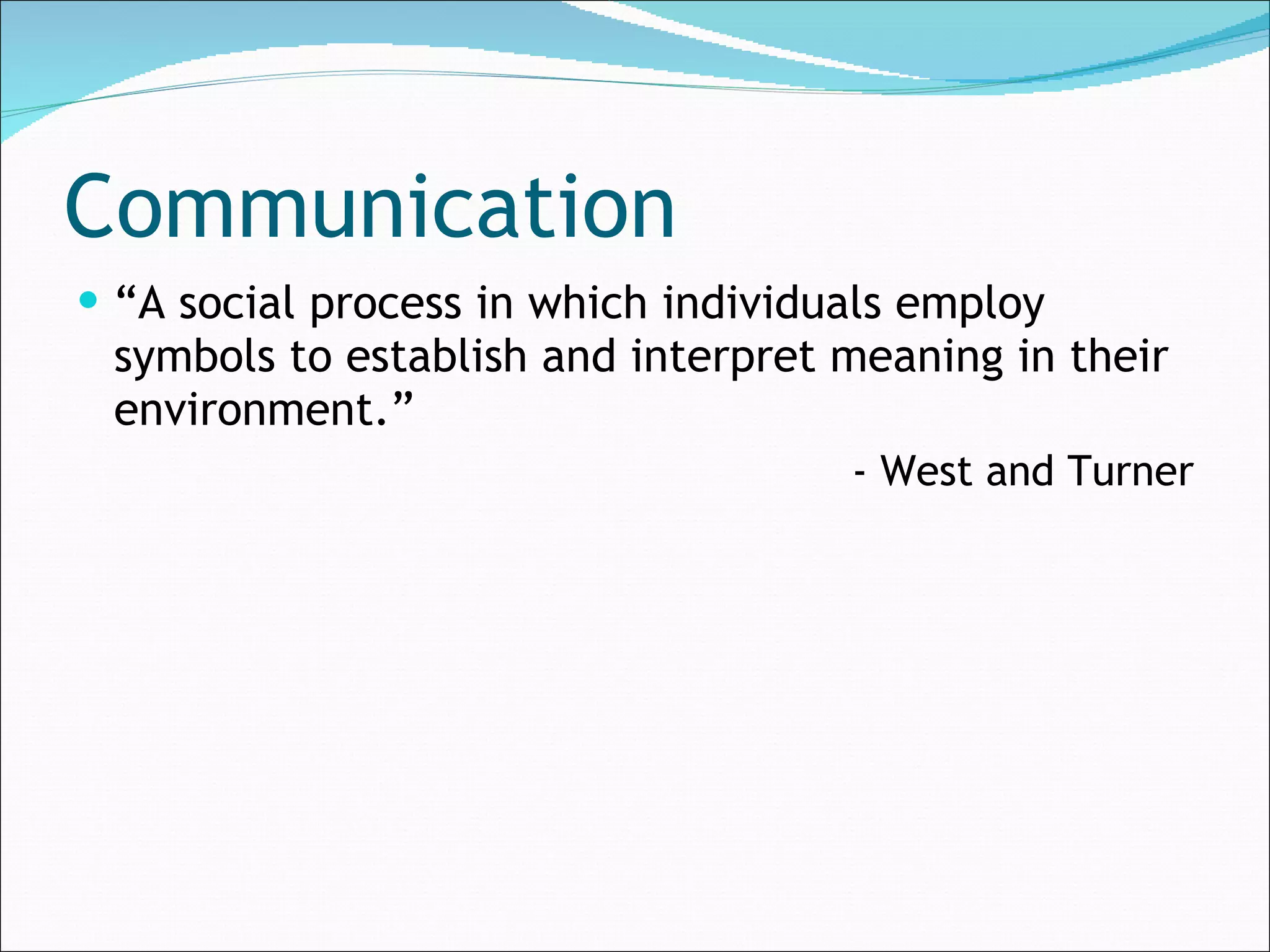
Communication “ A social process in which individuals employ symbols to establish and interpret meaning in their environment.” - West and Turner
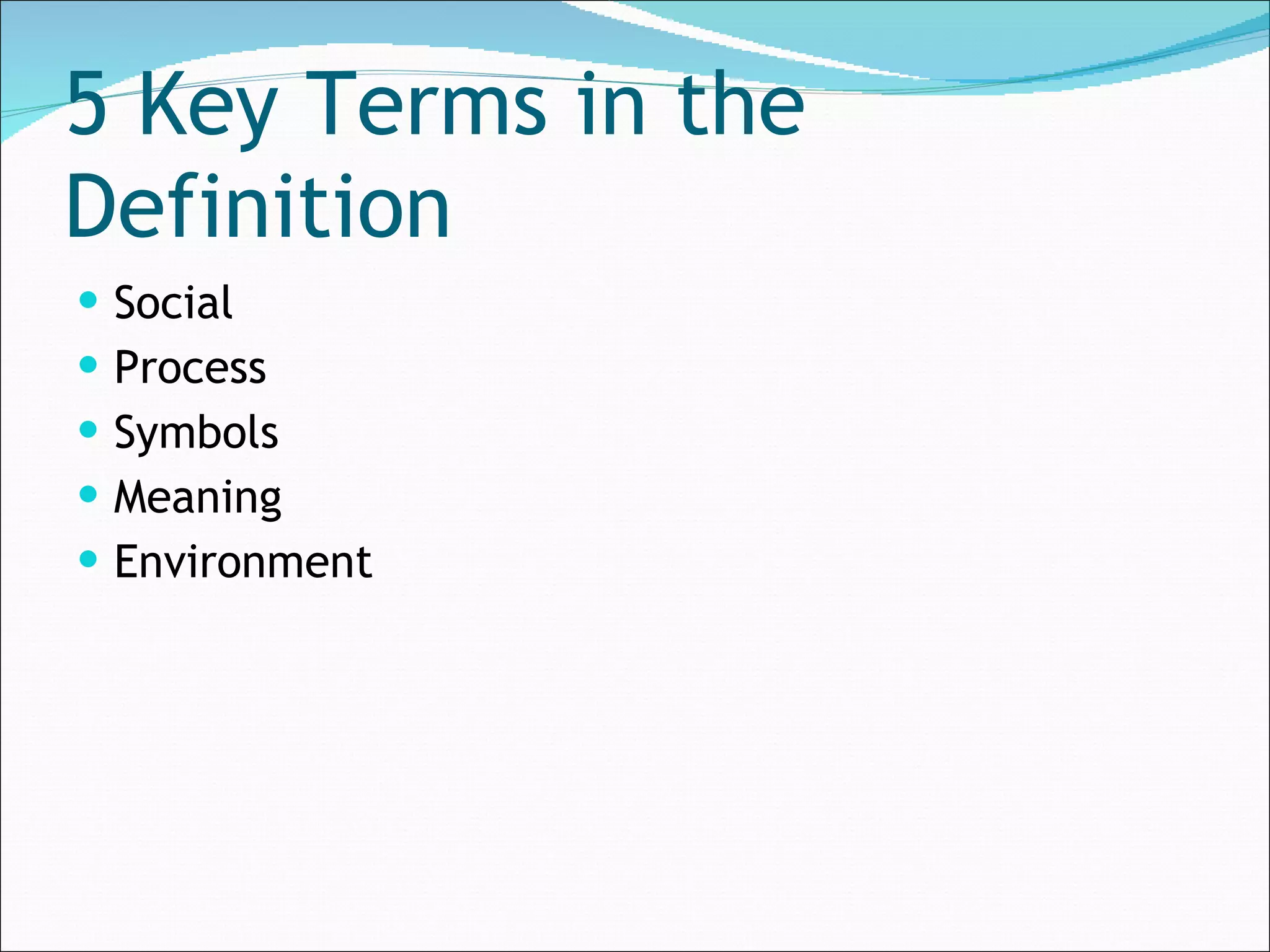
5 Key Terms in the Definition Social  Process Symbols Meaning  Environment
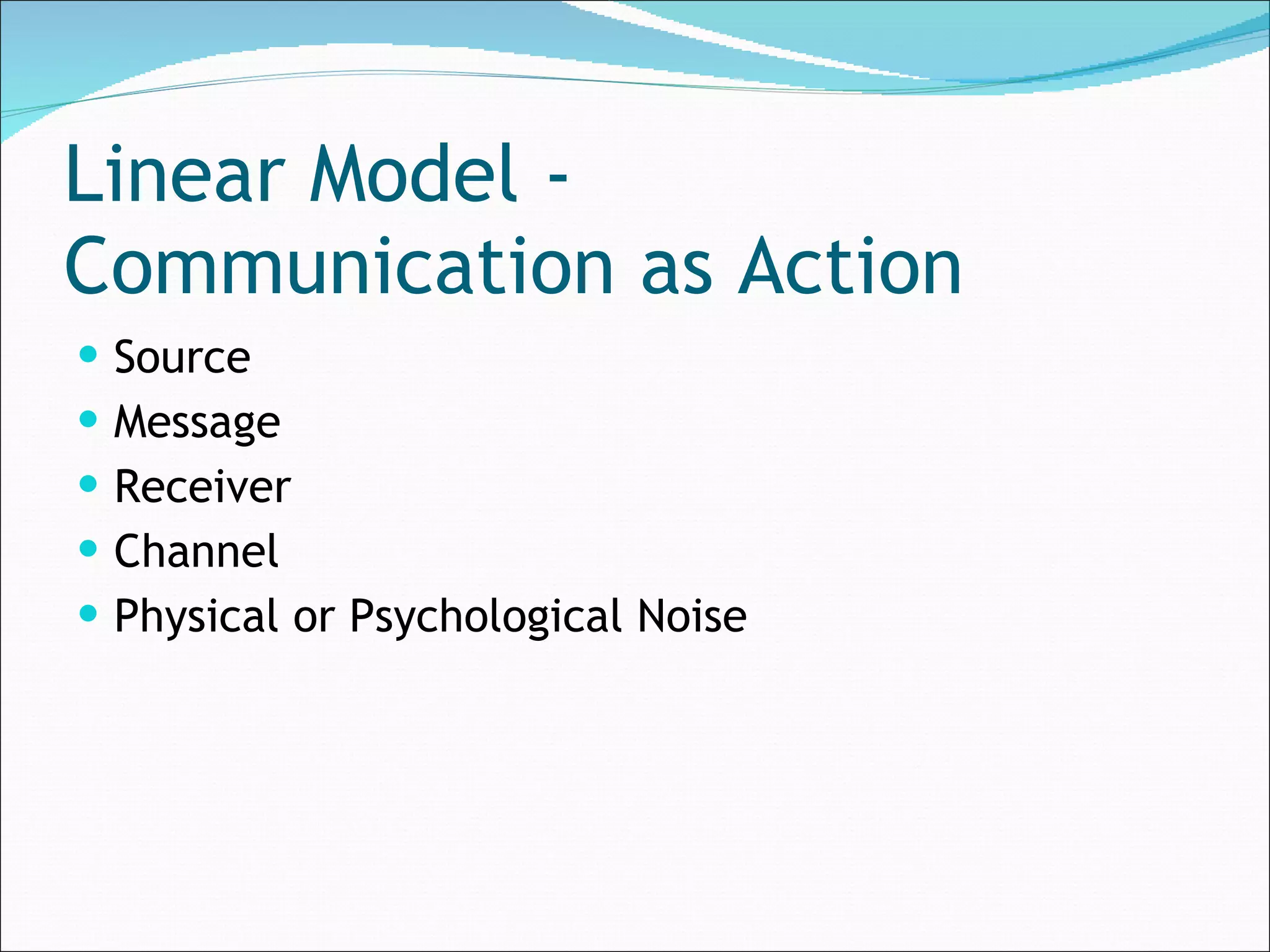
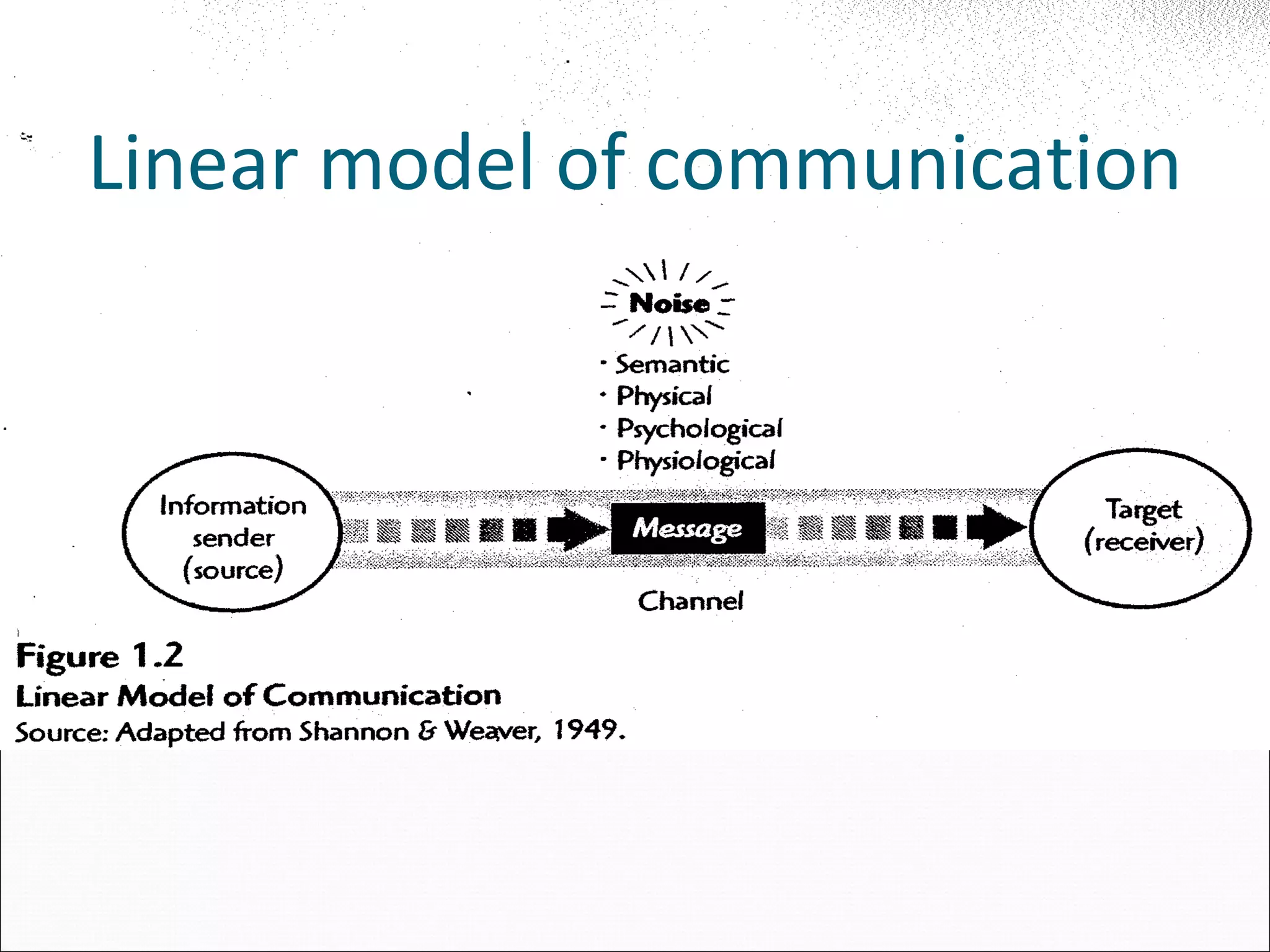
Linear Model -  Communication as Action Source Message Receiver Channel  Physical or Psychological Noise
Linear model of communication
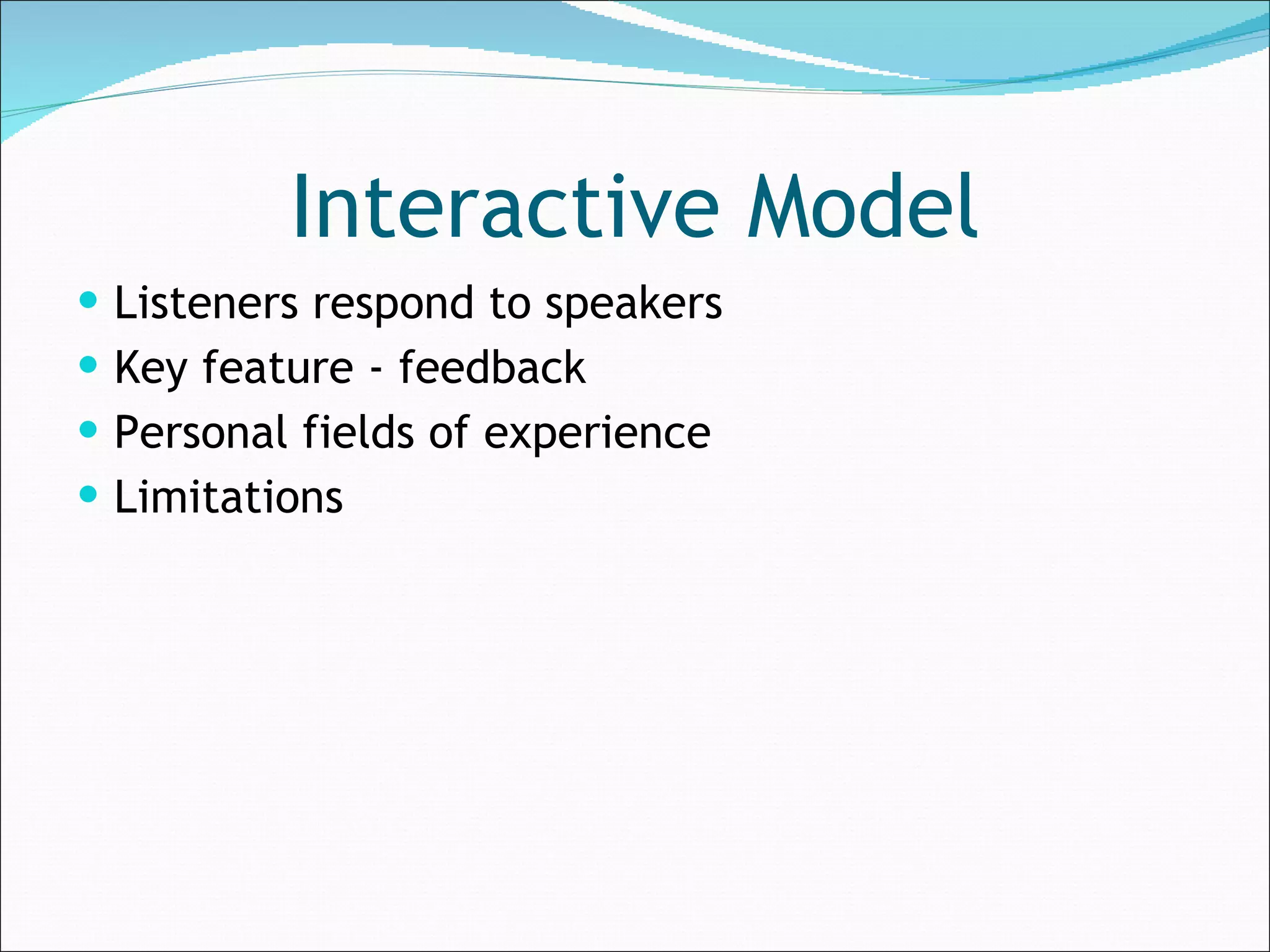
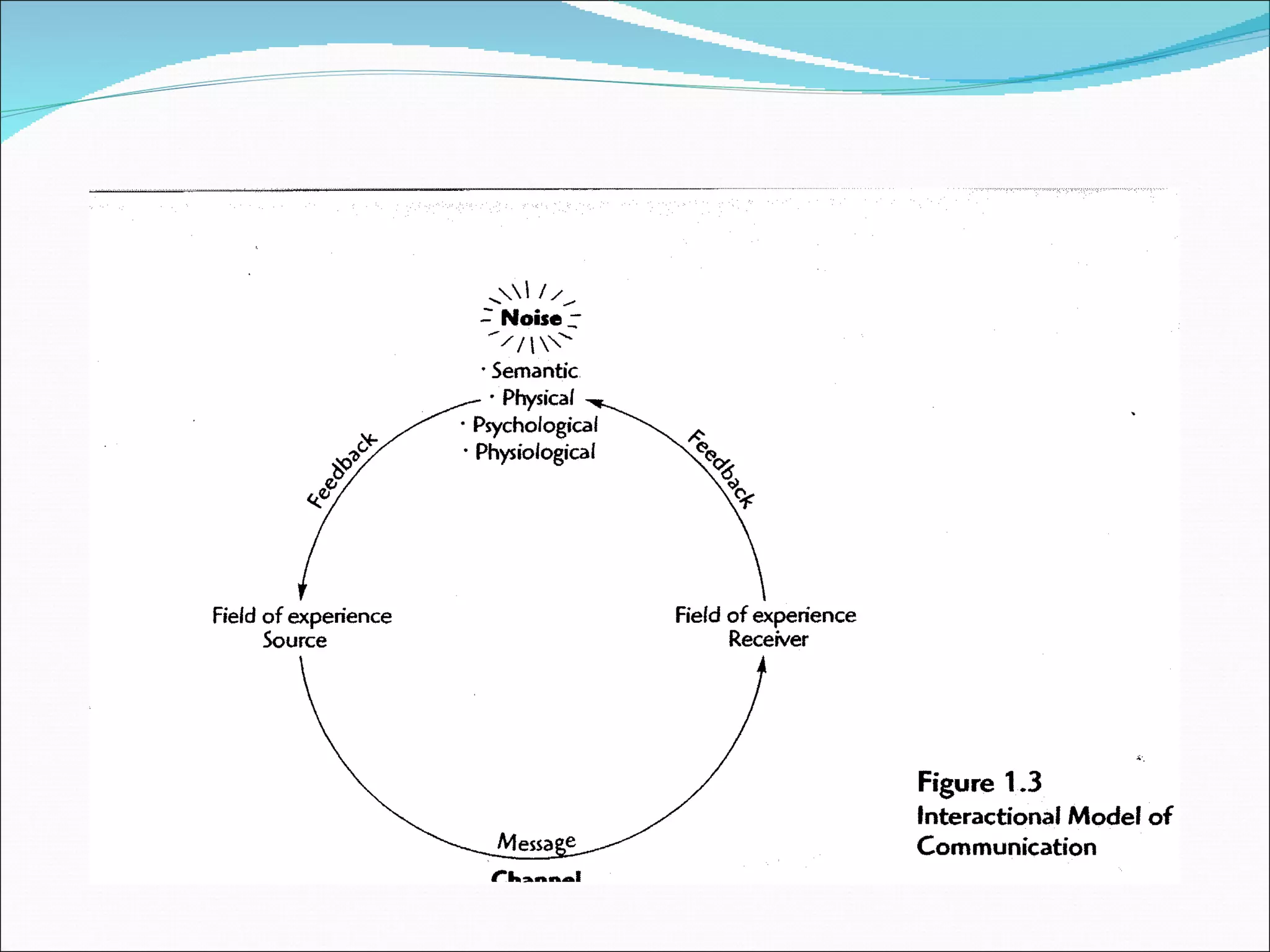
Interactive Model Listeners respond to speakers Key feature - feedback Personal fields of experience Limitations
 
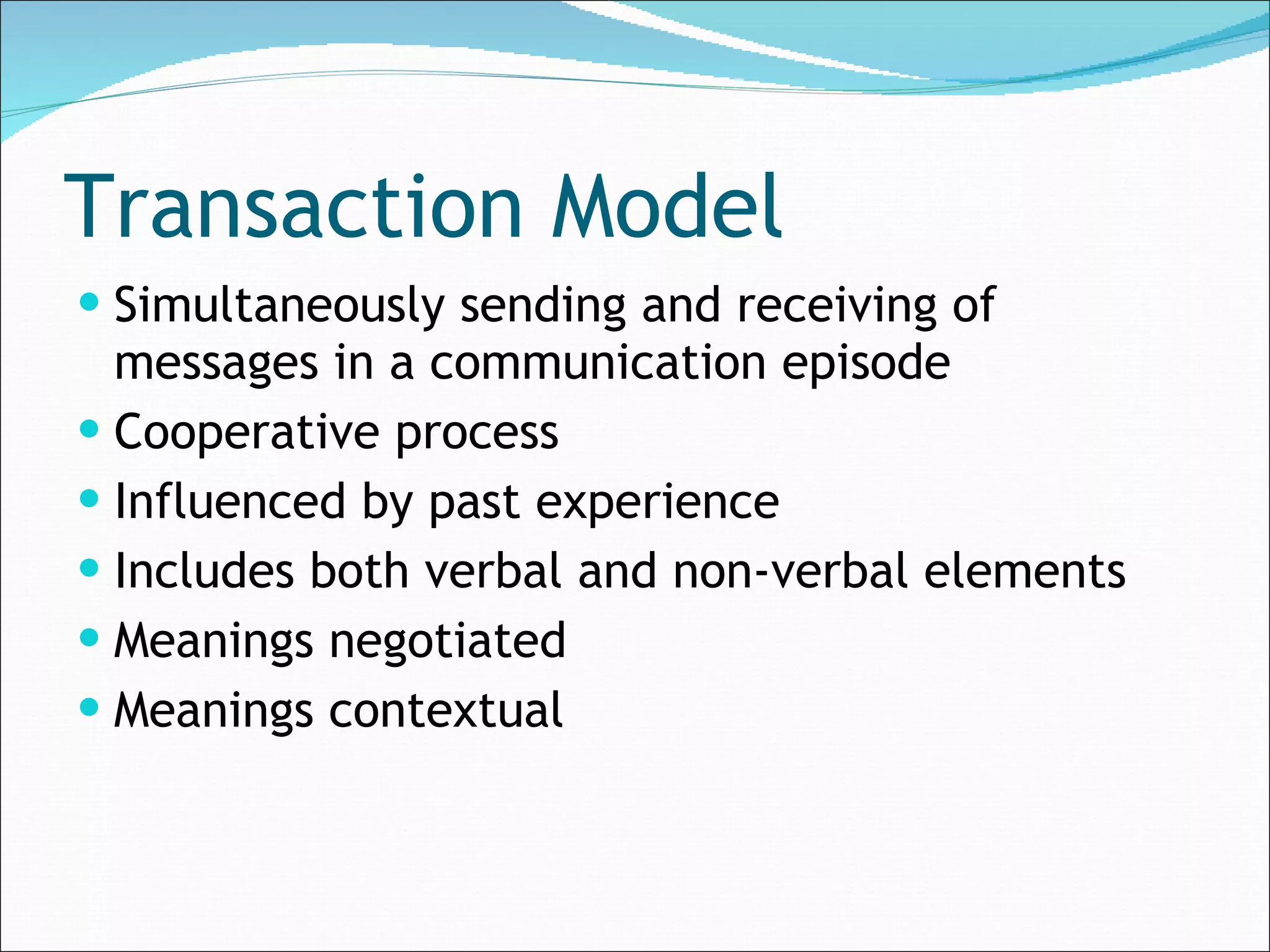
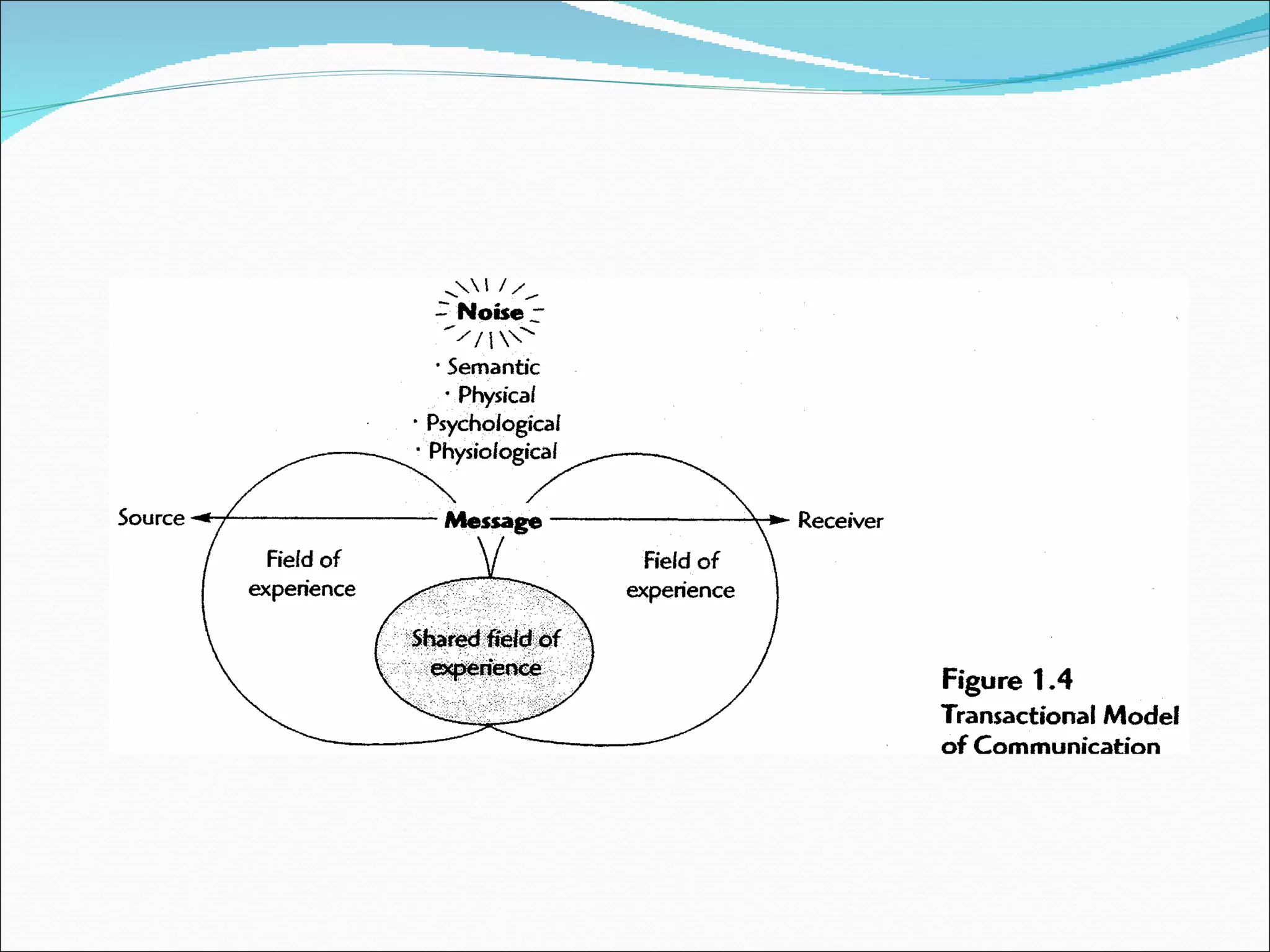
Transaction Model Simultaneously sending and receiving of messages in a communication episode Cooperative process Influenced by past experience Includes both verbal and non-verbal elements Meanings negotiated Meanings contextual
 
Public Relations Communications Models Moksh Juneja Source: Managing Public Relations  [James E. Grunig and Todd Hunt, Harcourt, Bace Jovanovich (1984), p. 21]
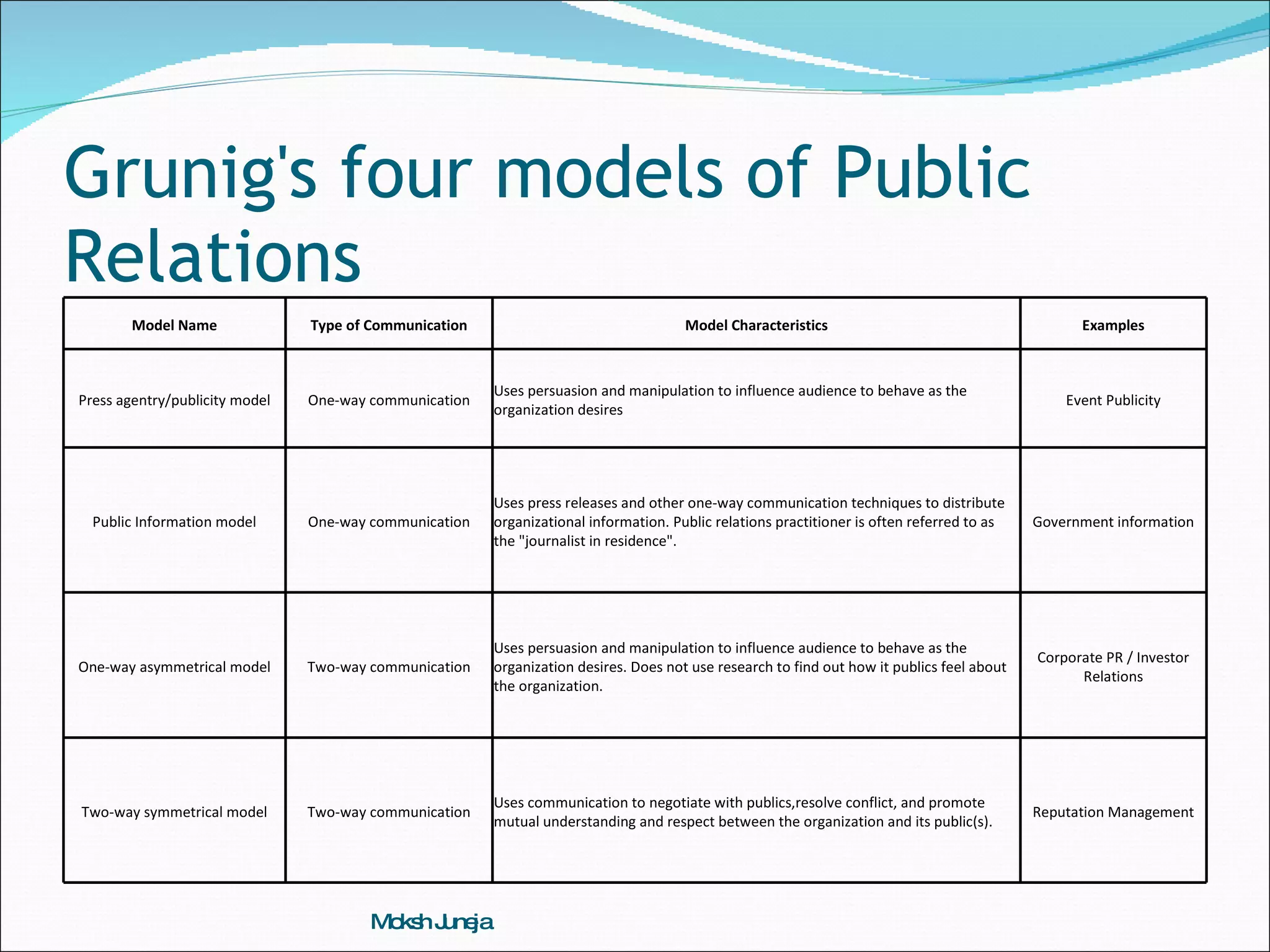
Grunig's four models of Public Relations Moksh Juneja Model Name Type of Communication Model Characteristics Examples Press agentry/publicity model One-way communication Uses persuasion and manipulation to influence audience to behave as the organization desires Event Publicity Public Information model One-way communication Uses press releases and other one-way communication techniques to distribute organizational information. Public relations practitioner is often referred to as the "journalist in residence". Government information One-way asymmetrical model Two-way communication Uses persuasion and manipulation to influence audience to behave as the organization desires. Does not use research to find out how it publics feel about the organization. Corporate PR / Investor Relations Two-way symmetrical model Two-way communication Uses communication to negotiate with publics,resolve conflict, and promote mutual understanding and respect between the organization and its public(s). Reputation Management
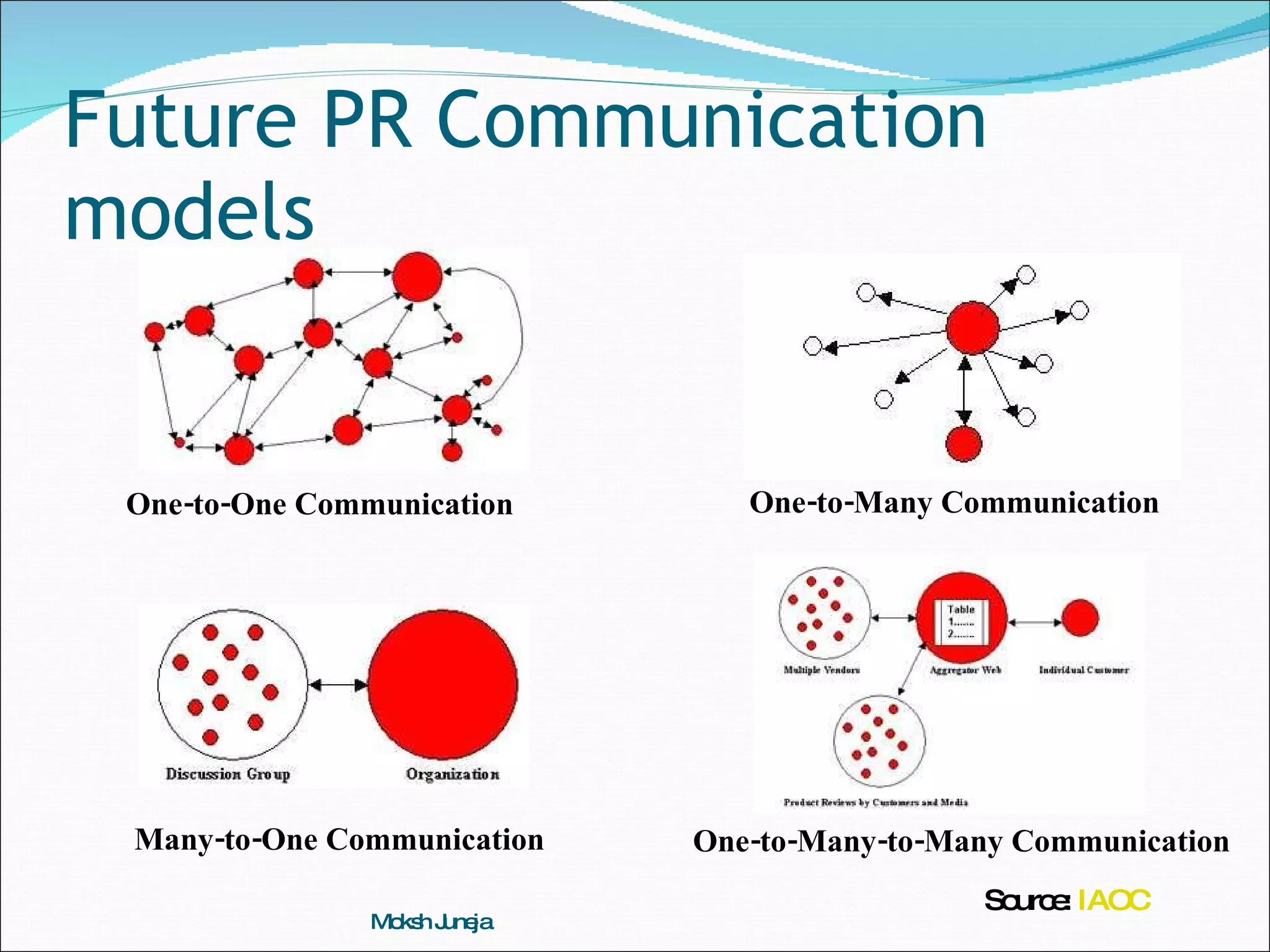
Future PR Communication models Moksh Juneja One-to-One Communication One-to-Many Communication Many-to-One Communication One-to-Many-to-Many Communication Source:  IAOC
Moksh Juneja
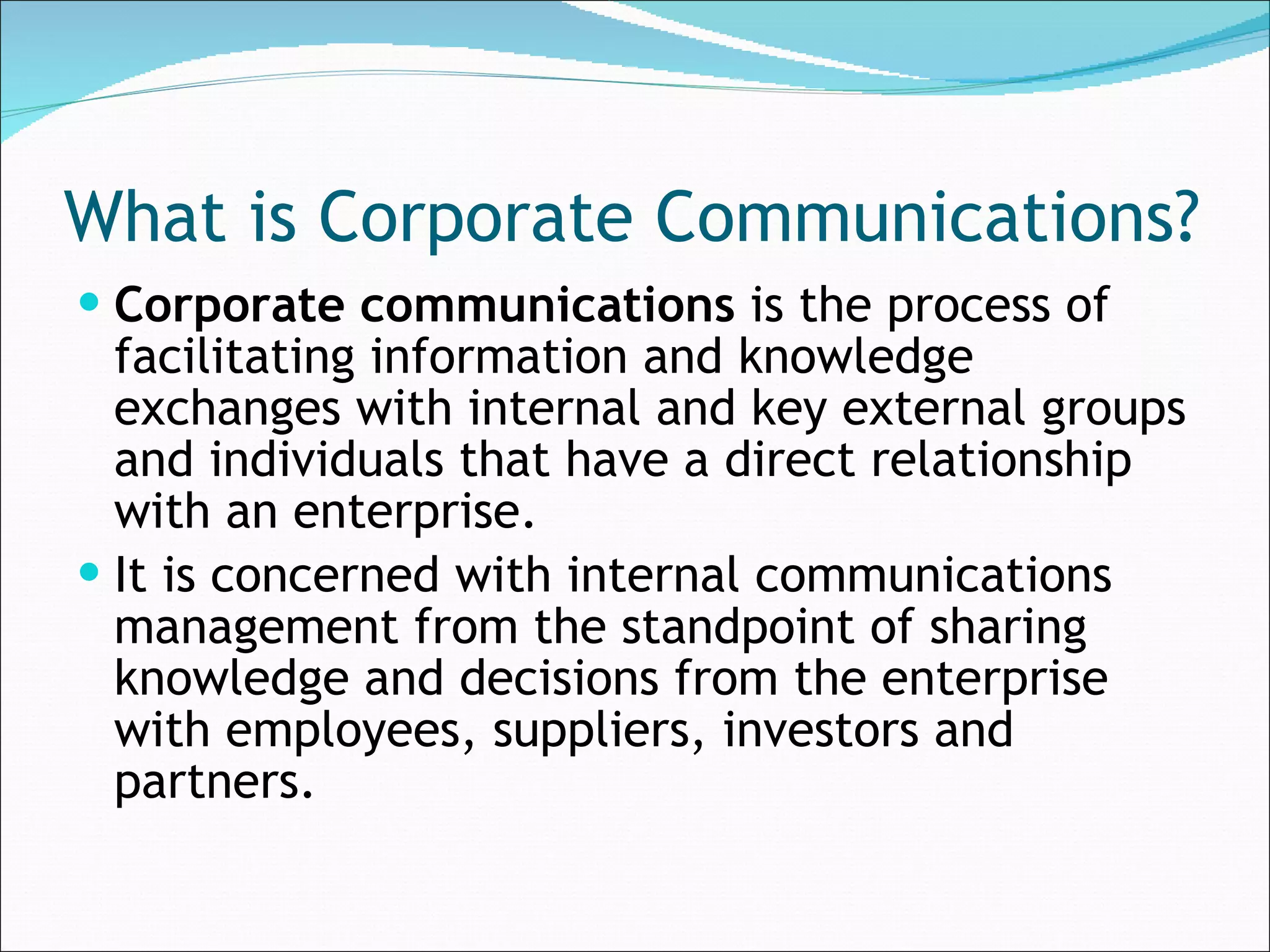
What is Corporate Communications? Corporate communications  is the process of facilitating information and knowledge exchanges with internal and key external groups and individuals that have a direct relationship with an enterprise.  It is concerned with internal communications management from the standpoint of sharing knowledge and decisions from the enterprise with employees, suppliers, investors and partners.
Corporate Communications Mix Primary Communications:  the communications effects of products, services, management, staff and corporate behavior. Secondary Communications:  controlled forms of communications such as advertising and pr Tertiary Communications:  word of mouth/spin
Aspects of Corporate Communication managing communication or fulfilling the communication management function   dealing with controlled and uncontrolled media   serving both internal and external audiences   proactive communication planning   advocating communication strategies and tactics   dissemination of persuasion and information branding images and reputation branding products and services monitoring the responses from audiences and markets   counseling and advising senior executives   managing issues and responding to crisis situations   lobbying for favorable stances for the organization   organizational image creation and maintenance   organizational presence building and monitoring
Areas to be addresses by Corp Comm Person Analyst relations  Internal communications  Investor relations Corporate governance (communications about the set of processes, customs, policies, laws in which a corporation is directed, administered or controlled)  Change management (communications aspects of growth management, mergers and acquisitions etc.) Corporate social responsibility  Litigation (communications on/around litigation)  Crisis communications / Issue Management
Tools of communications Financial Reports Investors Analysts Newsletters Vendors Advisory boards Intranets Employees Vendors Advisory boards
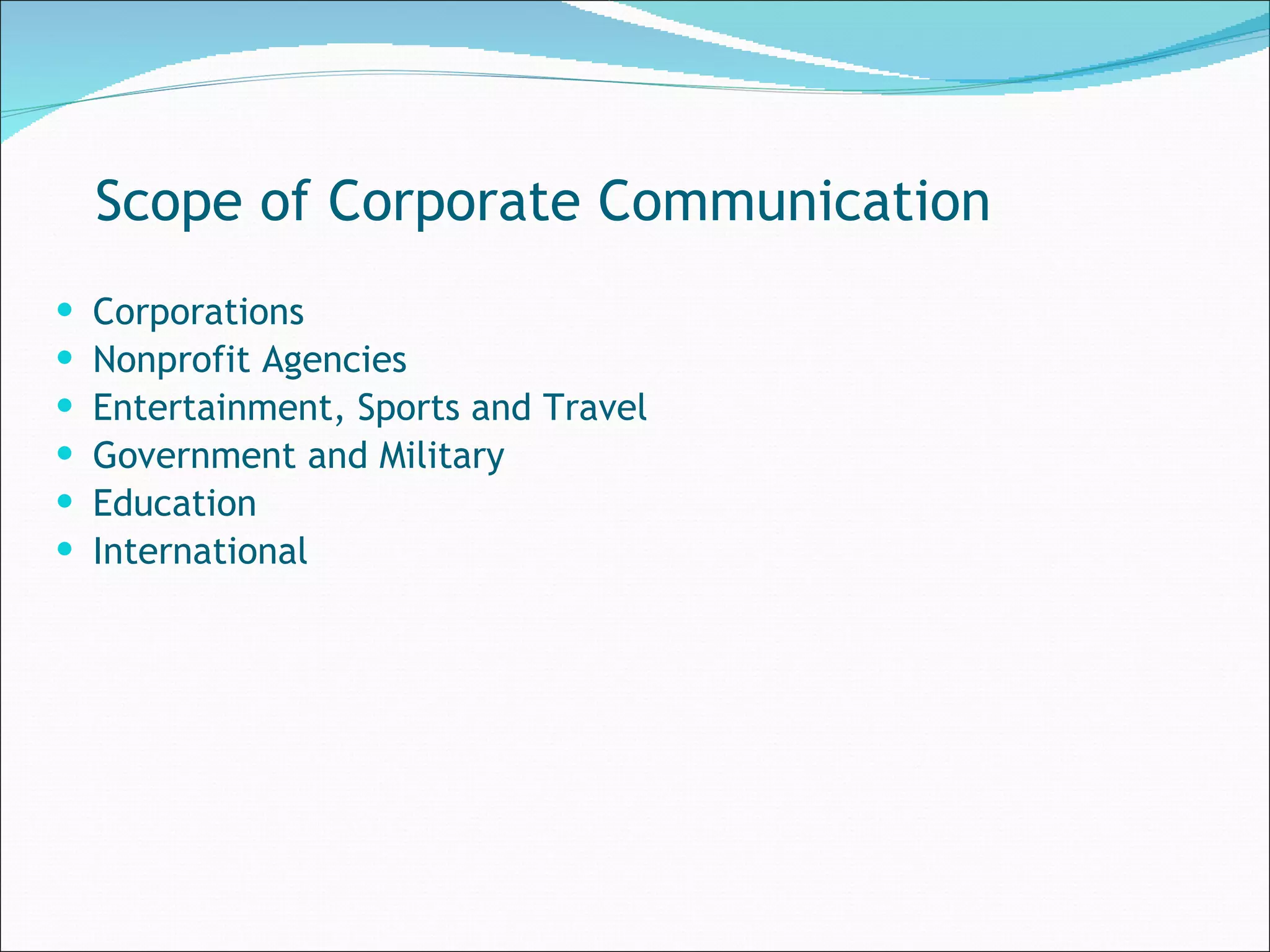
Scope of Corporate Communication Corporations  Nonprofit Agencies  Entertainment, Sports and Travel  Government and Military  Education International
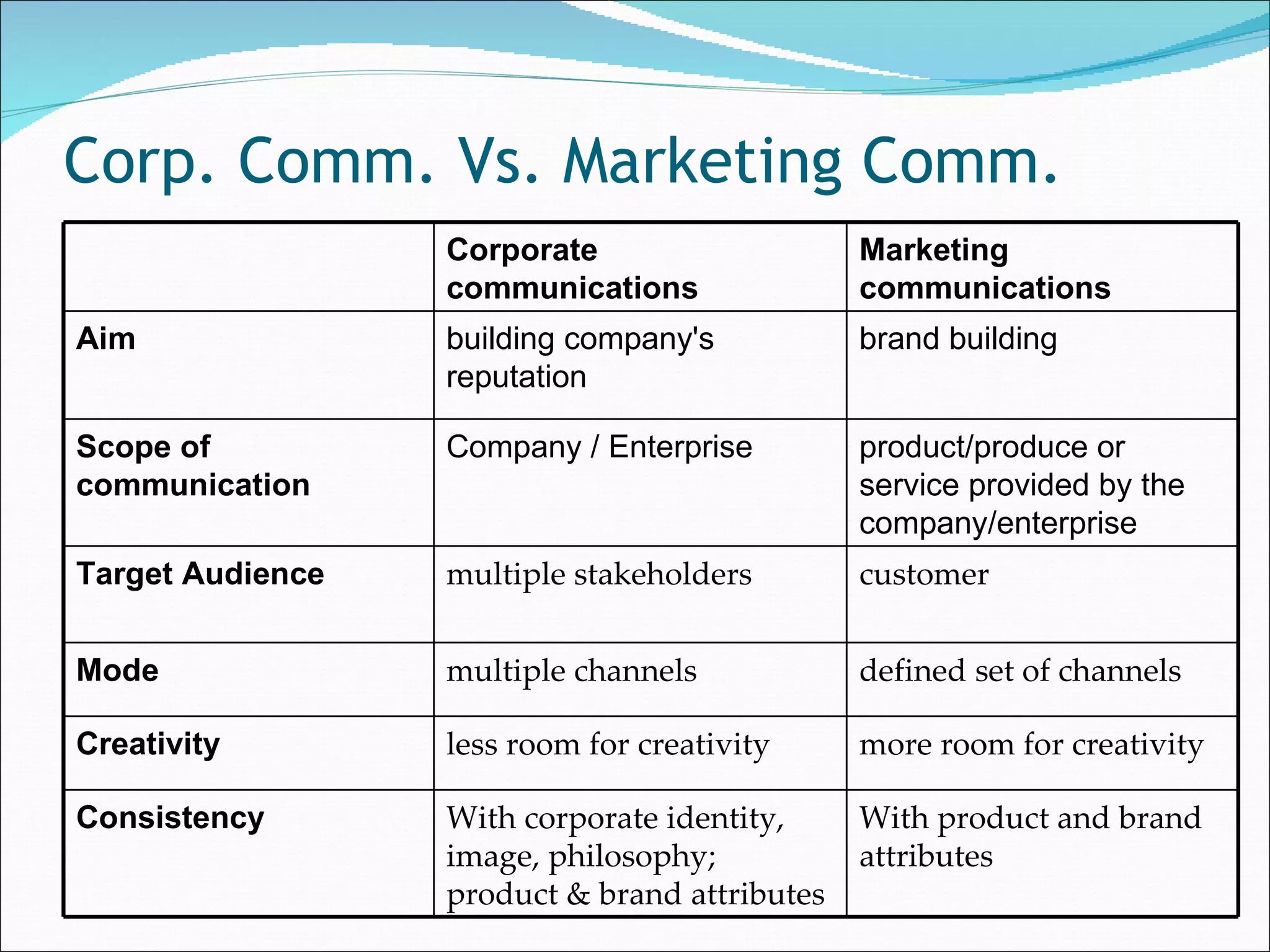
Corp. Comm. Vs. Marketing Comm. Corporate communications Marketing communications Aim building company's reputation brand building Scope of communication Company / Enterprise product/produce or service provided by the company/enterprise Target Audience multiple stakeholders customer Mode multiple channels defined set of channels Creativity less room for creativity more room for creativity Consistency With corporate identity, image, philosophy; product & brand attributes With product and brand attributes
THE CORPORATE COMMUNICATIONS WHEEL O The New Corporate Communications Wheel: Balmer and Greyser. Adapted from D. Bernstein (1984)  [42] The Corporate Communications Wheel: Balmer and Greyser. Adapted from D. Bernstein (1984) Advertising Products/ Services Direct Marketing and Correspondence Corporate & Marketing PR Personal Presentation Impersonal Presentation Literature Point of  Sale Permanent Media New Media Sponsorship THE CORPORATION Brand Business Partnerships Alliances O R I V N E N M E N T O R I V N E N M E N T The New Corporate Communications Wheel: Balmer and Greyser. Adapted from D. Bernstein (1984)  [42] and The Industry Corporate Country of Origin Influential Groups The Trade Government(s) The Media Financial Customers General Public Internal Prospective Employees Local Business Partners
Corporate Communications Department Public Relations Agency Moksh Juneja
Next… Engaging with ‘publics’ in Public Relations Moksh Juneja
Assignment Choose a company Identify the audience that  needs to influenced will be influencers Rules Not more than one side of a page Deadline: to be submitted beginning of the next lecture Moksh Juneja
Thank you Contact Moksh Juneja  Social Media Catalyst Mobile: +91 9322121170 Email:  [email_address] Moksh Juneja

Public Relations Management Session 2 Corporate Communications And Pr Communication Models

  • 1.
  • 2.
    Syllabus Role ofPR ‘ Publics’ in PR Organisation structure and PR PR role of managers Indian perspective Communication and PR PR and corporate image Social responsibility of business and PR PR and employee returns Cooperation with media Consumer an investor relations Ethics Moksh Juneja
  • 3.
    Public relations andCommunications PR and Communication Corporate communications Organisation structure Moksh Juneja
  • 4.
  • 5.
    What is Communication?Communication is a process that allows organisms to exchange information by several methods. Communication requires that all parties understand a common language that is exchanged with each other. Exchange requires feedback. The word communication is also used in the context where little or no feedback is expected such as broadcasting, or where the feedback may be delayed as the sender or receiver use different methods, technologies, timing and means for feedback. Source: Wikipedia Moksh Juneja
  • 6.
    Misconceptions about the Process of Communication Communication is a panacea Communication can break down Communication encompasses a specific set of skills
  • 7.
    Types of CommunicationMoksh Juneja Verbal Communication Speaking Singing Tone of Voice
  • 8.
    Types of CommunicationMoksh Juneja Non – Verbal Communication Body Language Sign Language Paralanguage Touch Eye Contact Writing Silence
  • 9.
    Communication “ Asocial process in which individuals employ symbols to establish and interpret meaning in their environment.” - West and Turner
  • 10.
    5 Key Termsin the Definition Social Process Symbols Meaning Environment
  • 11.
    Linear Model - Communication as Action Source Message Receiver Channel Physical or Psychological Noise
  • 12.
    Linear model ofcommunication
  • 13.
    Interactive Model Listenersrespond to speakers Key feature - feedback Personal fields of experience Limitations
  • 14.
  • 15.
    Transaction Model Simultaneouslysending and receiving of messages in a communication episode Cooperative process Influenced by past experience Includes both verbal and non-verbal elements Meanings negotiated Meanings contextual
  • 16.
  • 17.
    Public Relations CommunicationsModels Moksh Juneja Source: Managing Public Relations [James E. Grunig and Todd Hunt, Harcourt, Bace Jovanovich (1984), p. 21]
  • 18.
    Public Relations CommunicationsModels Moksh Juneja Source: Managing Public Relations [James E. Grunig and Todd Hunt, Harcourt, Bace Jovanovich (1984), p. 21]
  • 19.
    Grunig's four modelsof Public Relations Moksh Juneja Model Name Type of Communication Model Characteristics Examples Press agentry/publicity model One-way communication Uses persuasion and manipulation to influence audience to behave as the organization desires Event Publicity Public Information model One-way communication Uses press releases and other one-way communication techniques to distribute organizational information. Public relations practitioner is often referred to as the "journalist in residence". Government information One-way asymmetrical model Two-way communication Uses persuasion and manipulation to influence audience to behave as the organization desires. Does not use research to find out how it publics feel about the organization. Corporate PR / Investor Relations Two-way symmetrical model Two-way communication Uses communication to negotiate with publics,resolve conflict, and promote mutual understanding and respect between the organization and its public(s). Reputation Management
  • 20.
    Future PR Communicationmodels Moksh Juneja One-to-One Communication One-to-Many Communication Many-to-One Communication One-to-Many-to-Many Communication Source: IAOC
  • 21.
  • 22.
    What is CorporateCommunications? Corporate communications is the process of facilitating information and knowledge exchanges with internal and key external groups and individuals that have a direct relationship with an enterprise. It is concerned with internal communications management from the standpoint of sharing knowledge and decisions from the enterprise with employees, suppliers, investors and partners.
  • 23.
    Corporate Communications MixPrimary Communications: the communications effects of products, services, management, staff and corporate behavior. Secondary Communications: controlled forms of communications such as advertising and pr Tertiary Communications: word of mouth/spin
  • 24.
    Aspects of CorporateCommunication managing communication or fulfilling the communication management function dealing with controlled and uncontrolled media serving both internal and external audiences proactive communication planning advocating communication strategies and tactics dissemination of persuasion and information branding images and reputation branding products and services monitoring the responses from audiences and markets counseling and advising senior executives managing issues and responding to crisis situations lobbying for favorable stances for the organization organizational image creation and maintenance organizational presence building and monitoring
  • 25.
    Areas to beaddresses by Corp Comm Person Analyst relations Internal communications Investor relations Corporate governance (communications about the set of processes, customs, policies, laws in which a corporation is directed, administered or controlled) Change management (communications aspects of growth management, mergers and acquisitions etc.) Corporate social responsibility Litigation (communications on/around litigation) Crisis communications / Issue Management
  • 26.
    Tools of communicationsFinancial Reports Investors Analysts Newsletters Vendors Advisory boards Intranets Employees Vendors Advisory boards
  • 27.
    Scope of CorporateCommunication Corporations Nonprofit Agencies Entertainment, Sports and Travel Government and Military Education International
  • 28.
    Corp. Comm. Vs.Marketing Comm. Corporate communications Marketing communications Aim building company's reputation brand building Scope of communication Company / Enterprise product/produce or service provided by the company/enterprise Target Audience multiple stakeholders customer Mode multiple channels defined set of channels Creativity less room for creativity more room for creativity Consistency With corporate identity, image, philosophy; product & brand attributes With product and brand attributes
  • 29.
    THE CORPORATE COMMUNICATIONSWHEEL O The New Corporate Communications Wheel: Balmer and Greyser. Adapted from D. Bernstein (1984) [42] The Corporate Communications Wheel: Balmer and Greyser. Adapted from D. Bernstein (1984) Advertising Products/ Services Direct Marketing and Correspondence Corporate & Marketing PR Personal Presentation Impersonal Presentation Literature Point of Sale Permanent Media New Media Sponsorship THE CORPORATION Brand Business Partnerships Alliances O R I V N E N M E N T O R I V N E N M E N T The New Corporate Communications Wheel: Balmer and Greyser. Adapted from D. Bernstein (1984) [42] and The Industry Corporate Country of Origin Influential Groups The Trade Government(s) The Media Financial Customers General Public Internal Prospective Employees Local Business Partners
  • 30.
    Corporate Communications DepartmentPublic Relations Agency Moksh Juneja
  • 31.
    Next… Engaging with‘publics’ in Public Relations Moksh Juneja
  • 32.
    Assignment Choose acompany Identify the audience that needs to influenced will be influencers Rules Not more than one side of a page Deadline: to be submitted beginning of the next lecture Moksh Juneja
  • 33.
    Thank you ContactMoksh Juneja Social Media Catalyst Mobile: +91 9322121170 Email: [email_address] Moksh Juneja