Communication
What is communication ……….?


      The exchange of thoughts, messages, or the
      like, as by speech, signals or writing.


      To express oneself in such a way that one is
      readily and clearly understood.
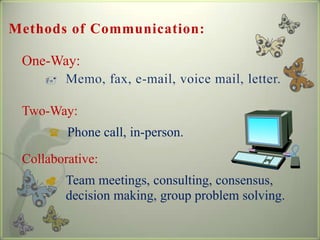
Methods of Communication:

 One-Way:
        Memo, fax, e-mail, voice mail, letter.

 Two-Way:
        Phone call, in-person.

 Collaborative:
        Team meetings, consulting, consensus,
         decision making, group problem solving.
Communication Advantages

   Increase productivity.
   Reduce stress.
   Better understand what others are
    saying.
   Better understand how to get your
    message across.
   Enhance relationships.
   Save time and money.
CORPORATE
What is corporate …………….?

  Corporate related to corporation
  Increasing the GDP of nation

            Brand name
            MNC’s
            International business
            Large organization
            High public share
            No. of sub branch's in world wide
Corporate communication
Fathers of Corporate Communication

                  Paul Garrett
                           VP of PR for General Motors in
                            1931.

                           Develop      effective     publicity     &
                            promotion.

                           Employees first in communication
                            line of information.

                           Communication       with     the   public
                            using   words      and     deeds       with
                            meaning they understood.
Arthur Page

   VP for PR at AT&T in
    1927
   Communication is a
    management function
    with voice in senior
    executive team
   Page    developed   an
    ethical    code     for
    corporate
    communication
message   Public Relations   news

sender
                                             receiver

                        feedback
What is corporate communication ….. ?
   Corporate communication is managing an organization's
  internal and external communications.


  Its includes …..
               Advertising
               Marketing Communications
               Marketing
               Public Relations
   Advertising is paid and controlled mass communication with a purpose
    to impart.

   Marketing Communication is the branding of products, services, and
    organizations including such areas as consistency, differentiation,
    equity, identity, imaging, loyalty, positioning, publicity, promotion,
    relationships, and reputation.

   Marketing is the management function which creates products or
    services to fill public needs and then persuades the public to buy the
    products or services.

   Public Relations is the management function which creates policies
    and actions to fill public demands and then persuades the public to
    approve the policies and actions.
The structure of the media
        relations/advertising


Publisher’s    Editorial    Relations with
Relations      Relations     Journalists


               Publicity
The structure of the Public Relations


   Business,      Non-profit-      Public life,   Personal


            Internal PR                       External PR


Employee       Ownership        Corporate PR      Product PR
Relations      Relations
Communication control ………
The path of the news from the sender to the receiver


                        News Agency


                             dustbin


                                           Readers,
                          Media            Listener,
                                           Viewer


                             dustbin
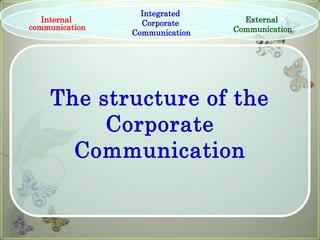
Integrated
   Internal       Corporate       External
communication                   Communication
                Communication


    The structure of the
         Corporate
      Communication
Corporation communication is classified in to two types …..

 Internal communication
         Internal corporate communication means the communication within a
        particular company.
        EX:- business meetings, conferences, interviews, presentations or print
        media like brochures, newsletters.
 External communication
         The external corporate communication process includes elements like
        advertising, marketing and public relations.
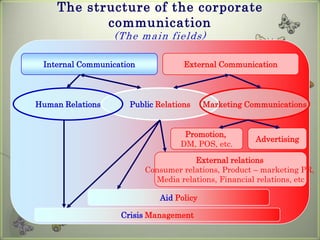
The structure of the corporate
            communication
                  (The main fields)

 Internal Communication            External Communication


Human Relations      Public Relations     Marketing Communications


                                    Promotion,
                                                      Advertising
                                   DM, POS, etc.

                                      External relations
                          Consumer relations, Product – marketing PR,
                            Media relations, Financial relations, etc

                             Aid Policy

                   Crisis Management
The structure of the internal
                  communication


Leaders-    Leaders –    Employee -    Leaders -              Leaders -     Internal
employee     leaders      employee    trade union              Owners     organisation


                     Crisis                          Aid
                   Management                       Policiy
The structure of the external
                    communication


Industrial   Professional   Consumer     Media                Financial
                                                                          Public Affairs
 relations    relations     Relations   Relations             Relations


                                                                            Issue
                                                                          management


                      Crisis                         Aid
                    Management                      Policiy
The “theory of the corporate
circles”
                       MANAGEMENT

     Marketing         Public Relations Human Relations

                                             Personal
                     Corporate Employee
                                             Marketing
 Product Place          PR     Relations
                   M                     H            Labor
                   I                     R
 Price                 Product Ownership
                                         I Organisation
         Promotion                           Developm.
                         PR    Relations


         External                          Internal

                 M I = Market influence
                 HR I = Human Relations influence
The tools of the effective Corporate
 Communication Public Relations

                        Personal
            Others    Communication


                                      Events

Media


                           Publications
        Audiovisual
Method of internal communication


                             Public opinion,
                              Environment
Method of external communication


          Market influence
                                 Public opinion,

          Group communications   Environment
Today’s Successful Professionals in
           Corporate Communication
   Today the keys to success in corporate communication are
    multitasking, management, and integration.
   It’s integrated corporate communication or integrated marketing
    communication.
   A combination of knowledge and skills in advertising, marketing
    communication, marketing, and public relations are expected in
    major industry.
   The greatest industry interest in communication professionals today
    is for individuals who have integrated corporate communication
    talent and skills and who desire supervisory positions and have a
    management capability and capacity.
Marketing and Corporate
             Communications
        What are the differences ....?

    Marketing                           Corporate Communication
   Customer                           Multiple stakeholders

   Defined set of channels            Multiple channels

   Controlled communication           Variety of communication types

   Position a product or service      Positions an entire organisation

   More room for creativity           Less room for creativity

   Needs to be consistent with  Needs to be consistent with
    product / brand attributes    corporate     identity/corporate
                                  brand attributes
Thank
you......

Corporate communication

  • 1.
  • 2.
    What is communication……….? The exchange of thoughts, messages, or the like, as by speech, signals or writing. To express oneself in such a way that one is readily and clearly understood.
  • 3.
    Methods of Communication: One-Way:  Memo, fax, e-mail, voice mail, letter. Two-Way:  Phone call, in-person. Collaborative:  Team meetings, consulting, consensus, decision making, group problem solving.
  • 4.
    Communication Advantages  Increase productivity.  Reduce stress.  Better understand what others are saying.  Better understand how to get your message across.  Enhance relationships.  Save time and money.
  • 5.
  • 6.
    What is corporate…………….?  Corporate related to corporation  Increasing the GDP of nation  Brand name  MNC’s  International business  Large organization  High public share  No. of sub branch's in world wide
  • 7.
  • 8.
    Fathers of CorporateCommunication Paul Garrett  VP of PR for General Motors in 1931.  Develop effective publicity & promotion.  Employees first in communication line of information.  Communication with the public using words and deeds with meaning they understood.
  • 9.
    Arthur Page  VP for PR at AT&T in 1927  Communication is a management function with voice in senior executive team  Page developed an ethical code for corporate communication
  • 10.
    message Public Relations news sender receiver feedback
  • 11.
    What is corporatecommunication ….. ?  Corporate communication is managing an organization's internal and external communications. Its includes …..  Advertising  Marketing Communications  Marketing  Public Relations
  • 12.
    Advertising is paid and controlled mass communication with a purpose to impart.  Marketing Communication is the branding of products, services, and organizations including such areas as consistency, differentiation, equity, identity, imaging, loyalty, positioning, publicity, promotion, relationships, and reputation.  Marketing is the management function which creates products or services to fill public needs and then persuades the public to buy the products or services.  Public Relations is the management function which creates policies and actions to fill public demands and then persuades the public to approve the policies and actions.
  • 13.
    The structure ofthe media relations/advertising Publisher’s Editorial Relations with Relations Relations Journalists Publicity
  • 14.
    The structure ofthe Public Relations Business, Non-profit- Public life, Personal Internal PR External PR Employee Ownership Corporate PR Product PR Relations Relations
  • 15.
  • 17.
    The path ofthe news from the sender to the receiver News Agency dustbin Readers, Media Listener, Viewer dustbin
  • 18.
    Integrated Internal Corporate External communication Communication Communication The structure of the Corporate Communication
  • 19.
    Corporation communication isclassified in to two types ….. Internal communication  Internal corporate communication means the communication within a particular company. EX:- business meetings, conferences, interviews, presentations or print media like brochures, newsletters. External communication  The external corporate communication process includes elements like advertising, marketing and public relations.
  • 20.
    The structure ofthe corporate communication (The main fields) Internal Communication External Communication Human Relations Public Relations Marketing Communications Promotion, Advertising DM, POS, etc. External relations Consumer relations, Product – marketing PR, Media relations, Financial relations, etc Aid Policy Crisis Management
  • 21.
    The structure ofthe internal communication Leaders- Leaders – Employee - Leaders - Leaders - Internal employee leaders employee trade union Owners organisation Crisis Aid Management Policiy
  • 22.
    The structure ofthe external communication Industrial Professional Consumer Media Financial Public Affairs relations relations Relations Relations Relations Issue management Crisis Aid Management Policiy
  • 23.
    The “theory ofthe corporate circles” MANAGEMENT Marketing Public Relations Human Relations Personal Corporate Employee Marketing Product Place PR Relations M H Labor I R Price Product Ownership I Organisation Promotion Developm. PR Relations External Internal M I = Market influence HR I = Human Relations influence
  • 24.
    The tools ofthe effective Corporate Communication Public Relations Personal Others Communication Events Media Publications Audiovisual
  • 25.
    Method of internalcommunication Public opinion, Environment
  • 26.
    Method of externalcommunication Market influence Public opinion, Group communications Environment
  • 27.
    Today’s Successful Professionalsin Corporate Communication  Today the keys to success in corporate communication are multitasking, management, and integration.  It’s integrated corporate communication or integrated marketing communication.  A combination of knowledge and skills in advertising, marketing communication, marketing, and public relations are expected in major industry.  The greatest industry interest in communication professionals today is for individuals who have integrated corporate communication talent and skills and who desire supervisory positions and have a management capability and capacity.
  • 28.
    Marketing and Corporate Communications What are the differences ....? Marketing Corporate Communication  Customer  Multiple stakeholders  Defined set of channels  Multiple channels  Controlled communication  Variety of communication types  Position a product or service  Positions an entire organisation  More room for creativity  Less room for creativity  Needs to be consistent with  Needs to be consistent with product / brand attributes corporate identity/corporate brand attributes
  • 30.