What if Love Never Comes:  Narcissism and Sex Addiction  as Emotional Survival Robert Weiss LCSW, CSAT Executive Director  The Sexual Recovery Institute www. sexualrecovery .com Managing Director Sexual Disorders Program Life Healing Center of Santa Fe www.life-healing.com
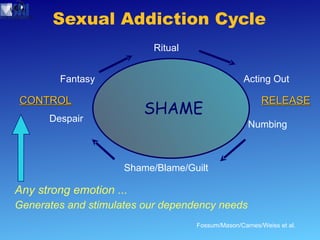
Sexual Addiction Cycle Ritual Fantasy Acting Out CONTROL RELEASE Numbing Shame/Blame/Guilt Despair  Any strong emotion ... Generates and stimulates our dependency needs Fossum/Mason/Carnes/Weiss et al. SHAME
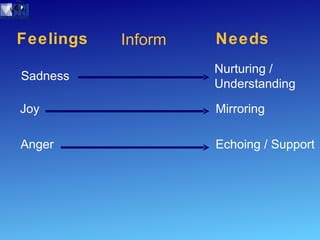
Feelings Sadness Joy Anger Needs Nurturing / Understanding Mirroring Echoing / Support Inform
What are the Survival Needs of Infants? Food and Water = Nutrition Dry and Warm = Shelter Holding, Mirroring and Stimulation = Love
What happens to  the infant if any one of these three are missing? the infant if any one of these three are missing? Absent Food =   Death Absent Shelter =  Death Absent Love =  = Death (failure to thrive)
Conclusion We Need “Love” to Survive Throughout the lifecycle
Shame prevents us from asking others to meet our needs (to love us fully) Shame is the felt experience of  being defective   — brought about through early attachment deficits and trauma. Shame  is learned   as essential dependency needs are denied or subverted and the child turns upon themselves as being the problem.  Shame is the essence of Carnes ‘ Core Beliefs  of (sex) addicts.
Examples of Shame Based ‘Core Beliefs’  No one would love me as I am If you knew all about me, you would abandon me  I am a deeply flawed (unlovable) person This is the essence of narcissistic self-obsession, driving most relational interactions
Development of the Inauthentic (Shamed) Self Genetic or Predetermination—  Personality, Affect Management Skills Familial Shame Abuse—Psychological, Physical, Sexual Environmental / Cultural Factors All of which reinforce that  I’m better off not needing anyone!
So Who is the Problem?  Not Mom Not Dad My Needs are the Problem  . . . The Self is Shamed  :(
How does the self get shamed? Primary Narcissism
Attachment and Addiction Early attachment disturbances appear to be a key root cause of both narcissism  and  sexual addiction. Compulsivity and obsession offer some relief from the pain, rage and fear of the disrupted, empty self in those who never learned how to find comfort in healthy relatedness. The compensating compulsive behaviors eventually take on a life of their own.
At-A-Boy!
“ It is thus impossible for the grandiose  person to cut the tragic link between admiration and love. In his compulsion to repeat he seeks insatiably for admiration, of which he never gets enough because admiration is not the same thing as love. It is only a substitute gratification for the primary needs for respect, understanding and being taken seriously” Alice Miller:  The Drama of the Gifted Child
Narcissistic Defenses Employed to Suppress, Avoid and Distract from Dependency Needs Addictions (substance and behavioral) Intense Self Focus, Self Blame (shame) Pathological Care Taking / Encouraging Unhealthy Dependency Thrill Seeking / High Risk Activities Dissociation / Fantasy  Rage / Abuse Passivity / Helplessness and/or Drama Intense Self Focus, Self Blame and Shame Seduction and Objectification (Sexual or Emotional) Objectification
Beware the  “Granola Narcissist” “ Granola Narcissist”
What does your addict have to say about the need for relationships and intimacy? “I hate myself for being so needy” “I hate my neediness” “I hate my addict” BUT—I STILL HAVE TO GET MY NEEDS MET
Adaptive or Survival Based Coping Skills  Can Provide   Self soothing Calm Distraction  Stimulation In the absence of and/or limited experience with healthier, more integrated relational means of self stability.
Addicts Don’t Learn About Their Emotions Addicts Don’t Learn From Their Emotions Addicts Learn to Disavow Their Needfulness Most Addicts Would Rather  Eat Dirt  Than Ask For Help (acknowledge need) In Other Words ... This information should guide treatment
“ The Narcissistically cathected child  has the chance to develop his intellectual capacities undisturbed, but not the world of his emotions and this will have far-reaching consequences for his well-being.” Alice Miller:  The Drama of the Gifted Child
Healthy Ways to Meet Integrated Emotional Needs  RECOVERY!   Asking for Help - HONESTY! Reliable/ Mutual Friendships and Love Relationships -INTIMACY! Achievement (Goals, Career, Objects) Self Soothing and Self-Care Activities Healthy Physical Intimacy and Sexuality Play and Creative Activity THIS INFORMS RECOVERY PLANNING
Working Through  12-Step and/or Faith Based Support (building community) A Safe Therapeutic Relationship (intimacy) Psychotropic Medication (reduced reactivity) Residential Treatment / Trauma Work (shame reduction and skill building)  Stable Life Circumstances (work, family, relationships) Alternative Therapies - EMDR, Mindfulness Practice, Somatic Experiencing, DBT etc. Spirituality
Our Role and Job Confront, Contain and Intervene—This shows you that I care; I see you Promote Accountability—I want you to care too Educate, Provide and Encourage Resources Normalize Through Interpretation and Understanding—Shame Reduction Provide Hope Psychodynamic Process—work within the relationship Be Genuine and Accessible
Role of the Therapist Confront, Contain and Intervene—This shows you that I care; I see you Promote Accountability—I want you to care too Provide Structure and Encourage Resources Normalize Through Interpretation and Understanding—Shame Reduction Provide Hope Psychodynamic Process—work within the relationship To Be Genuine and Accessible
What if Love Never Comes?  Narcissism and Addiction  as Emotional Survival Robert Weiss LCSW, CSAT Executive Director  The Sexual Recovery Institute Managing Director, Sexual Integrity Services The Life Healing Center of Santa Fe www.sexualrecovery.com

Narcissism & Sexual Addiction

  • 1.
    What if LoveNever Comes: Narcissism and Sex Addiction as Emotional Survival Robert Weiss LCSW, CSAT Executive Director The Sexual Recovery Institute www. sexualrecovery .com Managing Director Sexual Disorders Program Life Healing Center of Santa Fe www.life-healing.com
  • 2.
    Sexual Addiction CycleRitual Fantasy Acting Out CONTROL RELEASE Numbing Shame/Blame/Guilt Despair Any strong emotion ... Generates and stimulates our dependency needs Fossum/Mason/Carnes/Weiss et al. SHAME
  • 3.
    Feelings Sadness JoyAnger Needs Nurturing / Understanding Mirroring Echoing / Support Inform
  • 4.
    What are theSurvival Needs of Infants? Food and Water = Nutrition Dry and Warm = Shelter Holding, Mirroring and Stimulation = Love
  • 5.
    What happens to the infant if any one of these three are missing? the infant if any one of these three are missing? Absent Food = Death Absent Shelter = Death Absent Love = = Death (failure to thrive)
  • 6.
    Conclusion We Need“Love” to Survive Throughout the lifecycle
  • 7.
    Shame prevents usfrom asking others to meet our needs (to love us fully) Shame is the felt experience of being defective — brought about through early attachment deficits and trauma. Shame is learned as essential dependency needs are denied or subverted and the child turns upon themselves as being the problem. Shame is the essence of Carnes ‘ Core Beliefs of (sex) addicts.
  • 8.
    Examples of ShameBased ‘Core Beliefs’ No one would love me as I am If you knew all about me, you would abandon me I am a deeply flawed (unlovable) person This is the essence of narcissistic self-obsession, driving most relational interactions
  • 9.
    Development of theInauthentic (Shamed) Self Genetic or Predetermination— Personality, Affect Management Skills Familial Shame Abuse—Psychological, Physical, Sexual Environmental / Cultural Factors All of which reinforce that I’m better off not needing anyone!
  • 10.
    So Who isthe Problem? Not Mom Not Dad My Needs are the Problem . . . The Self is Shamed :(
  • 11.
    How does theself get shamed? Primary Narcissism
  • 12.
    Attachment and AddictionEarly attachment disturbances appear to be a key root cause of both narcissism and sexual addiction. Compulsivity and obsession offer some relief from the pain, rage and fear of the disrupted, empty self in those who never learned how to find comfort in healthy relatedness. The compensating compulsive behaviors eventually take on a life of their own.
  • 13.
  • 14.
    “ It isthus impossible for the grandiose person to cut the tragic link between admiration and love. In his compulsion to repeat he seeks insatiably for admiration, of which he never gets enough because admiration is not the same thing as love. It is only a substitute gratification for the primary needs for respect, understanding and being taken seriously” Alice Miller: The Drama of the Gifted Child
  • 15.
    Narcissistic Defenses Employedto Suppress, Avoid and Distract from Dependency Needs Addictions (substance and behavioral) Intense Self Focus, Self Blame (shame) Pathological Care Taking / Encouraging Unhealthy Dependency Thrill Seeking / High Risk Activities Dissociation / Fantasy Rage / Abuse Passivity / Helplessness and/or Drama Intense Self Focus, Self Blame and Shame Seduction and Objectification (Sexual or Emotional) Objectification
  • 16.
    Beware the “Granola Narcissist” “ Granola Narcissist”
  • 17.
    What does youraddict have to say about the need for relationships and intimacy? “I hate myself for being so needy” “I hate my neediness” “I hate my addict” BUT—I STILL HAVE TO GET MY NEEDS MET
  • 18.
    Adaptive or SurvivalBased Coping Skills Can Provide Self soothing Calm Distraction Stimulation In the absence of and/or limited experience with healthier, more integrated relational means of self stability.
  • 19.
    Addicts Don’t LearnAbout Their Emotions Addicts Don’t Learn From Their Emotions Addicts Learn to Disavow Their Needfulness Most Addicts Would Rather Eat Dirt Than Ask For Help (acknowledge need) In Other Words ... This information should guide treatment
  • 20.
    “ The Narcissisticallycathected child has the chance to develop his intellectual capacities undisturbed, but not the world of his emotions and this will have far-reaching consequences for his well-being.” Alice Miller: The Drama of the Gifted Child
  • 21.
    Healthy Ways toMeet Integrated Emotional Needs RECOVERY! Asking for Help - HONESTY! Reliable/ Mutual Friendships and Love Relationships -INTIMACY! Achievement (Goals, Career, Objects) Self Soothing and Self-Care Activities Healthy Physical Intimacy and Sexuality Play and Creative Activity THIS INFORMS RECOVERY PLANNING
  • 22.
    Working Through 12-Step and/or Faith Based Support (building community) A Safe Therapeutic Relationship (intimacy) Psychotropic Medication (reduced reactivity) Residential Treatment / Trauma Work (shame reduction and skill building) Stable Life Circumstances (work, family, relationships) Alternative Therapies - EMDR, Mindfulness Practice, Somatic Experiencing, DBT etc. Spirituality
  • 23.
    Our Role andJob Confront, Contain and Intervene—This shows you that I care; I see you Promote Accountability—I want you to care too Educate, Provide and Encourage Resources Normalize Through Interpretation and Understanding—Shame Reduction Provide Hope Psychodynamic Process—work within the relationship Be Genuine and Accessible
  • 24.
    Role of theTherapist Confront, Contain and Intervene—This shows you that I care; I see you Promote Accountability—I want you to care too Provide Structure and Encourage Resources Normalize Through Interpretation and Understanding—Shame Reduction Provide Hope Psychodynamic Process—work within the relationship To Be Genuine and Accessible
  • 25.
    What if LoveNever Comes? Narcissism and Addiction as Emotional Survival Robert Weiss LCSW, CSAT Executive Director The Sexual Recovery Institute Managing Director, Sexual Integrity Services The Life Healing Center of Santa Fe www.sexualrecovery.com

Editor's Notes

  • #3 Could Be Any Addiction Cycle
  • #4 Stories - to point out need for others
  • #6 Talk about ww2 cribs
  • #10 Talk about Jonny 1 and 2
  • #12 Talk about child and oatmeal
  • #18 Art Therapy Flowers Story
  • #19 From looking out of windows to looking at porn
  • #22 Think about running around a track - broken legs, healthy body.. Both can make it around. Metaphor
  • #23 Discuss that the therapeutic relationship is formed by the therapist acknowledging and confronting the defenses and adaptations that no longer work.
  • #24 To challenge and name the narcissistic defenses Define Sobriety Timing and Tools Vary from Client to Client Our ability to help is limited by the degree of Axis 2 pathology
  • #25 To challenge and name the narcissistic defenses Define Sobriety Timing and Tools Vary from Client to Client Our ability to help is limited by the degree of Axis 2 pathology