what did we do?
what did we do?
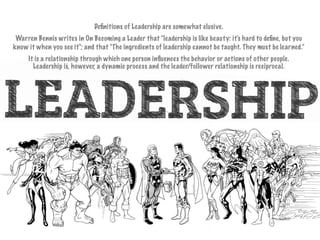
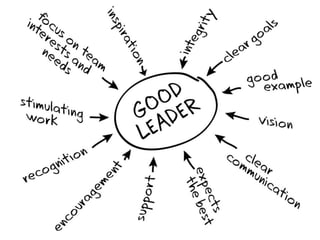
Definitions of Leadership are somewhat elusive.
Warren Bennis writes in On Becoming a Leader that "leadership is like beauty: it's hard to define, but you
know it when you see it"; and that "The ingredients of leadership cannot be taught. They must be learned.”
It is a relationship through which one person influences the behavior or actions of other people.
Leadership is, however, a dynamic process and the leader/follower relationship is reciprocal.
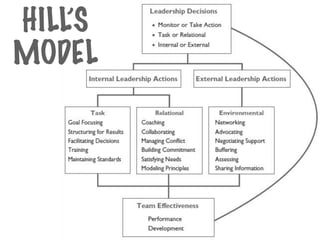
HILL’S
MODEL
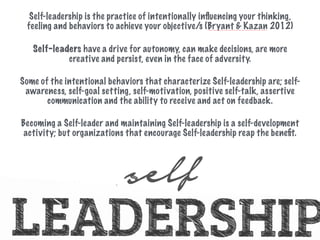
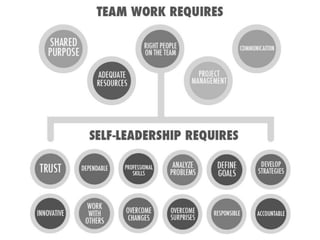
Self-leadership is the practice of intentionally influencing your thinking,
feeling and behaviors to achieve your objective/s (Bryant & Kazan 2012)
Self-leaders have a drive for autonomy, can make decisions, are more
creative and persist, even in the face of adversity.
Some of the intentional behaviors that characterize Self-leadership are; self-
awareness, self-goal setting, self-motivation, positive self-talk, assertive
communication and the ability to receive and act on feedback.
Becoming a Self-leader and maintaining Self-leadership is a self-development
activity; but organizations that encourage Self-leadership reap the benefit.
self
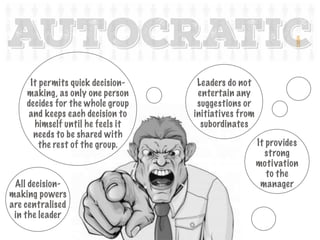
It provides
strong
motivation
to the
manager
Leaders do not
entertain any
suggestions or
initiatives from
subordinates
All decision-
making powers
are centralised
in the leader
autocratic
It permits quick decision-
making, as only one person
decides for the whole group
and keeps each decision to
himself until he feels it
needs to be shared with
the rest of the group.
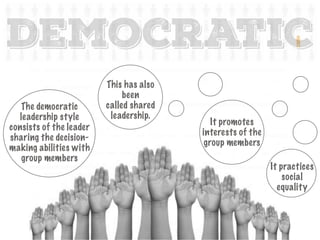
It practices
social
equality
It promotes
interests of the
group members
This has also
been
called shared
leadership.
democratic
The democratic
leadership style
consists of the leader
sharing the decision-
making abilities with
group members
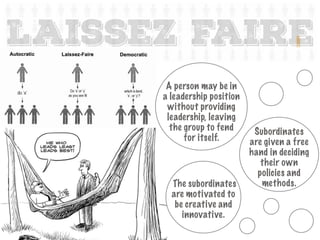
The subordinates
are motivated to
be creative and
innovative.
A person may be in
a leadership position
without providing
leadership, leaving
the group to fend
for itself.
laissez faire
Subordinates
are given a free
hand in deciding
their own
policies and
methods.
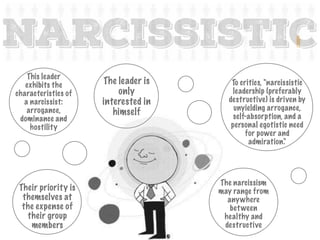
The narcissism 
may range from
anywhere
between
healthy and
destructive
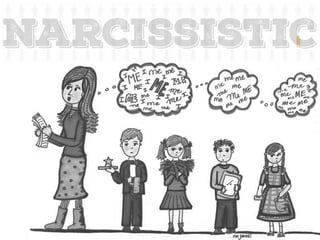
This leader
exhibits the
characteristics of
a narcissist:
arrogance,
dominance and
hostility
Their priority is
themselves at
the expense of
their group
members
The leader is
only
interested in
himself
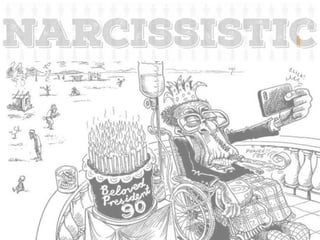
narcissistic
To critics, "narcissistic
leadership (preferably
destructive) is driven by
unyielding arrogance,
self-absorption, and a
personal egotistic need
for power and
admiration."
narcissistic
narcissistic
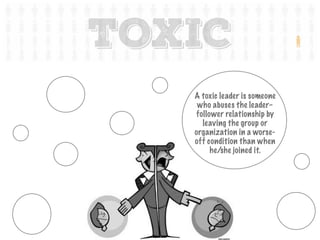
A toxic leader is someone
who abuses the leader–
follower relationship by
leaving the group or
organization in a worse-
off condition than when
he/she joined it.
TOXIC
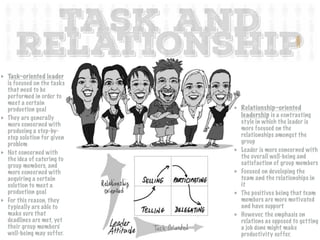
task and
relationship
Task-oriented leader
is focused on the tasks
that need to be
performed in order to
meet a certain
production goal
They are generally
more concerned with
producing a step-by-
step solution for given
problem
Not concerned with
the idea of catering to
group members, and
more concerned with
acquiring a certain
solution to meet a
production goal
For this reason, they
typically are able to
make sure that
deadlines are met, yet
their group members'
well-being may suffer.
Relationship-oriented
leadership is a contrasting
style in which the leader is
more focused on the
relationships amongst the
group
Leader is more concerned with
the overall well-being and
satisfaction of group members
Focused on developing the
team and the relationships in
it
The positives being that team
members are more motivated
and have support
However, the emphasis on
relations as opposed to getting
a job done might make
productivity suffer.
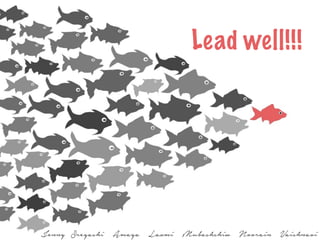
Jenny Sreyashi Amaya Laxmi Mubashshiw Noorain Vaishnavi
Lead well!!!

Leadership

  • 1.
  • 2.
  • 4.
    Definitions of Leadership are somewhatelusive. Warren Bennis writes in On Becoming a Leader that "leadership is like beauty: it's hard to define, but you know it when you see it"; and that "The ingredients of leadership cannot be taught. They must be learned.” It is a relationship through which one person influences the behavior or actions of other people. Leadership is, however, a dynamic process and the leader/follower relationship is reciprocal.
  • 7.
  • 8.
    Self-leadership is thepractice of intentionally influencing your thinking, feeling and behaviors to achieve your objective/s (Bryant & Kazan 2012) Self-leaders have a drive for autonomy, can make decisions, are more creative and persist, even in the face of adversity. Some of the intentional behaviors that characterize Self-leadership are; self- awareness, self-goal setting, self-motivation, positive self-talk, assertive communication and the ability to receive and act on feedback. Becoming a Self-leader and maintaining Self-leadership is a self-development activity; but organizations that encourage Self-leadership reap the benefit. self
  • 10.
    It provides strong motivation to the manager Leadersdo not entertain any suggestions or initiatives from subordinates All decision- making powers are centralised in the leader autocratic It permits quick decision- making, as only one person decides for the whole group and keeps each decision to himself until he feels it needs to be shared with the rest of the group.
  • 12.
    It practices social equality It promotes interestsof the group members This has also been called shared leadership. democratic The democratic leadership style consists of the leader sharing the decision- making abilities with group members
  • 13.
    The subordinates are motivatedto be creative and innovative. A person may be in a leadership position without providing leadership, leaving the group to fend for itself. laissez faire Subordinates are given a free hand in deciding their own policies and methods.
  • 14.
    The narcissism  may range from anywhere between healthyand destructive This leader exhibits the characteristics of a narcissist: arrogance, dominance and hostility Their priority is themselves at the expense of their group members The leader is only interested in himself narcissistic To critics, "narcissistic leadership (preferably destructive) is driven by unyielding arrogance, self-absorption, and a personal egotistic need for power and admiration."
  • 15.
  • 16.
  • 17.
    A toxic leaderis someone who abuses the leader– follower relationship by leaving the group or organization in a worse- off condition than when he/she joined it. TOXIC
  • 18.
    task and relationship Task-oriented leader isfocused on the tasks that need to be performed in order to meet a certain production goal They are generally more concerned with producing a step-by- step solution for given problem Not concerned with the idea of catering to group members, and more concerned with acquiring a certain solution to meet a production goal For this reason, they typically are able to make sure that deadlines are met, yet their group members' well-being may suffer. Relationship-oriented leadership is a contrasting style in which the leader is more focused on the relationships amongst the group Leader is more concerned with the overall well-being and satisfaction of group members Focused on developing the team and the relationships in it The positives being that team members are more motivated and have support However, the emphasis on relations as opposed to getting a job done might make productivity suffer.
  • 20.
    Jenny Sreyashi AmayaLaxmi Mubashshiw Noorain Vaishnavi Lead well!!!