YOUR GUIDE TO CO-
DEPENDENCE
And how to overcome…
What is it?
   “Codependency is a dysfunctional
    relationship with the self.“

   Co-dependency is a pathological or
    addictive relationship to people, behaviors
    or things. It is the fallacy of trying to
    manage internal feelings in the external
    environment. It inhibits the ability to have
    healthy, mutually satisfying relationships.
Where Does it Come From?
   Developed as a Coping
    Mechanism
   Dysfunctional family: one
    in which members suffer
    from fear, anger, pain or
    shame that is ignored or
    denied.
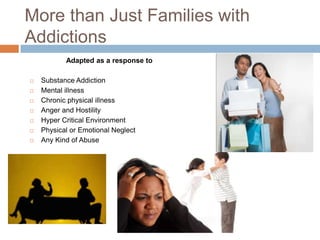
More than Just Families with
Addictions
           Adapted as a response to

   Substance Addiction
   Mental illness
   Chronic physical illness
   Anger and Hostility
   Hyper Critical Environment
   Physical or Emotional Neglect
   Any Kind of Abuse
Symptoms
   Care Taking
   Low Self Worth
   Repression
   Controlling Behaviors
   Denial
   Poor Boundaries
   Exaggerated Sense of Responsibility
   Fear of Being Alone
What they learn…
   It's not okay to talk about problems
   Feelings should not be expressed openly; keep feelings to yourself
   Communication is best if indirect; one person acts as messenger
    between two others; known in therapy as triangulation
   Be strong, good, right, perfect
   Make us proud beyond realistic expectations
   Don't be selfish
   Do as I say not as I do
   It's not okay to play or be playful
   Don't rock the boat
The Disconnected Brain
   Limbic System- the
    primitive memory and
    emotion center.

   The Prefrontal Cortex- the
    reasoning, evaluative
    center.

   The Healing Space
The Upside
   Never accepting
    responsibility
   Being the Special One
   Feeling needed
   Being admired as a saint
The Down Side

            Intimacy problems
            Hyper vigilance (a heightened
             awareness for potential
             threat/danger)
            Physical illness related to
             stress
            Broken Relationships
What a Cute Little Idol…
Does it have a name?


   Creator

   Creation

   Worship
Overcoming Co-dependency
   Self discovery, self
    awareness, pulling away from
    care-taking behaviors, and
    being responsible for other’s
    moods, happiness or well
    being.
   CR, Co-dependents
    Anonymous.
   Education about the cycle of
    addiction
What A Recovered Co-Dependent
Looks Like
         Able to…
          Identify his own needs and make a

           plan to meet those needs.
          Learn and practice good self care.

          Set boundaries with love and respect.

          Stay Connected without enmeshment

          Sit with the discomfort of being alone

          Assert his needs and desires

          Teach others how to respect him.
True Intimacy
             True intimacy is when you are
              able to hold your own
              experience and
              feelings, allowing the other to
              hold their own experience
              and feelings with no fear or
              attempt of
              controlling, changing or
              judging the other.
To find out more…

           Michelle Hollomon, LMHC
            Counselor, Coach, Author

           Eastside Counseling & Coaching
             8201 164th Ave NE, Suite 200
                    Redmond, WA

               Ph: 425-999-9470

         www.counselingtheeastside.com

Your Guide to Overcoming CoDependence

  • 1.
    YOUR GUIDE TOCO- DEPENDENCE And how to overcome…
  • 2.
    What is it?  “Codependency is a dysfunctional relationship with the self.“  Co-dependency is a pathological or addictive relationship to people, behaviors or things. It is the fallacy of trying to manage internal feelings in the external environment. It inhibits the ability to have healthy, mutually satisfying relationships.
  • 3.
    Where Does itCome From?  Developed as a Coping Mechanism  Dysfunctional family: one in which members suffer from fear, anger, pain or shame that is ignored or denied.
  • 4.
    More than JustFamilies with Addictions Adapted as a response to  Substance Addiction  Mental illness  Chronic physical illness  Anger and Hostility  Hyper Critical Environment  Physical or Emotional Neglect  Any Kind of Abuse
  • 5.
    Symptoms  Care Taking  Low Self Worth  Repression  Controlling Behaviors  Denial  Poor Boundaries  Exaggerated Sense of Responsibility  Fear of Being Alone
  • 6.
    What they learn…  It's not okay to talk about problems  Feelings should not be expressed openly; keep feelings to yourself  Communication is best if indirect; one person acts as messenger between two others; known in therapy as triangulation  Be strong, good, right, perfect  Make us proud beyond realistic expectations  Don't be selfish  Do as I say not as I do  It's not okay to play or be playful  Don't rock the boat
  • 7.
    The Disconnected Brain  Limbic System- the primitive memory and emotion center.  The Prefrontal Cortex- the reasoning, evaluative center.  The Healing Space
  • 8.
    The Upside  Never accepting responsibility  Being the Special One  Feeling needed  Being admired as a saint
  • 9.
    The Down Side  Intimacy problems  Hyper vigilance (a heightened awareness for potential threat/danger)  Physical illness related to stress  Broken Relationships
  • 10.
    What a CuteLittle Idol… Does it have a name?  Creator  Creation  Worship
  • 11.
    Overcoming Co-dependency  Self discovery, self awareness, pulling away from care-taking behaviors, and being responsible for other’s moods, happiness or well being.  CR, Co-dependents Anonymous.  Education about the cycle of addiction
  • 12.
    What A RecoveredCo-Dependent Looks Like Able to…  Identify his own needs and make a plan to meet those needs.  Learn and practice good self care.  Set boundaries with love and respect.  Stay Connected without enmeshment  Sit with the discomfort of being alone  Assert his needs and desires  Teach others how to respect him.
  • 13.
    True Intimacy  True intimacy is when you are able to hold your own experience and feelings, allowing the other to hold their own experience and feelings with no fear or attempt of controlling, changing or judging the other.
  • 14.
    To find outmore… Michelle Hollomon, LMHC Counselor, Coach, Author Eastside Counseling & Coaching 8201 164th Ave NE, Suite 200 Redmond, WA Ph: 425-999-9470 www.counselingtheeastside.com