THE ATMOSPHERE
Definition:
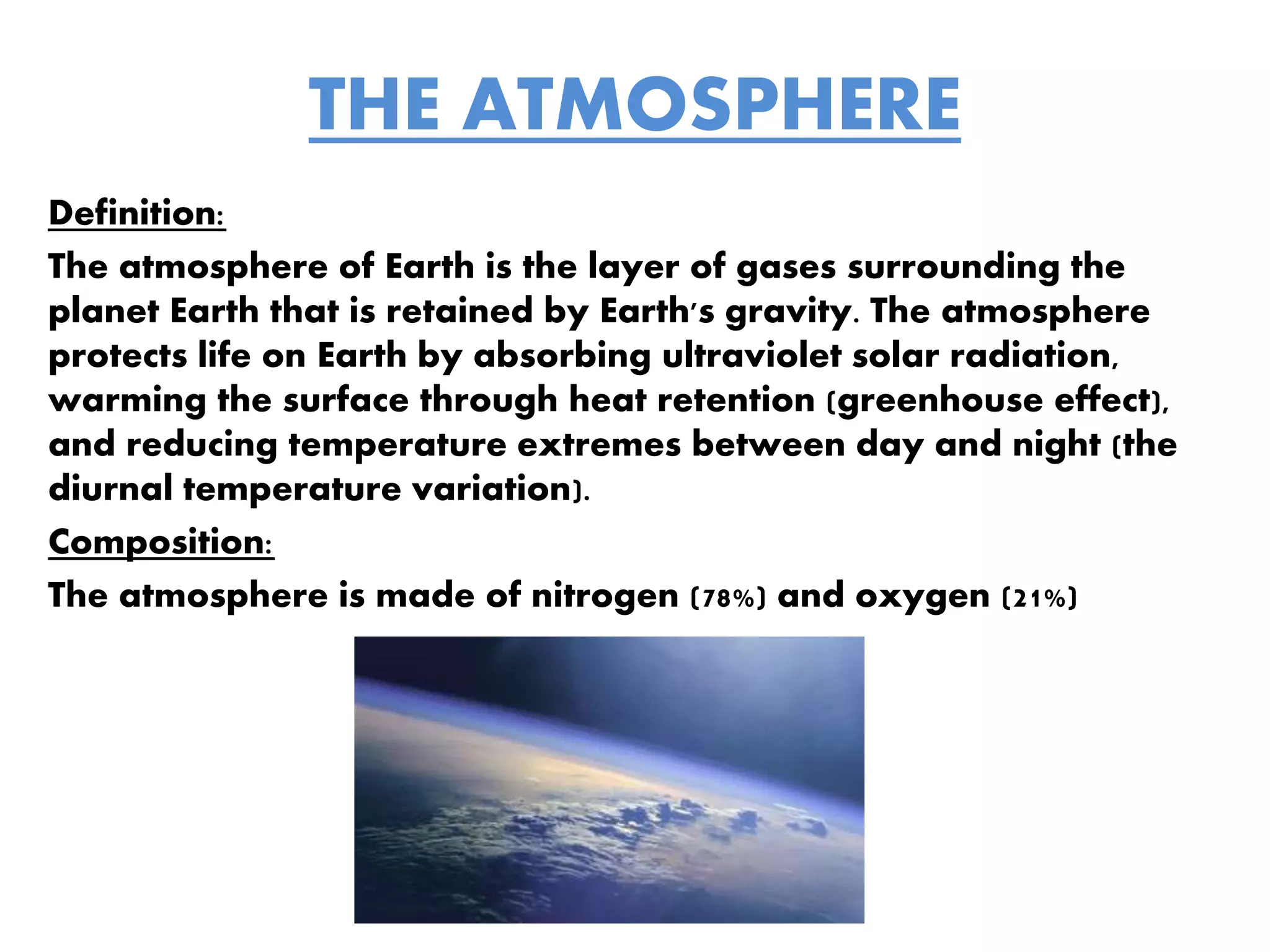
The atmosphere of Earth is the layer of gases surrounding the
planet Earth that is retained by Earth's gravity. The atmosphere
protects life on Earth by absorbing ultraviolet solar radiation,
warming the surface through heat retention (greenhouse effect),
and reducing temperature extremes between day and night (the
diurnal temperature variation).
Composition:
The atmosphere is made of nitrogen (78%) and oxygen (21%)
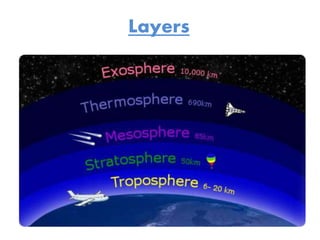
Layers
Other layers:
The ozone layer
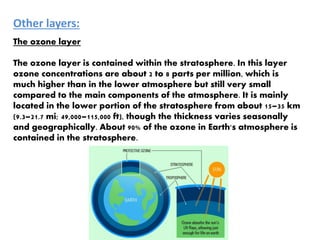
The ozone layer is contained within the stratosphere. In this layer
ozone concentrations are about 2 to 8 parts per million, which is
much higher than in the lower atmosphere but still very small
compared to the main components of the atmosphere. It is mainly
located in the lower portion of the stratosphere from about 15–35 km
(9.3–21.7 mi; 49,000–115,000 ft), though the thickness varies seasonally
and geographically. About 90% of the ozone in Earth's atmosphere is
contained in the stratosphere.
Climate /weather and climograme
Weather is the condition of the atmosphere at a
particular place over a short period of time. For
example, on a particular day in Trinidad, the weather
is warm in the afternoon. But later in the day, when
there are clouds blocking Sun's rays, the weather
would become cooler.
Climate refers to the weather pattern of a place over
a long period, maybe 30 years or more, long enough
to yield meaningful averages. For example, although
the weather in Pakistan may be cool and dry today,
Pakistan's climate is hot most of the time.
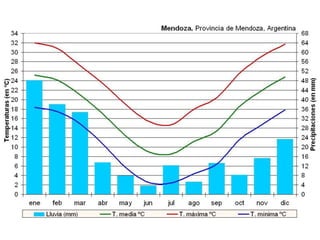
Climograph
A climograph is a graphical representation
of basic climatic parameters, that is
monthly average temperature and
precipitation, at a certain location. It is
used for a quick-view of the climate of a
location.
Factors that affect the climate
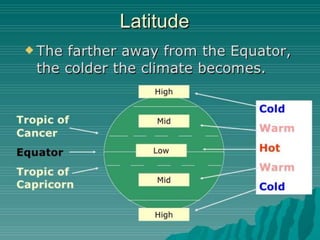
• LATITUDE
• ALTITUDE
• DISTANCE FROM THE SEA
• PRESSURE AND WIND SYSTEM
• OCEAN CURRENTS
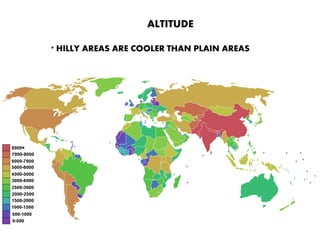
ALTITUDE
* HILLY AREAS ARE COOLER THAN PLAIN AREAS
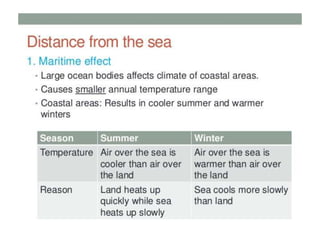
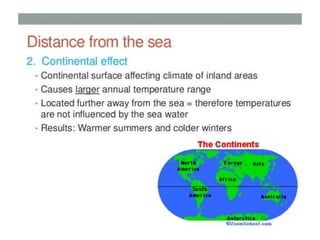
DISTANCE FROM THE SEA
Sea exerts a moderating influence on
climate. If the place is located away from
the sea then the moderating influence of
the sea decreases.
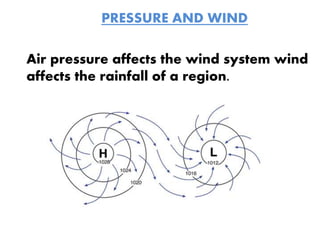
PRESSURE AND WIND
Air pressure affects the wind system wind
affects the rainfall of a region.
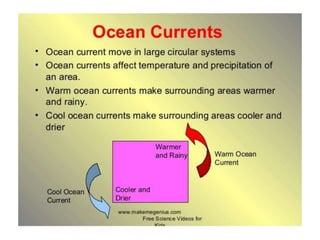
OCEAN CURRENTS
MASS MOVEMENTS OF OCEAN WATER FROM ONE PART OF
THE OCEAN TO ANOTHER PART.
TWO TYPES:
- WARM CURRENT
- COLD CURRENT
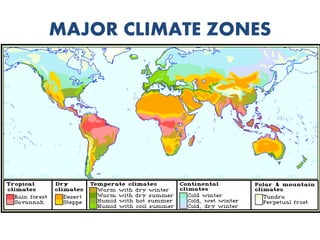
MAJOR CLIMATE ZONES
CHARACTERISTICS
OF SEASONS
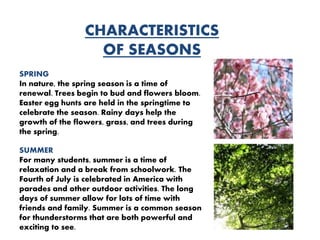
SPRING
In nature, the spring season is a time of
renewal. Trees begin to bud and flowers bloom.
Easter egg hunts are held in the springtime to
celebrate the season. Rainy days help the
growth of the flowers, grass, and trees during
the spring.
SUMMER
For many students, summer is a time of
relaxation and a break from schoolwork. The
Fourth of July is celebrated in America with
parades and other outdoor activities. The long
days of summer allow for lots of time with
friends and family. Summer is a common season
for thunderstorms that are both powerful and
exciting to see.
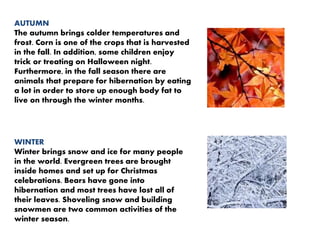
AUTUMN
The autumn brings colder temperatures and
frost. Corn is one of the crops that is harvested
in the fall. In addition, some children enjoy
trick or treating on Halloween night.
Furthermore, in the fall season there are
animals that prepare for hibernation by eating
a lot in order to store up enough body fat to
live on through the winter months.
WINTER
Winter brings snow and ice for many people
in the world. Evergreen trees are brought
inside homes and set up for Christmas
celebrations. Bears have gone into
hibernation and most trees have lost all of
their leaves. Shoveling snow and building
snowmen are two common activities of the
winter season.
INSTRUMENTS AND PREDICTIONS
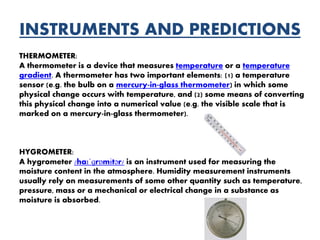
THERMOMETER:
A thermometer is a device that measures temperature or a temperature
gradient. A thermometer has two important elements: (1) a temperature
sensor (e.g. the bulb on a mercury-in-glass thermometer) in which some
physical change occurs with temperature, and (2) some means of converting
this physical change into a numerical value (e.g. the visible scale that is
marked on a mercury-in-glass thermometer).
HYGROMETER:
A hygrometer /haɪˈɡrɒmɨtər/ is an instrument used for measuring the
moisture content in the atmosphere. Humidity measurement instruments
usually rely on measurements of some other quantity such as temperature,
pressure, mass or a mechanical or electrical change in a substance as
moisture is absorbed.
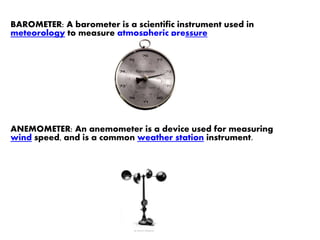
BAROMETER: A barometer is a scientific instrument used in
meteorology to measure atmospheric pressure
ANEMOMETER: An anemometer is a device used for measuring
wind speed, and is a common weather station instrument.
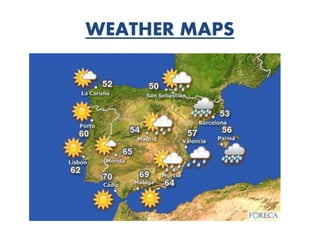
WEATHER MAPS
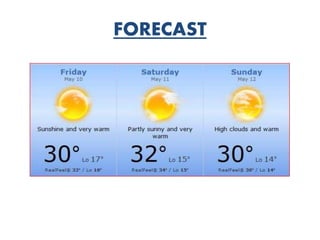
FORECAST

The atmosphere

  • 1.
    THE ATMOSPHERE Definition: The atmosphereof Earth is the layer of gases surrounding the planet Earth that is retained by Earth's gravity. The atmosphere protects life on Earth by absorbing ultraviolet solar radiation, warming the surface through heat retention (greenhouse effect), and reducing temperature extremes between day and night (the diurnal temperature variation). Composition: The atmosphere is made of nitrogen (78%) and oxygen (21%)
  • 2.
  • 3.
    Other layers: The ozonelayer The ozone layer is contained within the stratosphere. In this layer ozone concentrations are about 2 to 8 parts per million, which is much higher than in the lower atmosphere but still very small compared to the main components of the atmosphere. It is mainly located in the lower portion of the stratosphere from about 15–35 km (9.3–21.7 mi; 49,000–115,000 ft), though the thickness varies seasonally and geographically. About 90% of the ozone in Earth's atmosphere is contained in the stratosphere.
  • 4.
    Climate /weather andclimograme Weather is the condition of the atmosphere at a particular place over a short period of time. For example, on a particular day in Trinidad, the weather is warm in the afternoon. But later in the day, when there are clouds blocking Sun's rays, the weather would become cooler. Climate refers to the weather pattern of a place over a long period, maybe 30 years or more, long enough to yield meaningful averages. For example, although the weather in Pakistan may be cool and dry today, Pakistan's climate is hot most of the time.
  • 5.
    Climograph A climograph isa graphical representation of basic climatic parameters, that is monthly average temperature and precipitation, at a certain location. It is used for a quick-view of the climate of a location.
  • 7.
    Factors that affectthe climate • LATITUDE • ALTITUDE • DISTANCE FROM THE SEA • PRESSURE AND WIND SYSTEM • OCEAN CURRENTS
  • 9.
    ALTITUDE * HILLY AREASARE COOLER THAN PLAIN AREAS
  • 10.
    DISTANCE FROM THESEA Sea exerts a moderating influence on climate. If the place is located away from the sea then the moderating influence of the sea decreases.
  • 13.
    PRESSURE AND WIND Airpressure affects the wind system wind affects the rainfall of a region.
  • 14.
    OCEAN CURRENTS MASS MOVEMENTSOF OCEAN WATER FROM ONE PART OF THE OCEAN TO ANOTHER PART. TWO TYPES: - WARM CURRENT - COLD CURRENT
  • 16.
  • 18.
    CHARACTERISTICS OF SEASONS SPRING In nature,the spring season is a time of renewal. Trees begin to bud and flowers bloom. Easter egg hunts are held in the springtime to celebrate the season. Rainy days help the growth of the flowers, grass, and trees during the spring. SUMMER For many students, summer is a time of relaxation and a break from schoolwork. The Fourth of July is celebrated in America with parades and other outdoor activities. The long days of summer allow for lots of time with friends and family. Summer is a common season for thunderstorms that are both powerful and exciting to see.
  • 19.
    AUTUMN The autumn bringscolder temperatures and frost. Corn is one of the crops that is harvested in the fall. In addition, some children enjoy trick or treating on Halloween night. Furthermore, in the fall season there are animals that prepare for hibernation by eating a lot in order to store up enough body fat to live on through the winter months. WINTER Winter brings snow and ice for many people in the world. Evergreen trees are brought inside homes and set up for Christmas celebrations. Bears have gone into hibernation and most trees have lost all of their leaves. Shoveling snow and building snowmen are two common activities of the winter season.
  • 20.
    INSTRUMENTS AND PREDICTIONS THERMOMETER: Athermometer is a device that measures temperature or a temperature gradient. A thermometer has two important elements: (1) a temperature sensor (e.g. the bulb on a mercury-in-glass thermometer) in which some physical change occurs with temperature, and (2) some means of converting this physical change into a numerical value (e.g. the visible scale that is marked on a mercury-in-glass thermometer). HYGROMETER: A hygrometer /haɪˈɡrɒmɨtər/ is an instrument used for measuring the moisture content in the atmosphere. Humidity measurement instruments usually rely on measurements of some other quantity such as temperature, pressure, mass or a mechanical or electrical change in a substance as moisture is absorbed.
  • 21.
    BAROMETER: A barometeris a scientific instrument used in meteorology to measure atmospheric pressure ANEMOMETER: An anemometer is a device used for measuring wind speed, and is a common weather station instrument.
  • 22.
  • 23.