 
Kara Phelps
SUNY-ESF
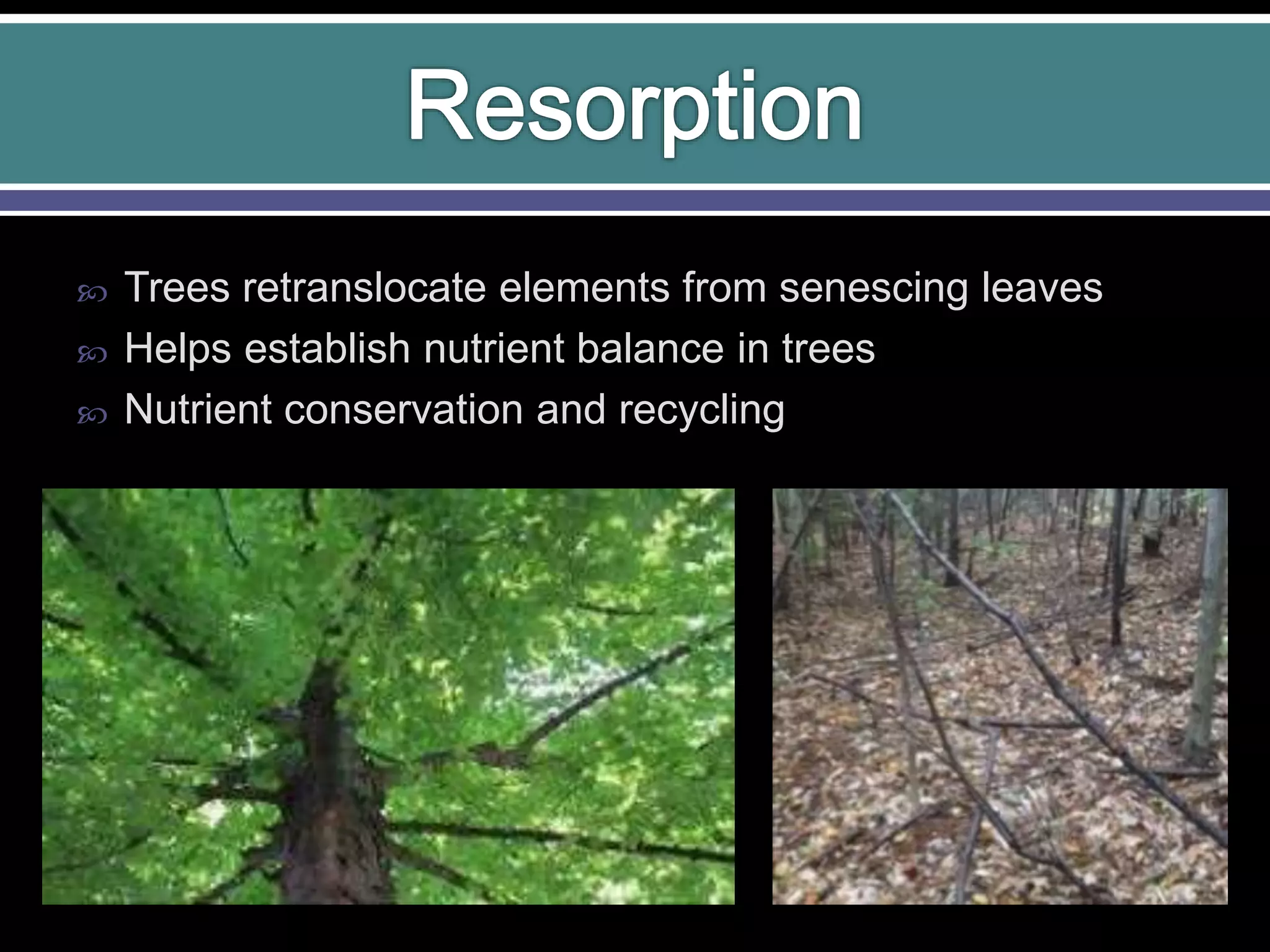
 Trees retranslocate elements from senescing leaves
 Helps establish nutrient balance in trees
 Nutrient conservation and recycling
 What can green leaf concentrations tell us about
limitation?
 Can we see N and P interactions in resorption?
 ARE WE THERE YET?!
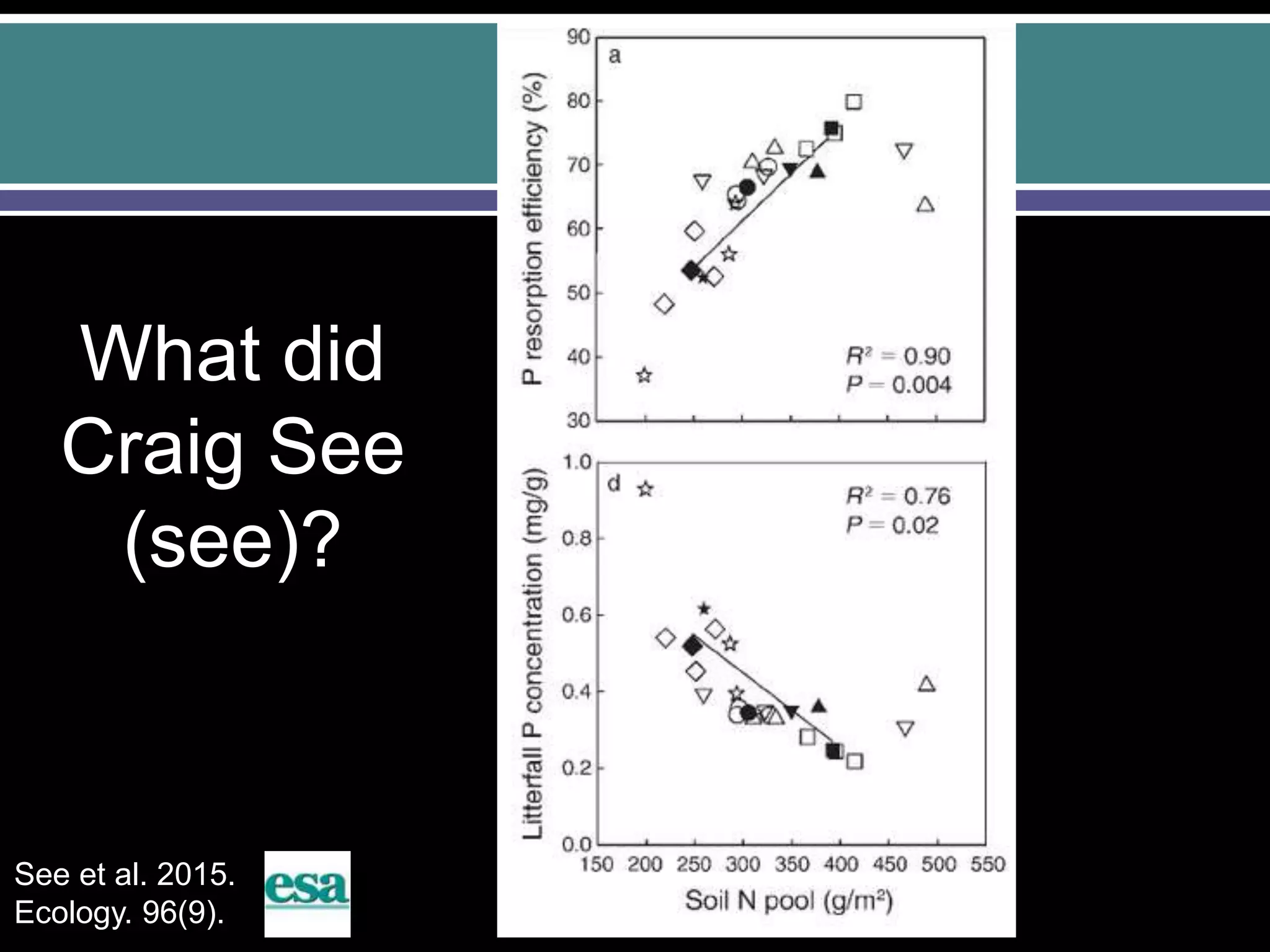
What did
Craig See
(see)?
See et al. 2015.
Ecology. 96(9).
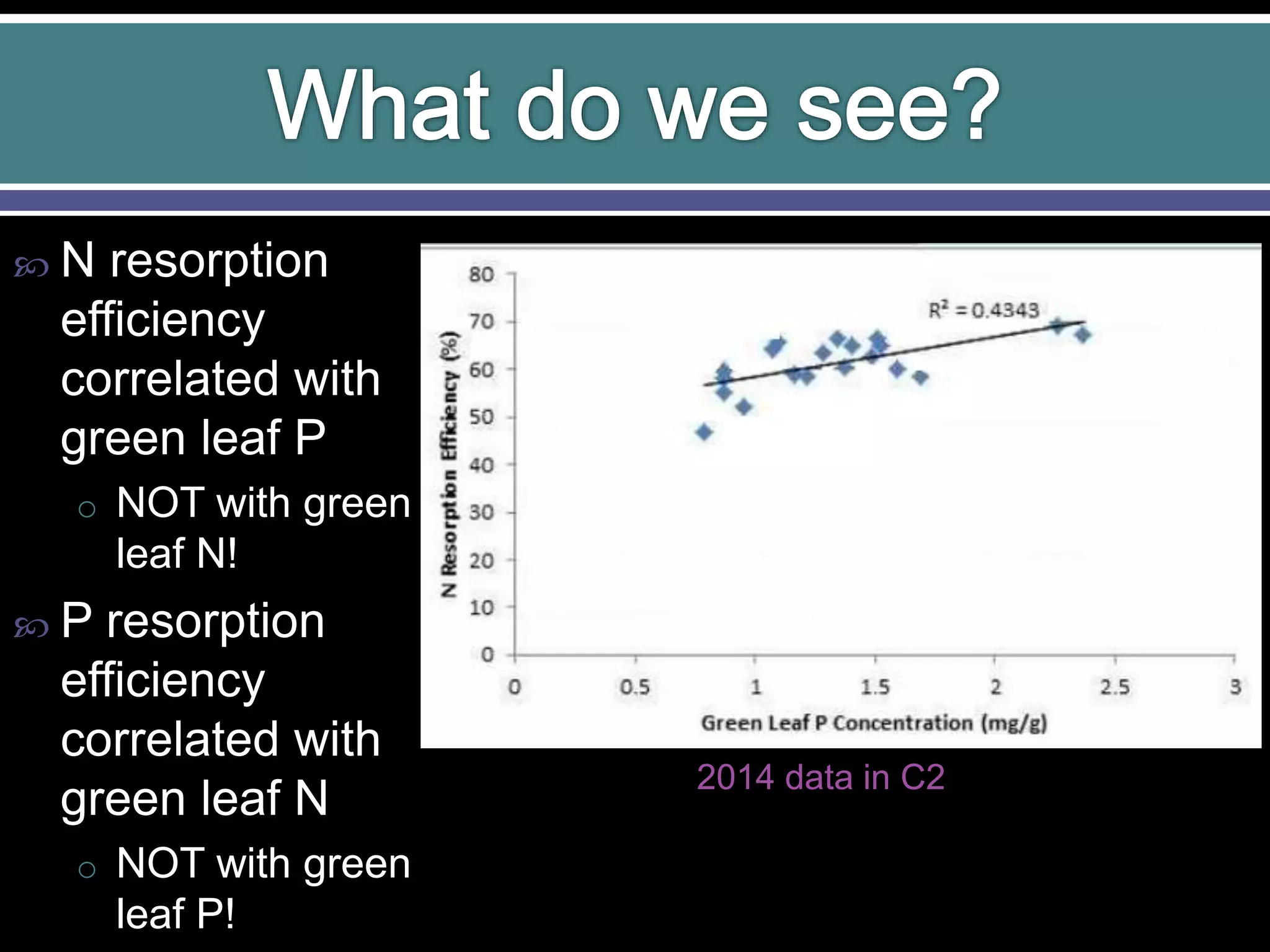
 N resorption
efficiency
correlated with
green leaf P
o NOT with green
leaf N!
 P resorption
efficiency
correlated with
green leaf N
o NOT with green
leaf P!
2014 data in C2
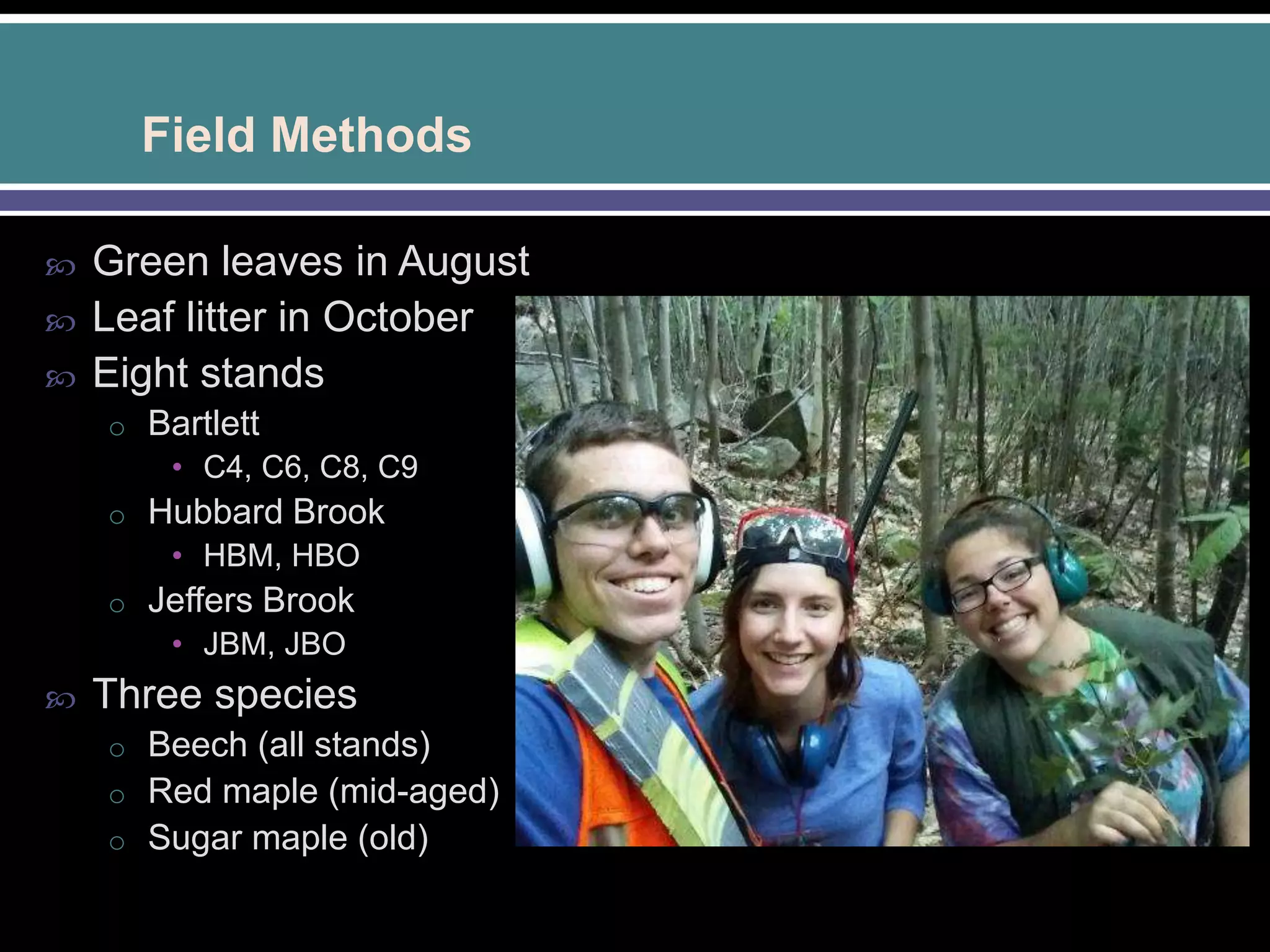
Field Methods
 Green leaves in August
 Leaf litter in October
 Eight stands
o Bartlett
• C4, C6, C8, C9
o Hubbard Brook
• HBM, HBO
o Jeffers Brook
• JBM, JBO
 Three species
o Beech (all stands)
o Red maple (mid-aged)
o Sugar maple (old)
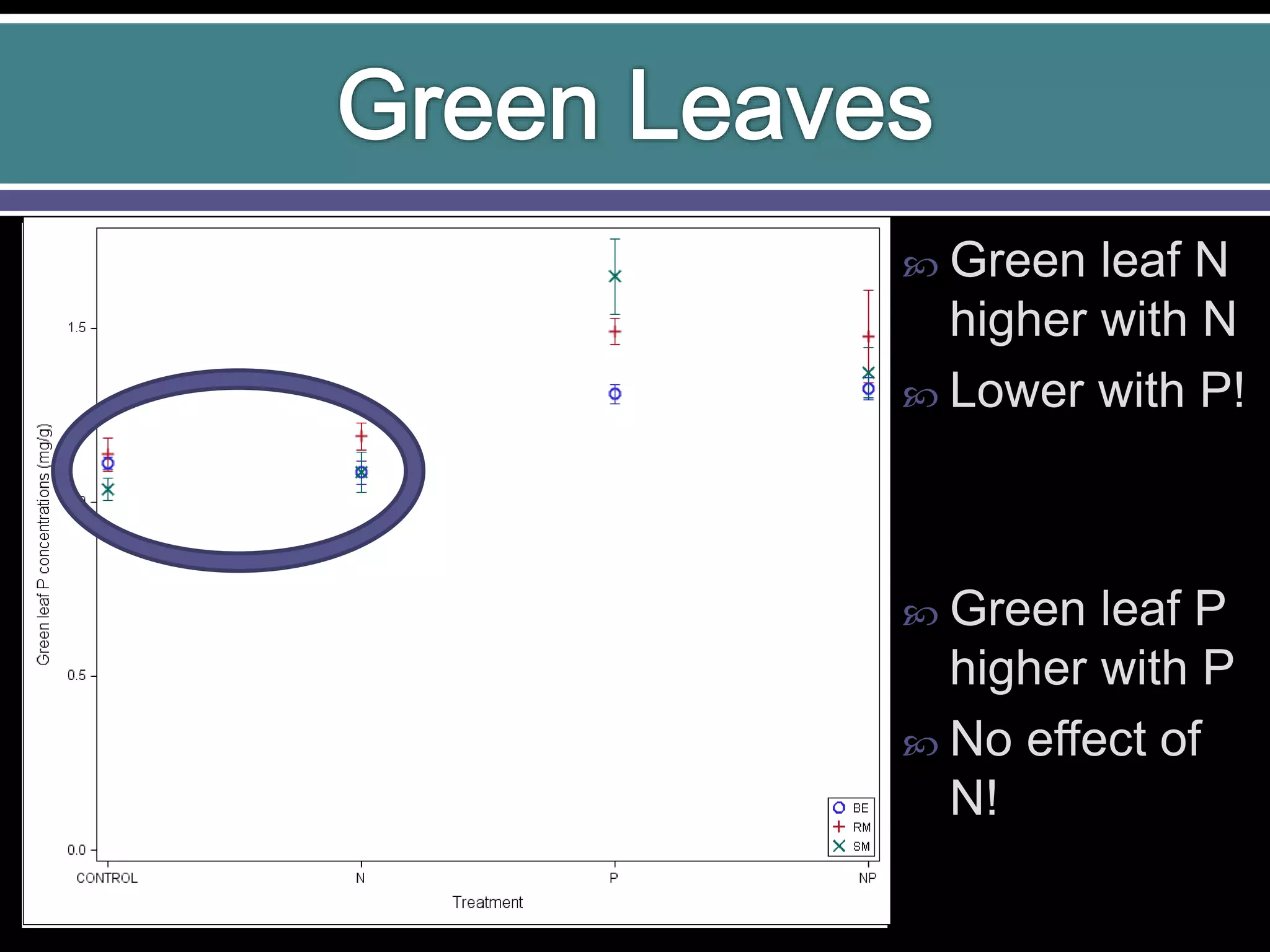
 Green leaf N
higher with N
 Lower with P!
 Green leaf P
higher with P
 No effect of
N!
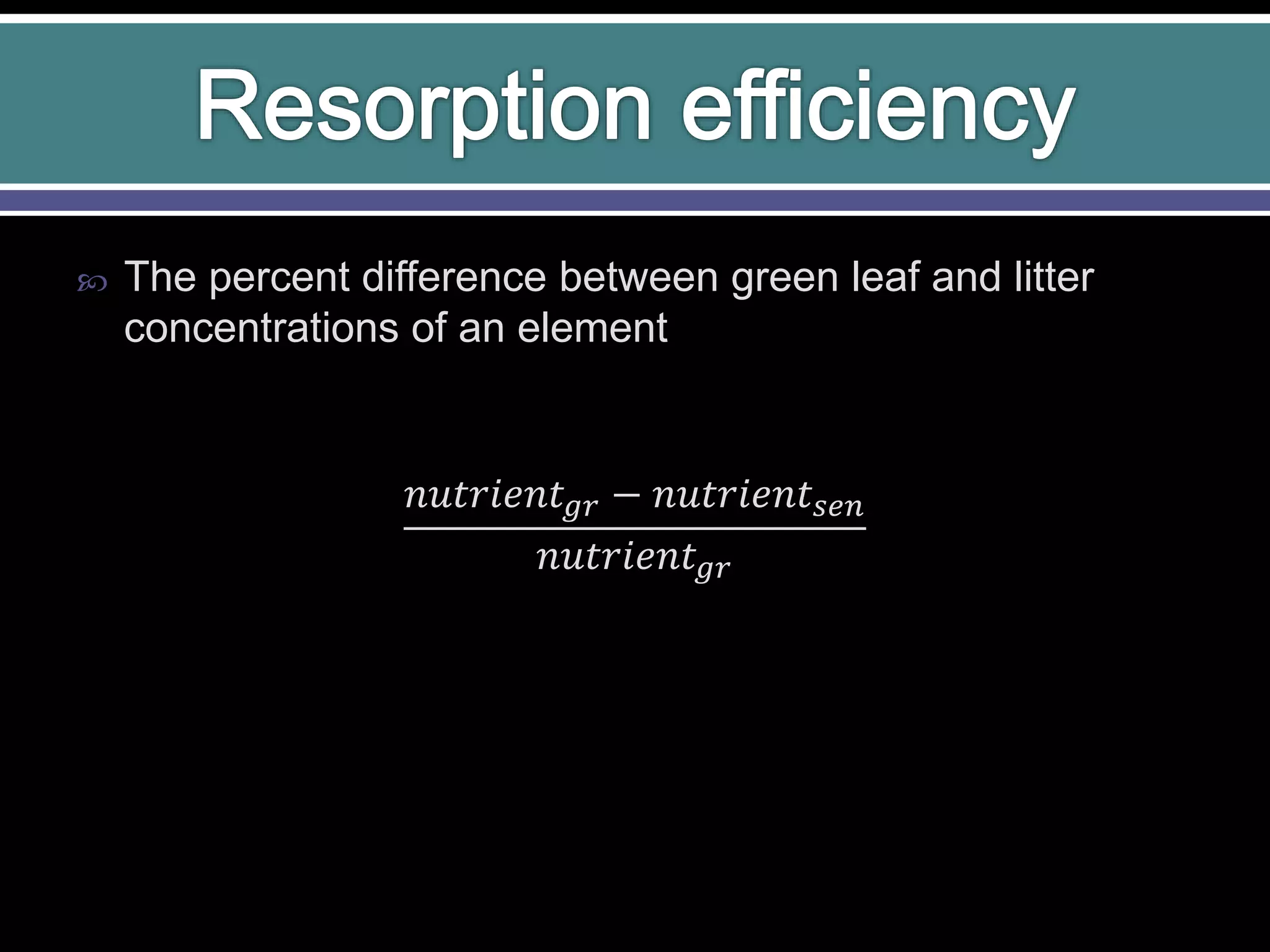
 The percent difference between green leaf and litter
concentrations of an element
𝑛𝑢𝑡𝑟𝑖𝑒𝑛𝑡 𝑔𝑟 − 𝑛𝑢𝑡𝑟𝑖𝑒𝑛𝑡 𝑠𝑒𝑛
𝑛𝑢𝑡𝑟𝑖𝑒𝑛𝑡 𝑔𝑟
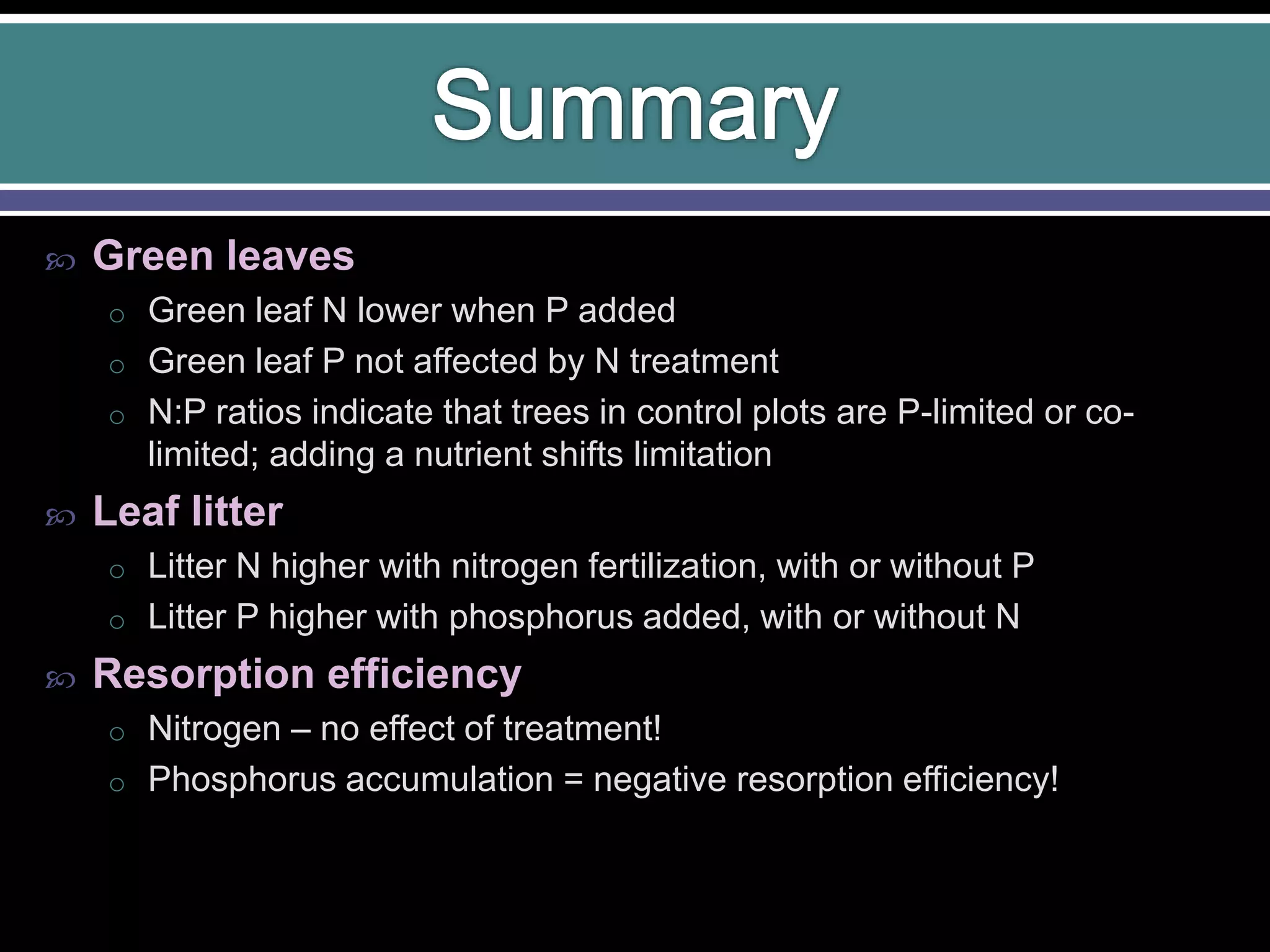
 Green leaves
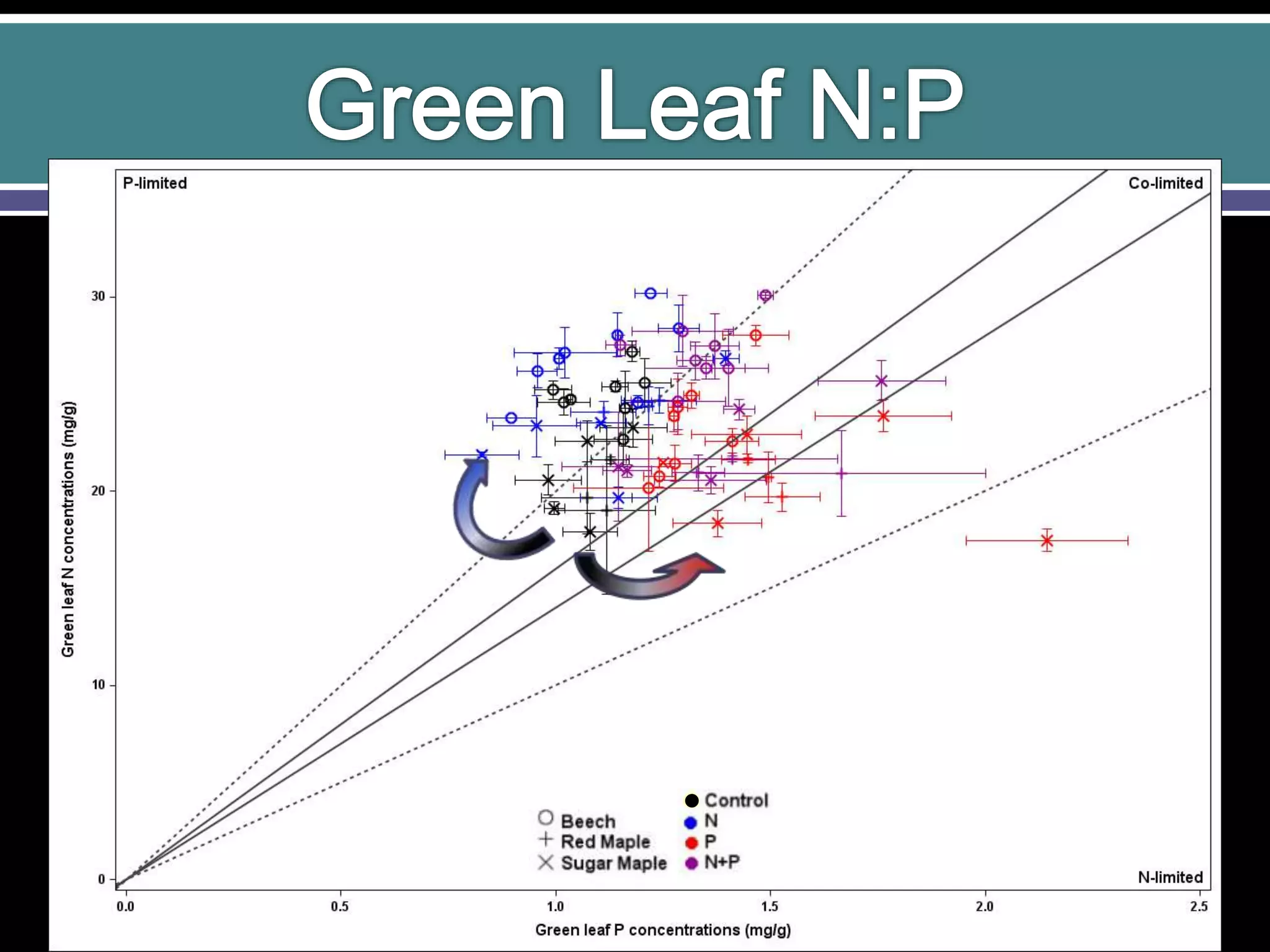
o Green leaf N lower when P added
o Green leaf P not affected by N treatment
o N:P ratios indicate that trees in control plots are P-limited or co-
limited; adding a nutrient shifts limitation
 Leaf litter
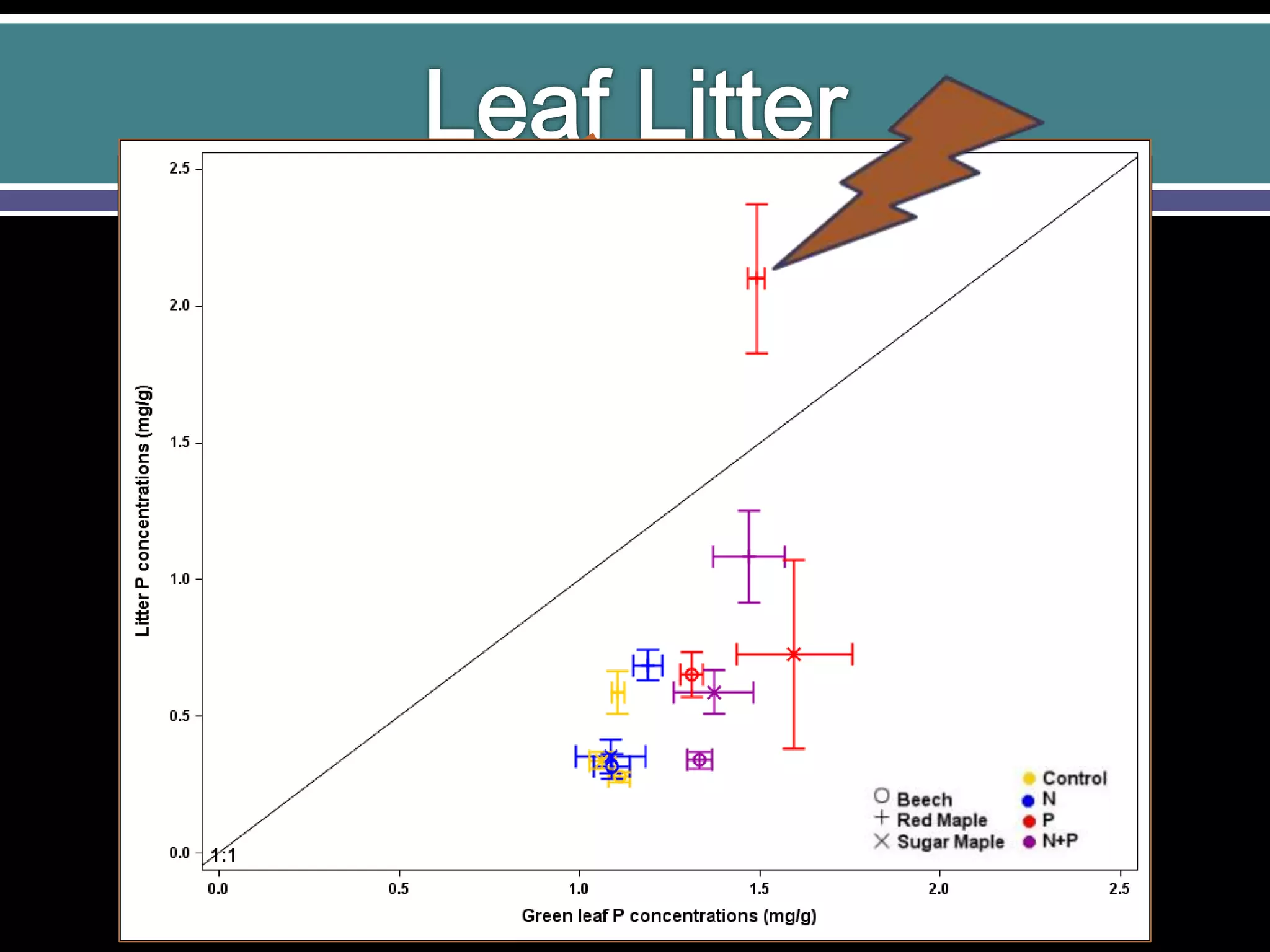
o Litter N higher with nitrogen fertilization, with or without P
o Litter P higher with phosphorus added, with or without N
 Resorption efficiency
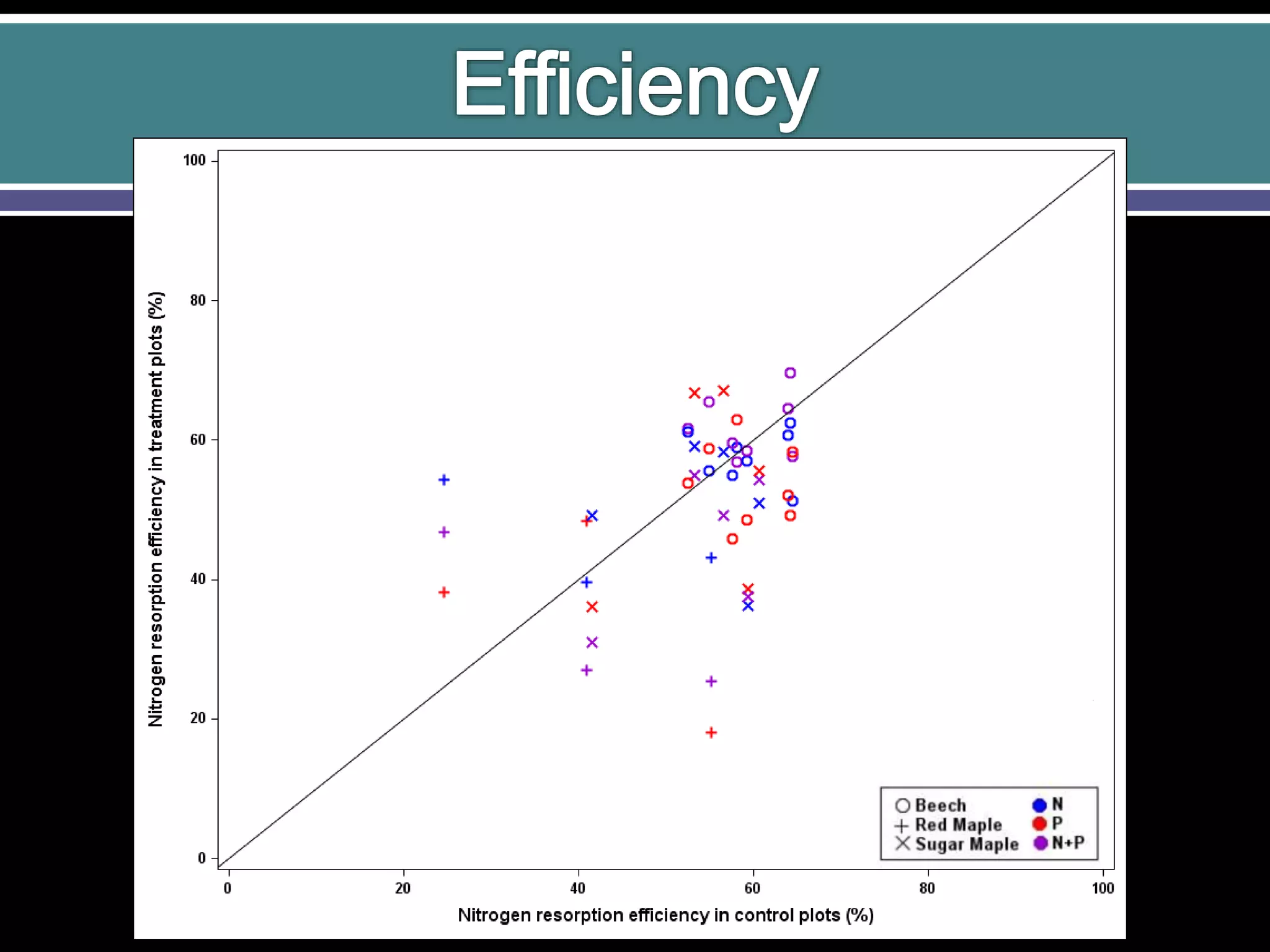
o Nitrogen – no effect of treatment!
o Phosphorus accumulation = negative resorption efficiency!
The B9 bunch and Shoestring
crews, past and present
Ruth Yanai, Mariann Johnston,
Dylan Parry

Foliar nutrient resorption reflects interactions of N and P availablity

  • 1.
  • 2.
     Trees retranslocateelements from senescing leaves  Helps establish nutrient balance in trees  Nutrient conservation and recycling
  • 3.
     What cangreen leaf concentrations tell us about limitation?  Can we see N and P interactions in resorption?  ARE WE THERE YET?!
  • 4.
    What did Craig See (see)? Seeet al. 2015. Ecology. 96(9).
  • 5.
     N resorption efficiency correlatedwith green leaf P o NOT with green leaf N!  P resorption efficiency correlated with green leaf N o NOT with green leaf P! 2014 data in C2
  • 6.
    Field Methods  Greenleaves in August  Leaf litter in October  Eight stands o Bartlett • C4, C6, C8, C9 o Hubbard Brook • HBM, HBO o Jeffers Brook • JBM, JBO  Three species o Beech (all stands) o Red maple (mid-aged) o Sugar maple (old)
  • 7.
     Green leafN higher with N  Lower with P!  Green leaf P higher with P  No effect of N!
  • 10.
     The percentdifference between green leaf and litter concentrations of an element 𝑛𝑢𝑡𝑟𝑖𝑒𝑛𝑡 𝑔𝑟 − 𝑛𝑢𝑡𝑟𝑖𝑒𝑛𝑡 𝑠𝑒𝑛 𝑛𝑢𝑡𝑟𝑖𝑒𝑛𝑡 𝑔𝑟
  • 12.
     Green leaves oGreen leaf N lower when P added o Green leaf P not affected by N treatment o N:P ratios indicate that trees in control plots are P-limited or co- limited; adding a nutrient shifts limitation  Leaf litter o Litter N higher with nitrogen fertilization, with or without P o Litter P higher with phosphorus added, with or without N  Resorption efficiency o Nitrogen – no effect of treatment! o Phosphorus accumulation = negative resorption efficiency!
  • 13.
    The B9 bunchand Shoestring crews, past and present Ruth Yanai, Mariann Johnston, Dylan Parry

Editor's Notes

  • #2 Leave out lab methods Explain graphs better What do we know about N and P interactions based on this? What are 3 takeaway points? Go backwards, which figures support this best? Summary slide
  • #5 Say craig by name.
  • #6 Switch the colors. Switch columns? Write out rho or change symbol cuz they look like p. what do we see here? Interactions! Need objectives slide. Need to let people know more explicitly that this is 2014 results.
  • #7 Don’t talk about species stuff
  • #10 Add text for what people should get out of the figure.
  • #11 Reorder slides so that this is closer to the litter slides. Maybe never even mention proficiency! Just talk about leaf litter, and then efficiency