Quality Control in Nursing Avril Allgood
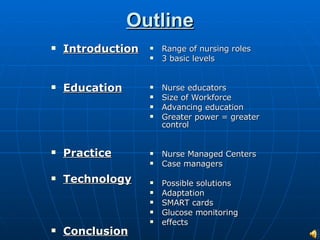
Outline Introduction Education Practice Technology Conclusion Range of nursing roles 3 basic levels Nurse educators Size of Workforce Advancing education Greater power = greater control Nurse Managed Centers Case managers Possible solutions Adaptation SMART cards Glucose monitoring effects
Learning Objectives By the end of this presentation, you should be able to identify: How you currently affect nursing quality Methods of improving quality Levels of control over quality Ways in which you might positively influence nursing quality
Introduction Patient care Educator Manager Recruiter Therapist  Researcher Administrator Case manager The list goes on…
Why are Standards Important?
3 Paths to Quality Education Practice Technology
EDUCATION
Nurse  Educators
 
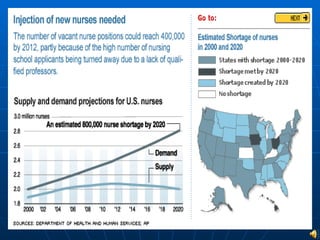
Size DOES  Matter!
Advancing Education
Both the nurse and the community benefit from continued education
PRACTICE
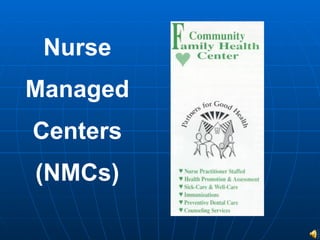
Nurse Managed Centers (NMCs)
Nurse Managed Centers Superior results in: Patient independence Health promotion Stress management Compliance Patient satisfaction Coping skills Functional status Use of preventative services Improved incidence of: ER visits Urgent care visits Repeat hospitalizations
Case Managers
Qualifications At least 3 years of related clinical experience A high degree of intelligence Superior communication and interpersonal skills
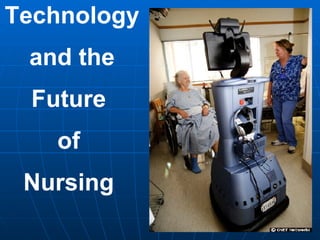
Technology and the Future  of  Nursing
 
 
No,  that’s not why!
 
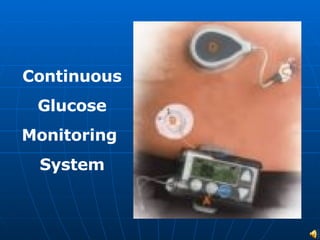
Continuous Glucose Monitoring  System
 
 
CONCLUSION
References Allen, L. (2008). The nursing shortage continues as faculty shortage grows.  Nursing Economics, 26,  35-40. Bower, F. L. & McCollough, C. (2004). Nurse shortage or nursing shortage: Have we missed the real problem?  Nursing Economics, 22,  200-203. Coddington, J. A., & Sands, L. P. (2008). Cost of health care and quality outcomes of patients at nurse-managed clinics.  Nursing Economics, 26,  75-84. Marion, L., O’Sullivan, A. L., Crabtree, K., Fontana, S., & Price, M. M. (2003). The practice doctorate in nursing: Future or fringe?  Topics in Advanced Practice Nursing eJournal, 3 (2). Retrieved October 19, 2005, from  www.medscape.com/viewarticle/453247 Marquis, B. L., & Huston, C. J. (2009).  Leadership roles and management functions in nursing . New York: Lippincott, Williams & Wilkins. Smith, A. P. (2003). Case management: Key to access, quality, and financial success.  Nursing Economics, 21,  237-244.


Question 1 What does the Nurse Reinvestment Act Provide? Loan forgiveness Retirement investment programs Profit sharing None of the above
Answer 1 A) Loan Forgiveness
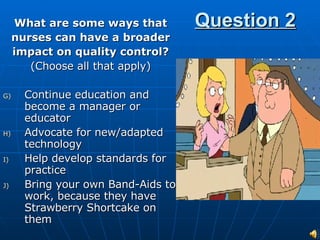
Question 2 What are some ways that nurses can have a broader impact on quality control? (Choose all that apply) Continue education and become a manager or educator Advocate for new/adapted technology Help develop standards for practice Bring your own Band-Aids to work, because they have Strawberry Shortcake on them
Answer 2 A, B, & C Winner!
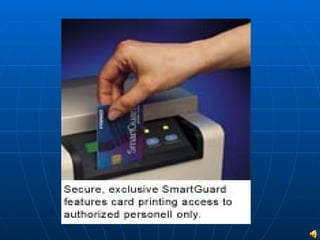
Question 3 What are some  benefits of SMART  cards?  (choose all that  apply) Easily carried for immediate access in an emergency Easily read by anyone Increased accuracy & efficiency Replace space & time-consuming paper charts Improve patients’ self-esteem
Answer 3 A, C, & D You’re a Champion!
Question 4 Factors that affect quality of care include nurse-to-patient ratios, time management, accuracy, and:  (choose all  that apply) Aesthetically pleasing rooms Access to affordable care Staff uniforms Collaboration between healthcare team members Patient involvement
Answer 4 B, D, & E
Last one; I promise! Which types of nurses are involved in  Quality Control? Bedside nurses Case Managers Nurse practitioners Nurse educators All of the above
The Final Solution E) All of the above The End.  We all knew it was coming.
Anyone want to share experiences? Anyone?
Jan?

Quality Control In Nursing

  • 1.
    Quality Control inNursing Avril Allgood
  • 2.
    Outline Introduction EducationPractice Technology Conclusion Range of nursing roles 3 basic levels Nurse educators Size of Workforce Advancing education Greater power = greater control Nurse Managed Centers Case managers Possible solutions Adaptation SMART cards Glucose monitoring effects
  • 3.
    Learning Objectives Bythe end of this presentation, you should be able to identify: How you currently affect nursing quality Methods of improving quality Levels of control over quality Ways in which you might positively influence nursing quality
  • 4.
    Introduction Patient careEducator Manager Recruiter Therapist Researcher Administrator Case manager The list goes on…
  • 5.
  • 6.
  • 7.
    3 Paths toQuality Education Practice Technology
  • 8.
  • 9.
  • 10.
  • 11.
    Size DOES Matter!
  • 12.
  • 13.
    Both the nurseand the community benefit from continued education
  • 14.
  • 15.
  • 16.
    Nurse Managed CentersSuperior results in: Patient independence Health promotion Stress management Compliance Patient satisfaction Coping skills Functional status Use of preventative services Improved incidence of: ER visits Urgent care visits Repeat hospitalizations
  • 17.
  • 18.
    Qualifications At least3 years of related clinical experience A high degree of intelligence Superior communication and interpersonal skills
  • 19.
    Technology and theFuture of Nursing
  • 20.
  • 21.
  • 22.
    No, that’snot why!
  • 23.
  • 24.
  • 25.
  • 26.
  • 27.
  • 28.
    References Allen, L.(2008). The nursing shortage continues as faculty shortage grows. Nursing Economics, 26, 35-40. Bower, F. L. & McCollough, C. (2004). Nurse shortage or nursing shortage: Have we missed the real problem? Nursing Economics, 22, 200-203. Coddington, J. A., & Sands, L. P. (2008). Cost of health care and quality outcomes of patients at nurse-managed clinics. Nursing Economics, 26, 75-84. Marion, L., O’Sullivan, A. L., Crabtree, K., Fontana, S., & Price, M. M. (2003). The practice doctorate in nursing: Future or fringe? Topics in Advanced Practice Nursing eJournal, 3 (2). Retrieved October 19, 2005, from www.medscape.com/viewarticle/453247 Marquis, B. L., & Huston, C. J. (2009). Leadership roles and management functions in nursing . New York: Lippincott, Williams & Wilkins. Smith, A. P. (2003). Case management: Key to access, quality, and financial success. Nursing Economics, 21, 237-244.
  • 29.
    Question 1 Whatdoes the Nurse Reinvestment Act Provide? Loan forgiveness Retirement investment programs Profit sharing None of the above
  • 30.
    Answer 1 A)Loan Forgiveness
  • 31.
    Question 2 Whatare some ways that nurses can have a broader impact on quality control? (Choose all that apply) Continue education and become a manager or educator Advocate for new/adapted technology Help develop standards for practice Bring your own Band-Aids to work, because they have Strawberry Shortcake on them
  • 32.
    Answer 2 A,B, & C Winner!
  • 33.
    Question 3 Whatare some benefits of SMART cards? (choose all that apply) Easily carried for immediate access in an emergency Easily read by anyone Increased accuracy & efficiency Replace space & time-consuming paper charts Improve patients’ self-esteem
  • 34.
    Answer 3 A,C, & D You’re a Champion!
  • 35.
    Question 4 Factorsthat affect quality of care include nurse-to-patient ratios, time management, accuracy, and: (choose all that apply) Aesthetically pleasing rooms Access to affordable care Staff uniforms Collaboration between healthcare team members Patient involvement
  • 36.
  • 37.
    Last one; Ipromise! Which types of nurses are involved in Quality Control? Bedside nurses Case Managers Nurse practitioners Nurse educators All of the above
  • 38.
    The Final SolutionE) All of the above The End. We all knew it was coming.
  • 39.
    Anyone want toshare experiences? Anyone?
  • 40.