Staircases to
Growth
McKINSEY Strategy & Growth
Agenda
• Staircase of Initiatives & Opportunity
• Assembling Platforms of capabilities
• Leading Growth
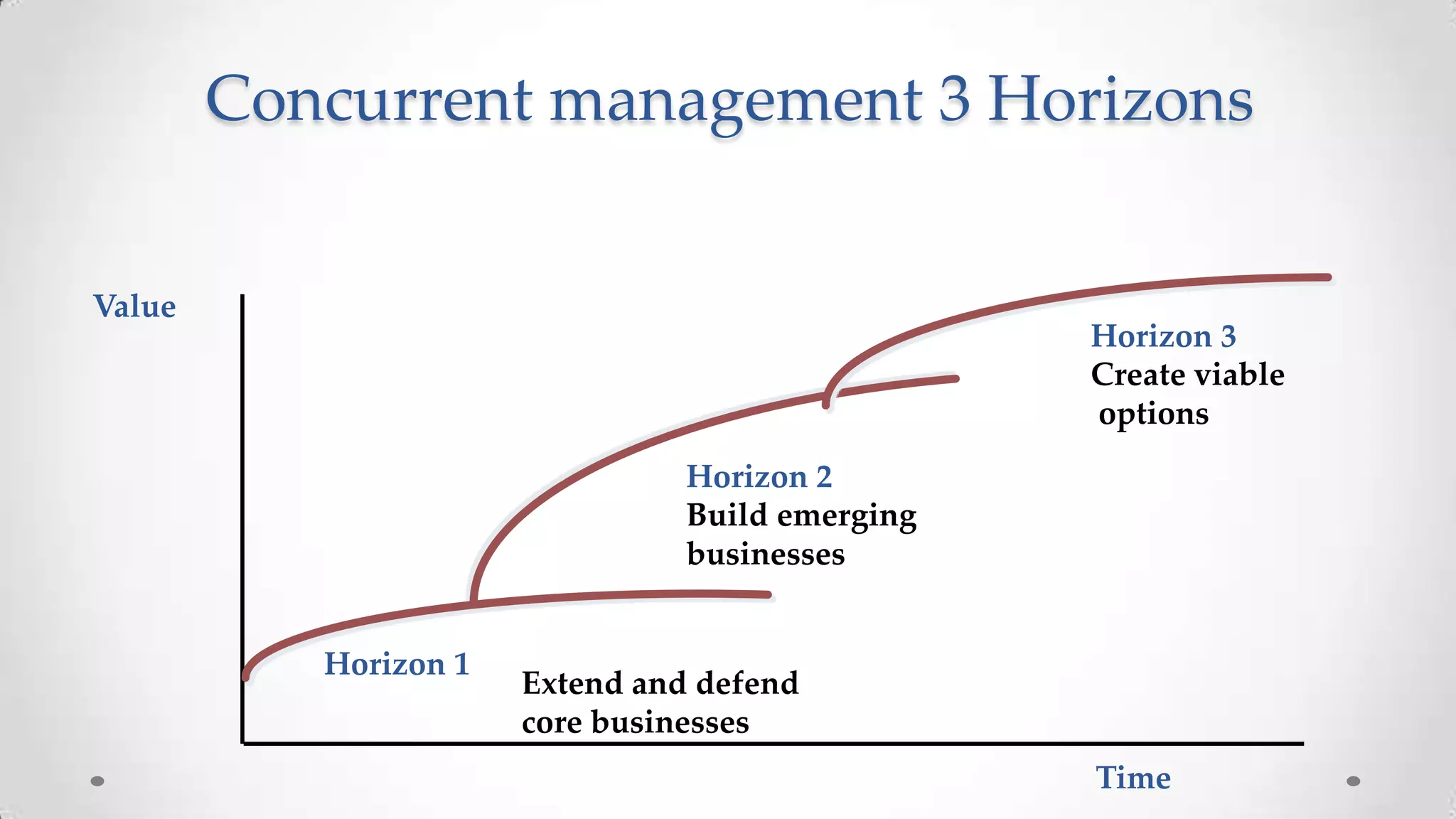
o Concurrent management across 3 Horizons
o Staircases to Growth
• 1. Build new capabilities
• 2. Adapt business model
• 3. Protect the venture
Staircase of Initiatives
• Many low-growth company are slaves to process for
projecting a medium term budget
• Successful growers emphasizes both short term and long term
Vision and Tactics
• They plan within a clear strategy
• Short term steps take advantage to
o build new skills, when new opportunities is open up, they are able to move faster
than competitors
Coca Cola Amatil’s staircase
The Opportunity Pipeline
1. Maximizing existing customer
2. Attracting new customer
3. Innovation of product and services
4. Innovation of value-delivery system
5. Improving industry structure
6. Geographical Expansion
7. Stepping out into new business arenas
7. Stepping
out into new
business
arenas
6.
Geographical
Expansion
5. Improving
industry
structure
4. Innovation
of value-
delivery
system
3. Innovation
of product
and services
2. Attracting
new customer
1.
Maximizing
existing
customer
Disney’s : 7 Degrees of Strategic Freedom
Teenage & Adult
- Home Video
- Games
- Theme parks
Television –
Wonderful World
of Disney
Expand theme park
Promotional
Relationship with
Macdonald’s and
Mattel
-Live Entertainment
(Theater and Sport)
-Cruise Liners
-Resort
-Television ABC
Assembling platforms of capabilities
• To emphasize the
importance of the skills
inherent in an organization's
people and processes
• Perspectives of growth
opportunities Focus to
"skills-based strategy" and
"the core competence of the
corporation“
• The important how to use
capabilities to grow tends to
be narrow and may
reinforce managers'
perception that they are
hindered by having limited
capabilities.
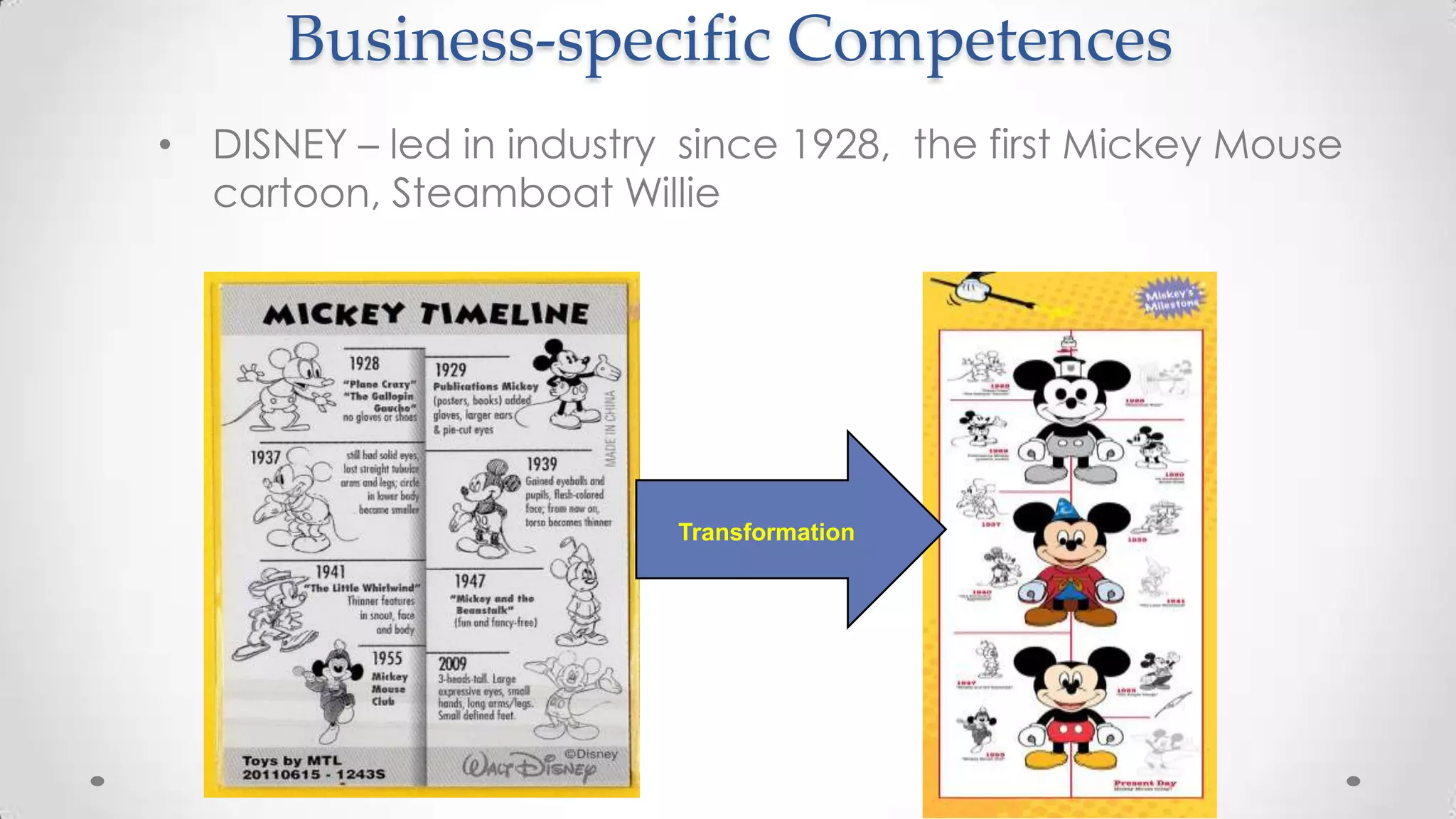
Business-specific Competences
• DISNEY – led in industry since 1928, the first Mickey Mouse
cartoon, Steamboat Willie
Transformation
Growth-enabling skills
• Focusing on
core competences
• Distinguished by their
mastery of more generic
"growth-enabling,"
skills, including making :
acquisitions
financing,
risk management and deal
structuring,
regulatory management,
capital productivity
enhancement.
Privileged assets.
To be valuable , bring competitive advantage
• Brands : Disney
• Networks
• infrastructure
• Information : databases of customers , information-based
marketing company as credit card
• people skills : petroleum
• knowledge-based assets
• company processes.
Special relationships
Relationships are one of great growers' most important
• SAP's products requires technical expertise at every stage of
implementation at growth formula by uses partnerships
• Hardware that runs its software to sell the product and provide
technical support
(IBM, Compaq, Bull, or NEC,)
• Systems consultants with the software developers that provide
complementary business- worldwide standard in integrated
business software
(Price Waterhouse, Andersen Consulting, or Ernst & Young)
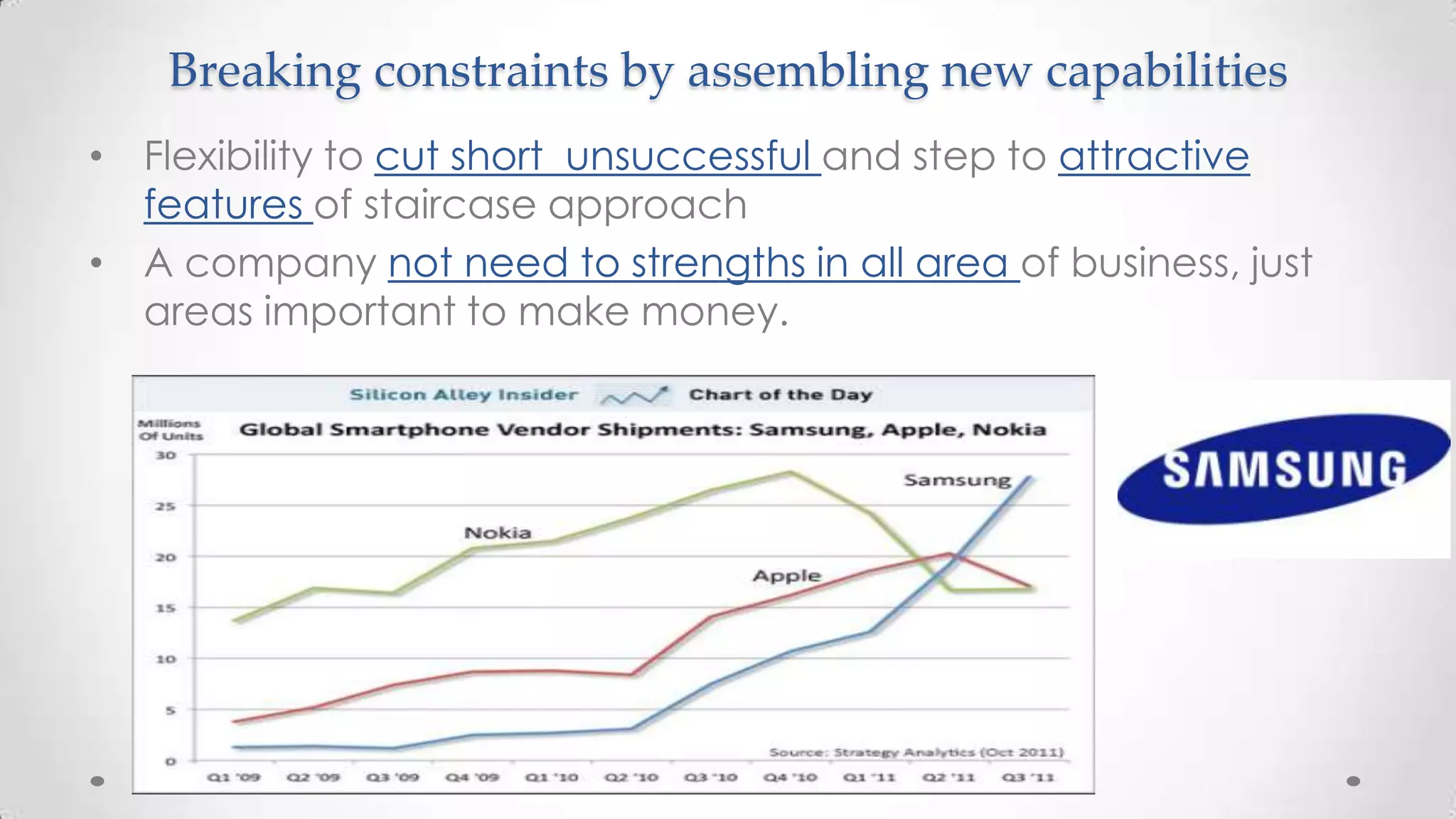
Breaking constraints by assembling new capabilities
• Flexibility to cut short unsuccessful and step to attractive
features of staircase approach
• A company not need to strengths in all area of business, just
areas important to make money.
Flexible evolution of a business
• “Stick to the knitting”
and “Focus on core
competences”
are prescriptions that
require careful
interpretation as
record of Disney’s
evolution.
Time
Value
Horizon 3
Create viable
options
Horizon 2
Build emerging
businesses
Horizon 1
Extend and defend
core businesses
Concurrent management 3 Horizons
3 Horizons of growth
Horizon 1
Extend and defend
core businesses
Horizon 2
Build emerging
businesses
Horizon 3
Create viable
options
Types of
businesses
Core businesses
underpinning
current profitability
New businesses and
extensions of existing
businesses fuelling
revenue growth
Options to build
future businesses
Management
imperative
Unlock
incremental
growth, then manage
for value as the
business declines
Exercise options,
assemble required
capabilities, and drive
business-building
initiatives
Source options (ideas,
relationships, assets) for
future growth and test
viability of business
concepts
Primary focus Bottom-line
performance
and profitability
Top-line growth and
capital efficiency
Future potential and
robustness across
multiple scenarios
Leading Growth
• Only 10 percent of companies with above-average
growth will sustain it for more than ten years.
• A sound growth strategy is important. But it is a long
way from a successful growth program.
1.Why do so few growth programs succeed ?
2.And what can leaders do to change the odds in their
favor?
Reason for failure
• Many management teams do not integrate and balance the
inspirational, strategic, and organizational imperatives of growth.
Some executives begin in the wrong place.
• Executives find it difficult to concurrently manage initiatives with
different pay-off horizons
1.Why do so few growth programs succeed ?
Leadership across three
dimensions of growth
1.Commit to growth
2.Build growth engines
3.Cultivate entrepreneuship
2.And what can leaders do to change the odds in their favor ?

Staircases to Growth

  • 1.
  • 2.
    Agenda • Staircase ofInitiatives & Opportunity • Assembling Platforms of capabilities • Leading Growth o Concurrent management across 3 Horizons o Staircases to Growth • 1. Build new capabilities • 2. Adapt business model • 3. Protect the venture
  • 3.
    Staircase of Initiatives •Many low-growth company are slaves to process for projecting a medium term budget • Successful growers emphasizes both short term and long term Vision and Tactics • They plan within a clear strategy • Short term steps take advantage to o build new skills, when new opportunities is open up, they are able to move faster than competitors
  • 4.
  • 5.
    The Opportunity Pipeline 1.Maximizing existing customer 2. Attracting new customer 3. Innovation of product and services 4. Innovation of value-delivery system 5. Improving industry structure 6. Geographical Expansion 7. Stepping out into new business arenas
  • 6.
    7. Stepping out intonew business arenas 6. Geographical Expansion 5. Improving industry structure 4. Innovation of value- delivery system 3. Innovation of product and services 2. Attracting new customer 1. Maximizing existing customer Disney’s : 7 Degrees of Strategic Freedom Teenage & Adult - Home Video - Games - Theme parks Television – Wonderful World of Disney Expand theme park Promotional Relationship with Macdonald’s and Mattel -Live Entertainment (Theater and Sport) -Cruise Liners -Resort -Television ABC
  • 7.
    Assembling platforms ofcapabilities • To emphasize the importance of the skills inherent in an organization's people and processes • Perspectives of growth opportunities Focus to "skills-based strategy" and "the core competence of the corporation“ • The important how to use capabilities to grow tends to be narrow and may reinforce managers' perception that they are hindered by having limited capabilities.
  • 8.
    Business-specific Competences • DISNEY– led in industry since 1928, the first Mickey Mouse cartoon, Steamboat Willie Transformation
  • 9.
    Growth-enabling skills • Focusingon core competences • Distinguished by their mastery of more generic "growth-enabling," skills, including making : acquisitions financing, risk management and deal structuring, regulatory management, capital productivity enhancement.
  • 10.
    Privileged assets. To bevaluable , bring competitive advantage • Brands : Disney • Networks • infrastructure • Information : databases of customers , information-based marketing company as credit card • people skills : petroleum • knowledge-based assets • company processes.
  • 11.
    Special relationships Relationships areone of great growers' most important • SAP's products requires technical expertise at every stage of implementation at growth formula by uses partnerships • Hardware that runs its software to sell the product and provide technical support (IBM, Compaq, Bull, or NEC,) • Systems consultants with the software developers that provide complementary business- worldwide standard in integrated business software (Price Waterhouse, Andersen Consulting, or Ernst & Young)
  • 12.
    Breaking constraints byassembling new capabilities • Flexibility to cut short unsuccessful and step to attractive features of staircase approach • A company not need to strengths in all area of business, just areas important to make money.
  • 13.
    Flexible evolution ofa business • “Stick to the knitting” and “Focus on core competences” are prescriptions that require careful interpretation as record of Disney’s evolution.
  • 14.
    Time Value Horizon 3 Create viable options Horizon2 Build emerging businesses Horizon 1 Extend and defend core businesses Concurrent management 3 Horizons
  • 15.
    3 Horizons ofgrowth Horizon 1 Extend and defend core businesses Horizon 2 Build emerging businesses Horizon 3 Create viable options Types of businesses Core businesses underpinning current profitability New businesses and extensions of existing businesses fuelling revenue growth Options to build future businesses Management imperative Unlock incremental growth, then manage for value as the business declines Exercise options, assemble required capabilities, and drive business-building initiatives Source options (ideas, relationships, assets) for future growth and test viability of business concepts Primary focus Bottom-line performance and profitability Top-line growth and capital efficiency Future potential and robustness across multiple scenarios
  • 16.
    Leading Growth • Only10 percent of companies with above-average growth will sustain it for more than ten years. • A sound growth strategy is important. But it is a long way from a successful growth program. 1.Why do so few growth programs succeed ? 2.And what can leaders do to change the odds in their favor?
  • 17.
    Reason for failure •Many management teams do not integrate and balance the inspirational, strategic, and organizational imperatives of growth. Some executives begin in the wrong place. • Executives find it difficult to concurrently manage initiatives with different pay-off horizons 1.Why do so few growth programs succeed ?
  • 18.
    Leadership across three dimensionsof growth 1.Commit to growth 2.Build growth engines 3.Cultivate entrepreneuship 2.And what can leaders do to change the odds in their favor ?