Leadership with Trust
TATA GROUP SUSTAINABILITY STRATEGY
Ashish V Singh
Graduate Business School
2997755
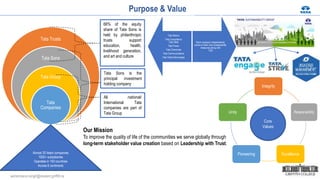
Tata Trusts
Tata Sons
Tata Group
Tata
Companies
Almost 30 listed companies
1000+ subsidiaries
Operates in 100 countries
Across 6 continents
All national/
International Tata
companies are part of
Tata Group
Tata Sons is the
principal investment
holding company
66% of the equity
share of Tata Sons is
held by philanthropic
trusts support
education, health,
livelihood generation,
and art and culture
Tata Motors
Tata Consultancy
Tata Steel
Tata Power
Tata Chemicals
Tata Communications
Tata Global Beverages
Each company independently
works on their core Sustainability
measures along with
TSG
Integrity
Responsibility
ExcellencePioneering
Unity
Core
Values
Our Mission
To improve the quality of life of the communities we serve globally through
long-term stakeholder value creation based on Leadership with Trust.
Purpose & Value
ashishvarun.singh@student.griffith.ie
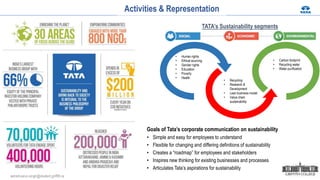
TATA’s Sustainability segments
Goals of Tata’s corporate communication on sustainability
• Simple and easy for employees to understand
• Flexible for changing and differing definitions of sustainability
• Creates a “roadmap” for employees and stakeholders
• Inspires new thinking for existing businesses and processes
• Articulates Tata’s aspirations for sustainability
Activities & Representation
ashishvarun.singh@student.griffith.ie
• Human rights
• Ethical sourcing
• Gender rights
• Education
• Poverty
• Health
• Recycling
• Research &
Development
• Lean business model
• Value chain
sustainability
• Carbon footprint
• Recycling water
• Water purification
Sustainable Innovation
ashishvarun.singh@student.griffith.ie
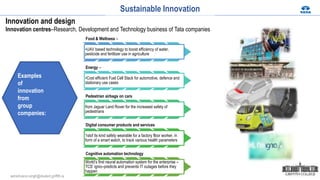
Food & Wellness –
•UAV based technology to boost efficiency of water,
pesticide and fertilizer use in agriculture
Energy –
•Cost efficient Fuel Cell Stack for automotive, defence and
stationary use cases
Pedestrian airbags on cars
from Jaguar Land Rover for the increased safety of
pedestrians
Digital consumer products and services
1stof its kind safety wearable for a factory floor worker, in
form of a smart watch, to track various health parameters
Cognitive automation technology
World’s first neural automation system for the enterprise –
TCS’ ignio–predicts and prevents IT outages before they
happen
Innovation and design
Innovation centres–Research, Development and Technology business of Tata companies
Examples
of
innovation
from
group
companies:
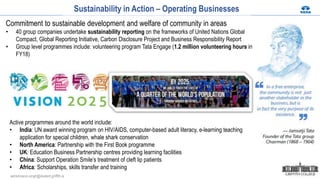
Sustainability in Action – Operating Businesses
Commitment to sustainable development and welfare of community in areas
• 40 group companies undertake sustainability reporting on the frameworks of United Nations Global
Compact, Global Reporting Initiative, Carbon Disclosure Project and Business Responsibility Report
• Group level programmes include: volunteering program Tata Engage (1.2 million volunteering hours in
FY18)
Active programmes around the world include:
• India: UN award winning program on HIV/AIDS, computer-based adult literacy, e-learning teaching
application for special children, whale shark conservation
• North America: Partnership with the First Book programme
• UK: Education Business Partnership centres providing learning facilities
• China: Support Operation Smile’s treatment of cleft lip patients
• Africa: Scholarships, skills transfer and training
ashishvarun.singh@student.griffith.ie
Challenges & Recommendations
• Diverse business nature
Calls for measures in all areas they operate.
• Global presence
a) Dynamic global economy poses threat of revenue fluctuations
which can impede contribution to sustainable & community activities.
b) Each country they operate have their own social, economic & environmental issues.
• Sustainability measurement
Tata council for community initiatives innovated TATA INDEX to assess
sustainability. Its evolving in collaboration with United Nations Development Program.
Recommendations
• Simplify Tata’s internal definition of sustainability
• Establish a “multi-local” strategy tailored to the unique challenges and opportunities of each country and business
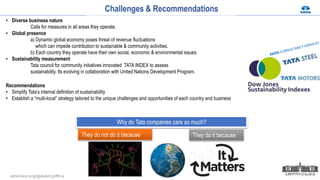
Why do Tata companies care so much?
They do not do it because They do it because
ashishvarun.singh@student.griffith.ie
References
• Sustainability Challenges | Tata Steel in Europe (no date). Available at:
https://www.tatasteeleurope.com/en/sustainability/sustainability%E2%80%93challenges.
• Tata releases report on contribution to Sustainable Development Goals (no date). Available at: https://www.tata.com/newsroom/tata-
group-report-sustainable-development-goals.
• Tata Sustainability Group (no date). Available at: http://www.tatasustainability.com/aboutTSG.aspx.
• ‘Tata_Group_presentation.pdf’ (no date). Available at: http://www.tatawestside.com/pdf/Tata_Group_presentation.pdf
• ‘THE TATA WAY: EVOLVING AND EXECUTING SUSTAINABLE BUSINESS STRATEGIES •’ (no date). Available at:
https://iveybusinessjournal.com/publication/the-tata-way-evolving-and-executing-sustainable-business-strategies.
• Victoria, A. (2019) ‘Sustainable development’. doi: 10.13140/rg.2.2.16460.46720.
ashishvarun.singh@student.griffith.ie

Tata Group Sustainability Strategy

  • 1.
    Leadership with Trust TATAGROUP SUSTAINABILITY STRATEGY Ashish V Singh Graduate Business School 2997755
  • 2.
    Tata Trusts Tata Sons TataGroup Tata Companies Almost 30 listed companies 1000+ subsidiaries Operates in 100 countries Across 6 continents All national/ International Tata companies are part of Tata Group Tata Sons is the principal investment holding company 66% of the equity share of Tata Sons is held by philanthropic trusts support education, health, livelihood generation, and art and culture Tata Motors Tata Consultancy Tata Steel Tata Power Tata Chemicals Tata Communications Tata Global Beverages Each company independently works on their core Sustainability measures along with TSG Integrity Responsibility ExcellencePioneering Unity Core Values Our Mission To improve the quality of life of the communities we serve globally through long-term stakeholder value creation based on Leadership with Trust. Purpose & Value ashishvarun.singh@student.griffith.ie
  • 3.
    TATA’s Sustainability segments Goalsof Tata’s corporate communication on sustainability • Simple and easy for employees to understand • Flexible for changing and differing definitions of sustainability • Creates a “roadmap” for employees and stakeholders • Inspires new thinking for existing businesses and processes • Articulates Tata’s aspirations for sustainability Activities & Representation ashishvarun.singh@student.griffith.ie • Human rights • Ethical sourcing • Gender rights • Education • Poverty • Health • Recycling • Research & Development • Lean business model • Value chain sustainability • Carbon footprint • Recycling water • Water purification
  • 4.
    Sustainable Innovation ashishvarun.singh@student.griffith.ie Food &Wellness – •UAV based technology to boost efficiency of water, pesticide and fertilizer use in agriculture Energy – •Cost efficient Fuel Cell Stack for automotive, defence and stationary use cases Pedestrian airbags on cars from Jaguar Land Rover for the increased safety of pedestrians Digital consumer products and services 1stof its kind safety wearable for a factory floor worker, in form of a smart watch, to track various health parameters Cognitive automation technology World’s first neural automation system for the enterprise – TCS’ ignio–predicts and prevents IT outages before they happen Innovation and design Innovation centres–Research, Development and Technology business of Tata companies Examples of innovation from group companies:
  • 5.
    Sustainability in Action– Operating Businesses Commitment to sustainable development and welfare of community in areas • 40 group companies undertake sustainability reporting on the frameworks of United Nations Global Compact, Global Reporting Initiative, Carbon Disclosure Project and Business Responsibility Report • Group level programmes include: volunteering program Tata Engage (1.2 million volunteering hours in FY18) Active programmes around the world include: • India: UN award winning program on HIV/AIDS, computer-based adult literacy, e-learning teaching application for special children, whale shark conservation • North America: Partnership with the First Book programme • UK: Education Business Partnership centres providing learning facilities • China: Support Operation Smile’s treatment of cleft lip patients • Africa: Scholarships, skills transfer and training ashishvarun.singh@student.griffith.ie
  • 6.
    Challenges & Recommendations •Diverse business nature Calls for measures in all areas they operate. • Global presence a) Dynamic global economy poses threat of revenue fluctuations which can impede contribution to sustainable & community activities. b) Each country they operate have their own social, economic & environmental issues. • Sustainability measurement Tata council for community initiatives innovated TATA INDEX to assess sustainability. Its evolving in collaboration with United Nations Development Program. Recommendations • Simplify Tata’s internal definition of sustainability • Establish a “multi-local” strategy tailored to the unique challenges and opportunities of each country and business Why do Tata companies care so much? They do not do it because They do it because ashishvarun.singh@student.griffith.ie
  • 7.
    References • Sustainability Challenges| Tata Steel in Europe (no date). Available at: https://www.tatasteeleurope.com/en/sustainability/sustainability%E2%80%93challenges. • Tata releases report on contribution to Sustainable Development Goals (no date). Available at: https://www.tata.com/newsroom/tata- group-report-sustainable-development-goals. • Tata Sustainability Group (no date). Available at: http://www.tatasustainability.com/aboutTSG.aspx. • ‘Tata_Group_presentation.pdf’ (no date). Available at: http://www.tatawestside.com/pdf/Tata_Group_presentation.pdf • ‘THE TATA WAY: EVOLVING AND EXECUTING SUSTAINABLE BUSINESS STRATEGIES •’ (no date). Available at: https://iveybusinessjournal.com/publication/the-tata-way-evolving-and-executing-sustainable-business-strategies. • Victoria, A. (2019) ‘Sustainable development’. doi: 10.13140/rg.2.2.16460.46720. ashishvarun.singh@student.griffith.ie