Peak flow meter
What is a peak flow meter?

To use a peak flow meter your child should
follow these steps:

A peak flow meter is a device that measures
how well air moves out of the lungs. Many
different types of meters are available.

1. Place the marker at the bottom of the
scale.
2. Stand up or sit up.
3. Take a deep breath.
4. Put the meter in the mouth and close the
lips around the mouthpiece. Do not put
the tongue inside the hole. Do not cover
the hole on the back end of the peak
flow meter when holding it.
5. Blow out as hard and as fast as possible.
Don’t cough or huff into the peak flow
meter, as this will give a false reading.

A peak flow meter is used to check your
child’s asthma, as a thermometer is used to
check a temperature. During an asthma
episode the airways in the lungs become
narrow and the peak flow number may be
low, showing that air is not moving easily
through the lungs.
Using a peak flow meter can also help you
and your child’s doctor:
•
•
•

decide if the Asthma Action Plan is
working well
decide when to add or stop medicine
decide when to seek emergency care

How should my child use a peak
flow meter?

6. Write down the number from the meter.
7. Repeat steps 1 through 6 two more
times.
8. Write the best (highest) of the 3 numbers
in your child’s peak flow diary every
day, or as instructed by the doctor.

Be sure your child tries to do his or her best
every time. The reading you see on the
meter depends on your child’s effort.

Peak flow meter
Page 1 of 3
What should my child’s peak flow
number be?
Your child’s number can be determined
from predicted normal peak flow values for
people of the same age and height. See the
chart at the end of this sheet for average
peak flows for healthy children and
teenagers.

Red Zone (less than 50 percent of your
child’s predicted number) signals an
emergency. Your child may have signs of
difficult breathing, retractions (skin sucking
in with each breath), trouble walking or
talking, or the medicines may not be
working. Follow the Red Zone plan.

When should I call the clinic?

Your health care professional can also
determine your child’s peak flow number
based on a personal baseline. In this case
your doctor will work with you to determine
the peak flow numbers.

•

Your child is in the Yellow Zone for
more than 12 to 24 hours.

•

Symptoms are getting worse.

•

Your child is in the Red Zone.

How does the peak flow zone
system work?

When should I call 911?

Once you know your child’s predicted peak
flow number, the doctor can use it to help
put together an Asthma Action Plan. (See
Asthma Action Plan.) The peak flow
numbers on the Asthma Action Plan are set
up like a traffic light. This will help you
know what to do when your child’s peak
flow number changes.
Green Zone (80 to 100 percent of your
child’s predicted number) signals all clear.
Your child is able to do usual activities and
sleep without asthma symptoms such as
cough, wheeze, shortness of breath, or chest
tightness. Follow the Green Zone plan.
Yellow Zone (50 to 80 percent of your
child’s predicted number) signals caution.
Your child has warning signs of an asthma
episode that may include cough, wheeze,
shortness of breath, chest tightness, or runny
nose. Your child may have trouble sleeping
through the night. Follow the Yellow Zone
plan.

•

Your child is having trouble walking or
talking.

•

Your child’s fingernails or lips are blue
or gray.

•

You are worried about how your child
will get through the next 30 minutes.

•

Your child stops breathing.

Questions?
This sheet is not specific to your child but
provides general information. If you have
any questions, please call the clinic.
For more reading material about this and
other health topics, please call or visit the
Family Resource Center library, or visit our
Web site: www.childrensmn.org.

Peak flow meter
Page 2 of 3
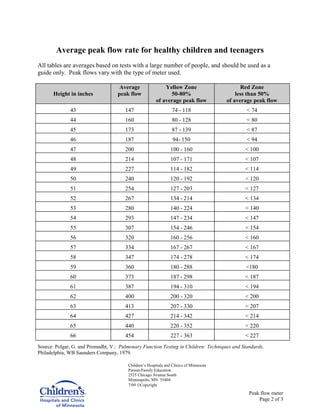
Average peak flow rate for healthy children and teenagers
All tables are averages based on tests with a large number of people, and should be used as a
guide only. Peak flows vary with the type of meter used.

Height in inches

Average
peak flow

Yellow Zone
50-80%
of average peak flow

Red Zone
less than 50%
of average peak flow

43

147

74 - 118

< 74

44

160

80 - 128

< 80

45

173

87 - 139

< 87

46

187

94- 150

< 94

47

200

100 - 160

< 100

48

214

107 - 171

< 107

49

227

114 - 182

< 114

50

240

120 - 192

< 120

51

254

127 - 203

< 127

52

267

134 - 214

< 134

53

280

140 - 224

< 140

54

293

147 - 234

< 147

55

307

154 - 246

< 154

56

320

160 - 256

< 160

57

334

167 - 267

< 167

58

347

174 - 278

< 174

59

360

180 - 288

<180

60

373

187 - 298

< 187

61

387

194 - 310

< 194

62

400

200 - 320

< 200

63

413

207 - 330

< 207

64

427

214 - 342

< 214

65

440

220 - 352

< 220

66

454

227 - 363

< 227

Source: Polgar, G. and Promadht, V.: Pulmonary Function Testing in Children: Techniques and Standards,
Philadelphia, WB Saunders Company, 1979.
Children’s Hospitals and Clinics of Minnesota
Patient/Family Education
2525 Chicago Avenue South
Minneapolis, MN 55404
7/09 ©Copyright

Peak flow meter
Page 2 of 3

How to use a Peak Flow Meter

  • 1.
    Peak flow meter Whatis a peak flow meter? To use a peak flow meter your child should follow these steps: A peak flow meter is a device that measures how well air moves out of the lungs. Many different types of meters are available. 1. Place the marker at the bottom of the scale. 2. Stand up or sit up. 3. Take a deep breath. 4. Put the meter in the mouth and close the lips around the mouthpiece. Do not put the tongue inside the hole. Do not cover the hole on the back end of the peak flow meter when holding it. 5. Blow out as hard and as fast as possible. Don’t cough or huff into the peak flow meter, as this will give a false reading. A peak flow meter is used to check your child’s asthma, as a thermometer is used to check a temperature. During an asthma episode the airways in the lungs become narrow and the peak flow number may be low, showing that air is not moving easily through the lungs. Using a peak flow meter can also help you and your child’s doctor: • • • decide if the Asthma Action Plan is working well decide when to add or stop medicine decide when to seek emergency care How should my child use a peak flow meter? 6. Write down the number from the meter. 7. Repeat steps 1 through 6 two more times. 8. Write the best (highest) of the 3 numbers in your child’s peak flow diary every day, or as instructed by the doctor. Be sure your child tries to do his or her best every time. The reading you see on the meter depends on your child’s effort. Peak flow meter Page 1 of 3
  • 2.
    What should mychild’s peak flow number be? Your child’s number can be determined from predicted normal peak flow values for people of the same age and height. See the chart at the end of this sheet for average peak flows for healthy children and teenagers. Red Zone (less than 50 percent of your child’s predicted number) signals an emergency. Your child may have signs of difficult breathing, retractions (skin sucking in with each breath), trouble walking or talking, or the medicines may not be working. Follow the Red Zone plan. When should I call the clinic? Your health care professional can also determine your child’s peak flow number based on a personal baseline. In this case your doctor will work with you to determine the peak flow numbers. • Your child is in the Yellow Zone for more than 12 to 24 hours. • Symptoms are getting worse. • Your child is in the Red Zone. How does the peak flow zone system work? When should I call 911? Once you know your child’s predicted peak flow number, the doctor can use it to help put together an Asthma Action Plan. (See Asthma Action Plan.) The peak flow numbers on the Asthma Action Plan are set up like a traffic light. This will help you know what to do when your child’s peak flow number changes. Green Zone (80 to 100 percent of your child’s predicted number) signals all clear. Your child is able to do usual activities and sleep without asthma symptoms such as cough, wheeze, shortness of breath, or chest tightness. Follow the Green Zone plan. Yellow Zone (50 to 80 percent of your child’s predicted number) signals caution. Your child has warning signs of an asthma episode that may include cough, wheeze, shortness of breath, chest tightness, or runny nose. Your child may have trouble sleeping through the night. Follow the Yellow Zone plan. • Your child is having trouble walking or talking. • Your child’s fingernails or lips are blue or gray. • You are worried about how your child will get through the next 30 minutes. • Your child stops breathing. Questions? This sheet is not specific to your child but provides general information. If you have any questions, please call the clinic. For more reading material about this and other health topics, please call or visit the Family Resource Center library, or visit our Web site: www.childrensmn.org. Peak flow meter Page 2 of 3
  • 3.
    Average peak flowrate for healthy children and teenagers All tables are averages based on tests with a large number of people, and should be used as a guide only. Peak flows vary with the type of meter used. Height in inches Average peak flow Yellow Zone 50-80% of average peak flow Red Zone less than 50% of average peak flow 43 147 74 - 118 < 74 44 160 80 - 128 < 80 45 173 87 - 139 < 87 46 187 94- 150 < 94 47 200 100 - 160 < 100 48 214 107 - 171 < 107 49 227 114 - 182 < 114 50 240 120 - 192 < 120 51 254 127 - 203 < 127 52 267 134 - 214 < 134 53 280 140 - 224 < 140 54 293 147 - 234 < 147 55 307 154 - 246 < 154 56 320 160 - 256 < 160 57 334 167 - 267 < 167 58 347 174 - 278 < 174 59 360 180 - 288 <180 60 373 187 - 298 < 187 61 387 194 - 310 < 194 62 400 200 - 320 < 200 63 413 207 - 330 < 207 64 427 214 - 342 < 214 65 440 220 - 352 < 220 66 454 227 - 363 < 227 Source: Polgar, G. and Promadht, V.: Pulmonary Function Testing in Children: Techniques and Standards, Philadelphia, WB Saunders Company, 1979. Children’s Hospitals and Clinics of Minnesota Patient/Family Education 2525 Chicago Avenue South Minneapolis, MN 55404 7/09 ©Copyright Peak flow meter Page 2 of 3