ASTHMA 2015
&
BEYOND
Dr. Vinod Gandhi
Consultant Pediatrician
Objectives in 2015
 How to pick up wheezy infants who may
develop persistent asthma ?
 How to treat children with a high risk of
developing asthma ?
 Possible asthma preventive strategies.
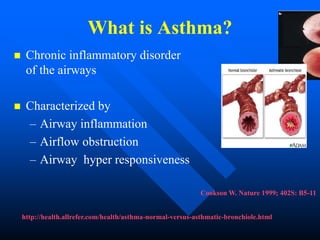
What is Asthma?
 Chronic inflammatory disorder
of the airways
 Characterized by
– Airway inflammation
– Airflow obstruction
– Airway hyper responsiveness
http://health.allrefer.com/health/asthma-normal-versus-asthmatic-bronchiole.html
Cookson W. Nature 1999; 402S: B5-11
What Causes Asthma?
 Asthma is a complex trait
– Genetic and environmental factors
– Viral infections
– Appears early in life and severity remains constant
 Multiple interacting genes
Potential Risk Factors
 Host factors
– Genetic predisposition
– Atopy
– Airway hyper
responsiveness
– Gender
– Race / Ethnicity
 Environmental factors
– Indoor allergens
– Outdoor allergens
– Tobacco smoke
– Air pollution
– Respiratory infections
– Socioeconomic status
– Family size
– Diet and drugs
– Obesity
Masoli M, et al. The Global Burden of Asthma: Executive Summary of the GINA Dissemination
Committee Report. Allergy 2004; 59: 469-78.
Pediatric Asthma
 Childhood asthma is not a single disease
 Most cases of asthma start in the preschool years
 More common in kids with atopic dermatitis and
food allergy during their first 1-2 years of life
 With rare exceptions, no single allergen causes
childhood asthma
 No currently available medicine changes the
course of the disease
Pediatric Asthma
Differs with Adults
 Lung growth affected during development.
 Children have smaller airway size and
lower inspiratory flow rates.
 Difficulty with objective lung function
testing in smaller kids.
Pediatric Asthma
Wheezing in Young Children
Transient Early Wheezing
 Recurrent wheezing episodes in first years of
life.
 Low lung functions, History of Prematurity
 Can have severe episodes, requiring
hospitalizations.
 Resolves by age 3-5 years.
[ Low Lung function: children improve within a few years and
"outgrow" their asthma ]
Pediatric Asthma
Wheezing in Young Children
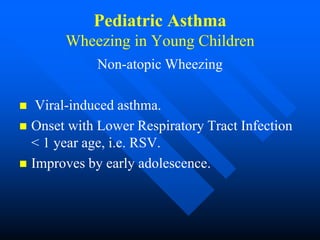
Non-atopic Wheezing
 Viral-induced asthma.
 Onset with Lower Respiratory Tract Infection
< 1 year age, i.e. RSV.
 Improves by early adolescence.
Pediatric Asthma
Wheezing in Young Children
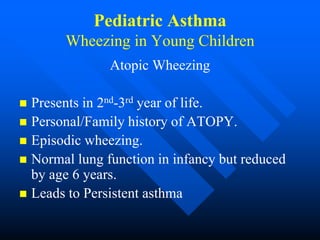
Atopic Wheezing
 Presents in 2nd-3rd year of life.
 Personal/Family history of ATOPY.
 Episodic wheezing.
 Normal lung function in infancy but reduced
by age 6 years.
 Leads to Persistent asthma
Prevalenceofwheeze
Age Years
Martinez Pediatrics 2002;109:362
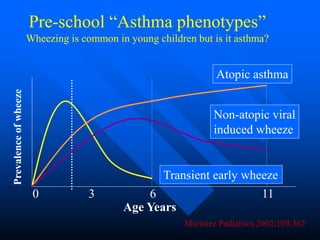
Transient early wheeze
Non-atopic viral
induced wheeze
Atopic asthma
0 3 6 11
Pre-school “Asthma phenotypes”
Wheezing is common in young children but is it asthma?
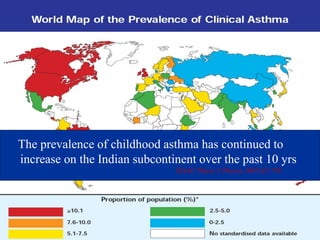
The prevalence of childhood asthma has continued to
increase on the Indian subcontinent over the past 10 yrs
ISAAC Phase 3 Thorax 2007;62:758
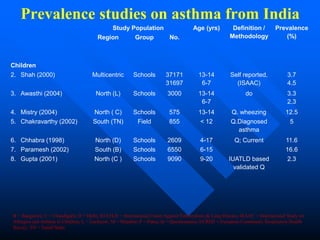
Prevalence studies on asthma from India
Study Population Age (yrs) Definition /
Methodology
Prevalence
(%)Region Group No.
Children
2. Shah (2000) Multicentric Schools 37171
31697
13-14
6-7
Self reported,
(ISAAC)
3.7
4.5
3. Awasthi (2004) North (L) Schools 3000 13-14
6-7
do 3.3
2.3
4. Mistry (2004) North ( C) Schools 575 13-14 Q. wheezing 12.5
5. Chakravarthy (2002) South (TN) Field 855 < 12 Q.Diagnosed
asthma
5
6. Chhabra (1998) North (D) Schools 2609 4-17 Q; Current 11.6
7. Paramesh (2002) South (B) Schools 6550 6-15 16.6
8. Gupta (2001) North (C ) Schools 9090 9-20 IUATLD based
validated Q
2.3
B = Bangalore; C = Chandigarh; D = Delhi; IUATLD = International Union Against Tuberculosis & Lung Disease; ISAAC = International Study on
Allergies and Asthma in Children; L = Lucknow; M = Mumbai; P = Patna; Q = Questionnaire; ECRHS = European Community Respiratory Health
Survey; TN = Tamil Nadu
Prevalence of asthma
 > 300 million asthmatics in world
[ More than population of Russia ]
 > 30 million asthmatics in India
 Significant economic burden
 Total asthma costs > Cost of TB & HIV
combined
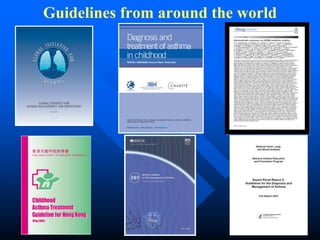
Guidelines from around the world
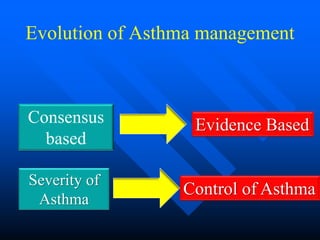
Evolution of Asthma management
Consensus
based
Evidence Based
Severity of
Asthma
Control of Asthma
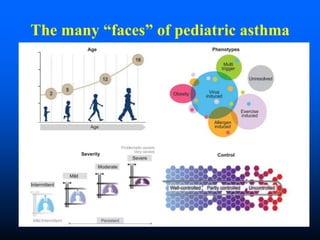
The many “faces” of pediatric asthma
Asthma Predictive Index (API)
 The Asthma Predictive Index is a useful tool for
predicting asthma in young children
 To differentiate “Early wheezers” from
“Persistent wheezers” or children who will
develop asthma
 API is the basis for the NHLBI recommendations
for Initiating Long-term Controller Therapy in
Young Children (0-4 years)
 95% of - ve by API do not have asthma.Source:Journal of allergy and clinical immunology [0091-6749] Castro Rodriguez, Jose
yr:2010 vol:126
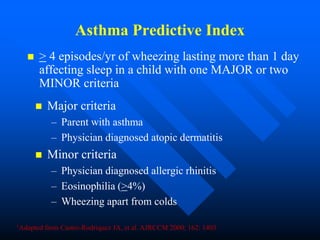
Asthma Predictive Index
 > 4 episodes/yr of wheezing lasting more than 1 day
affecting sleep in a child with one MAJOR or two
MINOR criteria
 Major criteria
– Parent with asthma
– Physician diagnosed atopic dermatitis
 Minor criteria
– Physician diagnosed allergic rhinitis
– Eosinophilia (>4%)
– Wheezing apart from colds
1Adapted from Castro-Rodriquez JA, et al. AJRCCM 2000; 162: 1403
Once “Asthma” Diagnosis Made
 Identify precipitating factors
 Identify co morbid conditions
 Assess the patient/families knowledge
 Classify asthma severity using the
Guidelines from the NHLBI (Expert Panel)
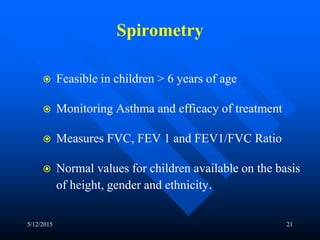
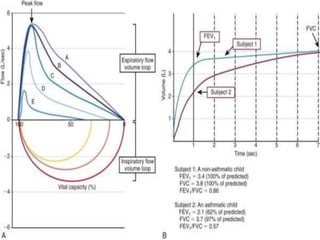
Spirometry
 Feasible in children > 6 years of age
 Monitoring Asthma and efficacy of treatment
 Measures FVC, FEV 1 and FEV1/FVC Ratio
 Normal values for children available on the basis
of height, gender and ethnicity.
5/12/2015 21
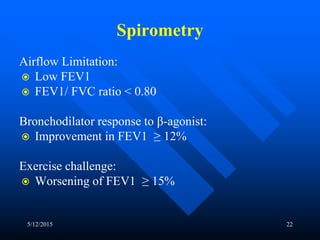
Spirometry
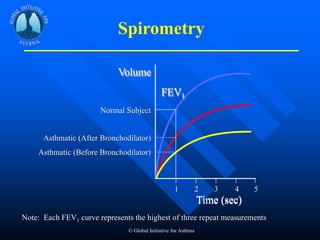
Airflow Limitation:
 Low FEV1
 FEV1/ FVC ratio < 0.80
Bronchodilator response to β-agonist:
 Improvement in FEV1 ≥ 12%
Exercise challenge:
 Worsening of FEV1 ≥ 15%
5/12/2015 22
h
5/12/2015 23
1
Time (sec)
2 3 4 5
FEV1
Volume
Normal Subject
Asthmatic (After Bronchodilator)
Asthmatic (Before Bronchodilator)
Note: Each FEV1 curve represents the highest of three repeat measurements
© Global Initiative for Asthma
Spirometry
Peak Expiratory Flow (PEF) Meters
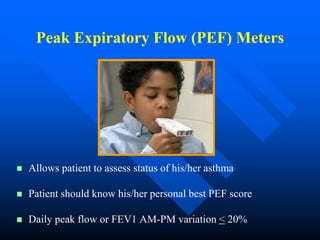
 Allows patient to assess status of his/her asthma
 Patient should know his/her personal best PEF score
 Daily peak flow or FEV1 AM-PM variation < 20%
Peak Flow Charts
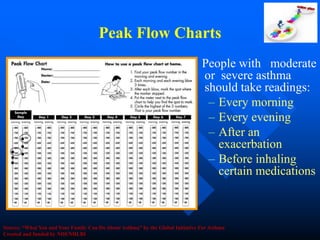
People with moderate
or severe asthma
should take readings:
– Every morning
– Every evening
– After an
exacerbation
– Before inhaling
certain medications
Source: “What You and Your Family Can Do About Asthma” by the Global Initiative For Asthma
Created and funded by NIH/NHLBI
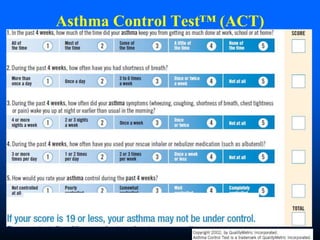
Asthma Control Test™ (ACT)
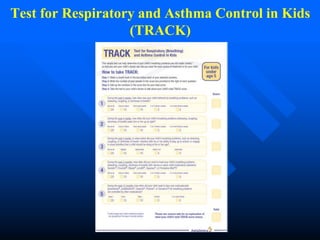
Test for Respiratory and Asthma Control in Kids
(TRACK)
Role of early diagnosis
 Majority of asthma starts in childhood.
 > 75 % had first symptom b4 6 yrs.
 Early diagnosis is key component of
effective asthma management.
 Spirometry not possible in < 6 yrs.
 ? User friendly means of diagnosis &
management in preschool children.
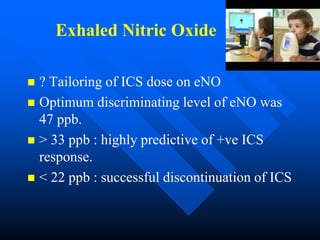
Exhaled Nitric Oxide
 NO is produced by all tissues including lung
& under Th2 cytokine IL3 control.
 eNO is non invasive way of assessing
airway inflammation.
 Easy, quick, pt friendly, Repeatly measured
 Elevated eNO indicates uncontrolled airway
inflammation  Initiate ICS
Exhaled Nitric Oxide
 ? Tailoring of ICS dose on eNO
 Optimum discriminating level of eNO was
47 ppb.
 > 33 ppb : highly predictive of +ve ICS
response.
 < 22 ppb : successful discontinuation of ICS
Asthma: Goals of Treatment
 Control chronic and nocturnal symptoms
 Maintain normal activity levels and exercise
 Maintain near-normal pulmonary function
 Prevent acute episodes of asthma
 Minimize emergency (ED) visits and
hospitalizations
 Avoid adverse effects of asthma medications
Global Initiative for Asthma. GINA workshop report: global strategy for asthma management and
prevention. Available at: http://www.ginasthma.org. Accessed October 13, 2006.
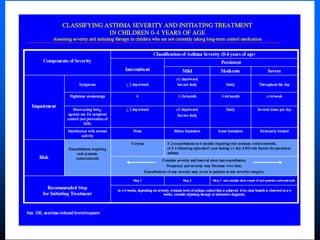
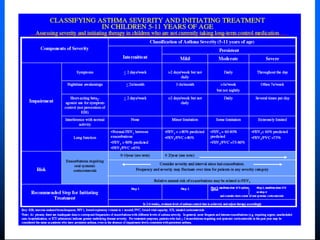
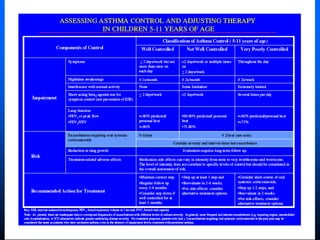
Classifying Asthma Severity in
Children
 Break down into intermittent, mild,
moderate, or severe persistent asthma
depending on symptoms of impairment and
risk
 Once classified, use the 6 steps depending
on the severity to obtain asthma control
with the lowest amount of medication
Assessing Asthma Severity
 Use Impairment and Risk criterion
 Impairments are
– Symptoms: night time symptoms, reliever use
(SABA), miss school/work, quality of life, ACT
screen
– Lung function- spirometry (FEV 1), eNO
 Risks are
– Recurrent exacerbations including ED visits and
hospitalization (may be normal between events)
– Use of oral steroids
– At times, hard to differential between impairment and risk
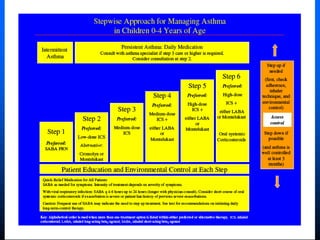
Steps of Therapy
 Step 1: intermittent use SABA
 Step 2: low dose ICS or LTRA or cromolyn
 Step 3: moderate dose of ICS
 Step 4: moderate dose of ICS and add either LTRA
or LABA ( if > 4yrs )
 Step 5: high dose ICS and LTRA or LABA ( if > 4yrs )
 Step 6: high dose ICS and LTRA or LABA ( if > 4yrs )
plus oral steroids
Consult asthma specialist if step 3 or higher
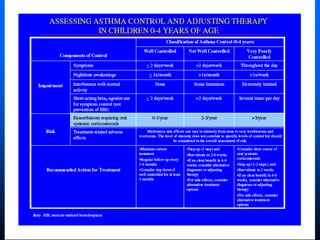
Asthma Therapy in Children 0-4 Yrs
 Treatment is often in the form of a
therapeutic trial
– Monitor response over 4-6 weeks
» If no response, stop therapy and reevaluate
for other diagnosis
» If a clear positive response for at least 3
months indicates good asthma control.
Maintaining Control
 Monitor every 3-6 months if stable
 If stable at 3 months, try to reduce therapy
(usually by 25-50%)
 ICS are safe even in the young at mild to moderate
doses with only a slight decrease in growth
velocity.
Higher doses have been shown to affect growth,
cause cataracts and reduce bone density
 Response to therapy is very important in this age
group !
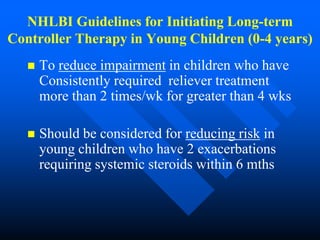
NHLBI Guidelines for Initiating Long-term
Controller Therapy in Young Children (0-4 years)
 To reduce impairment in children who have
Consistently required reliever treatment
more than 2 times/wk for greater than 4 wks
 Should be considered for reducing risk in
young children who have 2 exacerbations
requiring systemic steroids within 6 mths
Pharmacotherapy
 “ The more things change, the more they
stay the same ”
Inhaled Corticosteroid
 ICS is preferred treatment alone or in combination
for all persistent categories of asthma
 Safe when use is properly monitored
 Reduces asthma symptoms, bronchial hyper
reactivity, exacerbations and hospitalizations, need
for rescue medications
 Improves lung function, quality of life
 May prevent airway remodeling …This is Probably no
longer true
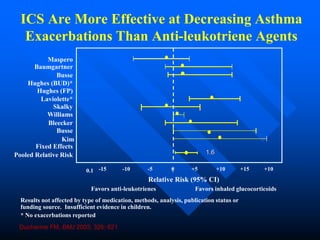
ICS Are More Effective at Decreasing Asthma
Exacerbations Than Anti-leukotriene Agents
Results not affected by type of medication, methods, analysis, publication status or
funding source. Insufficient evidence in children.
* No exacerbations reported
Maspero
Baumgartner
Busse
Hughes (BUD)*
Hughes (FP)
Laviolette*
Skalky
Williams
Bleecker
Busse
Fixed Effects
Pooled Relative Risk
0.1 -15 -10 -5 0 +5 +10 +15 +10
Relative Risk (95% CI)
Ducharme FM, BMJ 2003; 326: 621
Favors anti-leukotrienes Favors inhaled glucocorticoids
1
Kim
1.6
FDA Approved preventive
Therapies
 ICS nebulizer solution (1-8 years)
 ICS MDI for all ages
 ICS DPI (4 years of age and older)
 LABA and LABA/ICS combination DPI and MDI
(4 years of age and older)
 Montelukast chewables (2-4 years),
granules (down to 6 mths of age)
 Cromolyn sodium nebulizer (2 years and older)
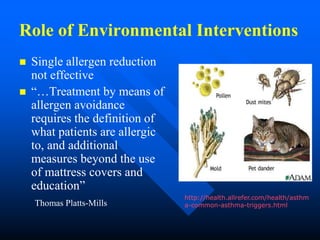
Role of Environmental Interventions
 Single allergen reduction
not effective
 “…Treatment by means of
allergen avoidance
requires the definition of
what patients are allergic
to, and additional
measures beyond the use
of mattress covers and
education”
Thomas Platts-Mills
http://health.allrefer.com/health/asthm
a-common-asthma-triggers.html
Patient education
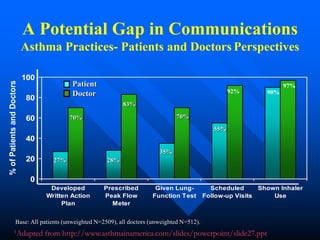
A Potential Gap in Communications
Asthma Practices- Patients and Doctors Perspectives
0
20
40
60
80
100
Developed
Written Action
Plan
Prescribed
Peak Flow
Meter
Given Lung-
Function Test
Scheduled
Follow-up Visits
Shown Inhaler
Use
%ofPatientsandDoctors
Base: All patients (unweighted N=2509), all doctors (unweighted N=512).
27%
70%
28%
83%
35%
70%
55%
92% 90%
97%Patient
Doctor
1Adapted from http://www.asthmainamerica.com/slides/powerpoint/slide27.ppt
Asthma Prevention
 There has been remarkable progress in
pharmacotherapy, education and
environmental measures in treating asthma
 However, no single action has been
demonstrated to decrease the risk of
developing asthma
 Prevention will depend on factors influencing
the development and progression of asthma
Asthma Prevention
 Reduce exposure to ETS even in utero
 Encourage vaginal delivery
 Exclusive breast feeding for 6 mths
 Avoid broad spectrum antibiotics in 1st yr
 Reduce exposure to house dust mites
 Reduce indoor & outdoor pollution
 Reduce exposure to pets / mould
Asthma Prevention
 Preventing asthma attack
– Identify & avoid triggers
– Written down asthma plan
– Flu & Pneumonia vaccines
– Keep track of asthma symptoms & level of
control
– Early identification & t/t of acute asthma attack
Beyond 2015
 To develop interventions which initiated before
the development of the first asthma-like
symptoms, will prevent progression of airway
dysfunction.
 Asthma-related airway remodeling occur mainly
during the preschool years; blocking the processes
that cause these changes will drastically reduce
persistent asthma
Beyond 2015
 Early genetic and phenotypic markers are needed
to target children with confirmed asthma, so that
specific therapies can be introduced to prevent
their progression.
 In children with milder persistent asthma,
intermittent, SABA-linked controller therapy may
be as effective as daily therapy with ICS, and will
be much more acceptable for parents and children
alike.
The bottom line
 In problematic cases of childhood asthma,
rather than escalating treatment, a systematic
approach is needed
- review of the diagnosis
- adherence, ability to take drugs correctly
- child’s environment
 If diagnostic doubt or failure to respond
adequately to a low dose ICS
- prompt referral to specialist
 Asthma is a disease that kills, even in
children with “mild” asthma, and care must
be seen in that context
 Any ED visit
- is a marker of future risk
- prompt urgent review of trigger
- whether the attack was appropriately managed
 Non-adherence to treatment, overuse of
SABA, and underuse of ICS are common
problems that should be routinely tackled
 Failure of regular asthma review is a factor
in asthma related deaths and for children a
routine review should be done every three
months.
 When specialist services are also involved,
good communication is essential;
particularly after an acute asthma attack
Thanks

Asthma 2015 and beyond

  • 1.
    ASTHMA 2015 & BEYOND Dr. VinodGandhi Consultant Pediatrician
  • 2.
    Objectives in 2015 How to pick up wheezy infants who may develop persistent asthma ?  How to treat children with a high risk of developing asthma ?  Possible asthma preventive strategies.
  • 3.
    What is Asthma? Chronic inflammatory disorder of the airways  Characterized by – Airway inflammation – Airflow obstruction – Airway hyper responsiveness http://health.allrefer.com/health/asthma-normal-versus-asthmatic-bronchiole.html Cookson W. Nature 1999; 402S: B5-11
  • 4.
    What Causes Asthma? Asthma is a complex trait – Genetic and environmental factors – Viral infections – Appears early in life and severity remains constant  Multiple interacting genes
  • 5.
    Potential Risk Factors Host factors – Genetic predisposition – Atopy – Airway hyper responsiveness – Gender – Race / Ethnicity  Environmental factors – Indoor allergens – Outdoor allergens – Tobacco smoke – Air pollution – Respiratory infections – Socioeconomic status – Family size – Diet and drugs – Obesity Masoli M, et al. The Global Burden of Asthma: Executive Summary of the GINA Dissemination Committee Report. Allergy 2004; 59: 469-78.
  • 6.
    Pediatric Asthma  Childhoodasthma is not a single disease  Most cases of asthma start in the preschool years  More common in kids with atopic dermatitis and food allergy during their first 1-2 years of life  With rare exceptions, no single allergen causes childhood asthma  No currently available medicine changes the course of the disease
  • 7.
    Pediatric Asthma Differs withAdults  Lung growth affected during development.  Children have smaller airway size and lower inspiratory flow rates.  Difficulty with objective lung function testing in smaller kids.
  • 8.
    Pediatric Asthma Wheezing inYoung Children Transient Early Wheezing  Recurrent wheezing episodes in first years of life.  Low lung functions, History of Prematurity  Can have severe episodes, requiring hospitalizations.  Resolves by age 3-5 years. [ Low Lung function: children improve within a few years and "outgrow" their asthma ]
  • 9.
    Pediatric Asthma Wheezing inYoung Children Non-atopic Wheezing  Viral-induced asthma.  Onset with Lower Respiratory Tract Infection < 1 year age, i.e. RSV.  Improves by early adolescence.
  • 10.
    Pediatric Asthma Wheezing inYoung Children Atopic Wheezing  Presents in 2nd-3rd year of life.  Personal/Family history of ATOPY.  Episodic wheezing.  Normal lung function in infancy but reduced by age 6 years.  Leads to Persistent asthma
  • 11.
    Prevalenceofwheeze Age Years Martinez Pediatrics2002;109:362 Transient early wheeze Non-atopic viral induced wheeze Atopic asthma 0 3 6 11 Pre-school “Asthma phenotypes” Wheezing is common in young children but is it asthma?
  • 12.
    The prevalence ofchildhood asthma has continued to increase on the Indian subcontinent over the past 10 yrs ISAAC Phase 3 Thorax 2007;62:758
  • 13.
    Prevalence studies onasthma from India Study Population Age (yrs) Definition / Methodology Prevalence (%)Region Group No. Children 2. Shah (2000) Multicentric Schools 37171 31697 13-14 6-7 Self reported, (ISAAC) 3.7 4.5 3. Awasthi (2004) North (L) Schools 3000 13-14 6-7 do 3.3 2.3 4. Mistry (2004) North ( C) Schools 575 13-14 Q. wheezing 12.5 5. Chakravarthy (2002) South (TN) Field 855 < 12 Q.Diagnosed asthma 5 6. Chhabra (1998) North (D) Schools 2609 4-17 Q; Current 11.6 7. Paramesh (2002) South (B) Schools 6550 6-15 16.6 8. Gupta (2001) North (C ) Schools 9090 9-20 IUATLD based validated Q 2.3 B = Bangalore; C = Chandigarh; D = Delhi; IUATLD = International Union Against Tuberculosis & Lung Disease; ISAAC = International Study on Allergies and Asthma in Children; L = Lucknow; M = Mumbai; P = Patna; Q = Questionnaire; ECRHS = European Community Respiratory Health Survey; TN = Tamil Nadu
  • 14.
    Prevalence of asthma > 300 million asthmatics in world [ More than population of Russia ]  > 30 million asthmatics in India  Significant economic burden  Total asthma costs > Cost of TB & HIV combined
  • 15.
  • 16.
    Evolution of Asthmamanagement Consensus based Evidence Based Severity of Asthma Control of Asthma
  • 17.
    The many “faces”of pediatric asthma
  • 18.
    Asthma Predictive Index(API)  The Asthma Predictive Index is a useful tool for predicting asthma in young children  To differentiate “Early wheezers” from “Persistent wheezers” or children who will develop asthma  API is the basis for the NHLBI recommendations for Initiating Long-term Controller Therapy in Young Children (0-4 years)  95% of - ve by API do not have asthma.Source:Journal of allergy and clinical immunology [0091-6749] Castro Rodriguez, Jose yr:2010 vol:126
  • 19.
    Asthma Predictive Index > 4 episodes/yr of wheezing lasting more than 1 day affecting sleep in a child with one MAJOR or two MINOR criteria  Major criteria – Parent with asthma – Physician diagnosed atopic dermatitis  Minor criteria – Physician diagnosed allergic rhinitis – Eosinophilia (>4%) – Wheezing apart from colds 1Adapted from Castro-Rodriquez JA, et al. AJRCCM 2000; 162: 1403
  • 20.
    Once “Asthma” DiagnosisMade  Identify precipitating factors  Identify co morbid conditions  Assess the patient/families knowledge  Classify asthma severity using the Guidelines from the NHLBI (Expert Panel)
  • 21.
    Spirometry  Feasible inchildren > 6 years of age  Monitoring Asthma and efficacy of treatment  Measures FVC, FEV 1 and FEV1/FVC Ratio  Normal values for children available on the basis of height, gender and ethnicity. 5/12/2015 21
  • 22.
    Spirometry Airflow Limitation:  LowFEV1  FEV1/ FVC ratio < 0.80 Bronchodilator response to β-agonist:  Improvement in FEV1 ≥ 12% Exercise challenge:  Worsening of FEV1 ≥ 15% 5/12/2015 22
  • 23.
  • 24.
    1 Time (sec) 2 34 5 FEV1 Volume Normal Subject Asthmatic (After Bronchodilator) Asthmatic (Before Bronchodilator) Note: Each FEV1 curve represents the highest of three repeat measurements © Global Initiative for Asthma Spirometry
  • 25.
    Peak Expiratory Flow(PEF) Meters  Allows patient to assess status of his/her asthma  Patient should know his/her personal best PEF score  Daily peak flow or FEV1 AM-PM variation < 20%
  • 26.
    Peak Flow Charts Peoplewith moderate or severe asthma should take readings: – Every morning – Every evening – After an exacerbation – Before inhaling certain medications Source: “What You and Your Family Can Do About Asthma” by the Global Initiative For Asthma Created and funded by NIH/NHLBI
  • 27.
  • 28.
    Test for Respiratoryand Asthma Control in Kids (TRACK)
  • 29.
    Role of earlydiagnosis  Majority of asthma starts in childhood.  > 75 % had first symptom b4 6 yrs.  Early diagnosis is key component of effective asthma management.  Spirometry not possible in < 6 yrs.  ? User friendly means of diagnosis & management in preschool children.
  • 30.
    Exhaled Nitric Oxide NO is produced by all tissues including lung & under Th2 cytokine IL3 control.  eNO is non invasive way of assessing airway inflammation.  Easy, quick, pt friendly, Repeatly measured  Elevated eNO indicates uncontrolled airway inflammation  Initiate ICS
  • 31.
    Exhaled Nitric Oxide ? Tailoring of ICS dose on eNO  Optimum discriminating level of eNO was 47 ppb.  > 33 ppb : highly predictive of +ve ICS response.  < 22 ppb : successful discontinuation of ICS
  • 32.
    Asthma: Goals ofTreatment  Control chronic and nocturnal symptoms  Maintain normal activity levels and exercise  Maintain near-normal pulmonary function  Prevent acute episodes of asthma  Minimize emergency (ED) visits and hospitalizations  Avoid adverse effects of asthma medications Global Initiative for Asthma. GINA workshop report: global strategy for asthma management and prevention. Available at: http://www.ginasthma.org. Accessed October 13, 2006.
  • 33.
    Classifying Asthma Severityin Children  Break down into intermittent, mild, moderate, or severe persistent asthma depending on symptoms of impairment and risk  Once classified, use the 6 steps depending on the severity to obtain asthma control with the lowest amount of medication
  • 35.
    Assessing Asthma Severity Use Impairment and Risk criterion  Impairments are – Symptoms: night time symptoms, reliever use (SABA), miss school/work, quality of life, ACT screen – Lung function- spirometry (FEV 1), eNO  Risks are – Recurrent exacerbations including ED visits and hospitalization (may be normal between events) – Use of oral steroids – At times, hard to differential between impairment and risk
  • 36.
    Steps of Therapy Step 1: intermittent use SABA  Step 2: low dose ICS or LTRA or cromolyn  Step 3: moderate dose of ICS  Step 4: moderate dose of ICS and add either LTRA or LABA ( if > 4yrs )  Step 5: high dose ICS and LTRA or LABA ( if > 4yrs )  Step 6: high dose ICS and LTRA or LABA ( if > 4yrs ) plus oral steroids Consult asthma specialist if step 3 or higher
  • 37.
    Asthma Therapy inChildren 0-4 Yrs  Treatment is often in the form of a therapeutic trial – Monitor response over 4-6 weeks » If no response, stop therapy and reevaluate for other diagnosis » If a clear positive response for at least 3 months indicates good asthma control.
  • 38.
    Maintaining Control  Monitorevery 3-6 months if stable  If stable at 3 months, try to reduce therapy (usually by 25-50%)  ICS are safe even in the young at mild to moderate doses with only a slight decrease in growth velocity. Higher doses have been shown to affect growth, cause cataracts and reduce bone density  Response to therapy is very important in this age group !
  • 39.
    NHLBI Guidelines forInitiating Long-term Controller Therapy in Young Children (0-4 years)  To reduce impairment in children who have Consistently required reliever treatment more than 2 times/wk for greater than 4 wks  Should be considered for reducing risk in young children who have 2 exacerbations requiring systemic steroids within 6 mths
  • 44.
    Pharmacotherapy  “ Themore things change, the more they stay the same ”
  • 45.
    Inhaled Corticosteroid  ICSis preferred treatment alone or in combination for all persistent categories of asthma  Safe when use is properly monitored  Reduces asthma symptoms, bronchial hyper reactivity, exacerbations and hospitalizations, need for rescue medications  Improves lung function, quality of life  May prevent airway remodeling …This is Probably no longer true
  • 46.
    ICS Are MoreEffective at Decreasing Asthma Exacerbations Than Anti-leukotriene Agents Results not affected by type of medication, methods, analysis, publication status or funding source. Insufficient evidence in children. * No exacerbations reported Maspero Baumgartner Busse Hughes (BUD)* Hughes (FP) Laviolette* Skalky Williams Bleecker Busse Fixed Effects Pooled Relative Risk 0.1 -15 -10 -5 0 +5 +10 +15 +10 Relative Risk (95% CI) Ducharme FM, BMJ 2003; 326: 621 Favors anti-leukotrienes Favors inhaled glucocorticoids 1 Kim 1.6
  • 47.
    FDA Approved preventive Therapies ICS nebulizer solution (1-8 years)  ICS MDI for all ages  ICS DPI (4 years of age and older)  LABA and LABA/ICS combination DPI and MDI (4 years of age and older)  Montelukast chewables (2-4 years), granules (down to 6 mths of age)  Cromolyn sodium nebulizer (2 years and older)
  • 48.
    Role of EnvironmentalInterventions  Single allergen reduction not effective  “…Treatment by means of allergen avoidance requires the definition of what patients are allergic to, and additional measures beyond the use of mattress covers and education” Thomas Platts-Mills http://health.allrefer.com/health/asthm a-common-asthma-triggers.html
  • 49.
  • 50.
    A Potential Gapin Communications Asthma Practices- Patients and Doctors Perspectives 0 20 40 60 80 100 Developed Written Action Plan Prescribed Peak Flow Meter Given Lung- Function Test Scheduled Follow-up Visits Shown Inhaler Use %ofPatientsandDoctors Base: All patients (unweighted N=2509), all doctors (unweighted N=512). 27% 70% 28% 83% 35% 70% 55% 92% 90% 97%Patient Doctor 1Adapted from http://www.asthmainamerica.com/slides/powerpoint/slide27.ppt
  • 51.
    Asthma Prevention  Therehas been remarkable progress in pharmacotherapy, education and environmental measures in treating asthma  However, no single action has been demonstrated to decrease the risk of developing asthma  Prevention will depend on factors influencing the development and progression of asthma
  • 52.
    Asthma Prevention  Reduceexposure to ETS even in utero  Encourage vaginal delivery  Exclusive breast feeding for 6 mths  Avoid broad spectrum antibiotics in 1st yr  Reduce exposure to house dust mites  Reduce indoor & outdoor pollution  Reduce exposure to pets / mould
  • 53.
    Asthma Prevention  Preventingasthma attack – Identify & avoid triggers – Written down asthma plan – Flu & Pneumonia vaccines – Keep track of asthma symptoms & level of control – Early identification & t/t of acute asthma attack
  • 54.
    Beyond 2015  Todevelop interventions which initiated before the development of the first asthma-like symptoms, will prevent progression of airway dysfunction.  Asthma-related airway remodeling occur mainly during the preschool years; blocking the processes that cause these changes will drastically reduce persistent asthma
  • 55.
    Beyond 2015  Earlygenetic and phenotypic markers are needed to target children with confirmed asthma, so that specific therapies can be introduced to prevent their progression.  In children with milder persistent asthma, intermittent, SABA-linked controller therapy may be as effective as daily therapy with ICS, and will be much more acceptable for parents and children alike.
  • 57.
    The bottom line In problematic cases of childhood asthma, rather than escalating treatment, a systematic approach is needed - review of the diagnosis - adherence, ability to take drugs correctly - child’s environment
  • 58.
     If diagnosticdoubt or failure to respond adequately to a low dose ICS - prompt referral to specialist  Asthma is a disease that kills, even in children with “mild” asthma, and care must be seen in that context
  • 59.
     Any EDvisit - is a marker of future risk - prompt urgent review of trigger - whether the attack was appropriately managed  Non-adherence to treatment, overuse of SABA, and underuse of ICS are common problems that should be routinely tackled
  • 60.
     Failure ofregular asthma review is a factor in asthma related deaths and for children a routine review should be done every three months.  When specialist services are also involved, good communication is essential; particularly after an acute asthma attack
  • 61.