 Radiation
 Radio active waste
 Biological effects
•On animals
•On plants
•On humans
 Preventive measures of radiation
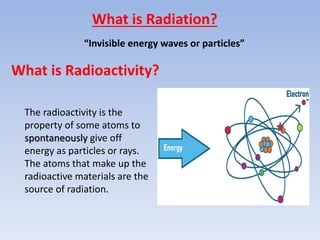
What is Radiation?
“Invisible energy waves or particles”
The radioactivity is the
property of some atoms to
spontaneously give off
energy as particles or rays.
The atoms that make up the
radioactive materials are the
source of radiation.
What is Radioactivity?
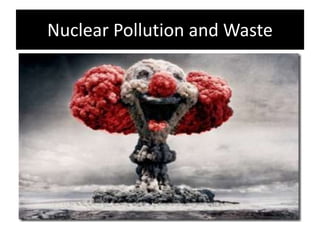
Nuclear Pollution and Waste
INTRODUCTION
 Radioactive waste is a material deemed no
longer useful that has been contaminated by
or contains radio nuclides.
 Radio nuclides are unstable atoms of an
element that decay, or disintegrate
spontaneously, emitting energy in the form
of radiation.
 Releases of radio nuclides to the surrounding
environment in liquid and gaseous forms.
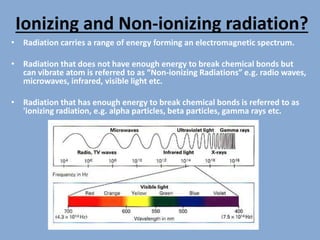
Ionizing and Non-ionizing radiation?
• Radiation carries a range of energy forming an electromagnetic spectrum.
• Radiation that does not have enough energy to break chemical bonds but
can vibrate atom is referred to as “Non-ionizing Radiations” e.g. radio waves,
microwaves, infrared, visible light etc.
• Radiation that has enough energy to break chemical bonds is referred to as
'ionizing radiation, e.g. alpha particles, beta particles, gamma rays etc.
• The potential biological effects and damages caused by
radiation depend on the conditions of the radiation
exposure.
• It is determined by:
• quality of radiation
• quantity of radiation
• received dose of radiation
• exposure conditions (spatial distribution)
• Particles with high energy loss effects cause typically
greater damage.
• Radiation can cause immediate effects (radiation sickness),
but also long term effects which may occur many years
(cancer) or several generations later (genetic effects).
• Biological effects of radiation result from both direct and
indirect action of radiation.
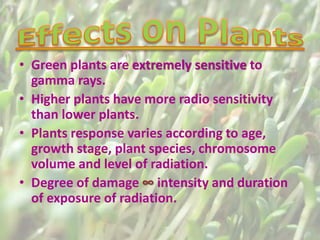
• Green plants are extremely sensitive to
gamma rays.
• Higher plants have more radio sensitivity
than lower plants.
• Plants response varies according to age,
growth stage, plant species, chromosome
volume and level of radiation.
• Degree of damage ∞ intensity and duration
of exposure of radiation.
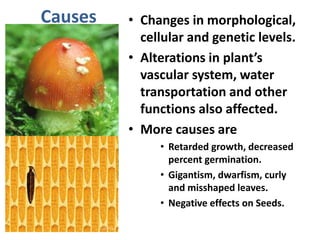
Causes • Changes in morphological,
cellular and genetic levels.
• Alterations in plant’s
vascular system, water
transportation and other
functions also affected.
• More causes are
• Retarded growth, decreased
percent germination.
• Gigantism, dwarfism, curly
and misshaped leaves.
• Negative effects on Seeds.
• Radiation gives positive results also..
–In crop improvement protocols
–High disease resistance, vigor and high
productivity.
• But high dosage may kill the plants..
• It mutate the DNA even in room
temperature.
• In a food chain, radiation may affect
primary and secondary consumers also.
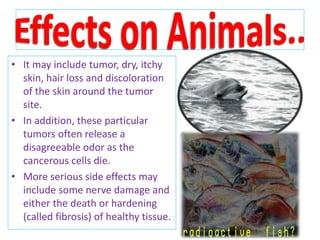
• It may include tumor, dry, itchy
skin, hair loss and discoloration
of the skin around the tumor
site.
• In addition, these particular
tumors often release a
disagreeable odor as the
cancerous cells die.
• More serious side effects may
include some nerve damage and
either the death or hardening
(called fibrosis) of healthy tissue.
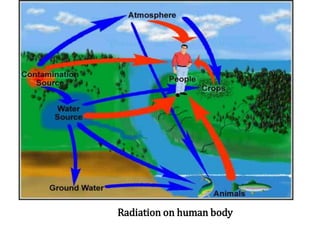
Radiation on human body
• Initial signs include,
• Nausea, vomiting, headache , some loss of white blood
cells
• Doses of 300 rems or more cause temporary
hair loss, but also more significant internal
harm, including damage to nerve cells and the
cells that line the digestive tract.
• Besides the symptoms, these people also suffer
from fever and diarrhea. If no effective
treatment is given, death occurs within two to
fourteen days.
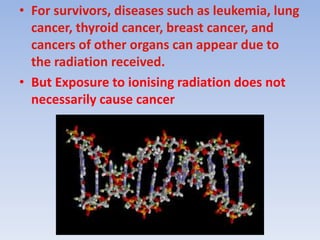
• For survivors, diseases such as leukemia, lung
cancer, thyroid cancer, breast cancer, and
cancers of other organs can appear due to
the radiation received.
• But Exposure to ionising radiation does not
necessarily cause cancer
Effects on Humans…
• Because man's body contains a lot of water,
gamma rays traverse through water (H2O)
molecules. Ionization of water usually results
in the formation of hydrogen peroxide (H2O2).
These molecules can attack a biomolecule and
'denature' (= kill) it.
• Radioactive lead, retains the ability to cause
brain damage and plutonium clumps on the
surface of bone, delivering a concentrated
dose of alpha radiation to surrounding cells.
• Site selection for nuclear
power plants should be
carefully made to avoid, or
minimize to the extent
possible, most of those
impacts.
• The safe management of
radioactive waste is
necessary to protect public
health.
• If handled improperly,
potential exposures of
humans to high-level
radioactive waste can be
dangerous, even deadly.
Radiation ppt
Radiation ppt
Radiation ppt
Radiation ppt
Radiation ppt

Radiation ppt

  • 2.
     Radiation  Radioactive waste  Biological effects •On animals •On plants •On humans  Preventive measures of radiation
  • 3.
    What is Radiation? “Invisibleenergy waves or particles” The radioactivity is the property of some atoms to spontaneously give off energy as particles or rays. The atoms that make up the radioactive materials are the source of radiation. What is Radioactivity?
  • 4.
  • 5.
    INTRODUCTION  Radioactive wasteis a material deemed no longer useful that has been contaminated by or contains radio nuclides.  Radio nuclides are unstable atoms of an element that decay, or disintegrate spontaneously, emitting energy in the form of radiation.  Releases of radio nuclides to the surrounding environment in liquid and gaseous forms.
  • 6.
    Ionizing and Non-ionizingradiation? • Radiation carries a range of energy forming an electromagnetic spectrum. • Radiation that does not have enough energy to break chemical bonds but can vibrate atom is referred to as “Non-ionizing Radiations” e.g. radio waves, microwaves, infrared, visible light etc. • Radiation that has enough energy to break chemical bonds is referred to as 'ionizing radiation, e.g. alpha particles, beta particles, gamma rays etc.
  • 7.
    • The potentialbiological effects and damages caused by radiation depend on the conditions of the radiation exposure. • It is determined by: • quality of radiation • quantity of radiation • received dose of radiation • exposure conditions (spatial distribution) • Particles with high energy loss effects cause typically greater damage. • Radiation can cause immediate effects (radiation sickness), but also long term effects which may occur many years (cancer) or several generations later (genetic effects). • Biological effects of radiation result from both direct and indirect action of radiation.
  • 8.
    • Green plantsare extremely sensitive to gamma rays. • Higher plants have more radio sensitivity than lower plants. • Plants response varies according to age, growth stage, plant species, chromosome volume and level of radiation. • Degree of damage ∞ intensity and duration of exposure of radiation.
  • 9.
    Causes • Changesin morphological, cellular and genetic levels. • Alterations in plant’s vascular system, water transportation and other functions also affected. • More causes are • Retarded growth, decreased percent germination. • Gigantism, dwarfism, curly and misshaped leaves. • Negative effects on Seeds.
  • 10.
    • Radiation givespositive results also.. –In crop improvement protocols –High disease resistance, vigor and high productivity. • But high dosage may kill the plants.. • It mutate the DNA even in room temperature. • In a food chain, radiation may affect primary and secondary consumers also.
  • 11.
    • It mayinclude tumor, dry, itchy skin, hair loss and discoloration of the skin around the tumor site. • In addition, these particular tumors often release a disagreeable odor as the cancerous cells die. • More serious side effects may include some nerve damage and either the death or hardening (called fibrosis) of healthy tissue.
  • 12.
  • 13.
    • Initial signsinclude, • Nausea, vomiting, headache , some loss of white blood cells • Doses of 300 rems or more cause temporary hair loss, but also more significant internal harm, including damage to nerve cells and the cells that line the digestive tract. • Besides the symptoms, these people also suffer from fever and diarrhea. If no effective treatment is given, death occurs within two to fourteen days.
  • 14.
    • For survivors,diseases such as leukemia, lung cancer, thyroid cancer, breast cancer, and cancers of other organs can appear due to the radiation received. • But Exposure to ionising radiation does not necessarily cause cancer
  • 15.
    Effects on Humans… •Because man's body contains a lot of water, gamma rays traverse through water (H2O) molecules. Ionization of water usually results in the formation of hydrogen peroxide (H2O2). These molecules can attack a biomolecule and 'denature' (= kill) it. • Radioactive lead, retains the ability to cause brain damage and plutonium clumps on the surface of bone, delivering a concentrated dose of alpha radiation to surrounding cells.
  • 17.
    • Site selectionfor nuclear power plants should be carefully made to avoid, or minimize to the extent possible, most of those impacts. • The safe management of radioactive waste is necessary to protect public health. • If handled improperly, potential exposures of humans to high-level radioactive waste can be dangerous, even deadly.