Case Study Outline

Please write the case study in paragraph (not outline) format.

  I.    Background Information

            a. Student name (pseudonym)

            b. Age

            c. Grade (retention, if known)

            d. Health information (attendance from teacher if available)

                       i. Known vision or hearing problems, ADD, ADHD, etc.

            e. Family information

                       i. Parents—occupation, reading habits, etc.

                       ii. Siblings—birth order

                    iii. (Mobility – new to school, number of schools)

            f.   School information

                       i. Special services received

                       ii. Behavioral information from teacher if available

                    iii. Demographics of school – free and reduced lunch, Title 1

                    iv. Number of students in classroom

            g. Include other relevant information

 II.    Testing Conditions

            a. Location of testing and possible effects on test results

            b. Observation of student behavior during testing and possible effects on test results

            c. Number of times you have met with student

            d. Frequency of interruptions of test

III.    Test Results

            a. Attitude/interest surveys

                       i. Brief description of assessment

                       ii. Results
Case Study Outline

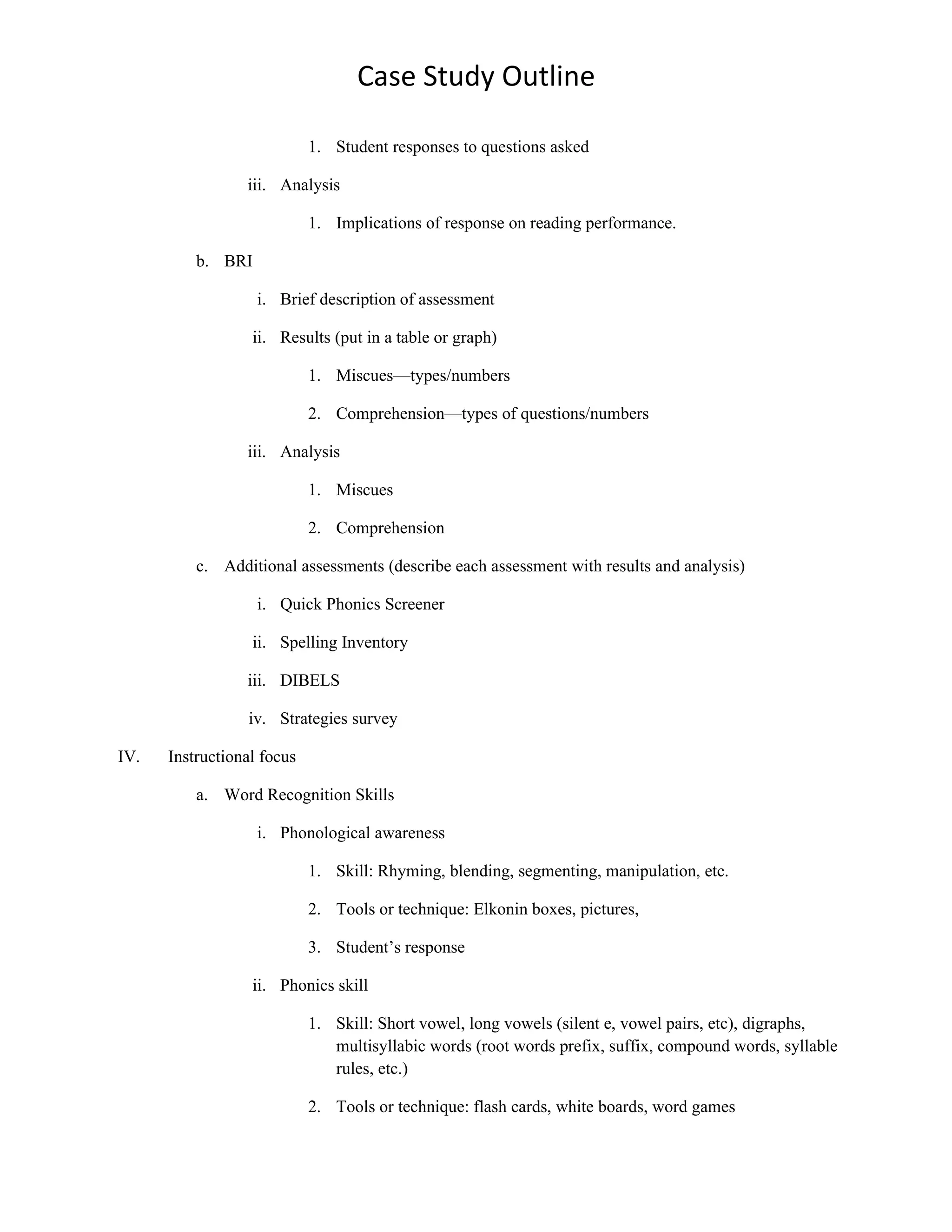
                            1. Student responses to questions asked

                 iii. Analysis

                            1. Implications of response on reading performance.

          b. BRI

                   i. Brief description of assessment

                  ii. Results (put in a table or graph)

                            1. Miscues—types/numbers

                            2. Comprehension—types of questions/numbers

                 iii. Analysis

                            1. Miscues

                            2. Comprehension

          c. Additional assessments (describe each assessment with results and analysis)

                   i. Quick Phonics Screener

                  ii. Spelling Inventory

                 iii. DIBELS

                 iv. Strategies survey

IV.   Instructional focus

          a. Word Recognition Skills

                   i. Phonological awareness

                            1. Skill: Rhyming, blending, segmenting, manipulation, etc.

                            2. Tools or technique: Elkonin boxes, pictures,

                            3. Student’s response

                  ii. Phonics skill

                            1. Skill: Short vowel, long vowels (silent e, vowel pairs, etc), digraphs,
                               multisyllabic words (root words prefix, suffix, compound words, syllable
                               rules, etc.)

                            2. Tools or technique: flash cards, white boards, word games
Case Study Outline

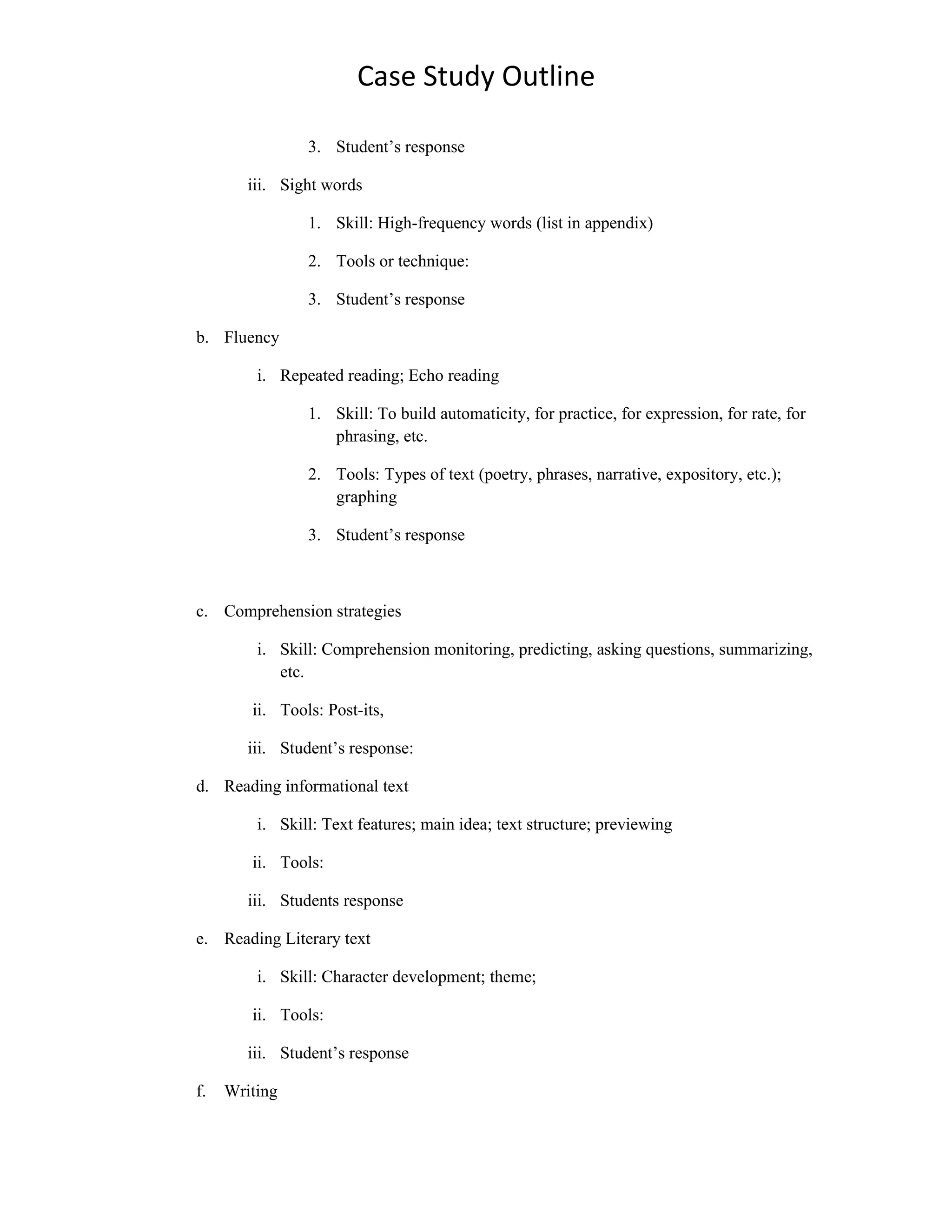
                3. Student’s response

        iii. Sight words

                1. Skill: High-frequency words (list in appendix)

                2. Tools or technique:

                3. Student’s response

b. Fluency

         i. Repeated reading; Echo reading

                1. Skill: To build automaticity, for practice, for expression, for rate, for
                   phrasing, etc.

                2. Tools: Types of text (poetry, phrases, narrative, expository, etc.);
                   graphing

                3. Student’s response


c. Comprehension strategies

         i. Skill: Comprehension monitoring, predicting, asking questions, summarizing,
            etc.

        ii. Tools: Post-its,

        iii. Student’s response:

d. Reading informational text

         i. Skill: Text features; main idea; text structure; previewing

        ii. Tools:

        iii. Students response

e. Reading Literary text

         i. Skill: Character development; theme;

        ii. Tools:

        iii. Student’s response

f.   Writing
Case Study Outline

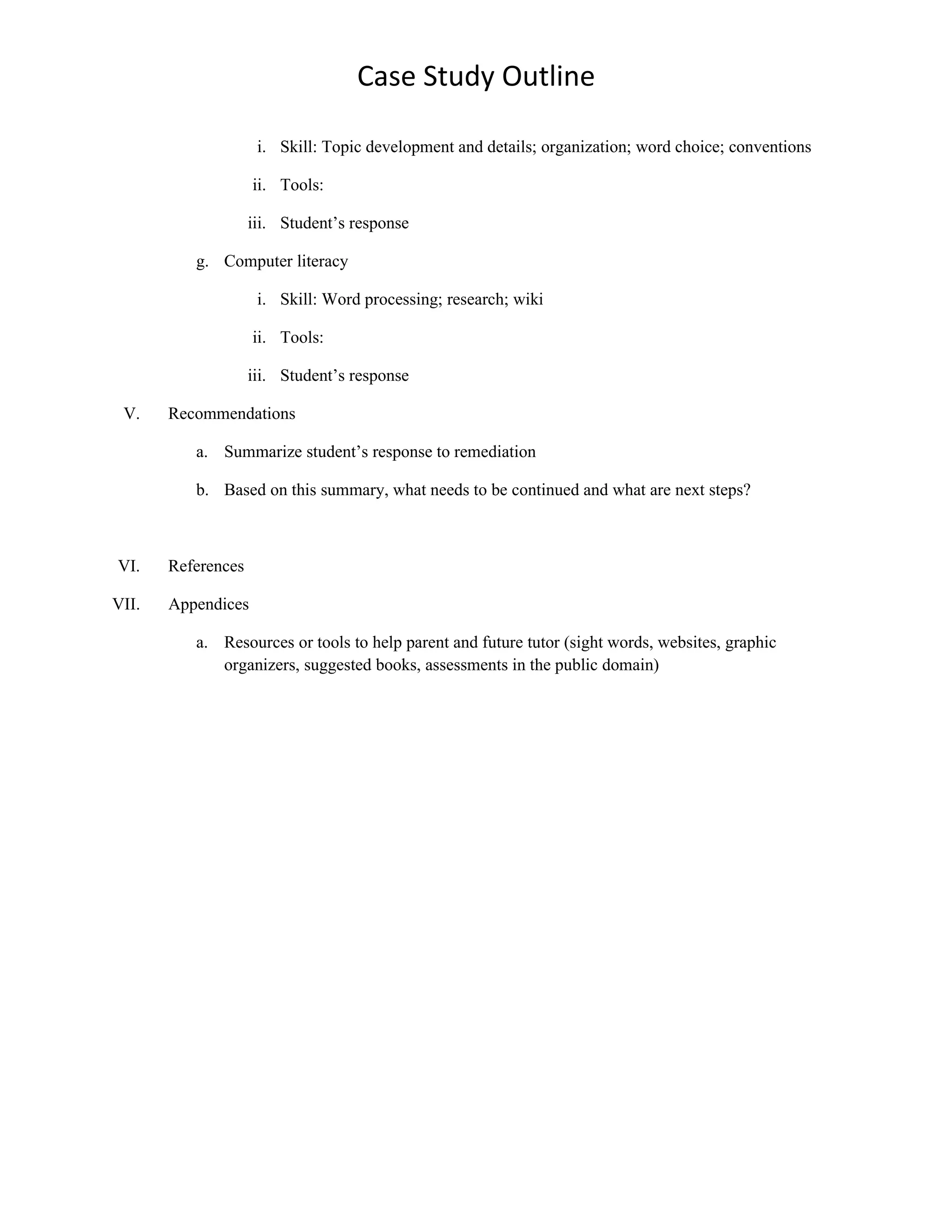
                     i. Skill: Topic development and details; organization; word choice; conventions

                    ii. Tools:

                    iii. Student’s response

          g. Computer literacy

                     i. Skill: Word processing; research; wiki

                    ii. Tools:

                    iii. Student’s response

 V.    Recommendations

          a. Summarize student’s response to remediation

          b. Based on this summary, what needs to be continued and what are next steps?


VI.    References

VII.   Appendices

          a. Resources or tools to help parent and future tutor (sight words, websites, graphic
             organizers, suggested books, assessments in the public domain)

Extended case study outline 97 2

  • 1.
    Case Study Outline Pleasewrite the case study in paragraph (not outline) format. I. Background Information a. Student name (pseudonym) b. Age c. Grade (retention, if known) d. Health information (attendance from teacher if available) i. Known vision or hearing problems, ADD, ADHD, etc. e. Family information i. Parents—occupation, reading habits, etc. ii. Siblings—birth order iii. (Mobility – new to school, number of schools) f. School information i. Special services received ii. Behavioral information from teacher if available iii. Demographics of school – free and reduced lunch, Title 1 iv. Number of students in classroom g. Include other relevant information II. Testing Conditions a. Location of testing and possible effects on test results b. Observation of student behavior during testing and possible effects on test results c. Number of times you have met with student d. Frequency of interruptions of test III. Test Results a. Attitude/interest surveys i. Brief description of assessment ii. Results
  • 2.
    Case Study Outline 1. Student responses to questions asked iii. Analysis 1. Implications of response on reading performance. b. BRI i. Brief description of assessment ii. Results (put in a table or graph) 1. Miscues—types/numbers 2. Comprehension—types of questions/numbers iii. Analysis 1. Miscues 2. Comprehension c. Additional assessments (describe each assessment with results and analysis) i. Quick Phonics Screener ii. Spelling Inventory iii. DIBELS iv. Strategies survey IV. Instructional focus a. Word Recognition Skills i. Phonological awareness 1. Skill: Rhyming, blending, segmenting, manipulation, etc. 2. Tools or technique: Elkonin boxes, pictures, 3. Student’s response ii. Phonics skill 1. Skill: Short vowel, long vowels (silent e, vowel pairs, etc), digraphs, multisyllabic words (root words prefix, suffix, compound words, syllable rules, etc.) 2. Tools or technique: flash cards, white boards, word games
  • 3.
    Case Study Outline 3. Student’s response iii. Sight words 1. Skill: High-frequency words (list in appendix) 2. Tools or technique: 3. Student’s response b. Fluency i. Repeated reading; Echo reading 1. Skill: To build automaticity, for practice, for expression, for rate, for phrasing, etc. 2. Tools: Types of text (poetry, phrases, narrative, expository, etc.); graphing 3. Student’s response c. Comprehension strategies i. Skill: Comprehension monitoring, predicting, asking questions, summarizing, etc. ii. Tools: Post-its, iii. Student’s response: d. Reading informational text i. Skill: Text features; main idea; text structure; previewing ii. Tools: iii. Students response e. Reading Literary text i. Skill: Character development; theme; ii. Tools: iii. Student’s response f. Writing
  • 4.
    Case Study Outline i. Skill: Topic development and details; organization; word choice; conventions ii. Tools: iii. Student’s response g. Computer literacy i. Skill: Word processing; research; wiki ii. Tools: iii. Student’s response V. Recommendations a. Summarize student’s response to remediation b. Based on this summary, what needs to be continued and what are next steps? VI. References VII. Appendices a. Resources or tools to help parent and future tutor (sight words, websites, graphic organizers, suggested books, assessments in the public domain)