



Agile project trackingA gentle introduction to using burn-up charts to manage Agile projects
One question …
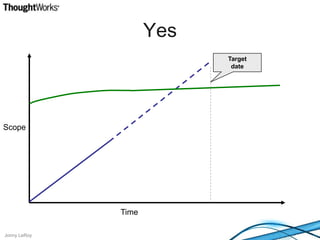
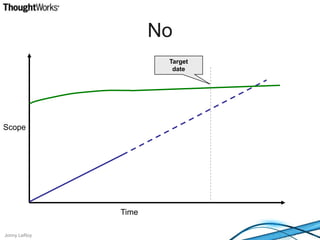
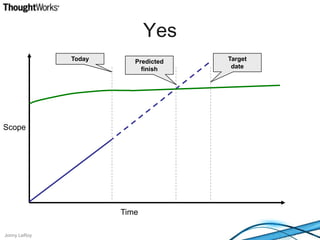
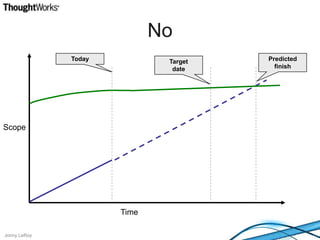
“Is my project on track?”
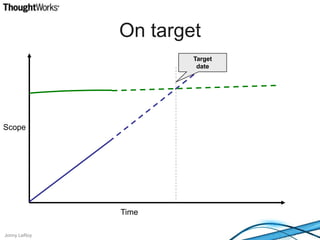
YesTargetdateScopeTime
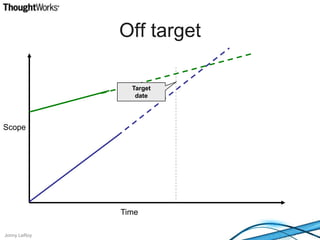
NoTargetdateScopeTime
YesTodayTargetdatePredicted finishScopeTime
NoTodayPredicted finishTargetdateScopeTime
Easy …
… how do I make one of those?
completion of scopeplotted over time
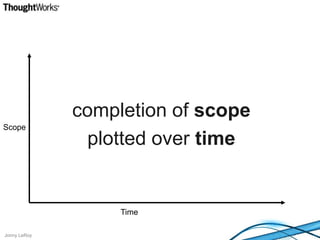
ScopeTimecompletion of scopeplotted over time
scope = story points*
scope = story points**story point = estimation unit
scope = story points*time = iterations*story point = estimation unit
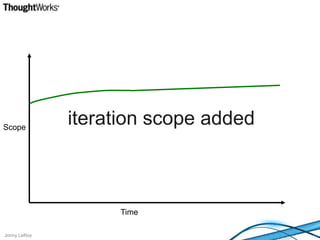
iteration scope added
ScopeTimeiteration scope added
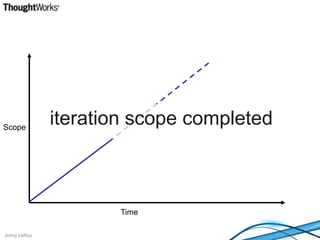
iteration scope completed
ScopeTimeiteration scope completed
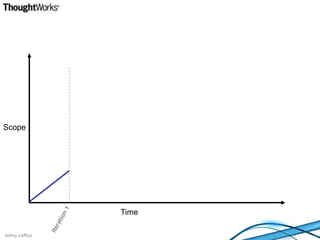
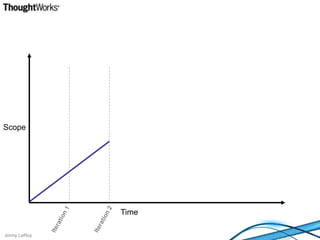
ScopeTimeIteration 1
ScopeTimeIteration 1Iteration 2
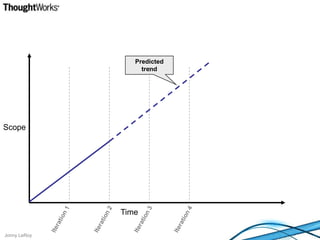
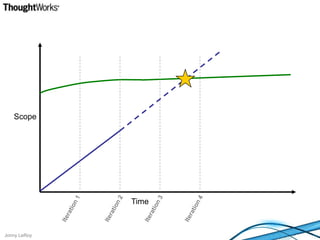
ScopeTimePredicted trendIteration 1Iteration 2Iteration 3Iteration 4
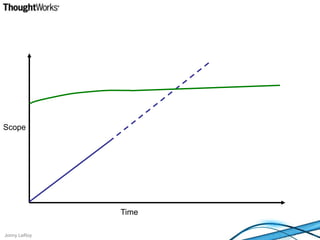
do cross the beams!
ScopeTime
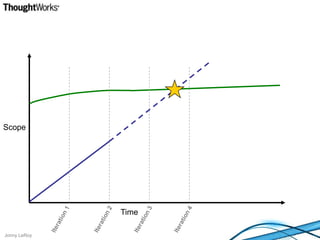
ScopeTimeIteration 1Iteration 2Iteration 3Iteration 4
hurrah!
when lines go bad
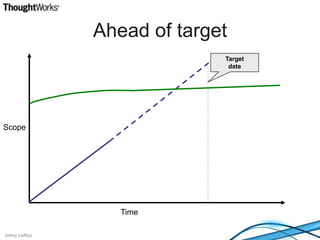
ScopeTimeTargetdateAhead of target
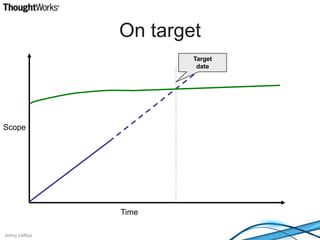
ScopeTimeTargetdateOn target
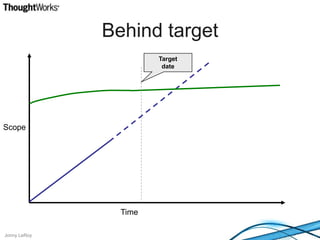
ScopeTimeTargetdateBehind target
ScopeTimeTargetdateOn target
ScopeTimeOff targetTargetdate
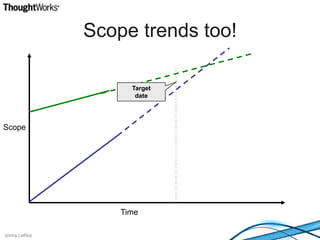
ScopeTimeScope trends too!Targetdate
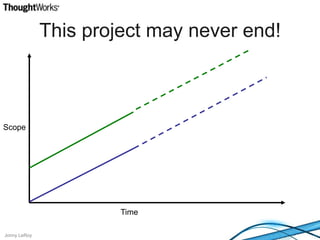
ScopeTimeThis project may never end!
What to do if the lines don’t meet?
have a conversation
of course …
… how do I get one again?
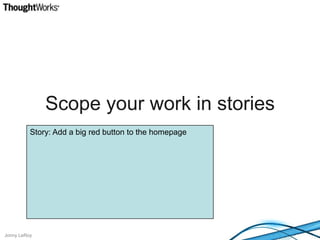
Scope your work in storiesStory: Add a big red button to the homepage
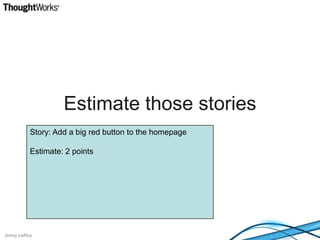
Estimate those storiesStory: Add a big red button to the homepageEstimate: 2 points
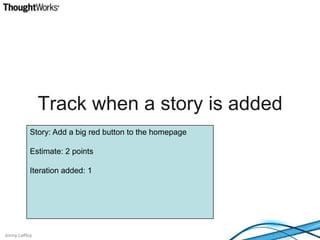
Track when a story is addedStory: Add a big red button to the homepageEstimate: 2 pointsIteration added: 1
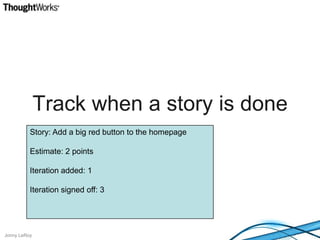
Track when a story is doneStory: Add a big red button to the homepageEstimate: 2 pointsIteration added: 1Iteration signed off: 3
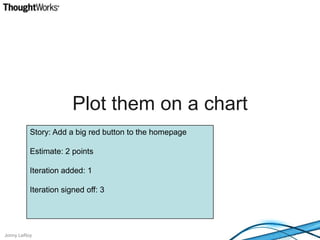
Plot them on a chartStory: Add a big red button to the homepageEstimate: 2 pointsIteration added: 1Iteration signed off: 3
ScopeIteration 1Iteration 2Iteration 3Iteration 4Time
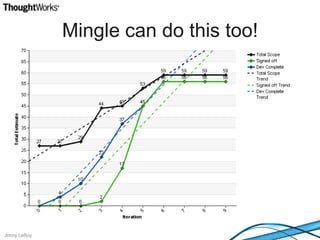
Mingle can do this too!
Don’t forget …
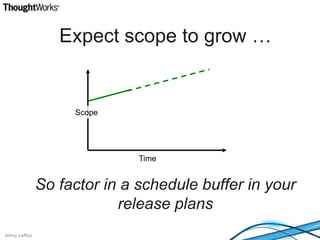
ScopeTimeExpect scope to grow …So factor in a schedule buffer in your release plans
Agile teams test as they go …If you’re not continuously testing in a production-like environment, expect to spend time testing and stabilizing at the end of the project
Capture all requirements as storiesOtherwise your chart won’t be showing you the whole picture
Development complete ≠ completeA story doesn’t count as finished until it’s verified to be working in a production-like environment
There are still risksContinue to track risks, issues and external dependencies(they’re not going away)
Mythical man-monthPredicting the impact on velocity of changes in team size is hard
Remember a team has velocity, not an individual
Further readinghttp://www.xprogramming.com/xpmag/BigVisibleCharts.htmhttp://alistair.cockburn.us/Earned-value+and+burn+chartshttp://www.agilekiwi.com/agile_charts.htmhttp://studios.thoughtworks.com/mingle-agile-project-management/2.2/help/creating_charts_and_tables_in_wiki_pages.html

Agile project tracking - burn up charts