UNDERSTANDING
SCRUM
What Is Scrum?
 Scrum is a framework within which people can address
complex adaptive problems, while productively and
creatively delivering products of the highest possible
value
 Scrum is an agile project management framework used
primarily for software development projects with the
goal of delivering new software capability every 2-4
weeks
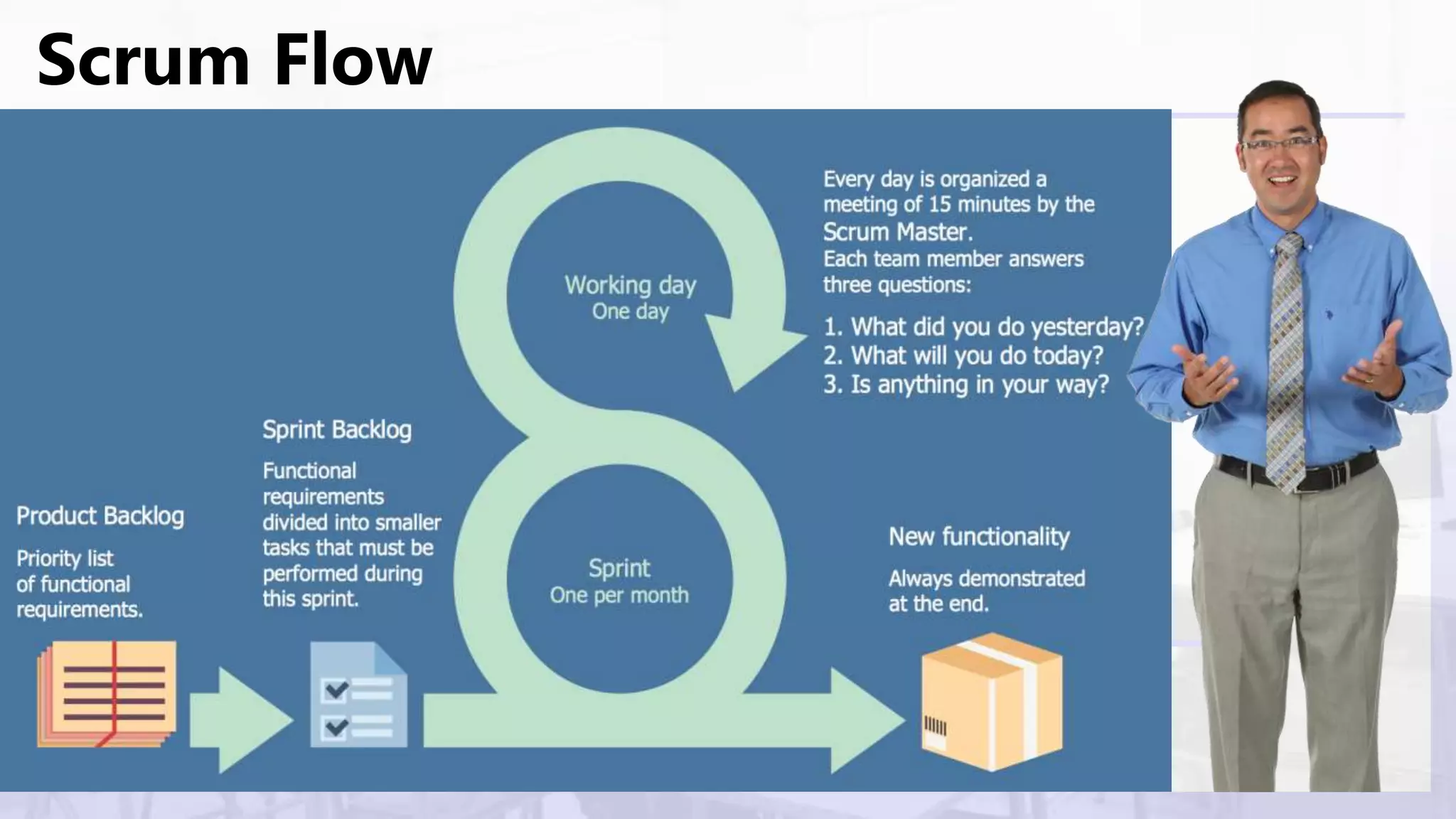
Scrum Flow
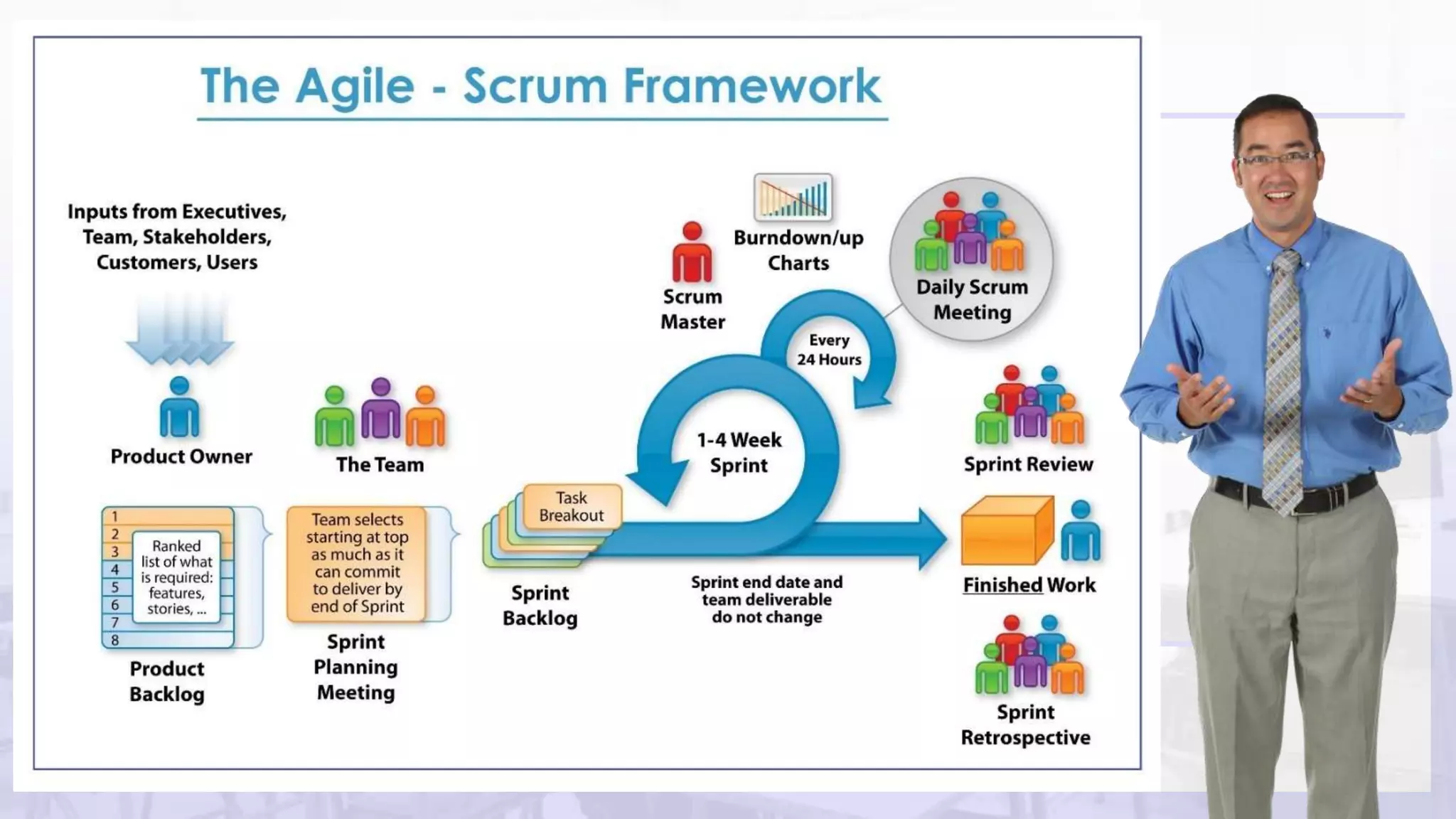
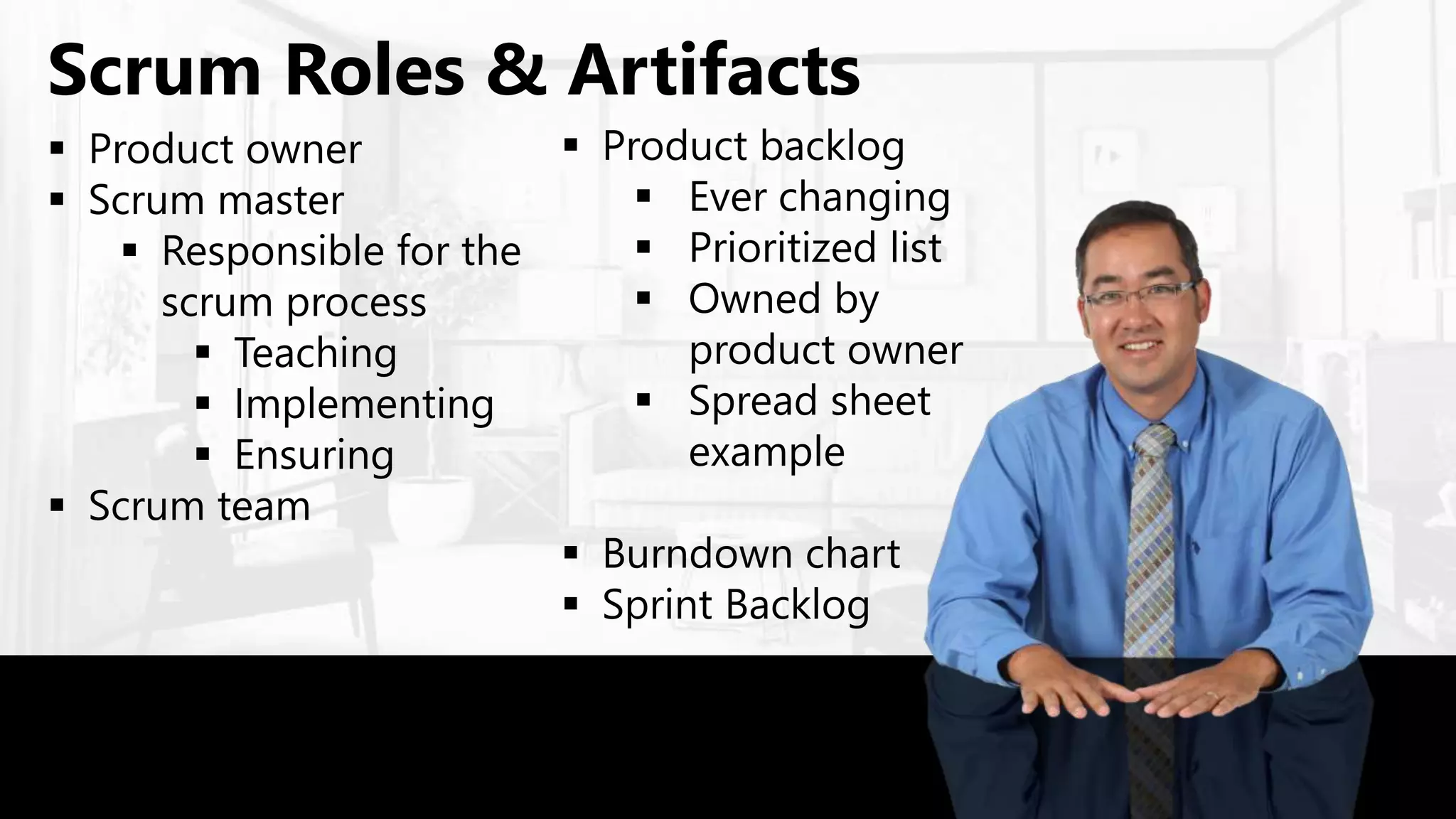
 Product owner
 Scrum master
 Responsible for the
scrum process
 Teaching
 Implementing
 Ensuring
 Scrum team
Scrum Roles & Artifacts
 Product backlog
 Ever changing
 Prioritized list
 Owned by
product owner
 Spread sheet
example
 Burndown chart
 Sprint Backlog
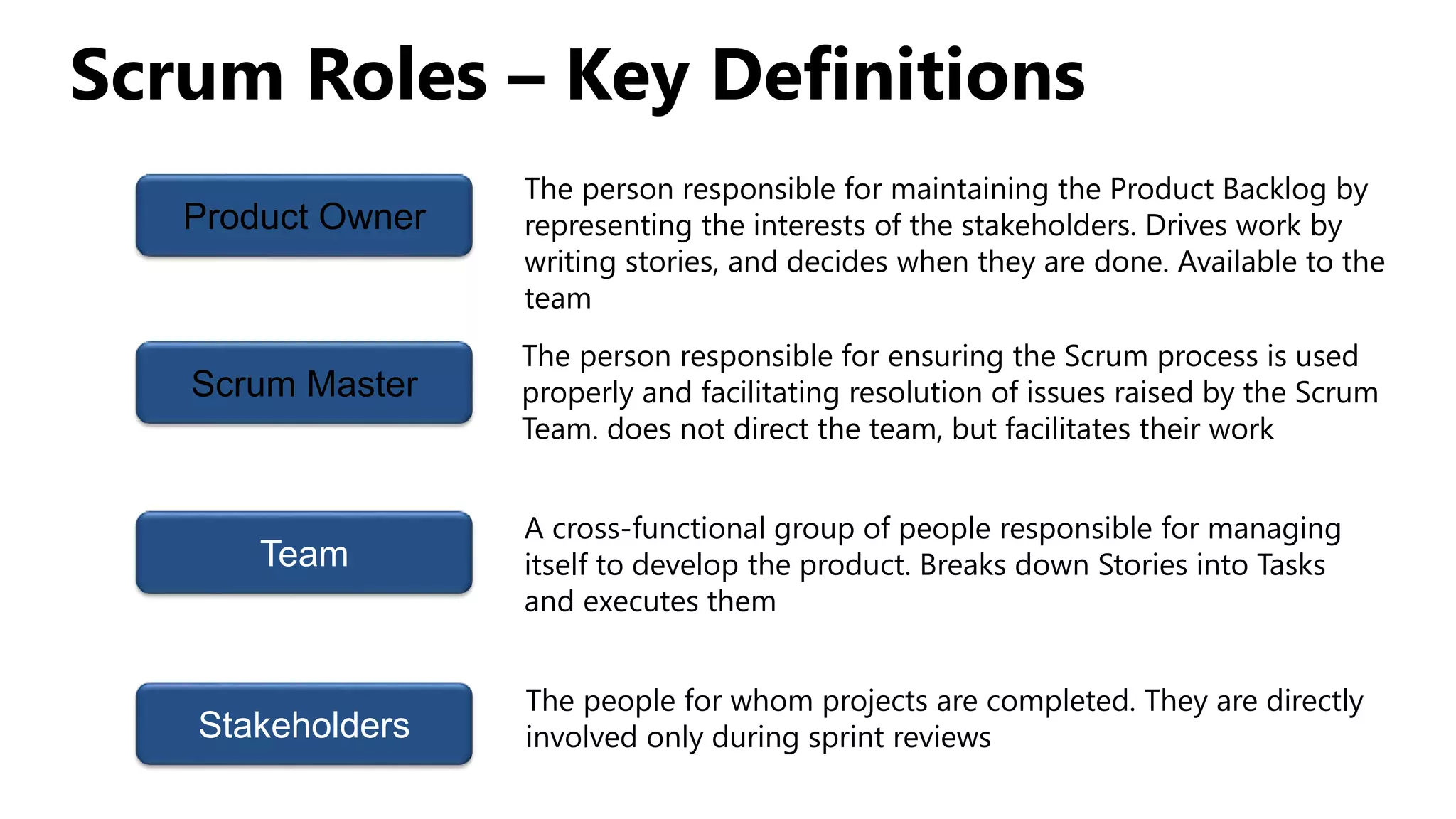
Scrum Roles – Key Definitions
Product Owner
Scrum Master
Team
Stakeholders
The person responsible for maintaining the Product Backlog by
representing the interests of the stakeholders. Drives work by
writing stories, and decides when they are done. Available to the
team
The person responsible for ensuring the Scrum process is used
properly and facilitating resolution of issues raised by the Scrum
Team. does not direct the team, but facilitates their work
A cross-functional group of people responsible for managing
itself to develop the product. Breaks down Stories into Tasks
and executes them
The people for whom projects are completed. They are directly
involved only during sprint reviews
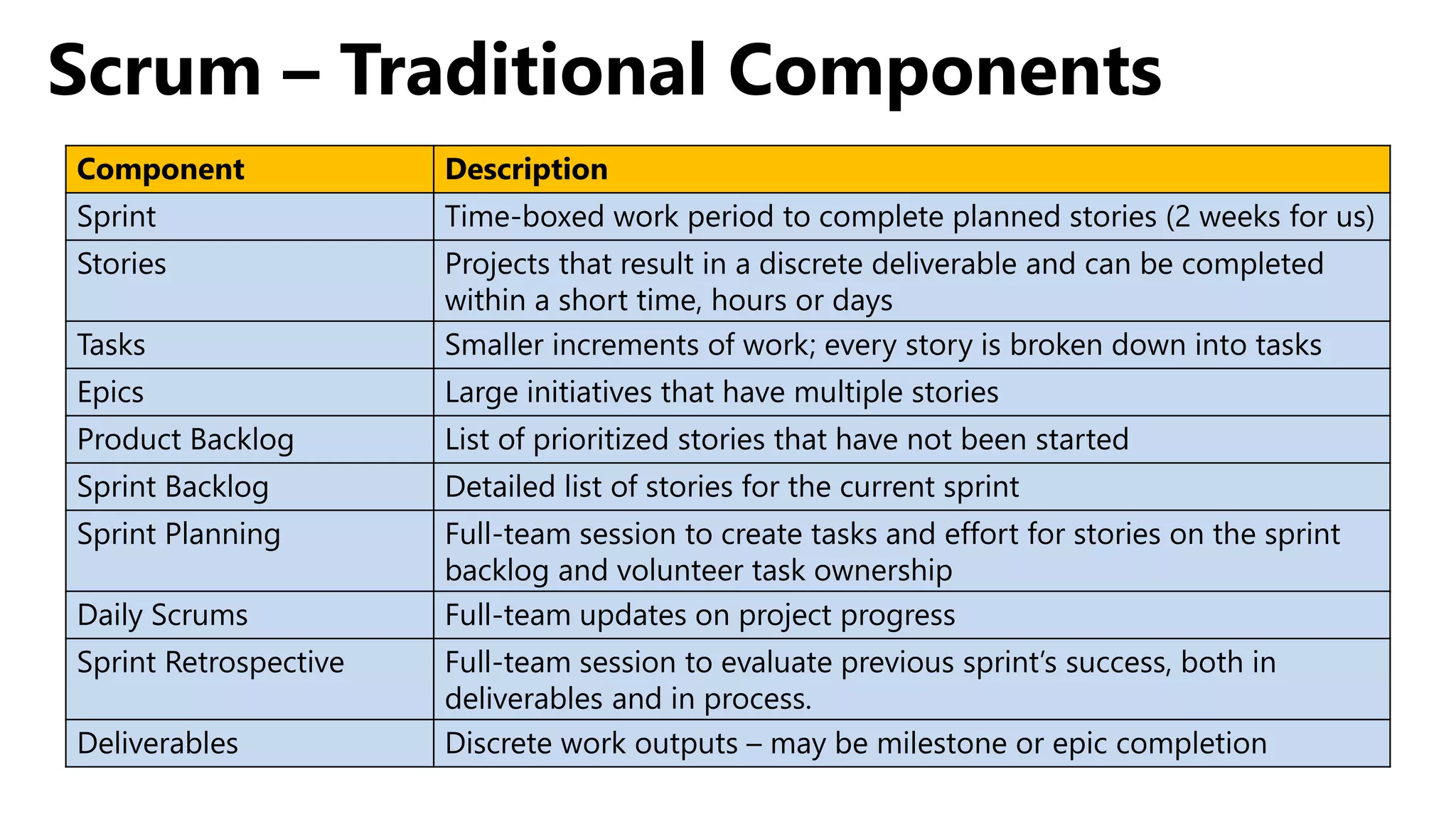
Component Description
Sprint Time-boxed work period to complete planned stories (2 weeks for us)
Stories Projects that result in a discrete deliverable and can be completed
within a short time, hours or days
Tasks Smaller increments of work; every story is broken down into tasks
Epics Large initiatives that have multiple stories
Product Backlog List of prioritized stories that have not been started
Sprint Backlog Detailed list of stories for the current sprint
Sprint Planning Full-team session to create tasks and effort for stories on the sprint
backlog and volunteer task ownership
Daily Scrums Full-team updates on project progress
Sprint Retrospective Full-team session to evaluate previous sprint’s success, both in
deliverables and in process.
Deliverables Discrete work outputs – may be milestone or epic completion
Scrum – Traditional Components
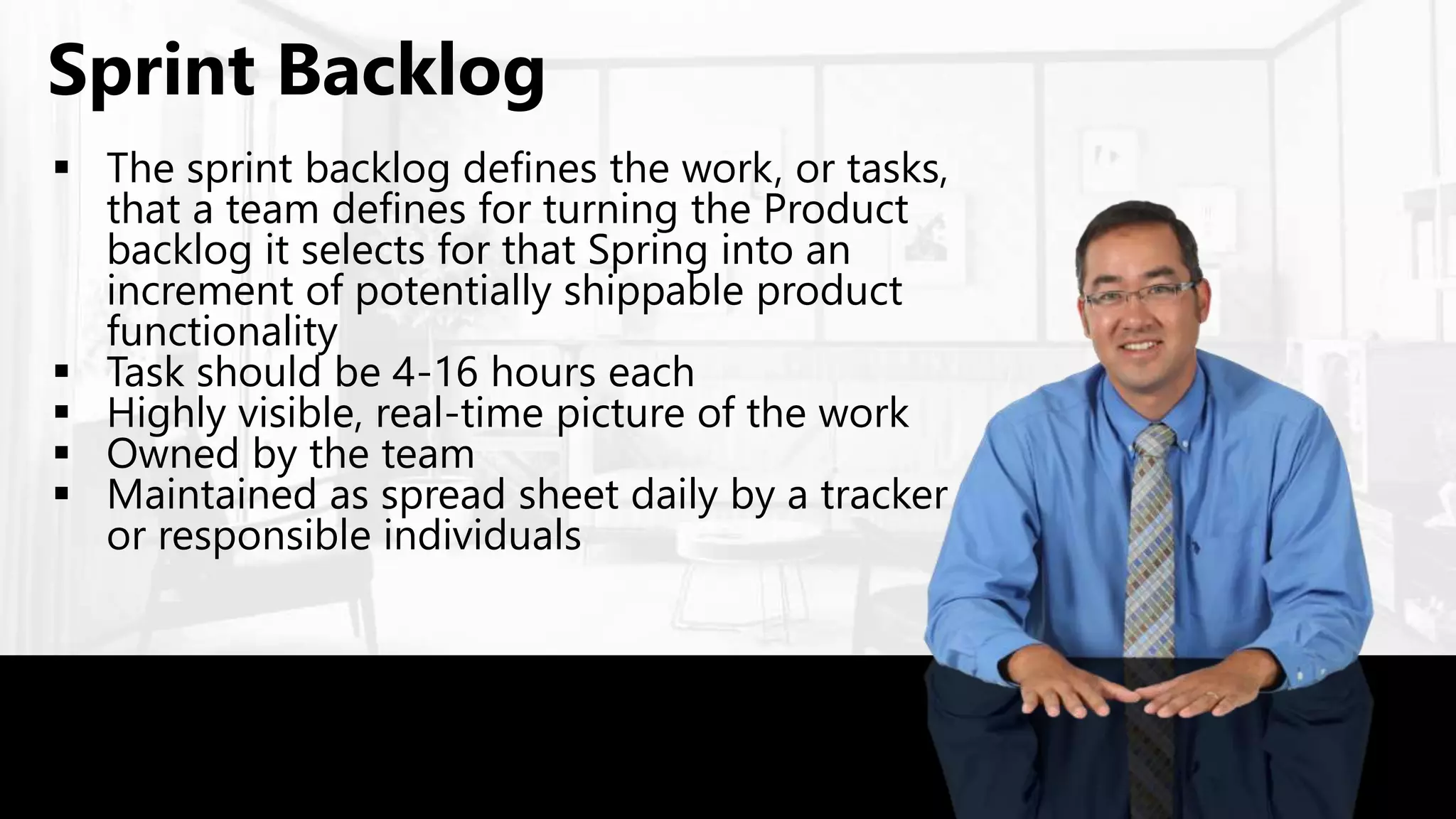
 The sprint backlog defines the work, or tasks,
that a team defines for turning the Product
backlog it selects for that Spring into an
increment of potentially shippable product
functionality
 Task should be 4-16 hours each
 Highly visible, real-time picture of the work
 Owned by the team
 Maintained as spread sheet daily by a tracker
or responsible individuals
Sprint Backlog
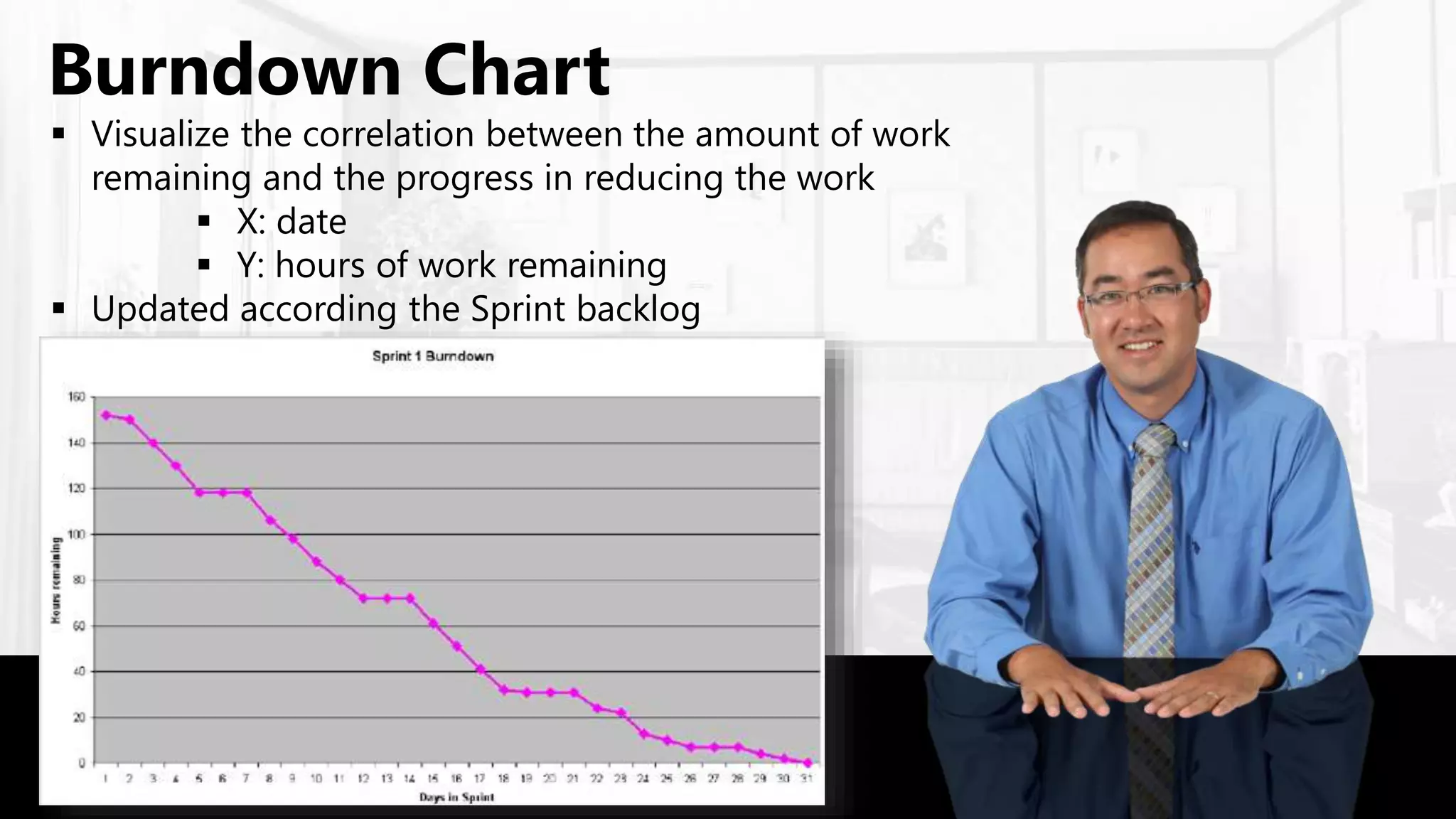
 Visualize the correlation between the amount of work
remaining and the progress in reducing the work
 X: date
 Y: hours of work remaining
 Updated according the Sprint backlog
Burndown Chart
Summary
https://www.scrum.org/scrum-glossary

Understanding Scrum

  • 1.
  • 2.
    What Is Scrum? Scrum is a framework within which people can address complex adaptive problems, while productively and creatively delivering products of the highest possible value  Scrum is an agile project management framework used primarily for software development projects with the goal of delivering new software capability every 2-4 weeks
  • 4.
  • 5.
     Product owner Scrum master  Responsible for the scrum process  Teaching  Implementing  Ensuring  Scrum team Scrum Roles & Artifacts  Product backlog  Ever changing  Prioritized list  Owned by product owner  Spread sheet example  Burndown chart  Sprint Backlog
  • 6.
    Scrum Roles –Key Definitions Product Owner Scrum Master Team Stakeholders The person responsible for maintaining the Product Backlog by representing the interests of the stakeholders. Drives work by writing stories, and decides when they are done. Available to the team The person responsible for ensuring the Scrum process is used properly and facilitating resolution of issues raised by the Scrum Team. does not direct the team, but facilitates their work A cross-functional group of people responsible for managing itself to develop the product. Breaks down Stories into Tasks and executes them The people for whom projects are completed. They are directly involved only during sprint reviews
  • 7.
    Component Description Sprint Time-boxedwork period to complete planned stories (2 weeks for us) Stories Projects that result in a discrete deliverable and can be completed within a short time, hours or days Tasks Smaller increments of work; every story is broken down into tasks Epics Large initiatives that have multiple stories Product Backlog List of prioritized stories that have not been started Sprint Backlog Detailed list of stories for the current sprint Sprint Planning Full-team session to create tasks and effort for stories on the sprint backlog and volunteer task ownership Daily Scrums Full-team updates on project progress Sprint Retrospective Full-team session to evaluate previous sprint’s success, both in deliverables and in process. Deliverables Discrete work outputs – may be milestone or epic completion Scrum – Traditional Components
  • 8.
     The sprintbacklog defines the work, or tasks, that a team defines for turning the Product backlog it selects for that Spring into an increment of potentially shippable product functionality  Task should be 4-16 hours each  Highly visible, real-time picture of the work  Owned by the team  Maintained as spread sheet daily by a tracker or responsible individuals Sprint Backlog
  • 9.
     Visualize thecorrelation between the amount of work remaining and the progress in reducing the work  X: date  Y: hours of work remaining  Updated according the Sprint backlog Burndown Chart
  • 10.