Humanistic Psychoanalysis
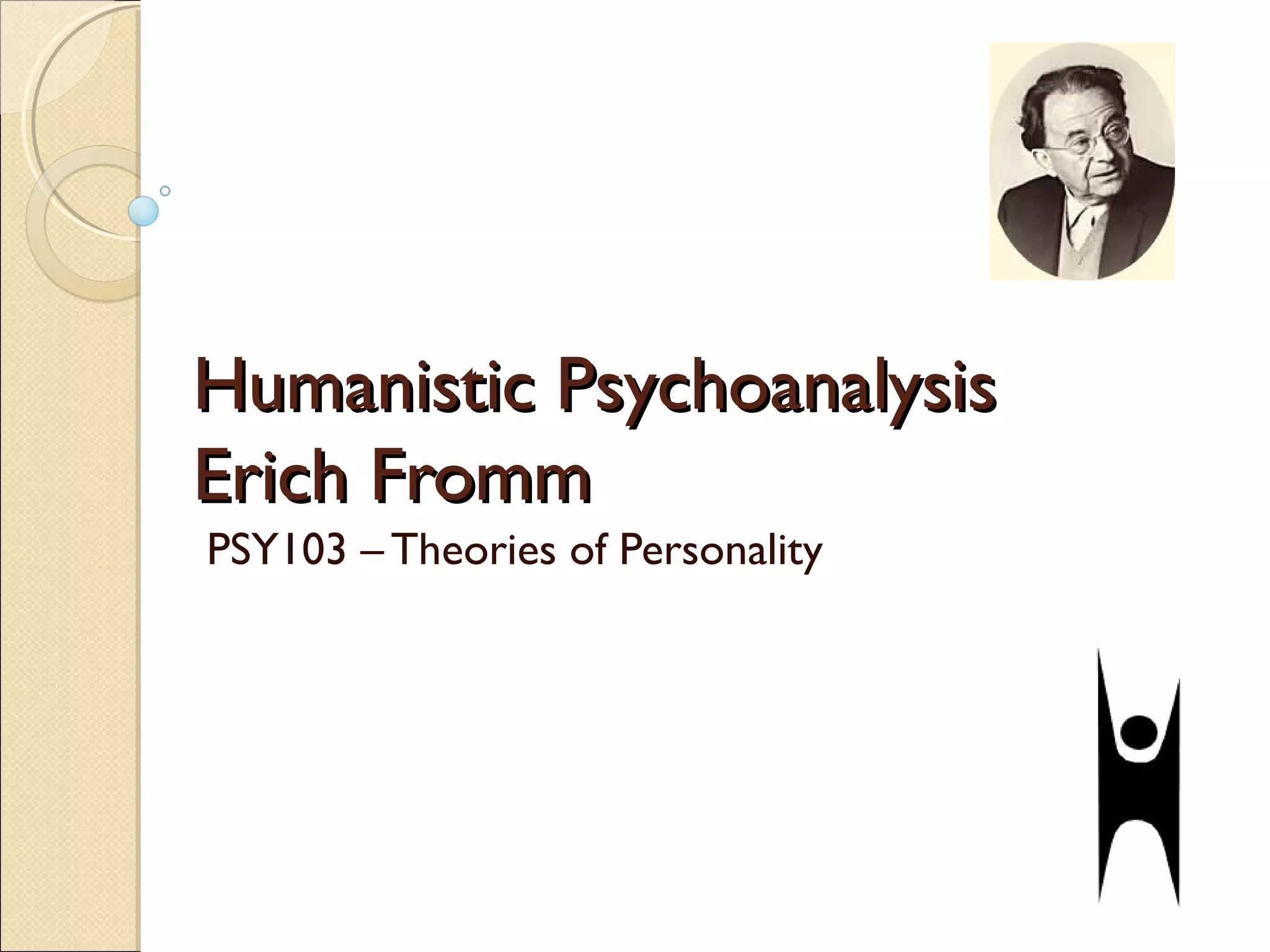
Erich Fromm
PSY103 – Theories of Personality
Overview
Emphasizes  the influence of
 sociobiological factors, history,
 economics, and class structure.

Humanity’s   separation from the natural
 world has produced feelings of loneliness
 & isolation, called Basic Anxiety.
Erich Fromm
Born   in Germany in 1900.
Strict upbringing, similar to Karen Horney
Eclectic philosophy
Combination of Sigmund Freud and Karl
 Marx
First infatuation / WWI
Married three times
Went to the US in 1934, affair with Karen
 Horney
Erich Fromm

Went    to Mexico towards end of career
Private Psychoanalytic practice
Publication of researches and books
Died in Switzerland in 1980, 5 days before
 his 80th birthday.
Influences

1.   Teachings of humanistic rabbis
2.   Karl Marx
3.   Sigmund Freud
4.   Zen Buddhism
5.   Johann Jakob Bachofen
Basic Assumptions
 Individual  personality can be understood
  in the light of human history.

 Concept     of Human Dilemma
  ◦   Reasoning facility
  ◦   Awareness as isolated beings
  ◦   Permits them to survive
  ◦   Tendency to solve insoluble dichotomies
Fundamental Dichotomies
Life   and Death

Complete    Self- realization and shortness
 of life

Separate Individuals and Social
 Relatedness
Human Needs
Also    known as existential needs
 ◦   Relatedness
 ◦   Transcendence
 ◦   Rootedness
 ◦   Sense of Identity
 ◦   Frame of Orientation
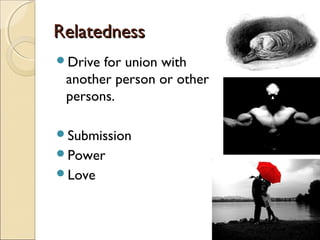
Relatedness
Drive for union with
 another person or other
 persons.

Submission
Power
Love
Transcendence
 An urge to rise above
 a passive and accidental
 existence and into the
 realm of
 purposefulness and
 freedom.

 Malignant   Aggression
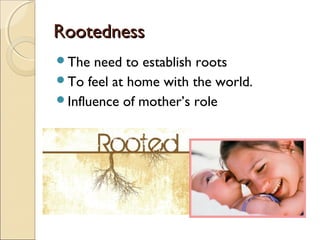
Rootedness
The  need to establish roots
To feel at home with the world.
Influence of mother’s role
Sense of Identity
The  capacity to be aware of ourselves as
 a separate entity.
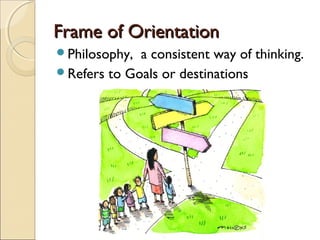
Frame of Orientation
Philosophy, a consistent way of thinking.
Refers to Goals or destinations
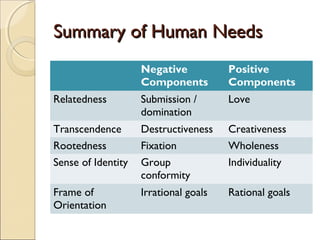
Summary of Human Needs
                    Negative           Positive
                    Components         Components
Relatedness         Submission /       Love
                    domination
Transcendence       Destructiveness    Creativeness
Rootedness          Fixation           Wholeness
Sense of Identity   Group              Individuality
                    conformity
Frame of            Irrational goals   Rational goals
Orientation
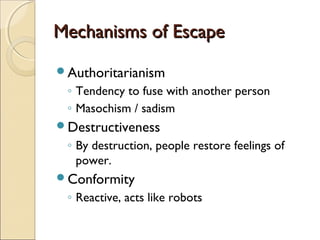
Mechanisms of Escape
Authoritarianism
 ◦ Tendency to fuse with another person
 ◦ Masochism / sadism
Destructiveness
 ◦ By destruction, people restore feelings of
   power.
Conformity
 ◦ Reactive, acts like robots
Positive Freedom
  Solution   to the human dilemma

  Represents overcoming of loneliness, achieving union
   with the world, & maintain individuality.
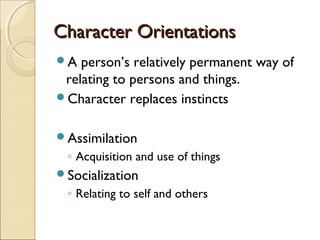
Character Orientations
A  person’s relatively permanent way of
 relating to persons and things.
Character replaces instincts


Assimilation
 ◦ Acquisition and use of things
Socialization
 ◦ Relating to self and others
Non- Productive Orientations
Strategies that fail to move people closer to
 positive freedom and self- realization.

Not   entirely negative

 ◦ Receptive
 ◦ Exploitative
 ◦ Hoarding
 ◦ Marketing
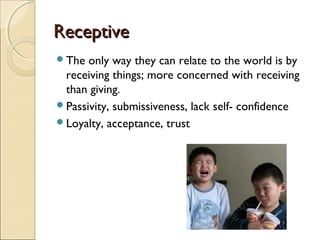
Receptive
The  only way they can relate to the world is by
 receiving things; more concerned with receiving
 than giving.
Passivity, submissiveness, lack self- confidence
Loyalty, acceptance, trust
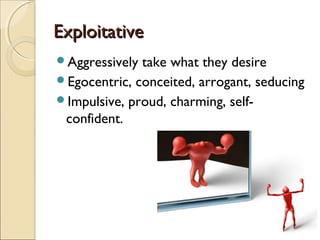
Exploitative
Aggressively take what they desire
Egocentric, conceited, arrogant, seducing
Impulsive, proud, charming, self-
 confident.
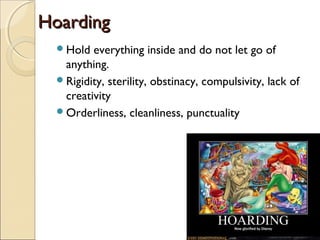
Hoarding
  Hold  everything inside and do not let go of
   anything.
  Rigidity, sterility, obstinacy, compulsivity, lack of
   creativity
  Orderliness, cleanliness, punctuality
Marketing
Dependent  on the ability to sell themselves.
Personal security rests on shaky grounds.
No permanent principles or values.
Opportunistic and wasteful
Openmindedness & adaptability
The Productive Orientation
Working


Loving


Reasoning
Personality Disorders
People  who are incapable of love and
 uniting with others.

Necrophilia
MalignantNarcissism
Incestuous Symbiosis
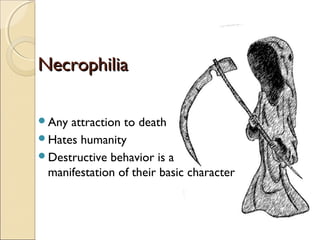
Necrophilia

Any attraction to death
Hates humanity
Destructive behavior is a
 manifestation of their basic character
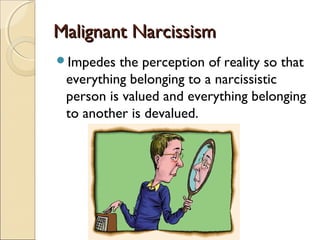
Malignant Narcissism
Impedes  the perception of reality so that
 everything belonging to a narcissistic
 person is valued and everything belonging
 to another is devalued.
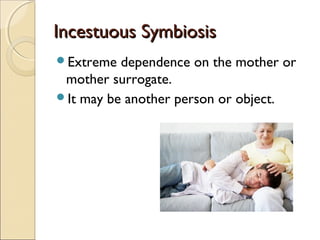
Incestuous Symbiosis
Extreme  dependence on the mother or
 mother surrogate.
It may be another person or object.
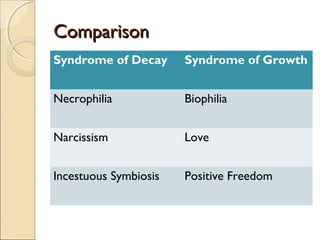
Comparison
Syndrome of Decay      Syndrome of Growth


Necrophilia            Biophilia


Narcissism             Love


Incestuous Symbiosis   Positive Freedom
Psychotherapy
Dream   Analysis
Interviews
Questionnaires
Projective Techniques
Psychohistory
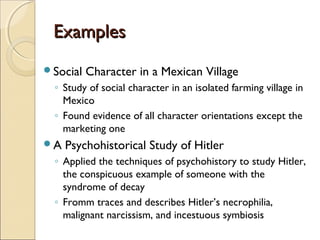
Examples
Social   Character in a Mexican Village
  ◦ Study of social character in an isolated farming village in
    Mexico
  ◦ Found evidence of all character orientations except the
    marketing one
A   Psychohistorical Study of Hitler
  ◦ Applied the techniques of psychohistory to study Hitler,
    the conspicuous example of someone with the
    syndrome of decay
  ◦ Fromm traces and describes Hitler’s necrophilia,
    malignant narcissism, and incestuous symbiosis
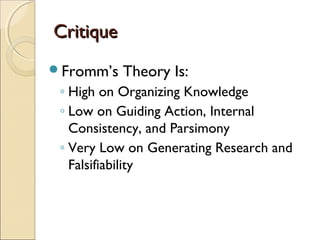
Critique
Fromm’s   Theory Is:
 ◦ High on Organizing Knowledge
 ◦ Low on Guiding Action, Internal
   Consistency, and Parsimony
 ◦ Very Low on Generating Research and
   Falsifiability

Fromm's humanistic psychoanalysis

  • 1.
  • 2.
    Overview Emphasizes theinfluence of sociobiological factors, history, economics, and class structure. Humanity’s separation from the natural world has produced feelings of loneliness & isolation, called Basic Anxiety.
  • 3.
    Erich Fromm Born in Germany in 1900. Strict upbringing, similar to Karen Horney Eclectic philosophy Combination of Sigmund Freud and Karl Marx First infatuation / WWI Married three times Went to the US in 1934, affair with Karen Horney
  • 4.
    Erich Fromm Went to Mexico towards end of career Private Psychoanalytic practice Publication of researches and books Died in Switzerland in 1980, 5 days before his 80th birthday.
  • 5.
    Influences 1. Teachings of humanistic rabbis 2. Karl Marx 3. Sigmund Freud 4. Zen Buddhism 5. Johann Jakob Bachofen
  • 6.
    Basic Assumptions Individual personality can be understood in the light of human history. Concept of Human Dilemma ◦ Reasoning facility ◦ Awareness as isolated beings ◦ Permits them to survive ◦ Tendency to solve insoluble dichotomies
  • 7.
    Fundamental Dichotomies Life and Death Complete Self- realization and shortness of life Separate Individuals and Social Relatedness
  • 8.
    Human Needs Also known as existential needs ◦ Relatedness ◦ Transcendence ◦ Rootedness ◦ Sense of Identity ◦ Frame of Orientation
  • 9.
    Relatedness Drive for unionwith another person or other persons. Submission Power Love
  • 10.
    Transcendence  An urgeto rise above a passive and accidental existence and into the realm of purposefulness and freedom.  Malignant Aggression
  • 11.
    Rootedness The needto establish roots To feel at home with the world. Influence of mother’s role
  • 12.
    Sense of Identity The capacity to be aware of ourselves as a separate entity.
  • 13.
    Frame of Orientation Philosophy,a consistent way of thinking. Refers to Goals or destinations
  • 14.
    Summary of HumanNeeds Negative Positive Components Components Relatedness Submission / Love domination Transcendence Destructiveness Creativeness Rootedness Fixation Wholeness Sense of Identity Group Individuality conformity Frame of Irrational goals Rational goals Orientation
  • 15.
    Mechanisms of Escape Authoritarianism ◦ Tendency to fuse with another person ◦ Masochism / sadism Destructiveness ◦ By destruction, people restore feelings of power. Conformity ◦ Reactive, acts like robots
  • 16.
    Positive Freedom Solution to the human dilemma  Represents overcoming of loneliness, achieving union with the world, & maintain individuality.
  • 17.
    Character Orientations A person’s relatively permanent way of relating to persons and things. Character replaces instincts Assimilation ◦ Acquisition and use of things Socialization ◦ Relating to self and others
  • 18.
    Non- Productive Orientations Strategiesthat fail to move people closer to positive freedom and self- realization. Not entirely negative ◦ Receptive ◦ Exploitative ◦ Hoarding ◦ Marketing
  • 19.
    Receptive The onlyway they can relate to the world is by receiving things; more concerned with receiving than giving. Passivity, submissiveness, lack self- confidence Loyalty, acceptance, trust
  • 20.
    Exploitative Aggressively take whatthey desire Egocentric, conceited, arrogant, seducing Impulsive, proud, charming, self- confident.
  • 21.
    Hoarding Hold everything inside and do not let go of anything. Rigidity, sterility, obstinacy, compulsivity, lack of creativity Orderliness, cleanliness, punctuality
  • 22.
    Marketing Dependent onthe ability to sell themselves. Personal security rests on shaky grounds. No permanent principles or values. Opportunistic and wasteful Openmindedness & adaptability
  • 23.
  • 24.
    Personality Disorders People who are incapable of love and uniting with others. Necrophilia MalignantNarcissism Incestuous Symbiosis
  • 25.
    Necrophilia Any attraction todeath Hates humanity Destructive behavior is a manifestation of their basic character
  • 26.
    Malignant Narcissism Impedes the perception of reality so that everything belonging to a narcissistic person is valued and everything belonging to another is devalued.
  • 27.
    Incestuous Symbiosis Extreme dependence on the mother or mother surrogate. It may be another person or object.
  • 28.
    Comparison Syndrome of Decay Syndrome of Growth Necrophilia Biophilia Narcissism Love Incestuous Symbiosis Positive Freedom
  • 29.
    Psychotherapy Dream Analysis Interviews Questionnaires Projective Techniques Psychohistory
  • 30.
    Examples Social Character in a Mexican Village ◦ Study of social character in an isolated farming village in Mexico ◦ Found evidence of all character orientations except the marketing one A Psychohistorical Study of Hitler ◦ Applied the techniques of psychohistory to study Hitler, the conspicuous example of someone with the syndrome of decay ◦ Fromm traces and describes Hitler’s necrophilia, malignant narcissism, and incestuous symbiosis
  • 31.
    Critique Fromm’s Theory Is: ◦ High on Organizing Knowledge ◦ Low on Guiding Action, Internal Consistency, and Parsimony ◦ Very Low on Generating Research and Falsifiability