Major
Foundations of
Curriculum
Prepared by:
Jhun Ar Ar R. Ramos
Major Foundations of
Curriculum
 Philosophical
 Historical
 Psychological
 Social
Philosophical Foundations of
Curriculum
• Four Educational Philosophies
Philosophical Foundations of
Curriculum
 Perennialism
Aim of Education – To educate the rational
person; to cultivate the intellect.
Role of Education – Teachers help students
think with reason.
Focus in the Curriculum – Classical subjects,
literary analysis and curriculum constant.
Curriculum Trends – Use of great books and
return to liberal.
Philosophical Foundations of
Curriculum
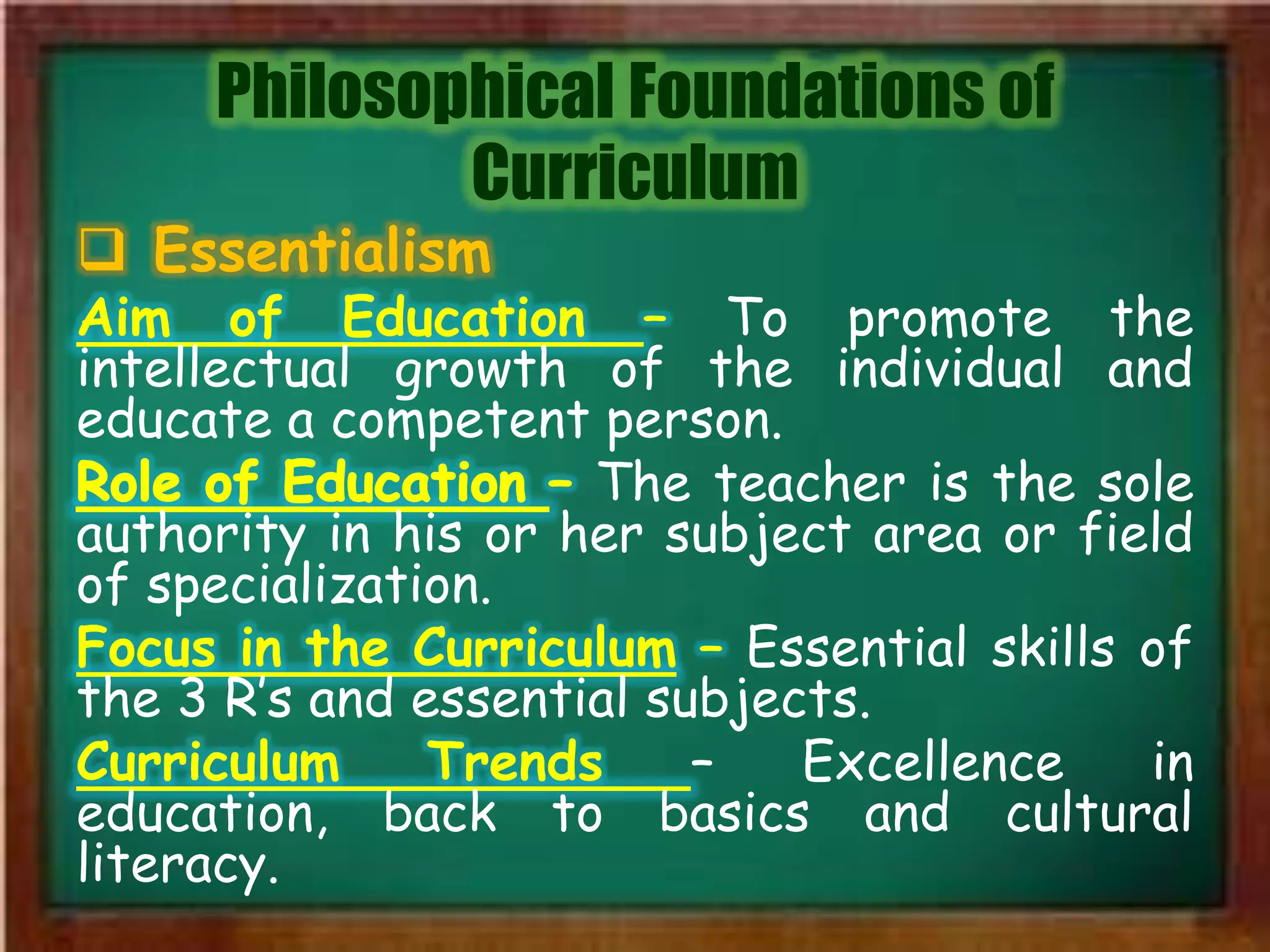
 Essentialism
Aim of Education – To promote the
intellectual growth of the individual and
educate a competent person.
The teacher is the sole
authority in his or her subject area or field
of specialization.
Focus in the Curriculum – Essential skills of
the 3 R’s and essential subjects.
Curriculum Trends – Excellence in
education, back to basics and cultural
literacy.
Philosophical Foundations of
Curriculum
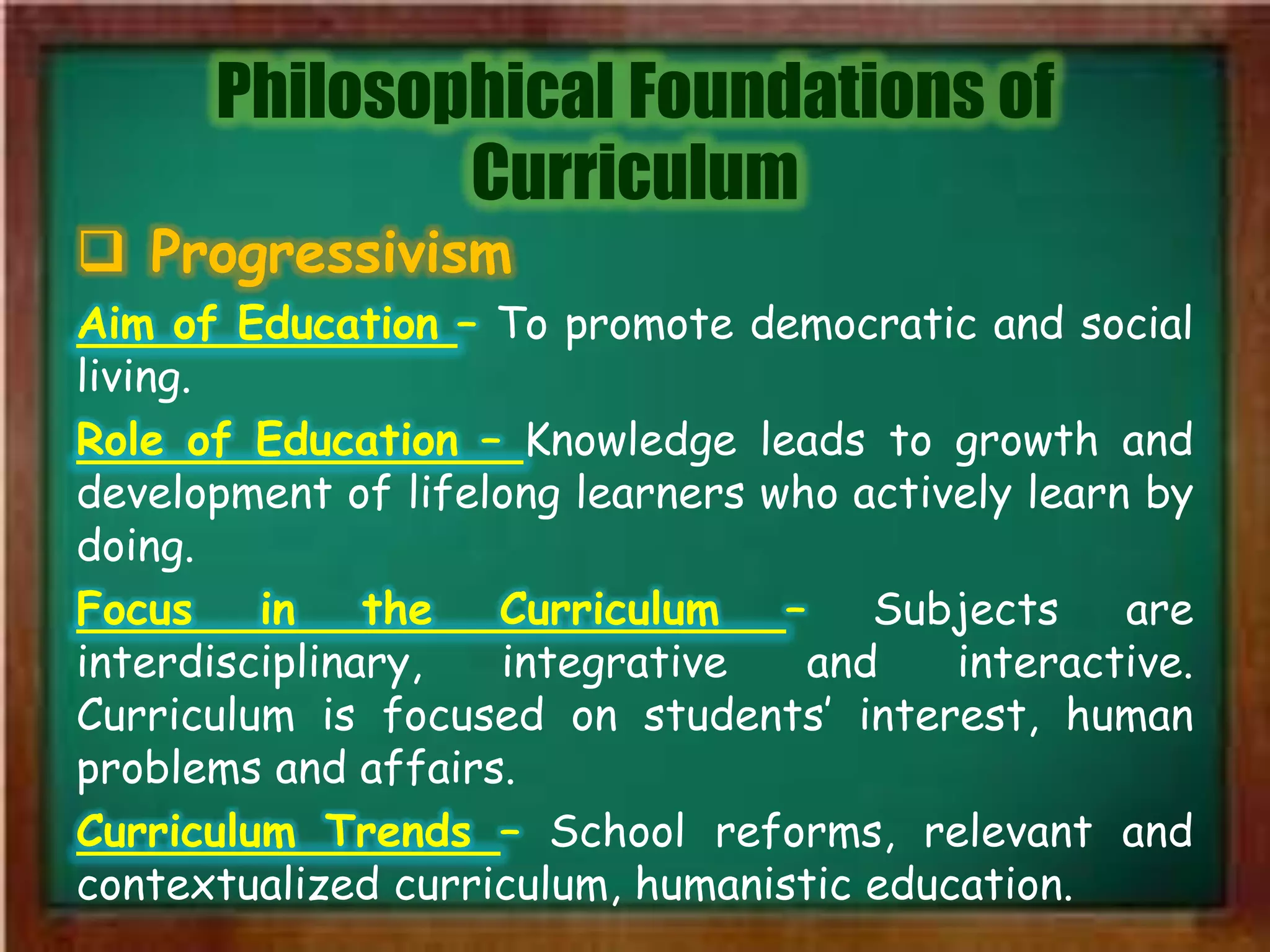
 Progressivism
Aim of Education – To promote democratic and social
living.
Role of Education – Knowledge leads to growth and
development of lifelong learners who actively learn by
doing.
Focus in the Curriculum – Subjects are
interdisciplinary, integrative and interactive.
Curriculum is focused on students’ interest, human
problems and affairs.
Curriculum Trends – School reforms, relevant and
contextualized curriculum, humanistic education.
Philosophical Foundations of
Curriculum
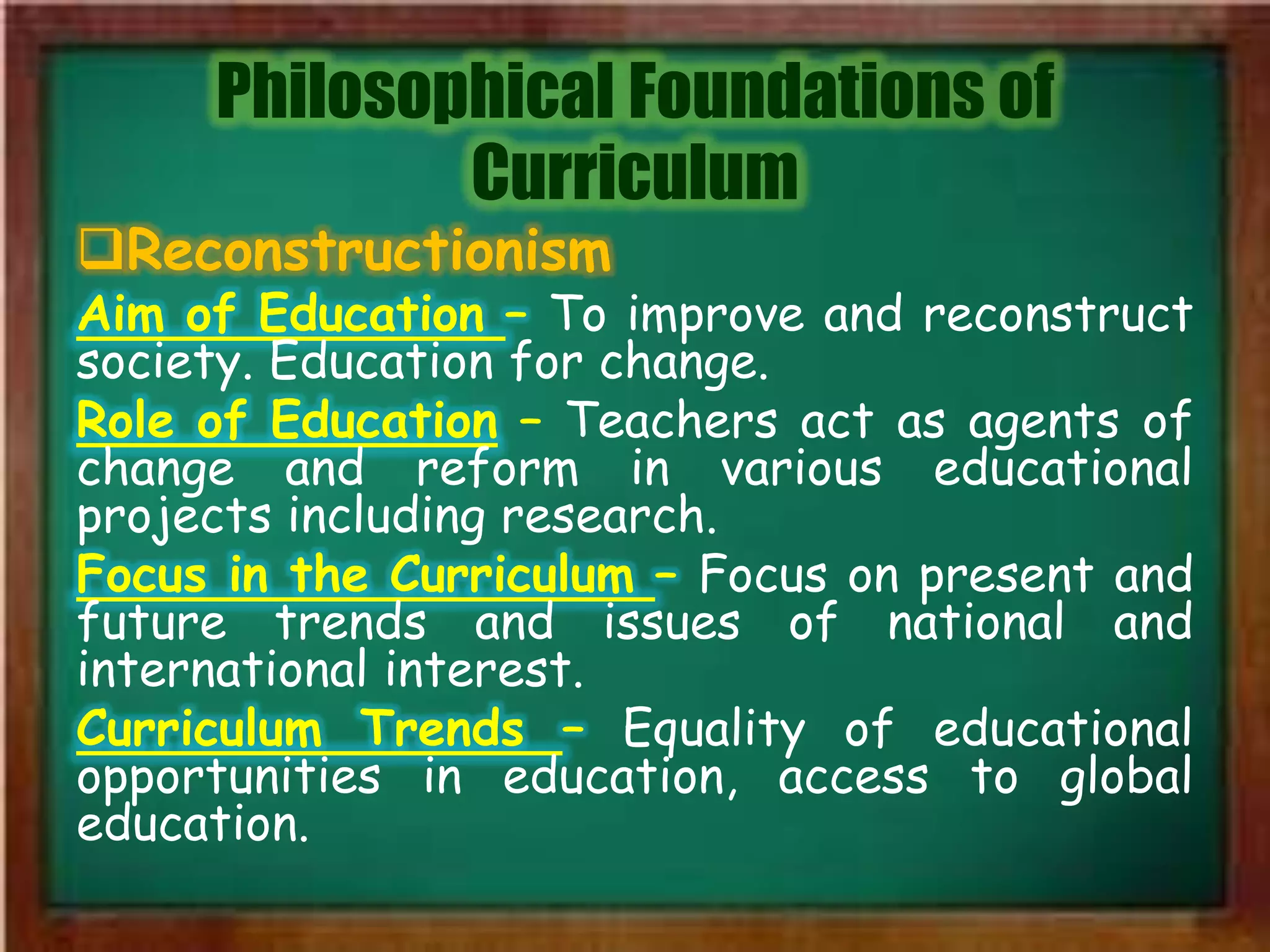
Reconstructionism
Aim of Education – To improve and reconstruct
society. Education for change.
Role of Education – Teachers act as agents of
change and reform in various educational
projects including research.
Focus in the Curriculum – Focus on present and
future trends and issues of national and
international interest.
Curriculum Trends – Equality of educational
opportunities in education, access to global
education.
Historical Foundations of Curriculum
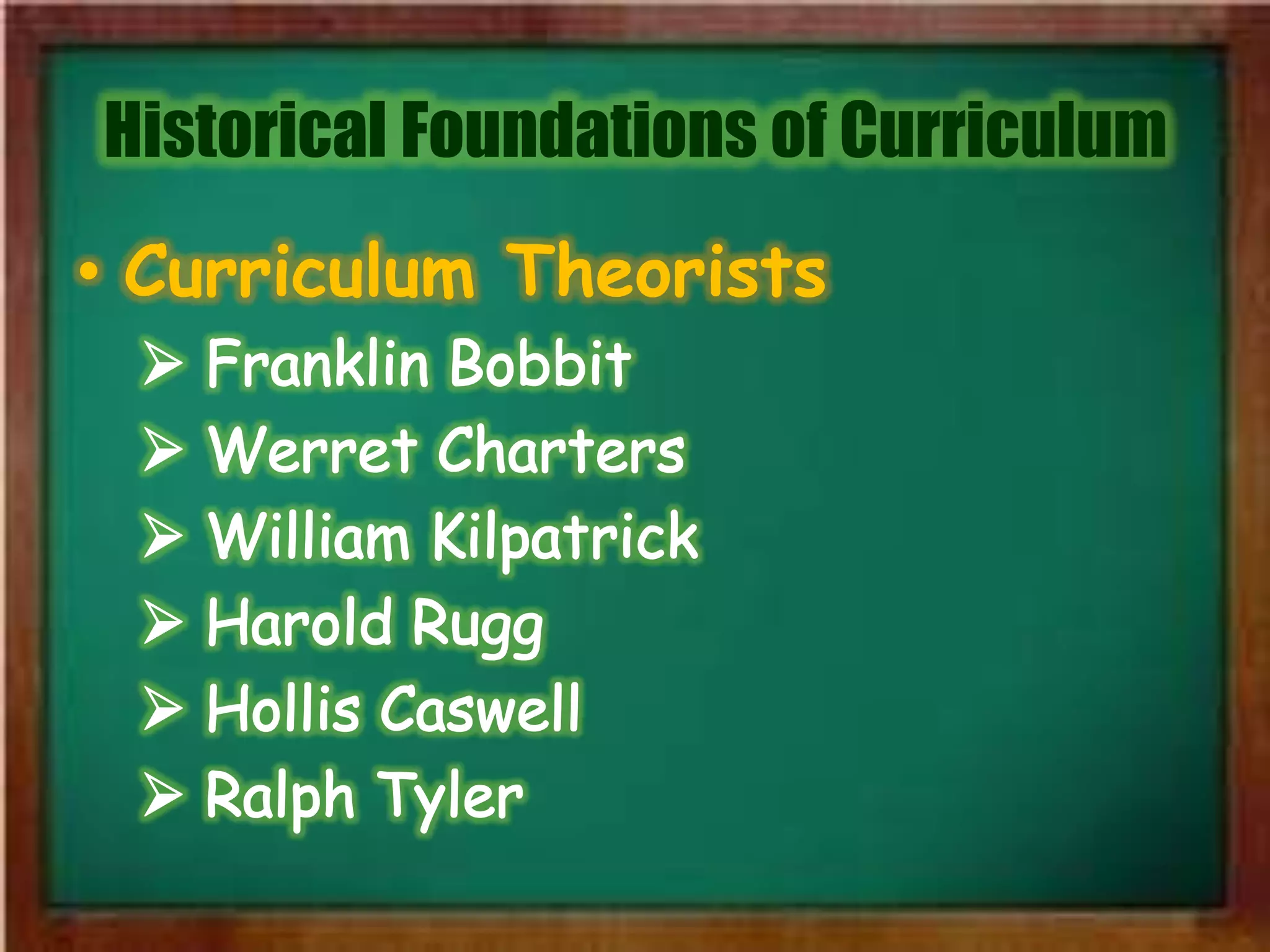
• Curriculum Theorists
Historical Foundations of Curriculum
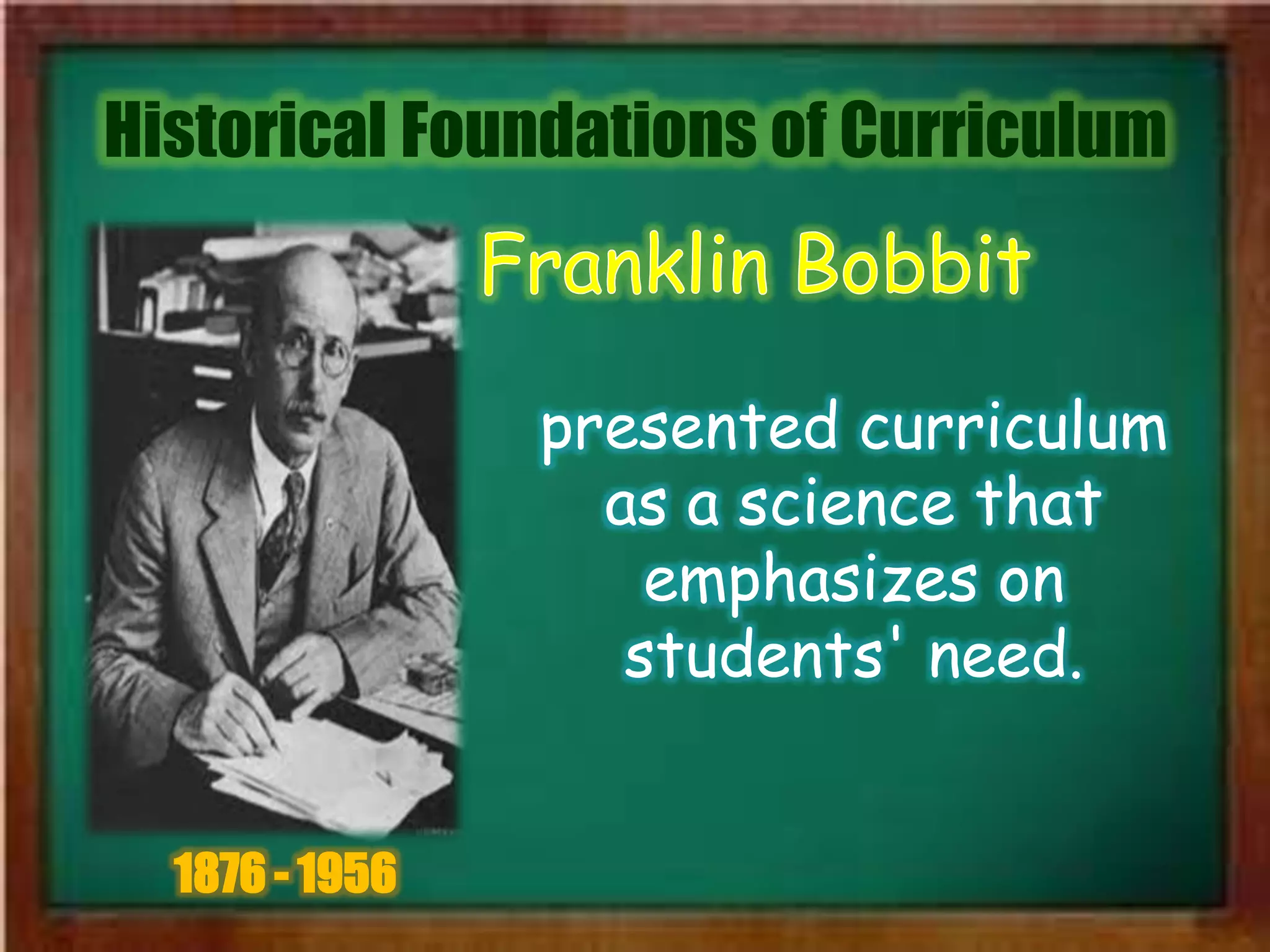
1876 - 1956
presented curriculum
as a science that
emphasizes on
students' need.
Historical Foundations of Curriculum
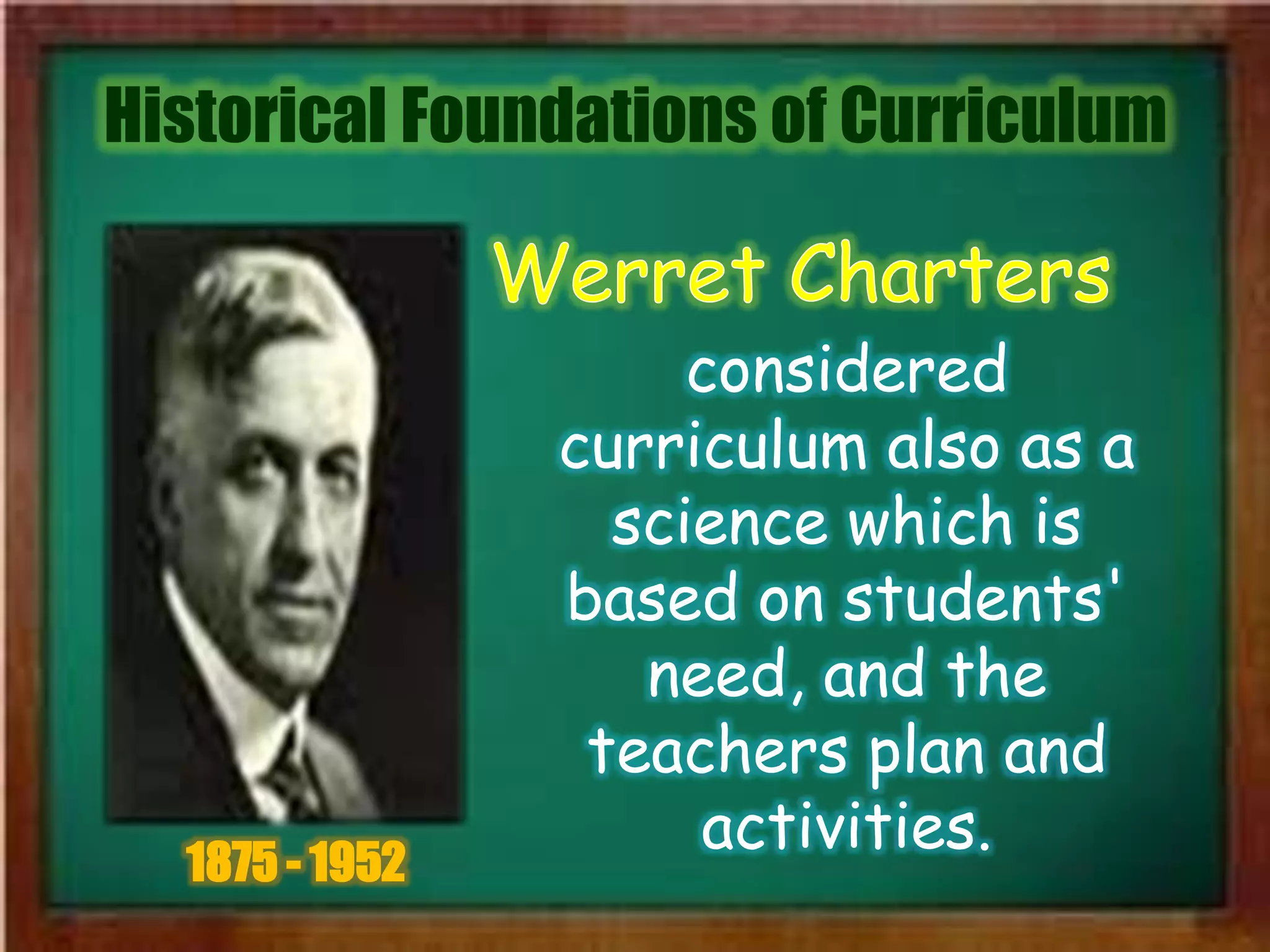
1875 - 1952
considered
curriculum also as a
science which is
based on students'
need, and the
teachers plan and
activities.
Historical Foundations of Curriculum
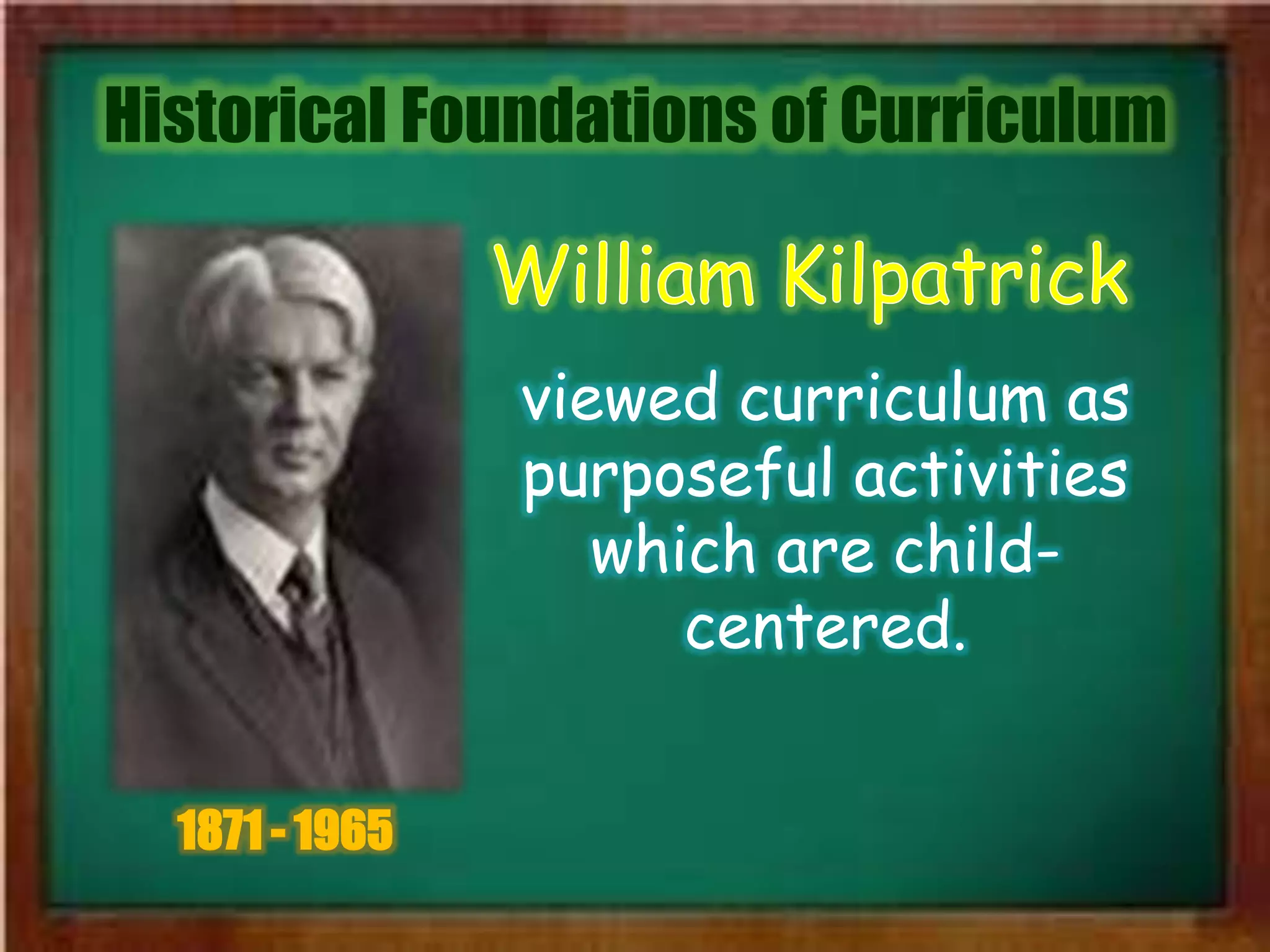
1871 - 1965
viewed curriculum as
purposeful activities
which are child-
centered.
Historical Foundations of Curriculum
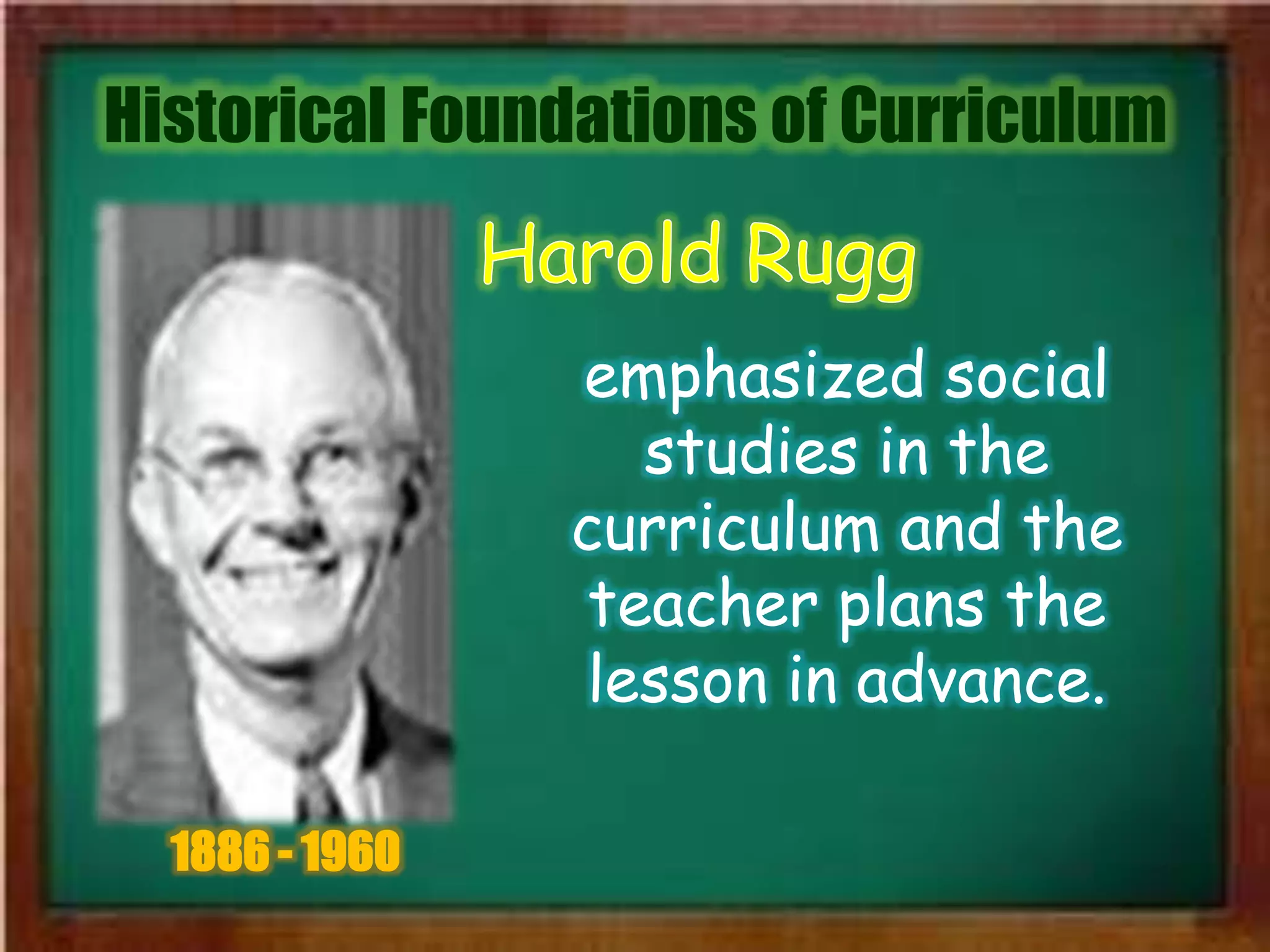
1886 - 1960
emphasized social
studies in the
curriculum and the
teacher plans the
lesson in advance.
Historical Foundations of Curriculum
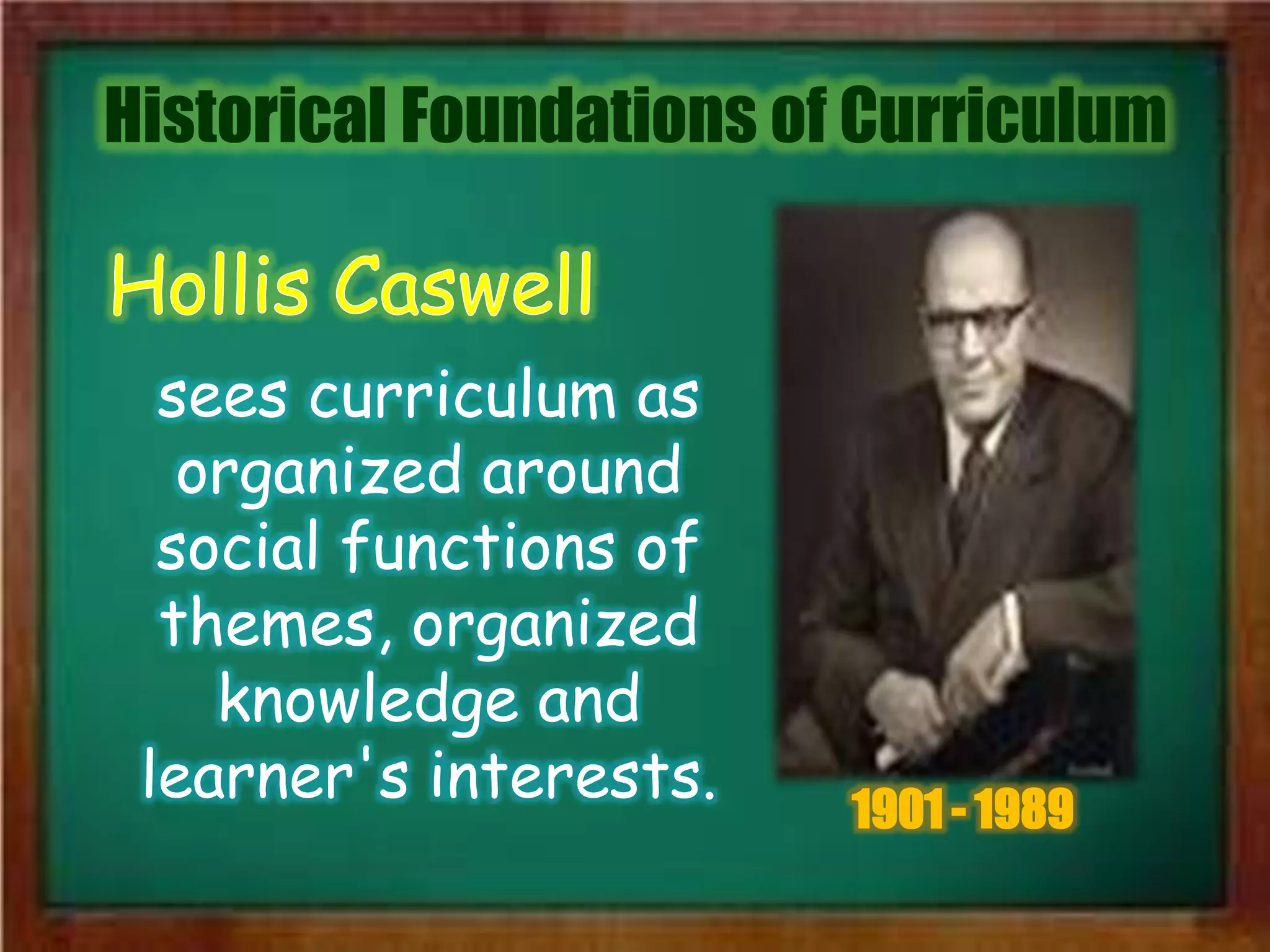
1901 - 1989
sees curriculum as
organized around
social functions of
themes, organized
knowledge and
learner's interests.
Historical Foundations of Curriculum
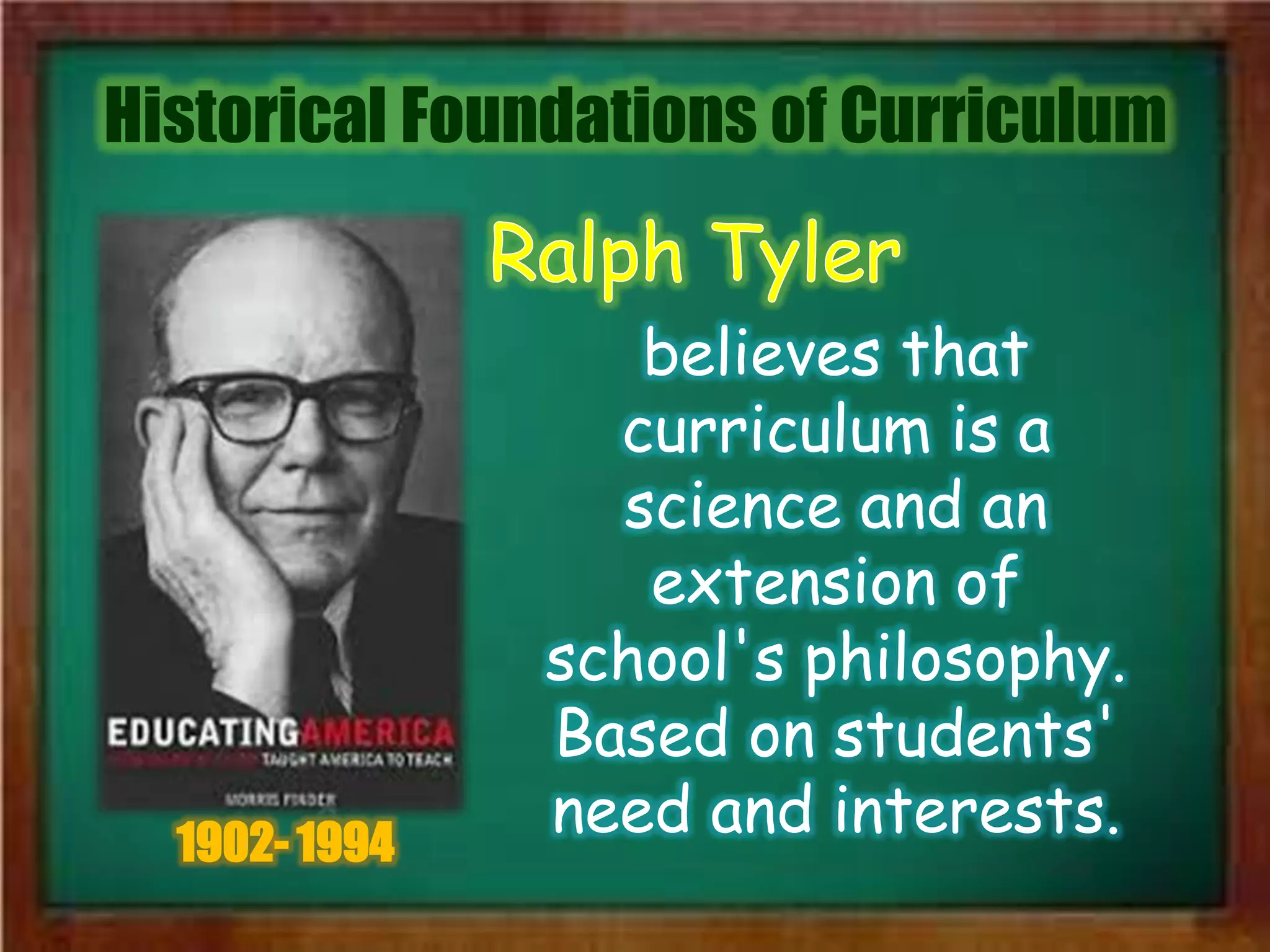
1902- 1994
believes that
curriculum is a
science and an
extension of
school's philosophy.
Based on students'
need and interests.
Thank You!!! 
@jhunarar

Major foundations of curriculum

  • 1.
  • 2.
    Major Foundations of Curriculum Philosophical  Historical  Psychological  Social
  • 3.
    Philosophical Foundations of Curriculum •Four Educational Philosophies
  • 4.
    Philosophical Foundations of Curriculum Perennialism Aim of Education – To educate the rational person; to cultivate the intellect. Role of Education – Teachers help students think with reason. Focus in the Curriculum – Classical subjects, literary analysis and curriculum constant. Curriculum Trends – Use of great books and return to liberal.
  • 5.
    Philosophical Foundations of Curriculum Essentialism Aim of Education – To promote the intellectual growth of the individual and educate a competent person. The teacher is the sole authority in his or her subject area or field of specialization. Focus in the Curriculum – Essential skills of the 3 R’s and essential subjects. Curriculum Trends – Excellence in education, back to basics and cultural literacy.
  • 6.
    Philosophical Foundations of Curriculum Progressivism Aim of Education – To promote democratic and social living. Role of Education – Knowledge leads to growth and development of lifelong learners who actively learn by doing. Focus in the Curriculum – Subjects are interdisciplinary, integrative and interactive. Curriculum is focused on students’ interest, human problems and affairs. Curriculum Trends – School reforms, relevant and contextualized curriculum, humanistic education.
  • 7.
    Philosophical Foundations of Curriculum Reconstructionism Aimof Education – To improve and reconstruct society. Education for change. Role of Education – Teachers act as agents of change and reform in various educational projects including research. Focus in the Curriculum – Focus on present and future trends and issues of national and international interest. Curriculum Trends – Equality of educational opportunities in education, access to global education.
  • 8.
    Historical Foundations ofCurriculum • Curriculum Theorists
  • 9.
    Historical Foundations ofCurriculum 1876 - 1956 presented curriculum as a science that emphasizes on students' need.
  • 10.
    Historical Foundations ofCurriculum 1875 - 1952 considered curriculum also as a science which is based on students' need, and the teachers plan and activities.
  • 11.
    Historical Foundations ofCurriculum 1871 - 1965 viewed curriculum as purposeful activities which are child- centered.
  • 12.
    Historical Foundations ofCurriculum 1886 - 1960 emphasized social studies in the curriculum and the teacher plans the lesson in advance.
  • 13.
    Historical Foundations ofCurriculum 1901 - 1989 sees curriculum as organized around social functions of themes, organized knowledge and learner's interests.
  • 14.
    Historical Foundations ofCurriculum 1902- 1994 believes that curriculum is a science and an extension of school's philosophy. Based on students' need and interests.
  • 15.