During my research and planning, acquiring
the knowledge of social groups was crucial.
I explored the genre of ‘indie’ by using
Google, and reading other indie magazines
such as ‘NME’ and ‘Q’. I feel that my media
product represents particular social groups
as it embraces the indie genre. It is helping
to portray the magnitude of this increasing
subculture, and its reinforcing the
community that already exists.
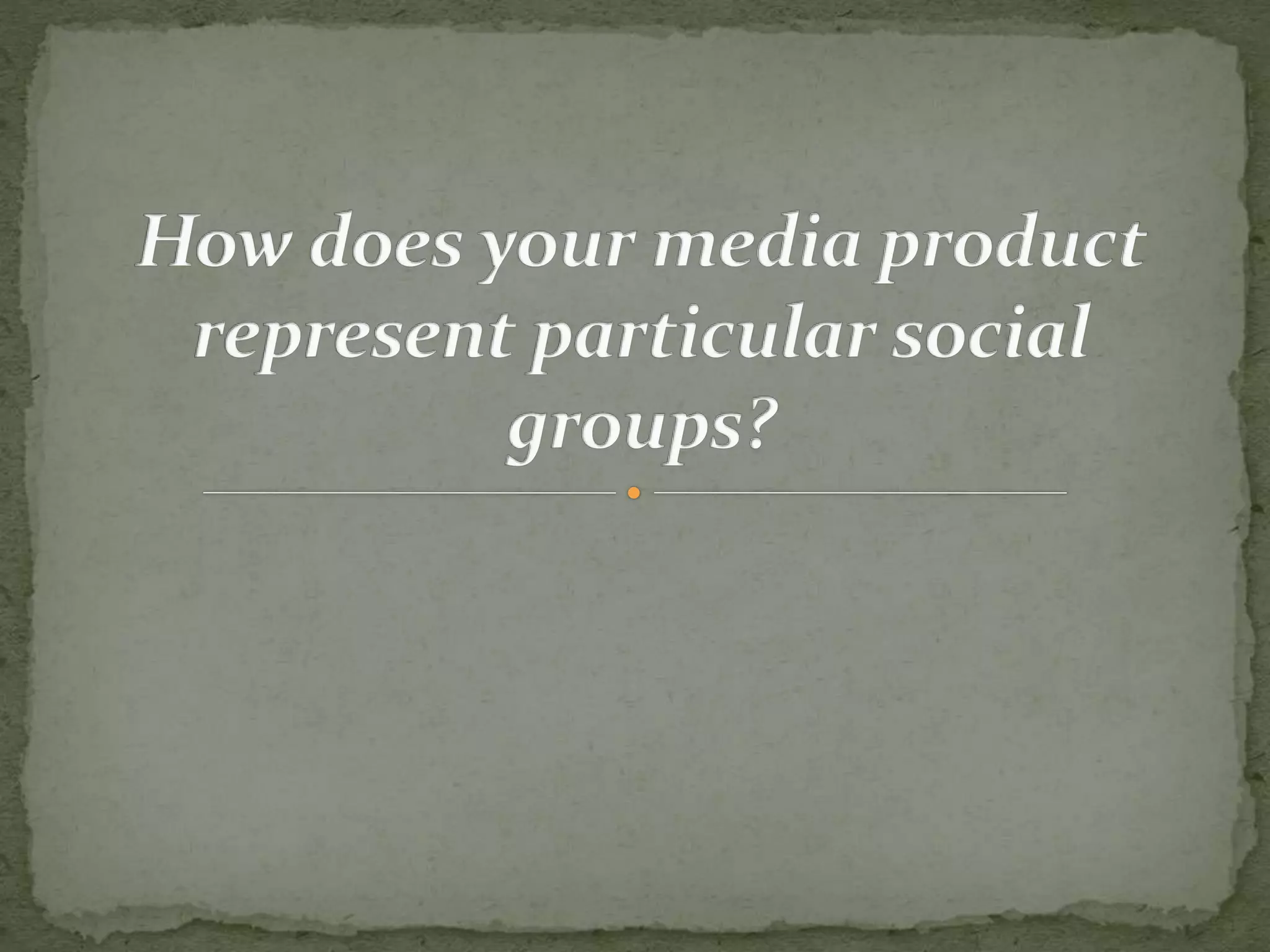
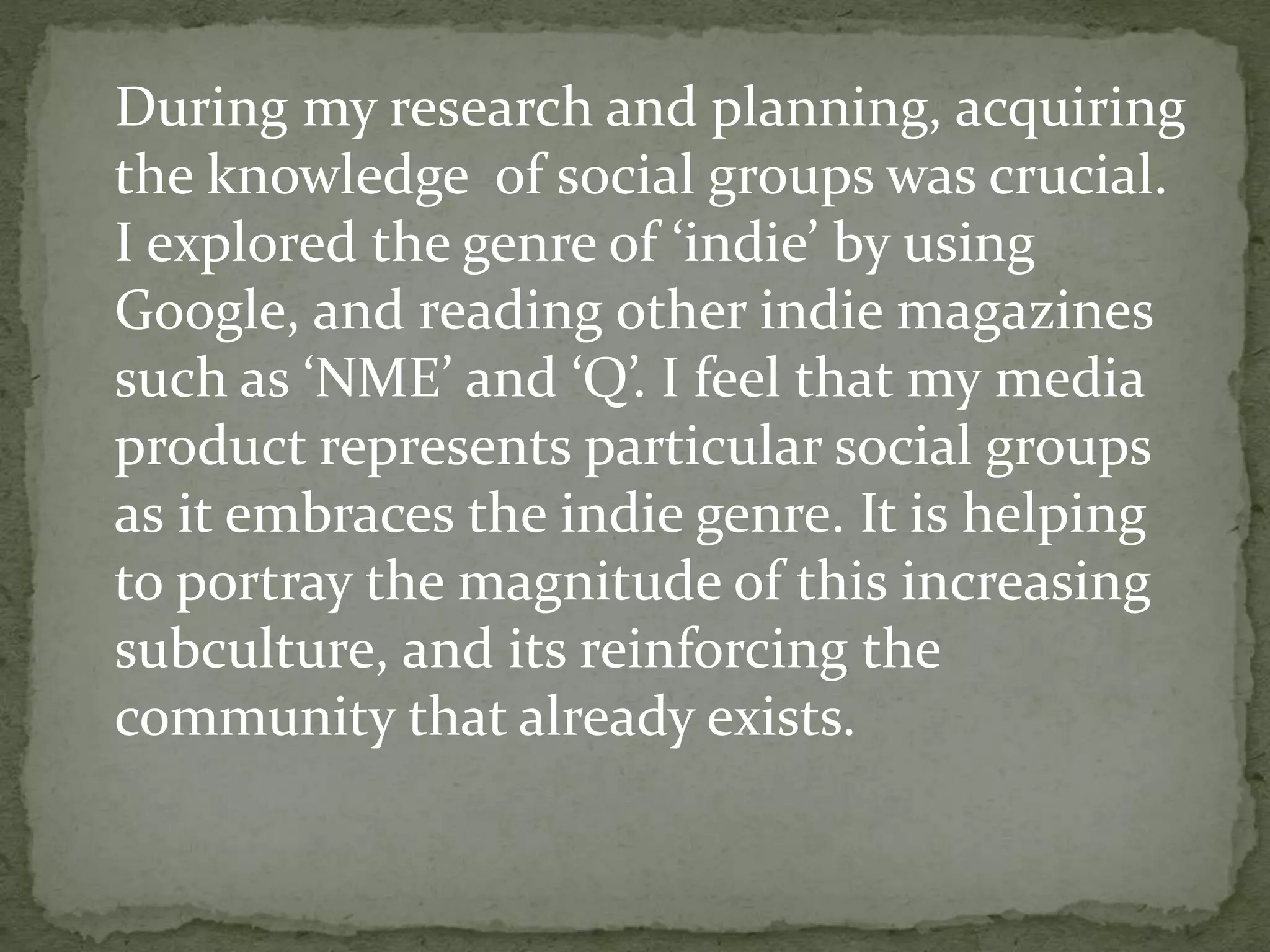
 My magazine represents
‘indie’ in particular by
referencing indie bands, gigs,
band merchandise etc.
 Through my research, I
came to the understanding
that the likes of Two Door
Cinema Club, Catfish and the
Bottlemen, Arctic Monkeys
etc are the most popular acts
in the indie genre. I
discovered this through my
research and planning by
looking through the top indie
charts and reading what
bands other popular indie
magazines feature (Q, NME)
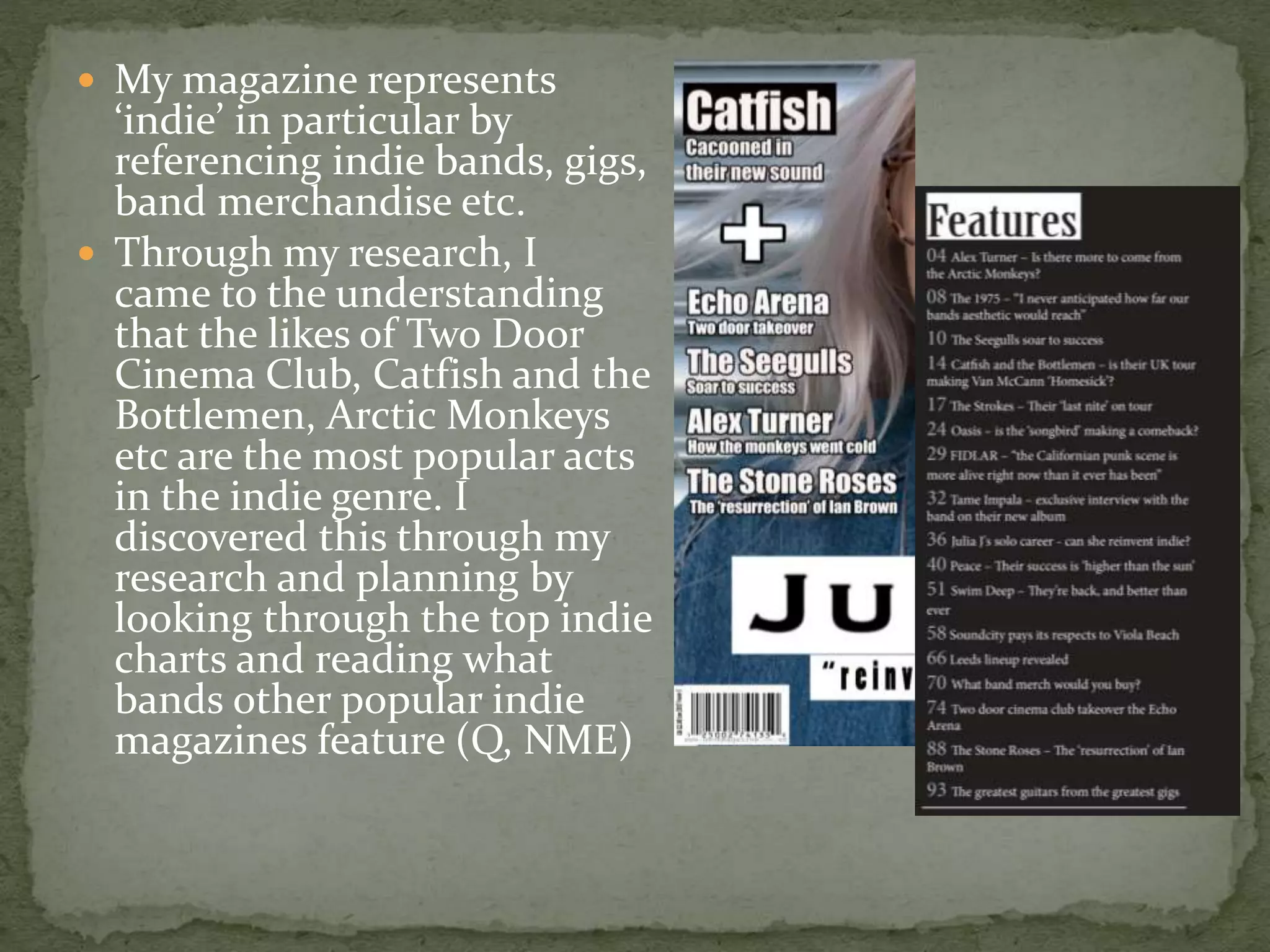
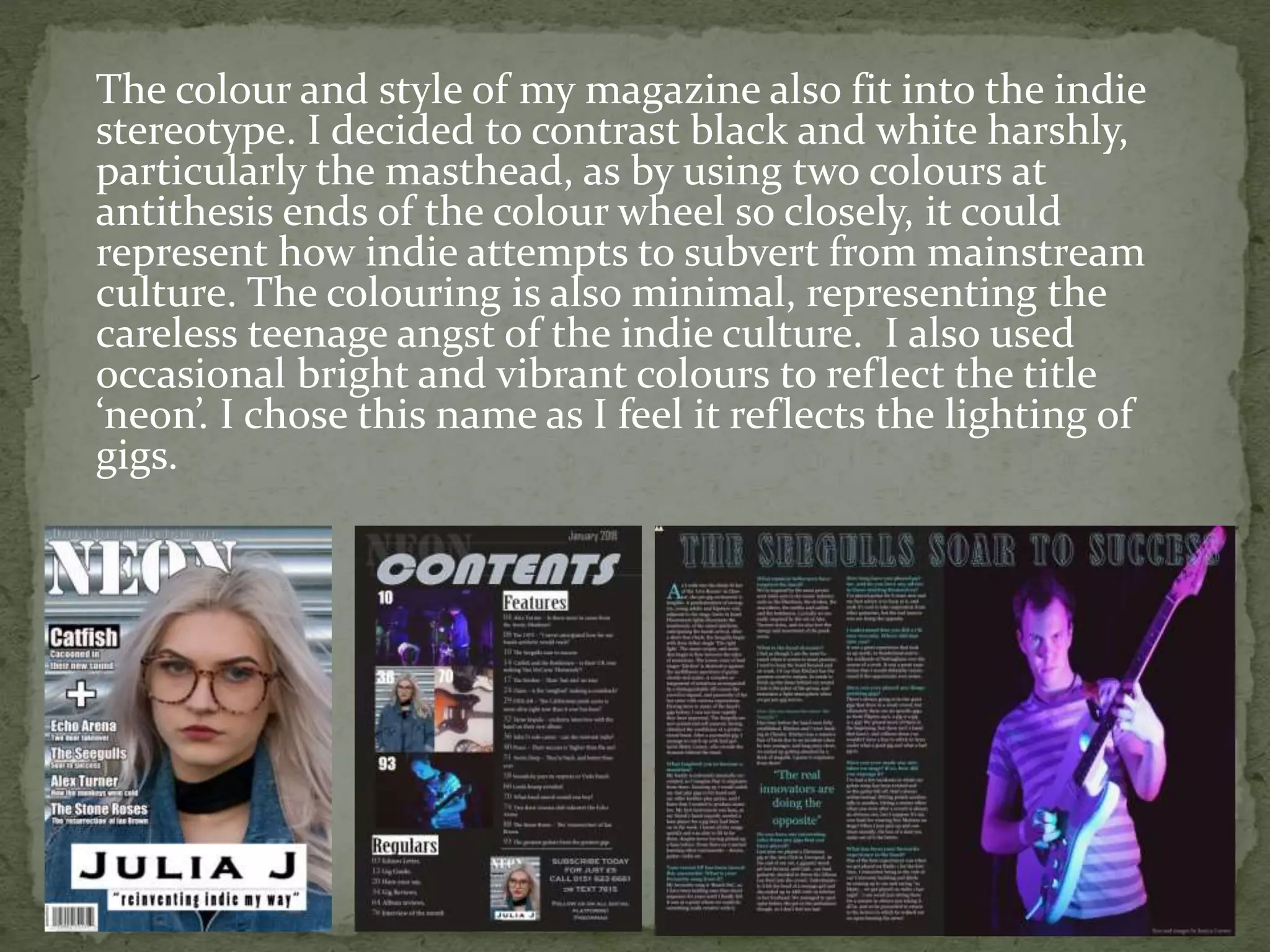
The colour and style of my magazine also fit into the indie
stereotype. I decided to contrast black and white harshly,
particularly the masthead, as by using two colours at
antithesis ends of the colour wheel so closely, it could
represent how indie attempts to subvert from mainstream
culture. The colouring is also minimal, representing the
careless teenage angst of the indie culture. I also used
occasional bright and vibrant colours to reflect the title
‘neon’. I chose this name as I feel it reflects the lighting of
gigs.
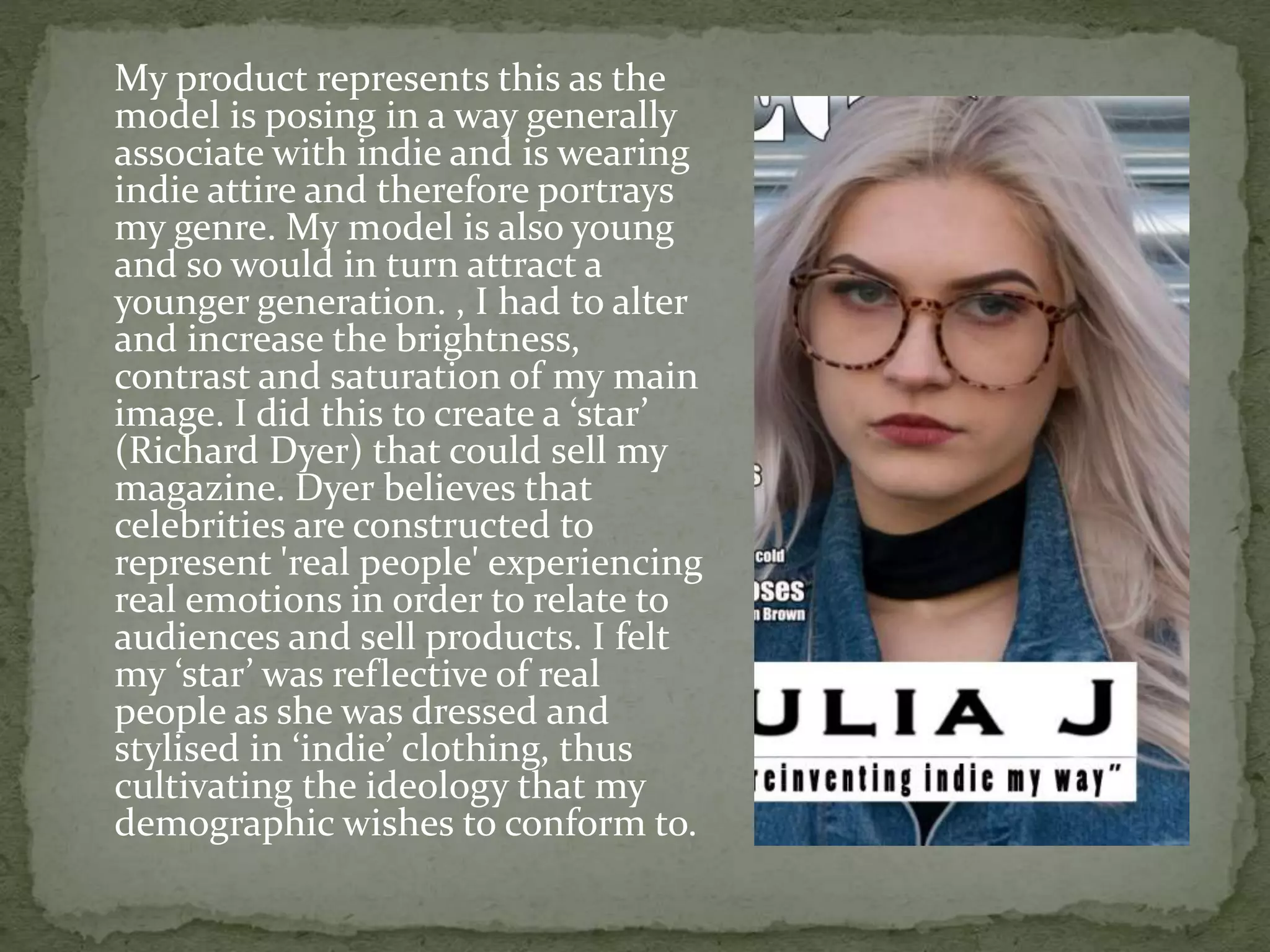
My product represents this as the
model is posing in a way generally
associate with indie and is wearing
indie attire and therefore portrays
my genre. My model is also young
and so would in turn attract a
younger generation. , I had to alter
and increase the brightness,
contrast and saturation of my main
image. I did this to create a ‘star’
(Richard Dyer) that could sell my
magazine. Dyer believes that
celebrities are constructed to
represent 'real people' experiencing
real emotions in order to relate to
audiences and sell products. I felt
my ‘star’ was reflective of real
people as she was dressed and
stylised in ‘indie’ clothing, thus
cultivating the ideology that my
demographic wishes to conform to.
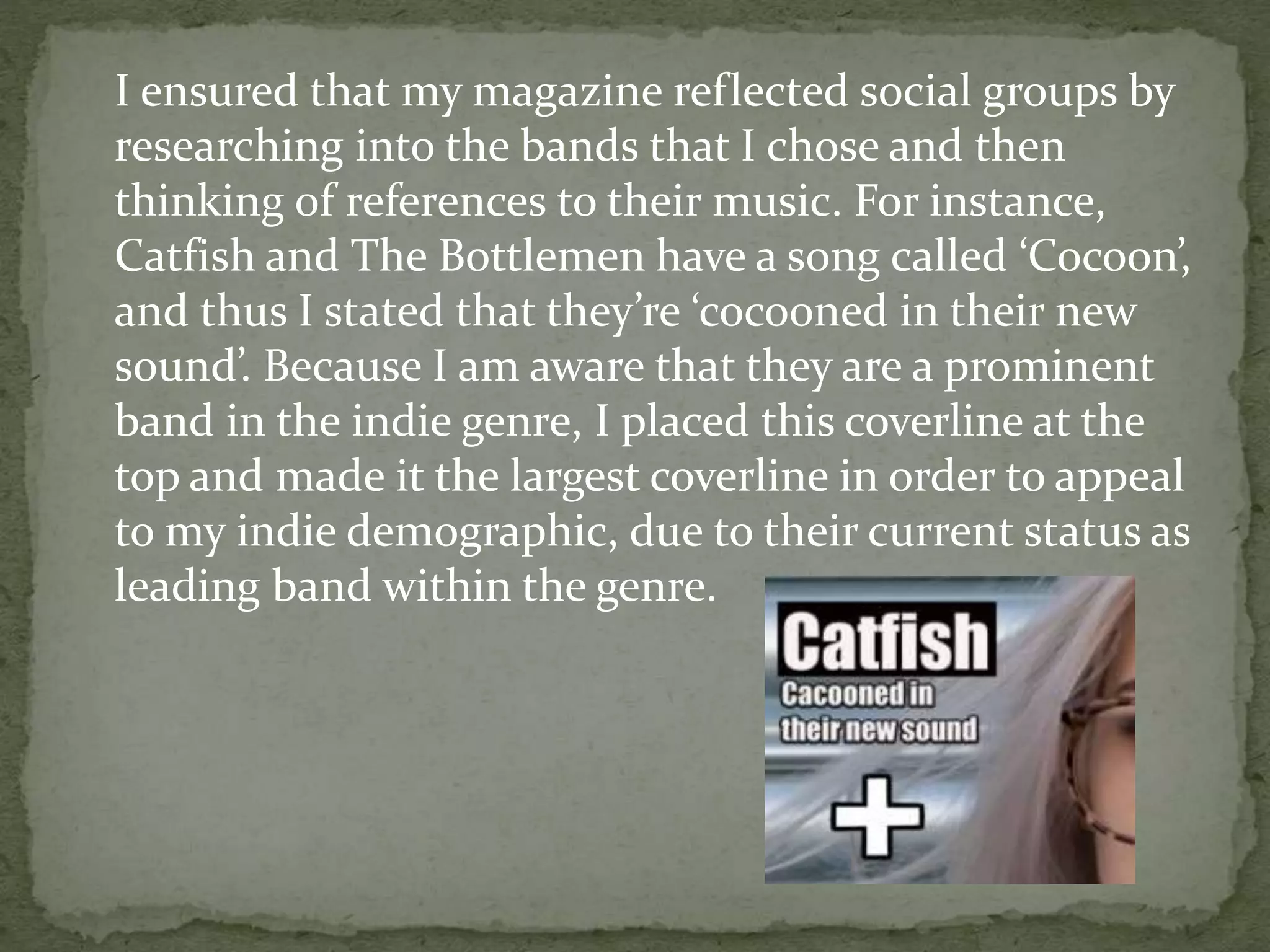
I ensured that my magazine reflected social groups by
researching into the bands that I chose and then
thinking of references to their music. For instance,
Catfish and The Bottlemen have a song called ‘Cocoon’,
and thus I stated that they’re ‘cocooned in their new
sound’. Because I am aware that they are a prominent
band in the indie genre, I placed this coverline at the
top and made it the largest coverline in order to appeal
to my indie demographic, due to their current status as
leading band within the genre.

How does your media product represent particular social question 2

  • 2.
    During my researchand planning, acquiring the knowledge of social groups was crucial. I explored the genre of ‘indie’ by using Google, and reading other indie magazines such as ‘NME’ and ‘Q’. I feel that my media product represents particular social groups as it embraces the indie genre. It is helping to portray the magnitude of this increasing subculture, and its reinforcing the community that already exists.
  • 3.
     My magazinerepresents ‘indie’ in particular by referencing indie bands, gigs, band merchandise etc.  Through my research, I came to the understanding that the likes of Two Door Cinema Club, Catfish and the Bottlemen, Arctic Monkeys etc are the most popular acts in the indie genre. I discovered this through my research and planning by looking through the top indie charts and reading what bands other popular indie magazines feature (Q, NME)
  • 4.
    The colour andstyle of my magazine also fit into the indie stereotype. I decided to contrast black and white harshly, particularly the masthead, as by using two colours at antithesis ends of the colour wheel so closely, it could represent how indie attempts to subvert from mainstream culture. The colouring is also minimal, representing the careless teenage angst of the indie culture. I also used occasional bright and vibrant colours to reflect the title ‘neon’. I chose this name as I feel it reflects the lighting of gigs.
  • 5.
    My product representsthis as the model is posing in a way generally associate with indie and is wearing indie attire and therefore portrays my genre. My model is also young and so would in turn attract a younger generation. , I had to alter and increase the brightness, contrast and saturation of my main image. I did this to create a ‘star’ (Richard Dyer) that could sell my magazine. Dyer believes that celebrities are constructed to represent 'real people' experiencing real emotions in order to relate to audiences and sell products. I felt my ‘star’ was reflective of real people as she was dressed and stylised in ‘indie’ clothing, thus cultivating the ideology that my demographic wishes to conform to.
  • 6.
    I ensured thatmy magazine reflected social groups by researching into the bands that I chose and then thinking of references to their music. For instance, Catfish and The Bottlemen have a song called ‘Cocoon’, and thus I stated that they’re ‘cocooned in their new sound’. Because I am aware that they are a prominent band in the indie genre, I placed this coverline at the top and made it the largest coverline in order to appeal to my indie demographic, due to their current status as leading band within the genre.