PRACTICAL PRESCRIBING GUIDE IN ED AT SCGH
DANNY SOO
OUTLINE
 Common prescribing scenarios
 Taking a best possible medication history
 Discharging a patient during and after hours – Webster pack, residential care facility patients
 PBS – authority vs streamlined authority
 SAS medications – aspirin suppositories and physostigmine
 Online Resources
 Medication guidelines on HealthPoint
 Community Program for Opioid Pharmacotherapy (CPOP) patients
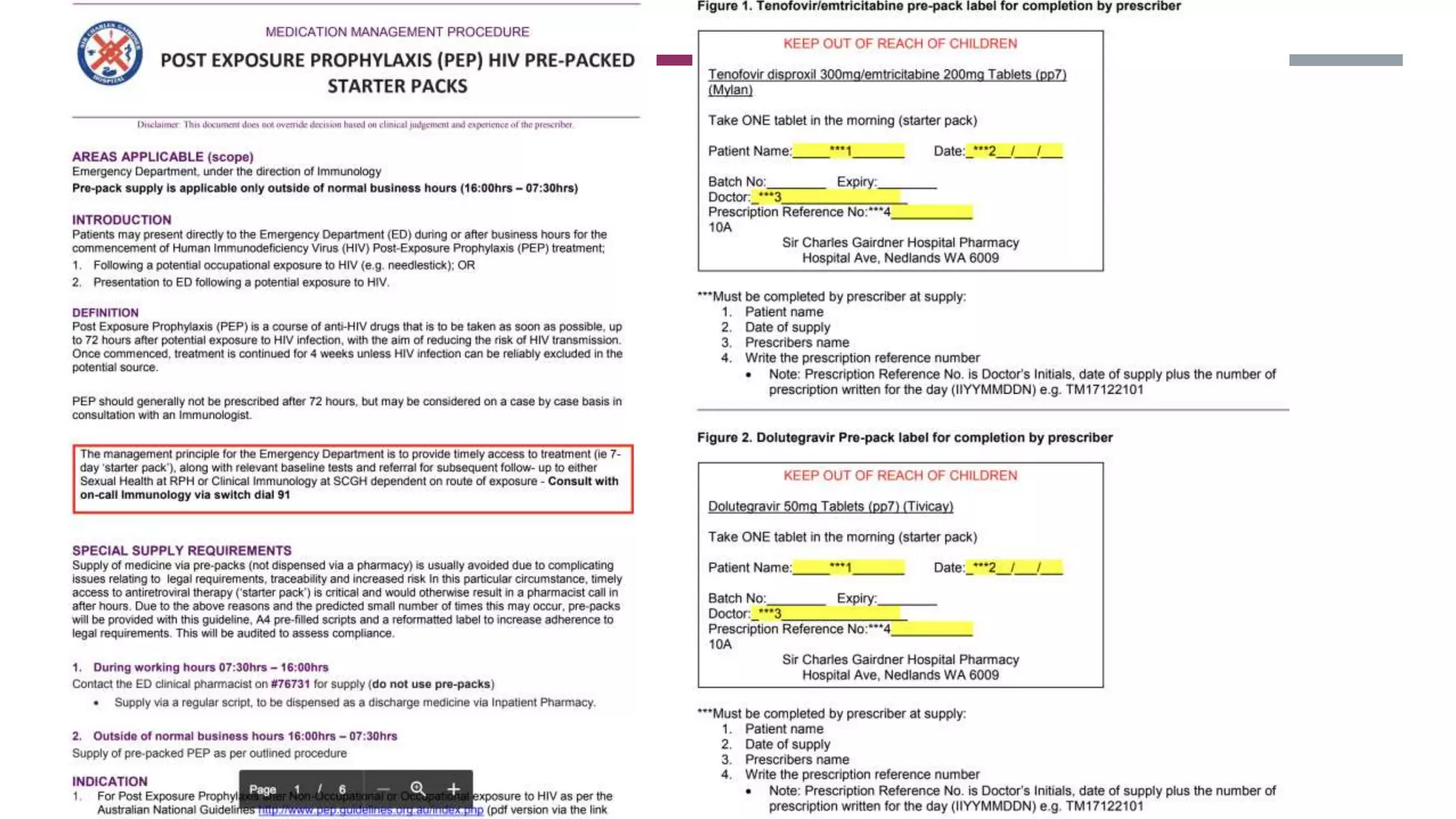
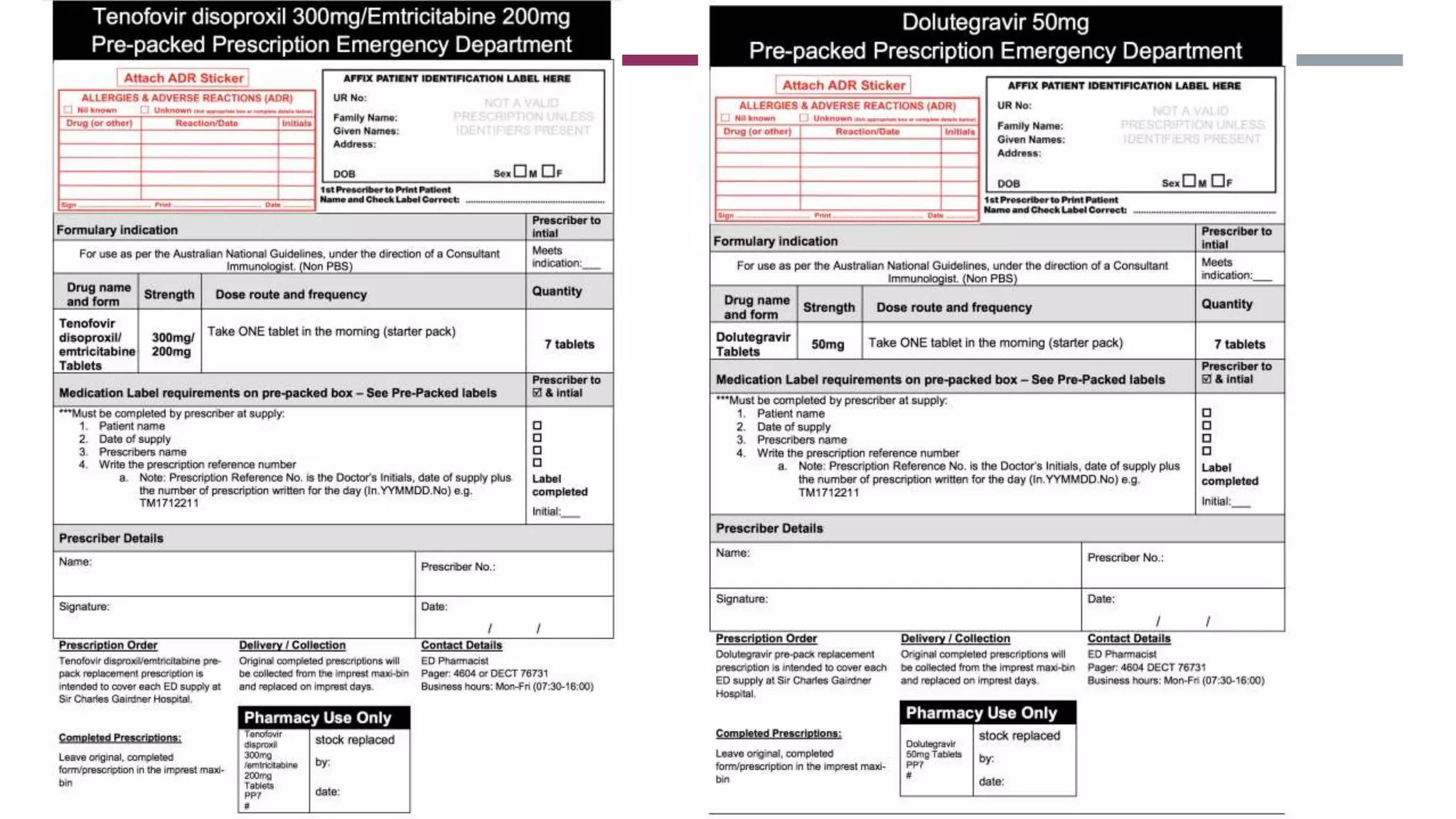
 HIV Post Exposure Prophylaxis (PEP)
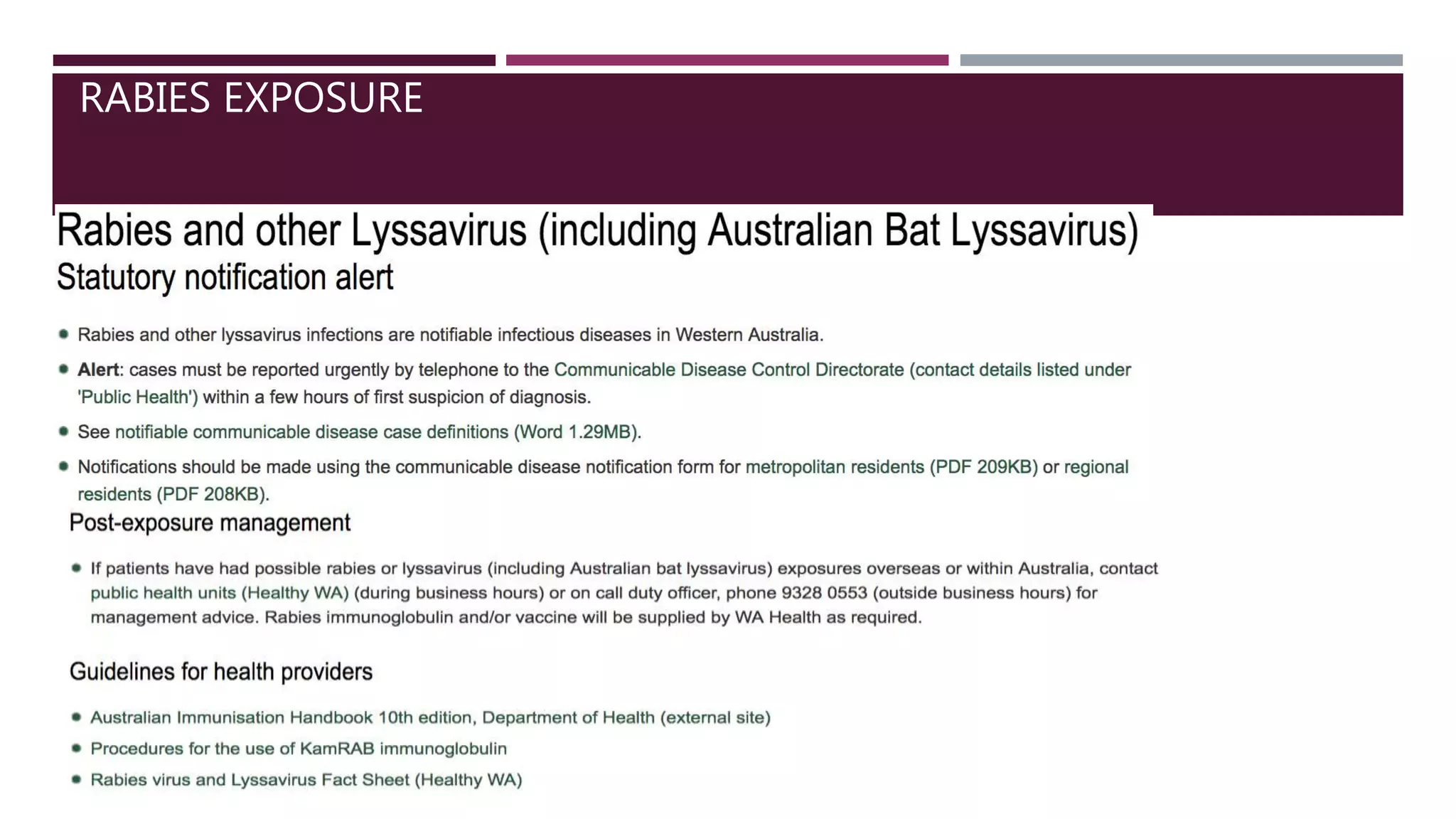
 Rabies vaccine
 Clinical Alert System
 New WA Hospital medication chart and anticoagulation chart to come
SCGH Pharmacy Department 2018 3
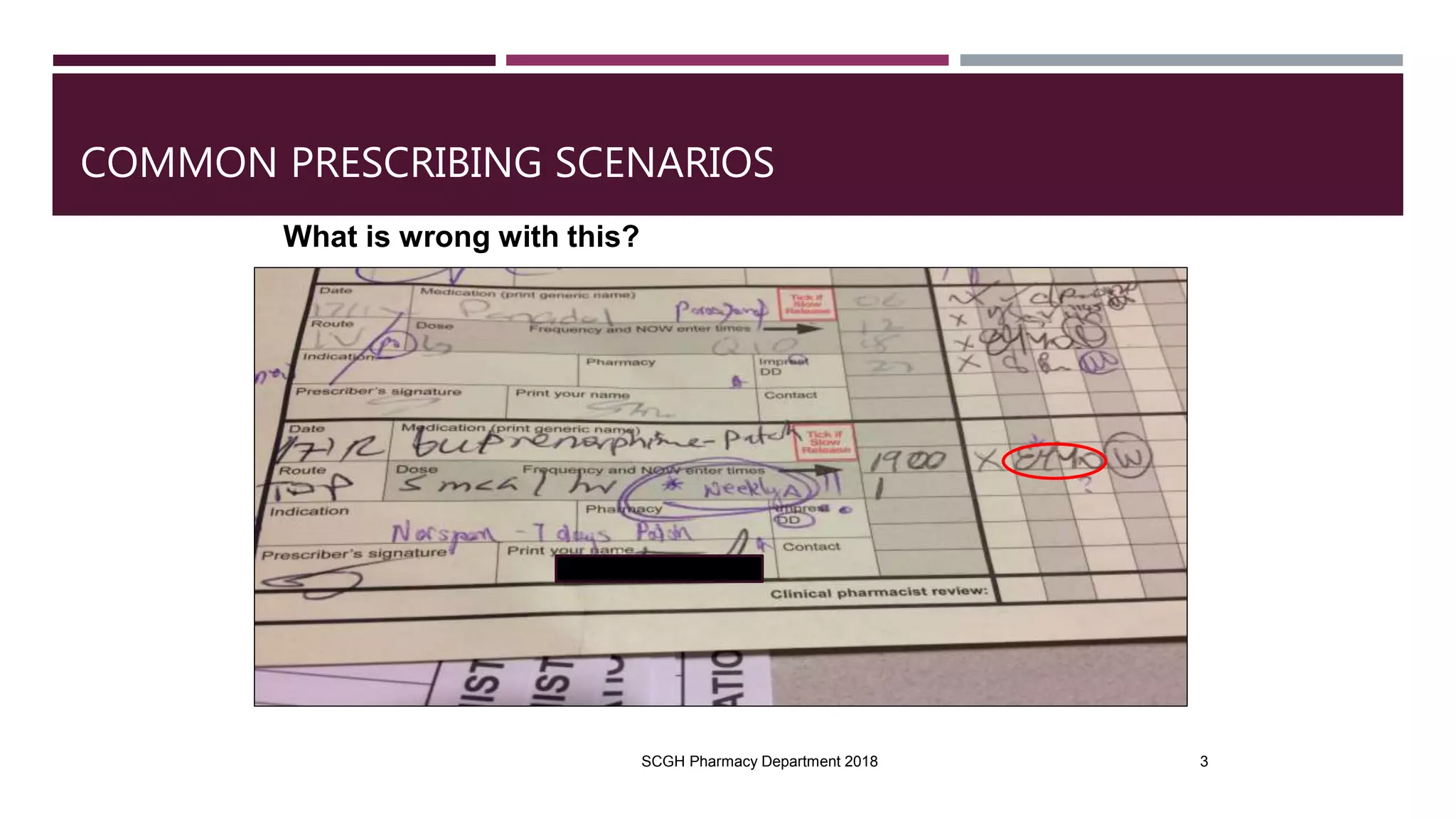
What is wrong with this?
COMMON PRESCRIBING SCENARIOS
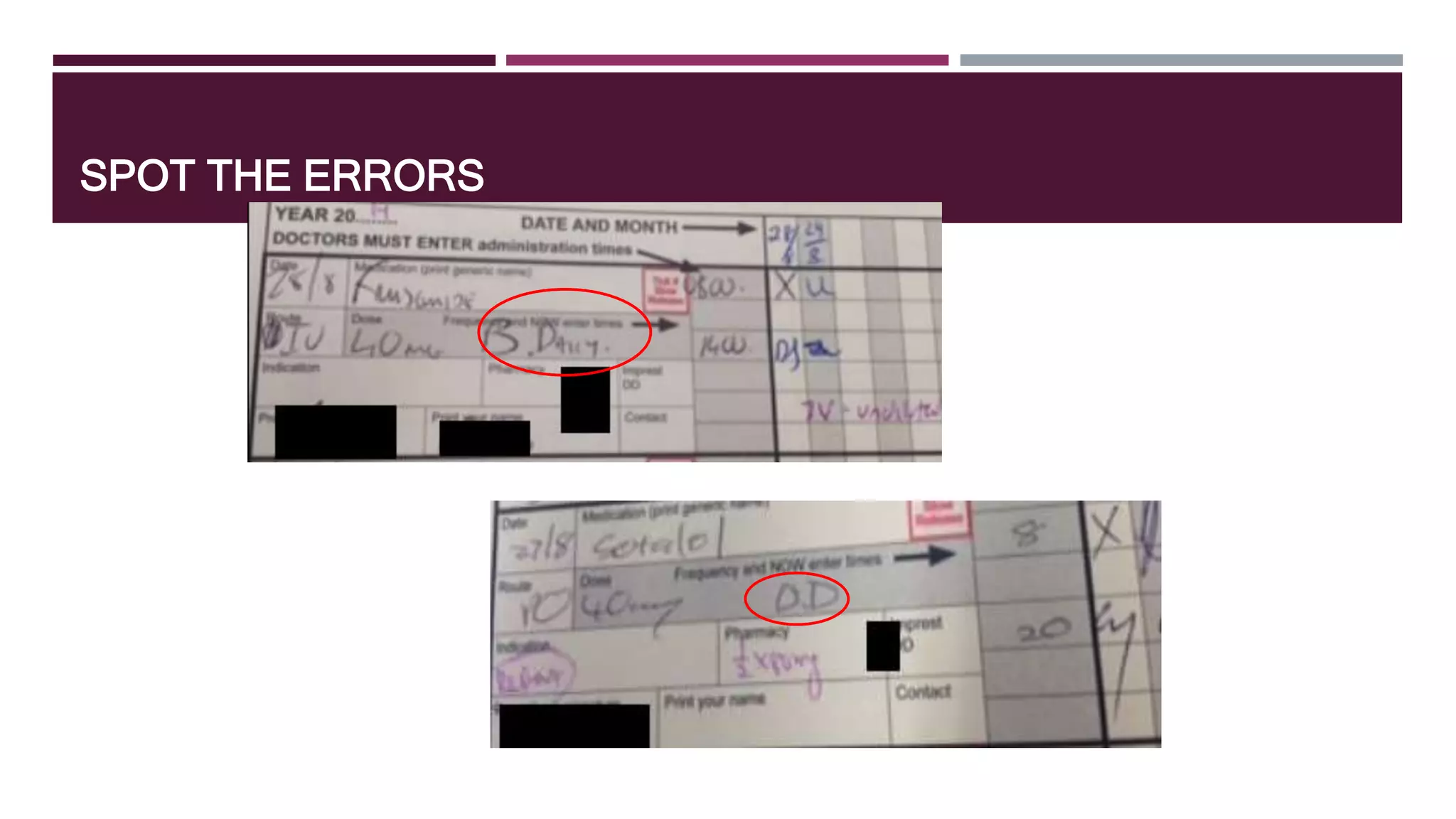
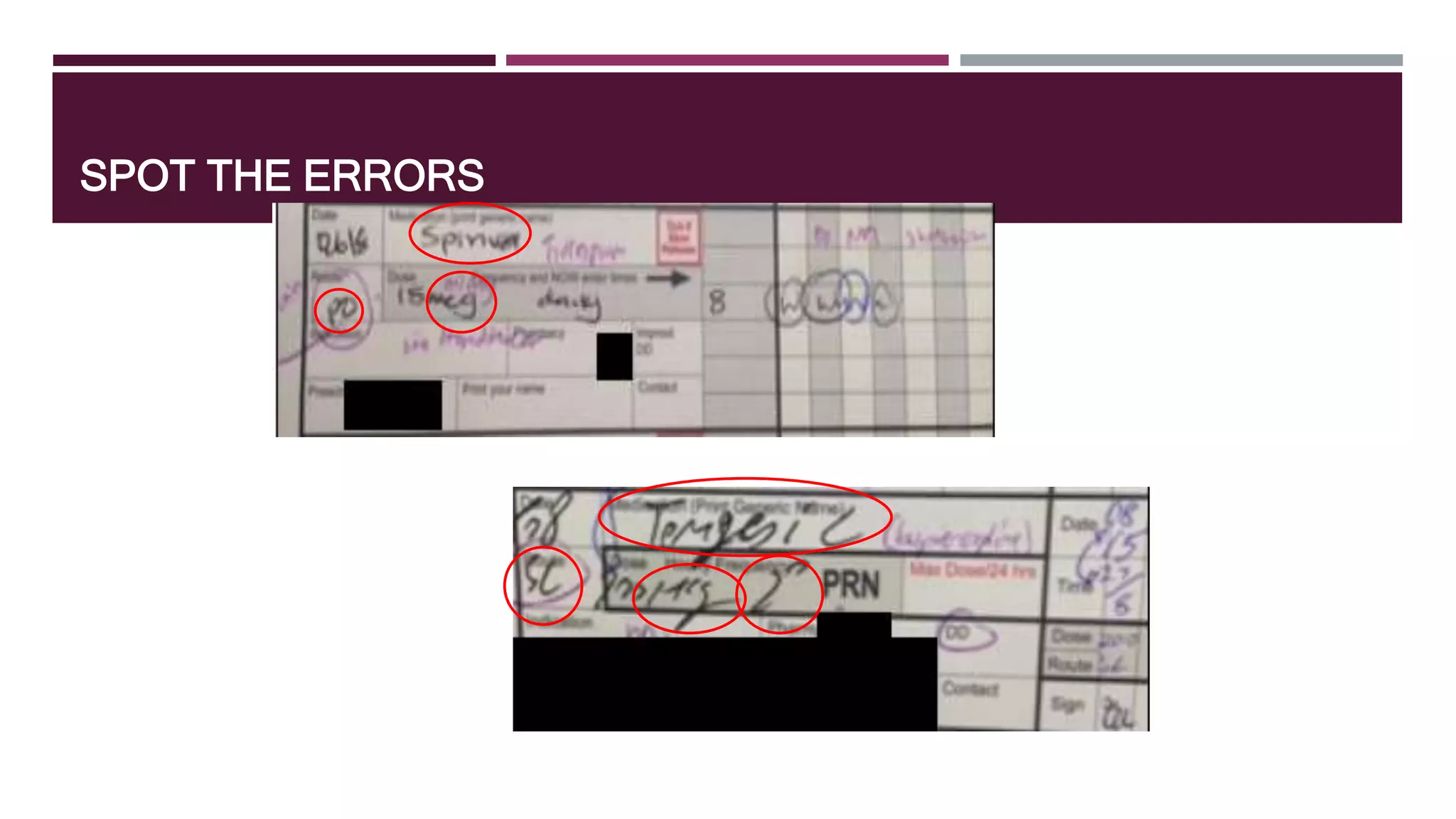
SPOT THE ERRORS
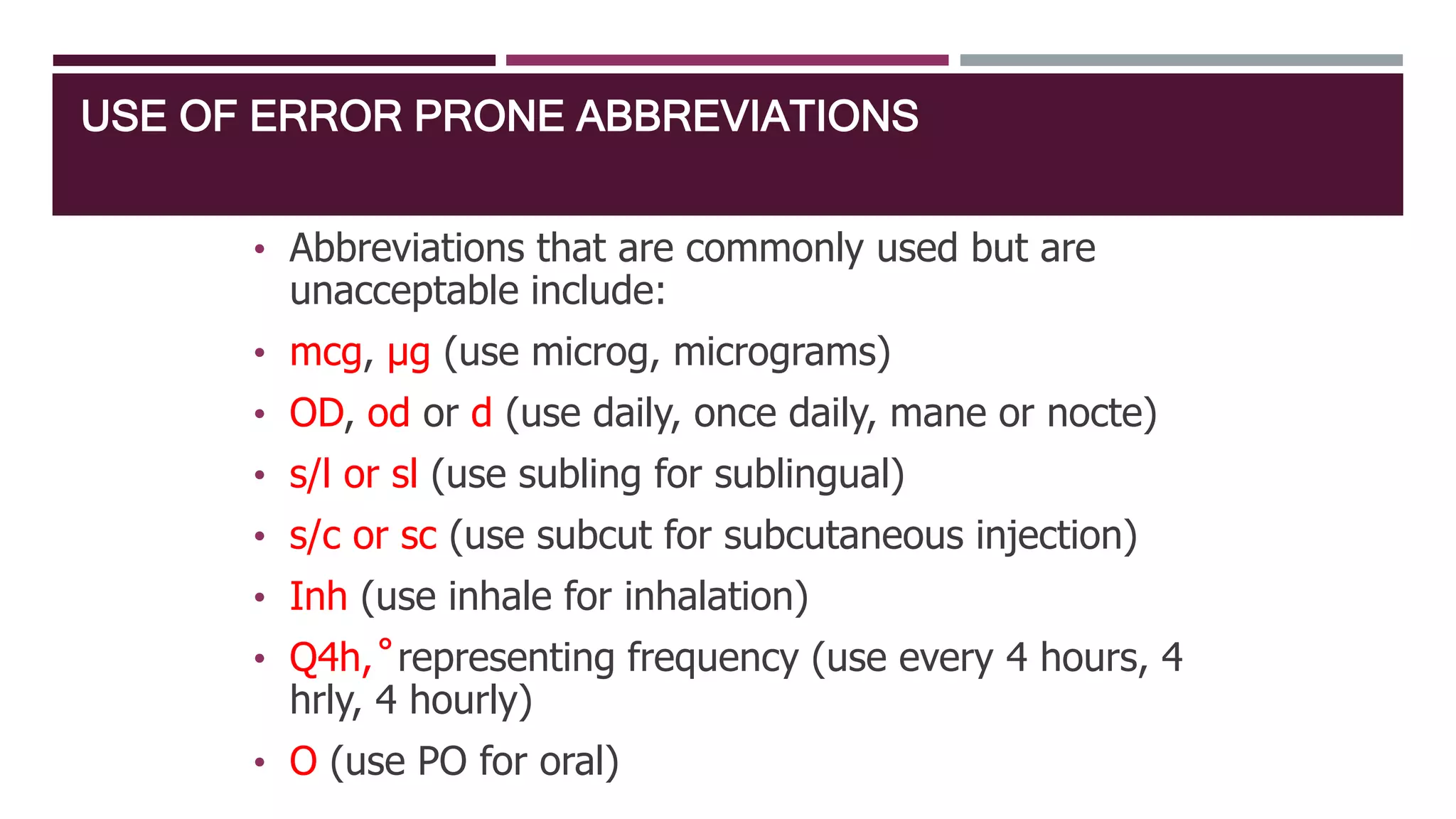
USE OF ERROR PRONE ABBREVIATIONS
• Abbreviations that are commonly used but are
unacceptable include:
• mcg, μg (use microg, micrograms)
• OD, od or d (use daily, once daily, mane or nocte)
• s/l or sl (use subling for sublingual)
• s/c or sc (use subcut for subcutaneous injection)
• Inh (use inhale for inhalation)
• Q4h, ̊ representing frequency (use every 4 hours, 4
hrly, 4 hourly)
• O (use PO for oral)
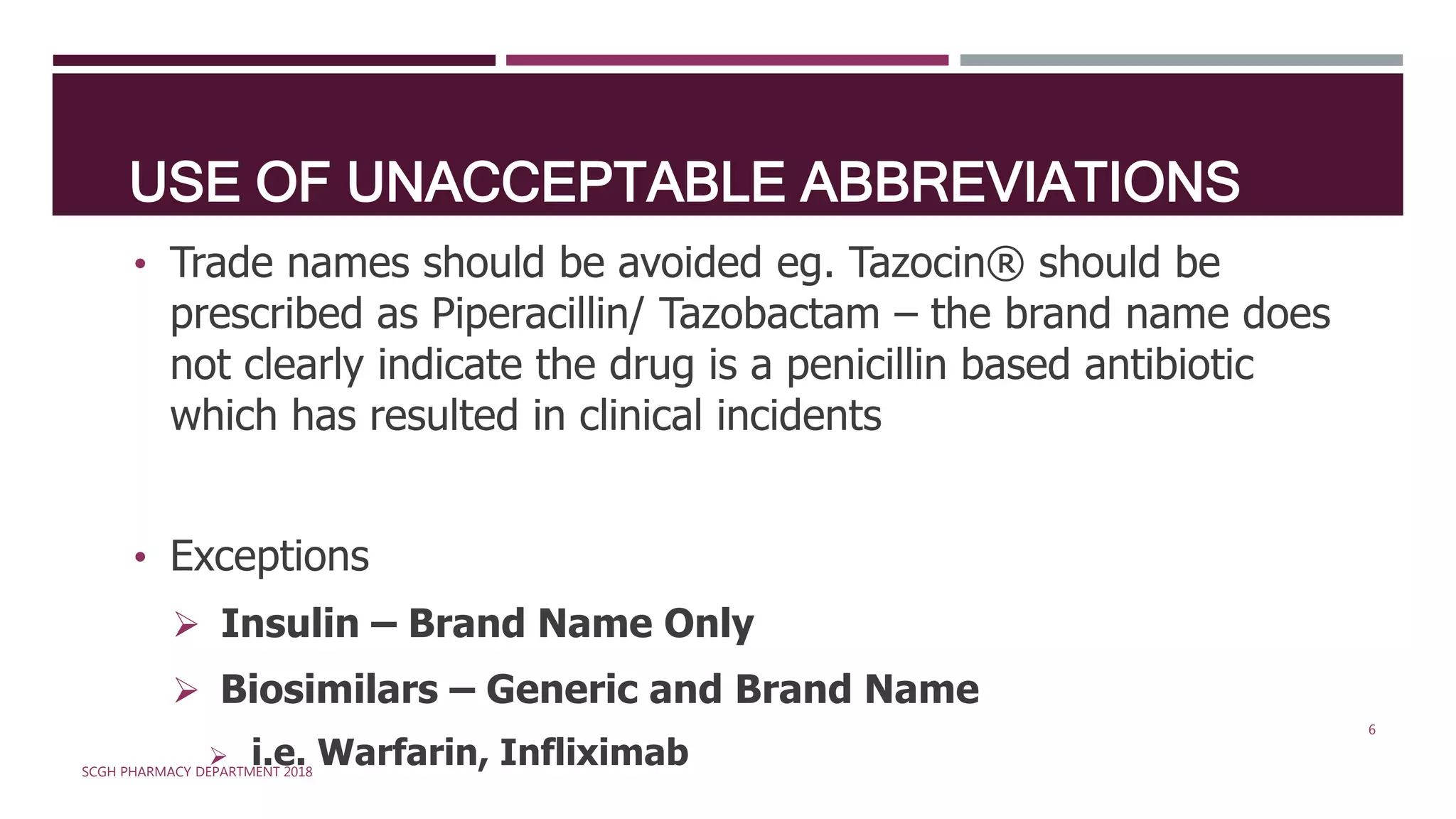
USE OF UNACCEPTABLE ABBREVIATIONS
• Trade names should be avoided eg. Tazocin® should be
prescribed as Piperacillin/ Tazobactam – the brand name does
not clearly indicate the drug is a penicillin based antibiotic
which has resulted in clinical incidents
• Exceptions
 Insulin – Brand Name Only
 Biosimilars – Generic and Brand Name
 i.e. Warfarin, InfliximabSCGH PHARMACY DEPARTMENT 2018
6
SPOT THE ERRORS
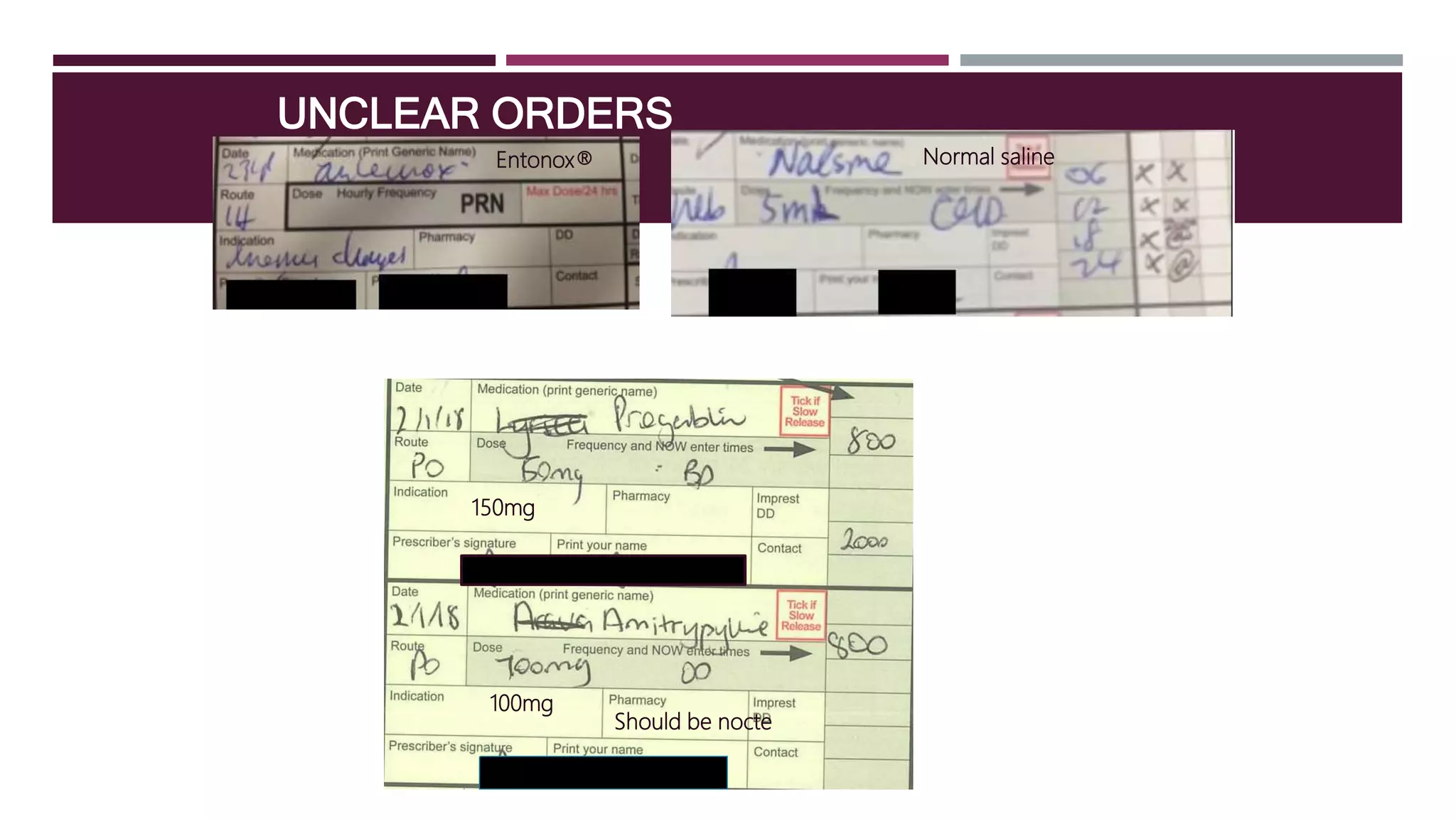
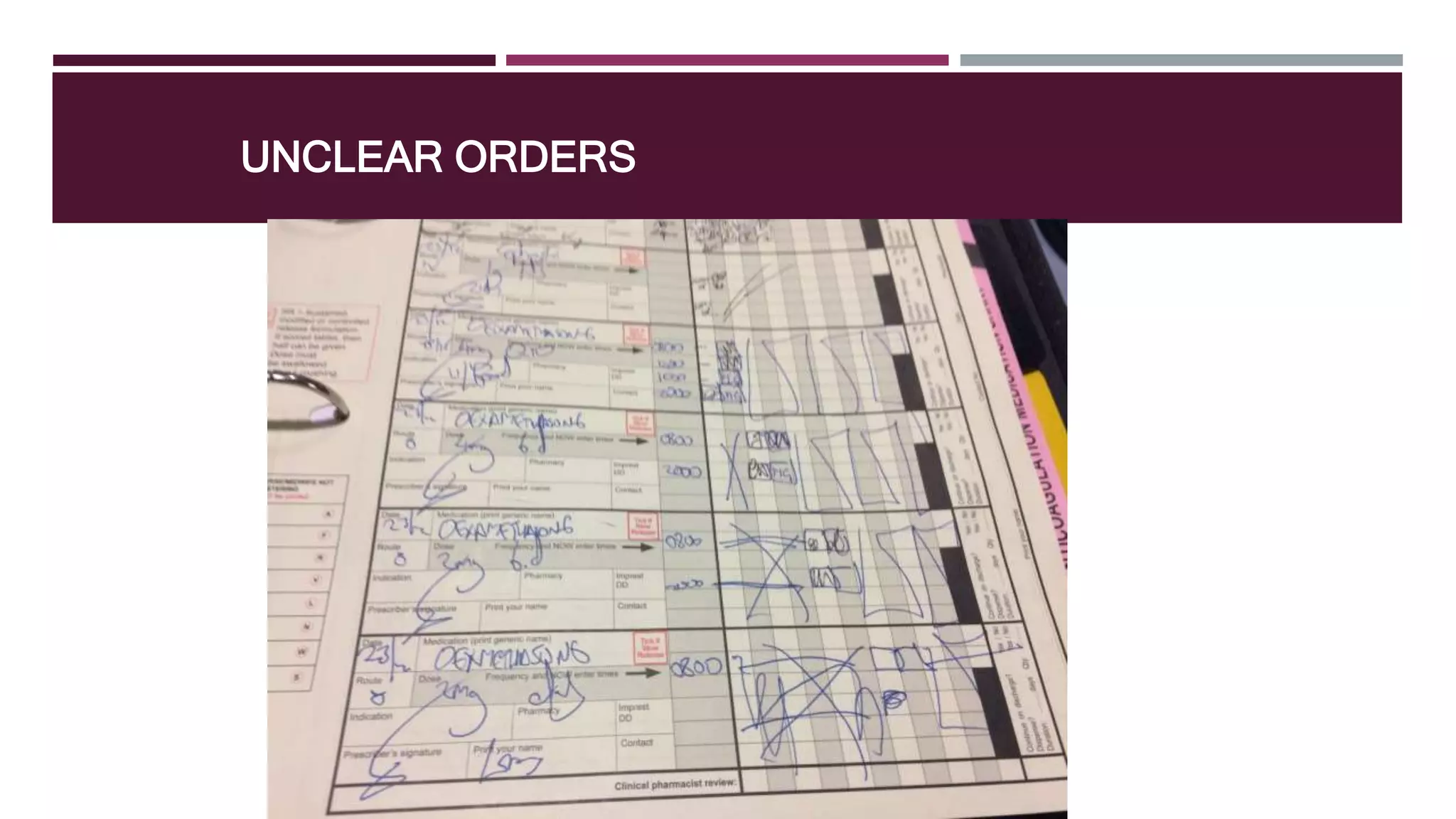
UNCLEAR ORDERS
Entonox® Normal saline
150mg
100mg
Should be nocte
UNCLEAR ORDERS
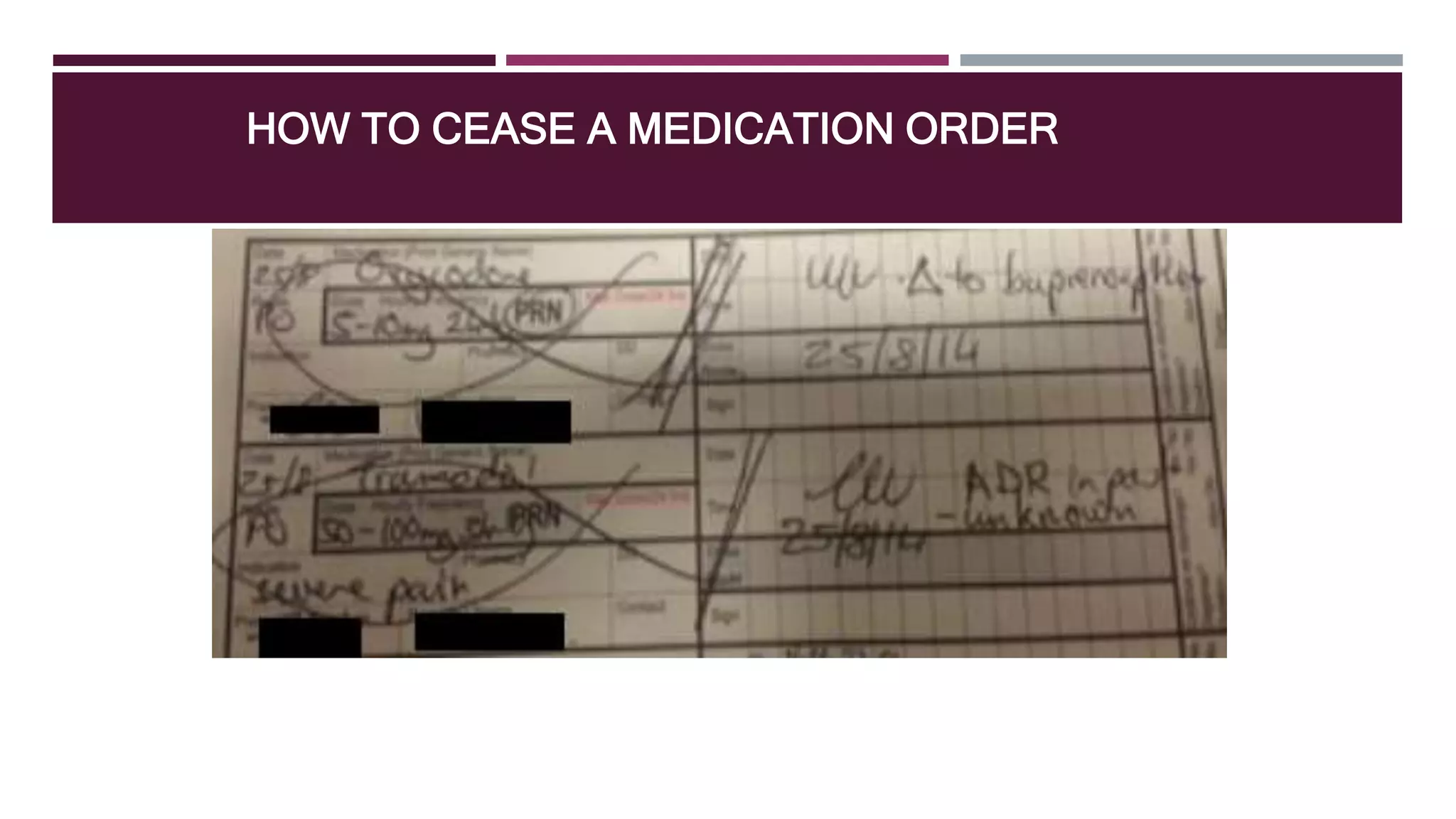
HOW TO CEASE A MEDICATION ORDER
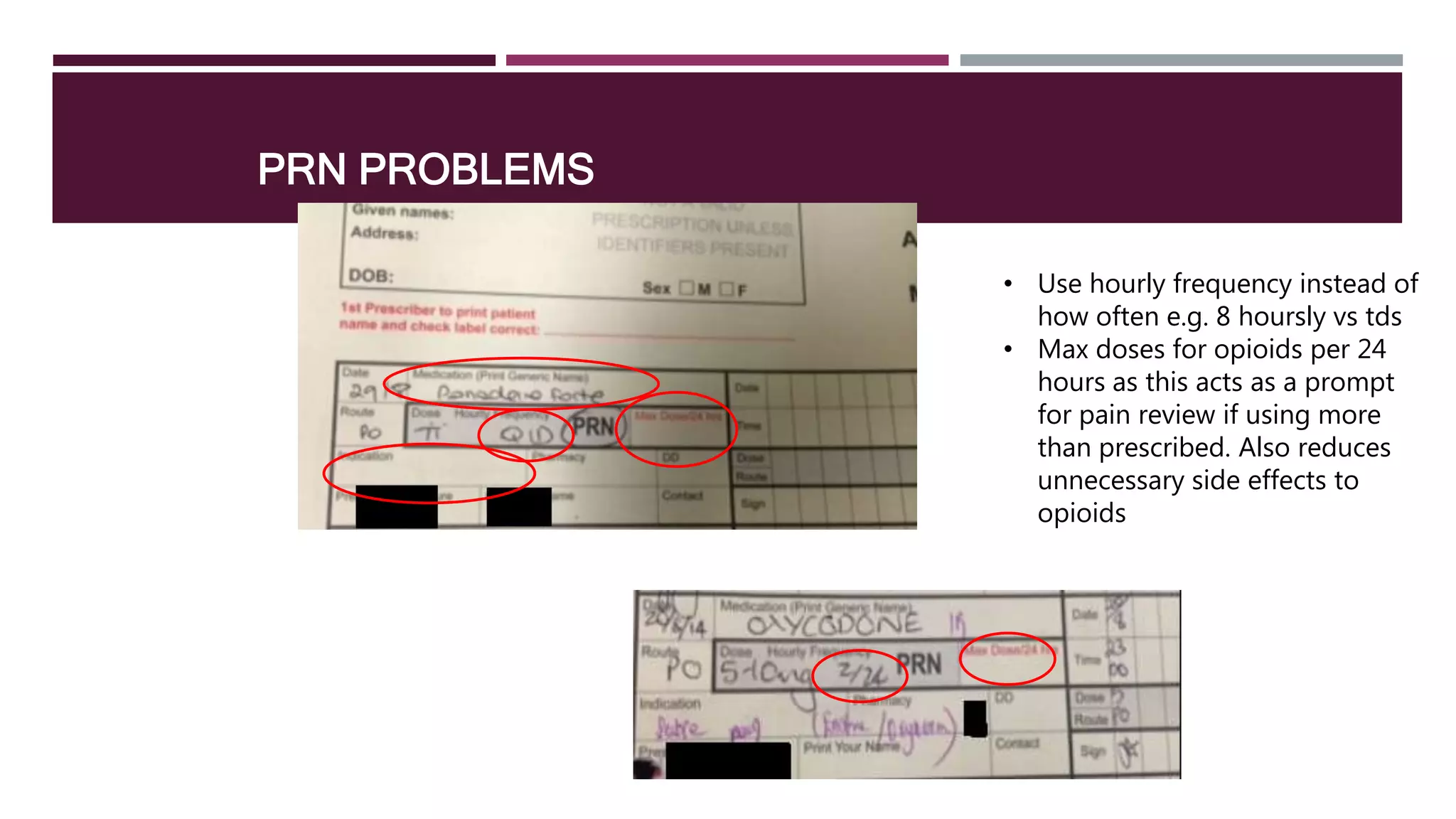
PRN PROBLEMS
• Use hourly frequency instead of
how often e.g. 8 hoursly vs tds
• Max doses for opioids per 24
hours as this acts as a prompt
for pain review if using more
than prescribed. Also reduces
unnecessary side effects to
opioids
HOW TO TAKE A BEST POSSIBLE MEDICATION HISTORY
 Who manages their medication? Patient or Carer/family member?
 Check with patient/carer if they’ve brought in their medications.
 Which pharmacy they usually get their medications from? If they go to multiple pharmacies,
check which pharmacy they mostly frequent.
 Have the Community pharmacy fax at least a 6 month medication dispensing history
 Webster pack patients and Nursing home patients, request medication profile and dispensing
history for non-packed medications (such as insulin, warfarin, denosumab 6 monthly, patches,
implants, sprays, etc)
 Confirm meds and dosing with patient/carer as this may vary from dispensing label OR patient
may no longer be taking certain meds
 Enquire abt any changes to patient’s meds over last 4 weeks prior to admission e.g. meds ceased,
antibiotics had, prednisolone and other short term therapies
 Ask abt sprays, vitamins, puffers, cream, pain tabs OTC, patches. Use MMP checklist
 Use back of the MMP as a guide as to reliable sources of medications. Who else can I contact?
COMMON PITFALLS IN MEDICATION HISTORY TAKING
SCGH PHARMACY DEPARTMENT 2018 13
• Not asking the patient –how they take their medications, assessing their compliance, which
pharmacy they go to
• What’s on the label isn’t always how the patient is taking their medication
• What’s brought in isn’t always what the patient is currently on. Check dispensing date on item
• Not questioning the patient on allergies or updating new allergies
• Referring to an old discharge summary (3 months maximum)
• Referring to a GP letter without checking details
• Using only one source
• Transcribing incorrectly
• Webster pack patients – not asking about non-packed medications such as inhalers, insulin,
warfarin
14
DISCHARGING PATIENT DURING/ AFTER HOURS FROM ED
 Check prescription written by yourself to ensure that it meets State legislation and PBS compliant. E.g. S8
written separately to other items.
 S8 prescriptions need to be handwritten including the name and address of the patient
 Ensure quantities on script matches PBS quantity or lesser.
 Patients who do not have Medicare/from overseas without reciprocal agreement are ineligible to get
prescription at SCGH as we are a PBS hospital
 Aboriginal patients are unable to have their script CTGed from hospital prescription. Can give script and GP
has to rewrite and add CTG so patient does not have to pay co-payment
 On call pharmacist does not attend for discharge prescription
 Patients with Webster packs should have their prescriptions and changes on discharge summary faxed to
their community pharmacy to ensure amendments are enacted in a timely manner. Same goes for patients
from Residential Care facilities (or Nursing homes).
PBS PRESCRIBING GUIDE
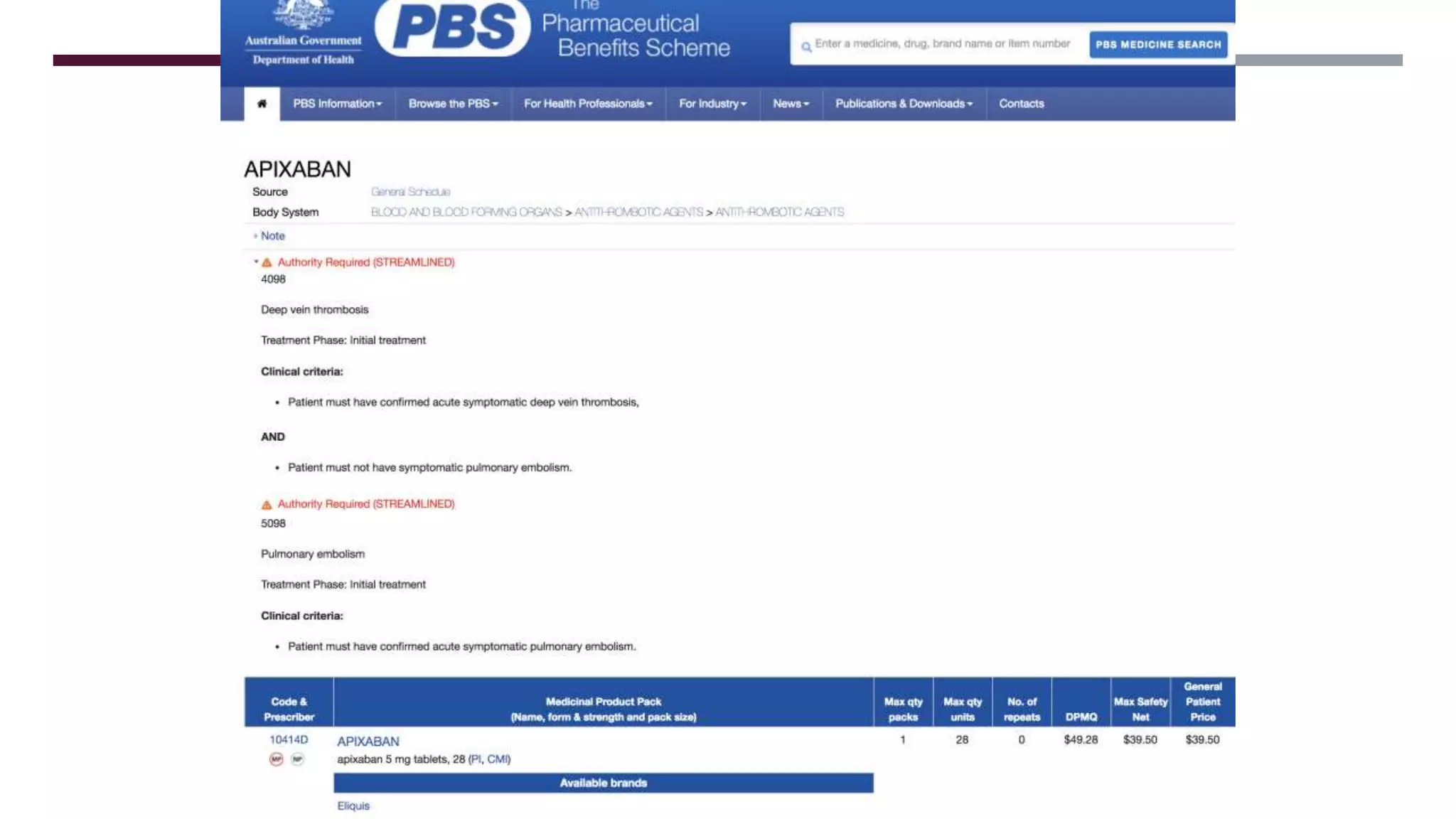
 Authority required versus authority streamlined
 Item code number is not equivalent to the authority number
 You may only prescribe the max allowed PBS quantity or lesser
 For e.g. if you require Augmentin Duo Forte for 10 days then you will have to prescribe a
quantity of 10 tablets with 1 repeat. Not a quantity of 20.
 You may annotate “Regulation 24” on a prescription with repeats to enable the entire supply
of the script to be dispensed at the same time for the patient. Using example above, patient
can have quantity of 20 tabs on discharge with Reg 24 annotation
 This is not to be done for every prescription with repeats. The hospital is only able to supply
maximum 1 month supply or the standard PBS pack
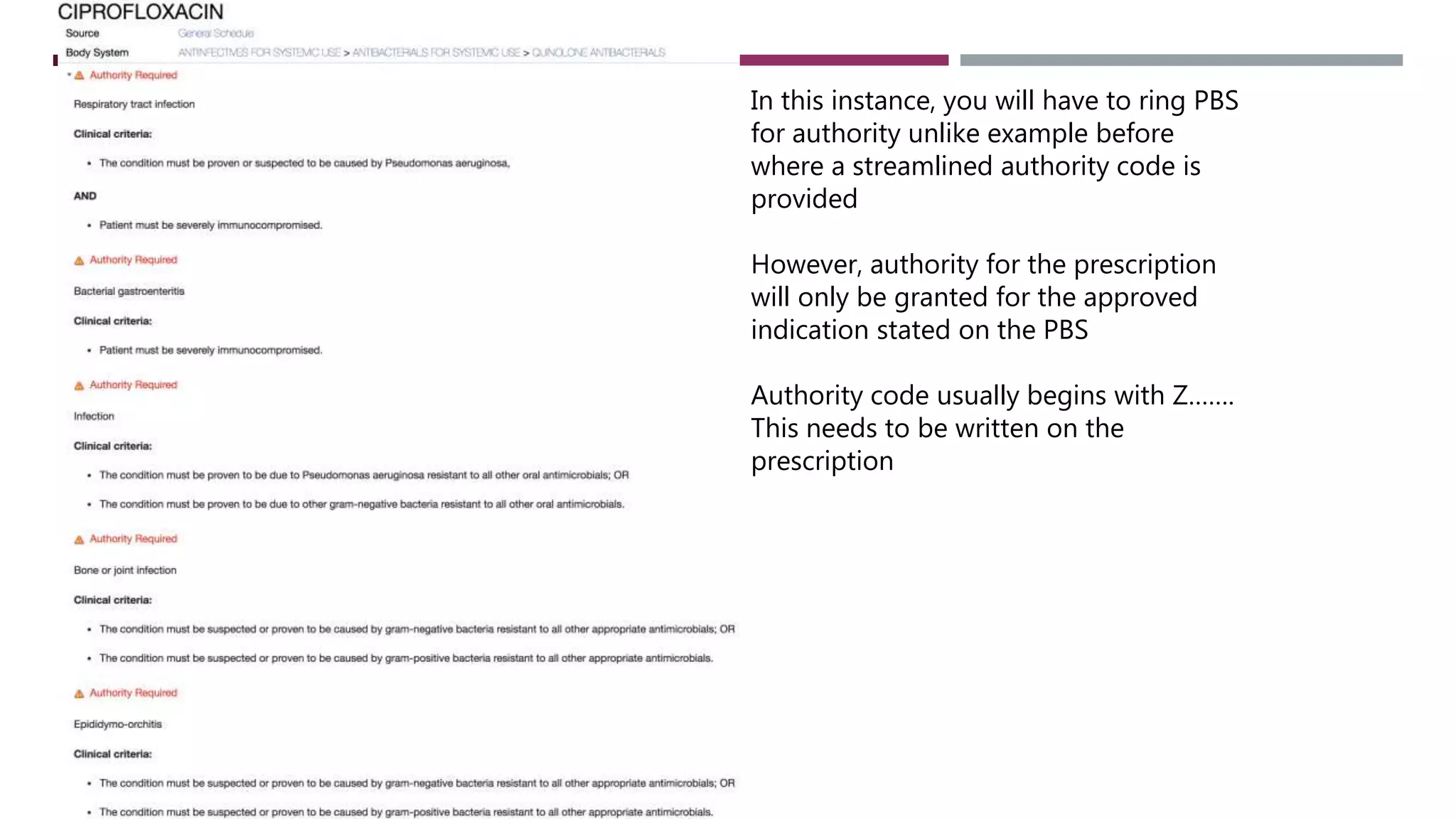
In this instance, you will have to ring PBS
for authority unlike example before
where a streamlined authority code is
provided
However, authority for the prescription
will only be granted for the approved
indication stated on the PBS
Authority code usually begins with Z…….
This needs to be written on the
prescription
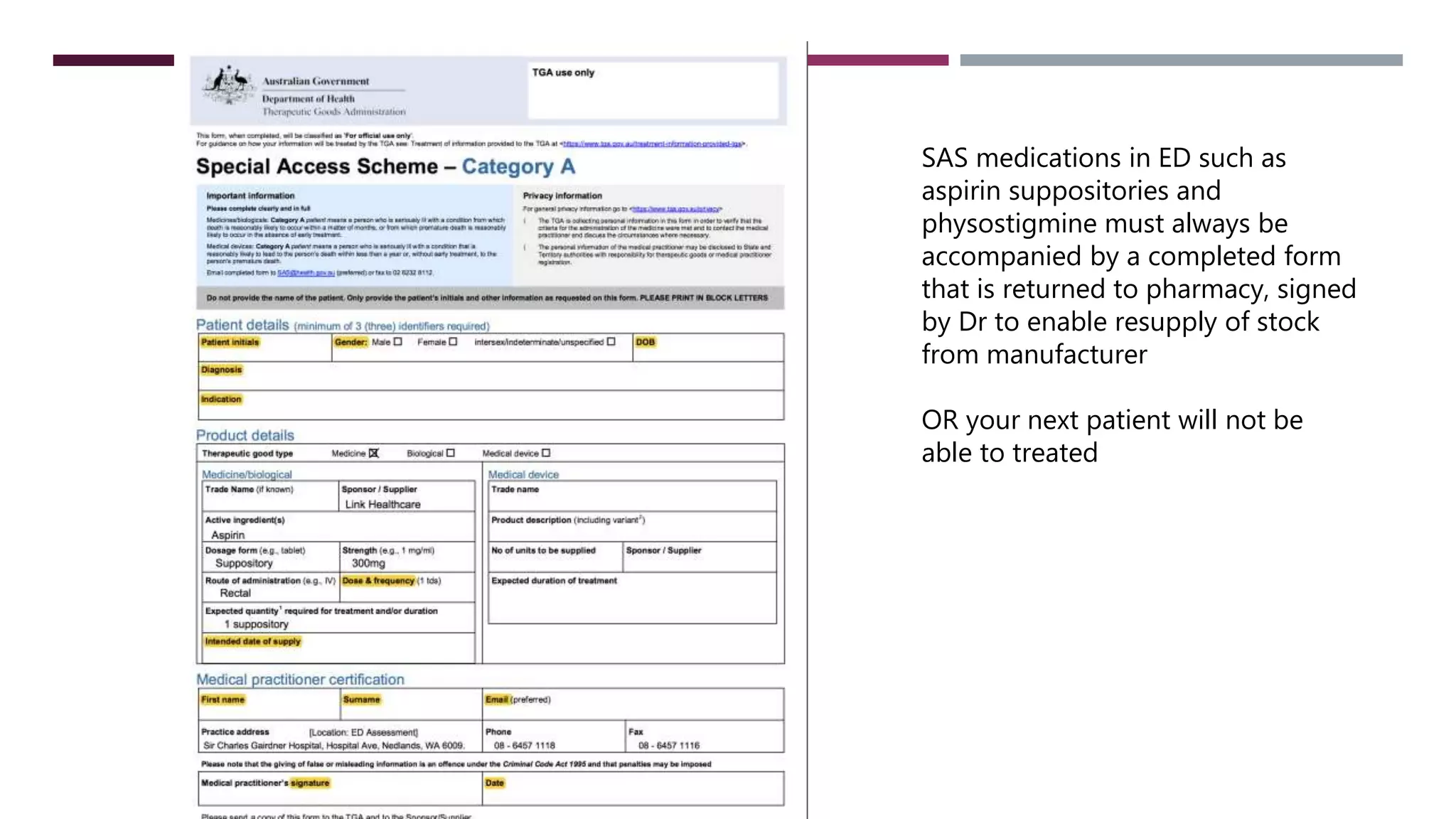
SAS medications in ED such as
aspirin suppositories and
physostigmine must always be
accompanied by a completed form
that is returned to pharmacy, signed
by Dr to enable resupply of stock
from manufacturer
OR your next patient will not be
able to treated
ONLINE RESOURCES AVAILABLE
 Useful resources include :
 Pharmacy page on Healthpoint – Medication guidelines
 PBS
 eTG
 Formulary One – prescribing restrictions and indication at SCGH
 Drug Formulary System – useful for finding if medication is stocked at SCGH after hours and where
 Australian Injectable Drug Handbook
 Don’t Rush to Crush online via Mims
 Australian Medicines Handbook
 UptoDate
 Micromedex
 Toxnet
 LactMed
COMMUNITY PROGRAM FOR OPIOID PHARMACOTHERAPY
(CPOP)
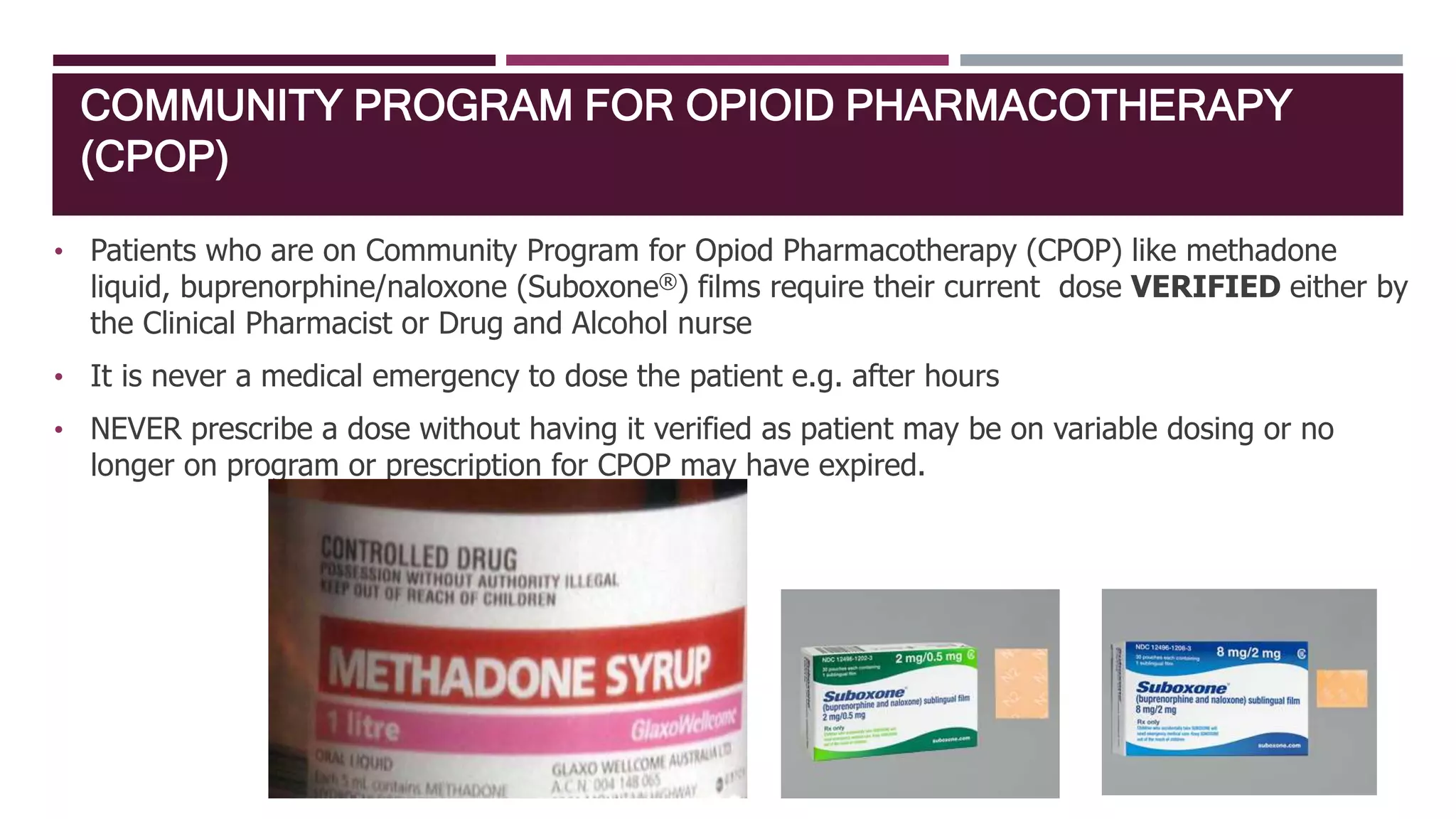
• Patients who are on Community Program for Opiod Pharmacotherapy (CPOP) like methadone
liquid, buprenorphine/naloxone (Suboxone®) films require their current dose VERIFIED either by
the Clinical Pharmacist or Drug and Alcohol nurse
• It is never a medical emergency to dose the patient e.g. after hours
• NEVER prescribe a dose without having it verified as patient may be on variable dosing or no
longer on program or prescription for CPOP may have expired.
RABIES EXPOSURE
CLINICAL ALERT SYSTEM
 A clinical alert is a diagnosis which has the potential to be of critical importance to a patient’s
management during the first 24 hours of their admission to hospital and assumes that the
patient is not always capable of communicating such information.
 There are three classifications of clinical alerts:
 Anaesthetic,
 Medical and
 Drug alerts
 Anaphylaxis, angioedema type presentations that we see in ED constitutes a Clinical alert that
should be notified
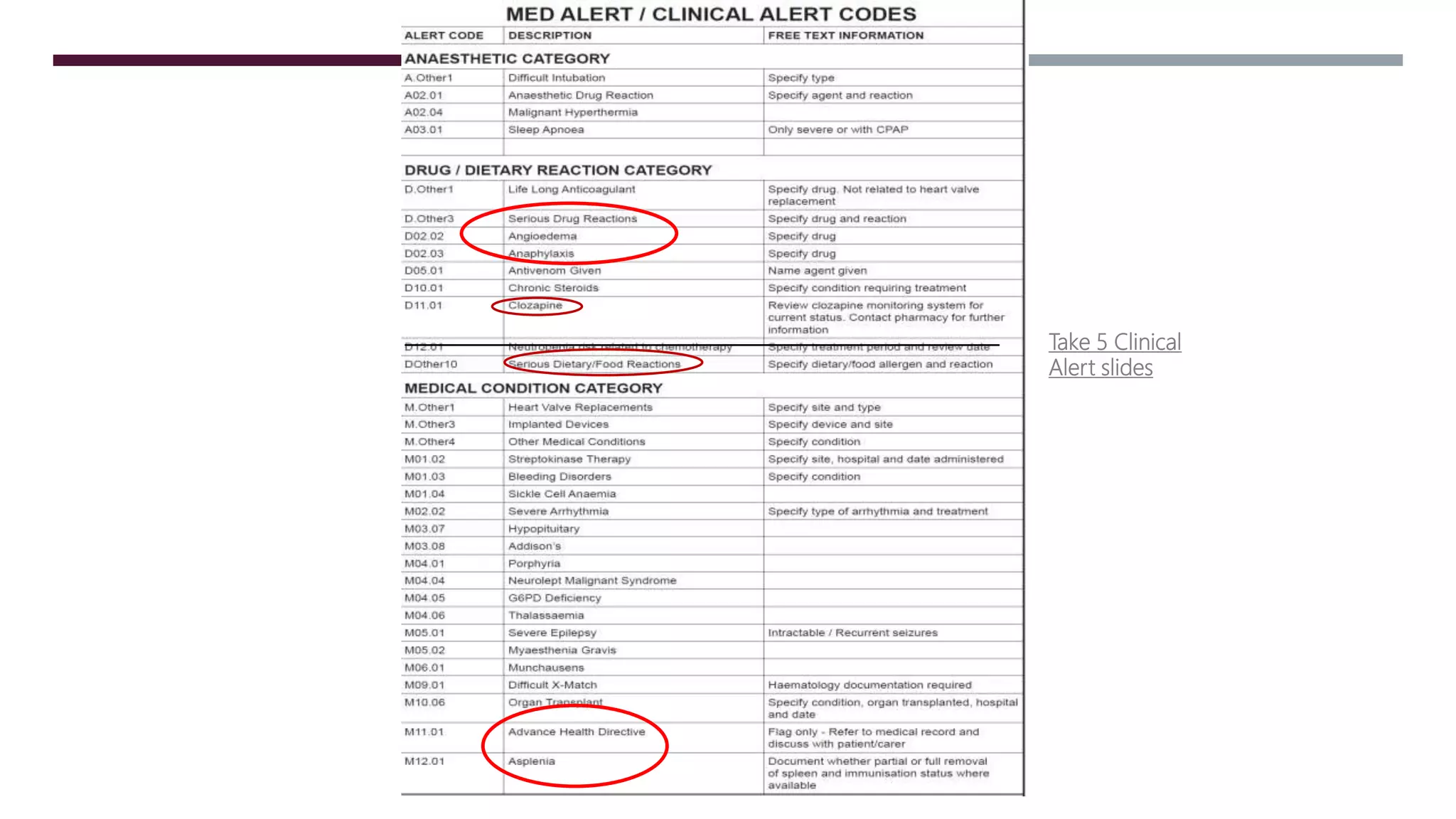
 For more categories or information see the back of the Clinical Alert form
 How to submit a notification for a Clinical Alert?
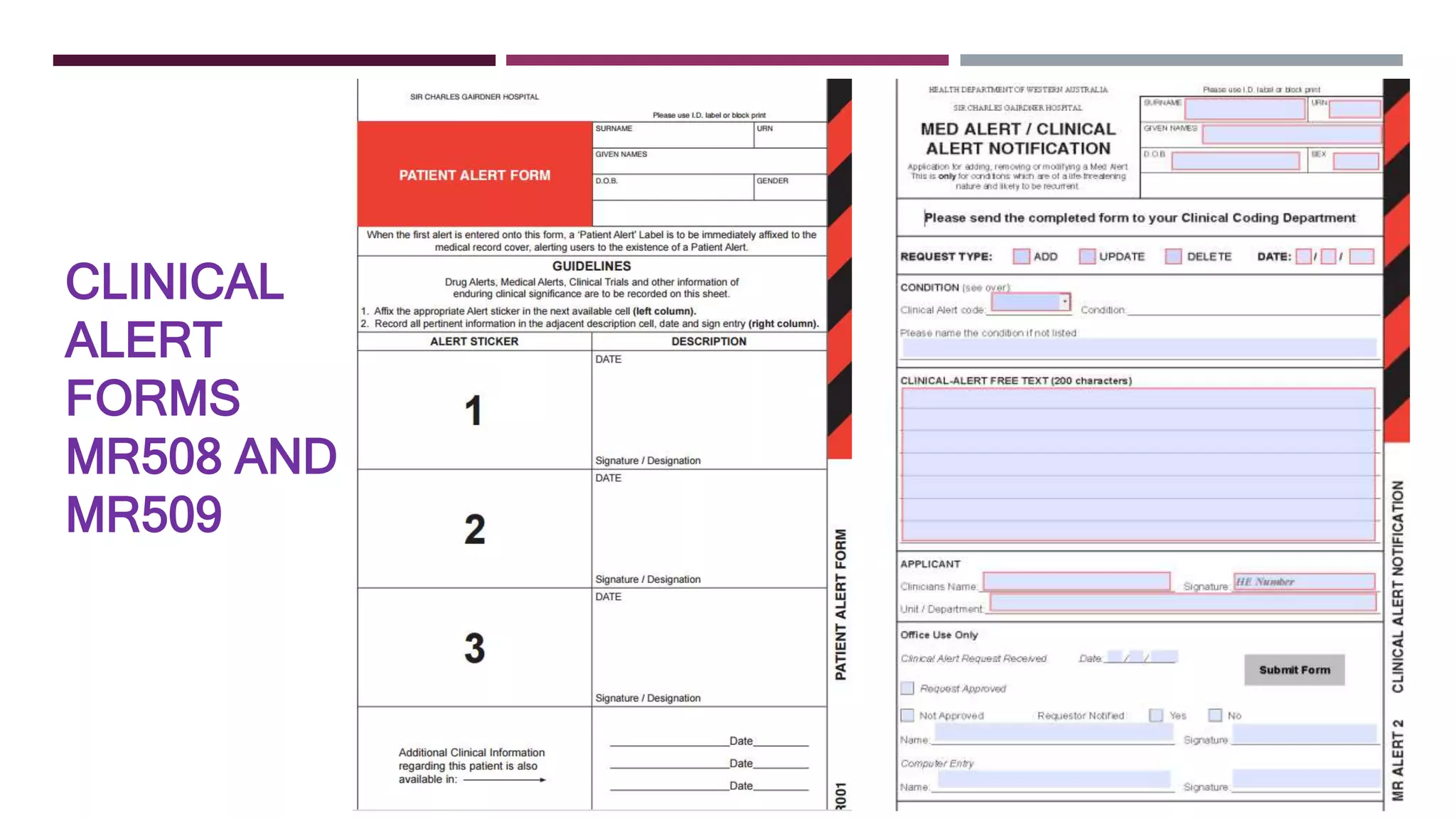
CLINICAL
ALERT
FORMS
MR508 AND
MR509
Take 5 Clinical
Alert slides
NEW WA MED CHART AND ANTICOAGULATION CHART TO BE
RELEASED SOON.
 WA Hospital Med Chart
 WA Anticoagulation Chart
Practical Prescribing Guide

Practical Prescribing Guide

  • 1.
    PRACTICAL PRESCRIBING GUIDEIN ED AT SCGH DANNY SOO
  • 2.
    OUTLINE  Common prescribingscenarios  Taking a best possible medication history  Discharging a patient during and after hours – Webster pack, residential care facility patients  PBS – authority vs streamlined authority  SAS medications – aspirin suppositories and physostigmine  Online Resources  Medication guidelines on HealthPoint  Community Program for Opioid Pharmacotherapy (CPOP) patients  HIV Post Exposure Prophylaxis (PEP)  Rabies vaccine  Clinical Alert System  New WA Hospital medication chart and anticoagulation chart to come
  • 3.
    SCGH Pharmacy Department2018 3 What is wrong with this? COMMON PRESCRIBING SCENARIOS
  • 4.
  • 5.
    USE OF ERRORPRONE ABBREVIATIONS • Abbreviations that are commonly used but are unacceptable include: • mcg, μg (use microg, micrograms) • OD, od or d (use daily, once daily, mane or nocte) • s/l or sl (use subling for sublingual) • s/c or sc (use subcut for subcutaneous injection) • Inh (use inhale for inhalation) • Q4h, ̊ representing frequency (use every 4 hours, 4 hrly, 4 hourly) • O (use PO for oral)
  • 6.
    USE OF UNACCEPTABLEABBREVIATIONS • Trade names should be avoided eg. Tazocin® should be prescribed as Piperacillin/ Tazobactam – the brand name does not clearly indicate the drug is a penicillin based antibiotic which has resulted in clinical incidents • Exceptions  Insulin – Brand Name Only  Biosimilars – Generic and Brand Name  i.e. Warfarin, InfliximabSCGH PHARMACY DEPARTMENT 2018 6
  • 7.
  • 8.
    UNCLEAR ORDERS Entonox® Normalsaline 150mg 100mg Should be nocte
  • 9.
  • 10.
    HOW TO CEASEA MEDICATION ORDER
  • 11.
    PRN PROBLEMS • Usehourly frequency instead of how often e.g. 8 hoursly vs tds • Max doses for opioids per 24 hours as this acts as a prompt for pain review if using more than prescribed. Also reduces unnecessary side effects to opioids
  • 12.
    HOW TO TAKEA BEST POSSIBLE MEDICATION HISTORY  Who manages their medication? Patient or Carer/family member?  Check with patient/carer if they’ve brought in their medications.  Which pharmacy they usually get their medications from? If they go to multiple pharmacies, check which pharmacy they mostly frequent.  Have the Community pharmacy fax at least a 6 month medication dispensing history  Webster pack patients and Nursing home patients, request medication profile and dispensing history for non-packed medications (such as insulin, warfarin, denosumab 6 monthly, patches, implants, sprays, etc)  Confirm meds and dosing with patient/carer as this may vary from dispensing label OR patient may no longer be taking certain meds  Enquire abt any changes to patient’s meds over last 4 weeks prior to admission e.g. meds ceased, antibiotics had, prednisolone and other short term therapies  Ask abt sprays, vitamins, puffers, cream, pain tabs OTC, patches. Use MMP checklist  Use back of the MMP as a guide as to reliable sources of medications. Who else can I contact?
  • 13.
    COMMON PITFALLS INMEDICATION HISTORY TAKING SCGH PHARMACY DEPARTMENT 2018 13 • Not asking the patient –how they take their medications, assessing their compliance, which pharmacy they go to • What’s on the label isn’t always how the patient is taking their medication • What’s brought in isn’t always what the patient is currently on. Check dispensing date on item • Not questioning the patient on allergies or updating new allergies • Referring to an old discharge summary (3 months maximum) • Referring to a GP letter without checking details • Using only one source • Transcribing incorrectly • Webster pack patients – not asking about non-packed medications such as inhalers, insulin, warfarin
  • 14.
  • 15.
    DISCHARGING PATIENT DURING/AFTER HOURS FROM ED  Check prescription written by yourself to ensure that it meets State legislation and PBS compliant. E.g. S8 written separately to other items.  S8 prescriptions need to be handwritten including the name and address of the patient  Ensure quantities on script matches PBS quantity or lesser.  Patients who do not have Medicare/from overseas without reciprocal agreement are ineligible to get prescription at SCGH as we are a PBS hospital  Aboriginal patients are unable to have their script CTGed from hospital prescription. Can give script and GP has to rewrite and add CTG so patient does not have to pay co-payment  On call pharmacist does not attend for discharge prescription  Patients with Webster packs should have their prescriptions and changes on discharge summary faxed to their community pharmacy to ensure amendments are enacted in a timely manner. Same goes for patients from Residential Care facilities (or Nursing homes).
  • 16.
    PBS PRESCRIBING GUIDE Authority required versus authority streamlined  Item code number is not equivalent to the authority number  You may only prescribe the max allowed PBS quantity or lesser  For e.g. if you require Augmentin Duo Forte for 10 days then you will have to prescribe a quantity of 10 tablets with 1 repeat. Not a quantity of 20.  You may annotate “Regulation 24” on a prescription with repeats to enable the entire supply of the script to be dispensed at the same time for the patient. Using example above, patient can have quantity of 20 tabs on discharge with Reg 24 annotation  This is not to be done for every prescription with repeats. The hospital is only able to supply maximum 1 month supply or the standard PBS pack
  • 18.
    In this instance,you will have to ring PBS for authority unlike example before where a streamlined authority code is provided However, authority for the prescription will only be granted for the approved indication stated on the PBS Authority code usually begins with Z……. This needs to be written on the prescription
  • 19.
    SAS medications inED such as aspirin suppositories and physostigmine must always be accompanied by a completed form that is returned to pharmacy, signed by Dr to enable resupply of stock from manufacturer OR your next patient will not be able to treated
  • 20.
    ONLINE RESOURCES AVAILABLE Useful resources include :  Pharmacy page on Healthpoint – Medication guidelines  PBS  eTG  Formulary One – prescribing restrictions and indication at SCGH  Drug Formulary System – useful for finding if medication is stocked at SCGH after hours and where  Australian Injectable Drug Handbook  Don’t Rush to Crush online via Mims  Australian Medicines Handbook  UptoDate  Micromedex  Toxnet  LactMed
  • 21.
    COMMUNITY PROGRAM FOROPIOID PHARMACOTHERAPY (CPOP) • Patients who are on Community Program for Opiod Pharmacotherapy (CPOP) like methadone liquid, buprenorphine/naloxone (Suboxone®) films require their current dose VERIFIED either by the Clinical Pharmacist or Drug and Alcohol nurse • It is never a medical emergency to dose the patient e.g. after hours • NEVER prescribe a dose without having it verified as patient may be on variable dosing or no longer on program or prescription for CPOP may have expired.
  • 24.
  • 25.
    CLINICAL ALERT SYSTEM A clinical alert is a diagnosis which has the potential to be of critical importance to a patient’s management during the first 24 hours of their admission to hospital and assumes that the patient is not always capable of communicating such information.  There are three classifications of clinical alerts:  Anaesthetic,  Medical and  Drug alerts  Anaphylaxis, angioedema type presentations that we see in ED constitutes a Clinical alert that should be notified  For more categories or information see the back of the Clinical Alert form  How to submit a notification for a Clinical Alert?
  • 26.
  • 27.
  • 28.
    NEW WA MEDCHART AND ANTICOAGULATION CHART TO BE RELEASED SOON.  WA Hospital Med Chart  WA Anticoagulation Chart

Editor's Notes

  • #4 Let’s start of the session with an example of what is wrong with this medication order Buprenorphine prescription, an S8 order with no frequency. Also use of mcg instead of microg. Patch was also administered daily !!! Imagine if it was Methotrexate given daily
  • #5 Can you identify what is wrong with these orders?
  • #6 Frm those examples you can see how the use of incorrect or self devised abbreviations could lead to all sorts of interpretation of a prescription order
  • #9 Some example of unclear or ambiguous orders
  • #10 A reducing dose of dexamethasone prescribed very unclearly on the NIMC causing much confusion and room for error
  • #11 Clearly ceasing a medication order will mean that it will not be incorrectly prescribed again. Ideally, this should also be documented in the notes
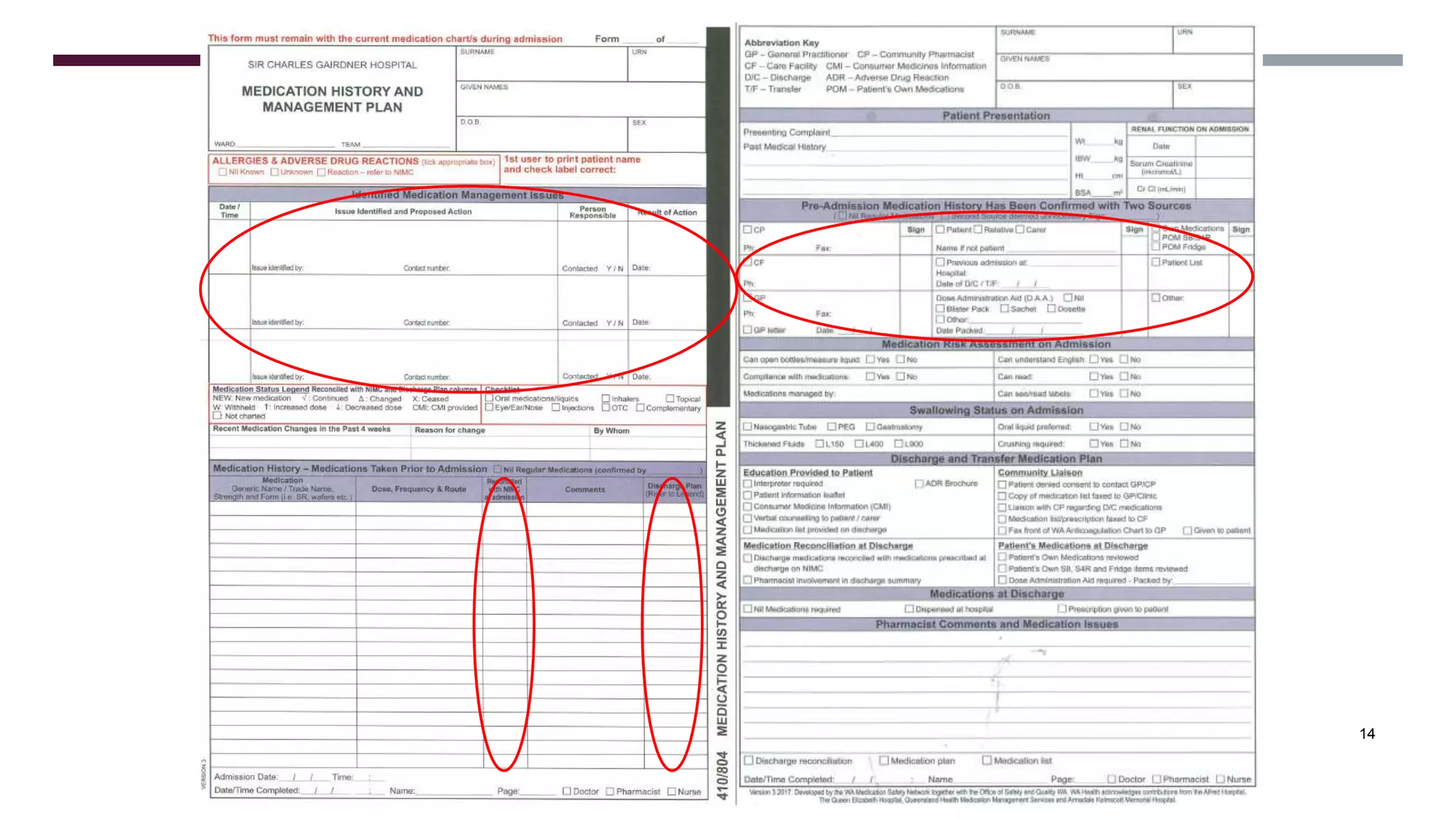
  • #15 Take note of the medication issues identified by the pharmacist to be addressed on the MMP Keep POM in hospital until pharmacist has seen it to aid reconciliation Value: helps you identify and track what’s happened during admission Important to have two sources to be considered a good med rec
  • #22 It is NEVER a medical emergency to prescribe CPOP. If the dose can’t be verified after hours, it is clinically safe to omit the dose, even if the patient has missed their doses in the community. Liaise with Drug and Alcohol CNC next business day to verify dose. Never prescribe CPOP based on discharge summary as it’s not just the dose that is important. There are other legal requirements to CPOP prescribing such as script expiry, current dose, take away doses, compliance, etc
  • #27 Here’s what the forms look like (just skim thru this section)
  • #28 Clinical Alert policy now includes Advance Health Directive, Clozapine, Serious Dietary/Food reactions, Asplenia as recordable Clinical Alerts on TOPAS