DR. JAMES Malce ALO

drjma

2/19/2014
 The

principal goal of education is to create
men and women . . .who have minds which
can be critical, can verify, and not accept
everything they are offered.
-Jean Piaget

drjma

2/19/2014
drjma

2/19/2014
ongoing activity for
nb
professional nurses.

is the process that allows nurses to see the big
picture (envision the overall perspective) instead
of focusing only on details.
 Ennis’(1987) classic description, “reasonable
reflective thinking that is focused on deciding
what to believe or do.”
 Every day, nurses make decisions that are
derived through critical thinking.
 Making clinical judgments relies on critical
thinking.
 Critical thinking is identified as an essential
nursing competency by the National League for
Nurses (1997).


drjma

2/19/2014
1.
2.
3.

Mental operations,
Knowledge, and
Attitudes

drjma

2/19/2014
 - Activities

such as decision-making and
reasoning that are used to find or create
meaning.
 result of these mental operations is
 creative,

appropriate problem solving.
 Other cognitive operations involved in critical
thinking are;
strategizing (planning) and
 evaluating one’s thinking


drjma

2/19/2014
 knowledge



base that includes

1. declarative knowledge, (specific facts or
information)
2. operative knowledge (an understanding of
the nature of that knowledge).

 Nursing

curricula assist the student in
learning specific facts about nursing and the
delivery of quality care.

drjma

2/19/2014
 In

order to think critically, to solve problems,
and to make decisions, nurses must develop
a broad base of knowledge. It includes;


from other disciplines such as science (anatomy,
physiology,biology), psychology, and philosophy
(logic).

 Nurses

apply this knowledge to specific client
situations through critical thinking.

drjma

2/19/2014
 ATTITUDES









OF CRITICAL THINKERS

• Tolerance, open-mindedness, nonjudgmental
mind-set
• Curiosity, proactive, flexible, organized
• Persistence, intellectual courage
• Respect for others’ perspectives
• Comfort dealing with ambiguity, uncertainty
• Intellectual humility (knowing that one does
not have all the answers)
• Self-confidence (belief in own ability to think
things through and make appropriate decisions)
(Data from: Beyer [1987]; Ennis [1987]; Krathwohl, Bloom, & Masia [1964]; Paul, [1993];
and Rubenfeld & Scheffer [1999].)

drjma

2/19/2014
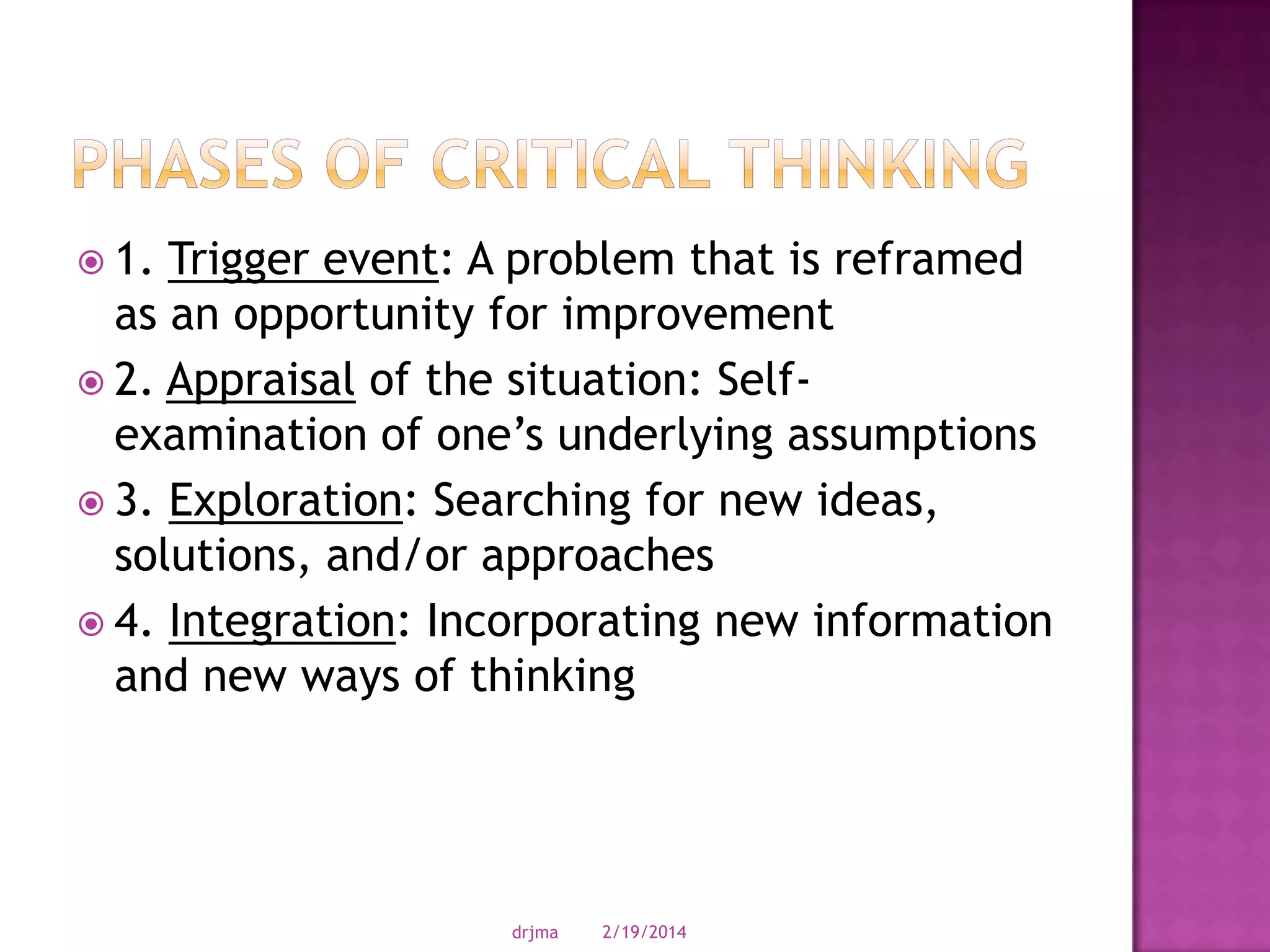
 1.

Trigger event: A problem that is reframed
as an opportunity for improvement
 2. Appraisal of the situation: Selfexamination of one’s underlying assumptions
 3. Exploration: Searching for new ideas,
solutions, and/or approaches
 4. Integration: Incorporating new information
and new ways of thinking

drjma

2/19/2014
1.
2.
3.
4.
5.
6.

Identify goals.
Determine what knowledge is required.
Assess the margin for error.
Determine the amount of time available
for decision making.
Identify available resources.
Recognize factors (i.e., biases, fatigue)
that may influence decision making
(Alfaro-LeFevre, 1998).

drjma

2/19/2014
drjma

2/19/2014
 Critical

thinkers are also creative thinkers.
Both types of thinking require assessment
and result in new discoveries (Paul & Ballin,
1988).
 creative problem solving


is goal-directed thinking that leads to
achievement by using new ideas or methods.

 Creativity

is “the basic building block of
invention and thus innovation"

drjma

2/19/2014
 Creative

thinking is the foundation for
individualizing client care, in that the nurse
identifies unique needs of each client and
develops interventions specific to those
needs. Without creative thinking, nursing
care would become routine, that is, the
same for every client.

drjma

2/19/2014
Critical Thinkers

Creative Thinkers

• Defines the parameters of a
problem

• Defines the existing problem

• Sets reasonable criteria for
assessing the

• Delays judgment or suspends
criticism of alternatives
appropriateness of an action

• Adapts one’s behavior as
needs

• Exercises judgment in
selecting the best alternative
and/or norms change

• Transfers learning from one
situation to another

• Learns from mistakes

• Pays attention to the problem
at hand

• Breaks away from usual
problem-solving methods to
develop
creative responses

drjma

2/19/2014
• Detects ambiguity or false inferences
• Analyzes interrelationships of ideas from
several perspectives
• Tests out inferences by considering
opposing viewpoints
• Creates innovative solutions to complex problems
Ref:(Data from Gilmartin [1999] and Paul [1993].)

drjma

2/19/2014
 When

making a clinical decision, the nurse
determines action that will help move the
client toward achievement of the expected
outcomes.
 Thus, decision making is defined as
considering and selecting interventions from
a repertoire of actions that facilitate the
achievement of a desired outcome (Pesut,
1999).

drjma

2/19/2014
drjma

2/19/2014
drjma

2/19/2014
drjma

2/19/2014
drjma

2/19/2014
drjma

2/19/2014
drjma

2/19/2014
drjma

2/19/2014
drjma

2/19/2014
drjma

2/19/2014
drjma

2/19/2014
drjma

2/19/2014
drjma

2/19/2014
drjma

2/19/2014
drjma

2/19/2014
drjma

2/19/2014
drjma

2/19/2014
drjma

2/19/2014
drjma

2/19/2014
drjma

2/19/2014
drjma

2/19/2014
drjma

2/19/2014
drjma

2/19/2014
drjma

2/19/2014
drjma

2/19/2014
drjma

2/19/2014
drjma

2/19/2014
drjma

2/19/2014
drjma

2/19/2014
drjma

2/19/2014
drjma

2/19/2014
drjma

2/19/2014
drjma

2/19/2014
drjma

2/19/2014
drjma

2/19/2014
drjma

2/19/2014
drjma

2/19/2014
drjma

2/19/2014
drjma

2/19/2014
drjma

2/19/2014
drjma

2/19/2014
drjma

2/19/2014
drjma

2/19/2014
drjma

2/19/2014
drjma

2/19/2014
drjma

2/19/2014
drjma

2/19/2014
drjma

2/19/2014
drjma

2/19/2014
drjma

2/19/2014
drjma

2/19/2014
drjma

2/19/2014
drjma

2/19/2014
drjma

2/19/2014
drjma

2/19/2014
drjma

2/19/2014
drjma

2/19/2014
drjma

2/19/2014
drjma

2/19/2014
drjma

2/19/2014
drjma

2/19/2014
drjma

2/19/2014
drjma

2/19/2014
drjma

2/19/2014
drjma

2/19/2014
drjma

2/19/2014
drjma

2/19/2014
drjma

2/19/2014
drjma

2/19/2014
drjma

2/19/2014
drjma

2/19/2014
drjma

2/19/2014
drjma

2/19/2014
drjma

2/19/2014
drjma

2/19/2014
drjma

2/19/2014
drjma

2/19/2014
drjma

2/19/2014

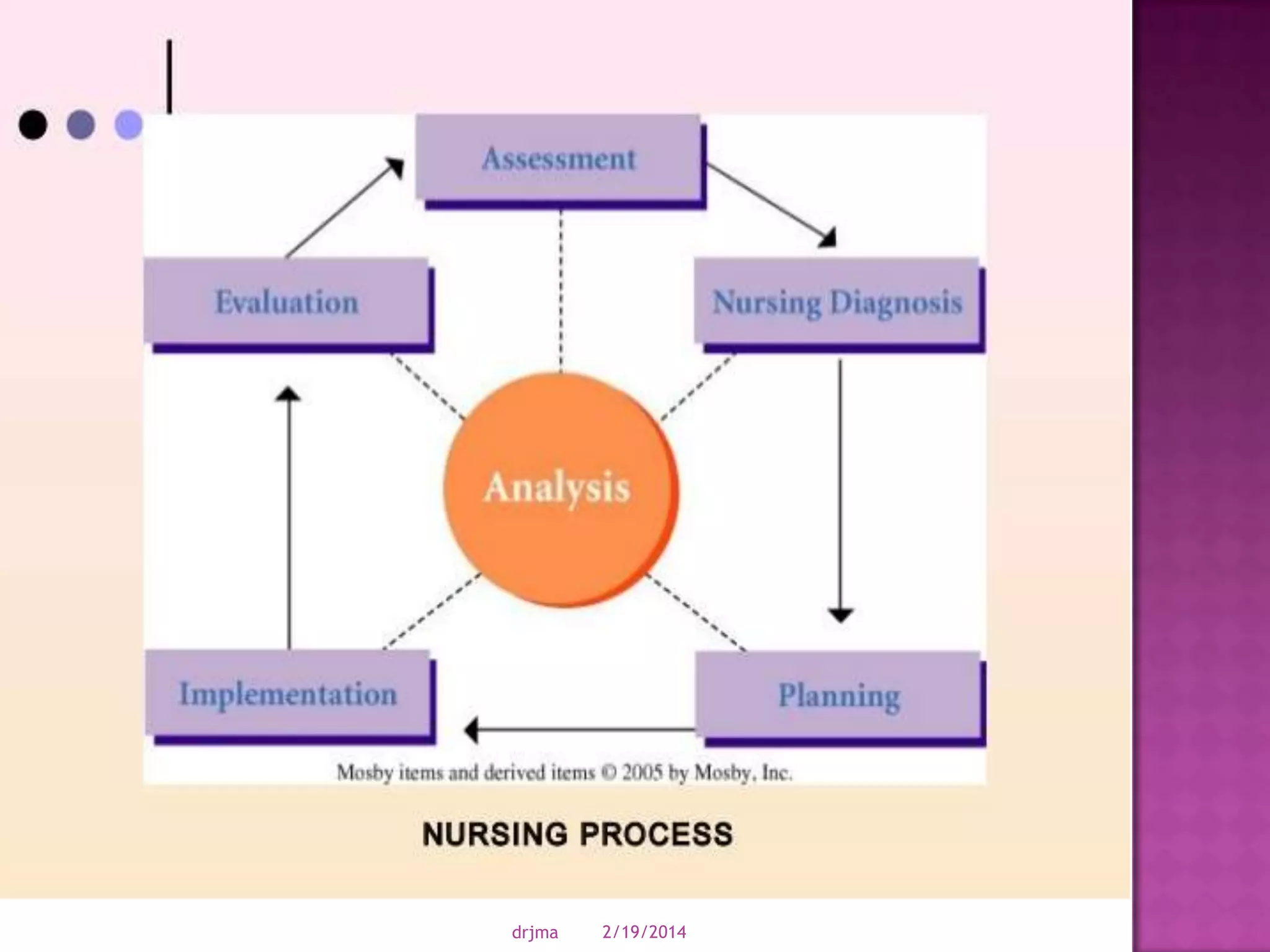
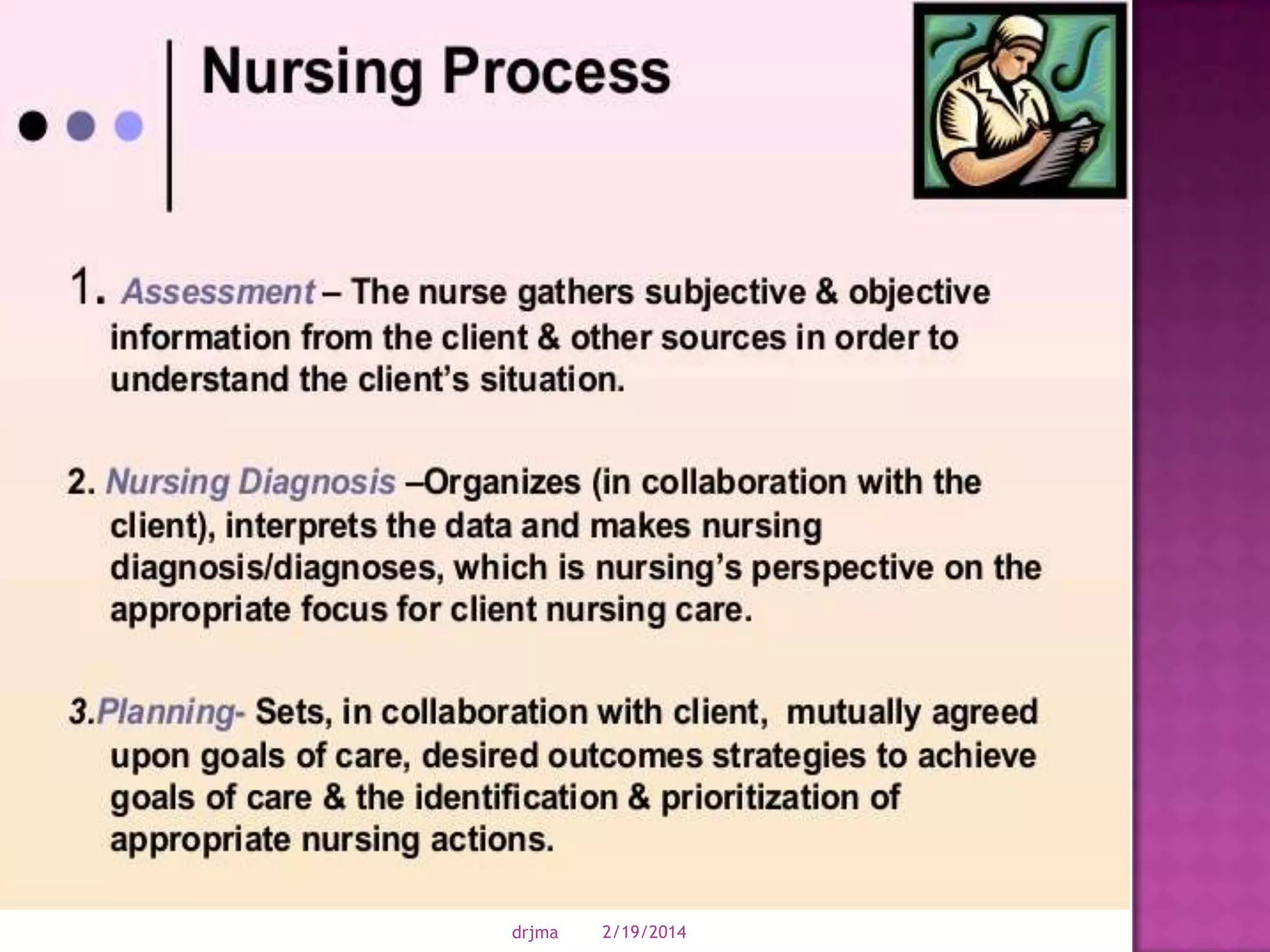
Critical thinking & Nursing Process drjma