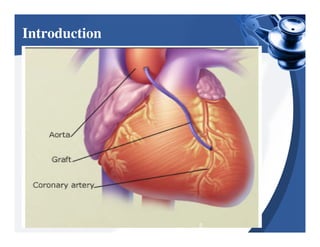
Coronary artery bypass grafting (CABG) is a surgical procedure that improves blood flow to the heart. During CABG, a healthy blood vessel is grafted to bypass blocked coronary arteries and restore blood flow to the heart muscle. The internal thoracic artery, radial artery, and saphenous vein are common graft conduits. The procedure requires general anesthesia and opening the chest via median sternotomy. Grafts are sewn to the coronary arteries above and below the blockages to reroute blood flow around them. Post-operative care focuses on monitoring for bleeding, arrhythmias, and other complications. Nursing care involves assessing the patient, providing wound care, managing pain, and educating on lifestyle changes and