The 6 D’s of Health Outcomes
 Death
 Disease
 Discomfort
 Disability
 Dissatisfaction
 Destitution
 A bad outcome if Untimely
 A set of Symptoms, Signs and Lab results
 Symptoms such as pain, nausea and itching
 Impaired ability to go about usual activities
 Emotional reaction to disease and its care
 Financial Cost of Illness
Clinical Questions
Abnormality Is the patient sick or well
Frequency How often does disease occur
Diagnosis How accurate are the diagnostic tests
Cause What conditions lead to disease
Risk What factors are associated with the disease
Prognosis What are the consequences of disease
Treatment How does treatment change the course
Prevention Does an intervention prevent disease
Does an early detection improve the course
Cost How much will care cost
Non Interventional StudiesNon Interventional Studies
(Observational)
Interventional StudiesInterventional Studies
(Experimental)(Experimental)
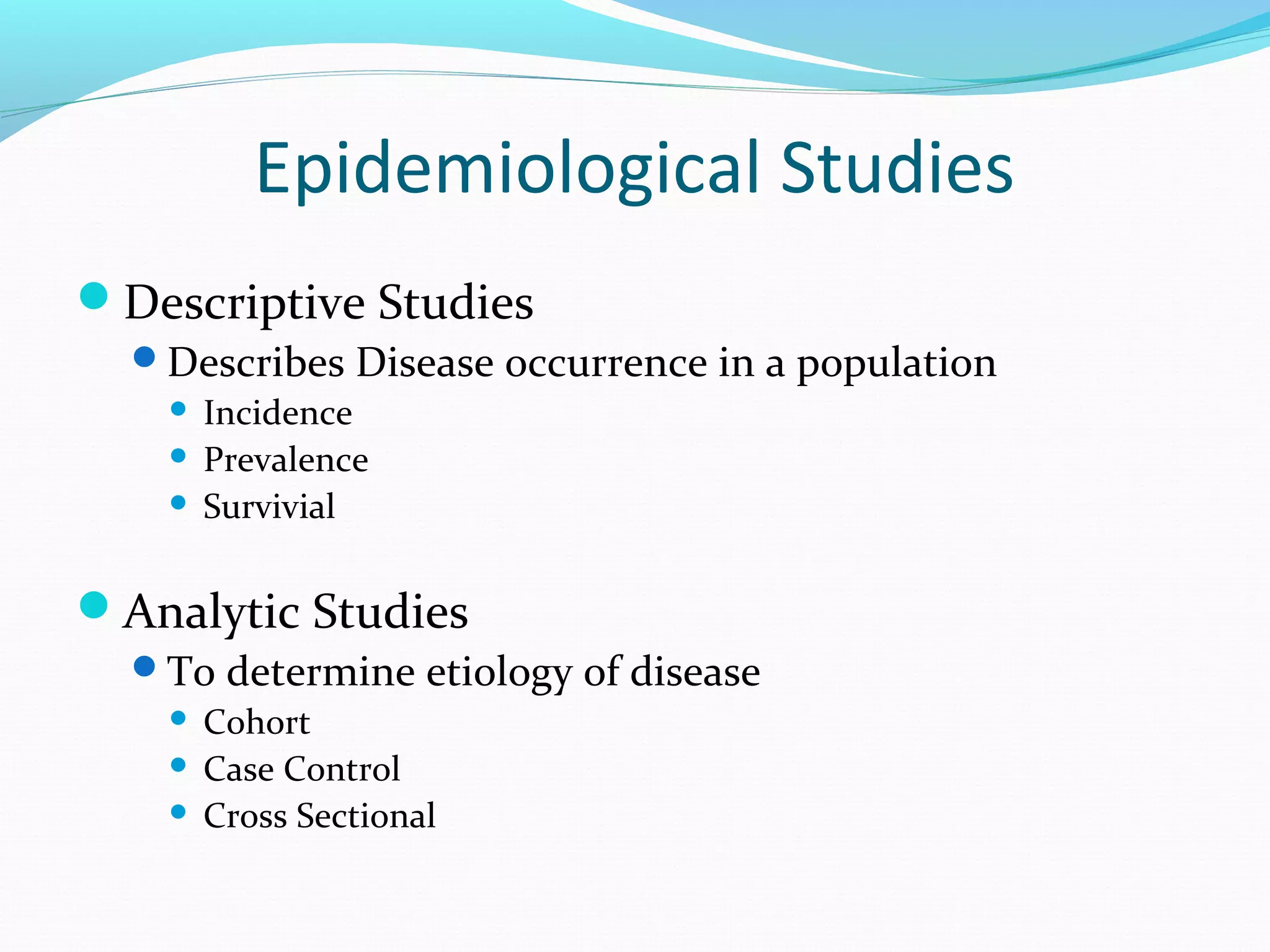
Epidemiological Studies
Descriptive Studies
Describes Disease occurrence in a population
 Incidence
 Prevalence
 Survivial
Analytic Studies
To determine etiology of disease
 Cohort
 Case Control
 Cross Sectional
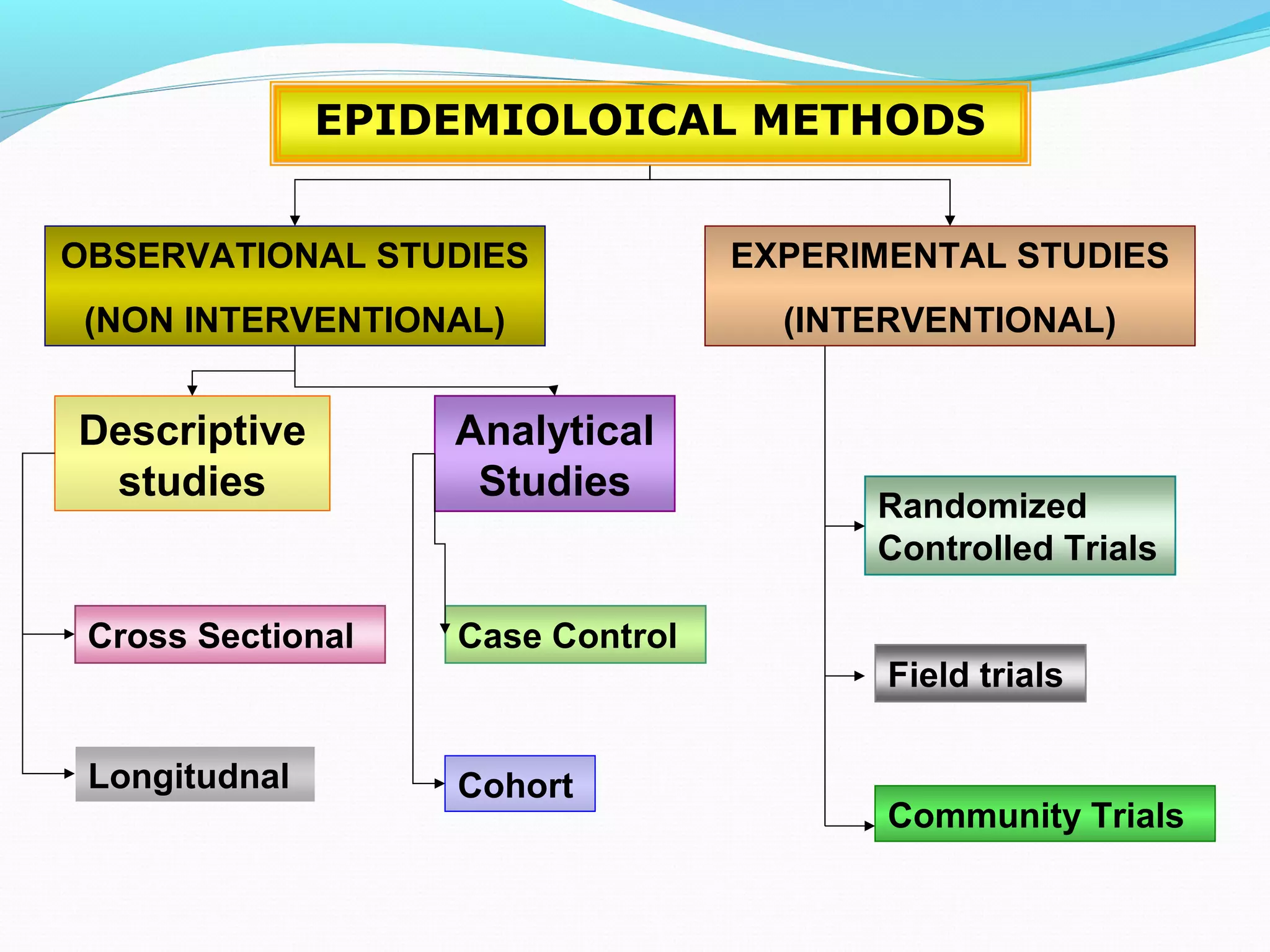
EPIDEMIOLOICAL METHODS
OBSERVATIONAL STUDIES
(NON INTERVENTIONAL)
EXPERIMENTAL STUDIES
(INTERVENTIONAL)
Descriptive
studies
Analytical
Studies
Cross Sectional Case Control
Cohort
Randomized
Controlled Trials
Field trials
Community Trials
Longitudnal
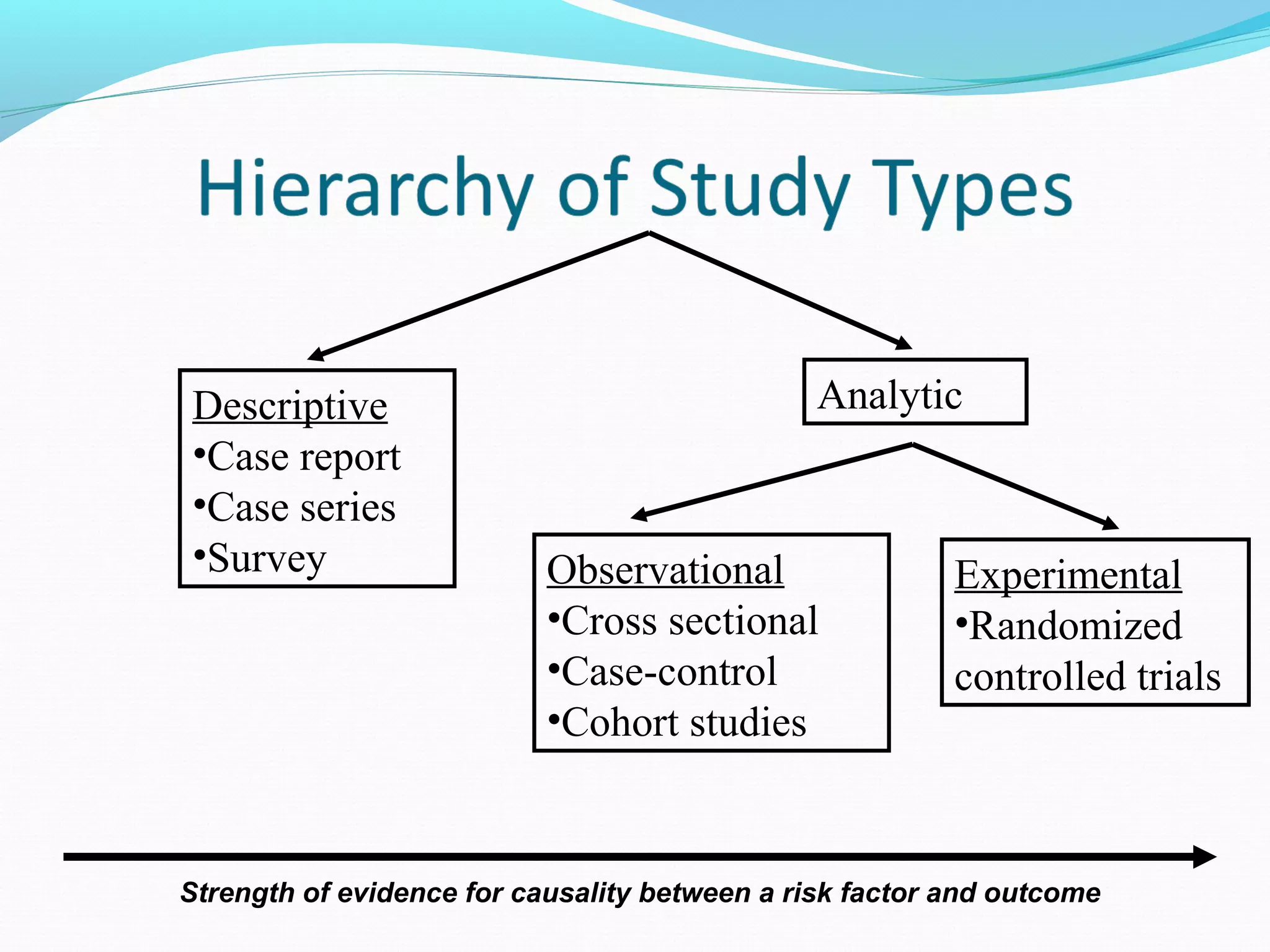
Descriptive
•Case report
•Case series
•Survey
Analytic
Observational
•Cross sectional
•Case-control
•Cohort studies
Experimental
•Randomized
controlled trials
Strength of evidence for causality between a risk factor and outcome
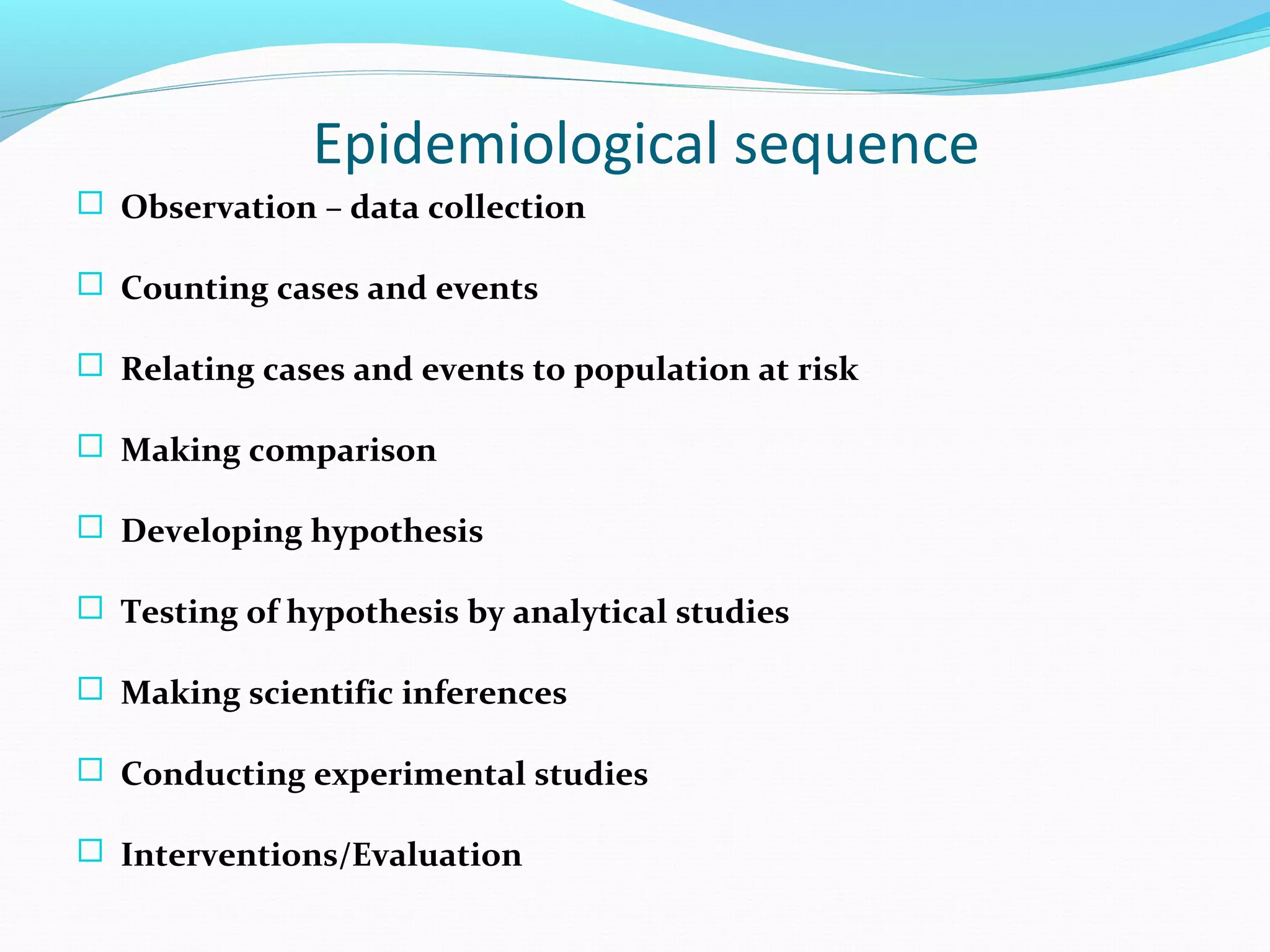
Epidemiological sequence
 Observation – data collection
 Counting cases and events
 Relating cases and events to population at risk
 Making comparison
 Developing hypothesis
 Testing of hypothesis by analytical studies
 Making scientific inferences
 Conducting experimental studies
 Interventions/Evaluation
1. DESCRIPTIVE STUDY
FIRST THING’S FIRST…..!!!!
Definition
It involves the systematic collection and presentation
of data to give a clear picture of a particular situation.
Descriptive can be carried out on small or large scales
in community
Concerns
Descriptive study is concerned with the following
questions:
a. When is the disease occurring (Time)
b. Where it is occurring (Place)
c. Who is getting the disease (Person)
T.P.P
Uses
Provides data regarding
 The magnitude of the disease load
 The types of disease problem in the community in term
of morbidity and mortality rate and ratio
Provides “clues” to the disease etiology
Helps in
 Formulation of etiological hypothesis
 Helps in planning, implementation and evaluation of
health services/programmes
Procedures
Defining the population to be studied
Defining the disease under study
Describing the disease by
 Time
 Place
 Person
Measurement of the disease
 Cross Sectional Study
 Logitudinal Study
Comparing with known indices
Formulation of an etiological hypothesis
Measurement of Disease
a. Cross Sectional Study
b. Longitudinal Study
Cross sectional studies
Based on a single examination of a
cross section of population at one
point in time, results of which can be
projected on the whole population
provided the sampling has been done
correctly.
Uses
a.More useful in chronic diseases
b. To find more about disease rather than its
etiology
Characteristics
Physical characteristics of people, material and
environment
Socio-economic characteristics e.g., age, education ,
marital status, number of children and income
Behavior of people like knowledge, attitude and
beliefs (KAP)
Events that occur in population
Advantages of CSS
May study several outcomes
Control over selection of subjects
Control over measurements
Relatively short duration
First step for cohort study
Yields prevalence
Disadvantages of CSS
Does not establish cause/effect ratio
Potential bias in measuring exposure
Potential survival bias
Not feasible for rare disease
Does not yield incidence
Longitudinal Study
Based on multiple observations in the same
population over a prolong period of time.
Uses of Longitudinal Study
Natural History of Disease
Identifying Risk factors
Finding out incidence rate
Cross Sectional Vs Longitudinal
COMPARATIVE or ANALYTICAL STUDY
An ANALYTICAL STUDY attempts to
establish causes or risk factors for
certain problems. This is done by
comparing two or more groups, some of
which have or develop the problem and
some of which have not.
Analytic Epidemiology
Second major type of epidemiological studies
Subject of interest is individual within the
population
The objective is to test hypothesis
The study determines whether or not a statistical
association exists between a disease and suspected
factor
Strength of association, if it exists
CASE CONTROL STUDY
In a CASE-CONTROL STUDY, the
investigator compares one group among
whom a problem is (e.g., malnutrition)
with another group, called a control or
comparison group, where the problem
is absent to find out what factors have
contributed to the problem.
CASE CONTROL STUDY
Often called retrospective study
First approach to test causal hypothesis
Properties
Both exposed and outcome (Disease) have
occurred before the start of study
The study proceeds backward from effect to cause
It uses a control or comparison group to support or
refute an inference
Method
Selection of cases and Controls
Matching
Measurement of Exposure
Analysis and Interpretation
 Exposure Rates
 Estimation of Risk (Relative Risk & Odds Ratio)
A
C D
B
Cases
Exposure -
Exposure +
Controls
A+C B+D
2 x 2 Contingency Table for Cases and Controls
Total Cases
Exposure Among Cases
A/(A+C)
Exposure Among Controls
B/(B+D)
Advantages of case control study
Relatively easy to carry out
Rapid and inexpensive
Particularly suitable to investigate rare diseases
No risk to subject
Reveals the study of several different etiological
factors
Risk factors can be identified
No follow up in the future
Minimum ethical problems
Disadvantages of case control study
Problems of bias
Selection of appropriate case control group may
be difficult
Cannot measure incidence, only relative risk is
measured
Randomized controlled trials
Investigator controls the predictor variable
(intervention or treatment)
Major advantage over observational studies is ability
to demonstrate causality
Randomization controls unmeasured confounding
Only for mature research questions
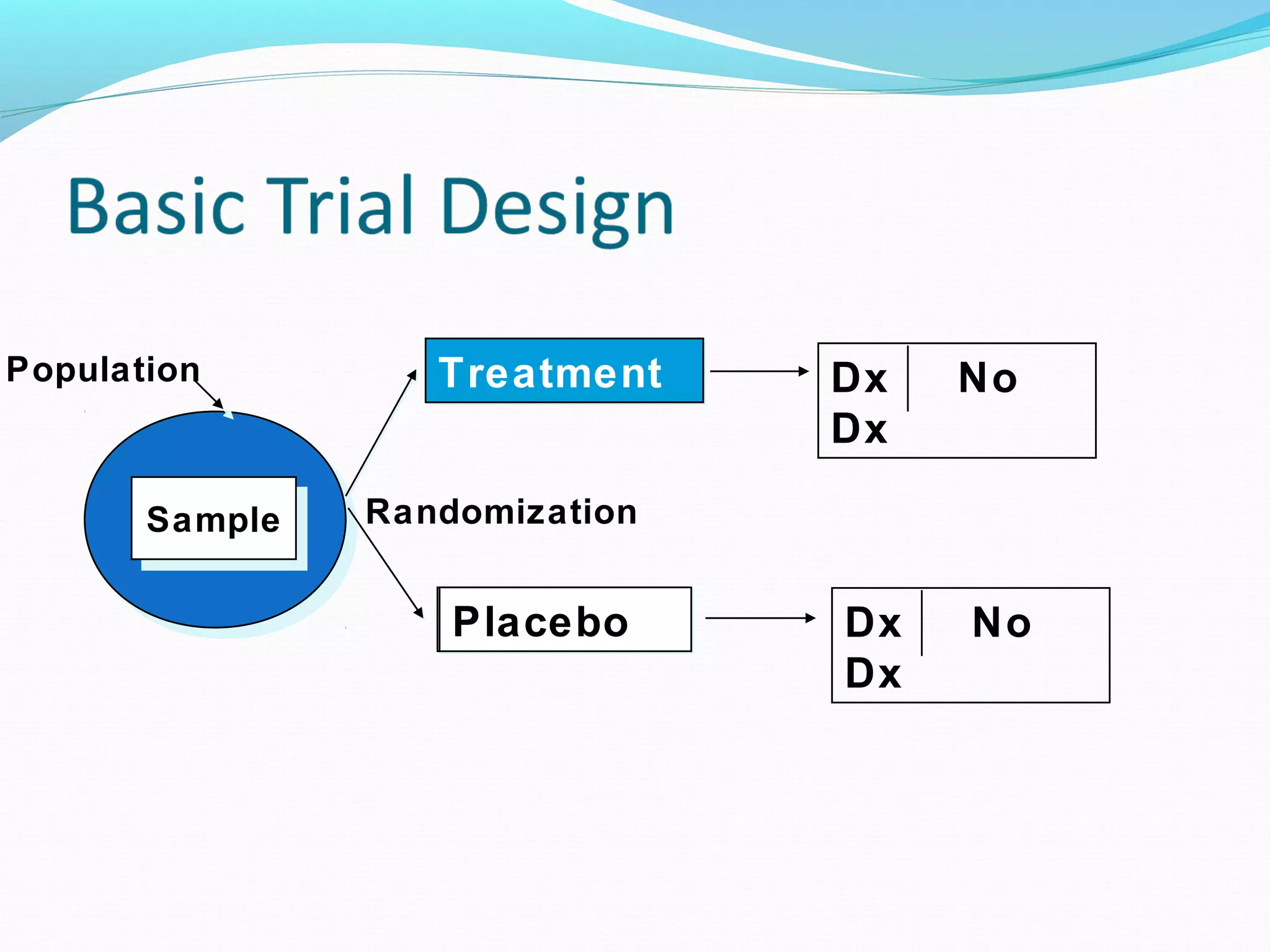
Population
Sample
TreatmentTreatment Dx No
Dx
ControlControl Dx No
Dx
PlaceboPlacebo
Randomization
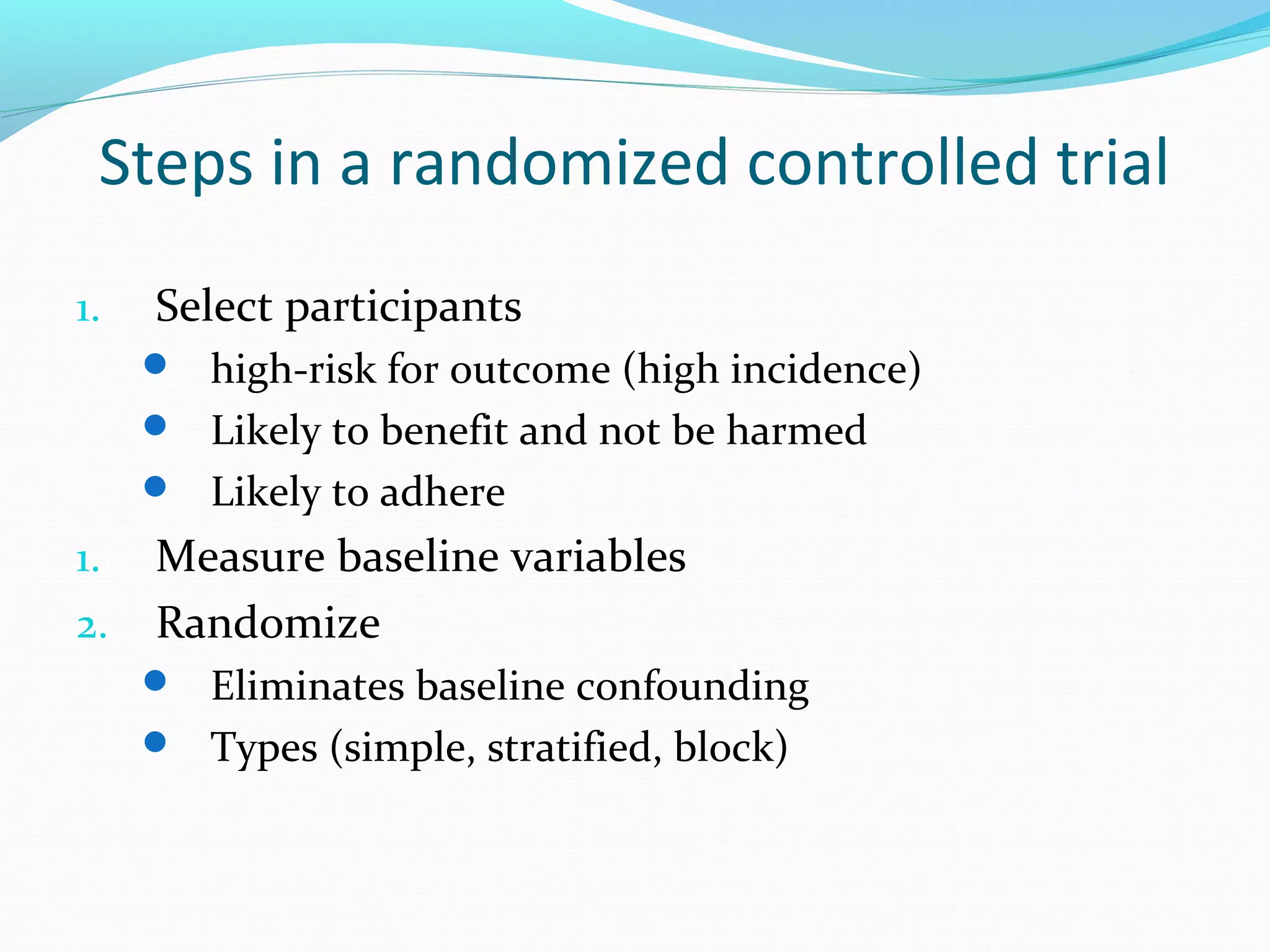
Steps in a randomized controlled trial
1. Select participants
 high-risk for outcome (high incidence)
 Likely to benefit and not be harmed
 Likely to adhere
1. Measure baseline variables
2. Randomize
 Eliminates baseline confounding
 Types (simple, stratified, block)
Analysis of randomized controlled trial
Analyzed like cohort study with RR
Intention to treat analysis
Most conservative interpretation
Include all persons assigned to intervention group
(including those who did not get treatment or dropped
out)
Subgroup analysis
Groups identified pre-randomization
Steps in a randomized controlled trial
4. Blinding the intervention
 As important as randomization
 Eliminates
 co intervention
 biased outcome ascertainment
 biased measurement of outcome
5. Follow subjects
 Adherence to protocol
 Lost to follow up
6. Measure outcome
 Clinically important measures
 Adverse events
What is Blinding?
Single blind - participants are not aware of
treatment group
Double blind - both participants and
investigators unaware
Triple blind - various meanings
 persons who perform tests
 outcome adjudicators
 safety monitoring group
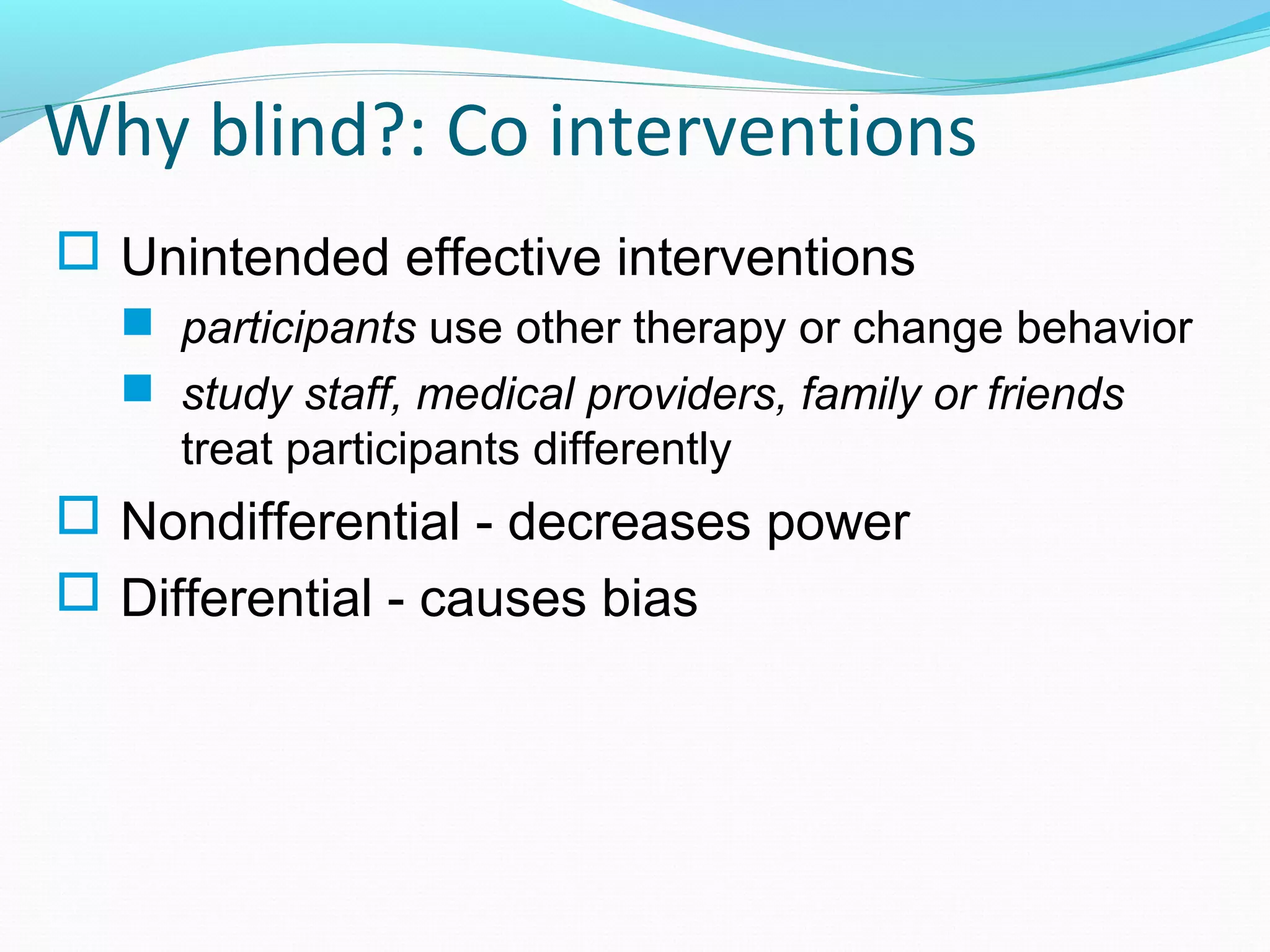
Why blind?: Co interventions
 Unintended effective interventions
 participants use other therapy or change behavior
 study staff, medical providers, family or friends
treat participants differently
 Nondifferential - decreases power
 Differential - causes bias
Why blind?: Biased Outcome
Ascertainment or adjudication
If group assignment is known
 participants may report symptoms or outcomes
differently
 physicians or investigators may elicit symptoms or
outcomes differently
 Study staff or adjudicators may classify similar events
differently in treatment groups
Problematic with “soft” outcomes
 investigator judgement
 participant reported symptoms, scales
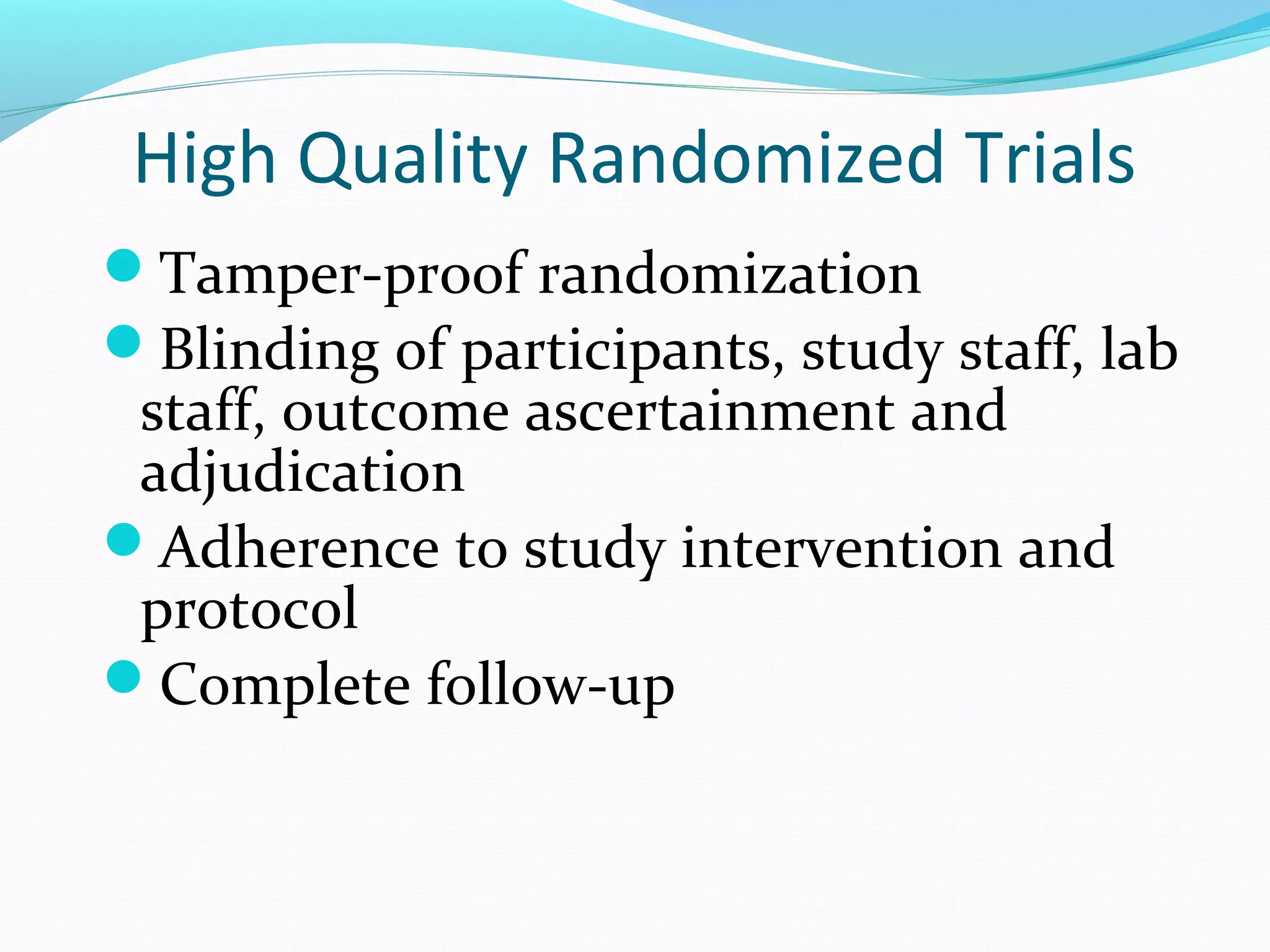
High Quality Randomized Trials
Tamper-proof randomization
Blinding of participants, study staff, lab
staff, outcome ascertainment and
adjudication
Adherence to study intervention and
protocol
Complete follow-up
COHORT STUDY
In a COHORT STUDY, a group of individuals
that is exposed to a risk factor (study group) is
compared with a group of individuals not
exposed to the risk factor (control group).
The researcher follows both groups over time
Compares the occurrence of the problem related to the
risk factor in the two groups
Determines whether a greater proportion of those with
the risk factor are indeed affected
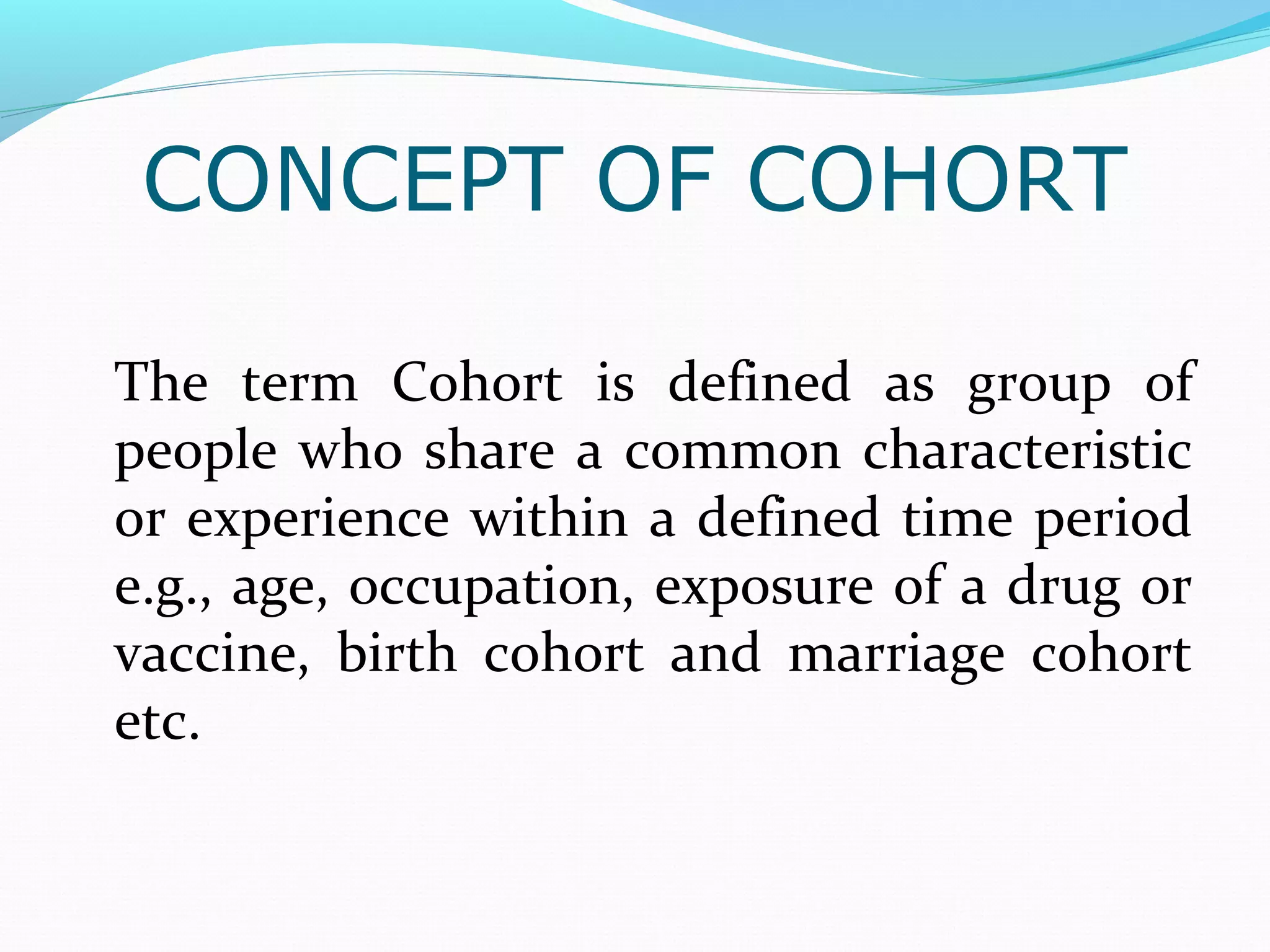
CONCEPT OF COHORT
The term Cohort is defined as group of
people who share a common characteristic
or experience within a defined time period
e.g., age, occupation, exposure of a drug or
vaccine, birth cohort and marriage cohort
etc.
Distinct features of cohort study
The cohort are identified prior to the appearance of
disease under study.
The study groups so defined observed over a period of
time to determine the frequency of the disease among
them
The study proceeds forward from cost to effect
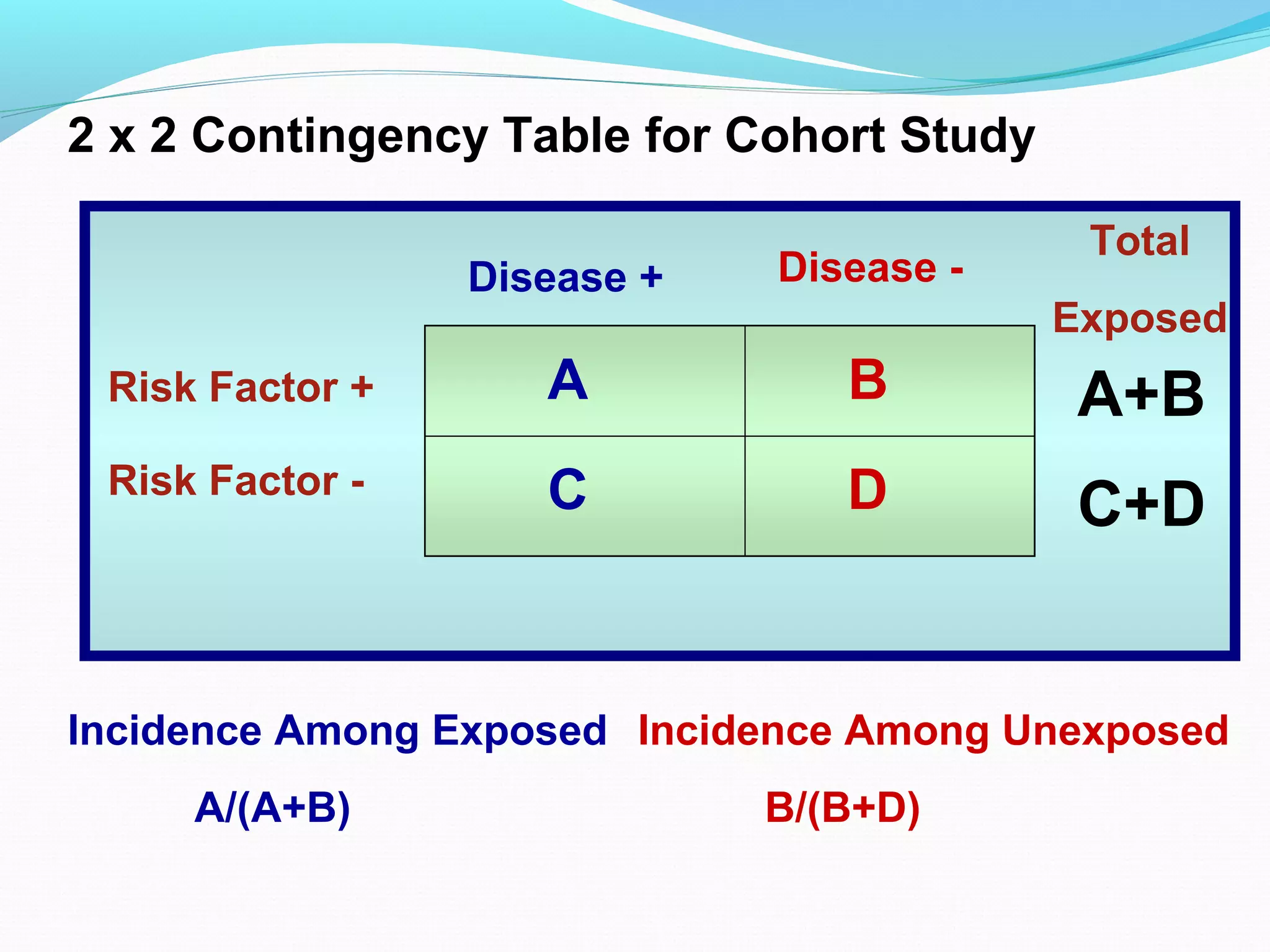
A
C D
B
Disease +
Risk Factor -
Risk Factor +
Disease -
A+B
C+D
2 x 2 Contingency Table for Cohort Study
Total
Exposed
Incidence Among Exposed
A/(A+B)
Incidence Among Unexposed
B/(B+D)
Elements of a cohort study
Selection of the study group
Obtaining data on exposure
Selection of the comparison group
Follow up
Analysis
Strengths of cohort studies
Know that predictor variable was present before
outcome variable occurred (some evidence of causality)
Directly measure incidence of a disease outcome
Can study multiple outcomes of a single exposure (RR is
measure of association)
Weaknesses of cohort studies
Expensive and inefficient for studying rare outcomes
HERS vs. WHI
Often need long follow-up period or a very large
population
CARDIA
Loss to follow-up can affect validity of findings
Framingham
Selection of the study group
General population
Selected group of population e.g.; doctors, teachers,
nurses, school children etc.
Exposure Data
Personal interview
Mailed questionnaire
Review of records
Medical examination
Environmental survey
Follow up
Periodic examination of each member of the cohort
Reviewing physician and hospital record
Routine surveillance of death records
Mailed questionnaire
Telephone calls
Periodic home visit (on annual basis)
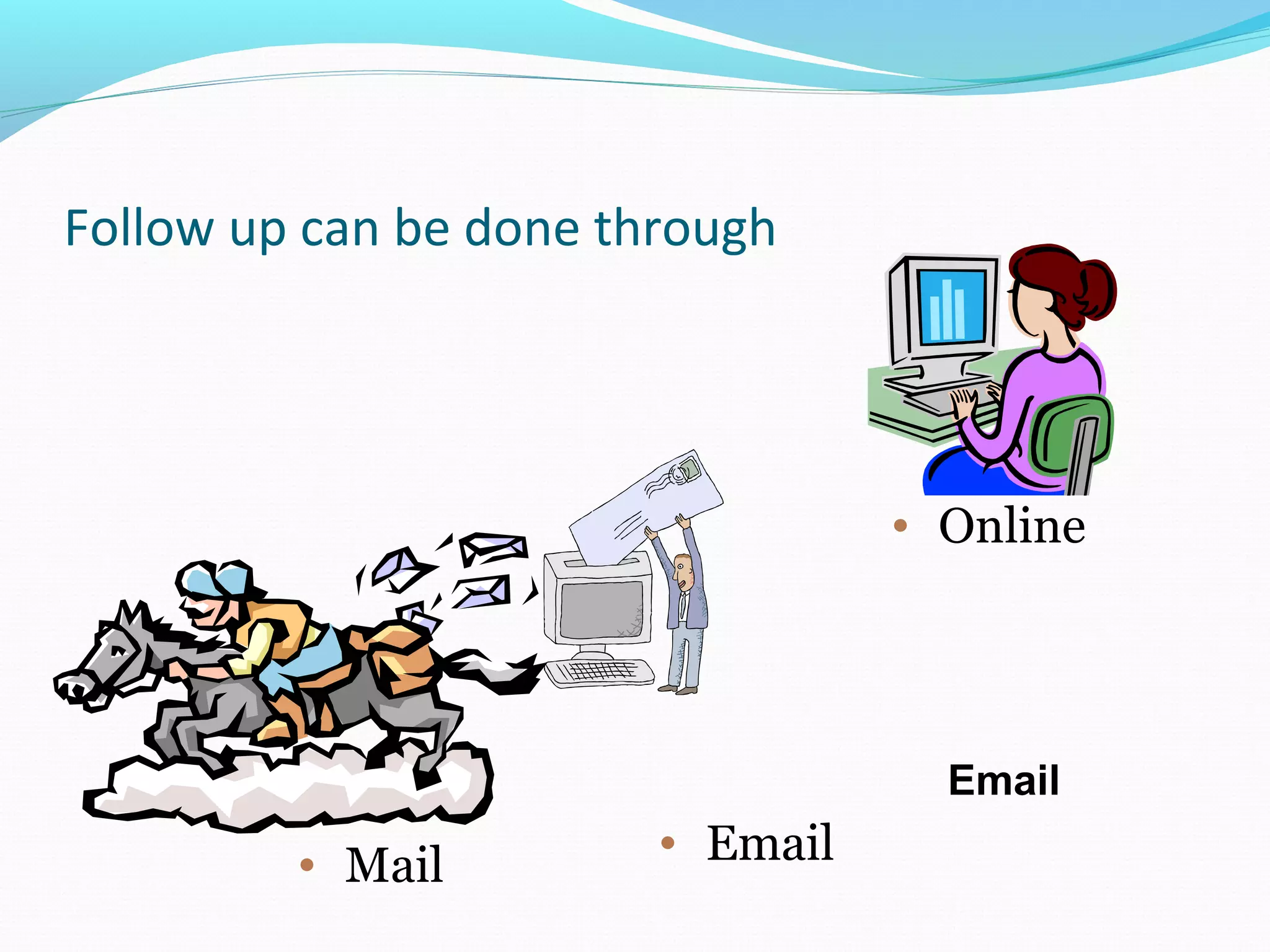
Follow up can be done through
• Mail
• Email
• Online
Email
Interviews may be conducted
Face-to-face
• Over the Telephone
Analysis
Relative Risk
Attributable Risk
Odds ratio
Relative Risk (RR)
Ratio of incidence of the disease (or death)
among exposed and the incidence among non-
exposed.
It is a direct measure (or index) of the “strength”
of the association between suspected cause and
effect
Odds Ratio (OR)
 Measure of the strength of the association between risk
factor and outcome.
 The derivation of the Odds Ratio is based on three
assumptions:
- the disease being investigated must be relatively rare
- the cases must be representative of those with the
disease
- the controls must be representative of those without
disease
Analysis
Relative risk (RR)
Ie
RR = -----
Io
Attributable risk (AR)
Ie-Io
AR = -------- X100
Ie
• Whereas
Ie : Incidence among exposed
Io : Incidence among non
exposed
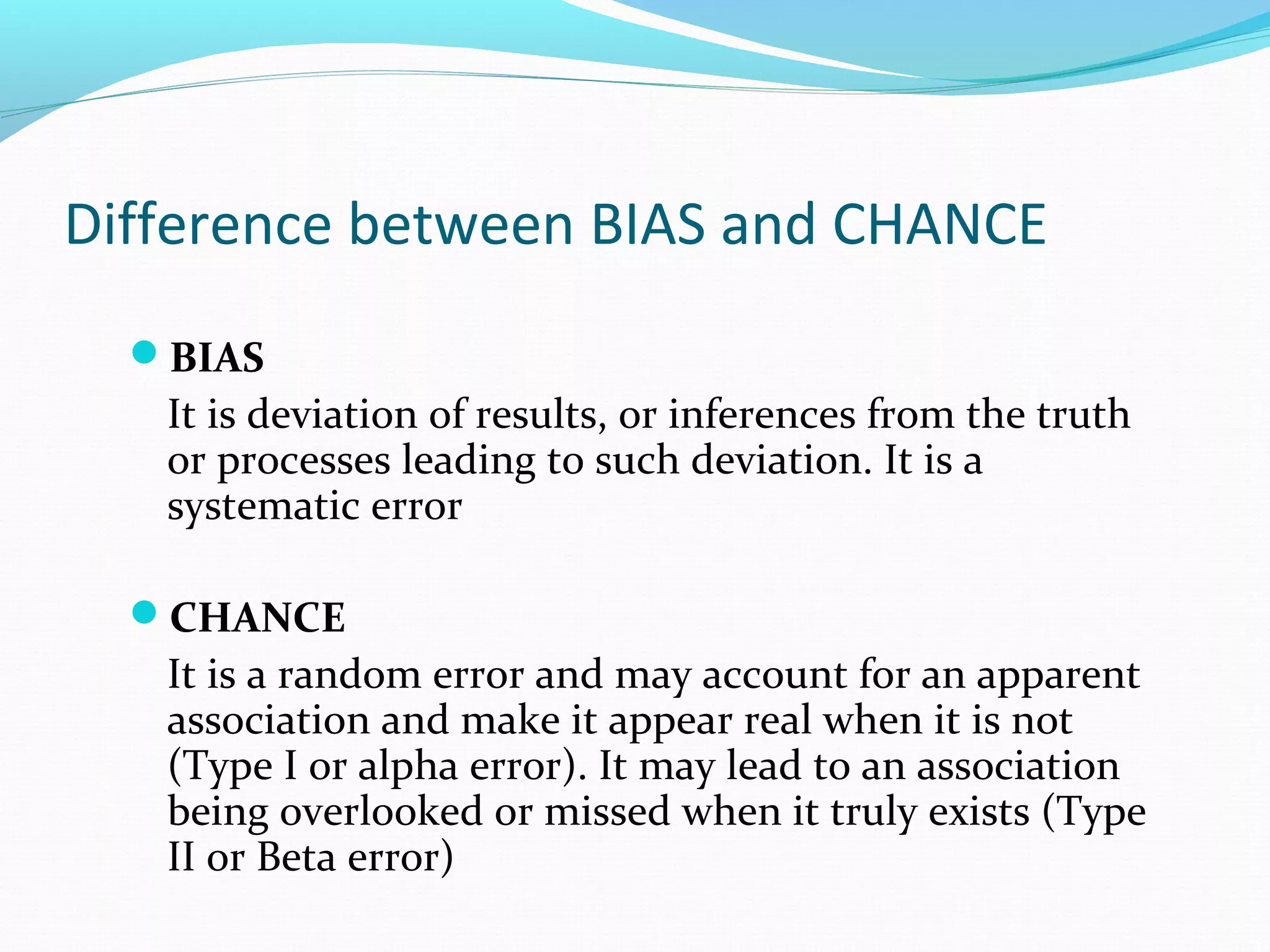
Difference between BIAS and CHANCE
BIAS
It is deviation of results, or inferences from the truth
or processes leading to such deviation. It is a
systematic error
CHANCE
It is a random error and may account for an apparent
association and make it appear real when it is not
(Type I or alpha error). It may lead to an association
being overlooked or missed when it truly exists (Type
II or Beta error)
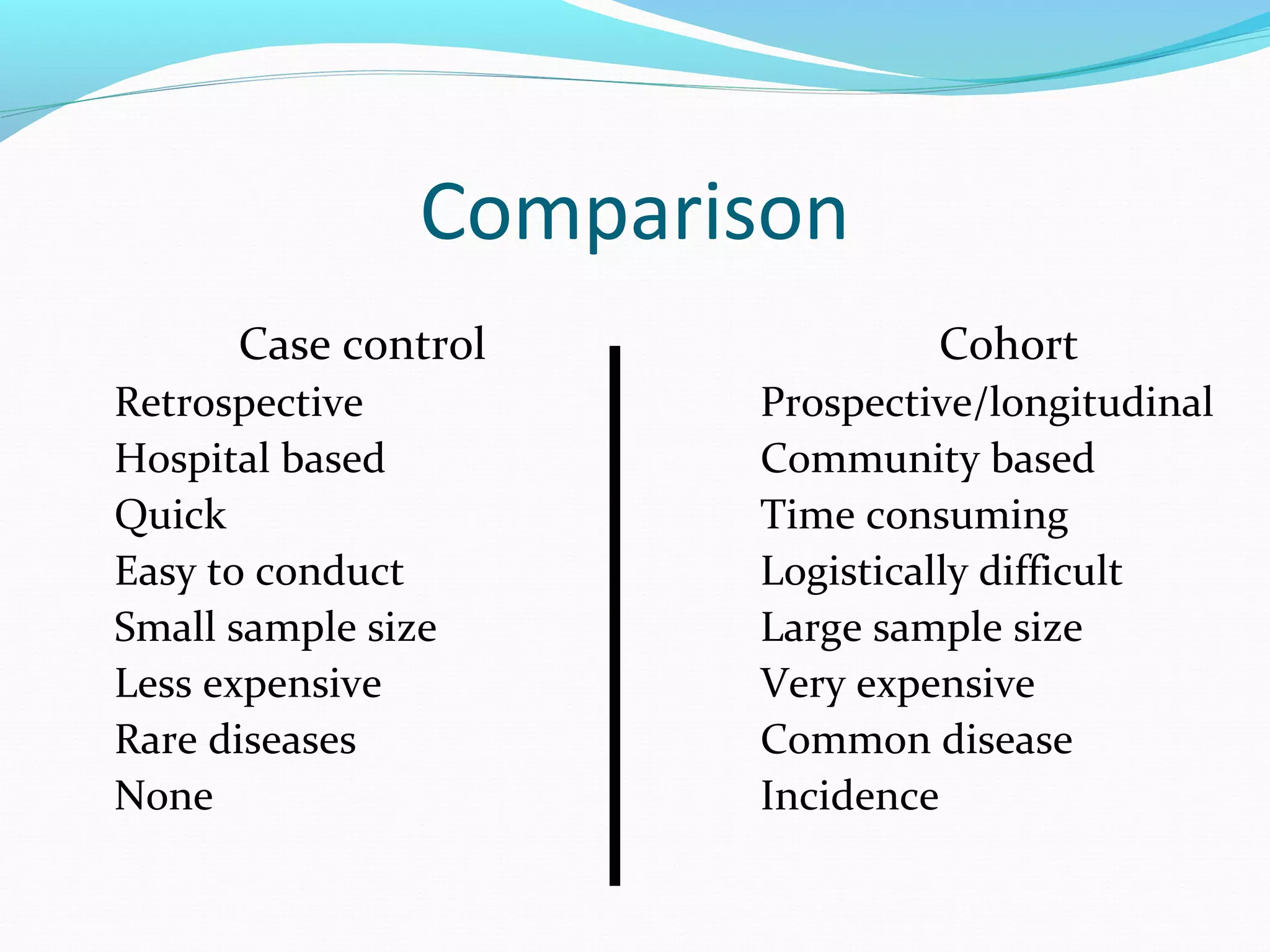
Comparison
Case control
Retrospective
Hospital based
Quick
Easy to conduct
Small sample size
Less expensive
Rare diseases
None
Cohort
Prospective/longitudinal
Community based
Time consuming
Logistically difficult
Large sample size
Very expensive
Common disease
Incidence
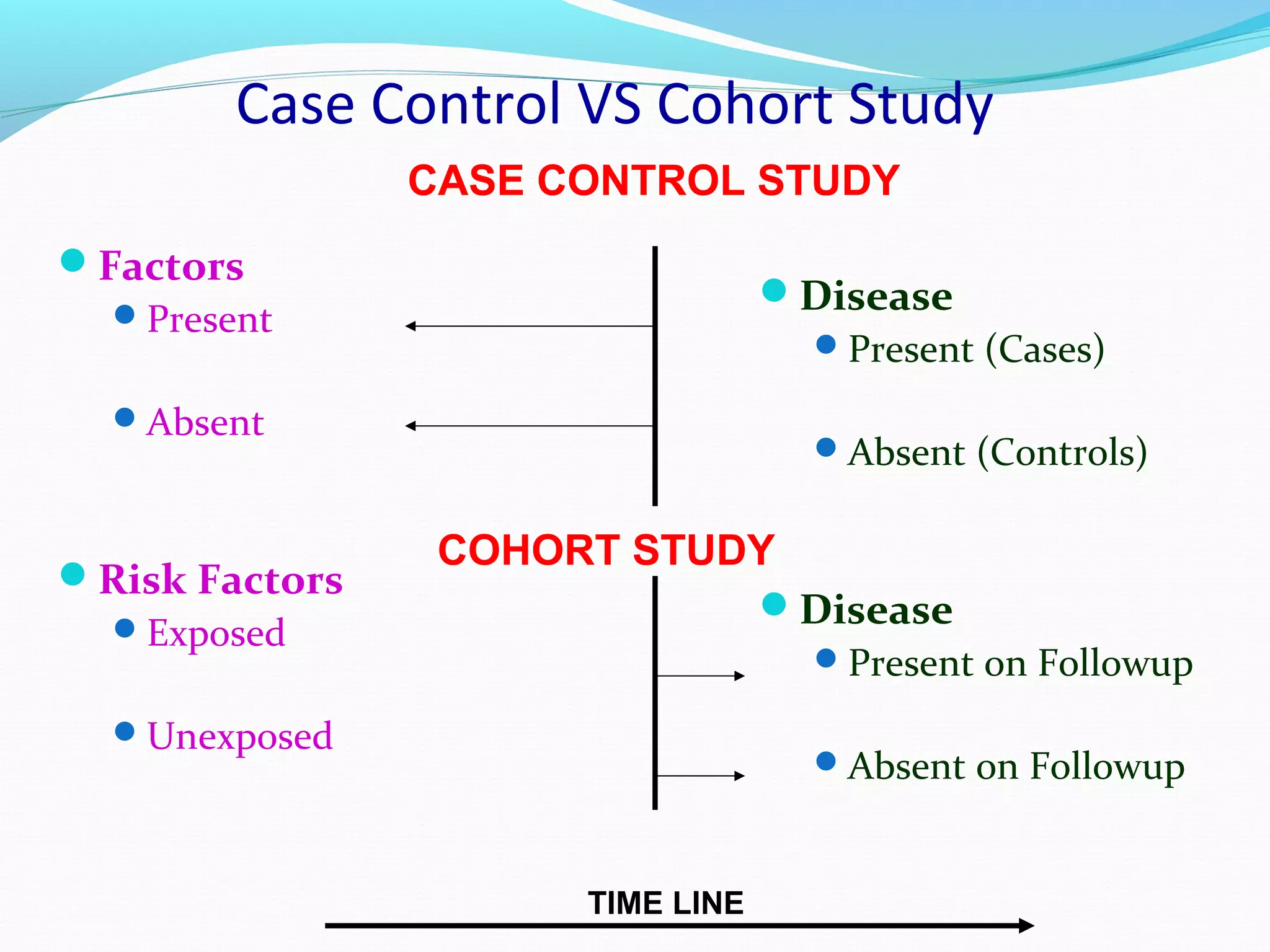
Case Control VS Cohort Study
Factors
Present
Absent
Risk Factors
Exposed
Unexposed
Disease
Present (Cases)
Absent (Controls)
Disease
Present on Followup
Absent on Followup
CASE CONTROL STUDY
COHORT STUDY
TIME LINE
INTERVENTIONAL STUDIES
In Intervention Studies the researcher manipulates
the situation and measures the effects of this
manipulation.
Usually (But not Always) 2 Groups are compared, one
in which the Intervention takes place and the other
group that remains “Untouched”
INTERVENTIONAL STUDIES
The 2 categories of Intervention Studies are:
1. Experimental Studies
2. Quasi-Experimental Studies
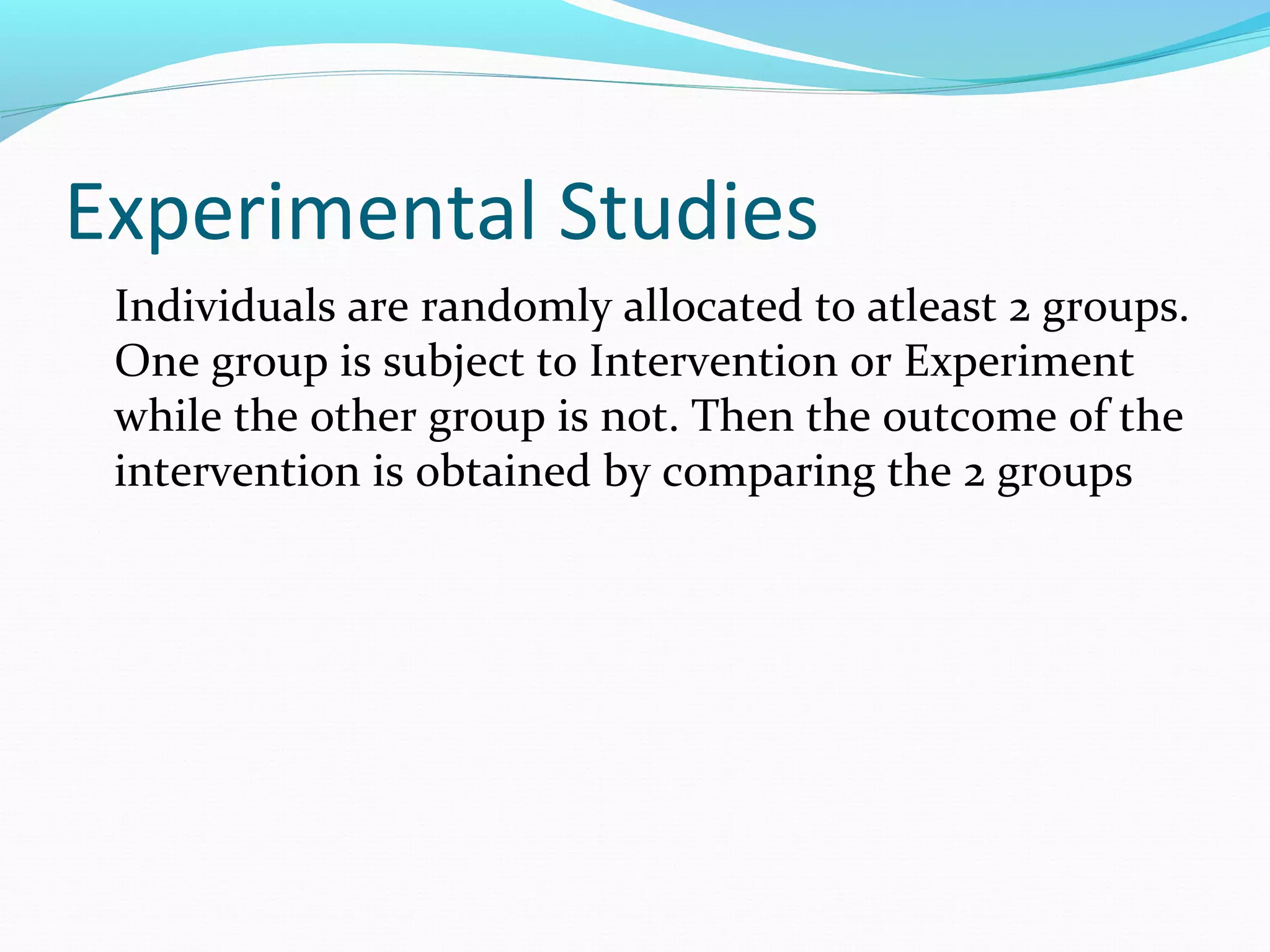
Experimental Studies
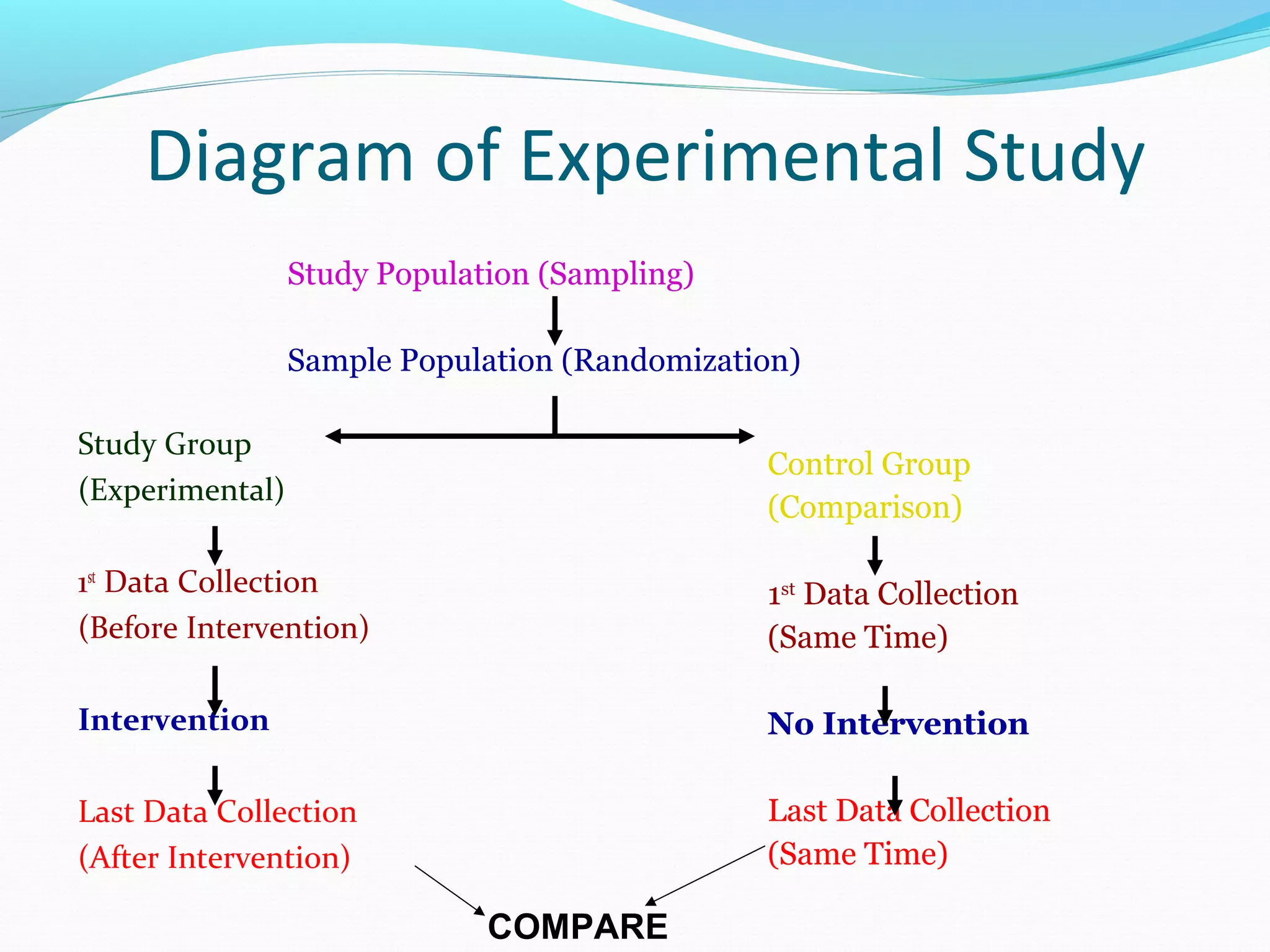
Individuals are randomly allocated to atleast 2 groups.
One group is subject to Intervention or Experiment
while the other group is not. Then the outcome of the
intervention is obtained by comparing the 2 groups
Diagram of Experimental Study
Study Group
(Experimental)
1st
Data Collection
(Before Intervention)
Intervention
Last Data Collection
(After Intervention)
Study Population (Sampling)
Sample Population (Randomization)
COMPARE
Control Group
(Comparison)
1st
Data Collection
(Same Time)
No Intervention
Last Data Collection
(Same Time)
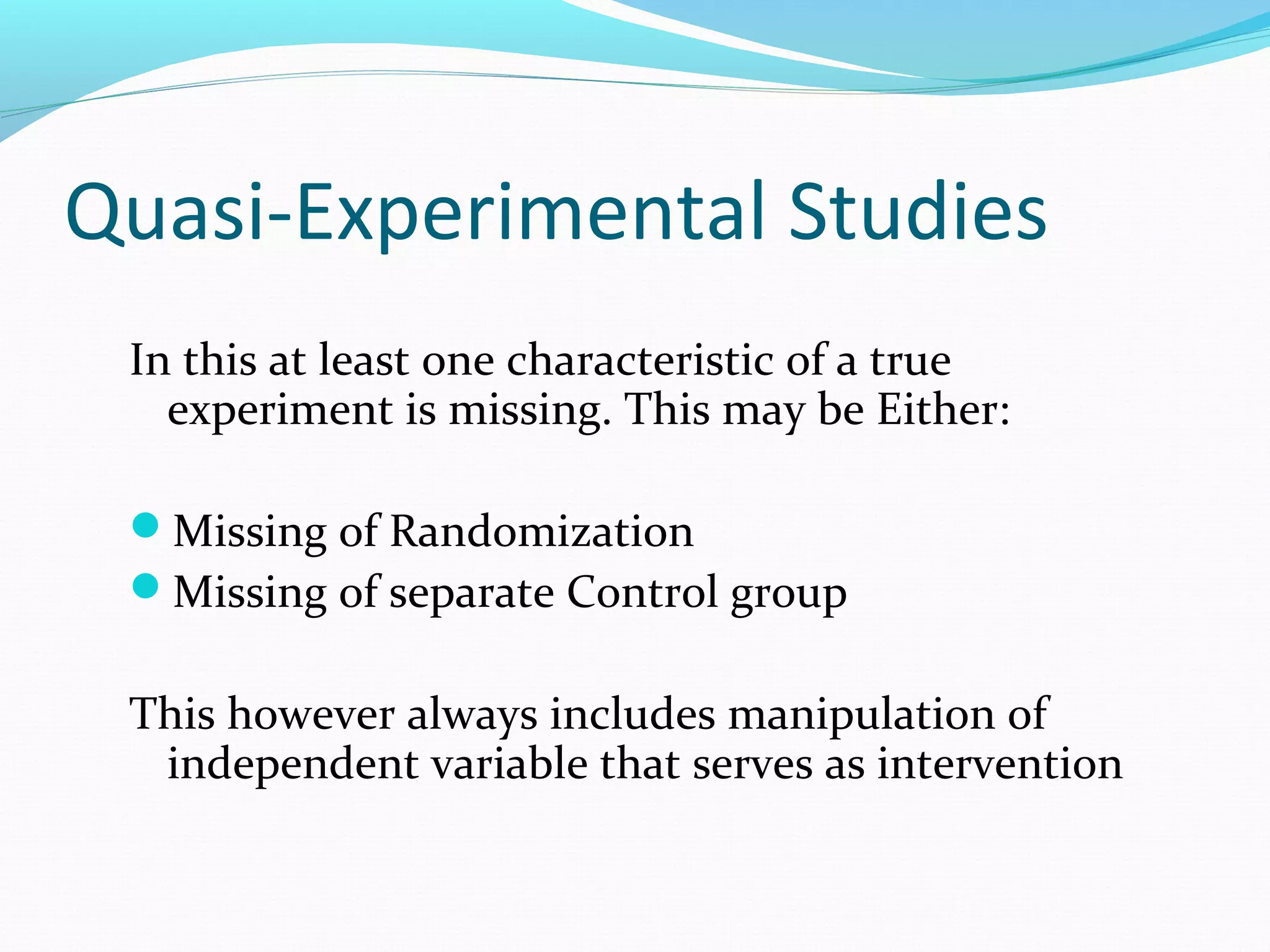
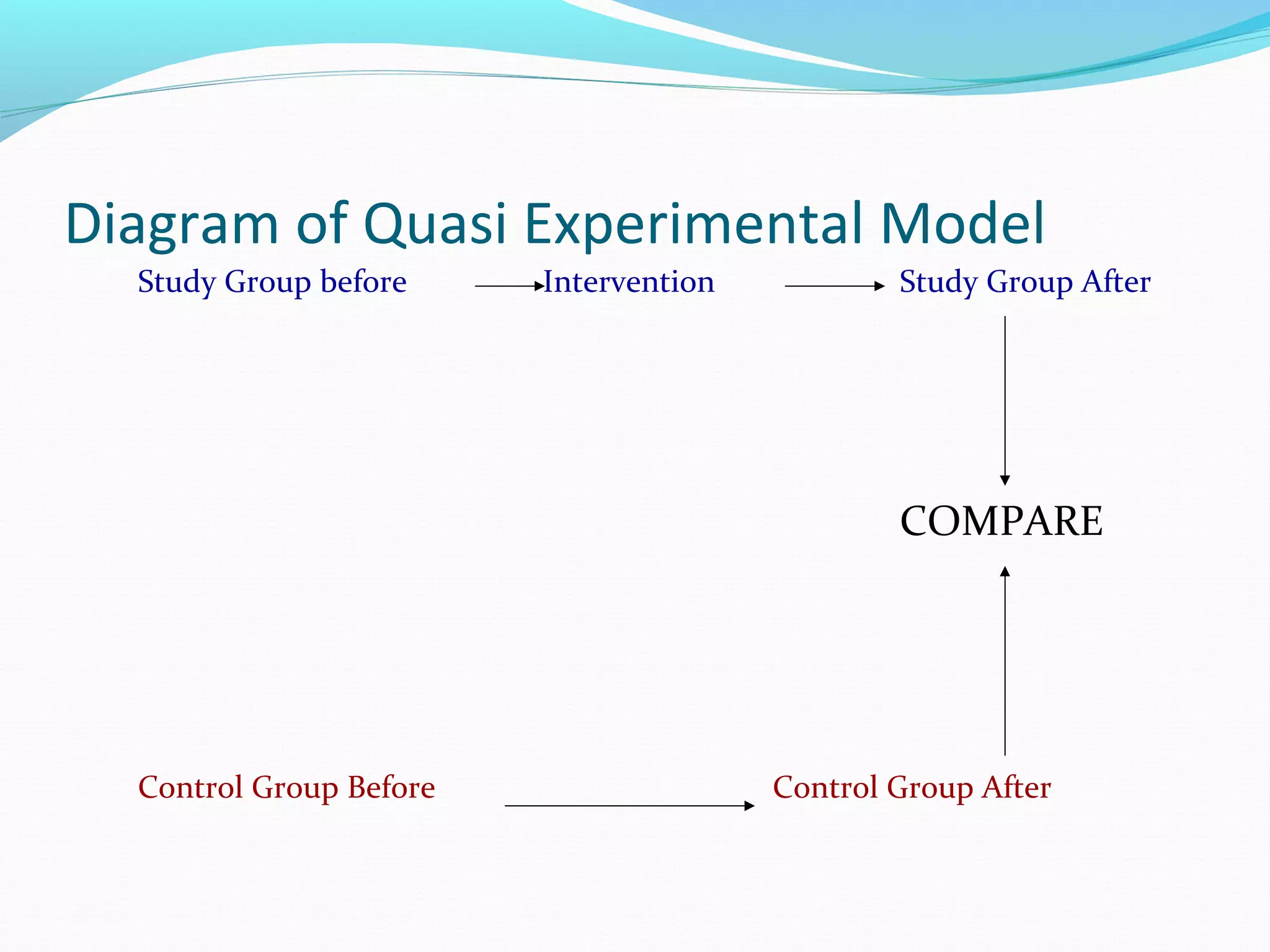
Quasi-Experimental Studies
In this at least one characteristic of a true
experiment is missing. This may be Either:
Missing of Randomization
Missing of separate Control group
This however always includes manipulation of
independent variable that serves as intervention
Diagram of Quasi Experimental Model
Study Group before Intervention Study Group After
COMPARE
Control Group Before Control Group After
THANK YOU
What is IncidenceNo. of new cases of a disease or health
related event in a given population in a
given time
___________________________
Total Population at risk in a given time
X 1000
What is PrevalenceNo. of new as well as Old cases of a disease
or health related event in a given
population in a given time
___________________________
Total Population at risk in a given time X 1000
What does Incidence Signifies
It shows the RATE at which new diseases or health
problems occur in a population.
Prevalence shows the proportion of a population at
risk which is affected by a disease at a specific point in
time.
It is further of 2 types
Point Prevalence
Period prevalence.
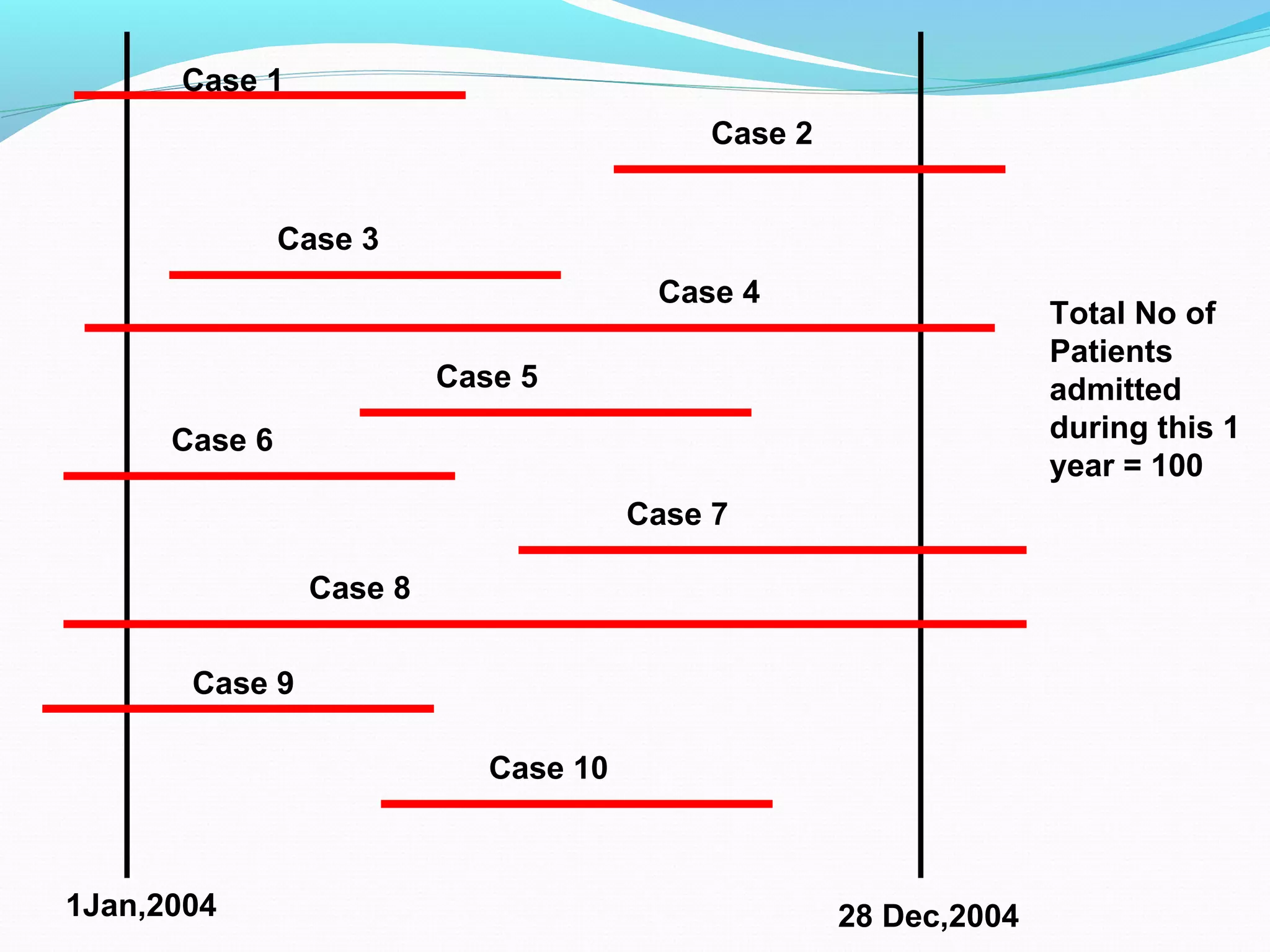
Case 1
Case 2
Case 3
Case 4
Case 5
Case 9
Case 8
Case 6
Case 7
Case 10
1Jan,2004 28 Dec,2004
Total No of
Patients
admitted
during this 1
year = 100
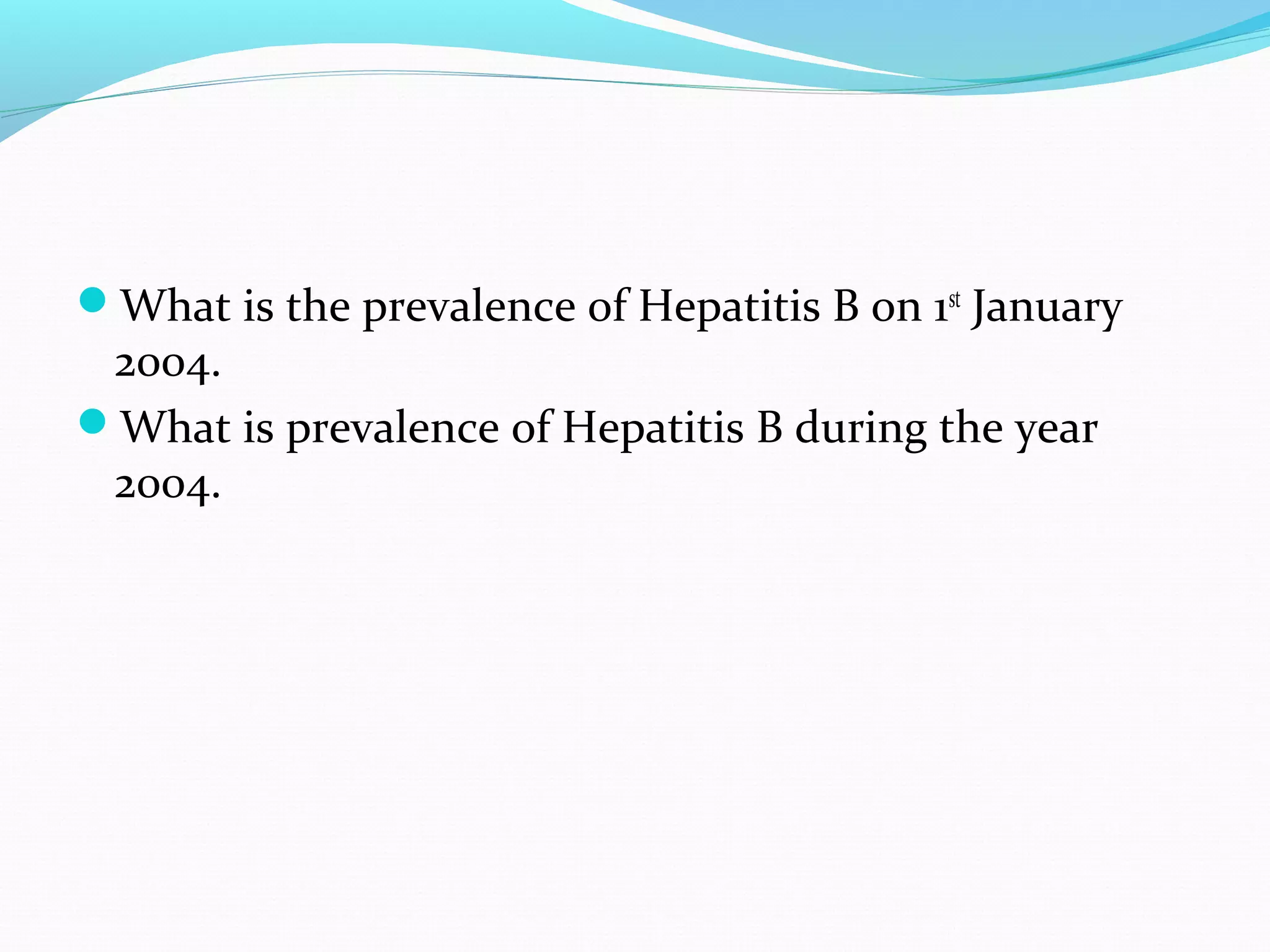
What is the prevalence of Hepatitis B on 1st
January
2004.
What is prevalence of Hepatitis B during the year
2004.
Relation between Incidence and Prevalence
Prevalence = Incidence x Duration of the
Disease
PREVALENCE
INCIDENCE
RECOVERY DEATH
Variations in Incidence and Prevalence
Since Incidence depends on the occurrence of new
cases of a disease, a DECREASE in Incidence may be
due to
Enhanced Resistance to the disease
A change in Disease Etiology
An effective prevention program that reduces exposure
to a known risk factor for the disease.
A DECREASE in Prevalence may be due to
A decrease in Incidence
A shorter duration of the disease due to either
improved treatment methods leading to more rapid
recovery or an increase in virulence leading to more
rapid death.
Risk Factor and Causality
What is a Risk Factor
A condition, physical characteristic, or behaviour that
increases the probability that a currently healthy
individual will develop a particular disease.
A Risk Factor may be a causal factor of the disease in
question or merely a marker for the increased
probability of disease.
E.g while poor antenatal acre and drug use constitute
causal factors for neonatal mortality, socioeconomic
status would be considered a marker for neonatal
mortality.
Risk Assessment
A number of epidemiological research designs are
used to evaluate the association between a disease
and a suspected risk factor.
Types of Epidemiological Studies
Descriptive Studies
Also termed as Cross-sectional studies they determine
the disease frequency or prevalence of a condition.
Surveys are one example
Analytic Studies
Observational Studies
Experimental Studies
Analytical Studies
Observational
Case Control Studies
Cohort Studies
 Prospective Cohort Studies
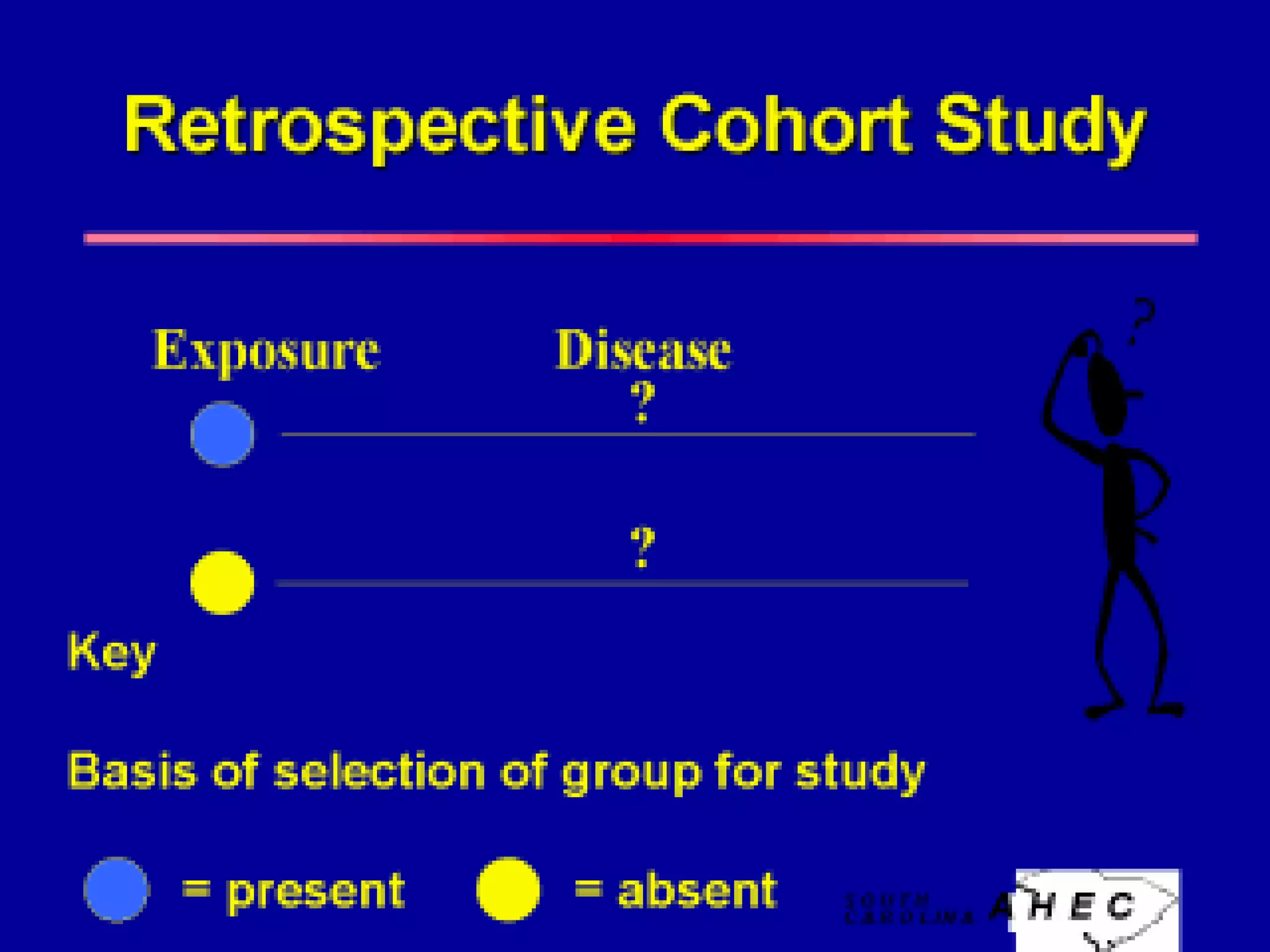
 Retrospective Cohort Studies.
Case control studies: Case-control studies are
those in which persons with a specified condition
(the cases) and pesons without the condition (the
controls) are selected for study. The proportion of
cases and controls with certain characteristics or
exposure is then measured and compared. For
example, knowing that there are 10 school
children with purple spots in grade 3, a set of
other third grade children from the same school
but without purple spots would be identified as
controls, and analysis done to see what different
exposures the purple-spotted children had than
the non-spotted
Cohort studies: groups of individuals with some
common feature (age and geography, for example)
are identified for study over time to learn about
differing health and illness experiences. For
example, one might enroll in a study all third
graders in a school and follow them until
graduation, attempting to identify the differences
in experiences of those who maintained a body
weight close to recommended and those who did
not.
EXPERIMENTAL STUDIES
Quasi-Experimental Studies
True Experimental Studies
Randomization
Control Group
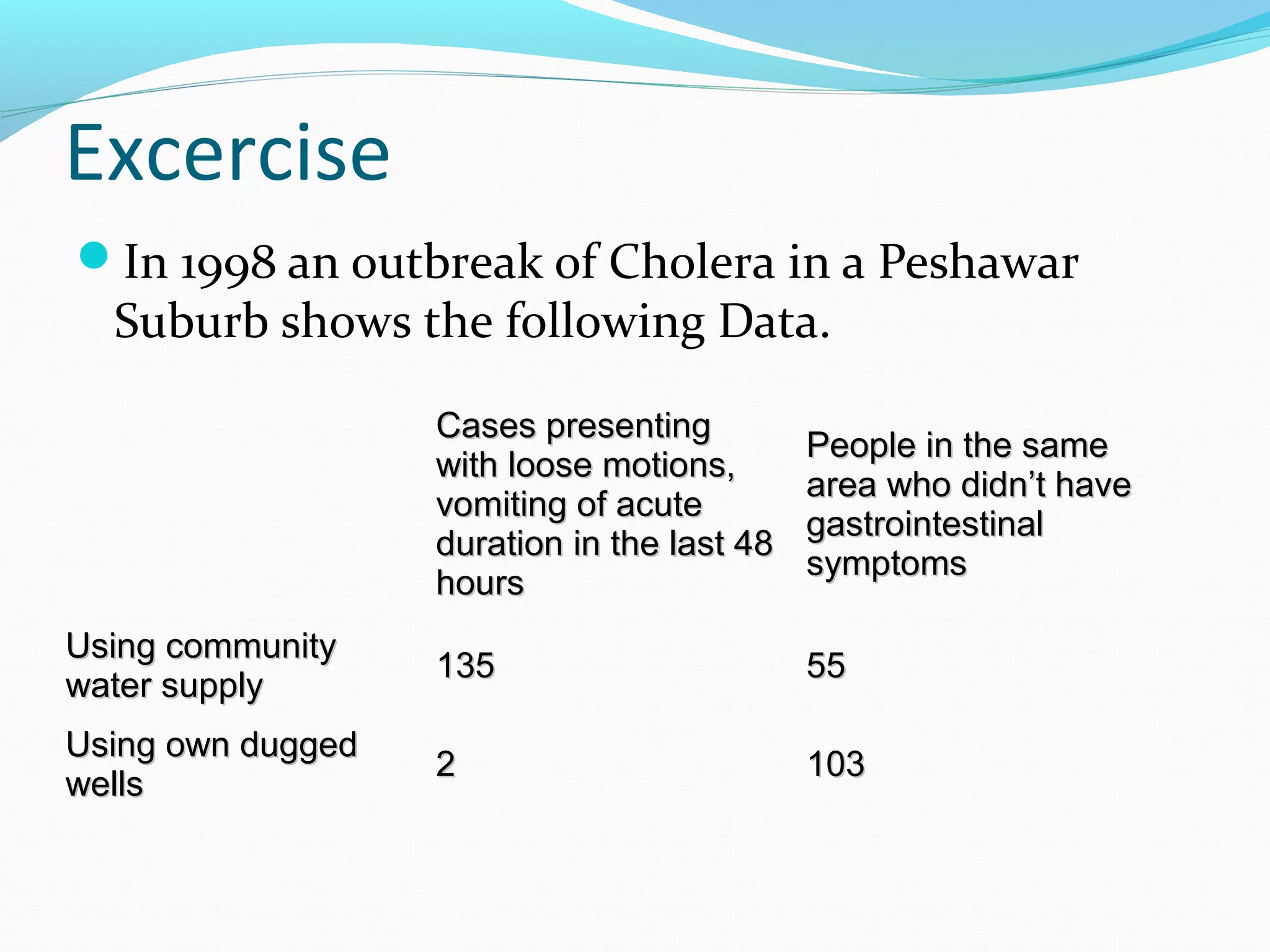
Excercise
In 1998 an outbreak of Cholera in a Peshawar
Suburb shows the following Data.
Cases presentingCases presenting
with loose motions,with loose motions,
vomiting of acutevomiting of acute
duration in the last 48duration in the last 48
hourshours
People in the samePeople in the same
area who didn’t havearea who didn’t have
gastrointestinalgastrointestinal
symptomssymptoms
Using communityUsing community
water supplywater supply
135135 5555
Using own duggedUsing own dugged
wellswells
22 103103
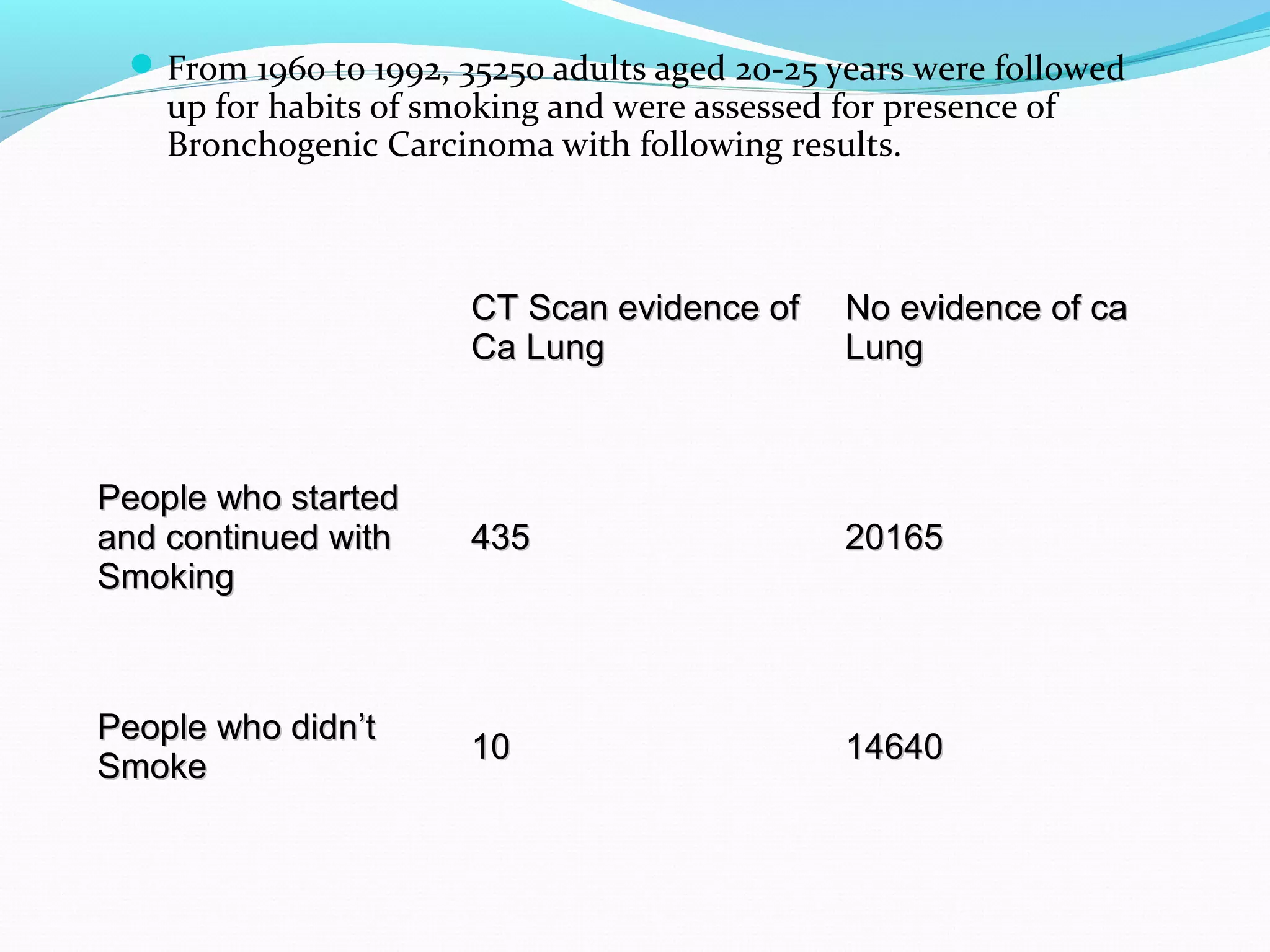
From 1960 to 1992, 35250 adults aged 20-25 years were followed
up for habits of smoking and were assessed for presence of
Bronchogenic Carcinoma with following results.
CT Scan evidence ofCT Scan evidence of
Ca LungCa Lung
No evidence of caNo evidence of ca
LungLung
People who startedPeople who started
and continued withand continued with
SmokingSmoking
435435 2016520165
People who didn’tPeople who didn’t
SmokeSmoke
1010 1464014640

Epidemiological study designs

  • 3.
    The 6 D’sof Health Outcomes  Death  Disease  Discomfort  Disability  Dissatisfaction  Destitution  A bad outcome if Untimely  A set of Symptoms, Signs and Lab results  Symptoms such as pain, nausea and itching  Impaired ability to go about usual activities  Emotional reaction to disease and its care  Financial Cost of Illness
  • 4.
    Clinical Questions Abnormality Isthe patient sick or well Frequency How often does disease occur Diagnosis How accurate are the diagnostic tests Cause What conditions lead to disease Risk What factors are associated with the disease Prognosis What are the consequences of disease Treatment How does treatment change the course Prevention Does an intervention prevent disease Does an early detection improve the course Cost How much will care cost
  • 5.
    Non Interventional StudiesNonInterventional Studies (Observational) Interventional StudiesInterventional Studies (Experimental)(Experimental)
  • 6.
    Epidemiological Studies Descriptive Studies DescribesDisease occurrence in a population  Incidence  Prevalence  Survivial Analytic Studies To determine etiology of disease  Cohort  Case Control  Cross Sectional
  • 7.
    EPIDEMIOLOICAL METHODS OBSERVATIONAL STUDIES (NONINTERVENTIONAL) EXPERIMENTAL STUDIES (INTERVENTIONAL) Descriptive studies Analytical Studies Cross Sectional Case Control Cohort Randomized Controlled Trials Field trials Community Trials Longitudnal
  • 8.
    Descriptive •Case report •Case series •Survey Analytic Observational •Crosssectional •Case-control •Cohort studies Experimental •Randomized controlled trials Strength of evidence for causality between a risk factor and outcome
  • 9.
    Epidemiological sequence  Observation– data collection  Counting cases and events  Relating cases and events to population at risk  Making comparison  Developing hypothesis  Testing of hypothesis by analytical studies  Making scientific inferences  Conducting experimental studies  Interventions/Evaluation
  • 11.
    1. DESCRIPTIVE STUDY FIRSTTHING’S FIRST…..!!!!
  • 12.
    Definition It involves thesystematic collection and presentation of data to give a clear picture of a particular situation. Descriptive can be carried out on small or large scales in community
  • 13.
    Concerns Descriptive study isconcerned with the following questions: a. When is the disease occurring (Time) b. Where it is occurring (Place) c. Who is getting the disease (Person) T.P.P
  • 14.
    Uses Provides data regarding The magnitude of the disease load  The types of disease problem in the community in term of morbidity and mortality rate and ratio Provides “clues” to the disease etiology Helps in  Formulation of etiological hypothesis  Helps in planning, implementation and evaluation of health services/programmes
  • 15.
    Procedures Defining the populationto be studied Defining the disease under study Describing the disease by  Time  Place  Person Measurement of the disease  Cross Sectional Study  Logitudinal Study Comparing with known indices Formulation of an etiological hypothesis
  • 16.
    Measurement of Disease a.Cross Sectional Study b. Longitudinal Study
  • 17.
    Cross sectional studies Basedon a single examination of a cross section of population at one point in time, results of which can be projected on the whole population provided the sampling has been done correctly.
  • 18.
    Uses a.More useful inchronic diseases b. To find more about disease rather than its etiology
  • 19.
    Characteristics Physical characteristics ofpeople, material and environment Socio-economic characteristics e.g., age, education , marital status, number of children and income Behavior of people like knowledge, attitude and beliefs (KAP) Events that occur in population
  • 20.
    Advantages of CSS Maystudy several outcomes Control over selection of subjects Control over measurements Relatively short duration First step for cohort study Yields prevalence
  • 21.
    Disadvantages of CSS Doesnot establish cause/effect ratio Potential bias in measuring exposure Potential survival bias Not feasible for rare disease Does not yield incidence
  • 22.
    Longitudinal Study Based onmultiple observations in the same population over a prolong period of time.
  • 23.
    Uses of LongitudinalStudy Natural History of Disease Identifying Risk factors Finding out incidence rate
  • 24.
    Cross Sectional VsLongitudinal
  • 26.
    COMPARATIVE or ANALYTICALSTUDY An ANALYTICAL STUDY attempts to establish causes or risk factors for certain problems. This is done by comparing two or more groups, some of which have or develop the problem and some of which have not.
  • 27.
    Analytic Epidemiology Second majortype of epidemiological studies Subject of interest is individual within the population The objective is to test hypothesis The study determines whether or not a statistical association exists between a disease and suspected factor Strength of association, if it exists
  • 28.
    CASE CONTROL STUDY Ina CASE-CONTROL STUDY, the investigator compares one group among whom a problem is (e.g., malnutrition) with another group, called a control or comparison group, where the problem is absent to find out what factors have contributed to the problem.
  • 29.
    CASE CONTROL STUDY Oftencalled retrospective study First approach to test causal hypothesis
  • 30.
    Properties Both exposed andoutcome (Disease) have occurred before the start of study The study proceeds backward from effect to cause It uses a control or comparison group to support or refute an inference
  • 31.
    Method Selection of casesand Controls Matching Measurement of Exposure Analysis and Interpretation  Exposure Rates  Estimation of Risk (Relative Risk & Odds Ratio)
  • 32.
    A C D B Cases Exposure - Exposure+ Controls A+C B+D 2 x 2 Contingency Table for Cases and Controls Total Cases Exposure Among Cases A/(A+C) Exposure Among Controls B/(B+D)
  • 33.
    Advantages of casecontrol study Relatively easy to carry out Rapid and inexpensive Particularly suitable to investigate rare diseases No risk to subject Reveals the study of several different etiological factors Risk factors can be identified No follow up in the future Minimum ethical problems
  • 34.
    Disadvantages of casecontrol study Problems of bias Selection of appropriate case control group may be difficult Cannot measure incidence, only relative risk is measured
  • 35.
    Randomized controlled trials Investigatorcontrols the predictor variable (intervention or treatment) Major advantage over observational studies is ability to demonstrate causality Randomization controls unmeasured confounding Only for mature research questions
  • 36.
  • 37.
    Steps in arandomized controlled trial 1. Select participants  high-risk for outcome (high incidence)  Likely to benefit and not be harmed  Likely to adhere 1. Measure baseline variables 2. Randomize  Eliminates baseline confounding  Types (simple, stratified, block)
  • 38.
    Analysis of randomizedcontrolled trial Analyzed like cohort study with RR Intention to treat analysis Most conservative interpretation Include all persons assigned to intervention group (including those who did not get treatment or dropped out) Subgroup analysis Groups identified pre-randomization
  • 39.
    Steps in arandomized controlled trial 4. Blinding the intervention  As important as randomization  Eliminates  co intervention  biased outcome ascertainment  biased measurement of outcome 5. Follow subjects  Adherence to protocol  Lost to follow up 6. Measure outcome  Clinically important measures  Adverse events
  • 40.
    What is Blinding? Singleblind - participants are not aware of treatment group Double blind - both participants and investigators unaware Triple blind - various meanings  persons who perform tests  outcome adjudicators  safety monitoring group
  • 41.
    Why blind?: Cointerventions  Unintended effective interventions  participants use other therapy or change behavior  study staff, medical providers, family or friends treat participants differently  Nondifferential - decreases power  Differential - causes bias
  • 42.
    Why blind?: BiasedOutcome Ascertainment or adjudication If group assignment is known  participants may report symptoms or outcomes differently  physicians or investigators may elicit symptoms or outcomes differently  Study staff or adjudicators may classify similar events differently in treatment groups Problematic with “soft” outcomes  investigator judgement  participant reported symptoms, scales
  • 43.
    High Quality RandomizedTrials Tamper-proof randomization Blinding of participants, study staff, lab staff, outcome ascertainment and adjudication Adherence to study intervention and protocol Complete follow-up
  • 44.
    COHORT STUDY In aCOHORT STUDY, a group of individuals that is exposed to a risk factor (study group) is compared with a group of individuals not exposed to the risk factor (control group).
  • 45.
    The researcher followsboth groups over time Compares the occurrence of the problem related to the risk factor in the two groups Determines whether a greater proportion of those with the risk factor are indeed affected
  • 46.
    CONCEPT OF COHORT Theterm Cohort is defined as group of people who share a common characteristic or experience within a defined time period e.g., age, occupation, exposure of a drug or vaccine, birth cohort and marriage cohort etc.
  • 47.
    Distinct features ofcohort study The cohort are identified prior to the appearance of disease under study. The study groups so defined observed over a period of time to determine the frequency of the disease among them The study proceeds forward from cost to effect
  • 48.
    A C D B Disease + RiskFactor - Risk Factor + Disease - A+B C+D 2 x 2 Contingency Table for Cohort Study Total Exposed Incidence Among Exposed A/(A+B) Incidence Among Unexposed B/(B+D)
  • 49.
    Elements of acohort study Selection of the study group Obtaining data on exposure Selection of the comparison group Follow up Analysis
  • 50.
    Strengths of cohortstudies Know that predictor variable was present before outcome variable occurred (some evidence of causality) Directly measure incidence of a disease outcome Can study multiple outcomes of a single exposure (RR is measure of association)
  • 51.
    Weaknesses of cohortstudies Expensive and inefficient for studying rare outcomes HERS vs. WHI Often need long follow-up period or a very large population CARDIA Loss to follow-up can affect validity of findings Framingham
  • 52.
    Selection of thestudy group General population Selected group of population e.g.; doctors, teachers, nurses, school children etc.
  • 53.
    Exposure Data Personal interview Mailedquestionnaire Review of records Medical examination Environmental survey
  • 54.
    Follow up Periodic examinationof each member of the cohort Reviewing physician and hospital record Routine surveillance of death records Mailed questionnaire Telephone calls Periodic home visit (on annual basis)
  • 55.
    Follow up canbe done through • Mail • Email • Online Email
  • 56.
    Interviews may beconducted Face-to-face • Over the Telephone
  • 57.
  • 58.
    Relative Risk (RR) Ratioof incidence of the disease (or death) among exposed and the incidence among non- exposed. It is a direct measure (or index) of the “strength” of the association between suspected cause and effect
  • 59.
    Odds Ratio (OR) Measure of the strength of the association between risk factor and outcome.  The derivation of the Odds Ratio is based on three assumptions: - the disease being investigated must be relatively rare - the cases must be representative of those with the disease - the controls must be representative of those without disease
  • 60.
    Analysis Relative risk (RR) Ie RR= ----- Io Attributable risk (AR) Ie-Io AR = -------- X100 Ie • Whereas Ie : Incidence among exposed Io : Incidence among non exposed
  • 61.
    Difference between BIASand CHANCE BIAS It is deviation of results, or inferences from the truth or processes leading to such deviation. It is a systematic error CHANCE It is a random error and may account for an apparent association and make it appear real when it is not (Type I or alpha error). It may lead to an association being overlooked or missed when it truly exists (Type II or Beta error)
  • 62.
    Comparison Case control Retrospective Hospital based Quick Easyto conduct Small sample size Less expensive Rare diseases None Cohort Prospective/longitudinal Community based Time consuming Logistically difficult Large sample size Very expensive Common disease Incidence
  • 63.
    Case Control VSCohort Study Factors Present Absent Risk Factors Exposed Unexposed Disease Present (Cases) Absent (Controls) Disease Present on Followup Absent on Followup CASE CONTROL STUDY COHORT STUDY TIME LINE
  • 64.
  • 65.
    INTERVENTIONAL STUDIES In InterventionStudies the researcher manipulates the situation and measures the effects of this manipulation. Usually (But not Always) 2 Groups are compared, one in which the Intervention takes place and the other group that remains “Untouched”
  • 66.
    INTERVENTIONAL STUDIES The 2categories of Intervention Studies are: 1. Experimental Studies 2. Quasi-Experimental Studies
  • 67.
    Experimental Studies Individuals arerandomly allocated to atleast 2 groups. One group is subject to Intervention or Experiment while the other group is not. Then the outcome of the intervention is obtained by comparing the 2 groups
  • 68.
    Diagram of ExperimentalStudy Study Group (Experimental) 1st Data Collection (Before Intervention) Intervention Last Data Collection (After Intervention) Study Population (Sampling) Sample Population (Randomization) COMPARE Control Group (Comparison) 1st Data Collection (Same Time) No Intervention Last Data Collection (Same Time)
  • 69.
    Quasi-Experimental Studies In thisat least one characteristic of a true experiment is missing. This may be Either: Missing of Randomization Missing of separate Control group This however always includes manipulation of independent variable that serves as intervention
  • 70.
    Diagram of QuasiExperimental Model Study Group before Intervention Study Group After COMPARE Control Group Before Control Group After
  • 71.
  • 73.
    What is IncidenceNo.of new cases of a disease or health related event in a given population in a given time ___________________________ Total Population at risk in a given time X 1000
  • 74.
    What is PrevalenceNo.of new as well as Old cases of a disease or health related event in a given population in a given time ___________________________ Total Population at risk in a given time X 1000
  • 75.
    What does IncidenceSignifies It shows the RATE at which new diseases or health problems occur in a population.
  • 76.
    Prevalence shows theproportion of a population at risk which is affected by a disease at a specific point in time. It is further of 2 types Point Prevalence Period prevalence.
  • 77.
    Case 1 Case 2 Case3 Case 4 Case 5 Case 9 Case 8 Case 6 Case 7 Case 10 1Jan,2004 28 Dec,2004 Total No of Patients admitted during this 1 year = 100
  • 78.
    What is theprevalence of Hepatitis B on 1st January 2004. What is prevalence of Hepatitis B during the year 2004.
  • 79.
    Relation between Incidenceand Prevalence Prevalence = Incidence x Duration of the Disease PREVALENCE INCIDENCE RECOVERY DEATH
  • 80.
    Variations in Incidenceand Prevalence Since Incidence depends on the occurrence of new cases of a disease, a DECREASE in Incidence may be due to Enhanced Resistance to the disease A change in Disease Etiology An effective prevention program that reduces exposure to a known risk factor for the disease.
  • 81.
    A DECREASE inPrevalence may be due to A decrease in Incidence A shorter duration of the disease due to either improved treatment methods leading to more rapid recovery or an increase in virulence leading to more rapid death.
  • 82.
    Risk Factor andCausality What is a Risk Factor A condition, physical characteristic, or behaviour that increases the probability that a currently healthy individual will develop a particular disease.
  • 83.
    A Risk Factormay be a causal factor of the disease in question or merely a marker for the increased probability of disease. E.g while poor antenatal acre and drug use constitute causal factors for neonatal mortality, socioeconomic status would be considered a marker for neonatal mortality.
  • 84.
    Risk Assessment A numberof epidemiological research designs are used to evaluate the association between a disease and a suspected risk factor.
  • 85.
    Types of EpidemiologicalStudies Descriptive Studies Also termed as Cross-sectional studies they determine the disease frequency or prevalence of a condition. Surveys are one example Analytic Studies Observational Studies Experimental Studies
  • 86.
    Analytical Studies Observational Case ControlStudies Cohort Studies  Prospective Cohort Studies  Retrospective Cohort Studies.
  • 87.
    Case control studies:Case-control studies are those in which persons with a specified condition (the cases) and pesons without the condition (the controls) are selected for study. The proportion of cases and controls with certain characteristics or exposure is then measured and compared. For example, knowing that there are 10 school children with purple spots in grade 3, a set of other third grade children from the same school but without purple spots would be identified as controls, and analysis done to see what different exposures the purple-spotted children had than the non-spotted
  • 89.
    Cohort studies: groupsof individuals with some common feature (age and geography, for example) are identified for study over time to learn about differing health and illness experiences. For example, one might enroll in a study all third graders in a school and follow them until graduation, attempting to identify the differences in experiences of those who maintained a body weight close to recommended and those who did not.
  • 93.
    EXPERIMENTAL STUDIES Quasi-Experimental Studies TrueExperimental Studies Randomization Control Group
  • 94.
    Excercise In 1998 anoutbreak of Cholera in a Peshawar Suburb shows the following Data. Cases presentingCases presenting with loose motions,with loose motions, vomiting of acutevomiting of acute duration in the last 48duration in the last 48 hourshours People in the samePeople in the same area who didn’t havearea who didn’t have gastrointestinalgastrointestinal symptomssymptoms Using communityUsing community water supplywater supply 135135 5555 Using own duggedUsing own dugged wellswells 22 103103
  • 95.
    From 1960 to1992, 35250 adults aged 20-25 years were followed up for habits of smoking and were assessed for presence of Bronchogenic Carcinoma with following results. CT Scan evidence ofCT Scan evidence of Ca LungCa Lung No evidence of caNo evidence of ca LungLung People who startedPeople who started and continued withand continued with SmokingSmoking 435435 2016520165 People who didn’tPeople who didn’t SmokeSmoke 1010 1464014640

Editor's Notes

  • #37 For example, select persons with high LDL-cholesterol from among patients presenting to the metabolic clinic at the SFVA and treat with lovastatin to see if this results in lower LDL cholesterol. Note can have an uncontrolled trial or time series design. These have no concurrent control group and can produce the wrong answer due to learning, regression to the mean or secular trends. Note, for example, that it is common to have a 30-50% improvement in depression scores, pain scores, hot flash scores. Can have a controlled trial without randomization. This addresses learning, regression to the mean and secular trends, but introduces the issue of baseline differences in the groups. This design is really no different from a double cohort study. Can have a randomized controlled trial without placebo (blinding). This allows (as will be discussed later) for co-intervention and biases outcome ascertainment. Also note that these three elements - treatment, randomization and blinding result in the major ethical concerns regarding randomized trials.
  • #56 Each method has its own strengths and weaknesses.