Some Definitions from Epidemiology Incidence New cases per some interval time Prevalence # of cases per some interval time Endemic Consistently non-zero prevalence Epidemic   (increasing) incidence Pandemic World-wide    incidence Sporadic Prevalence sometimes 0 but not  predictably so Propagated epidemic   incidence propagated by  individual-to-individual transmission Common-source outbreak   incidence propagated by  something other than infected  individuals www.freelivedoctor.com
Epidemic www.freelivedoctor.com
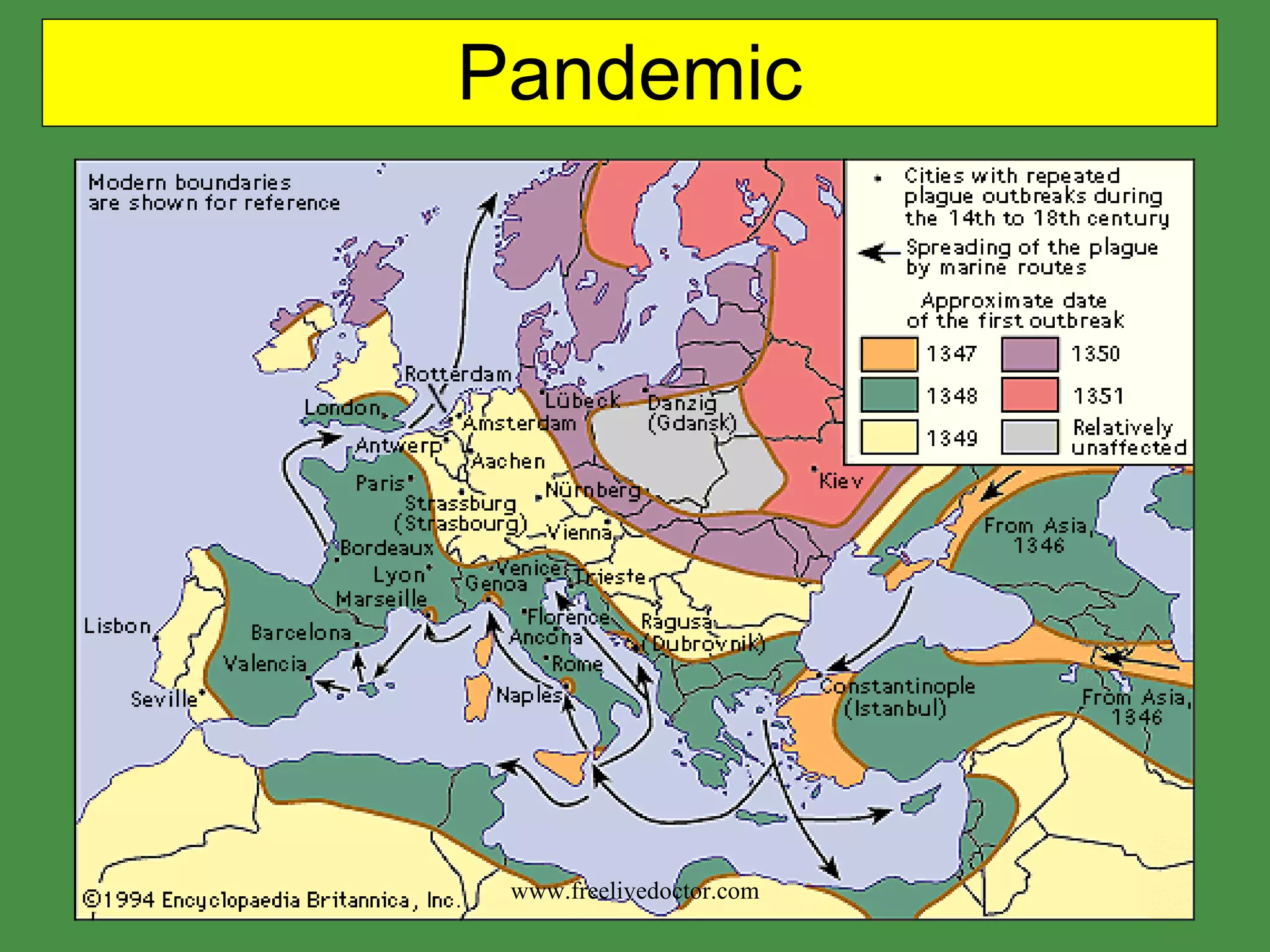
Pandemic www.freelivedoctor.com
Sporadic Fire Blight in pears is caused by Erwinia amylovora Which is a Facultatively Anaerobic Gram-Negative Rod E. amylovora  is an Enteric, not terribly different from  Escherichia coli www.freelivedoctor.com
Zoonoses www.freelivedoctor.com
Portals of Entry We can look at pathogens in terms of how they enter the body… www.freelivedoctor.com
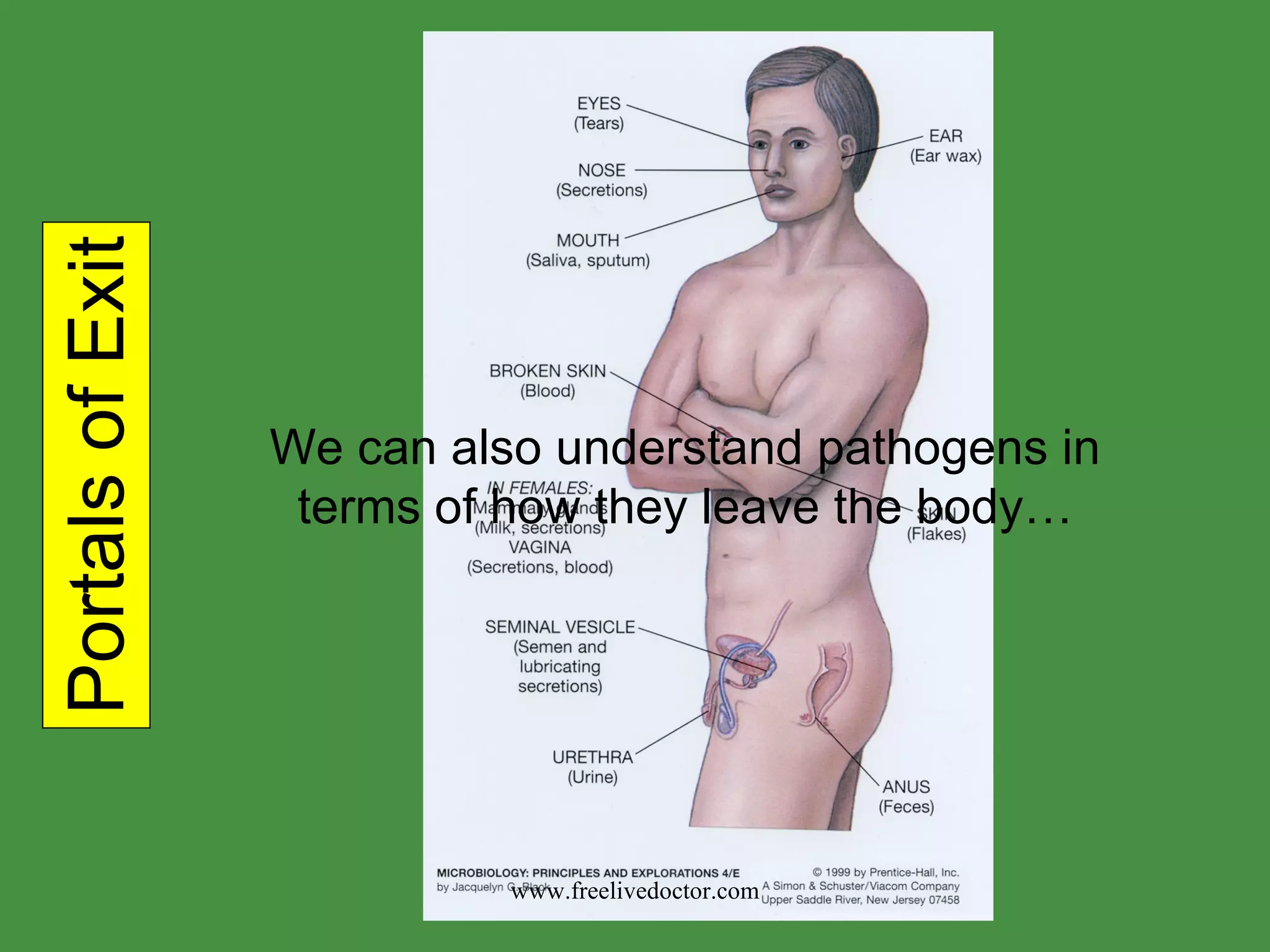
Portals of Exit We can also understand pathogens in terms of how they leave the body… www.freelivedoctor.com
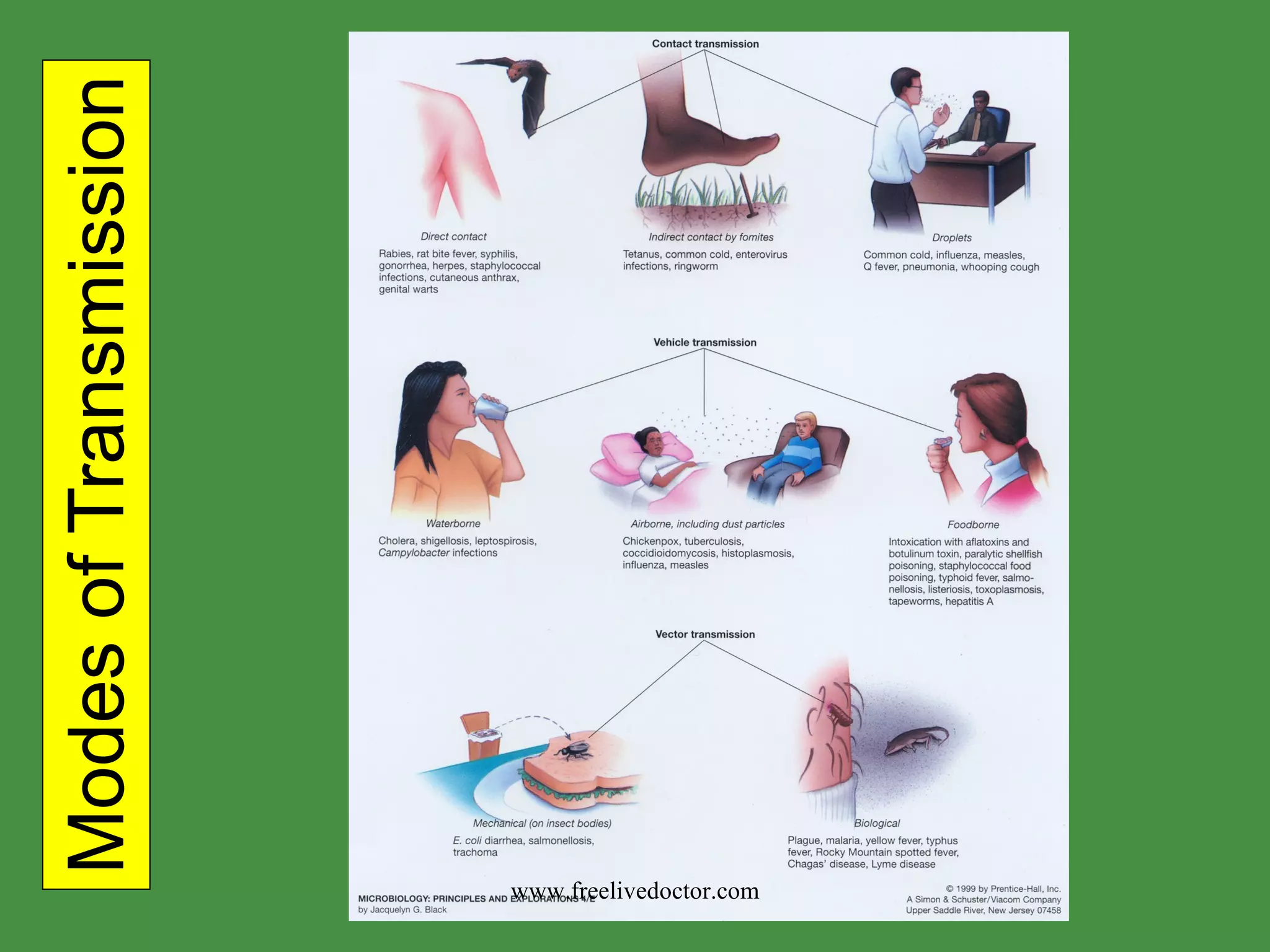
Modes of Transmission www.freelivedoctor.com
Horizontal Transmission The above actually refers to the transmission of  Culture  (learned knowledge) between whales and dolphins www.freelivedoctor.com
Vertical Transmission www.freelivedoctor.com
Contact Transmission www.freelivedoctor.com
Direct-Contact Transmission www.freelivedoctor.com
Direct Fecal-Oral Transmission www.freelivedoctor.com
Indirect-Contact Transmission www.freelivedoctor.com
Droplet Transmission Less than one meter www.freelivedoctor.com
Waterborne Transmission www.freelivedoctor.com
Airborne Transmission www.freelivedoctor.com
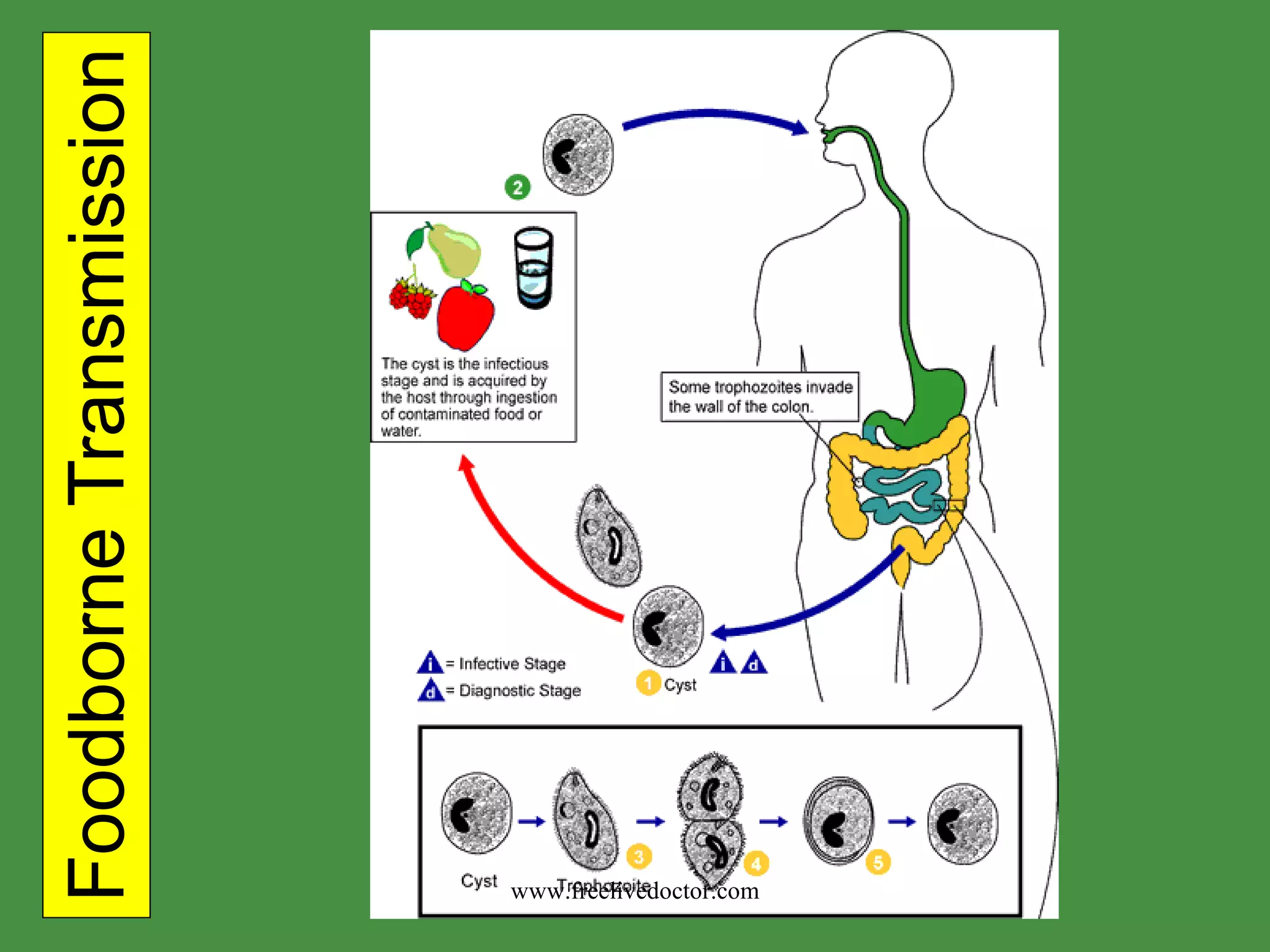
Foodborne Transmission www.freelivedoctor.com
Nosocomial Infections www.freelivedoctor.com
Exogenous Infections www.freelivedoctor.com
Endogenous Infection www.freelivedoctor.com

Epidemicdiseases Mode Of Spread

Editor's Notes

  • #14 An exceptionally large coprolite (fossilized feces) discovered in Saskatchewan, Canada provides direct evidence of dinosaurian carnivory. The specimen was found in the 65 million year old Frenchman Formation near the town of Eastend by crews of the Royal Saskatchewan Museum . Dinosaur dung is not common, so Timothy T. Tokaryk (supervisor of the RSM Fossil Research Station , a satellite facility of the Royal Saskatchewan Museum) contacted paleobiologist Karen Chin (a visiting scientist with the U.S. Geological Survey ) who applied her expertise in coprolite research to the analysis of the specimen. The Saskatchewan coprolite is an elongated, fractured mass of rock that is approximately 44 by 16 by 13 centimeters (about 17 by 6 by 5 inches). About 200 associated fragments weathered downslope from the larger mass and would have contributed to the original volume of the feces-- estimated to have been over 2.4 liters (about 2 1/2 quarts). The specimen contains fragments of bone, and its great size distinguishes it as the largest individual carnivore coprolite yet described. It is usually very difficult to determine the identity of the producer of a coprolite, but the great size and geologic and temporal context of this specimen indicate a tyrannosaur origin; of the carnivorous dinosaurs (theropods) and crocodilian species known from the Frenchman Formation, only Tyrannosaurus is likely to have produced such a sizable fecal mass. As the first indisputable example of large theropod feces, this coprolite provides a unique perspective on ancient feeding habits. To extract paleobiological information from the specimen, ultra-thin sections were prepared and microscopically examined with the assistance of comparative anatomist Gregory M. Erickson (formerly at the University of California, Berkeley, now a Post-Doctoral Fellow at Stanford University; read about his research on Tyrannosaurus bite force ) and electron probe specialist Lewis C. Calk (now retired from the U.S. Geological Survey). These analyses indicated that the soft fecal material was preserved as lithified (turned to rock) phosphate with included bone fragments that represent incompletely digested dietary residues http://wrgis.wr.usgs.gov/king-sized-coprolite.html
  • #21 Because of the huge resistance iceberg ( Figure 3 ), with as many as 5 to 10 patients colonized with resistant bacteria for every patient known to be infected, universal gloving may be a more preferable infection control strategy than contact precautions, which are applied only to the tip of the iceberg. With universal gloving, gowning of personnel is recommended only for self-protection, e.g., from blood and body fluid exposures. http://www.cdc.gov/ncidod/eid/vol7no2/weinstein.htm#Figure%203