Downloaded 382 times
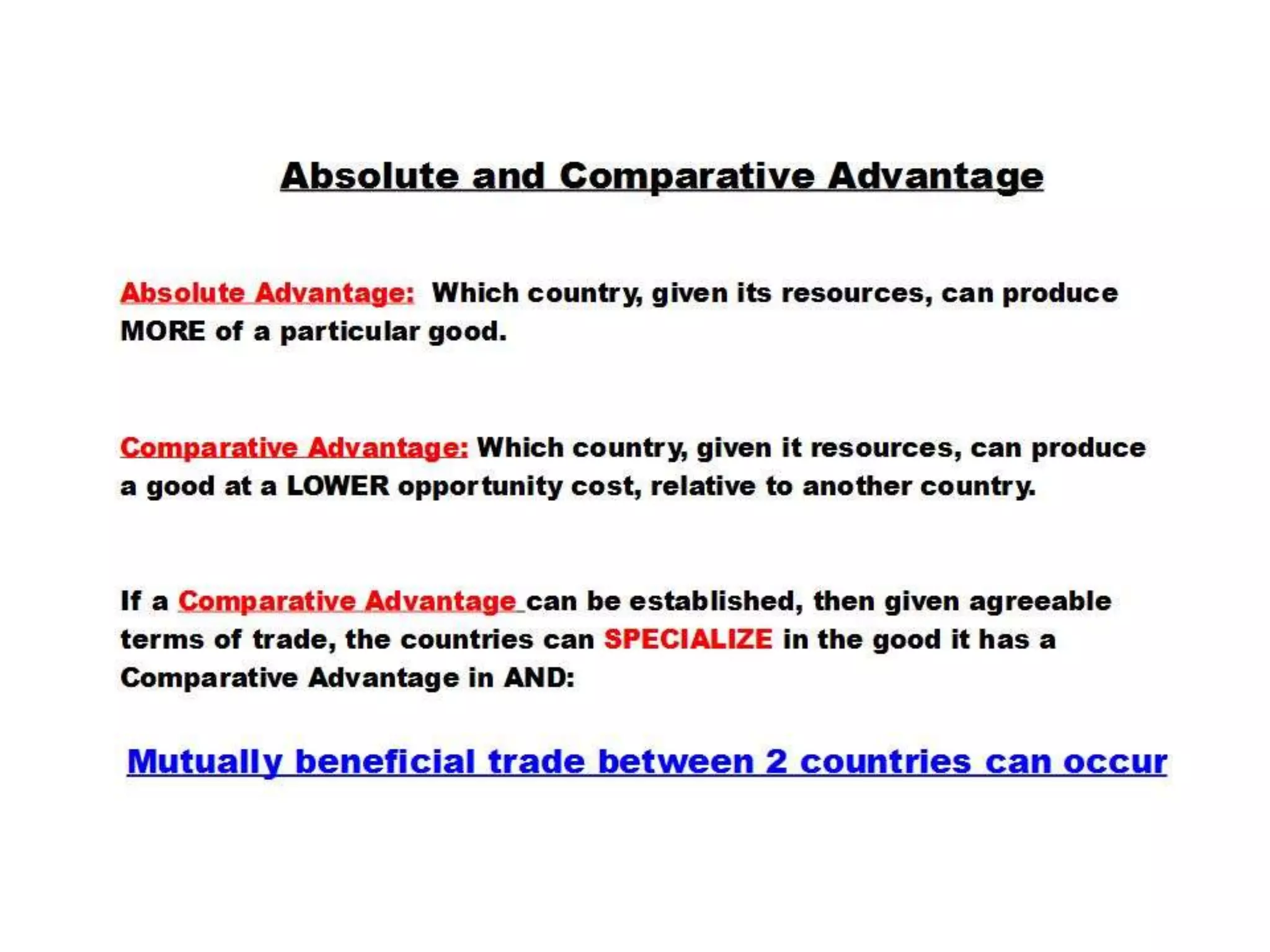
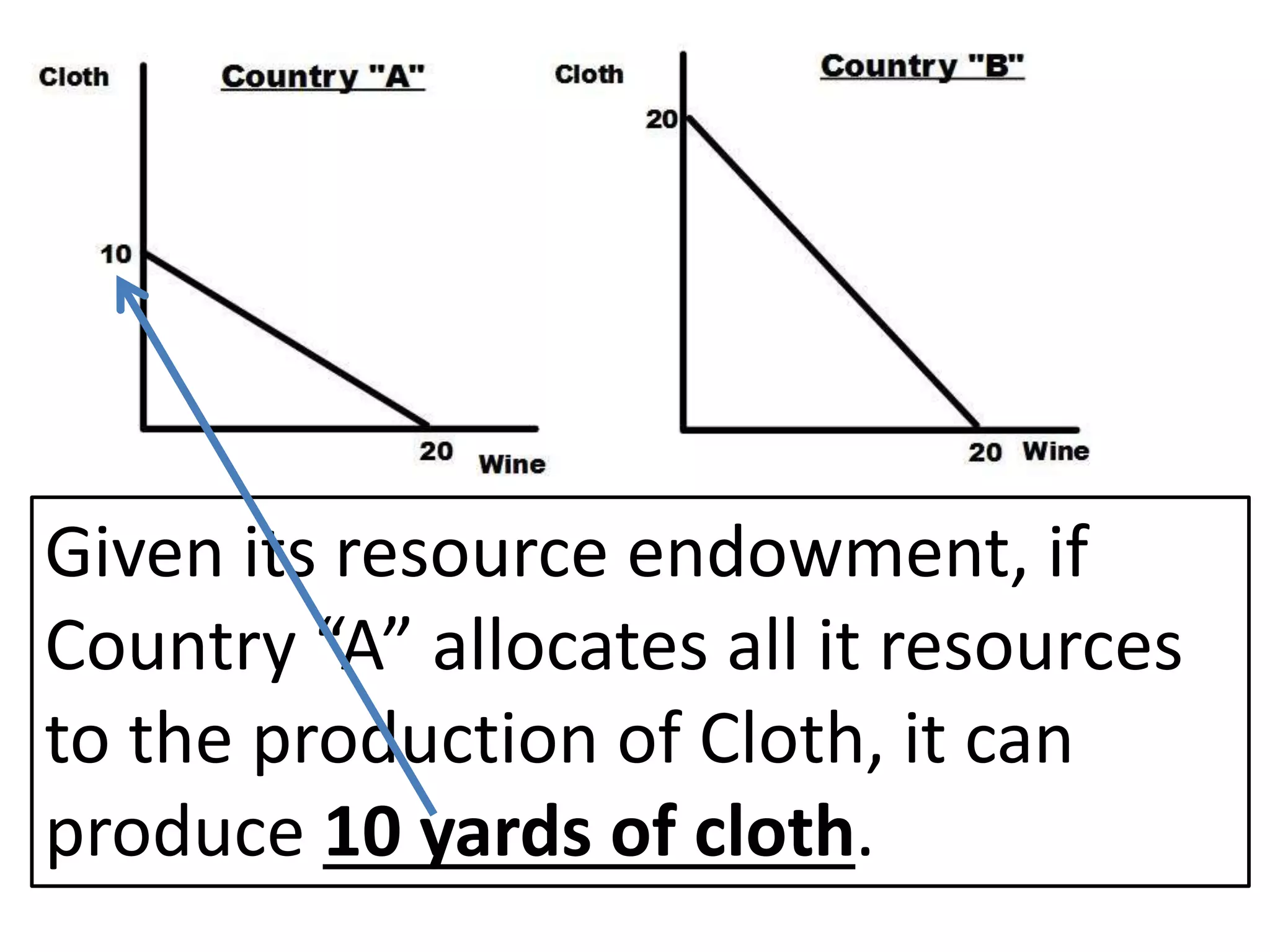
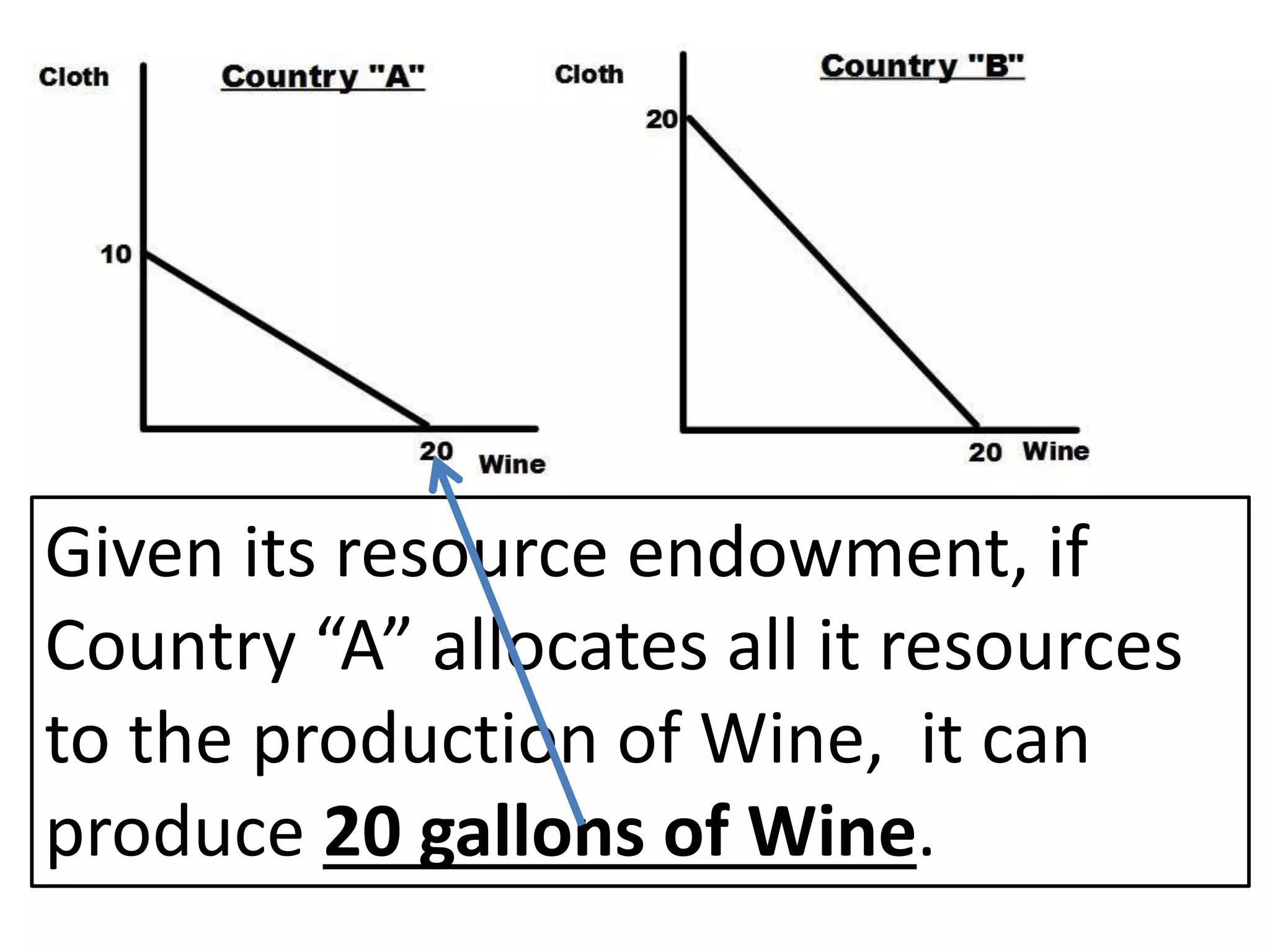
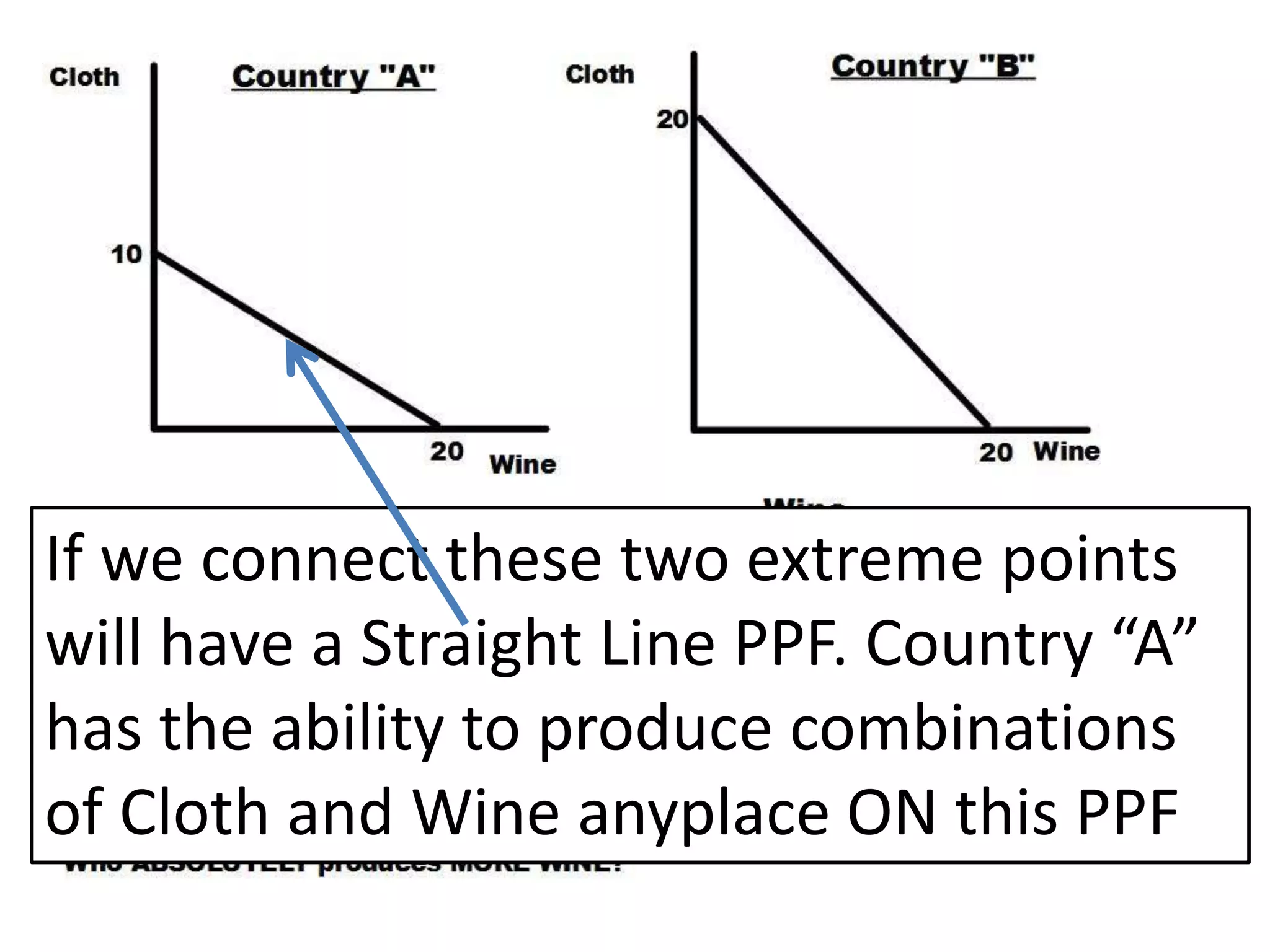
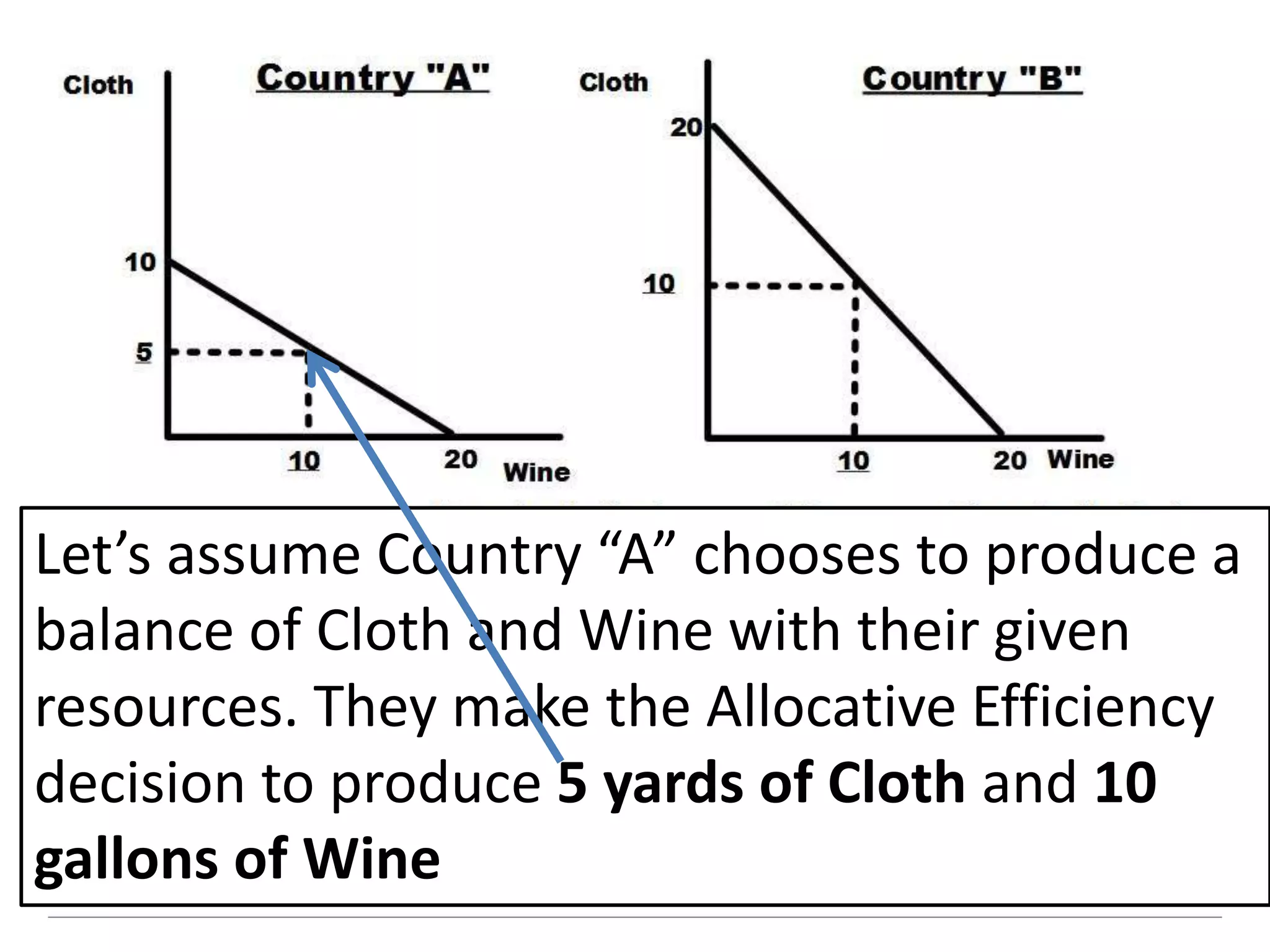
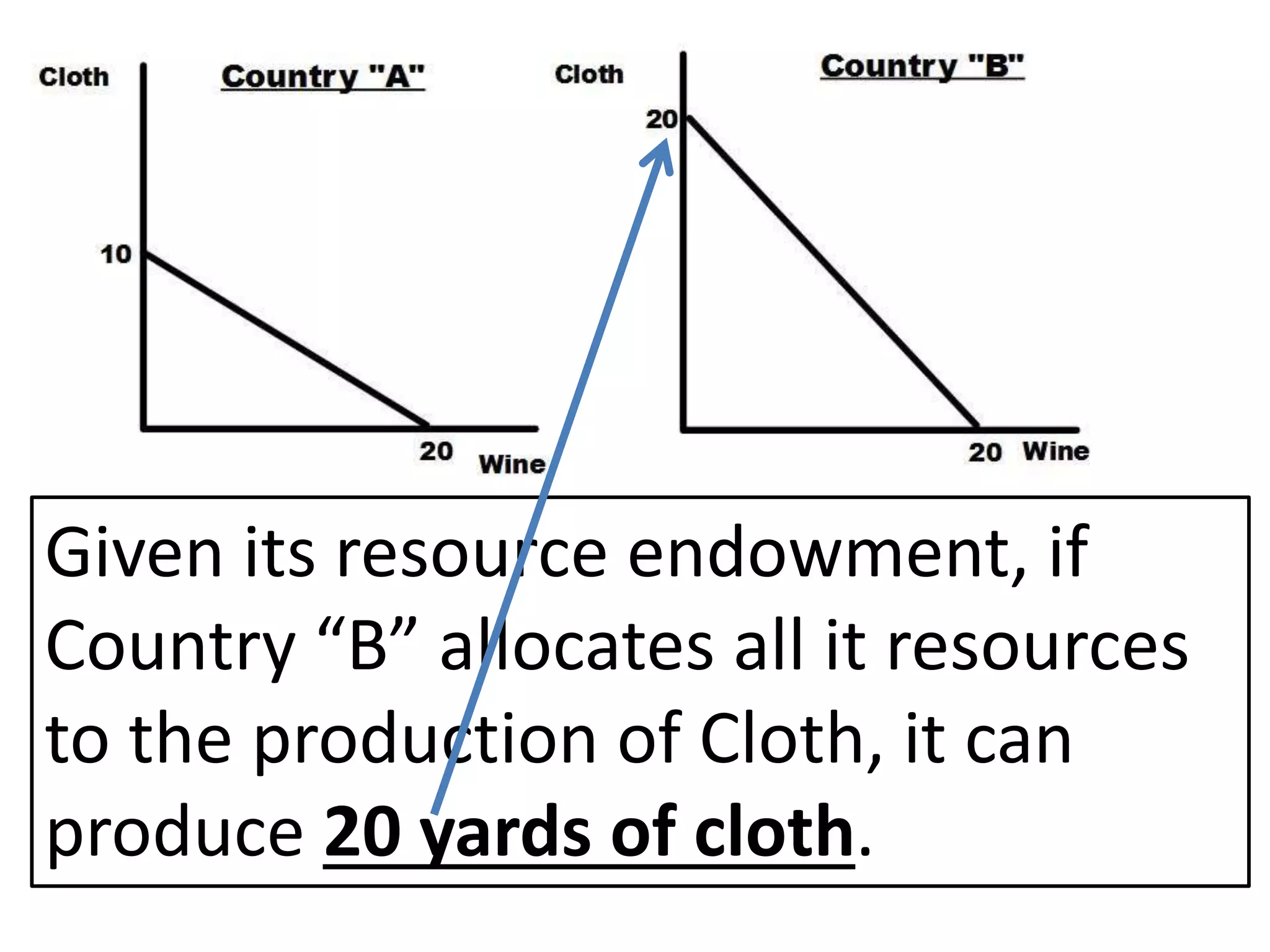
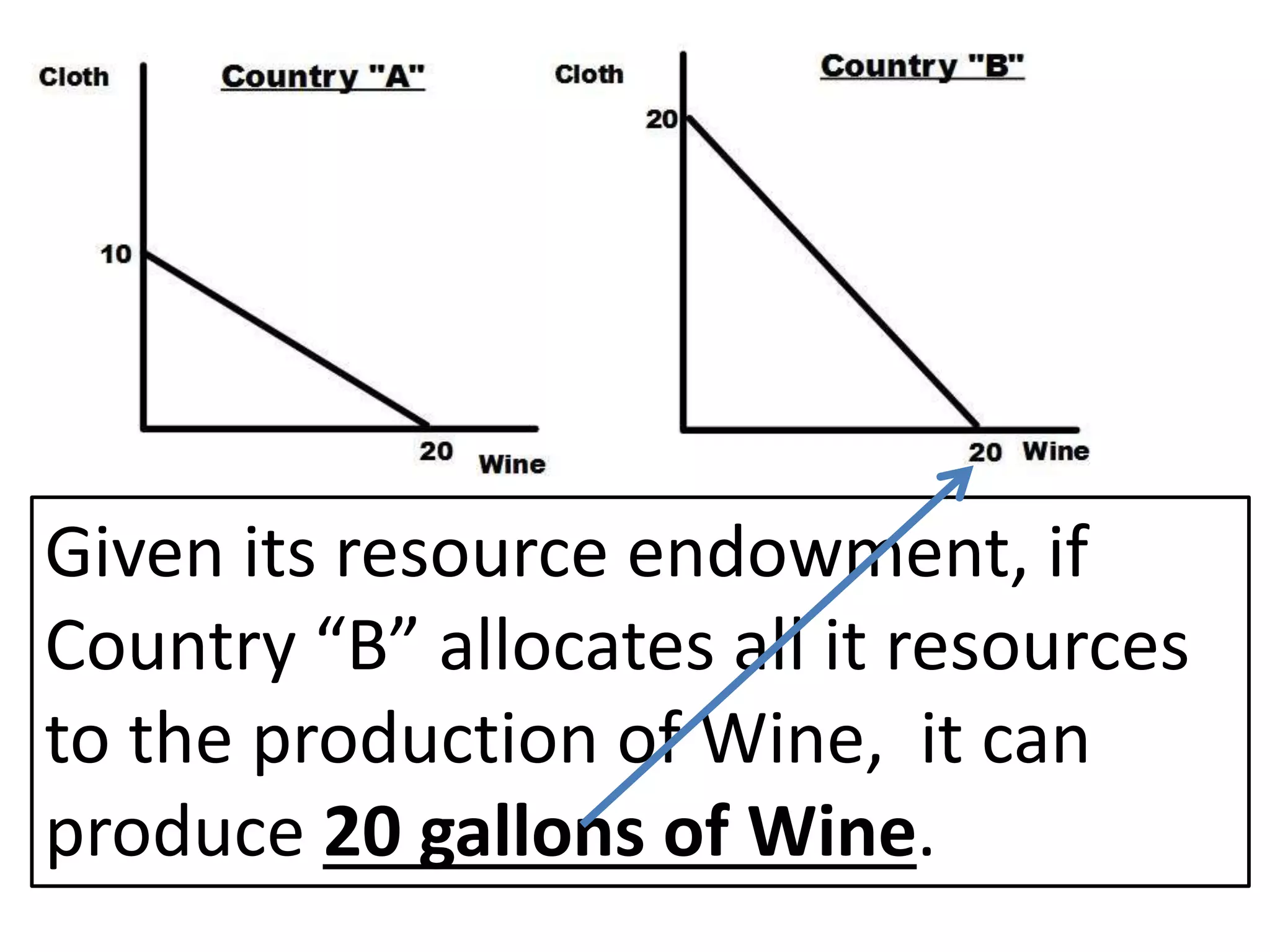
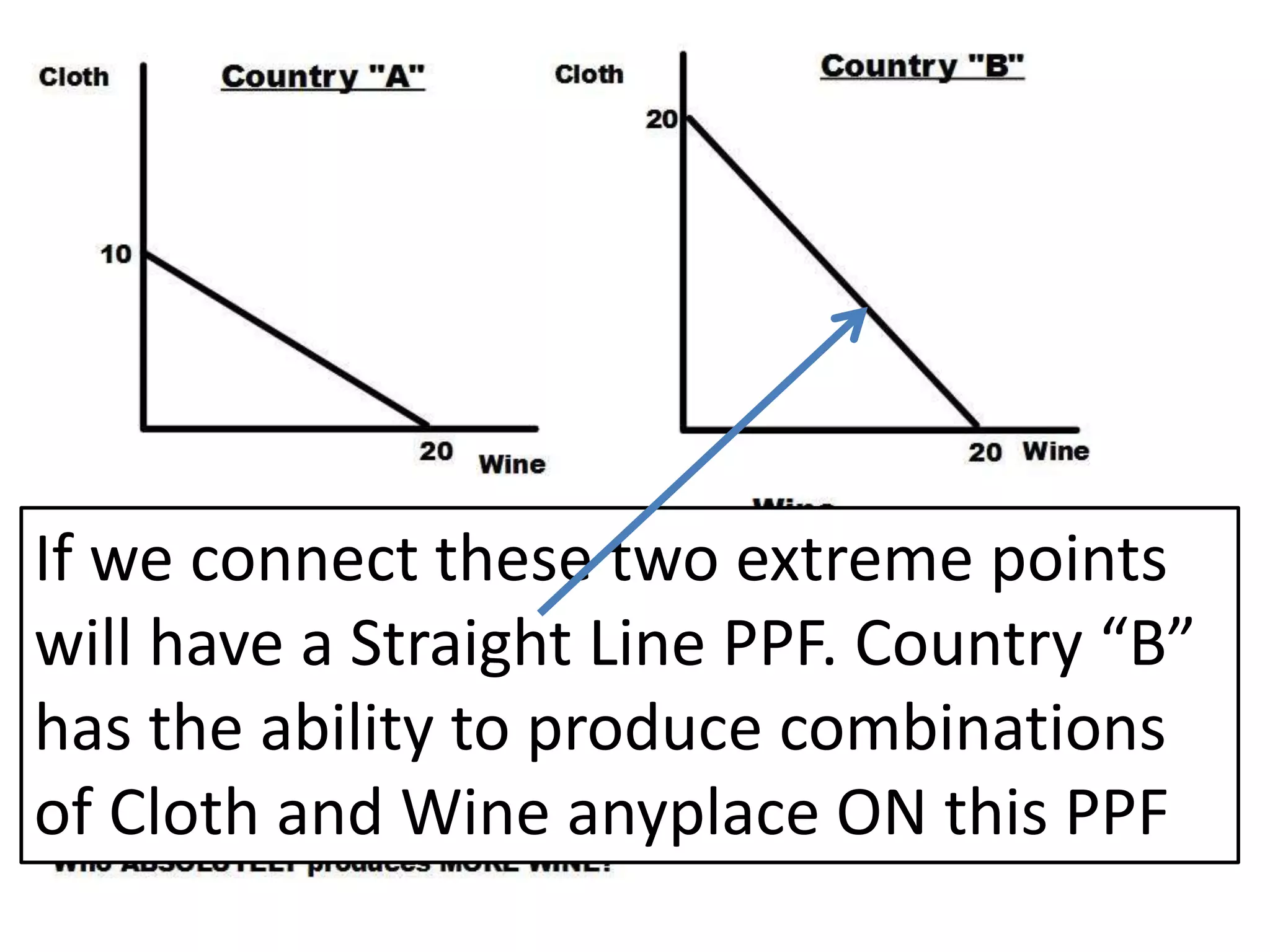
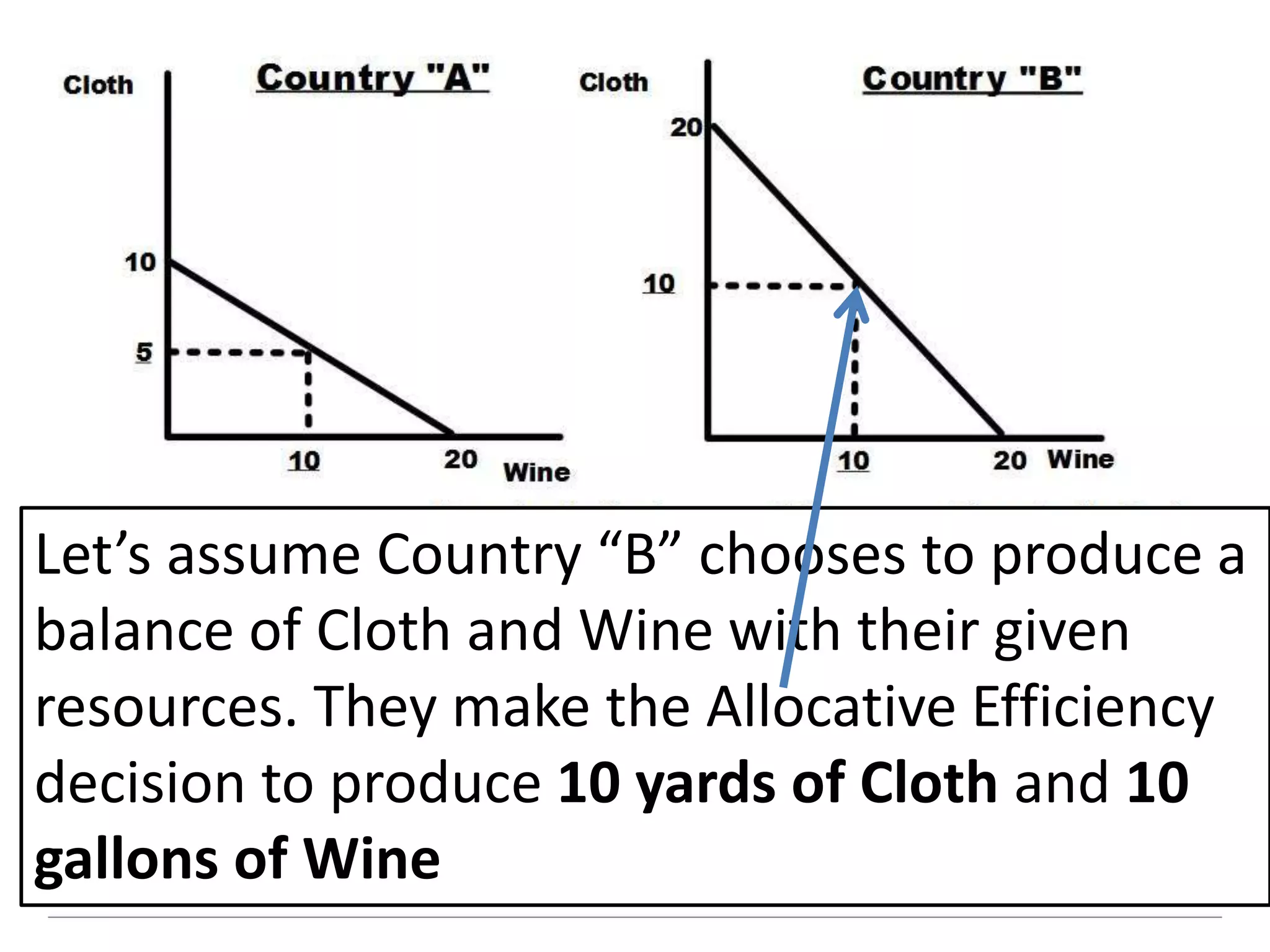
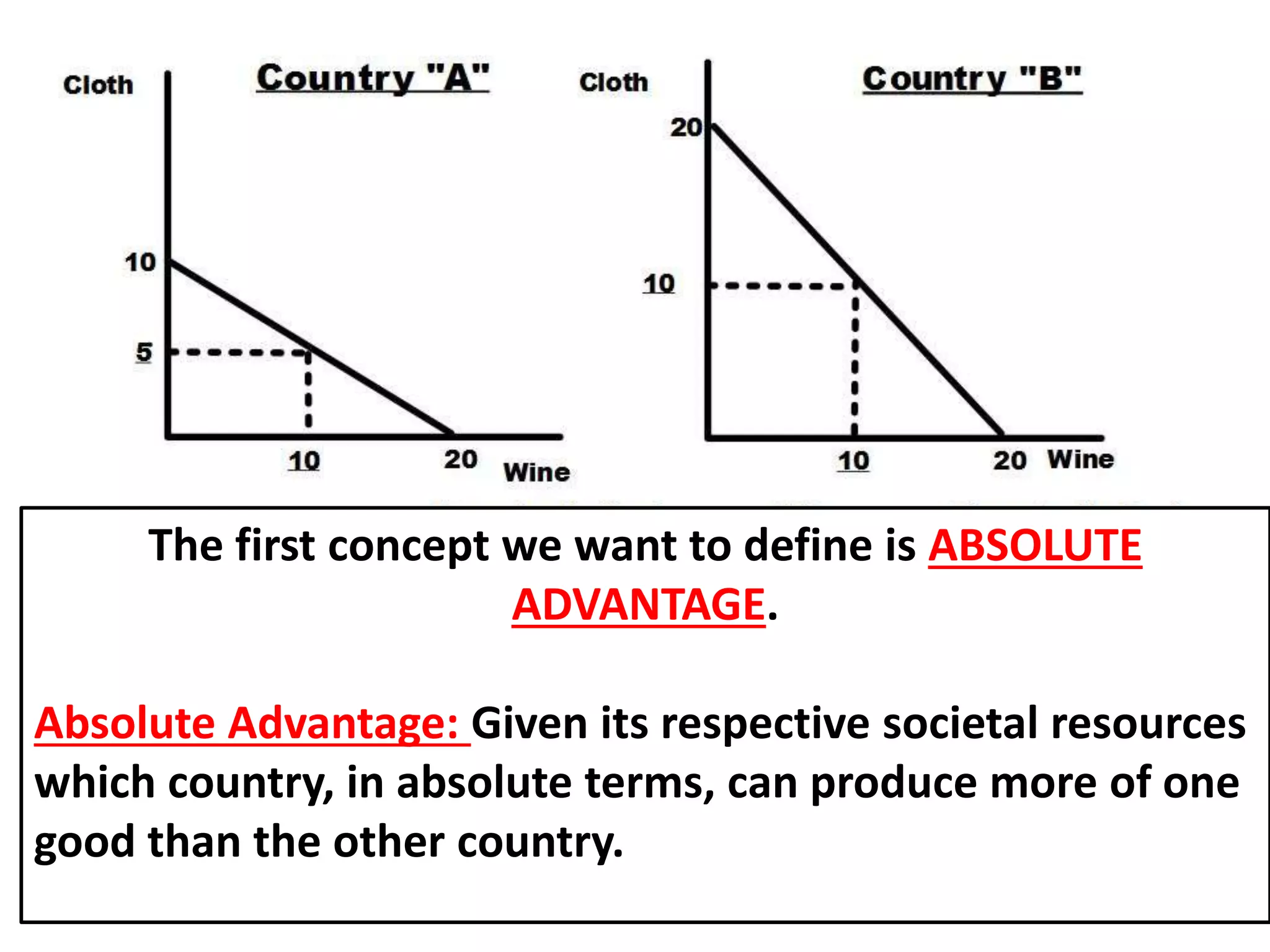
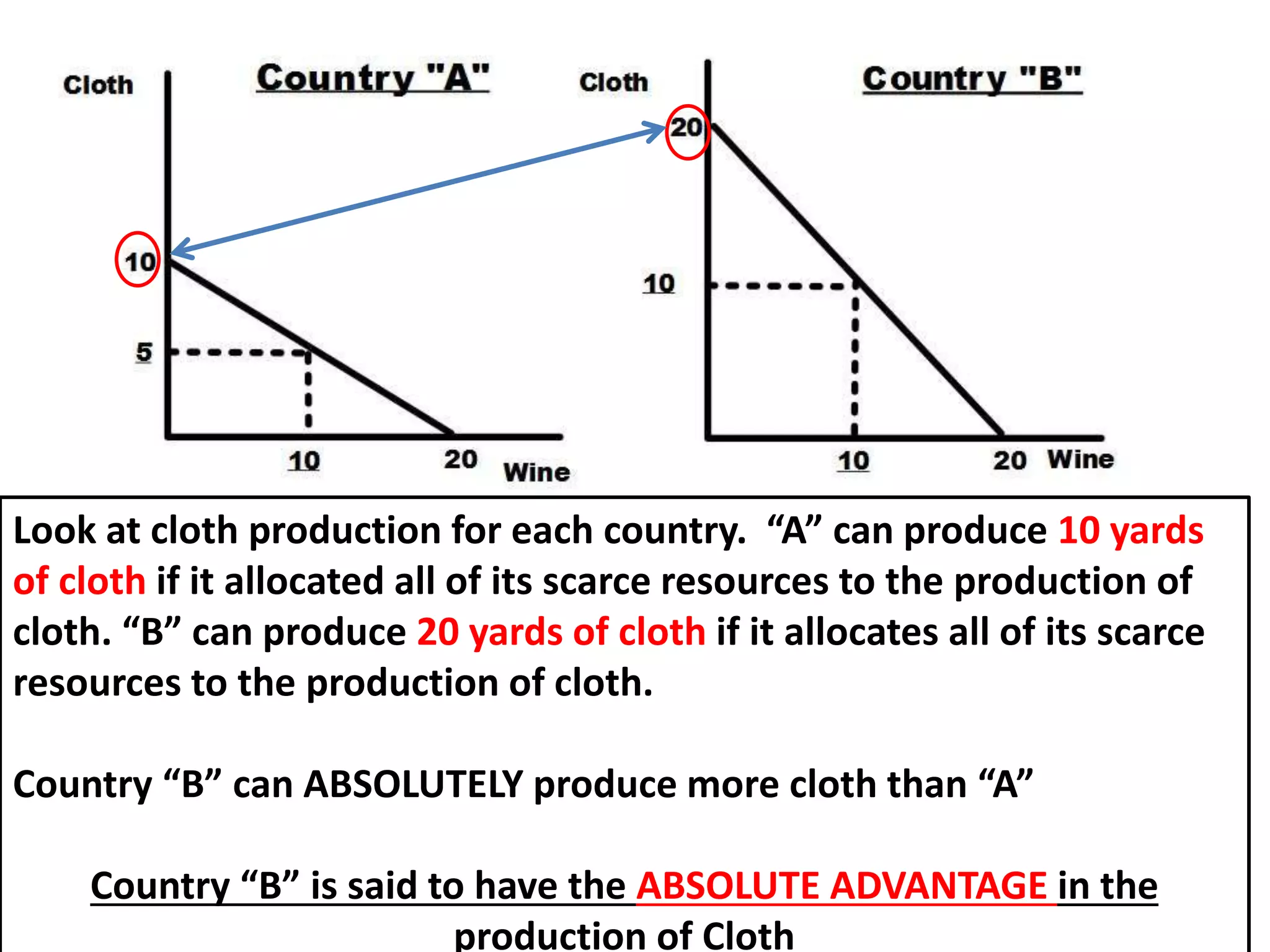
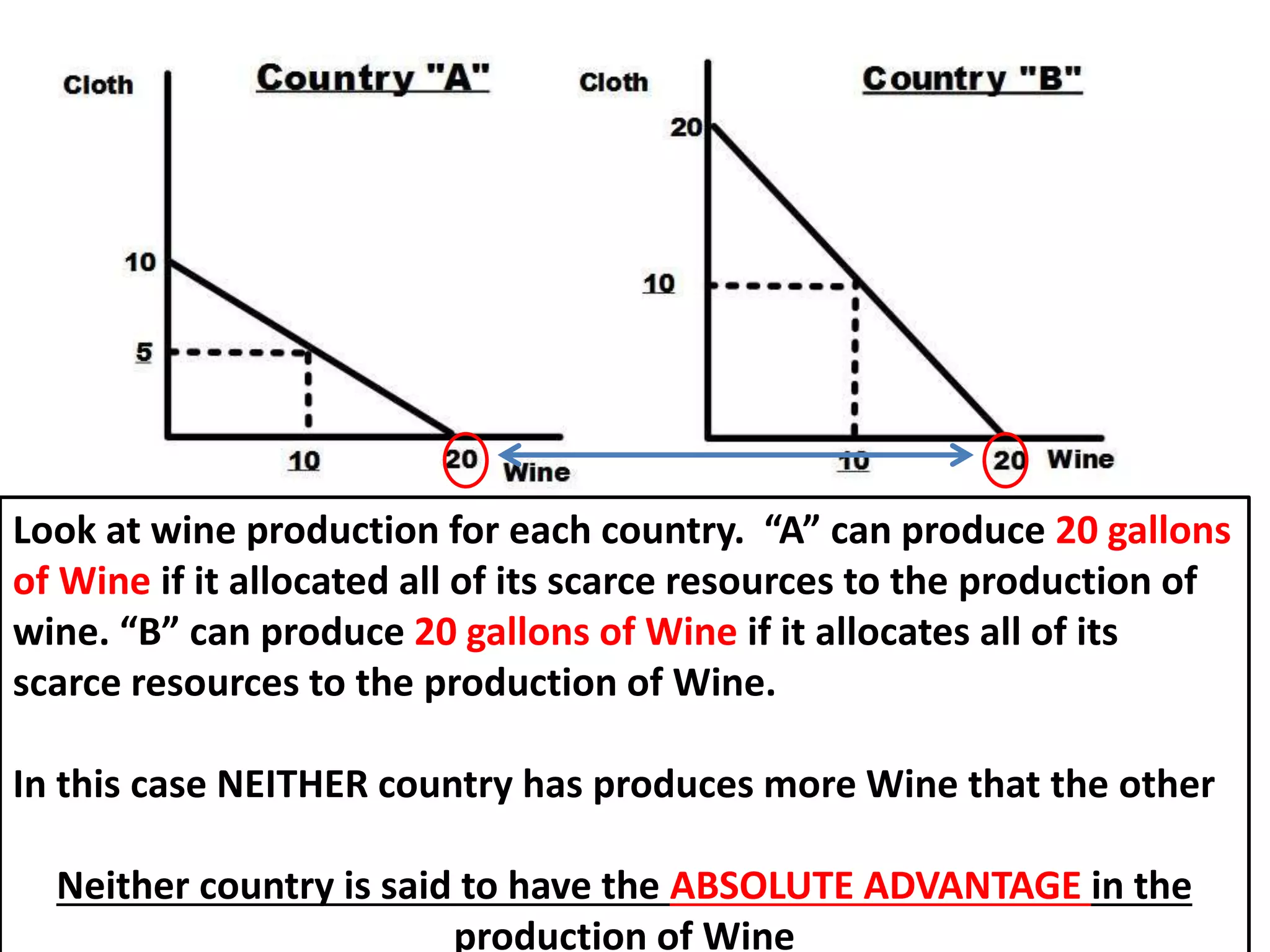
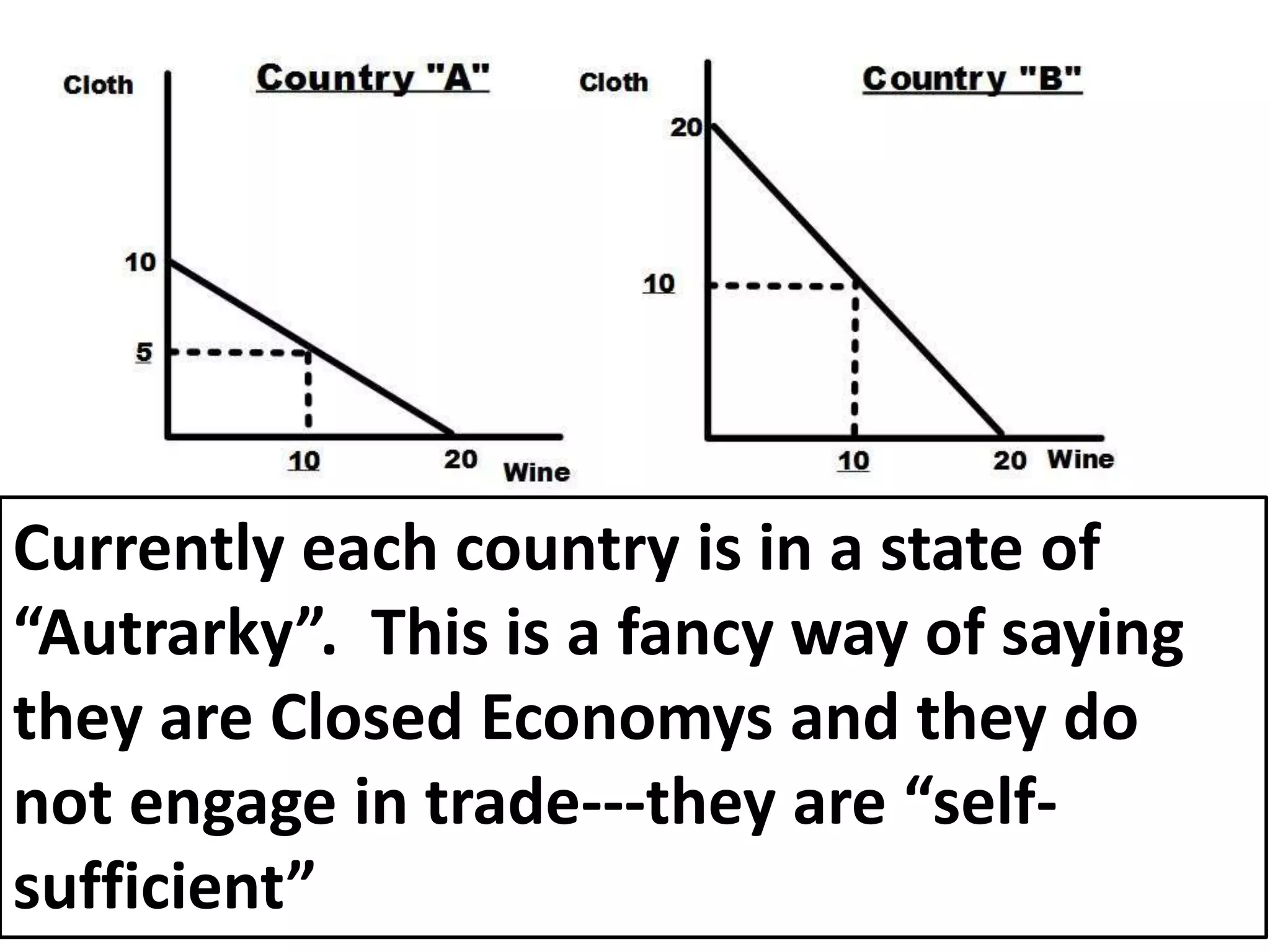
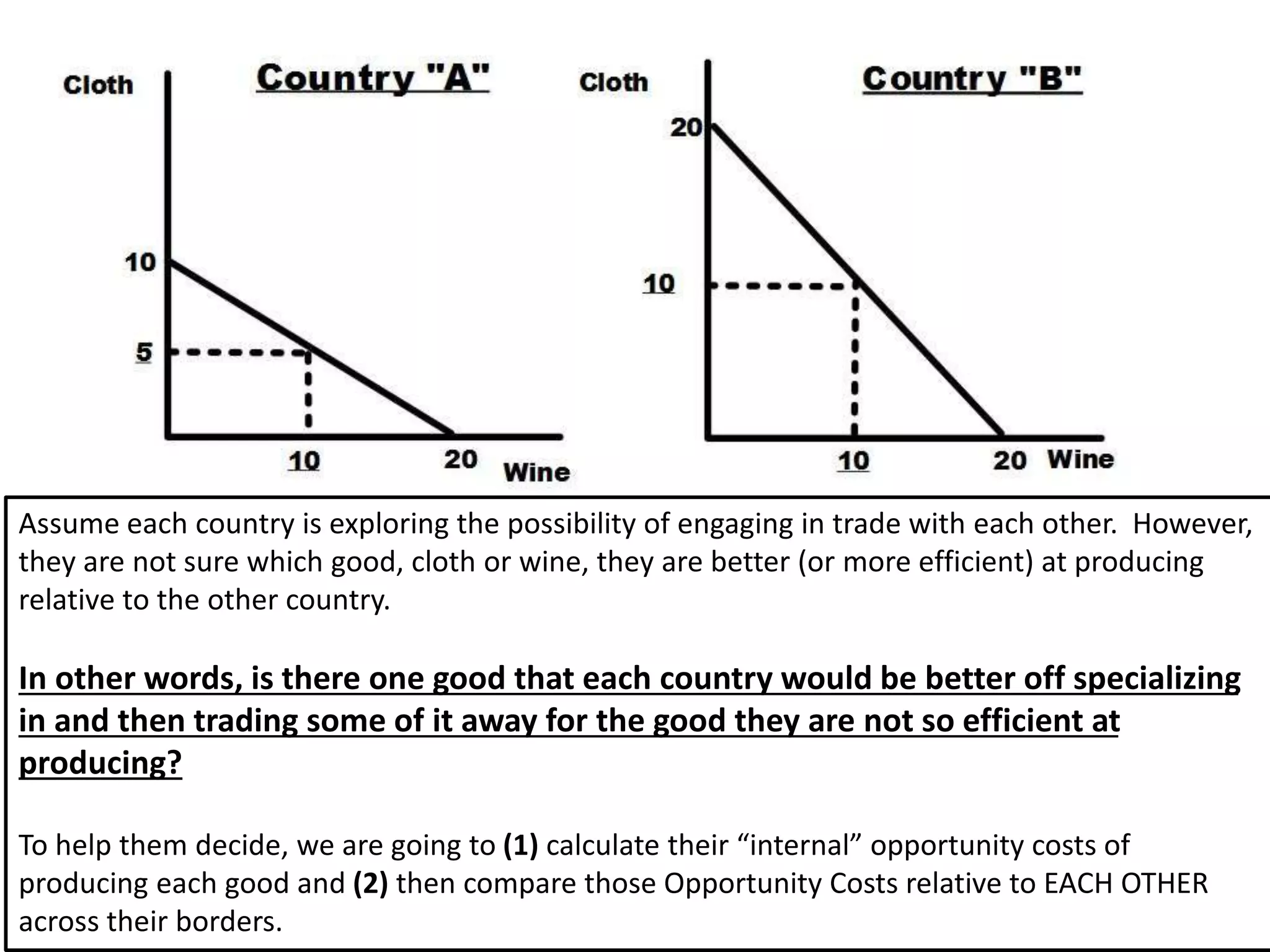
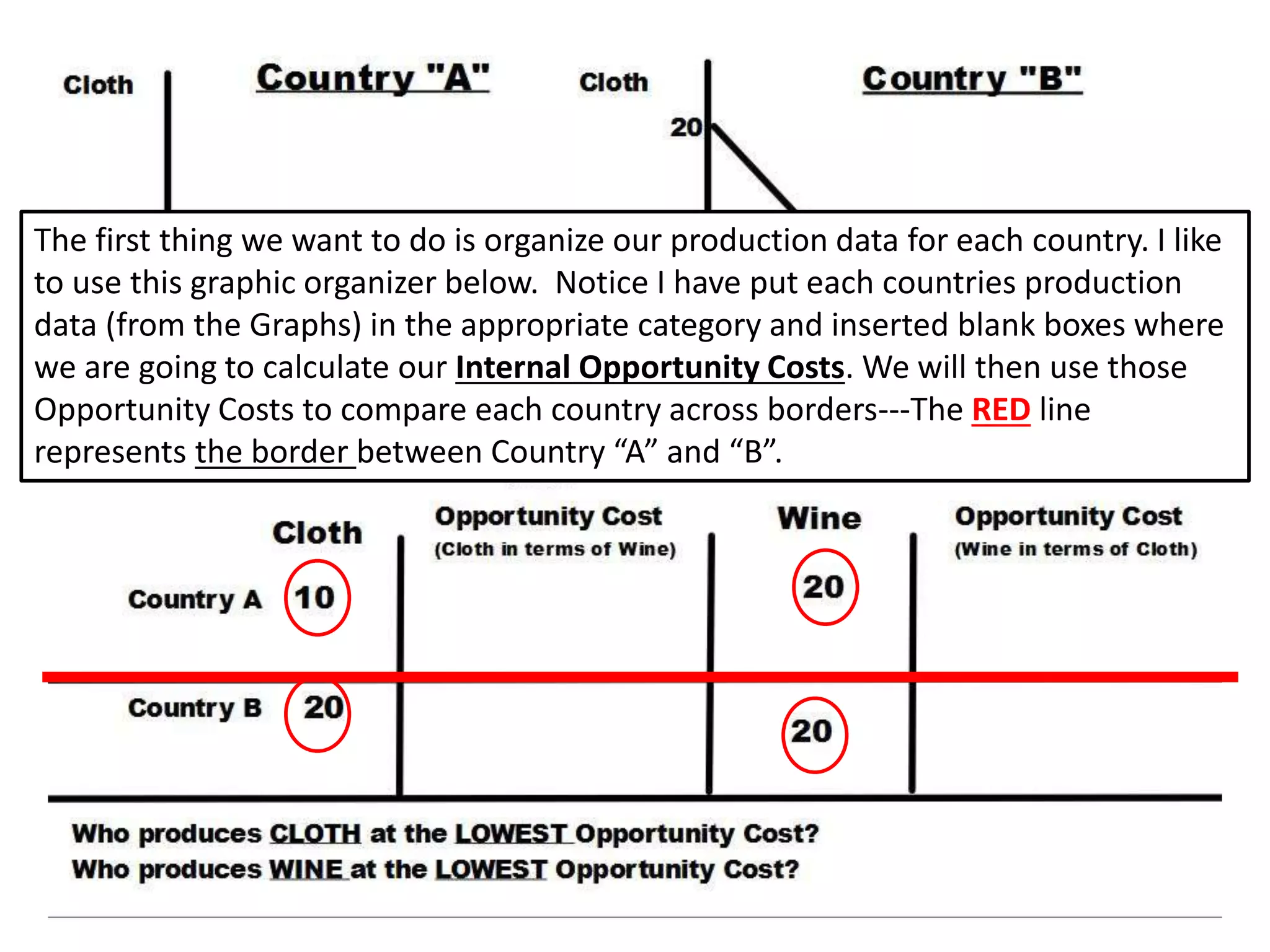
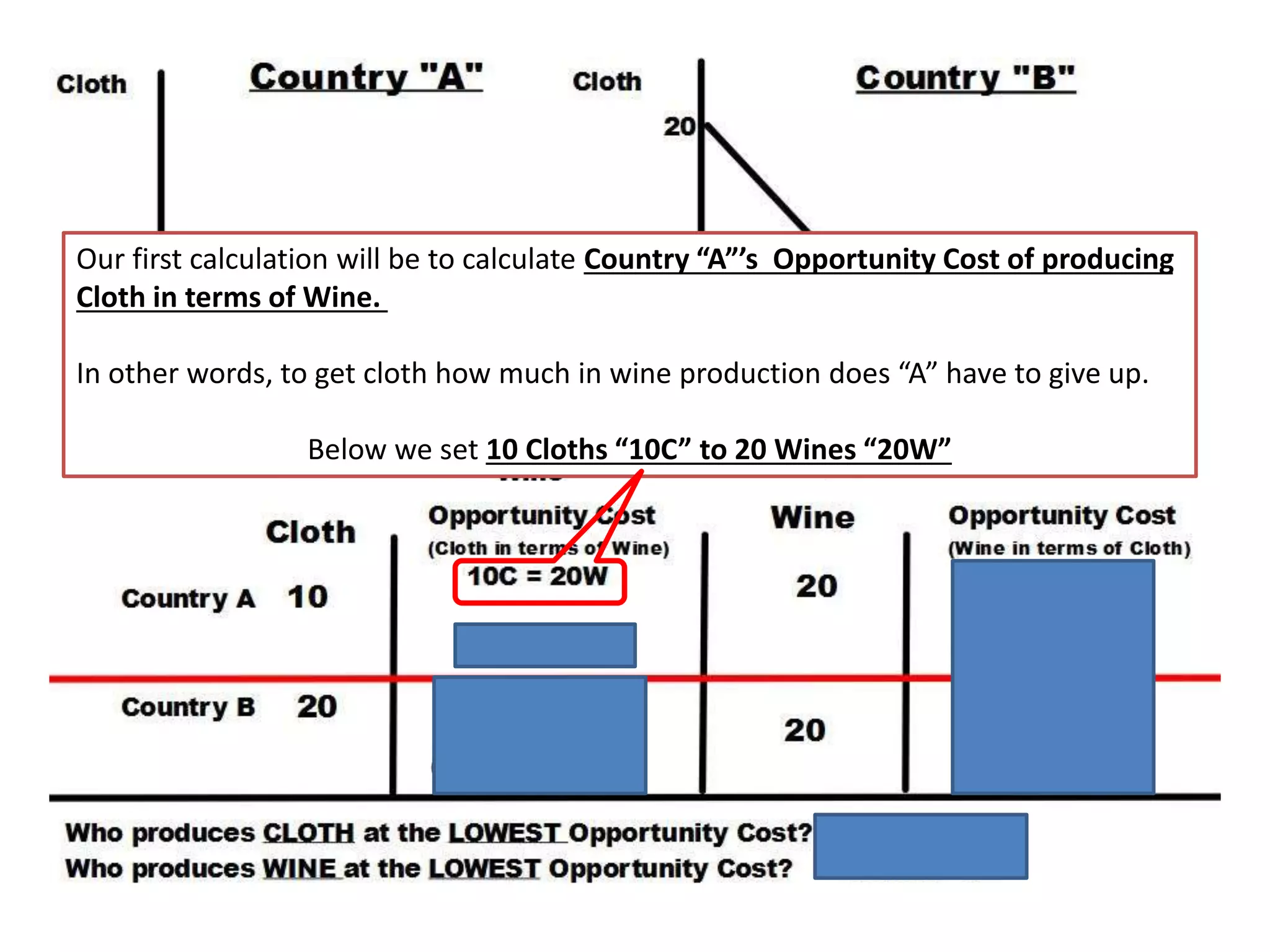
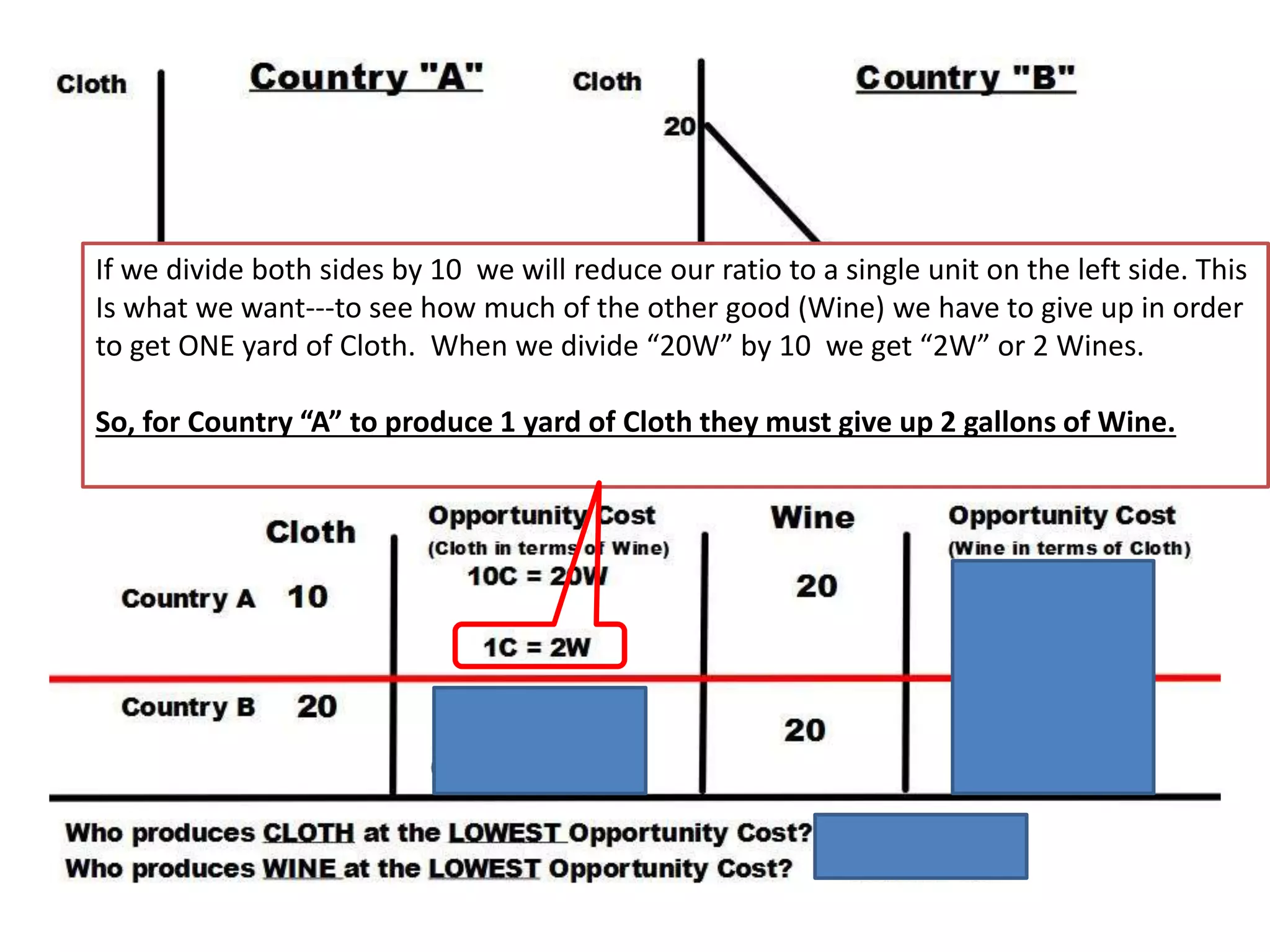
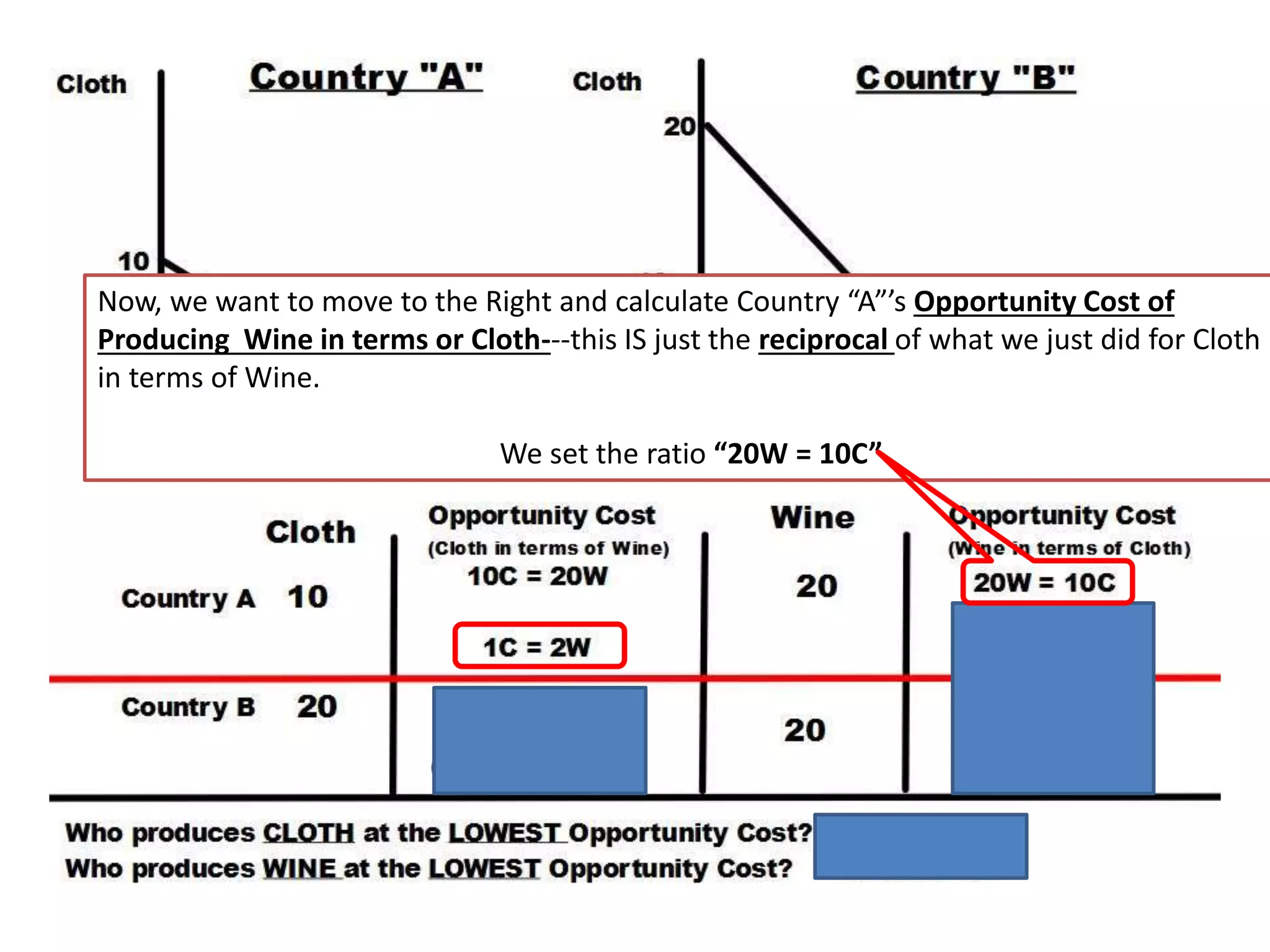
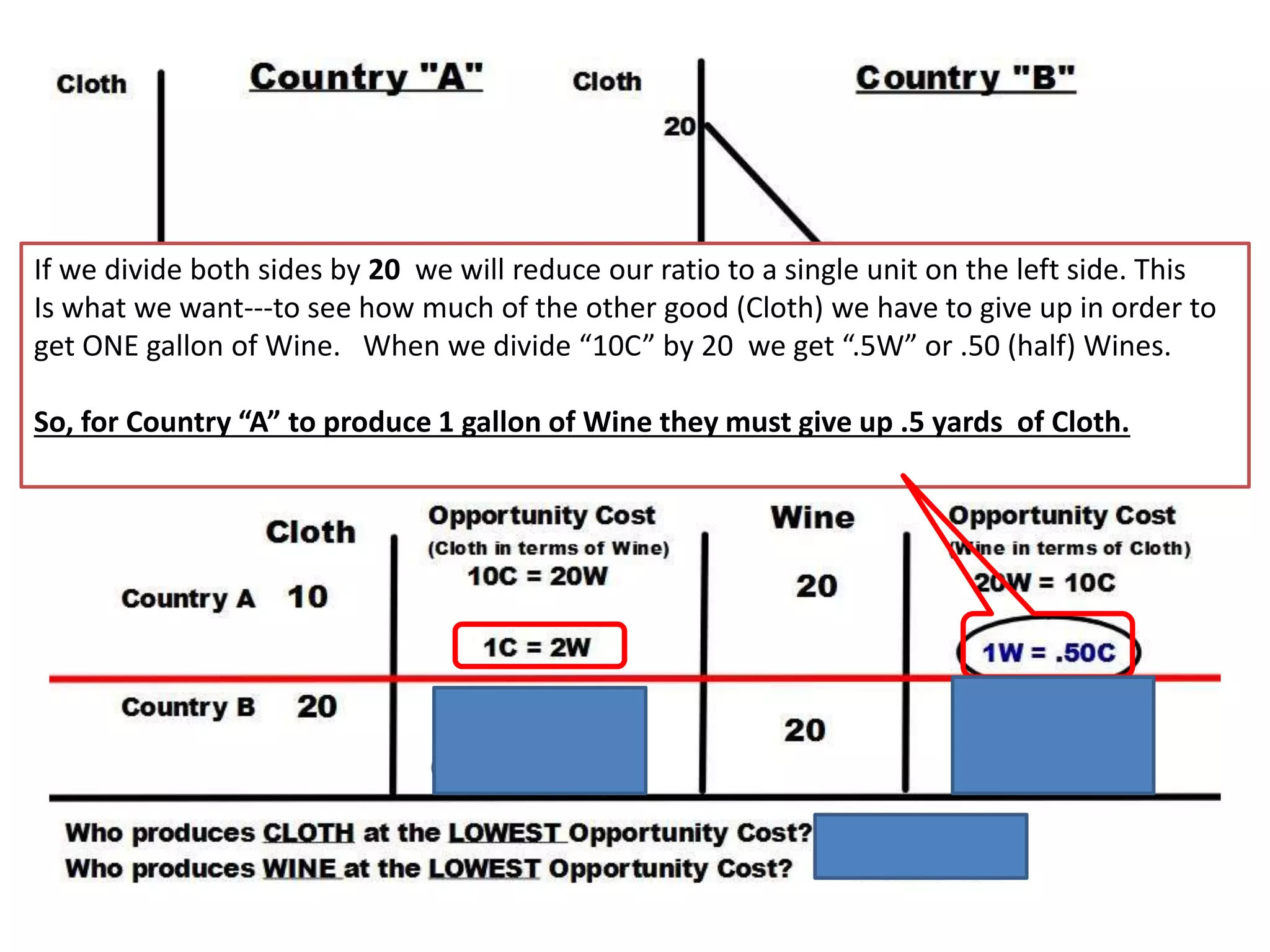
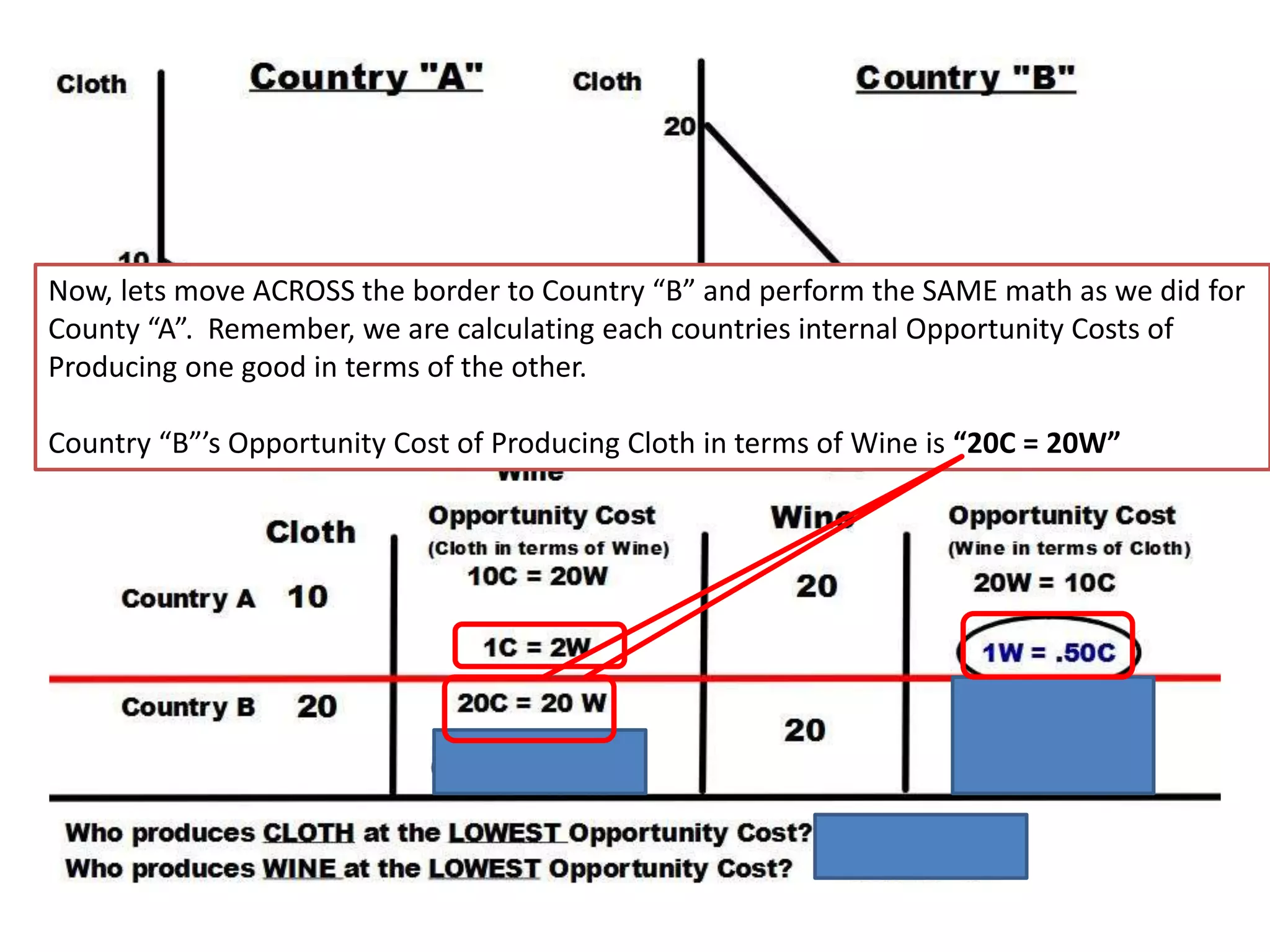
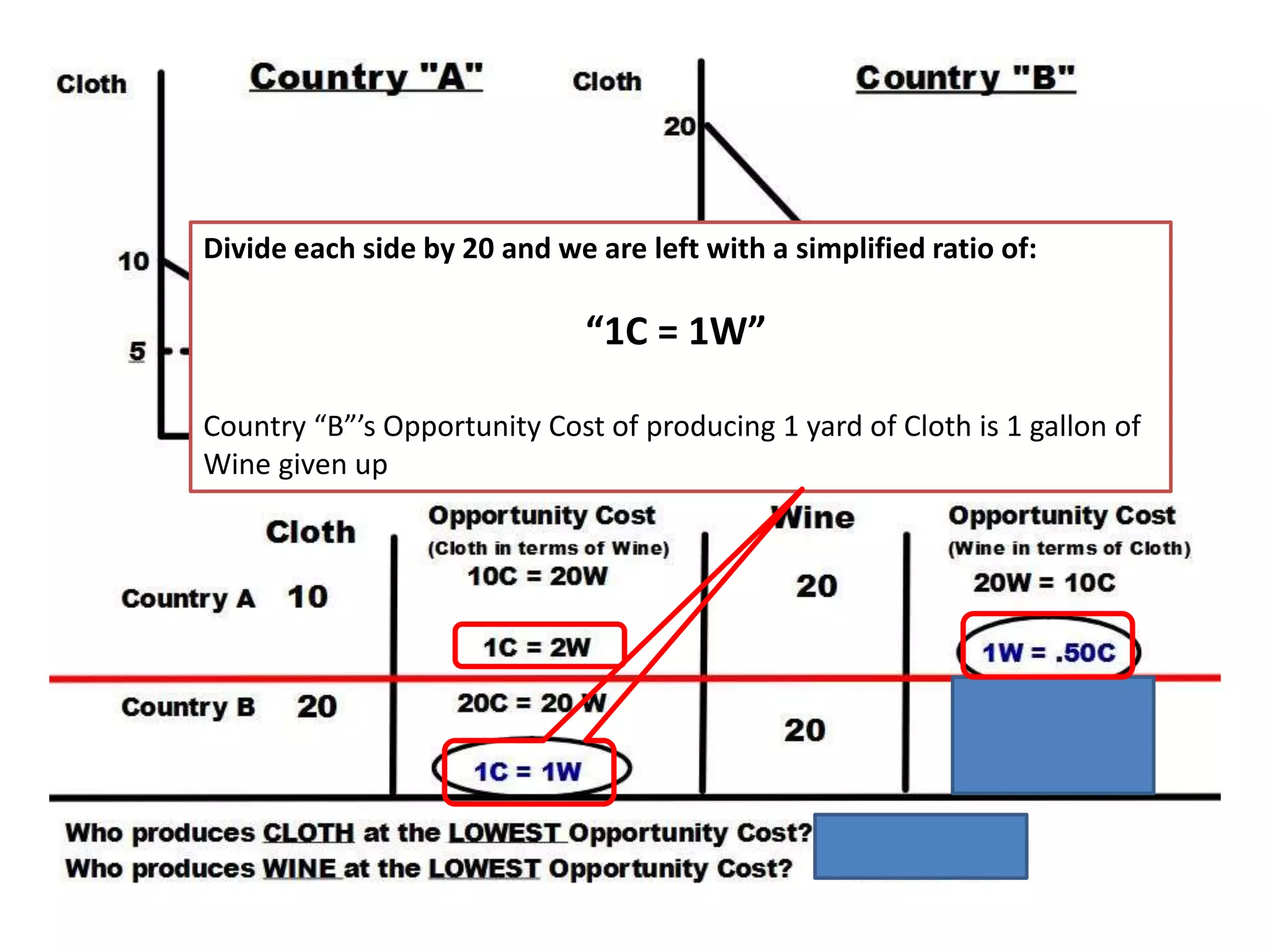
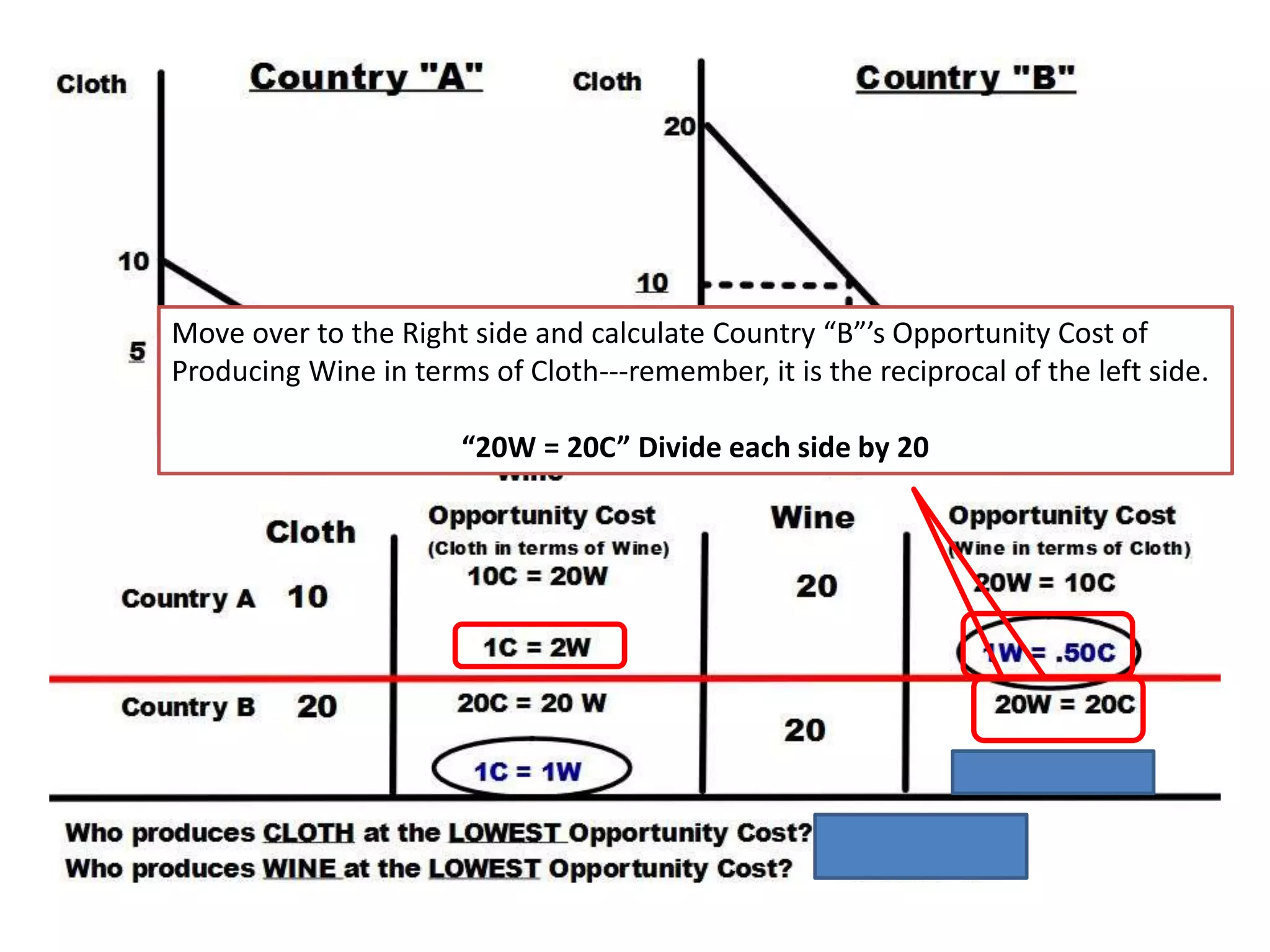
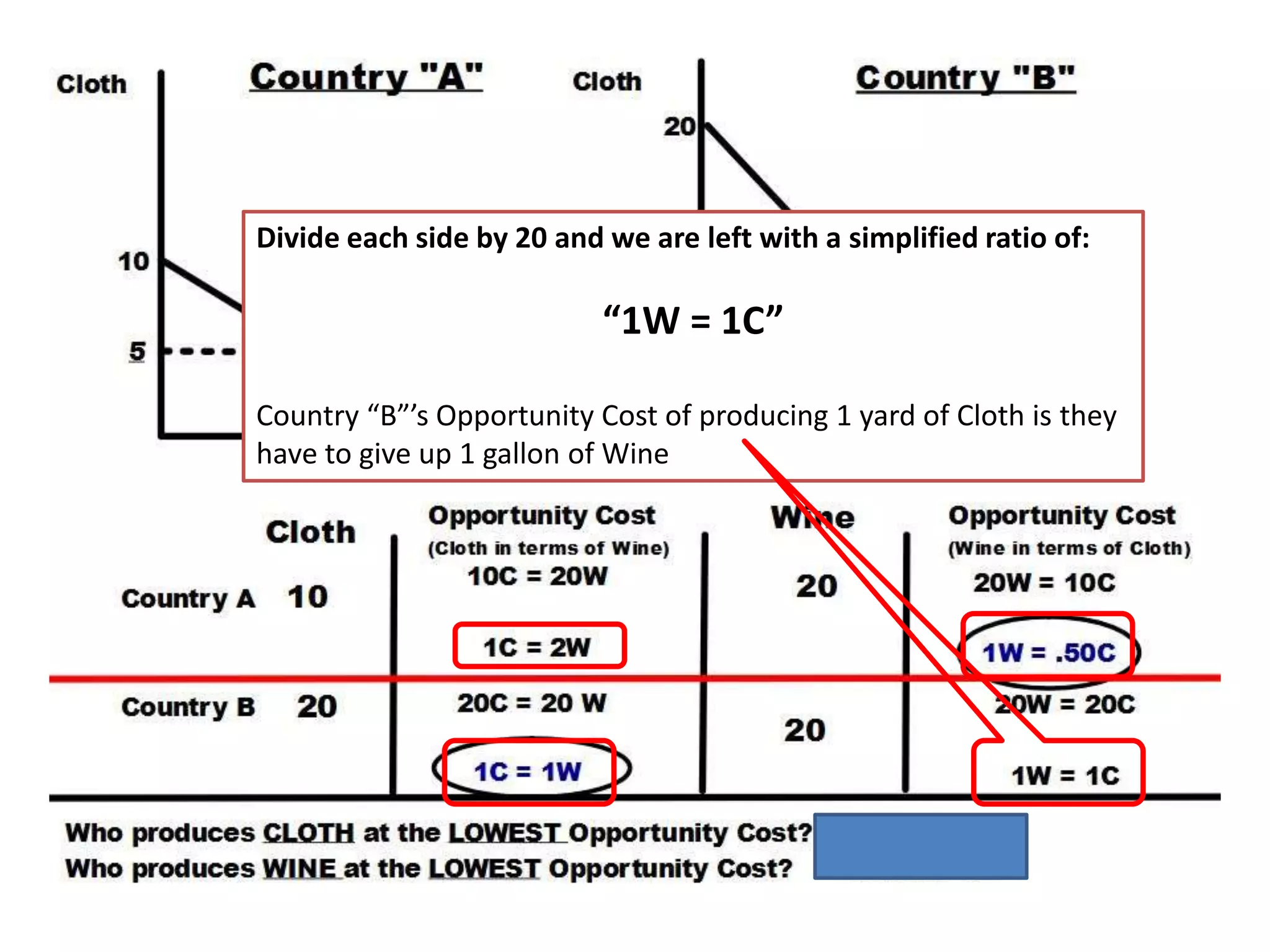
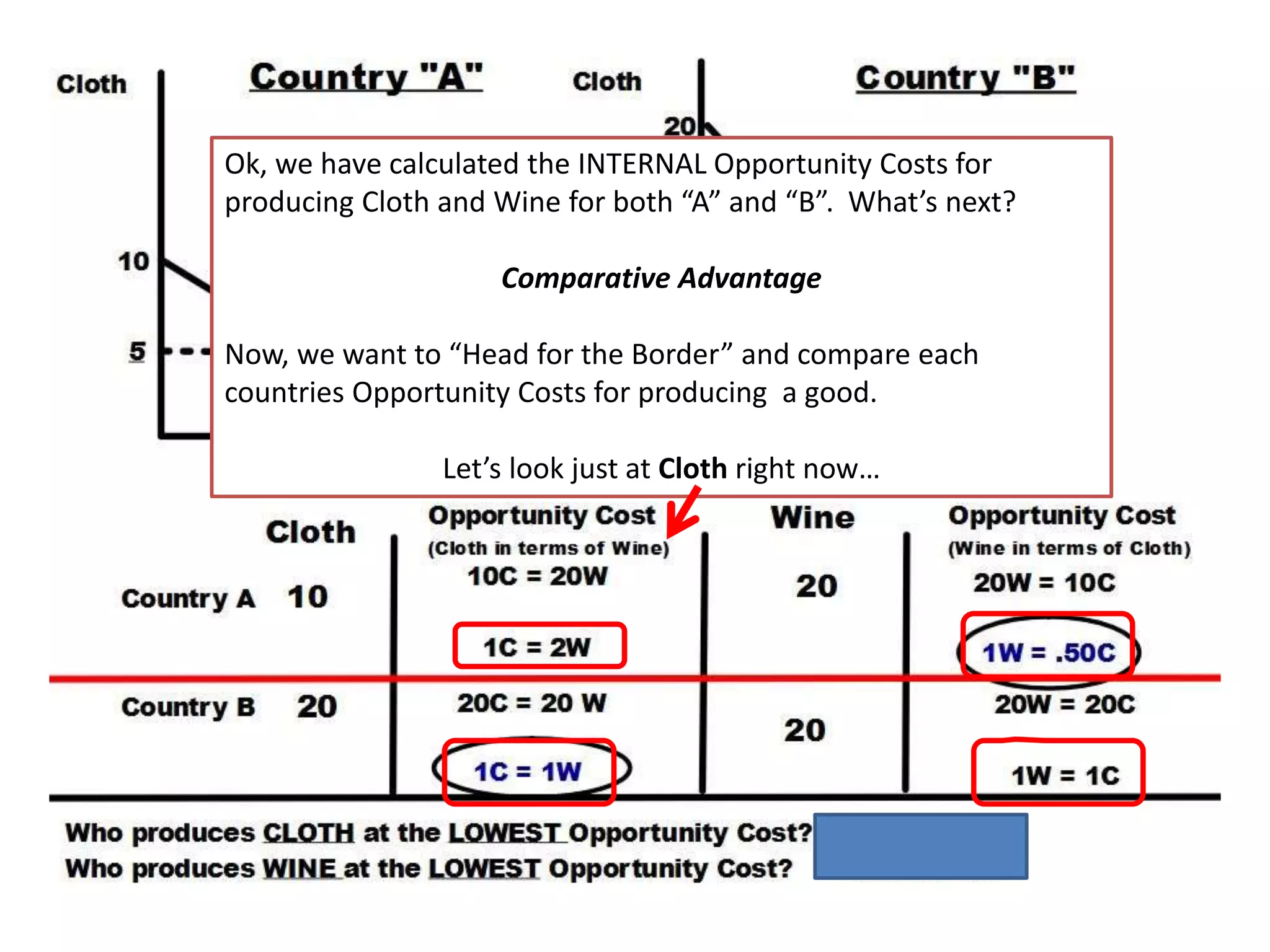
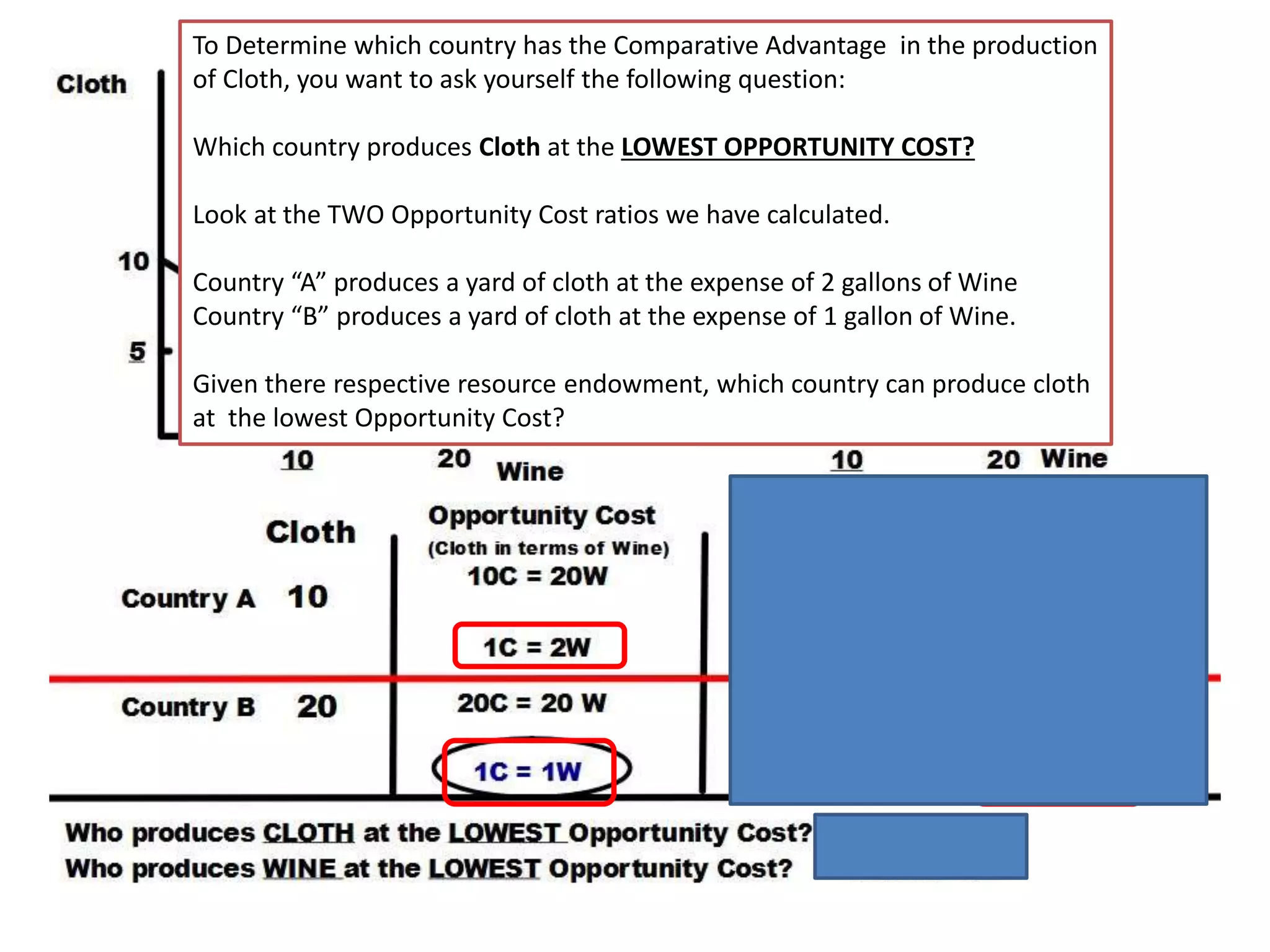
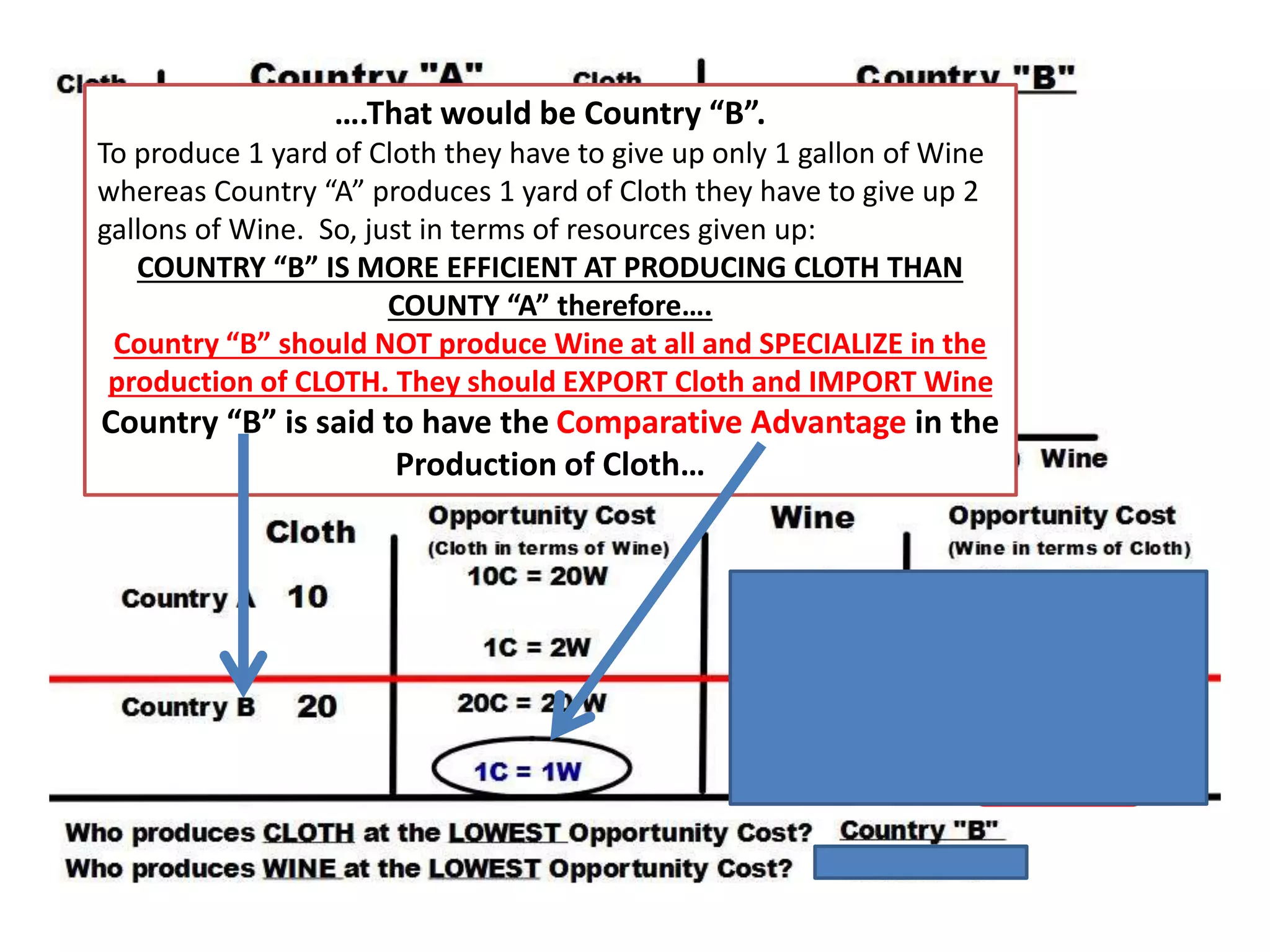
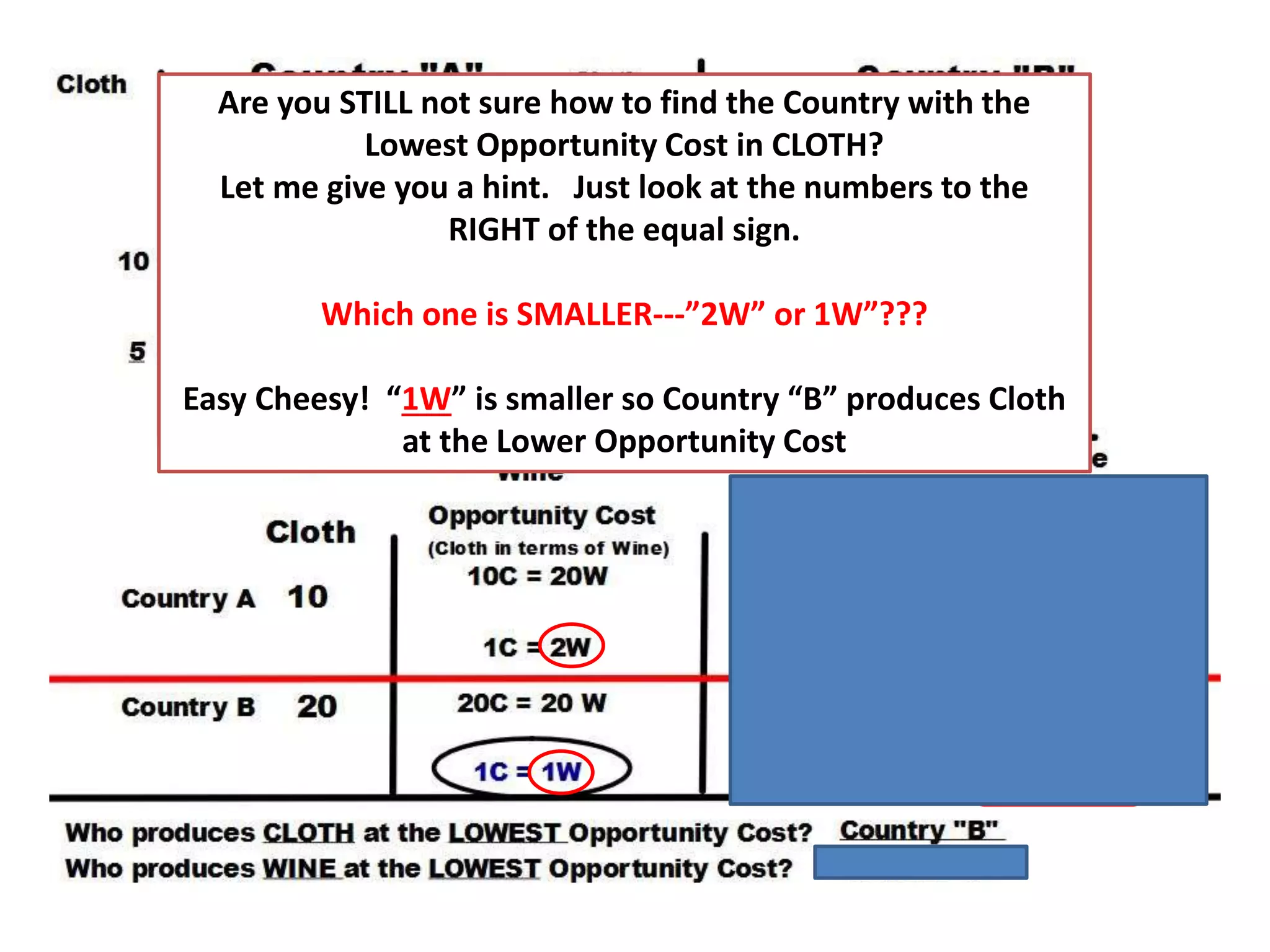
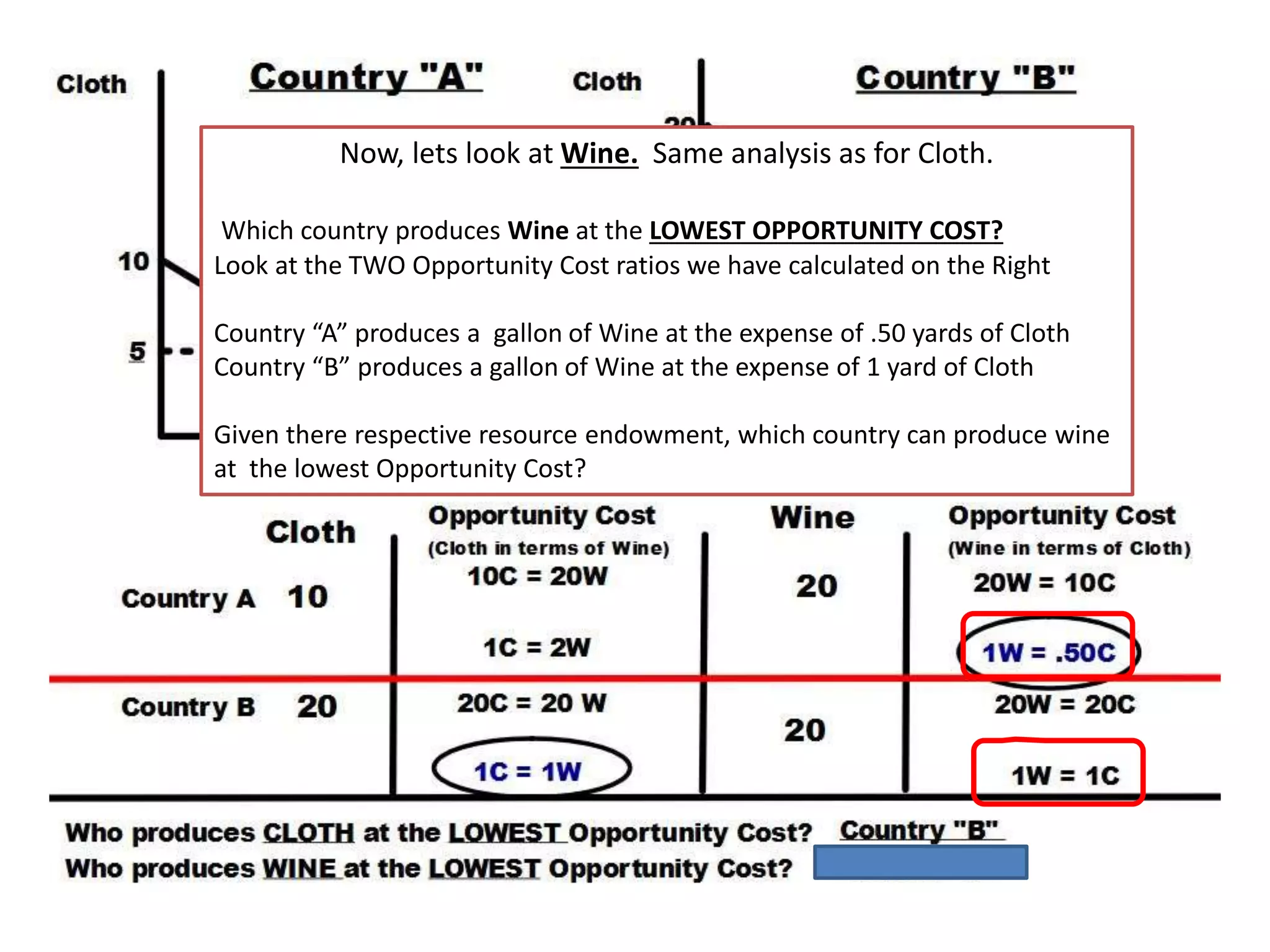
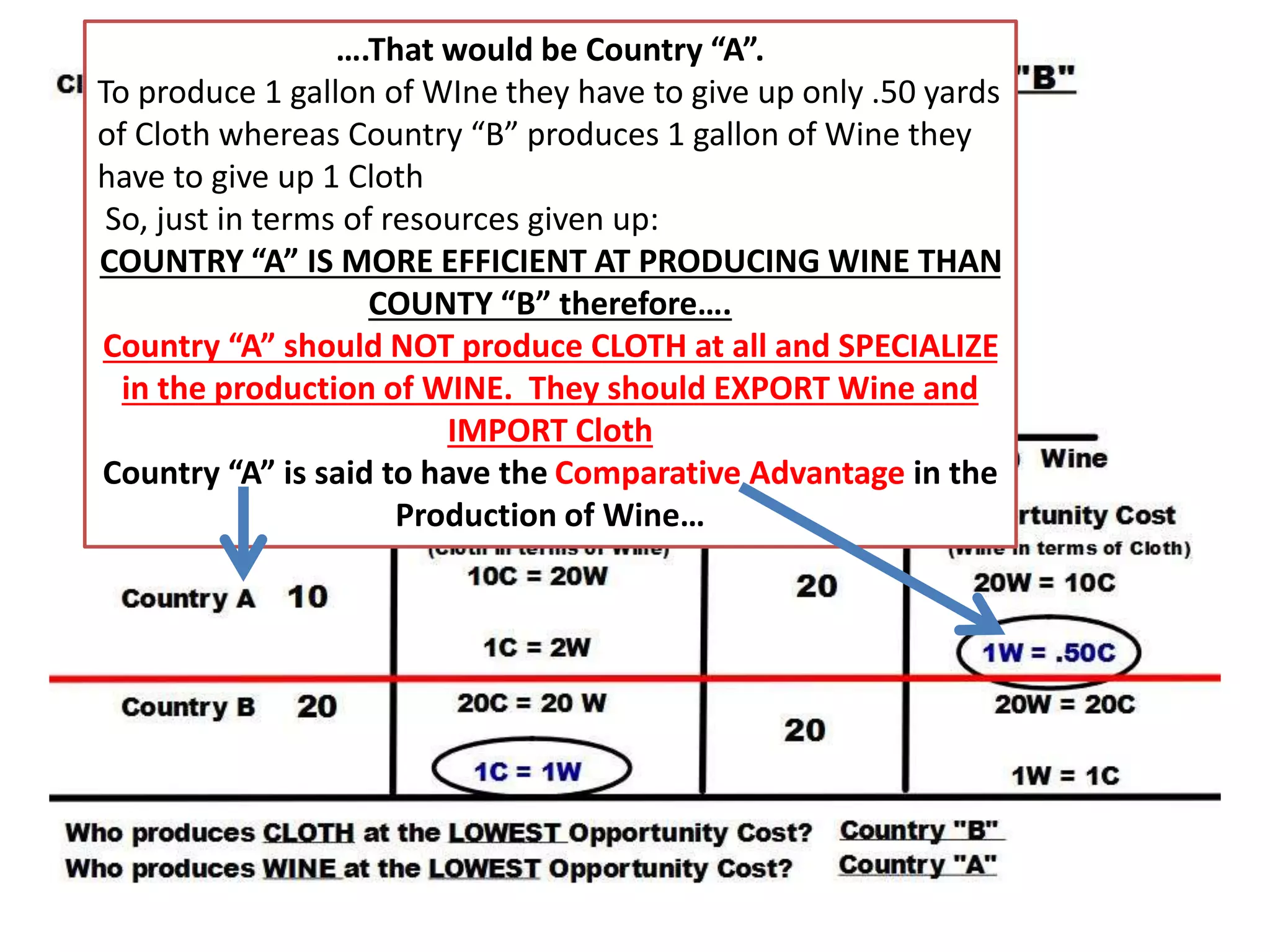
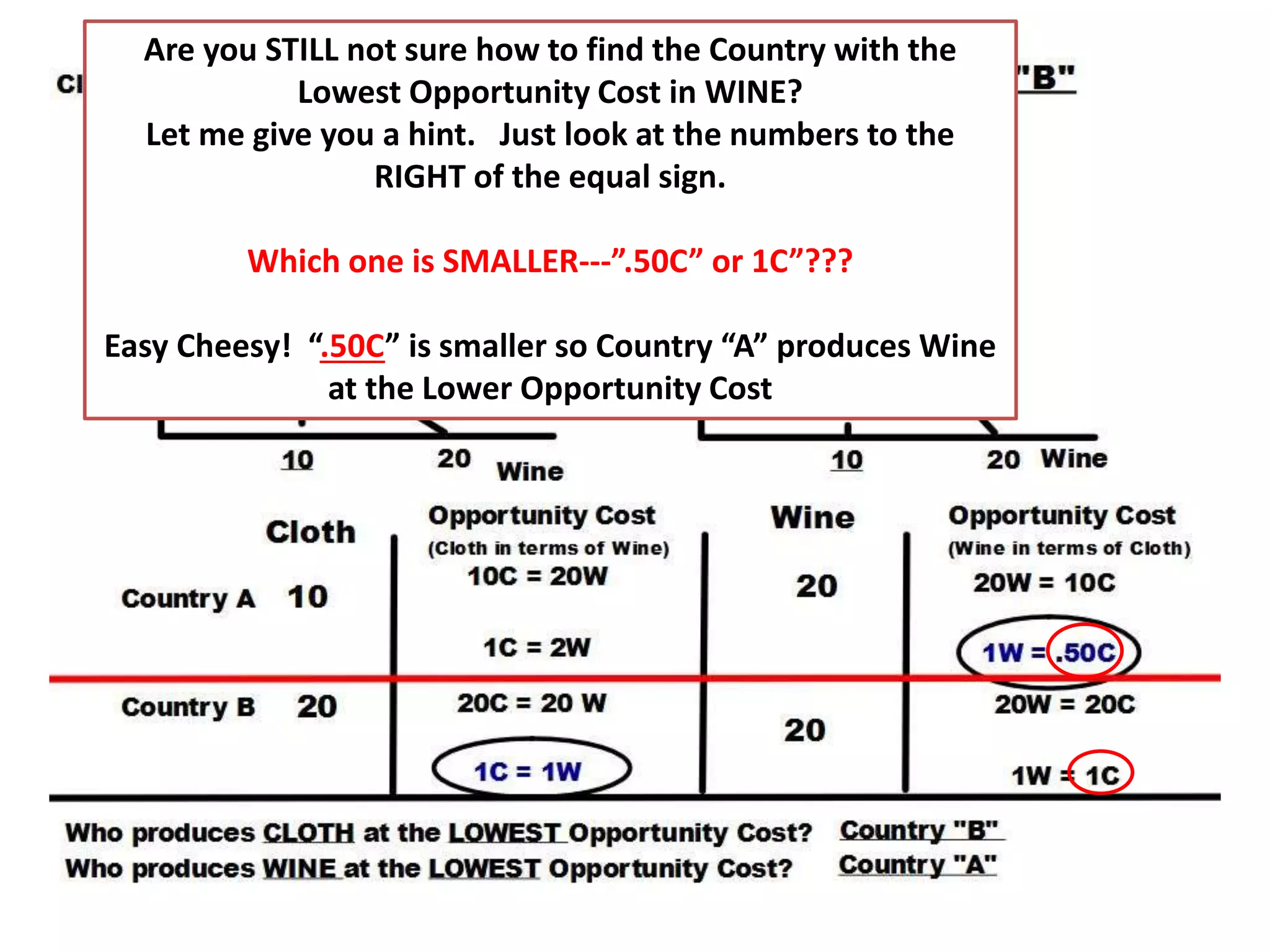
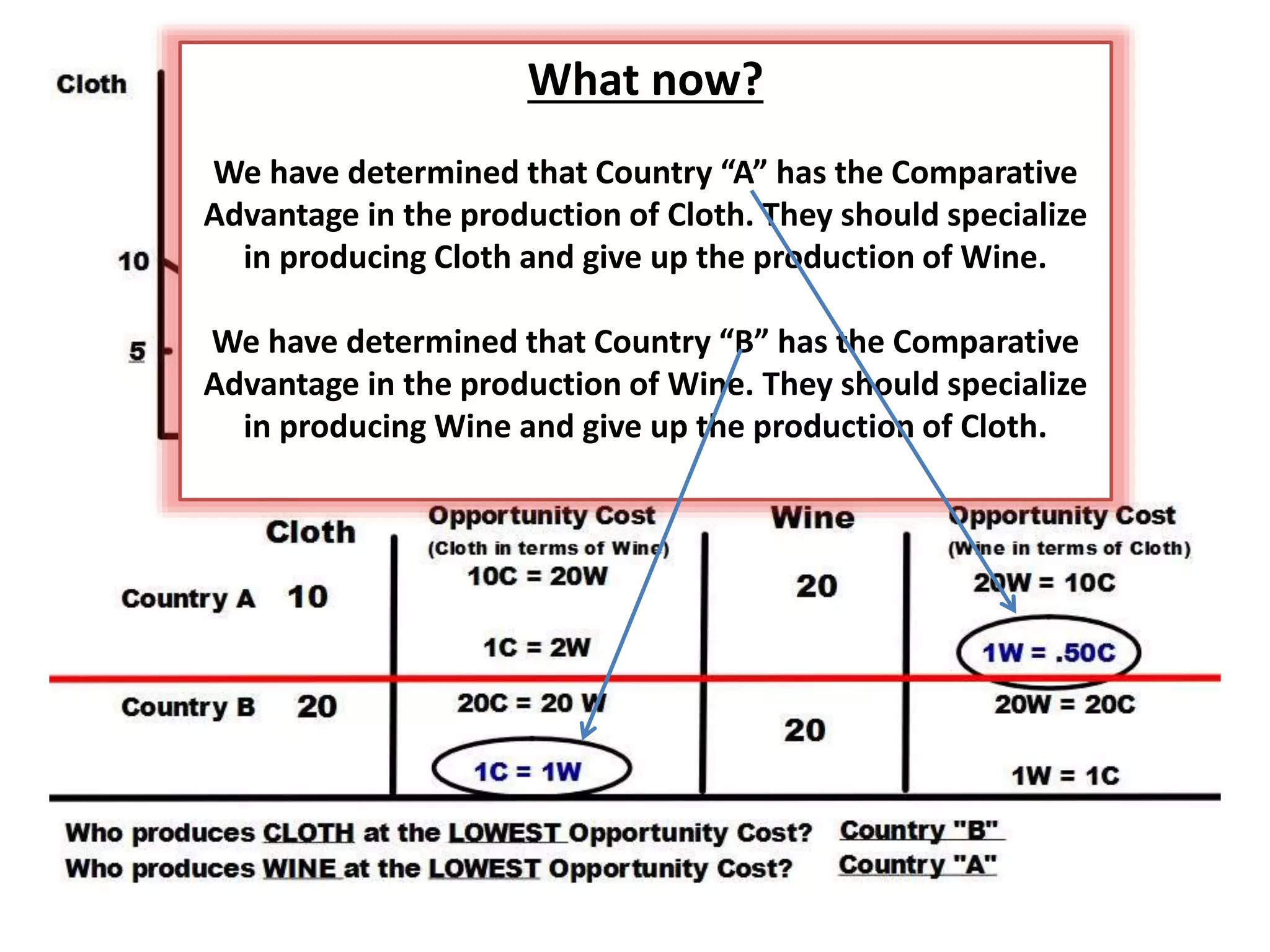
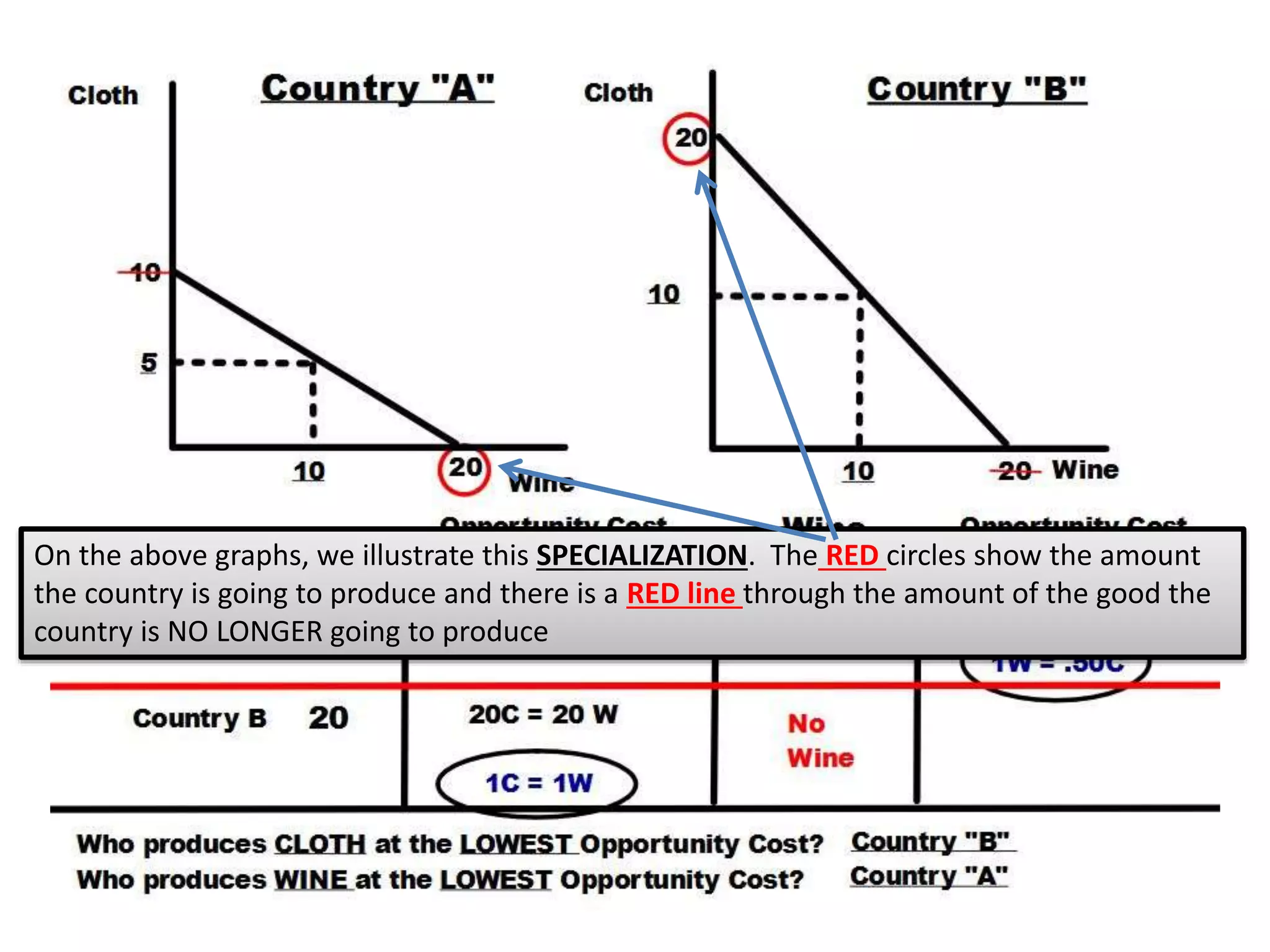
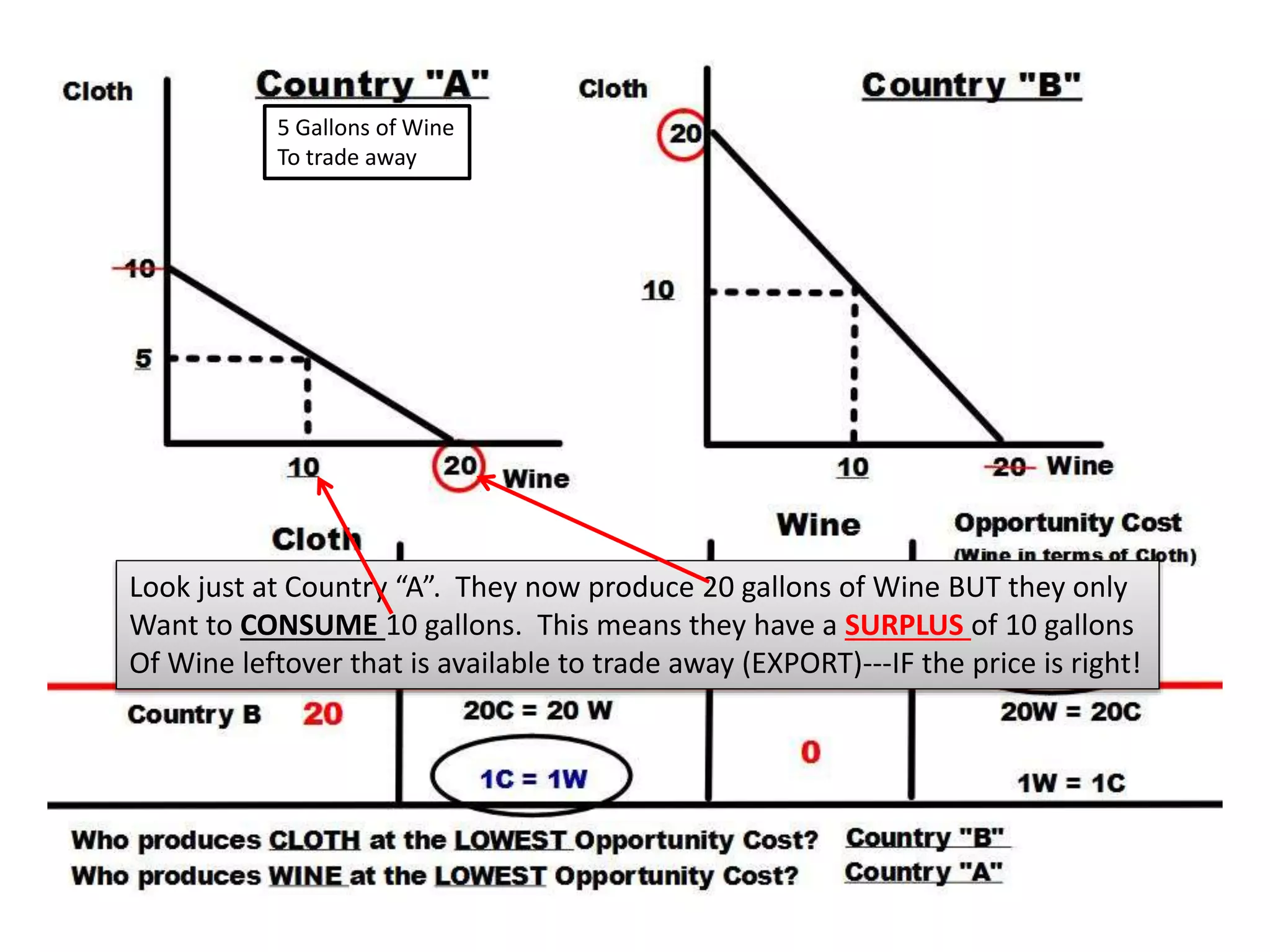
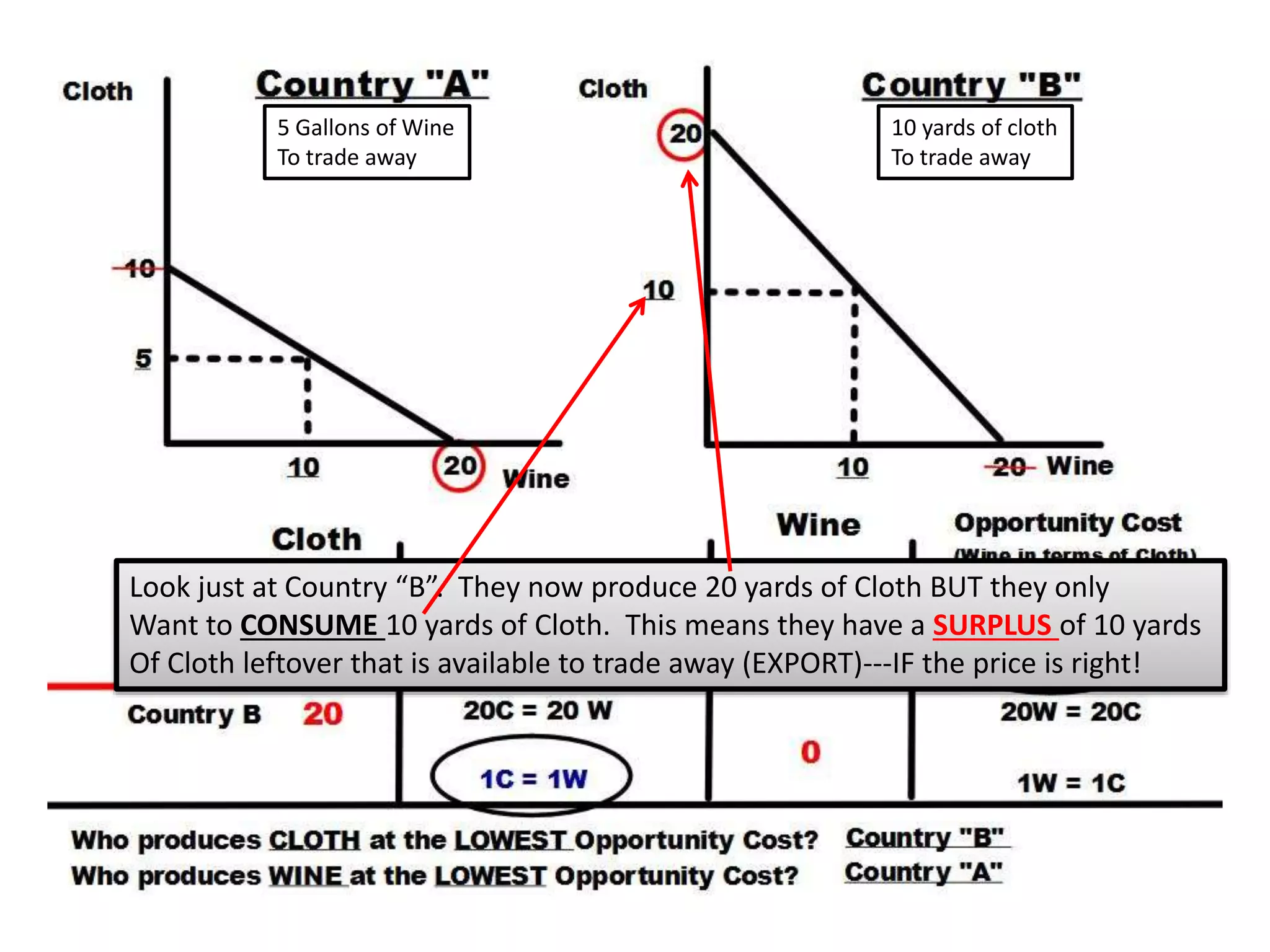
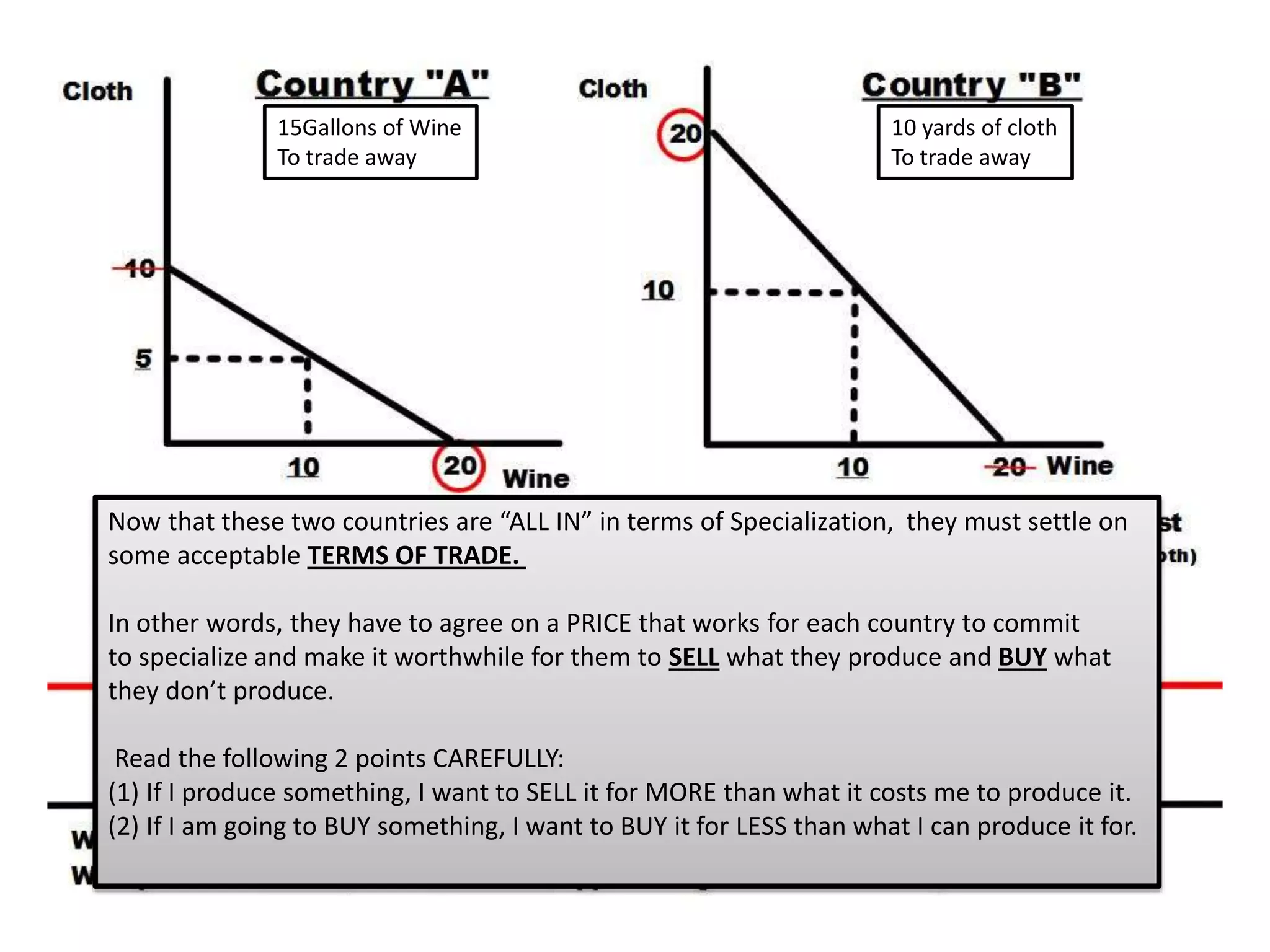
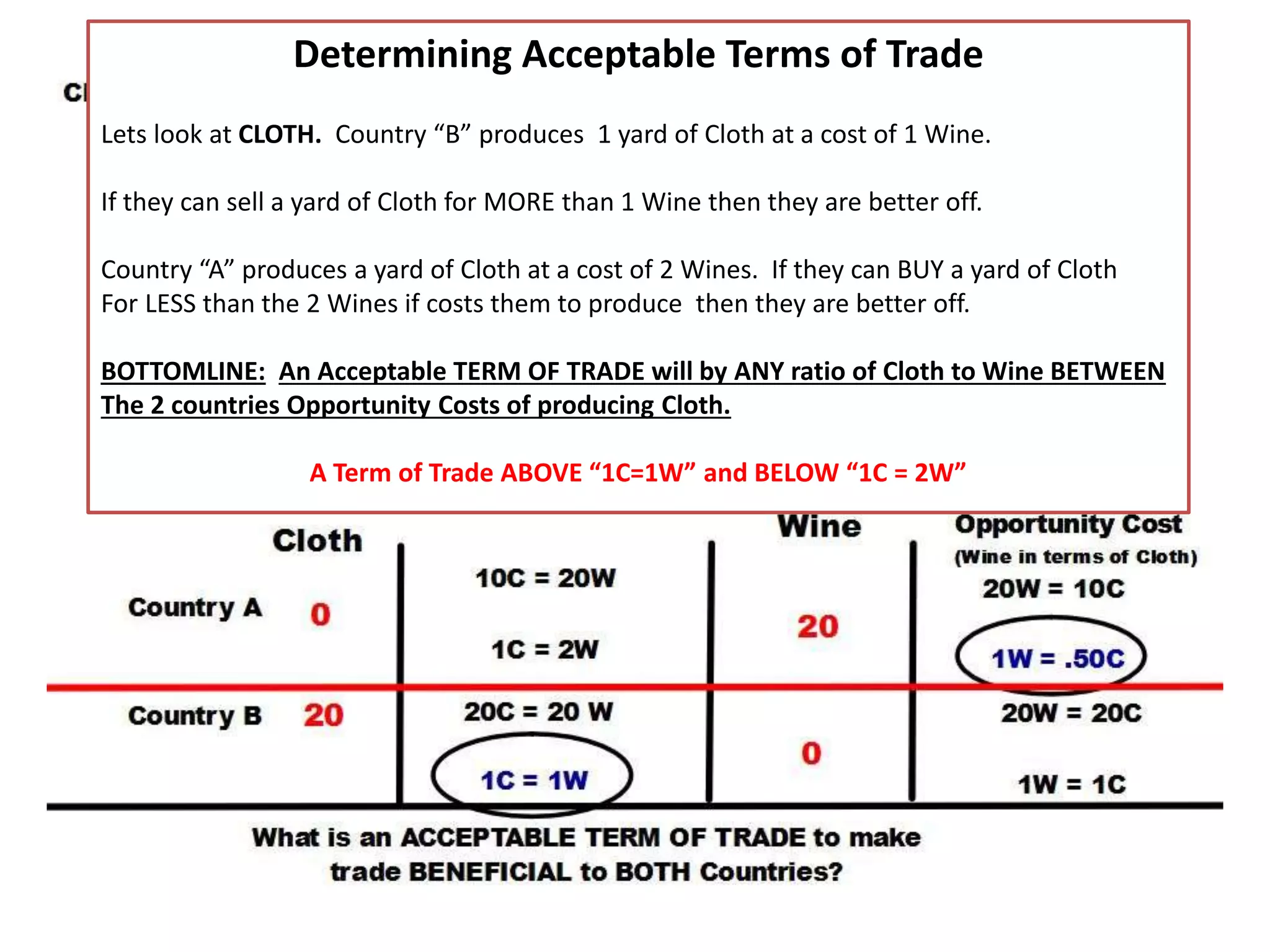
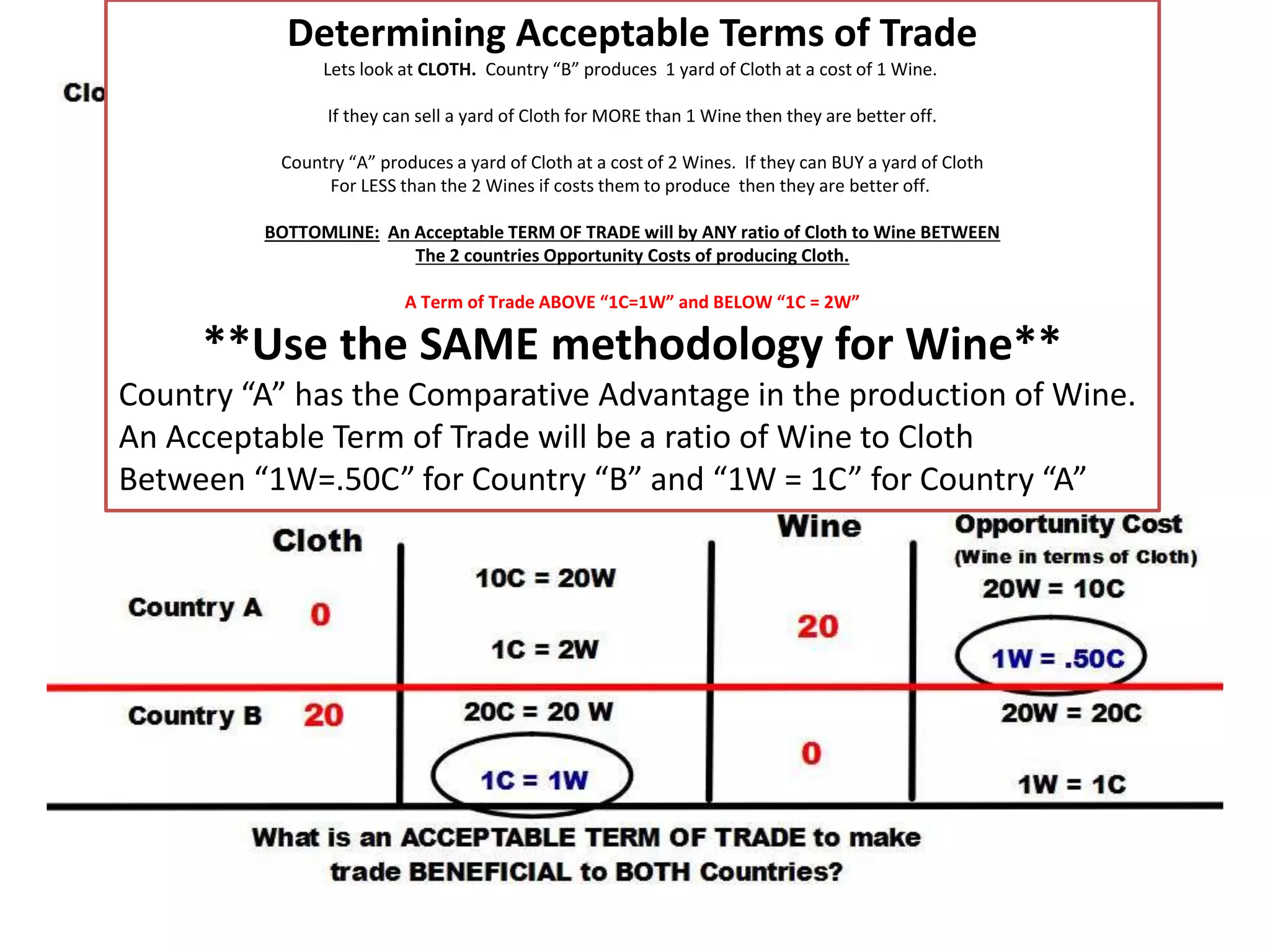
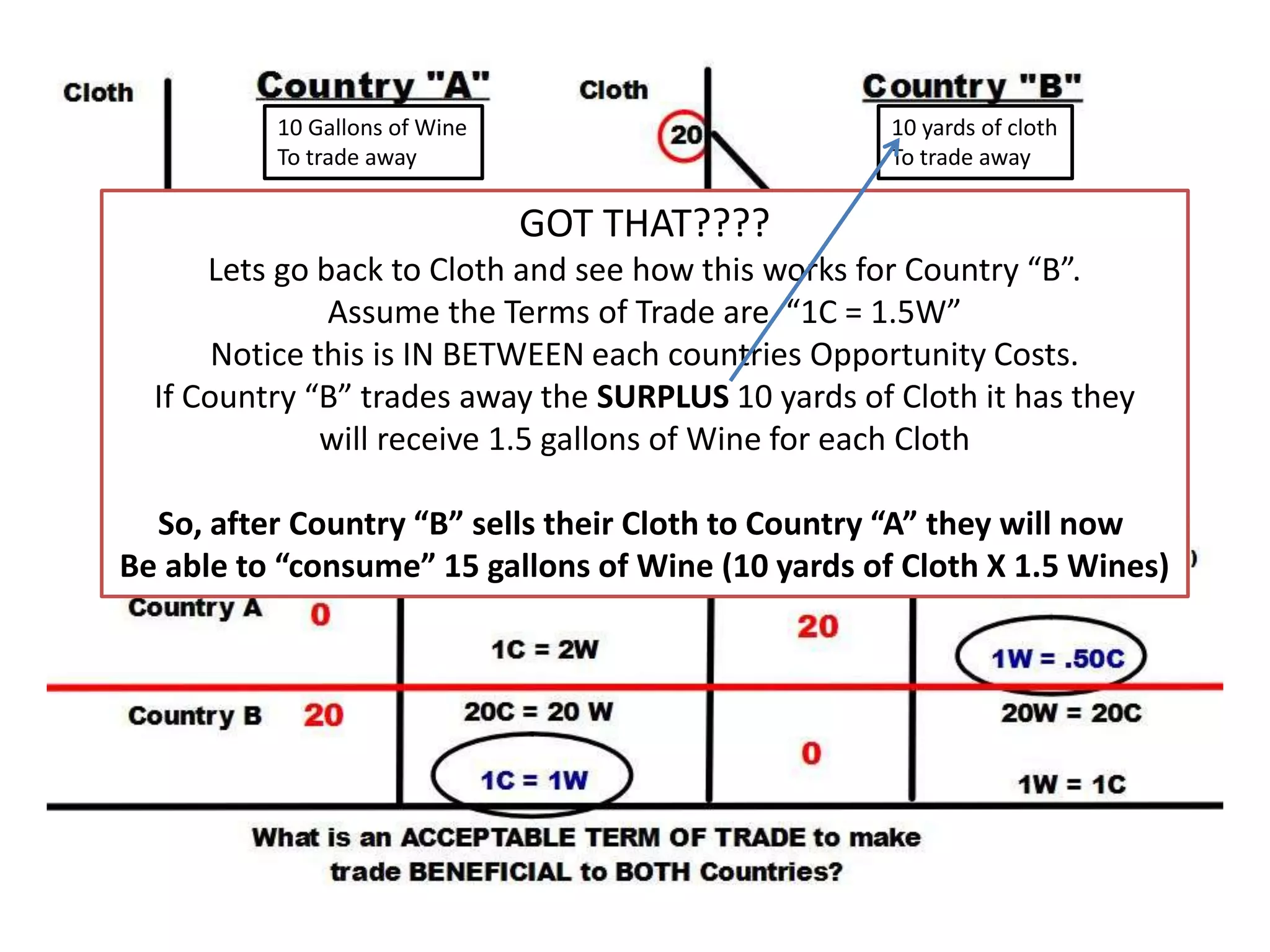
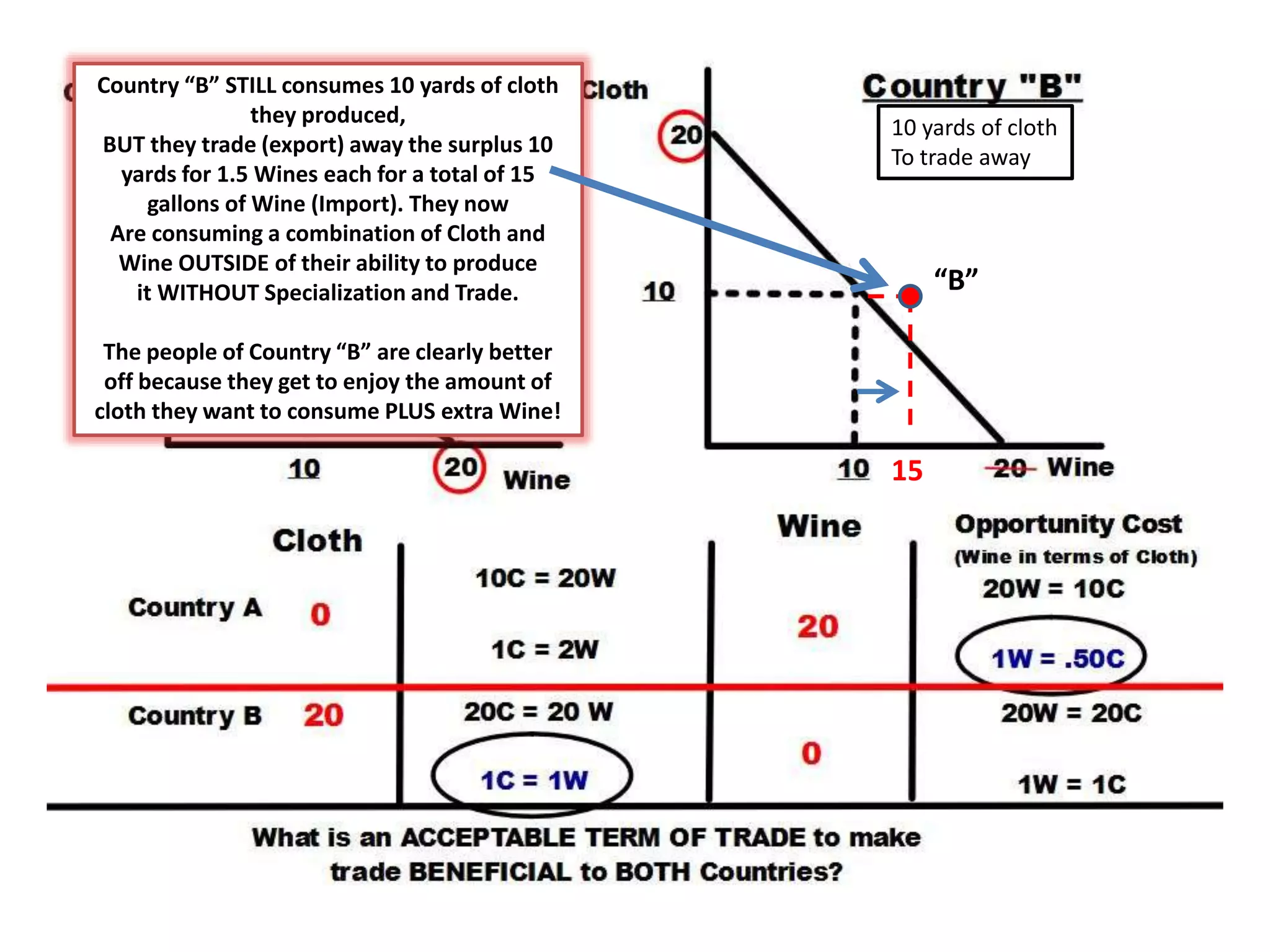
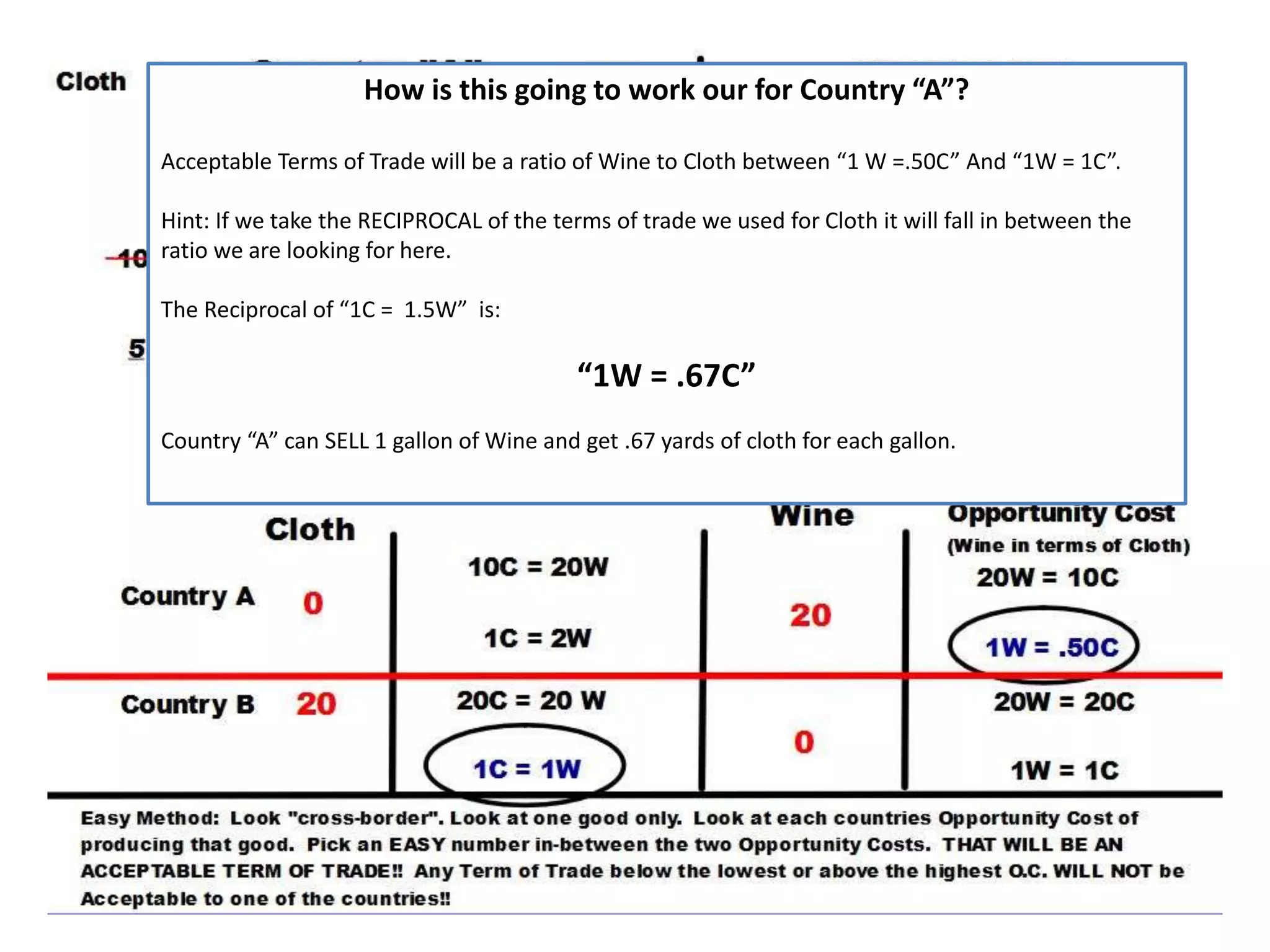
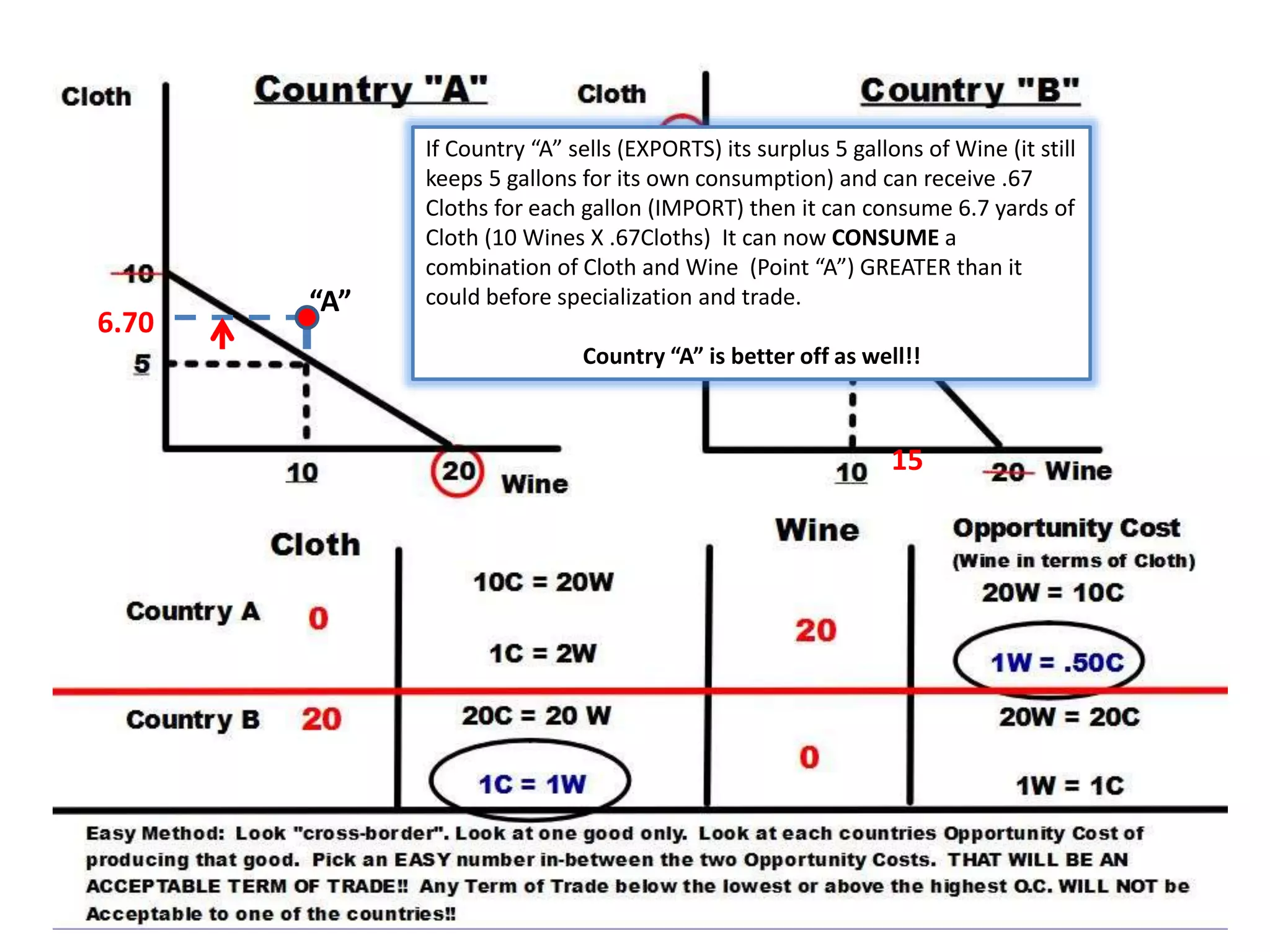
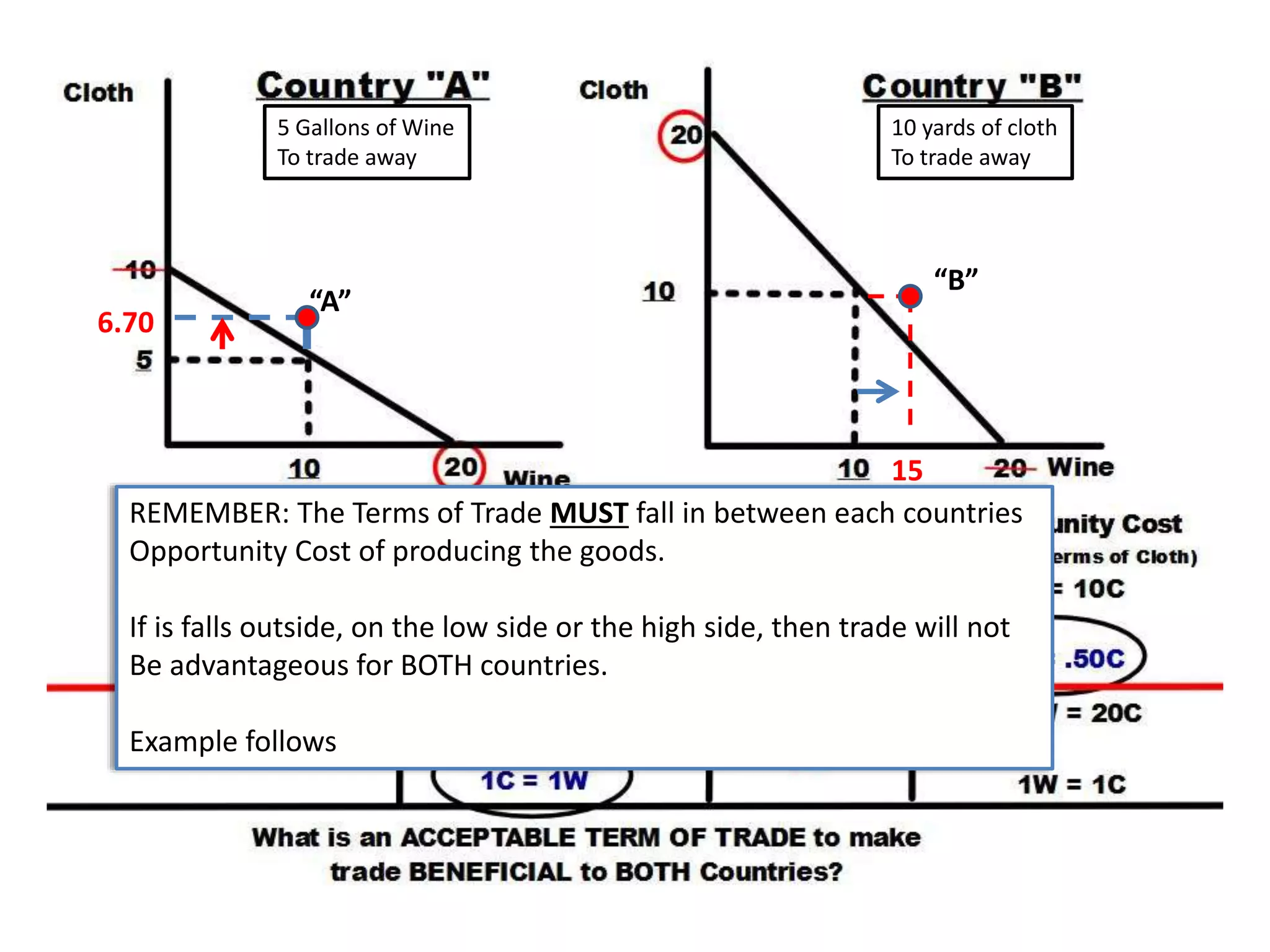
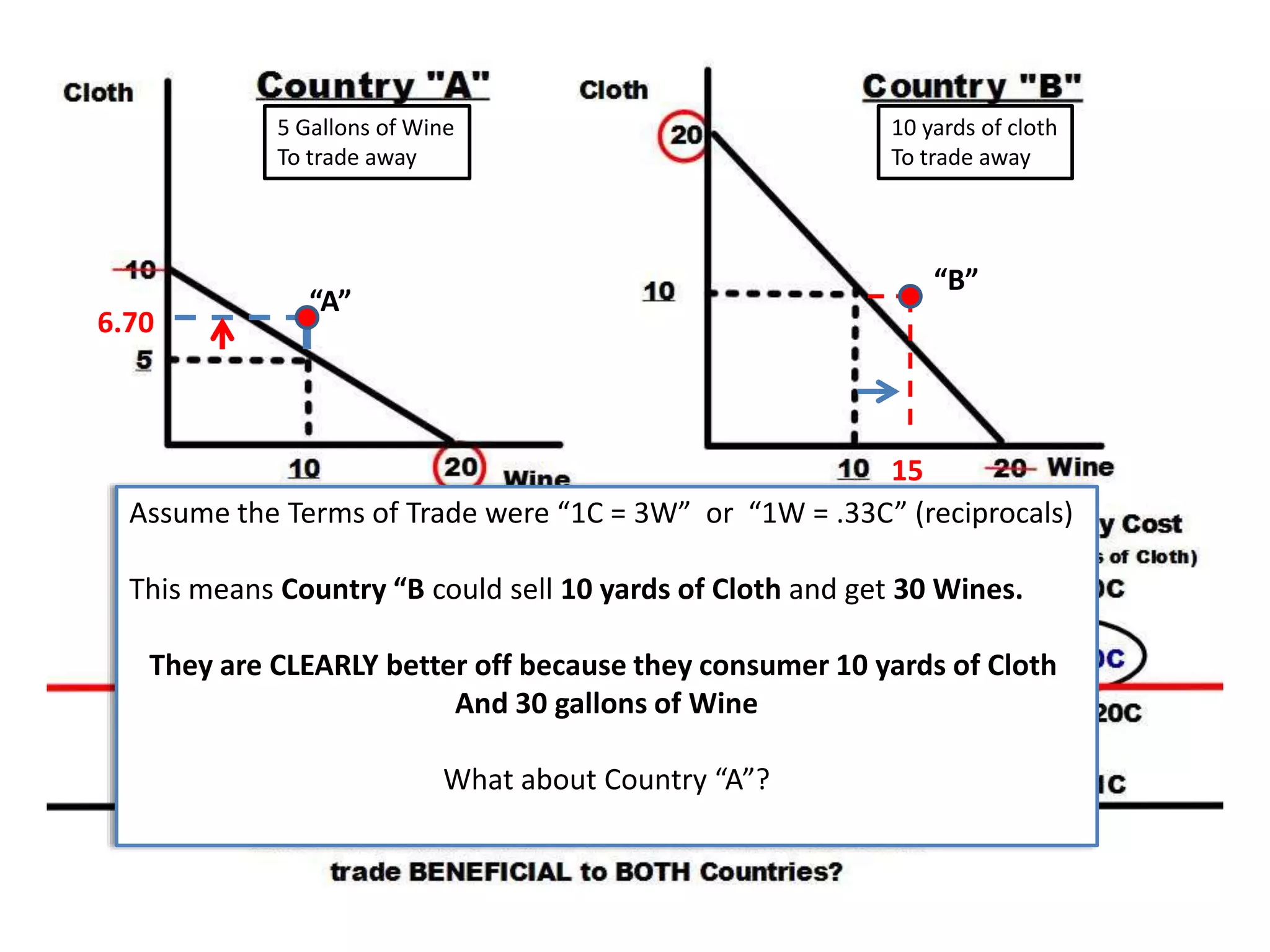
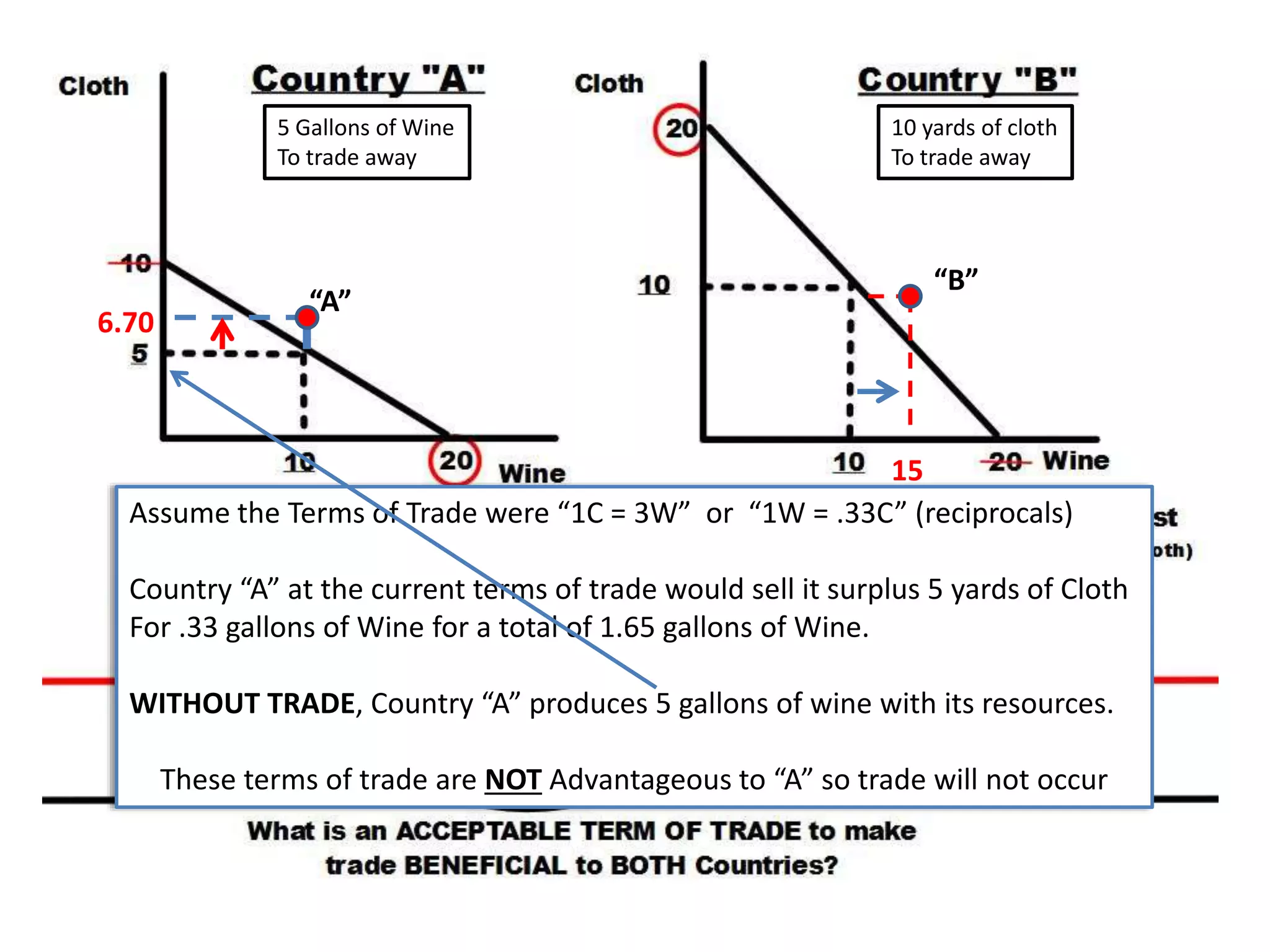
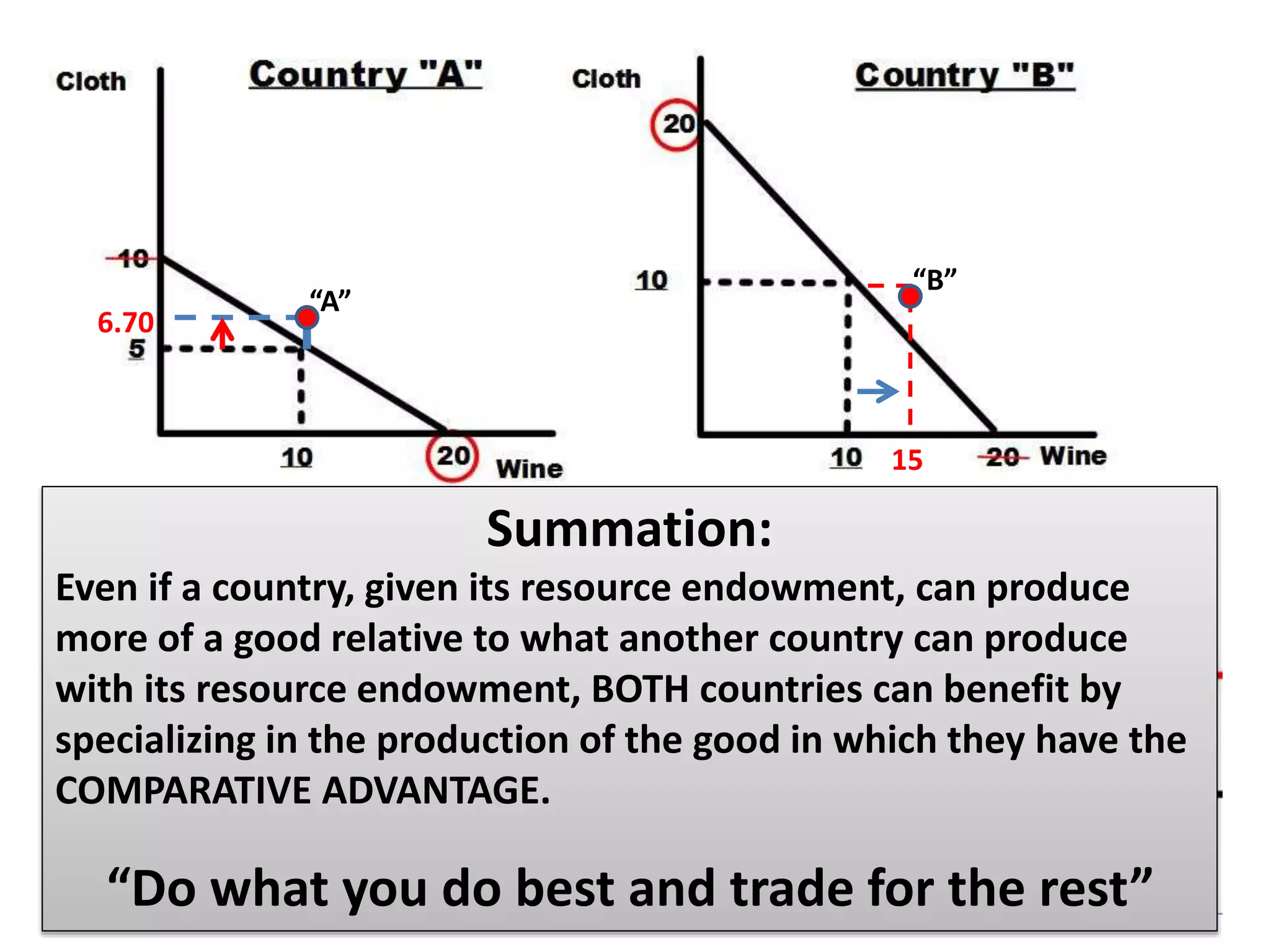
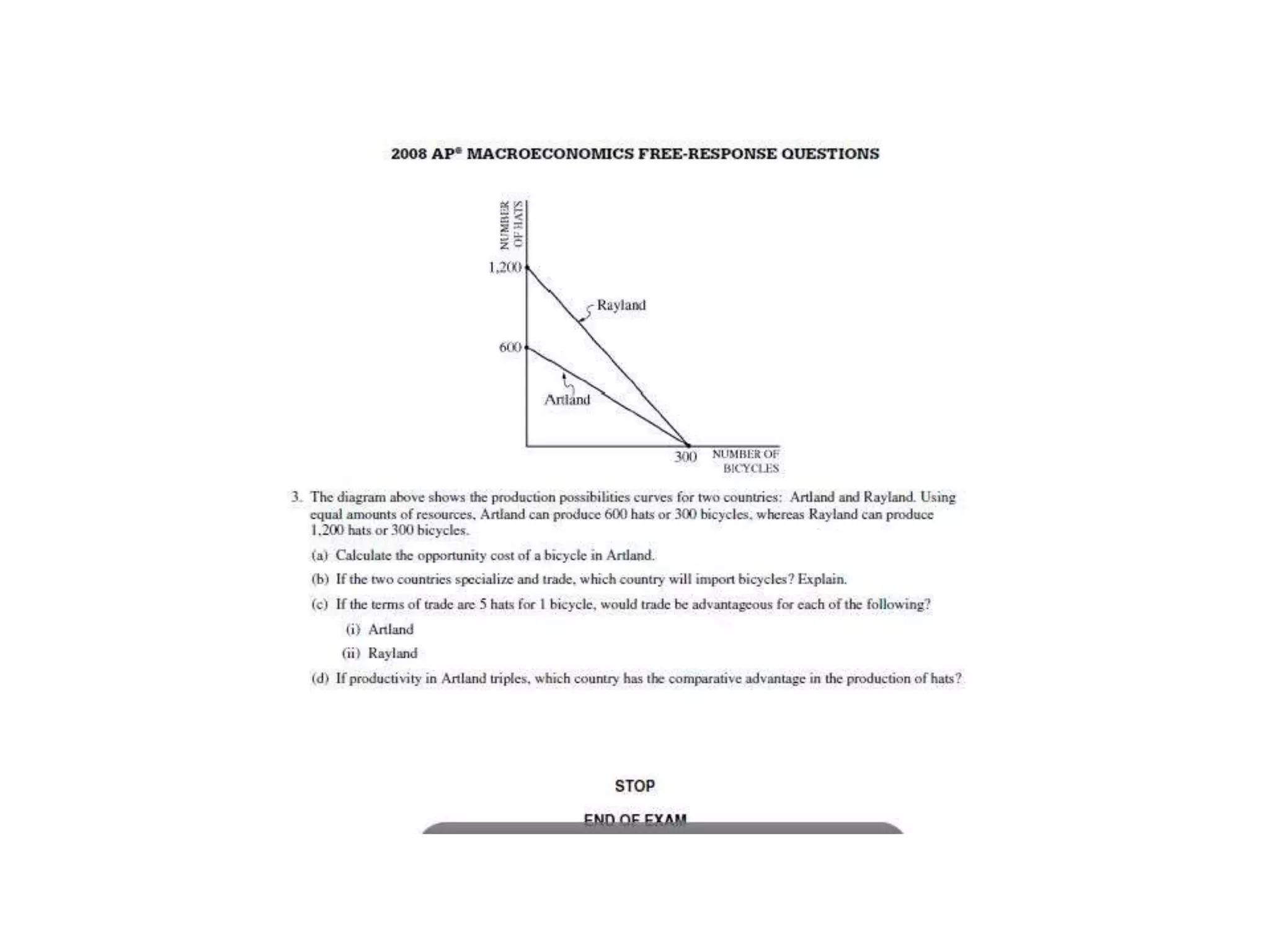
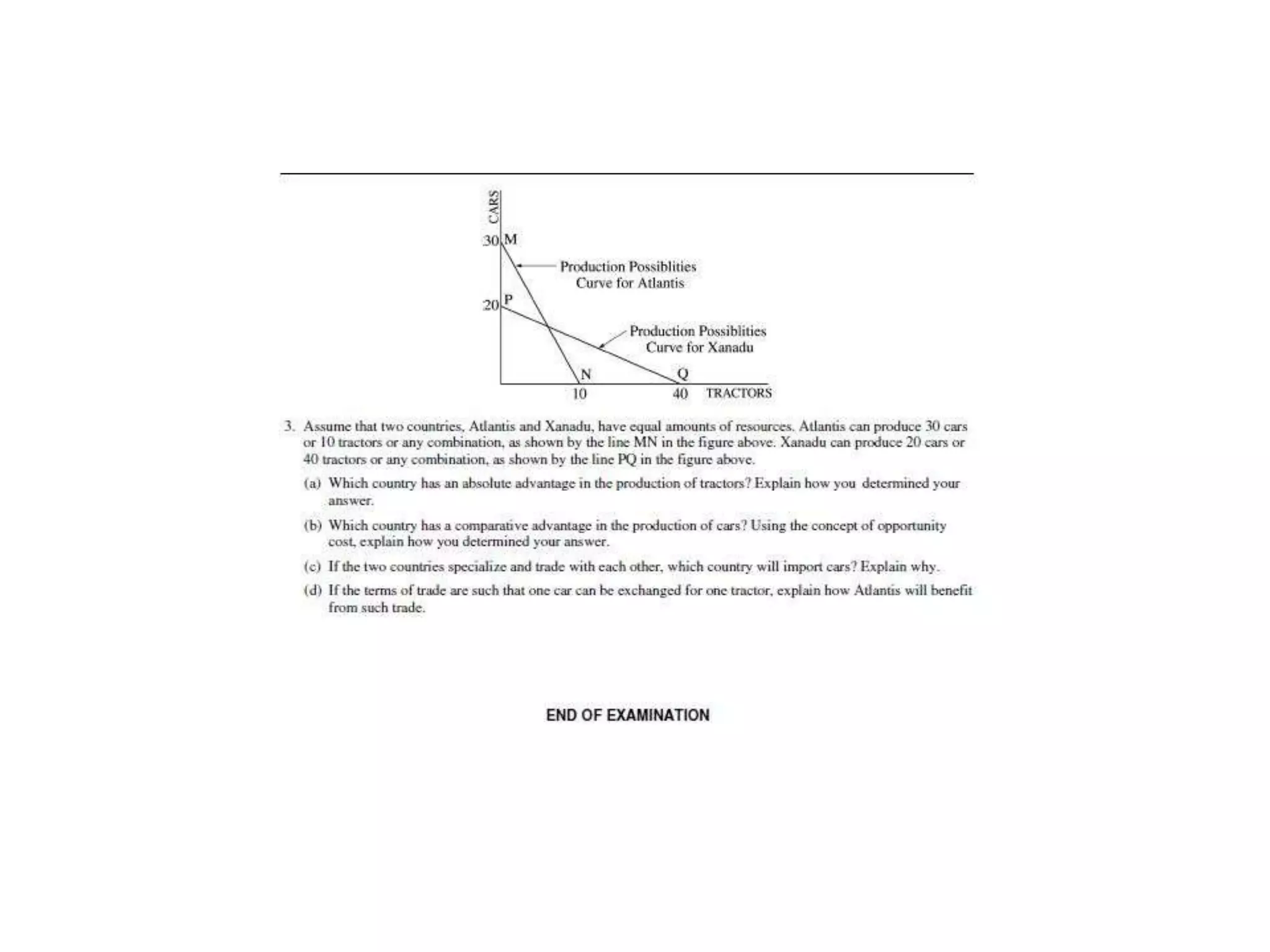

The document discusses the concepts of absolute and comparative advantage as they relate to international trade. It uses a hypothetical example of two countries, Country A and Country B, that each produce two goods: cloth and wine. It calculates the opportunity costs of producing each good for each country. Country B has an absolute advantage in cloth production and Country A has an absolute advantage in wine production. However, when considering comparative advantage based on opportunity costs, Country B has a comparative advantage in cloth while Country A has a comparative advantage in wine. Specializing and trading allows both countries to consume beyond their production possibilities. An acceptable terms of trade is derived that benefits both countries.


