The comparative advantage
• The countries have to specialize in an activity even if
they don’t have an absolute advantage, so as to get
benefit from the international trade.
• Each country has to specialize in the sector in which
they have a relative advantage, ie where the
advantage of the country in term of relative
productivity is the highest. Then, the country can trade
its product from this sector.
The comparative advantage
Hours/units

PORTUGAL

ENGLAND

Wain : X
Litres

80

120

Clothes : Y
metres

Absolute
advantage

90

Absolute
advantage

100

• England has no absolute
advantage since Portugal has
the absolute advantages in
both sectors.
The comparative advantage
Hours/units

PORTUGAL

ENGLAND

VIN: X litres

80

120

Clothes : Y
metres

90

100

The comparative advantage depends
on the comparison in the productivity.
The productivity is the ratio between
the ouput and the input.
Example : Portugal uses 80 people by
year to produce x litres of wain. The
productivity is X/80
The comparative advantage
Houts/units

PORTUGAL

ENGLAND

Wain: X
litres

80

120

Productivity comparison for the wain:

X/80

X/120

(X/120) / (X/80) = 0,66

90

100

X/90

X/100

Clothes : Y
metres

Productivity comparison for clothes:
(X/100) / (X/90) = 0,9

Between these 2 sectors, England has the
weakest disadvantage in the production of
clothes.
The comparative advantage
Hours/units

PORTUGAL

ENGLAND

Wain: X
litres

80

120

CLOTHES :
Y metres

Comparative
advantage

90

100
Comparative
advantage

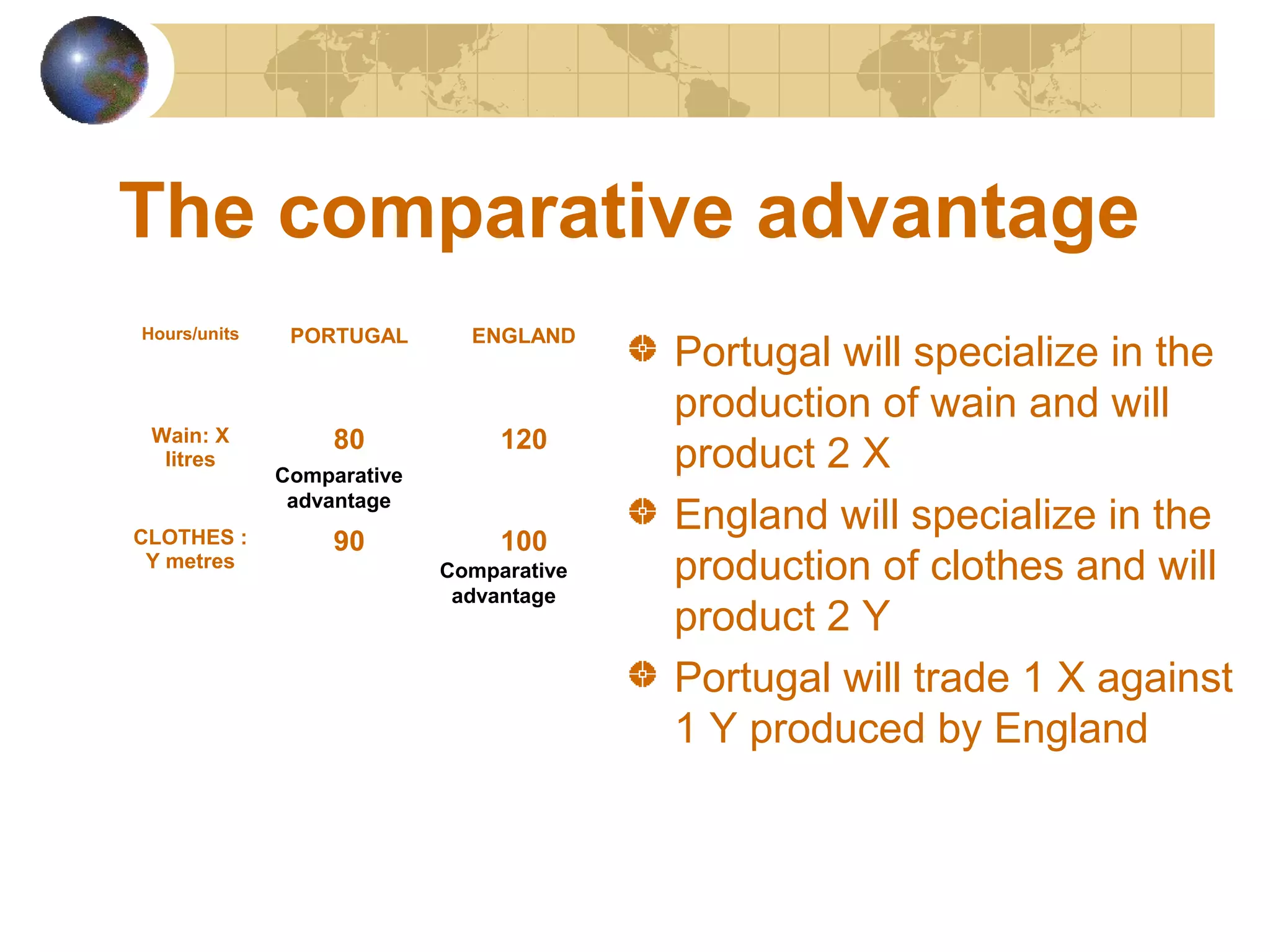
Portugal will specialize in the
production of wain and will
product 2 X
England will specialize in the
production of clothes and will
product 2 Y
Portugal will trade 1 X against
1 Y produced by England
The comparative advantage
Hours/units

PORTUGAL

ENGLAND

Wain: X
litres

80
160

120
0

DRAP : Y
metres

90
0

100
200

Gain in labor force

10

20

by year:

(170 – 160)

(220 – 200)

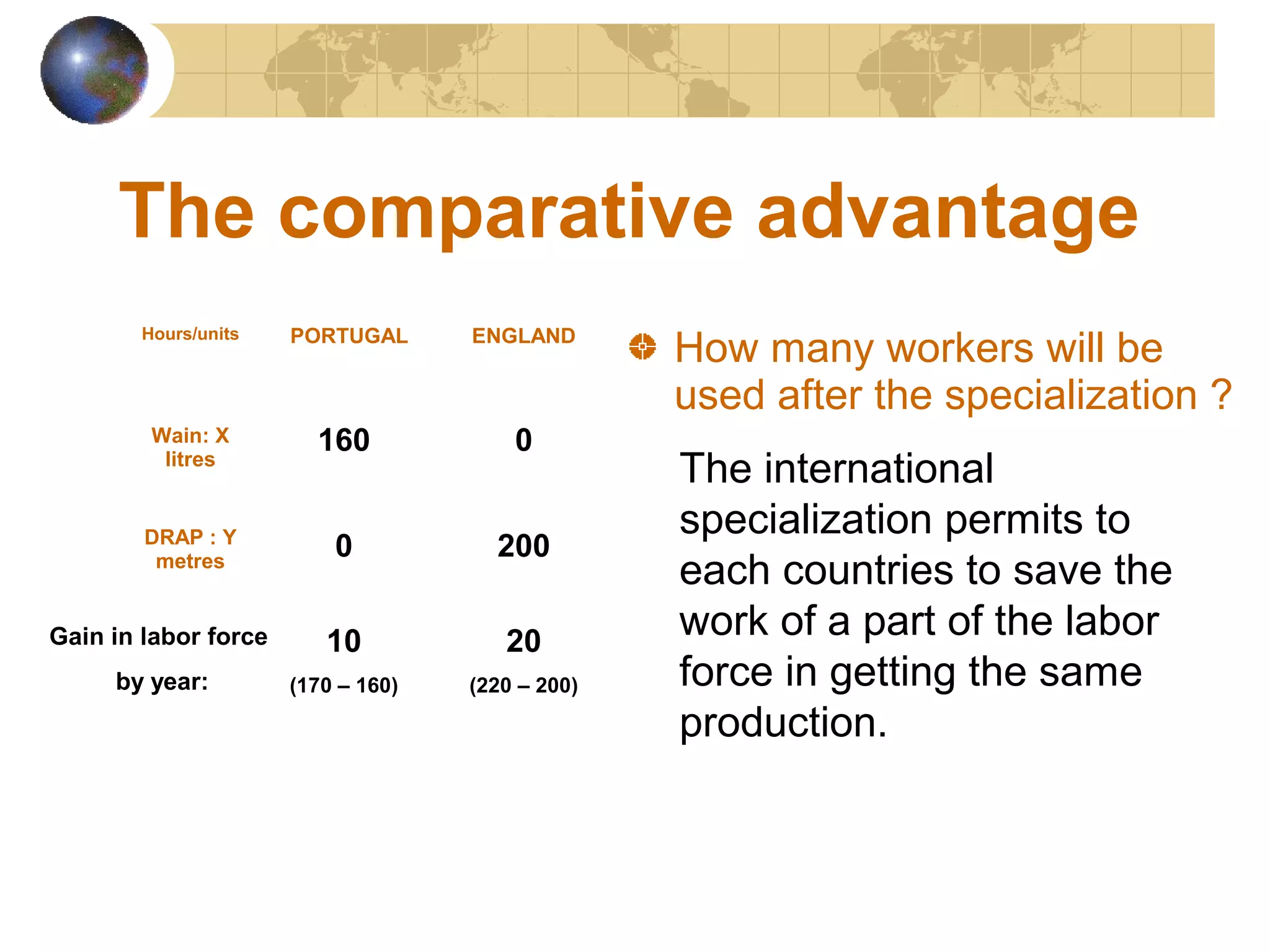
How many workers will be
used after the specialization ?
The international
specialization permits to
each countries to save the
work of a part of the labor
force in getting the same
production.
The comparative advantage
Hours/units

PORTUGAL

ENGLAND

Wain: X
litres

80
160

120
0

DRAP : Y
metres

90
0

100
200

Gain in labor force

10

20

by year:

(170 – 160)

(220 – 200)

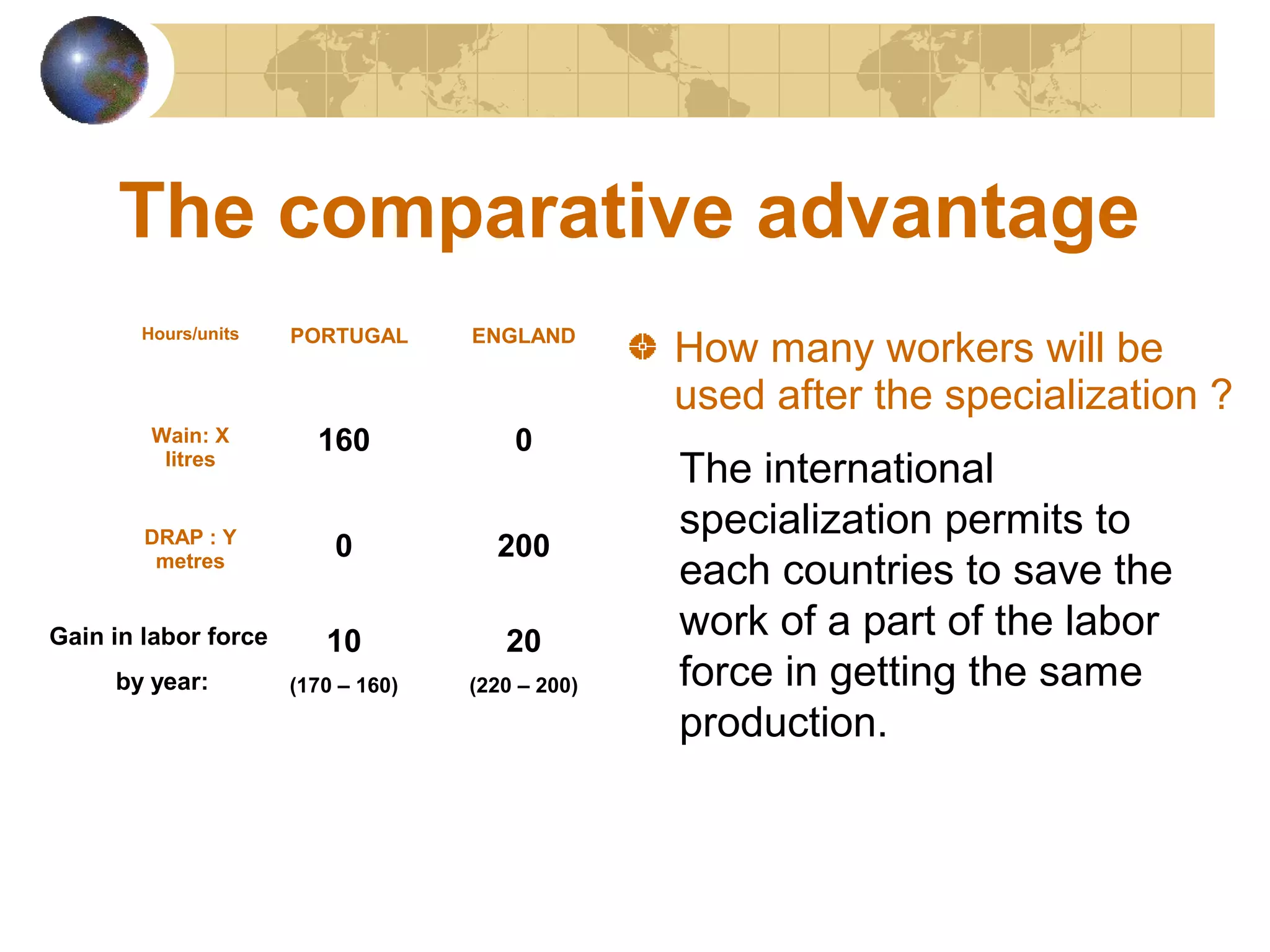
How many workers will be
used after the specialization ?
The international
specialization permits to
each countries to save the
work of a part of the labor
force in getting the same
production.

Comparative advantage

  • 1.
    The comparative advantage •The countries have to specialize in an activity even if they don’t have an absolute advantage, so as to get benefit from the international trade. • Each country has to specialize in the sector in which they have a relative advantage, ie where the advantage of the country in term of relative productivity is the highest. Then, the country can trade its product from this sector.
  • 2.
    The comparative advantage Hours/units PORTUGAL ENGLAND Wain: X Litres 80 120 Clothes : Y metres Absolute advantage 90 Absolute advantage 100 • England has no absolute advantage since Portugal has the absolute advantages in both sectors.
  • 3.
    The comparative advantage Hours/units PORTUGAL ENGLAND VIN:X litres 80 120 Clothes : Y metres 90 100 The comparative advantage depends on the comparison in the productivity. The productivity is the ratio between the ouput and the input. Example : Portugal uses 80 people by year to produce x litres of wain. The productivity is X/80
  • 4.
    The comparative advantage Houts/units PORTUGAL ENGLAND Wain:X litres 80 120 Productivity comparison for the wain: X/80 X/120 (X/120) / (X/80) = 0,66 90 100 X/90 X/100 Clothes : Y metres Productivity comparison for clothes: (X/100) / (X/90) = 0,9 Between these 2 sectors, England has the weakest disadvantage in the production of clothes.
  • 5.
    The comparative advantage Hours/units PORTUGAL ENGLAND Wain:X litres 80 120 CLOTHES : Y metres Comparative advantage 90 100 Comparative advantage Portugal will specialize in the production of wain and will product 2 X England will specialize in the production of clothes and will product 2 Y Portugal will trade 1 X against 1 Y produced by England
  • 6.
    The comparative advantage Hours/units PORTUGAL ENGLAND Wain:X litres 80 160 120 0 DRAP : Y metres 90 0 100 200 Gain in labor force 10 20 by year: (170 – 160) (220 – 200) How many workers will be used after the specialization ? The international specialization permits to each countries to save the work of a part of the labor force in getting the same production.
  • 7.
    The comparative advantage Hours/units PORTUGAL ENGLAND Wain:X litres 80 160 120 0 DRAP : Y metres 90 0 100 200 Gain in labor force 10 20 by year: (170 – 160) (220 – 200) How many workers will be used after the specialization ? The international specialization permits to each countries to save the work of a part of the labor force in getting the same production.