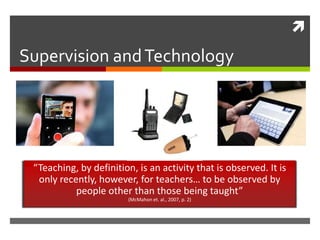
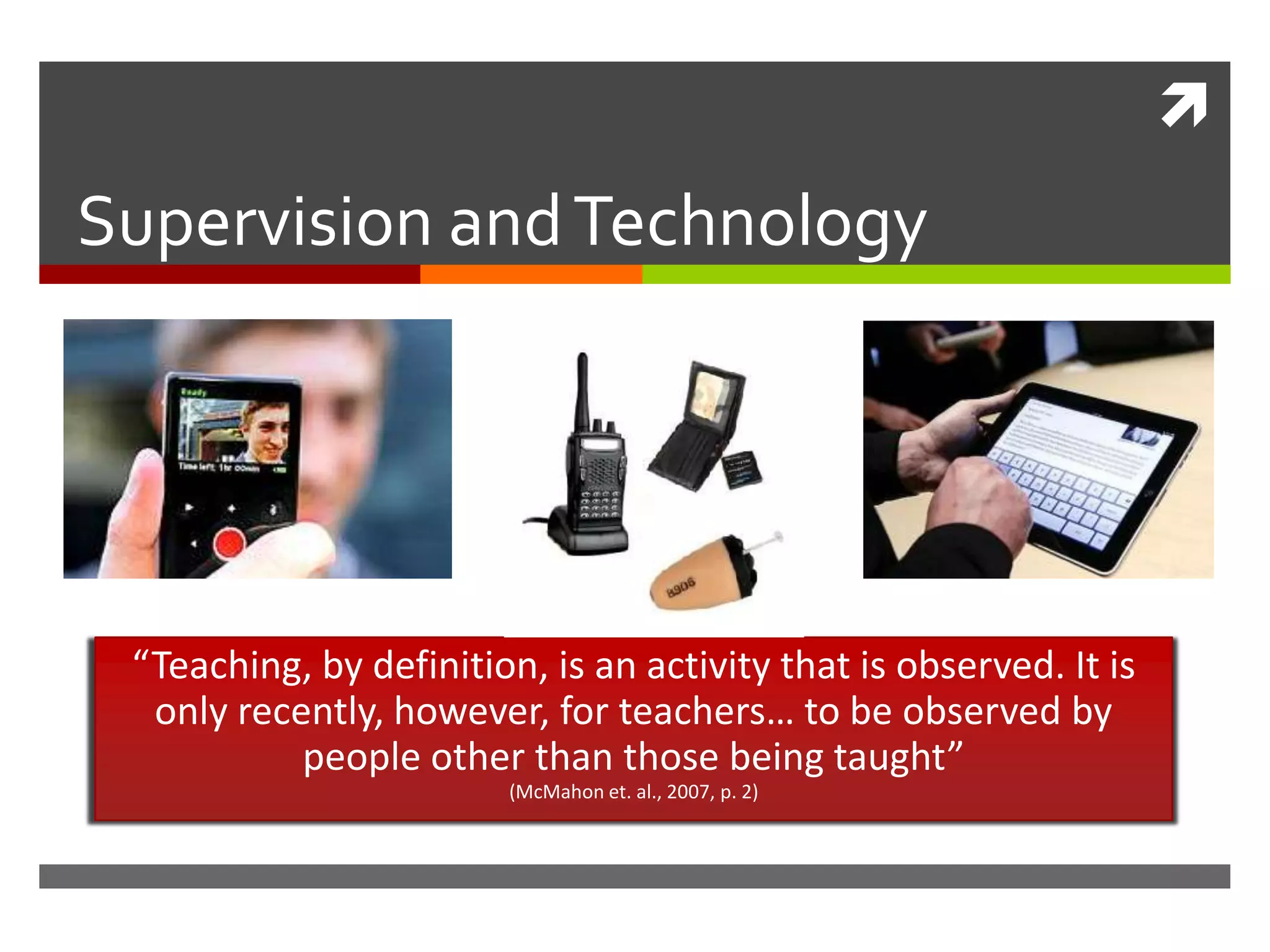
Supervision and Technology“Teaching, by definition, is an activity that is observed. It is only recently, however, for teachers… to be observed by people other than those being taught”(McMahon et. al., 2007, p. 2)
Reasons for ObservationsFormative Observation is used…To help improve your teachingTo highlight trouble areasTo highlight strategies that workTo provide extra support to teachersSummative Observation is used…To check that you have met the minimum expectationsTo meet “externally imposed, uniformly applied measure, intended to judge all teachers on similar criteria to determine their worthiness, merit and competence as employees”(Glickman et. al., 2010, p.238)
Types of ObservationsSelfThrough utilizing technology (such as video camera) teachers may continually self observe and reflectHelpful to develop “reflection-on-action” throughout a teaching careerSelf-reflect on what went well and what did not workUse reflection to improve instructionPeerTeachers take turns observing each other in person and utilizing technology
Engage in “non-judgmental constructive feedback” (Gosling, 2002, p.5)
Mutual reflection on the part of both the observer and the teacherAdministratorResponsible for both:
Formative
Summative
Role of both:
Evaluator
Coach
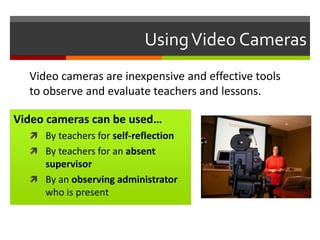
Limited time can lead to generalized or incorrect assessmentsUsing Video CamerasVideo cameras are inexpensive and effective tools to observe and evaluate teachers and lessons.Video cameras can be used…By teachers for self-reflectionBy teachers for an absent supervisorBy an observing administrator who is present
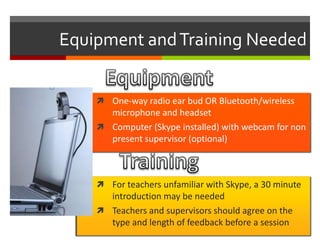
Equipment NeededVideo camera (analog or digital)Recording mediaTripodOptionalPortable microphone
Why Should We Use Video Cameras for Observation?Video cameras can be used as a form of less intrusive observations. Often it is difficult for supervisors to play both the role of the mentor and evaluator.Camera can be used as an “outside source” to look at a lesson and teacher objectively. Efficient form of observation on a large scale.“Videotaping a classroom captures the closest representative picture of actual occurrences.” (Glickman et al, 2010, p.242)
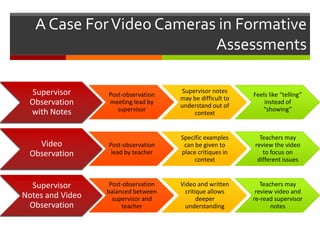
A Case For Video Cameras in Formative Assessments
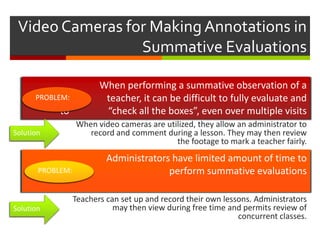
Video Cameras for Making Annotations in Summative Evaluations				When performing a summative observation of a 					teacher, it can be difficult to fully evaluate and to		 	“check all the boxes”, even over multiple visitsPROBLEM:When video cameras are utilized, they allow an administrator to record and comment during a lesson. They may then review the footage to mark a teacher fairly. Solution			Administrators have limited amount of time to perform summative evaluationsPROBLEM:Teachers can set up and record their own lessons. Administrators may then view during free time and permits review of concurrent classes.Solution
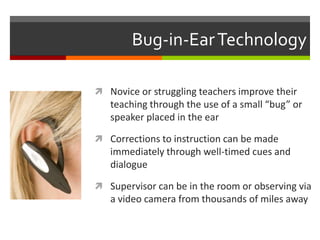
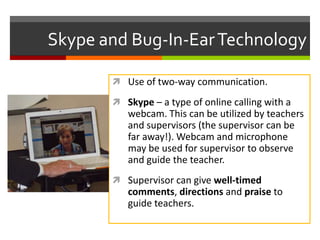
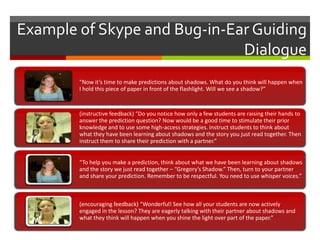
Bug-in-Ear TechnologyNovice or struggling teachers improve their teaching through the use of a small “bug” or speaker placed in the earCorrections to instruction can be made immediately through well-timed cues and dialogueSupervisor can be in the room or observing via a video camera from thousands of miles away
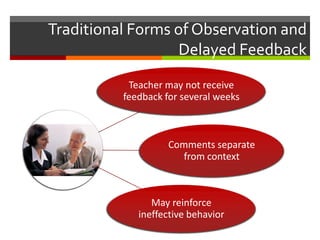
Traditional Forms of Observation and Delayed Feedback

Supervision and Technology

  • 1.
    Supervision and Technology“Teaching,by definition, is an activity that is observed. It is only recently, however, for teachers… to be observed by people other than those being taught”(McMahon et. al., 2007, p. 2)
  • 2.
    Reasons for ObservationsFormativeObservation is used…To help improve your teachingTo highlight trouble areasTo highlight strategies that workTo provide extra support to teachersSummative Observation is used…To check that you have met the minimum expectationsTo meet “externally imposed, uniformly applied measure, intended to judge all teachers on similar criteria to determine their worthiness, merit and competence as employees”(Glickman et. al., 2010, p.238)
  • 3.
    Types of ObservationsSelfThroughutilizing technology (such as video camera) teachers may continually self observe and reflectHelpful to develop “reflection-on-action” throughout a teaching careerSelf-reflect on what went well and what did not workUse reflection to improve instructionPeerTeachers take turns observing each other in person and utilizing technology
  • 4.
    Engage in “non-judgmentalconstructive feedback” (Gosling, 2002, p.5)
  • 5.
    Mutual reflection onthe part of both the observer and the teacherAdministratorResponsible for both:
  • 6.
  • 7.
  • 8.
  • 9.
  • 10.
  • 11.
    Limited time canlead to generalized or incorrect assessmentsUsing Video CamerasVideo cameras are inexpensive and effective tools to observe and evaluate teachers and lessons.Video cameras can be used…By teachers for self-reflectionBy teachers for an absent supervisorBy an observing administrator who is present
  • 12.
    Equipment NeededVideo camera(analog or digital)Recording mediaTripodOptionalPortable microphone
  • 13.
    Why Should WeUse Video Cameras for Observation?Video cameras can be used as a form of less intrusive observations. Often it is difficult for supervisors to play both the role of the mentor and evaluator.Camera can be used as an “outside source” to look at a lesson and teacher objectively. Efficient form of observation on a large scale.“Videotaping a classroom captures the closest representative picture of actual occurrences.” (Glickman et al, 2010, p.242)
  • 14.
    A Case ForVideo Cameras in Formative Assessments
  • 15.
    Video Cameras forMaking Annotations in Summative Evaluations When performing a summative observation of a teacher, it can be difficult to fully evaluate and to “check all the boxes”, even over multiple visitsPROBLEM:When video cameras are utilized, they allow an administrator to record and comment during a lesson. They may then review the footage to mark a teacher fairly. Solution Administrators have limited amount of time to perform summative evaluationsPROBLEM:Teachers can set up and record their own lessons. Administrators may then view during free time and permits review of concurrent classes.Solution
  • 16.
    Bug-in-Ear TechnologyNovice orstruggling teachers improve their teaching through the use of a small “bug” or speaker placed in the earCorrections to instruction can be made immediately through well-timed cues and dialogueSupervisor can be in the room or observing via a video camera from thousands of miles away
  • 17.
    Traditional Forms ofObservation and Delayed Feedback