














Teacher Evaluations Using Technology
Goals for Presentation
“Think of Students First”
To be able to know, describe and inform teachers what is effective instruction
Resources for Teacher Evaluation Danielson Frameworks
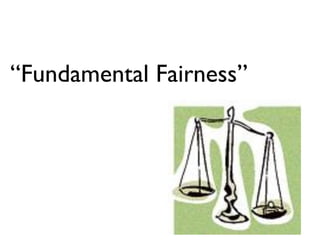
“Fundamental Fairness”
Learn how to use technology to enhance classroom walkthroughs and teacher evaluation
Performance Counts Act
 
Largest PAC donor in Illinois, $1.8M
A great teacher and principal for every student.
Data systems that tell us if students are on track and principals and teachers are helping their students adequately progress.
College and career ready graduation standards
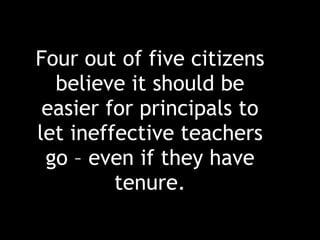
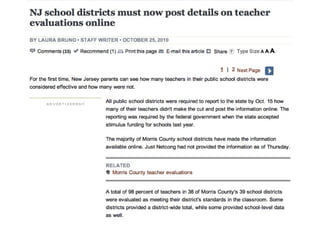
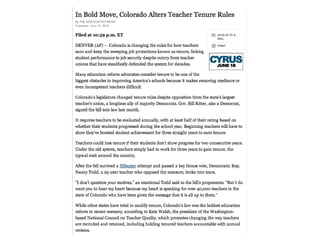
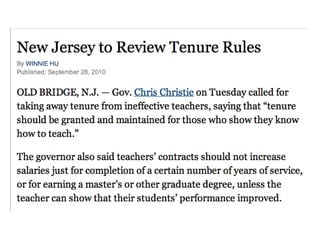
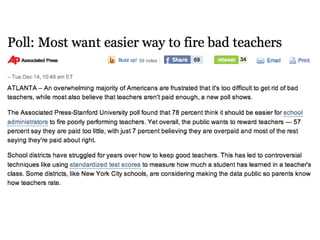
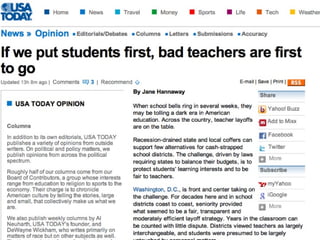
Four out of five citizens believe it should be easier for principals to let ineffective teachers go – even if they have tenure.
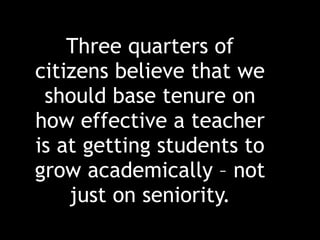
Three quarters of citizens believe that we should base tenure on how effective a teacher is at getting students to grow academically – not just on seniority.
Teacher Evaluation
Principal Evaluation
Administrators need to do more... We need to evaluate teachers better. Need accountability systems Pressure will be on administrators
 
2009 Urban Institute book. Its conclusion: Firing the least effective  6 to 10 percent  of teachers would catapult American kids from near the bottom of the international pack in academic achievement to the top ranks.  of teachers would catapult American kids from near the bottom of the international pack in academic achievement to the top ranks.
Widget Effect
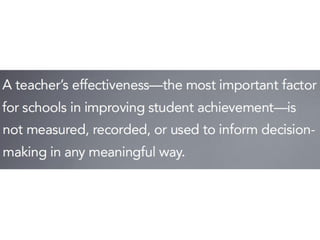
What does the research say?
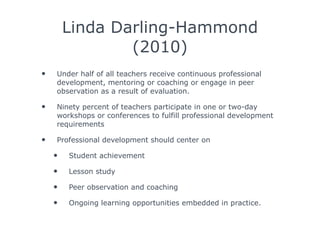
Linda Darling-Hammond (2010) Under half of all teachers receive continuous professional development, mentoring or coaching or engage in peer observation as a result of evaluation.  Ninety percent of teachers participate in one or two-day workshops or conferences to fulfill professional development requirements Professional development should center on Student achievement Lesson study Peer observation and coaching Ongoing learning opportunities embedded in practice.
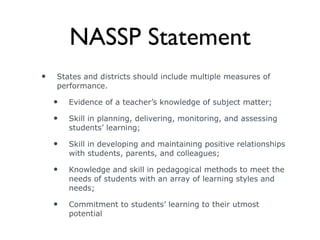
NASSP Statement States and districts should include multiple measures of performance. Evidence of a teacher’s knowledge of subject matter;  Skill in planning, delivering, monitoring, and assessing students’ learning;  Skill in developing and maintaining positive relationships with students, parents, and colleagues;  Knowledge and skill in pedagogical methods to meet the needs of students with an array of learning styles and needs; Commitment to students’ learning to their utmost potential
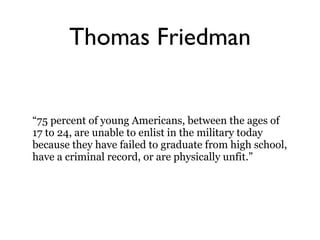
Thomas Friedman “ 75 percent of young Americans, between the ages of 17 to 24, are unable to enlist in the military today because they have failed to graduate from high school, have a criminal record, or are physically unfit.”
Do you need some inspiration to act courageously?


Being an effective evaluator is hard!
 
 
School leadership is second only to classroom teaching as an influence on pupil learning. Source: International Center for Leadership in Education
“ Without substantive conversations about real classroom practice, not much transfer, reflection or application to teaching practice will occur.” (Hord & Summers, 2008, p. 104) (Hord & Summers, 2008, p. 104)
"It is our job to know what is effective teaching practices and to hold teachers accountable." Dr. Mike Schmoker Dr. Mike Schmoker
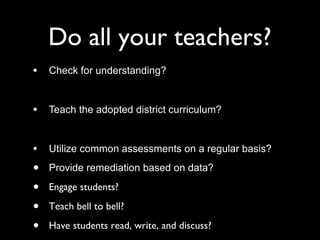
Do all your teachers? Check for understanding? Teach the adopted district curriculum? Utilize common assessments on a regular basis? Provide remediation based on data? Engage students? Teach bell to bell? Have students read, write, and discuss?
 
Would you train teachers to learn how to pass out papers?
No Opt Out Student does not know answer, teacher goes to another student. First student is called on again to state answer.
Do you believe teachers can improve by watching other excellent teachers?
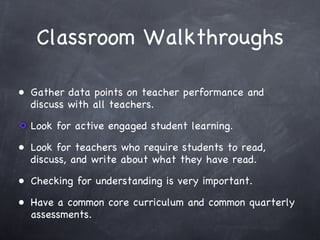
Classroom Walkthroughs Gather data points on teacher performance and discuss with all teachers. Look for active engaged student learning. Look for teachers who require students to read, discuss, and write about what they have read. Checking for understanding is very important. Have a common core curriculum and common quarterly assessments.


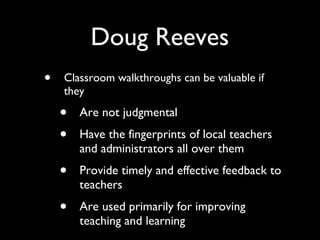
Doug Reeves Classroom walkthroughs can be valuable if they Are not judgmental Have the fingerprints of local teachers and administrators all over them Provide timely and effective feedback to teachers Are used primarily for improving teaching and learning
Secretary Duncan “The New Normal: Doing More With Less” “The New Normal: Doing More With Less”
Do not   slash instructional time spent on task, eliminate the arts and foreign languages, abandon promising reforms, and lay off talented, young teachers. talented, young teachers. talented, young teachers.
 
 
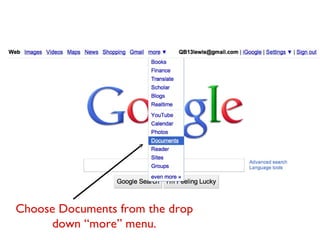
Choose Documents from the drop down “more” menu.
 
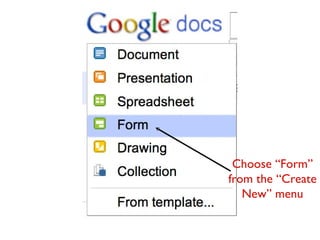
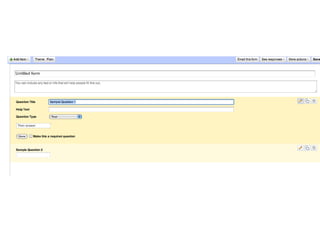
Choose “Form” from the “Create New” menu
 
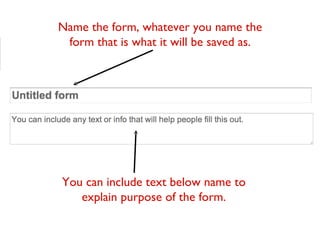
Name the form, whatever you name the form that is what it will be saved as. You can include text below name to explain purpose of the form.
Determine Purpose Staff Development Evaluative Purposes
Do Not Mix The Two
If Staff Development Recommend building administrators not participate in their own teachers. Determine a focus based on research on good teaching. Limit visit to three to five minutes. Get in. Get out. Gather 300 or more data points.
If Evaluation Make it perfectly clear to teachers. “When I (building administrator) am doing walkthroughs data could be used for evaluative purposes.”
Walkthroughs counter pre-arranged “teacher observation-evaluation” process.
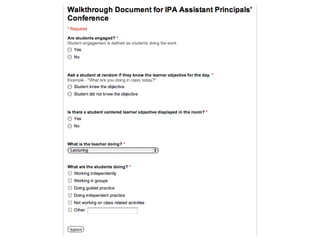
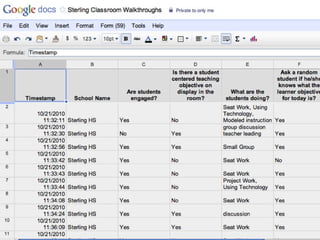
Determine what data you want to collect.
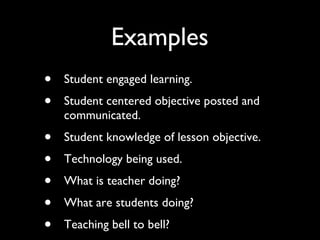
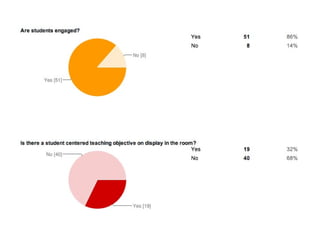
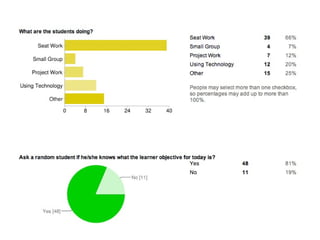
Examples Student engaged learning. Student centered objective posted and communicated. Student knowledge of lesson objective. Technology being used. What is teacher doing? What are students doing? Teaching bell to bell?
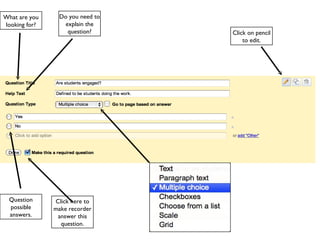
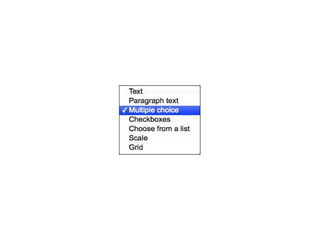
What are you looking for? Do you need to explain the question? Click on pencil to edit. Click here to make recorder answer this question. Question possible answers.
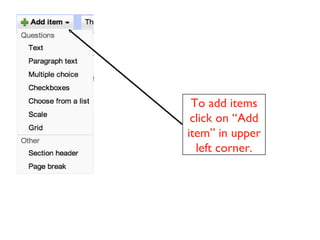
To add items click on “Add item” in upper left corner.
 
 
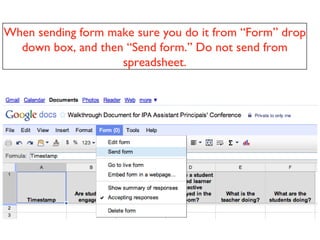
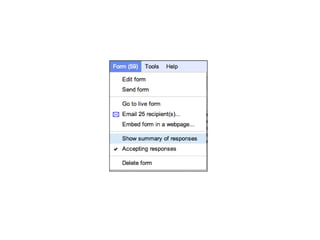
When sending form make sure you do it from “Form” drop down box, and then “Send form.” Do not send from spreadsheet.
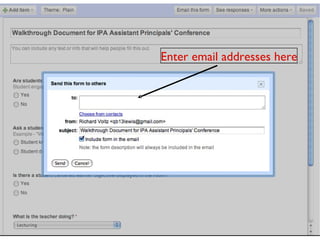
Enter email addresses here
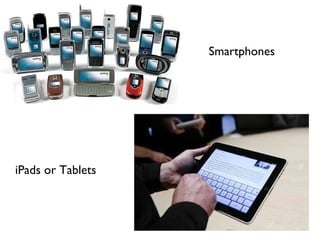
Smartphones iPads or Tablets


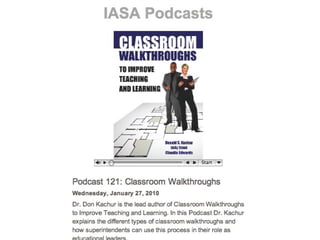
Link to my podcast http://bit.ly/IPA-AP11 http://bit.ly/IPA-AP11
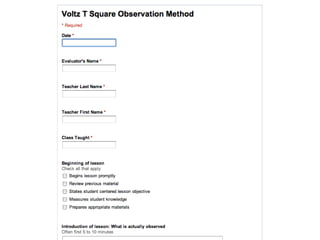
Voltz T-Square Teacher Evaluation Process
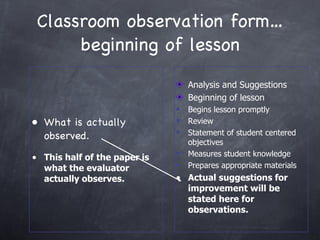
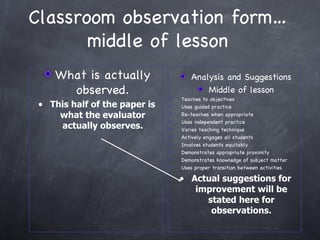
Classroom observation form… beginning of lesson What is actually observed. This half of the paper is what the evaluator actually observes. Analysis and Suggestions Beginning of lesson Begins lesson promptly Review Statement of student centered objectives Measures student knowledge Prepares appropriate materials Actual suggestions for improvement will be stated here for observations.
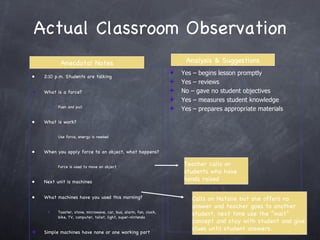
Actual Classroom Observation 2:10 p.m. Students are talking What is a force? Push and pull What is work? Use force, energy is needed When you apply force to an object, what happens? Force is used to move an object Next unit is machines What machines have you used this morning? Toaster, stove, microwave, car, bus, alarm, fan, clock, bike, TV, computer, toilet, light, super-nintendo Simple machines have none or one working part Teacher calls on students who have hands raised Calls on Natalie but she offers no answer and teacher goes to another student, next time use the “wait” concept and stay with student and give clues until student answers. Anecdotal Notes Analysis & Suggestions Yes – begins lesson promptly Yes – reviews No – gave no student objectives Yes – measures student knowledge Yes – prepares appropriate materials
Classroom observation form… middle of lesson What is actually observed. This half of the paper is what the evaluator actually observes. Analysis and Suggestions Middle of lesson Teaches to objectives Uses guided practice Re-teaches when appropriate Uses independent practice Varies teaching technique Actively engages all students Involves students equitably Demonstrates appropriate proximity Demonstrates knowledge of subject matter Uses proper transition between activities Actual suggestions for improvement will be stated here for observations.
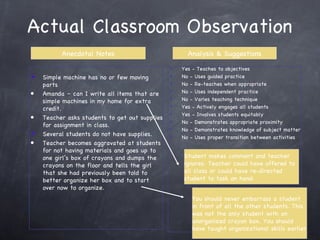
Actual Classroom Observation Student makes comment and teacher ignores. Teacher could have offered to all class or could have re-directed student to task on hand. You should never embarrass a student in front of all the other students. This was not the only student with an unorganized crayon box. You should have taught organizational skills earlier Anecdotal Notes Analysis & Suggestions Simple machine has no or few moving parts Amanda – can I write all items that are simple machines in my home for extra credit. Teacher asks students to get out supplies for assignment in class. Several students do not have supplies. Teacher becomes aggravated at students for not having materials and goes up to one girl’s box of crayons and dumps the crayons on the floor and tells the girl that she had previously been told to better organize her box and to start over now to organize. Yes - Teaches to objectives No - Uses guided practice No - Re-teaches when appropriate No - Uses independent practice No - Varies teaching technique Yes - Actively engages all students Yes - Involves students equitably No - Demonstrates appropriate proximity No - Demonstrates knowledge of subject matter No - Uses proper transition between activities
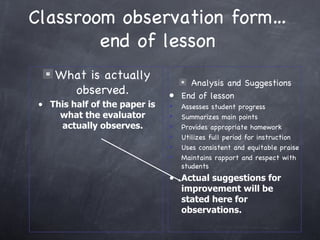
Classroom observation form… end of lesson What is actually observed. This half of the paper is what the evaluator actually observes. Analysis and Suggestions End of lesson Assesses student progress Summarizes main points Provides appropriate homework Utilizes full period for instruction Uses consistent and equitable praise Maintains rapport and respect with students Actual suggestions for improvement will be stated here for observations.
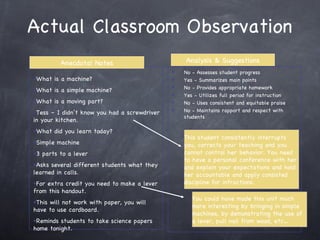
Actual Classroom Observation This student consistently interrupts you, corrects your teaching and you cannot control her behavior. You need to have a personal conference with her and explain your expectations and hold her accountable and apply consisted discipline for infractions. You could have made this unit much more interesting by bringing in simple machines, by demonstrating the use of a lever, pull nail from wood, etc… Anecdotal Notes Analysis & Suggestions What is a machine? What is a simple machine? What is a moving part? Tess – I didn’t know you had a screwdriver in your kitchen. What did you learn today? Simple machine 3 parts to a lever Asks several different students what they learned in calls. For extra credit you need to make a lever from this handout. This will not work with paper, you will have to use cardboard. Reminds students to take science papers home tonight. No - Assesses student progress Yes - Summarizes main points No - Provides appropriate homework Yes - Utilizes full period for instruction No - Uses consistent and equitable praise No - Maintains rapport and respect with students
 
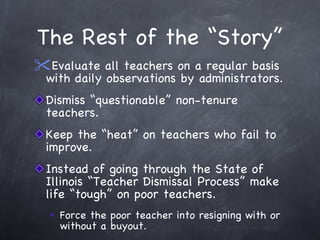
The Rest of the “Story” Evaluate all teachers on a regular basis with daily observations by administrators. Dismiss “questionable” non-tenure teachers. Keep the “heat” on teachers who fail to improve. Instead of going through the State of Illinois “Teacher Dismissal Process” make life “tough” on poor teachers. Force the poor teacher into resigning with or without a buyout.
Reflective Conference
Let evidence, not opinion, author the process author the process author the process
Concept of Inter-Rater Reliability
Fundamental Due Process
Have you shared everything with the teacher?
Parent Comments
Discipline Records
Drop Ins
Student Performance Facts

Teacher evaluations using technology

  • 1.
  • 2.
  • 3.
  • 4.
    To be ableto know, describe and inform teachers what is effective instruction
  • 5.
    Resources for TeacherEvaluation Danielson Frameworks
  • 6.
  • 7.
    Learn how touse technology to enhance classroom walkthroughs and teacher evaluation
  • 8.
  • 9.
  • 10.
    Largest PAC donorin Illinois, $1.8M
  • 11.
    A great teacherand principal for every student.
  • 12.
    Data systems thattell us if students are on track and principals and teachers are helping their students adequately progress.
  • 13.
    College and careerready graduation standards
  • 14.
    Four out offive citizens believe it should be easier for principals to let ineffective teachers go – even if they have tenure.
  • 15.
    Three quarters ofcitizens believe that we should base tenure on how effective a teacher is at getting students to grow academically – not just on seniority.
  • 16.
  • 17.
  • 18.
    Administrators need todo more... We need to evaluate teachers better. Need accountability systems Pressure will be on administrators
  • 19.
  • 20.
    2009 Urban Institutebook. Its conclusion: Firing the least effective 6 to 10 percent of teachers would catapult American kids from near the bottom of the international pack in academic achievement to the top ranks. of teachers would catapult American kids from near the bottom of the international pack in academic achievement to the top ranks.
  • 21.
  • 22.
    What does theresearch say?
  • 23.
    Linda Darling-Hammond (2010)Under half of all teachers receive continuous professional development, mentoring or coaching or engage in peer observation as a result of evaluation. Ninety percent of teachers participate in one or two-day workshops or conferences to fulfill professional development requirements Professional development should center on Student achievement Lesson study Peer observation and coaching Ongoing learning opportunities embedded in practice.
  • 24.
    NASSP Statement Statesand districts should include multiple measures of performance. Evidence of a teacher’s knowledge of subject matter; Skill in planning, delivering, monitoring, and assessing students’ learning; Skill in developing and maintaining positive relationships with students, parents, and colleagues; Knowledge and skill in pedagogical methods to meet the needs of students with an array of learning styles and needs; Commitment to students’ learning to their utmost potential
  • 25.
    Thomas Friedman “75 percent of young Americans, between the ages of 17 to 24, are unable to enlist in the military today because they have failed to graduate from high school, have a criminal record, or are physically unfit.”
  • 26.
    Do you needsome inspiration to act courageously?
  • 27.
  • 28.
  • 29.
  • 30.
  • 31.
  • 32.
  • 33.
  • 34.
  • 35.
  • 36.
    Being an effectiveevaluator is hard!
  • 37.
  • 38.
  • 39.
    School leadership issecond only to classroom teaching as an influence on pupil learning. Source: International Center for Leadership in Education
  • 40.
    “ Without substantiveconversations about real classroom practice, not much transfer, reflection or application to teaching practice will occur.” (Hord & Summers, 2008, p. 104) (Hord & Summers, 2008, p. 104)
  • 41.
    "It is ourjob to know what is effective teaching practices and to hold teachers accountable." Dr. Mike Schmoker Dr. Mike Schmoker
  • 42.
    Do all yourteachers? Check for understanding? Teach the adopted district curriculum? Utilize common assessments on a regular basis? Provide remediation based on data? Engage students? Teach bell to bell? Have students read, write, and discuss?
  • 43.
  • 44.
    Would you trainteachers to learn how to pass out papers?
  • 45.
    No Opt OutStudent does not know answer, teacher goes to another student. First student is called on again to state answer.
  • 46.
    Do you believeteachers can improve by watching other excellent teachers?
  • 47.
    Classroom Walkthroughs Gatherdata points on teacher performance and discuss with all teachers. Look for active engaged student learning. Look for teachers who require students to read, discuss, and write about what they have read. Checking for understanding is very important. Have a common core curriculum and common quarterly assessments.
  • 48.
  • 49.
  • 50.
  • 51.
    Doug Reeves Classroomwalkthroughs can be valuable if they Are not judgmental Have the fingerprints of local teachers and administrators all over them Provide timely and effective feedback to teachers Are used primarily for improving teaching and learning
  • 52.
    Secretary Duncan “TheNew Normal: Doing More With Less” “The New Normal: Doing More With Less”
  • 53.
    Do not slash instructional time spent on task, eliminate the arts and foreign languages, abandon promising reforms, and lay off talented, young teachers. talented, young teachers. talented, young teachers.
  • 54.
  • 55.
  • 56.
    Choose Documents fromthe drop down “more” menu.
  • 57.
  • 58.
    Choose “Form” fromthe “Create New” menu
  • 59.
  • 60.
    Name the form,whatever you name the form that is what it will be saved as. You can include text below name to explain purpose of the form.
  • 61.
    Determine Purpose StaffDevelopment Evaluative Purposes
  • 62.
    Do Not MixThe Two
  • 63.
    If Staff DevelopmentRecommend building administrators not participate in their own teachers. Determine a focus based on research on good teaching. Limit visit to three to five minutes. Get in. Get out. Gather 300 or more data points.
  • 64.
    If Evaluation Makeit perfectly clear to teachers. “When I (building administrator) am doing walkthroughs data could be used for evaluative purposes.”
  • 65.
    Walkthroughs counter pre-arranged“teacher observation-evaluation” process.
  • 66.
    Determine what datayou want to collect.
  • 67.
    Examples Student engagedlearning. Student centered objective posted and communicated. Student knowledge of lesson objective. Technology being used. What is teacher doing? What are students doing? Teaching bell to bell?
  • 68.
    What are youlooking for? Do you need to explain the question? Click on pencil to edit. Click here to make recorder answer this question. Question possible answers.
  • 69.
    To add itemsclick on “Add item” in upper left corner.
  • 70.
  • 71.
  • 72.
    When sending formmake sure you do it from “Form” drop down box, and then “Send form.” Do not send from spreadsheet.
  • 73.
  • 74.
  • 75.
  • 76.
  • 77.
  • 78.
  • 79.
  • 80.
    Link to mypodcast http://bit.ly/IPA-AP11 http://bit.ly/IPA-AP11
  • 81.
    Voltz T-Square TeacherEvaluation Process
  • 82.
    Classroom observation form…beginning of lesson What is actually observed. This half of the paper is what the evaluator actually observes. Analysis and Suggestions Beginning of lesson Begins lesson promptly Review Statement of student centered objectives Measures student knowledge Prepares appropriate materials Actual suggestions for improvement will be stated here for observations.
  • 83.
    Actual Classroom Observation2:10 p.m. Students are talking What is a force? Push and pull What is work? Use force, energy is needed When you apply force to an object, what happens? Force is used to move an object Next unit is machines What machines have you used this morning? Toaster, stove, microwave, car, bus, alarm, fan, clock, bike, TV, computer, toilet, light, super-nintendo Simple machines have none or one working part Teacher calls on students who have hands raised Calls on Natalie but she offers no answer and teacher goes to another student, next time use the “wait” concept and stay with student and give clues until student answers. Anecdotal Notes Analysis & Suggestions Yes – begins lesson promptly Yes – reviews No – gave no student objectives Yes – measures student knowledge Yes – prepares appropriate materials
  • 84.
    Classroom observation form…middle of lesson What is actually observed. This half of the paper is what the evaluator actually observes. Analysis and Suggestions Middle of lesson Teaches to objectives Uses guided practice Re-teaches when appropriate Uses independent practice Varies teaching technique Actively engages all students Involves students equitably Demonstrates appropriate proximity Demonstrates knowledge of subject matter Uses proper transition between activities Actual suggestions for improvement will be stated here for observations.
  • 85.
    Actual Classroom ObservationStudent makes comment and teacher ignores. Teacher could have offered to all class or could have re-directed student to task on hand. You should never embarrass a student in front of all the other students. This was not the only student with an unorganized crayon box. You should have taught organizational skills earlier Anecdotal Notes Analysis & Suggestions Simple machine has no or few moving parts Amanda – can I write all items that are simple machines in my home for extra credit. Teacher asks students to get out supplies for assignment in class. Several students do not have supplies. Teacher becomes aggravated at students for not having materials and goes up to one girl’s box of crayons and dumps the crayons on the floor and tells the girl that she had previously been told to better organize her box and to start over now to organize. Yes - Teaches to objectives No - Uses guided practice No - Re-teaches when appropriate No - Uses independent practice No - Varies teaching technique Yes - Actively engages all students Yes - Involves students equitably No - Demonstrates appropriate proximity No - Demonstrates knowledge of subject matter No - Uses proper transition between activities
  • 86.
    Classroom observation form…end of lesson What is actually observed. This half of the paper is what the evaluator actually observes. Analysis and Suggestions End of lesson Assesses student progress Summarizes main points Provides appropriate homework Utilizes full period for instruction Uses consistent and equitable praise Maintains rapport and respect with students Actual suggestions for improvement will be stated here for observations.
  • 87.
    Actual Classroom ObservationThis student consistently interrupts you, corrects your teaching and you cannot control her behavior. You need to have a personal conference with her and explain your expectations and hold her accountable and apply consisted discipline for infractions. You could have made this unit much more interesting by bringing in simple machines, by demonstrating the use of a lever, pull nail from wood, etc… Anecdotal Notes Analysis & Suggestions What is a machine? What is a simple machine? What is a moving part? Tess – I didn’t know you had a screwdriver in your kitchen. What did you learn today? Simple machine 3 parts to a lever Asks several different students what they learned in calls. For extra credit you need to make a lever from this handout. This will not work with paper, you will have to use cardboard. Reminds students to take science papers home tonight. No - Assesses student progress Yes - Summarizes main points No - Provides appropriate homework Yes - Utilizes full period for instruction No - Uses consistent and equitable praise No - Maintains rapport and respect with students
  • 88.
  • 89.
    The Rest ofthe “Story” Evaluate all teachers on a regular basis with daily observations by administrators. Dismiss “questionable” non-tenure teachers. Keep the “heat” on teachers who fail to improve. Instead of going through the State of Illinois “Teacher Dismissal Process” make life “tough” on poor teachers. Force the poor teacher into resigning with or without a buyout.
  • 90.
  • 91.
    Let evidence, notopinion, author the process author the process author the process
  • 92.
  • 93.
  • 94.
    Have you sharedeverything with the teacher?
  • 95.
  • 96.
  • 97.
  • 98.