
Usama Ragab Youssif
Assistant Lecturer Of Medicine
Clinical Immunology
IVIG
Sunday, 6 January 2019
Sharkia Medical Syndicate
Clinical Immunology 1st Announcement
Outlines
 Definitions & Nomenclatures
 Structure of immunoglobulins
 Immunoglobulins in our bodies
 Physiologic actions of immunoglobulins
 The Idea behind use of immunoglobulins
 Uses: indications, mechanisms, preparation,
posology, administration
 Adverse effects
 Safe practice
 Final bottom-line
2
Immunoglobulins
 Also called antibodies.
 Group of glycoprotiens present in the serum and
tissue fluid of all mammals.
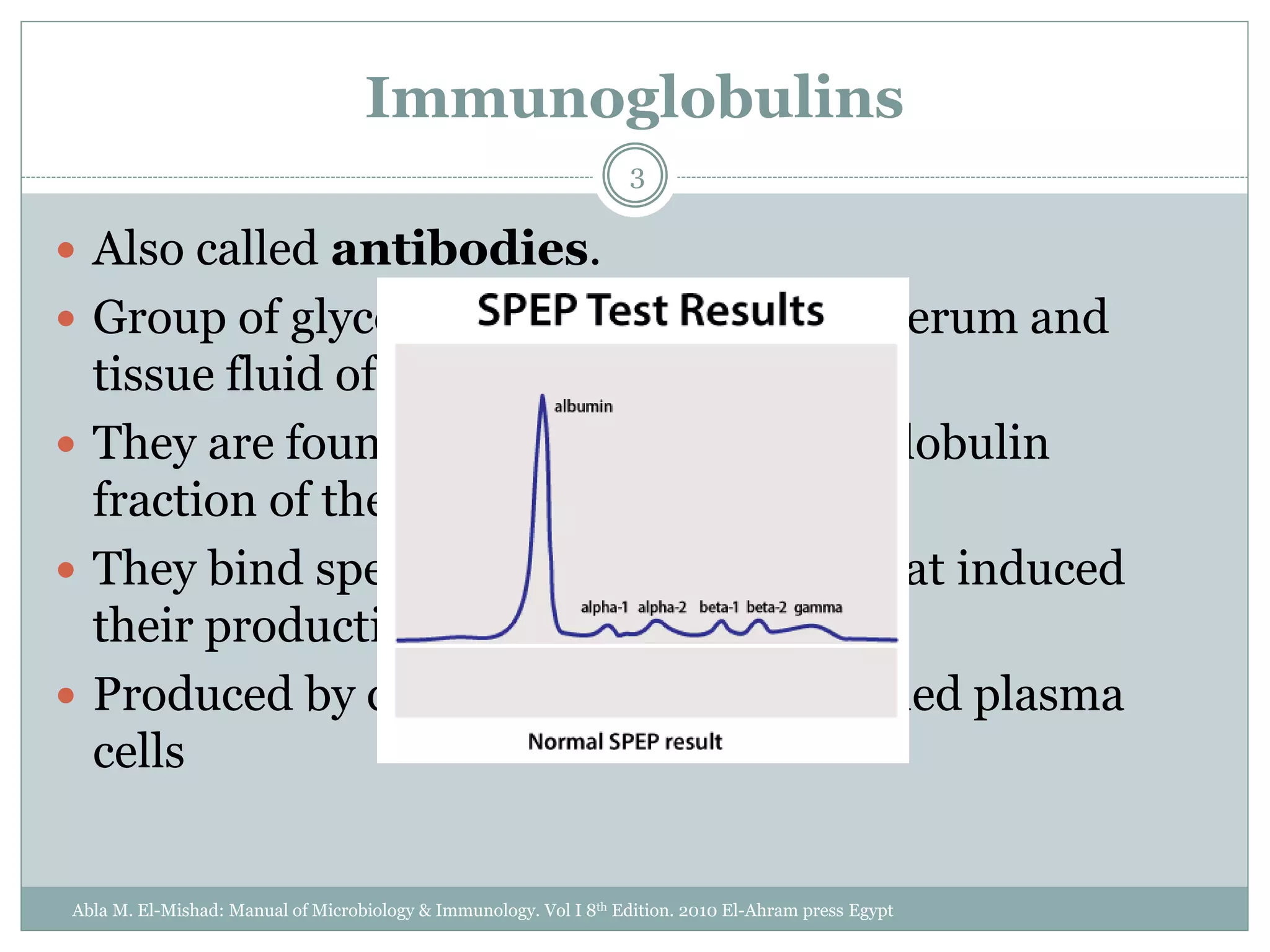
 They are found mainly in the gamma globulin
fraction of the serum.
 They bind specifically to the antigen that induced
their production.
 Produced by differentiated B cells termed plasma
cells
3
Abla M. El-Mishad: Manual of Microbiology & Immunology. Vol I 8th Edition. 2010 El-Ahram press Egypt
IVIG or IVIg
 IVIG is an abbreviation for Intravenous
Immunoglobulin
 Administered intravenously in case of IVIG
 IG therapy has other route.
4
Spickett, Gavin. Oxford handbook of clinical immunology and allergy. Oxford University Press, 2013.
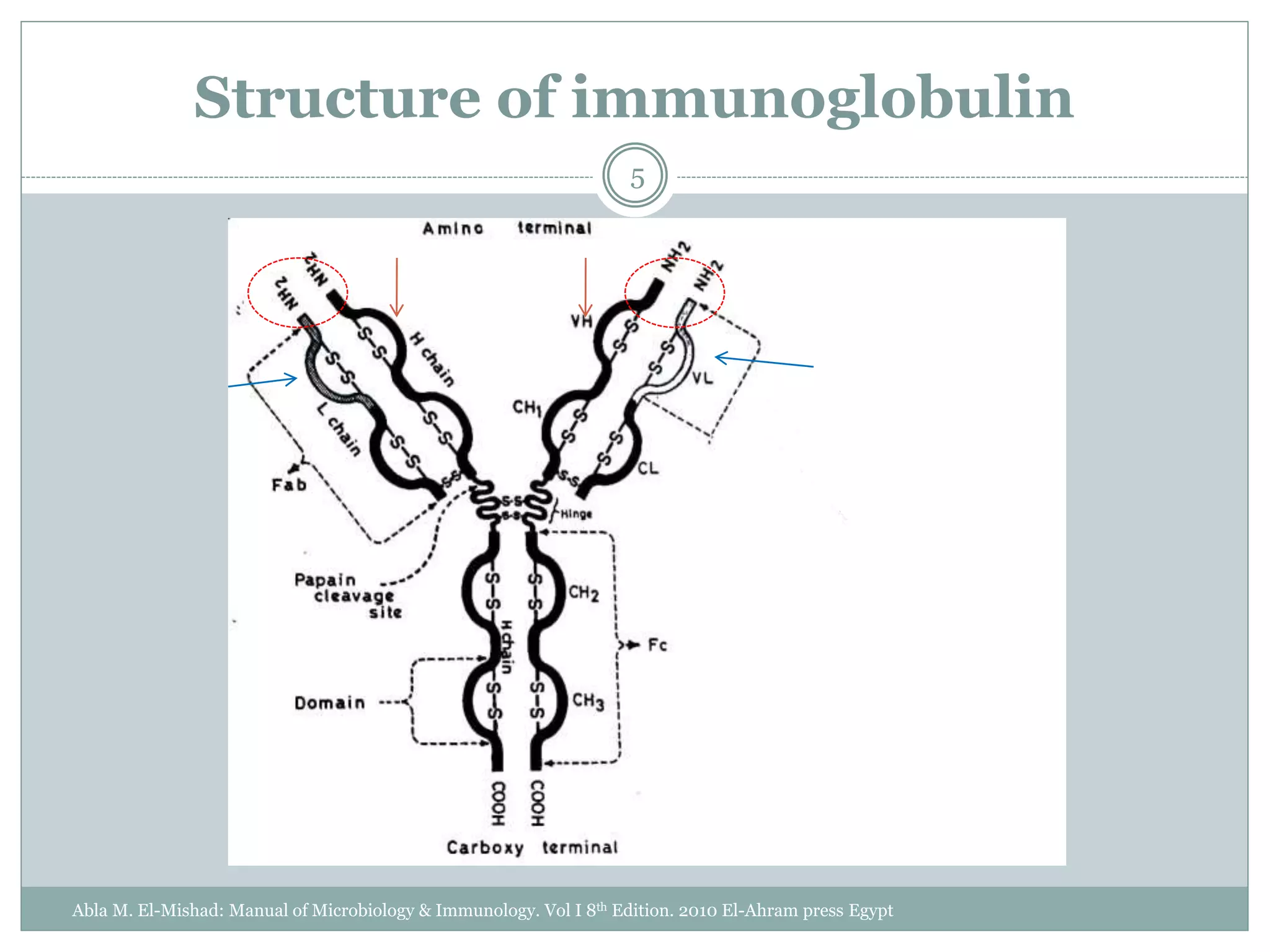
Structure of immunoglobulin
5
Abla M. El-Mishad: Manual of Microbiology & Immunology. Vol I 8th Edition. 2010 El-Ahram press Egypt
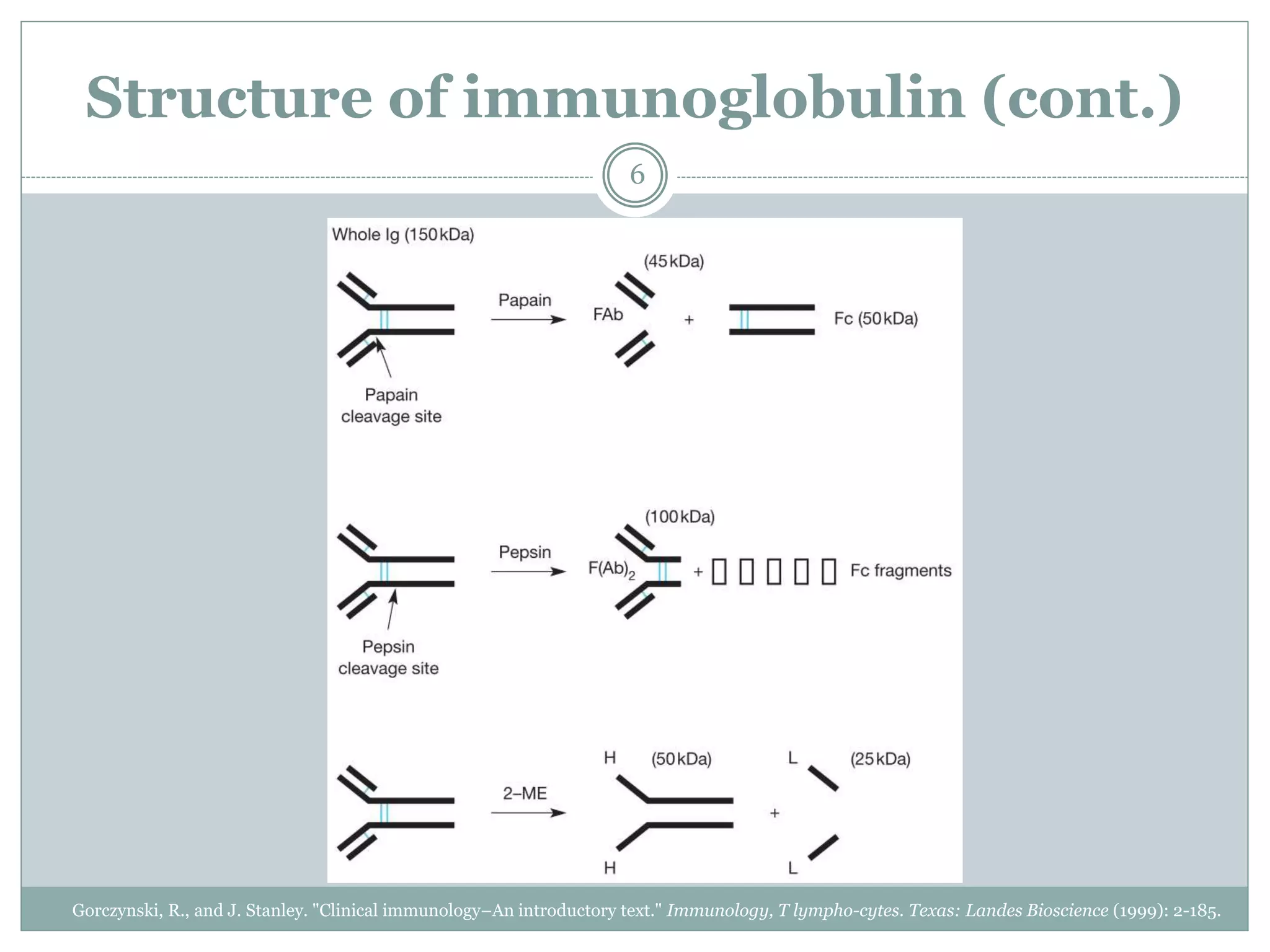
Structure of immunoglobulin (cont.)
6
Gorczynski, R., and J. Stanley. "Clinical immunology–An introductory text." Immunology, T lympho-cytes. Texas: Landes Bioscience (1999): 2-185.
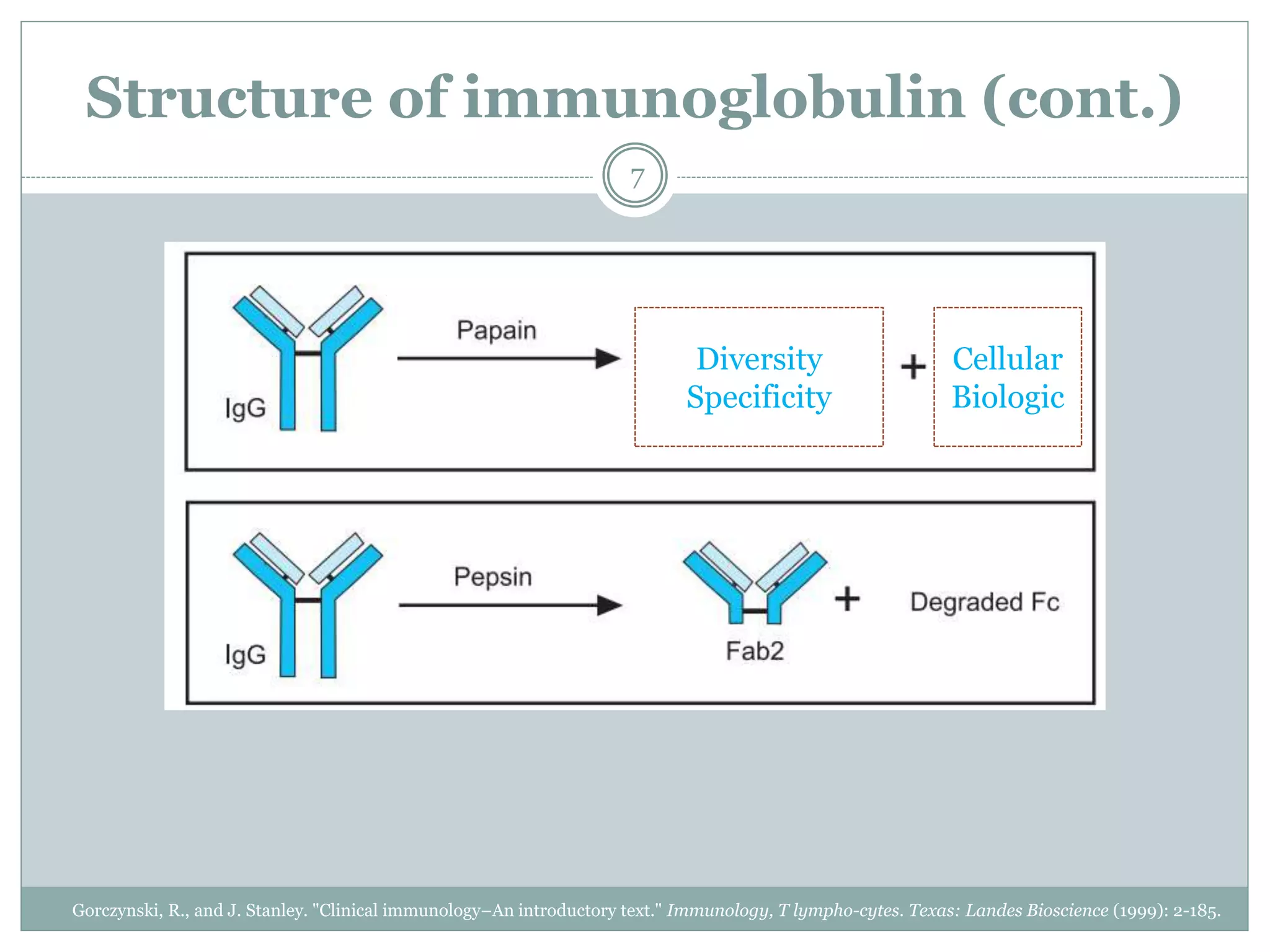
Structure of immunoglobulin (cont.)
Diversity
Specificity
Cellular
Biologic
7
Gorczynski, R., and J. Stanley. "Clinical immunology–An introductory text." Immunology, T lympho-cytes. Texas: Landes Bioscience (1999): 2-185.
Structure of immunoglobulin (cont.)
8
Gorczynski, R., and J. Stanley. "Clinical immunology–An introductory text." Immunology, T lympho-cytes. Texas: Landes Bioscience (1999): 2-185.
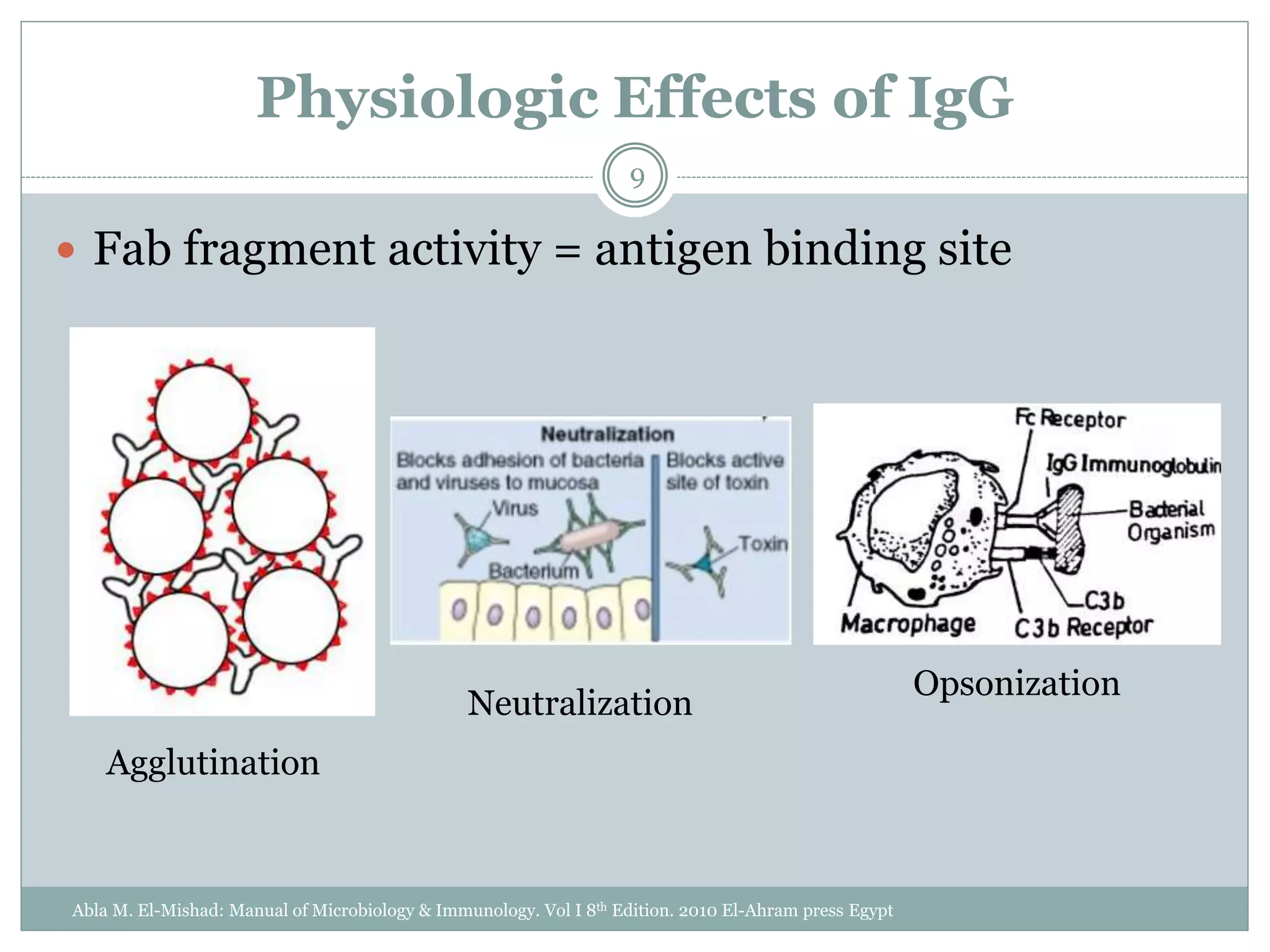
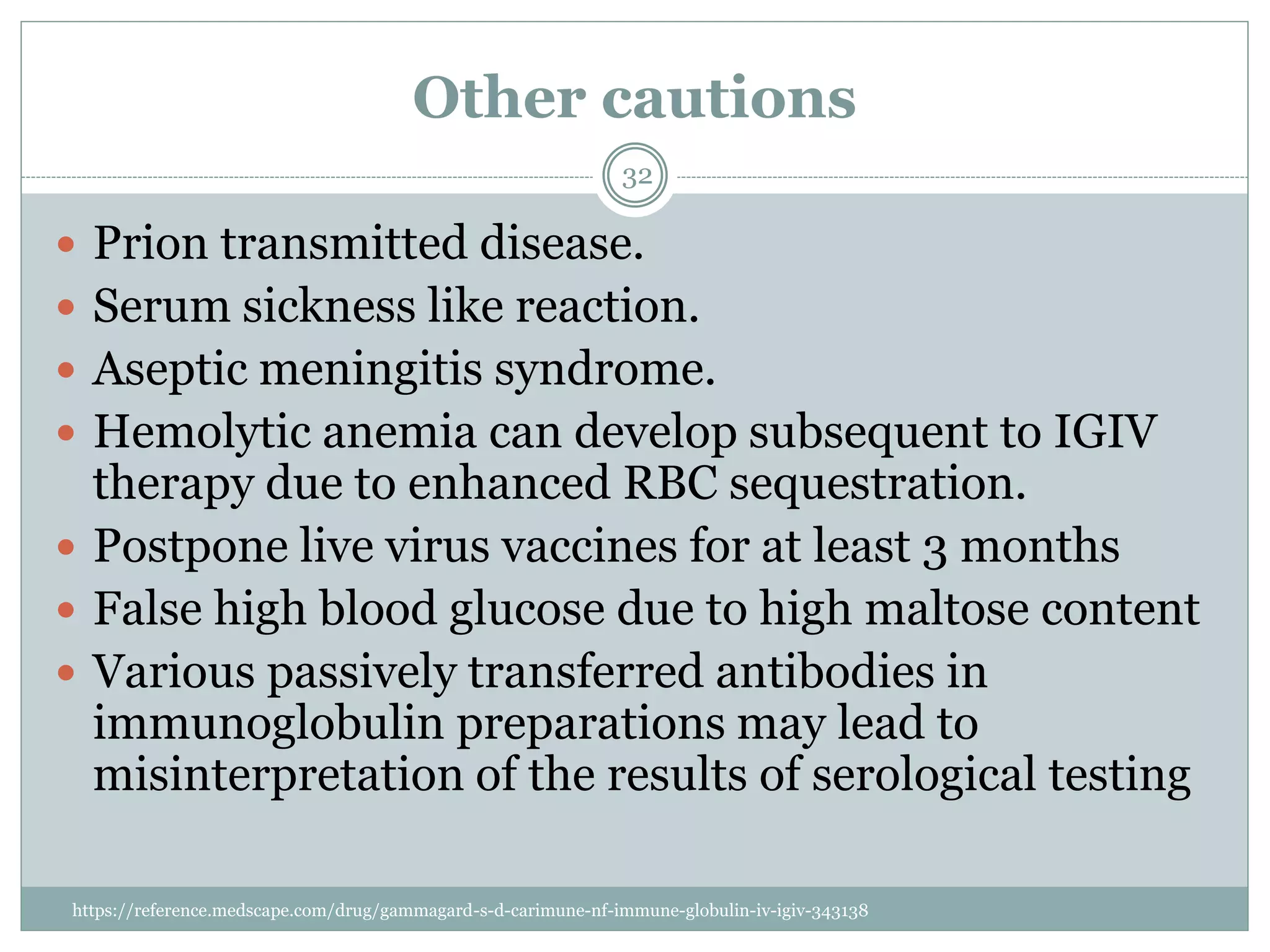
Physiologic Effects of IgG
 Fab fragment activity = antigen binding site
Agglutination
Neutralization
Opsonization
9
Abla M. El-Mishad: Manual of Microbiology & Immunology. Vol I 8th Edition. 2010 El-Ahram press Egypt
Physiologic Effects of IgG (cont.)
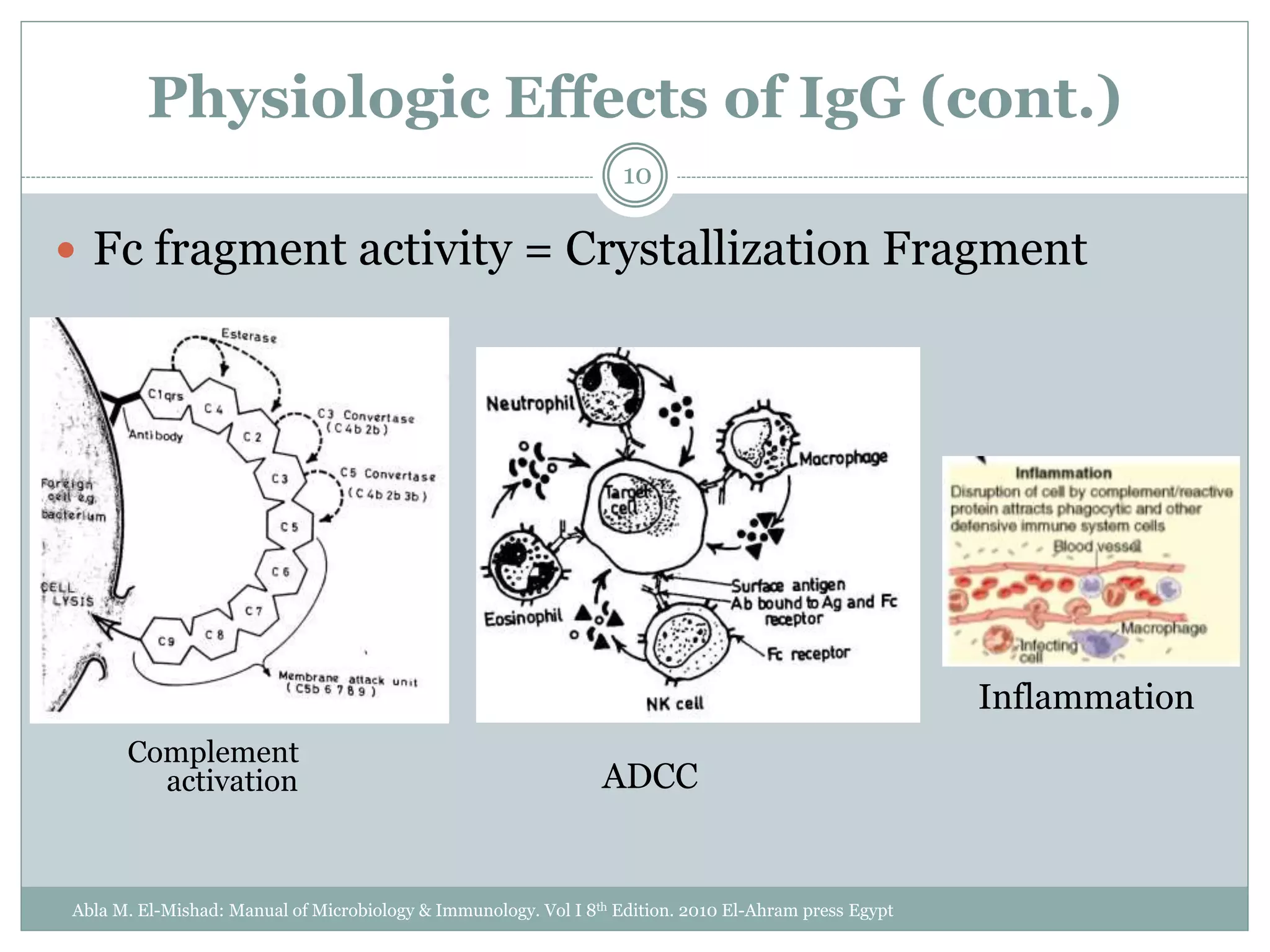
 Fc fragment activity = Crystallization Fragment
Complement
activation ADCC
Inflammation
10
Abla M. El-Mishad: Manual of Microbiology & Immunology. Vol I 8th Edition. 2010 El-Ahram press Egypt
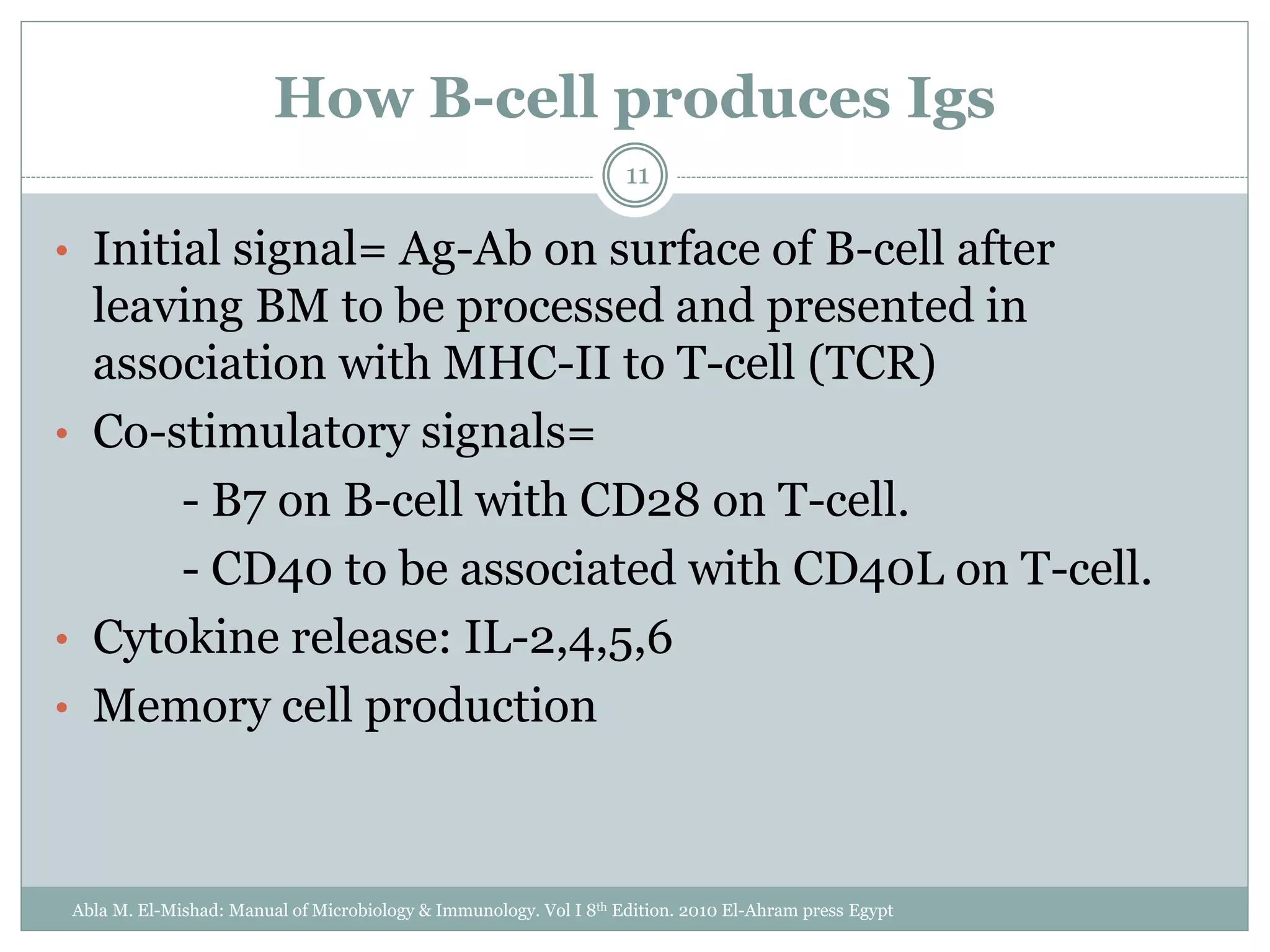
How B-cell produces Igs
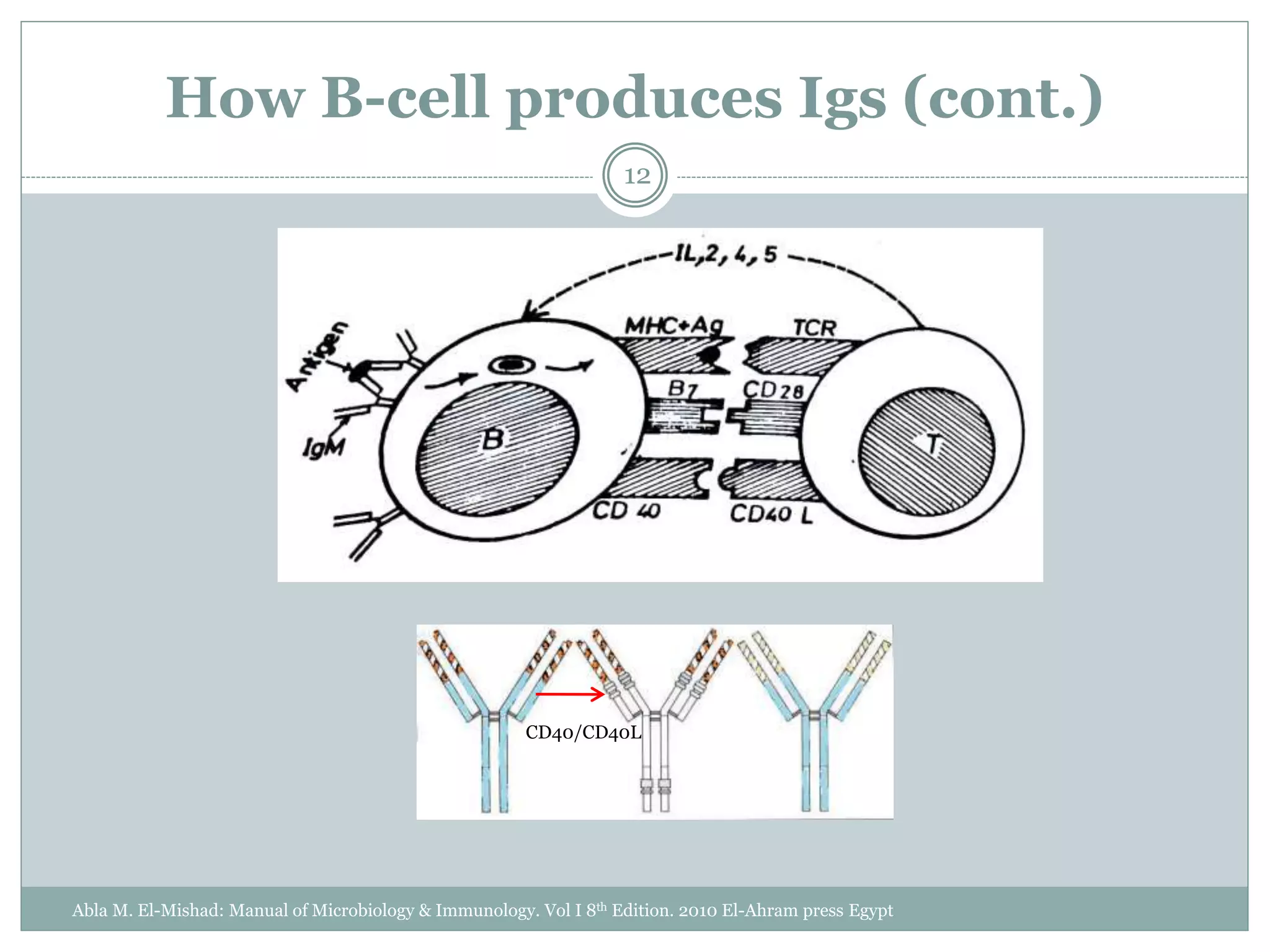
• Initial signal= Ag-Ab on surface of B-cell after
leaving BM to be processed and presented in
association with MHC-II to T-cell (TCR)
• Co-stimulatory signals=
- B7 on B-cell with CD28 on T-cell.
- CD40 to be associated with CD40L on T-cell.
• Cytokine release: IL-2,4,5,6
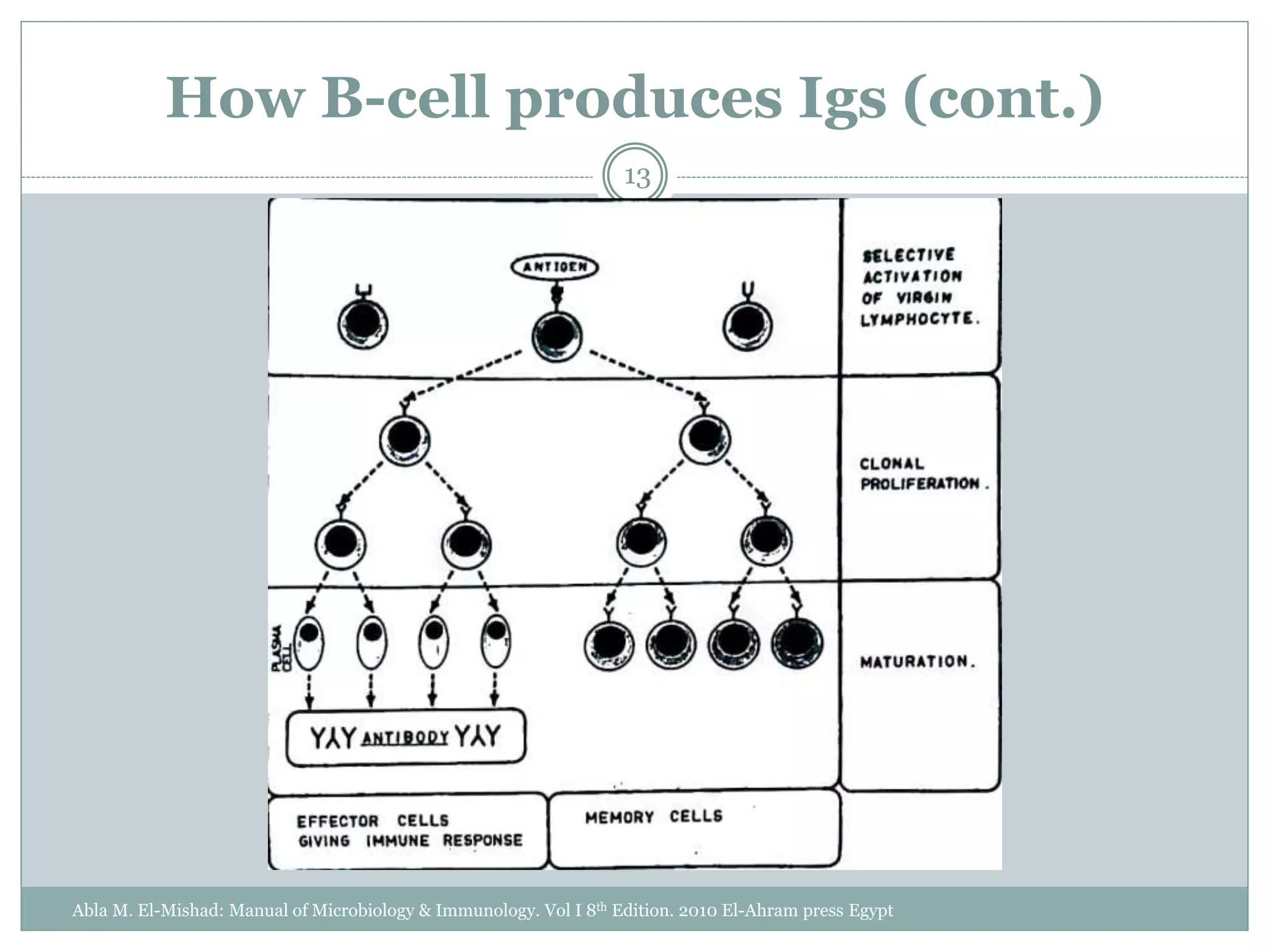
• Memory cell production
11
Abla M. El-Mishad: Manual of Microbiology & Immunology. Vol I 8th Edition. 2010 El-Ahram press Egypt
How B-cell produces Igs (cont.)
12
CD40/CD40L
Abla M. El-Mishad: Manual of Microbiology & Immunology. Vol I 8th Edition. 2010 El-Ahram press Egypt
How B-cell produces Igs (cont.)
13
Abla M. El-Mishad: Manual of Microbiology & Immunology. Vol I 8th Edition. 2010 El-Ahram press Egypt
Uses of IVIG
• Replacement therapy.
• Immunomodulatory effect.
14
Jessica Katz, and Kinjal Parikh. "Intravenous immunoglobulin." Medscape (2018).
Uses of IVIG (cont.)
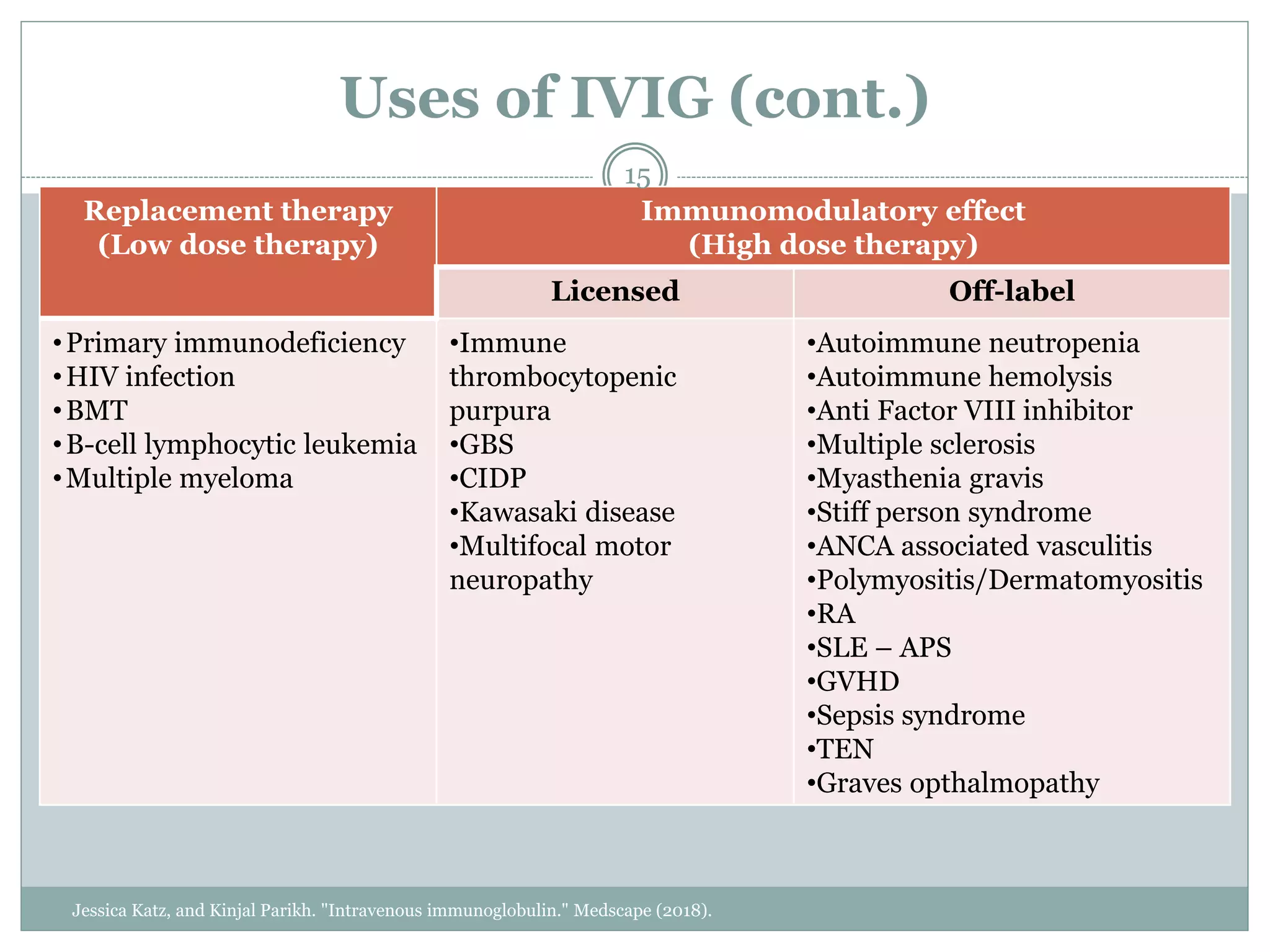
Replacement therapy
(Low dose therapy)
Immunomodulatory effect
(High dose therapy)
Licensed Off-label
•Primary immunodeficiency
•HIV infection
•BMT
•B-cell lymphocytic leukemia
•Multiple myeloma
•Immune
thrombocytopenic
purpura
•GBS
•CIDP
•Kawasaki disease
•Multifocal motor
neuropathy
•Autoimmune neutropenia
•Autoimmune hemolysis
•Anti Factor VIII inhibitor
•Multiple sclerosis
•Myasthenia gravis
•Stiff person syndrome
•ANCA associated vasculitis
•Polymyositis/Dermatomyositis
•RA
•SLE – APS
•GVHD
•Sepsis syndrome
•TEN
•Graves opthalmopathy
15
Jessica Katz, and Kinjal Parikh. "Intravenous immunoglobulin." Medscape (2018).
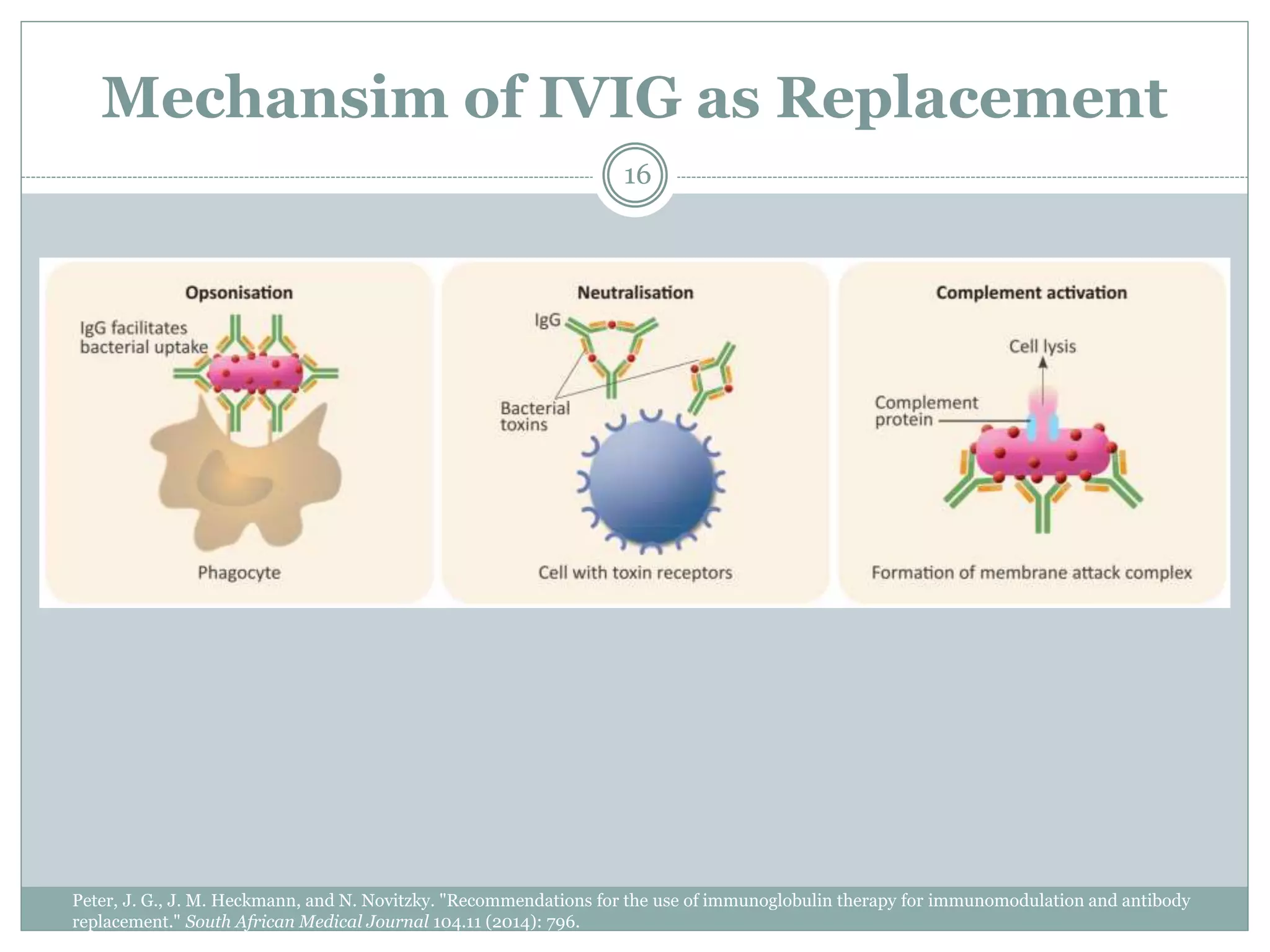
Mechansim of IVIG as Replacement
16
Peter, J. G., J. M. Heckmann, and N. Novitzky. "Recommendations for the use of immunoglobulin therapy for immunomodulation and antibody
replacement." South African Medical Journal 104.11 (2014): 796.
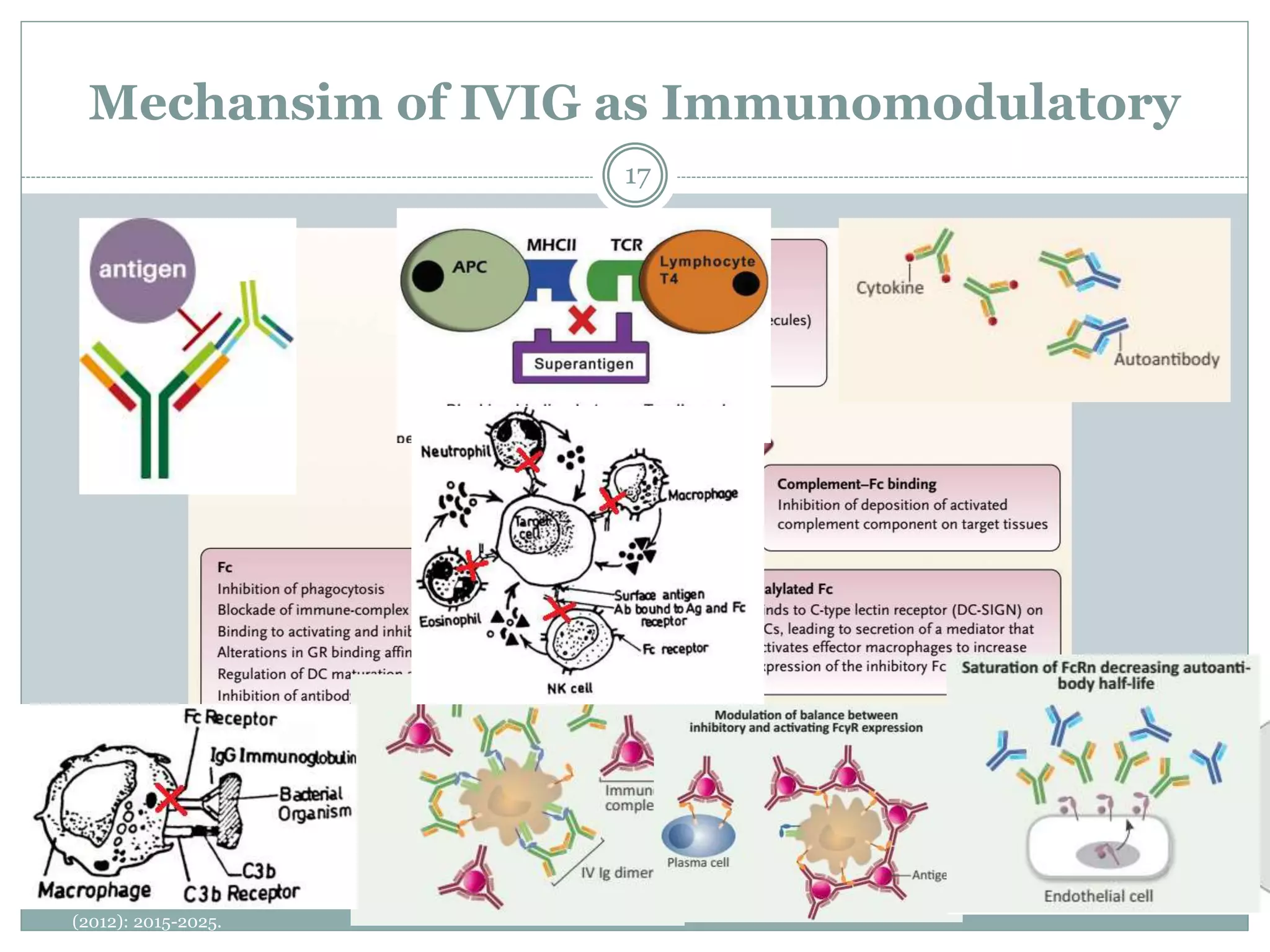
Mechansim of IVIG as Immunomodulatory
17
Gelfand, Erwin W. "Intravenous immune globulin in autoimmune and inflammatory diseases." New England Journal of Medicine 367.21
(2012): 2015-2025.
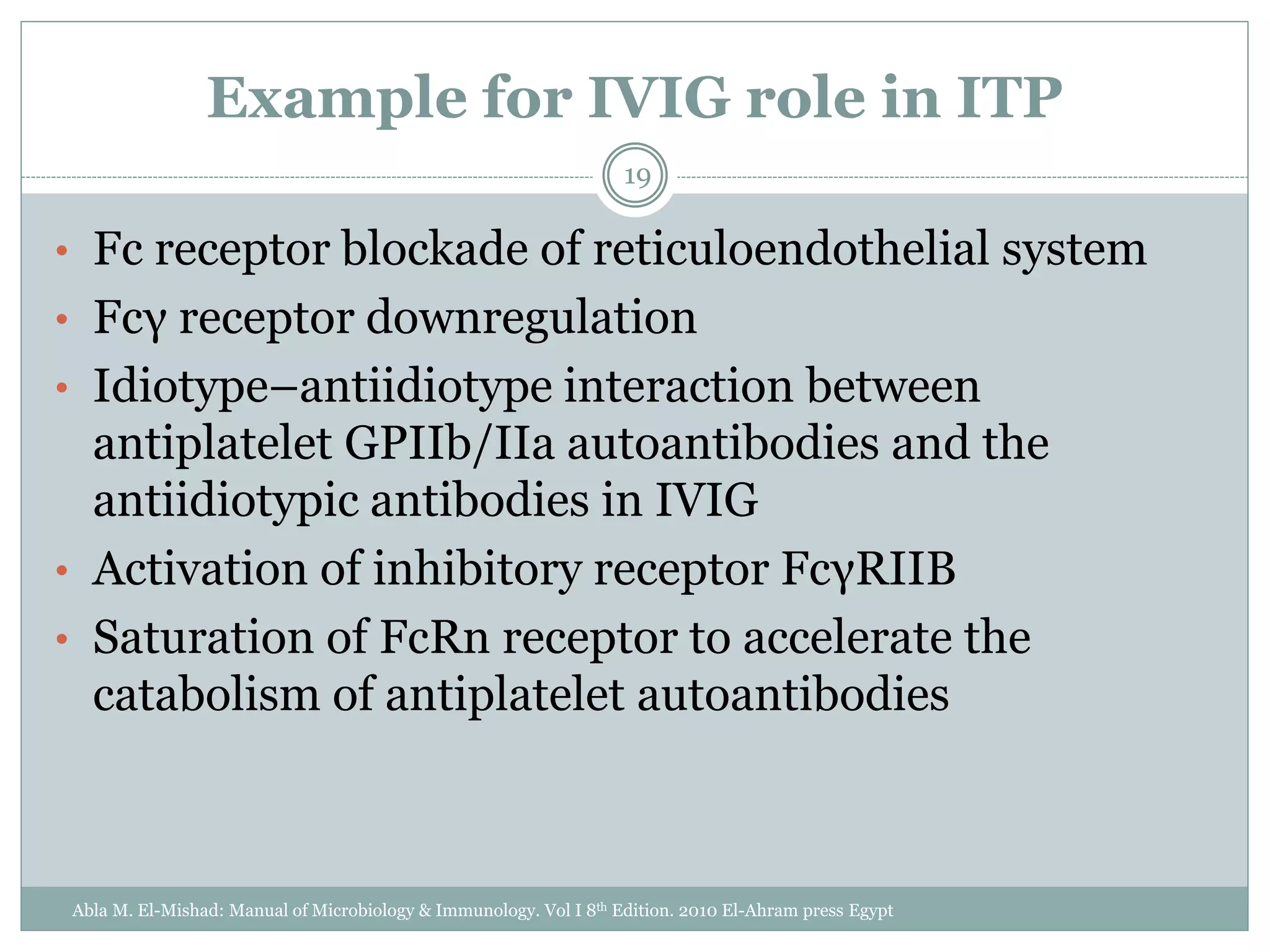
Example for IVIG role in ITP
• Fc receptor blockade of reticuloendothelial system
• Fcγ receptor downregulation
• Idiotype–antiidiotype interaction between
antiplatelet GPIIb/IIa autoantibodies and the
antiidiotypic antibodies in IVIG
• Activation of inhibitory receptor FcγRIIB
• Saturation of FcRn receptor to accelerate the
catabolism of antiplatelet autoantibodies
19
Abla M. El-Mishad: Manual of Microbiology & Immunology. Vol I 8th Edition. 2010 El-Ahram press Egypt
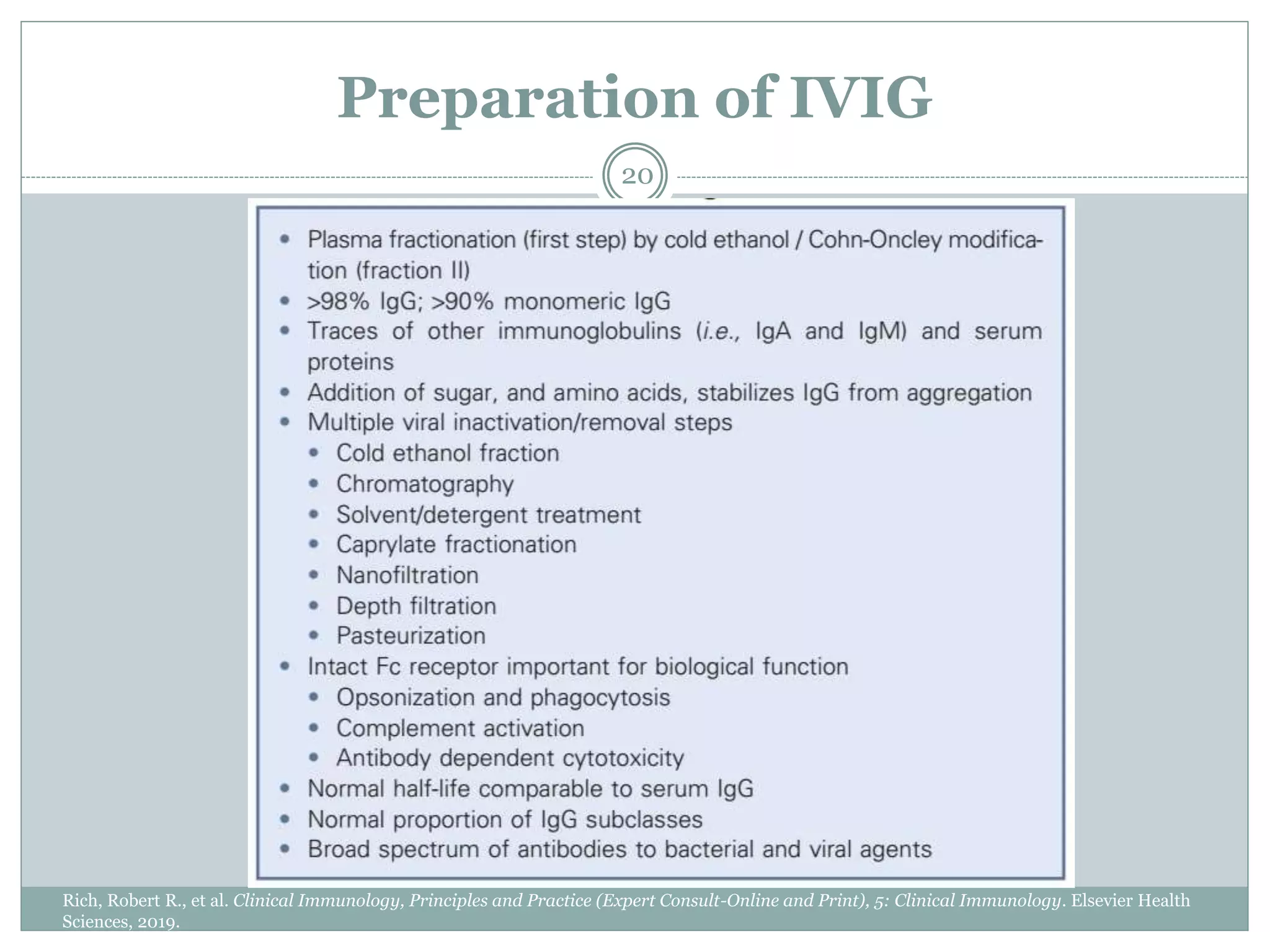
Preparation of IVIG
20
Rich, Robert R., et al. Clinical Immunology, Principles and Practice (Expert Consult-Online and Print), 5: Clinical Immunology. Elsevier Health
Sciences, 2019.
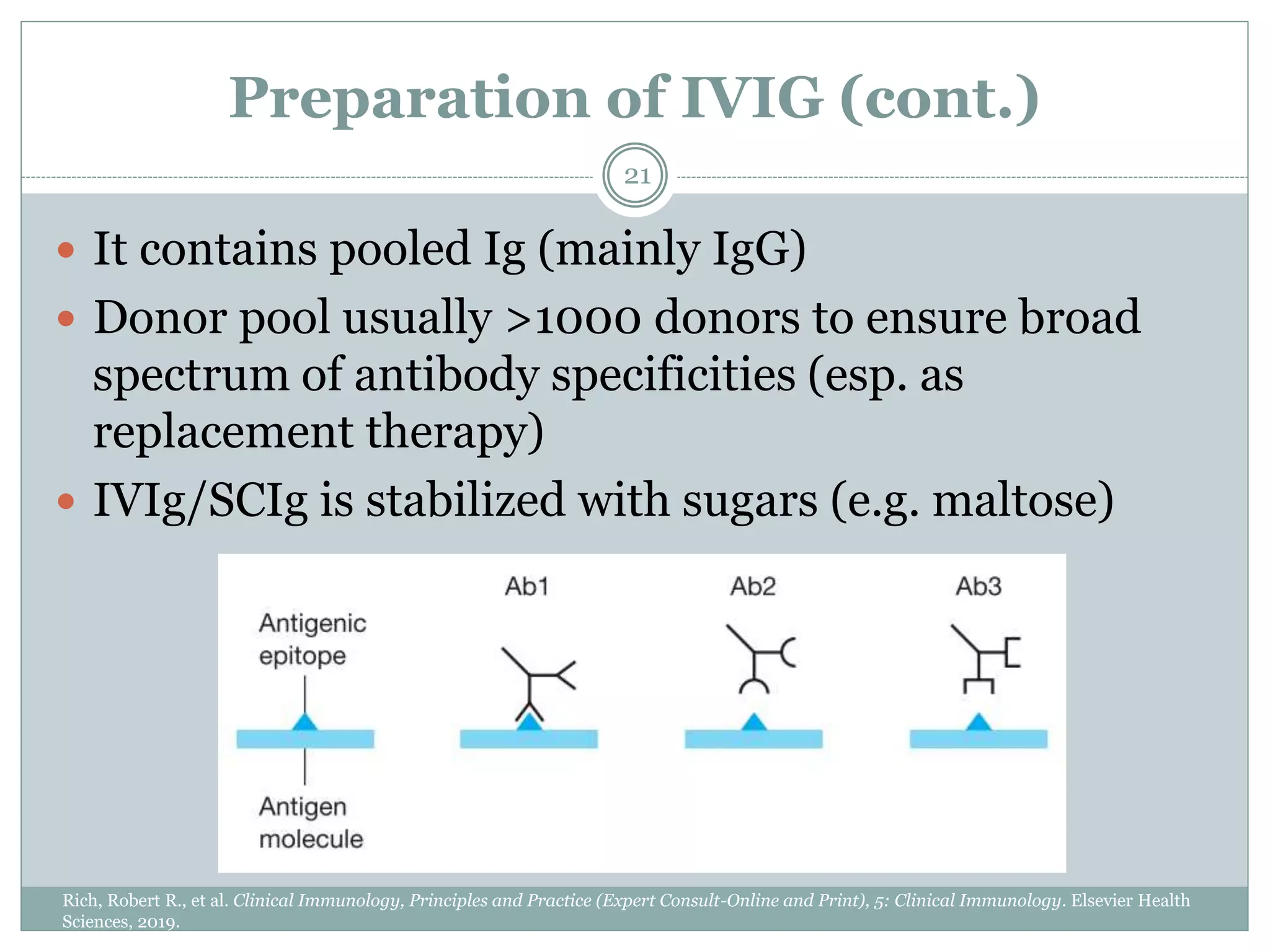
Preparation of IVIG (cont.)
21
Rich, Robert R., et al. Clinical Immunology, Principles and Practice (Expert Consult-Online and Print), 5: Clinical Immunology. Elsevier Health
Sciences, 2019.
 It contains pooled Ig (mainly IgG)
 Donor pool usually >1000 donors to ensure broad
spectrum of antibody specificities (esp. as
replacement therapy)
 IVIg/SCIg is stabilized with sugars (e.g. maltose)
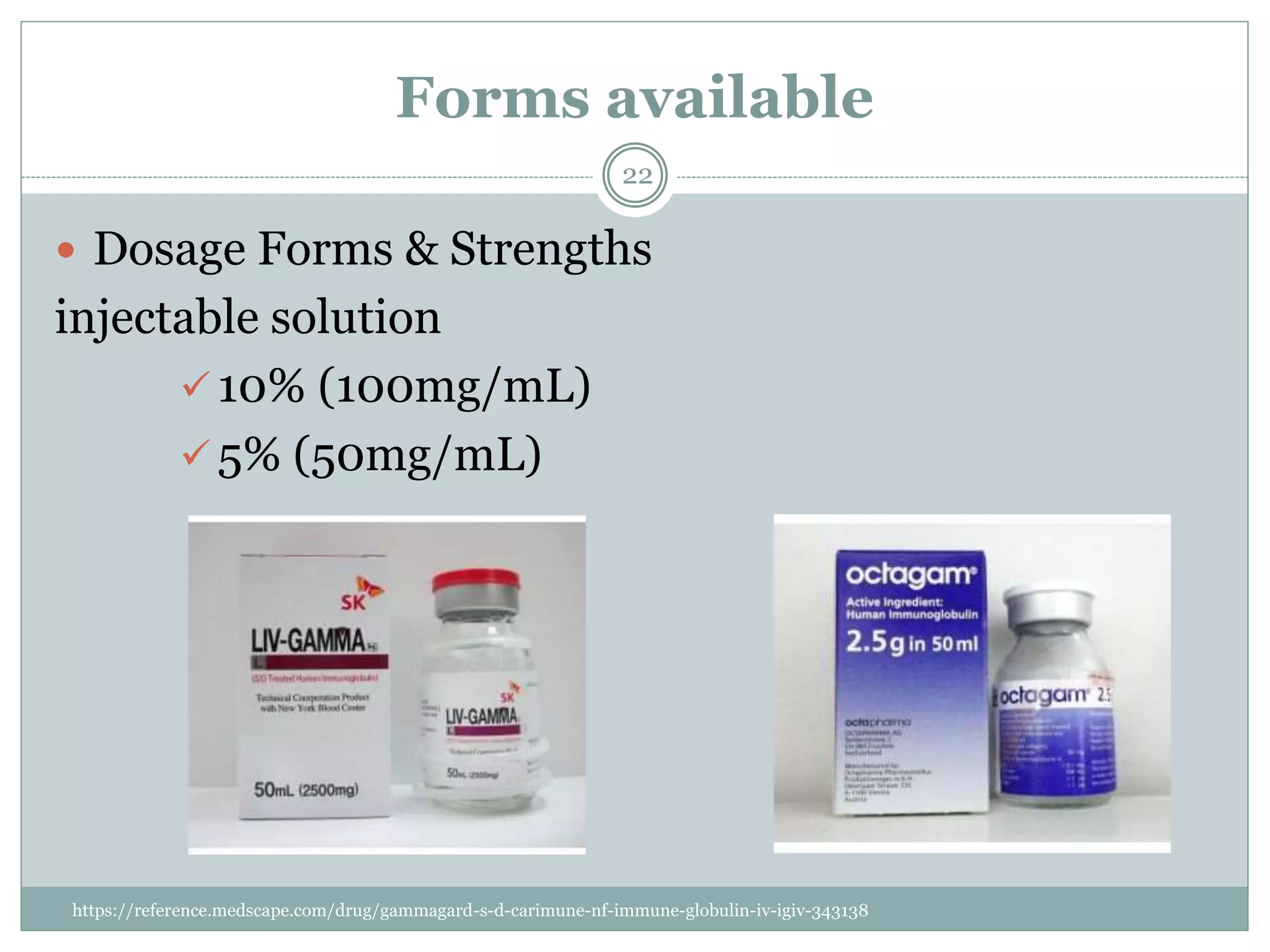
Forms available
22
 Dosage Forms & Strengths
injectable solution
 10% (100mg/mL)
 5% (50mg/mL)
https://reference.medscape.com/drug/gammagard-s-d-carimune-nf-immune-globulin-iv-igiv-343138
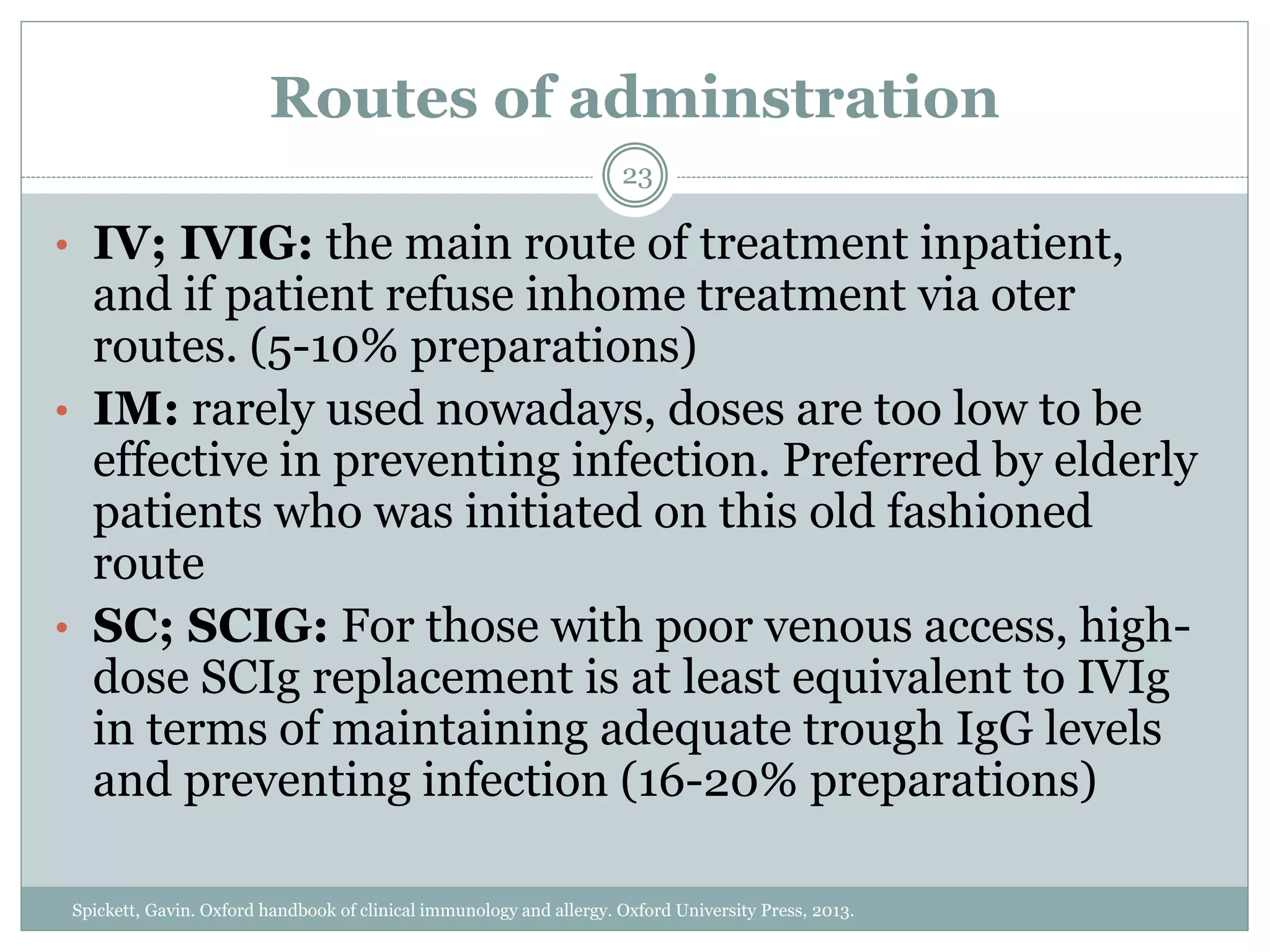
Routes of adminstration
• IV; IVIG: the main route of treatment inpatient,
and if patient refuse inhome treatment via oter
routes. (5-10% preparations)
• IM: rarely used nowadays, doses are too low to be
effective in preventing infection. Preferred by elderly
patients who was initiated on this old fashioned
route
• SC; SCIG: For those with poor venous access, high-
dose SCIg replacement is at least equivalent to IVIg
in terms of maintaining adequate trough IgG levels
and preventing infection (16-20% preparations)
23
Spickett, Gavin. Oxford handbook of clinical immunology and allergy. Oxford University Press, 2013.
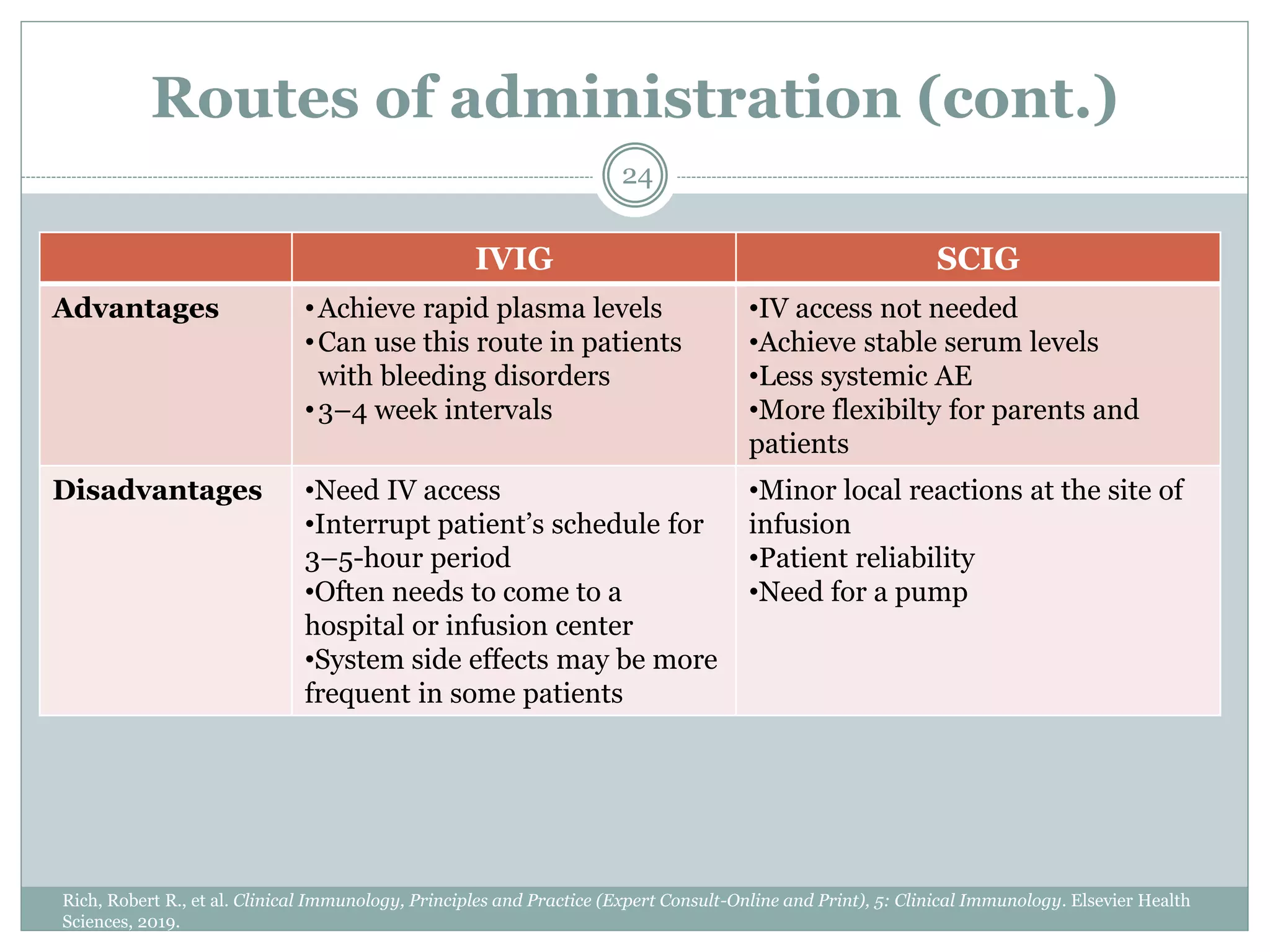
Routes of administration (cont.)
IVIG SCIG
Advantages •Achieve rapid plasma levels
•Can use this route in patients
with bleeding disorders
•3–4 week intervals
•IV access not needed
•Achieve stable serum levels
•Less systemic AE
•More flexibilty for parents and
patients
Disadvantages •Need IV access
•Interrupt patient’s schedule for
3–5-hour period
•Often needs to come to a
hospital or infusion center
•System side effects may be more
frequent in some patients
•Minor local reactions at the site of
infusion
•Patient reliability
•Need for a pump
24
Rich, Robert R., et al. Clinical Immunology, Principles and Practice (Expert Consult-Online and Print), 5: Clinical Immunology. Elsevier Health
Sciences, 2019.
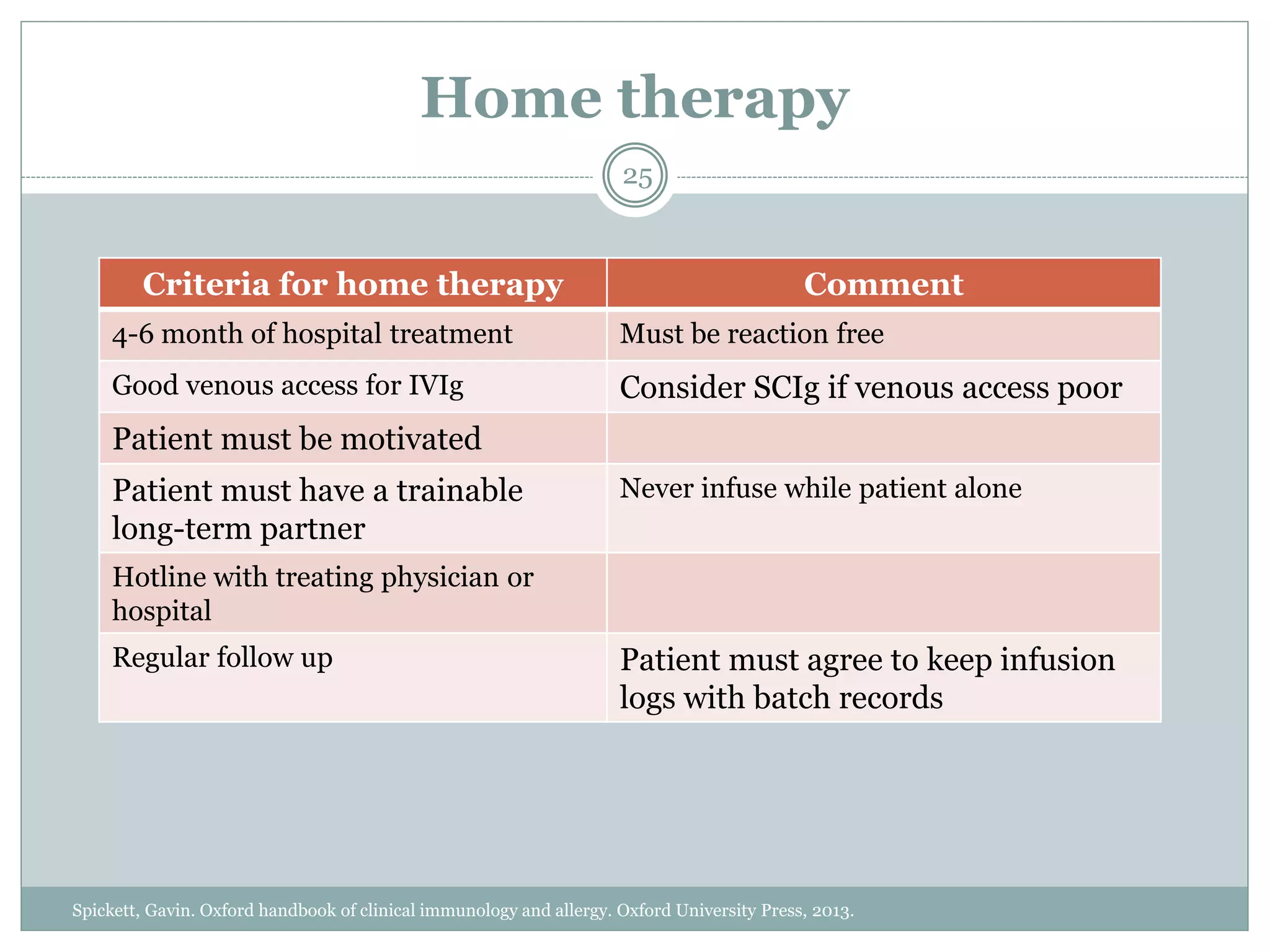
Home therapy
Criteria for home therapy Comment
4-6 month of hospital treatment Must be reaction free
Good venous access for IVIg Consider SCIg if venous access poor
Patient must be motivated
Patient must have a trainable
long-term partner
Never infuse while patient alone
Hotline with treating physician or
hospital
Regular follow up Patient must agree to keep infusion
logs with batch records
25
Spickett, Gavin. Oxford handbook of clinical immunology and allergy. Oxford University Press, 2013.
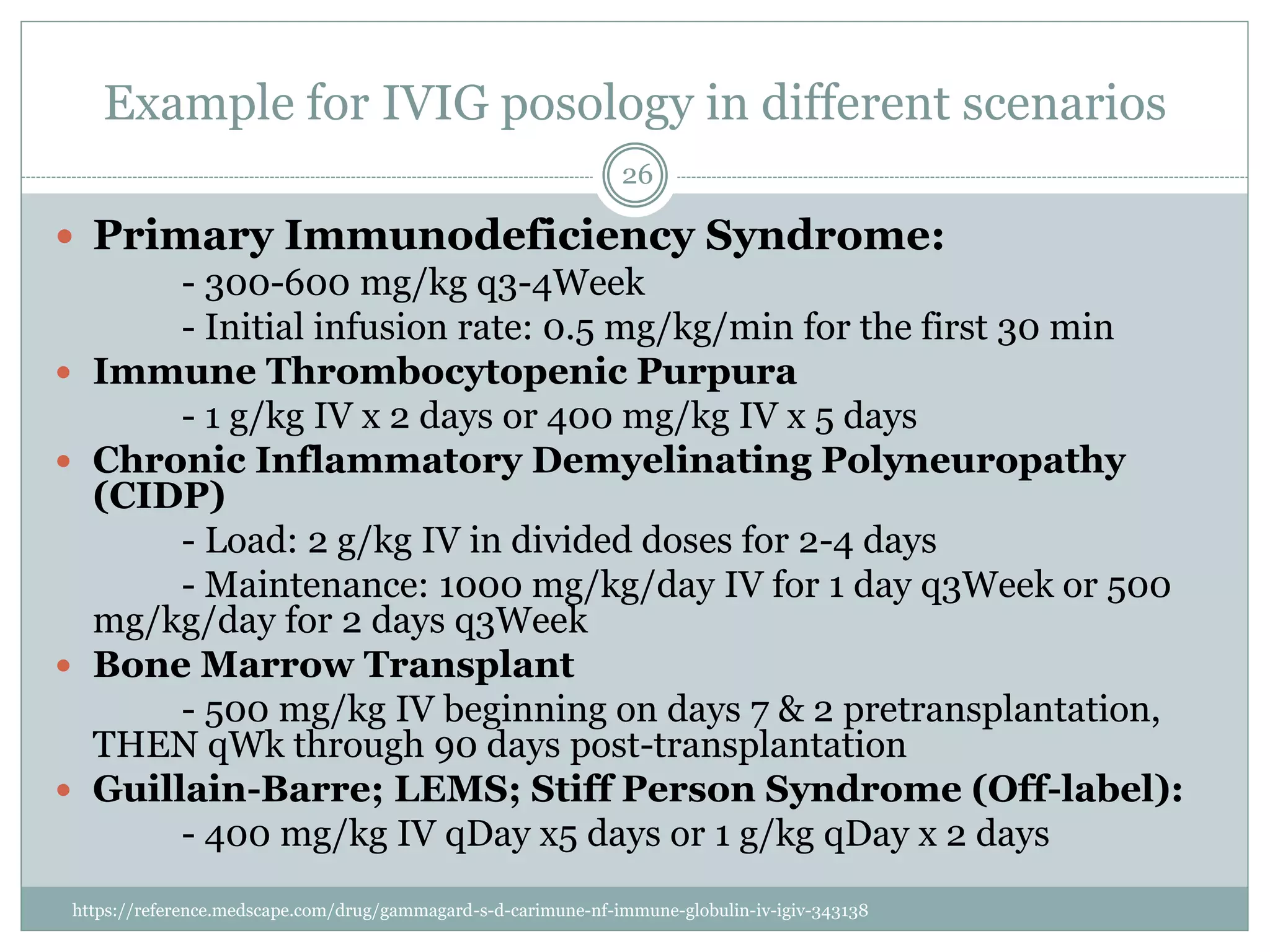
Example for IVIG posology in different scenarios
 Primary Immunodeficiency Syndrome:
- 300-600 mg/kg q3-4Week
- Initial infusion rate: 0.5 mg/kg/min for the first 30 min
 Immune Thrombocytopenic Purpura
- 1 g/kg IV x 2 days or 400 mg/kg IV x 5 days
 Chronic Inflammatory Demyelinating Polyneuropathy
(CIDP)
- Load: 2 g/kg IV in divided doses for 2-4 days
- Maintenance: 1000 mg/kg/day IV for 1 day q3Week or 500
mg/kg/day for 2 days q3Week
 Bone Marrow Transplant
- 500 mg/kg IV beginning on days 7 & 2 pretransplantation,
THEN qWk through 90 days post-transplantation
 Guillain-Barre; LEMS; Stiff Person Syndrome (Off-label):
- 400 mg/kg IV qDay x5 days or 1 g/kg qDay x 2 days
26
https://reference.medscape.com/drug/gammagard-s-d-carimune-nf-immune-globulin-iv-igiv-343138
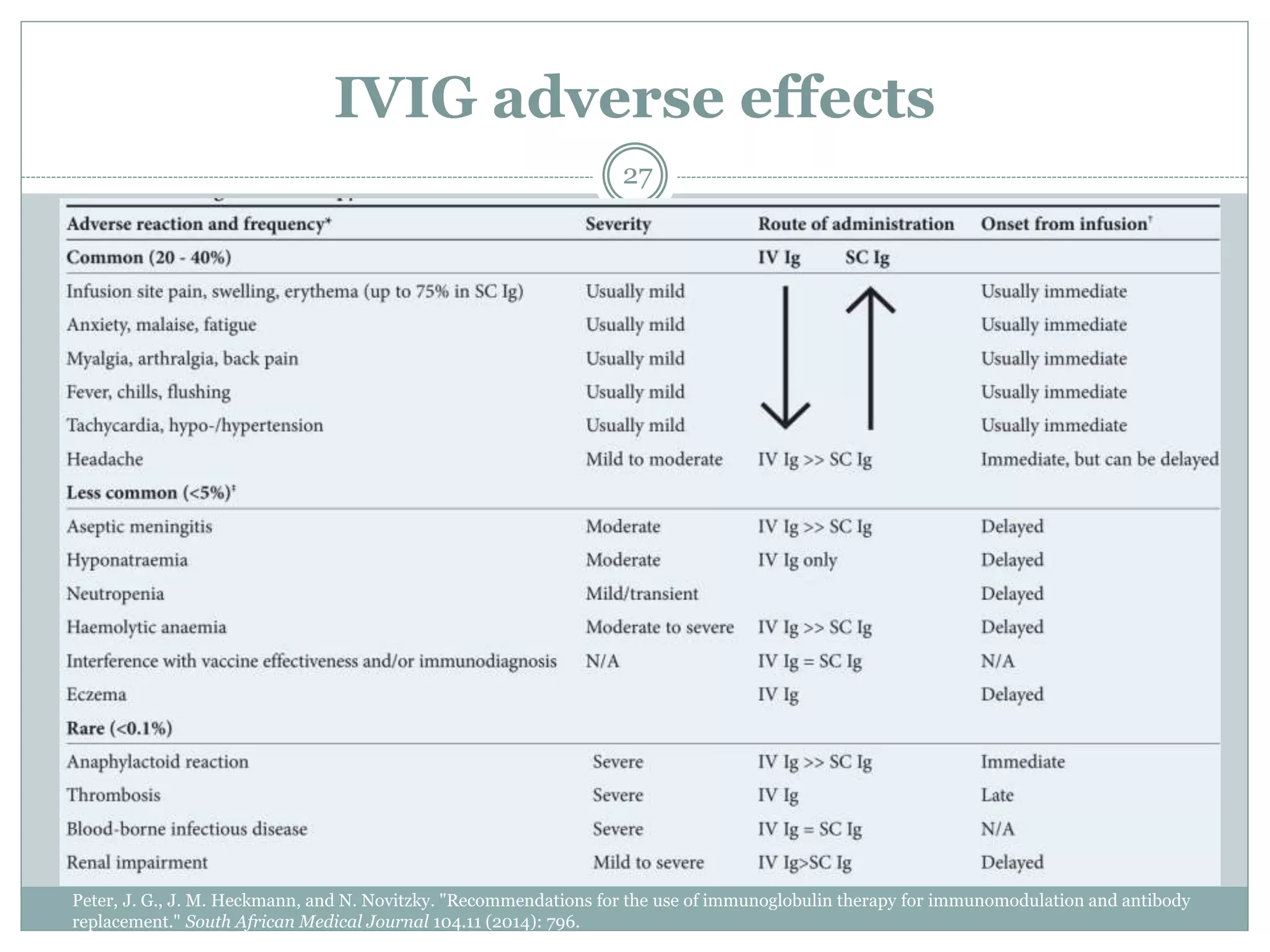
IVIG adverse effects
27
Peter, J. G., J. M. Heckmann, and N. Novitzky. "Recommendations for the use of immunoglobulin therapy for immunomodulation and antibody
replacement." South African Medical Journal 104.11 (2014): 796.
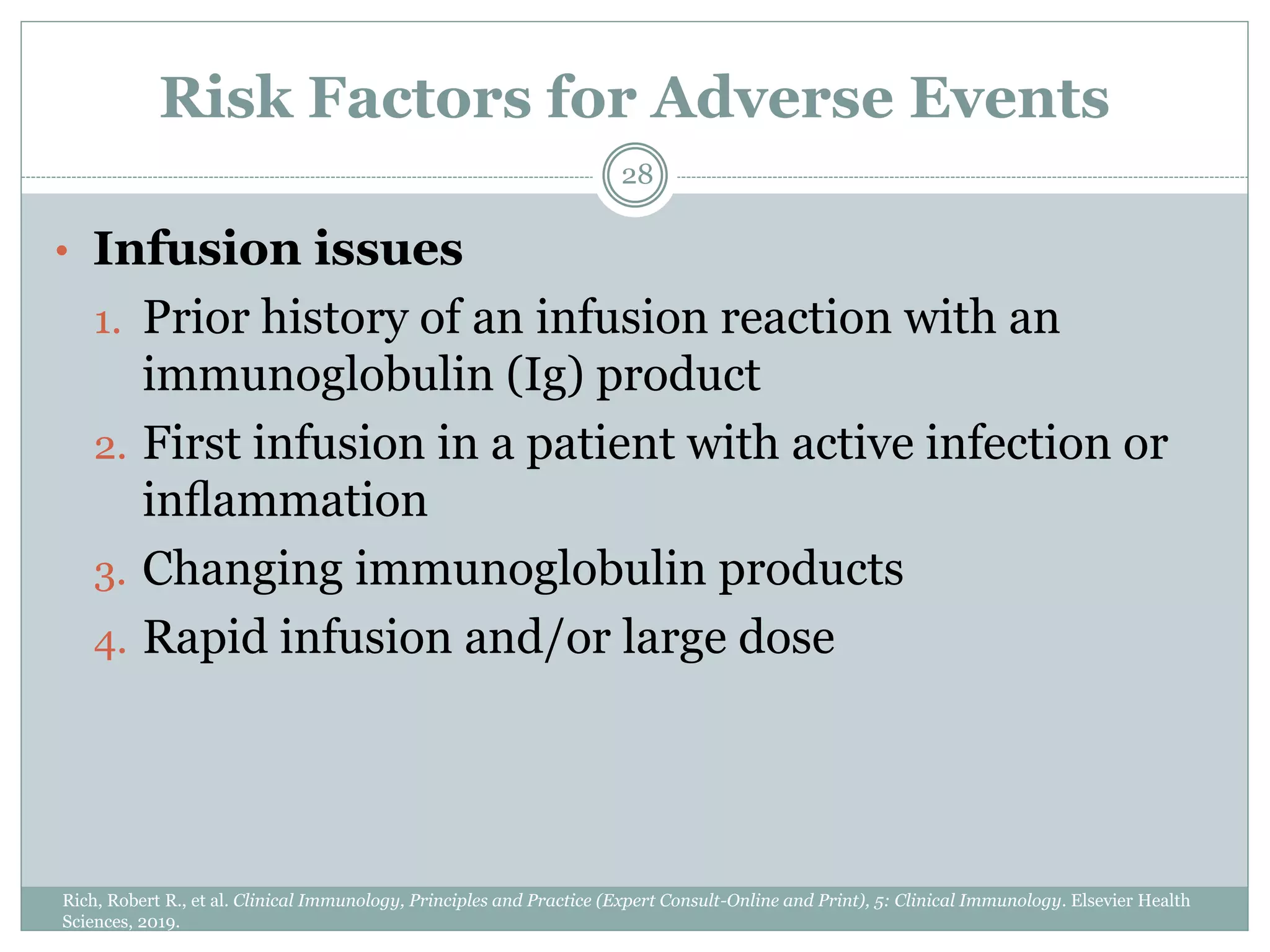
Risk Factors for Adverse Events
• Infusion issues
1. Prior history of an infusion reaction with an
immunoglobulin (Ig) product
2. First infusion in a patient with active infection or
inflammation
3. Changing immunoglobulin products
4. Rapid infusion and/or large dose
28
Rich, Robert R., et al. Clinical Immunology, Principles and Practice (Expert Consult-Online and Print), 5: Clinical Immunology. Elsevier Health
Sciences, 2019.
Risk Factors for Adverse Events (cont)
• Patient factors
1. Preexisting renal impairment
2. Prior history of thrombotic event
3. Autoimmune disorder
4. Diabetes mellitus
5. Age—older age
6. Dyslipidemia
7. Dehydration with volume depletion
8. Hypercoagulable state
9. Indwelling catheters
10. Paraproteinemia or other causes of hyperviscosity
11. Cardiac or peripheral vascular disorders
12. Estrogen use
13. Smoking
29
Rich, Robert R., et al. Clinical Immunology, Principles and Practice (Expert Consult-Online and Print), 5: Clinical Immunology. Elsevier Health
Sciences, 2019.
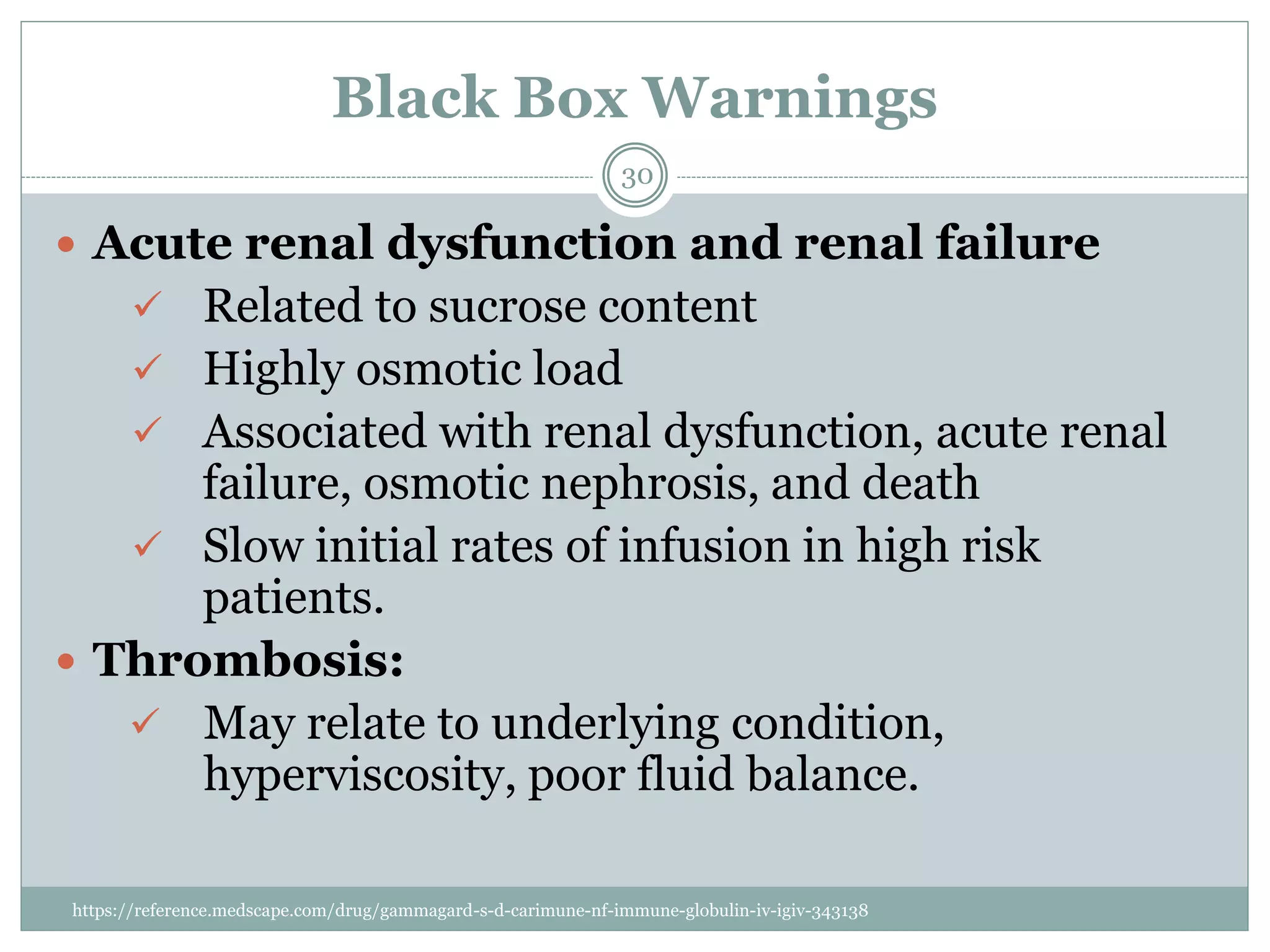
Black Box Warnings
 Acute renal dysfunction and renal failure
 Related to sucrose content
 Highly osmotic load
 Associated with renal dysfunction, acute renal
failure, osmotic nephrosis, and death
 Slow initial rates of infusion in high risk
patients.
 Thrombosis:
 May relate to underlying condition,
hyperviscosity, poor fluid balance.
30
https://reference.medscape.com/drug/gammagard-s-d-carimune-nf-immune-globulin-iv-igiv-343138
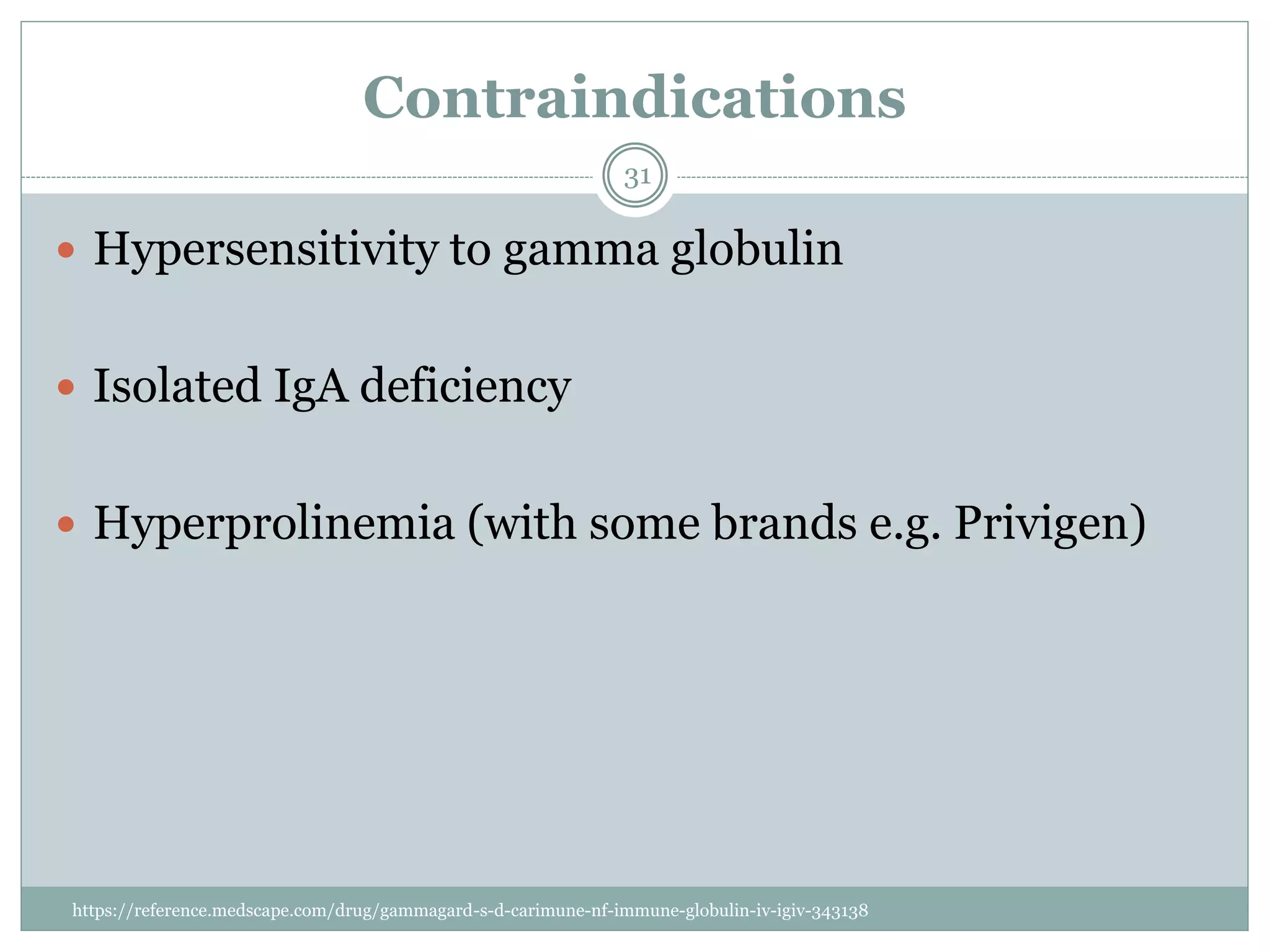
Contraindications
 Hypersensitivity to gamma globulin
 Isolated IgA deficiency
 Hyperprolinemia (with some brands e.g. Privigen)
31
https://reference.medscape.com/drug/gammagard-s-d-carimune-nf-immune-globulin-iv-igiv-343138
Other cautions
 Prion transmitted disease.
 Serum sickness like reaction.
 Aseptic meningitis syndrome.
 Hemolytic anemia can develop subsequent to IGIV
therapy due to enhanced RBC sequestration.
 Postpone live virus vaccines for at least 3 months
 False high blood glucose due to high maltose content
 Various passively transferred antibodies in
immunoglobulin preparations may lead to
misinterpretation of the results of serological testing
32
https://reference.medscape.com/drug/gammagard-s-d-carimune-nf-immune-globulin-iv-igiv-343138
Pregnancy & Lactation
 Pregnancy Category: C
 Use with caution if benefits outweigh risks.
Animal studies show risk and human studies
not available or neither animal nor human
studies done.
 Lactation: not known if excreted in breast milk
33
https://reference.medscape.com/drug/gammagard-s-d-carimune-nf-immune-globulin-iv-igiv-343138
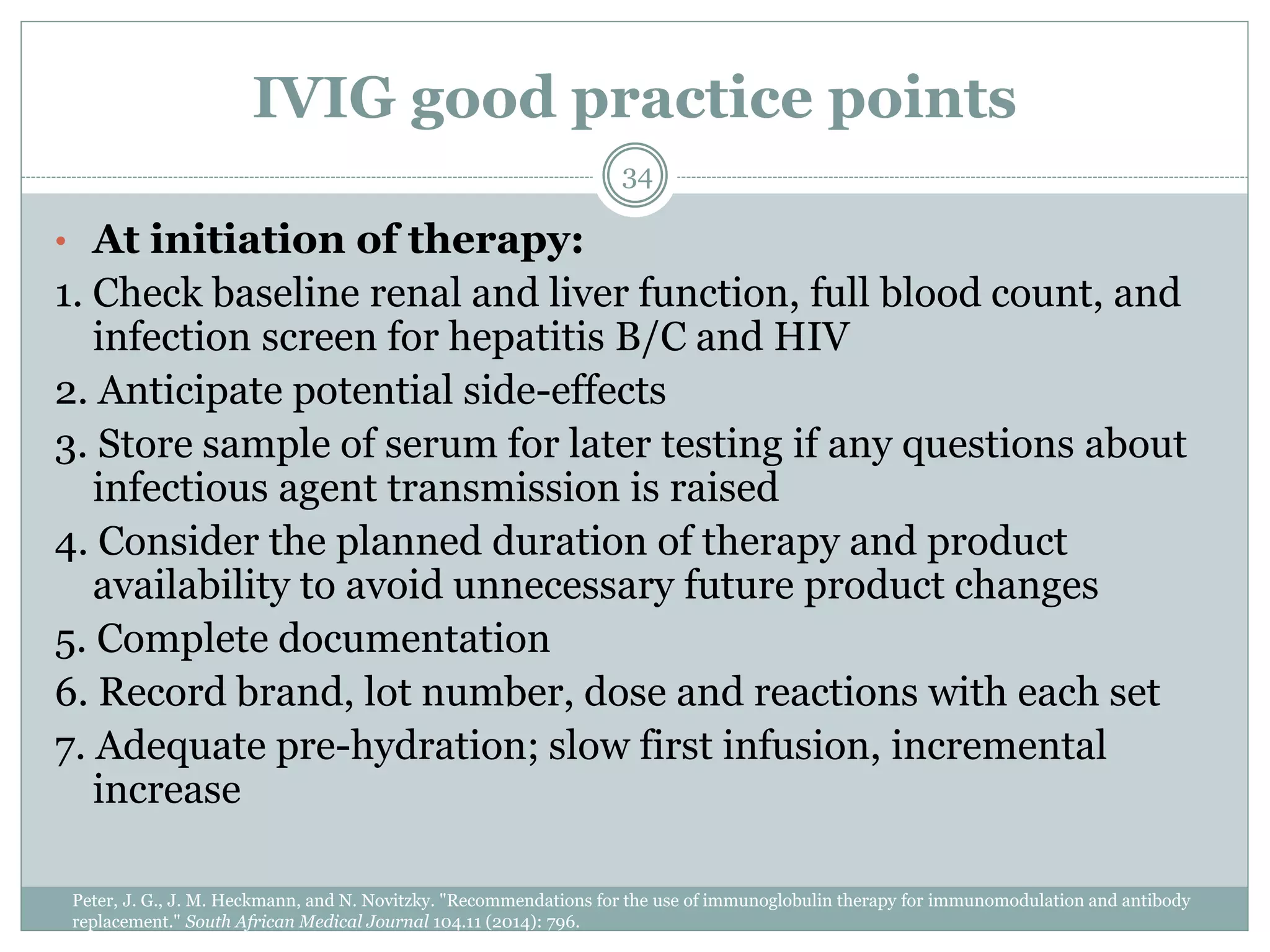
IVIG good practice points
• At initiation of therapy:
1. Check baseline renal and liver function, full blood count, and
infection screen for hepatitis B/C and HIV
2. Anticipate potential side-effects
3. Store sample of serum for later testing if any questions about
infectious agent transmission is raised
4. Consider the planned duration of therapy and product
availability to avoid unnecessary future product changes
5. Complete documentation
6. Record brand, lot number, dose and reactions with each set
7. Adequate pre-hydration; slow first infusion, incremental
increase
34
Peter, J. G., J. M. Heckmann, and N. Novitzky. "Recommendations for the use of immunoglobulin therapy for immunomodulation and antibody
replacement." South African Medical Journal 104.11 (2014): 796.
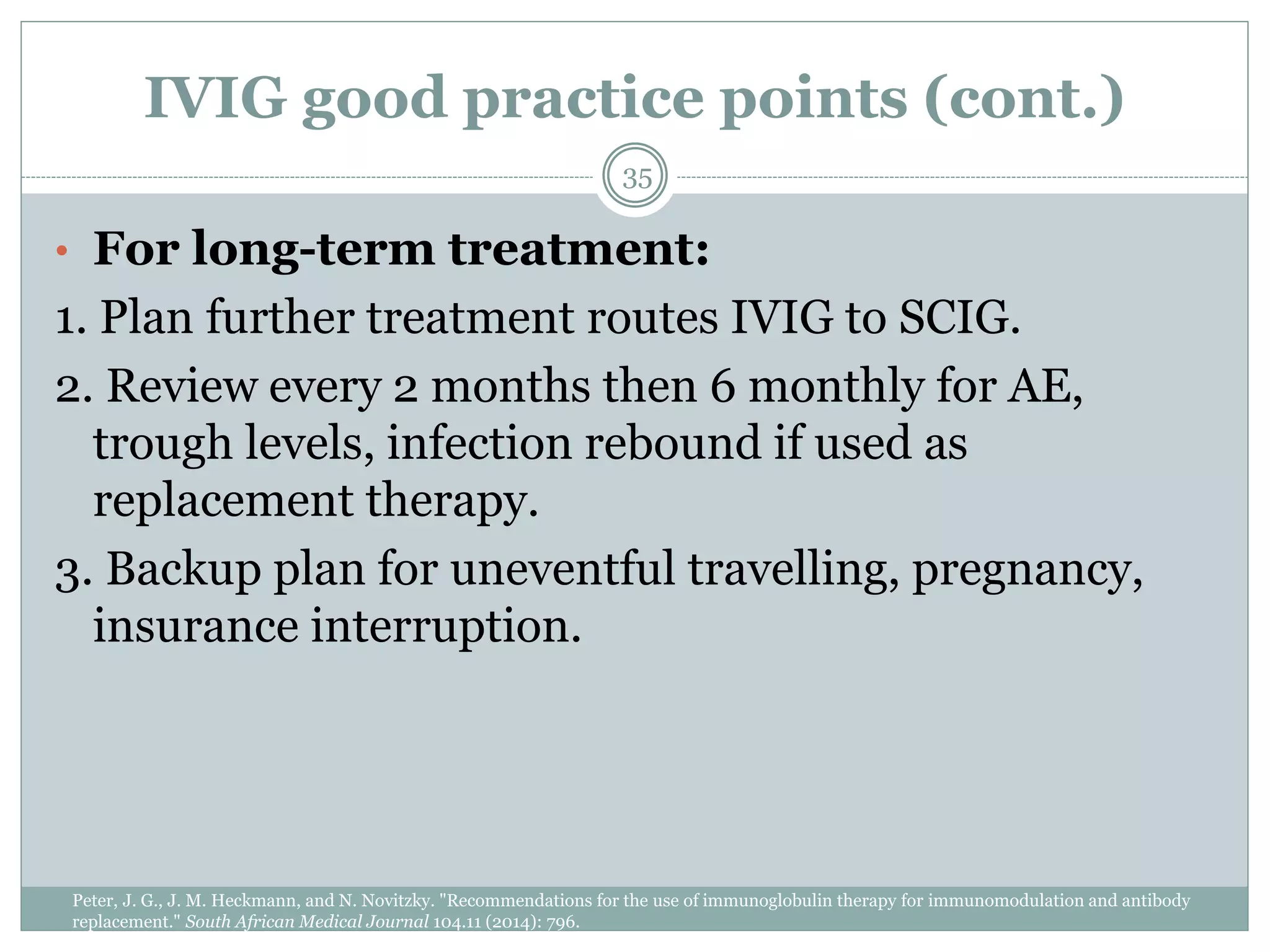
IVIG good practice points (cont.)
• For long-term treatment:
1. Plan further treatment routes IVIG to SCIG.
2. Review every 2 months then 6 monthly for AE,
trough levels, infection rebound if used as
replacement therapy.
3. Backup plan for uneventful travelling, pregnancy,
insurance interruption.
35
Peter, J. G., J. M. Heckmann, and N. Novitzky. "Recommendations for the use of immunoglobulin therapy for immunomodulation and antibody
replacement." South African Medical Journal 104.11 (2014): 796.
IVIG good practice points (cont.)
 Technical issues during preparation:
 Dilution is dependent upon manufacturer &
brand; do not shake, avoid foaming; discard
unused portion
 Administer in separate infusion line from other
medications; flush line with NS.
 Prepare epinephrine; keep it near you.
 Start low go slow
 First thing to do if reaction occurs, stop infusion
36
Spickett, Gavin. Oxford handbook of clinical immunology and allergy. Oxford University Press, 2013.
Final Bottom-line
 Igs has diverse immunologic actions.
 IVIG therapy has been the last resort in many
autoimmune diseases.
 IVIG replacement therapy is life saving in many
immunodeficiency disorders.
 There are other route for IG therapy, however in
replacement therapy only.
 IVIG has many side effects, though it can be avoided
by proper selection of patients, and to expect them
when risk factors apply.
37
Intravenous immunoglobulin therapy (IVIG)

Intravenous immunoglobulin therapy (IVIG)

  • 1.
    Usama Ragab Youssif AssistantLecturer Of Medicine Clinical Immunology IVIG Sunday, 6 January 2019 Sharkia Medical Syndicate Clinical Immunology 1st Announcement
  • 2.
    Outlines  Definitions &Nomenclatures  Structure of immunoglobulins  Immunoglobulins in our bodies  Physiologic actions of immunoglobulins  The Idea behind use of immunoglobulins  Uses: indications, mechanisms, preparation, posology, administration  Adverse effects  Safe practice  Final bottom-line 2
  • 3.
    Immunoglobulins  Also calledantibodies.  Group of glycoprotiens present in the serum and tissue fluid of all mammals.  They are found mainly in the gamma globulin fraction of the serum.  They bind specifically to the antigen that induced their production.  Produced by differentiated B cells termed plasma cells 3 Abla M. El-Mishad: Manual of Microbiology & Immunology. Vol I 8th Edition. 2010 El-Ahram press Egypt
  • 4.
    IVIG or IVIg IVIG is an abbreviation for Intravenous Immunoglobulin  Administered intravenously in case of IVIG  IG therapy has other route. 4 Spickett, Gavin. Oxford handbook of clinical immunology and allergy. Oxford University Press, 2013.
  • 5.
    Structure of immunoglobulin 5 AblaM. El-Mishad: Manual of Microbiology & Immunology. Vol I 8th Edition. 2010 El-Ahram press Egypt
  • 6.
    Structure of immunoglobulin(cont.) 6 Gorczynski, R., and J. Stanley. "Clinical immunology–An introductory text." Immunology, T lympho-cytes. Texas: Landes Bioscience (1999): 2-185.
  • 7.
    Structure of immunoglobulin(cont.) Diversity Specificity Cellular Biologic 7 Gorczynski, R., and J. Stanley. "Clinical immunology–An introductory text." Immunology, T lympho-cytes. Texas: Landes Bioscience (1999): 2-185.
  • 8.
    Structure of immunoglobulin(cont.) 8 Gorczynski, R., and J. Stanley. "Clinical immunology–An introductory text." Immunology, T lympho-cytes. Texas: Landes Bioscience (1999): 2-185.
  • 9.
    Physiologic Effects ofIgG  Fab fragment activity = antigen binding site Agglutination Neutralization Opsonization 9 Abla M. El-Mishad: Manual of Microbiology & Immunology. Vol I 8th Edition. 2010 El-Ahram press Egypt
  • 10.
    Physiologic Effects ofIgG (cont.)  Fc fragment activity = Crystallization Fragment Complement activation ADCC Inflammation 10 Abla M. El-Mishad: Manual of Microbiology & Immunology. Vol I 8th Edition. 2010 El-Ahram press Egypt
  • 11.
    How B-cell producesIgs • Initial signal= Ag-Ab on surface of B-cell after leaving BM to be processed and presented in association with MHC-II to T-cell (TCR) • Co-stimulatory signals= - B7 on B-cell with CD28 on T-cell. - CD40 to be associated with CD40L on T-cell. • Cytokine release: IL-2,4,5,6 • Memory cell production 11 Abla M. El-Mishad: Manual of Microbiology & Immunology. Vol I 8th Edition. 2010 El-Ahram press Egypt
  • 12.
    How B-cell producesIgs (cont.) 12 CD40/CD40L Abla M. El-Mishad: Manual of Microbiology & Immunology. Vol I 8th Edition. 2010 El-Ahram press Egypt
  • 13.
    How B-cell producesIgs (cont.) 13 Abla M. El-Mishad: Manual of Microbiology & Immunology. Vol I 8th Edition. 2010 El-Ahram press Egypt
  • 14.
    Uses of IVIG •Replacement therapy. • Immunomodulatory effect. 14 Jessica Katz, and Kinjal Parikh. "Intravenous immunoglobulin." Medscape (2018).
  • 15.
    Uses of IVIG(cont.) Replacement therapy (Low dose therapy) Immunomodulatory effect (High dose therapy) Licensed Off-label •Primary immunodeficiency •HIV infection •BMT •B-cell lymphocytic leukemia •Multiple myeloma •Immune thrombocytopenic purpura •GBS •CIDP •Kawasaki disease •Multifocal motor neuropathy •Autoimmune neutropenia •Autoimmune hemolysis •Anti Factor VIII inhibitor •Multiple sclerosis •Myasthenia gravis •Stiff person syndrome •ANCA associated vasculitis •Polymyositis/Dermatomyositis •RA •SLE – APS •GVHD •Sepsis syndrome •TEN •Graves opthalmopathy 15 Jessica Katz, and Kinjal Parikh. "Intravenous immunoglobulin." Medscape (2018).
  • 16.
    Mechansim of IVIGas Replacement 16 Peter, J. G., J. M. Heckmann, and N. Novitzky. "Recommendations for the use of immunoglobulin therapy for immunomodulation and antibody replacement." South African Medical Journal 104.11 (2014): 796.
  • 17.
    Mechansim of IVIGas Immunomodulatory 17 Gelfand, Erwin W. "Intravenous immune globulin in autoimmune and inflammatory diseases." New England Journal of Medicine 367.21 (2012): 2015-2025.
  • 18.
    Example for IVIGrole in ITP • Fc receptor blockade of reticuloendothelial system • Fcγ receptor downregulation • Idiotype–antiidiotype interaction between antiplatelet GPIIb/IIa autoantibodies and the antiidiotypic antibodies in IVIG • Activation of inhibitory receptor FcγRIIB • Saturation of FcRn receptor to accelerate the catabolism of antiplatelet autoantibodies 19 Abla M. El-Mishad: Manual of Microbiology & Immunology. Vol I 8th Edition. 2010 El-Ahram press Egypt
  • 19.
    Preparation of IVIG 20 Rich,Robert R., et al. Clinical Immunology, Principles and Practice (Expert Consult-Online and Print), 5: Clinical Immunology. Elsevier Health Sciences, 2019.
  • 20.
    Preparation of IVIG(cont.) 21 Rich, Robert R., et al. Clinical Immunology, Principles and Practice (Expert Consult-Online and Print), 5: Clinical Immunology. Elsevier Health Sciences, 2019.  It contains pooled Ig (mainly IgG)  Donor pool usually >1000 donors to ensure broad spectrum of antibody specificities (esp. as replacement therapy)  IVIg/SCIg is stabilized with sugars (e.g. maltose)
  • 21.
    Forms available 22  DosageForms & Strengths injectable solution  10% (100mg/mL)  5% (50mg/mL) https://reference.medscape.com/drug/gammagard-s-d-carimune-nf-immune-globulin-iv-igiv-343138
  • 22.
    Routes of adminstration •IV; IVIG: the main route of treatment inpatient, and if patient refuse inhome treatment via oter routes. (5-10% preparations) • IM: rarely used nowadays, doses are too low to be effective in preventing infection. Preferred by elderly patients who was initiated on this old fashioned route • SC; SCIG: For those with poor venous access, high- dose SCIg replacement is at least equivalent to IVIg in terms of maintaining adequate trough IgG levels and preventing infection (16-20% preparations) 23 Spickett, Gavin. Oxford handbook of clinical immunology and allergy. Oxford University Press, 2013.
  • 23.
    Routes of administration(cont.) IVIG SCIG Advantages •Achieve rapid plasma levels •Can use this route in patients with bleeding disorders •3–4 week intervals •IV access not needed •Achieve stable serum levels •Less systemic AE •More flexibilty for parents and patients Disadvantages •Need IV access •Interrupt patient’s schedule for 3–5-hour period •Often needs to come to a hospital or infusion center •System side effects may be more frequent in some patients •Minor local reactions at the site of infusion •Patient reliability •Need for a pump 24 Rich, Robert R., et al. Clinical Immunology, Principles and Practice (Expert Consult-Online and Print), 5: Clinical Immunology. Elsevier Health Sciences, 2019.
  • 24.
    Home therapy Criteria forhome therapy Comment 4-6 month of hospital treatment Must be reaction free Good venous access for IVIg Consider SCIg if venous access poor Patient must be motivated Patient must have a trainable long-term partner Never infuse while patient alone Hotline with treating physician or hospital Regular follow up Patient must agree to keep infusion logs with batch records 25 Spickett, Gavin. Oxford handbook of clinical immunology and allergy. Oxford University Press, 2013.
  • 25.
    Example for IVIGposology in different scenarios  Primary Immunodeficiency Syndrome: - 300-600 mg/kg q3-4Week - Initial infusion rate: 0.5 mg/kg/min for the first 30 min  Immune Thrombocytopenic Purpura - 1 g/kg IV x 2 days or 400 mg/kg IV x 5 days  Chronic Inflammatory Demyelinating Polyneuropathy (CIDP) - Load: 2 g/kg IV in divided doses for 2-4 days - Maintenance: 1000 mg/kg/day IV for 1 day q3Week or 500 mg/kg/day for 2 days q3Week  Bone Marrow Transplant - 500 mg/kg IV beginning on days 7 & 2 pretransplantation, THEN qWk through 90 days post-transplantation  Guillain-Barre; LEMS; Stiff Person Syndrome (Off-label): - 400 mg/kg IV qDay x5 days or 1 g/kg qDay x 2 days 26 https://reference.medscape.com/drug/gammagard-s-d-carimune-nf-immune-globulin-iv-igiv-343138
  • 26.
    IVIG adverse effects 27 Peter,J. G., J. M. Heckmann, and N. Novitzky. "Recommendations for the use of immunoglobulin therapy for immunomodulation and antibody replacement." South African Medical Journal 104.11 (2014): 796.
  • 27.
    Risk Factors forAdverse Events • Infusion issues 1. Prior history of an infusion reaction with an immunoglobulin (Ig) product 2. First infusion in a patient with active infection or inflammation 3. Changing immunoglobulin products 4. Rapid infusion and/or large dose 28 Rich, Robert R., et al. Clinical Immunology, Principles and Practice (Expert Consult-Online and Print), 5: Clinical Immunology. Elsevier Health Sciences, 2019.
  • 28.
    Risk Factors forAdverse Events (cont) • Patient factors 1. Preexisting renal impairment 2. Prior history of thrombotic event 3. Autoimmune disorder 4. Diabetes mellitus 5. Age—older age 6. Dyslipidemia 7. Dehydration with volume depletion 8. Hypercoagulable state 9. Indwelling catheters 10. Paraproteinemia or other causes of hyperviscosity 11. Cardiac or peripheral vascular disorders 12. Estrogen use 13. Smoking 29 Rich, Robert R., et al. Clinical Immunology, Principles and Practice (Expert Consult-Online and Print), 5: Clinical Immunology. Elsevier Health Sciences, 2019.
  • 29.
    Black Box Warnings Acute renal dysfunction and renal failure  Related to sucrose content  Highly osmotic load  Associated with renal dysfunction, acute renal failure, osmotic nephrosis, and death  Slow initial rates of infusion in high risk patients.  Thrombosis:  May relate to underlying condition, hyperviscosity, poor fluid balance. 30 https://reference.medscape.com/drug/gammagard-s-d-carimune-nf-immune-globulin-iv-igiv-343138
  • 30.
    Contraindications  Hypersensitivity togamma globulin  Isolated IgA deficiency  Hyperprolinemia (with some brands e.g. Privigen) 31 https://reference.medscape.com/drug/gammagard-s-d-carimune-nf-immune-globulin-iv-igiv-343138
  • 31.
    Other cautions  Priontransmitted disease.  Serum sickness like reaction.  Aseptic meningitis syndrome.  Hemolytic anemia can develop subsequent to IGIV therapy due to enhanced RBC sequestration.  Postpone live virus vaccines for at least 3 months  False high blood glucose due to high maltose content  Various passively transferred antibodies in immunoglobulin preparations may lead to misinterpretation of the results of serological testing 32 https://reference.medscape.com/drug/gammagard-s-d-carimune-nf-immune-globulin-iv-igiv-343138
  • 32.
    Pregnancy & Lactation Pregnancy Category: C  Use with caution if benefits outweigh risks. Animal studies show risk and human studies not available or neither animal nor human studies done.  Lactation: not known if excreted in breast milk 33 https://reference.medscape.com/drug/gammagard-s-d-carimune-nf-immune-globulin-iv-igiv-343138
  • 33.
    IVIG good practicepoints • At initiation of therapy: 1. Check baseline renal and liver function, full blood count, and infection screen for hepatitis B/C and HIV 2. Anticipate potential side-effects 3. Store sample of serum for later testing if any questions about infectious agent transmission is raised 4. Consider the planned duration of therapy and product availability to avoid unnecessary future product changes 5. Complete documentation 6. Record brand, lot number, dose and reactions with each set 7. Adequate pre-hydration; slow first infusion, incremental increase 34 Peter, J. G., J. M. Heckmann, and N. Novitzky. "Recommendations for the use of immunoglobulin therapy for immunomodulation and antibody replacement." South African Medical Journal 104.11 (2014): 796.
  • 34.
    IVIG good practicepoints (cont.) • For long-term treatment: 1. Plan further treatment routes IVIG to SCIG. 2. Review every 2 months then 6 monthly for AE, trough levels, infection rebound if used as replacement therapy. 3. Backup plan for uneventful travelling, pregnancy, insurance interruption. 35 Peter, J. G., J. M. Heckmann, and N. Novitzky. "Recommendations for the use of immunoglobulin therapy for immunomodulation and antibody replacement." South African Medical Journal 104.11 (2014): 796.
  • 35.
    IVIG good practicepoints (cont.)  Technical issues during preparation:  Dilution is dependent upon manufacturer & brand; do not shake, avoid foaming; discard unused portion  Administer in separate infusion line from other medications; flush line with NS.  Prepare epinephrine; keep it near you.  Start low go slow  First thing to do if reaction occurs, stop infusion 36 Spickett, Gavin. Oxford handbook of clinical immunology and allergy. Oxford University Press, 2013.
  • 36.
    Final Bottom-line  Igshas diverse immunologic actions.  IVIG therapy has been the last resort in many autoimmune diseases.  IVIG replacement therapy is life saving in many immunodeficiency disorders.  There are other route for IG therapy, however in replacement therapy only.  IVIG has many side effects, though it can be avoided by proper selection of patients, and to expect them when risk factors apply. 37

Editor's Notes

  • #6 Light chain: variable and constant, the constant portion is either kappa or lambda. Heavy chain: variable and constant, the constant is either γ, α, μ, ε, δ corresponding to IgG, IgA, IgM, IgE and IgD. ----------------------- Regions that differ extensively are termed hypervariable and represent amino acid sequences that are unique to a particular antibody and complementary to a particular antigenic epitope. Hence hypervariable regions are also termed complementary determining regions, CDRs. Hypervariable regions can also serve as antigenic determinants (idiotopes). The collection of idiotopes in a given antibody defines the idiotype. Consequently, antibodies generated to the collection of idiotopes on a single antibody molecule are termed anti-idiotypic antibodies. ------------------------------------ What is an Anti-idiotypic antibody? When one antibody binds to an idiotope of another antibody it is referred to as an anti-idiotypic antibody. The variable part of an antibody including the unique antigen binding site is known as the idiotype. The combination of epitopes within the idiotype (i.e. the idiotopes) is unique for each antibody, figure 1. Because most therapeutic monoclonal antibodies developed today are human or humanized, the most likely immunogenic epitopes for the induction of anti-drug antibodies (ADA) lie within the hypervariable complementarity determining regions (CDR) that provide the majority of the binding contacts. Anti-idiotypic antibodies can be generated to bind specifically to one monoclonal antibody drug. These highly specialized antibodies can be used to set up pharmacokinetic (PK) assays in different formats to measure free or total drug levels in preclinical and clinical samples, or as positive controls in ADA assays.
  • #7 The Nobel Prize in Physiology or Medicine 1972 Gerald M. Edelman Rodney R. Porter ------------------------ Rodney Robert Porter born 8 October 1917 at Newton-le-Willows, Lancashire, England. He took his Ph.D. at Cambridge under the supervision of Dr. F. Sanger investigating protein chemistry. He returned to the study of the chemical structure of antibodies leading to the finding of the three fragments produced by splitting with papain in 1958-59. He continued this work at St. Mary’s Hospital Medical School and put forward the peptide chain structure of antibodies in 1962. -----------------------------------------
  • #8 Antibodies possess both antigen binding capacity and biological activity. The antigen binding capacity resides in a structure(s) conferred by amino acid sequences in the so-called variable regions. Amino acid differences in this region also confer exquisite specificity, with respect to antigen recognition and binding. The biological activity of different antibody molecules is the result of amino acid differences in the constant region, although the basic molecular structure of the antibodies is the same. The different constant regions define the isotype (family) of immunoglobulins, IgA, IgD, IgE, IgG and IgM, where Ig refers to the term immunoglobulin. ---------------------------- Discovery by proteolysis Antibodies possess both an antigen binding capacity and a biological activity. This bifunctional nature of antibodies was initially demonstrated following proteolytic cleavage of antibody. Digestion with papain yields three molecules, two copies of a single antigen binding region, F(ab), and one readily crystallizable fragment (Fc) that cannot bind antigen. Digestion of antibodies with pepsin generates one molecule possessing two antigen binding sites, Fab2. In pepsin digests, the Fc portion is proteolytically degraded.
  • #9 Biological effector region The Fc region is determined by the constant region of the antibody and mediates the antibody effector function. Because the constant region of the antibody also defines the antibody isotype, the antibody isotype thus correlates with the antibody’s biological role in an immune response.
  • #10 Agglutination: antibodies make microbes to stick together to be easily phagocytosed.
  • #11 Complement activation through classic pathway. ADCC;
  • #13 CD40 interaction with CD40L is essential for Ab class switching. Cytokine release from T-cell may determine the isotype of Ab produce i.e. class
  • #17 Intravenous immune globulin (IVIG) also contains numerous soluble proteins with biologic activity. DC denotes dendritic cells, FcγR receptor for the Fc portion of IgG, FcRn neonatal Fc receptor, and GR glucocorticoid receptor. -------------------------------- Fab-mediated activities Suppression or neutralization of autoantibodies Suppression or neutralization of cytokines Neutralization of activated complement components Restoration of idiotypic–anti-idiotypic networks Blockade of leukocyte-adhesion-molecule binding Targeting of specific immune cell–surface receptors Modulation of maturation and function of dendritic cells Fc-dependent activities Blockade of the FcRn Blockade of activating FcγR Up-regulation of inhibitory FcγRIIB Immunomodulation by sialylated IgG ……………. Fab denotes antigen-binding fragment, Fc crystallizable fragment, FcγR receptor for the Fc portion of IgG, and FcRn neonatal Fc receptor.
  • #18 Intravenous immune globulin (IVIG) also contains numerous soluble proteins with biologic activity. DC denotes dendritic cells, FcγR receptor for the Fc portion of IgG, FcRn neonatal Fc receptor, and GR glucocorticoid receptor. -------------------------------- Fab-mediated activities Suppression or neutralization of autoantibodies Suppression or neutralization of cytokines Neutralization of activated complement components Restoration of idiotypic–anti-idiotypic networks Blockade of leukocyte-adhesion-molecule binding Targeting of specific immune cell–surface receptors Modulation of maturation and function of dendritic cells Fc-dependent activities Blockade of the FcRn Blockade of activating FcγR Up-regulation of inhibitory FcγRIIB Immunomodulation by sialylated IgG ……………. Fab denotes antigen-binding fragment, Fc crystallizable fragment, FcγR receptor for the Fc portion of IgG, and FcRn neonatal Fc receptor. --------------------------------------------- Immunomodulatory mechanisms of action are less well understood and are likely to differ, depending on the specific autoimmune pathogenesis and individual genetic background. Diseases responding rapidly, but with short-lived duration of efficacy, suggest that high serum levels of therapeutic IgG ‘neutralise’ pathogenic autoantibodies. Other proposed mechanisms include binding or blocking of the antigen-binding site (anti-idiotype), enhancing IgG turn-over, thereby reducing circulating pathogenic IgG, as well as scavenging circulating complement binding sites and interfering with activation of the complement cascade. --------------------------------------------- Several autoimmune disorders are caused by the reaction of IgG to self antigens. Since FcRn extends IgG half-life in the circulation, it can also extend the half-life of these pathogenic antibodies and promote autoimmune disease.[18] New therapies seek to disrupt the IgG-FcRn interaction to increase the clearance of disease-causing IgG autoantibodies from the body. One such therapy is the infusion of intravenous immunoglobulin (IVIg) to saturate FcRn's IgG recycling capacity and proportionately reduce the levels of disease-causing IgG autoantibody binding to FcRn, thereby increasing disease-causing IgG autoantibody removal.[19][20] This strategy of blocking the binding of autoantibodies to FcRn by injecting higher affinity antibodies can help prevent inflammation in response to self antigen. --------------------------------------------------- Recycling of IgG and serum albumin FcRn extends the half-life of IgG and serum albumin by reducing lysosomal degradation in endothelial cells[7] and bone-marrow derived cells.[8] IgG, serum albumin and other serum proteins are continuously internalized through pinocytosis. Generally, serum proteins are transported from the endosomes to the lysosome, where they are degraded. The two most abundant serum proteins, IgG and serum albumin are bound by FcRn at the slightly acidic pH (<6.5), and recycled to the cell surface where they are released at the neutral pH (>7.0) of blood. In this way IgG and serum albumin avoids lysosomal degradation. This mechanism provides an explanation for the greater serum circulation half-life of IgG and serum albumin.
  • #19 Intravenous immune globulin (IVIG) also contains numerous soluble proteins with biologic activity. DC denotes dendritic cells, FcγR receptor for the Fc portion of IgG, FcRn neonatal Fc receptor, and GR glucocorticoid receptor. -------------------------------- Fab-mediated activities Suppression or neutralization of autoantibodies Suppression or neutralization of cytokines Neutralization of activated complement components Restoration of idiotypic–anti-idiotypic networks Blockade of leukocyte-adhesion-molecule binding Targeting of specific immune cell–surface receptors Modulation of maturation and function of dendritic cells Fc-dependent activities Blockade of the FcRn Blockade of activating FcγR Up-regulation of inhibitory FcγRIIB Immunomodulation by sialylated IgG ……………. Fab denotes antigen-binding fragment, Fc crystallizable fragment, FcγR receptor for the Fc portion of IgG, and FcRn neonatal Fc receptor. --------------------------------------------- Immunomodulatory mechanisms of action are less well understood and are likely to differ, depending on the specific autoimmune pathogenesis and individual genetic background. Diseases responding rapidly, but with short-lived duration of efficacy, suggest that high serum levels of therapeutic IgG ‘neutralise’ pathogenic autoantibodies. Other proposed mechanisms include binding or blocking of the antigen-binding site (anti-idiotype), enhancing IgG turn-over, thereby reducing circulating pathogenic IgG, as well as scavenging circulating complement binding sites and interfering with activation of the complement cascade. --------------------------------------------- Several autoimmune disorders are caused by the reaction of IgG to self antigens. Since FcRn extends IgG half-life in the circulation, it can also extend the half-life of these pathogenic antibodies and promote autoimmune disease.[18] New therapies seek to disrupt the IgG-FcRn interaction to increase the clearance of disease-causing IgG autoantibodies from the body. One such therapy is the infusion of intravenous immunoglobulin (IVIg) to saturate FcRn's IgG recycling capacity and proportionately reduce the levels of disease-causing IgG autoantibody binding to FcRn, thereby increasing disease-causing IgG autoantibody removal.[19][20] This strategy of blocking the binding of autoantibodies to FcRn by injecting higher affinity antibodies can help prevent inflammation in response to self antigen. --------------------------------------------------- Recycling of IgG and serum albumin FcRn extends the half-life of IgG and serum albumin by reducing lysosomal degradation in endothelial cells[7] and bone-marrow derived cells.[8] IgG, serum albumin and other serum proteins are continuously internalized through pinocytosis. Generally, serum proteins are transported from the endosomes to the lysosome, where they are degraded. The two most abundant serum proteins, IgG and serum albumin are bound by FcRn at the slightly acidic pH (<6.5), and recycled to the cell surface where they are released at the neutral pH (>7.0) of blood. In this way IgG and serum albumin avoids lysosomal degradation. This mechanism provides an explanation for the greater serum circulation half-life of IgG and serum albumin.
  • #21 No product should be viewed as virally ‘safe’. • Full counselling about risks and benefits must be given to patient, with written information, and this must be recorded in the medical notes. • Written consent must be obtained prior to therapy and retained in the medical notes. • A pre-treatment serum sample should be stored, to facilitate ‘lookback’ exercises if required ---------------------------------------- - IVIGs are sterile, purified IgG products manufactured from pooled human plasma and typically contain more than 95% unmodified IgG, which has intact Fc-dependent effector functions and only trace amounts of immunoglobulin A (IgA) or immunoglobulin M (IgM). - One of biggest advances with IVIG in recent years has been the use of sorbitol-based formulations as opposed to sucrose-based formulations which allow for IV administration with less reactions.
  • #22 IgA content is variable: Significant levels of IgA may be important when treating IgAdeficient patients, who may recognize the infused IgA as foreign and respond to it, leading to anaphylactoid responses on subsequent exposure
  • #25 We of course here talk about replacement therapy.
  • #26 We of course here talk about replacement therapy.
  • #27 Dosage regimes range from 0.4g/kg/day for 5 days, through 1g/day for 2 days, to 2g/kg/day as a single dose. Oxford practice is to start all high-dose regimes on the 5-day schedule to assess tolerability, and then increase to 1 g/kg/day for 2 days subsequently. In adults and children, risks of renal impairment and aseptic meningitis are highest with the ultra-rapid infusion schedule of 2g/kg/day, and avoid this if possible Rapid infusions should be avoided in all elderly patients because of the risks of hyperviscosity. Infusion rates should follow manufacturers’ guidelines. There must be no switching of products. Batch numbers must be recorded.
  • #29 Pre-treatment IgA deficiency and high-titre rheumatoid factors should be excluded, and renal function assessed. IgA-deficient patients require special care, and should be on products low in IgA. If there is renal impairment to start with, creatinine should be measured daily. If there is a rise of 10% or more, then therapy should be discontinued. FBC should be repeated during the course to ensure that haemolysis does not take place (haptoglobin is a sensitive indicator of intravascular haemolysis).