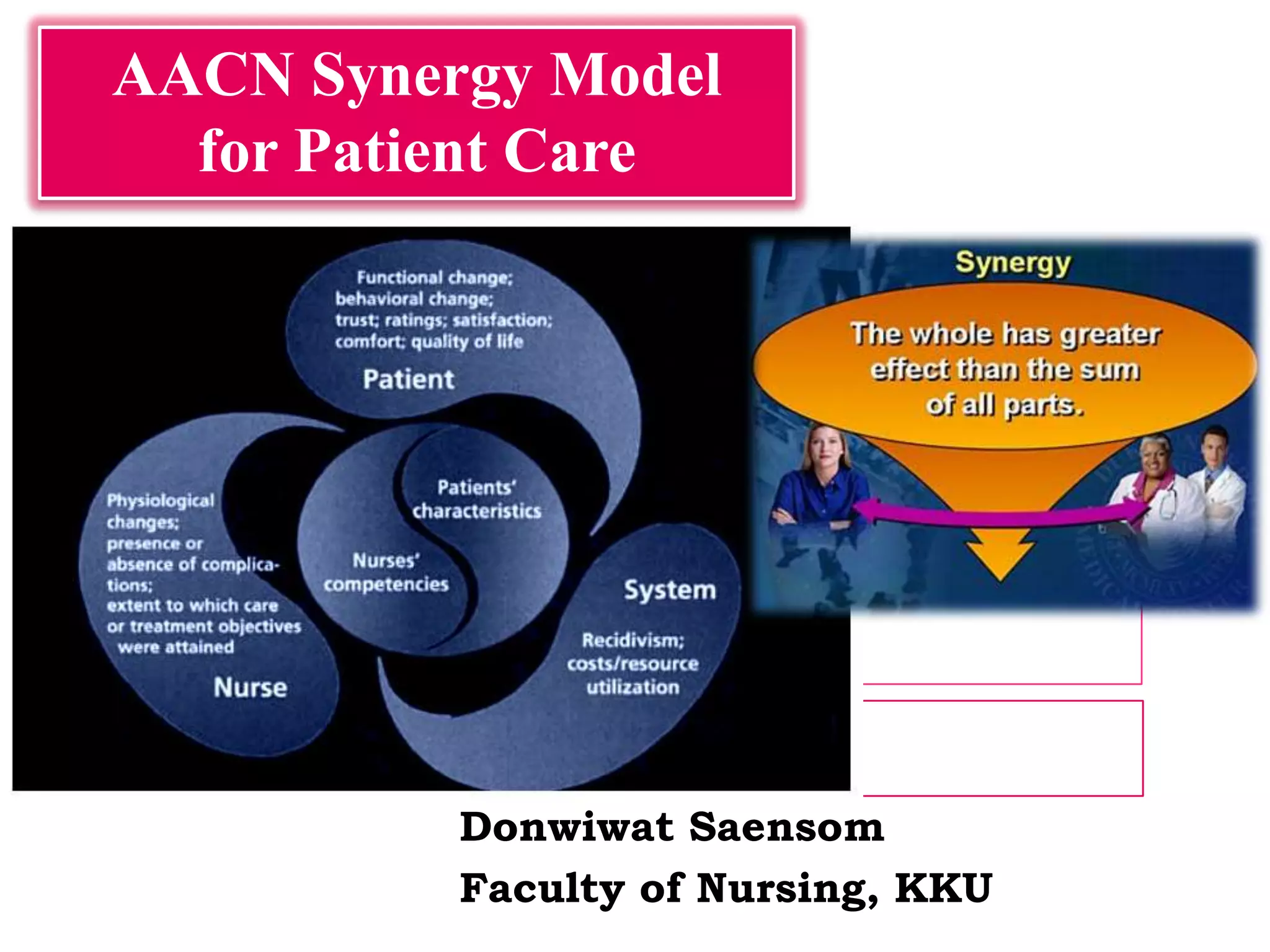
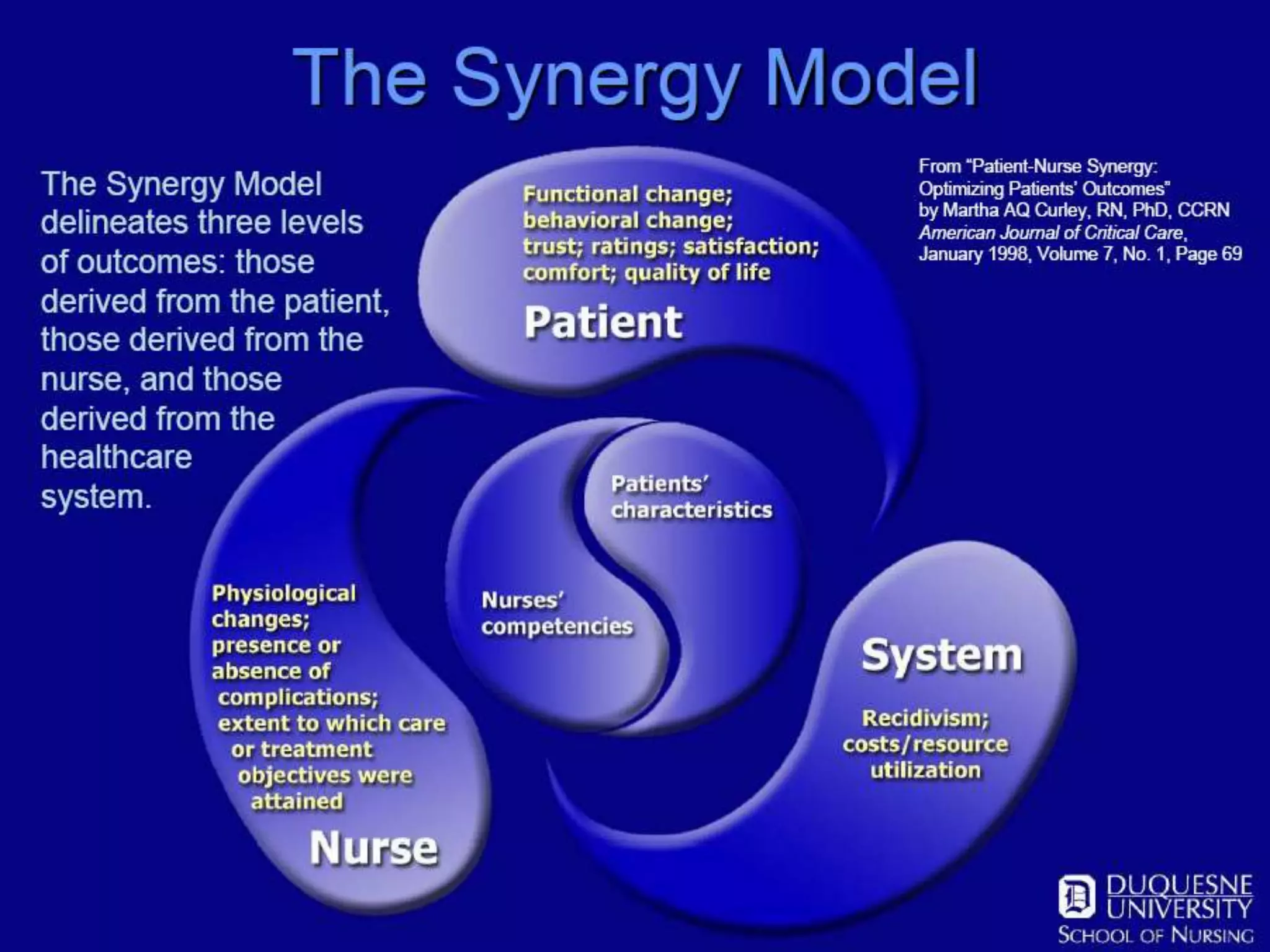
AACN Synergy Model
for Patient Care
Donwiwat Saensom
Faculty of Nursing, KKU
Contents
1. Model characteristics
2. Assumptions
3. Model components
4. Synergy Model outcomes
5. Model application
What is AACN Synergy Model?
A model that describes
 Relationship between a patient
and a nurse
 Acknowledges the importance of
nursing care that is based on the
needs of patients and their families
 It matches patients’ characteristics
with
nurses’ competencies to optimize
outcomes.
(Brewer et al., 2007)
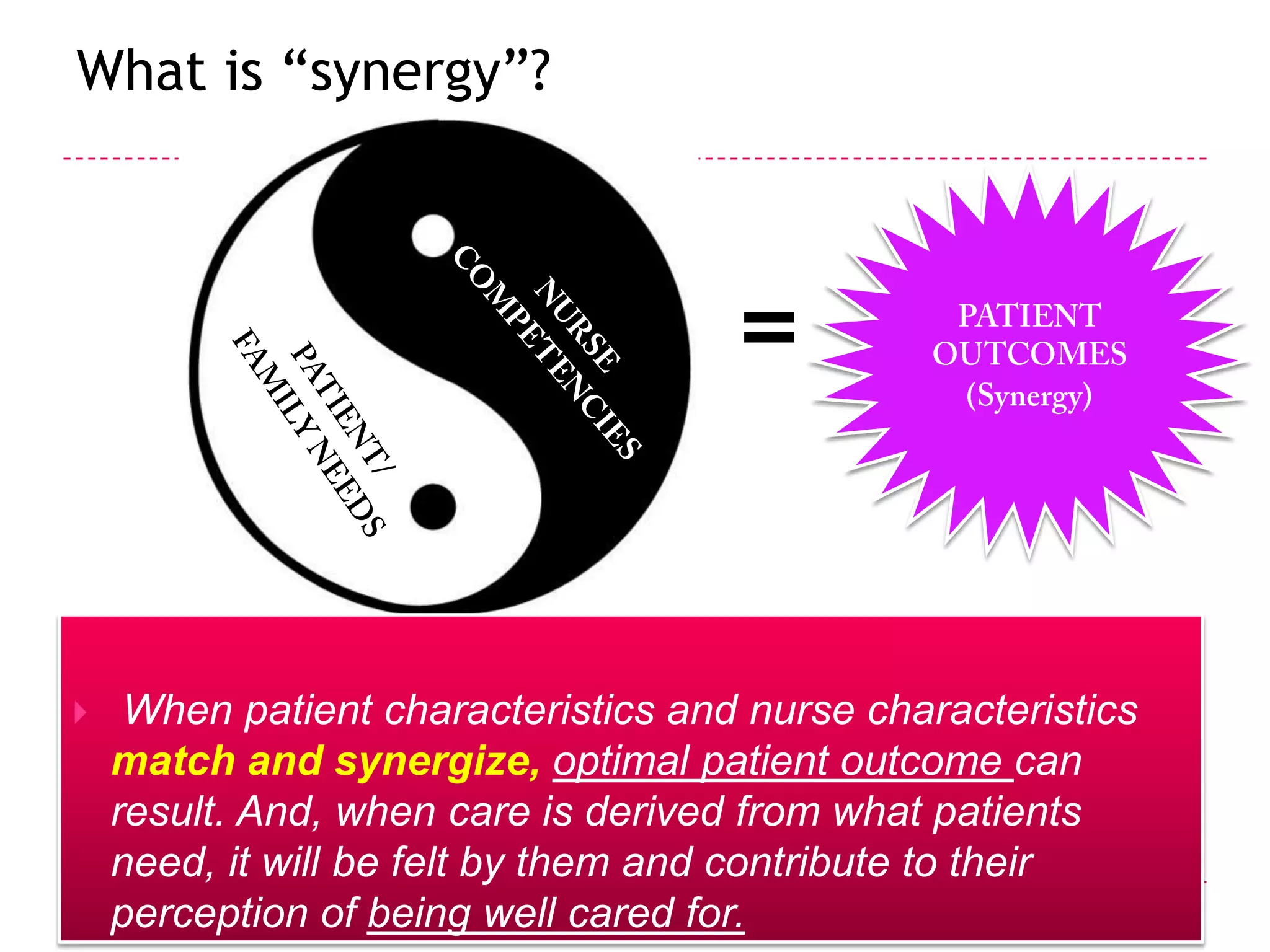
What is “synergy”?
 When patient characteristics and nurse characteristics
match and synergize, optimal patient outcome can
result. And, when care is derived from what patients
need, it will be felt by them and contribute to their
perception of being well cared for.
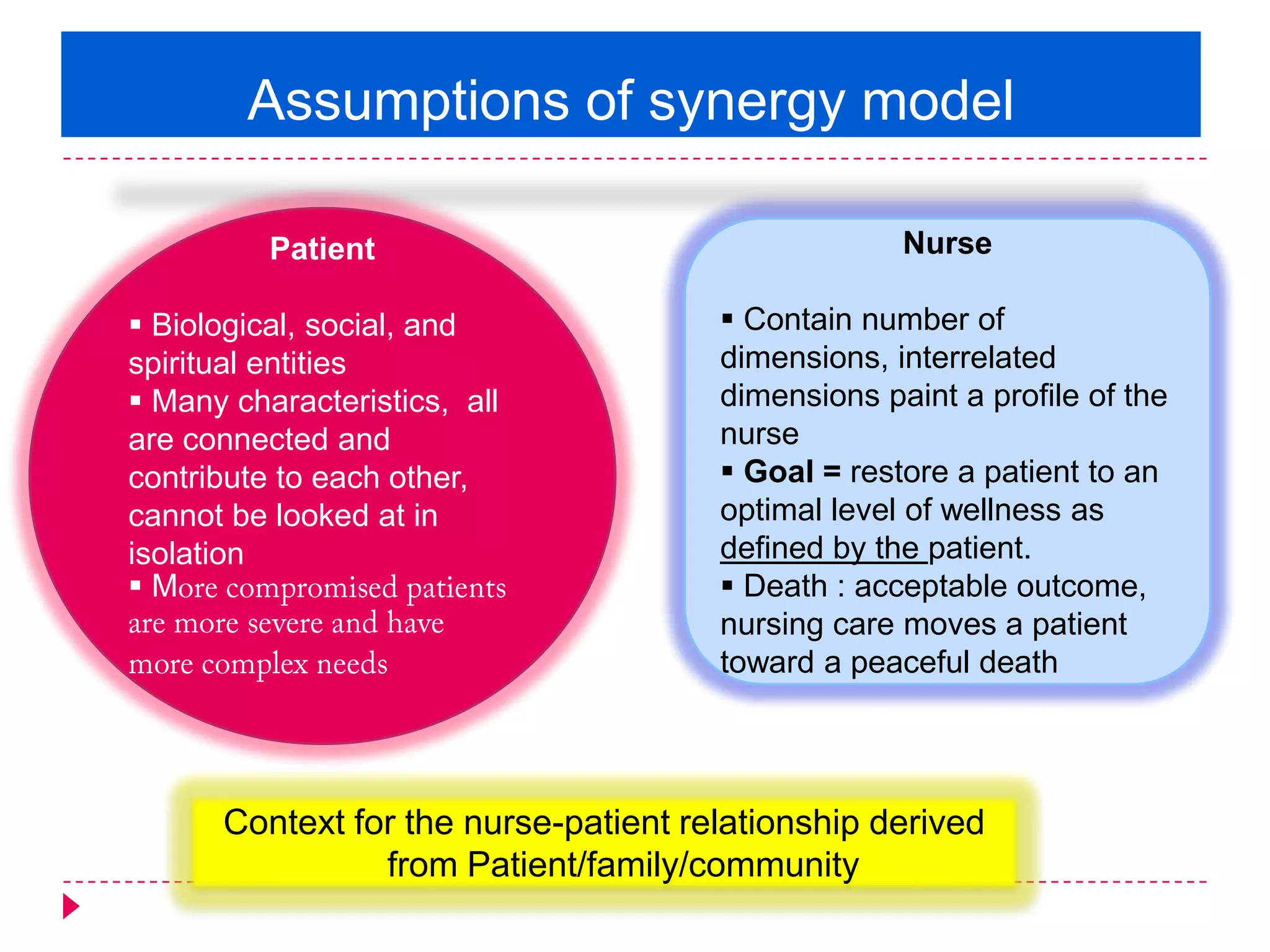
Assumptions of synergy model
Context for the nurse-patient relationship derived
from Patient/family/community
Patient
 Biological, social, and
spiritual entities
 Many characteristics, all
are connected and
contribute to each other,
cannot be looked at in
isolation
 M
Nurse
 Contain number of
dimensions, interrelated
dimensions paint a profile of the
nurse
 Goal = restore a patient to an
optimal level of wellness as
defined by the patient.
 Death : acceptable outcome,
nursing care moves a patient
toward a peaceful death
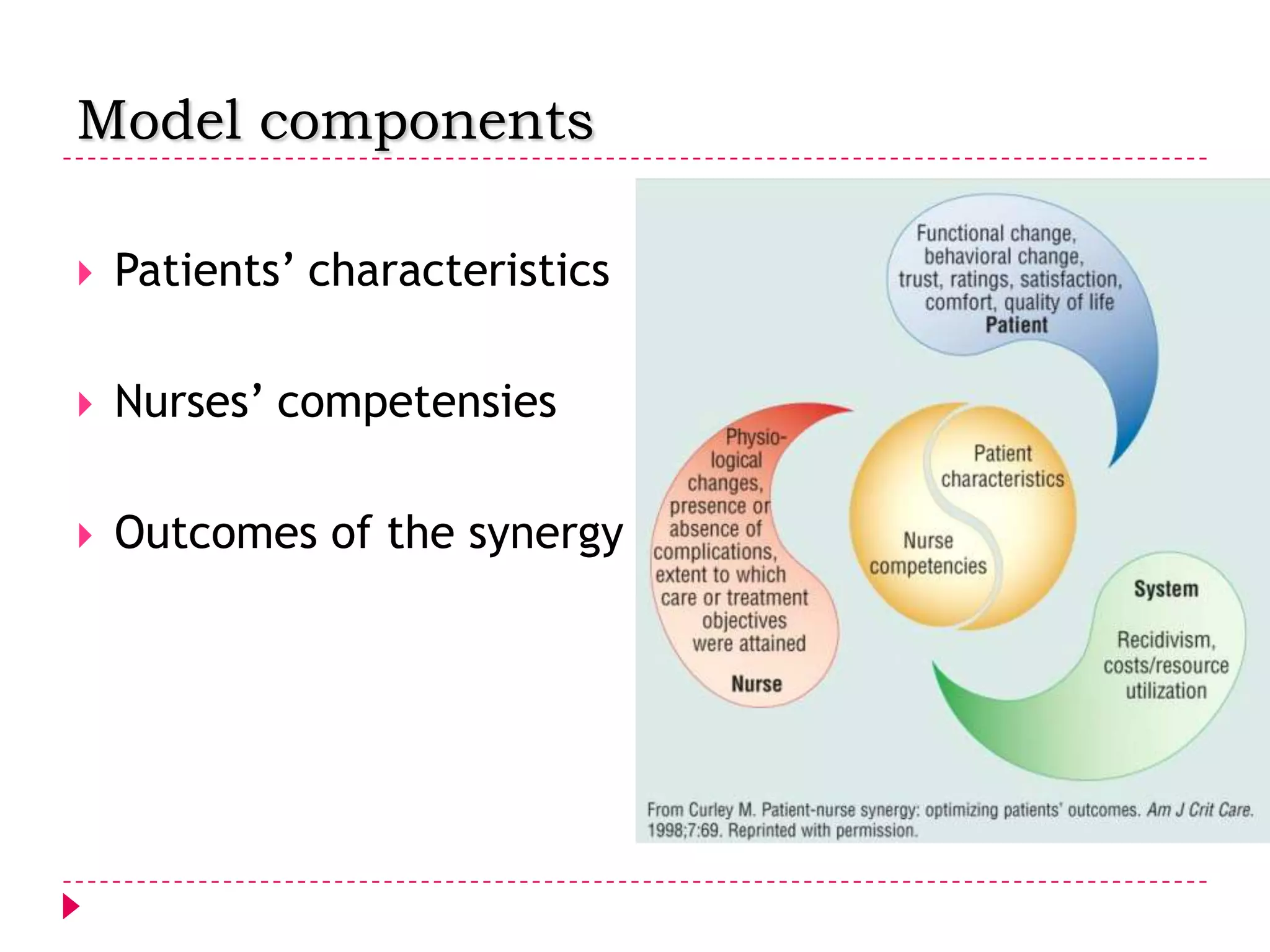
Model components
 Patients’ characteristics
 Nurses’ competensies
 Outcomes of the synergy
Intrinsic
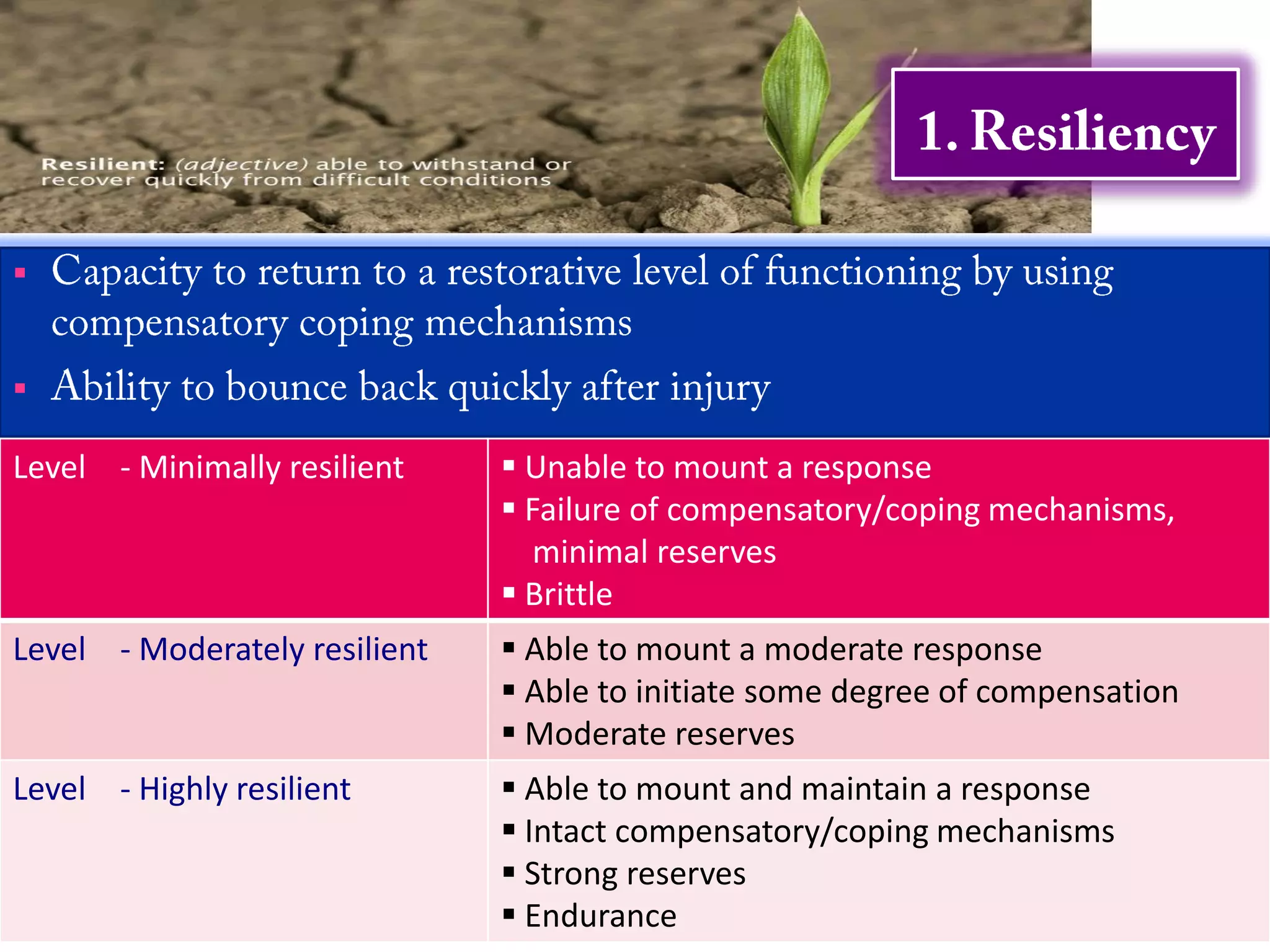
1. Resiliency
2. Vulnerability
3. Stability
4. Complexity
5. Predictability
Extrinsic
6. Resource availability
7. Participation in
decision-making
8. Participation in care


Level - Minimally resilient  Unable to mount a response
 Failure of compensatory/coping mechanisms,
minimal reserves
 Brittle
Level - Moderately resilient  Able to mount a moderate response
 Able to initiate some degree of compensation
 Moderate reserves
Level - Highly resilient  Able to mount and maintain a response
 Intact compensatory/coping mechanisms
 Strong reserves
 Endurance
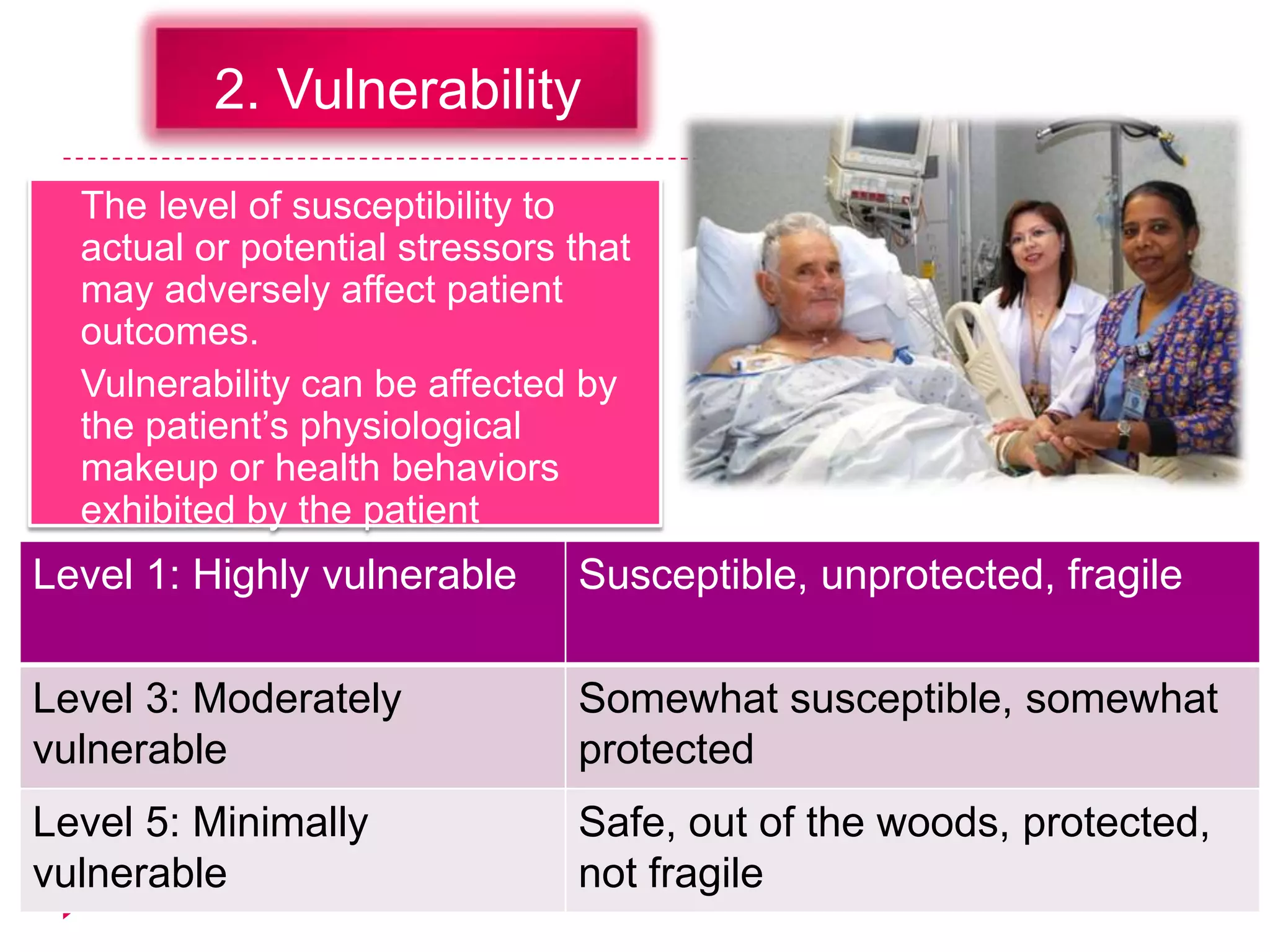
2. Vulnerability
 The level of susceptibility to
actual or potential stressors that
may adversely affect patient
outcomes.
 Vulnerability can be affected by
the patient’s physiological
makeup or health behaviors
exhibited by the patient
Level 1: Highly vulnerable Susceptible, unprotected, fragile
Level 3: Moderately
vulnerable
Somewhat susceptible, somewhat
protected
Level 5: Minimally
vulnerable
Safe, out of the woods, protected,
not fragile
3. Stability
 Ability to maintain a steady-
state equilibrium
Level 1 - Minimally
stable
Labile; unstable; unresponsive to
therapies; high risk of death
Level 3 - Moderately
stable
Able to maintain steady state for
limited period of time; some
responsiveness to therapies
Level 5 - Highly stable
Constant; responsive to therapies;
low risk of death
4. Complexity
 The intricate entanglement of
two or more systems e.g.
body family therapies
Level 1 - Highly
complex
Intricate; complex patient/family dynamics;
ambiguous/vague; atypical presentation
Level 3 -
Moderately
complex
Moderately involved patient/family
dynamics
Level 5 -
Minimally
complex
Straightforward; routine patient/family
dynamics; simple/clear cut; typical
presentation
5. Predictability
 A characteristic
that allows one
to expect a
certain course
of events or
course of
illness
Level 1 - Not predictable
Uncertain; uncommon patient
population/illness; unusual or unexpected
course; does not follow critical pathway, or no
critical pathway developed
Level 3 - Moderately
predictable
Wavering; occasionally noted patient
population/illness
Certain; common patient population/illness;
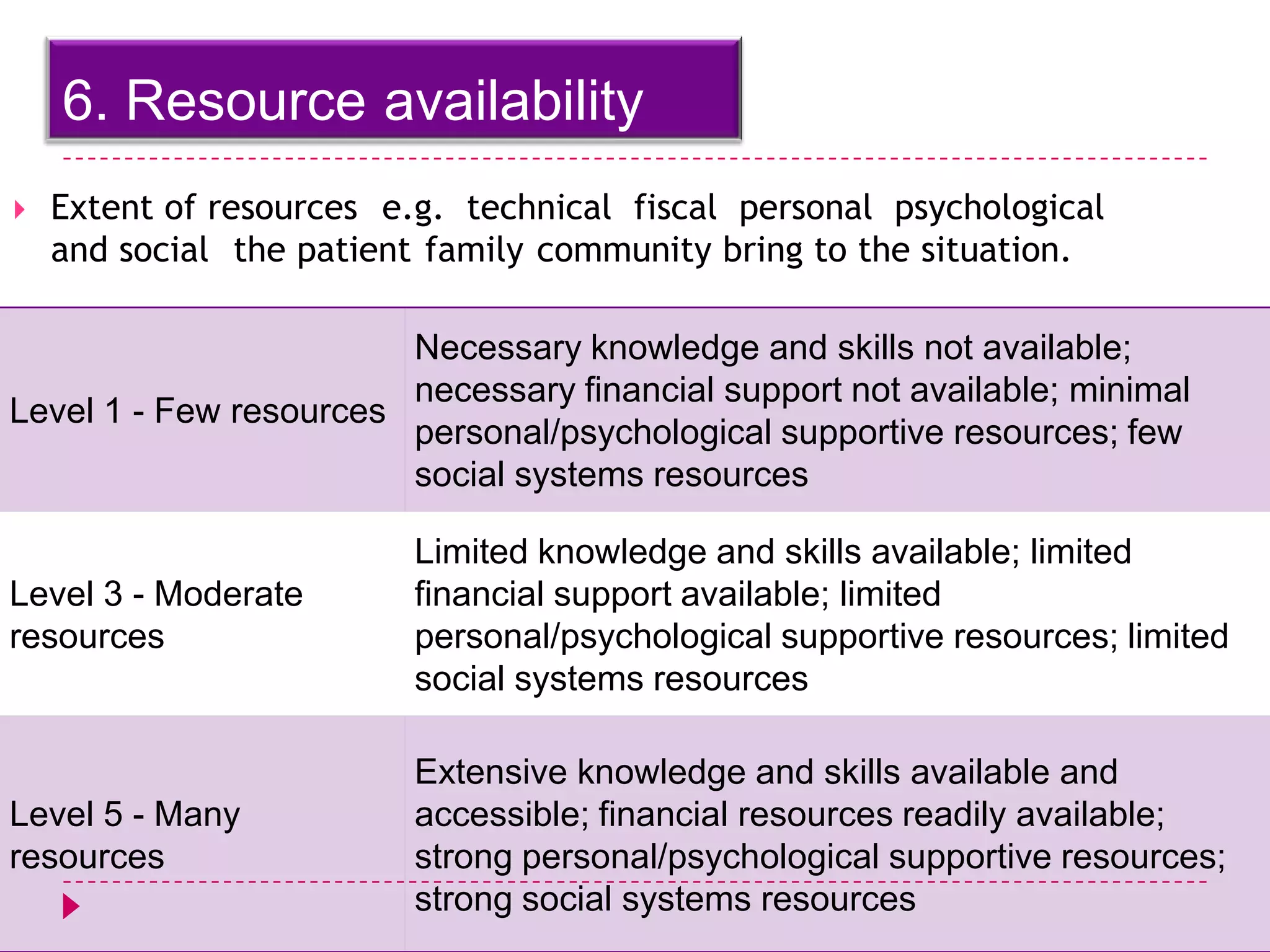
6. Resource availability
 Extent of resources e.g. technical fiscal personal psychological
and social the patient family community bring to the situation.
Level 1 - Few resources
Necessary knowledge and skills not available;
necessary financial support not available; minimal
personal/psychological supportive resources; few
social systems resources
Level 3 - Moderate
resources
Limited knowledge and skills available; limited
financial support available; limited
personal/psychological supportive resources; limited
social systems resources
Level 5 - Many
resources
Extensive knowledge and skills available and
accessible; financial resources readily available;
strong personal/psychological supportive resources;
strong social systems resources
7. Participation in care
 Extent to which
patient family engages in
aspects of care.
Level 1 - No participation
Patient and family unable or
unwilling to participate in
care
Level 3 - Moderate level of
participation
Patient and family need
assistance in care
Level 5 - Full participation
Patient and family fully able
8. Participation in decision-
making
 Extent to which patient family
engages in decision-making.
Level 1 - No
participation
Patient and family have no capacity
for decision-making; requires
surrogacy
Level 3 - Moderate
level of participation
Patient and family have limited
capacity; seeks input/advice from
others in decision-making
Level 5 - Full
participation
Patient and family have capacity, and
makes decision for self
Example
A healthy, uninsured,
40year-old woman
undergoing a pre-
employment wellness
screening could be
described as an
individual who is
(a) stable,
(b) not complex
(c) very predictable,
(d) Resilient
(e) not vulnerable
(f) able to participate in
decision making and care,
but
(g) has inadequate
resource availability.
Female 40 y.o.
has physical
exam for work
application,
good health in
general, no
health
insurance
Stability
Complex.
Predict.
Resiliencyvulner.
+/-
participation
in care &
decision
making
resource
Avail.
Example
Newborn
with
MOD, has
health
insurance,
educated
parents
Stability
Comple
x.
Predict.
Vulner.
Resilienc
y
Participatio
n in care/
decision
making
Good
Resource
Critically ill infant with multisystem
organ failure can be described as at the
other end of the continuum in some
areas but as very similar in others, for
example, as an individual who is
(a) unstable
(b) highly complex
(c) Unpredictable
(d) highly resilient
(e) Vulnerable
(f) unable to become involved in
decision making and care, but
(g) has adequate resource availability
Nurses’ competencies
 Clinical judgment
 Advocacy/moral agency
 Caring practices
 Collaboration
 Systems thinking
 Response to diversity
 Clinical inquiry
 Facilitator of learning
Nurses’
competencies
Clinical
judgment
Advocacy
/moral
agency
Caring
practices
Collabora
-tion
Systems
thinking
Clinical
inquiry
Facilitator
of
learning
Measured on a continuum and provide basis
for differentiating levels of practice for the
nurse
Clinical reasoning:
 clinical decision-making,
 critical thinking
 a global grasp of the
situation + nursing skills
acquired through
 a process of integrating
formal and informal
experiential knowledge
 evidence-based guidelines
1. Clinical judgment
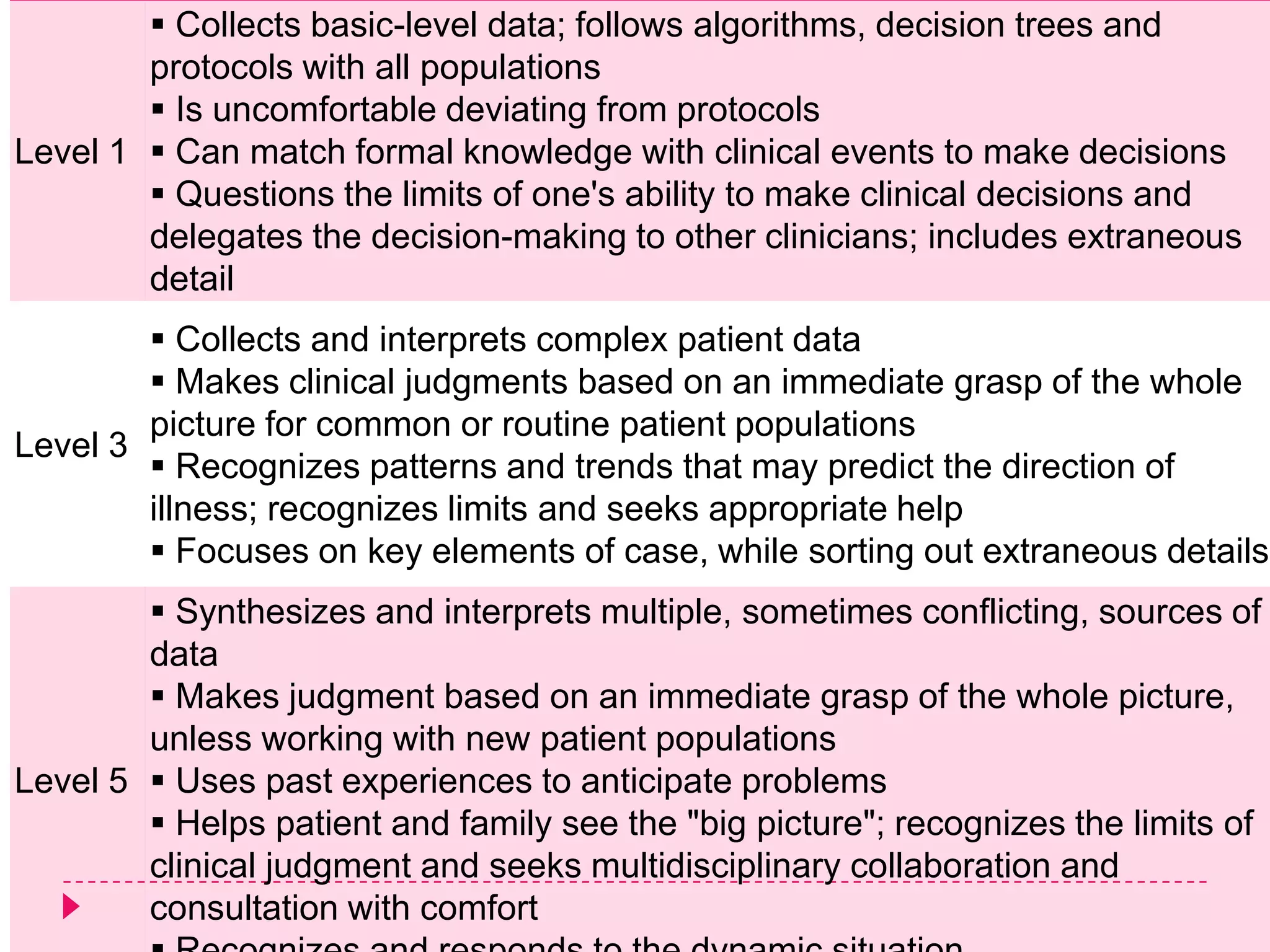
Level 1
 Collects basic-level data; follows algorithms, decision trees and
protocols with all populations
 Is uncomfortable deviating from protocols
 Can match formal knowledge with clinical events to make decisions
 Questions the limits of one's ability to make clinical decisions and
delegates the decision-making to other clinicians; includes extraneous
detail
Level 3
 Collects and interprets complex patient data
 Makes clinical judgments based on an immediate grasp of the whole
picture for common or routine patient populations
 Recognizes patterns and trends that may predict the direction of
illness; recognizes limits and seeks appropriate help
 Focuses on key elements of case, while sorting out extraneous details
Level 5
 Synthesizes and interprets multiple, sometimes conflicting, sources of
data
 Makes judgment based on an immediate grasp of the whole picture,
unless working with new patient populations
 Uses past experiences to anticipate problems
 Helps patient and family see the "big picture"; recognizes the limits of
clinical judgment and seeks multidisciplinary collaboration and
consultation with comfort
2. Advocacy / moral agency
 Working on another's
behalf
 Representing the
concerns
of the patient/family and
nursing staff
 Serving as a moral agent
in identifying and helping
to resolve ethical and
clinical concerns within
and outside the clinical
setting
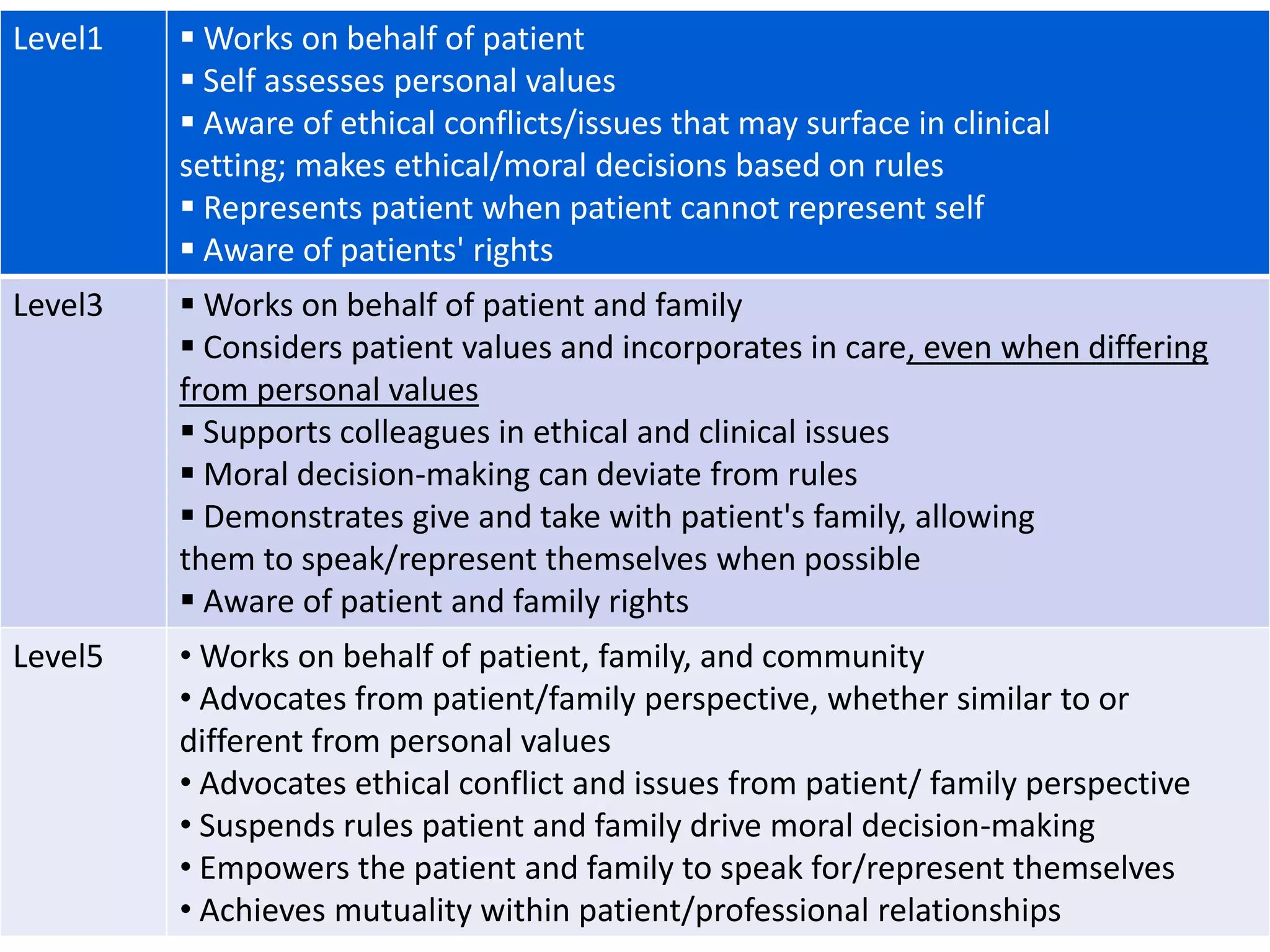
Level1  Works on behalf of patient
 Self assesses personal values
 Aware of ethical conflicts/issues that may surface in clinical
setting; makes ethical/moral decisions based on rules
 Represents patient when patient cannot represent self
 Aware of patients' rights
Level3  Works on behalf of patient and family
 Considers patient values and incorporates in care, even when differing
from personal values
 Supports colleagues in ethical and clinical issues
 Moral decision-making can deviate from rules
 Demonstrates give and take with patient's family, allowing
them to speak/represent themselves when possible
 Aware of patient and family rights
Level5 • Works on behalf of patient, family, and community
• Advocates from patient/family perspective, whether similar to or
different from personal values
• Advocates ethical conflict and issues from patient/ family perspective
• Suspends rules patient and family drive moral decision-making
• Empowers the patient and family to speak for/represent themselves
• Achieves mutuality within patient/professional relationships
3. Caring practices
 Nursing activities that create a
 compassionate
 supportive
 therapeutic
environment for patients and
staff
 Aim to promote comfort and
healing and prevent unnecessary
suffering.
 Includes vigilance, engagement,
and responsiveness of caregivers,
including family and healthcare
personnel
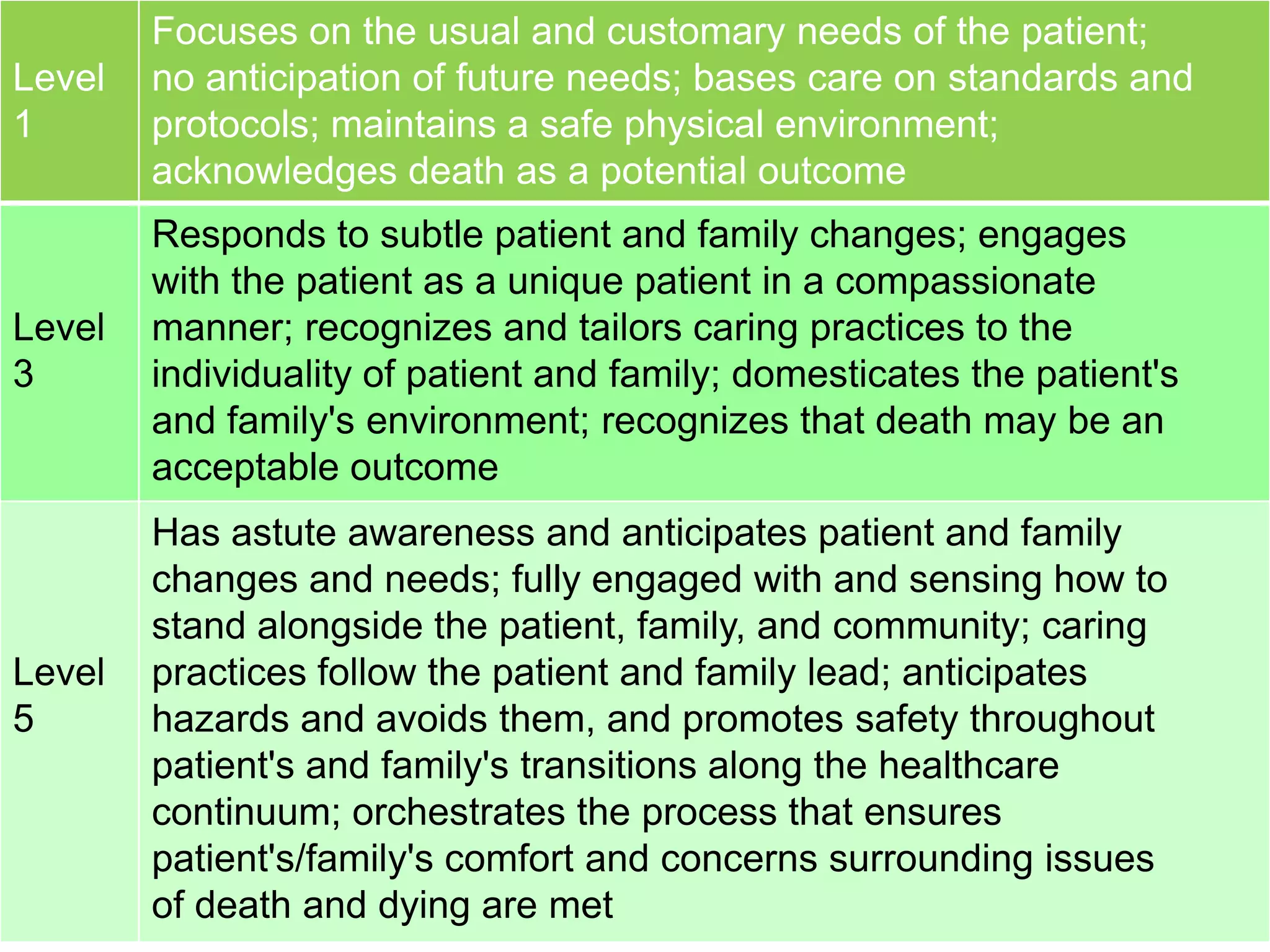
Level
1
Focuses on the usual and customary needs of the patient;
no anticipation of future needs; bases care on standards and
protocols; maintains a safe physical environment;
acknowledges death as a potential outcome
Level
3
Responds to subtle patient and family changes; engages
with the patient as a unique patient in a compassionate
manner; recognizes and tailors caring practices to the
individuality of patient and family; domesticates the patient's
and family's environment; recognizes that death may be an
acceptable outcome
Level
5
Has astute awareness and anticipates patient and family
changes and needs; fully engaged with and sensing how to
stand alongside the patient, family, and community; caring
practices follow the patient and family lead; anticipates
hazards and avoids them, and promotes safety throughout
patient's and family's transitions along the healthcare
continuum; orchestrates the process that ensures
patient's/family's comfort and concerns surrounding issues
of death and dying are met
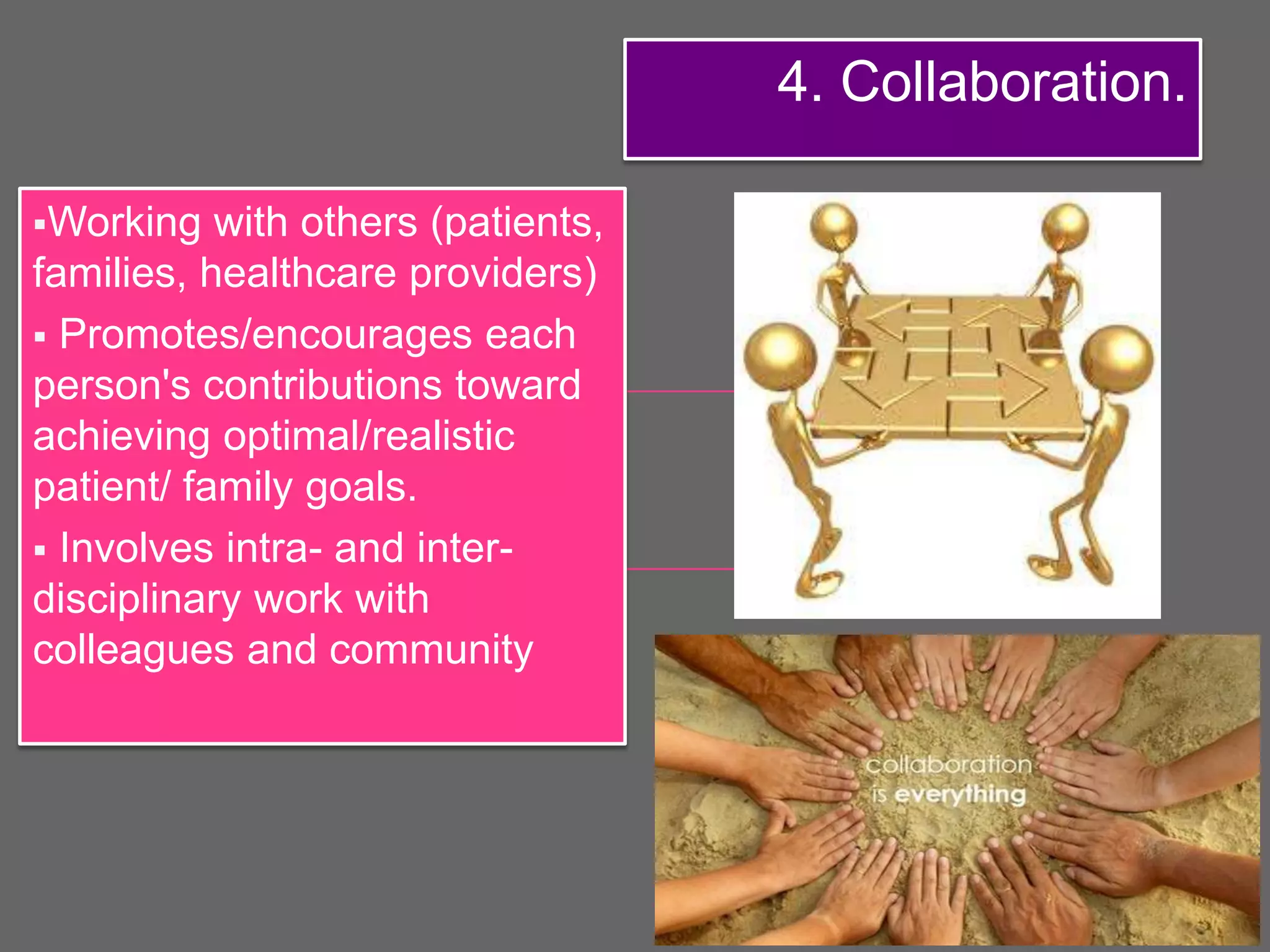
4. Collaboration.
Working with others (patients,
families, healthcare providers)
 Promotes/encourages each
person's contributions toward
achieving optimal/realistic
patient/ family goals.
 Involves intra- and inter-
disciplinary work with
colleagues and community
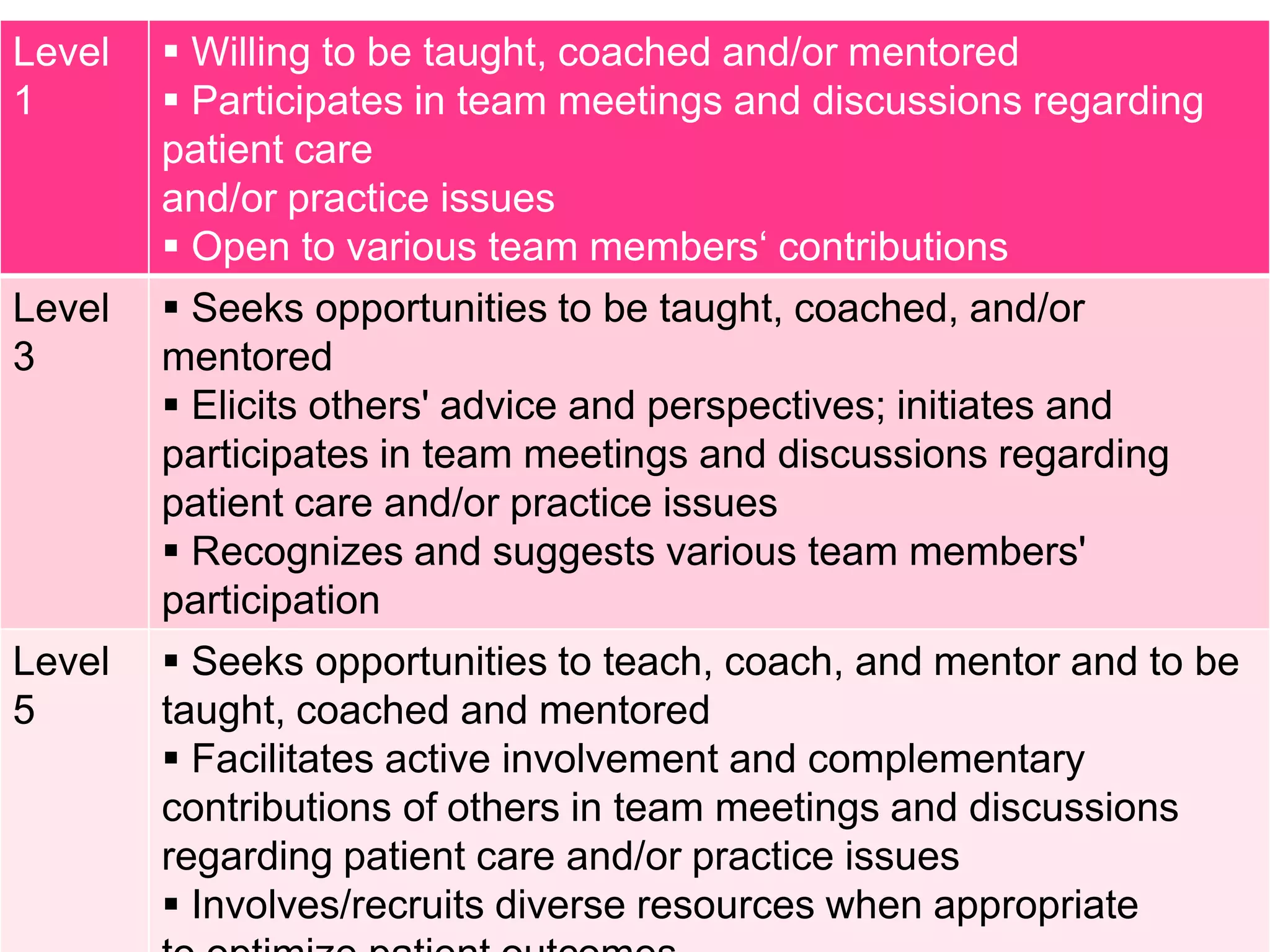
Level
1
 Willing to be taught, coached and/or mentored
 Participates in team meetings and discussions regarding
patient care
and/or practice issues
 Open to various team members‘ contributions
Level
3
 Seeks opportunities to be taught, coached, and/or
mentored
 Elicits others' advice and perspectives; initiates and
participates in team meetings and discussions regarding
patient care and/or practice issues
 Recognizes and suggests various team members'
participation
Level
5
 Seeks opportunities to teach, coach, and mentor and to be
taught, coached and mentored
 Facilitates active involvement and complementary
contributions of others in team meetings and discussions
regarding patient care and/or practice issues
 Involves/recruits diverse resources when appropriate
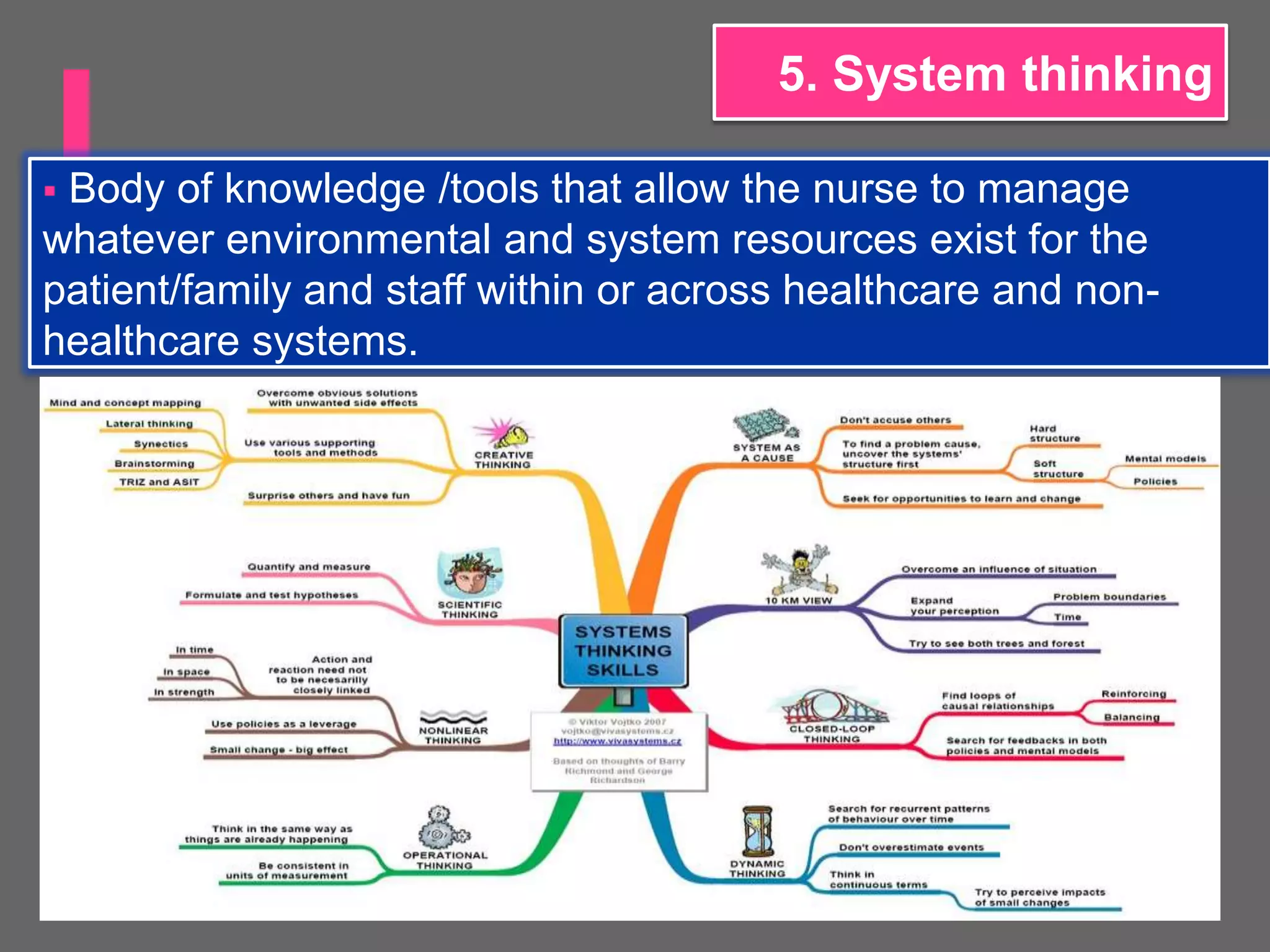
5. System thinking
 Body of knowledge /tools that allow the nurse to manage
whatever environmental and system resources exist for the
patient/family and staff within or across healthcare and non-
healthcare systems.
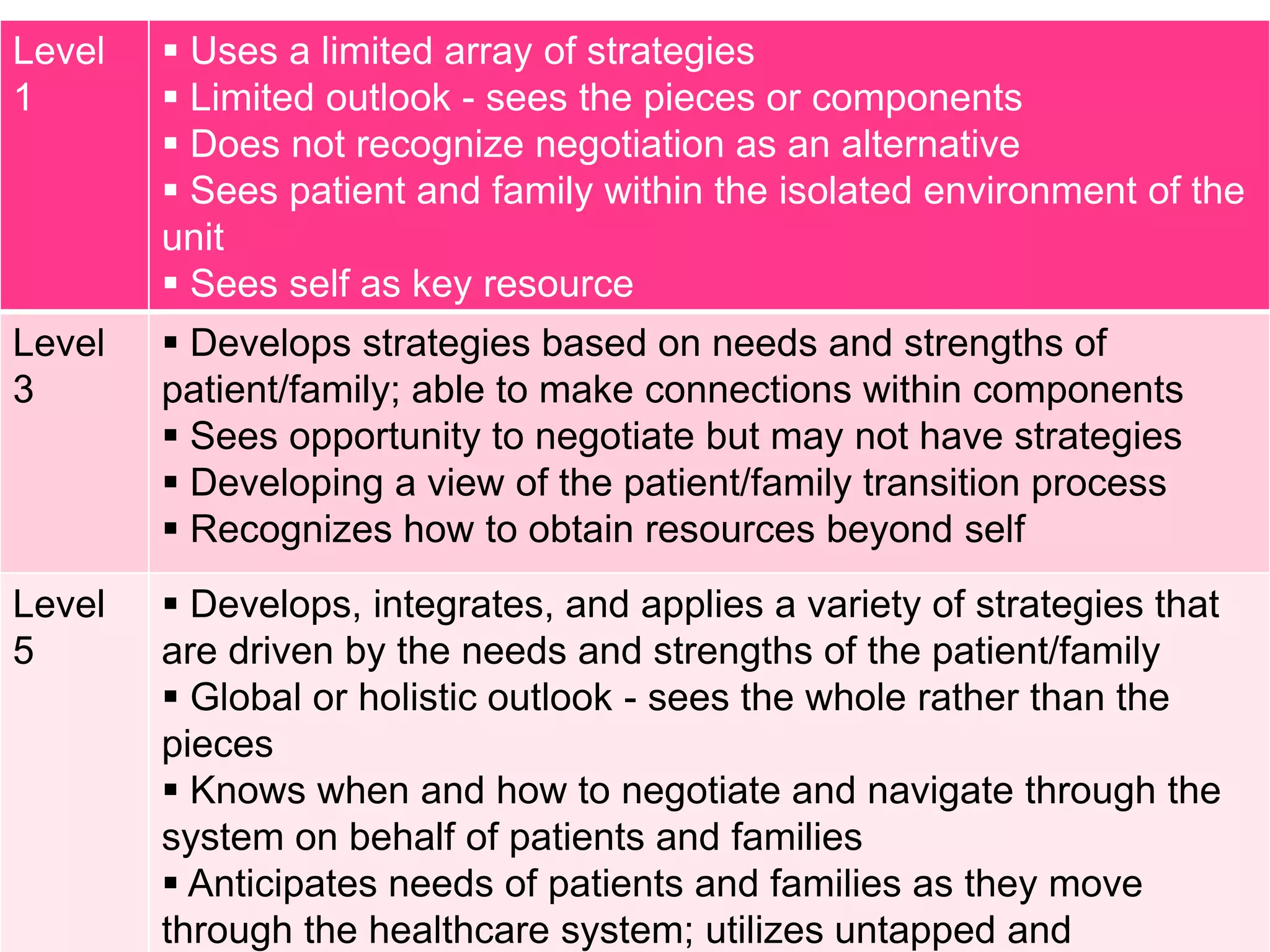
Level
1
 Uses a limited array of strategies
 Limited outlook - sees the pieces or components
 Does not recognize negotiation as an alternative
 Sees patient and family within the isolated environment of the
unit
 Sees self as key resource
Level
3
 Develops strategies based on needs and strengths of
patient/family; able to make connections within components
 Sees opportunity to negotiate but may not have strategies
 Developing a view of the patient/family transition process
 Recognizes how to obtain resources beyond self
Level
5
 Develops, integrates, and applies a variety of strategies that
are driven by the needs and strengths of the patient/family
 Global or holistic outlook - sees the whole rather than the
pieces
 Knows when and how to negotiate and navigate through the
system on behalf of patients and families
 Anticipates needs of patients and families as they move
through the healthcare system; utilizes untapped and
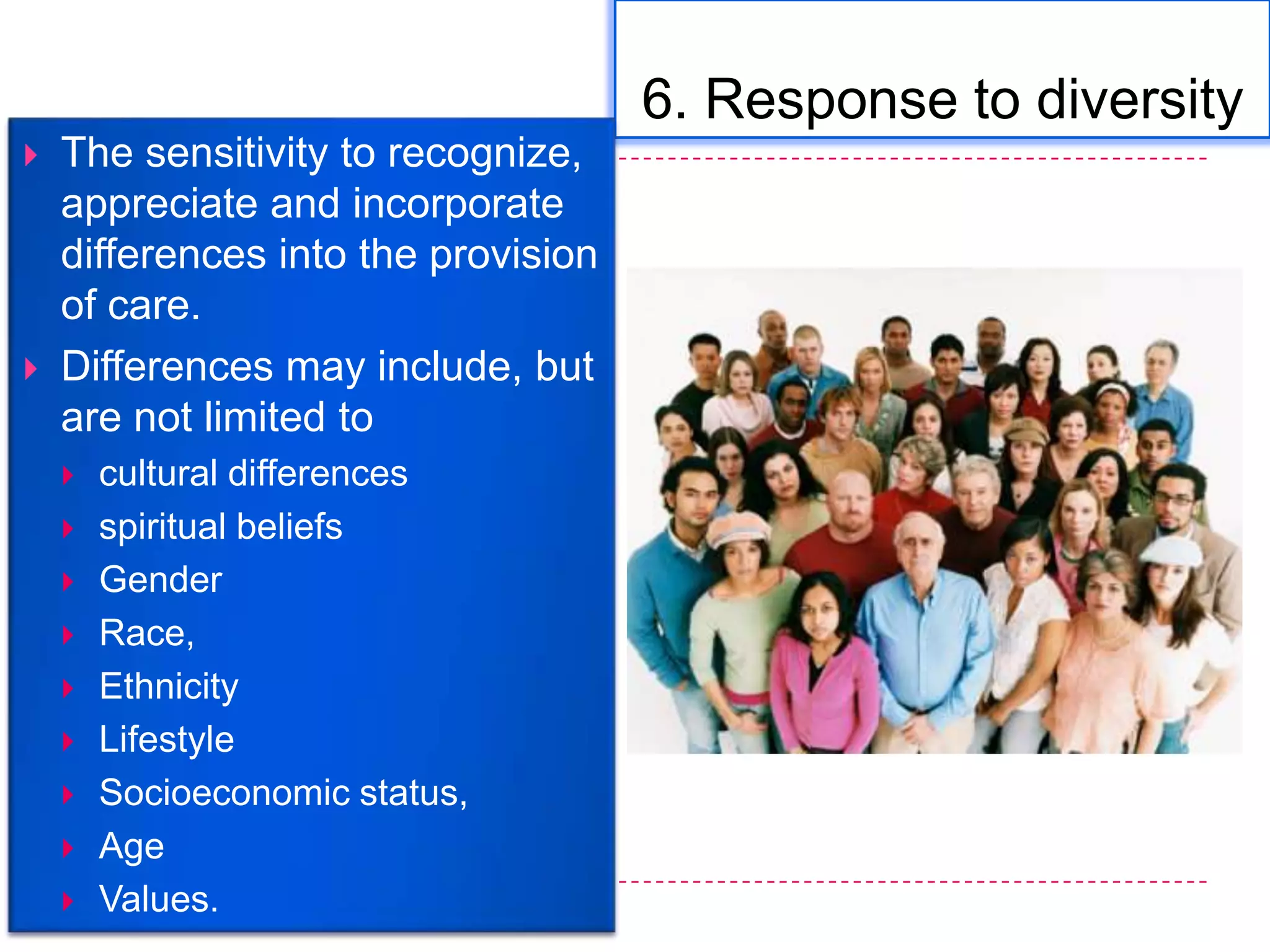
6. Response to diversity
 The sensitivity to recognize,
appreciate and incorporate
differences into the provision
of care.
 Differences may include, but
are not limited to
 cultural differences
 spiritual beliefs
 Gender
 Race,
 Ethnicity
 Lifestyle
 Socioeconomic status,
 Age
 Values.
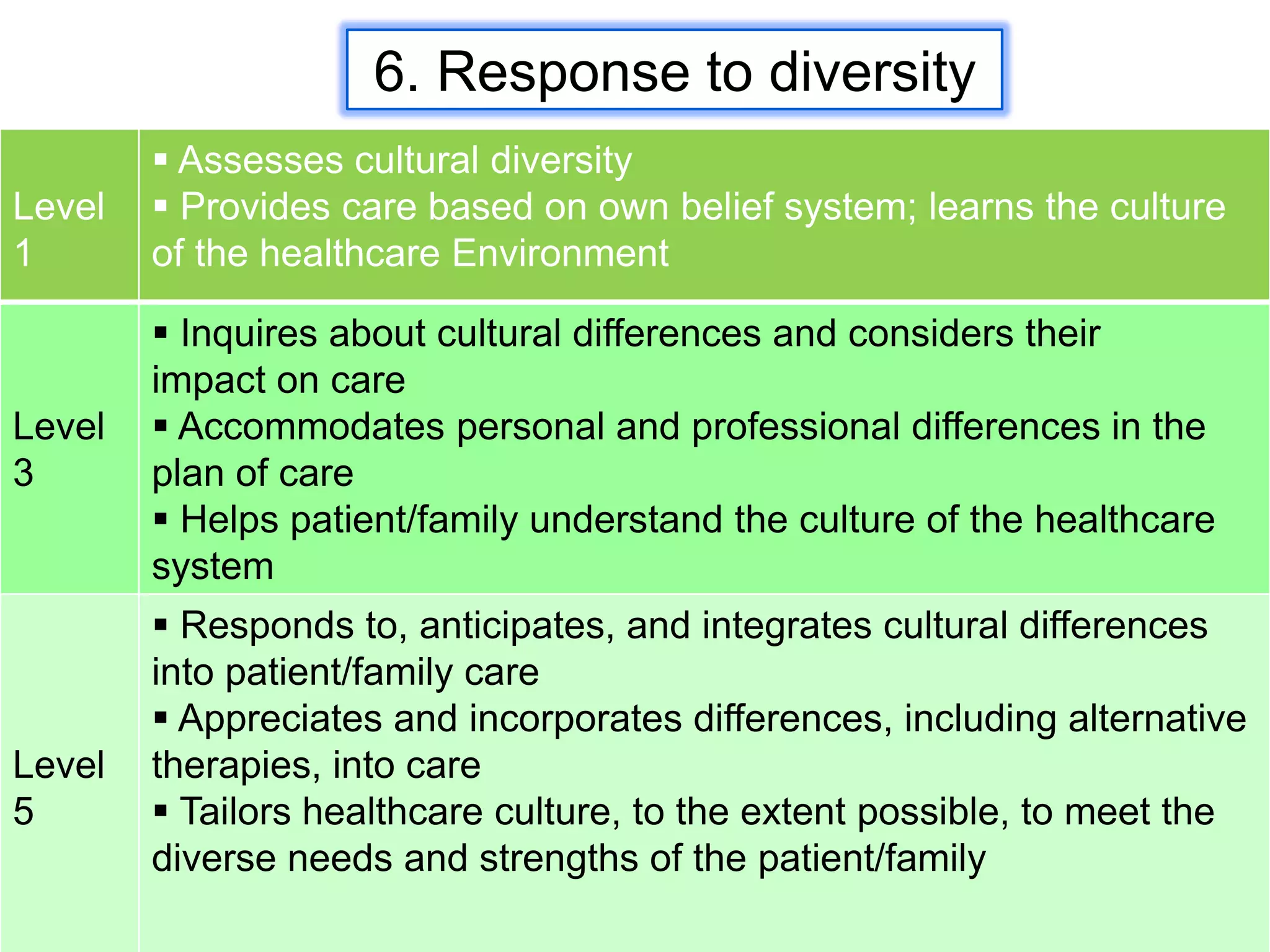
Level
1
 Assesses cultural diversity
 Provides care based on own belief system; learns the culture
of the healthcare Environment
Level
3
 Inquires about cultural differences and considers their
impact on care
 Accommodates personal and professional differences in the
plan of care
 Helps patient/family understand the culture of the healthcare
system
Level
5
 Responds to, anticipates, and integrates cultural differences
into patient/family care
 Appreciates and incorporates differences, including alternative
therapies, into care
 Tailors healthcare culture, to the extent possible, to meet the
diverse needs and strengths of the patient/family
6. Response to diversity
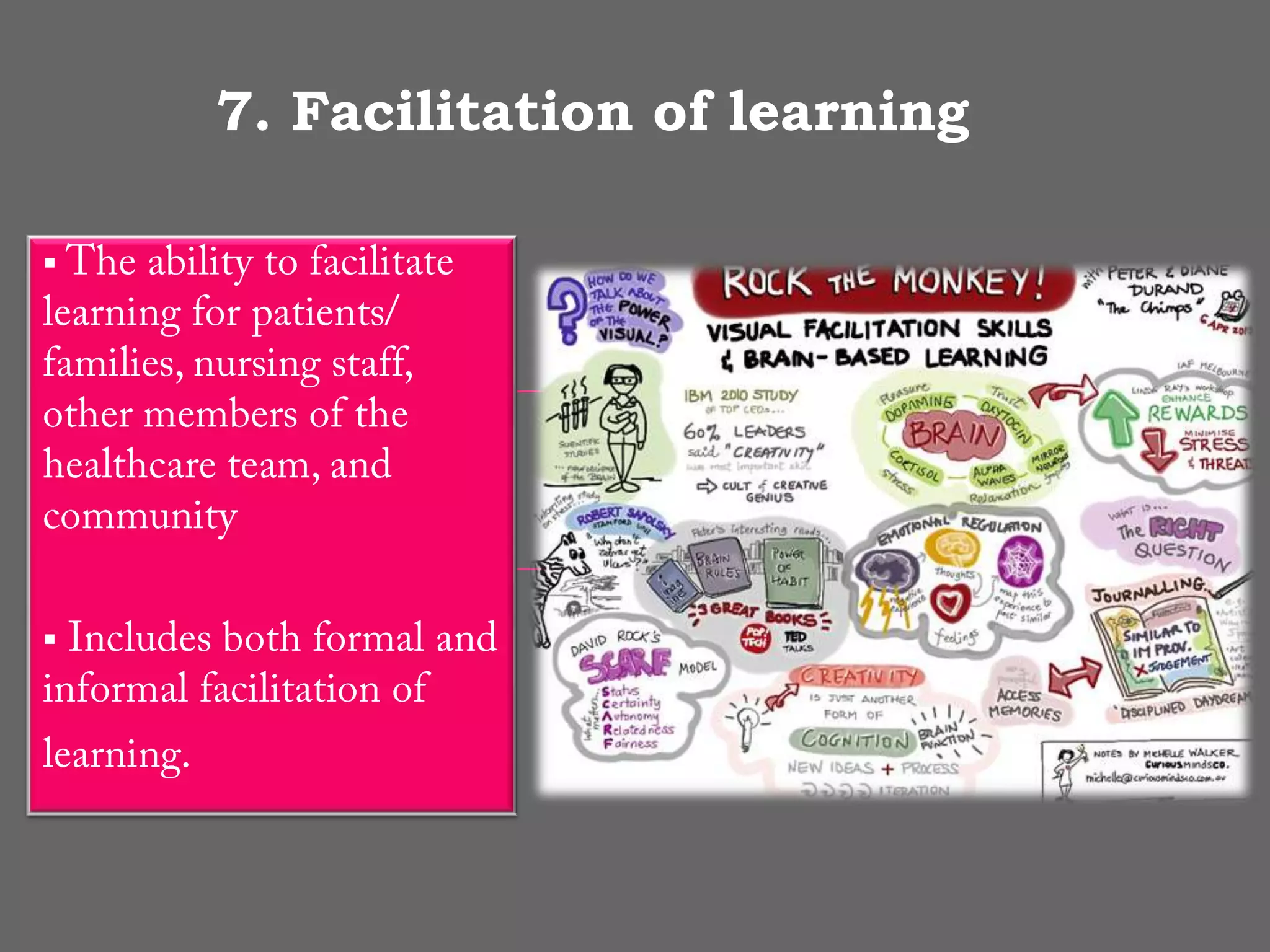
7. Facilitation of learning


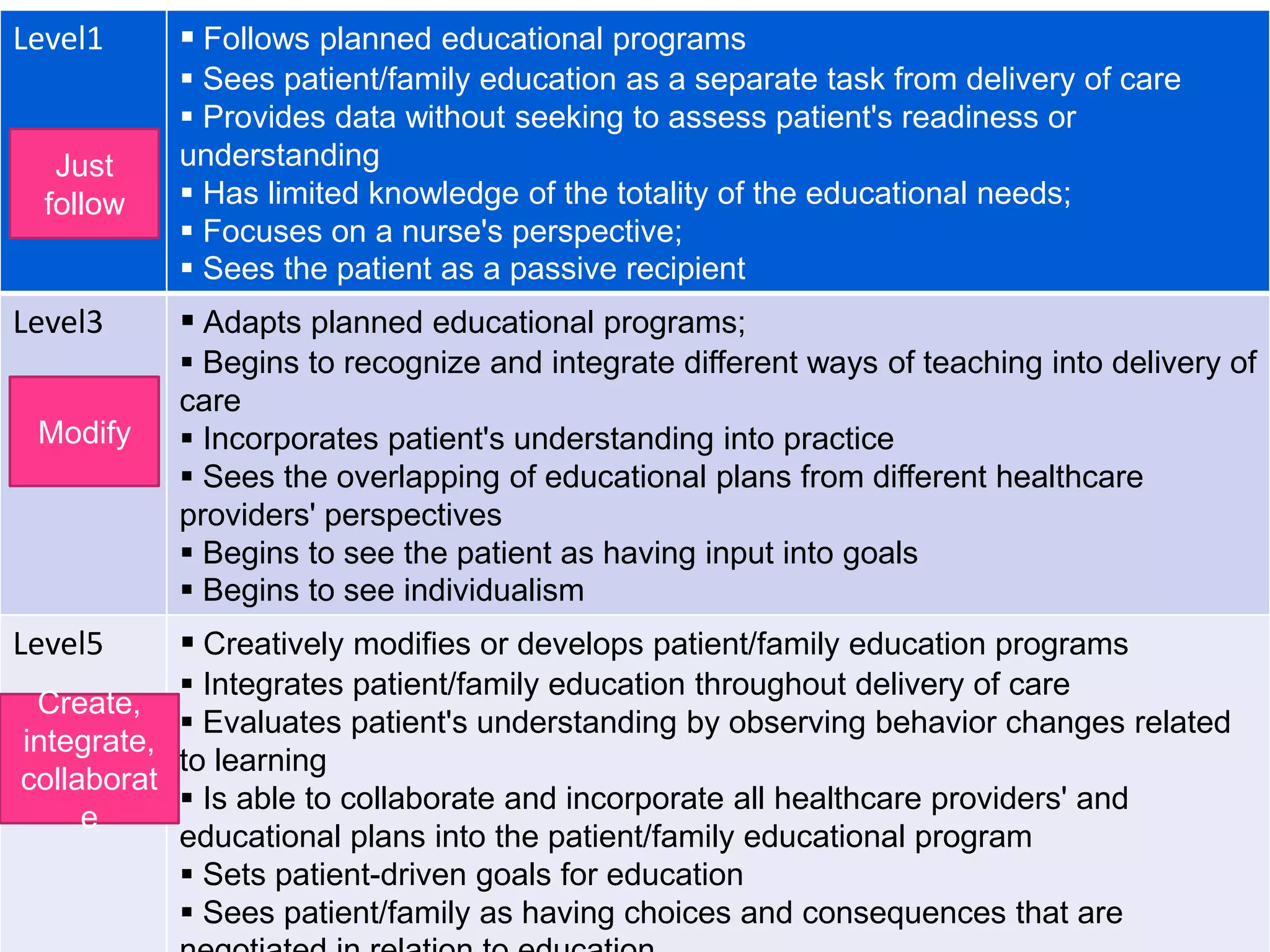
Level1  Follows planned educational programs
 Sees patient/family education as a separate task from delivery of care
 Provides data without seeking to assess patient's readiness or
understanding
 Has limited knowledge of the totality of the educational needs;
 Focuses on a nurse's perspective;
 Sees the patient as a passive recipient
Level3  Adapts planned educational programs;
 Begins to recognize and integrate different ways of teaching into delivery of
care
 Incorporates patient's understanding into practice
 Sees the overlapping of educational plans from different healthcare
providers' perspectives
 Begins to see the patient as having input into goals
 Begins to see individualism
Level5  Creatively modifies or develops patient/family education programs
 Integrates patient/family education throughout delivery of care
 Evaluates patient's understanding by observing behavior changes related
to learning
 Is able to collaborate and incorporate all healthcare providers' and
educational plans into the patient/family educational program
 Sets patient-driven goals for education
 Sees patient/family as having choices and consequences that are
Just
follow
Modify
Create,
integrate,
collaborat
e
8. Clinical Inquiry (Innovator/Evaluator)
 The ongoing process of questioning and
evaluating practice and providing informed
practice
 Creating practice changes through research
utilization and experiential learning
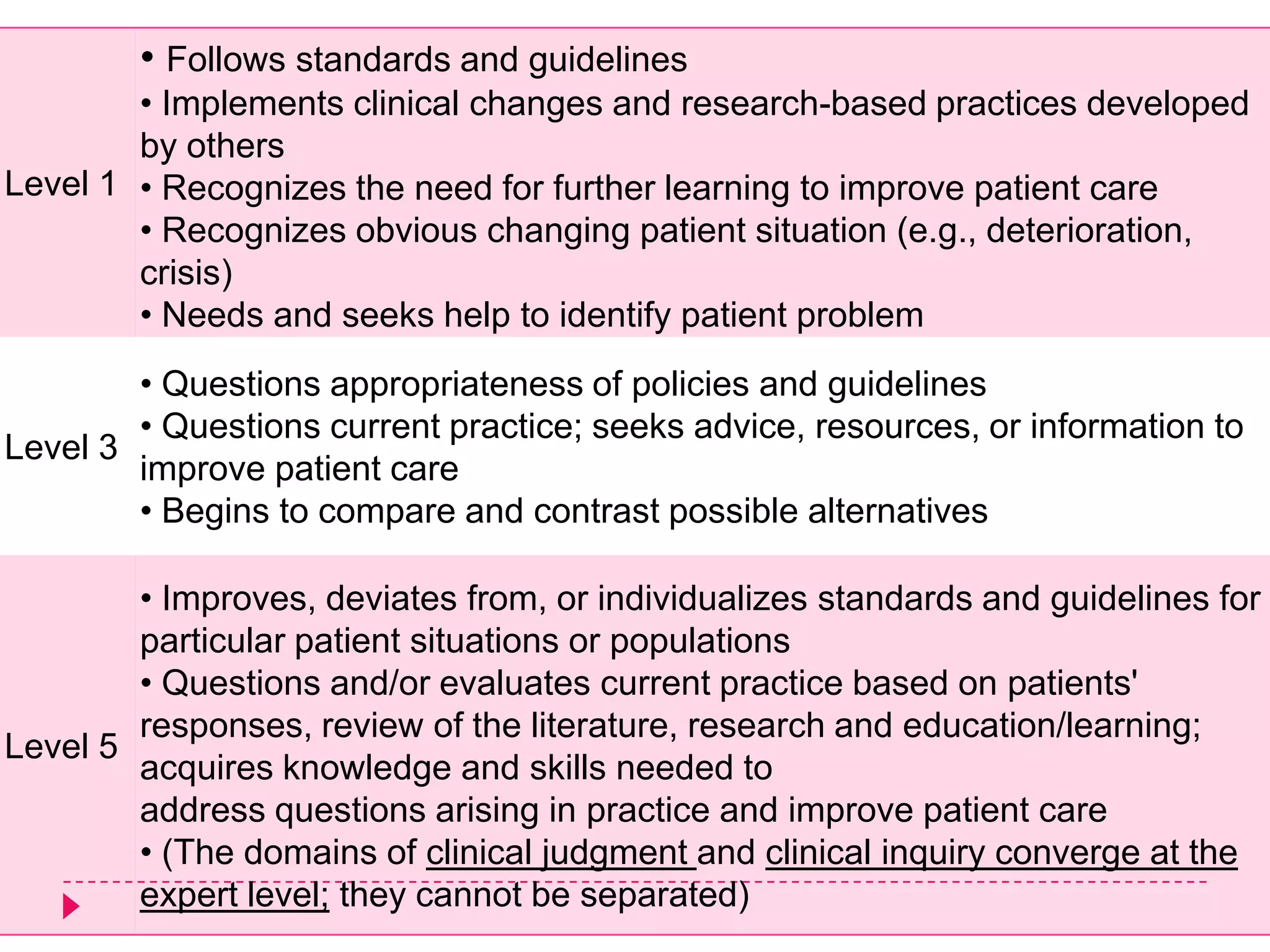
Level 1
• Follows standards and guidelines
• Implements clinical changes and research-based practices developed
by others
• Recognizes the need for further learning to improve patient care
• Recognizes obvious changing patient situation (e.g., deterioration,
crisis)
• Needs and seeks help to identify patient problem
Level 3
• Questions appropriateness of policies and guidelines
• Questions current practice; seeks advice, resources, or information to
improve patient care
• Begins to compare and contrast possible alternatives
Level 5
• Improves, deviates from, or individualizes standards and guidelines for
particular patient situations or populations
• Questions and/or evaluates current practice based on patients'
responses, review of the literature, research and education/learning;
acquires knowledge and skills needed to
address questions arising in practice and improve patient care
• (The domains of clinical judgment and clinical inquiry converge at the
expert level; they cannot be separated)
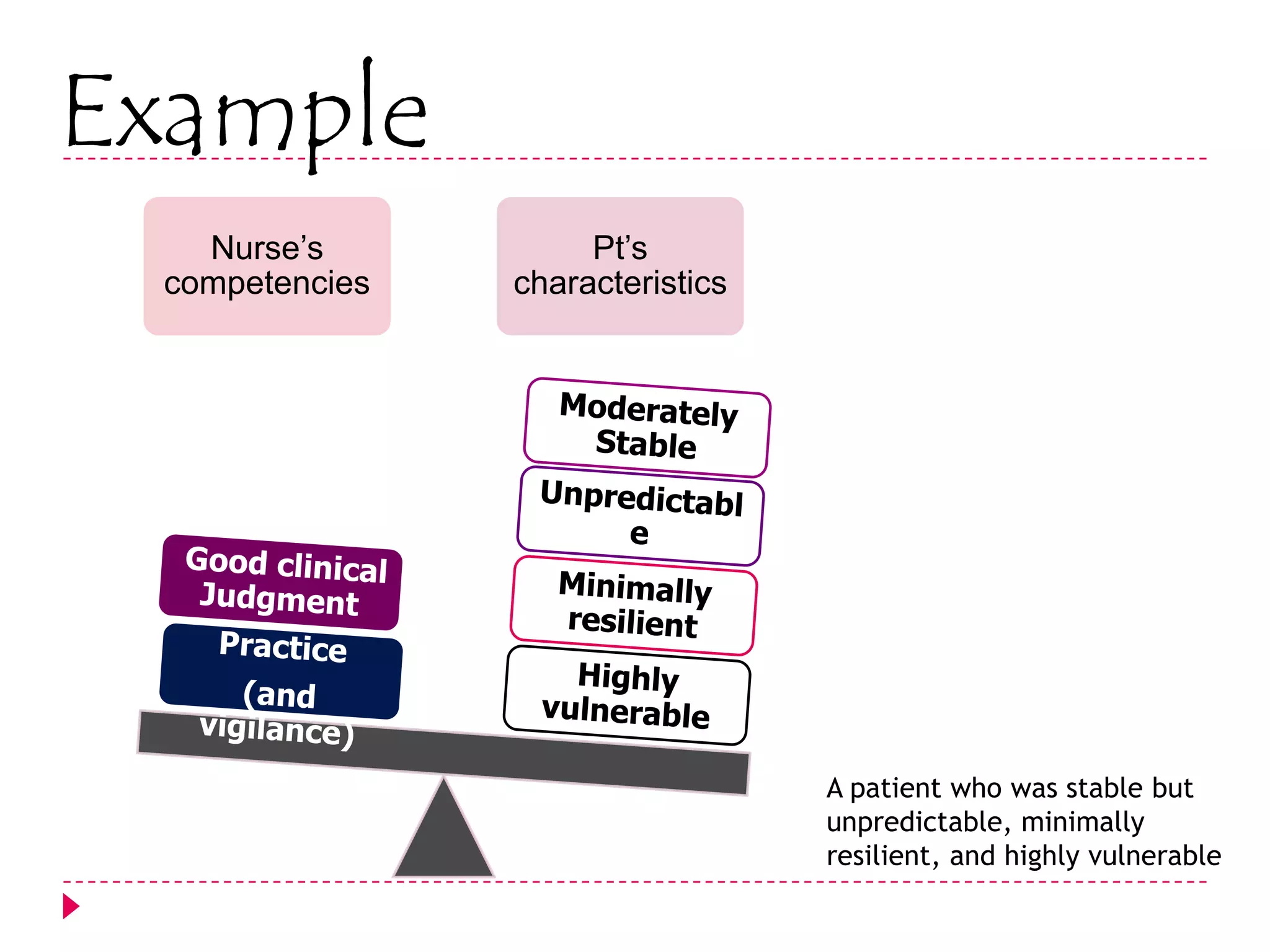
Example
Nurse’s
competencies
Pt’s
characteristics
A patient who was stable but
unpredictable, minimally
resilient, and highly vulnerable
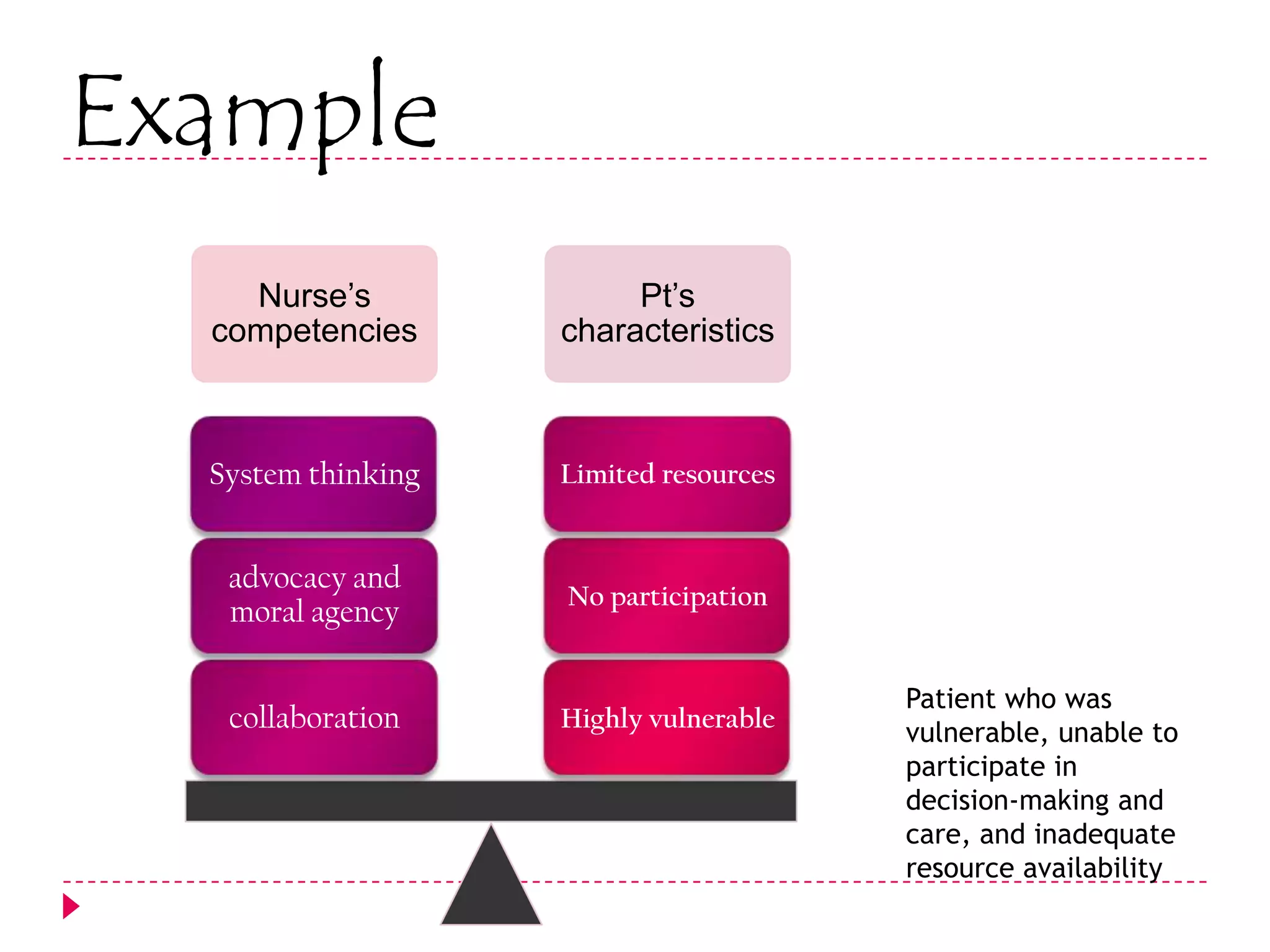
Example
Nurse’s
competencies
Pt’s
characteristics
Highly vulnerable
No participation
Limited resources
collaboration
advocacy and
moral agency
System thinking
Patient who was
vulnerable, unable to
participate in
decision-making and
care, and inadequate
resource availability
Company Logo
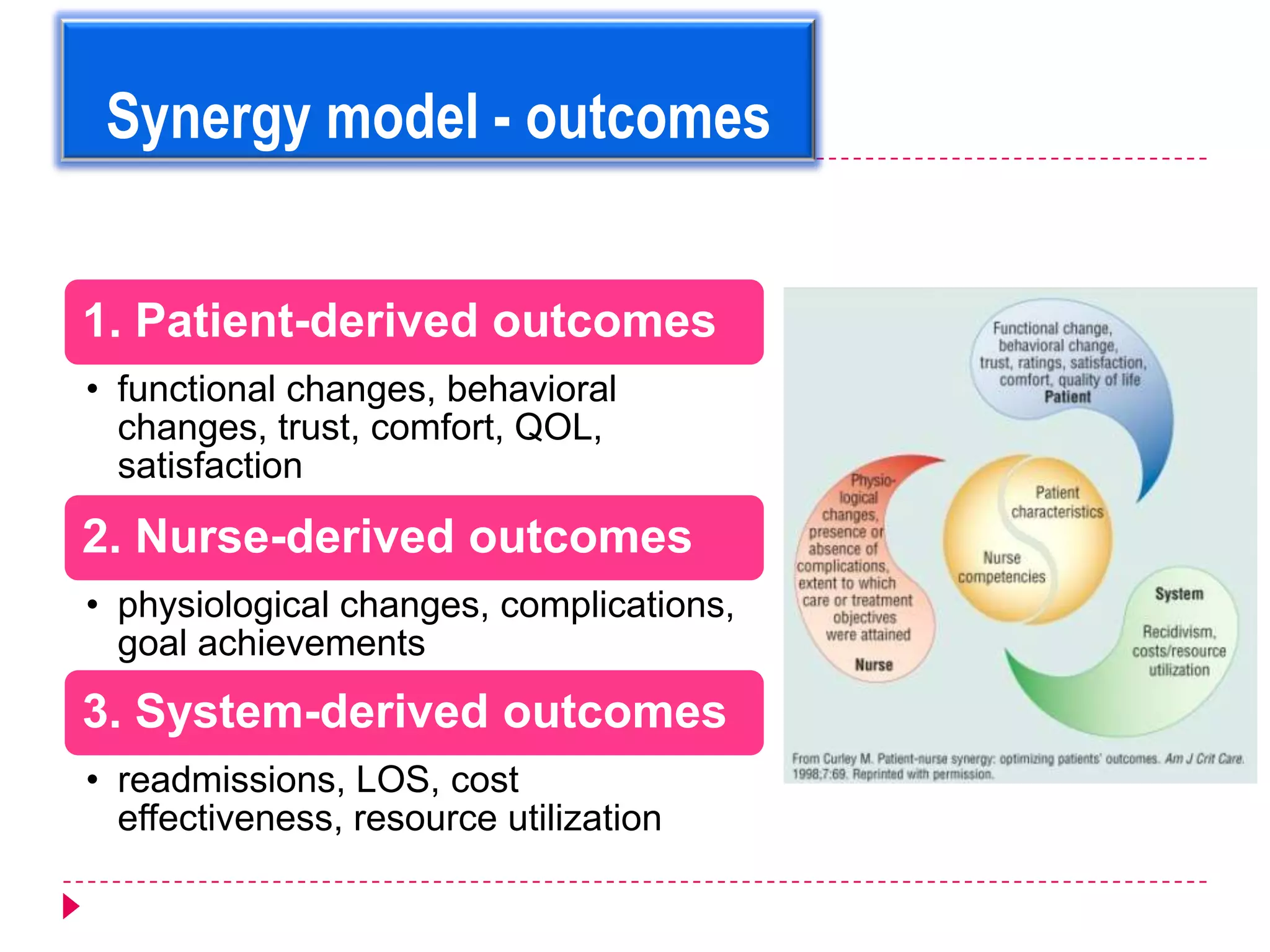
Synergy model - outcomes
1. Patient-derived outcomes
• functional changes, behavioral
changes, trust, comfort, QOL,
satisfaction
2. Nurse-derived outcomes
• physiological changes, complications,
goal achievements
3. System-derived outcomes
• readmissions, LOS, cost
effectiveness, resource utilization
Application
Company Logo
Sophie’s Story
 Sophie, an 82-year-old African American woman
 Had New York Heart Association class III CHF
 A widow, lived alone
 Sole financial support was Social Security
 Had been hospitalized twice in the past 18
months for exacerbations of CHF
 Had had a stroke, which had left her dependent
on a cane for ambulation
 Had hypertension, osteoporosis, atrial
fibrillation, and diabetes mellitus type 2, which
was controlled with diet and oral
hypoglycemics.
Sophie’s Story
 Had a daughter who cared about her but was unable to
provide any supplemental financial support.
 Took the following medications:
 ACE inhibitor
 Digoxin
 Potassium
 Fosinopril sodium
 Coumadin
 Furosemide.
 Her medications cost her approximately $350 per month.
 Did not have any other insurance except Medicare so
she paid for medications herself
Sophie’s Story
 Did not drive but used public
transportation to travel to the clinic and
for other trips
 Came to the CHF clinic every 2 weeks
 On the morning of one visit
 Sophie was complaining of slight shortness of
breath
 She had gained 3 lb since her last visit
 BP was elevated to 176/94 mmHg (normally
around 130/80 mmHg)
 Pulse was 106 beats/min and irregular
 Stated that her shoes did not fit so she had to
wear her slippers
Sophie’s data
 Random blood glucose level was 245 mg/dL
 Upon questioning Sophie, the APN found that
Sophie:
 had not taken any of her medications for the past 3 days.
 was reluctant to answer questions because she did not
want to “get into trouble” with the doctors.
 admitted that she had run out of medications 3 days
earlier because she did not have the money to pay for
them
 was not eating well because of the lack of money, stating
that she had 3 potatoes left to eat until the end of the
month.
 On the first of the month, which was 3 days away, she
would receive her Social Security check and be able to get
her medications.
Sophie’s Story (Hardin & Hussey, 2003)
Hardin, S., & Hussey, L. 2003. AACN Synergy Model for Patient Care : Case Study of a CHF Patient.
Critical Care Nursing, 23:73-76
Sophie’s story
Aacn synergy model for patient care

Aacn synergy model for patient care

  • 1.
    AACN Synergy Model forPatient Care Donwiwat Saensom Faculty of Nursing, KKU
  • 2.
    Contents 1. Model characteristics 2.Assumptions 3. Model components 4. Synergy Model outcomes 5. Model application
  • 3.
    What is AACNSynergy Model? A model that describes  Relationship between a patient and a nurse  Acknowledges the importance of nursing care that is based on the needs of patients and their families  It matches patients’ characteristics with nurses’ competencies to optimize outcomes. (Brewer et al., 2007)
  • 4.
    What is “synergy”? When patient characteristics and nurse characteristics match and synergize, optimal patient outcome can result. And, when care is derived from what patients need, it will be felt by them and contribute to their perception of being well cared for.
  • 5.
    Assumptions of synergymodel Context for the nurse-patient relationship derived from Patient/family/community Patient  Biological, social, and spiritual entities  Many characteristics, all are connected and contribute to each other, cannot be looked at in isolation  M Nurse  Contain number of dimensions, interrelated dimensions paint a profile of the nurse  Goal = restore a patient to an optimal level of wellness as defined by the patient.  Death : acceptable outcome, nursing care moves a patient toward a peaceful death
  • 6.
    Model components  Patients’characteristics  Nurses’ competensies  Outcomes of the synergy
  • 9.
    Intrinsic 1. Resiliency 2. Vulnerability 3.Stability 4. Complexity 5. Predictability Extrinsic 6. Resource availability 7. Participation in decision-making 8. Participation in care
  • 10.
      Level - Minimallyresilient  Unable to mount a response  Failure of compensatory/coping mechanisms, minimal reserves  Brittle Level - Moderately resilient  Able to mount a moderate response  Able to initiate some degree of compensation  Moderate reserves Level - Highly resilient  Able to mount and maintain a response  Intact compensatory/coping mechanisms  Strong reserves  Endurance
  • 12.
    2. Vulnerability  Thelevel of susceptibility to actual or potential stressors that may adversely affect patient outcomes.  Vulnerability can be affected by the patient’s physiological makeup or health behaviors exhibited by the patient Level 1: Highly vulnerable Susceptible, unprotected, fragile Level 3: Moderately vulnerable Somewhat susceptible, somewhat protected Level 5: Minimally vulnerable Safe, out of the woods, protected, not fragile
  • 13.
    3. Stability  Abilityto maintain a steady- state equilibrium Level 1 - Minimally stable Labile; unstable; unresponsive to therapies; high risk of death Level 3 - Moderately stable Able to maintain steady state for limited period of time; some responsiveness to therapies Level 5 - Highly stable Constant; responsive to therapies; low risk of death
  • 14.
    4. Complexity  Theintricate entanglement of two or more systems e.g. body family therapies Level 1 - Highly complex Intricate; complex patient/family dynamics; ambiguous/vague; atypical presentation Level 3 - Moderately complex Moderately involved patient/family dynamics Level 5 - Minimally complex Straightforward; routine patient/family dynamics; simple/clear cut; typical presentation
  • 15.
    5. Predictability  Acharacteristic that allows one to expect a certain course of events or course of illness Level 1 - Not predictable Uncertain; uncommon patient population/illness; unusual or unexpected course; does not follow critical pathway, or no critical pathway developed Level 3 - Moderately predictable Wavering; occasionally noted patient population/illness Certain; common patient population/illness;
  • 16.
    6. Resource availability Extent of resources e.g. technical fiscal personal psychological and social the patient family community bring to the situation. Level 1 - Few resources Necessary knowledge and skills not available; necessary financial support not available; minimal personal/psychological supportive resources; few social systems resources Level 3 - Moderate resources Limited knowledge and skills available; limited financial support available; limited personal/psychological supportive resources; limited social systems resources Level 5 - Many resources Extensive knowledge and skills available and accessible; financial resources readily available; strong personal/psychological supportive resources; strong social systems resources
  • 17.
    7. Participation incare  Extent to which patient family engages in aspects of care. Level 1 - No participation Patient and family unable or unwilling to participate in care Level 3 - Moderate level of participation Patient and family need assistance in care Level 5 - Full participation Patient and family fully able
  • 18.
    8. Participation indecision- making  Extent to which patient family engages in decision-making. Level 1 - No participation Patient and family have no capacity for decision-making; requires surrogacy Level 3 - Moderate level of participation Patient and family have limited capacity; seeks input/advice from others in decision-making Level 5 - Full participation Patient and family have capacity, and makes decision for self
  • 19.
    Example A healthy, uninsured, 40year-oldwoman undergoing a pre- employment wellness screening could be described as an individual who is (a) stable, (b) not complex (c) very predictable, (d) Resilient (e) not vulnerable (f) able to participate in decision making and care, but (g) has inadequate resource availability. Female 40 y.o. has physical exam for work application, good health in general, no health insurance Stability Complex. Predict. Resiliencyvulner. +/- participation in care & decision making resource Avail.
  • 20.
    Example Newborn with MOD, has health insurance, educated parents Stability Comple x. Predict. Vulner. Resilienc y Participatio n incare/ decision making Good Resource Critically ill infant with multisystem organ failure can be described as at the other end of the continuum in some areas but as very similar in others, for example, as an individual who is (a) unstable (b) highly complex (c) Unpredictable (d) highly resilient (e) Vulnerable (f) unable to become involved in decision making and care, but (g) has adequate resource availability
  • 22.
    Nurses’ competencies  Clinicaljudgment  Advocacy/moral agency  Caring practices  Collaboration  Systems thinking  Response to diversity  Clinical inquiry  Facilitator of learning Nurses’ competencies Clinical judgment Advocacy /moral agency Caring practices Collabora -tion Systems thinking Clinical inquiry Facilitator of learning Measured on a continuum and provide basis for differentiating levels of practice for the nurse
  • 23.
    Clinical reasoning:  clinicaldecision-making,  critical thinking  a global grasp of the situation + nursing skills acquired through  a process of integrating formal and informal experiential knowledge  evidence-based guidelines 1. Clinical judgment
  • 24.
    Level 1  Collectsbasic-level data; follows algorithms, decision trees and protocols with all populations  Is uncomfortable deviating from protocols  Can match formal knowledge with clinical events to make decisions  Questions the limits of one's ability to make clinical decisions and delegates the decision-making to other clinicians; includes extraneous detail Level 3  Collects and interprets complex patient data  Makes clinical judgments based on an immediate grasp of the whole picture for common or routine patient populations  Recognizes patterns and trends that may predict the direction of illness; recognizes limits and seeks appropriate help  Focuses on key elements of case, while sorting out extraneous details Level 5  Synthesizes and interprets multiple, sometimes conflicting, sources of data  Makes judgment based on an immediate grasp of the whole picture, unless working with new patient populations  Uses past experiences to anticipate problems  Helps patient and family see the "big picture"; recognizes the limits of clinical judgment and seeks multidisciplinary collaboration and consultation with comfort
  • 25.
    2. Advocacy /moral agency  Working on another's behalf  Representing the concerns of the patient/family and nursing staff  Serving as a moral agent in identifying and helping to resolve ethical and clinical concerns within and outside the clinical setting
  • 26.
    Level1  Workson behalf of patient  Self assesses personal values  Aware of ethical conflicts/issues that may surface in clinical setting; makes ethical/moral decisions based on rules  Represents patient when patient cannot represent self  Aware of patients' rights Level3  Works on behalf of patient and family  Considers patient values and incorporates in care, even when differing from personal values  Supports colleagues in ethical and clinical issues  Moral decision-making can deviate from rules  Demonstrates give and take with patient's family, allowing them to speak/represent themselves when possible  Aware of patient and family rights Level5 • Works on behalf of patient, family, and community • Advocates from patient/family perspective, whether similar to or different from personal values • Advocates ethical conflict and issues from patient/ family perspective • Suspends rules patient and family drive moral decision-making • Empowers the patient and family to speak for/represent themselves • Achieves mutuality within patient/professional relationships
  • 27.
    3. Caring practices Nursing activities that create a  compassionate  supportive  therapeutic environment for patients and staff  Aim to promote comfort and healing and prevent unnecessary suffering.  Includes vigilance, engagement, and responsiveness of caregivers, including family and healthcare personnel
  • 28.
    Level 1 Focuses on theusual and customary needs of the patient; no anticipation of future needs; bases care on standards and protocols; maintains a safe physical environment; acknowledges death as a potential outcome Level 3 Responds to subtle patient and family changes; engages with the patient as a unique patient in a compassionate manner; recognizes and tailors caring practices to the individuality of patient and family; domesticates the patient's and family's environment; recognizes that death may be an acceptable outcome Level 5 Has astute awareness and anticipates patient and family changes and needs; fully engaged with and sensing how to stand alongside the patient, family, and community; caring practices follow the patient and family lead; anticipates hazards and avoids them, and promotes safety throughout patient's and family's transitions along the healthcare continuum; orchestrates the process that ensures patient's/family's comfort and concerns surrounding issues of death and dying are met
  • 29.
    4. Collaboration. Working withothers (patients, families, healthcare providers)  Promotes/encourages each person's contributions toward achieving optimal/realistic patient/ family goals.  Involves intra- and inter- disciplinary work with colleagues and community
  • 30.
    Level 1  Willing tobe taught, coached and/or mentored  Participates in team meetings and discussions regarding patient care and/or practice issues  Open to various team members‘ contributions Level 3  Seeks opportunities to be taught, coached, and/or mentored  Elicits others' advice and perspectives; initiates and participates in team meetings and discussions regarding patient care and/or practice issues  Recognizes and suggests various team members' participation Level 5  Seeks opportunities to teach, coach, and mentor and to be taught, coached and mentored  Facilitates active involvement and complementary contributions of others in team meetings and discussions regarding patient care and/or practice issues  Involves/recruits diverse resources when appropriate
  • 31.
    5. System thinking Body of knowledge /tools that allow the nurse to manage whatever environmental and system resources exist for the patient/family and staff within or across healthcare and non- healthcare systems.
  • 32.
    Level 1  Uses alimited array of strategies  Limited outlook - sees the pieces or components  Does not recognize negotiation as an alternative  Sees patient and family within the isolated environment of the unit  Sees self as key resource Level 3  Develops strategies based on needs and strengths of patient/family; able to make connections within components  Sees opportunity to negotiate but may not have strategies  Developing a view of the patient/family transition process  Recognizes how to obtain resources beyond self Level 5  Develops, integrates, and applies a variety of strategies that are driven by the needs and strengths of the patient/family  Global or holistic outlook - sees the whole rather than the pieces  Knows when and how to negotiate and navigate through the system on behalf of patients and families  Anticipates needs of patients and families as they move through the healthcare system; utilizes untapped and
  • 33.
    6. Response todiversity  The sensitivity to recognize, appreciate and incorporate differences into the provision of care.  Differences may include, but are not limited to  cultural differences  spiritual beliefs  Gender  Race,  Ethnicity  Lifestyle  Socioeconomic status,  Age  Values.
  • 34.
    Level 1  Assesses culturaldiversity  Provides care based on own belief system; learns the culture of the healthcare Environment Level 3  Inquires about cultural differences and considers their impact on care  Accommodates personal and professional differences in the plan of care  Helps patient/family understand the culture of the healthcare system Level 5  Responds to, anticipates, and integrates cultural differences into patient/family care  Appreciates and incorporates differences, including alternative therapies, into care  Tailors healthcare culture, to the extent possible, to meet the diverse needs and strengths of the patient/family 6. Response to diversity
  • 35.
    7. Facilitation oflearning  
  • 36.
    Level1  Followsplanned educational programs  Sees patient/family education as a separate task from delivery of care  Provides data without seeking to assess patient's readiness or understanding  Has limited knowledge of the totality of the educational needs;  Focuses on a nurse's perspective;  Sees the patient as a passive recipient Level3  Adapts planned educational programs;  Begins to recognize and integrate different ways of teaching into delivery of care  Incorporates patient's understanding into practice  Sees the overlapping of educational plans from different healthcare providers' perspectives  Begins to see the patient as having input into goals  Begins to see individualism Level5  Creatively modifies or develops patient/family education programs  Integrates patient/family education throughout delivery of care  Evaluates patient's understanding by observing behavior changes related to learning  Is able to collaborate and incorporate all healthcare providers' and educational plans into the patient/family educational program  Sets patient-driven goals for education  Sees patient/family as having choices and consequences that are Just follow Modify Create, integrate, collaborat e
  • 37.
    8. Clinical Inquiry(Innovator/Evaluator)  The ongoing process of questioning and evaluating practice and providing informed practice  Creating practice changes through research utilization and experiential learning
  • 38.
    Level 1 • Followsstandards and guidelines • Implements clinical changes and research-based practices developed by others • Recognizes the need for further learning to improve patient care • Recognizes obvious changing patient situation (e.g., deterioration, crisis) • Needs and seeks help to identify patient problem Level 3 • Questions appropriateness of policies and guidelines • Questions current practice; seeks advice, resources, or information to improve patient care • Begins to compare and contrast possible alternatives Level 5 • Improves, deviates from, or individualizes standards and guidelines for particular patient situations or populations • Questions and/or evaluates current practice based on patients' responses, review of the literature, research and education/learning; acquires knowledge and skills needed to address questions arising in practice and improve patient care • (The domains of clinical judgment and clinical inquiry converge at the expert level; they cannot be separated)
  • 39.
    Example Nurse’s competencies Pt’s characteristics A patient whowas stable but unpredictable, minimally resilient, and highly vulnerable
  • 40.
    Example Nurse’s competencies Pt’s characteristics Highly vulnerable No participation Limitedresources collaboration advocacy and moral agency System thinking Patient who was vulnerable, unable to participate in decision-making and care, and inadequate resource availability
  • 41.
  • 42.
    Synergy model -outcomes 1. Patient-derived outcomes • functional changes, behavioral changes, trust, comfort, QOL, satisfaction 2. Nurse-derived outcomes • physiological changes, complications, goal achievements 3. System-derived outcomes • readmissions, LOS, cost effectiveness, resource utilization
  • 43.
  • 44.
  • 45.
    Sophie’s Story  Sophie,an 82-year-old African American woman  Had New York Heart Association class III CHF  A widow, lived alone  Sole financial support was Social Security  Had been hospitalized twice in the past 18 months for exacerbations of CHF  Had had a stroke, which had left her dependent on a cane for ambulation  Had hypertension, osteoporosis, atrial fibrillation, and diabetes mellitus type 2, which was controlled with diet and oral hypoglycemics.
  • 46.
    Sophie’s Story  Hada daughter who cared about her but was unable to provide any supplemental financial support.  Took the following medications:  ACE inhibitor  Digoxin  Potassium  Fosinopril sodium  Coumadin  Furosemide.  Her medications cost her approximately $350 per month.  Did not have any other insurance except Medicare so she paid for medications herself
  • 47.
    Sophie’s Story  Didnot drive but used public transportation to travel to the clinic and for other trips  Came to the CHF clinic every 2 weeks  On the morning of one visit  Sophie was complaining of slight shortness of breath  She had gained 3 lb since her last visit  BP was elevated to 176/94 mmHg (normally around 130/80 mmHg)  Pulse was 106 beats/min and irregular  Stated that her shoes did not fit so she had to wear her slippers
  • 48.
    Sophie’s data  Randomblood glucose level was 245 mg/dL  Upon questioning Sophie, the APN found that Sophie:  had not taken any of her medications for the past 3 days.  was reluctant to answer questions because she did not want to “get into trouble” with the doctors.  admitted that she had run out of medications 3 days earlier because she did not have the money to pay for them  was not eating well because of the lack of money, stating that she had 3 potatoes left to eat until the end of the month.  On the first of the month, which was 3 days away, she would receive her Social Security check and be able to get her medications.
  • 49.
    Sophie’s Story (Hardin& Hussey, 2003) Hardin, S., & Hussey, L. 2003. AACN Synergy Model for Patient Care : Case Study of a CHF Patient. Critical Care Nursing, 23:73-76
  • 50.

Editor's Notes

  • #6 1. Patients are biological, social, and spiritual entities who present at a particular developmental stage. The whole patient (body, mind, and spirit) must be considered. 2. The patient, family and community all contribute to providing a context for the nurse-patient relationship. 3. Patients can be described by a number of characteristics. All characteristics are connected and contribute to each other. Characteristics cannot be looked at in isolation. 4. Nurses can be described on a number of dimensions. The interrelated dimensions paint a profile of the nurse. 5. A goal of nursing is to restore a patient to an optimal level of wellness as defined by the patient. Death can be an acceptable outcome in which the goal of nursing care is to move a patient toward a peaceful death.
  • #9  Each individual possesses a singular genetic and biological makeup that establishes a capacity for health. Each individual practices various degrees of healthy behaviors, for example, diet, exercise, and stress reduction. Each lives within a community with different institutions, economic structures, government, social organization, and community perceptions. All exist within a macrosocial structure consisting of societal infrastructure, the physical environment, cultural characteristics, and population perceptions. All these factors place the patient within context of an individual, unique environment and affect the nursing care required for a particular patient and family.
  • #11 The patient’s capacity to return to a restorative level of functioning by using a compensatory coping mechanism. The level of resiliency assessed in patients is often dependent upon their ability to rebound after an injury. This ability can be influenced by many factors, including age,comorbidities, and compensatory mechanisms that are intact