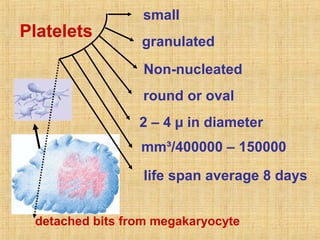
Platelets

small
granulated
Non-nucleated
round or oval
2 – 4 µ in diameter
mm³/400000 – 150000
life span average 8 days

detached bits from megakaryocyte
fibroblasts

Production of platelets is
regulated by thrombopoietin
secreted by

Normally

endothelial cells
certain leucocytes

of platelets are present % 75 – 60
in the circulating blood
25 – 40 % of platelets are present
in the spleen
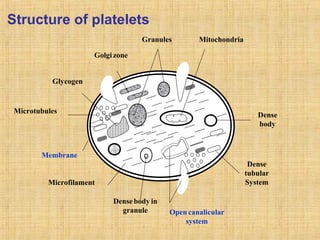
Structure of platelets
Granules

Mitochondria

Golgi zone
Glycogen

Microtubules

Dense
body

Membrane
Dense
tubular
System

Microfilament
Dense body in
granule

Open canalicular
system
Structure of platelets
I- Plasma membrane
plasma membrane contains***
glycoprotein receptors
For
• collagen
• fibrinogen
• vessel von-Willebrand factor

Phospholipids
I
ُ nclude
• platelet factor 3
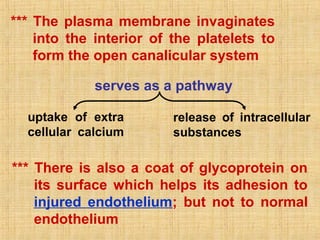
*** The plasma membrane invaginates
into the interior of the platelets to
form the open canalicular system
serves as a pathway
uptake of extra
cellular calcium

release of intracellular
substances

*** There is also a coat of glycoprotein on
its surface which helps its adhesion to
injured endothelium; but not to normal
endothelium
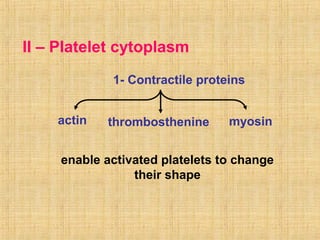
II – Platelet cytoplasm
1- Contractile proteins
actin

thrombosthenine

myosin

enable activated platelets to change
their shape
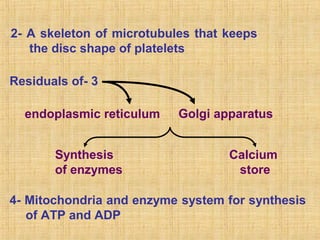
2- A skeleton of microtubules that keeps
the disc shape of platelets
Residuals of- 3
endoplasmic reticulum
Synthesis
of enzymes

Golgi apparatus
Calcium
store

4- Mitochondria and enzyme system for synthesis
of ATP and ADP
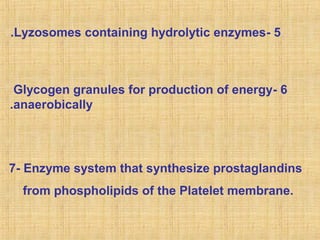
.Lyzosomes containing hydrolytic enzymes- 5

Glycogen granules for production of energy- 6
.anaerobically

7- Enzyme system that synthesize prostaglandins
from phospholipids of the Platelet membrane.
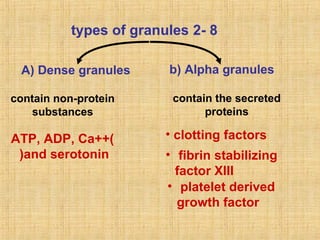
types of granules 2- 8
A) Dense granules
contain non-protein
substances

ATP, ADP, Ca++)
)and serotonin

b) Alpha granules
contain the secreted
proteins

• clotting factors
• fibrin stabilizing
factor XIII
• platelet derived
growth factor
HEMOSTASIS
By Prof Sameh Shamaa
Prof Of medical Oncology and
Internal medicine
Mansoura Faculty Of Medicine
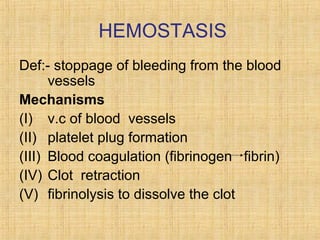
HEMOSTASIS
Def:- stoppage of bleeding from the blood
vessels
Mechanisms
(I) v.c of blood vessels
(II) platelet plug formation
(III) Blood coagulation (fibrinogen fibrin)
(IV) Clot retraction
(V) fibrinolysis to dissolve the clot
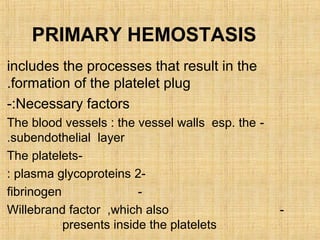
PRIMARY HEMOSTASIS
includes the processes that result in the
.formation of the platelet plug
-:Necessary factors
The blood vessels : the vessel walls esp. the .subendothelial layer
The platelets: plasma glycoproteins 2fibrinogen
Willebrand factor ,which also
presents inside the platelets

-
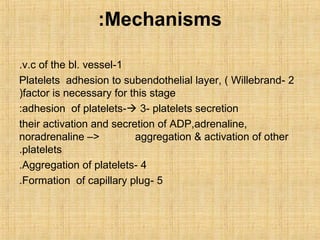
:Mechanisms
.v.c of the bl. vessel-1
Platelets adhesion to subendothelial layer, ( Willebrand- 2
(factor is necessary for this stage
:adhesion of platelets- 3- platelets secretion
their activation and secretion of ADP,adrenaline,
noradrenaline –>
aggregation & activation of other
.platelets
.Aggregation of platelets- 4
.Formation of capillary plug- 5
Coagulation of Blood
Def :- represent the conversion of fibrinogen
(soluble protein( to fibrin (insoluble(
meshwork which occludes the point or
vessel rupture.
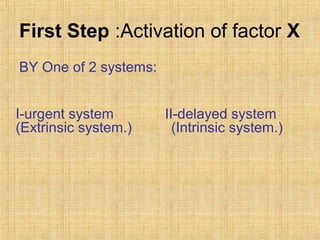
First Step :Activation of factor X
BY One of 2 systems:
I-urgent system
(Extrinsic system.(

II-delayed system
(Intrinsic system.(
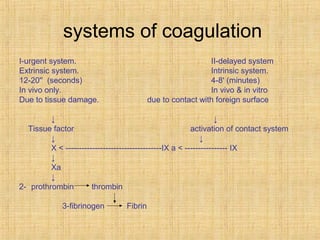
systems of coagulation
I-urgent system.
Extrinsic system.
12-20'' (seconds(
In vivo only.
Due to tissue damage.

II-delayed system
Intrinsic system.
4-8' (minutes(
In vivo & in vitro
due to contact with foreign surface

↓
↓
Tissue factor
activation of contact system
↓
↓
X < ------------------------------------IX a < ---------------- IX
↓
Xa
↓
2- prothrombin
thrombin
3-fibrinogen

Fibrin
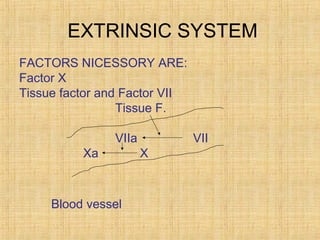
EXTRINSIC SYSTEM
FACTORS NICESSORY ARE:
Factor X
Tissue factor and Factor VII
Tissue F.
VIIa
Xa

Blood vessel

VII
X
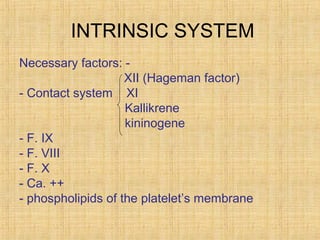
INTRINSIC SYSTEM
Necessary factors: XII (Hageman factor(
- Contact system XI
Kallikrene
kininogene
- F. IX
- F. VIII
- F. X
- Ca. ++
- phospholipids of the platelet’s membrane
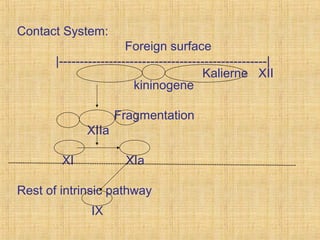
Contact System:
Foreign surface
|--------------------------------------------------|
Kalierne XII
kininogene
Fragmentation
XIIa
XI

XIa

Rest of intrinsic pathway
IX
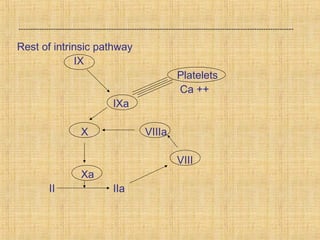
Rest of intrinsic pathway
IX
Platelets
Ca ++
IXa
X

VIIIa
VIII

Xa
II

IIa
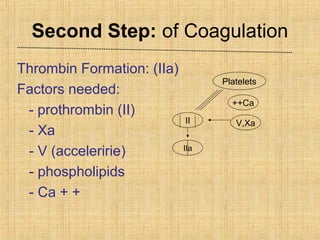
Second Step: of Coagulation
Thrombin Formation: (IIa)
Factors needed:
- prothrombin (II)
- Xa
- V (acceleririe)
- phospholipids
- Ca + +

Platelets
++Ca
II
IIa

V,Xa
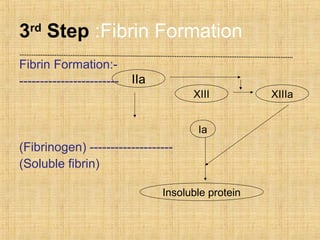
3 Step :Fibrin Formation
rd

Fibrin Formation:------------------------

IIa
XIII
Ia

(Fibrinogen) -------------------(Soluble fibrin)
Insoluble protein

XIIIa

Blood #5, Platelets & Hemostasis - Physiology

  • 1.
    Platelets small granulated Non-nucleated round or oval 2– 4 µ in diameter mm³/400000 – 150000 life span average 8 days detached bits from megakaryocyte
  • 2.
    fibroblasts Production of plateletsis regulated by thrombopoietin secreted by Normally endothelial cells certain leucocytes of platelets are present % 75 – 60 in the circulating blood 25 – 40 % of platelets are present in the spleen
  • 3.
    Structure of platelets Granules Mitochondria Golgizone Glycogen Microtubules Dense body Membrane Dense tubular System Microfilament Dense body in granule Open canalicular system
  • 4.
    Structure of platelets I-Plasma membrane plasma membrane contains*** glycoprotein receptors For • collagen • fibrinogen • vessel von-Willebrand factor Phospholipids I ُ nclude • platelet factor 3
  • 5.
    *** The plasmamembrane invaginates into the interior of the platelets to form the open canalicular system serves as a pathway uptake of extra cellular calcium release of intracellular substances *** There is also a coat of glycoprotein on its surface which helps its adhesion to injured endothelium; but not to normal endothelium
  • 6.
    II – Plateletcytoplasm 1- Contractile proteins actin thrombosthenine myosin enable activated platelets to change their shape
  • 7.
    2- A skeletonof microtubules that keeps the disc shape of platelets Residuals of- 3 endoplasmic reticulum Synthesis of enzymes Golgi apparatus Calcium store 4- Mitochondria and enzyme system for synthesis of ATP and ADP
  • 8.
    .Lyzosomes containing hydrolyticenzymes- 5 Glycogen granules for production of energy- 6 .anaerobically 7- Enzyme system that synthesize prostaglandins from phospholipids of the Platelet membrane.
  • 9.
    types of granules2- 8 A) Dense granules contain non-protein substances ATP, ADP, Ca++) )and serotonin b) Alpha granules contain the secreted proteins • clotting factors • fibrin stabilizing factor XIII • platelet derived growth factor
  • 10.
    HEMOSTASIS By Prof SamehShamaa Prof Of medical Oncology and Internal medicine Mansoura Faculty Of Medicine
  • 11.
    HEMOSTASIS Def:- stoppage ofbleeding from the blood vessels Mechanisms (I) v.c of blood vessels (II) platelet plug formation (III) Blood coagulation (fibrinogen fibrin) (IV) Clot retraction (V) fibrinolysis to dissolve the clot
  • 12.
    PRIMARY HEMOSTASIS includes theprocesses that result in the .formation of the platelet plug -:Necessary factors The blood vessels : the vessel walls esp. the .subendothelial layer The platelets: plasma glycoproteins 2fibrinogen Willebrand factor ,which also presents inside the platelets -
  • 13.
    :Mechanisms .v.c of thebl. vessel-1 Platelets adhesion to subendothelial layer, ( Willebrand- 2 (factor is necessary for this stage :adhesion of platelets- 3- platelets secretion their activation and secretion of ADP,adrenaline, noradrenaline –> aggregation & activation of other .platelets .Aggregation of platelets- 4 .Formation of capillary plug- 5
  • 14.
    Coagulation of Blood Def:- represent the conversion of fibrinogen (soluble protein( to fibrin (insoluble( meshwork which occludes the point or vessel rupture.
  • 15.
    First Step :Activationof factor X BY One of 2 systems: I-urgent system (Extrinsic system.( II-delayed system (Intrinsic system.(
  • 16.
    systems of coagulation I-urgentsystem. Extrinsic system. 12-20'' (seconds( In vivo only. Due to tissue damage. II-delayed system Intrinsic system. 4-8' (minutes( In vivo & in vitro due to contact with foreign surface ↓ ↓ Tissue factor activation of contact system ↓ ↓ X < ------------------------------------IX a < ---------------- IX ↓ Xa ↓ 2- prothrombin thrombin 3-fibrinogen Fibrin
  • 17.
    EXTRINSIC SYSTEM FACTORS NICESSORYARE: Factor X Tissue factor and Factor VII Tissue F. VIIa Xa Blood vessel VII X
  • 18.
    INTRINSIC SYSTEM Necessary factors:XII (Hageman factor( - Contact system XI Kallikrene kininogene - F. IX - F. VIII - F. X - Ca. ++ - phospholipids of the platelet’s membrane
  • 19.
    Contact System: Foreign surface |--------------------------------------------------| KalierneXII kininogene Fragmentation XIIa XI XIa Rest of intrinsic pathway IX
  • 20.
    Rest of intrinsicpathway IX Platelets Ca ++ IXa X VIIIa VIII Xa II IIa
  • 21.
    Second Step: ofCoagulation Thrombin Formation: (IIa) Factors needed: - prothrombin (II) - Xa - V (acceleririe) - phospholipids - Ca + + Platelets ++Ca II IIa V,Xa
  • 22.
    3 Step :FibrinFormation rd Fibrin Formation:------------------------ IIa XIII Ia (Fibrinogen) -------------------(Soluble fibrin) Insoluble protein XIIIa