Activating Prior Knowledge Presented by: Lucy Castañón
Did you know?
“ Each student brings to the classroom a rich storehouse of knowledge about the world.”
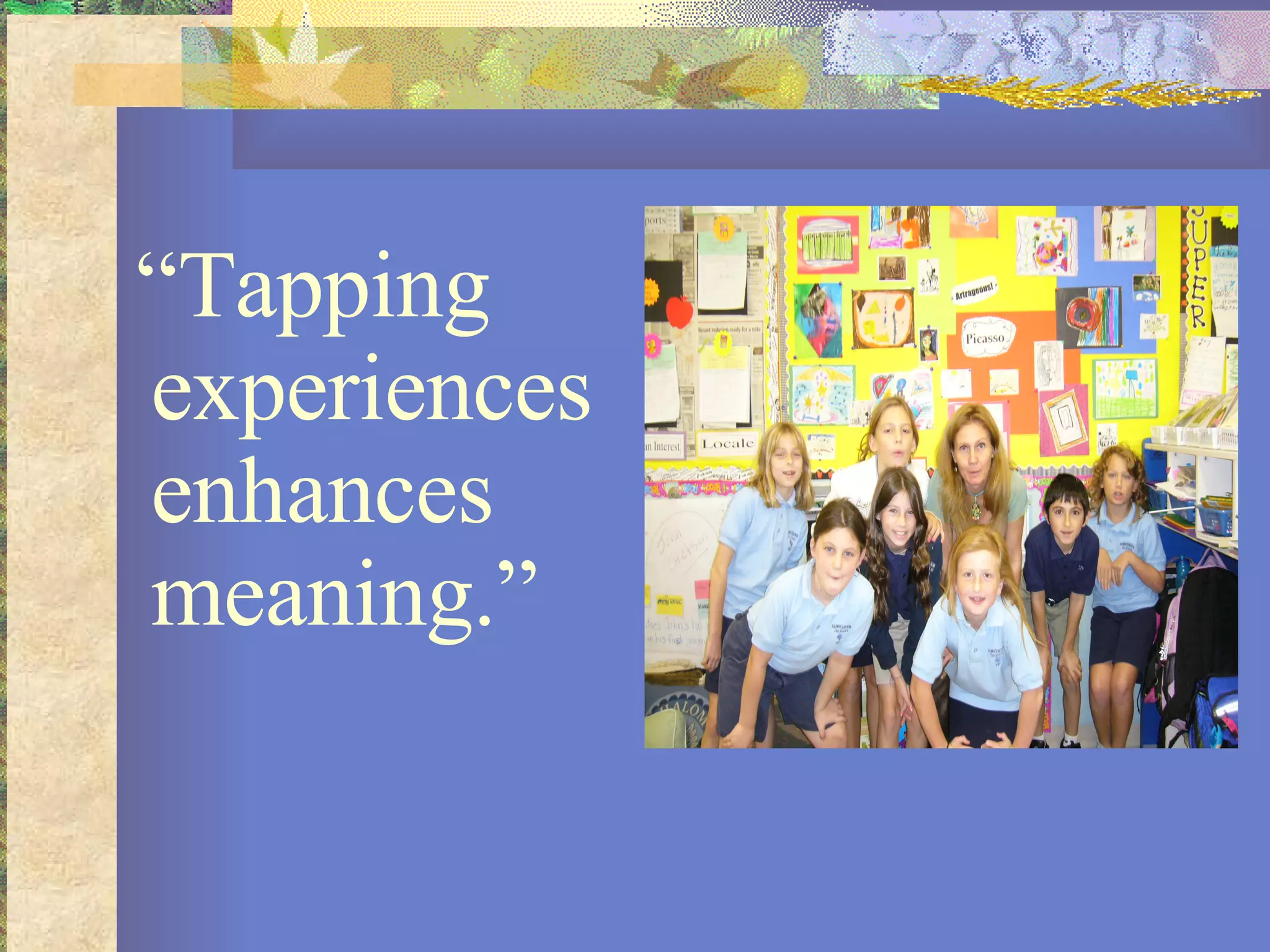
“ Tapping experiences enhances meaning.”
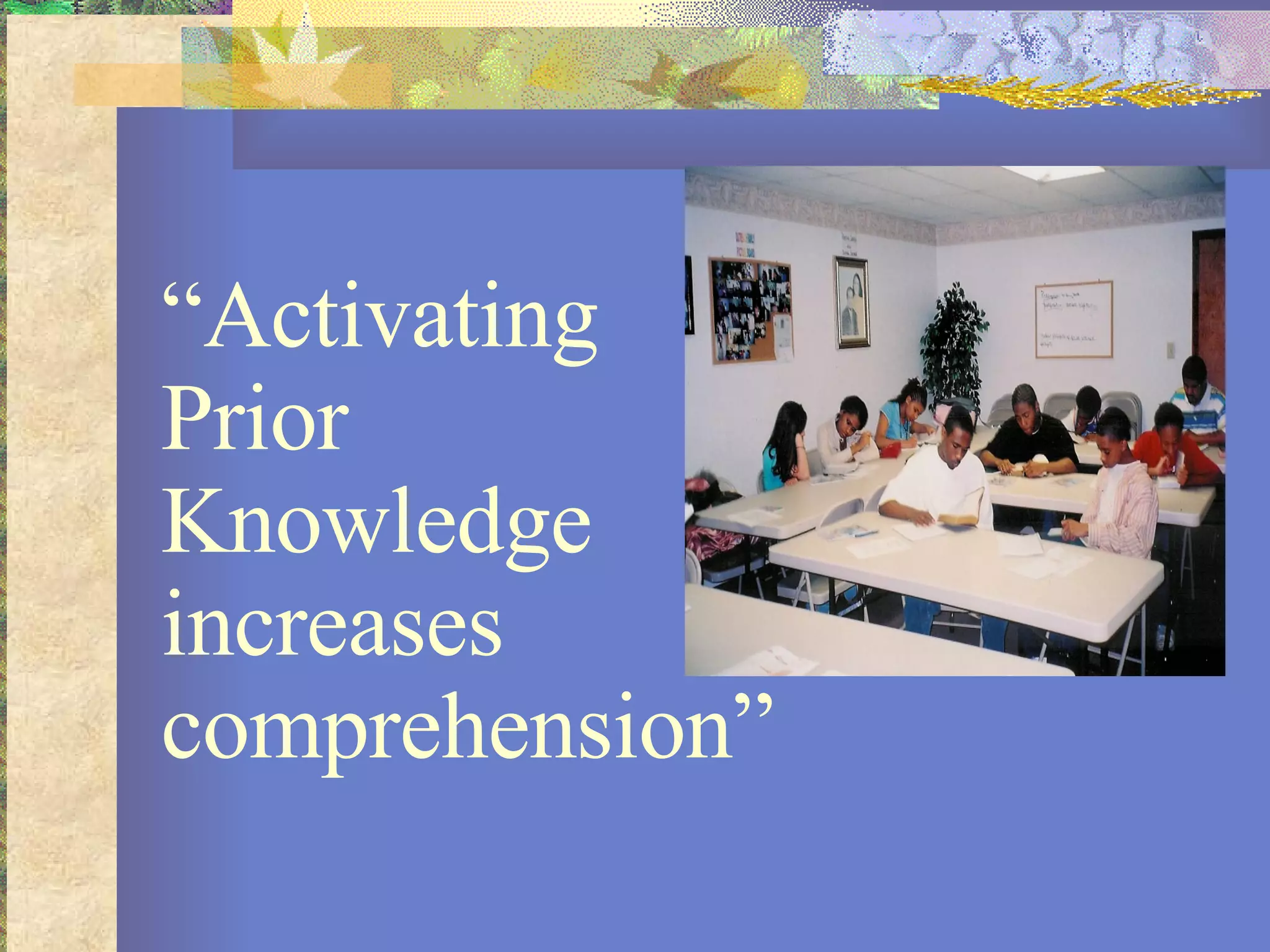
“ Activating Prior Knowledge increases comprehension”
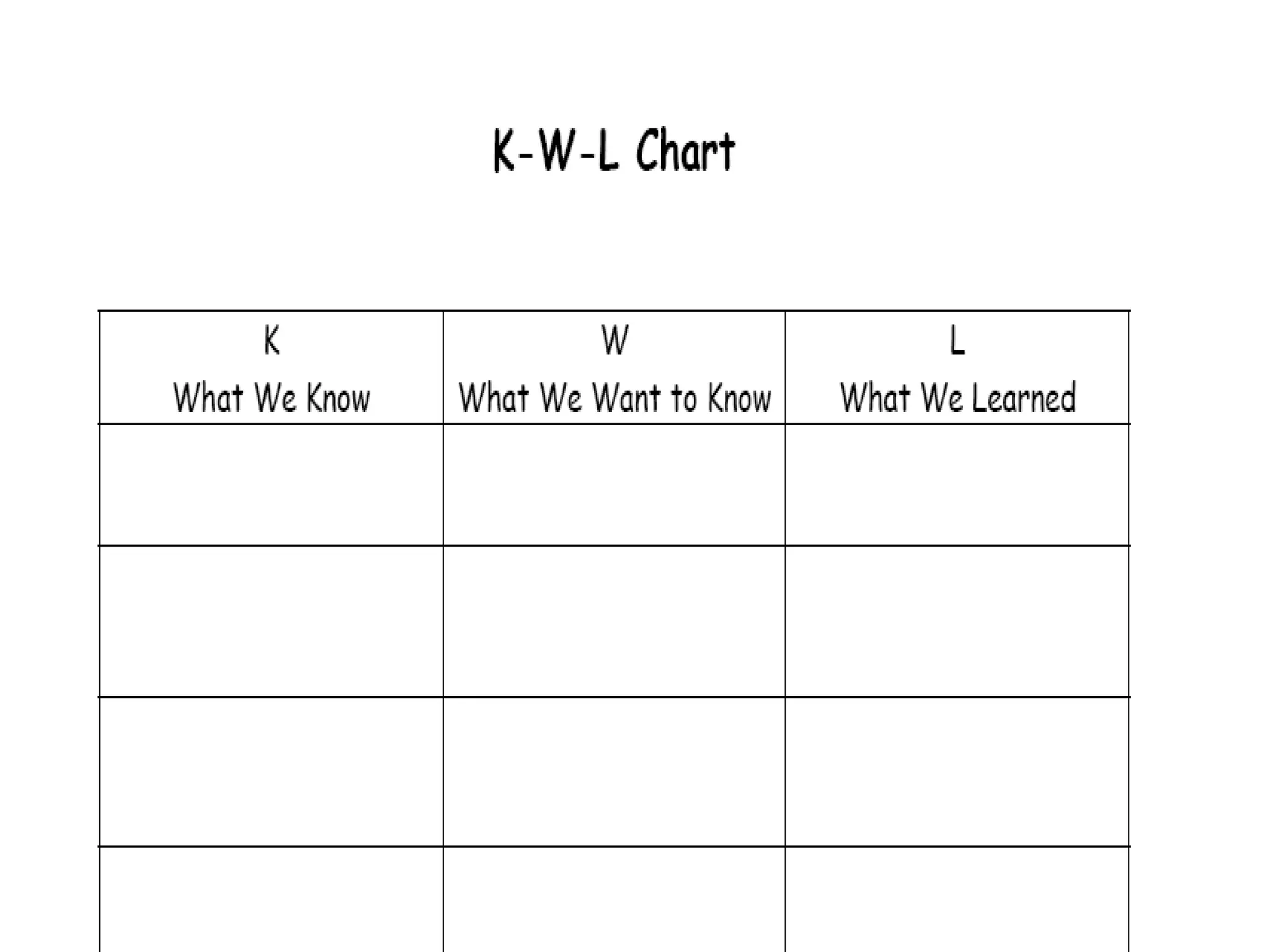
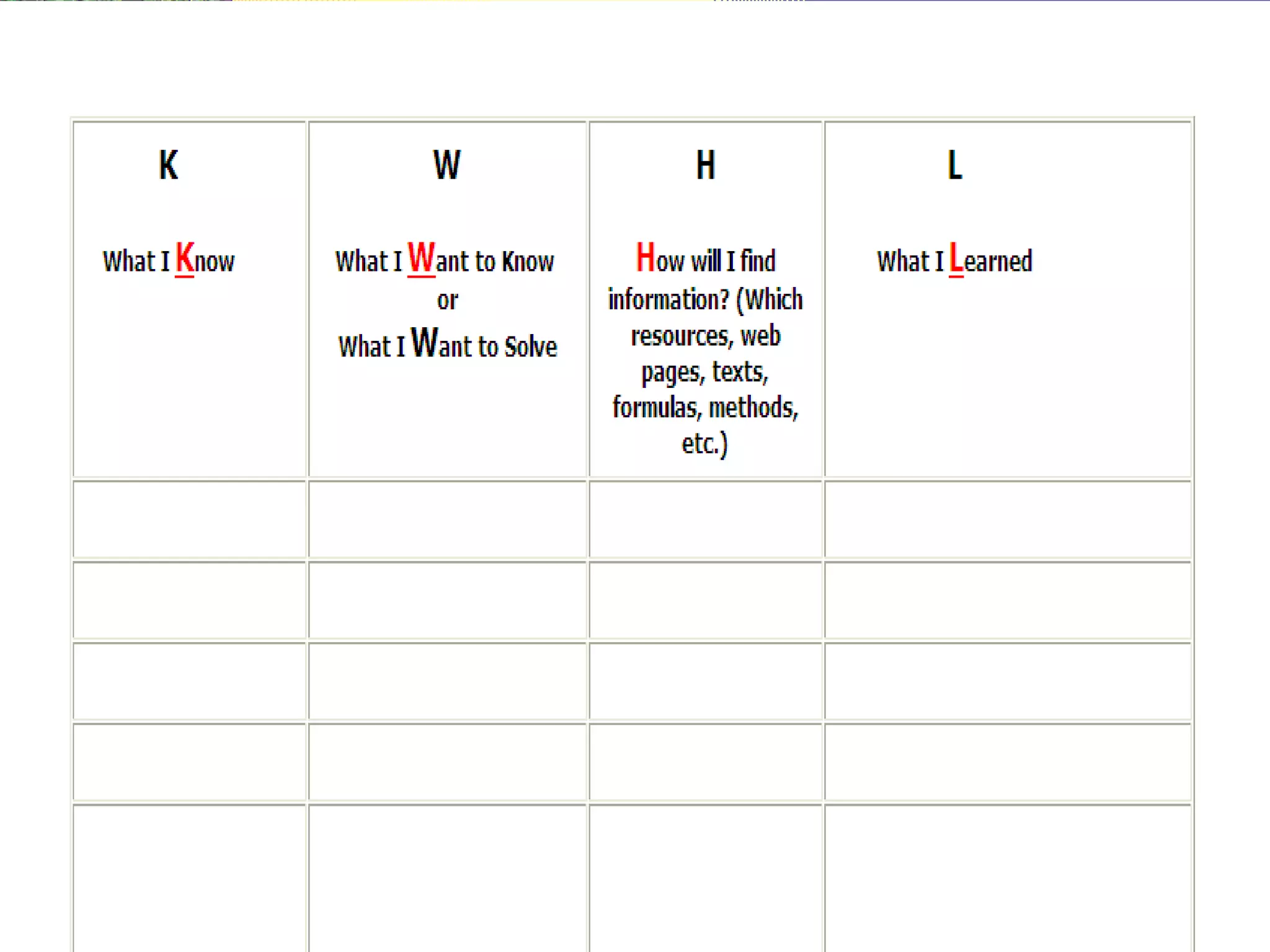
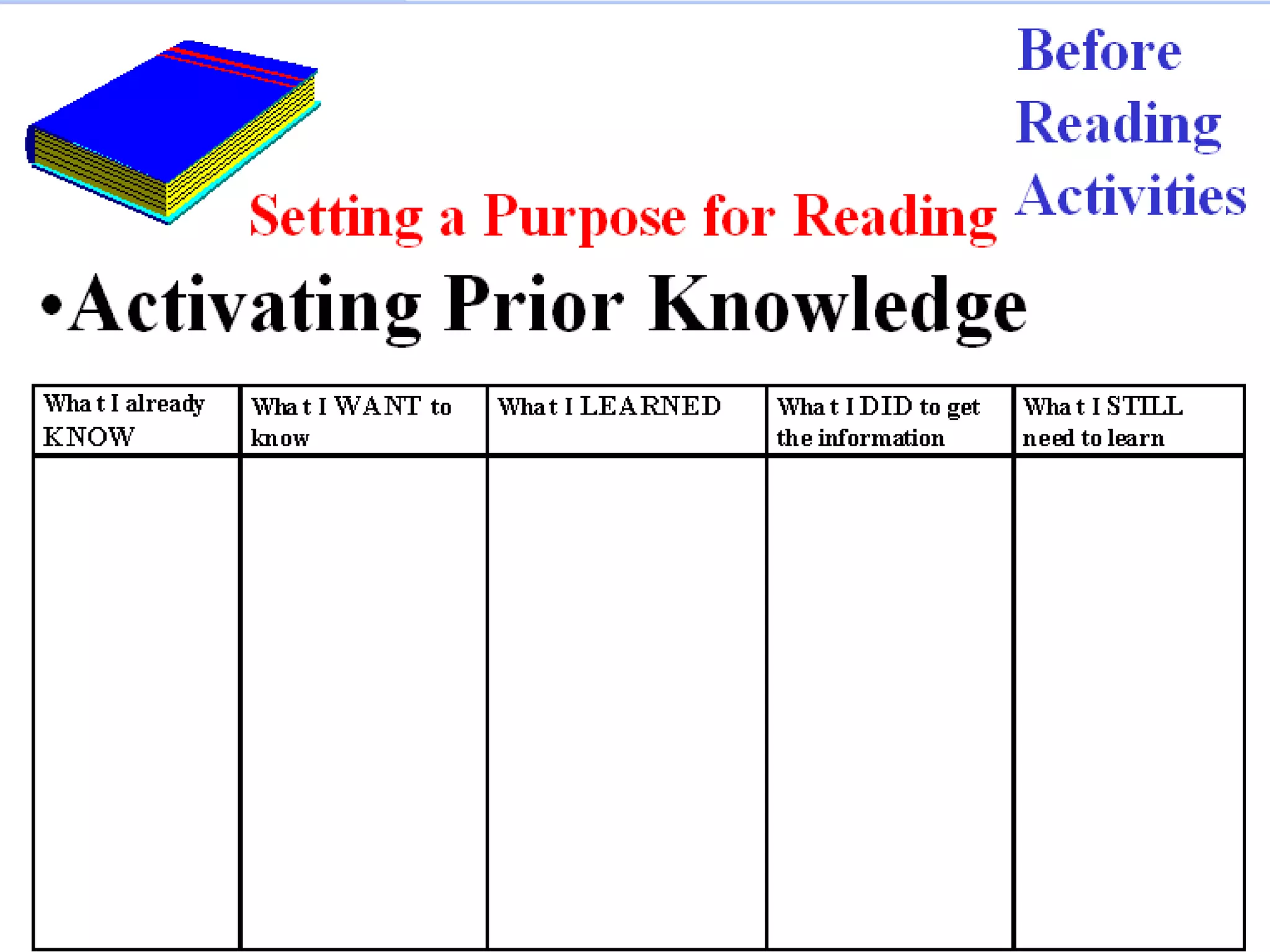
Pair work In pairs work and activate your knowledge about this workshop  Use the following K-W-L or  K-W-H-L
Report your answers
 
 
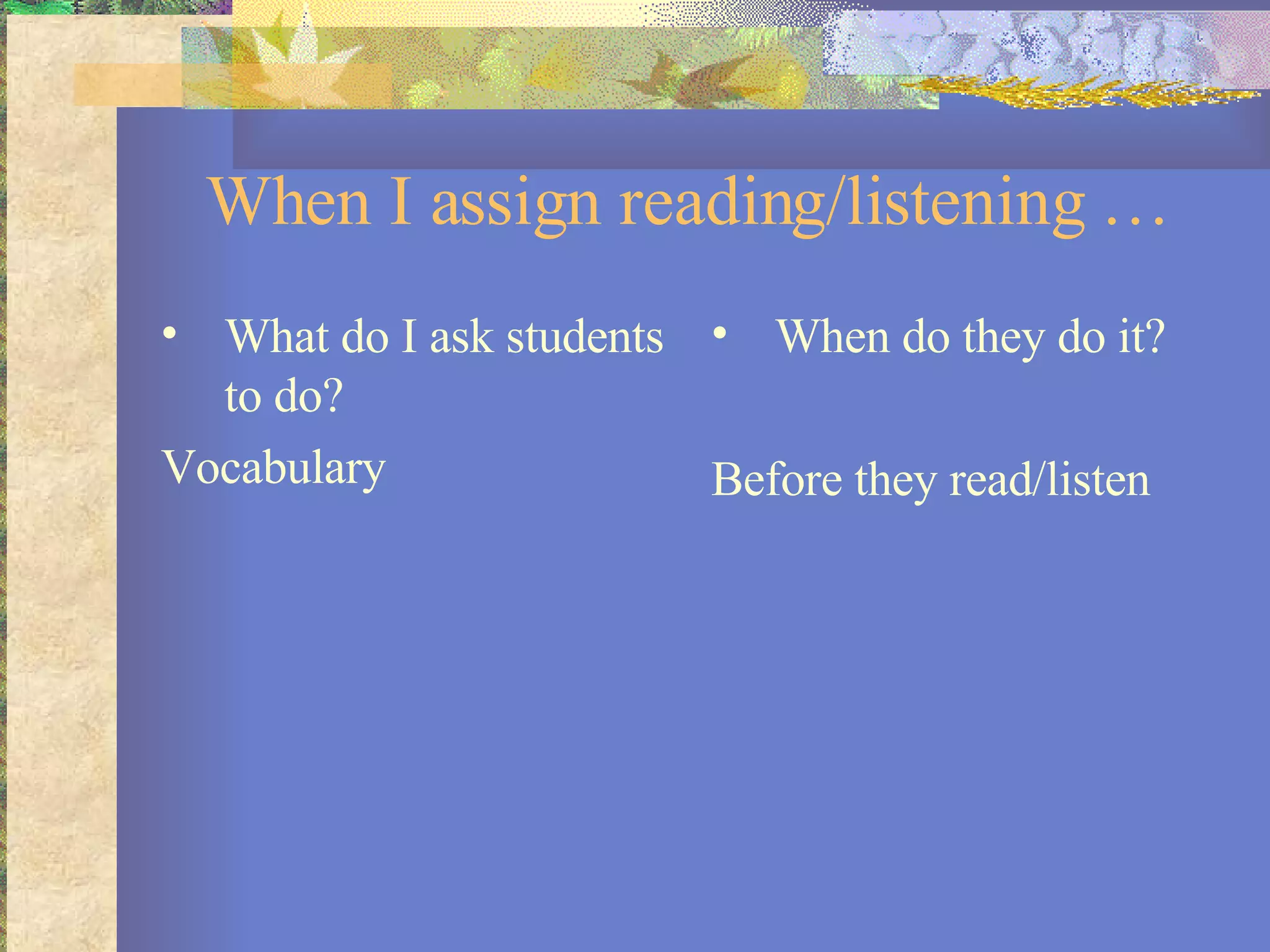
When I assign reading/listening … What do I ask students to do? Vocabulary When do they do it? Before they read/listen
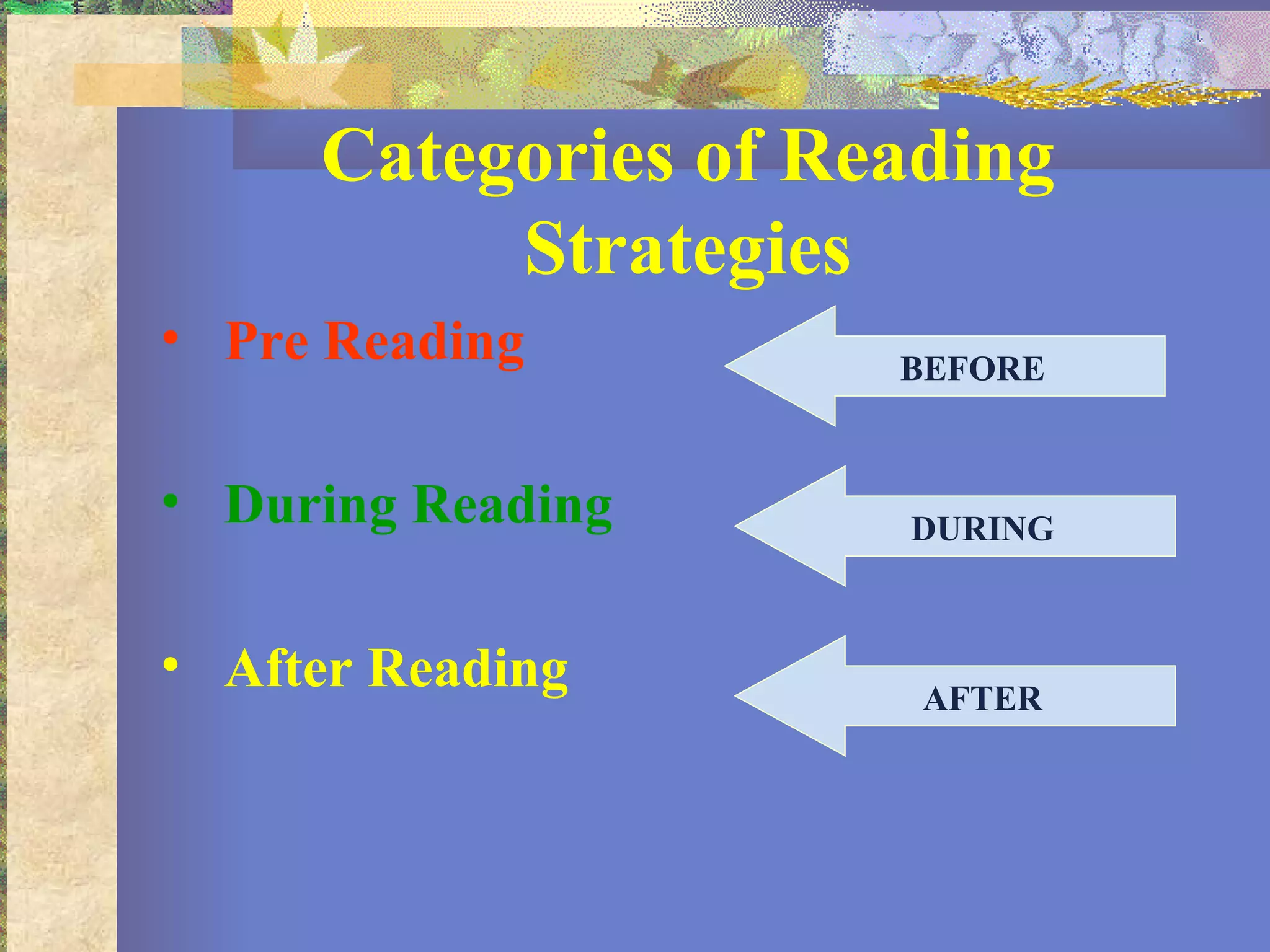
Categories of Reading Strategies Pre Reading During Reading After Reading BEFORE DURING AFTER
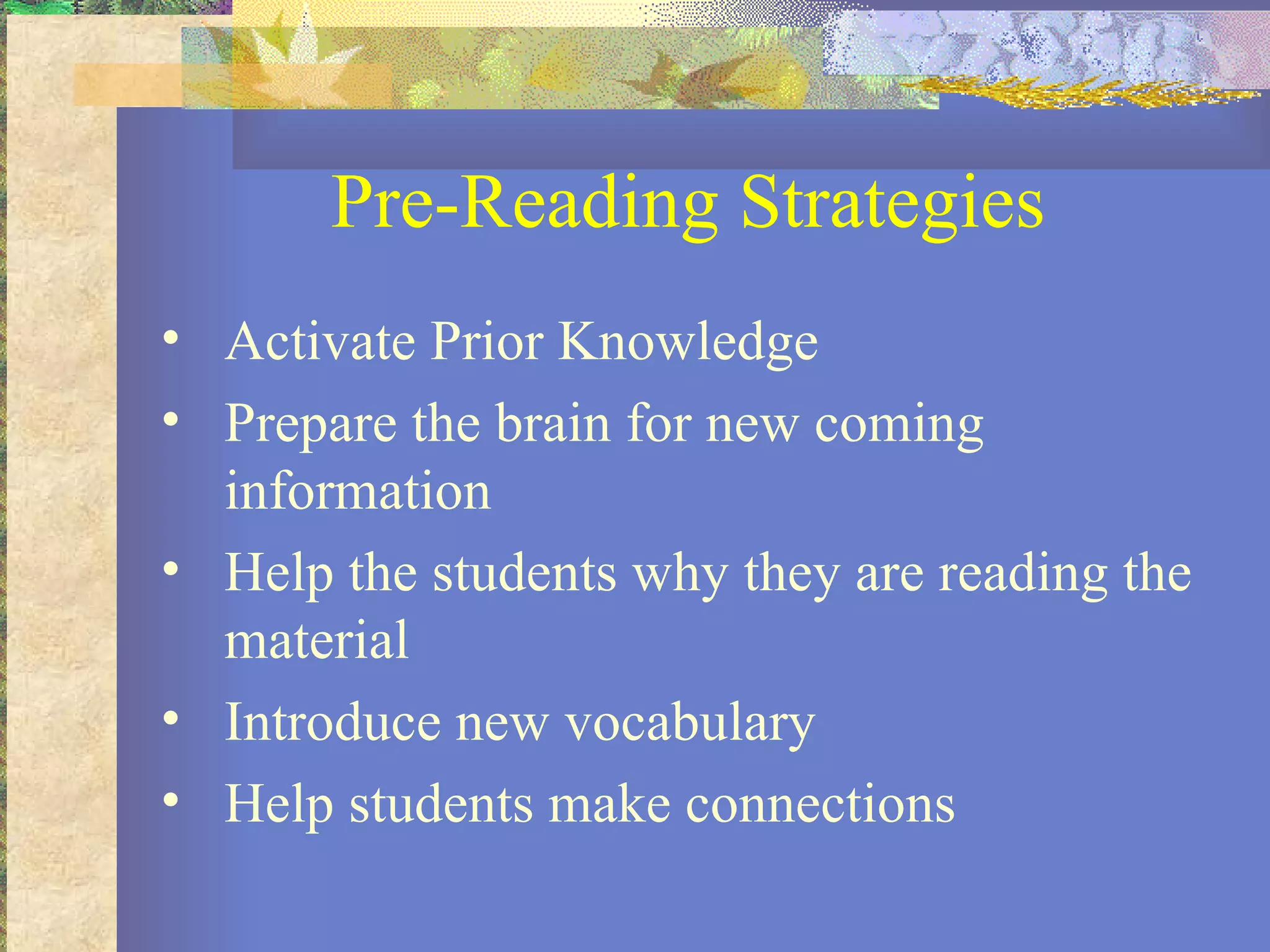
Pre-Reading Strategies Activate Prior Knowledge Prepare the brain for new coming information Help the students why they are reading the material Introduce new vocabulary Help students make connections
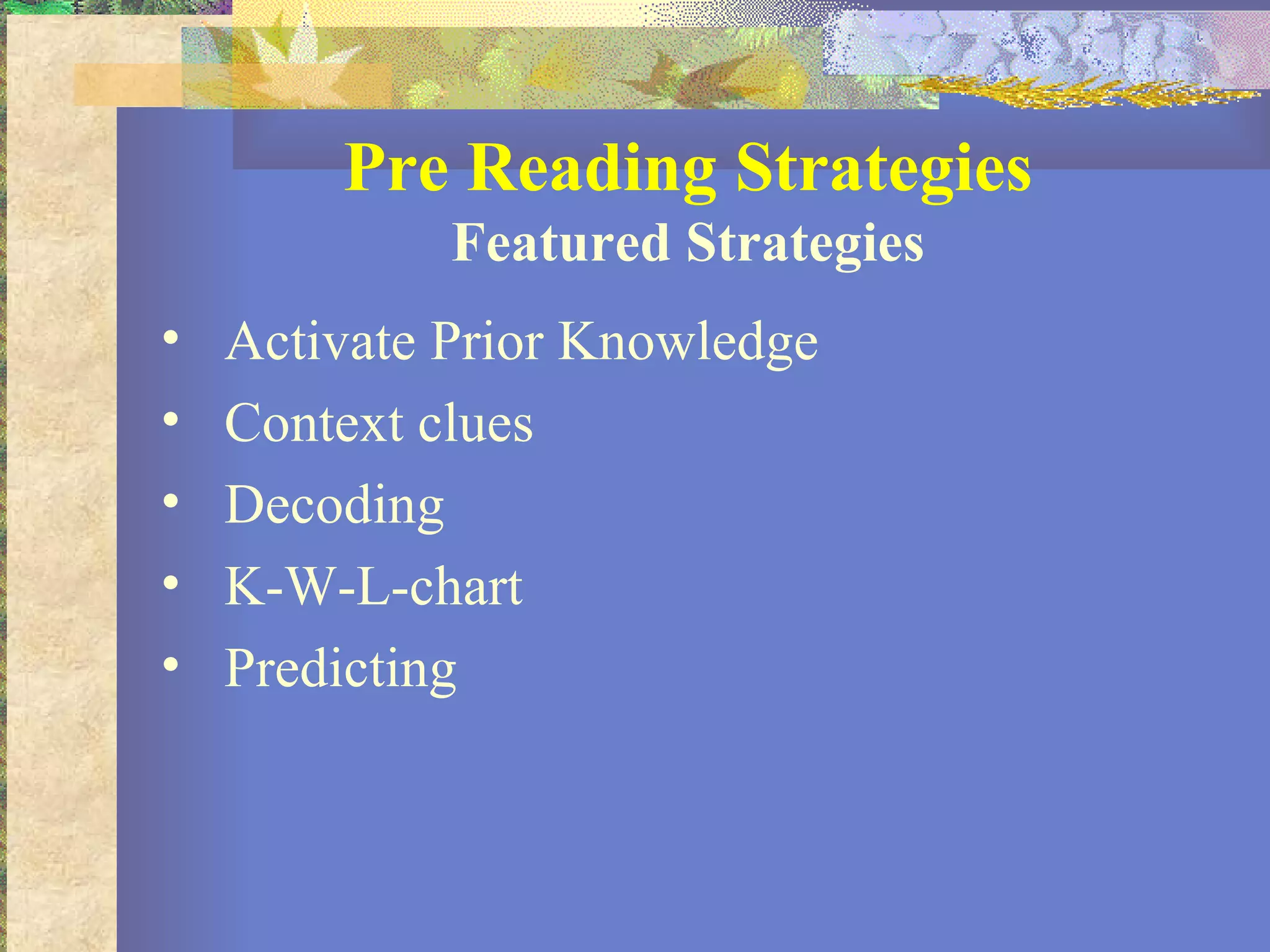
Pre Reading Strategies Featured Strategies Activate Prior Knowledge Context clues Decoding K-W-L-chart Predicting
What’s schemata?
 “Schemata” the reader's/listener’s preexisting concepts about the world and about the text to be read or heard. Into this framework, the reader/listener fits what s/he finds in any text.
If new textual information does not fit into a reader's/listener’s schemata, the reader/listener misunderstands the new material, ignores the new material, or revises the schemata to match the facts within the text.
“ Developing comprehension helps bridge the gap between what is  known  and what is  new . It opens students to new learning by reassuring them that the concepts are within their grasp. It gives them a reference point for assimilating new material and adds greater meaning to the new concept.”
LEVEL OF PRIOR KNOWLEDGE   Students generally fall into three categories: MUCH, SOME, or LITTLE prior knowledge.
MUCH: super ordinate concepts; definitions; analogies; linking.   SOME: examples; attributes; defining characteristics.    LITTLE: associations; morphemes; sound alikes; firsthand experiences.  PRIOR KNOWLEDGE
In each instance, the teacher will make specific instructional decisions based on what is discovered in the prior knowledge part of the lesson.  To check out what prior knowledge exists about a topic, idea, or concept, you may choose to do some of the following activities : 
*BRAINSTORM the topic. Write all the information solicited from the students on the chalkboard, a piece of paper, or transparency. 
*ASK specific and/or general questions about the topic. See what responses are given. 
Questioning Developing inquiries about the text that will direct readers/listeners towards the purpose of reading.
Four types of questions: Memory Convergent thinking Divergent thinking Evaluative thinking
Memory questions Signal words: who, what, when, where Cognitive operations: naming, defining, identifying, designating Examples: What’s the definition for democracy? Ask a memory question to your neighbour
Convergent Thinking Questions: Signal words: why, how, in what ways Cognitive operations: explaining, stating relationships, contrasting/comparing Examples: In what ways is “coffee” similar to “tea”  Ask a convergent thinking question to your neighbour
Divergent Thinking Questions Signal words: imagine, predict, if...then, how might, what are some possible consequences Cognitive operations: predicting, hypothesising, inferring, reconstructing Example: What are some possible consequences of drinking coffee? Ask a divergent thinking question to your neighbour
Evaluative Thinking Questions Signal words: justify, defend, judge Cognitive operations: valuing, judging, defending, justifying choices Example: What do you think of capital punishment for drug dealers? Ask and evaluative question to your neighbour
*POST a PROBLEM or a SCENARIO. Based on this description, find out what the students know about the idea presented. 
Once the data is collected, a decision about the appropriate forms of instruction can be made. The following diagram can be helpful: 
Teachers should remember to:
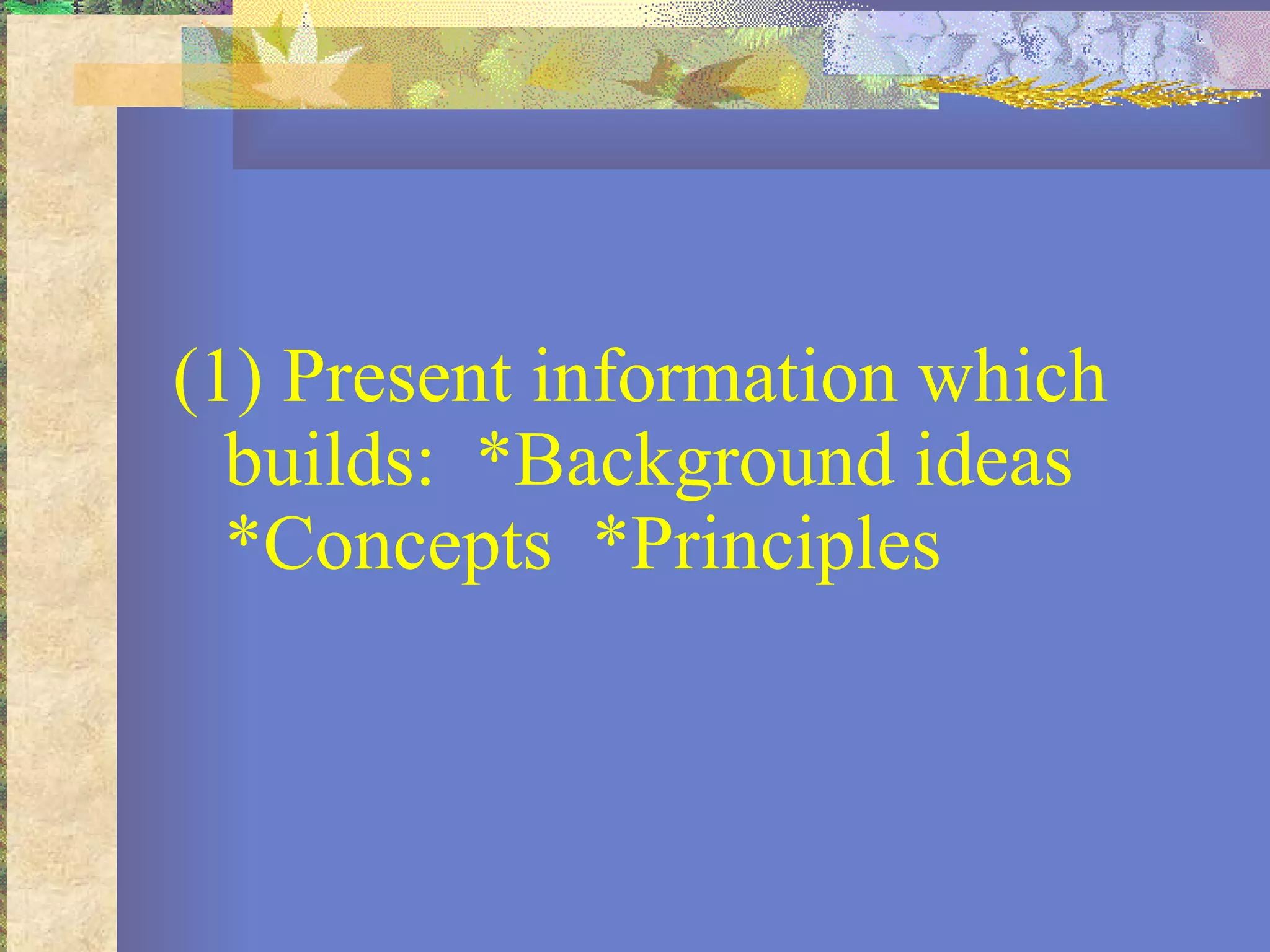
(1) Present information which builds:  *Background ideas  *Concepts  *Principles        
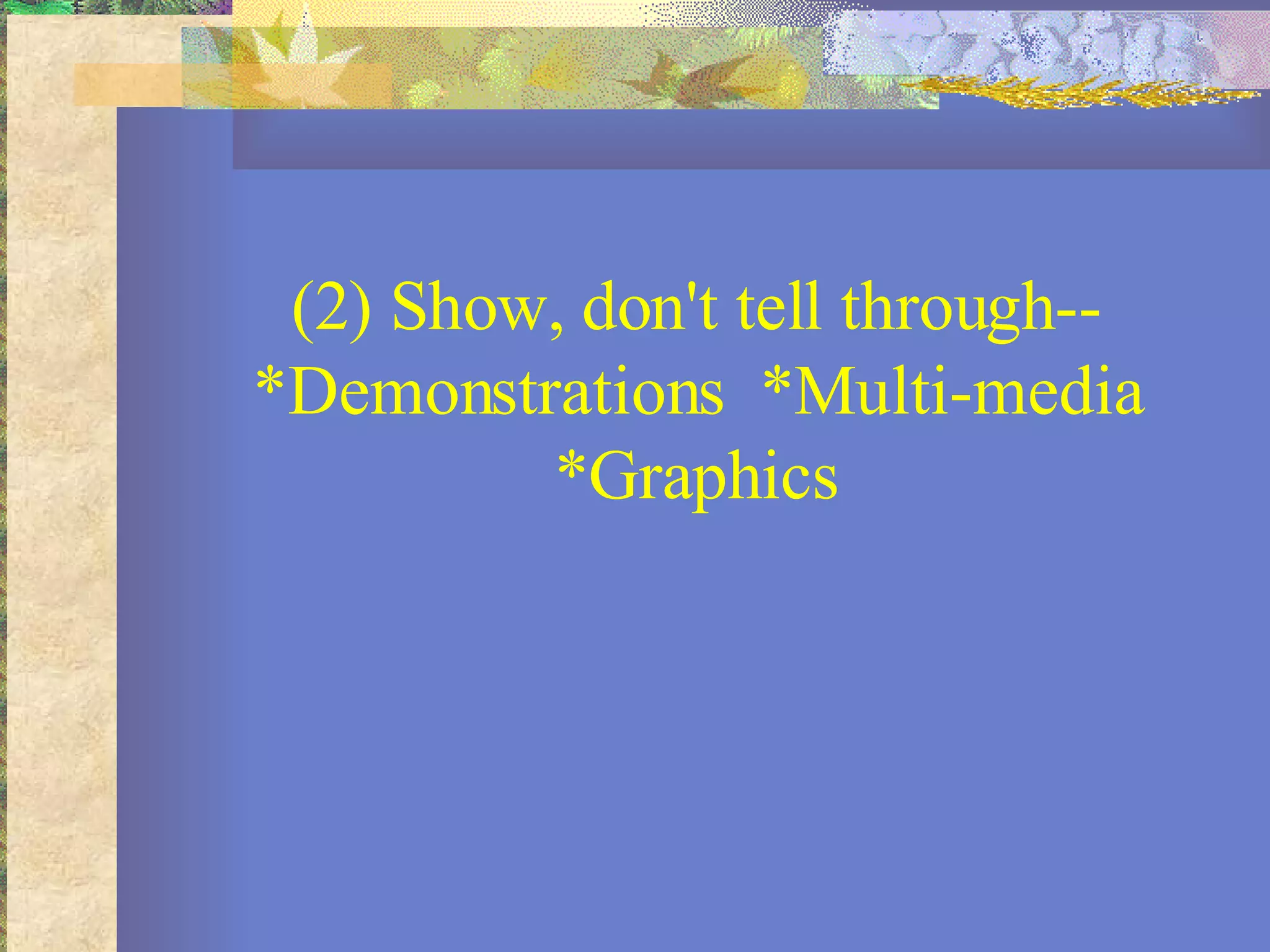
(2) Show, don't tell through--  *Demonstrations  *Multi-media  *Graphics 
(3) Use outside resources, trips and speakers
(4) Tell about topic from your experience 
(5) Use any combination of the above! 
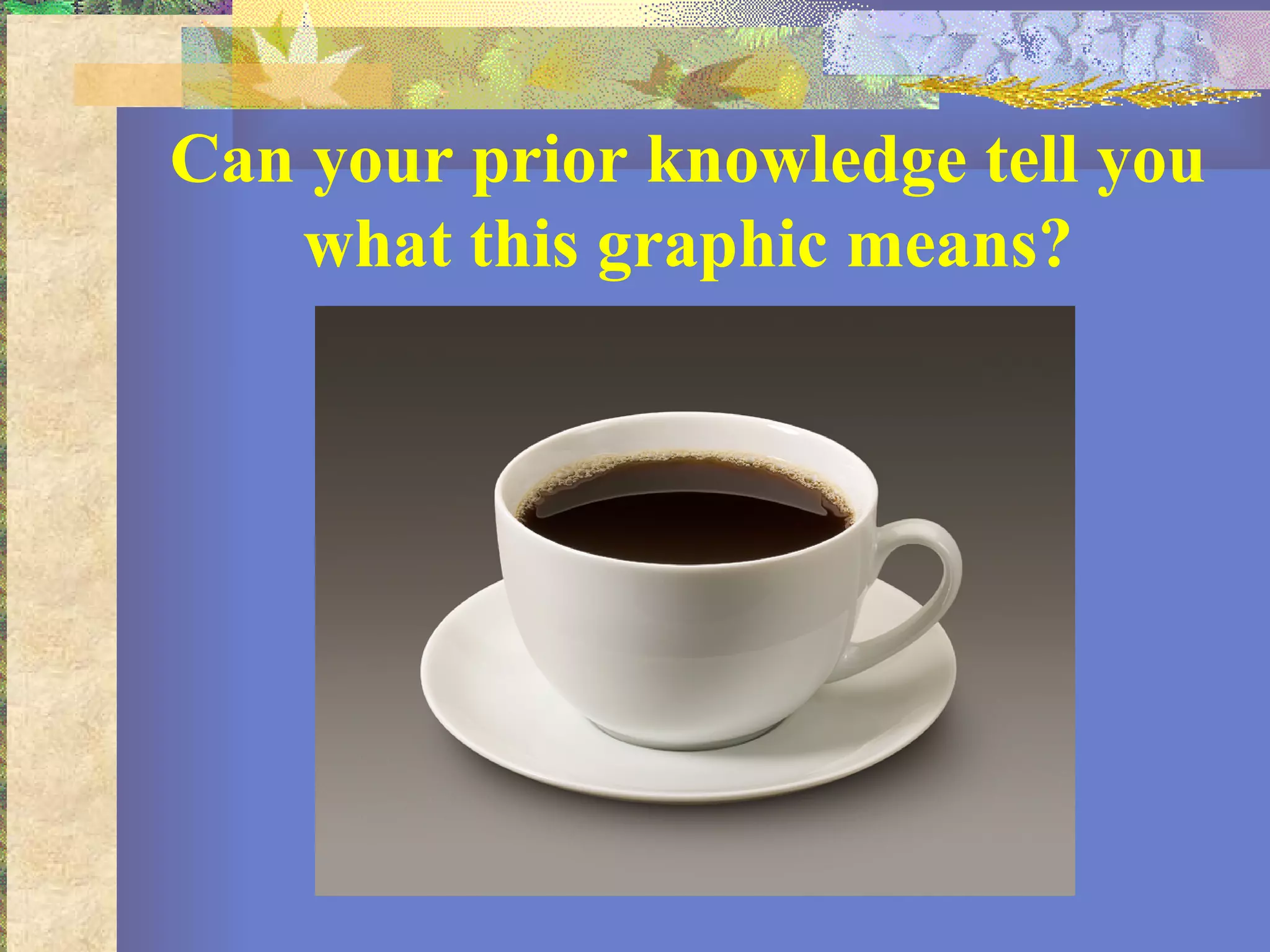
Can your prior knowledge tell you what this graphic means?
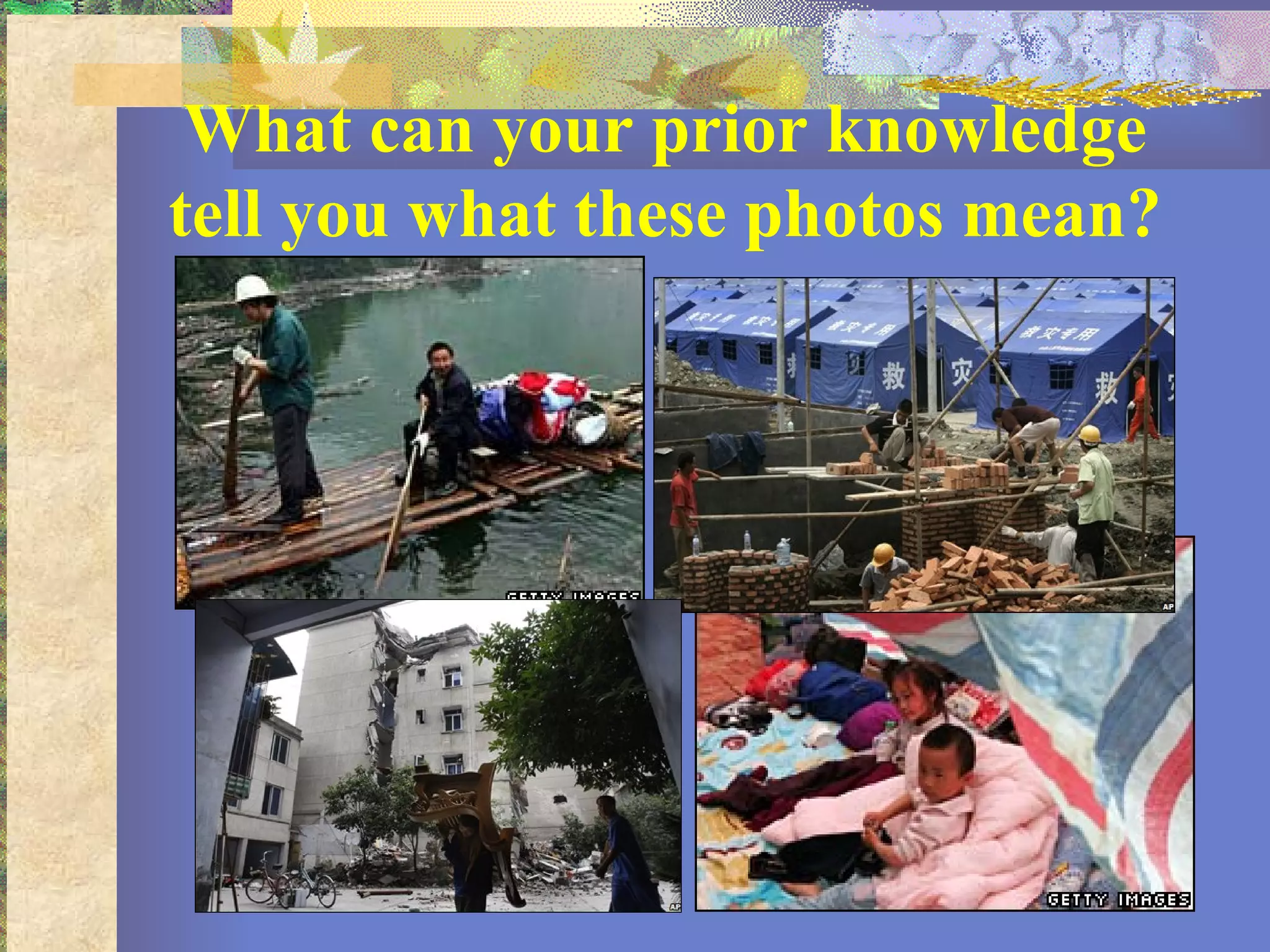
What can your prior knowledge tell you what these photos mean?
Activating Prior Knowledge Let’s read the heading of “State TV: China quake death toll could hit 50,000” and let’s set a purpose for reading and activate our Prior Knowledge.
 
Write your questions. Include all three types.
Report your answers
GROUP WORK
Pretend you have to use the second text : “ Myanmar junta warns people not to hoard aid”
Based on what you learned today activate your students Prior Knowledge about the topic. Report your ideas

Activating Prior Knowledge

  • 1.
    Activating Prior KnowledgePresented by: Lucy Castañón
  • 2.
  • 3.
    “ Each studentbrings to the classroom a rich storehouse of knowledge about the world.”
  • 4.
    “ Tapping experiencesenhances meaning.”
  • 5.
    “ Activating PriorKnowledge increases comprehension”
  • 6.
    Pair work Inpairs work and activate your knowledge about this workshop Use the following K-W-L or K-W-H-L
  • 7.
  • 8.
  • 9.
  • 10.
    When I assignreading/listening … What do I ask students to do? Vocabulary When do they do it? Before they read/listen
  • 11.
    Categories of ReadingStrategies Pre Reading During Reading After Reading BEFORE DURING AFTER
  • 12.
    Pre-Reading Strategies ActivatePrior Knowledge Prepare the brain for new coming information Help the students why they are reading the material Introduce new vocabulary Help students make connections
  • 13.
    Pre Reading StrategiesFeatured Strategies Activate Prior Knowledge Context clues Decoding K-W-L-chart Predicting
  • 14.
  • 15.
    “Schemata” thereader's/listener’s preexisting concepts about the world and about the text to be read or heard. Into this framework, the reader/listener fits what s/he finds in any text.
  • 16.
    If new textualinformation does not fit into a reader's/listener’s schemata, the reader/listener misunderstands the new material, ignores the new material, or revises the schemata to match the facts within the text.
  • 17.
    “ Developing comprehensionhelps bridge the gap between what is known and what is new . It opens students to new learning by reassuring them that the concepts are within their grasp. It gives them a reference point for assimilating new material and adds greater meaning to the new concept.”
  • 18.
    LEVEL OF PRIORKNOWLEDGE Students generally fall into three categories: MUCH, SOME, or LITTLE prior knowledge.
  • 19.
    MUCH: super ordinateconcepts; definitions; analogies; linking.  SOME: examples; attributes; defining characteristics.  LITTLE: associations; morphemes; sound alikes; firsthand experiences.  PRIOR KNOWLEDGE
  • 20.
    In each instance,the teacher will make specific instructional decisions based on what is discovered in the prior knowledge part of the lesson. To check out what prior knowledge exists about a topic, idea, or concept, you may choose to do some of the following activities : 
  • 21.
    *BRAINSTORM the topic.Write all the information solicited from the students on the chalkboard, a piece of paper, or transparency. 
  • 22.
    *ASK specific and/orgeneral questions about the topic. See what responses are given. 
  • 23.
    Questioning Developing inquiriesabout the text that will direct readers/listeners towards the purpose of reading.
  • 24.
    Four types ofquestions: Memory Convergent thinking Divergent thinking Evaluative thinking
  • 25.
    Memory questions Signalwords: who, what, when, where Cognitive operations: naming, defining, identifying, designating Examples: What’s the definition for democracy? Ask a memory question to your neighbour
  • 26.
    Convergent Thinking Questions:Signal words: why, how, in what ways Cognitive operations: explaining, stating relationships, contrasting/comparing Examples: In what ways is “coffee” similar to “tea” Ask a convergent thinking question to your neighbour
  • 27.
    Divergent Thinking QuestionsSignal words: imagine, predict, if...then, how might, what are some possible consequences Cognitive operations: predicting, hypothesising, inferring, reconstructing Example: What are some possible consequences of drinking coffee? Ask a divergent thinking question to your neighbour
  • 28.
    Evaluative Thinking QuestionsSignal words: justify, defend, judge Cognitive operations: valuing, judging, defending, justifying choices Example: What do you think of capital punishment for drug dealers? Ask and evaluative question to your neighbour
  • 29.
    *POST a PROBLEMor a SCENARIO. Based on this description, find out what the students know about the idea presented. 
  • 30.
    Once the datais collected, a decision about the appropriate forms of instruction can be made. The following diagram can be helpful: 
  • 31.
  • 32.
    (1) Present informationwhich builds:  *Background ideas  *Concepts  *Principles      
  • 33.
    (2) Show, don'ttell through--  *Demonstrations  *Multi-media  *Graphics 
  • 34.
    (3) Use outsideresources, trips and speakers
  • 35.
    (4) Tell abouttopic from your experience 
  • 36.
    (5) Use anycombination of the above! 
  • 37.
    Can your priorknowledge tell you what this graphic means?
  • 38.
    What can yourprior knowledge tell you what these photos mean?
  • 39.
    Activating Prior KnowledgeLet’s read the heading of “State TV: China quake death toll could hit 50,000” and let’s set a purpose for reading and activate our Prior Knowledge.
  • 40.
  • 41.
    Write your questions.Include all three types.
  • 42.
  • 43.
  • 44.
    Pretend you haveto use the second text : “ Myanmar junta warns people not to hoard aid”
  • 45.
    Based on whatyou learned today activate your students Prior Knowledge about the topic. Report your ideas