Time ManagementTime Management
Time QuadrantsTime Quadrants
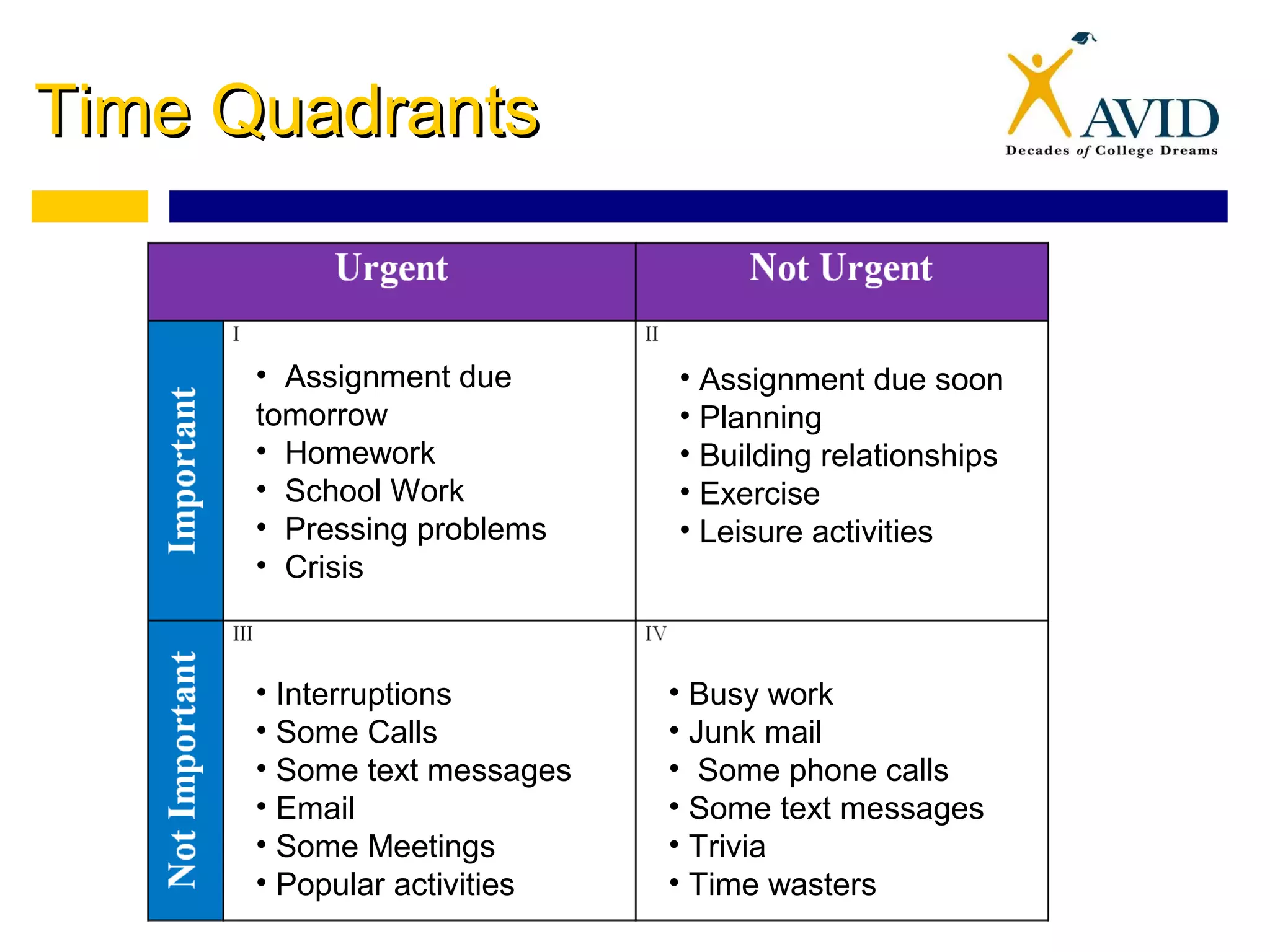
• Assignment due
tomorrow
• Homework
• School Work
• Pressing problems
• Crisis
• Assignment due soon
• Planning
• Building relationships
• Exercise
• Leisure activities
• Interruptions
• Some Calls
• Some text messages
• Email
• Some Meetings
• Popular activities
• Busy work
• Junk mail
• Some phone calls
• Some text messages
• Trivia
• Time wasters
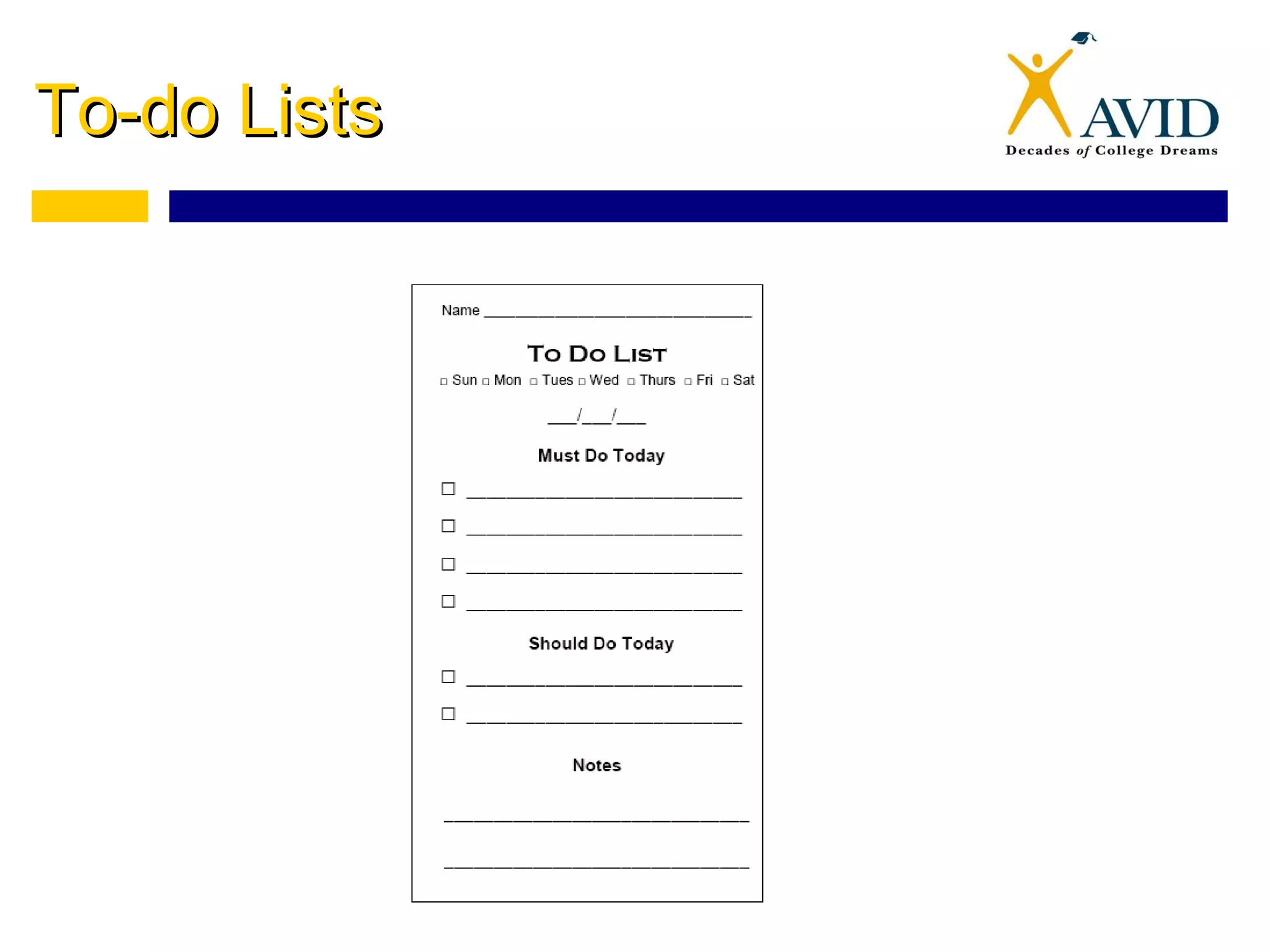
To-do ListsTo-do Lists
Time Quadrants &Time Quadrants &
To-do ListsTo-do Lists
Ways to AvoidWays to Avoid
ProcrastinationProcrastination
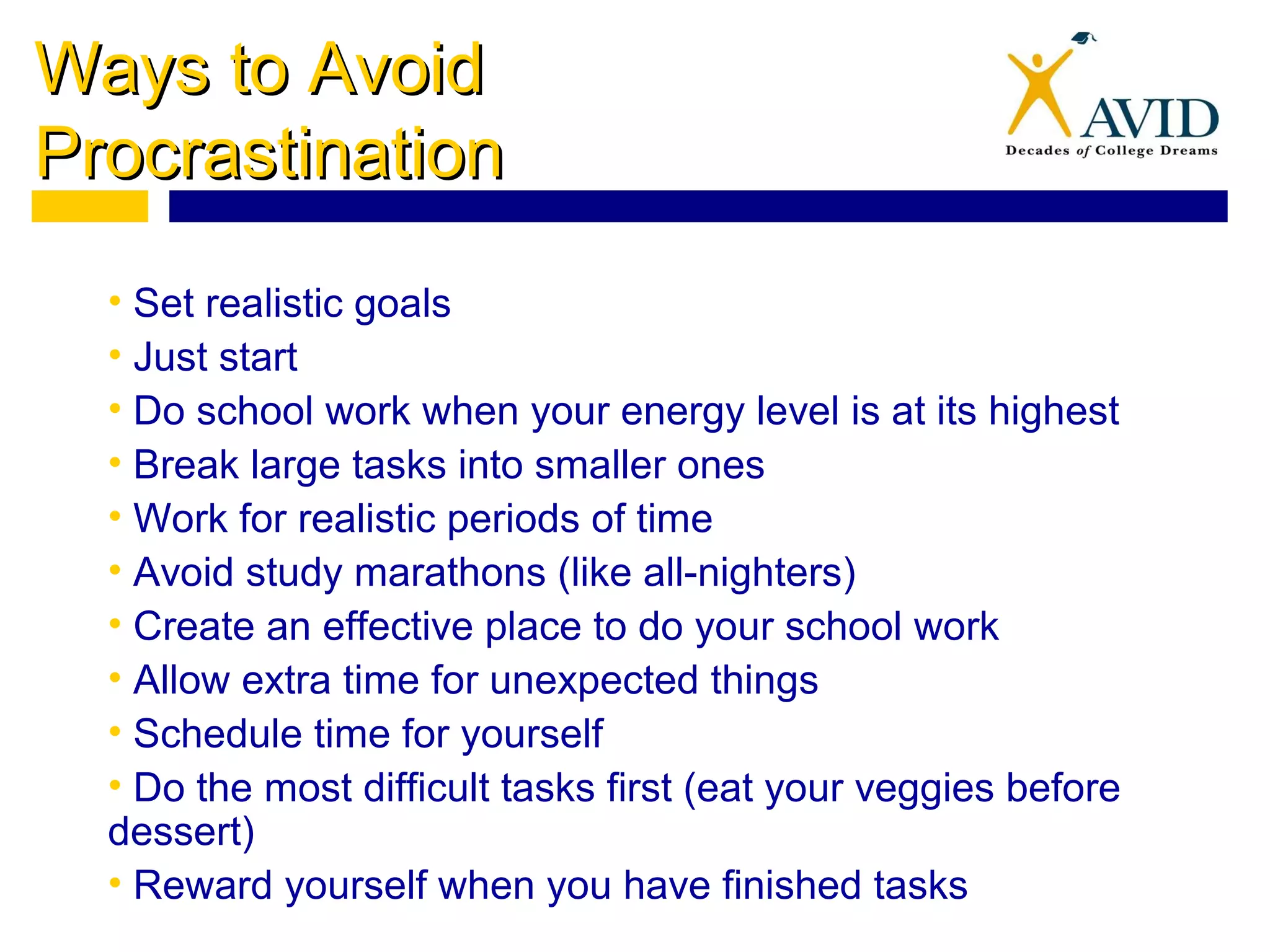
• Set realistic goals
• Just start
• Do school work when your energy level is at its highest
• Break large tasks into smaller ones
• Work for realistic periods of time
• Avoid study marathons (like all-nighters)
• Create an effective place to do your school work
• Allow extra time for unexpected things
• Schedule time for yourself
• Do the most difficult tasks first (eat your veggies before
dessert)
• Reward yourself when you have finished tasks
Quadrant II is the KeyQuadrant II is the Key
• You have little control over quadrant I, but
full control of the other three.
• Eliminate or limit the activities in quadrants
III and IV
• Focus on quadrant II
With Your Table GroupWith Your Table Group
• Share out activities from your lives that
occupy each time quadrant
• List 5-8 activities in each quadrant on a
poster (as seen below)
• Be prepared to share
your group’s poster with
the class
On Your OwnOn Your Own

Time management quadrants

  • 1.
  • 2.
    Time QuadrantsTime Quadrants •Assignment due tomorrow • Homework • School Work • Pressing problems • Crisis • Assignment due soon • Planning • Building relationships • Exercise • Leisure activities • Interruptions • Some Calls • Some text messages • Email • Some Meetings • Popular activities • Busy work • Junk mail • Some phone calls • Some text messages • Trivia • Time wasters
  • 3.
  • 4.
    Time Quadrants &TimeQuadrants & To-do ListsTo-do Lists
  • 5.
    Ways to AvoidWaysto Avoid ProcrastinationProcrastination • Set realistic goals • Just start • Do school work when your energy level is at its highest • Break large tasks into smaller ones • Work for realistic periods of time • Avoid study marathons (like all-nighters) • Create an effective place to do your school work • Allow extra time for unexpected things • Schedule time for yourself • Do the most difficult tasks first (eat your veggies before dessert) • Reward yourself when you have finished tasks
  • 6.
    Quadrant II isthe KeyQuadrant II is the Key • You have little control over quadrant I, but full control of the other three. • Eliminate or limit the activities in quadrants III and IV • Focus on quadrant II
  • 7.
    With Your TableGroupWith Your Table Group • Share out activities from your lives that occupy each time quadrant • List 5-8 activities in each quadrant on a poster (as seen below) • Be prepared to share your group’s poster with the class
  • 8.
    On Your OwnOnYour Own