


Secrets to Getting
the Job
On Time
(Time Management)
Make a to-do list (electronic or
paper). Put the most important item
first and work down from there
At the end of your day,
Review what you've done
and make a new list for the
next day. In order of
importance
Learn to differentiate between
the important and the urgent.
What's important is not always urgent.
What's urgent is not always important
Be ruthless about setting
Priorities. Make sure
that what you think is
important is really
important
Carry your to-do list with
you at all times
All things being equal do
the Hardest, least fun thing
first. Just get it over with!
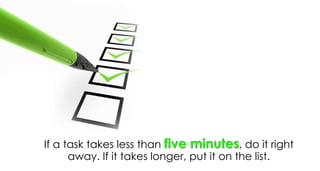
If a task takes less than five minutes, do it right
away. If it takes longer, put it on the list.
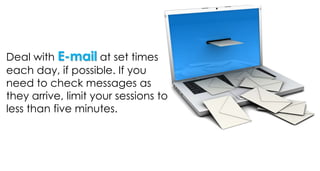
Deal with E-mail at set times
each day, if possible. If you
need to check messages as
they arrive, limit your sessions to
less than five minutes.
Schedule some uninterrupted
time each day when you can
concentrate on important tasks,
even if you have to take refuge in
a conference room or at the
library.
Before you check your E-mail or voicemail or get
involved in the minutiae of the day, devote a solid
hour to your most important project.
For a couple of days, take an
inventory of how you spend your
time to find out where and how
you're wasting it.
Eliminate the time wasters (e.g., if personal phone
calls are taking up too much space in your workday,
turn off your cell).
Cut big jobs into small
chunks. Order the chunks
by importance. Work on
one chunk at a time
If part of your day involves
routine repetitive tasks,
keep records of how long they
take and then try to do
them faster.
For big, complex tasks,
schedule
wiggle room.
Projects tend to take
longer than you
think/hope. Give
yourself a buffer.
Establish smart efficient
systems for all your tasks, big
and small, and stick to
them.
Go one step further and set specific time limits for
routine tasks. Work tends to fill whatever amount of
time you happen to have.
Value your time.
People who
wander into your
workspace to chat
do not respect you
or your schedule,
Set boundaries.
When and where you can, say no.
Trying to do everything everyone asks
you to do is a recipe for failure.
Aim to handle pieces of
paper only once. Same
for E-mails. Read them
and deal with them.
In general, guard against over scheduling yourself.
Reward yourself for
completing
tasks on time.
No fun stuff until the work
stuff is done.
Organize your
workspace
so you don't waste time
looking for things.
Schedule demanding tasks
for that part of
your day when you're
at your peak.
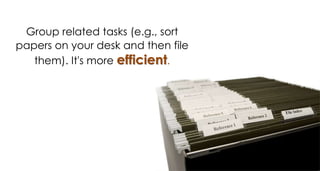
Group related tasks (e.g., sort
papers on your desk and then file
them). It's more efficient.
Use down time (e.g., waiting for
meetings to begin) to, for example,
update your to-do list or
answer E-mails.
Create the business environment that works for
you. Adjust the lighting, turn off your E-mail pinger,
get that cup of tea. Set the stage and get to work.

Time Management Secrets

  • 1.
    Secrets to Getting theJob On Time (Time Management)
  • 2.
    Make a to-dolist (electronic or paper). Put the most important item first and work down from there
  • 3.
    At the endof your day, Review what you've done and make a new list for the next day. In order of importance
  • 4.
    Learn to differentiatebetween the important and the urgent. What's important is not always urgent. What's urgent is not always important
  • 5.
    Be ruthless aboutsetting Priorities. Make sure that what you think is important is really important
  • 6.
    Carry your to-dolist with you at all times
  • 7.
    All things beingequal do the Hardest, least fun thing first. Just get it over with!
  • 8.
    If a tasktakes less than five minutes, do it right away. If it takes longer, put it on the list.
  • 9.
    Deal with E-mailat set times each day, if possible. If you need to check messages as they arrive, limit your sessions to less than five minutes.
  • 10.
    Schedule some uninterrupted timeeach day when you can concentrate on important tasks, even if you have to take refuge in a conference room or at the library.
  • 11.
    Before you checkyour E-mail or voicemail or get involved in the minutiae of the day, devote a solid hour to your most important project.
  • 12.
    For a coupleof days, take an inventory of how you spend your time to find out where and how you're wasting it.
  • 13.
    Eliminate the timewasters (e.g., if personal phone calls are taking up too much space in your workday, turn off your cell).
  • 14.
    Cut big jobsinto small chunks. Order the chunks by importance. Work on one chunk at a time
  • 15.
    If part ofyour day involves routine repetitive tasks, keep records of how long they take and then try to do them faster.
  • 16.
    For big, complextasks, schedule wiggle room. Projects tend to take longer than you think/hope. Give yourself a buffer.
  • 17.
    Establish smart efficient systemsfor all your tasks, big and small, and stick to them.
  • 18.
    Go one stepfurther and set specific time limits for routine tasks. Work tends to fill whatever amount of time you happen to have.
  • 19.
    Value your time. Peoplewho wander into your workspace to chat do not respect you or your schedule, Set boundaries.
  • 20.
    When and whereyou can, say no. Trying to do everything everyone asks you to do is a recipe for failure.
  • 21.
    Aim to handlepieces of paper only once. Same for E-mails. Read them and deal with them.
  • 22.
    In general, guardagainst over scheduling yourself.
  • 23.
    Reward yourself for completing taskson time. No fun stuff until the work stuff is done.
  • 24.
    Organize your workspace so youdon't waste time looking for things.
  • 25.
    Schedule demanding tasks forthat part of your day when you're at your peak.
  • 26.
    Group related tasks(e.g., sort papers on your desk and then file them). It's more efficient.
  • 27.
    Use down time(e.g., waiting for meetings to begin) to, for example, update your to-do list or answer E-mails.
  • 28.
    Create the businessenvironment that works for you. Adjust the lighting, turn off your E-mail pinger, get that cup of tea. Set the stage and get to work.