Professional Practices
Agenda
Time Management
Benefits of Time
Management
Obstacles to Time
Management
Time Management
Technique
Time management refers to the way
that you organize and plan how long
you spend on specific activities.
What is Time Management
?
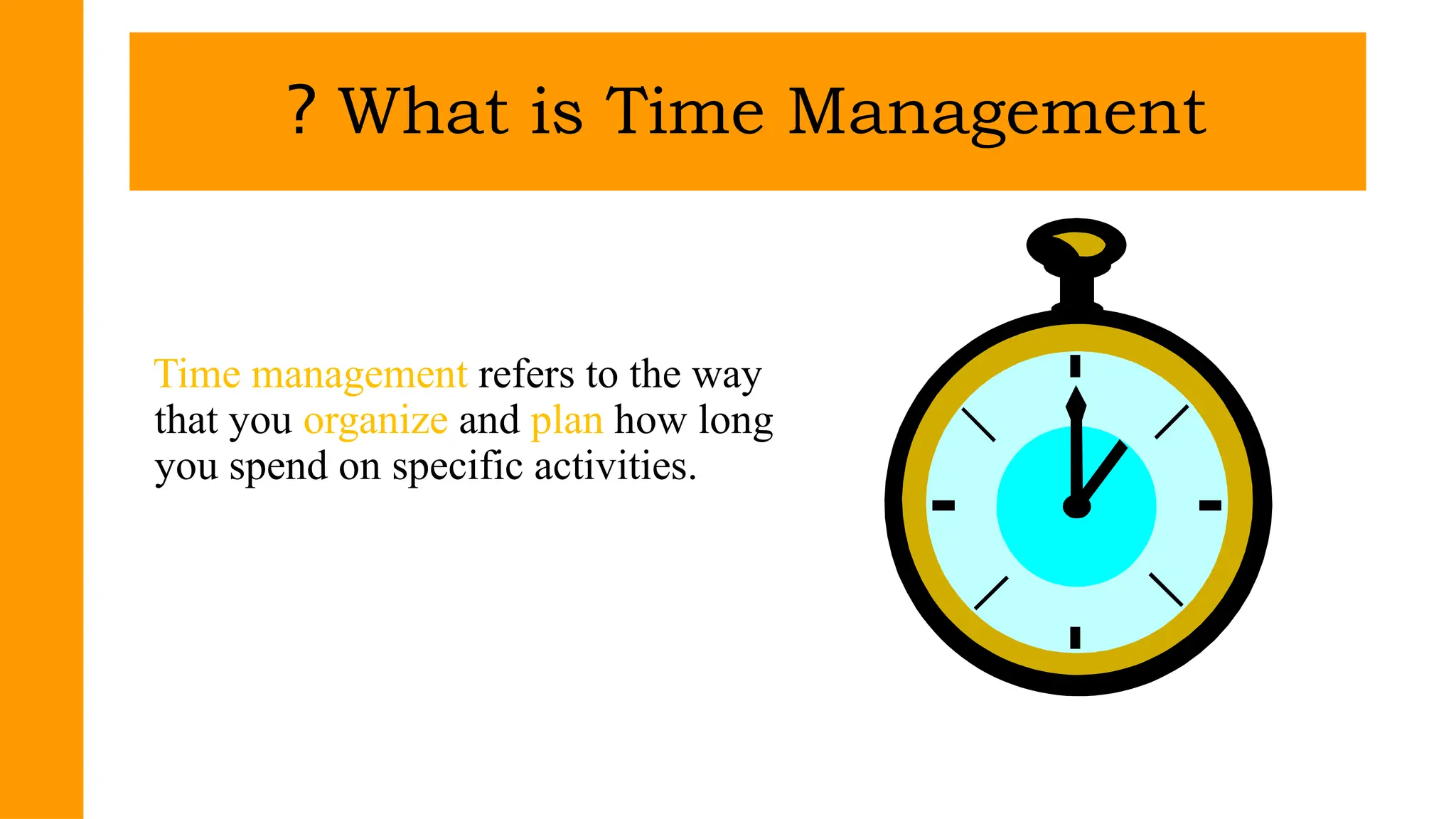
• Greater productivity and efficiency.
• A better professional reputation.
• Less stress.
• Increased opportunities for advancement.
• Greater opportunities to achieve important life and career goals.
Benefits of
Time Management
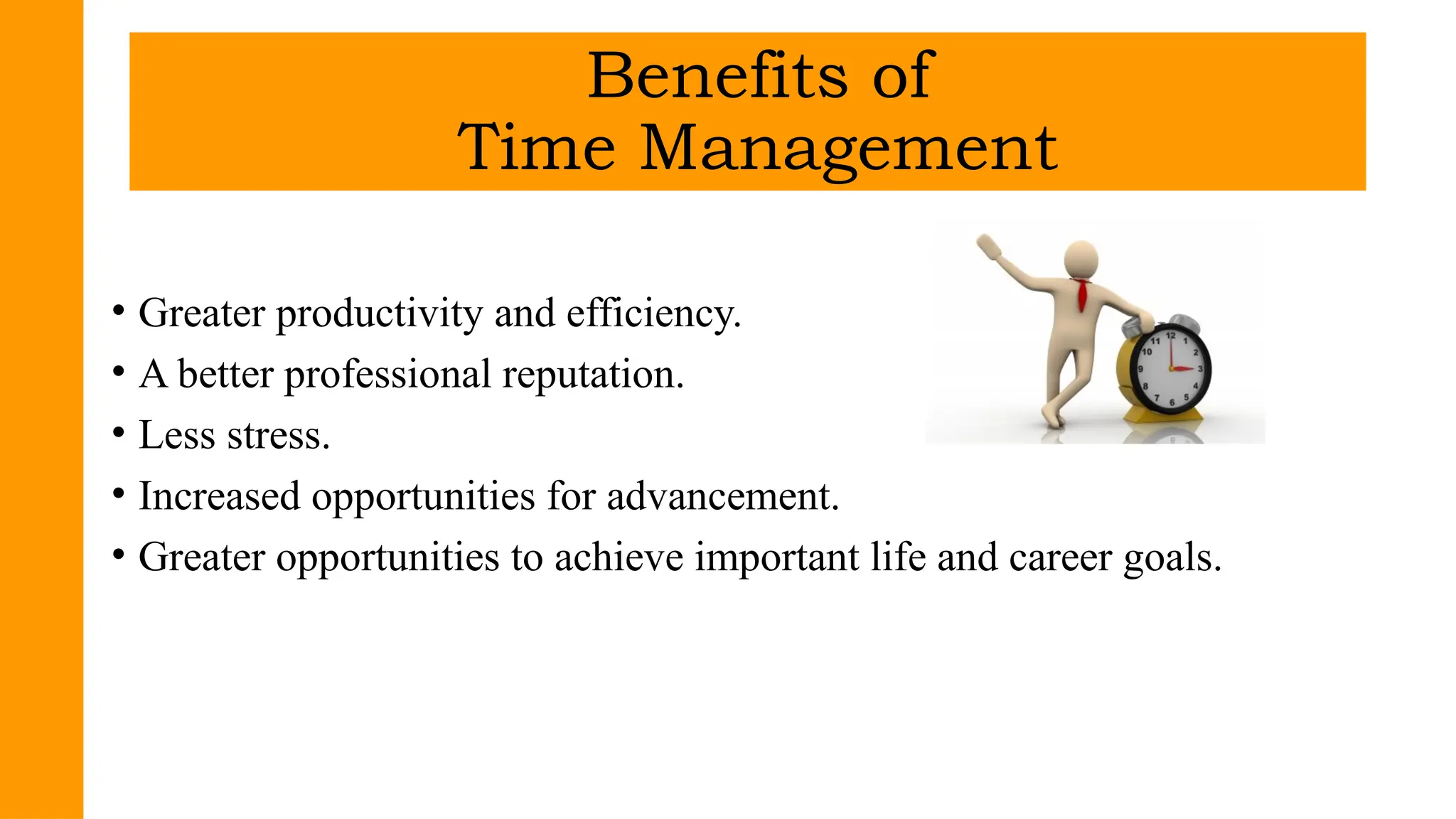
•Unclear objectives
•Disorganization
• Inability to say “no”
Obstacles to effective
Time Management
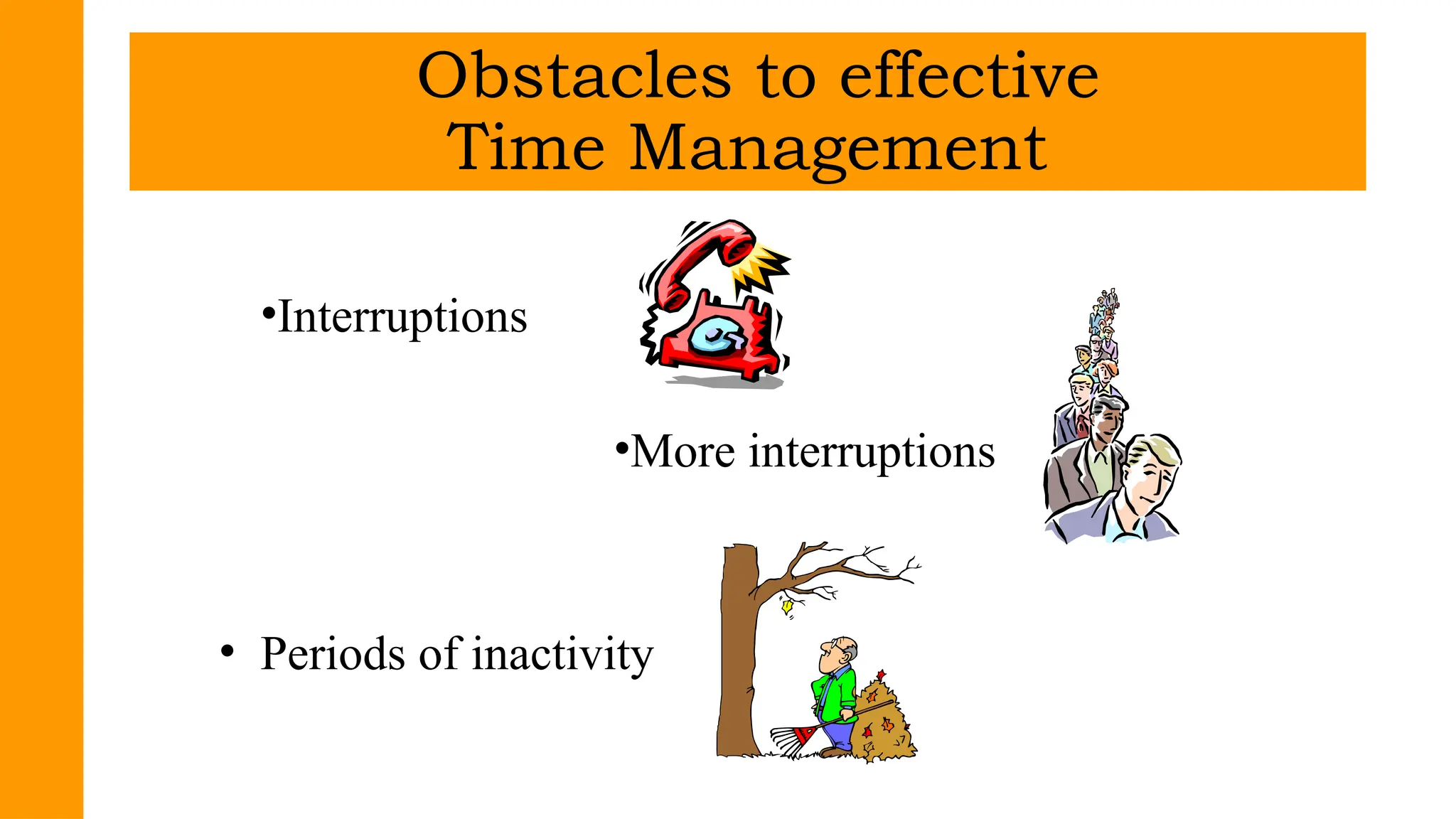
•Interruptions
•More interruptions
• Periods of inactivity
Obstacles to effective
Time Management
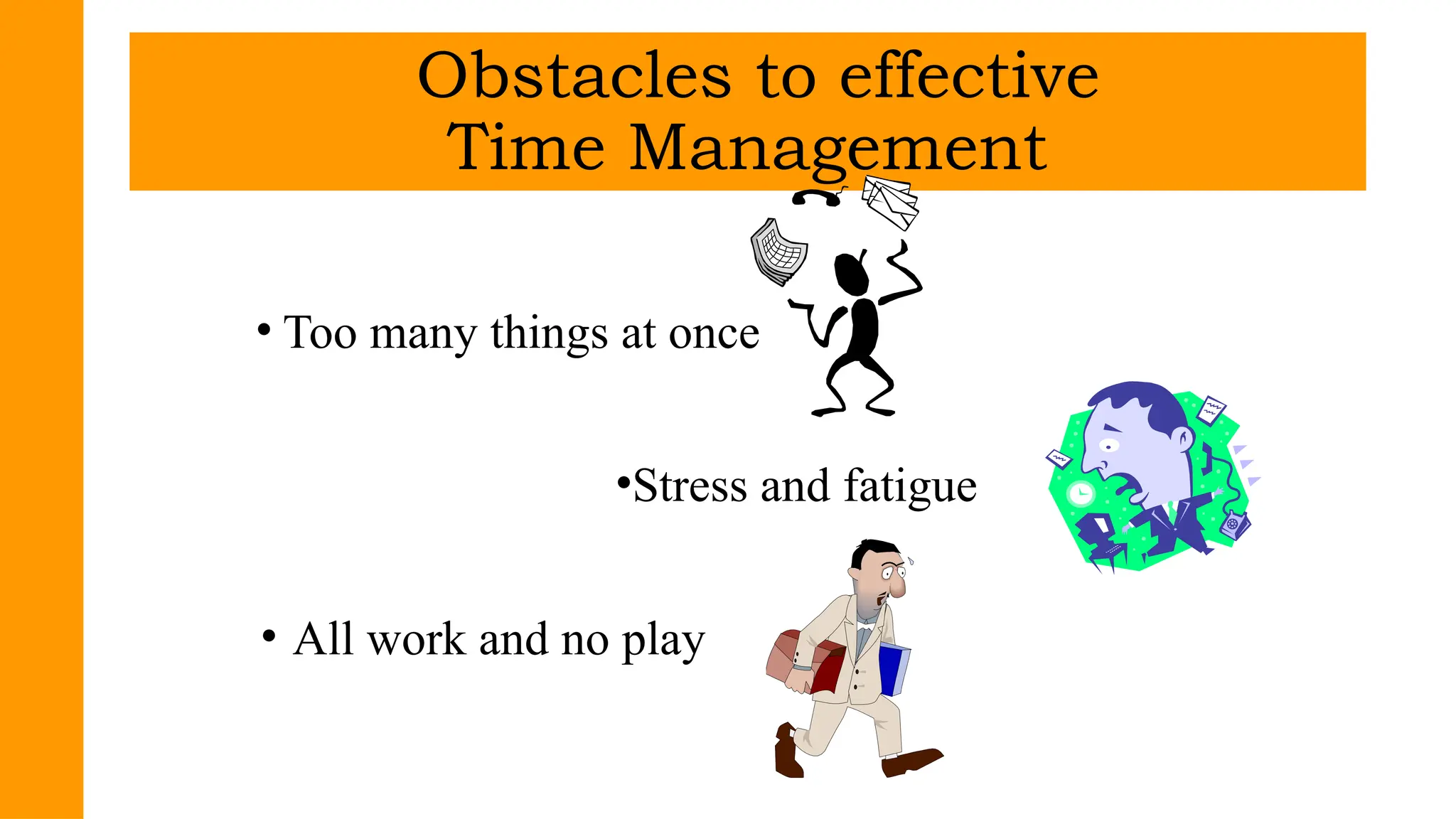
• Too many things at once
•Stress and fatigue
• All work and no play
Obstacles to effective
Time Management
• Recognize that obstacles exist
• Identify them
• Employ strategies to overcome
What can we do
?
• Spending a little time learning about time-management
techniques will have huge benefits now and throughout your
career.
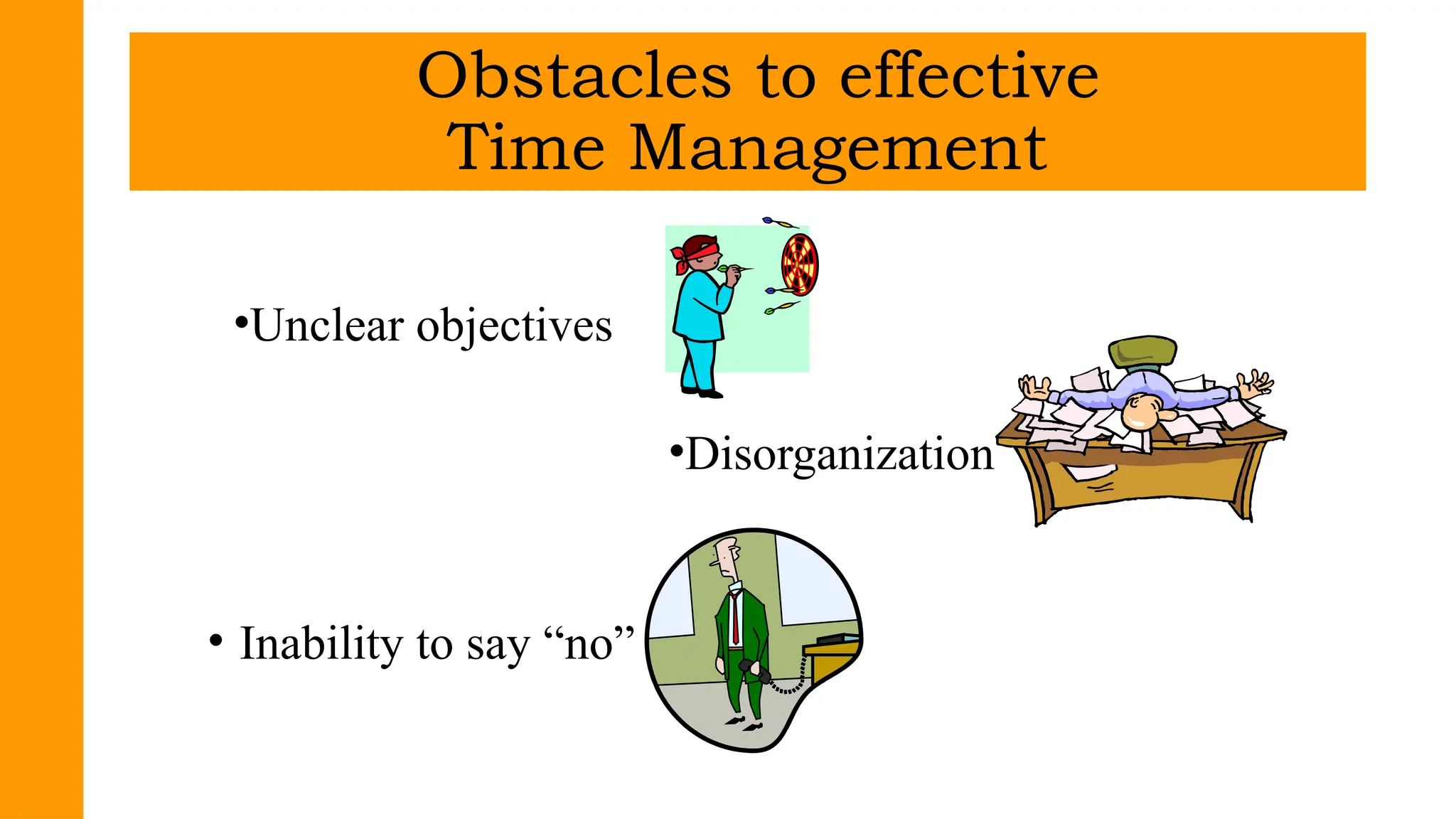
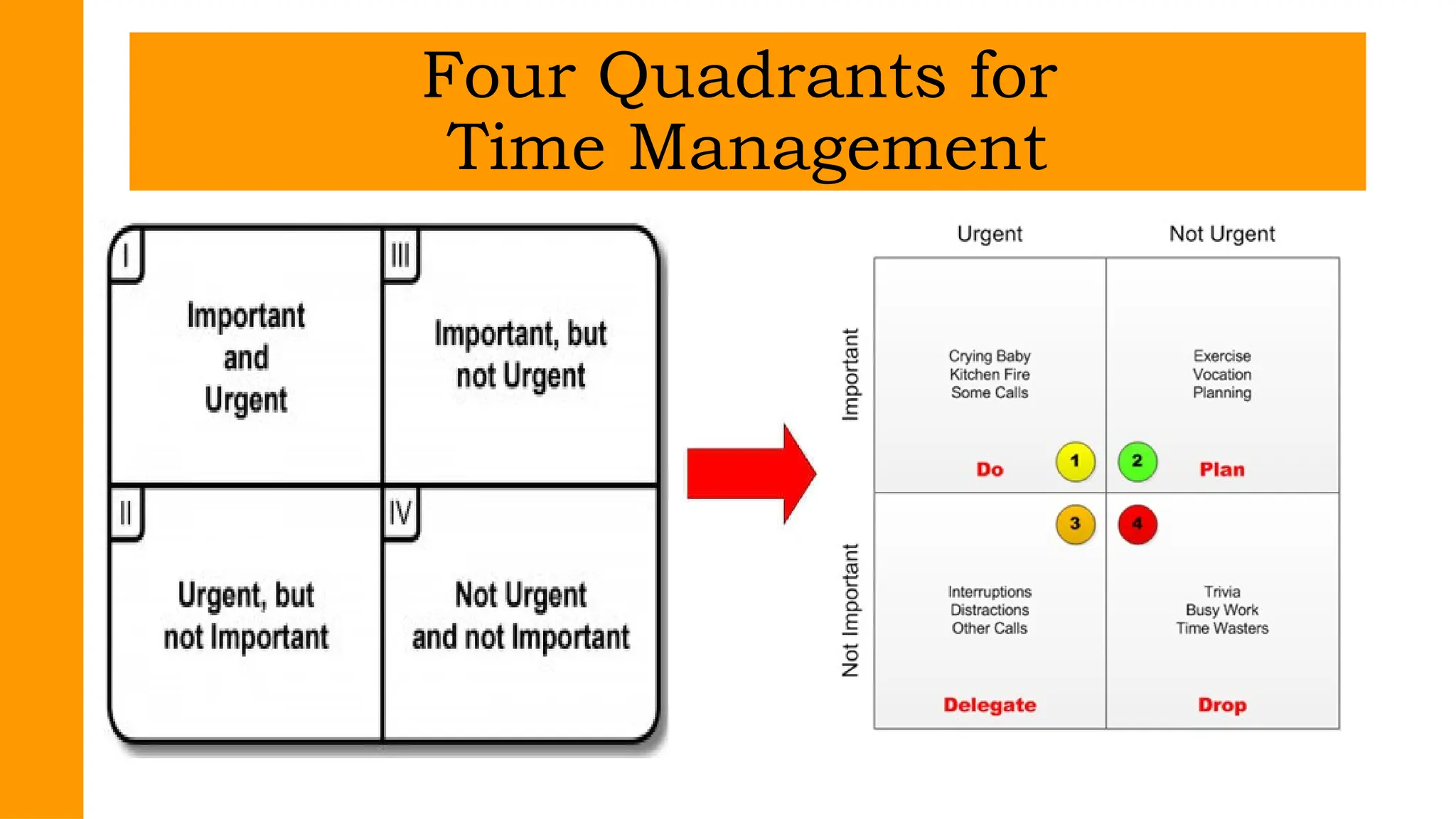
• One of Important Time Management technique is Covey’s
Four Quadrants for time management
Time Management Technique
Four Quadrants for
Time Management
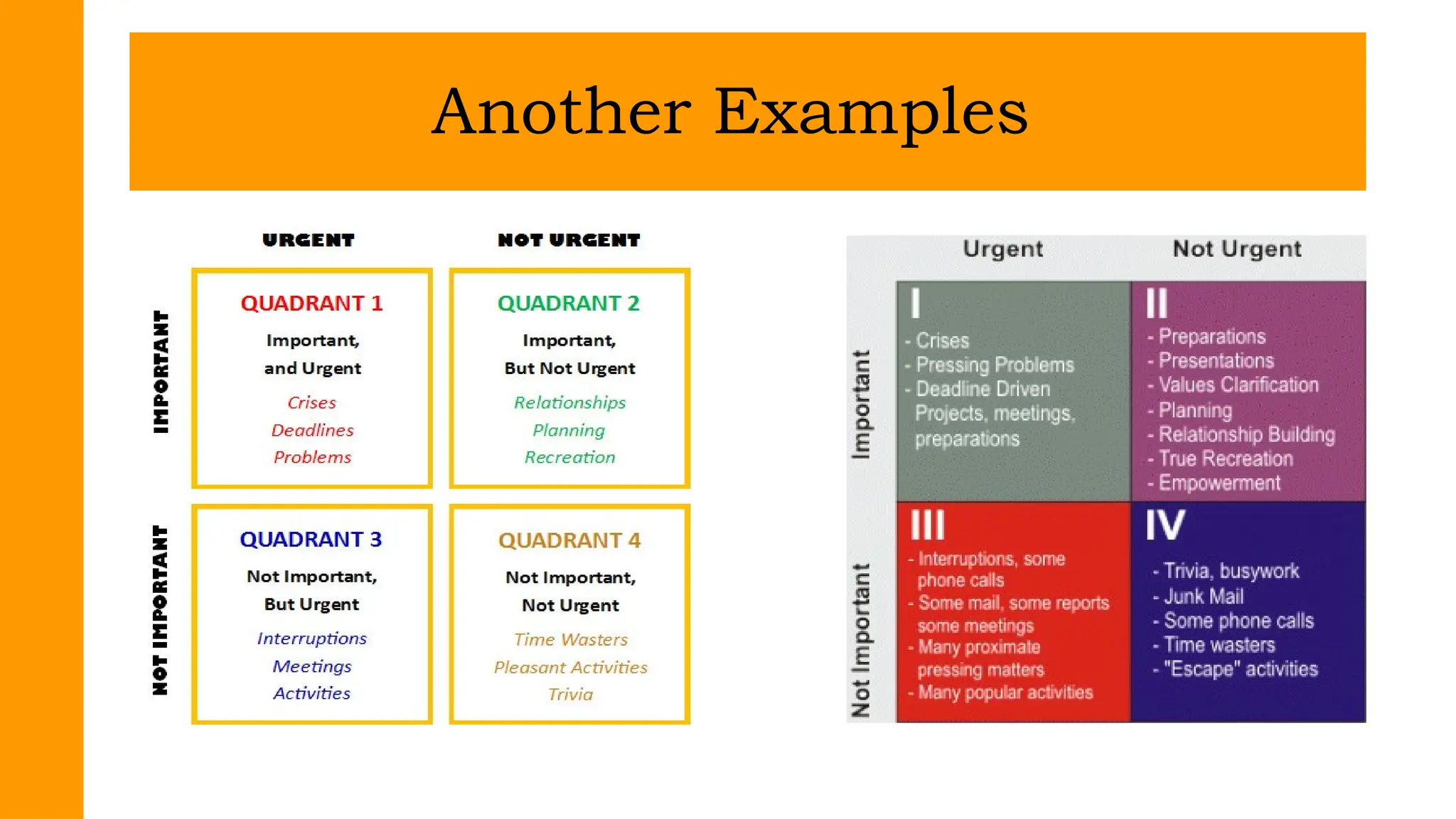
Another Examples
• Represents things that are both “urgent” and “important” – we need to
spend time here
• This is where we manage, we produce, where we bring our experience
and judgment to bear in responding to many needs and challenges.
• Many important activities become urgent through procrastination, or
because we don’t do enough prevention and planning.
Quadrant I
• Includes activities that are “important, but not urgent”- Quadrant of
Quality
• Here’s where we do our long-range planning, anticipate and prevent
problems, empower others, broaden our minds and increase our skills
• Ignoring this Quadrant feeds and enlarges Quadrant I, creating stress,
burnout, and deeper crises for the person consumed by it
• Investing in this Quadrant shrinks Quadrant I
Quadrant II
• Includes things that are “urgent, but not important” - Quadrant of
Deception.
• The noise of urgency creates the illusion of importance.
• Actual activities, if they’re important at all, are important to someone
else.
• Many phone calls, meetings and drop-in visitors fall into this category
Quadrant III
• Reserved for activities that are “not urgent, not important”- Quadrant
of Waste.
• We often “escape” to Quadrant IV for survival.
• Reading addictive novels, watching mindless television shows, or
gossiping at office would qualify as Quadrant IV time-wasters.
Quadrant IV
• Are you in Quadrant I because of the urgency or the importance?
• If urgency dominates, when importance fades, you’ll slip into
Quadrant III.
• But if you’re in Quadrant I because of importance, when urgency
fades you’ll move to Quadrant II.
Is it bad to be in Quadrant I
?
• Urgency itself is not the problem…
• When urgency is the dominant factor in our lives, importance isn’t
• What we regard as “first things” are urgent things
What is the problem with urgency
?
• From Quadrant III
• Time spent in Quadrant I is both urgent and important- we already
know we need to be there
• We know we shouldn’t be there in Quadrant IV
• But Quadrant III can fool us
Where do I get time to spend in
Quadrant II
?
Minor Time Waster
• Interruptions we face during the
day
• Being a slave on the telephone
• Unexpected/Unwanted visitors
• Needless reports/Junk mail
• Meetings without agenda
Major Time Waster
• Procrastination
• Afraid to Delegate
• Not Wanting to Say "NO"
• Low Self-Esteem
• Problems With
Objectives/Priorities
TIME WASTERS
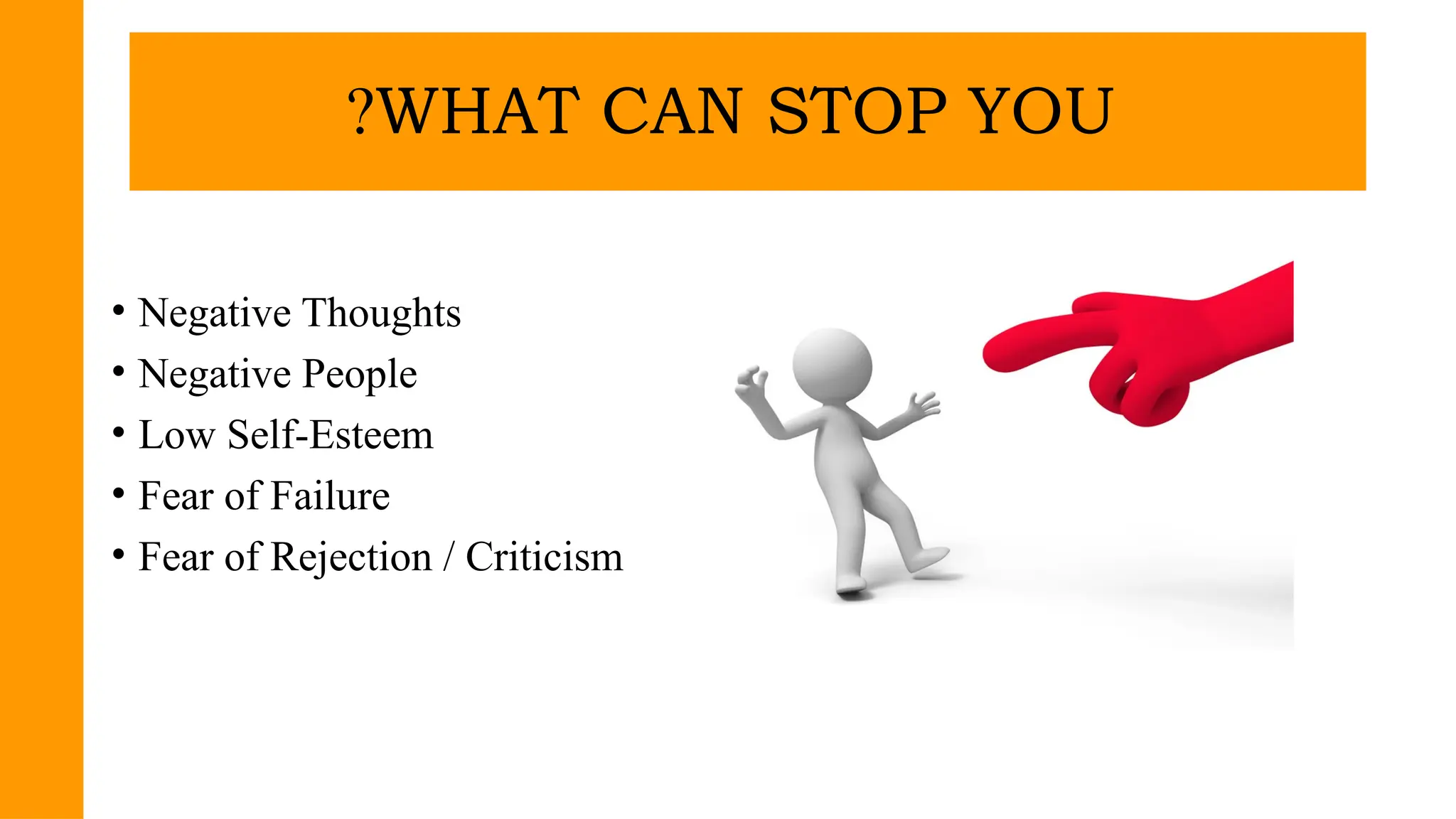
• Negative Thoughts
• Negative People
• Low Self-Esteem
• Fear of Failure
• Fear of Rejection / Criticism
WHAT CAN STOP YOU
?
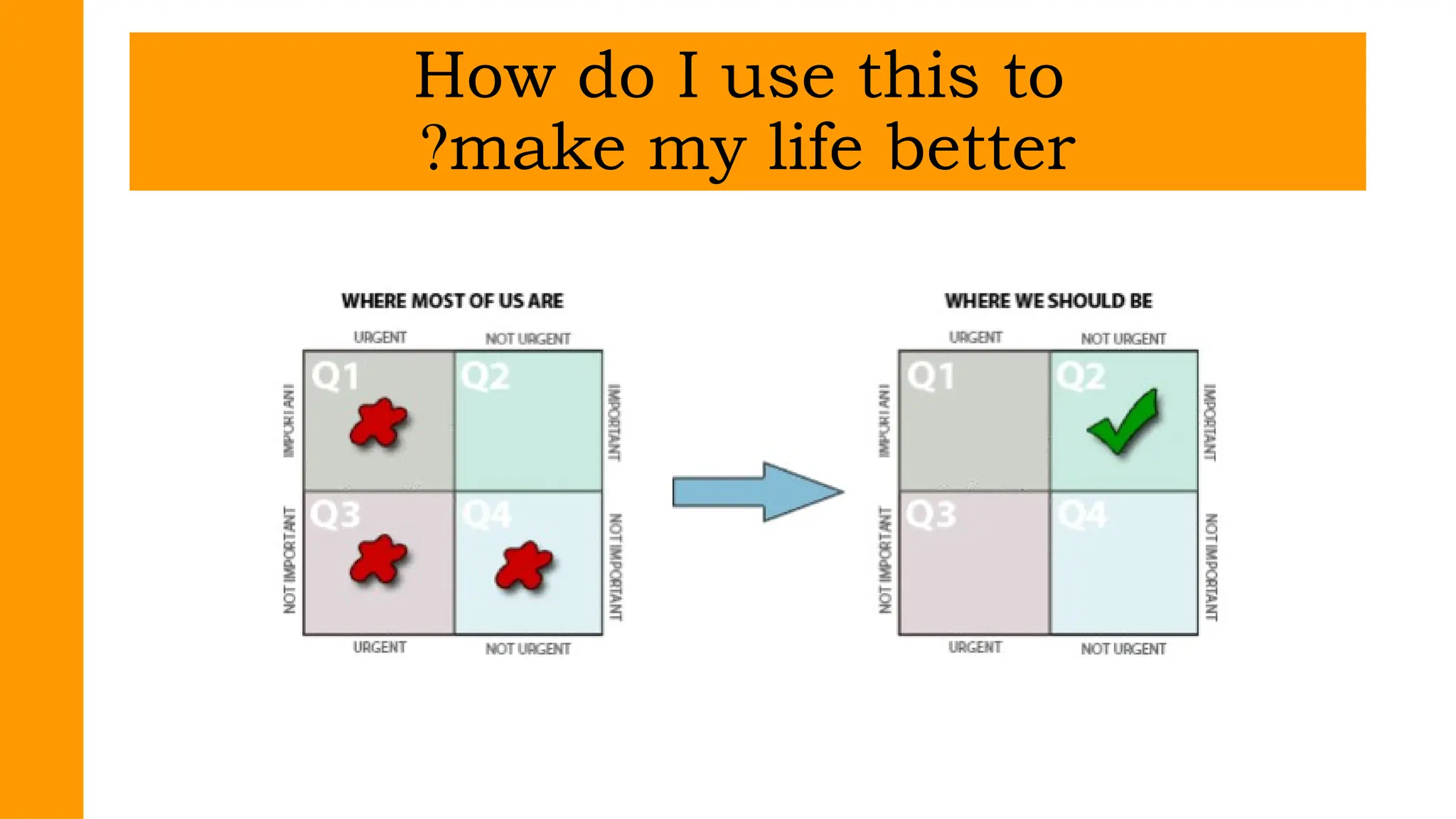
How do I use this to
make my life better
?
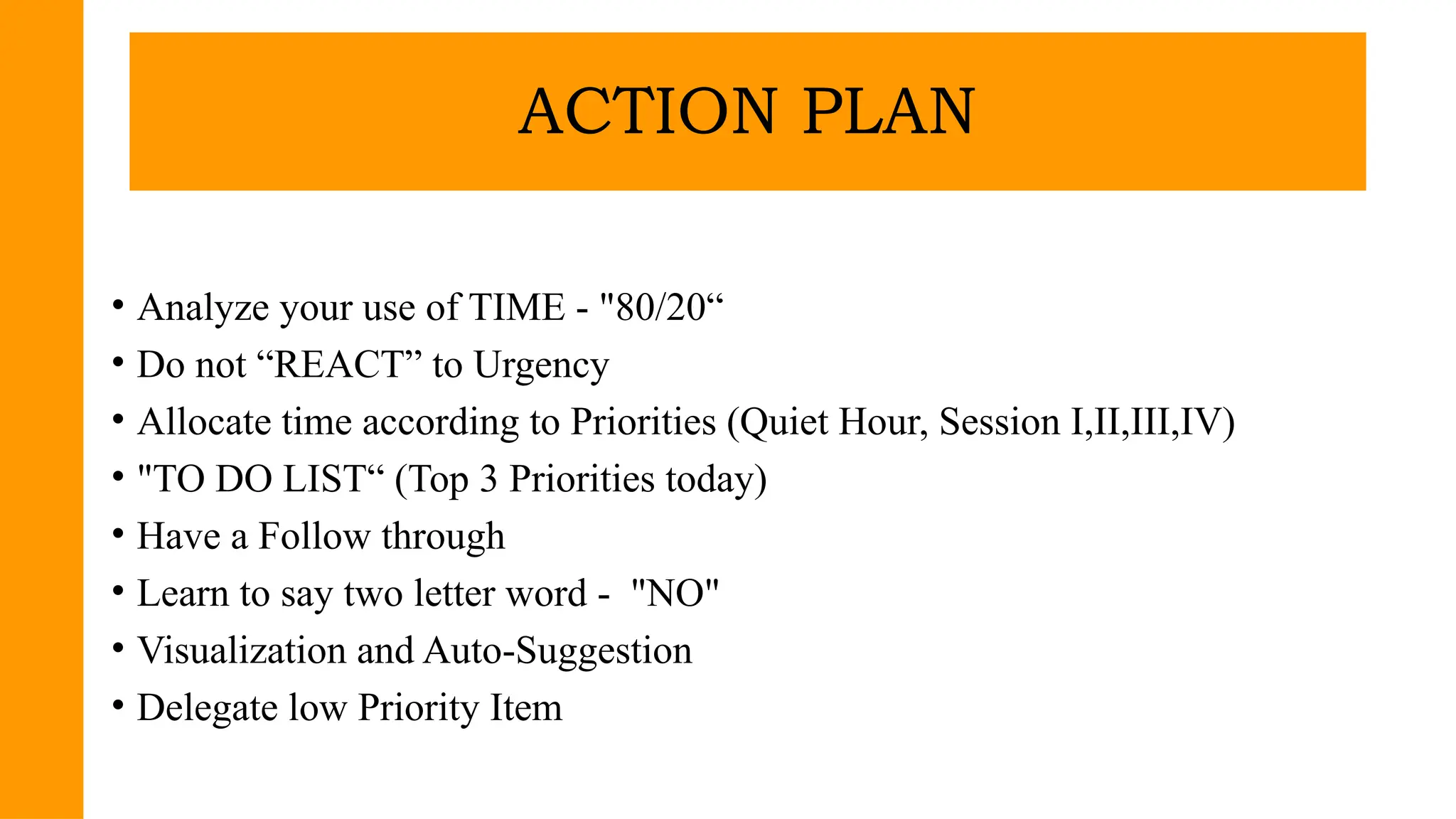
• Analyze your use of TIME - "80/20“
• Do not “REACT” to Urgency
• Allocate time according to Priorities (Quiet Hour, Session I,II,III,IV)
• "TO DO LIST“ (Top 3 Priorities today)
• Have a Follow through
• Learn to say two letter word - "NO"
• Visualization and Auto-Suggestion
• Delegate low Priority Item
ACTION PLAN

.pptxlec 23 a.pptxlec 23 a.pptxlec 23 a.pptxlec 23 a

  • 1.
  • 2.
    Agenda Time Management Benefits ofTime Management Obstacles to Time Management Time Management Technique
  • 3.
    Time management refersto the way that you organize and plan how long you spend on specific activities. What is Time Management ?
  • 4.
    • Greater productivityand efficiency. • A better professional reputation. • Less stress. • Increased opportunities for advancement. • Greater opportunities to achieve important life and career goals. Benefits of Time Management
  • 5.
    •Unclear objectives •Disorganization • Inabilityto say “no” Obstacles to effective Time Management
  • 6.
    •Interruptions •More interruptions • Periodsof inactivity Obstacles to effective Time Management
  • 7.
    • Too manythings at once •Stress and fatigue • All work and no play Obstacles to effective Time Management
  • 8.
    • Recognize thatobstacles exist • Identify them • Employ strategies to overcome What can we do ?
  • 10.
    • Spending alittle time learning about time-management techniques will have huge benefits now and throughout your career. • One of Important Time Management technique is Covey’s Four Quadrants for time management Time Management Technique
  • 11.
  • 12.
  • 13.
    • Represents thingsthat are both “urgent” and “important” – we need to spend time here • This is where we manage, we produce, where we bring our experience and judgment to bear in responding to many needs and challenges. • Many important activities become urgent through procrastination, or because we don’t do enough prevention and planning. Quadrant I
  • 14.
    • Includes activitiesthat are “important, but not urgent”- Quadrant of Quality • Here’s where we do our long-range planning, anticipate and prevent problems, empower others, broaden our minds and increase our skills • Ignoring this Quadrant feeds and enlarges Quadrant I, creating stress, burnout, and deeper crises for the person consumed by it • Investing in this Quadrant shrinks Quadrant I Quadrant II
  • 15.
    • Includes thingsthat are “urgent, but not important” - Quadrant of Deception. • The noise of urgency creates the illusion of importance. • Actual activities, if they’re important at all, are important to someone else. • Many phone calls, meetings and drop-in visitors fall into this category Quadrant III
  • 16.
    • Reserved foractivities that are “not urgent, not important”- Quadrant of Waste. • We often “escape” to Quadrant IV for survival. • Reading addictive novels, watching mindless television shows, or gossiping at office would qualify as Quadrant IV time-wasters. Quadrant IV
  • 17.
    • Are youin Quadrant I because of the urgency or the importance? • If urgency dominates, when importance fades, you’ll slip into Quadrant III. • But if you’re in Quadrant I because of importance, when urgency fades you’ll move to Quadrant II. Is it bad to be in Quadrant I ?
  • 18.
    • Urgency itselfis not the problem… • When urgency is the dominant factor in our lives, importance isn’t • What we regard as “first things” are urgent things What is the problem with urgency ?
  • 19.
    • From QuadrantIII • Time spent in Quadrant I is both urgent and important- we already know we need to be there • We know we shouldn’t be there in Quadrant IV • But Quadrant III can fool us Where do I get time to spend in Quadrant II ?
  • 20.
    Minor Time Waster •Interruptions we face during the day • Being a slave on the telephone • Unexpected/Unwanted visitors • Needless reports/Junk mail • Meetings without agenda Major Time Waster • Procrastination • Afraid to Delegate • Not Wanting to Say "NO" • Low Self-Esteem • Problems With Objectives/Priorities TIME WASTERS
  • 21.
    • Negative Thoughts •Negative People • Low Self-Esteem • Fear of Failure • Fear of Rejection / Criticism WHAT CAN STOP YOU ?
  • 22.
    How do Iuse this to make my life better ?
  • 23.
    • Analyze youruse of TIME - "80/20“ • Do not “REACT” to Urgency • Allocate time according to Priorities (Quiet Hour, Session I,II,III,IV) • "TO DO LIST“ (Top 3 Priorities today) • Have a Follow through • Learn to say two letter word - "NO" • Visualization and Auto-Suggestion • Delegate low Priority Item ACTION PLAN