Dr. Badar Uddin Umar
MBBS, MPhil
Objectives:
 To discuss the effect of various factors like- age,
sex, multiple drug therapy, tolerance,
pharmacogenetics on drug action and its clinical
significance.
 To discuss potency and maximum efficacy [Emax] of
drugs and their role in determining choice of drugs
Some important terminology
Affinity:
It is defined as the tendency of a drug to form a
combination with the receptor
The number of receptors occupied at a given
time is proportional to the affinity of the drug
for the receptor and it’s concentration
Drugs having high affinity will occupy more
receptors at any given concentration than
drugs with low affinity
If the conc. of a drug with low affinity is
increased there will be increase in the
number of occupied receptors
Efficacy or Intrinsic activity:
It is the ability of a drug to produce a
maximum response of a tissue after
combination with the receptor
Or it may be defined as the capacity to
stimulate for a given receptor occupancy
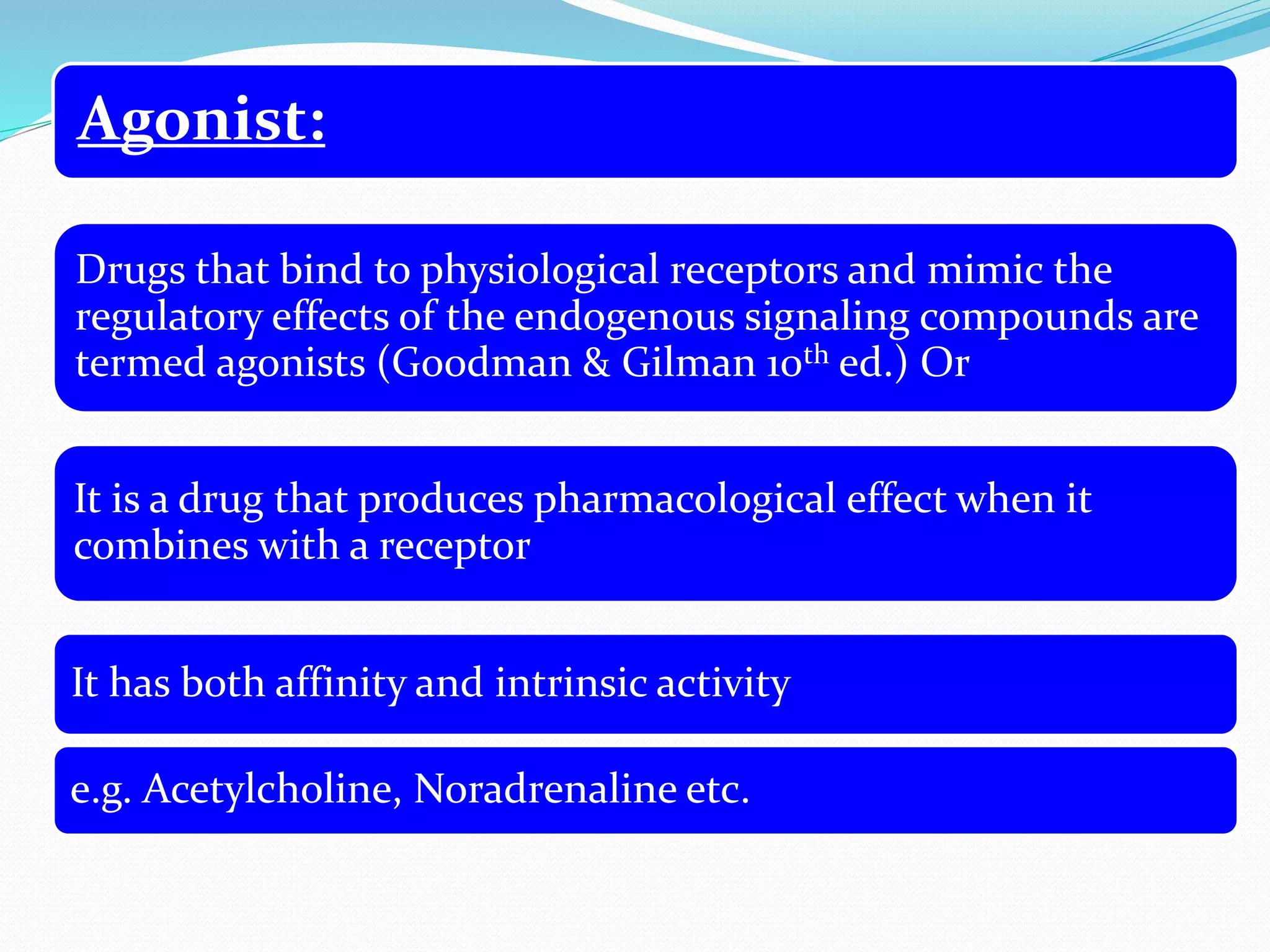
Agonist:
Drugs that bind to physiological receptors and mimic the
regulatory effects of the endogenous signaling compounds are
termed agonists (Goodman & Gilman 10th ed.) Or
It is a drug that produces pharmacological effect when it
combines with a receptor
It has both affinity and intrinsic activity
e.g. Acetylcholine, Noradrenaline etc.
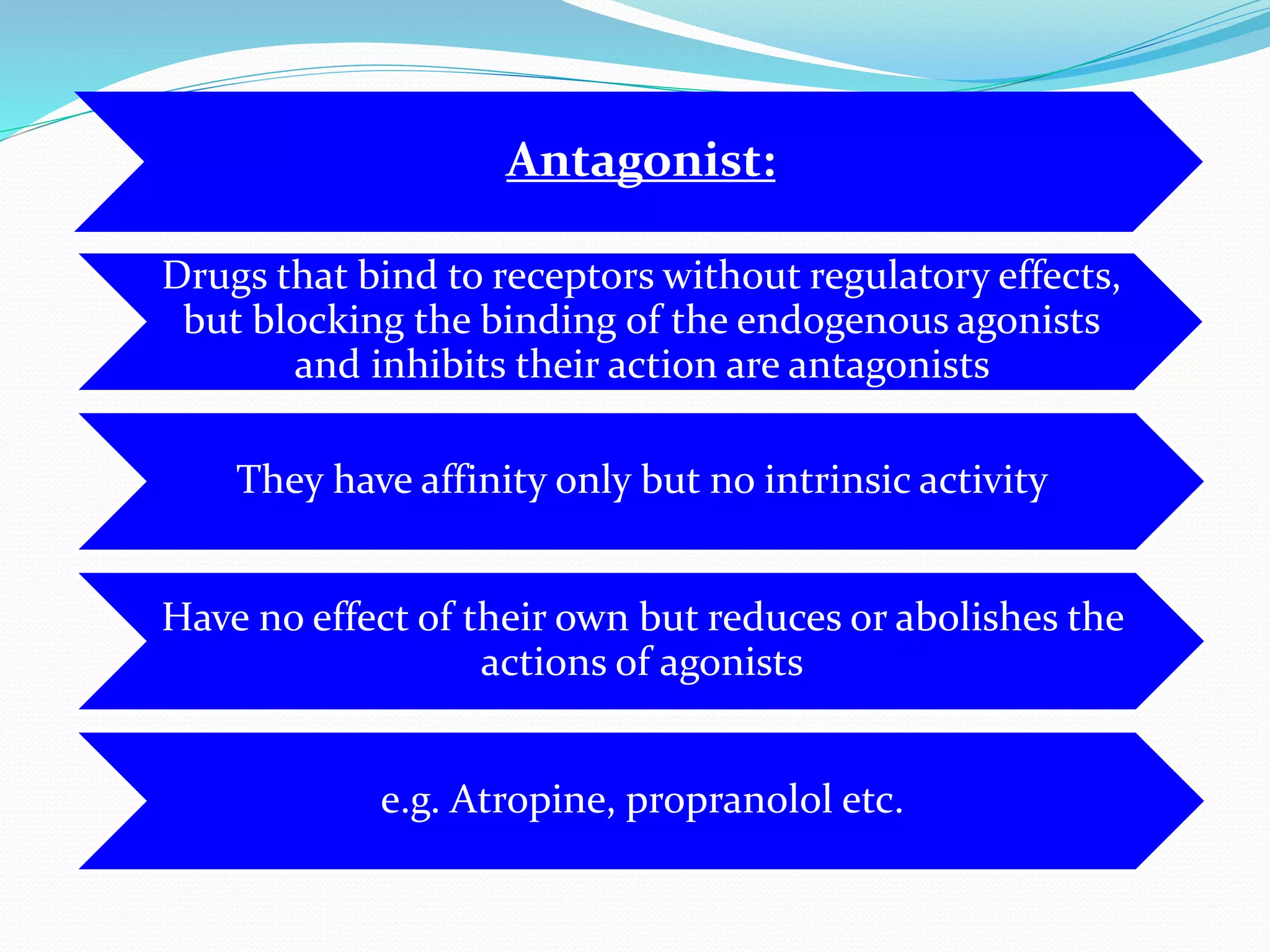
Antagonist:
Drugs that bind to receptors without regulatory effects,
but blocking the binding of the endogenous agonists
and inhibits their action are antagonists
They have affinity only but no intrinsic activity
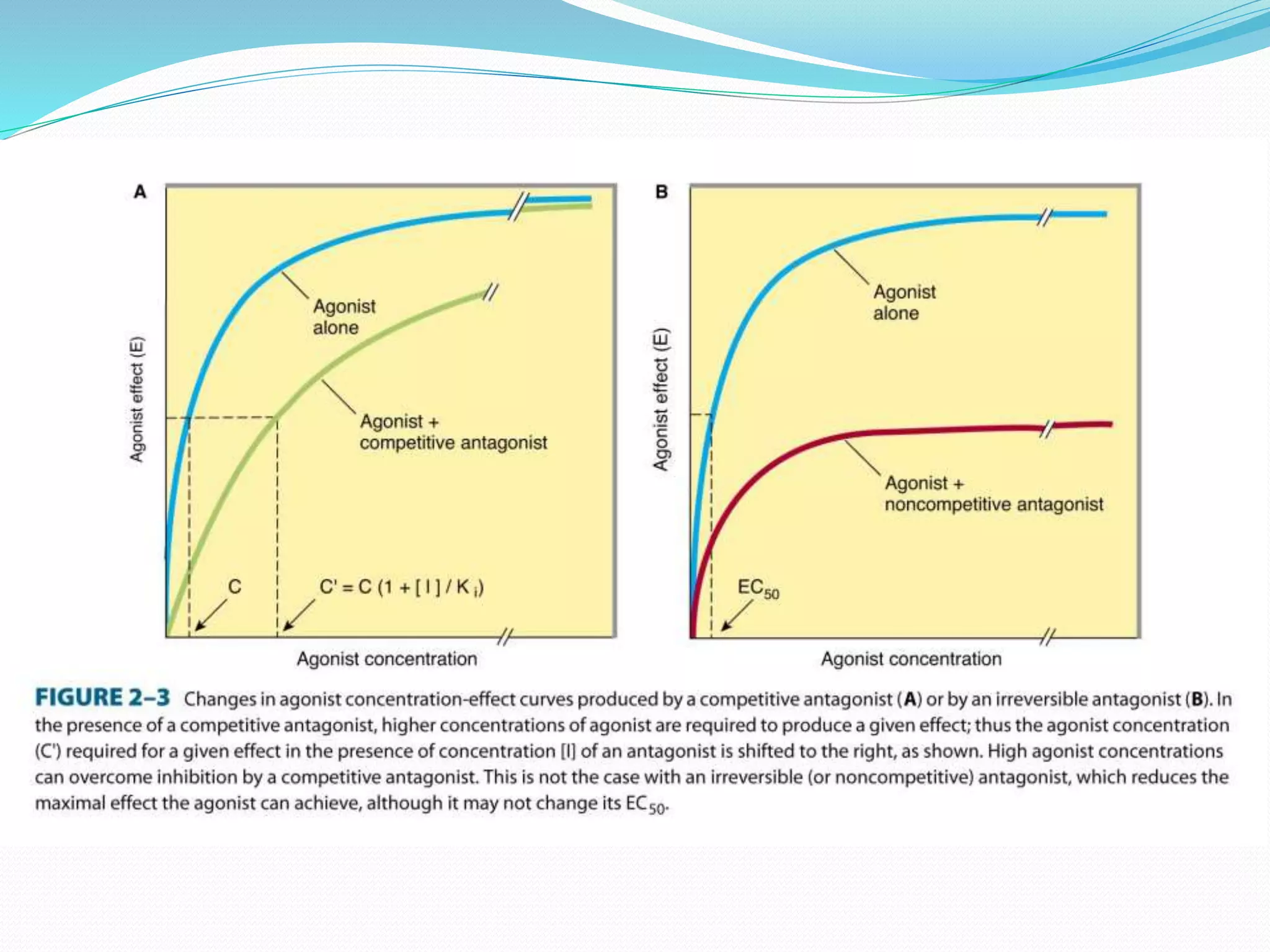
Have no effect of their own but reduces or abolishes the
actions of agonists
e.g. Atropine, propranolol etc.
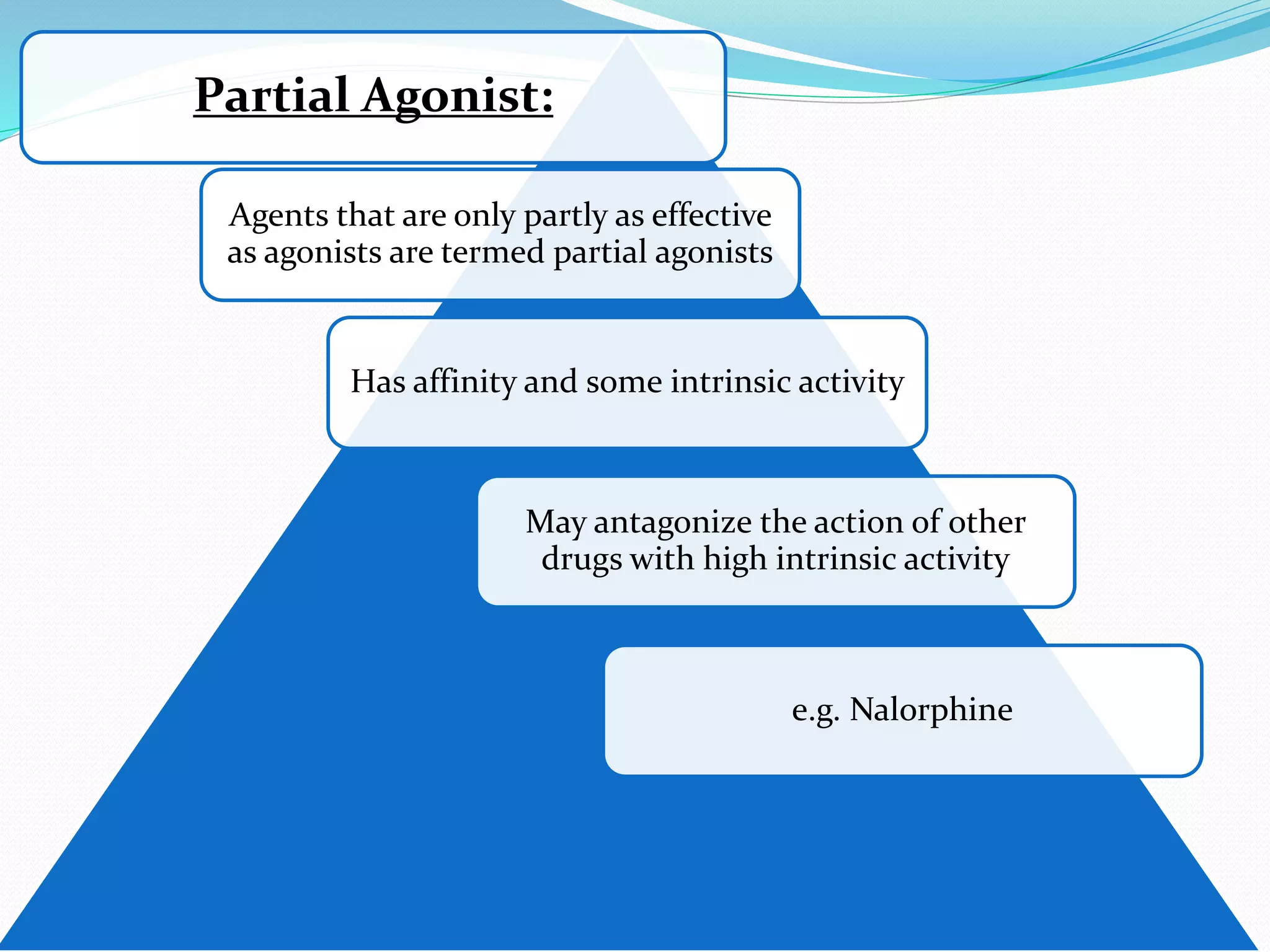
Partial Agonist:
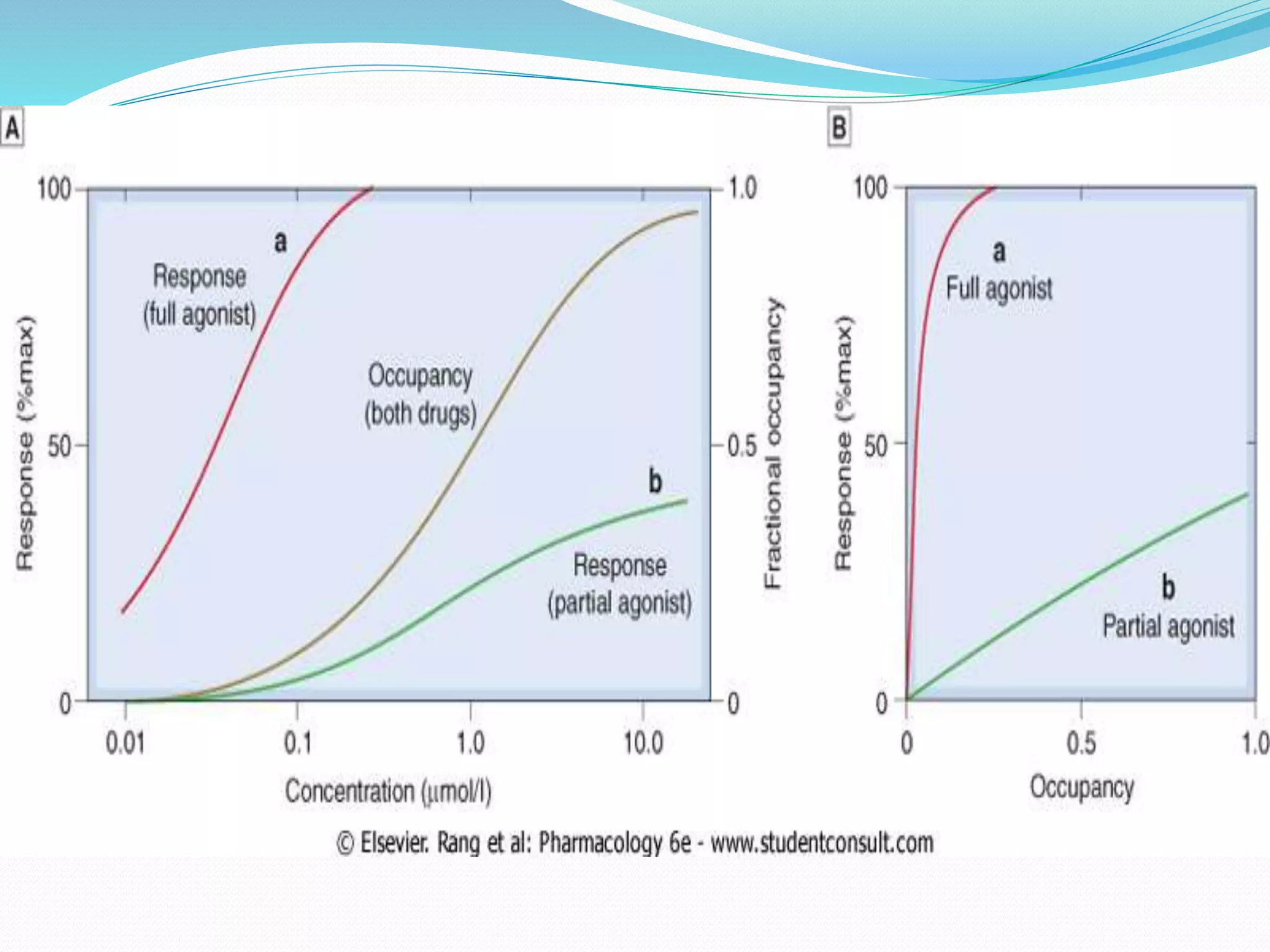
Agents that are only partly as effective
as agonists are termed partial agonists
Has affinity and some intrinsic activity
May antagonize the action of other
drugs with high intrinsic activity
e.g. Nalorphine
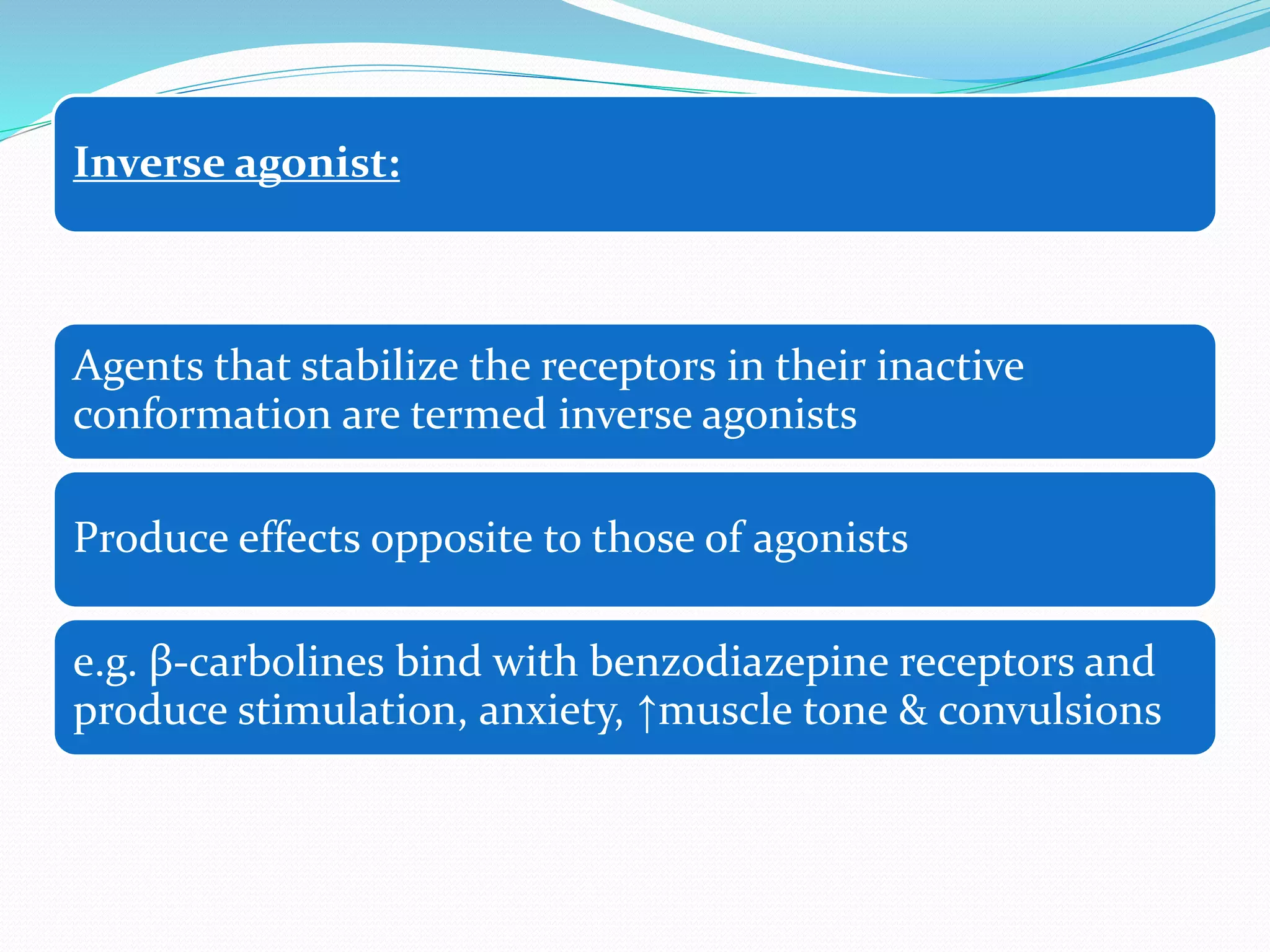
Inverse agonist:
Agents that stabilize the receptors in their inactive
conformation are termed inverse agonists
Produce effects opposite to those of agonists
e.g. β-carbolines bind with benzodiazepine receptors and
produce stimulation, anxiety, ↑muscle tone & convulsions
Factors Modifying Drug Action
 Rate and extent of drug
absorption
 Body size & composition
 Distribution in body
fluids
 Plasma protein binding
 Rate of metabolism &
excretion
 Physiological variables
 Pathological conditions
 Genetic factors
 Drug-drug interactions
 Development of
tolerance &
desensitization
Other Factors Modifying Drug Action
 Drug-receptor interactions
 Functional state of targeted system
 Selectivity of drug, propensity to produce unwanted
effects
 Placebo effects
 Resistance (antibiotics)
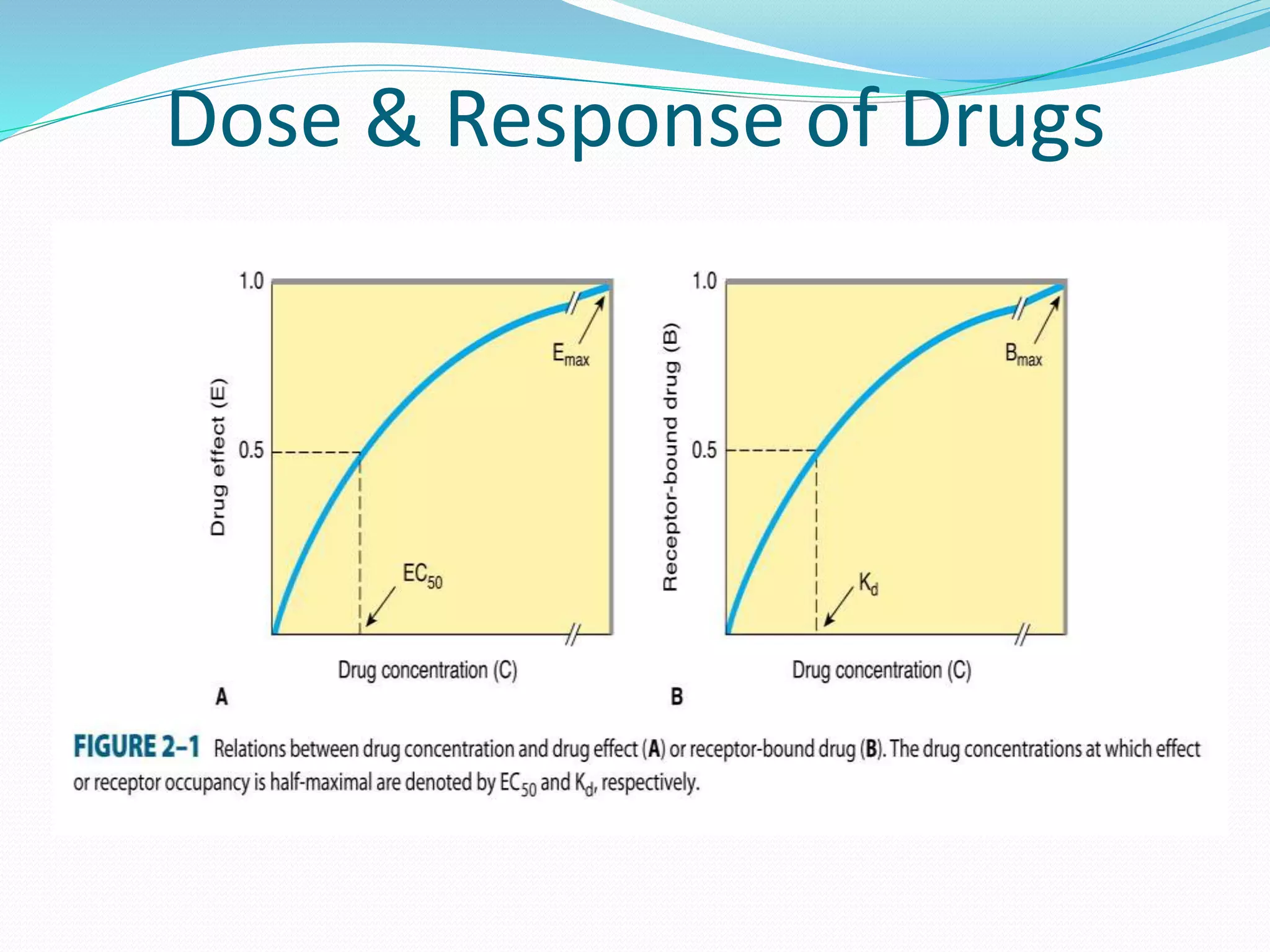
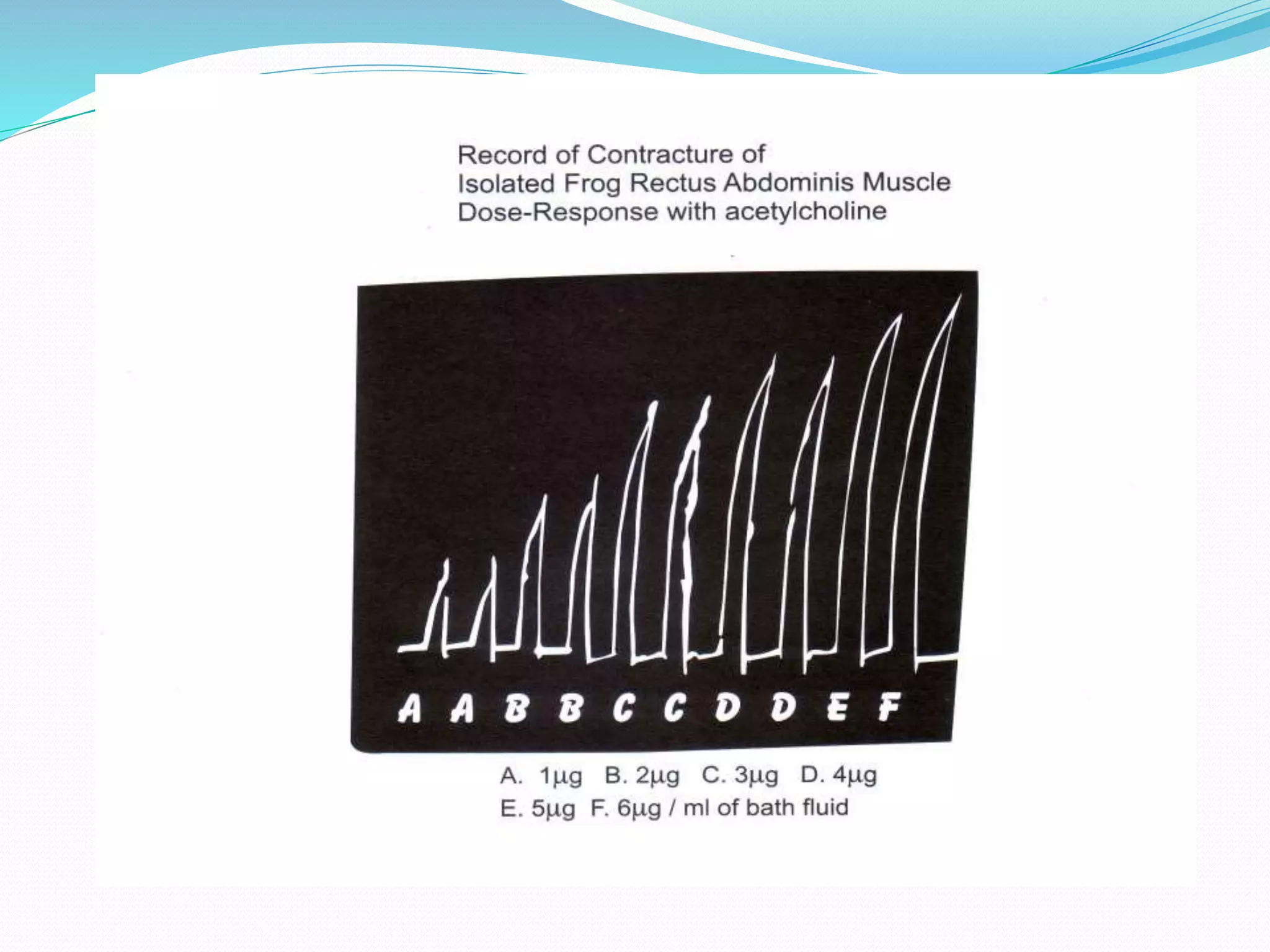
Dose Response Relationship
 In intact animals or patients, responses to low doses
of a drug usually increase in direct proportion to
dose
 As doses increase the response increment may
diminish; finally, doses may be reached at which no
further increase in response can be achieved
Dose Response Relationship
 It is of two types-
 Graded dose-response relationship
 Quantal dose-response relationship
Dose & Response of Drugs
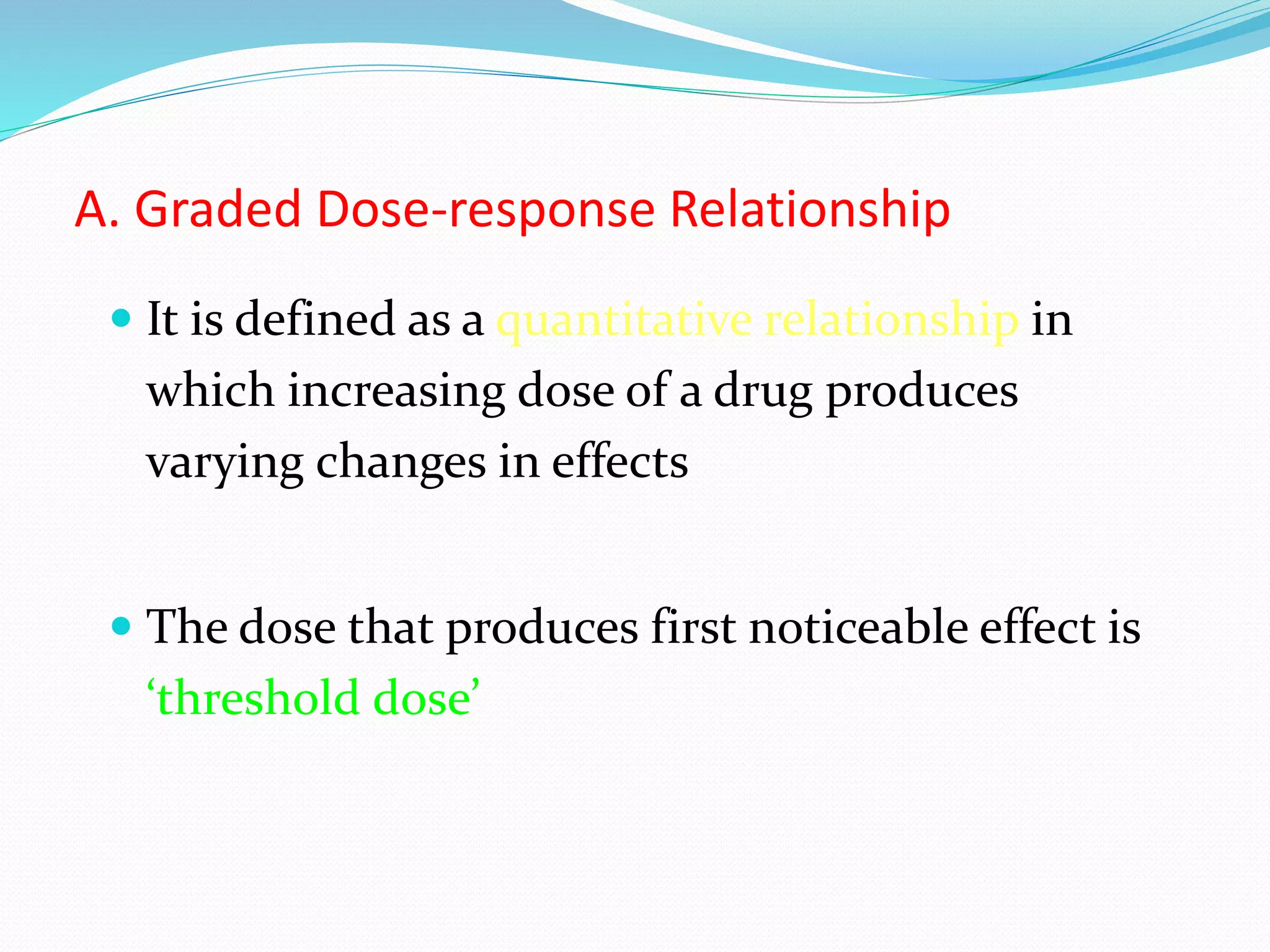
A. Graded Dose-response Relationship
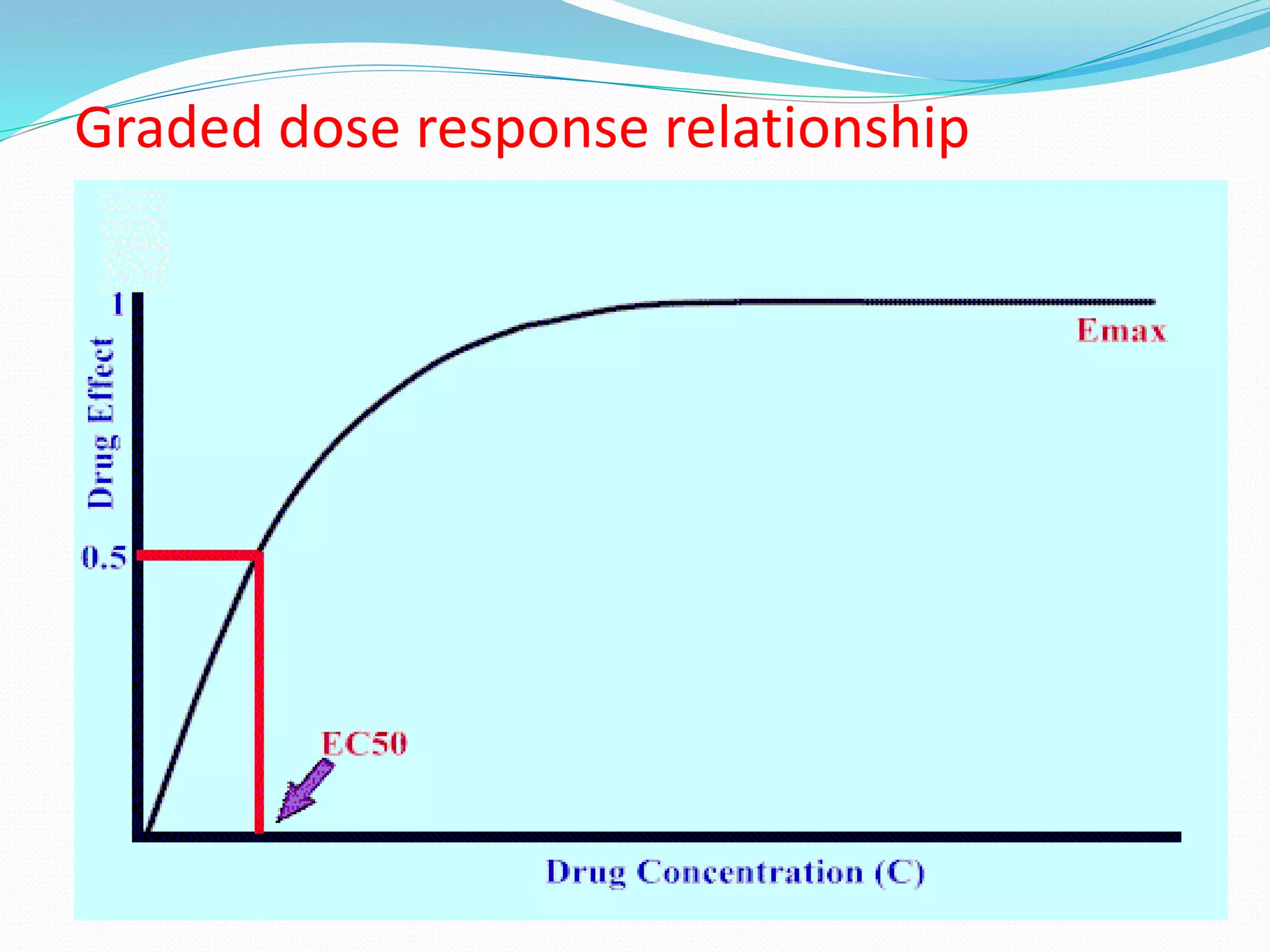
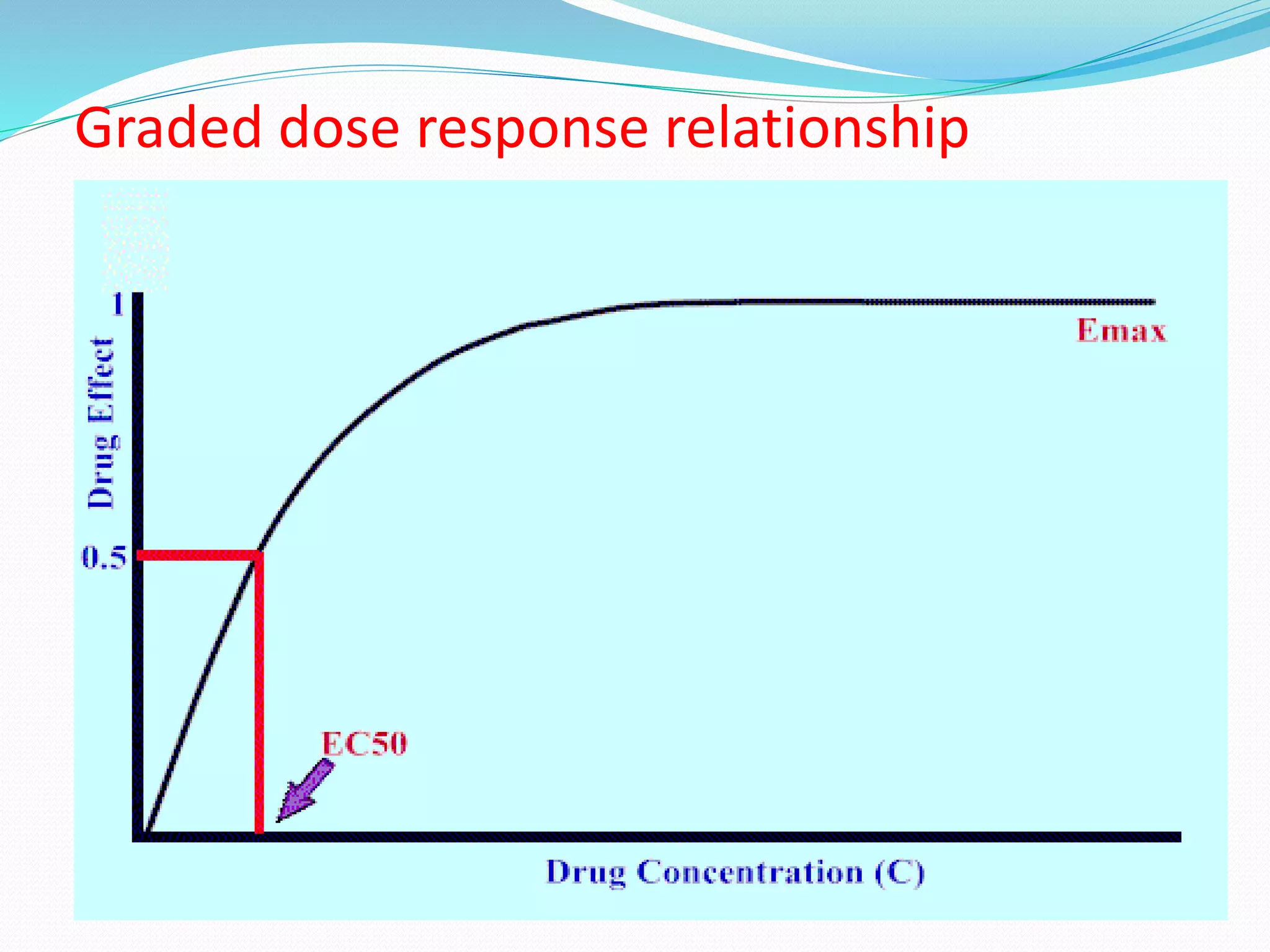
 It is defined as a quantitative relationship in
which increasing dose of a drug produces
varying changes in effects
 The dose that produces first noticeable effect is
‘threshold dose’
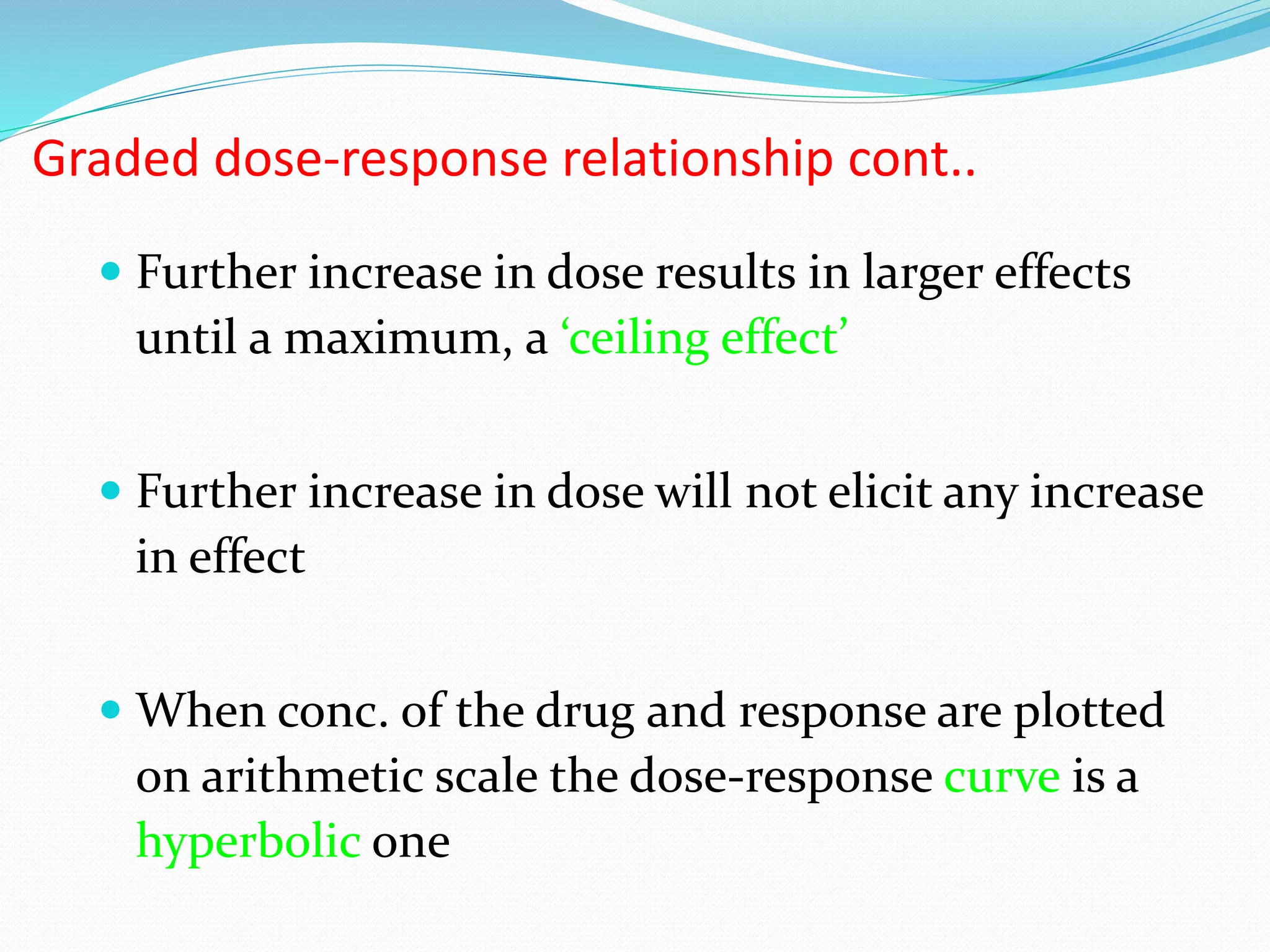
 Further increase in dose results in larger effects
until a maximum, a ‘ceiling effect’
 Further increase in dose will not elicit any increase
in effect
 When conc. of the drug and response are plotted
on arithmetic scale the dose-response curve is a
hyperbolic one
Graded dose-response relationship cont..
Graded dose response relationship
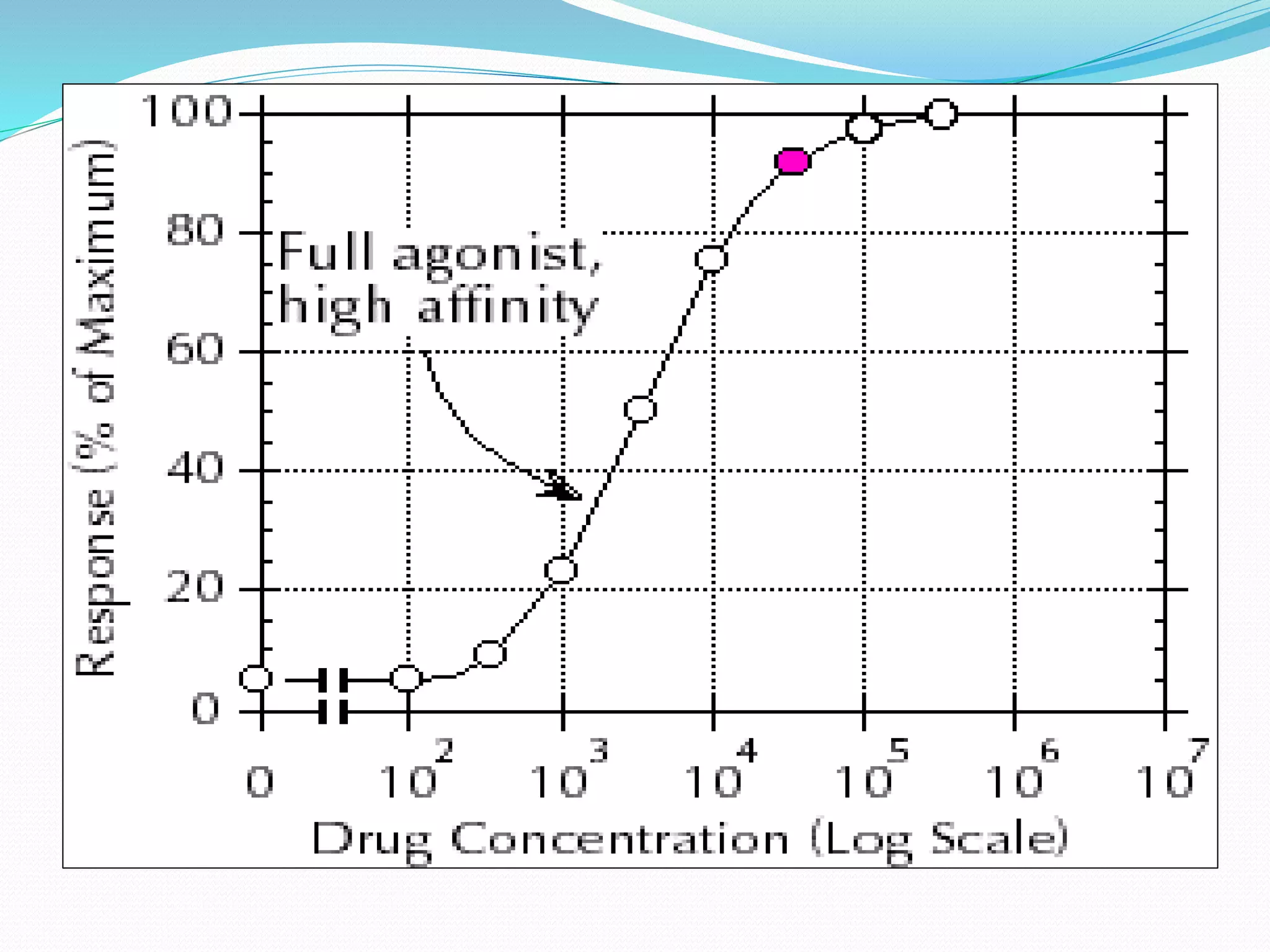
Graded Dose-Response Curve
 If the concentration/dose are plotted on a logarithmic
scale on x-axis and responses on y-axis on the
arithmetic scale the dose-response curve is ‘sigmoid in
shape’
 The middle part of the curve is linear
Graded Dose-Response Curve
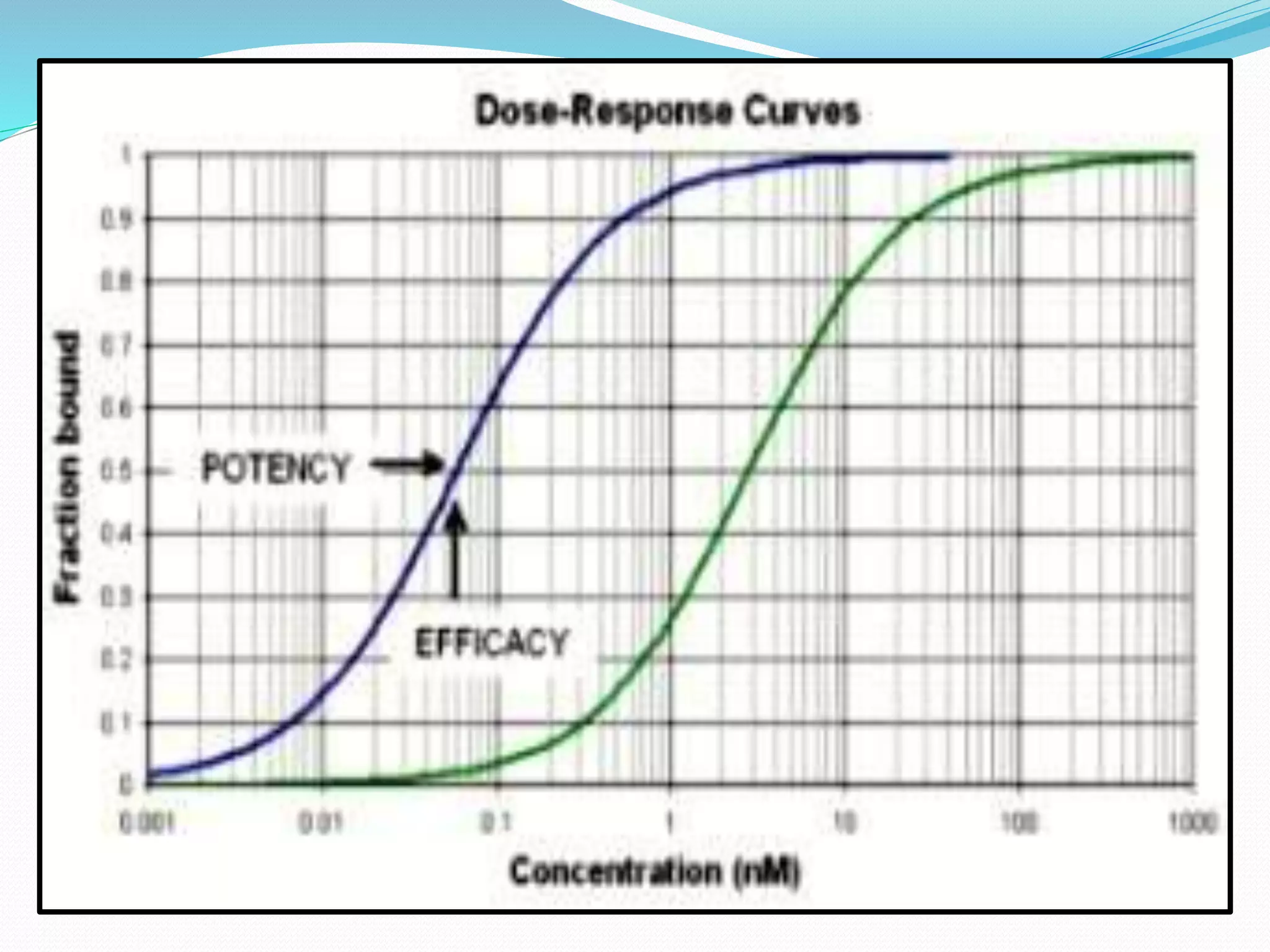
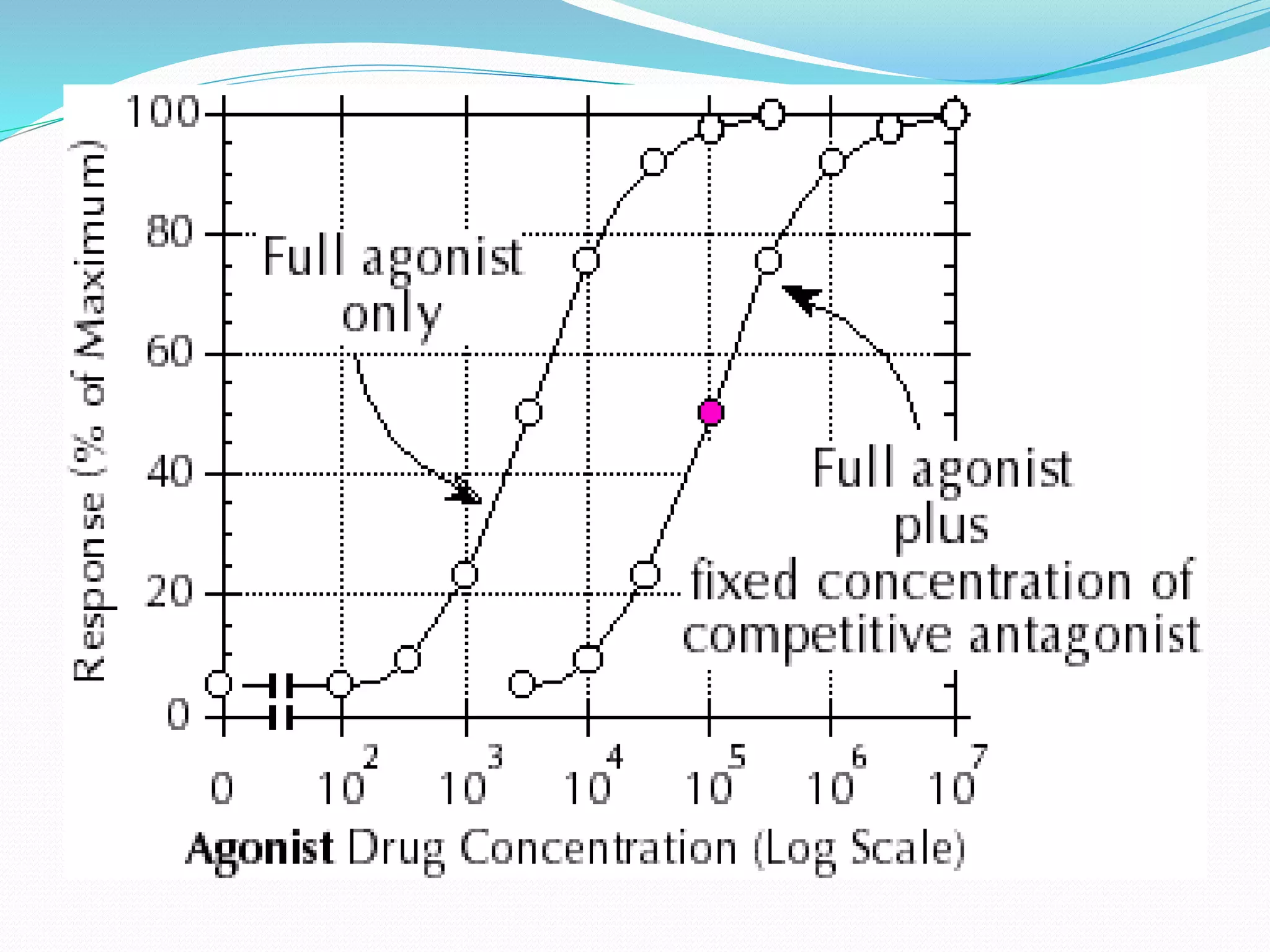
 Drugs having same action at a receptor but with
different potencies usually show parallel dose-
response curves
B. Quantal Dose-Response Relationship
 Graded dose-response curves have certain
limitations in their application to clinical
decision making
 Such curves may be impossible to construct if the
pharmacologic response is an all or none (either-
or) event, such as prevention of convulsions,
arrhythmia, or death
Quantal Dose-Response Relationship cont..
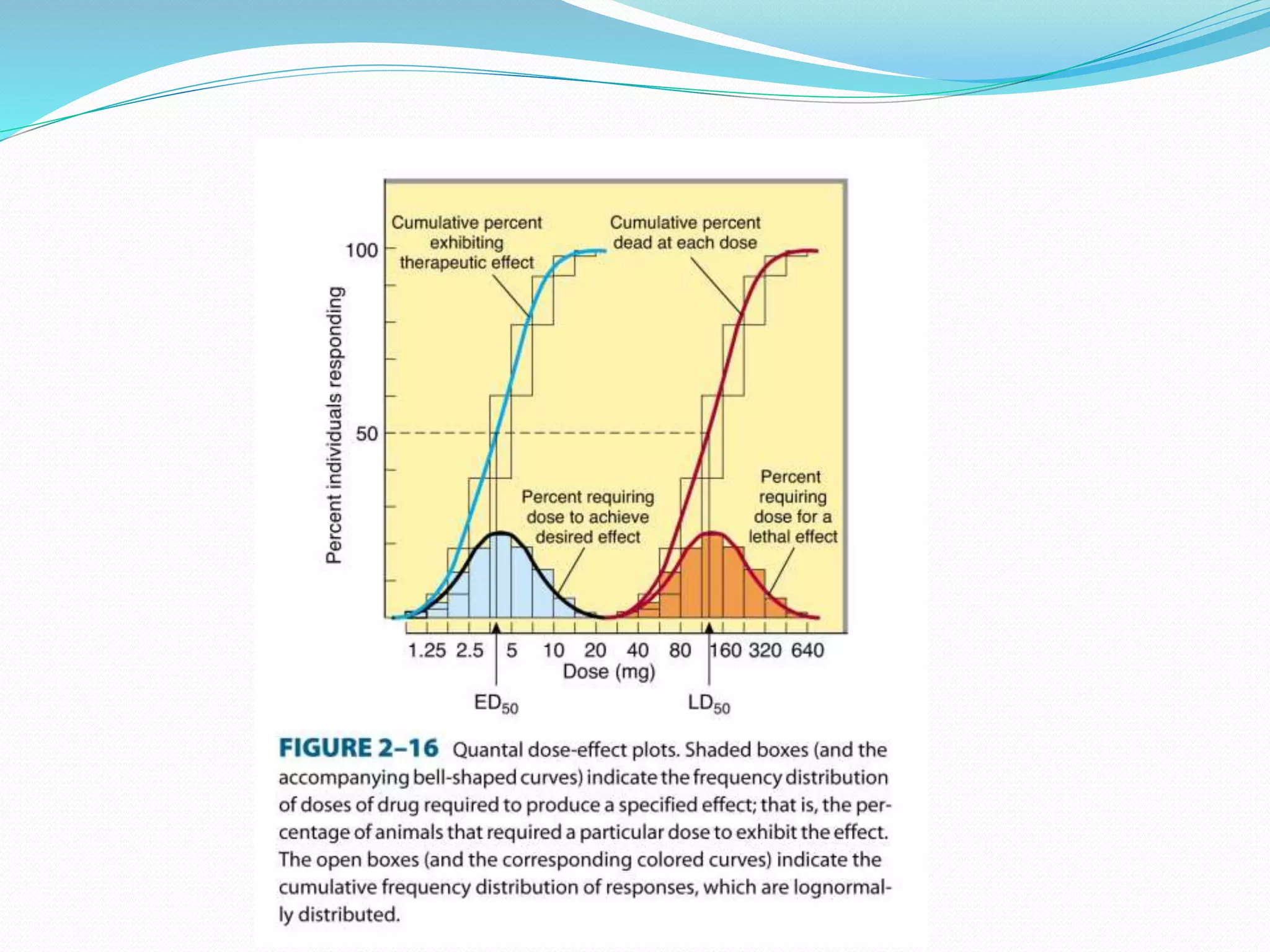
 This can be studied in whole animals (in vivo)
 Each animal is categorized as responding or non-
responding (dead or alive, cured or not cured etc.)
 Specific doses of a drug are administered to a
number of test animals and frequency with which
the drug evokes a stated, fixed, all or none effect is
determined
Quantal Dose-Response Relationship cont..
 Results of this type of experiment is plotted as log-
percentage curve
 The Quantal curve describes the distribution of
minimum doses that produce a given response in a
population or test animals
 The sensitivity of animals or subjects to different
doses are distributed normally, so a Gaussian or
normal distribution is obtained
Quantal Dose-Response Relationship cont..
 It is a cumulative graph of the frequency distribution
curve
 It is bell shaped
 It can be used to determine LD50 and ED50 of drugs
Quantal Dose-Response Relationship cont..
 Furthermore, the clinical relevance of a quantitative
dose-response relationship in a single patient, may be
limited in application to other patients, owing to the
great potential variability among patients in severity
of disease and responsiveness to drugs
 Quantal dose-effect curve and the graded dose-
response curve summarize somewhat different sets of
information, although both appear sigmoid in shape on
a semi logarithmic plot
 Critical information required for making rational
therapeutic decisions can be obtained from each type
of curve
D-R Relationship Cont..
 Both curves provide information regarding the
potency and selectivity of drugs
 The graded dose-response curve indicates the
maximal efficacy of a drug, and
 The quantal dose-effect curve indicates the potential
variability of responsiveness among individuals
 "maximal efficacy," used in a therapeutic context,
does not have exactly the same meaning the term
denotes in the more specialized context of drug-
receptor interactions
 In an idealized in vitro system, efficacy denotes the
relative maximal efficacy of agonists and partial
agonists that act via the same receptor
D-R Relationship Cont..
 In therapeutics, efficacy denotes the extent or
degree of an effect that can be achieved in the
intact patient
 Thus, therapeutic efficacy may be affected by the
characteristics of a particular drug-receptor
interaction, but it also depends on a host of other
factors
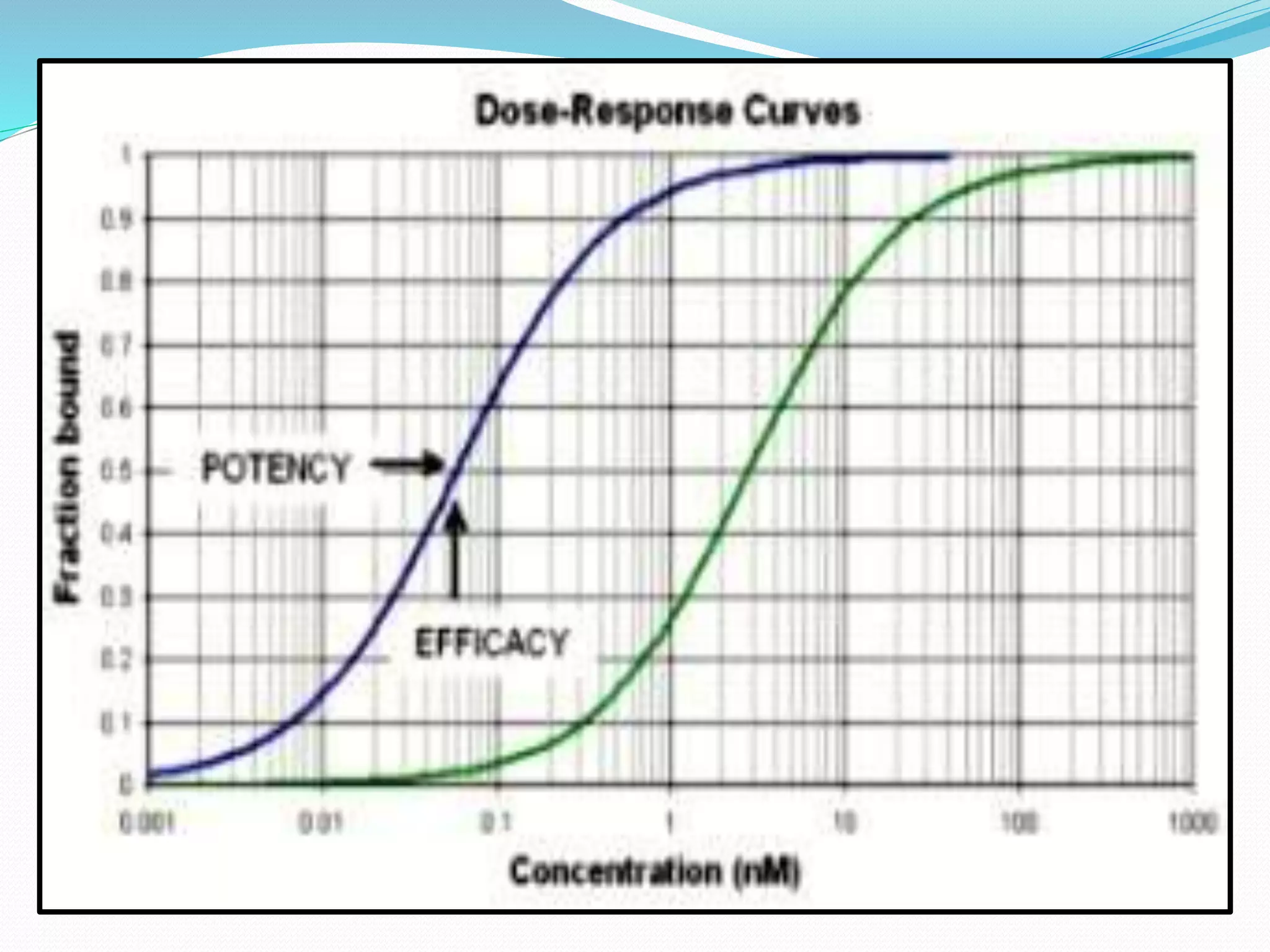
Potency
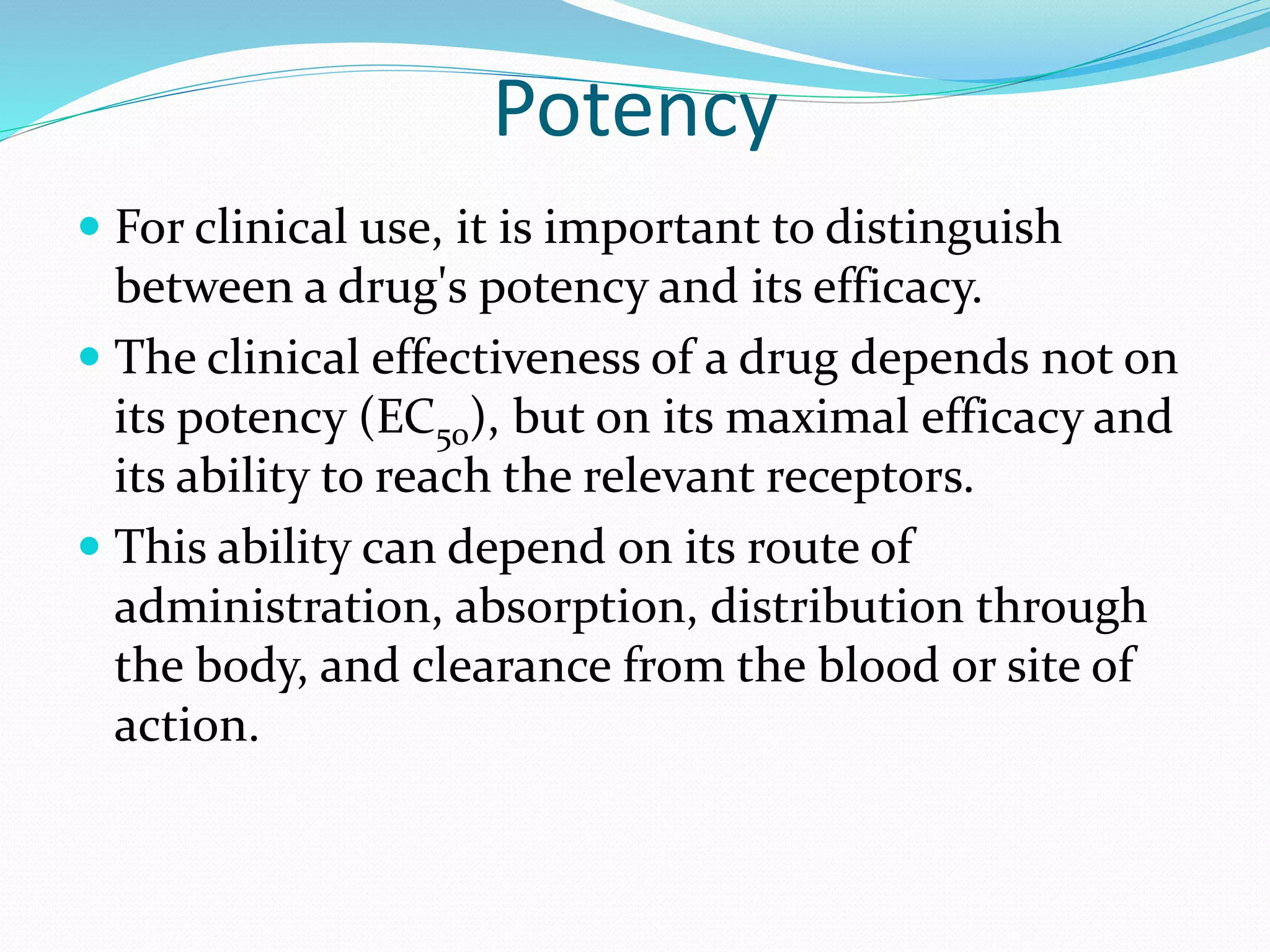
 Drugs A and B are said to be more potent than drugs C and
D
 Potency refers to the concentration (EC50) or dose (ED50) of
a drug required to produce 50% of that drug's maximal
effect
 Potency of drug A is less than that of drug B, a partial
agonist because the EC50 of A is greater than the EC50 of B.
 Potency of a drug depends in part on the affinity (Kd) of
receptors for binding the drug and in part on the efficiency
with which drug-receptor interaction is coupled to
response.
 Note that some doses of drug A can produce larger effects
than any dose of drug B, despite drug B is more potent.
 The reason for this is that drug A has a larger maximal
efficacy
Potency
 For clinical use, it is important to distinguish
between a drug's potency and its efficacy.
 The clinical effectiveness of a drug depends not on
its potency (EC50), but on its maximal efficacy and
its ability to reach the relevant receptors.
 This ability can depend on its route of
administration, absorption, distribution through
the body, and clearance from the blood or site of
action.
Potency
 In deciding which of two drugs to administer we must
usually consider their relative effectiveness rather than
their relative potency.
 Pharmacologic potency can largely determine the
administered dose of the chosen drug.
 For therapeutic purposes, the potency of a drug should be
stated in dosage units, usually in terms of a particular
therapeutic end point
 eg. 50 mg for mild sedation, 1 mcg/kg/min for an increase
in heart rate of 25 bpm)
 Relative potency, the ratio of equi-effective doses (0.2, 10,
etc.), may be used in comparing one drug with another.
Maximal Efficacy
 Reflects the limit of the dose-response relation on
the response axis.
 Drugs A, C, and D have equal maximal efficacy,
whereas all have greater maximal efficacy than
drug B.
 The maximal efficacy of a drug is obviously crucial
for making clinical decisions when a large response
is needed.
 It may be determined by the drug's mode of
interactions with receptors.
Maximal Efficacy
 Diuretics that act on one portion of the nephron
may produce much greater excretion of fluid and
electrolytes than diuretics that act elsewhere.
 In addition, the practical efficacy of a drug for
achieving a therapeutic end point (eg, increased
cardiac contractility) may be limited by the drug's
propensity to cause a toxic effect (eg, fatal cardiac
arrhythmia) even if the drug could otherwise
produce a greater therapeutic effect.
Graded dose response relationship
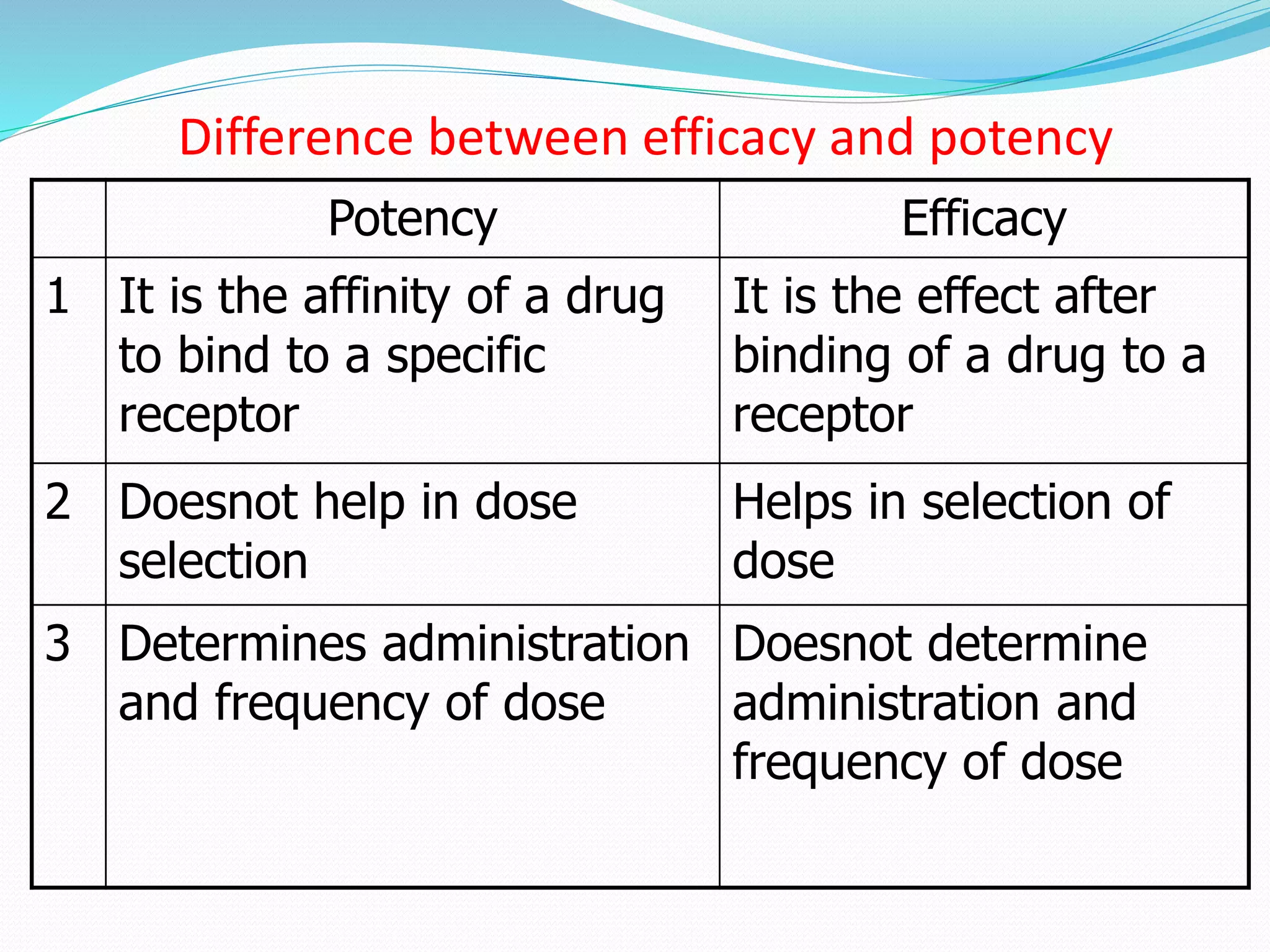
Difference between efficacy and potency
Potency Efficacy
1 It is the affinity of a drug
to bind to a specific
receptor
It is the effect after
binding of a drug to a
receptor
2 Doesnot help in dose
selection
Helps in selection of
dose
3 Determines administration
and frequency of dose
Doesnot determine
administration and
frequency of dose
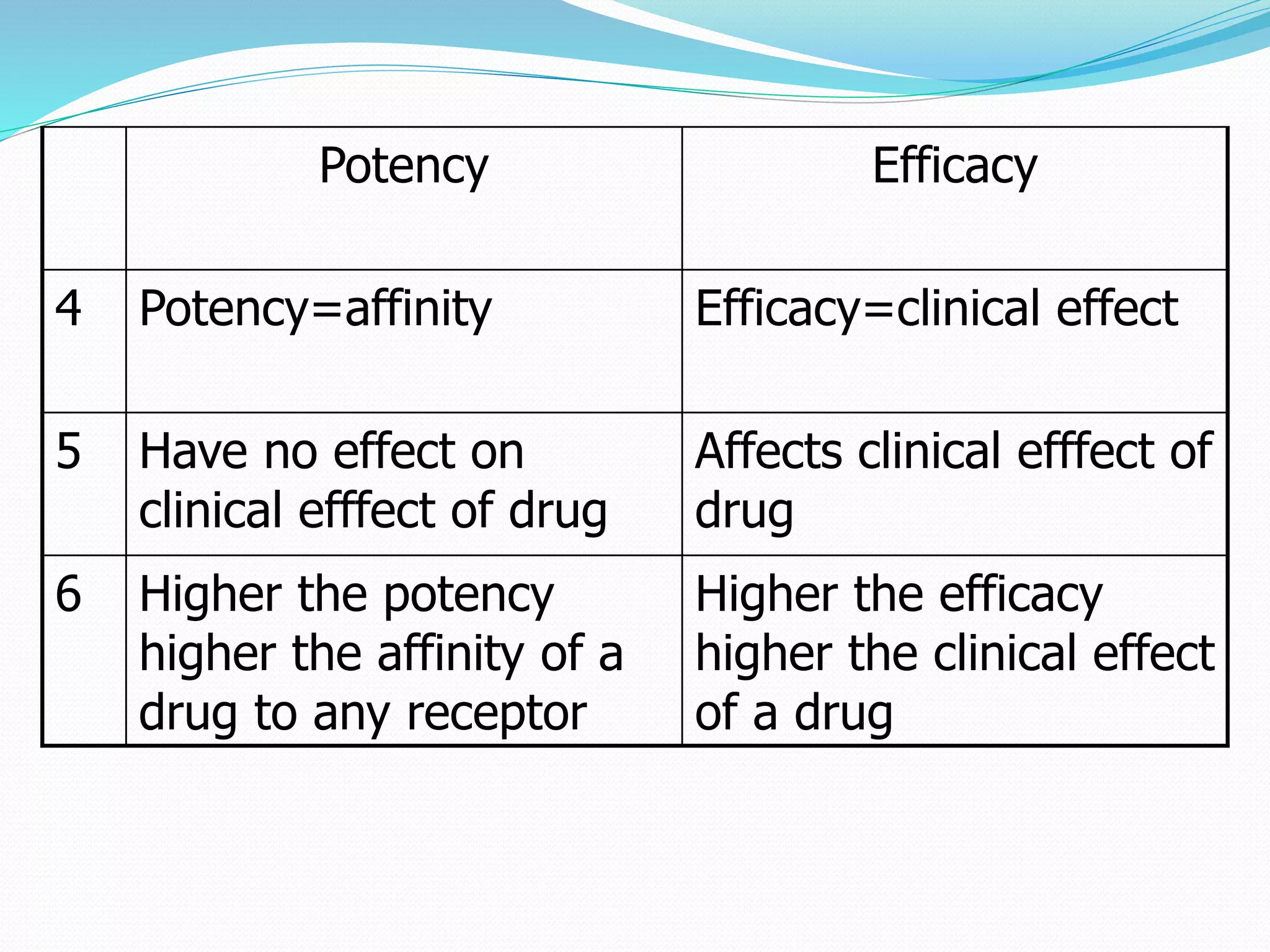
Potency Efficacy
4 Potency=affinity Efficacy=clinical effect
5 Have no effect on
clinical efffect of drug
Affects clinical efffect of
drug
6 Higher the potency
higher the affinity of a
drug to any receptor
Higher the efficacy
higher the clinical effect
of a drug
SLOs:
At the end of the lecture, students shod be able to:
 8.1: List various factors that modify drug action
explaining their clinical significance giving
examples.
 8.2: Explain the mechanism of potency and
efficacy of drugs in a clinical situation determining
the choice of drugs

Factors modifying drug action, efficacy & potency

  • 1.
    Dr. Badar UddinUmar MBBS, MPhil
  • 2.
    Objectives:  To discussthe effect of various factors like- age, sex, multiple drug therapy, tolerance, pharmacogenetics on drug action and its clinical significance.  To discuss potency and maximum efficacy [Emax] of drugs and their role in determining choice of drugs
  • 3.
    Some important terminology Affinity: Itis defined as the tendency of a drug to form a combination with the receptor The number of receptors occupied at a given time is proportional to the affinity of the drug for the receptor and it’s concentration
  • 4.
    Drugs having highaffinity will occupy more receptors at any given concentration than drugs with low affinity If the conc. of a drug with low affinity is increased there will be increase in the number of occupied receptors
  • 5.
    Efficacy or Intrinsicactivity: It is the ability of a drug to produce a maximum response of a tissue after combination with the receptor Or it may be defined as the capacity to stimulate for a given receptor occupancy
  • 6.
    Agonist: Drugs that bindto physiological receptors and mimic the regulatory effects of the endogenous signaling compounds are termed agonists (Goodman & Gilman 10th ed.) Or It is a drug that produces pharmacological effect when it combines with a receptor It has both affinity and intrinsic activity e.g. Acetylcholine, Noradrenaline etc.
  • 7.
    Antagonist: Drugs that bindto receptors without regulatory effects, but blocking the binding of the endogenous agonists and inhibits their action are antagonists They have affinity only but no intrinsic activity Have no effect of their own but reduces or abolishes the actions of agonists e.g. Atropine, propranolol etc.
  • 8.
    Partial Agonist: Agents thatare only partly as effective as agonists are termed partial agonists Has affinity and some intrinsic activity May antagonize the action of other drugs with high intrinsic activity e.g. Nalorphine
  • 9.
    Inverse agonist: Agents thatstabilize the receptors in their inactive conformation are termed inverse agonists Produce effects opposite to those of agonists e.g. β-carbolines bind with benzodiazepine receptors and produce stimulation, anxiety, ↑muscle tone & convulsions
  • 10.
    Factors Modifying DrugAction  Rate and extent of drug absorption  Body size & composition  Distribution in body fluids  Plasma protein binding  Rate of metabolism & excretion  Physiological variables  Pathological conditions  Genetic factors  Drug-drug interactions  Development of tolerance & desensitization
  • 11.
    Other Factors ModifyingDrug Action  Drug-receptor interactions  Functional state of targeted system  Selectivity of drug, propensity to produce unwanted effects  Placebo effects  Resistance (antibiotics)
  • 12.
    Dose Response Relationship In intact animals or patients, responses to low doses of a drug usually increase in direct proportion to dose  As doses increase the response increment may diminish; finally, doses may be reached at which no further increase in response can be achieved
  • 13.
    Dose Response Relationship It is of two types-  Graded dose-response relationship  Quantal dose-response relationship
  • 14.
  • 16.
    A. Graded Dose-responseRelationship  It is defined as a quantitative relationship in which increasing dose of a drug produces varying changes in effects  The dose that produces first noticeable effect is ‘threshold dose’
  • 17.
     Further increasein dose results in larger effects until a maximum, a ‘ceiling effect’  Further increase in dose will not elicit any increase in effect  When conc. of the drug and response are plotted on arithmetic scale the dose-response curve is a hyperbolic one Graded dose-response relationship cont..
  • 18.
  • 19.
    Graded Dose-Response Curve If the concentration/dose are plotted on a logarithmic scale on x-axis and responses on y-axis on the arithmetic scale the dose-response curve is ‘sigmoid in shape’  The middle part of the curve is linear
  • 20.
    Graded Dose-Response Curve Drugs having same action at a receptor but with different potencies usually show parallel dose- response curves
  • 26.
    B. Quantal Dose-ResponseRelationship  Graded dose-response curves have certain limitations in their application to clinical decision making  Such curves may be impossible to construct if the pharmacologic response is an all or none (either- or) event, such as prevention of convulsions, arrhythmia, or death
  • 27.
    Quantal Dose-Response Relationshipcont..  This can be studied in whole animals (in vivo)  Each animal is categorized as responding or non- responding (dead or alive, cured or not cured etc.)  Specific doses of a drug are administered to a number of test animals and frequency with which the drug evokes a stated, fixed, all or none effect is determined
  • 28.
    Quantal Dose-Response Relationshipcont..  Results of this type of experiment is plotted as log- percentage curve  The Quantal curve describes the distribution of minimum doses that produce a given response in a population or test animals  The sensitivity of animals or subjects to different doses are distributed normally, so a Gaussian or normal distribution is obtained
  • 29.
    Quantal Dose-Response Relationshipcont..  It is a cumulative graph of the frequency distribution curve  It is bell shaped  It can be used to determine LD50 and ED50 of drugs
  • 30.
    Quantal Dose-Response Relationshipcont..  Furthermore, the clinical relevance of a quantitative dose-response relationship in a single patient, may be limited in application to other patients, owing to the great potential variability among patients in severity of disease and responsiveness to drugs
  • 31.
     Quantal dose-effectcurve and the graded dose- response curve summarize somewhat different sets of information, although both appear sigmoid in shape on a semi logarithmic plot  Critical information required for making rational therapeutic decisions can be obtained from each type of curve D-R Relationship Cont..
  • 32.
    D-R Relationship Cont.. Both curves provide information regarding the potency and selectivity of drugs  The graded dose-response curve indicates the maximal efficacy of a drug, and  The quantal dose-effect curve indicates the potential variability of responsiveness among individuals
  • 33.
     "maximal efficacy,"used in a therapeutic context, does not have exactly the same meaning the term denotes in the more specialized context of drug- receptor interactions  In an idealized in vitro system, efficacy denotes the relative maximal efficacy of agonists and partial agonists that act via the same receptor D-R Relationship Cont..
  • 34.
    D-R Relationship Cont.. In therapeutics, efficacy denotes the extent or degree of an effect that can be achieved in the intact patient  Thus, therapeutic efficacy may be affected by the characteristics of a particular drug-receptor interaction, but it also depends on a host of other factors
  • 36.
    Potency  Drugs Aand B are said to be more potent than drugs C and D  Potency refers to the concentration (EC50) or dose (ED50) of a drug required to produce 50% of that drug's maximal effect  Potency of drug A is less than that of drug B, a partial agonist because the EC50 of A is greater than the EC50 of B.  Potency of a drug depends in part on the affinity (Kd) of receptors for binding the drug and in part on the efficiency with which drug-receptor interaction is coupled to response.  Note that some doses of drug A can produce larger effects than any dose of drug B, despite drug B is more potent.  The reason for this is that drug A has a larger maximal efficacy
  • 37.
    Potency  For clinicaluse, it is important to distinguish between a drug's potency and its efficacy.  The clinical effectiveness of a drug depends not on its potency (EC50), but on its maximal efficacy and its ability to reach the relevant receptors.  This ability can depend on its route of administration, absorption, distribution through the body, and clearance from the blood or site of action.
  • 38.
    Potency  In decidingwhich of two drugs to administer we must usually consider their relative effectiveness rather than their relative potency.  Pharmacologic potency can largely determine the administered dose of the chosen drug.  For therapeutic purposes, the potency of a drug should be stated in dosage units, usually in terms of a particular therapeutic end point  eg. 50 mg for mild sedation, 1 mcg/kg/min for an increase in heart rate of 25 bpm)  Relative potency, the ratio of equi-effective doses (0.2, 10, etc.), may be used in comparing one drug with another.
  • 39.
    Maximal Efficacy  Reflectsthe limit of the dose-response relation on the response axis.  Drugs A, C, and D have equal maximal efficacy, whereas all have greater maximal efficacy than drug B.  The maximal efficacy of a drug is obviously crucial for making clinical decisions when a large response is needed.  It may be determined by the drug's mode of interactions with receptors.
  • 40.
    Maximal Efficacy  Diureticsthat act on one portion of the nephron may produce much greater excretion of fluid and electrolytes than diuretics that act elsewhere.  In addition, the practical efficacy of a drug for achieving a therapeutic end point (eg, increased cardiac contractility) may be limited by the drug's propensity to cause a toxic effect (eg, fatal cardiac arrhythmia) even if the drug could otherwise produce a greater therapeutic effect.
  • 51.
  • 53.
    Difference between efficacyand potency Potency Efficacy 1 It is the affinity of a drug to bind to a specific receptor It is the effect after binding of a drug to a receptor 2 Doesnot help in dose selection Helps in selection of dose 3 Determines administration and frequency of dose Doesnot determine administration and frequency of dose
  • 54.
    Potency Efficacy 4 Potency=affinityEfficacy=clinical effect 5 Have no effect on clinical efffect of drug Affects clinical efffect of drug 6 Higher the potency higher the affinity of a drug to any receptor Higher the efficacy higher the clinical effect of a drug
  • 55.
    SLOs: At the endof the lecture, students shod be able to:  8.1: List various factors that modify drug action explaining their clinical significance giving examples.  8.2: Explain the mechanism of potency and efficacy of drugs in a clinical situation determining the choice of drugs