Pharmacodynamics
– Pharmacodynamics deals with the study of the
biochemical and physiological effects of drugs and their
mechanisms of action.
Mechanisms of Drug Action
– Is the means by which a drug initiates a serious of events
which are measured or observed as an effect
– Involves
Receptor mediated:-binding of drug with receptor
Non-receptor mediated:- eg. chemical reaction
(neutralization).
1
Drug Receptors
Receptor is a macromolecular component of the body
with which drug interacts to initiate its pharmacologic
effect.
Most receptors are proteins.
The best characterized receptors are:
Regulatory proteins:-mediate action of endogenious
chemical signals (NTs, hormones, etc.)
Transport proteins: eg. Na+/K+ ATPase
Structural proteins: eg. Tubulin
Enzymes: eg. Dihydrofolate reductase-inhibited by
sulfonamides
2
Drug-receptor interaction
1) Receptors largely determine the quantitative relations
between dose or concentration of drug and
pharmacologic effects.
2) Receptors are responsible for selectivity of drug action.
3) Receptors mediate the actions of both pharmacologic
agonists and antagonists.
Drug + Receptor = Response
3
Efficacy Vs Potency
Efficacy (intrinsic activity of a drug):- refers to the maximal
effect that the drug can produce.
Potency:- refers the dose of a drug that must be
administered to produce a particular effect of a given
intensity. It varies inversely with dose; the lower the dose
required to produce a stated response, the more potent
the drug.
4
Efficacy Vs Potency Cont’d…
Potency is influenced by:
The affinity of a drug for its receptor sites
Pharmacokinetic parameters that determines drug
concentration in the immediate vicinity of its site of
action.
Drug A = 15mg Same effect
Drug B = 10mg
Drug B is more potent than Drug A
5
Affinity Vs Occupancy
Affinity: describes the tendency of a drug to combine with
a particular kind of receptor.
Occupancy: Refers to the fraction of receptors occupied by
drugs.
6
Agonist and antagonist
A) Agonist
is a drug that possesses affinity for a particular receptor
and causes a change in the receptor that results in an
observable effect.
NB: Agonist drugs have both affinity and efficacy.
Agonists are further characterized as:
i) Full agonist:- produce a maximal response by occupying
all or a fraction of receptors
ii) Partial agonists:-produces less than a maximal response
even when the drug occupies all of the receptors.
7
Agonist Cont’d…
Logdose
Fig. Dose response curve of three agonists
Broken lines indicate 50% of maximum response (horizontal) and individual ED50
values (vertical).
8
B) Antagonist
Antagonist:
 It interacts with receptors but lacks intrinsic activity
(efficacy).
 This means that it has affinity but has no efficacy.
 The effect of antagonist results from preventing
agonist from binding to and activating receptors.
Antagonist can be further characterized as:
1) Competitive antagonist
2) Non-competitive antagonist
9
Antagonist Cont’d…
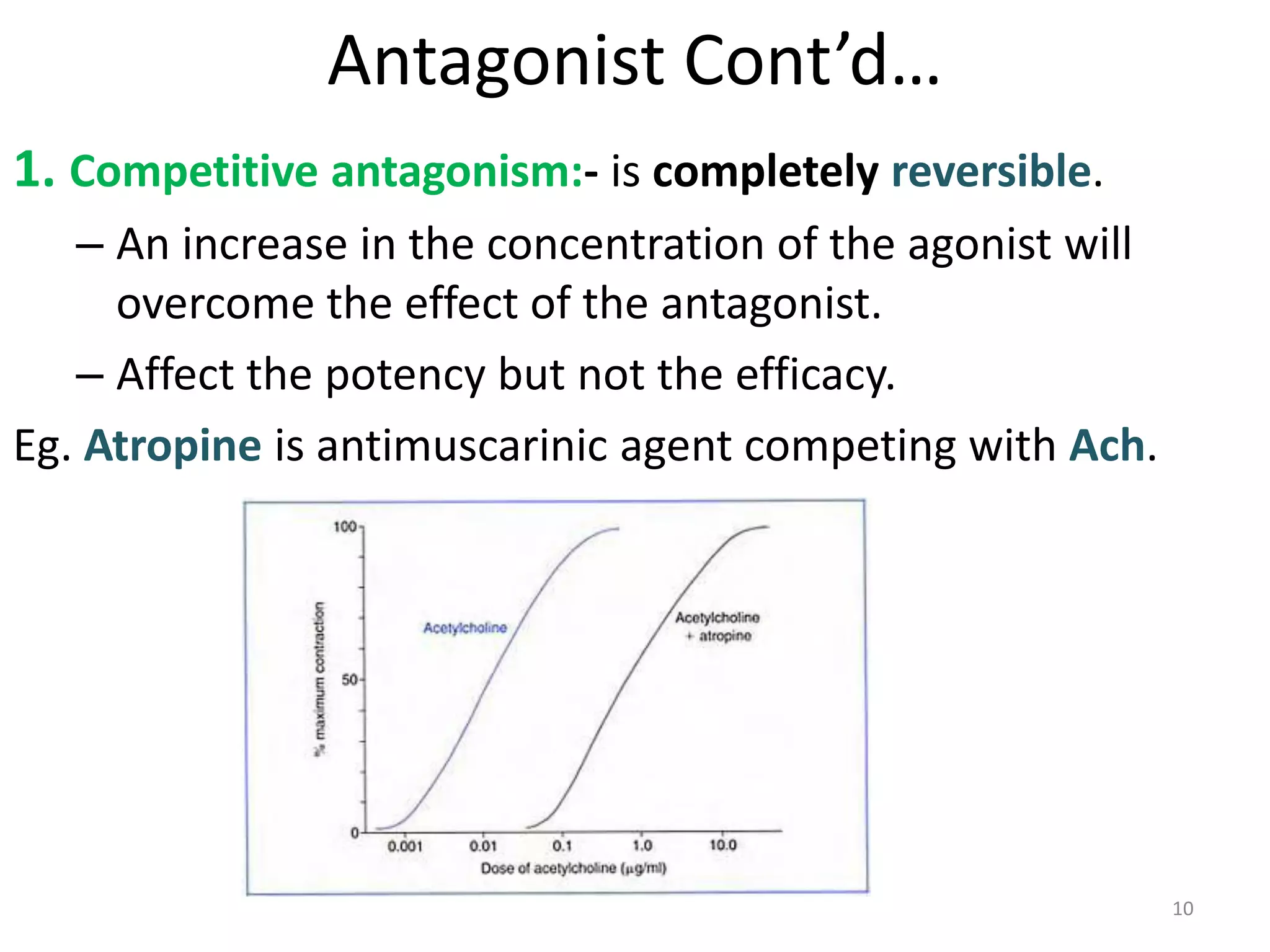
1. Competitive antagonism:- is completely reversible.
– An increase in the concentration of the agonist will
overcome the effect of the antagonist.
– Affect the potency but not the efficacy.
Eg. Atropine is antimuscarinic agent competing with Ach.
10
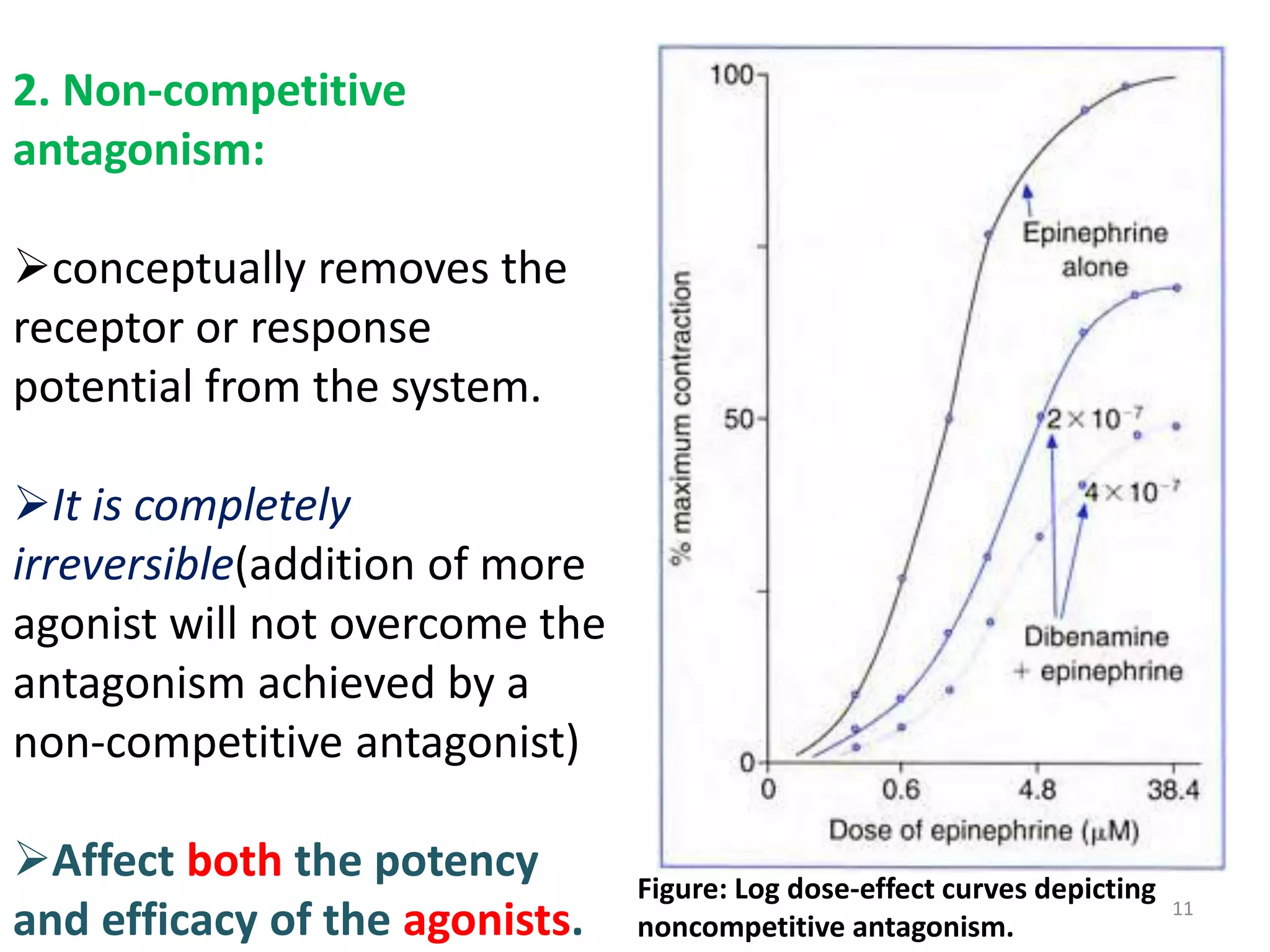
2. Non-competitive
antagonism:
conceptually removes the
receptor or response
potential from the system.
It is completely
irreversible(addition of more
agonist will not overcome the
antagonism achieved by a
non-competitive antagonist)
Affect both the potency
and efficacy of the agonists.
Figure: Log dose-effect curves depicting
noncompetitive antagonism.
11
Dose response relationship
• Because we cannot always quantify the concentration of
drug in the intact individual, it is customary to correlate
effect with dose administered.
• Since the degree of effect produced by a drug is generally a
function of the amount administered, we can express this
relationship in terms of a dose–response curve.
12
Quantal Versus Graded relationships
Quantal relationships
– Important for determining the relationship between
dose and some specified quantum of response among
all individuals taking that drug.
– Responses are described in a non continuous manner as
“either or “.
Any given idividual either will respond or will not
respond to a given dose of drug)
13
Quantal dose–response curve
– in which the dose (horizontal axis) is evaluated against
the percentage of animals in the experimental
population that is protected by each dose (vertical axis).
14
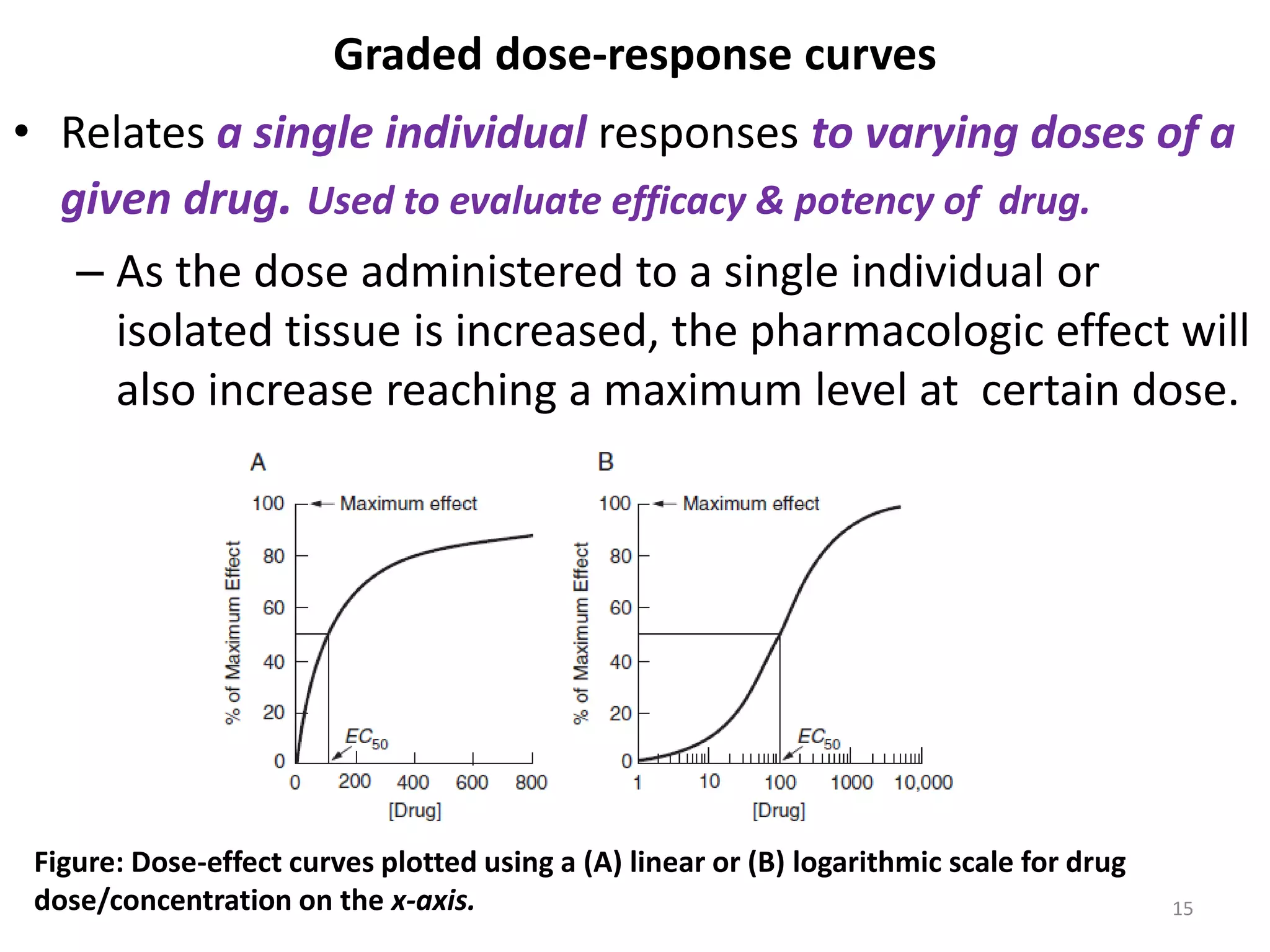
Graded dose-response curves
• Relates a single individual responses to varying doses of a
given drug. Used to evaluate efficacy & potency of drug.
– As the dose administered to a single individual or
isolated tissue is increased, the pharmacologic effect will
also increase reaching a maximum level at certain dose.
Figure: Dose-effect curves plotted using a (A) linear or (B) logarithmic scale for drug
dose/concentration on the x-axis. 15
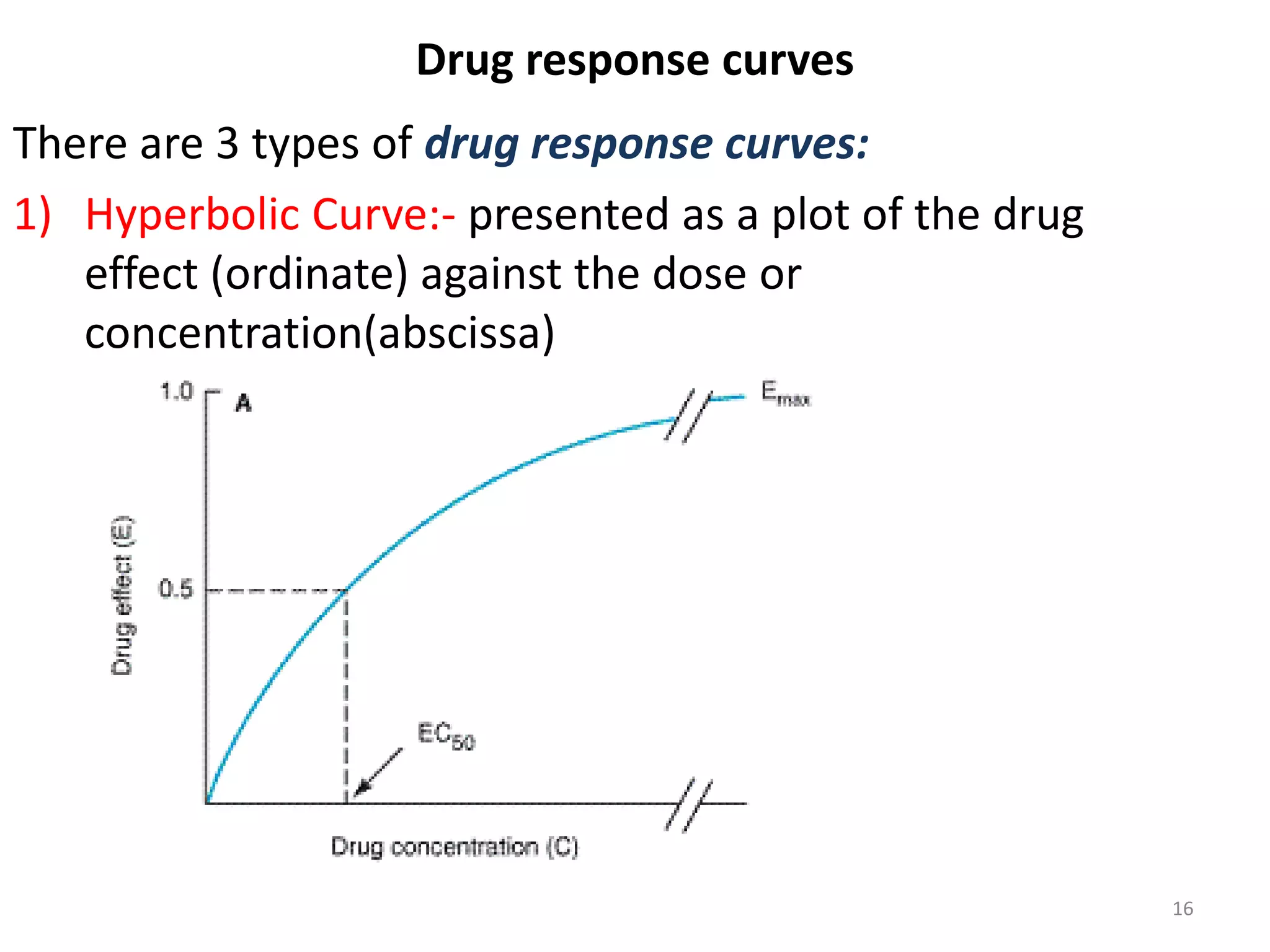
Drug response curves
There are 3 types of drug response curves:
1) Hyperbolic Curve:- presented as a plot of the drug
effect (ordinate) against the dose or
concentration(abscissa)
16
Drug receptor Cont’d…
2) Sigmoid curve:- presented as a plot of the drug
effect(ordinate) against the logarithm of the dose or
concentration (abscissa).
Log dose
It has 25-75% linearity (more linear than
hyperbolic curve)
←
17
Drug receptor Cont’d…
• This mathematical manipulation transfers the hyperbolic
curve into a sigmoid curve with a linear midpoint.
3) Linear Curve: obtained by plotting reciprocal of
response versus reciprocal of concentration.
1/Concentration
18
Drug tolerance
• Tolerance: refers to diminished response to the same dose
of a drug over time.
Mechanisms of tolerance
1. Desensitization:
– Rapid process involving continuous exposure to a drug,
altering the receptor so that it cannot produce a
response.
E.g. Continuous exposure to β-adrenergic agonist (use
of albuterol in asthma) results in decreased
responsiveness.
2. Down-regulation:
– decrease in number of receptors caused by high doses
of agonists over prolonged periods.
19
3. Tachyphylaxis:
– Refers to rapid development of tolerance
– Indirect acting amines (e.g., tyramine, amphetamine)
exert effects by releasing monoamines
– Several doses given over a short time depletes the
monoamine pool, reducing the response to successive
doses.
Drug dependence
1. Physical dependence: Repeated use produces an
altered or adaptive physiologic state if the drug is not
present.
2. Psychological dependence: refers to compulsive drug
seeking behavior. Individuals use a drug repeatedly for
personal satisfaction.
3. Substance dependence (addiction): Individuals
continue substance use despite significant substance-
related problems. 20
Drug interaction
Interactions between drugs
• Marked alterations in the effects of some drugs can result
from coadministration with another agent. Such
interactions can cause toxicity or inhibit the drug effect and
the therapeutic benefit.
• Drug interactions may be of two origin
Pharmacokinetic interaction
Pharmacodynamic interaction
21
1) Pharmacokinetic interaction
• Occurs when two drugs are co-administered and the
delivery of one drug to the its site of action is altered by the
second drug by affecting on of the four pharmacokinetic
parameters(ADME).
Eg. 1) Phenobarbital → Known to induce microsomal enzymes
→ Enhances drug metabolism and removal from the body
2) Chloramphenicol → Inhibits micosomal enzymes →
Decreases metabolism of co-administerd drugs →
Decreased excretion.
22
2) Pharmacodynamic interactions
• Involves interference with the mechanism of action
• There are four types of pharmacodynamic interactions
A) Addition (Summation): the combined effect of two
drugs is equal to the sum of their effects when given
alone.
B) Synergism: the combined effect of two drugs is greater
than the sum of their effects when given alone.
C) Potentiation: Refers to increased effect of one drug by
acting with another drug.
D) Antagonism: Occurs when the combined effect of two
drugs is less than the sum of the effect of drugs when
given alone. 23
Adverse Drug Reactions (ADRs)
• The useful effect of a drug is termed as therapeutic effect.
• The useless effect of a drug is termed as side effect, toxic
effect, untoward effect or non-therapeutic effect.
• Side effect: refers to therapeutically undesirable but
unavoidable effect of drugs that occurs even when drugs
are used at their therapeutic doses. It is mild and tolerable.
24
ADRs(Cont’d)
Toxic effect: refers to undesirable drug effect that occurs at
relatively higher doses or prolonged use.
ADRs may be brought about by two mechanisms-
1) Extension of useful effects
• Refers to exaggeration of a drug’s known pharmacologic
effects.
• Therefore, they are dose-dependent, predictable and
preventable
Eg. Hypotension with antihypertensive drugs. The used drug
must produce vasodilatation to regulate hypertension.
But if larger dose is administered massive vasodilatation
leads to hypotension and shock.
25
ADRs(Cont’d)
2) Unrelated Mechanisms
– Also called “off-target reactions”.
Types of ADRs
1) Hypersensitivity reaction: Type 1- anaphylactic shock
Eg. Penicillin-precipitates allergic reaction in some patients
(Penicillin → Penicillanic acid)
2) Drug induced organ injury: Some drugs can induce injury
to vital organs like kidney, liver, bone, CNS, etc.
3) Photosensitization: Drugs react with a certain wave
length of light and leads to formation of free radicals
which then damage cell membrane of the cell, tissues and
organs.
26
ADRs(Cont’d)
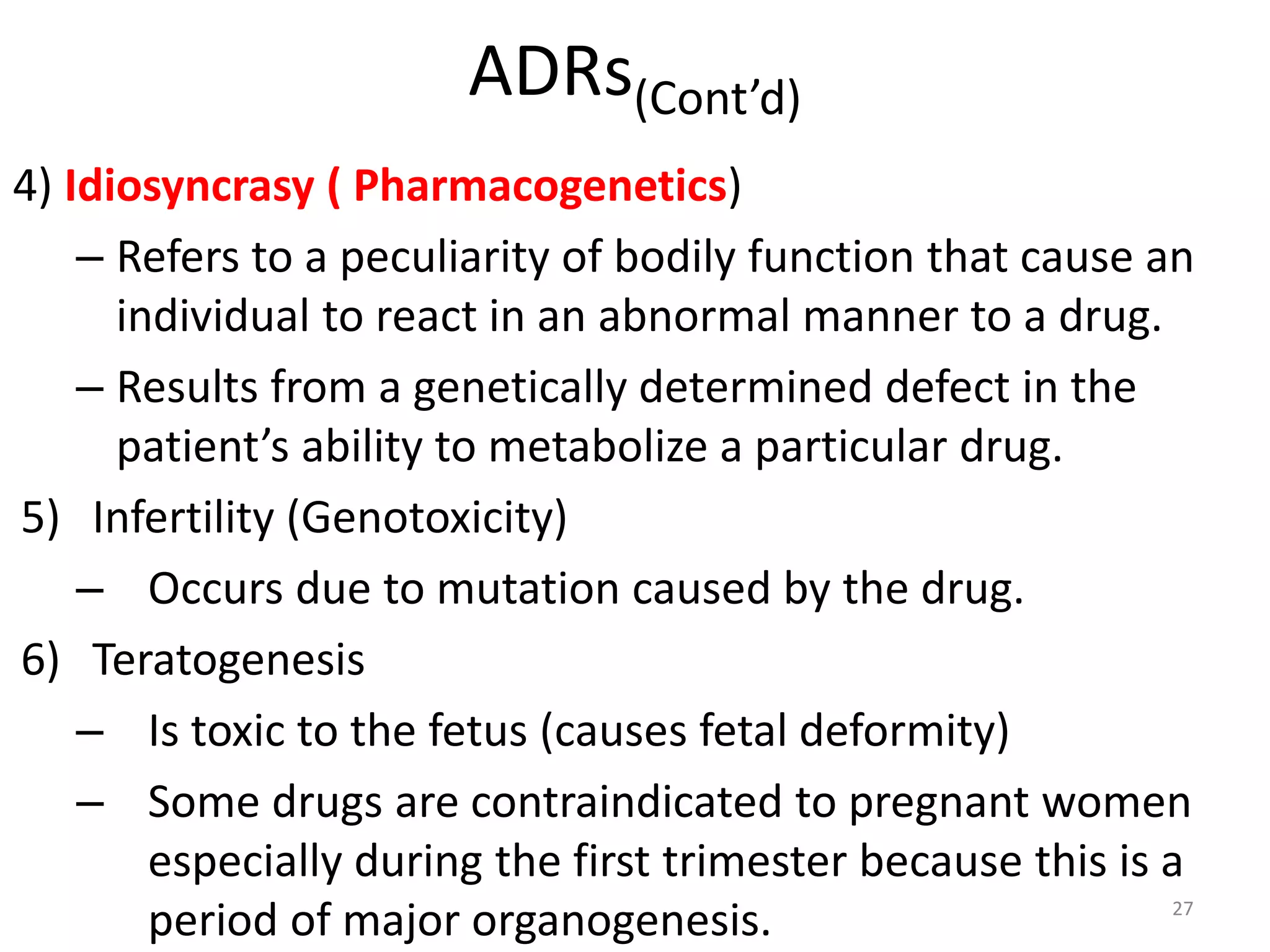
4) Idiosyncrasy ( Pharmacogenetics)
– Refers to a peculiarity of bodily function that cause an
individual to react in an abnormal manner to a drug.
– Results from a genetically determined defect in the
patient’s ability to metabolize a particular drug.
5) Infertility (Genotoxicity)
– Occurs due to mutation caused by the drug.
6) Teratogenesis
– Is toxic to the fetus (causes fetal deformity)
– Some drugs are contraindicated to pregnant women
especially during the first trimester because this is a
period of major organogenesis. 27
ADRs(Cont’d)
7) Carcinogenesis
– Some drugs induce cancer
Predisposing factors for ADRs
– Are not direct causes of ADRs but they facilitate the
probability of occurrence of ADRs.
1) Chemical make up of the drug: the functional group on
the drug may render them toxic.
2) Routes of administration
3) Quality of the drug: expiry date, contaminants, and
pyrogens.
NB: drugs should be tested for quality, safety, & efficacy
before marketing. 28
ADRs(Cont’d)
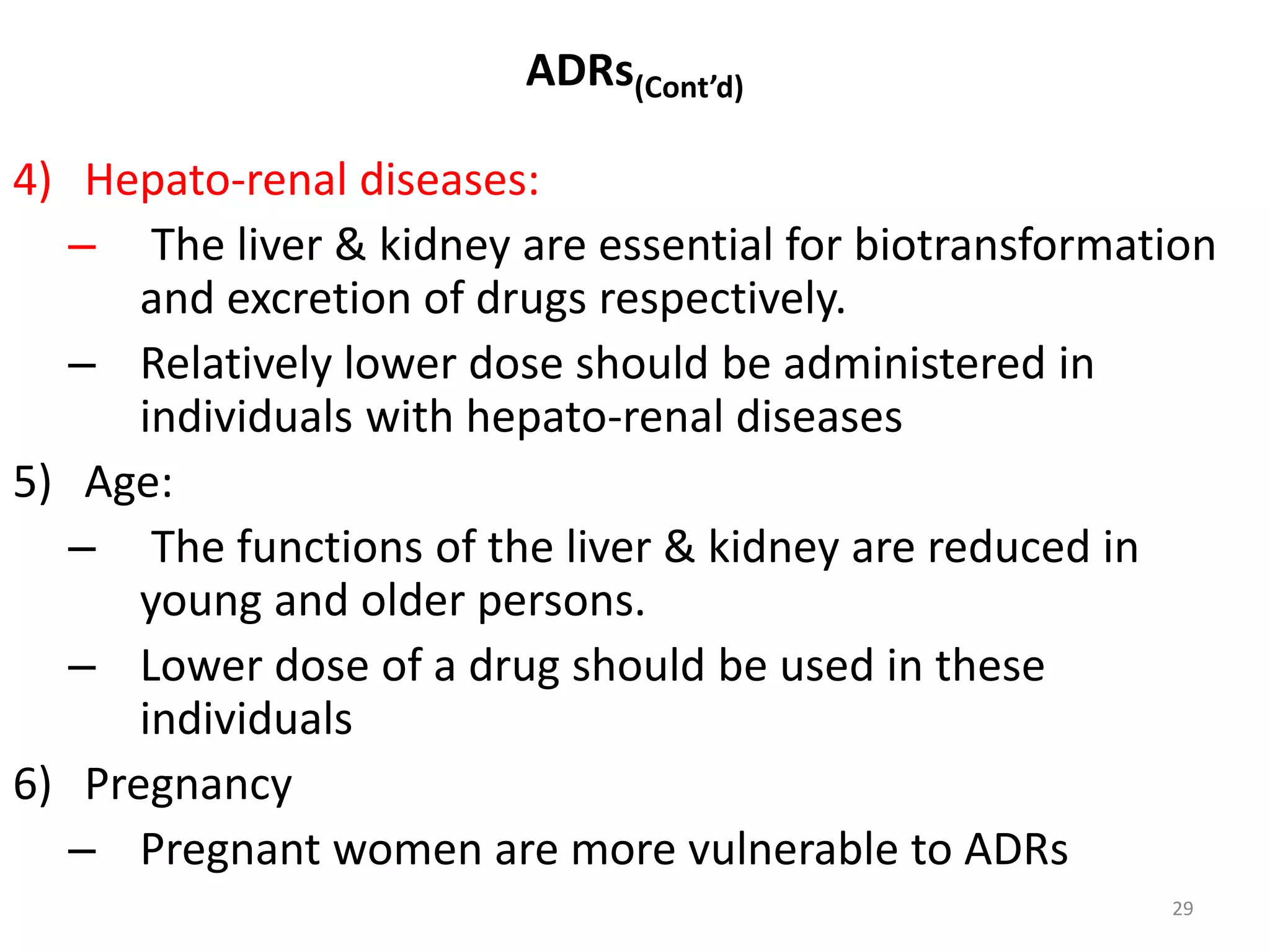
4) Hepato-renal diseases:
– The liver & kidney are essential for biotransformation
and excretion of drugs respectively.
– Relatively lower dose should be administered in
individuals with hepato-renal diseases
5) Age:
– The functions of the liver & kidney are reduced in
young and older persons.
– Lower dose of a drug should be used in these
individuals
6) Pregnancy
– Pregnant women are more vulnerable to ADRs
29
Direct causes of ADRs
1) Over dosing
2) Relative overdose : is due to hepato-renal diseases and
lack of metabolizing enzymes (hereditary)
3) Drug interaction
4) Improper route of administration
5) Accidental ingestion of unprescribed drugs with food and
water
6) Hyperactivity of the patient
30
Precautions to avoid occurrence of ADRs
1) Labels: follow precise labels given by the company which
gives dose, ADRs, indication, contraindication, etc.
2) Avoid/minimize polypharmacy
3) Strict adherence to proper dosage regimen(dose,
frequency, duration, etc)
4) Avoid use of expired drugs
31
Treatment of ADRs
1) Once you observe AD effect avoid the remaining doses
2) Removal of drug from the system
– Induction of vomiting (emetics)
– Induction of diarrhea using purgatives
3) Use of antidotes: are specific chemical antagonists to the
poison.
4) Delay absorption
– Give adsorbents like charcoal
32
Evaluation of safety of drugs
– SEQ should be assessed before offering drugs for
market. SEQ refers to safety, efficacy and quality of a
drug
There are two ways whereby safety of drugs is tested
I) Acute toxicity testing done on experimental animal
II) Chronic toxicity testing
33
Evaluation of safety(cont’d)
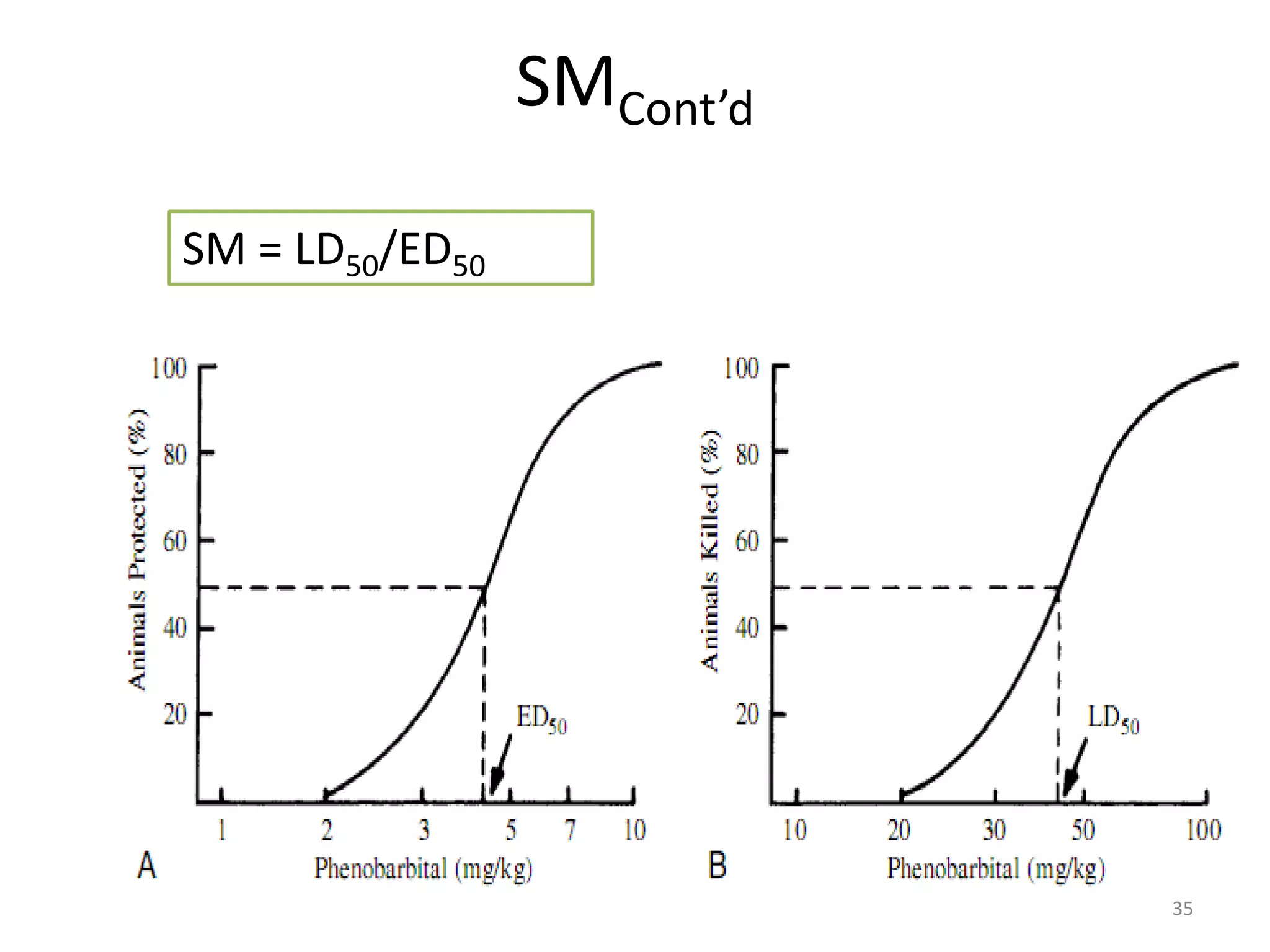
1) Margin of Safety (SM)
– It is the gap between maximum tolerated dose and
minimum lethal dose.
– It is also called therapeutic index
LD-lethal dose
ED-Effective dose
– LD50 is the dose at which 50% of the animal dies while
50% Survives.
– It is not reliable
SM = LD50/ED50
34
SMCont’d
SM = LD50/ED50
35

PD.pdf

  • 1.
    Pharmacodynamics – Pharmacodynamics dealswith the study of the biochemical and physiological effects of drugs and their mechanisms of action. Mechanisms of Drug Action – Is the means by which a drug initiates a serious of events which are measured or observed as an effect – Involves Receptor mediated:-binding of drug with receptor Non-receptor mediated:- eg. chemical reaction (neutralization). 1
  • 2.
    Drug Receptors Receptor isa macromolecular component of the body with which drug interacts to initiate its pharmacologic effect. Most receptors are proteins. The best characterized receptors are: Regulatory proteins:-mediate action of endogenious chemical signals (NTs, hormones, etc.) Transport proteins: eg. Na+/K+ ATPase Structural proteins: eg. Tubulin Enzymes: eg. Dihydrofolate reductase-inhibited by sulfonamides 2
  • 3.
    Drug-receptor interaction 1) Receptorslargely determine the quantitative relations between dose or concentration of drug and pharmacologic effects. 2) Receptors are responsible for selectivity of drug action. 3) Receptors mediate the actions of both pharmacologic agonists and antagonists. Drug + Receptor = Response 3
  • 4.
    Efficacy Vs Potency Efficacy(intrinsic activity of a drug):- refers to the maximal effect that the drug can produce. Potency:- refers the dose of a drug that must be administered to produce a particular effect of a given intensity. It varies inversely with dose; the lower the dose required to produce a stated response, the more potent the drug. 4
  • 5.
    Efficacy Vs PotencyCont’d… Potency is influenced by: The affinity of a drug for its receptor sites Pharmacokinetic parameters that determines drug concentration in the immediate vicinity of its site of action. Drug A = 15mg Same effect Drug B = 10mg Drug B is more potent than Drug A 5
  • 6.
    Affinity Vs Occupancy Affinity:describes the tendency of a drug to combine with a particular kind of receptor. Occupancy: Refers to the fraction of receptors occupied by drugs. 6
  • 7.
    Agonist and antagonist A)Agonist is a drug that possesses affinity for a particular receptor and causes a change in the receptor that results in an observable effect. NB: Agonist drugs have both affinity and efficacy. Agonists are further characterized as: i) Full agonist:- produce a maximal response by occupying all or a fraction of receptors ii) Partial agonists:-produces less than a maximal response even when the drug occupies all of the receptors. 7
  • 8.
    Agonist Cont’d… Logdose Fig. Doseresponse curve of three agonists Broken lines indicate 50% of maximum response (horizontal) and individual ED50 values (vertical). 8
  • 9.
    B) Antagonist Antagonist:  Itinteracts with receptors but lacks intrinsic activity (efficacy).  This means that it has affinity but has no efficacy.  The effect of antagonist results from preventing agonist from binding to and activating receptors. Antagonist can be further characterized as: 1) Competitive antagonist 2) Non-competitive antagonist 9
  • 10.
    Antagonist Cont’d… 1. Competitiveantagonism:- is completely reversible. – An increase in the concentration of the agonist will overcome the effect of the antagonist. – Affect the potency but not the efficacy. Eg. Atropine is antimuscarinic agent competing with Ach. 10
  • 11.
    2. Non-competitive antagonism: conceptually removesthe receptor or response potential from the system. It is completely irreversible(addition of more agonist will not overcome the antagonism achieved by a non-competitive antagonist) Affect both the potency and efficacy of the agonists. Figure: Log dose-effect curves depicting noncompetitive antagonism. 11
  • 12.
    Dose response relationship •Because we cannot always quantify the concentration of drug in the intact individual, it is customary to correlate effect with dose administered. • Since the degree of effect produced by a drug is generally a function of the amount administered, we can express this relationship in terms of a dose–response curve. 12
  • 13.
    Quantal Versus Gradedrelationships Quantal relationships – Important for determining the relationship between dose and some specified quantum of response among all individuals taking that drug. – Responses are described in a non continuous manner as “either or “. Any given idividual either will respond or will not respond to a given dose of drug) 13
  • 14.
    Quantal dose–response curve –in which the dose (horizontal axis) is evaluated against the percentage of animals in the experimental population that is protected by each dose (vertical axis). 14
  • 15.
    Graded dose-response curves •Relates a single individual responses to varying doses of a given drug. Used to evaluate efficacy & potency of drug. – As the dose administered to a single individual or isolated tissue is increased, the pharmacologic effect will also increase reaching a maximum level at certain dose. Figure: Dose-effect curves plotted using a (A) linear or (B) logarithmic scale for drug dose/concentration on the x-axis. 15
  • 16.
    Drug response curves Thereare 3 types of drug response curves: 1) Hyperbolic Curve:- presented as a plot of the drug effect (ordinate) against the dose or concentration(abscissa) 16
  • 17.
    Drug receptor Cont’d… 2)Sigmoid curve:- presented as a plot of the drug effect(ordinate) against the logarithm of the dose or concentration (abscissa). Log dose It has 25-75% linearity (more linear than hyperbolic curve) ← 17
  • 18.
    Drug receptor Cont’d… •This mathematical manipulation transfers the hyperbolic curve into a sigmoid curve with a linear midpoint. 3) Linear Curve: obtained by plotting reciprocal of response versus reciprocal of concentration. 1/Concentration 18
  • 19.
    Drug tolerance • Tolerance:refers to diminished response to the same dose of a drug over time. Mechanisms of tolerance 1. Desensitization: – Rapid process involving continuous exposure to a drug, altering the receptor so that it cannot produce a response. E.g. Continuous exposure to β-adrenergic agonist (use of albuterol in asthma) results in decreased responsiveness. 2. Down-regulation: – decrease in number of receptors caused by high doses of agonists over prolonged periods. 19
  • 20.
    3. Tachyphylaxis: – Refersto rapid development of tolerance – Indirect acting amines (e.g., tyramine, amphetamine) exert effects by releasing monoamines – Several doses given over a short time depletes the monoamine pool, reducing the response to successive doses. Drug dependence 1. Physical dependence: Repeated use produces an altered or adaptive physiologic state if the drug is not present. 2. Psychological dependence: refers to compulsive drug seeking behavior. Individuals use a drug repeatedly for personal satisfaction. 3. Substance dependence (addiction): Individuals continue substance use despite significant substance- related problems. 20
  • 21.
    Drug interaction Interactions betweendrugs • Marked alterations in the effects of some drugs can result from coadministration with another agent. Such interactions can cause toxicity or inhibit the drug effect and the therapeutic benefit. • Drug interactions may be of two origin Pharmacokinetic interaction Pharmacodynamic interaction 21
  • 22.
    1) Pharmacokinetic interaction •Occurs when two drugs are co-administered and the delivery of one drug to the its site of action is altered by the second drug by affecting on of the four pharmacokinetic parameters(ADME). Eg. 1) Phenobarbital → Known to induce microsomal enzymes → Enhances drug metabolism and removal from the body 2) Chloramphenicol → Inhibits micosomal enzymes → Decreases metabolism of co-administerd drugs → Decreased excretion. 22
  • 23.
    2) Pharmacodynamic interactions •Involves interference with the mechanism of action • There are four types of pharmacodynamic interactions A) Addition (Summation): the combined effect of two drugs is equal to the sum of their effects when given alone. B) Synergism: the combined effect of two drugs is greater than the sum of their effects when given alone. C) Potentiation: Refers to increased effect of one drug by acting with another drug. D) Antagonism: Occurs when the combined effect of two drugs is less than the sum of the effect of drugs when given alone. 23
  • 24.
    Adverse Drug Reactions(ADRs) • The useful effect of a drug is termed as therapeutic effect. • The useless effect of a drug is termed as side effect, toxic effect, untoward effect or non-therapeutic effect. • Side effect: refers to therapeutically undesirable but unavoidable effect of drugs that occurs even when drugs are used at their therapeutic doses. It is mild and tolerable. 24
  • 25.
    ADRs(Cont’d) Toxic effect: refersto undesirable drug effect that occurs at relatively higher doses or prolonged use. ADRs may be brought about by two mechanisms- 1) Extension of useful effects • Refers to exaggeration of a drug’s known pharmacologic effects. • Therefore, they are dose-dependent, predictable and preventable Eg. Hypotension with antihypertensive drugs. The used drug must produce vasodilatation to regulate hypertension. But if larger dose is administered massive vasodilatation leads to hypotension and shock. 25
  • 26.
    ADRs(Cont’d) 2) Unrelated Mechanisms –Also called “off-target reactions”. Types of ADRs 1) Hypersensitivity reaction: Type 1- anaphylactic shock Eg. Penicillin-precipitates allergic reaction in some patients (Penicillin → Penicillanic acid) 2) Drug induced organ injury: Some drugs can induce injury to vital organs like kidney, liver, bone, CNS, etc. 3) Photosensitization: Drugs react with a certain wave length of light and leads to formation of free radicals which then damage cell membrane of the cell, tissues and organs. 26
  • 27.
    ADRs(Cont’d) 4) Idiosyncrasy (Pharmacogenetics) – Refers to a peculiarity of bodily function that cause an individual to react in an abnormal manner to a drug. – Results from a genetically determined defect in the patient’s ability to metabolize a particular drug. 5) Infertility (Genotoxicity) – Occurs due to mutation caused by the drug. 6) Teratogenesis – Is toxic to the fetus (causes fetal deformity) – Some drugs are contraindicated to pregnant women especially during the first trimester because this is a period of major organogenesis. 27
  • 28.
    ADRs(Cont’d) 7) Carcinogenesis – Somedrugs induce cancer Predisposing factors for ADRs – Are not direct causes of ADRs but they facilitate the probability of occurrence of ADRs. 1) Chemical make up of the drug: the functional group on the drug may render them toxic. 2) Routes of administration 3) Quality of the drug: expiry date, contaminants, and pyrogens. NB: drugs should be tested for quality, safety, & efficacy before marketing. 28
  • 29.
    ADRs(Cont’d) 4) Hepato-renal diseases: –The liver & kidney are essential for biotransformation and excretion of drugs respectively. – Relatively lower dose should be administered in individuals with hepato-renal diseases 5) Age: – The functions of the liver & kidney are reduced in young and older persons. – Lower dose of a drug should be used in these individuals 6) Pregnancy – Pregnant women are more vulnerable to ADRs 29
  • 30.
    Direct causes ofADRs 1) Over dosing 2) Relative overdose : is due to hepato-renal diseases and lack of metabolizing enzymes (hereditary) 3) Drug interaction 4) Improper route of administration 5) Accidental ingestion of unprescribed drugs with food and water 6) Hyperactivity of the patient 30
  • 31.
    Precautions to avoidoccurrence of ADRs 1) Labels: follow precise labels given by the company which gives dose, ADRs, indication, contraindication, etc. 2) Avoid/minimize polypharmacy 3) Strict adherence to proper dosage regimen(dose, frequency, duration, etc) 4) Avoid use of expired drugs 31
  • 32.
    Treatment of ADRs 1)Once you observe AD effect avoid the remaining doses 2) Removal of drug from the system – Induction of vomiting (emetics) – Induction of diarrhea using purgatives 3) Use of antidotes: are specific chemical antagonists to the poison. 4) Delay absorption – Give adsorbents like charcoal 32
  • 33.
    Evaluation of safetyof drugs – SEQ should be assessed before offering drugs for market. SEQ refers to safety, efficacy and quality of a drug There are two ways whereby safety of drugs is tested I) Acute toxicity testing done on experimental animal II) Chronic toxicity testing 33
  • 34.
    Evaluation of safety(cont’d) 1)Margin of Safety (SM) – It is the gap between maximum tolerated dose and minimum lethal dose. – It is also called therapeutic index LD-lethal dose ED-Effective dose – LD50 is the dose at which 50% of the animal dies while 50% Survives. – It is not reliable SM = LD50/ED50 34
  • 35.