Presented By : Shubham Shegokar
Final Year – Part II
Guided By : Dr. Rehan Khan
(Dept. of Pediatric Dentistry)
 Introduction
 Causes
 Mechanism of action
 Signs & Symptoms
 Mottled Enamel
 Classification of Dental Fluorosis
 Treatment
 Prevention
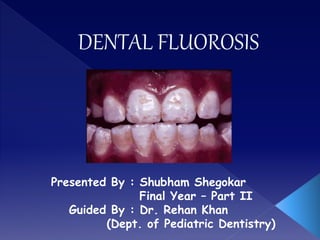
 Dental Fluorosis also termed as mottled
enamel is an extremely common disorder,
characterized by hypomineralization of
tooth enamel caused by ingestion of
excessive fluoride during enamel
formation.
 It is a cosmetic condition that occurs
during first eight years of life
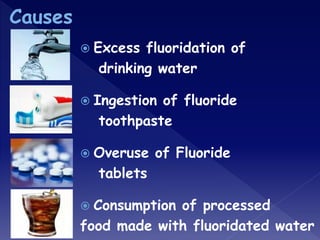
 Excess fluoridation of
drinking water
 Ingestion of fluoride
toothpaste
 Overuse of Fluoride
tablets
 Consumption of processed
food made with fluoridated water
• Structurally, an increase in fluoride intake
results in an increase in degree and extent
of porosity of enamel.
• Enamel changes described may be a result
of fluoride damage of secretory
ameloblast.
• There can either be due to fluoride induce
change in compositon of enamel matrix or
be a result of disturbance of the cellular
processes during enamel maturation.
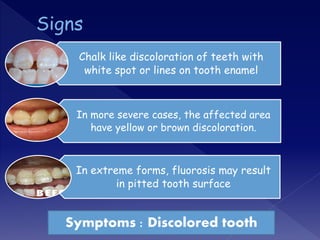
Chalk like discoloration of teeth with
white spot or lines on tooth enamel
In more severe cases, the affected area
have yellow or brown discoloration.
In extreme forms, fluorosis may result
in pitted tooth surface
Symptoms : Discolored tooth
 It is a condition indicates the fluorosis
characterized by minute white flecks or
yellow or brown spots or area scattered
irregularly streaked over the surface of
tooth
It is score according to method described
by Al Alousi et al as follows
 Type A : White area less than 2 mm
 Type B : White area more than 2 mm
 Type C : Brown area less than 2 mm
 Type D : Brown area more than 2 mm
 Type E : Horizontal white lines
 Type F : Horizontal brown lines
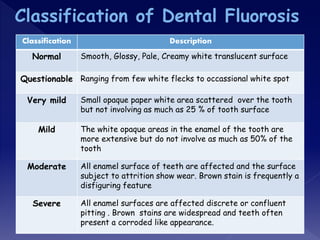
Classification Description
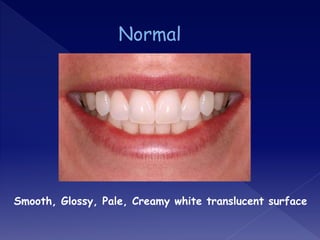
Normal Smooth, Glossy, Pale, Creamy white translucent surface
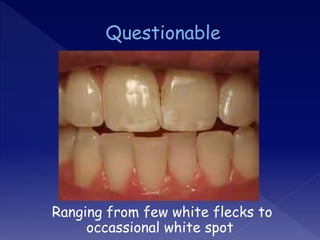
Questionable Ranging from few white flecks to occassional white spot
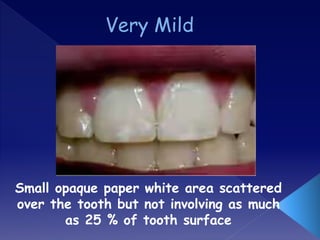
Very mild Small opaque paper white area scattered over the tooth
but not involving as much as 25 % of tooth surface
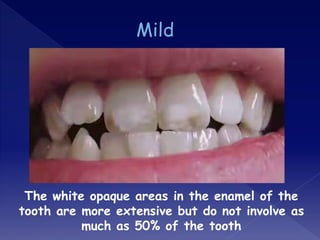
Mild The white opaque areas in the enamel of the tooth are
more extensive but do not involve as much as 50% of the
tooth
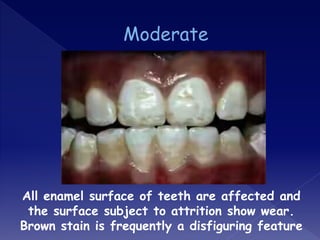
Moderate All enamel surface of teeth are affected and the surface
subject to attrition show wear. Brown stain is frequently a
disfiguring feature
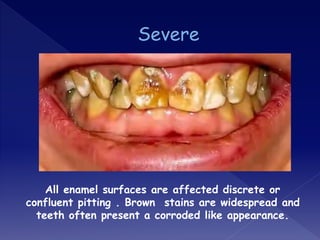
Severe All enamel surfaces are affected discrete or confluent
pitting . Brown stains are widespread and teeth often
present a corroded like appearance.
Smooth, Glossy, Pale, Creamy white translucent surface
Ranging from few white flecks to
occassional white spot
Small opaque paper white area scattered
over the tooth but not involving as much
as 25 % of tooth surface
The white opaque areas in the enamel of the
tooth are more extensive but do not involve as
much as 50% of the tooth
All enamel surface of teeth are affected and
the surface subject to attrition show wear.
Brown stain is frequently a disfiguring feature
All enamel surfaces are affected discrete or
confluent pitting . Brown stains are widespread and
teeth often present a corroded like appearance.
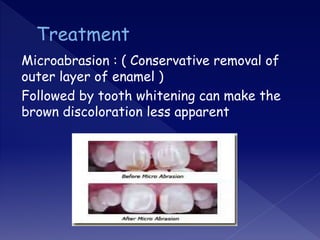
Microabrasion : ( Conservative removal of
outer layer of enamel )
Followed by tooth whitening can make the
brown discoloration less apparent
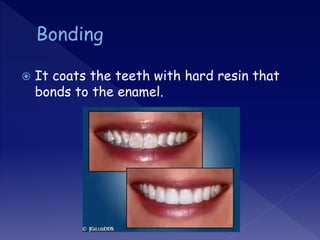
 It coats the teeth with hard resin that
bonds to the enamel.
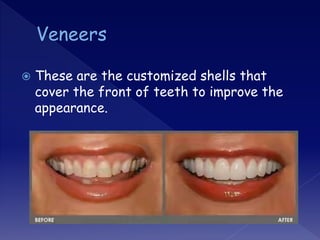
 These are the customized shells that
cover the front of teeth to improve the
appearance.
 To prevent fluorosis , fluoridation of drinking water
should not exceed normal range
 Normal range : 0.7 to 1.2 ppm
 Fluoride supplement should only be prescribed for
children living in nonfluoridated
 Use only acceptable amount of toothpaste for children
under 6 year ( pea size )
 It is important to teach the child to spit out the
toothpaste after brushing instead of swallowing
FEATURES OF WHITE CARIOUS LESIONS
 More defined shape
 Well differentiated from surrounding enamel
 Often located in the middle of the crown
 Randomly distributed
 If the growth stops brownish discoloration is seen which is
known as arrested caries.
FEATURES OF DENTAL FLUOROSIS
 White/Yellowish lesion
 Not well defined
 They are visible without drying of teeth.
 These usually have a smooth surface.
 Symmetrically distributed
 A number of factors can lead to the
development of white spot on tooth
sometimes these spots are caused by
nutrition, genetics, or an excessive intake
of fluoride while other times they become
evident after braces have been removed.
 Usually white spots that appear on teeth
are actually areas of decalcified enamel
and sometimes this problem leads to the
deterioration of teeth
 First evidence of tooth decay is a white spot
lesion and by this the tooth enamel has taken
on an opaque colour in the area where cavities
begin to form
 White spot on the tooth can appear after the
changes have occurred in the mineral content
of teeth
 White spot can appear in connection with
condition called fluorosis which results of
having excess intake of fluoride.
 White spot lesion are also commonly attributed
to orthodontic braces
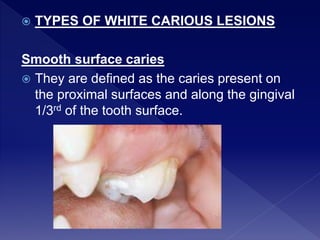
 TYPES OF WHITE CARIOUS LESIONS
Smooth surface caries
 They are defined as the caries present on
the proximal surfaces and along the gingival
1/3rd of the tooth surface.
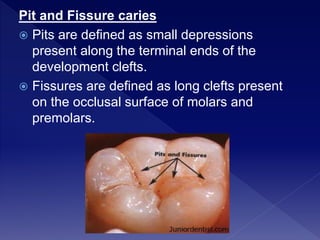
Pit and Fissure caries
 Pits are defined as small depressions
present along the terminal ends of the
development clefts.
 Fissures are defined as long clefts present
on the occlusal surface of molars and
premolars.
 Patient with orthodontic braces have
difficulty in brushing their teeth and
results in build up of plaque
 The acid in the plaque can severely harm
to the enamel and eventually cause
cavities.
 The first evidence of this type of tooth
decay is white decalcified enamel spot or
lesion that becomes apparent when braces
are removed.
 Fluoride treatment
 Bonding & Porcelain laminate placement
depending on the severity of the
problem
THANK YOU

Overview on Dental fluorosis

  • 1.
    Presented By :Shubham Shegokar Final Year – Part II Guided By : Dr. Rehan Khan (Dept. of Pediatric Dentistry)
  • 2.
     Introduction  Causes Mechanism of action  Signs & Symptoms  Mottled Enamel  Classification of Dental Fluorosis  Treatment  Prevention
  • 3.
     Dental Fluorosisalso termed as mottled enamel is an extremely common disorder, characterized by hypomineralization of tooth enamel caused by ingestion of excessive fluoride during enamel formation.  It is a cosmetic condition that occurs during first eight years of life
  • 4.
     Excess fluoridationof drinking water  Ingestion of fluoride toothpaste  Overuse of Fluoride tablets  Consumption of processed food made with fluoridated water
  • 5.
    • Structurally, anincrease in fluoride intake results in an increase in degree and extent of porosity of enamel. • Enamel changes described may be a result of fluoride damage of secretory ameloblast. • There can either be due to fluoride induce change in compositon of enamel matrix or be a result of disturbance of the cellular processes during enamel maturation.
  • 6.
    Chalk like discolorationof teeth with white spot or lines on tooth enamel In more severe cases, the affected area have yellow or brown discoloration. In extreme forms, fluorosis may result in pitted tooth surface Symptoms : Discolored tooth
  • 7.
     It isa condition indicates the fluorosis characterized by minute white flecks or yellow or brown spots or area scattered irregularly streaked over the surface of tooth
  • 8.
    It is scoreaccording to method described by Al Alousi et al as follows  Type A : White area less than 2 mm  Type B : White area more than 2 mm  Type C : Brown area less than 2 mm  Type D : Brown area more than 2 mm  Type E : Horizontal white lines  Type F : Horizontal brown lines
  • 9.
    Classification Description Normal Smooth,Glossy, Pale, Creamy white translucent surface Questionable Ranging from few white flecks to occassional white spot Very mild Small opaque paper white area scattered over the tooth but not involving as much as 25 % of tooth surface Mild The white opaque areas in the enamel of the tooth are more extensive but do not involve as much as 50% of the tooth Moderate All enamel surface of teeth are affected and the surface subject to attrition show wear. Brown stain is frequently a disfiguring feature Severe All enamel surfaces are affected discrete or confluent pitting . Brown stains are widespread and teeth often present a corroded like appearance.
  • 10.
    Smooth, Glossy, Pale,Creamy white translucent surface
  • 11.
    Ranging from fewwhite flecks to occassional white spot
  • 12.
    Small opaque paperwhite area scattered over the tooth but not involving as much as 25 % of tooth surface
  • 13.
    The white opaqueareas in the enamel of the tooth are more extensive but do not involve as much as 50% of the tooth
  • 14.
    All enamel surfaceof teeth are affected and the surface subject to attrition show wear. Brown stain is frequently a disfiguring feature
  • 15.
    All enamel surfacesare affected discrete or confluent pitting . Brown stains are widespread and teeth often present a corroded like appearance.
  • 16.
    Microabrasion : (Conservative removal of outer layer of enamel ) Followed by tooth whitening can make the brown discoloration less apparent
  • 17.
     It coatsthe teeth with hard resin that bonds to the enamel.
  • 19.
     These arethe customized shells that cover the front of teeth to improve the appearance.
  • 20.
     To preventfluorosis , fluoridation of drinking water should not exceed normal range  Normal range : 0.7 to 1.2 ppm  Fluoride supplement should only be prescribed for children living in nonfluoridated  Use only acceptable amount of toothpaste for children under 6 year ( pea size )  It is important to teach the child to spit out the toothpaste after brushing instead of swallowing
  • 21.
    FEATURES OF WHITECARIOUS LESIONS  More defined shape  Well differentiated from surrounding enamel  Often located in the middle of the crown  Randomly distributed  If the growth stops brownish discoloration is seen which is known as arrested caries. FEATURES OF DENTAL FLUOROSIS  White/Yellowish lesion  Not well defined  They are visible without drying of teeth.  These usually have a smooth surface.  Symmetrically distributed
  • 22.
     A numberof factors can lead to the development of white spot on tooth sometimes these spots are caused by nutrition, genetics, or an excessive intake of fluoride while other times they become evident after braces have been removed.  Usually white spots that appear on teeth are actually areas of decalcified enamel and sometimes this problem leads to the deterioration of teeth
  • 23.
     First evidenceof tooth decay is a white spot lesion and by this the tooth enamel has taken on an opaque colour in the area where cavities begin to form  White spot on the tooth can appear after the changes have occurred in the mineral content of teeth  White spot can appear in connection with condition called fluorosis which results of having excess intake of fluoride.  White spot lesion are also commonly attributed to orthodontic braces
  • 24.
     TYPES OFWHITE CARIOUS LESIONS Smooth surface caries  They are defined as the caries present on the proximal surfaces and along the gingival 1/3rd of the tooth surface.
  • 25.
    Pit and Fissurecaries  Pits are defined as small depressions present along the terminal ends of the development clefts.  Fissures are defined as long clefts present on the occlusal surface of molars and premolars.
  • 26.
     Patient withorthodontic braces have difficulty in brushing their teeth and results in build up of plaque  The acid in the plaque can severely harm to the enamel and eventually cause cavities.  The first evidence of this type of tooth decay is white decalcified enamel spot or lesion that becomes apparent when braces are removed.
  • 27.
     Fluoride treatment Bonding & Porcelain laminate placement depending on the severity of the problem
  • 28.