
Dental Fluorosis
Fluorosis : Is a cosmetic condition that affects the
teeth. It’s caused by overexposure to fluoride during the
first eight years of life. This is the time when most
permanent teeth are being formed .
• Or fluorosis is a disease caused by deposition of fluorides in
the hard and soft tissues of the body.
• It’s not merely caused by the excess intake of fluoride but
there are many other attributes and variables which
determine the onset of fluorosis in human population.
• It is usually characterised by discoloration of teeth and
crippling disorders.
Magnitude Of Fluorosis :
• Worldwide in distribution
• Endemic in 22 countries
• Asia (India and China are the worst affected)
• Mexico in North, Argentina in Latin America, East and North
Africa are also endemic
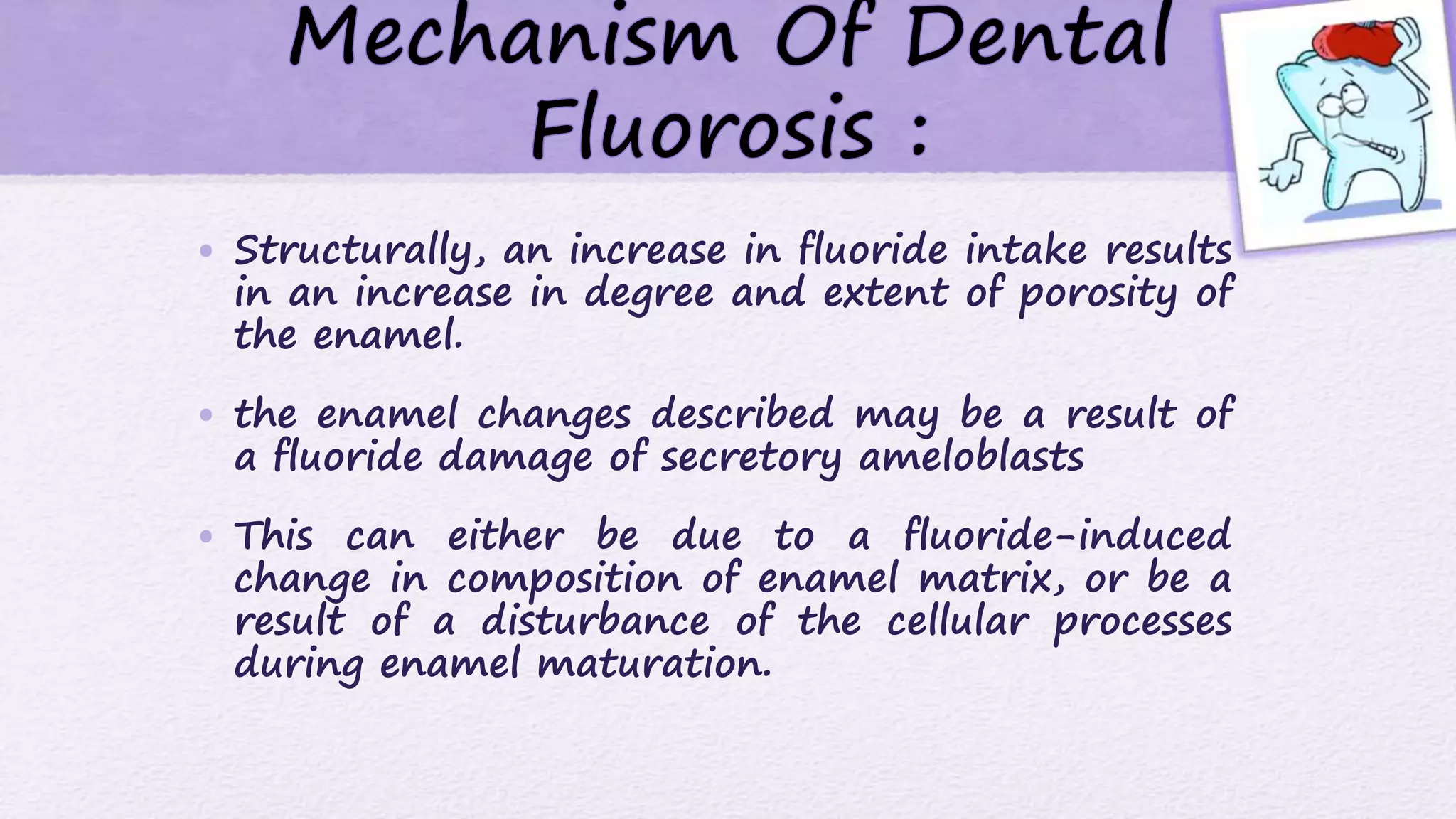
• Structurally, an increase in fluoride intake results
in an increase in degree and extent of porosity of
the enamel.
• the enamel changes described may be a result of
a fluoride damage of secretory ameloblasts
• This can either be due to a fluoride-induced
change in composition of enamel matrix, or be a
result of a disturbance of the cellular processes
during enamel maturation.
• Mottled enamel is a condition indicates the
fluorosis characterized by minute white flecks,
or yellow or brown spots or areas, scattered
irregularly or streaked over the surface of a
tooth
• It is scored according to a method described by
Al alousi’ et al as follow:
• Type A: White areas less than 2mm
• Type B: White areas more than 2mm
• Type C: Brown areas less than 2mm
• Type D: Brown areas less than 2mm
• Type E: Horizontal white lines
• Type F: Horizontal brown lines
Smooth, glossy, pale
creamy-white,
translucent surface.
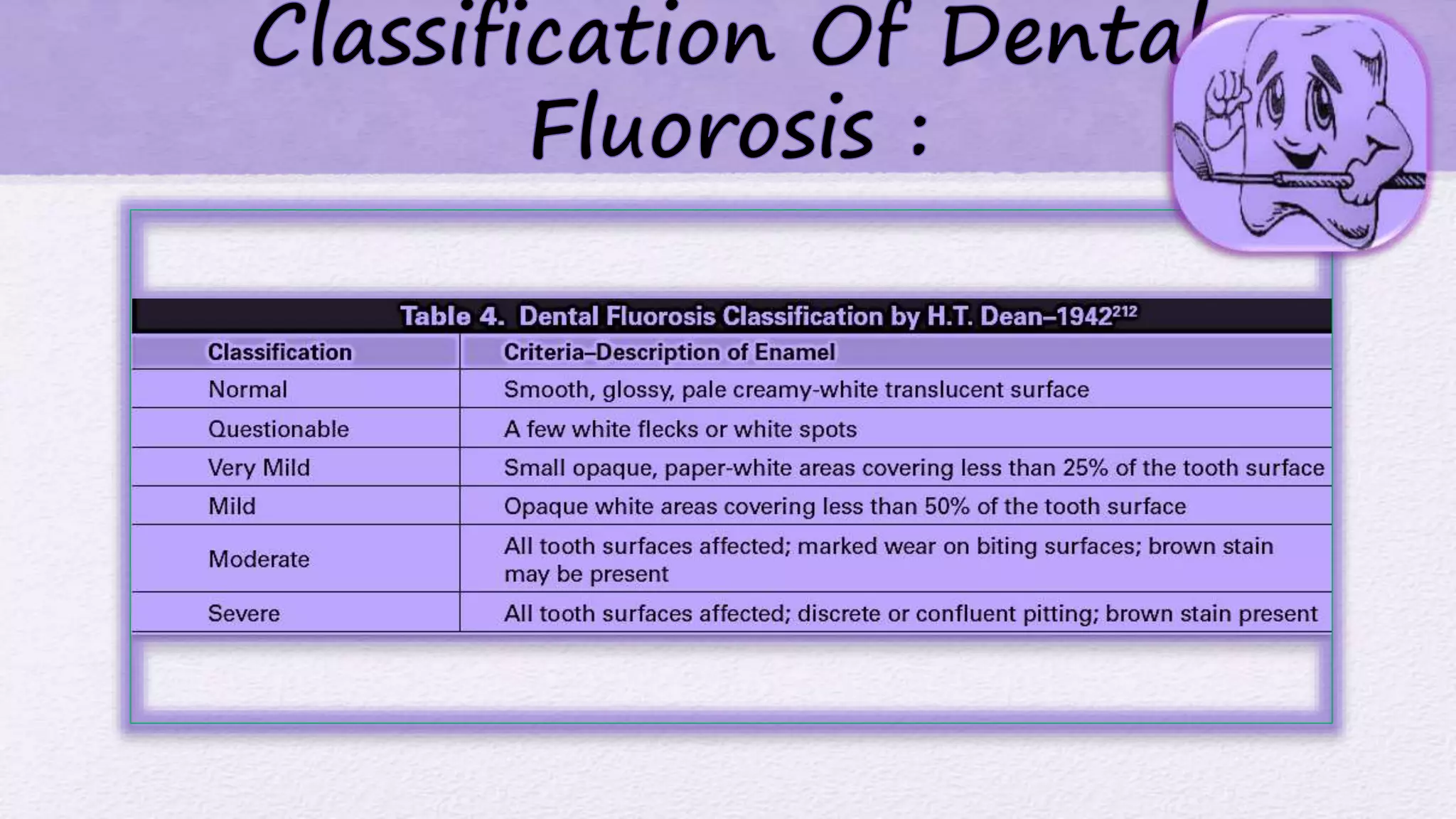
Normal
Questionable
Ranging from a few
white flecks to
occasional white spots.
Very mild
Small opaque, paper white
areas scattered irregularly over
the tooth but not involving as
much as 25% of the tooth
Mild
The white opaque areas in the
enamel of the teeth are more
extensive but do not involve as
much as 50% of the tooth.
Moderate
All enamel surfaces of the teeth are
affected, and the surfaces subject
to attrition show wear. Brown
stain is frequently a disfiguring
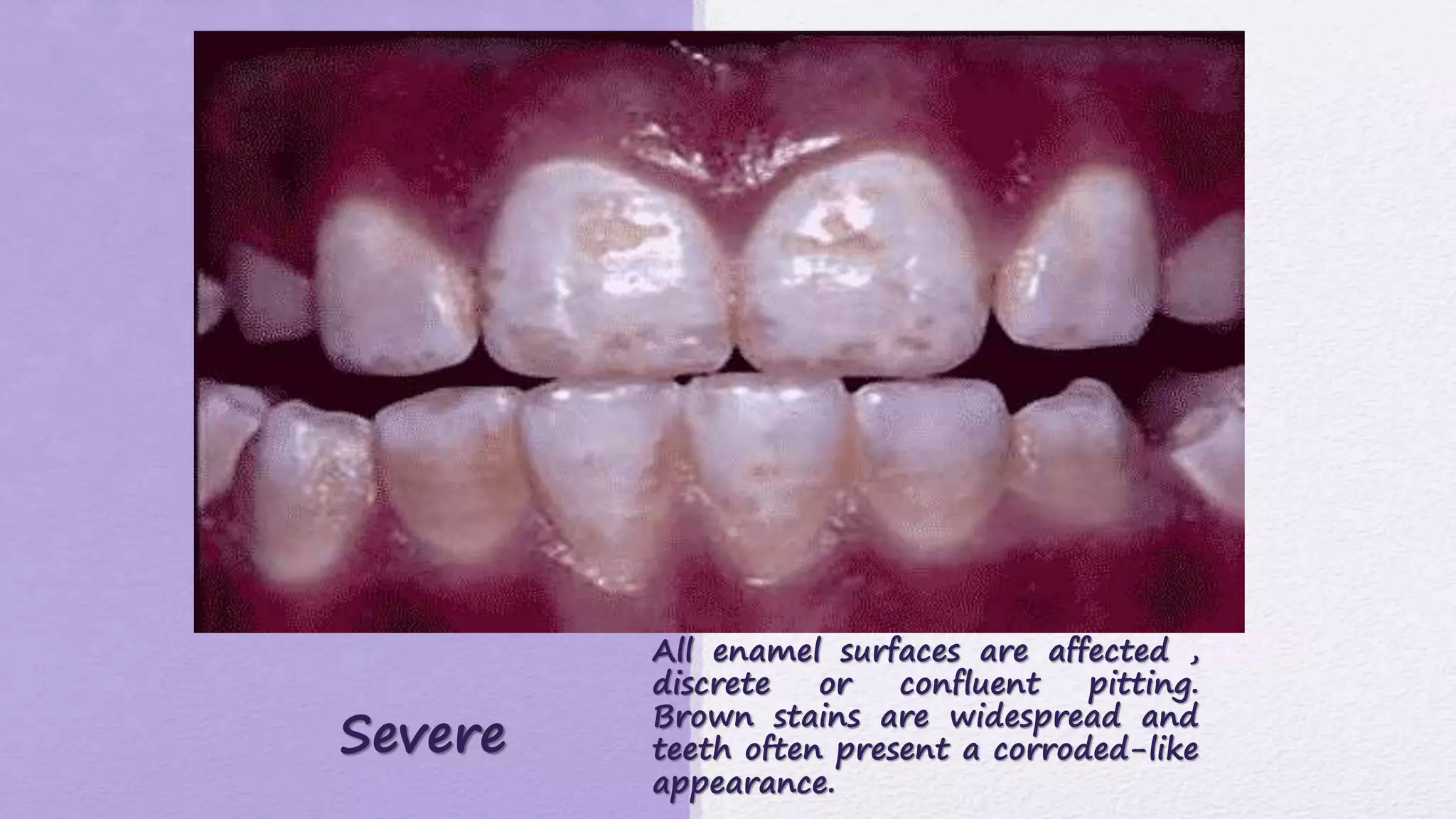
Severe
All enamel surfaces are affected ,
discrete or confluent pitting.
Brown stains are widespread and
teeth often present a corroded-like
appearance.
Although the enamel defect
caused by dental fluorosis is
permanent, the tooth
discoloration that fluorosis causes
can be reduced, and sometimes
eliminated, through cosmetic
treatment
1. Microabrasion (conservative
removal of the outer most layer
of enamel) followed by teeth
whitening can make the brown
discoloration less apparent.
2. Bonding, which coats the tooth
with a hard resin that bonds to the
enamel
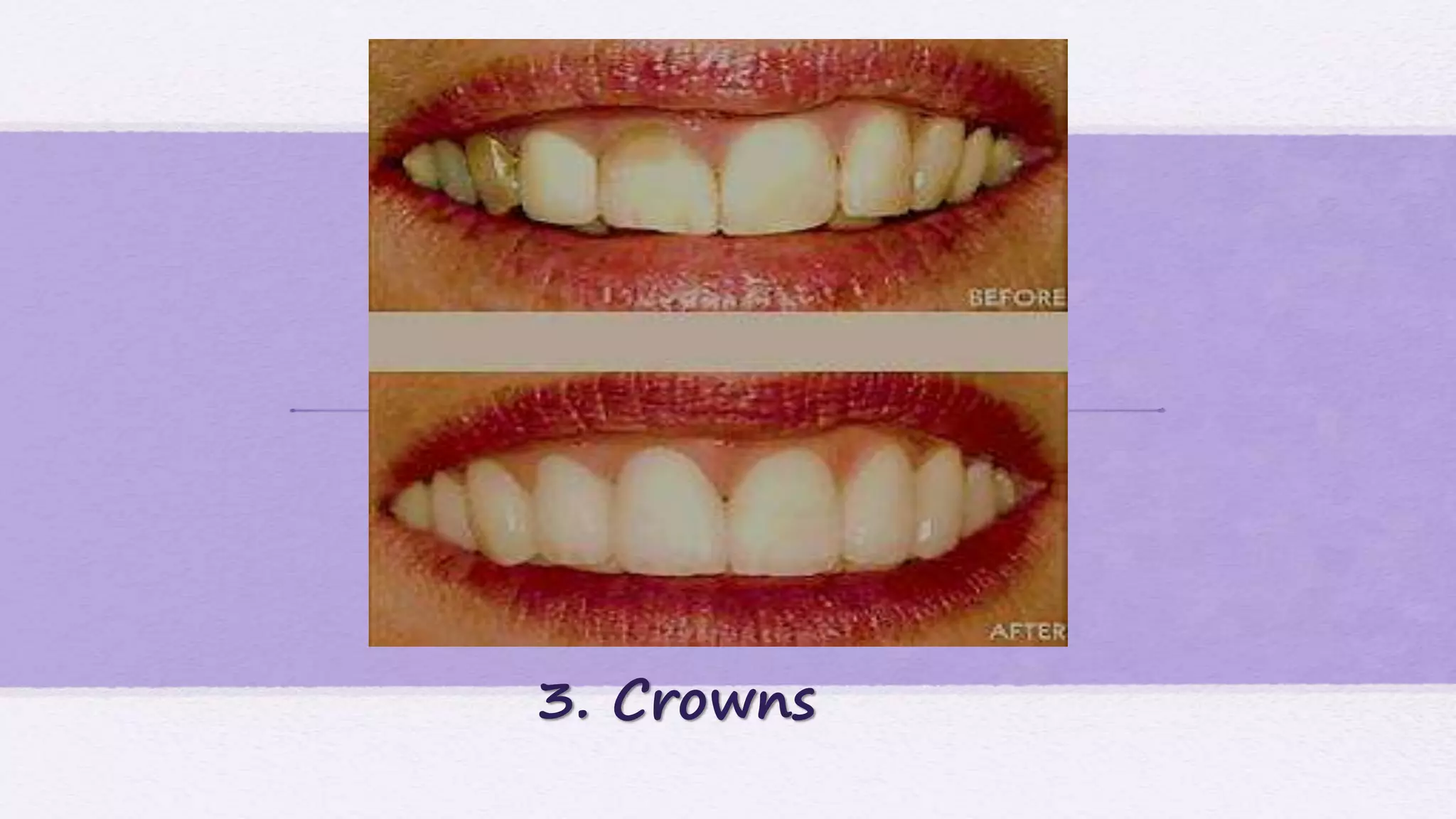
3. Crowns
4. Veneers, which are custom-made shells that cover the
front of the teeth to improve their appearance
• To prevents the fluorosis the fluoridation of
drinking water shouldn’t exceed the normal
range (0.7- 1.2) ppm
• When Fluoride in water is more than 1.5
mg/litre, it is toxic to health
• Fluoride supplements should only prescribed for
children living in non fluoridated areas.
• Use only acceptable amount of toothpaste for
children under 6 years
It’s also important to monitor the child’s use of
fluoridated toothpaste. It’s important to teach the
child to spit out the toothpaste after brushing
instead of swallowing it. To encourage spitting, avoid
toothpastes containing flavors that children may be
likely to swallow.
1) http://www.webmd.com/children/fluorosis-symptoms-causes-treatments
2) Fluoride action network/http://fluoridealert.org/issues/fluorosis
3) American dental association
4) http://www.webmd.com/children/fluorosis-symptoms-causes-treatments
5) American dental association/fluoridationfacts 2005/dr.herschel horowitz
THANK YOU !!

Dentalfluorosisconversionpresentation

  • 1.
  • 3.
    Fluorosis : Isa cosmetic condition that affects the teeth. It’s caused by overexposure to fluoride during the first eight years of life. This is the time when most permanent teeth are being formed .
  • 4.
    • Or fluorosisis a disease caused by deposition of fluorides in the hard and soft tissues of the body. • It’s not merely caused by the excess intake of fluoride but there are many other attributes and variables which determine the onset of fluorosis in human population. • It is usually characterised by discoloration of teeth and crippling disorders.
  • 5.
    Magnitude Of Fluorosis: • Worldwide in distribution • Endemic in 22 countries • Asia (India and China are the worst affected) • Mexico in North, Argentina in Latin America, East and North Africa are also endemic
  • 8.
    • Structurally, anincrease in fluoride intake results in an increase in degree and extent of porosity of the enamel. • the enamel changes described may be a result of a fluoride damage of secretory ameloblasts • This can either be due to a fluoride-induced change in composition of enamel matrix, or be a result of a disturbance of the cellular processes during enamel maturation.
  • 9.
    • Mottled enamelis a condition indicates the fluorosis characterized by minute white flecks, or yellow or brown spots or areas, scattered irregularly or streaked over the surface of a tooth • It is scored according to a method described by Al alousi’ et al as follow: • Type A: White areas less than 2mm • Type B: White areas more than 2mm
  • 10.
    • Type C:Brown areas less than 2mm • Type D: Brown areas less than 2mm • Type E: Horizontal white lines • Type F: Horizontal brown lines
  • 12.
  • 13.
    Questionable Ranging from afew white flecks to occasional white spots.
  • 14.
    Very mild Small opaque,paper white areas scattered irregularly over the tooth but not involving as much as 25% of the tooth
  • 15.
    Mild The white opaqueareas in the enamel of the teeth are more extensive but do not involve as much as 50% of the tooth.
  • 16.
    Moderate All enamel surfacesof the teeth are affected, and the surfaces subject to attrition show wear. Brown stain is frequently a disfiguring
  • 17.
    Severe All enamel surfacesare affected , discrete or confluent pitting. Brown stains are widespread and teeth often present a corroded-like appearance.
  • 18.
    Although the enameldefect caused by dental fluorosis is permanent, the tooth discoloration that fluorosis causes can be reduced, and sometimes eliminated, through cosmetic treatment
  • 19.
    1. Microabrasion (conservative removalof the outer most layer of enamel) followed by teeth whitening can make the brown discoloration less apparent.
  • 20.
    2. Bonding, whichcoats the tooth with a hard resin that bonds to the enamel
  • 21.
  • 22.
    4. Veneers, whichare custom-made shells that cover the front of the teeth to improve their appearance
  • 23.
    • To preventsthe fluorosis the fluoridation of drinking water shouldn’t exceed the normal range (0.7- 1.2) ppm • When Fluoride in water is more than 1.5 mg/litre, it is toxic to health • Fluoride supplements should only prescribed for children living in non fluoridated areas. • Use only acceptable amount of toothpaste for children under 6 years
  • 24.
    It’s also importantto monitor the child’s use of fluoridated toothpaste. It’s important to teach the child to spit out the toothpaste after brushing instead of swallowing it. To encourage spitting, avoid toothpastes containing flavors that children may be likely to swallow.
  • 25.
    1) http://www.webmd.com/children/fluorosis-symptoms-causes-treatments 2) Fluorideaction network/http://fluoridealert.org/issues/fluorosis 3) American dental association 4) http://www.webmd.com/children/fluorosis-symptoms-causes-treatments 5) American dental association/fluoridationfacts 2005/dr.herschel horowitz
  • 26.