DecisionAnalysis
Applications inThreat
Analysis Frameworks
Emily Shawgo
October 6, 2018
Agenda
 Background
 Framework
 Future directions
 Conclusion
 Questions
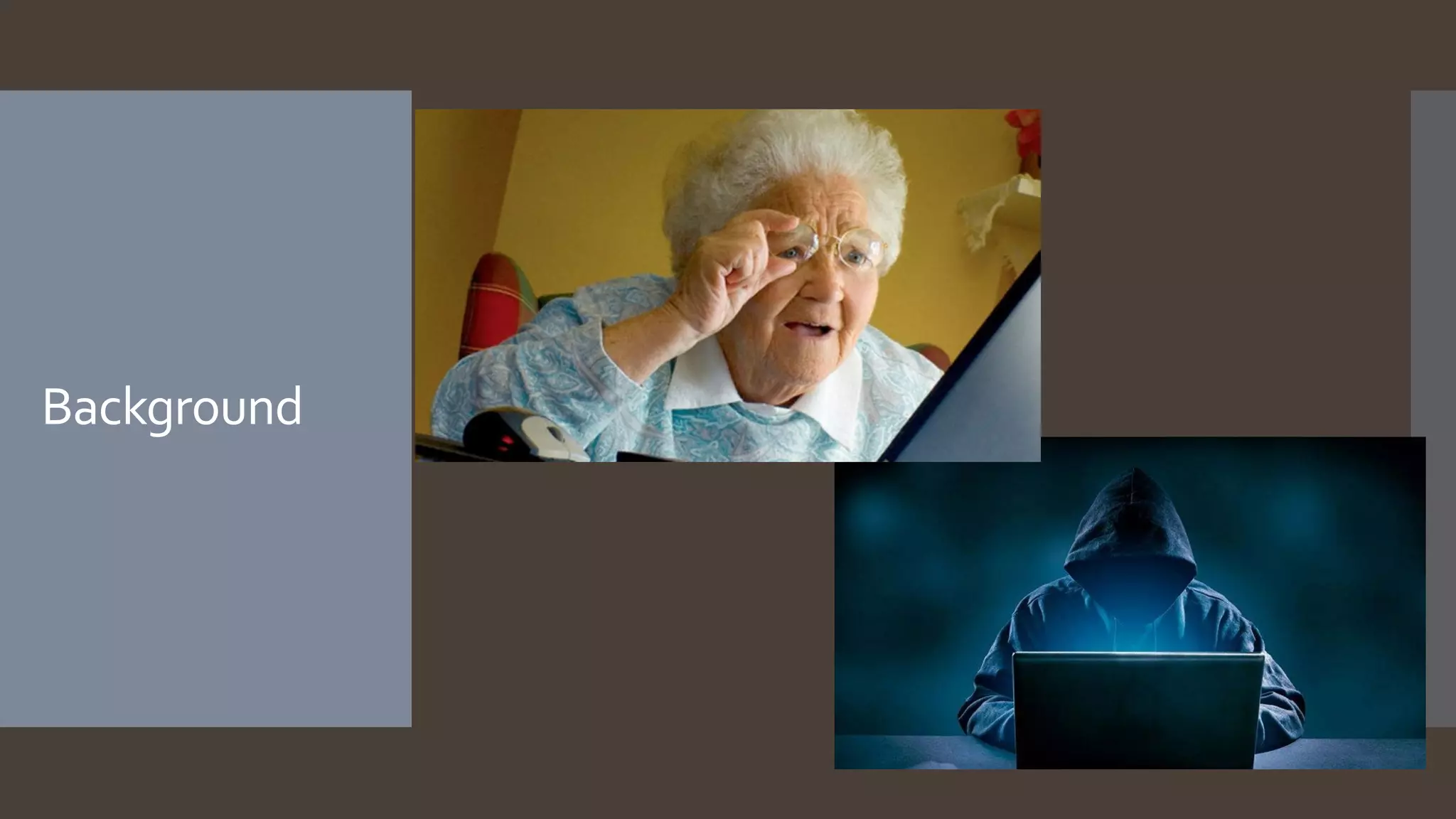
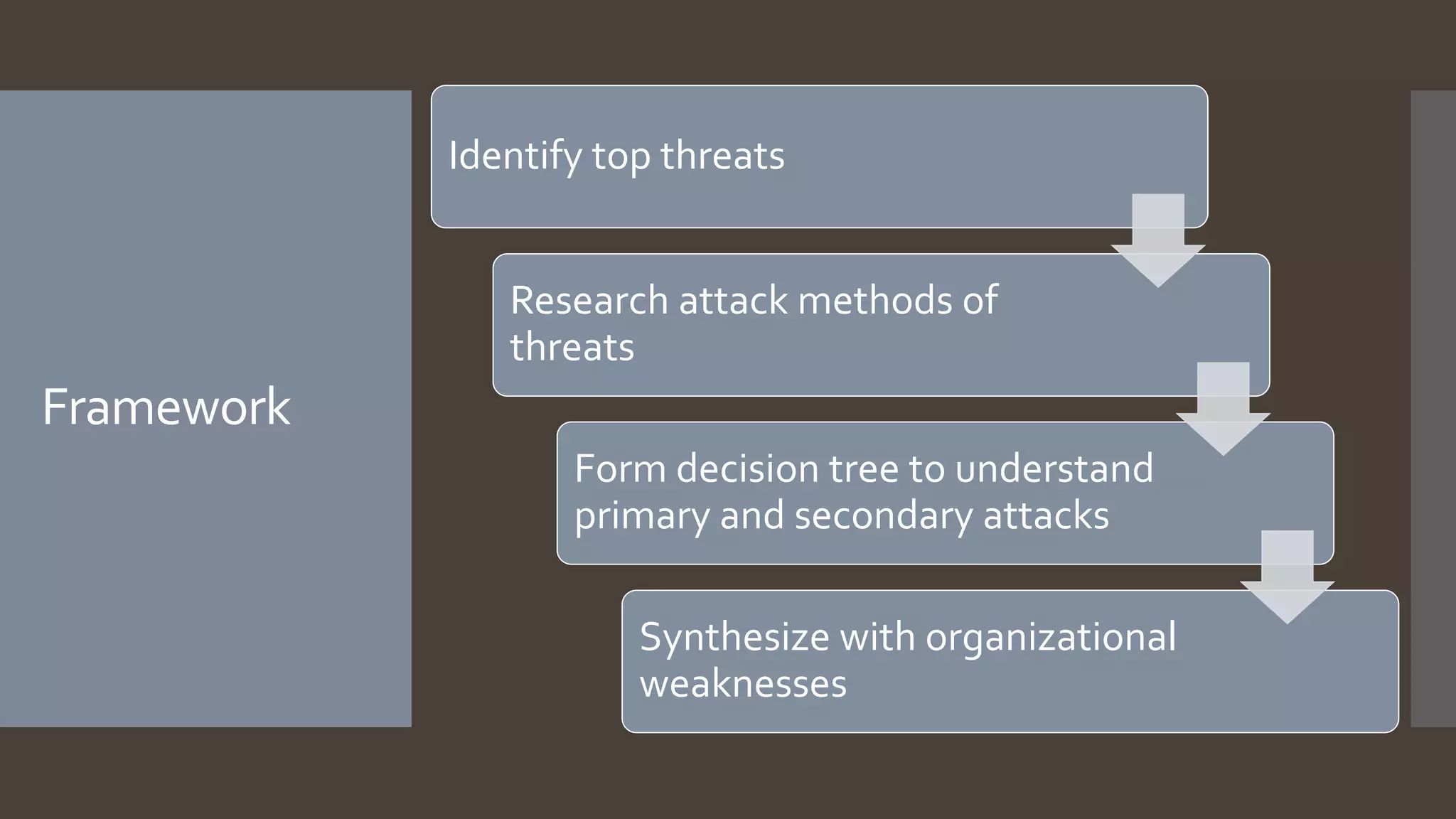
Background
Framework
Identify top threats
Research attack methods of
threats
Form decision tree to understand
primary and secondary attacks
Synthesize with organizational
weaknesses
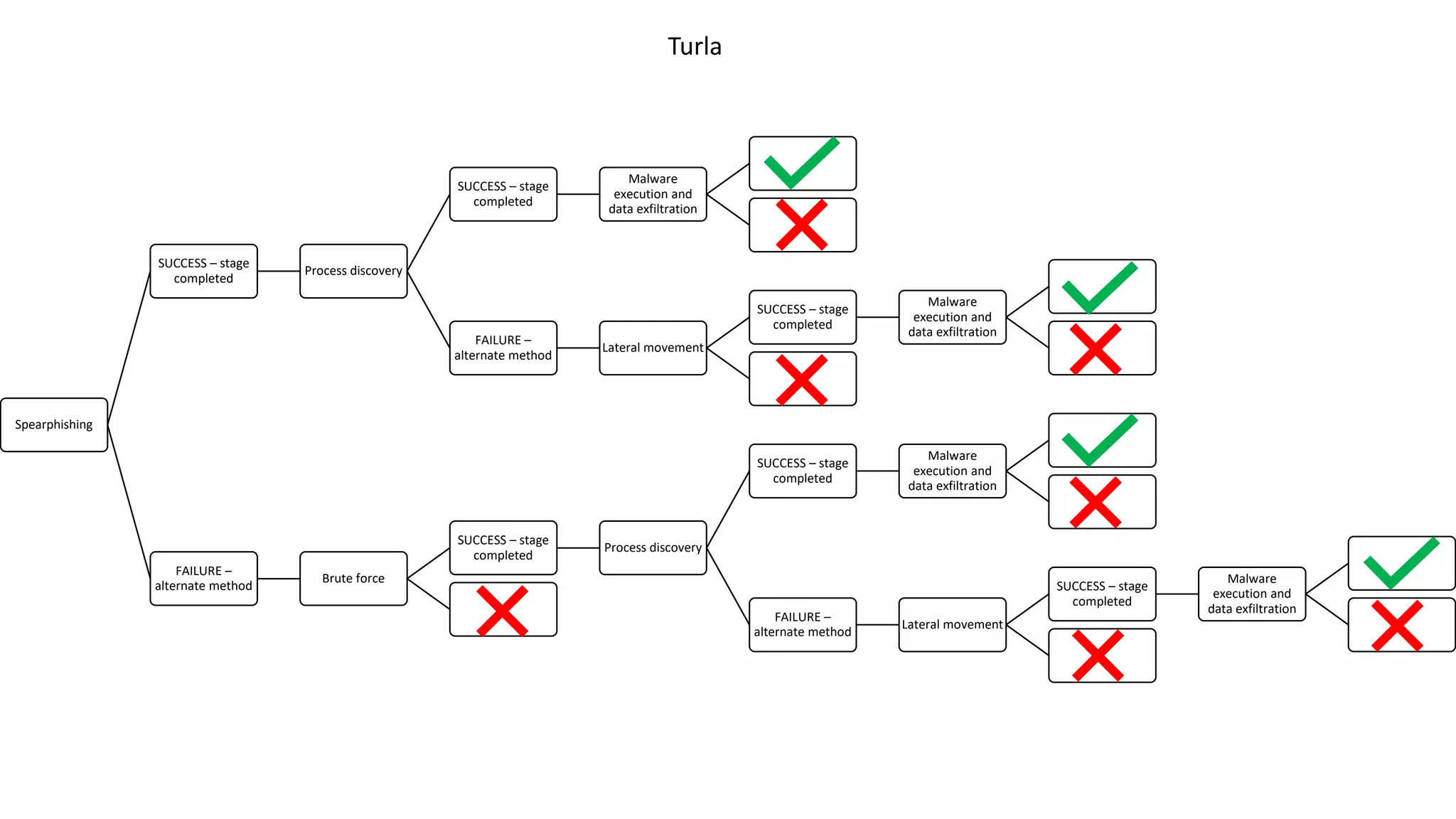
Spearphishing
SUCCESS – stage
completed
Process discovery
SUCCESS – stage
completed
Malware
execution and
data exfiltration
FAILURE –
alternate method
Lateral movement
SUCCESS – stage
completed
Malware
execution and
data exfiltration
FAILURE –
alternate method
Brute force
SUCCESS – stage
completed
Process discovery
SUCCESS – stage
completed
Malware
execution and
data exfiltration
FAILURE –
alternate method
Lateral movement
SUCCESS – stage
completed
Malware
execution and
data exfiltration
Turla
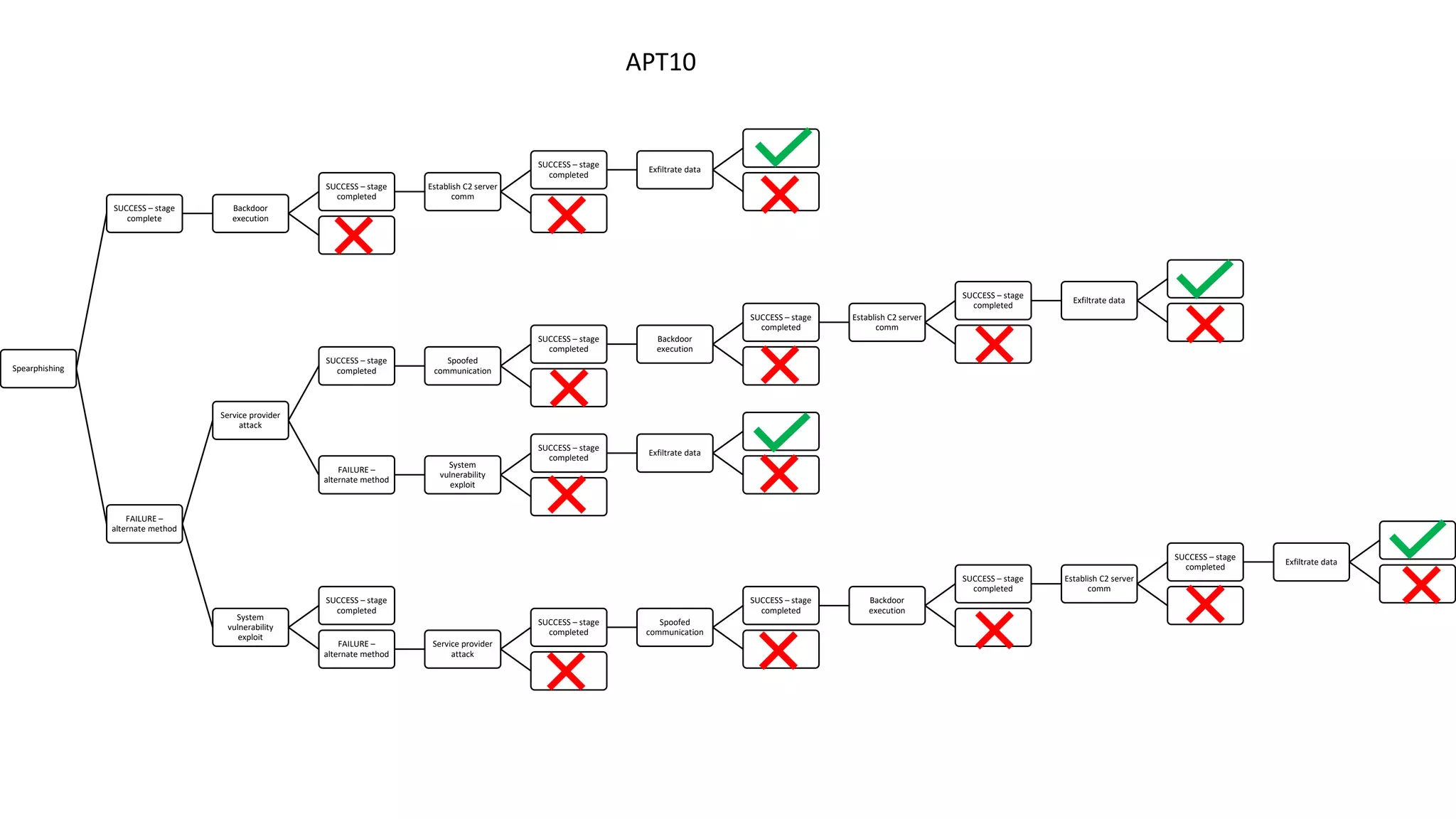
Spearphishing
SUCCESS – stage
complete
Backdoor
execution
SUCCESS – stage
completed
Establish C2 server
comm
SUCCESS – stage
completed
Exfiltrate data
FAILURE –
alternate method
Service provider
attack
SUCCESS – stage
completed
Spoofed
communication
SUCCESS – stage
completed
Backdoor
execution
SUCCESS – stage
completed
Establish C2 server
comm
SUCCESS – stage
completed
Exfiltrate data
FAILURE –
alternate method
System
vulnerability
exploit
SUCCESS – stage
completed
Exfiltrate data
System
vulnerability
exploit
SUCCESS – stage
completed
FAILURE –
alternate method
Service provider
attack
SUCCESS – stage
completed
Spoofed
communication
SUCCESS – stage
completed
Backdoor
execution
SUCCESS – stage
completed
Establish C2 server
comm
SUCCESS – stage
completed
Exfiltrate data
APT10
Conclusion
 Framework can be used for prioritization of
mitigations
 It can also allow for personalization of
corporate policy
 It is not just for APTs!
Questions?
Twitter: @EmilyShawgo
LinkedIn: https://www.linkedin.com/in/emily-shawgo-00ab73100/
References
 (1)Binde, B.E., McRee, R., & O’Connor, T.J. (2017). Assessing outbound traffic to uncover Advanced Persistent Threat.
SANS Technology Institute. Retrieved from https://www.sans.edu/student-files/projects/JWP-Binde-McRee-OConnor-
slideswnote.pdf
 (2)FireEye Intelligence. (2017, April 06). APT10 (MenuPass Group): New Tools, Global Campaign Latest Manifestation of
Longstanding Threat. Retrieved from https://www.fireeye.com/blog/threat-
research/2017/04/apt10_menupass_grou.html
 (3)ICS-CERT (n.d.). Cyber Threat Source Descriptions. Retrieved from https://ics-cert.us-cert.gov/content/cyber-threat-
source-descriptions
 (4)Lockheed Martin (n.d.). Gaining the advantage: Applying Cyber Kill Chain methodology to network defense. Retrieved
from https://www.lockheedmartin.com/content/dam/lockheed-
martin/rms/documents/cyber/Gaining_the_Advantage_Cyber_Kill_Chain.pdf
 (5)MITRE. (n.d.). Group: Turla, Waterbug, WhiteBear. Retrieved from https://attack.mitre.org/wiki/Group/G0010
 (6)MITRE. (n.d). Group: menuPass, Stone Panda, ... Retrieved from https://attack.mitre.org/wiki/Group/G0045
 (7)MITRE. (n.d.). Introduction and Overview. Retrieved from https://attack.mitre.org/wiki/Introduction_and_Overview
 (8)Neely, L. (2017). 2017 Threat Landscape Survey: Users on the Front Line. SANS Institute. Retrieved from
https://www.sans.org/reading-room/whitepapers/threats/2017-threat-landscape-survey-users-front-line-37910
 (9)Rapid7. (2017, December 06). Top Threat Actors and Their Tactics, Techniques, Tools, and Targets. Retrieved from
https://blog.rapid7.com/2017/05/16/top-threat-actors/
 (10)Rass, S., König, S., & Schauer, S. (2017). Defending Against Advanced Persistent Threats Using Game-Theory. PLoS
ONE, 12(1), e0168675. http://doi.org/10.1371/journal.pone.0168675
 (11)Recorded Future. (2017, February 04). Top 6 Sources for Identifying Threat Actor TTPs. Retrieved from
https://www.recordedfuture.com/threat-actor-ttp-sources/

MITRE ATT&CKcon 2018: Decision Analysis Applications in Threat Analysis Frameworks, Emily Shawgo, PNC

  • 1.
  • 2.
    Agenda  Background  Framework Future directions  Conclusion  Questions
  • 3.
  • 4.
    Framework Identify top threats Researchattack methods of threats Form decision tree to understand primary and secondary attacks Synthesize with organizational weaknesses
  • 5.
    Spearphishing SUCCESS – stage completed Processdiscovery SUCCESS – stage completed Malware execution and data exfiltration FAILURE – alternate method Lateral movement SUCCESS – stage completed Malware execution and data exfiltration FAILURE – alternate method Brute force SUCCESS – stage completed Process discovery SUCCESS – stage completed Malware execution and data exfiltration FAILURE – alternate method Lateral movement SUCCESS – stage completed Malware execution and data exfiltration Turla
  • 6.
    Spearphishing SUCCESS – stage complete Backdoor execution SUCCESS– stage completed Establish C2 server comm SUCCESS – stage completed Exfiltrate data FAILURE – alternate method Service provider attack SUCCESS – stage completed Spoofed communication SUCCESS – stage completed Backdoor execution SUCCESS – stage completed Establish C2 server comm SUCCESS – stage completed Exfiltrate data FAILURE – alternate method System vulnerability exploit SUCCESS – stage completed Exfiltrate data System vulnerability exploit SUCCESS – stage completed FAILURE – alternate method Service provider attack SUCCESS – stage completed Spoofed communication SUCCESS – stage completed Backdoor execution SUCCESS – stage completed Establish C2 server comm SUCCESS – stage completed Exfiltrate data APT10
  • 7.
    Conclusion  Framework canbe used for prioritization of mitigations  It can also allow for personalization of corporate policy  It is not just for APTs!
  • 8.
  • 9.
    References  (1)Binde, B.E.,McRee, R., & O’Connor, T.J. (2017). Assessing outbound traffic to uncover Advanced Persistent Threat. SANS Technology Institute. Retrieved from https://www.sans.edu/student-files/projects/JWP-Binde-McRee-OConnor- slideswnote.pdf  (2)FireEye Intelligence. (2017, April 06). APT10 (MenuPass Group): New Tools, Global Campaign Latest Manifestation of Longstanding Threat. Retrieved from https://www.fireeye.com/blog/threat- research/2017/04/apt10_menupass_grou.html  (3)ICS-CERT (n.d.). Cyber Threat Source Descriptions. Retrieved from https://ics-cert.us-cert.gov/content/cyber-threat- source-descriptions  (4)Lockheed Martin (n.d.). Gaining the advantage: Applying Cyber Kill Chain methodology to network defense. Retrieved from https://www.lockheedmartin.com/content/dam/lockheed- martin/rms/documents/cyber/Gaining_the_Advantage_Cyber_Kill_Chain.pdf  (5)MITRE. (n.d.). Group: Turla, Waterbug, WhiteBear. Retrieved from https://attack.mitre.org/wiki/Group/G0010  (6)MITRE. (n.d). Group: menuPass, Stone Panda, ... Retrieved from https://attack.mitre.org/wiki/Group/G0045  (7)MITRE. (n.d.). Introduction and Overview. Retrieved from https://attack.mitre.org/wiki/Introduction_and_Overview  (8)Neely, L. (2017). 2017 Threat Landscape Survey: Users on the Front Line. SANS Institute. Retrieved from https://www.sans.org/reading-room/whitepapers/threats/2017-threat-landscape-survey-users-front-line-37910  (9)Rapid7. (2017, December 06). Top Threat Actors and Their Tactics, Techniques, Tools, and Targets. Retrieved from https://blog.rapid7.com/2017/05/16/top-threat-actors/  (10)Rass, S., König, S., & Schauer, S. (2017). Defending Against Advanced Persistent Threats Using Game-Theory. PLoS ONE, 12(1), e0168675. http://doi.org/10.1371/journal.pone.0168675  (11)Recorded Future. (2017, February 04). Top 6 Sources for Identifying Threat Actor TTPs. Retrieved from https://www.recordedfuture.com/threat-actor-ttp-sources/