Optimization in Supply Chain
August 2017
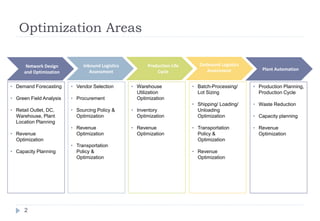
Optimization Areas
• Demand Forecasting
• Green Field Analysis
• Retail Outlet, DC,
Warehouse, Plant
Location Planning
• Revenue
Optimization
• Capacity Planning
• Vendor Selection
• Procurement
• Sourcing Policy &
Optimization
• Revenue
Optimization
• Transportation
Policy &
Optimization
• Warehouse
Utilization
Optimization
• Inventory
Optimization
• Revenue
Optimization
• Batch-Processing/
Lot Sizing
• Shipping/ Loading/
Unloading
Optimization
• Transportation
Policy &
Optimization
• Revenue
Optimization
Inbound Logistics
Assessment
Production Life
Cycle
Outbound Logistics
Assessment
Network Design
and Optimization
• Production Planning,
Production Cycle
• Waste Reduction
• Capacity planning
• Revenue
Optimization
Plant Automation
2
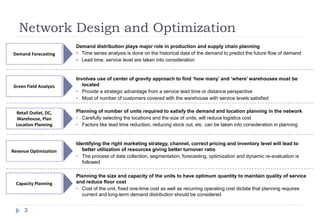
Network Design and Optimization
Demand Forecasting
Demand distribution plays major role in production and supply chain planning
• Time series analysis is done on the historical data of the demand to predict the future flow of demand
• Lead time, service level are taken into consideration
Green Field Analysis
Involves use of center of gravity approach to find ‘how many’ and ‘where’ warehouses must be
located
• Provide a strategic advantage from a service lead time or distance perspective
• Most of number of customers covered with the warehouse with service levels satisfied
Retail Outlet, DC,
Warehouse, Plan
Location Planning
Planning of number of units required to satisfy the demand and location planning in the network
• Carefully selecting the locations and the size of units, will reduce logistics cost
• Factors like lead time reduction, reducing stock out, etc. can be taken into consideration in planning
Revenue Optimization
Identifying the right marketing strategy, channel, correct pricing and inventory level will lead to
better utilization of resources giving better turnover ratio
• The process of data collection, segmentation, forecasting, optimization and dynamic re-evaluation is
followed
Capacity Planning
Planning the size and capacity of the units to have optimum quantity to maintain quality of service
and reduce floor cost
• Cost of the unit, fixed one-time cost as well as recurring operating cost dictate that planning requires
current and long-term demand distribution should be considered
3
Inbound Logistics Assessment
Vendor Selection
Vendor selection should meet customer requirements, bring profit, fulfill criteria like cost, delivery,
quality objectives and technical specification
• Develop a systematic process for identifying and prioritizing and evaluate relevant technical, economical
and performance criteria
Procurement
Sourcing raw materials from vendors at the right time
• Contract management and active purchasing system such that the quality and quantity of raw material
desired in delivered on time
Sourcing Policy and
Optimization
Sourcing policy involves managing environmental and ethical standards, working environment,
employment practices
• Evaluation of policies and careful monitoring of sourcing and procurement has to be managed with the
supplier
Revenue Optimization
Cost minimization while maintaining the schedule of delivery and quality of material is important
• Procurement planning, supplier selection and management along especially timely delivery reduces the
costs involved
Transportation Policy
and Optimization
Realize an easy-to-deploy transport policy to lead to sustainability
• Building up network of inter-regional/international transport adhering to the rules
• Leads to creation of sustainable, secure and safe transport
4
Production Life Cycle
Warehouse Utilization
Optimization
Objective: Maximize worker efficiency, storage efficiency, pickup and drop efficiency
• Design of warehouse is done so that loading / unloading is done quickly, internal movement of goods is
minimized
• Pickup of items in inventory is also optimized
Inventory Optimization
Optimization involves deciding on optimum amount of product in stock and optimum quantity to
order
• Aim is to reduce stock out and at the same time reduce inventory cost
• Selection of stocking policies like (s,S) and (s,Q).
Revenue Optimization
End-to-end revenue optimization offers clear and consolidated view of the revenue management
• Strategic planning, tactical planning, integrated product management, ongoing retail execution, post-
event analytics gives a comprehensive picture
5
Outbound Logistics Assessment
Batch Processing / Lot
Sizing
Developing optimal lot size for delivery and transportation to various locations
• Demand distribution, current inventory level and ordering and transportation costs are considered
• Significantly reduces long term inventory levels
Shipping / Loading /
Unloading Optimization
Consumes lot of manpower and significant amount of time especially w.r.t. short haul transportation
• Decide on loading/unloading strategy like consolidation warehouse, cross docking based on types of
goods flowing
• Trailer load patterns, size of trailer needed decided based on type of load and quantity
Transportation Policy
and Optimization
Realize an easy-to-deploy transport policy to lead to sustainability
• Building up network of inter-regional/international transport adhering to the rules
• Leads to creation of sustainable, secure and safe transport
Revenue Optimization
Maintaining the quality of service while at the same time controlling the cost is important
6
Plant Automation
Production Planning,
Production Cycle
Plan of production over the future time horizon to match the future demand. This can be done by:
• Regulating inventory management, organizing the production schedules, optimum utilization of resources
and production process
• Ensuring the right quantity and quality of raw material, equipment, etc. is available during times of
production
Waste Reduction
When the waste produced is less, the waste management costs are also reduced
• Reducing unnecessary packaging, using recyclable transport packaging, paper waste reduction are the
techniques that can be implement through packaging efficiency and optimization
Capacity Planning
Objective: Match the level of operation to level of demand over long period
• Involves planning for inputs, conversion process and outputs of the production system
• Future growth and expansion plans , market trends and sales forecasting are considered
Revenue Optimization
Use of ERP and managing flow of cash along with forecasting of future sales are a part of
optimization
• Strategic planning, tactical planning, integrated product management, ongoing retail execution, post-
event analytics gives a comprehensive picture
7
8

Optimization in supply chain

  • 1.
    Optimization in SupplyChain August 2017
  • 2.
    Optimization Areas • DemandForecasting • Green Field Analysis • Retail Outlet, DC, Warehouse, Plant Location Planning • Revenue Optimization • Capacity Planning • Vendor Selection • Procurement • Sourcing Policy & Optimization • Revenue Optimization • Transportation Policy & Optimization • Warehouse Utilization Optimization • Inventory Optimization • Revenue Optimization • Batch-Processing/ Lot Sizing • Shipping/ Loading/ Unloading Optimization • Transportation Policy & Optimization • Revenue Optimization Inbound Logistics Assessment Production Life Cycle Outbound Logistics Assessment Network Design and Optimization • Production Planning, Production Cycle • Waste Reduction • Capacity planning • Revenue Optimization Plant Automation 2
  • 3.
    Network Design andOptimization Demand Forecasting Demand distribution plays major role in production and supply chain planning • Time series analysis is done on the historical data of the demand to predict the future flow of demand • Lead time, service level are taken into consideration Green Field Analysis Involves use of center of gravity approach to find ‘how many’ and ‘where’ warehouses must be located • Provide a strategic advantage from a service lead time or distance perspective • Most of number of customers covered with the warehouse with service levels satisfied Retail Outlet, DC, Warehouse, Plan Location Planning Planning of number of units required to satisfy the demand and location planning in the network • Carefully selecting the locations and the size of units, will reduce logistics cost • Factors like lead time reduction, reducing stock out, etc. can be taken into consideration in planning Revenue Optimization Identifying the right marketing strategy, channel, correct pricing and inventory level will lead to better utilization of resources giving better turnover ratio • The process of data collection, segmentation, forecasting, optimization and dynamic re-evaluation is followed Capacity Planning Planning the size and capacity of the units to have optimum quantity to maintain quality of service and reduce floor cost • Cost of the unit, fixed one-time cost as well as recurring operating cost dictate that planning requires current and long-term demand distribution should be considered 3
  • 4.
    Inbound Logistics Assessment VendorSelection Vendor selection should meet customer requirements, bring profit, fulfill criteria like cost, delivery, quality objectives and technical specification • Develop a systematic process for identifying and prioritizing and evaluate relevant technical, economical and performance criteria Procurement Sourcing raw materials from vendors at the right time • Contract management and active purchasing system such that the quality and quantity of raw material desired in delivered on time Sourcing Policy and Optimization Sourcing policy involves managing environmental and ethical standards, working environment, employment practices • Evaluation of policies and careful monitoring of sourcing and procurement has to be managed with the supplier Revenue Optimization Cost minimization while maintaining the schedule of delivery and quality of material is important • Procurement planning, supplier selection and management along especially timely delivery reduces the costs involved Transportation Policy and Optimization Realize an easy-to-deploy transport policy to lead to sustainability • Building up network of inter-regional/international transport adhering to the rules • Leads to creation of sustainable, secure and safe transport 4
  • 5.
    Production Life Cycle WarehouseUtilization Optimization Objective: Maximize worker efficiency, storage efficiency, pickup and drop efficiency • Design of warehouse is done so that loading / unloading is done quickly, internal movement of goods is minimized • Pickup of items in inventory is also optimized Inventory Optimization Optimization involves deciding on optimum amount of product in stock and optimum quantity to order • Aim is to reduce stock out and at the same time reduce inventory cost • Selection of stocking policies like (s,S) and (s,Q). Revenue Optimization End-to-end revenue optimization offers clear and consolidated view of the revenue management • Strategic planning, tactical planning, integrated product management, ongoing retail execution, post- event analytics gives a comprehensive picture 5
  • 6.
    Outbound Logistics Assessment BatchProcessing / Lot Sizing Developing optimal lot size for delivery and transportation to various locations • Demand distribution, current inventory level and ordering and transportation costs are considered • Significantly reduces long term inventory levels Shipping / Loading / Unloading Optimization Consumes lot of manpower and significant amount of time especially w.r.t. short haul transportation • Decide on loading/unloading strategy like consolidation warehouse, cross docking based on types of goods flowing • Trailer load patterns, size of trailer needed decided based on type of load and quantity Transportation Policy and Optimization Realize an easy-to-deploy transport policy to lead to sustainability • Building up network of inter-regional/international transport adhering to the rules • Leads to creation of sustainable, secure and safe transport Revenue Optimization Maintaining the quality of service while at the same time controlling the cost is important 6
  • 7.
    Plant Automation Production Planning, ProductionCycle Plan of production over the future time horizon to match the future demand. This can be done by: • Regulating inventory management, organizing the production schedules, optimum utilization of resources and production process • Ensuring the right quantity and quality of raw material, equipment, etc. is available during times of production Waste Reduction When the waste produced is less, the waste management costs are also reduced • Reducing unnecessary packaging, using recyclable transport packaging, paper waste reduction are the techniques that can be implement through packaging efficiency and optimization Capacity Planning Objective: Match the level of operation to level of demand over long period • Involves planning for inputs, conversion process and outputs of the production system • Future growth and expansion plans , market trends and sales forecasting are considered Revenue Optimization Use of ERP and managing flow of cash along with forecasting of future sales are a part of optimization • Strategic planning, tactical planning, integrated product management, ongoing retail execution, post- event analytics gives a comprehensive picture 7
  • 8.