
Supply Chain Analytics
SUBMITTED BY :
Team A5
Amal Krishnan UC
Arunkumar A
Pranav
Kumar Sandeep Ramesh
T M Athira Surendran
Timal Prakash
Introduction
 Supply chain analytics is the application of mathematics, statistics, and
machine-learning techniques to find meaningful patterns.
 An important goal of supply chain analytics is to improve forecasting and
efficiency and be more responsive to customer needs.
 The field of big data analytics have come up with tools and techniques to
make data-driven supply chain decisions.
 Analysing and interpreting results in real time can assist enterprises in
making better and faster decisions to satisfy customer requirements.
2
Introduction (Contd.)
 Areas within supply chain management that could benefit from big
data methods and technologies
Mitigation of bullwhip effect
Multi-criteria decision making
Sustainable supply chain management
Sensor data-based predictive maintenance in manufacturing
efficient logistics
Forecasting and demand management
Planning and scheduling
3
Forecasting Sales in the Supply Chain:
Consumer Analytics in the Big Data Era
 Forecasts have served as the basis for planning and executing supply
chain activities such as making ,distributing products etc.
 Advances in technology and data collection systems resulted in the
generation of huge volumes of data.
 We are focusing on ‘‘consumer analytics’’ from a forecasting
perspective.
4
Sources of Big Data
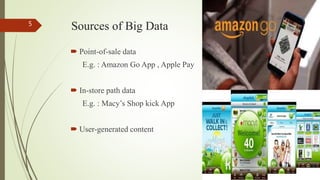
 Point-of-sale data
E.g. : Amazon Go App , Apple Pay
 In-store path data
E.g. : Macy’s Shop kick App
 User-generated content
5
Opportunities for Consumer Analytics and
Forecasting
 Point of sales
- Timing of sales
- Availability of products in inventory
- Learning customer choices between multiple products
6
Opportunities for Consumer Analytics and
Forecasting (Contd.)
 In-Store Data
1. Traffic counter data
- Understanding the demand at brick-and-mortar retailer stores.
- Attention to the time spent by customers and their numbers in stores
2. Path data
- To detect customer interest
- Short term and not suitable for plans with higher lead times
7
Opportunities for Consumer Analytics and
Forecasting (Contd.)
 Internet/User generated data
- Social media platforms to use latest trends in favour of companies
- Used for measurements in financial markets
* Retail investor attention
* Market volatility
* Predicting earnings
8
Organisational Challenges of Big Data
Forecasting
 Integrating big data into Sales and Operations process.
 Capturing big data and connecting it to traditional SOP processes.
 From human judgement to data-driven decisions.
* New data streams may not be available
* Significant hardware, software and analytical support
* Significant learning curve is required
9
Organisational Challenges of Big Data
Forecasting (Contd..)
 Changing customer experiences.
> Widespread use of connected devices.
> Helpful for researching a product.
 Integrating the connected supply chain.
> Active engagement with customers.
10
Organisational Challenges of Big Data
Forecasting (Contd..)
 Privacy, Bias and Discrimination.
 Algorithmic ethics and injustice.
11
Social Media Analytics to Improve Supply
Chain in Food Industry
12
Effectiveness of Social Media
 Social media (Twitter) data for the identification of supply chain
issues in food industries.
 Consumer information available on Twitter, reflects the true opinion
of customers.
 Provide interesting insight into consumer sentiments.
 Social media data in real time, and can use it for the development of
future strategies.
13
Study Based on Social Media
Operation and Supply chain management
Implementation in some methods
-Descriptive analysis,
-Network analysis
-Grounded theory approach,
-Inductive coding,
-Sentiment analysis
-Extended Fuzzy- AHP approach,
-Lean thinking
14
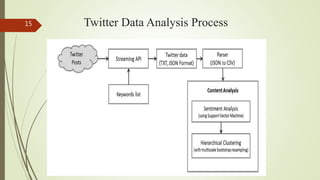
Twitter Data Analysis Process15
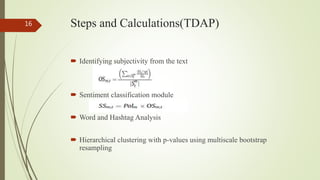
Steps and Calculations(TDAP)
 Identifying subjectivity from the text
 Sentiment classification module
 Word and Hashtag Analysis
 Hierarchical clustering with p-values using multiscale bootstrap
resampling
16
Beef Supply Chain using Twitter data
• To understand issues related to the beef/steak supply chain based on
consumer feedback on Twitter
• This analysis can help to analyse the reasons behind positive and
negative sentiments,
• To identify communication patterns,
• Prevalent topics and content,
• Characteristics of Twitter users discussing about beef and steak.
• A set of recommendations were prescribed for the development of a
customer-centric supply chain
17
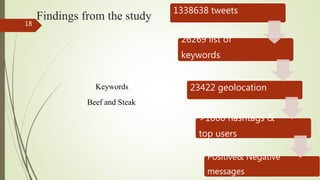
Findings from the study
1338638 tweets
26269 list of
keywords
23422 geolocation
>1000 hashtags &
top users
Positive& Negative
messages
Keywords
Beef and Steak
18
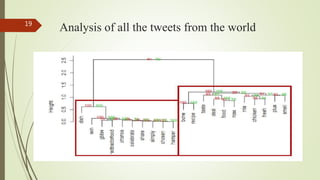
Analysis of all the tweets from the world19
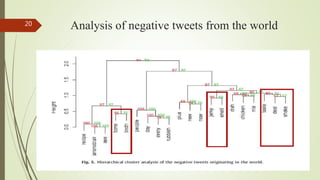
Analysis of negative tweets from the world20
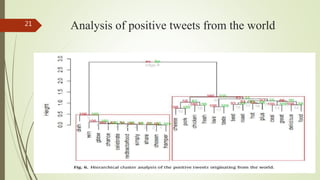
Analysis of positive tweets from the world21
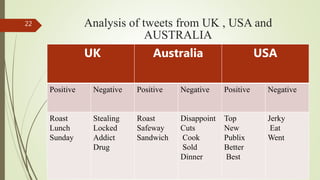
Analysis of tweets from UK , USA and
AUSTRALIA
UK Australia USA
Positive Negative Positive Negative Positive Negative
Roast
Lunch
Sunday
Stealing
Locked
Addict
Drug
Roast
Safeway
Sandwich
Disappoint
Cuts
Cook
Sold
Dinner
Top
New
Publix
Better
Best
Jerky
Eat
Went
22
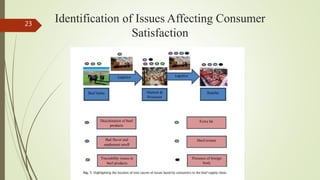
Identification of Issues Affecting Consumer
Satisfaction
23
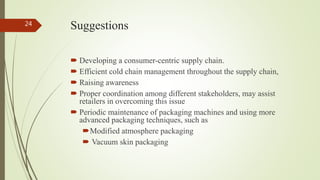
Suggestions
 Developing a consumer-centric supply chain.
 Efficient cold chain management throughout the supply chain,
 Raising awareness
 Proper coordination among different stakeholders, may assist
retailers in overcoming this issue
 Periodic maintenance of packaging machines and using more
advanced packaging techniques, such as
Modified atmosphere packaging
 Vacuum skin packaging
24
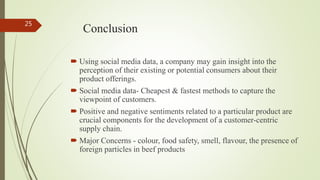
Conclusion
 Using social media data, a company may gain insight into the
perception of their existing or potential consumers about their
product offerings.
 Social media data- Cheapest & fastest methods to capture the
viewpoint of customers.
 Positive and negative sentiments related to a particular product are
crucial components for the development of a customer-centric
supply chain.
 Major Concerns - colour, food safety, smell, flavour, the presence of
foreign particles in beef products
25
THANK YOU
26

Supply chain analytics

  • 1.
    Supply Chain Analytics SUBMITTEDBY : Team A5 Amal Krishnan UC Arunkumar A Pranav Kumar Sandeep Ramesh T M Athira Surendran Timal Prakash
  • 2.
    Introduction  Supply chainanalytics is the application of mathematics, statistics, and machine-learning techniques to find meaningful patterns.  An important goal of supply chain analytics is to improve forecasting and efficiency and be more responsive to customer needs.  The field of big data analytics have come up with tools and techniques to make data-driven supply chain decisions.  Analysing and interpreting results in real time can assist enterprises in making better and faster decisions to satisfy customer requirements. 2
  • 3.
    Introduction (Contd.)  Areaswithin supply chain management that could benefit from big data methods and technologies Mitigation of bullwhip effect Multi-criteria decision making Sustainable supply chain management Sensor data-based predictive maintenance in manufacturing efficient logistics Forecasting and demand management Planning and scheduling 3
  • 4.
    Forecasting Sales inthe Supply Chain: Consumer Analytics in the Big Data Era  Forecasts have served as the basis for planning and executing supply chain activities such as making ,distributing products etc.  Advances in technology and data collection systems resulted in the generation of huge volumes of data.  We are focusing on ‘‘consumer analytics’’ from a forecasting perspective. 4
  • 5.
    Sources of BigData  Point-of-sale data E.g. : Amazon Go App , Apple Pay  In-store path data E.g. : Macy’s Shop kick App  User-generated content 5
  • 6.
    Opportunities for ConsumerAnalytics and Forecasting  Point of sales - Timing of sales - Availability of products in inventory - Learning customer choices between multiple products 6
  • 7.
    Opportunities for ConsumerAnalytics and Forecasting (Contd.)  In-Store Data 1. Traffic counter data - Understanding the demand at brick-and-mortar retailer stores. - Attention to the time spent by customers and their numbers in stores 2. Path data - To detect customer interest - Short term and not suitable for plans with higher lead times 7
  • 8.
    Opportunities for ConsumerAnalytics and Forecasting (Contd.)  Internet/User generated data - Social media platforms to use latest trends in favour of companies - Used for measurements in financial markets * Retail investor attention * Market volatility * Predicting earnings 8
  • 9.
    Organisational Challenges ofBig Data Forecasting  Integrating big data into Sales and Operations process.  Capturing big data and connecting it to traditional SOP processes.  From human judgement to data-driven decisions. * New data streams may not be available * Significant hardware, software and analytical support * Significant learning curve is required 9
  • 10.
    Organisational Challenges ofBig Data Forecasting (Contd..)  Changing customer experiences. > Widespread use of connected devices. > Helpful for researching a product.  Integrating the connected supply chain. > Active engagement with customers. 10
  • 11.
    Organisational Challenges ofBig Data Forecasting (Contd..)  Privacy, Bias and Discrimination.  Algorithmic ethics and injustice. 11
  • 12.
    Social Media Analyticsto Improve Supply Chain in Food Industry 12
  • 13.
    Effectiveness of SocialMedia  Social media (Twitter) data for the identification of supply chain issues in food industries.  Consumer information available on Twitter, reflects the true opinion of customers.  Provide interesting insight into consumer sentiments.  Social media data in real time, and can use it for the development of future strategies. 13
  • 14.
    Study Based onSocial Media Operation and Supply chain management Implementation in some methods -Descriptive analysis, -Network analysis -Grounded theory approach, -Inductive coding, -Sentiment analysis -Extended Fuzzy- AHP approach, -Lean thinking 14
  • 15.
  • 16.
    Steps and Calculations(TDAP) Identifying subjectivity from the text  Sentiment classification module  Word and Hashtag Analysis  Hierarchical clustering with p-values using multiscale bootstrap resampling 16
  • 17.
    Beef Supply Chainusing Twitter data • To understand issues related to the beef/steak supply chain based on consumer feedback on Twitter • This analysis can help to analyse the reasons behind positive and negative sentiments, • To identify communication patterns, • Prevalent topics and content, • Characteristics of Twitter users discussing about beef and steak. • A set of recommendations were prescribed for the development of a customer-centric supply chain 17
  • 18.
    Findings from thestudy 1338638 tweets 26269 list of keywords 23422 geolocation >1000 hashtags & top users Positive& Negative messages Keywords Beef and Steak 18
  • 19.
    Analysis of allthe tweets from the world19
  • 20.
    Analysis of negativetweets from the world20
  • 21.
    Analysis of positivetweets from the world21
  • 22.
    Analysis of tweetsfrom UK , USA and AUSTRALIA UK Australia USA Positive Negative Positive Negative Positive Negative Roast Lunch Sunday Stealing Locked Addict Drug Roast Safeway Sandwich Disappoint Cuts Cook Sold Dinner Top New Publix Better Best Jerky Eat Went 22
  • 23.
    Identification of IssuesAffecting Consumer Satisfaction 23
  • 24.
    Suggestions  Developing aconsumer-centric supply chain.  Efficient cold chain management throughout the supply chain,  Raising awareness  Proper coordination among different stakeholders, may assist retailers in overcoming this issue  Periodic maintenance of packaging machines and using more advanced packaging techniques, such as Modified atmosphere packaging  Vacuum skin packaging 24
  • 25.
    Conclusion  Using socialmedia data, a company may gain insight into the perception of their existing or potential consumers about their product offerings.  Social media data- Cheapest & fastest methods to capture the viewpoint of customers.  Positive and negative sentiments related to a particular product are crucial components for the development of a customer-centric supply chain.  Major Concerns - colour, food safety, smell, flavour, the presence of foreign particles in beef products 25
  • 26.